Antisocial behavior is associated with a wide range of deleterious and costly outcomes, including lower academic achievement, poor interpersonal functioning, and high rates of incarceration (Hinshaw, Reference Hinshaw1992; Huesmann, Dubow, & Boxer, Reference Huesmann, Dubow and Boxer2009; McEvoy & Welker, Reference McEvoy and Welker2000; Moilanen, Shaw, & Maxwell, Reference Moilanen, Shaw and Maxwell2010; Odgers et al., Reference Odgers, Moffitt, Broadbent, Dickson, Hancox, Harrington and Caspi2008). Decades of research have attempted to elucidate mechanisms underlying the development of antisocial behavior, and etiological theories emphasize a variety of biological and environmental factors, recognizing that it likely results from a complex interplay between these two domains (Manuck & McCaffery, Reference Manuck and McCaffery2014; Moffitt, Reference Moffitt2005; Raine, Reference Raine2002; Rhee & Waldman, Reference Rhee and Waldman2002; Rutter, Reference Rutter1997). A burgeoning body of research provides strong evidence for the role of Gene × Environment (G × E) interaction in the development of antisocial behavior, with the most well-documented G × E interaction identified in a landmark study by Caspi et al. (Reference Caspi, McClay, Moffitt, Mill, Martin, Craig and Poulton2002). In a well-characterized, longitudinally studied birth cohort, exposure to maltreatment in childhood predicted later antisocial behavior among male subjects as a function of regulatory variation in the gene encoding monoamine oxidase A (MAOA). In this study, early indicators of maltreatment, including separation from caregiver, maternal rejection, harsh punishment, and exposure to physical or sexual abuse, more strongly predicted later antisocial behavior among males carrying the MAOA repeat variant (allele) of lesser transcriptional efficiency (low-activity MAOA genotype) than in those of an alternate (high-activity) genotype. Two meta-analyses have corroborated the presence of this effect in male samples (Byrd & Manuck, Reference Byrd and Manuck2014; Taylor & Kim-Cohen, Reference Taylor and Kim-Cohen2007), with the most recent demonstrating the consistency of this finding across a total of 13 independent studies, totaling more than 11,000 participants.
Accumulating evidence suggests that this G × E may be extended to females, with some indication that the “risk” allele (high vs. low activity) differs in females (Åslund et al., Reference Åslund, Nordquist, Comasco, Leppert, Oreland and Nilsson2011; Prom-Wormley et al., Reference Prom-Wormley, Eaves, Foley, Gardner, Archer, Wormley and Silberg2009; Sjöberg et al., Reference Sjöberg, Nilsson, Wargelius, Leppert, Lindström and Oreland2007). These sex differences are in line with recent work suggesting that MAOA allelic variation affects males and females differently (e.g., Holz et al., Reference Holz, Boecker, Buchmann, Blomeyer, Baumeister, Hohmann and Witt2016), although what mechanisms might account for a sex-dependent reversal of allelic association remain unclear. Nonetheless, this G × E interaction was corroborated in a recent meta-analysis, showing maltreated females with the high-activity, not low-activity, MAOA genotype were at greatest risk for later antisocial behavior (Byrd & Manuck, Reference Byrd and Manuck2014). However, this finding was less robust in females than males, and the literature on its effects as a predictor of antisocial behavior among women is relatively sparse (Byrd & Manuck, Reference Byrd and Manuck2014). Taken together, these findings underscore the need for continued research regarding this G × E in female samples, especially those engaging in antisocial behavior.
In addition, very little is known about how this G × E interaction functions to increase risk. The examination of an intermediate behavioral phenotype as a mediating mechanism has the potential to further elucidate this developmental risk pathway (Dodge, Reference Dodge2009). Given that both MAOA and maltreatment are believed to have important effects on emotion processing and underlying corticolimbic circuitries (Buckholtz & Meyer-Lindenberg, Reference Buckholtz and Meyer-Lindenberg2008; Meyer-Lindenberg et al., Reference Meyer-Lindenberg, Buckholtz, Kolachana, Hariri, Pezawas, Blasi and Callicott2006; Tottenham, Reference Tottenham, Anderson and Pine2014; Tottenham & Galván, Reference Tottenham and Galván2016), it follows that the cumulative influence of these risk factors may lead to high levels of emotional reactivity (ER). ER represents a more circumscribed aspect of emotional vulnerability relative to the broader temperament dimension of emotionality (Buss & Plomin, Reference Buss and Plomin1984; Rothbart, Reference Rothbart2007) and can be conceptualized as a low threshold to experience negative emotion, high emotional intensity, and a slow return to baseline (Cole, Michel, & Teti, Reference Cole, Michel and Teti1994; Eisenberg et al., Reference Eisenberg, Fabes, Murphy, Maszk, Smith and Karbon1995; Linehan, Reference Linehan1993; Nock, Wedig, Holmberg, & Hooley, Reference Nock, Wedig, Holmberg and Hooley2008). This endophenotype has been associated with increased risk for antisocial behavior (Singh & Waldman, Reference Singh and Waldman2010; Waldman et al., Reference Waldman, Tackett, Van Hulle, Applegate, Pardini, Frick and Lahey2011), highlighting its potential role as a mediating mechanism.
If this putative developmental risk pathway does operate through ER, it is unlikely that it represents risk specific to antisocial behavior and instead may be indicative of increased risk for other personality pathologies, in line with the tenants of multifinality (Cicchetti & Rogosch, Reference Cicchetti and Rogosch1996). For example, developmental theory and research suggest that high levels of ER also place youth at risk for the development of both antisocial personality disorder (ASPD) and borderline personality disorder (BPD; Stepp, Lazarus, & Byrd, Reference Stepp, Lazarus and Byrd2016; Stepp, Scott, Jones, Whalen, & Hipwell, Reference Stepp, Scott, Jones, Whalen and Hipwell2015; Stepp et al., Reference Stepp, Scott, Morse, Nolf, Hallquist and Pilkonis2014), two debilitating mental illnesses characterized by extreme emotional, behavioral, and interpersonal dysregulation (American Psychiatric Association, 2013). Along these lines, it has been suggested that ASPD and BPD may have a shared etiology, and high levels of ER may be one risk factor linking the two (Beauchaine, Klein, Crowell, Derbidge, & Gatzke-Kopp, Reference Beauchaine, Klein, Crowell, Derbidge and Gatzke-Kopp2009; Paris, Reference Paris1997). Given the high rate of comorbidity between ASPD and BPD, especially within female samples (Tomko, Trull, Wood, & Sher, Reference Tomko, Trull, Wood and Sher2014; Trull, Jahng, Tomko, & Wood, Reference Trull, Jahng, Tomko and Wood2010), an examination of ER as a general versus specific mediating mechanism is warranted.
In an attempt to expand the current literature and improve the characterization of allelic variation in this developmental risk pathway among understudied female populations, our current study seeks to (a) examine whether ER constitutes a mediating mechanism connecting the interaction between MAOA variation and childhood maltreatment with ASPD and (b) assess whether this putative risk pathway is specific to ASPD or, alternatively, confers risk for other personality pathology characterized by high levels of ER (i.e., BPD).
ER as a Mediating Mechanism: ER → Personality Pathology
Individual variability in ER is believed to underlie increased risk for the development of a wide range of psychopathology, including personality pathologies like ASPD and BPD (Beauchaine, Reference Beauchaine2001; Beauchaine, Gatzke-Kopp, & Mead, Reference Beauchaine, Gatzke-Kopp and Mead2007; Linehan, Reference Linehan1993; Stepp et al., Reference Stepp, Scott, Jones, Whalen and Hipwell2015, Reference Stepp, Lazarus and Byrd2016). This intermediate behavioral phenotype has been the focus of much research as it is hypothesized to explain how problematic behaviors develop and persist. Specifically, this heightened emotional experience is thought to increase one's propensity to engage in impulsive, dangerous behaviors, and these behaviors may then increase in frequency as they function to reduce strong negative emotions (Hayes, Wilson, Gifford, Follette, & Strosahl, Reference Hayes, Wilson, Gifford, Follette and Strosahl1996; Linehan, Reference Linehan1993). Moreover, these behaviors may be reinforced by the attainment of a desired outcome, further entrenching a poor behavioral repertoire and creating a heightened vulnerability for the development of personality pathology.
ER has been associated with the engagement and persistence of a wide range of risk behaviors, including aggression and violence (Davidson, Putnam, & Larson, Reference Davidson, Putnam and Larson2000; Lorber, Reference Lorber2004; Scarpa & Raine, Reference Scarpa and Raine1997; Shields & Cicchetti, Reference Shields and Cicchetti1998), nonsuicidal self-injury (Gratz, Reference Gratz2006; Hasking et al., Reference Hasking, Coric, Swannell, Martin, Thompson and Frost2010; Nock, Reference Nock2010; Nock et al., Reference Nock, Wedig, Holmberg and Hooley2008), and suicide (Bekh et al., Reference Bekh, DeFife, Guarnaccia, Phifer, Fani, Ressler and Westen2011; Turecki, Ernst, Jollant, Labonté, & Mechawar, Reference Turecki, Ernst, Jollant, Labonté and Mechawar2012). These risk behaviors have been conceptualized as core components of ASPD and BPD, and these disorders are both characterized by high rates of aggression, self-injury, and suicide (Black, Blum, Pfohl, & Hale, Reference Black, Blum, Pfohl and Hale2004; Blair, Reference Blair2001; Linehan, Reference Linehan1993; Oldham, Reference Oldham2006; Verona, Patrick, & Joiner, Reference Verona, Patrick and Joiner2001). In addition, heightened ER interferes with functioning within interpersonal relationships, a hallmark of both antisocial and borderline personality pathology (Gunderson et al., Reference Gunderson, Daversa, Grilo, McGlashan, Zanarini, Shea and Stout2006; Linehan, Reference Linehan1993; Paris, Reference Paris2003). Despite converging evidence suggesting that high ER serves to increase risk for both ASPD and BPD, these pathologies are rarely examined in the same study cohort (Beauchaine et al., Reference Beauchaine, Klein, Crowell, Derbidge and Gatzke-Kopp2009).
Accumulating evidence also suggests that increasing ER may be particularly detrimental during adolescence (Larson, Moneta, Richards, & Wilson, Reference Larson, Moneta, Richards and Wilson2002; Steinberg, Reference Steinberg2005; Steinberg & Morris, Reference Steinberg and Morris2001). This critical developmental window represents a vulnerable period, characterized not only by the emergence of personality pathology symptoms (Kessler et al., Reference Kessler, Berglund, Demler, Jin, Merikangas and Walters2005) but also by the divergence of persisting and desisting trajectories of these features into adulthood (Beauchaine et al., Reference Beauchaine, Klein, Crowell, Derbidge and Gatzke-Kopp2009; Bornovalova, Hicks, Iacono, & McGue, Reference Bornovalova, Hicks, Iacono and McGue2009; Byrd, Loeber, & Pardini, Reference Byrd, Loeber and Pardini2012; Loeber, Farrington, Stouthamer-Loeber, & White, Reference Loeber, Farrington, Stouthamer-Loeber and White2008; Moffitt, Reference Moffitt1993). Research suggests that increasing ER across adolescence signals heightened risk for severe and more intractable forms of personality pathology into adulthood (Card, Stucky, Sawalani, & Little, Reference Card, Stucky, Sawalani and Little2008; Hawes et al., Reference Hawes, Perlman, Byrd, Raine, Loeber and Pardini2016; Loeber, Farrington, Stouthamer-Loeber, & Van Kammen, Reference Loeber, Farrington, Stouthamer-Loeber and Van Kammen1998; Stepp et al., Reference Stepp, Scott, Morse, Nolf, Hallquist and Pilkonis2014, Reference Stepp, Scott, Jones, Whalen and Hipwell2015). While adolescence is a period marked by normative fluctuations in ER that reflect substantial changes in neurobiology (i.e., an imbalance of early developing subcortical areas and underdeveloped regulatory regions), levels of ER tend to dissipate for most youth during this critical developmental window (Steinberg, Reference Steinberg2005; Steinberg & Morris, Reference Steinberg and Morris2001). This suggests that increases in ER across adolescence may be linked to heightened vulnerability for psychopathology (Spear, Reference Spear2009) and underscores the importance of assessing amplifications of ER during adolescence as an intermediate behavioral phenotype.
ER as a Mediating Mechanism: Maltreatment → ER
Childhood maltreatment is a transdiagnostic risk factor for antisocial and borderline personality pathology (Cicchetti & Toth, Reference Cicchetti and Toth2005; Cicchetti & Valentino, Reference Cicchetti, Valentino, Cicchetti and Cohen2006; Jaffee, Caspi, Moffitt, & Taylor, Reference Jaffee, Caspi, Moffitt and Taylor2004; Johnson, Cohen, Brown, Smailes, & Bernstein, Reference Johnson, Cohen, Brown, Smailes and Bernstein1999; Luntz & Widom, Reference Luntz and Widom1994; Rogosch & Cicchetti, Reference Rogosch and Cicchetti2005; Stepp et al., Reference Stepp, Lazarus and Byrd2016), and ER has been proposed as a key developmental risk mechanism linking early maltreatment with later psychopathology (Heleniak, Jenness, Vander Stoep, McCauley, & McLaughlin, Reference Heleniak, Jenness, Vander Stoep, McCauley and McLaughlin2016; McLaughlin, Hatzenbuehler, Mennin, & Nolen-Hoeksema, Reference McLaughlin, Hatzenbuehler, Mennin and Nolen-Hoeksema2011). Individuals who experience early maltreatment report higher levels of ER, and this has been linked prospectively to the development of later psychopathology (Glaser, Van Os, Portegijs, & Myin-Germeys, Reference Glaser, Van Os, Portegijs and Myin-Germeys2006; McLaughlin & Hatzenbuehler, Reference McLaughlin and Hatzenbuehler2009; McLaughlin et al., Reference McLaughlin, Kubzansky, Dunn, Waldinger, Vaillant and Koenen2010). Moreover, those experiencing early maltreatment show greater ER in laboratory experiments, as evidenced by physiological measures of autonomic nervous system and hypothalamic–pituitary–adrenal axis function in response to potential threat or stressors (Evans & Kim, Reference Evans and Kim2007; Heim et al., Reference Heim, Newport, Heit, Graham, Wilcox, Bonsall and Nemeroff2000; Tarullo & Gunnar, Reference Tarullo and Gunnar2006). This is in line with theoretical models that suggest that heightened sensitivity to environmental context places individuals at risk for developing psychopathology (Boyce & Ellis, Reference Boyce and Ellis2005; Del Giudice, Ellis, & Shirtcliff, Reference Del Giudice, Ellis and Shirtcliff2011).
Increases in ER are believed to be related to underlying deficits in the corticolimbic circuitry, specifically the amygdala, striatum, and prefrontal cortex. The ability to regulate affect relies heavily on the dynamic interactions of these structures (Ernst et al., Reference Ernst, Nelson, Jazbec, McClure, Monk, Leibenluft and Pine2005; Hare, Tottenham, Davidson, Glover, & Casey, Reference Hare, Tottenham, Davidson, Glover and Casey2005; Somerville, Jones, & Casey, Reference Somerville, Jones and Casey2010), and mounting research suggests that early maltreatment heavily influences the development and functioning of this neurocircuitry (Teicher et al., Reference Teicher, Andersen, Polcari, Anderson, Navalta and Kim2003; Tottenham, Reference Tottenham, Anderson and Pine2014; Tottenham & Galván, Reference Tottenham and Galván2016). For example, studies find individuals who experienced early maltreatment to show heightened reactivity in key subcortical limbic regions coupled with reduced activation in prefrontal regulatory regions during emotional processing tasks (McCrory et al., Reference McCrory, De Brito, Sebastian, Mechelli, Bird, Kelly and Viding2011, Reference McCrory, De Brito, Kelly, Bird, Sebastian, Mechelli and Viding2013; Suzuki et al., Reference Suzuki, Luby, Botteron, Dietrich, McAvoy and Barch2014; van Harmelen et al., Reference van Harmelen, van Tol, Demenescu, van der Wee, Veltman, Aleman and Elzinga2013, Reference van Harmelen, van Tol, Dalgleish, van der Wee, Veltman, Aleman and Elzinga2014), and this same pattern of dysregulated neural activation has been demonstrated in individuals with antisocial and borderline personality pathology (Coccaro, McCloskey, Fitzgerald, & Phan, Reference Coccaro, McCloskey, Fitzgerald and Phan2007; Hyde, Byrd, Votruba-Drzal, Hariri, & Manuck, Reference Hyde, Byrd, Votruba-Drzal, Hariri and Manuck2014; Hyde et al., Reference Hyde, Shaw, Murray, Gard, Hariri and Forbes2016; Schmahl & Bremner, Reference Schmahl and Bremner2006; Vollm et al., Reference Vollm, Richardson, Stirling, Elliott, Dolan, Chaudhry and Deakin2004).
However, not all youth who experience maltreatment go on to develop psychiatric disorders (Jaffee et al., Reference Jaffee, Caspi, Moffitt, Dodge, Rutter, Taylor and Tully2005; Widom, Reference Widom1989). Research suggests that moderating influences of MAOA genotype explains some of this variability, at least with regard to the development of antisocial behavior (Byrd & Manuck, Reference Byrd and Manuck2014). MAOA has been shown to have a direct impact on the development and functioning of corticolimbic circuitry and emotion processing (see below). Thus, it is possible that the synergistic effects of both maltreatment and MAOA increase one's vulnerability for developing personality pathology via their influence on ER.
ER as a Mediating Mechanism: MAOA → ER
MAOA has received considerable attention as a promising candidate gene for personality pathology, specifically antisocial behavior, with the strongest evidence of its effect in the G × E literature (Byrd & Manuck, Reference Byrd and Manuck2014; Caspi et al., Reference Caspi, McClay, Moffitt, Mill, Martin, Craig and Poulton2002; Taylor & Kim-Cohen, Reference Taylor and Kim-Cohen2007). MAOA encodes a degradative enzyme that preferentially deaminates the neurotransmitters serotonin and norepinephrine, playing a crucial role in the clearance of these neurotransmitters (Buckholtz & Meyer-Lindenberg, Reference Buckholtz and Meyer-Lindenberg2008). The MAOA gene is located on the X chromosome and contains a 30 base pair (bp) repeating sequence (variable number tandem repeats [VNTR]) in the 5′-flanking region conferring allele specific variation in MAOA promoter activity (Deckert et al., Reference Deckert, Catalano, Syagailo, Bosi, Okladnova, Di Bella and Fritze1999; Denney, Koch, & Craig, Reference Denney, Koch and Craig1999; Sabol, Hu, & Hamer, Reference Sabol, Hu and Hamer1998). This functional VNTR alters MAOA transcription in vitro, with the presence of 3.5 or 4 repeats (3.5R or 4R) resulting in relatively higher MAOA expression (high-activity MAOA) and the presence of 3R resulting in relatively lower MAOA expression (low-activity MAOA; Sabol et al., Reference Sabol, Hu and Hamer1998). MAOA expression is present at adult levels at the time of birth (Nicotra, Pierucci, Parvez, & Senatori, Reference Nicotra, Pierucci, Parvez and Senatori2004) and MAOA transcription is thought to influence ER via the development and functioning of the corticolimbic circuitry (Sjöberg et al., Reference Sjöberg, Nilsson, Wargelius, Leppert, Lindström and Oreland2007).
The MAOA genotype has been linked to altered neural responses to emotional stimuli, including enhanced amygdala reactivity, lesser engagement of prefrontal regulatory regions, and disrupted functional and effective (top-down) connectivity within corticolimbic circuitry of emotion processing (Alia-Klein et al., Reference Alia-Klein, Goldstein, Tomasi, Woicik, Moeller, Williams and Wang2009; Buckholtz et al., Reference Buckholtz, Callicott, Kolachana, Hariri, Goldberg, Genderson and Meyer-Lindenberg2008; Buckholtz & Meyer-Lindenberg, Reference Buckholtz and Meyer-Lindenberg2008; Lee & Ham, Reference Lee and Ham2008; Meyer-Lindenberg et al., Reference Meyer-Lindenberg, Buckholtz, Kolachana, Hariri, Pezawas, Blasi and Callicott2006). Moreover, a recent study identified a sex-dependent interaction between MAOA genotype and early maltreatment in the prediction of functional alterations in the aforementioned neurocircuitry (Holz et al., Reference Holz, Boecker, Buchmann, Blomeyer, Baumeister, Hohmann and Witt2016). Specifically, activity in the amygdala during emotion processing increased with increasing levels of maltreatment among females with the high-activity MAOA genotype, while decreasing in females with the low-activity MAOA genotype, with the reverse pattern seen in males. It is possible that early maltreatment may exacerbate this neural dysfunction, further enhancing vulnerability for heightened ER in individuals with genetic risk.
Current Study
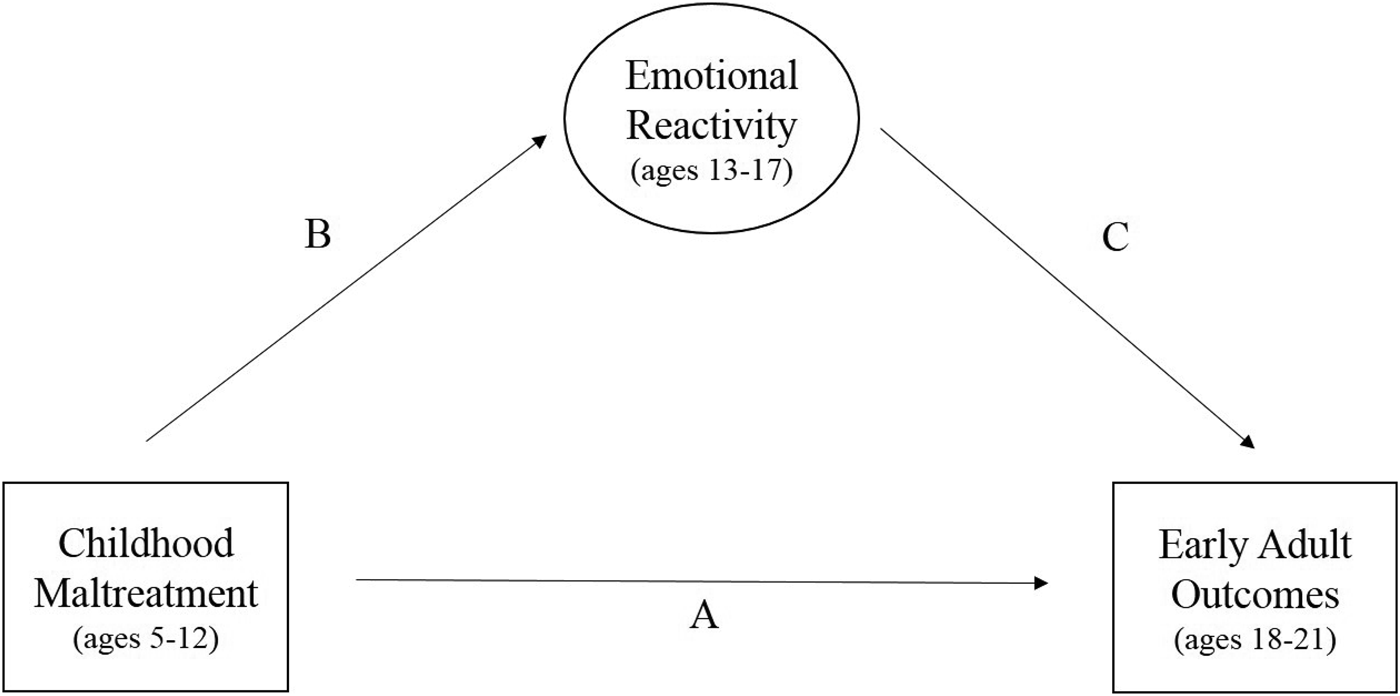
The current study seeks to expand on the extant literature by examining whether changes in ER during adolescence may mediate interactions of MAOA variation and childhood maltreatment on ASPD in early adulthood (see Figure 1). In addition, the current study sought to examine whether this hypothesized risk pathway is specific to ASPD or whether it also confers risk for other personality pathology characterized by high levels of ER (i.e., BPD). This study broadens the largely exclusive focus on males by addressing these questions in a large, urban female sample that has been comprehensively assessed from childhood into early adulthood.
Conceptual figure including all variables included in multiple-group (high- vs. low-activity monoamine oxidase A [MAOA] genotype) mediation models.

We hypothesized that the interactive effects of MAOA genotype and childhood maltreatment on ASPD in early adulthood would be mediated by increasing ER across adolescence. Specifically, we predicted that maltreated women with the high-activity MAOA genotype would show elevated levels of ER during adolescence, placing them at greater risk for ASPD in early adulthood. We also predicted a parallel association for BPD: the interaction between MAOA and childhood maltreatment would increase risk for BPD in early adulthood via its impact on ER in adolescence, with maltreated women who possess the high-activity genotype at greatest risk.
Method
Sample
Participants were women involved in the Pittsburgh Girls Study, an ongoing longitudinal study that began with 2,450 5- to 8-year-old girls. Girls were identified by a stratified sampling strategy that included a total of 103,238 households in Pittsburgh, where households in low-income neighborhoods were oversampled. Of those girls initially identified as 5 to 8 years of age, 2,876 were asked to take part in the longitudinal study and of these 2,451 (85.2%) agreed to participate. At the time of the first interview, the sample comprised 588 5-year-olds, 630 6-year-olds, 611 7-year-olds, and 621 8-year-olds, the majority of whom were African American (52.8%). Girls and their caregivers (92.9% biological mothers) were interviewed annually in their homes up to 17 years of age, and girls were interviewed up to 21 years of age. Through the most recent wave of data collection, 85% of the original sample was retained and attrition analyses showed that girls who were retained did not differ from attritors on race, receipt of public assistance, or single parenthood at baseline. Further demographic information can be found in Hipwell et al. (Reference Hipwell, Loeber, Stouthamer-Loeber, Keenan, White and Kroneman2002).
Eighty-two percent of the sample (n = 2,001, 82% of total sample) provided genetic data and constitute the focus of the current study. Participants without genetic data total 446 and include 286 who refused to provide genetic data, 106 participants who provided genetic data after genotyping had concluded, and 54 participants whose genetic data was unusable due to collection or laboratory error. Girls without genetic data (n = 446) were compared to participants included in primary analyses (n = 2,004) in terms of all study variables. Girls without genetic data were more likely to be Caucasian (χ2 = 21.02, p < .05), less likely to receive public assistance (χ2 = 8.83, p < .05), and less likely to experience maltreatment (χ2 = 6.01, p < .05). In addition, girls without genetic data reported greater ASPD (t = 2.05, p < .05) and BPD (t = 3.20, p < .05) symptom severity in early adulthood. There were no differences in ER at any time point during adolescence.
Procedure
Separate in-home interviews for both the girl and the caregiver were conducted annually by trained interviewers using a laptop computer. Analyses for the current study utilize data collected during childhood (Waves 1–5, ages 5 to 12 years), adolescence (Waves 6–10, ages 13 to 17 years), and early adulthood (Waves 11–14, ages 18 to 21 years). When participants were between the ages of 15 and 20 (Waves 11–13, ages 18 to 20 years), DNA was isolated from saliva samples using the Oragene DNA self-collection kit following manufacturer instructions (DNA Genotek Inc., Ottawa, Ontario, Canada). Procedures were reviewed and approved by the Human Resources Protection Office at the University of Pittsburgh. Written informed consent was obtained from caregivers, and verbal assent was obtained from girls for all assessments prior to age 18. Once girls were 18 years or older, they provided written informed consent. Families were compensated for their participation.
DNA extraction and genotyping
DNA extraction
Genomic DNA was extracted for every batch using the Oragene Kit manufacturer recommended protocol (DNA Genotek Inc.). The DNA was quantified using spectrophotometer readings at A260/A280/A320 and a DNA stock sample at 20 ng/ul was prepared. A simple polymerase chain reaction (PCR) assay was used to make sure that DNA was PCR amplifiable. A repeat sample was requested for PCR failed samples. The DNA yield was highly variable and ranged between 25 and 270 μg per sample with a median yield of 50 μg/ml.
Genotype assay
Consistent with previously published protocols (Sabol et al., Reference Sabol, Hu and Hamer1998) MAOA-uVNTR sequences, located between bands Xp 11.23 and Xp 11.4, were identified using polymerase chain reaction and gel electrophoresis. This polymorphism (MAOA-uVNTR) comprises a variable 30-bp sequence located 1.2 kb upstream of exon 1, in the regulatory region of the MAOA gene. Allele or repeat sizes ranged from 2R (291 bp) to 5R (381 bp), with the most common being the 3R (321 bp) and 4R (351 bp) alleles (see Table 1). Females who were homozygous with the low-activity variants (2R or 3R; n = 392, 19.6%) were combined into a single low-activity MAOA genotype (LO), and females homozygous for high-activity variants (3.5R, 4R, or 5R; n = 587, 29.3%) were combined into a high-activity group (HI).Footnote 1 Categorization of heterozygous women is complicated by the suggestion of possible incomplete X-inactivation (Carrel & Willard, Reference Carrel and Willard2005). Because previous studies of the interaction of MAOA genotype and maltreatment on antisocial behavior have found similarity of effects among heterozygous women and women homozygous for high-activity alleles (e.g., Aslund et al., Reference Åslund, Nordquist, Comasco, Leppert, Oreland and Nilsson2011; Prom-Wormley et al., Reference Prom-Wormley, Eaves, Foley, Gardner, Archer, Wormley and Silberg2009; Sjoberg et al., 2007), here heterozygous females (HET; n = 1,025, 51.1%) were combined with those homozygous for high-activity alleles to comprise a composite high-activity group. Based on evidence suggesting racial–ethnic variation in MAOA allele frequencies (e.g., Sabol et al., Reference Sabol, Hu and Hamer1998), all analyses included race as a covariate and secondary analyses were conducted separately by race (see online-only supplementary Table S.1 for allele and genotype frequencies by race).Footnote 2
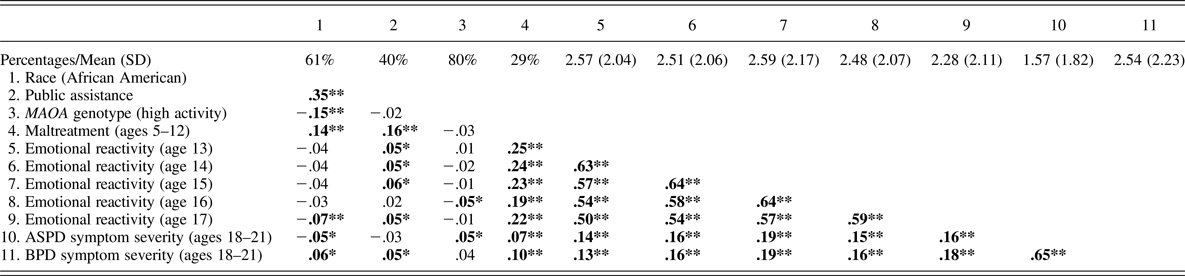
Means and correlations for all study variables
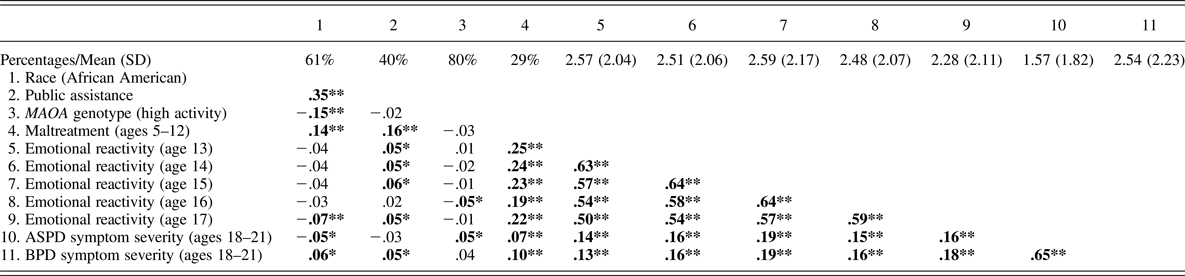
Note: MAOA, monoamine oxidase A; ASPD, antisocial personality disorder; BPD, borderline personality disorder; SD, standard deviation. Significant correlations are in bold.
*p < .05. **p < .01.
Measures
Maltreatment
Evidence of childhood maltreatment (ages 5–12) was ascertained using prospective caregiver and child report, and retrospective reports from girls in early adulthood. Maltreatment was operationalized using the following indices: one or more separations from caregiver; low caregiver warmth (top 10% of sample); harsh punishment (top 10% of sample); sexual abuse; and exposure to physical violence. From these indices, a dichotomous index of maltreatment exposure was derived (0 = none, 1 = experiencing >1 form of maltreatment).Footnote 3 The inclusion of these constructs was based on results from a recent meta-analysis (Byrd & Manuck, Reference Byrd and Manuck2014), which found the effect of the interaction between MAOA and early maltreatment to be specific to environmental risk that closely matched the Caspi et al. (Reference Caspi, McClay, Moffitt, Mill, Martin, Craig and Poulton2002) study. This conceptualization of maltreatment is consistent with other work in this area (see Barnett, Manly, & Cicchetti, Reference Barnett, Manly and Cicchetti1993, for a discussion). More details on each of these indices and their prevalence within this sample are described below.
First, separation from caregiver was assessed annually via caregiver report and girls experiencing one or more separations of at least 1 month from their caregiver were classified as experiencing separations. Twelve percent of girls were characterized as having experienced separation from their primary caregiver. Second, caregivers reported annually on warmth toward their child annually using six items (e.g., “felt like you needed a vacation from her” and “wished she would just leave you alone”) from the Parent–Child Relationship Scale (Loeber et al., Reference Loeber, Farrington, Stouthamer-Loeber and Van Kammen1998) and those scoring in the top decile of the sample-wide distribution were classified as experiencing low warmth (10%). Third, harsh punishment was assessed annually via caregiver report on six items (e.g., “spank or hit her,” “swear or curse at her,” and “say you will send her away”) from the Conflict Tactics Scale—Parent/Child Version (Straus, Hamby, Finkelhor, Moore, & Runyan, Reference Straus, Hamby, Finkelhor, Moore and Runyan1998), and those scoring in the top decile were classified as experiencing harsh punishment (10%). Fourth, exposure to sexual abuse was assessed annually beginning at age 10 via child-report on six items from the Abuse Questionnaire (Keenan, Hipwell, & Stouthamer-Loeber, Reference Keenan, Hipwell and Stouthamer-Loeber2004) and retrospectively using any self-reported endorsement of sexual abuse on the Child Post-Traumatic Stress Disorder Symptom Scale (Foa, Johnson, Feeny, & Treadwell, Reference Foa, Johnson, Feeny and Treadwell2001) at age 18. Less than 1% of girls reported experiencing sexual abuse. Fifth, exposure to physical violence was coded using three constructs: annual caregiver report of their child witnessing or being a victim of any violent crime; annual caregiver report of domestic violence in the home using four items from the Conflict Tactics Scale—Revised (Straus, Hamby, Boney-McCoy, & Sugarman, Reference Straus, Hamby, Boney-McCoy and Sugarman1996); and annual caregiver report of domestic violence using two items from the Difficult Life Circumstances Scale (Barnard, Johnson, Booth, & Bee, Reference Barnard, Johnson, Booth and Bee1994). Six percent of girls were characterized as being exposed to physical violence. Approximately 29% of the sample was exposed to maltreatment prior to the age of 12, and this did not differ by genotype.
ER
Four items from the Child Screening Inventory—4 (Gadow & Sprafkin, Reference Gadow and Sprafkin2002) were used to define ER (i.e., touchy or easily annoyed, loses temper, angry or resentful, takes anger out on others, or tries to get even). Caregivers reported on the presence of these items in the past year from ages 13 through 17. These items represent a dimension of oppositional defiant disorder (ODD) and were chosen in an attempt to capture ER as it has been defined in the literature (i.e., a low threshold to experience negative emotion, high emotional intensity, and a slow return to baseline; Cole et al., Reference Cole, Michel and Teti1994; Eisenberg et al., Reference Eisenberg, Fabes, Murphy, Maszk, Smith and Karbon1995; Linehan, Reference Linehan1993; Nock et al., Reference Nock, Wedig, Holmberg and Hooley2008). The utilization of this dimension is in line with recent research that has identified multiple meaningful dimensions of ODD showing etiological specificity and longitudinal prediction of various forms of psychopathology (Burke et al., Reference Burke, Boylan, Rowe, Duku, Stepp, Hipwell and Waldman2014; Stringaris & Goodman, Reference Stringaris and Goodman2009a, Reference Stringaris and Goodman2009b). Dimensions of ODD have been validated in this sample by Burke, Hipwell, and Loeber (Reference Burke, Hipwell and Loeber2010) and show consistent associations with later psychopathology (e.g., Burke, Reference Burke2012; Hipwell et al., Reference Hipwell, Stepp, Feng, Burke, Battista, Loeber and Keenan2011). The internal consistency for this scale was good across each of the five time points (α range = 0.82 to 0.85).
Early adult outcomes
ASPD
ASPD symptom severity was utilized as an index of antisocial behavior. Participants reported on the past-year severity (0 = not present, 1 = subthreshold, and 2 = threshold) of the seven ASPD symptoms (e.g., repeatedly performing acts that are grounds for arrest, aggression, impulsivity, etc.) annually from ages 18 through 21 using the Adult Self-Report Index (Gadow, Sprafkin, & Weiss, Reference Gadow, Sprafkin and Weiss2004). Scores for each item were summed to create a total severity score in each year and then averaged to create an overall ASPD symptom severity score (range = 0–15). The internal consistency for this scale this was acceptable at each time point (α range = 0.74–0.77).
BPD
BPD symptom severity was also obtained using the Adult Self-Report Index (Gadow et al., Reference Gadow, Sprafkin and Weiss2004). Participants reported on the past-year severity (0 = not present, 1 = subthreshold, and 2 = threshold) of nine BPD symptoms (e.g., affective instability, inappropriate or intense anger, recurrent suicide behavior, and frantic efforts to avoid abandonment) annually from ages 18 through 21. Scores for each item were summed to create a total severity score in each year and then averaged to create an overall BPD symptom severity score (range = 0 to 17). The internal consistency for this scale was good at each time point (α range = 0.80 to 0.87).
Control variables
Race
Caregivers reported on their child's race in the first waves of data collection. As described above, race (0 = Caucasian, 1 = African American) was controlled for in all analyses due to evidence suggesting racial–ethnic variation in MAOA allele frequencies (e.g., Sabol et al., Reference Sabol, Hu and Hamer1998).
Public assistance
Caregivers reported on receipt of public assistance at Wave 1. Those receiving public assistance were coded as 1, and those not receiving public assistance were coded as 0. Receipt of public assistance was also controlled for in all analyses.
Data analytic strategy
The primary aims of the current study are depicted in our conceptual model (Figure 1). Testing the main study hypotheses required preliminary analyses including analysis of missing data, obtaining descriptive statistics, and examining bivariate correlations between all study variables, all of which were conducted using SPSS Version 24 (SPSS, Inc., Chicago). In addition, to examine the developmental trajectory of ER as a mediating mechanism, we derived the best fitting model to characterize within-individual change in ER across adolescence using MPlus Version 7 (Muthén & Muthén, Reference Muthén and Muthén2012). We examined the following three models: linear slope intercept model, quadratic slope intercept model, and free curve slope intercept (FCSI) model, which makes the fewest assumptions about the form or rate of growth (Wood, Reference Wood2011; Wood & Jackson, Reference Wood and Jackson2013; Wood, Steinley, & Jackson, Reference Wood, Steinley and Jackson2015). Identification of the best fitting model was based on interpretability, theoretical justification, and the parsimony fit indices described below.
Primary study hypotheses were tested using multiple-group models in MPlus Version 7 (Muthén & Muthén, Reference Muthén and Muthén2012), and the main and interactive effects of race and public assistance were controlled for in all analyses. All models were estimated using full-information maximum likelihood estimation with standard errors and a chi-square statistic that is robust to nonnormality. First, multiple-group models (high- vs. low-activity MAOA) assessing potential differences in the strength of the association between childhood maltreatment and early adulthood outcomes were examined (Figure 1, path A only). This yielded estimates of direct relationships between variables. A series of Wald tests of parameter constraints (Wald, Reference Wald1943) were used to examine whether differences in the strength of these associations for those with high- versus low-activity MAOA genotype reached statistical significance. This involves the standard practice of fixing and freeing cross-group equality constraints on path coefficients. Next, multiple-group mediation models examining the indirect effects of childhood maltreatment on early adulthood outcomes via changes in ER during adolescence were estimated (Figure 1, paths B and C). Again, a series of Wald tests examined the statistical significance of differences in these direct and indirect paths across MAOA groups (Figure 1, paths A, B, and C). Estimates of indirect effects between these variables were calculated using the product of coefficients for paths B and C, and Wald tests were used to assess significant differences between indirect effects across MAOA genotypes.
For all models, chi-square statistic (Δχ2), comparative fit index (CFI), root mean square error of approximation (RMSEA), and standardized root mean square residual (SRMR) values are reported. For the CFI, conventional cutoff values of 0.90 or greater indicate acceptable fit and 0.95 or greater indicate good fit (McDonald & Ho, Reference McDonald and Ho2002). RMSEA values between 0.05 and 0.08 represent an acceptable fit, and SRMR values less than 0.05 indicate a good fit (Kline, Reference Kline2005; McDonald & Ho, Reference McDonald and Ho2002). Within the text and tables, we report effect sizes as standardized βs.
Results
Descriptive statistics and bivariate correlations
Table 1 provides means and standard deviations for all study variables as well as bivariate correlations. African American girls were more likely to carry the low-activity MAOA genotype, to receive public assistance, and to experience maltreatment relative to their Caucasian peers. In addition, African American girls reported lower levels of ER at age 17 and lower ASPD symptom severity across ages 18–21, as well as higher levels of BPD symptom severity across ages 18–21. Girls receiving public assistance were more likely to experience maltreatment and report higher levels of ER across adolescence, as well as higher BPD symptom severity in early adulthood. Girls experiencing maltreatment reported higher levels of ER across adolescence and higher ASPD and BPD symptom severity in early adulthood. Higher levels of ER across adolescence were associated with greater ASPD and BPD symptom severity in early adulthood. Similar patterns of associations were seen when separated by race (see Table S.1).
Developmental trajectory of ER
The three growth models we examined demonstrated acceptable fit: linear slope, χ2 (10) = 84.581, p < .05; RMSEA = 0.06; CFI = 0.98; SRMR = 0.03; quadratic slope, χ2 (6) = 25.26, p < .05; RMSEA = 0.04; CFI = 0.99; SRMR = 0.02; and FCSI, χ2 (7) = 79.652, p < .05; RMSEA = 0.07; CFI = 0.98; SRMR = 0.03. The FCSI model provided a significantly better fit to the data compared to the linear slope intercept model as demonstrated by the statistically significant χ2 difference test. The quadratic slope intercept model appeared to provide good fit to the data and had a lower Akaike information criterion and Bayesian information criterion compared to the FCSI model (Akaike information criteria = 41,255.27 vs. 41,249.32; Bayesian information criteria = 41,341.26 vs. 41,341.04 for the FCSI and quadratic models, respectively). However, because the FCSI model captures nonlinear (e.g., quadratic) growth with fewer estimated parameters compared to the quadratic slope intercept model, it is therefore more parsimonious (Wood & Jackson, Reference Wood and Jackson2013). Thus, the FCSI model was retained and utilized in all primary analyses.
Multiple group models: Direct associations
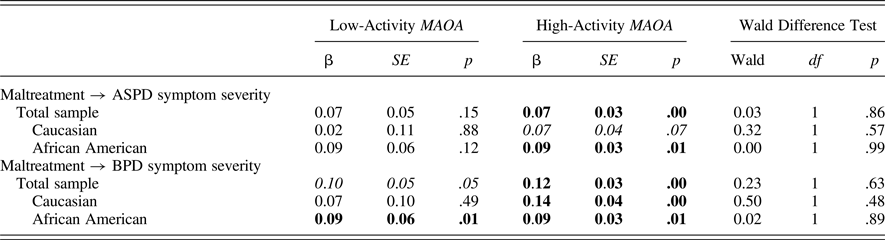
Table 2 depicts findings from multiple-group (high- vs. low-activity MAOA) models assessing potential differences in the strength of the direct association between childhood maltreatment and personality pathology in early adulthood (Figure 1, path A only).
Multiple-group (high- vs. low-activity MAOA) models assessing potential differences in the strength of the association between childhood maltreatment and personality pathology in early adulthood

Note: MAOA, monoamine oxidase A; ASPD, antisocial personality disorder; BPD, borderline personality disorder. Significant effects are in bold.
ASPD symptom severity
Only those with the high-activity MAOA genotype demonstrated a significant association between early maltreatment and ASPD symptom severity in early adulthood. However, the strength of the association did not differ significantly from the low-activity group.
BPD symptom severity
Similarly, only those with the high-activity MAOA genotype demonstrated a significant association between early maltreatment and BPD in early adulthood, though the low-activity group did show an association that reached trend-level significance. The strength of these associations did not differ by genotype.
Multiple group mediation models: Indirect associations
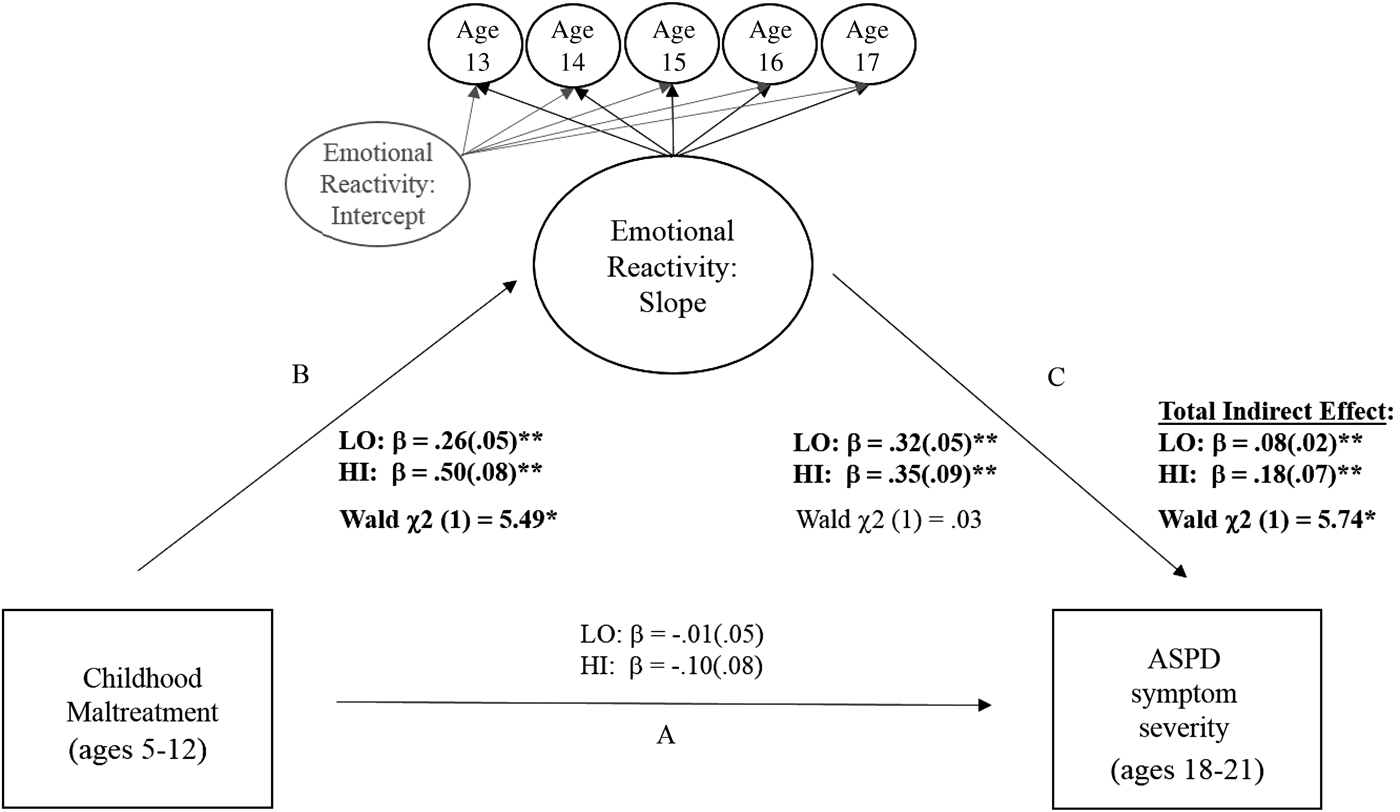
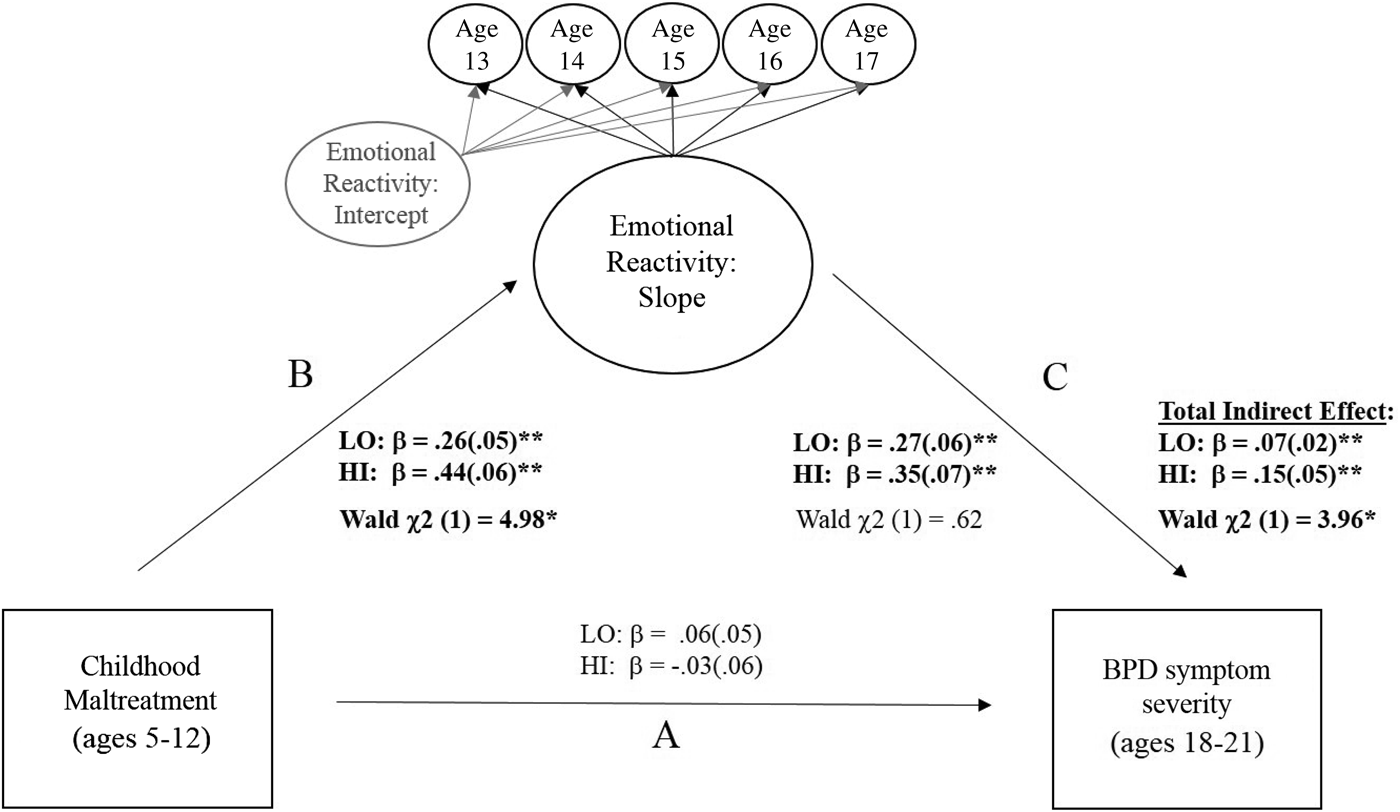
Figures 2 and 3 show findings from multiple-group (high- vs. low-activity MAOA) mediation models examining the indirect effects of childhood maltreatment on early adulthood outcomes via changes in ER during adolescence (Figure 1, paths A, B, and C). All findings remained significant after accounting for race and receipt of public assistance.
Multiple-group mediation models testing monoamine oxidase A (MAOA) genotype differences in the indirect association between childhood maltreatment and antisocial personality disorder (ASPD) symptom severity in early adulthood via changes in emotional reactivity during adolescence. Note: Standardized () coefficients were estimated separately for each MAOA group. Overall model fit was good (2 (33) = 190.63**; RMSEA = .07; CFI = .97). Significant Wald Tests indicate differences between women with the high- and low-activity MAOA genotype for 1) associations between childhood maltreatment and emotional reactivity (path B); and 2) the total indirect effect (path B * path C). There were no group differences in path A or C. Findings remained significant after accounting for race and receipt of public assistance. *p < .05. **p < .01.

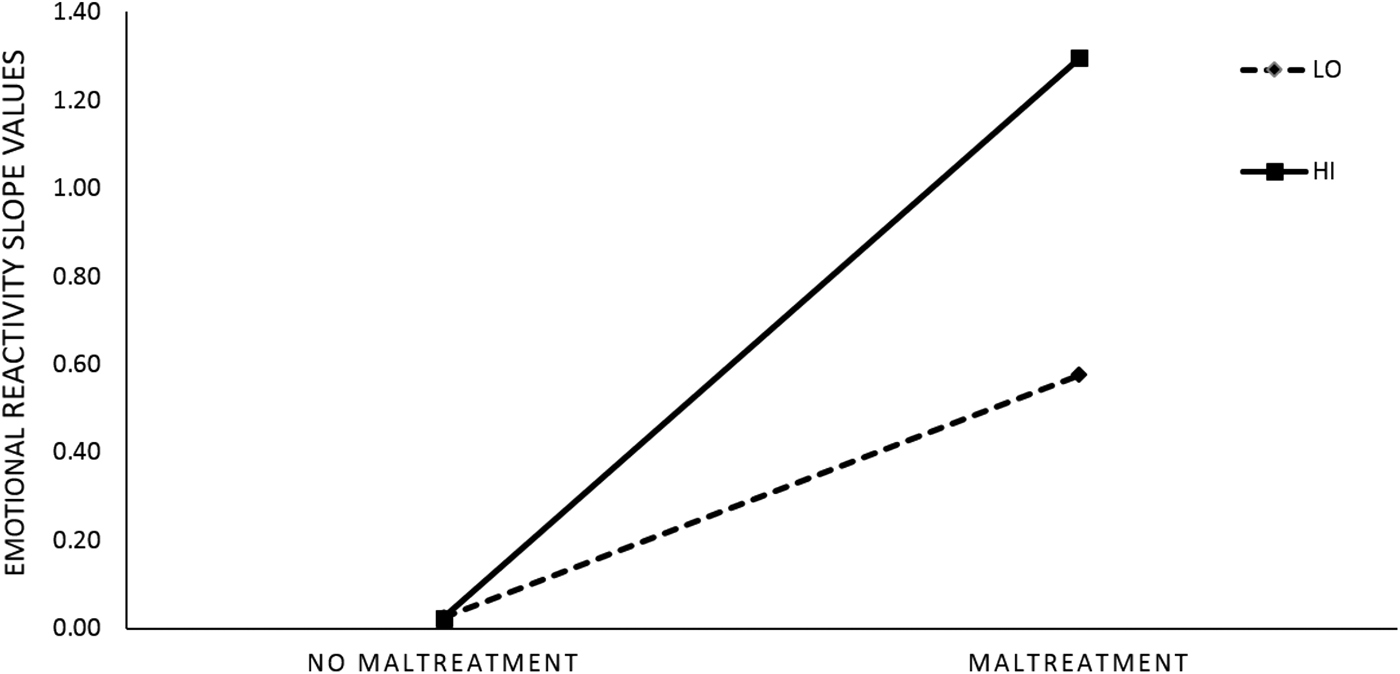
Change in emotional reactivity (slope values) as a function of monoamine oxidase A (MAOA) activity and exposure to childhood maltreatment. Note: LO = low-activity MAOA group; HI = high-activity MAOA group. Slope values are standardized () coefficients extracted from multiple-mediation model with antisocial personality disorder symptoms (ASPD) symptom severity as an outcome. Results are similar for models including BPD symptom severity as an outcome and are available upon request.

ASPD symptom severity
As depicted in Figure 2, the direct association between early maltreatment and ASPD symptom severity in early adulthood (path A) was nonsignificant for both genotype groups. For both genotypes, childhood maltreatment predicted increases in ER during adolescence (path B) and increasing ER during adolescence predicted greater ASPD symptom severity in early adulthood (path C). In addition, there was a significant indirect (paths B and C) effect for both genotype groups. The association between early maltreatment and increasing ER in adolescence (path B) was significantly stronger for those with high-activity MAOA (Figure 3). The overall indirect effect was also stronger for those with high-activity MAOA. There were no genotype differences in the strength of the association between adolescent ER and ASPD symptom severity.
BPD symptom severity
Results were similar for BPD symptom severity (see Figure 4). The direct association between early maltreatment and BPD symptom severity in early adulthood (path A) was nonsignificant for both genotype groups. However, childhood maltreatment predicted increases in ER during adolescence (path B) and increasing ER during adolescence predicted greater BPD symptom severity in early adulthood (path C), resulting in a significant indirect effect (paths B and C) for both genotype groups. However, the association between early maltreatment and increasing ER in adolescence (path B) was significantly stronger for those with high-activity MAOA. In addition, the overall indirect effect was also stronger for those with high-activity MAOA genotype. There were no genotype differences in the strength of the association between adolescent ER and BPD symptom severity.Footnote 4, Footnote 5
Multiple-group mediation models testing monoamine oxidase A (MAOA) genotype differences in the indirect association between childhood maltreatment and borderline personality disorder symptom severity in early adulthood via changes in emotional reactivity during adolescence. Note: Standardized () coefficients were estimated separately for each MAOA group. Overall model fit was good (2 (33) = 197.53**; RMSEA = .07; CFI = .97). Significant Wald Tests indicate differences between women with the high- and low-activity MAOA genotype for 1) associations between childhood maltreatment and emotional reactivity (path B); and 2) the total indirect effect (path B * path C). There were no group differences in path A or C. Findings remained significant after accounting for race and receipt of public assistance. *p < .05. **p < .01.

Multiple-group models (direct and indirect associations) stratified by race
The inclusion of race failed to moderate findings in the total sample. Secondary analyses were rerun for Caucasian and African American samples separately. Table 2 shows findings from multiple-group models assessing potential differences in the strength of the direct association between childhood maltreatment and personality pathology in early adulthood. Similar to results described above, the strength of this association did not differ significantly by genotype for Caucasians or African Americans. Online-only supplementary Table S.3 provides findings from multiple-group mediation models. The results were in the same direction as those seen in the total sample; however, moderation findings were reduced to trend level or nonsignificance in both samples. When comparing models stratified by race, parameter estimates for paths of interest are within overlapping confidence intervals, and these results are available upon request.
Discussion
Previous research has consistently demonstrated that common polymorphic variation in MAOA moderates the influence of childhood maltreatment on later antisocial behavior, with growing evidence that the “risk” allele (high vs. low activity) varies by sex such that the high-activity allele figures more prominently in studies of females (Byrd & Manuck, Reference Byrd and Manuck2014). However, there has been much less focus on how this G × E interaction functions to increase risk (Dodge, Reference Dodge2009). The current study sought to expand on previous work by examining whether changes in ER during adolescence constitute a potential mechanism mediating the interaction of MAOA variation and childhood maltreatment on ASPD symptom severity in early adulthood. This question was examined in a large, longitudinally assessed, urban female sample, broadening prior research, which has focused predominantly on males. While direct associations between early maltreatment and later ASPD did not vary by genotype, there was a significant difference in the indirect path via ER during adolescence. Consistent with hypotheses, females with high-activity MAOA genotype who experienced early maltreatment had greater increases in ER during adolescence, leading to ASPD symptoms in early adulthood. The current study also examined whether this putative risk pathway was specific to ASPD or whether it also confers risk for other personality pathology characterized by high levels of ER (i.e., BPD). Consistent with hypotheses, this risk pathway served to increase risk for both ASPD and BPD symptom severity in adulthood via increases in ER during adolescence, suggesting that the interaction between MAOA and early maltreatment places women at risk for a broader range of personality pathology via effects on ER.
Indirect associations: MAOA × Maltreatment → ER → personality pathology
Genotype-specific variation in this indirect effect was driven by differences in the strength of the association between childhood maltreatment and increases in ER during adolescence. In other words, women who experienced childhood maltreatment and had the high-activity MAOA genotype demonstrated greater increases in ER during adolescence, while increasing ER predicted higher ASPD and BPD symptom severity for all women. This suggests that shifting focus to this intermediate behavioral phenotype may prove more clarifying in terms of understanding this developmental risk pathway. While research has examined the independent effects of MAOA variation and maltreatment on ER (Buckholtz et al., Reference Buckholtz, Callicott, Kolachana, Hariri, Goldberg, Genderson and Meyer-Lindenberg2008; Heleniak et al., Reference Heleniak, Jenness, Vander Stoep, McCauley and McLaughlin2016; McLaughlin et al., Reference McLaughlin, Hatzenbuehler, Mennin and Nolen-Hoeksema2011; Meyer-Lindenberg et al., Reference Meyer-Lindenberg, Buckholtz, Kolachana, Hariri, Pezawas, Blasi and Callicott2006), further investigation into how these risk factors serve to synergistically increase vulnerability may be particularly important. Along these lines, one recent neuroimaging study found that the interaction between MAOA and maltreatment was associated with altered functioning within the corticolimbic neural circuitry, and these functional abnormalities were linked to increased risk for antisocial behavior (Holz et al., Reference Holz, Boecker, Buchmann, Blomeyer, Baumeister, Hohmann and Witt2016). Continued comprehensive and multimodal assessments of ER (e.g., neuroimaging, psychophysiology, etc.) as it is impacted by MAOA variation and maltreatment will aid in clarifying this risk mechanism.
Findings from the current study also suggest that it is important to consider how this G × E interaction functions to confer general, rather than specific, risk. While many studies have examined direct association between MAOA and a broad range of psychopathology (Reif et al., Reference Reif, Weber, Domschke, Klauke, Baumann, Jacob and Pauli2012; Younger et al., Reference Younger, Tsai, Hong, Chen, Chen and Yang2005), those studies examining the interaction between MAOA and maltreatment have focused almost exclusively on antisocial behavior (Byrd & Manuck, Reference Byrd and Manuck2014; Taylor & Kim-Cohen, Reference Taylor and Kim-Cohen2007). Thus, the current study represents an important extension of previous research by documenting association between the MAOA × maltreatment interaction and both ASPD and BPD symptomatology (and not depression) in early adulthood via increasing ER in adolescence. Though this finding certainly warrants replication, it underscores the need to expand our focus to include alternative outcomes when examining this developmental risk pathway, in line with the tenants of multifinality (Cicchetti & Rogosch, Reference Cicchetti and Rogosch1996). Future research is needed to clarify the extent to which results point to a shared endophenotype (i.e., shared variance) among ASPD and BPD and to identify additional moderators that explain divergent mental health outcomes.
It is also noteworthy that this indirect path was significant among females with the low-activity MAOA genotype; it was just significantly stronger among those with the high-activity MAOA genotype. While this may be related to the fact that our sample was higher risk by virtue of low-income status, it underscores the robust impact of early maltreatment and encourages continued examination of this risk factor. Consistent with the original investigation by Caspi et al. (Reference Caspi, McClay, Moffitt, Mill, Martin, Craig and Poulton2002) and recent meta-analytic findings (Byrd & Manuck, Reference Byrd and Manuck2014), the current study utilized a multifaceted maltreatment index and focused on any occurrence during childhood (i.e., prior to the age of 12); however, research suggests that considering the type, timing, and severity of maltreatment is particularly important (Manly, Kim, Rogosch, & Cicchetti, Reference Manly, Kim, Rogosch and Cicchetti2001; Tottenham & Sheridan, Reference Tottenham and Sheridan2009). For example, there are clear associations between severe neglect/parental separation in the first years of life and precocious development of the amygdala (Tottenham, Reference Tottenham, Anderson and Pine2014). This accelerated amygdala maturation is coupled with slower maturation of functional connections with frontal regulatory regions (Gee, Reference Gee2016; Gee et al., Reference Gee, Gabard-Durnam, Flannery, Goff, Humphreys, Telzer and Tottenham2013; Tottenham et al., Reference Tottenham, Hare, Millner, Gilhooly, Zevin and Casey2011), which may help to explain associations between early maltreatment and heightened ER (VanTieghem & Tottenham, Reference VanTieghem and Tottenham2016). Given the role of MAOA in the early development of this neural circuitry (Buckholtz & Meyer-Lindenberg, Reference Buckholtz and Meyer-Lindenberg2008), further investigation into how variation in MAOA functions to exacerbate risk associated with type and severity of maltreatment during developmentally sensitive periods will be particularly important.
Direct associations: MAOA × Maltreatment → personality pathology
Direct associations between early maltreatment and later ASPD did not vary by MAOA genotype, and this stands in contrast to hypotheses and previous work in this area (Åslund et al., Reference Åslund, Nordquist, Comasco, Leppert, Oreland and Nilsson2011; Prom-Wormley et al., Reference Prom-Wormley, Eaves, Foley, Gardner, Archer, Wormley and Silberg2009; Sjöberg et al., Reference Sjöberg, Nilsson, Wargelius, Leppert, Lindström and Oreland2007). A recent meta-analysis found evidence of this G × E among females (Byrd & Manuck, Reference Byrd and Manuck2014); however, it was notably less robust than that seen in male samples and failed to survive sensitivity analysis by serial deletion of individual studies. Considering the current findings, which suggest that associations between this interaction and later personality pathology operate through direct effects on ER, previous inconsistencies in the literature may be related to an incomplete characterization of this developmental risk pathway (i.e., failure to consider mediating mechanisms and a sole focus on antisocial behavior as an outcome). As such, future work in this area should seek to focus on ER as an intermediate behavioral phenotype that places women at risk for both ASPD and BPD.
Sex differences
Consistent with prior work in this area, our results show that the high-activity MAOA genotype confers greater risk among females, providing further evidence that the MAOA risk variant may be sex dependent (Byrd & Manuck, Reference Byrd and Manuck2014; Perry, Goldstein-Piekarski, & Williams, Reference Perry, Goldstein-Piekarski and Williams2017). This echoes prior research examining G × E associations with antisocial behavior within female samples (Åslund et al., Reference Åslund, Nordquist, Comasco, Leppert, Oreland and Nilsson2011; Prom-Wormley et al., Reference Prom-Wormley, Eaves, Foley, Gardner, Archer, Wormley and Silberg2009; Sjöberg et al., Reference Sjöberg, Nilsson, Wargelius, Leppert, Lindström and Oreland2007) and is also consistent with the broader literature where among women the high-activity MAOA genotype has been shown to confer greater risk for symptoms of dysthymia (Nikulina, Widom, & Brzustowicz, Reference Nikulina, Widom and Brzustowicz2012) and depression (Rivera et al., Reference Rivera, Gutiérrez, Molina, Torres-González, Bellón, Moreno-Küstner and Martínez-Espín2009; Schulze et al., Reference Schulze, Müller, Krauss, Scherk, Ohlraun, Syagailo and Papassotiropoulos2000; Younger et al., Reference Younger, Tsai, Hong, Chen, Chen and Yang2005) as well as panic (Deckert et al., Reference Deckert, Catalano, Syagailo, Bosi, Okladnova, Di Bella and Fritze1999; Maron et al., Reference Maron, Lang, Tasa, Liivlaid, Toru, Must and Shlik2005; Reif et al., Reference Reif, Weber, Domschke, Klauke, Baumann, Jacob and Pauli2012) and other anxiety disorders (Samochowiec et al., Reference Samochowiec, Hajduk, Samochowiec, Horodnicki, Stȩpień, Grzywacz and Kucharska-Mazur2004; Voltas, Aparicio, Arija, & Canals, Reference Voltas, Aparicio, Arija and Canals2015). Moreover, a recent neuroimaging study found a sex-dependent interaction between MAOA genotype and early maltreatment in the prediction of emotion processing deficits whereby maltreated females with the high-activity genotype and maltreated males with the low-activity genotype showed heightened amygdala activation during emotion processing (Holz et al., Reference Holz, Boecker, Buchmann, Blomeyer, Baumeister, Hohmann and Witt2016). Taken together, these results suggest that the effects of MAOA may be moderated by sex.
Nonetheless, the existing literature offers little clarity on this reversal of allelic association between males and females, and it is important to consider the difficulties of studying the effects of MAOA in females. Incomplete X-inactivation at the MAOA locus could conceivably produce a different expression profile in women, resulting in a sex-linked difference in MAOA product (Benjamin, Van Badel, & Craig, Reference Benjamin, Van Badel and Craig2000; Carrel & Willard, Reference Carrel and Willard2005). In addition, there is some evidence that CpG residues in the MAOA promoter are hypermethylated in women, relative to men, and that differential methylation may be greatest among women of low-activity MAOA genotype (Philibert, Gunter, Beach, Brody, & Madan, Reference Philibert, Gunter, Beach, Brody and Madan2008). Finally, it is possible that MAOA interacts with sex differences in perinatal androgen exposure to affect brain development via neuronal migration or differentiation, or that gonadal hormones modulate genotype-dependent variation in MAOA expression during adolescence (Nikulina et al., Reference Nikulina, Widom and Brzustowicz2012; Sjöberg et al., Reference Sjöberg, Nilsson, Wargelius, Leppert, Lindström and Oreland2007). However, these suggestions are highly speculative as there is not yet evidence of a clear mechanism for the bidirectional association of MAOA genotype. In addition, given that the high-activity MAOA genotype is dominant, it may also be important to consider how the low-activity genotype functions to buffer risk among women experiencing maltreatment.
Limitations
Findings from the current study should be considered within the context of the following limitations. First, the present study focused on an urban sample of females, and thus, findings cannot be generalized to males or clinical populations. In addition, primary results were reported after collapsing across race due to concerns about reducing power in our multigroup mediation models. While supplementary analyses were stratified by race and did show findings in the same direction, significance levels were reduced to trend level. Moreover, we did not have access to ancestry informative markers, and could not detect moderating effects that might stem from differences in extent of genetic admixture among African American participants. Second, though our measure of ER was assessed prospectively across adolescence (five total time points) using a previously validated index (Burke et al., Reference Burke, Hipwell and Loeber2010), it utilized only questionnaire data. Future research may seek to utilize a more comprehensive measure of ER that includes multimodal assessments (e.g., self-repot or caregiver report, physiology, and neuroimaging). Third, as mentioned above, our study focused on childhood maltreatment using a multifaceted index. While this is consistent with previous work (Byrd & Manuck, Reference Byrd and Manuck2014; Caspi et al., Reference Caspi, McClay, Moffitt, Mill, Martin, Craig and Poulton2002), narrowing the focus to investigate type and severity of maltreatment during hypothesized critical periods may further elucidate our understanding of risk. Fourth, our early adult outcomes focused on two related personality pathologies during early adulthood: ASPD and BPD and depression. Expanding the focus to other psychopathology may help to clarify whether this developmental risk pathway is best characterized as representing shared etiology between ASPD and BPD, or is instead associated with multifinality. In addition, extending the age range in adulthood to allow for an examination of the divergence of persisting and desisting trajectories of these symptoms may also represent an important next step.
Fifth and finally, the present study focused on one potential mediator: ER. Considering recent evidence that maladaptive social information processing mediates associations between a MAOA × Harsh Parenting interaction on later antisocial behavior (Galán, Choe, Forbes, & Shaw, Reference Galán, Choe, Forbes and Shaw2016), it may be important to consider alternative mediating pathways, and/or how these risk factors may be related. For example, high levels of ER may influence social information processing as well as other higher order cognitive processes like reinforcement learning, both of which have been shown to increase risk for antisocial behavior (Byrd, Loeber, & Pardini, Reference Byrd, Loeber and Pardini2014; Crick & Dodge, Reference Crick and Dodge1996; Dodge & Pettit, Reference Dodge and Pettit2003). As such, future research should test alternative mediators and how they may interact to contribute to complex developmental cascades of risk (Masten & Cicchetti, Reference Masten and Cicchetti2010).
Clinical implications
The current study broadens our understanding of the impact of MAOA variation and childhood maltreatment on antisocial behavior by identifying ER as a mediating mechanism in a large, prospectively assessed, longitudinal sample of urban women. Specifically, results suggest that women who experience maltreatment and carry the high-activity MAOA genotype show significantly greater increases in ER during adolescence, which places them at risk for ASPD in early adulthood. Furthermore, results bridge a gap in the extant literature by examining whether this putative risk pathway is specific to ASPD and suggests more general risk for other personality pathology (i.e., BPD). These findings have significant implications for prevention and intervention programs designed to target youth at risk for the development of ASPD and/or BPD. Namely, prevention efforts may focus on ways to reduce ER and/or promote adaptive strategies for managing high levels of ER. In addition, incorporating caregivers into intervention (particularly during adolescence) may also be warranted. Because these youths are particularly vulnerable, prolonged scaffolding and targeted emotion socialization during the critical adolescent period may be crucial for risk reduction (Klimes-Dougan et al., Reference Klimes-Dougan, Brand, Zahn-Waxler, Usher, Hastings, Kendziora and Garside2007; Morris, Silk, Steinberg, Myers, & Robinson, Reference Morris, Silk, Steinberg, Myers and Robinson2007). Specifically, helping parents to respond to high levels of ER in a way that (a) validates the emotional experience, (b) models effective coping strategies, and (c) prevents potential escalation, and inadvertent reinforcement could aid in diverting at-risk youth away from enduring trajectories of personality pathology.
Supplementary Material
To view the supplementary material for this article, please visit https://doi.org/10.1017/S0954579417001900.