1. Introduction
Language teaching can be an ‘emotional rollercoaster’ (Gkonou et al., Reference Gkonou, Dewaele and King2020, p. 1), as language teachers experience a wide range of emotions in the course of their work. Language teaching can be both cognitively and emotionally challenging, as language teachers need to mobilise their expertise to teach and care for students with diverse backgrounds (Acheson et al., Reference Acheson, Taylor and Luna2016; Gkonou & Miller, Reference Gkonou and Miller2019) while also managing and regulating their own emotions in the face of institutional, ideological, and sociocultural expectations (Her & De Costa, Reference Her and De Costa2022; J. Li & De Costa, Reference Li and De Costa2023; Song, Reference Song2016). The significance of emotions in language teaching has drawn increasing research attention in the past decade, especially since the abrupt switch to online teaching in response to the COVID-19 pandemic introduced new challenges for teachers (e.g. Tao et al., Reference Tao, Xu and Gao2024; Xu & Tao, Reference Xu and Tao2023).
Language teacher emotions (LTEs) are important not only because of their constant presence in the classroom but also because of the crucial role that emotions play in teachers’ pedagogical practice, well-being, and professional development (Farrell, Reference Farrell2022). Research on LTEs has thus aimed to understand language teachers’ emotional experiences in their own right (e.g. Mairitsch et al., Reference Mairitsch, Sulis, Mercer, Shin and Mairi2024), to explore language teachers’ emotion labour (Benesch’s, Reference Benesch2020) and emotion regulation practices in tandem with their antecedents or predictors (e.g. Derakhshan et al., Reference Derakhshan, Dewaele and Azari Noughabi2022), and to investigate how their emotional experiences and regulatory practices may contribute to teaching effectiveness, teacher well-being, and professional development (e.g. Morris & King, Reference Morris and King2023; Su & Lee, Reference Su and Lee2024). Insights from studies in these areas may enable us to better predict language teachers’ job satisfaction, improve their pedagogical practice, and enhance their students’ language learning experiences and outcomes.
While prior reviews have documented the antecedents, nature and elements, and consequences/effects of (language) teacher emotions (Chen, Reference Chen2021; Han et al., Reference Han, Jin and Yin2023; Richards, Reference Richards2022), this review goes further by 1) probing into emotion-related constructs especially specific to the language teaching profession, 2) exploring the potentials of language teacher emotions in activating teacher agency, and 3) understanding the costs and benefits of language teachers’ emotion-related practices. Meeting these goals necessitates a full review of the emerging themes surrounding language teachers’ emotions and emotion-related practices, which may overlap with earlier reviews. Nevertheless, there remains a need for a review focused on helping teachers, teacher educators, and researchers better understand language teacher emotions and embrace them as a tool to improve teachers’ pedagogical practice and enhance their professional growth. To this end, our review will address the following research question:
What themes has research revealed about language teachers’ emotions?
2. Methodology
2.1. Criteria for inclusion and exclusion
The journal requires that reviews of recent scholarship include studies published no more than ten years prior to the review. Based on this requirement and the research question above, the review team established the following criteria for inclusion in this systematic review of LTE studies (Macaro, Reference Macaro, McKinley and Rose2019): 1) focused exclusively on language teachers, with abstracts or titles including keywords such as emotion(s), feeling(s), or specific emotions (e.g. anxiety, enjoyment); 2) published between January 2015 and February 2024, including forthcoming papers available online; 3) based on empirical data, thus excluding conceptual, review, or opinion papers; 4) published in peer-reviewed journals listed in the Social Science Citation Index (SSCI) or Emerging Sources Citation Index (ESCI) to ensure research quality; and 5) written in English, to enable access for the review team. Conversely, articles were excluded if they did not focus on LTE, even if they reported some relevant findings.
2.2. The review process
The review process consisted of two phases: 1) literature search and screening; and 2) two rounds of review. First, we conducted a systematic online search using Google Scholar followed by manual searching in journals, as advised by Macaro (Reference Macaro, McKinley and Rose2019). We started with a broad search using keywords such as emotion(s), emotional, feeling(s), affective, enjoyment, anxiety, combined with teacher(s), lecturer(s), academics, or teaching, to ensure we captured studies that did not specify a focus on language teachers/teaching in the title (e.g. Tao et al., Reference Tao, Xu and Gao2024). In addition, we conducted a manual search by reading the titles and abstracts of articles in major language-teaching journals (e.g. Language Teaching Research, System, TESOL Quarterly) to identify any key studies missed in our database search. Next, the first author screened the titles, abstracts, and keywords of all the articles identified through these searches to ensure they met the above inclusion and exclusion criteria. During the initial screening process, the research team further excluded two types of studies: 1) those which exclusively used student data to examine students’ perceptions of teacher emotions; and 2) those only focusing on teachers’ L2 learning emotions, rather than emotions related directly to their professional practices. The initial search and screening yielded 115 articles published in 40 journals for the systematic review.
We subsequently proceeded to the first round of review by systematically mapping the relevant research (Macaro, Reference Macaro, McKinley and Rose2019). We developed an Excel spreadsheet to record key information on the studies reviewed, including authors and title, research questions, geographic context, language(s) being taught, career stage(s) of teacher participants (pre- or in-service), methodology (quantitative, qualitative, or mixed methods), and data collection tools (interview, questionnaire, observation, etc.). To facilitate the next stage of in-depth review, the systematic mapping also noted key emotion-related concepts (e.g. emotion labour, emotion regulation) appearing in the title, keywords, and/or abstract of each paper, which were then used to categorise the studies according to themes.
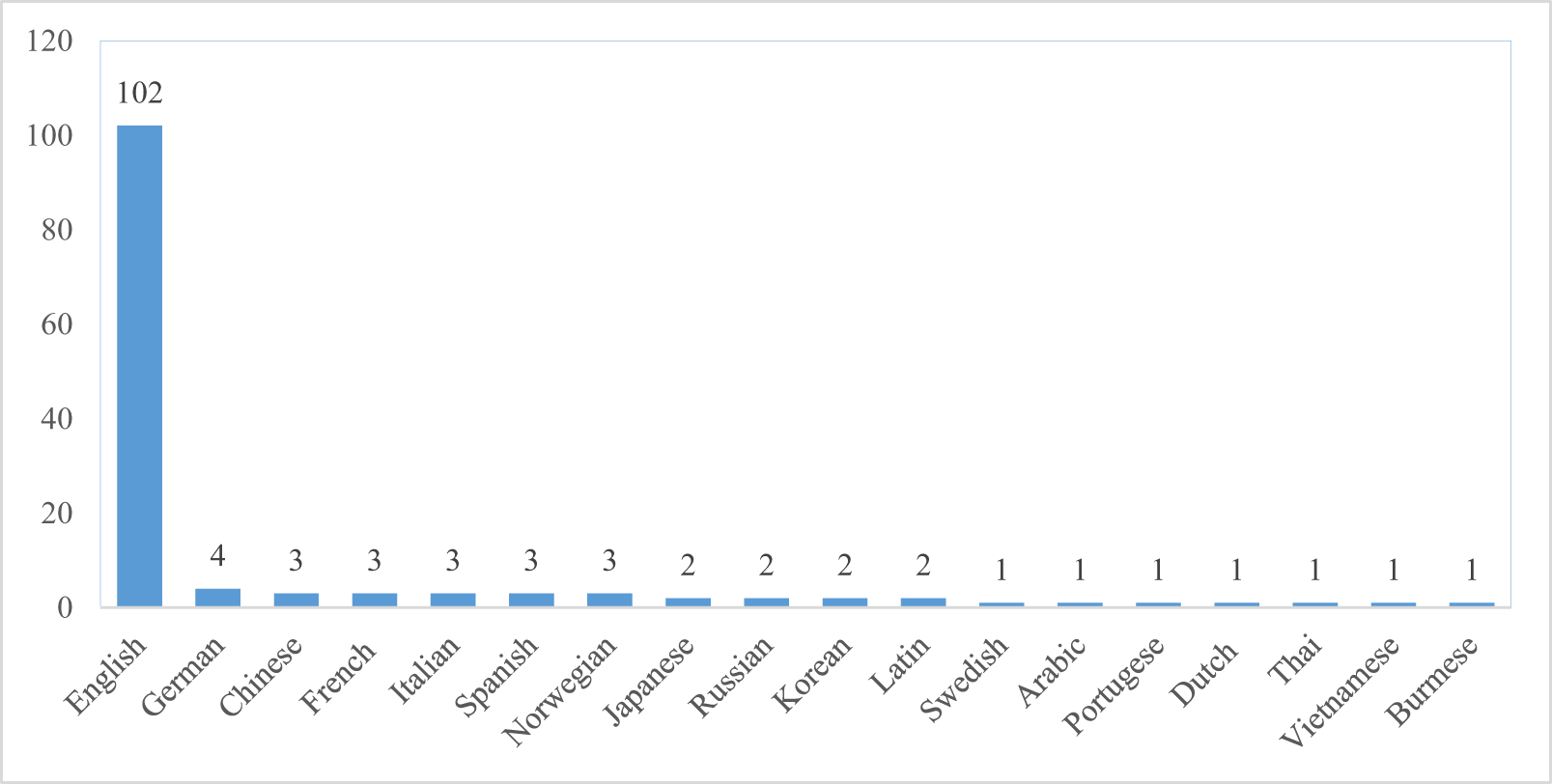
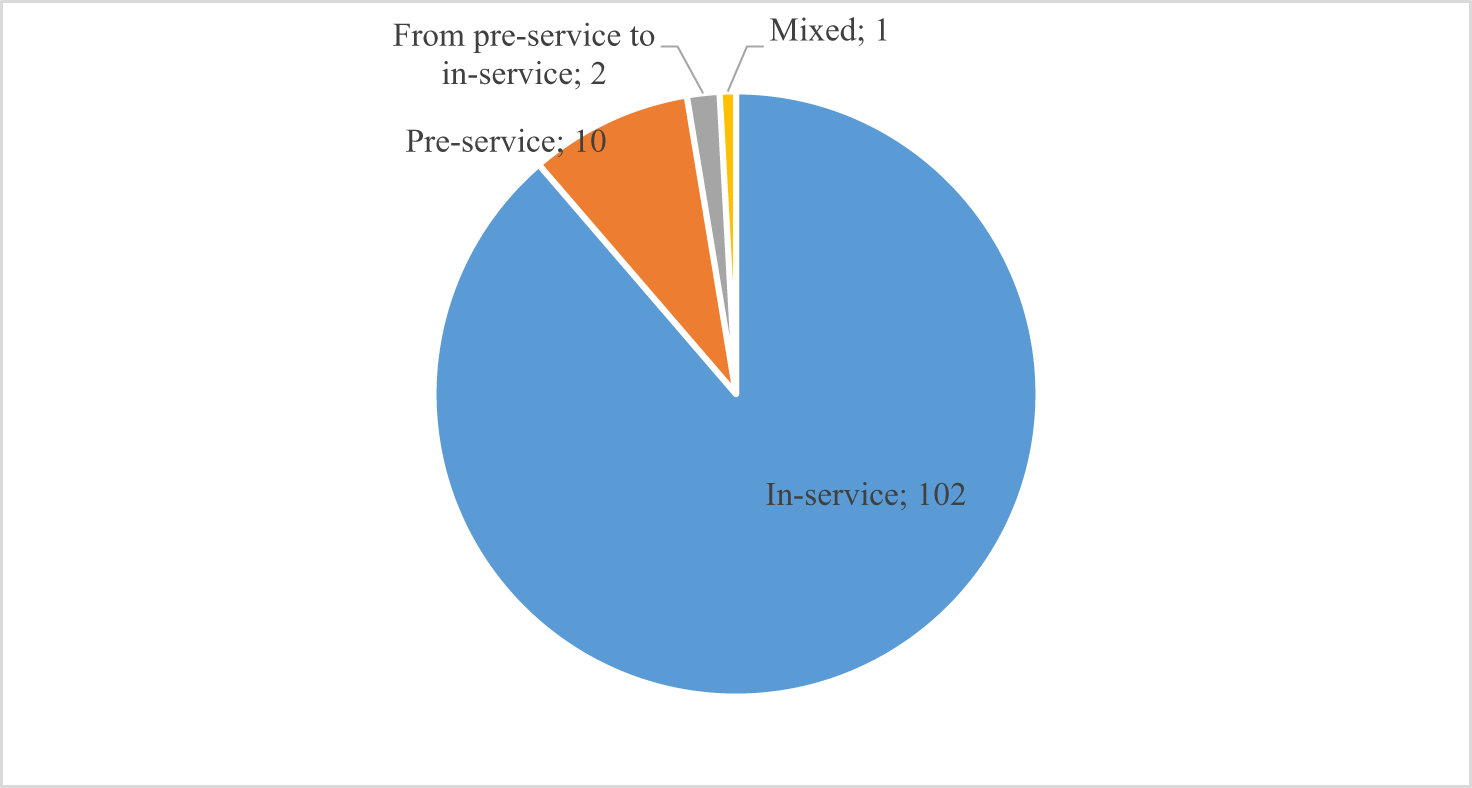
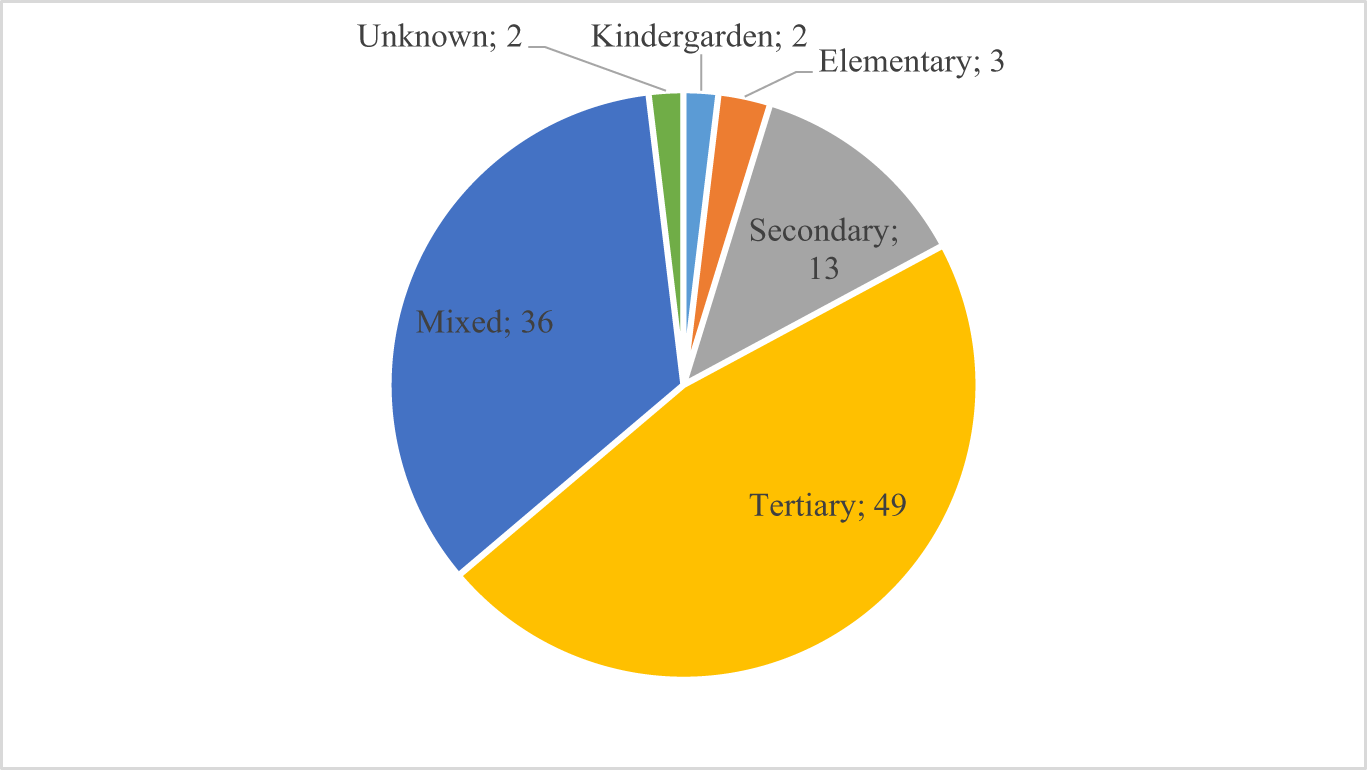
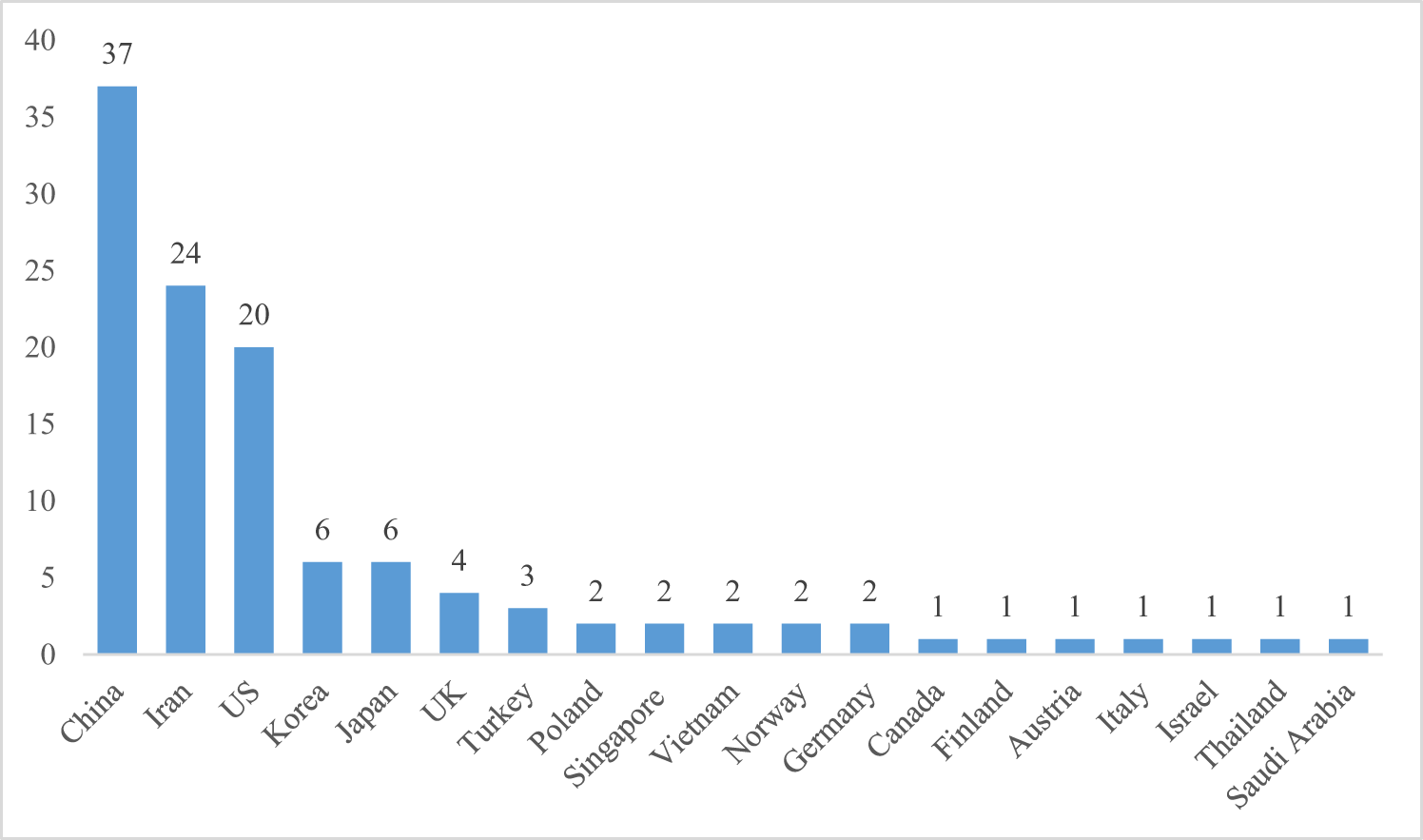
The first round of review revealed four patterns in the profiles of the language teachers being researched, relating, in turn, to the languages they taught, their career stages, the educational levels of their institutions, and their geographic locations. First, the review indicates that research attention is primarily given to English teachers’ emotions in English as a second language (ESL) or a foreign language (EFL) contexts, with such studies accounting for nearly 90% of the review sample (see Figure 1). Among the 14 studies on LOTE (languages other than English) teachers, those teaching European languages received the most attention, while two studies did not specify the languages taught by their participants. Second, the research included in the review focuses primarily on in-service language teachers (88.7%) (see Figure 2) among which only seven articles focus on novice teachers. The limited attention to pre-service and novice teachers persists despite the fact that language teachers in the early stages of their careers are more likely to confront emotional challenges. Third, most studies involving in-service teachers were conducted in tertiary settings (46.7%), while elementary school and kindergarten teachers received very little attention (<5%) (see Figure 3). Meanwhile, it is worth noting that over 1/3 of the reviewed studies examined language teachers teaching students of mixed educational levels (e.g. secondary and post-secondary); over half of these studies (N = 21) focused on teachers working in private language schools or private tutoring services. Fourth, the language teachers participating in the reviewed studies were well distributed across the globe (see Figure 4). Language teachers from China, Iran, and the United States are most commonly represented, with participants from these countries appearing in 70% of the total articles. It should be noted that 12 articles recruited participants from multiple countries, while four claimed an international composition of participants without reporting their specific locations.
The languages taught by teacher participants in reviewed LTE research. Note: A study may involve different groups of teachers teaching different languages.

The current career stages of language teachers in reviewed LTE research.

The educational levels of the institutions in reviewed LTE research. Note: Only studies involving in-service teachers (N = 105) were counted.

The geographic distribution of language teachers in reviewed LTE research.

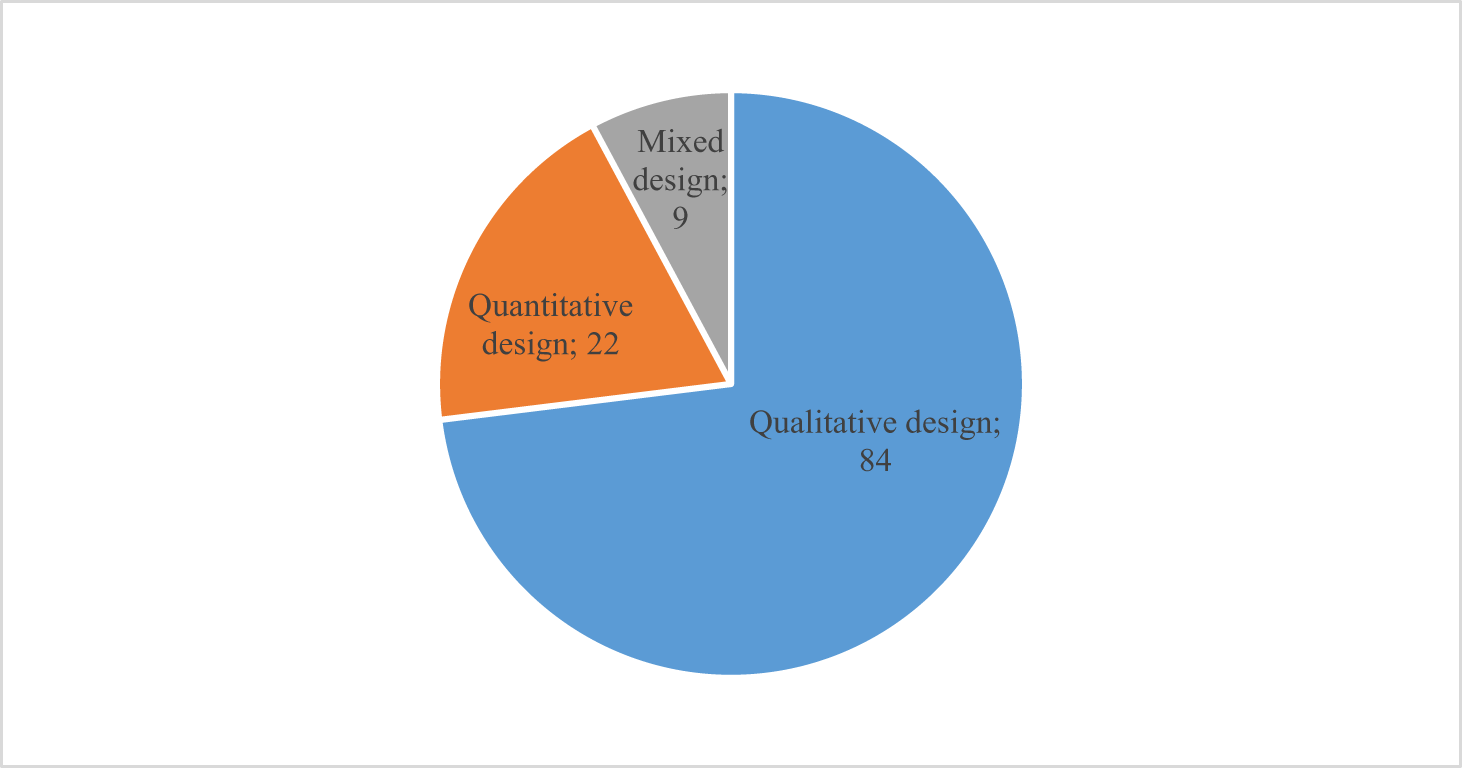
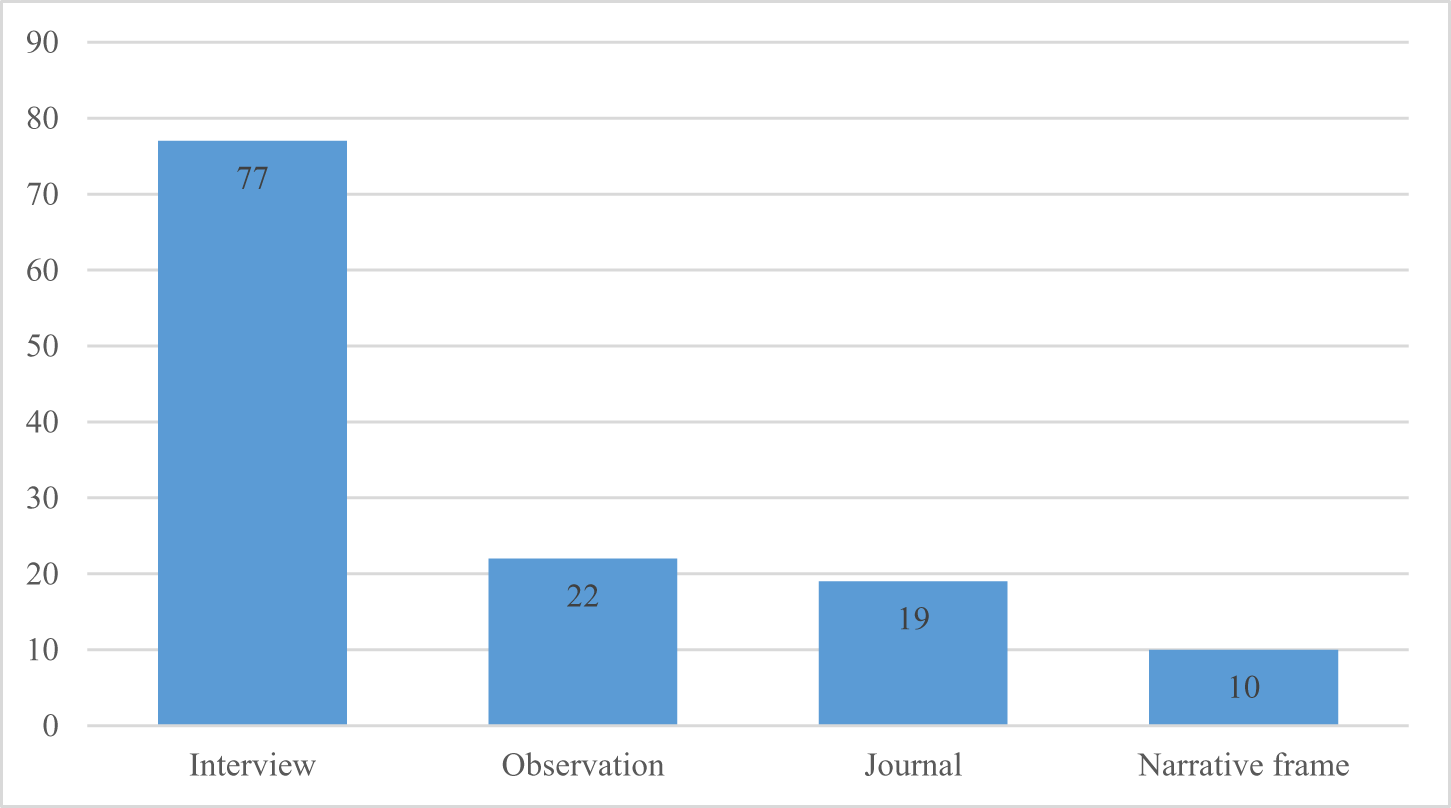
Building upon the results of this mapping, we performed a second round of in-depth review of the articles. We read the full manuscripts to identify major themes, which included emotional experiences, emotion labour, emotion regulation, and emerging emotion-related concepts. We also paid particular attention to the discussion sections to understand how the research findings of each article contribute to LTE scholarship, and to the methodology sections to note any patterns in the relationships between methodological choices and major themes. Qualitative methods were used in the plurality of studies, followed by quantitative and then mixed methods research (see Figure 5), which confirms the conclusions of earlier reviews (e.g. Xu, Reference Xu and Agudo2018). Among the qualitative studies, a variety of data collection tools were used, with the most common being interviews followed by observations and journals (see Figure 6).
An overview of the research methodologies used in LTE research.

The data collection tools used in qualitative LTE research.

2.3. Limitations
Two limitations of this review should be acknowledged. First, due to time constraints, this review does not include unpublished doctoral theses, monologues, or book chapters. Second, this review does not include research published in languages other than English due to the language backgrounds of the authors. As a result, research written in other languages, which may have addressed a wider variety of teaching contexts (including more LOTE contexts), is not included. Readers are thus suggested to treat the results of this review with caution.
3. Results: Major themes in LTE research
Four key themes were identified via the systematic review. The first theme centres on what emotions language teachers experience, as well as the antecedents and consequences of their emotional experiences. The second theme focuses on language teachers’ emotion labour performed through complying with, negotiating, or resisting the feeling rules applied to their work. The third theme pertains to language teachers’ emotion regulation strategies and the possible relationship between these strategies, teacher well-being, and teaching effectiveness. Several concepts recur frequently among the above three themes, including teacher identity, agency, and self-efficacy. The last theme includes emotion-related concepts that were of less visibility but emerging in LTE research. The following sections will review each theme in turn, offer brief commentary on the methodological approaches utilised in the related studies, and identify gaps in the existing literature and directions for future research.
3.1. Emotional experiences
The first theme commonly identified in existing LTE research involves the emotional experiences of language teachers. Studies falling within this theme either address a wide range of emotions that teachers experience in language teaching, especially amid educational change, or focus on specific emotions. These two sub-themes are discussed in detail below.
3.1.1. Exploring language teachers’ overall emotional experiences
Studies falling within this sub-theme document language teachers’ emotional experiences, which usually feature emotional ups and downs and a mixture of negative and positive emotions in response to educational change, along with emotions related to constructs relevant to their professional development (e.g. identity). The majority of these studies adopt a sociocultural perspective on teacher emotions, investigating them in natural settings.
One of the most researched settings (N = 7) is online teaching, particularly in the context of emergency remote teaching during the COVID-19 pandemic; language teachers often found this a particularly emotional endeavor. Studies documenting this teaching context include several conducted in China (Liu et al., Reference Liu, Yan and Fu2022; Tao et al., Reference Tao, Xu and Gao2024) and Vietnam (Pham & Phan, Reference Pham and Phan2023). These studies explored a wide range of emotions associated with online language teaching and investigated the antecedents of these emotions (e.g. technological issues, silent classes/low student participation, invisible presence of students), which together serve as a starting point for further understanding of effective online teaching. For example, Tao et al.’s (Reference Tao, Xu and Gao2024) study investigated the connection between language teachers’ emotional trajectories and their agentic follow-up actions to improve their teaching, in which multiple facets of their emotions (i.e. valence, activation, object focus) and cognitive appraisal of the teachers all play a role.
Other studies have explored teachers’ emotional experiences in relation to contextual dynamics at various levels, including macro-level influences such as the neoliberal globalisation agenda (J. Li & De Costa, Reference Li and De Costa2023) and national educational policy changes (Lian et al., Reference Lian, Li and Tao2023); meso-level factors such as voluntary teaching under educationally and economically underdeveloped conditions (X. Zhang, Reference Zhang2021) and publication pressure due to new research policies at the university (Lu & Zhang, Reference Lu and Zhang2021); and micro-level phenomena including specific language teaching practices such as assessment and feedback (Derakhshan et al., Reference Derakhshan, Wang and Ghiasvand2024) and teaching English-major students in a university (Alzaanin, Reference Alzaanin2024). While all of these studies included in-service teachers at various stages of their professional life, only a handful explored the emotions of novice language teachers; these revealed more negative emotions (Farrell, Reference Farrell2022) or reported their critical emotional incidents (Derakhshan & Nazari, Reference Derakhshan and Nazari2023), suggesting that novice teachers need more emotional support in order to survive and thrive in their roles. It should be noted that the emotional experiences of pre-service teachers appear to have been neglected among the articles selected for review.
Another group of studies investigates language teachers’ emotions in relation to their professional development and the construction of their professional identities, in particular. The majority of these studies argue for the pivotal role of emotions in the identity construction of language teachers. One salient argument involves the detrimental effect of negative emotions on identity development. For example, Derakhshan and Nazari (Reference Derakhshan and Nazari2023), based on a first-year English teacher’s experience in a private language school in Iran, revealed that the participant’s efforts to claim a professional identity were undermined by multiple sources of negative emotions, including her own schooling experience, her interactions with students and parents, and a lack of institutional support. The impact of negative emotions on identity is confirmed by Hayik and Weiner-Levy’s (Reference Hayik and Weiner-Levy2019) study, which explored how social and political restrictions on women stirred strong and mainly negative emotions among Arabic pre-service teachers and further constrained their professional identities. However, other studies argue that negative emotions can also benefit identity development if ultimately dealt with positively. For example, language teachers often confront negative emotions associated with their ethnolinguistic identities, such as non-native-English-speaker status (Song, Reference Song2016; Wolff & De Costa, Reference Wolff and De Costa2017) or racial identities (Maddamsetti, Reference Maddamsetti2021), and choose to tackle those emotions by developing new pedagogical strategies (Wolff & De Costa, Reference Wolff and De Costa2017), modifying language practices (Maddamsetti, Reference Maddamsetti2021), and adopting alternative curriculum models (Song, Reference Song2016), all of which can further contribute to the development of their identities. The secret to successfully navigating emotional challenges seems to lie in teachers’ reflection on their own emotions (Maddamsetti, Reference Maddamsetti2021; Song, Reference Song2016) along with external support from teacher educators (Wolff & De Costa, Reference Wolff and De Costa2017) and peers (Maddamsetti, Reference Maddamsetti2021).
In contrast to the prevalence of studies exploring the effect of emotions on identity construction, a small number of studies investigated how language teachers’ identity construction influenced their emotions. Yip et al.’s (Reference Yip, Huang and Teng2022) study found that (in)congruence between self-identities and identities imposed by educational reforms triggered both positive and negative emotions in language teachers, indicating a need to understand the complex interactions between emotions and identity. This need has been addressed in Nguyen and Ngo’s (Reference Nguyen and Ngo2023) study which argues for an integrative perspective that views emotions and identity as mutually influential. That is, language teachers’ emotions motivate them to resolve tensions and to construct professional identity, which in turn guides their efforts in addressing emotional issues, potentially transforming their emotional experiences (Nguyen & Ngo, Reference Nguyen and Ngo2023). Overall, language teachers in the above studies were able to address emotions agentively at the classroom level, yet they showed limited agency in dealing with emotions derived from tensions at the institutional, societal, and ideological levels.
3.1.2. Understanding specific emotions experienced by language teachers
Among the studies focusing on specific emotions experienced by language teachers, the two most commonly studied emotions were anxiety and enjoyment. This focus may suggest that these emotions are particularly frequent or salient for language teachers, or may be influenced by earlier research on foreign language anxiety (Horwitz, Reference Horwitz1986) and the rise of positive psychology, particularly broaden-and-build theory (Fredrickson, Reference Fredrickson2001), which argues that positive emotions can have the effect of broadening awareness and response to events as well as building resilience and coping skills. These studies mainly aim to understand the sources of a specific emotion, which may include individual factors (e.g. personality, language proficiency level, and motivation), contextual factors (e.g. students, power relations, and sociocultural and political factors), or the combination and interactions of these two categories (e.g. interactions between one’s goals and working context). For example, Aydın (Reference Aydın2016) identified internal and external factors giving rise to pre-service teachers’ anxiety. Liu et al. (Reference Liu, Yan and Fu2022) described six types of anxiety in online teaching, which are actually multi-level antecedents (i.e. micro, exo, and macro) of anxiety. Song and Park’s (Reference Song and Park2019) work highlights dominant ideologies as the primary source of language teachers’ anxiety. Given that these studies discuss anxiety and its antecedents in different terms, a shared framework is needed to categorise and compare these antecedents consistently.
In addition, this line of research positions anxiety as primarily the result of how language teachers respond to their work environments (Fraschini & Park, Reference Fraschini and Park2021), suggesting that emotions (i.e. anxiety) are not simply affective outcomes of external factors, but involve teachers’ cognitive choices and evaluation. This argument is echoed in Goetze’s (Reference Goetze2023) study, which associated teachers’ anxiety with various types of cognitive appraisal, especially their self-perceived ability to adjust to situations. Moreover, Goetze’s (Reference Goetze2023) study found that anxiety rarely occurs alone; rather, it is experienced alongside other emotions, co-occurring with positive emotions more often than negative ones, suggesting that singling out one specific emotion may not accurately reflect teachers’ holistic emotional experiences.
With the increasing influence of positive psychology in applied linguistic research, studies on foreign language teaching enjoyment (FLTE) have become more prevalent in the past decade. Similar to research on language teachers’ anxiety, this line of research often focuses on determining key antecedents of enjoyment, including social factors (i.e. institutional contexts), psychological factors (i.e. grit, resilience, well-being, and motivation), and emotion-related constructs (i.e. emotion regulation). Thumvichit (Reference Thumvichit2024) identifies three major antecedents of FLTE: students’ classroom engagement, teachers’ perceptions of career value, and social interactions in the workplace. In another study, FLTE is significantly correlated positively with autonomous motivation and negatively with amotivation (Onodera, Reference Onodera2025), echoing broaden-and-build theory (Fredrickson, Reference Fredrickson2001) and suggesting a need to help teachers experience more enjoyment in order to boost their teaching motivation. This mirror image of the ‘upward spiral’ of positive emotions (Fredrickson, Reference Fredrickson2001) (i.e. enjoyment) is also supported by survey studies (Derakhshan et al., Reference Derakhshan, Dewaele and Azari Noughabi2022; Proietti Ergün & Dewaele, Reference Proietti Ergün and Dewaele2021) which reveal the predictive roles of resilience, well-being, and L2 grit in FLTE. Given that resilience and grit are both trait-related factors, it remains to be determined whether teachers can be trained to become grittier and more resilient and, subsequently, happier. This leads to a more fundamental question concerning whether happy teachers are born or nurtured.
Other specific emotions which have been the focus of studies in the review sample include frustration (Morris & King, Reference Morris and King2019), anger (Deng et al., Reference Deng, Heydarnejad, Farhangi and Farid Khafaga2022), vulnerability (Nejadghanbar et al., Reference Nejadghanbar, Song and Hu2024), and pride (Mairitsch et al., Reference Mairitsch, Sulis, Mercer, Shin and Mairi2024). Among these, pride is a positive emotion promoted by positive psychology (Fredrickson, Reference Fredrickson2001) and is thus conceptualised as potentially making a positive contribution to language teaching and teachers’ professional development and well-being. For example, Mairitsch et al. (Reference Mairitsch, Sulis, Mercer, Shin and Mairi2024) found that the antecedents of pride among 140 English teachers were either other- or self-oriented, and further argued for promoting teachers’ pride to improve their well-being.
Likewise, research on specific negative emotions (e.g. vulnerability, anger, and frustration), often explored the possible predictors or antecedents of a particular emotion. Vulnerability, a combination of feelings of ‘powerlessness, betrayal, or defenselessness in situations of high anxiety or fear’ (Lasky, Reference Lasky2005, p. 901), has been documented in multiple recent studies (Nejadghanbar et al., Reference Nejadghanbar, Song and Hu2024; Song, Reference Song2016, Reference Song2022). Song’s (Reference Song2016) study concludes that South Korean English teachers’ vulnerability is primarily derived from the presence of students returning from overseas whose native-like English proficiency may threaten their confidence and authority. Another two studies examine vulnerability in virtual settings and conclude with a call for developing teachers’ emotional reflexivity in order to enhance their understanding of both their own and their students’ emotions in online teaching (Nejadghanbar et al., Reference Nejadghanbar, Song and Hu2024; Song, Reference Song2022). These studies also identify a need to attend to vulnerability deriving from identity struggles in self-branding on social media (Nejadghanbar et al., Reference Nejadghanbar, Song and Hu2024).
Research on anger and frustration explores these particular emotions in relation to emotion regulation and other important psychological constructs. For example, Deng et al. (Reference Deng, Heydarnejad, Farhangi and Farid Khafaga2022) find that emotion regulation among teachers is significantly negatively correlated with anger, and positively correlated with other indicators of well-being (e.g. self-efficacy beliefs and work engagement). Morris and King’s (Reference Morris and King2019) study, meanwhile, identifies four major sources of frustration: student apathy, classroom silence, student misbehaviour, and working conditions. Each of these can lead to teachers’ regulatory practices.
As a separate note on the methodology in studies exploring teacher emotions and their antecedents, both qualitative and quantitative methods have been used. While qualitative methods are often used in examining what emotions language teachers experience in an ecological context (e.g. educational reform), both quantitative (largely relying on survey questionnaires) and qualitative approaches are used to investigate how one specific emotion experienced by language teachers relates to its antecedents at the contextual and personal levels. Although singling out one emotion may make it easier to identify its antecedents and possible effects on teachers’ professional development, this may not accurately reflect the ecology of a teacher’s professional life. Thus, a dilemma of topic selection arises regarding whether research should focus on teachers’ full emotional experiences (typically defined by a mixture of various emotions) or one particular emotion that may be closely related to teachers’ well-being.
To recap, the above studies suggest that language teachers, like their counterparts in other subject disciplines, have a wide range of emotional experiences in teaching and educational reforms. In particular, they were confronted with emotional challenges in online teaching during the COVID-19 pandemic and faced unique struggles relating to their ethnolinguistic identities. These emotional experiences may either constrain or facilitate their professional development. Furthermore, their specific emotions, whether positive or negative, have a number of antecedents at the personal and contextual levels, and are intricately related to teacher identity and agency, which ultimately influence their well-being. To help readers identify possible research gaps generated from Section 3.1, we summarise them in Table 1.
Research gaps identified in the studies on language teachers’ emotional experience

3.2. Emotion labour
The second theme revolves around the emotion labour (EL) of language teachers. This refers to the thoughtful process of emotional management in relation to feeling rules established by the workplace, usually in the service industry (Hochschild, Reference Hochschild1983). Feeling rules are conventions by which people judge whether or not their feelings are appropriate to the situation and can be articulated explicitly or implicitly. We identified two lines of studies in this category, one focusing on the use of EL strategies and the other on EL performance in response to feeling rules.
3.2.1. Emotion labour strategies and influential factors
One line of EL literature focuses on identifying the EL strategies adopted by language teachers in various contexts or at different stages of their professional lives. These studies often define emotion labour as the ‘process of regulating both emotions and expressions’ (Grandey, Reference Grandey2000, p. 97) and classify teachers’ emotion labour into one of several pre-determined strategies derived from wider emotion regulation research (see 3.3). The most cited taxonomy of EL strategies consists of surface acting (i.e. efforts to hide or fake one’s felt emotions), deep acting (i.e. efforts to feel and express the required emotions), and expression of naturally felt emotion (Diefendorff et al., Reference Diefendorff, Croyle and Gosserand2005). Although this line of research adopts Hochschild’s (Reference Hochschild1983) concept of emotional labour, these studies rarely refer to feeling rules or power in analysing the use of EL strategies, thus neglecting the critical and political origin of the concept (Benesch & Prior, Reference Benesch and Prior2023).
Drawing upon the above-mentioned taxonomy of EL strategies, some studies falling within this theme attempt to create a general profile of language teachers’ EL strategies. However, different studies use different terms to denote such profiles. For example, H. Li and Liu (Reference Li and Liu2021) categorised novice secondary EFL teachers’ profiles of their EL strategies into two types: 1) high levels of positive consonance (i.e. situations in which felt, expressed, and required emotions coincide) and deep acting; and 2) low levels of surface acting and negative consonance (i.e. situations in which felt and expressed emotions coincide but differ from required emotions). Zhu and Zhou’s (Reference Zhu and Zhou2022) study, meanwhile, identifies three EL profiles among EFL high school teachers – agreeable, neutral, and emotional – based upon the different combinations of EL strategies that teachers employ, including surface acting, deep acting, and genuine expression. Dewaele and Wu (Reference Dewaele and Wu2021) conclude that EFL teachers prefer the expression of naturally felt emotions over surface acting; however, the dismissal of deep acting in this study limits the relevance of the results. While these studies did yield some patterns of language teachers’ EL practice, the partial use of the taxonomy of EL strategies and the inconsistent use of terms makes it challenging to effectively compare results among them.
Some studies not only document the use of specific EL strategies but also identify influential factors. These factors include intrapersonal and interpersonal components of emotional intelligence (Kang, Reference Kang2022), one’s life history (Ding et al., Reference Ding, De Costa and Tian2022), and changes in one’s identity and/or relationship with students (Bao et al., Reference Bao, Zhang and Dixon2022). Other studies identify the effects of specific EL strategies (Ding et al., Reference Ding, De Costa and Tian2022; Zhu & Zhou, Reference Zhu and Zhou2022), concluding that deep acting and genuine expression may contribute to a virtuous cycle (i.e. high job satisfaction and career advancement), while long-term surface acting may result in a vicious cycle (i.e. low job satisfaction and career stagnation). While these studies intend to determine a causal relationship between EL strategies and emotions, they may have oversimplified EL practices by treating them solely as a set of psychological responses rather than as socioculturally and institutionally situated behaviours.
3.2.2. Emotion labour and feeling rules arising from multiple sources
While many studies on emotion labour seem to focus on individual teachers’ capability to manage their emotions, other studies highlight the impact of implicit or explicit feeling rules governing emotion labour which are circulated through discourses, policies, and regulations. These studies take a post-structural and discursive perspective and build on Hochschild’s (Reference Hochschild1983) idea of emotion labour which assumes a fixed and obedient professional self. These studies, rather than focusing on the unidirectional imposition of feeling rules on individuals, reconceptualise emotion labour as the multidirectional and dynamic result of interactions between teachers and social contexts (Benesch & Prior, Reference Benesch and Prior2023). This reconceptualisation suggests two features of emotion labour: 1) it is a socially constructed process instead of a reflection of teachers’ internal psychological struggles; 2) the best approach may not be to avoid or minimise it, but rather to explore its potential as a resource for language teacher agency (Benesch, Reference Benesch2018). Based on these conclusions, emotion labour is often defined in these studies as the ‘conflict between implicit institutional feeling rules and discourses of teachers’ training and/or classroom experience’ (Benesch, Reference Benesch2018, p. 63). Relevant research has examined emotion labour in relation to various feeling rules, which are discussed separately below.
1) Emotion labour arising from teaching-as-caring discourse
One of the primary sources of feeling rules relates to the teaching-as-caring discourse, which has disciplinary and social origins. The discipline-specific aspect of teaching-as-caring discourse draws on professional discourse about good language pedagogy, which requires language teachers to keep students motivated and engaged. To align with such rules, English teachers were found to suppress their own negative emotions to mitigate their students’ language learning anxiety (Gkonou & Miller, Reference Gkonou and Miller2019). More motivational burden is faced by LOTE teachers because of their students’ stereotypes about non-English-speaking cultures, and thus they need to generate enthusiasm and energy and sometimes pretend to stay positive to boost their students’ motivation (Acheson et al., Reference Acheson, Taylor and Luna2016). Such motivational burdens were intensified as a result of online teaching during the pandemic, when language teachers’ obligation to motivate and care about students extended beyond classrooms, courses, and language teaching (Warner & Diao, Reference Warner and Diao2022). Studies addressing this discourse also argue that managing one’s own emotions may not suffice and that emotion labour can also be performed by seeking pedagogical solutions. For example, teachers’ pedagogical efforts may include transforming classroom conflicts into teachable moments without demeaning the students (Acheson et al., Reference Acheson, Taylor and Luna2016), fostering an environment that is neither too lax nor too rigid (Gkonou & Miller, Reference Gkonou and Miller2019), and using communication tools to facilitate community building (Warner & Diao, Reference Warner and Diao2022). While noting the various forms emotion labour can take, these studies also express concerns for teacher burnout and thus question the sustainability of language teachers’ emotion labour.
It is also important to acknowledge the discourse of teaching-as-caring as being socially and politically constructed (Miller & Gkonou, Reference Miller and Gkonou2018). Pereira (Reference Pereira2018) has linked caring emotions with neoliberal accountability regimes that shape normative teacher-student relations in general. The social expectation of friendly and caring teaching circulates through social media, which affects language teachers’ emotional expression (Y. Zhang & Zhang, Reference Zhang and Zhang2024). Working with students with diverse cultural backgrounds further complicates the social expectation of caring teaching, requiring language teachers to adopt culturally responsive pedagogies and to provide more emotional support (Loh & Liew, Reference Loh and Liew2016). The emotion labour related to caring teaching takes on greater meaning in conflict-affected areas, such as Ukraine, where English teachers were found to perform emotion labour to achieve inner and interpersonal peace, seeking a ‘break’ from the reality of war (Kałdonek‐Crnjaković & Czopek, Reference Kałdonek‐Crnjaković and Czopek2023). Accommodation of students’ emotional, psychological, linguistic, and academic needs thus seems integral to language teachers’ EL under the rule of teaching-as-caring, which entails different meanings in specific settings and can be achieved in different ways.
2) Emotion labour arising from institutional policy, norms, and power
Some studies also highlight emotion labour arising from clashes between language teachers’ personal understandings and institutional expectations that are either communicated directly through institutional policies or deeply entrenched in institutional structures. Some studies have connected emotion labour with a range of top-down institutional policies that often represent unequal work power and enforce feeling rules upon language teachers. These feeling rules can intensify feelings of insecurity and vulnerability (Her & De Costa, Reference Her and De Costa2022) and constrain teacher agency (Nazari & Molana, Reference Nazari and Molana2023). Alternatively, teachers may choose to ignore feeling rules and seek pedagogical solutions (Benesch, Reference Benesch2018) or comply with the imposed feeling rules by managing their negative emotions and deploying other emotions (e.g. compassion, empathy, and spirituality) in their interactions with students (Benesch, Reference Benesch2020; Her & De Costa, Reference Her and De Costa2022). Although institutional policies (e.g. assessment policy) may constrain teacher agency and create emotional conflicts, teachers may respond by developing their resilience and honing their own assessment skills to meet students’ needs (Nazari & Molana, Reference Nazari and Molana2023). Taken together, the existing studies on this topic suggest that language teachers’ performance of emotion labour as a response to institutional policy can be seen as an opportunity for enhancing teacher agency, and also as an indication of the problematic aspects of policies that need improvement.
Language teachers’ EL is also related to the hierarchical structure of educational institutions. For example, language teachers perform EL when they are observed by supervisors with whom they have unbalanced power relationships, which may prevent them from thinking and acting collectively within the institutional structure (De Costa et al., Reference De Costa, Karimpour and Nazari2024). Furthermore, EL may also result from institutional expectations that teachers must meet in order to be regarded as professionals (Gkonou & Miller, Reference Gkonou and Miller2021). Undertaking emotion labour to align with emotional norms can be particularly challenging for novice teachers who are less experienced in balancing teaching with emotional management. This challenge may lead these teachers to leave the profession as a form of resistance to feeling rules (Y. Zhang & Zhang, Reference Zhang and Zhang2024). More experienced teachers are able to use reflection as a resource and develop enhanced emotional awareness and capacity to align with emotional norms (Gkonou & Miller, Reference Gkonou and Miller2021), or use action research to minimise the gap between internal feelings and external expectations (Nazari et al., Reference Nazari, Karimpour and Ranjbar2024). Therefore, emotion labour can accrue as emotional capital (Gkonou & Miller, Reference Gkonou and Miller2021) and help teachers develop emotional learning (Nazari et al., Reference Nazari, Karimpour and Ranjbar2024).
3) Emotion labour arising from raciolinguistic ideology
The third line of emotion labour literature highlights feeling rules derived from raciolinguistic ideologies, which render emotion labour a more demanding task for language teachers. For example, the native-speakerism discourse may generate different emotion labour when race and transnational contexts come into play. A study of Asian-American teachers working in an EFL context revealed that the participants felt inferior to their White counterparts and responded by strategically disclosing their knowledge of the local language in order to fulfil an idealised image of native-English-speaking (NES) teachers (Wu et al., Reference Wu, Leung, Yang, Hsieh and Lin2022). Meanwhile, the study by Kocabaş-Gedik and Ortaçtepe Hart (Reference Kocabaş-Gedik and Ortaçtepe Hart2021) of two White-American novice NES teachers in Turkey unveils their social pressure to exert a direct impact on students’ English learning motivation and progress. Their findings further revealed that teachers are more likely to manage their emotions when they invest in constructing a teacher identity within an imagined community and internalise the social expectations to which NES teachers are subjected. Nevertheless, the above studies highlight a need for a supportive community of practice to help transnational language teachers to tackle emotional challenges and claim their professional identities.
Regarding the methodology adopted in research on language teachers’ emotion labour, qualitative research methods were most common, while quantitative research design was used to generalise EL strategies based on large-scale surveys. While qualitative research may be an appropriate option for understanding emotion labour and power, both of which are often unconscious and implicit, over-reliance on single interviews, as seen in many studies, may not provide sufficient data to capture the complexity of EL. To reach a multilayered understanding of language teachers’ EL practices, researchers should sustain engagement with participants over longer periods and supplement self-report data with data from observations and other sources. In addition, to explore teachers’ EL in greater depth and breadth, it may be useful for researchers to use narrative frames, which enable the collection of teacher narratives from a larger number of participants, thereby supplementing interview data from a limited number of cases. Moreover, multimodal narratives may be also useful as they provide participants more options to articulate views on power and emotion labour which may be hard to verbalise.
Taken together, the above studies reveal that language teachers’ emotion labour derives from the various feeling rules embedded in sociocultural, institutional, disciplinary, and professional discourses. These studies echo the call for a critical perspective to better understand language teachers’ emotion labour (Benesch & Prior, Reference Benesch and Prior2023), and offer the following advice for teachers and teacher educators: 1) avoid promoting particular emotions and feeling rules as unquestioningly ‘good’ or ‘bad’ for teaching; 2) recognise educational institutions as top-down workplaces imbued with feeling rules; and 3) give more attention to schools that may be emotionally inhospitable spaces for teachers, particularly those who lack emotional literacy. Based on the above review, research gaps within this theme are summarised below in Table 2.
Research gaps identified in studies on language teachers’ emotion labour

3.3. Emotion regulation
Language teachers’ emotion regulation (ER) constitutes the third theme and refers to ‘the process by which individuals influence which emotions they have, when they have them, and how they experience and express these emotions’ (Gross, Reference Gross1998, p. 275). Taking a psychological perspective, many studies mainly see ER as an intrapersonal activity and draw on Gross’s (Reference Gross1998) process model of emotion regulation as a recurrent loop of situation, attention, reappraisal, and response. More recent studies call for incorporating an interpersonal perspective on ER and examining how teachers regulate their students’ emotions (e.g. Bielak & Mystkowska-Wiertelak, Reference Bielak and Mystkowska-Wiertelak2022), which has led to studies on extrinsic ER (regulating others’ emotions) in addition to studies on intrinsic ER (regulating one’s own emotions) (Gross, Reference Gross2015). Moreover, a sociocultural perspective has been adopted to understand the contextualised use of ER in specific language teaching settings (e.g. Morris & King, Reference Morris and King2023).
Studies of language teachers’ intrinsic ER focus on understanding how teachers’ regulation of their own emotions correlates with important variables in their professional lives, including their cognitive conditions, professional practices, and emotional experiences. These studies primarily use the Emotion Regulation Questionnaire (ERQ) (Gross & John, Reference Gross and John2003) to measure teachers’ willingness, tendency, or ability to regulate their emotions in two dimensions: expressive suppression and cognitive reappraisal. The questionnaire results show that language teachers’ ER is a strong predictor of their overall psychological well-being (Shen et al., Reference Shen, Fathi, Shirbagi and Mohammaddokht2022). For example, EFL/ESL teachers’ emotion regulation can predict their work engagement (Deng et al., Reference Deng, Heydarnejad, Farhangi and Farid Khafaga2022; Greenier et al., Reference Greenier, Derakhshan and Fathi2021), self-efficacy beliefs (Deng et al., Reference Deng, Heydarnejad, Farhangi and Farid Khafaga2022; Fathi et al., Reference Fathi, Greenier and Derakhshan2021), reflection (Fathi et al., Reference Fathi, Greenier and Derakhshan2021; Namaziandost et al., Reference Namaziandost, Heydarnejad and Rezai2023), and immunity (Namaziandost et al., Reference Namaziandost, Heydarnejad and Rezai2023). Teachers with high levels of ER are more likely to be resilient and successful in their teaching (L. Li & Lv, Reference Li and Lv2022), and less likely to experience emotional exhaustion or burnout (Fathi et al., Reference Fathi, Greenier and Derakhshan2021). Beyond this, ER processes can be divided into up-regulation (i.e. increasing positive or negative emotions) and down-regulation (i.e. decreasing positive or negative emotions), an analytical approach which links ER efforts with specific emotions (Gross, Reference Gross2015). Studies also confirm that ER significantly contributes to teachers’ enjoyment of language teaching (Azari Noughabi et al., Reference Azari Noughabi, Fekri and Kazemkhah Hasankiadeh2022) and is negatively correlated with anger (Deng et al., Reference Deng, Heydarnejad, Farhangi and Farid Khafaga2022) and frustration (Morris & King, Reference Morris and King2019).
While the above studies focused on generalising the relations between ER and various aspects of teacher well-being through large-scale questionnaires, more recent studies used a qualitative approach to examine the use of specific ER strategies believed to be contextually dependent (e.g. Morris & King, Reference Morris and King2023). These studies presume that the use of ER strategies should be closely related to the contextual triggers of emotions and/or the goals of ER, which all intersect to influence teacher well-being. For example, Morris and King (Reference Morris and King2023) perceive ER as ‘a motivated activity employed to achieve dynamic, contextually relevant goals’ (p. 1) and take a complexity-informed approach to analyse the instrumental ER of expatriate EFL teachers teaching in a Japanese university. These teachers’ ER efforts were found to achieve a range of instrumental outcomes, including identity projection, behavioural management, content engagement, and relational development, in which some strategies were more effective than others.
Compared to the significant number of studies focusing on intrinsic ER, studies on language teachers’ extrinsic regulation remain relatively limited. Bielak and Mystkowska-Wiertelak (Reference Bielak and Mystkowska-Wiertelak2022), using ten emotion-inducing scenarios to elicit responses through open-ended surveys and interviews, investigated university language teachers’ use of interpersonal ER strategies to regulate their students’ emotions in the classroom, which were found to be context- and participant-dependent. Furthermore, while teachers and students perceived the use of ER strategies differently, both groups regard these ER strategies as being effective in regulating student emotions. Only one study (Su & Lee, Reference Su and Lee2024) put a dual focus on intrinsic and extrinsic ER. This study concludes that EFL teachers adopted a combination of antecedent/response-focused and intrinsic/extrinsic ER strategies to address specific challenges amid assessment reform, which helped them to maintain their resilience and well-being.
With regard to methodological trends, research on ER has mainly relied on the use of well-established psychological instruments, which might limit the usefulness of their findings for language teaching or teachers. These instruments do not account for the particularities of the language teaching profession, with the exception of the Language Teacher Emotion Regulation Inventory (LTERI) (Heydarnejad et al., Reference Heydarnejad, Zareian, Ghaniabadi and Adel2021), a discipline-specific instrument. The LTERI integrates previous ER models and adds a new ER dimension (i.e. seeking social support) specific to language teachers; however, this inventory has an overt focus on regulating negative emotions. We argue for continued efforts to develop instruments that are more tailored to language teachers and teaching settings, which should be based on the understandings gained from qualitative findings. For example, novel ER strategies discovered in specific language assessment settings (Su & Lee, Reference Su and Lee2024) can be incorporated into instrument design in order to reflect the characteristics of the language teaching profession. Beyond that, mixed method studies should be encouraged to provide a holistic and situated understanding of ER practices among language teachers (e.g. Greenier et al., Reference Greenier, Derakhshan and Fathi2021).
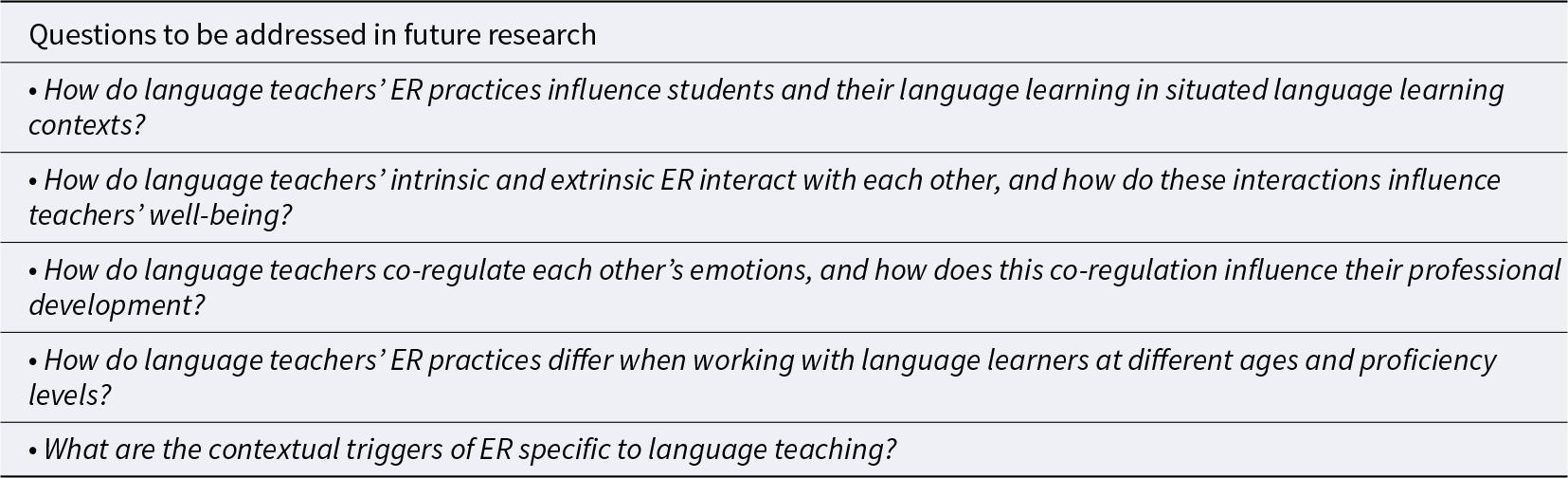
As an interim conclusion, the studies outlined above suggest a predominant research focus on language teachers’ intrinsic ER, which has been found to correlate with a set of cognitive, behavioural, and emotional variables. Only a few studies have explored language teachers’ use of ER strategies in situ and acknowledged the context-dependent nature of their regulatory practices. Even fewer have explored the extrinsic aspect of language teachers’ ER practices. Overall, the majority of the reviewed studies claimed to adopt the process model of ER (Gross, Reference Gross1998), but many ignored the temporal dimension and treated temporal points as mere categories of ER strategies. In particular, quantitative studies can only measure the language teachers’ tendency to regulate their emotions and are limited to two dimensions (i.e. expressive suppression and cognitive reappraisal), while the results emerging from qualitative studies may not always contribute to further adaptation of the ER process model for language teachers. Therefore, a wider range of theories and perspectives, especially from the linguistics field, should be adopted to inform further research on language teachers’ ER practices. Table 3 below summarises the research gaps in ER research.
Research gaps in ER research

3.4. Emerging emotion-related concepts
Research into LTE has also explored emerging emotion-related concepts, including emotional intelligence (EI) and emotional dissonance. As a major topic in psychology, EI is often defined as one’s capability to monitor and regulate their emotions in social interactions (Mayer & Salovey, Reference Mayer, Salovey, Salovey and Sluyter1997). Drawing on 230 EFL teachers’ questionnaire responses, Seydi Shahivand and Moradkhani (Reference Seydi Shahivand and Moradkhani2020) determined that the four dimensions of EI (i.e. emotionality, self-control, sociality, and well-being) are significantly correlated with teachers’ reflective practices, with well-being having the strongest correlation. The complex and intricate relationship between EI and language teachers’ professional practice warrants further investigation.
In contrast to emotional intelligence, which is a psychological construct, emotional dissonance draws on sociocultural perspectives on interactions between emotion and cognition. As a concept unifying emotion and cognition, emotional dissonance refers to the disharmony between one’s expressed emotions and the emotions expected of a professional teacher, highlighting the gap rather than teachers’ efforts in closing the gap (cf. emotion labor). Such dissonance can serve as a signal to provide responsive support for teacher learning, suggesting a connection between emotion and cognition (Golombek, Reference Golombek2015). In turn, Kim et al. (Reference Kim, Cho and Kim2023) reveal that language teachers can resolve emotional dissonance relating to their teaching practices through responsive mediation (e.g. peer support), while dissonance relating to transnational movement and institutional status must be addressed by other means. The above two studies prove that emotion can take on a functional role in teacher learning, which ultimately necessitates responsive mediation. Methodologically, both studies involve elements of self-inquiry, with the researchers investigating their own interaction with student teachers (Golombek, Reference Golombek2015) or conducting collaborative autoethnography (Kim et al., Reference Kim, Cho and Kim2023). Research gaps in the literature regarding emotion-related concepts not covered in the three themes previously identified are summarised below (see Table 4).
Research gaps in LTE research on emerging emotion-related concepts

4. Discussion
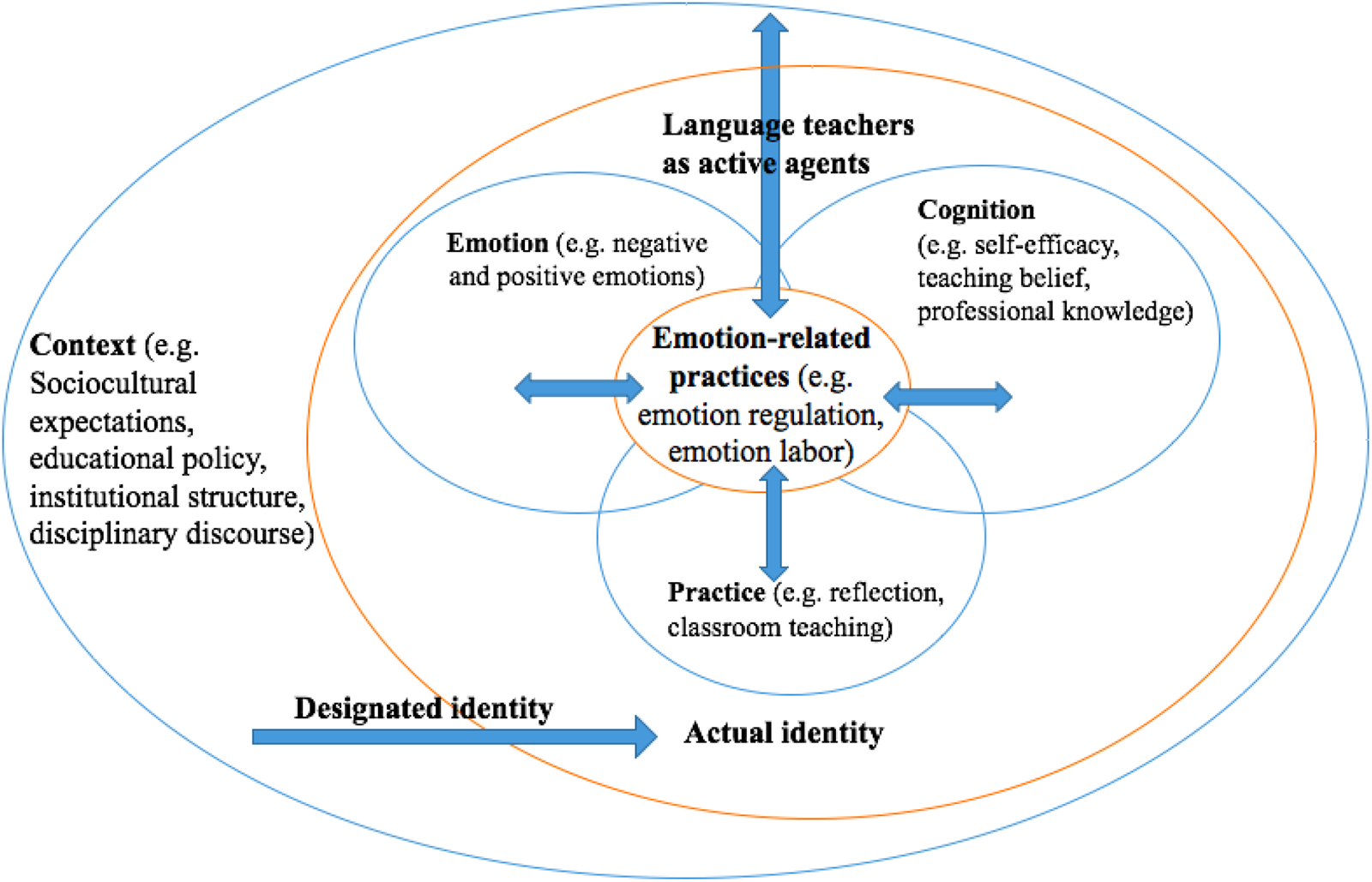
Building upon the above systematic review, we propose an emotion-focused map of language teachers’ professional development (see Figure 7). First, we conceptualise language teachers as active agents affected by and acting upon various layers of context. They may experience a variety of positive and negative emotions arising from different social, institutional, and disciplinary influences. In response, they act upon their emotions by engaging in contextually mediated emotion-related practices such as EL or ER. In particular, their EL efforts are also likely to contribute to social and institutional change. Second, we acknowledge that language teachers’ emotions can be triggered by the (in)congruence between the ‘designated identity’ expected and imposed by institutional, sociopolitical, and ideological discourses and their ‘actual identity’ (Sfard & Prusak, Reference Sfard and Prusak2005) endorsed by themselves, necessitating the performance of emotion labour. The efforts to regulate and manage ones’ emotion require language teachers to draw on their cognitive resources (including teaching beliefs and professional knowledge) and to rely on professional practices (e.g. reflecting on their own emotions) to achieve various pedagogical or interpersonal purposes and claim their aspired identity. Their persistent efforts in undertaking emotion-related practices influence their professional practices (e.g. classroom teaching and reflection) and impact their cognitive (e.g. self-efficacy belief and resilience) and emotional (e.g. anger and enjoyment) states; all of these, in turn, constitute key aspects of their professional development. The relationships between these important constructs are visualised below (see Figure 7).
An emotion-focused map for language teachers’ professional development.

4.1. Language teachers’ emotional experiences: More than just valorisation
As outlined above, many studies on the emotional experiences of language teachers (see Section 3.1) either take an ecological approach to a specific setting (e.g. online teaching and educational reforms) to report on a wide range of positive and negative emotions experienced by language teachers, or scrutinise a particular emotion (e.g. anxiety, enjoyment) and its antecedents. Research also explores how these emotions may further influence teachers’ professional and personal lives, especially by means of constraining their construction of professional identity (e.g. Derakhshan & Nazari, Reference Derakhshan and Nazari2023) and inducing identity struggles (Nejadghanbar et al., Reference Nejadghanbar, Song and Hu2024). Informed by positive psychology, these studies posit that if language teachers experience more positive emotions and fewer negative emotions, they will have higher job satisfaction and enjoy better well-being. While this line of research has contributed to understanding the significance of positive emotions (e.g. language teaching enjoyment) for teacher well-being (Derakhshan et al., Reference Derakhshan, Dewaele and Azari Noughabi2022; Proietti Ergün & Dewaele, Reference Proietti Ergün and Dewaele2021), we argue that emotions of both valences (i.e. positive and negative) should be reconsidered in a more holistic and sophisticated way based on the fact that teachers, including language teachers, inevitably experience a range of emotions in their professional lives. That is, understandings of language teacher emotions should not be based on the overgeneralisation that positive emotions ‘do good’ while negative emotions ‘cause harm’. Instead, it should be recognised that understanding teachers’ emotions is only the first step to understanding their lived experiences, which requires further exploration of how emotions influence – and are influenced – by teachers’ work engagement, job satisfaction, agency, and teaching effectiveness.
While language teachers who experience more positive emotions will have broader cognitive resources leading to an upward spiral (Fredrickson, Reference Fredrickson2001), we should not neglect – and should even invest in – the potentially beneficial effects that can be brought about by negative emotions. The way that language teachers tackle negative emotions may involve various dimensions of teacher cognition and requires the exercise of teacher agency, which eventually contributes to their identity development. For example, certain kinds of negative emotions, along with particular cognitive appraisals, may trigger language teachers to enact agency in addressing technological and pedagogical challenges in the context of educational change (Tao et al., Reference Tao, Xu and Gao2024). Their agentic actions may also help them transform the negative emotions associated with designated identities imposed by external expectations, which contribute to the construction of their professional identity (Maddamsetti, Reference Maddamsetti2021; Song, Reference Song2016; Wolff & De Costa, Reference Wolff and De Costa2017). Interestingly, the same negative emotion (e.g. vulnerability) can be experienced differently by different individuals, largely depending on teacher identity or belief that guides each individual teacher to deal with the emotion (e.g. to conceal or disclose their negative feelings in front of students) (Song, Reference Song2016). This may suggest that the impact of negative emotions is determined by how teachers deal with them by drawing upon their cognitive resources. As mentioned in Golombek’s (Reference Golombek2015) study, the presence of negative emotions cannot be disregarded but constitutes an integral part of emotional dissonance that is contingent on the interplay between the emotional and cognitive dimensions of teacher learning. Thus, language teachers’ negative emotions must be understood within a framing which recognises teachers as active agents who have cognitive resources and can be empowered to overcome challenges (Tao & Gao, Reference Tao and Gao2021).
4.2. Language teachers’ emotion-related practices: What is the price, and who can benefit?
Language teachers may respond to challenges both emotionally and agentively, as revealed in their emotion-related practices. The practices of EL and ER, specifically, are discussed in turn below.
Research on language teachers’ EL raises two important issues. First, some studies seem to have used the concept of EL interchangeably with ER by generalising the concept of EL strategies without attending to power relations, thereby deviating from the critical origins of the concept (Benesch & Prior, Reference Benesch and Prior2023). We argue that EL should be explored in tandem with the feeling rules directly embedded in teaching contexts at multiple layers. However, understandings of teachers’ EL cannot be confined to the management of their emotions in response to feeling rules which was often inseparable from the externally designated identities (e.g. a language teacher always showing positive emotions to boost students’ L2 learning motivation and suppressing negative emotions arising from his/her native-speaking, race, and gender identity). Rather, a wider range of strategies, particularly the seeking of pedagogical solutions in recent research (e.g. Benesch, Reference Benesch2018, Reference Benesch2020; Nazari & Molana, Reference Nazari and Molana2023), needs to be explored to discover how language teachers conform to, negotiate with, or resist feeling rules and designated identities, which potentially contributes to a discipline-specific understanding of EL. Second, the effects of EL remain controversial. While some studies argue that EL constitutes a burden for language teachers and harms their well-being, others indicate the possibility of capitalising on the potential of EL in various ways. For instance, EL may prompt teachers to reflect on their emotions and thereby enhance their emotional capital, which can contribute to their professional growth (Gkonou & Miller, Reference Gkonou and Miller2021; Miller & Gkonou, Reference Miller and Gkonou2018). Moreover, EL also bears important political implications, since it signals the dysfunction of policies or structures (Benesch, Reference Benesch2018, Reference Benesch2020). Therefore, future research should continue to take a critical perspective to explore the professional and political value of EL.
Research on language teachers’ ER suggests an imbalance of attention, with most studies focusing on teachers’ regulation of their own emotions rather than regulatory practices in relation to the emotions of others (e.g. students). The large body of research on teachers’ intrinsic ER mainly focuses on its impact on their own cognition, emotion, and practice. That is, ER is used to predict language teachers’ emotions (e.g. enjoyment and anger), cognitive conditions (e.g. work engagement, resilience, and self-efficacy beliefs), and certain professional practices (e.g. reflection), which may eventually contribute to teacher success, well-being, or burnout. Meanwhile, we still have limited understanding of language teachers’ extrinsic ER, which is an equally important practice. Research on the effectiveness of such regulatory practices is also needed, as seen in Bielak and Mystkowska-Wiertelak’s (Reference Bielak and Mystkowska-Wiertelak2022) study, in which students and teachers evaluated the effectiveness of teachers’ extrinsic emotion regulation. Moreover, while research has indicated language teachers’ need to regulate their own and students’ emotions amid educational reforms (Su & Lee, Reference Su and Lee2024), studies addressing both intrinsic and extrinsic ER are particularly lacking and are essential to understanding the complexity of teachers’ regulatory practices.
Based on the reviewed research on language teacher EL and ER, we argue that future research should carefully consider the cost and impacts of such emotion-related practices and then determine implications within different theoretical perspectives. At the surface level, if teachers perform EL or ER, the potential benefits can include better experiences for their students (e.g. not feeling teachers’ negative emotions), yet the cost of such benefits might be a significant drain on the teachers’ emotional and cognitive resources, which may lead to long-term costs. In other words, we must be cautious about the consequences of EL or ER and avoid assuming that such emotion-related practices do no harm to teachers themselves. If emotional pressure reaches an excessive level and lasts for a long time, it cannot be managed even by those who possess high emotional literacy and will pose an even greater challenge for early-career teachers (Y. Zhang & Zhang, Reference Zhang and Zhang2024). The long-term effects can be seen in Dewaele and Wu’s (Reference Dewaele and Wu2021) study unveiling that teachers who often performed surface acting struggled to influence their students’ feelings, lacked assertiveness, and felt unable to stand up for their own rights. These findings support our argument that we cannot simply encourage teachers to rely on sacrificing their own well-being to please others – whether students, parents, or administrators – to reap immediate benefits or even academic outcomes. Put simply, the temporary benefits of ER or EL (e.g. less student misbehaviour or less conflict between parents and teachers) may be offset by the future, long-term consequences of such emotion-related practices. This has been documented in prior studies (Acheson et al., Reference Acheson, Taylor and Luna2016; Dewaele & Wu, Reference Dewaele and Wu2021) revealing that language teachers who are heavily engaged in EL face the constant threat of emotional burnout. We therefore call for more studies, especially longitudinal ones, examining how language teachers can be empowered to take care of their own emotions to enhance their well-being. Research on this topic would benefit from taking both a psychological perspective, focusing on enhancing language teachers’ capability to regulate their own and others’ emotions to help them experience more positive emotions (e.g. enjoyment) (Azari Noughabi et al., Reference Azari Noughabi, Fekri and Kazemkhah Hasankiadeh2022), and a critical perspective, exploring the promotion of social and institutional change, contributing to a more supportive working environment for language teachers.
5. Pedagogical implications and future research agenda
Although all studies reviewed for this article were conducted within language teaching contexts, most of them did not reach a conclusion regarding how language teachers differ from their counterparts in other subjects in terms of their emotional experiences and patterns of emotion regulation and emotion labour. While teachers across disciplines admittedly may experience many of the same emotions and engage in similar emotion-related practices, there are distinctive features to language teachers’ emotional experience, their emotion regulation and emotion labour, which may bear practical implications for the professional development of language teachers. We summarise these distinctive features below.
First, language teachers have confronted particularly significant emotional challenges brought by online teaching during the pandemic, as language teaching relies more heavily on face-to-face interactions than teaching in other subject disciplines (Tao et al., Reference Tao, Xu and Gao2024). Second, many of the negative emotions experienced by language teachers, such as anxiety, vulnerability, and frustration, relate to their struggles with their ethnolinguistic identities (Song, Reference Song2016; Wolff & De Costa, Reference Wolff and De Costa2017), such as whether or not they are native speakers of the language they teach. Such struggles may constrain or facilitate teachers’ professional development, especially their identity construction, depending on how they manage the associated negative emotions (Song, Reference Song2016). Third, language teachers perform emotion labour in response to special feeling rules derived from relevant theory on ‘good’ language pedagogy (Warner & Diao, Reference Warner and Diao2022) and the obligation to accommodate the linguistic and emotional needs of students of culturally diverse backgrounds (Loh & Liew, Reference Loh and Liew2016). Despite the above, we still know little about how language or language teaching may play a part in language teachers’ emotions and their emotion regulation and labour. That is, what distinguishes the emotions of language teachers from those of teachers of other disciplines? Research addressing this question may produce more knowledge on teacher emotions specific to language teaching, which could in turn contribute to the development of more responsive support for pre- and in-service language teachers.
Our systematic review of relevant articles generates implications for language teachers’ professional development. Language teacher educators and school administrators cannot assume that teachers naturally possess the emotional literacy and skills to manage emotionally charged situations. Such an assumption could be particularly problematic to pre-service and early-career teachers, who experience an identity transition when adapting to a new workplace. We argue that training aiming to enhance language teachers’ emotional literacy should be integrated into teacher education programmes. Such training might take the form of courses exploring the process of emotion regulation, specific strategies for emotion regulation, contextual triggers of specific emotions, and the multidimensional goals of emotion regulation (Morris & King, Reference Morris and King2023). Such training has the potential to guide language teachers to choose ER strategies more effectively and at a lower cost to their emotional and cognitive resources. In addition, language teacher educators are advised to guide language teachers to invest time in critical reflection on the sources of feeling rules and the goals and effects of their emotion labour and develop their emotional reflexivity, especially regarding their own positions (e.g. non-native English-speaking teacher identity) in their institutional and social contexts (Song, Reference Song2022). Such guidance would support language teachers to better understand how their emotional management is linked to sociocultural, institutional, professional, and disciplinary assumptions of what is appropriate, such as the obligation to keep language learners engaged and motivated (Warner & Diao, Reference Warner and Diao2022), which may provide clues to possible emotional and pedagogical solutions.
Based on our review of the existing literature, we have identified three key questions for future research. First, we need to consider the fundamental question of whether emotional literacy is determined by nature, nurture, or a combination of both. We have found that a large number of studies correlate emotional competence with a range of trait-related factors (e.g. EI), suggesting that teachers with high EI have, on average, higher competence in managing emotions, not only their own but also those of their students. If individual differences in emotional competence can only be explained by certain traits (e.g. EI) that are not malleable, we may need to rethink the significance of such studies. To address this issue, we call for future studies to identify more malleable factors influencing these individual differences, which could bear more implications for efforts in language teacher education (e.g. to help teachers enhance their emotional literacy).
Second, we need to consider whether research findings on language teacher emotions generated within specific unique contexts (e.g. online teaching during the pandemic) can have transferable insights for language teacher emotions research and practice in general. We observed an increasing number of studies investigating language teacher emotions in response to unplanned online teaching and presenting emergency remote teaching as a particularly emotionally charged context that elicited a wide range of emotions. As we move into the post-pandemic era, these findings should not be discarded but can instead inform future research on the emotions of language teachers who continue to face novel challenges, such as the rise of artificial intelligence. Gao (Reference Gao2024) argues that language teachers should reorient themselves in the face of this challenge to develop essential qualities that are exclusive to human teachers. In line with this view, we call for future research to further examine the (disciplinary) value of teacher emotions or emotional support/connection, which may place language teachers in an advantageous position and help them combat the crisis in language education brought about by AI or other future challenges.
Third, we question whether we need so many new concepts to explain language teachers’ emotions and related practices. Our review indicates an ongoing trend in the development of new emotion-related concepts, such as emotional capital, emotional resilience, and emotional dissonance. While some of these do provide additional explanatory power which may deepen our understanding of language teachers’ emotions and related practices, others have not yet been substantially differentiated from other well-established concepts. We thus suggest that future researchers consider the extent to which their findings can be explained by existing emotion-related concepts before proposing new terms. Otherwise, their work may be omitted from ongoing conversations in the field and their contributions could be diluted as a result. We also suggest that LTE researchers remain mindful of their readers, particularly the practitioners who are intended to benefit from the research, and refrain from creating further jargon that may risk causing confusion among these practitioners.
Author contribution statement
Jian Tao: Conceptualisation, data curation, formal analysis, writing – original draft. Yueting Xu: Conceptualisation, data curation, formal analysis, writing – original draft. Shiyao Wang: Data curation. Andy Gao: Conceptualisation, funding acquisition, writing – review and editing.
Appendix
The list of reviewed articles (N = 115)
Dr Jian Tao is a Professor of Applied Linguistics at Shanghai University of Finance and Economics, Shanghai, China. Her research interests centre around language teacher agency, identity, and emotions, and her research has appeared on Teaching and Teacher Education, Language Teaching Research, and Applied Linguistics Review. She also serves on the editorial board of TESOL Quarterly, and System.
Dr Yueting Xu is a Professor of Applied Linguistics at South China Normal University, Guangzhou, China. Her research interests include teacher assessment (feedback) literacy, language teacher identity, emotions, and learning. She has published extensively in Teaching and Teacher Education, Language Teaching Research, Assessment and Evaluation in Higher Education, System, Teaching in Higher Education, and TESOL Quarterly.
Shiyao Wang is pursuing a Ph.D. degree in Education at the University of New South Wales. Her research interests involve LOTE, ESL, and TESOL curriculum and pedagogy, teacher education, professional development of educators, and education policy.
Dr Xuesong (Andy) Gao is a Professor of Language and Literacy Education at the University of New South Wales. His research interests include language learner agency, language education policy, and language teacher education. He is an executive editor for Teaching and Teacher Education, Editor for International Journal of Applied Linguistics, and an associate editor for System.