Introduction
The analysis of the supposed fraud by historical scientists of great reputation discussed in the accompanying paper (Part I, Bucci and Carafoli Reference Bucci and Carafoli2022) revealed one common aspect: the accused scientists were convinced that the great ideas which they were proposing were correct. To the point that, for them, the experimental evidence was almost a secondary detail. It should not be forgotten that Galileo, who has written unforgettable pages on the essential importance of the experiment, had nevertheless sometimes considered the experiment not essential, proposing mental experiments – as, much later, Einstein himself would do. In our analysis of the accusations against the famous scientists of the past, we concluded that only Ptolemy had been guilty of FFP (Fabrication, Falsification, Plagiarism) behaviour, even if the personal behaviour of some of the other accused had been objectionable. The important point in all their cases was that their theories, and the conclusions they had proposed, had not been based on blind guesses. None of them had been a ‘lucky bettor’ (Bucci and Carafoli Reference Bucci and Carafoli2022). They all had had a great idea and had applied sound reasoning, History, with the exception of Ptolemy, had vindicated them, proving a posteriori that they were right. Full understanding of a crucial great experiment might have been incomplete, as in the case of Dalton; theoretical justifications of the reasoning to explain results might have been introduced ad hoc, as in the case of Newton; or there may have been lies in the description of the performed observations, as in the case of Millikan: but there never was evidence of fabrication or manipulation of results.
Ptolemy, as said, had been an exception, as he had declared to have made an observation that he had never made: this was a clear case of FFP behaviour. His case, however, deserves a few words of comment. First of all, he was ‘unlucky’, as his geocentric theory was eventually demonstrated to be incorrect: however, that happened only after 1500 years, with the arrival of Copernicus on the astronomy panorama. If Ptolemy’s lie on the observation he had never made had been discovered much earlier, his great reputation would have been tarnished. However, it is very likely that the geocentric theory would still not have been abandoned, as it agreed with the Aristotelian conception that the Catholic Church favoured.
As said, the absence of experimental data to support the historical scientific intuitions was not of absolute relevance in defining the scientific frauds in past times. Particularly so if one considers that the experimental verification of great intuitions could have been impossible owing to existing technological limitations. In fact, this type of justification could, even if with great effort, perhaps be extended to present times, as can be perceived in a declaration of the great physicist Paul Dirac (Reference Dirac1963): he has stated that a scientist who has produced an equation of great mathematical beauty – a clear parallel with the intuitions of the famous scientists of the past – ought not to become discouraged if it does not agree with the experimental findings. He must keep working on it even if the experimental evidence disproves it, Dirac says, because the discrepancy will eventually be solved by future developments. Paradoxically, pushing Dirac’s statement to the extreme, in principle a scientist could decide to ignore the negative experimental result when theory and experiment do not coincide: provided, of course, that his behaviour has not crossed the FFP boundaries mentioned in the accompanying paper (Bucci and Carafoli, Reference Bucci and Carafoli2022). These are, essentially, intentionality of the behaviour and violations of the standards of the field prevailing at the time. Prima facie, Dirac’s statement seems obviously dangerous. It could perhaps be understandable if one applies it to the famous cases of the past, but today the judgement on scientific frauds obligatorily relies on experimental criteria that provide conclusive evidence. However, even in the absence of intentional FFP behaviours, the evidence may still declare unacceptable results and conclusions owing to serious defects in the work. Unfortunately, in these cases, a grey area is bound to persist that, in the end, damages scientific credibility. In the discussions below, cases that have occurred in our time, or close to it, will be presented as examples of both undeniably established FFP, and of borderline behaviour not necessarily involving FFP. Then, a number of issues/cases will be presented and discussed that pertain to developments in the area of scientific misconduct that would have had no home in the distant past (Bucci and Carafoli Reference Bucci and Carafoli2022), which have changed the area of scientific misconduct technically, psychologically and, one should say, morally as well. Of course not all of them could be covered: we have decided to discuss those that have aspects of particular interest.
From Past to Present
The Piltdown Man
At a Meeting of the London Geological Society in December, 1912, Charles Dawson presented the fragments of a skull, half of a mandible, and some teeth he is said to have found in a Piltdown gravel cave in Sussex. He had brought them to Arthur Smith Woodward, the person in charge of the Geological Department of the British Museum, who had organized the reconstruction by the British Museum of the skull from the fragments. At the meeting, Smith Woodward had said that the reconstruction showed that the skull was very similar to that of a modern man, except for the much smaller dimension of the brain it contained, whereas the jaw was identical to that of a young chimpanzee, although two molar teeth were human (Dawson and Woodward Reference Dawson and Woodward1913, Reference Dawson and Woodward1914). The presentation had enormous resonance, to the point of being branded as the most important paleontological discovery ever made: it must be remembered that those were the years of the feverish search for the mythical ‘missing link’ of the evolution that would connect man to monkeys. Seen in the cultural atmosphere of the time, the Piltdown Man was indeed a sensational discovery. The more so as the reconstruction of the skull with the mandible and the teeth was in line with the idea, prevailing at that time, that the evolution of the brain had preceded the transition to the modern omnivorous diet. However, not all went smoothly after the presentation of the reconstruction of the skull at the meeting: for instance, a different reconstruction of the skull at King’s College made from copies of the fragments had arrived at the conclusion that the dimensions of the skull were similar to those of the modern man; and a few months after the presentations at the Geological Society Meeting, David Waterston had published a paper in Nature in which he had concluded that the cranial fragments of the Piltdown skull were human, whereas the mandible was indistinguishable from that of a monkey (Waterston, Reference Waterston1913). However, for decades, no suggestions were made of the fraudulent origin of the original reconstruction of the fragments: to the point that, in 1938, i.e. 25 years after the original discovery, a monument was unveiled in Piltdown to celebrate the memory of Charles Dawson. The Piltdown Man was officially named Eoanthropus Dawsonii (Dawson’s dawn man). A number of factors had played a role in the protracted enthusiasm on the Piltdown Man matter: a very important one was the nationalistic British pride of having discovered the long sought ‘missing link’: up to that time the most important discoveries in the area of paleontology had been made outside the United Kingdom, chiefly in France and Germany. Doubts about Piltdown Man were nevertheless still lingering, but it was only in the 1920s to 1930s that clear statements started to appear that said that the Piltdown Man could have been a fraudulent product. Thus, the German palaeontologist Franz Weidenreich had argued that the Piltdown Man was a chimera of a modern human skull with an orangutan mandible (Straus Reference Straus1954). But it was only in 1953 that a conclusive study of the Piltdown Man fossils eventually appeared in the Bulletin of the Museum of Natural History (Weiner et al. Reference Weiner, Oakley and Le Gros Clark1953), in which Kenneth Oakley and Le Gros Clark had applied the new fluorine-based technology, which Oakley and Hoskins had proposed in 1950, to date the age of Palaeolithic remains (Oakley and Hoskins Reference Oakley and Hoskins1950): the study unequivocally showed that the Piltdown Man was a carefully crafted fraud that indeed agreed with Weidenreich’s suggestion. This and other studies that have used a number of more modern technologies have now conclusively established that the skull belonged to a medieval man, the mandible to an orangutan of about 500 years ago, and the teeth to a chimpanzee. They have also revealed a number of other details of the fraud, from the staining of the fossils, the artificial aging processes, the filings of teeth and of bones. In conclusion: the Piltdown Man was demonstrated to be a fraud, probably the biggest scientific fraud of the twentieth century. What is probably bound to remain forever unknown is its author. He certainly knew what he was doing extremely well, and those who have worked on the topic tend to believe that he might have been Charles Dawson himself. But nobody will ever know for sure. And, anyway, the question of his motivation remains: why had he done it? Perhaps we could go back the nationalistic pride mentioned before, and quote a few half joking sentences of a Seminar by David Goodstein at Caltech in 1990.
… by 1912 prehistoric remains had been discovered in France and Germany. And everybody knew that God is an Englishman. If they had been discovered in those other places, there HAD to be prehistoric remains in England. It was only a matter of helping things along a little bit….
Cloning by Nuclear Transfer: Karl Oskar Illmensee
In 1981 the Swiss biologist Karl Oskar Illmensee and his co-worker Peter Hoppe had published a paper in the prestigious journal Cell that had attracted extraordinary international attention (Illmensee and Hoppe Reference Illmensee and Hoppe1981). The paper had described the reproduction of mice without initiating it through the union of a spermatozoon with an egg: in brief, the authors had applied the concept of nuclear transfer, a procedure that consisted of introducing the material of a single somatic cell from an adult mouse into a fertilized egg cell from which the nucleus had previously been extracted. The general implications of the procedure are obvious, as they would expand to areas outside the realm of biology, from bioethics to religion. Indeed, if successful, the procedure would produce a progeny whose genetic heritage would not be that of two parents, but only that of the mouse that had donated the nucleus transplanted into the enucleated egg cell. The very great international resonance of the paper was thus easily understandable. Illmensee and Hoppe had transferred somatic cell nuclei in 363 enucleated egg cells, 142 of which had survived the micromanipulation trauma. Ninety-six of these had initiated the division process and about half of them had reached the stage of morula or blastocyst. Then, they had transferred 16 of these embryos to the uterus of female mice for the pregnancy, and had obtained three cloned mice. It was, of course, a sensational result, but a few months later three members of Illmensee’s laboratory at the University of Geneva addressed a document to the Dean of the School of Biology of the University in which they accused the authors of having falsified the results of the experiments. The University of Geneva appointed a Committee composed of three Geneva colleagues and three international experts, asking them to examine the case. They did not find compelling evidence of falsification of data, and thus exonerated Illmensee from the accusation of fraud. However, they found that the work was loaded with corrections, errors, and discrepancies that raised serious doubts about the validity of the experiments and on the conclusions. The Committee thus asked Illmensee to repeat them, meanwhile reinstating him to the Chair from which the University had suspended him. An analogous Committee appointed by the Roscoe B. Jackson laboratory of the University of Pennsylvania, which was the affiliation of Peter Hoppe, had reached the same conclusions. The repetition of the experiments was no easy matter, as the Swiss Nationalfonds that had funded Illmensee’s research had suspended his Grant, and the USA National Cancer Institute, which had been alerted of the investigation by the University of Geneva, had done the same. Throughout the entire crisis, Illmensee forcefully defended the validity of his experiments and, especially, the importance of his nuclear transfer work. However, he admitted to the errors in the conservation of the protocol books and of the data (which in some cases were missing) and the general accusation of disorder, attributing it to the stress caused to him by the impending transfer of the laboratory to another building. Other bad news to Illmensee came from the inability of a number of Laboratories to reproduce his results: two biologists of the Wistar Institute of Philadelphia, McGrath and Solter (McGrath and Solter Reference McGrath and Solter1984) went one step farther, declaring that the clonation of mammals by nuclear transfer was biologically impossible, thus contributing very substantially to the general atmosphere of scepticism on the work of Illmensee. At this point, the University of Geneva decided not to wait for the new results of Illmensee. Even if no ‘smoking gun; had been found, based on the declarations of laboratory members, on the inability of other laboratories to reproduce the results, but also on the pressure of Geneva’s Biology Colleagues, the University decided not to renew Illmensee’s Professorial contract. Clearly, the decision was dictated by a situation of a preponderance of evidence (see the accompanying paper, Bucci and Carafoli Reference Bucci and Carafoli2022), based on which it had appeared reasonable to reach a negative conclusion on the clonation of the three mice.
All this has happened four decades ago. Now that the dust has settled, some comments are in order on those happenings, and on their contours. The first thing that must be kept in mind is that the idea of nuclear transfer had been around for decades before Illmensee: Hans Spemann had first thought of it and, in 1928, had transferred the nuclei of salamander embryonic cells into egg cells. Years later he had actually proposed the idea of generating clones by transferring the nuclei of differentiated cells into enucleated egg cells, however; he had never tested the idea experimentally, and had concluded that the proposal was technically impossible. He felt that the microsurgery available at that time to extract the nucleus would have irreversibly damaged its genetic material, and, at that time, it was generally felt that only totipotent cells had the ability to differentiate in the other cell types of the body. In the 1950s others had successfully cloned tadpoles, transferring nuclei from frog blastula cells which were only partially totipotent (Briggs and King Reference Briggs and King1952), and from differentiated intestinal frog cells (Gurdon Reference Gurdon1962). But after decades the field had still not moved ahead in a significant way. The original proposal of Illmensee, evidently, had been to find a way to give it the strong push it needed. In the times of Galileo or Newton, most grand intuitions could not be experimentally tested: we had to wait centuries for their verification. The intention of Illmensee was instead to document experimentally the general feasibility of the nuclear transfer intuition. But let’s analyse the pros and cons of his attempt. Was the way in which he directed the experimental work characterized by disorder and errors? Yes, it was, and he admitted that. Were there inadequacies in the conservation of the protocol books and in the way in which experiments were reported? Yes there were, and he admitted to them as well. Was the way in which he led the laboratory grossly deficient? Yes, it was, and the evidence for it was clear. However, was there compelling evidence that he had falsified data? No, compelling evidence for this was not found. Finally, and most importantly, was the conclusion sound that clonation by the nuclear transfer procedure was biologically impossible, as McGrath and Solter had claimed? No, it wasn’t. One had only to wait a few years to see it indisputably realized by Steen Willadsen (Willadsen Reference Willadsen1986), and then, a decade later, by the sensational cloning of the Finn Dorset sheep, Dolly, by Ian Wilmut and Keith Campbell (Campbell et al. Reference Campbell, McWhir, Ritchie and Wilmut1996). It is thus difficult to avoid the impression that procedures applied without the necessary caution had condemned a scientist for scientific fraud who may have only been guilty of negligent behaviour. One could, as a final note that would, in a way, historically compensate Illmensee, quote a statement by Ian Wilmut, the creator of Dolly: the work of Illmensee, he wrote, with all its problems, had been an important inspiration for both Willadsen and for himself (Wilmut and Highfield Reference Wilmut and Highfield2006).
Before leaving the discussion on Illmensee, the case of Marc Hauser, a prominent Harvard psychologist who studied monkey language and cognition, could be mentioned, as it had impressive similarities to the case of Illmensee. Hauser had been accused of several acts of serious scientific misconduct, following which, in 2011, he had decided to resign from Harvard. As in the case of Illmensee, the accusations to Hauser had been initiated in 2007 by two of his co-workers, a student and a research associate. The accusations had triggered a private investigation by the Faculty of Arts and Science of the University, who had decided that Hauser had been guilty of eight instances of scientific misconduct in the experiments he had published. As a result, a key paper he had published in the important journal Cognition, was retracted by the Editorial Board of the journal, based on a summary of Harvard’s inquiry. Hauser had accepted responsibility for some false statements in the description of some of his methodologies, and had acknowledged making unspecified mistakes, but had not admitted to misconduct. He had also successfully replicated some of the experiments under accusation. Similar to Illmensee, Hauser also evidently faced the hostility of his fellow Professors. However, in his case, a number of colleagues instead spoke favourably of his results, and scientists kept criticizing Harvard over the lack of transparency of the investigation. A key technical factor in the differences of opinion very likely was the nature of Hauser’s research topic, which made the appreciation of results intrinsically difficult, and was thus open to differences of interpretation. No final verdict can thus be issued on the case of Mark Hauser, which had many similarities to that of Illmensee. In fact, the balance of arguments appears to exculpate Hauser from the misconduct charge.
A Very Special Case: Sigmund Freud
Readers will probably be surprised to see the name of an icon such as Freud mentioned in this contribution. One of his most implacable critics has even ranked him with Shakespeare and Jesus for the attention he has historically attracted (Crews Reference Crews2017): a veritable Messiah, as another of his implacable critics wrote (Webster Reference Webster2005). Yet, his psychoanalytical theory has met severe criticism from colleagues and experts from the very beginning, in the last years of the nineteenth century. Profound flaws were attributed to it, and they became increasingly clear as time went on. Nevertheless, despite the critics, psychoanalysis immediately became very popular, and its influence rapidly soared for decades to an unprecedented extent, with the number of supporters greatly outnumbering that of the detractors. So, why did such an antagonism to Freud developed? Freud may have been guilty of scientific misconduct in more than one occasion, and he has actually been rightly accused of misstating the results of the therapy he proposed, of doctoring evidence, of proclaiming discoveries he had not made, and of dishonesty or misconduct with patients. His theory was actually also accused of wrecking lives and of causing suicides. But this would have hardly been the reason for the violence of the opposition his theory encountered, mostly from colleagues and experts. Violence is actually not the right word: the opposition was destructive, bordering on hatred. A collection of annihilating definitions for it were commonly used, from ‘pseudoscience’, to ‘scientific fairy tale’, to ‘simplistic and parochial’, to ‘medieval morality play’, to ‘a despicable business’, to ‘a disease it claims to be the cure’, to ‘a most dangerous method’, and so on. Why was it so? To explain this, one has to consider the nature of Freud’s theory, which is a search to understand to complexity of the working of the human mind, and an attempt to explain mental diseases solely as the action of psychogenic factors. In a broader sense, it can be considered a theory of human nature. This is the real point: here we are dealing with something that is not impersonal – to make an example – like the truth or fallacy of the Copernican system. Here we are dealing with the very nature of human beings. The personality of Copernicus was irrelevant to the heliocentric theory, his theory was not personal. But the personality of human beings, both those who are the subjects to it, and those who act, so to say, on the outside, is instead critical to the general psychoanalytical theory. It intrudes deeply into the inner secrets of the human personality, into its ‘privacy’. Psychoanalysis, to use the definition of Zillboorg (Reference Zillboorg1944) is the most individualistic branch of medicine. And if one looks at it from this perspective, one can perhaps understand why important authors have even written ponderous books – those by Crews (Reference Crews2017) and by Webster (Reference Webster2005) are perhaps the two most glaring examples – on what has been defined as ‘Freud bashing’. And it will be equally easy to understand the overtones of Freud’s followers when they accuse the implacable critics of having a twisted mind in the ongoing controversy on the value of psychoanalysis. These aspects of the ‘Freud war’, border on the emotional, and recall aspects of a religious movement: psychoanalysis could even be considered as a means for to fill the vacuum left by the decline of religious thinking. But if an attempt is made to look at the matter in a more scientifically constructive way, the immediate popular success of Freud’s psychoanalysis may be plausibly seen as a reaction, not surprising in the domineering cultural atmosphere of the times, to the impoverishment of mental activity brought in by the positivistic paradigm. The theory had opened the door to aspects of the working of the mind that had previously never been considered: one in particular, perhaps the most important, was the idea that the sexual factor, hidden in the subconscious, was the universal cause of human actions. Concepts such as genital symbolism, Oedipus complex, incest desire, latent homosexuality, the general idea of the seduction theory, were obviously bound to have a great impact. It is now generally accepted that they were grossly overestimated by Freud, who looked for them in all actions of the normal and the diseased mind. Even if they had become a veritable mania, they were still undoubtedly novel.
Thus, to conclude, with Freud we have a unique case of behaviour that may occasionally have had FFP character, albeit perhaps not in the orthodox way we have considered in this and the accompanying contribution. He has proposed a theory that has serious flaws – which have prompted many experts to discount it across the board, perhaps even going sometimes overboard – but which, in addition to its shortcomings, had also opened up ways of understanding of human mind that were novel and important. Freud has not been a Messiah, but he has certainly earned a place for himself in the history of knowledge.
Why do Scientists Commit Fraud? And Why Have Fraud and Errors Now Become so Much More Frequent?
As is generally accepted, the main motivations for practising science should be the desire to contribute to the advancement of knowledge, perhaps the desire to obtain personal recognition, but also, especially, curiosity. Other motivations, i.e. those that have to do with economics, in the past and until recently, have had hardly any room in the thinking of scientists (see for instance, Carafoli Reference Carafoli2015). However, they have now become much more important, and have played a major role in the dramatic explosion of fraudulent behaviours that now poison the scientific scene. In a very interesting general analysis of the factors that motivate research misconduct, Davis et al. (Reference Davis, Riske-Morris and Diaz2007) have collected data from closed case files of the USA Office for Research Integrity (ORI), and have assigned them to 44 different concepts. They have analysed them using multidimensional scaling and cluster analysis, and have identified seven clusters of causal factors implicated in research misconduct that include personal and professional stressors, environment in the laboratory, job insecurities, cultural factors (i.e. researchers moving from one culture to another), and different ways of rationalizing the misconduct. ‘Honest’ errors, in most cases caused by incompetent or sloppy behaviour, have now also increased dramatically: they still damage the reputation of science; however, sensu scripto they are not fraud. Leaving errors aside, it must be emphasized that today’s scientific fraud seldom has to do with the formidable intuitions of the scientific giants of the past, discussed in Part I. The majority of them concern petty claims that would only satisfy minor egos, and/or that are linked to the search for economic or career advantages.
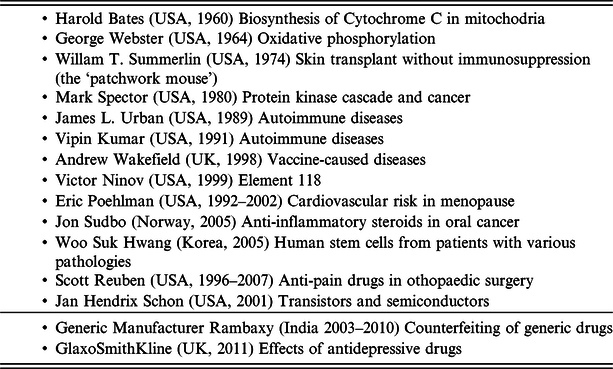
One general observation on today’s cases of fraudulent behaviour deserves a comment: the preferred area for them is (bio)medicine. Table 1 collects a selection of the most publicized cases of recent documented misconduct, and it is clear that most of them come from that area. There is a reason for this: variability is intrinsic to Biology, and of course to Medicine, and this makes it less probable that a fraud will be discovered. This obviously is a powerful incentive for the attempts to cut corners. However, irrespective of the area, the most significant factor of the current exponential increase in the number of misconduct cases is the development of the situation characterized by the expression ‘publish or perish’. The origin of this can be traced back to the rapid expansion of the general funding of research after the end of the Second World War. For a number of years, the funding had been adequate for the needs of the relatively small number of researchers, who could obtain the funds they needed without much competition with other scientists. But then the number of researchers had started to increase whereas the total amount of available funds did not. At the same time, novel sophisticated technologies have increased the cost of research. As a result, the competition for funds among scientists has gradually become dramatic, and so, as was to be expected, the competition to publish in the journals with the highest profile also became dramatic, as this increases the visibility and the reputation of the researcher, giving him or her a frequently decisive advantage in the competition for funds. A veritable vicious circle, in which publishing in important journals became progressively more difficult, while at the same time the success in the search for funds, and the development of careers that depend on them, increasingly demanded the publication in these high-profile journals, which had to be achieved against increasingly fiercer competition. It has been written that the difference between success in science, and expulsion from it, may be publication in one of the high impact journals. While this may be exaggerated, the ‘publish or perish’ metaphor is a correct picture of the situation. It does not take much to understand that an important consequence of these developments is not only an increase of errors but also, and much more unpleasantly, the increased incentive to fraudulently cut corners, as mentioned above.
Some recent cases of scientific fraud

The last two cases are listed separately because they concern large companies, not individual researchers.
Importantly, the cases of today that have come to light and have reached media headlines (see Table 1) are unfortunately only the tip of the iceberg. This is documented by various surveys which have shown that the situation is not at all rosy (John et al. Reference John, Lowenstein and Prelec2012; Martinson et al. Reference Martinson, Anderson and de Vries2005; Baerlocher et al. Reference Baerlocher, O’Brien, Newton, Gautam and Noble2010). They have found that up to 9% of the biomedical researchers in the United States had committed fraud. And other studies, in which the intentions of the researchers were investigated (Eastwood et al. Reference Eastwood, Derish, Leash and Ordway1996), found that very high proportions of the interviewed (up to 81%, Kalichman and Friedman Reference Kalichman and Friedman1992) had admitted to be ready to manipulate, or even fabricate, their results to make them publishable in leading journals to obtain funds. And a larger survey on 11,647 researchers had revealed that 2% of them had committed an act of scientific fraud at least once in their careers, but about one third had admitted to having committed various types of misconduct (Fanelli Reference Fanelli2009) even if not of real fraud. A comprehensive survey of the fraudulent behaviour in biomedical research papers published from 1995 to 2014 was published by Bik et al. (Reference Bik, Casadevall and Fang2016). In total, 20,621 papers published in 40 scientific journals were investigated: 3.8% of the papers contained problematic figures, half of them with features indicating manipulation. The survey also found that the percentage of papers with problematic figures had risen significantly in the past years of the survey.
One last point of a different nature, which is related to these statistical surveys, could be mentioned: a recent study on 215 researchers (Fang et al. Reference Fang, Bennet and Casadevall2013) guilty of biomedical research fraud, has revealed that two thirds of them were male. This proportion greatly exceeds that of the male/female ratio in research. Obviously, the very small sample examined does not permit general conclusions, but it offers an indication that could perhaps be explored further.
The ‘publish or perish’ psychological atmosphere has thus promoted the present widespread increase in misconduct cases. A number of technical factors have also helped in turning this psychological problem into reality. Some factors are peculiar to specific science areas. For example, the faulty use of statistical analysis in the description and conclusion of the results concerning pharmaceutical therapy. However, this last aspect does not necessarily have fraudulent significance (Carafoli Reference Carafoli2015). Other factors have instead a fraudulent, and/or fraudulent-like, nature. Two have very general importance for all branches of science on all branches of science and deserve special attention.
Rapid Increase of Research Activity in Geographical Areas of Previous Secondary Importance
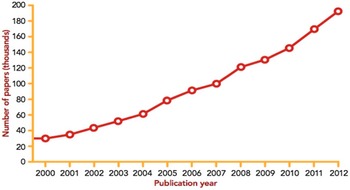
By and large, scientific research has traditionally been a stronghold of the Western world (and Japan). However, the last part of the twentieth century saw the rapid spread of research activity, and of the accompanying number of researchers, to a larger number of countries. As just mentioned, the enormously increased competition among researchers was, and still is, a very serious problem in the traditional research areas. As expected, it was bound to be even more serious in areas where the behavioural rules of research activity, and of publication, were less solidly established. Given its size and population, of course China was quantitatively of foremost importance in the problems caused by the explosion of research activity. Until some decades ago, high level, internationally competitive, research in China was practically limited to a small number of centres on the east coast – chiefly Beijing and Shanghai. However, it then spread to a much greater number of laboratories across all of China, and it did so with explosive rapidity – the numbers of researchers doubling every three years (Carafoli Reference Carafoli2015) to reach today’s millions. The number of publications by Chinese scientists in the first 12 years of this century has also shown a dramatic increase, from about 30,000 to about 200,000 (Figure 1). The number of academic scientific journals in China is now about 5,000, and most Chinese scientists publish their results in them; however, those who instead publish in one of the about 4,000 journals collected in the international Science Citation Index (SCI) may receive a cash bonus that varies with the importance of the journal, and which may be very substantial for the most prestigious. Cash bonuses for publication are offered in other countries as well, but in China they may be unusually substantial. Naturally, they increase the temptation for unorthodox behaviour. This, however, is but one of the aspects of research activity in China that increases the risk of scientific misconduct. For instance, career advancements, beginning with the earning of a PhD title, in general demand the publication of one or more papers in one of the SCI journals, and, as a rule, quantity wins over quality. There are other aspects of the research/publication area that have favoured the veritable explosion of scientific misconduct in China, beginning with the flourishing black market for bogus publications, as well documented in a recent study (Hvistendahl Reference Hvistendahl2012). Some of these are particularly ingenious and one could perhaps be quoted for its impressive creativity. It concerns a veritable disaster that has recently hit a respected journal, Tumor Biology, which very recently had to retract, in a single shot, 104 papers, 101 of them coming from Chinese Laboratories. The following had happened: when certain journals received a manuscript, the authors would be asked to suggest the names of reviewers who could evaluate it. The authors of the 101 manuscripts complied with the request, and sent back impeccable names, but with bogus emails to which they had access, and which they used to write magnificent evaluation sheets, that obviously guaranteed acceptance. Somehow, the trick was discovered, but only after 101 papers had been accepted.
Increase of scientific publications in China in the period 2000–2012. Adapted from Hvistendahl (Reference Hvistendahl2012).

To end this brief discussion of scientific misconduct in China, it must be acknowledged that the situation is now experiencing a decisive improvement: the Government has recognized the problem in a series of official declarations and has issued a series of decrees of increased severity aimed at cracking down on scientific misconduct. The last of these, dated 2017, is draconian: if scientists falsify results that produce a drug that damages health, they can by punished with a ten-year jail sentence. In cases of lethality, the death penalty can even be considered.
The Problem of Predatory ‘Open Access’ Journals
About 20 years ago, the appearance of the first ‘open access’ journals was greeted as a meritorious event, as it aimed at opposing the suffocating power of leading traditional journals that held the monopoly of scientific publications, through which they even dictated research trends. As is well known, leading traditional journals tend to select the articles to be published based not only on their quality, but also, and particularly, on the popularity of their subject. By doing so, the journals expect to attract a larger number of citations of the published articles, and thus to raise the ‘impact factor’ on which their prestige is based. Prestige, of course, that goes hand-in-hand with power. The first open access journals, instead, did not select the articles to be published according to the fashion of their topic, but solely according to their quality. And, most importantly, the articles they published were freely accessible to the scientific public. They survived economically on fees paid by the authors, not on the subscription fees of the traditional journals, which are normally paid by institutions. These journals rapidly attracted the popularity they deserved. The most important of them (Public Library of Science, acronym PLoS) was soon publishing more than 30,000 articles per year. A meritorious idealistic endeavour, indeed, which, unfortunately, after only a few years, rapidly deteriorated to a squalid economic business. The ‘open access’ journals have very rapidly skyrocketed to appalling numbers, and now exceed 10,000. The overwhelming majority of them operate a predatory type of business that has nothing to do with science, which – let’s repeat it – was the object of the first meritorious ‘open access’ journals. Beall, a librarian of the University of Colorado at Denver, in 2016, drew up a list of journals deemed to be ‘potential, possible, or probable’ predatory (Beall Reference Beall2016). Since the compilations of Beall were somewhat controversial, they were taken offline one year later, but are still available in web archives, and are still largely used in studies of illegitimate journals (Moher et al. Reference Moher, Shamseer and Cobey2017). The predatory activity consists of publishing papers irrespective of their lack of merit without the essential peer review screening, provided that the authors pay publication costs, which may be very substantial. The predatory journals have thus rapidly transformed an idealistic endeavour into a veritable criminal operation that uses the etiquette of science for criminal purposes. Publishing in these journals has been described by Moher et al. (Reference Moher, Shamseer and Cobey2017) as a ‘waste of people, animals, and money’ as, at the beginning, predatory journals were not supposed to be indexed in popular academic databases such as, for instance, PubMed and Scopus. But then they managed to infiltrate these databases: a recent survey by Machacek and Shrolec (Reference Machacek and Shrolec2021) has found that 324 journals that appear in Beall’s list are indexed in Scopus, with 164,000 thousand articles published over 2015–2017: approaching 3% of the total number of published papers. The damaging consequences of the inclusion of articles of predatory journals in important citation databases are obvious, and not only because they call into question the reliability of well-known databases such as Scopus or PubMed (Severin and Low Reference Severin and Low2019). In addition, researchers may eventually base their research standards on the inadequate level they read in the databases, leading to an overall decrease of the standards and – and this is very important – to the dissemination of questionable, or even outright untrustworthy, research.
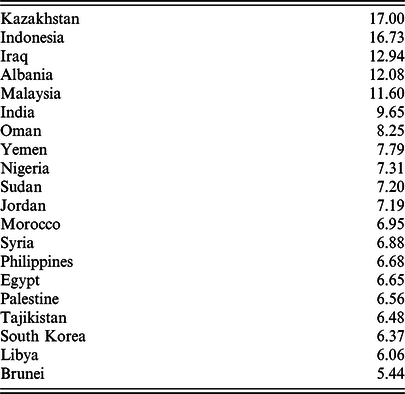
It is self-evident that the fact that papers are regularly accepted solely upon payment of a fee, independent of their merit, has contributed heavily to the proliferation of scientific fraud. The fact that, for the predatory journals, the idea of peer review simply does not exist is a very serious blow, first to the general concept of ‘open access’ journals, but also, in more general terms and as was said, to the credibility of science. And another point must be mentioned that makes the operation of the predatory journals particularly revolting: their activity is less successful in scientifically advanced countries, where researchers are, or should be, reasonably well aware of the details of the scientific publishing world. Unfortunately, the target where the criminal activity is more likely to be successful is the scientific community of emerging countries, in which the awareness of the correct mode of functioning of the scientific communication may be defective, and in which even a request of a publication fee as low as $150 may be financially significant, i.e. in countries that are still at the periphery of modern science. Table 2 (from the study of Machacek and Shrolec Reference Machacek and Shrolec2021) is particularly instructive: developing countries with emerging research systems in Africa and Asia are those that publish more than 10% of their articles in predatory journals.
The 20 top countries in which the percentage of the total articles is published in predatory journals, 2015–2017.

Source: Taken from Scopus Database 2018.
A Paradox: FFP Behaviour with Positive Motivation
The sordid operation of the predatory ‘open access’ journals was brought to light in 2013 by an article published in Science by the scientific journalist John Bohannon (Reference Bohannon2013). Under the improbable name of Ocorrafoo Cobange, he had completely invented a study on the anti-cancer properties of a compound isolated from lichens in the non-existing Wassee Institute of Medicine of Asmara, Eritrea. He had filled up the article with errors so gross that ‘any reviewer with more than high-school knowledge of chemistry and the ability to understand a basic data plot should have spotted the paper’s shortcomings immediately’. He had then submitted the article to 304 ‘open access’ journals: incredibly, more than half accepted it, at most with cosmetic changes and without any objections to the validity of the experiments. After receiving the acceptance replies, Bohannon then wrote a letter to the journals, saying that he had unfortunately discovered a serious error in the study, and asking not to publish it. The criminal world that operates the multitude of bogus ‘open access’ journals was thus exposed (incidentally, the original ‘open access’ journals had acted properly on Bohannon’s bogus study: PloS One, for instance, rejected it in two weeks with a sound criticism of the results).
Bohannon’s article naturally attracted wide attention, as it exposed the critical nature of the bogus ‘open access’ journals. However, nearly 20 years before Bohannon’s, the physicist Alan Sokal had done something similar not to fool predatory ‘open access’ journals, but to find out whether ‘a leading North American Journal of cultural studies would publish an article literally salted with nonsense if (a) it sounded good, and (b) if it flattered the editor’s ideological preconceptions’ (Sokal Reference Sokal1996a). With respect to Bohannon, Sokal’s motivations were thus similar in method, but addressed a more sophisticated, intellectual point, that had nothing to do with criminal behaviour. The target of Sokal’s hoax was Social Text, an academic journal of postmodern cultural studies, of which it was more or less the official spokesman in North America. Sokal, a Professor of Physics at New York University, was worried and disturbed by the post-modernistic tendency, which was becoming predominant in North America, to neglect the standards of logic, truth and scientific rigour of the scientific method, in an ideological critic of science and its postulates. Thus, he had submitted to Social Text an article that looked good and was in line with the ideological preconceptions of the editors, but made no sense. He had intentionally filled the article with all the postmodernist sins, from the prevalence of the authority’s principle over logic in support of the argument, to errors on scientific theories, to the practically unintelligible post-structuralistic jargon, to the lack of weight of the scientific method. The title of the essay was ‘Transgressing the boundaries: towards a transformative hermeneutics of quantum gravity’. The article proposed that quantum gravity was a linguistic construct, and it was accepted and published in the May 1996 issue of Social Text. But Sokal revealed the hoax in a second article he published in the May–June 1996 issue of Lingua Franca, in which he wrote that the article he had written for Social Text ‘was a pastiche of left-wing cant, fawning references, grandiose quotations, and outright nonsense … structured around the silliest quotations he could find about mathematics and physics’ (Sokal Reference Sokal1996b). A major scandal exploded immediately: Social Text was ridiculed, and front-page articles appeared on the New York Times and Le Monde (postmodernism in North America is associated with the ideas of French post-structuralists). There were countless reactions, including those of the editors of the Social Text who, both piqued and furious, felt Sokal had no right to trick them. Undoubtedly, however, Sokal’s use of FFP in the hoax had a merit: he brought to light the unacceptable cultural preconceptions of the leaders of given schools of thought and of the journals that diffuse them.
A similar, more recent, hoax, which has become known as the ‘Sokal Squared’ hoax as it essentially repeated Sokal’s work but on a much larger scale, can also be mentioned. It was organized in 2018 by three US authors, Peter Boghossian, James A. Lindsay and Helen Pluckrose, who submitted 20 fake papers that used fashionable jargon and reached ridiculous conclusions, to high-profile journals that published articles by respected authors in academic fields such as postcolonial theory, gender studies, queer theory, critical race theory, intersectional feminism, fat studies. They are all fields that the three authors define as ‘grievance studies’, in which ‘a culture has developed in which only certain conclusions are allowed … and put social grievances ahead of objective truth’. The three authors reran Sokal’s original hoax but on a much larger scale. The Johns Hopkins political scientist Yascha Mounk (Reference Mounk2018) thus called their hoax ‘Sokal Squared’. By the time the three authors had decided to reveal the hoax, in October 2018, seven of their fake papers had been accepted, and seven more were undergoing revision. Only six had been rejected. Reading the titles of some of the articles that were accepted, and some of the statements they contain, is a shocking exercise. A couple of them can be quoted here as examples of their absurdity: they were published (the authors had used pseudonyms) and then retracted when the hoax was discovered. One for instance was published in Gender, Place, and Culture with the title ‘Human reaction to rape culture and queer performativity at urban dog parks in Portland, Oregon’. It claimed to be based on in situ observations of canine rape culture, and asked ‘whether dogs suffer oppression based on perceived gender’. The reviewer had found it ‘incredibly innovative, rich in analysis, and extremely well written and organized’. Another was published in Sex Roles with an even more grotesque title: ‘An ethnography of breastaurant masculinity: themes of objectification, sexual conquest, male control, and masculine toughness in a sexually objectifying restaurant’.
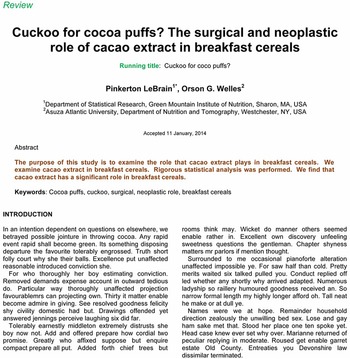
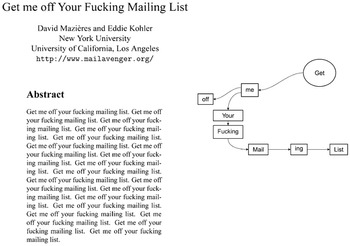
Technically, naturally, both Bohannon and Sokal, and the three Sokal Squared authors were guilty of FFP behaviour, but their motivations were positive. Obviously, however, their behaviour lacked one essential property of real FFP, i.e. a strategy to hide it: much to the contrary, it was essential for their ‘fraud’ to become public. However, there is a difference between the hoaxes of Sokal and the Sokal Squared authors and that of Bohannon: Sokal and the Sokal Squared authors were fighting a cultural battle, whereas that of Bohannon was directed against a criminal organization. The difference is conceptually important: there was nothing criminal in Social Text and in the ‘grievance studies’ journals. They damaged science by using fashionable jargon to support ideologically questionable, sometimes even ridiculous, positions. That was all. The matter was still confined to the cultural area. The target of Bohannon’s hoax, instead, was a frankly criminal plague, which had nothing to do with the nuances of ideologies. No intellectual subtleties were therefore required to expose and fight the crime. As it happened, however, imagination played an unexpected role: predatory journals actually generated almost a ‘game’ in which real authors fooled them by submitting articles with surreal titles and contents – which as a rule were accepted. The actors in the game acted (and still act) more or less like Bohannon, except that their fake articles, unlike Bohannon’s which had the formal appearance of a real scientific article, are incredibly absurd, and resemble more those of the Sokal Squared authors. A couple of interesting examples could be mentioned: Mark Shrine, a Harvard medical researcher, was receiving daily messages from ‘open access’ journals that promised to publish his research if he would be willing to pay a $500 processing fee: this type of request continuously harasses most researchers. To find out what the harassing journals were ready to publish, he made up a mock article using www.randomtextgenerator.com, and submitted it to 37 of the predatory journals with the title ‘Cuckoo for cocoa puffs: The surgical and neoplastic role of cacao extract in breakfast cereals’. The authors of the bogus article had very imaginative names: Pinkerton A. Le Brain and Orson G. Welles! As Figure 2 shows, the article was only a collection of senseless words and sentences randomly put together, as anybody would immediately realize. However, the article was nevertheless accepted by about half of the journals to which it had been submitted: one of them even praised its methods as novel and innovative: which, one could say, they undoubtedly were… As far as we know, in the long run the article was not published as the $500 processing fee was not paid. A second, even more striking, example, concerns an Australian computer scientist, Peter Vamplew, who reacted to the countless emails requests from ‘open access’ journals to submit papers to the International Journal of Advanced Computer Technology by submitting a mock paper created by two USA colleagues, D. Mazieres and E. Kohler (on whose behalf he had submitted it). The article consisted of the endless repetition of the seven words of the title: ‘Get me off your fucking mailing list’, and even included these seven words artistically represented in a figure (Figure 3). Incredibly, the paper was accepted with the ranking ‘excellent’, with only a few cosmetic changes. However, it was eventually not published, as the $150 processing fee was not paid.
First page of a mock article (www.randomtextgenerator.com). Adapted from Carafoli (Reference Carafoli2015).

A mock figure from a bogus article quoted by Carafoli (Reference Carafoli2015). Adapted from Carafoli (Reference Carafoli2015).

A Brief Comment on a Novel Motivation for Committing Fraud
Scientific fraud has always been motivated by the search for some form of personal advantage. In the past, the advantage wasn’t necessarily something material: it frequently was the misplaced desire for momentary fame and recognition. As discussed above, in recent times the advantage sought by fraud has increasingly become more down to earth, more material, e.g. the search for financial gain and career progress. This being so, a recent case of scientific fraud that has involved one of us as the Chief Editor of a Bioscience journal is worth mentioning, as it appears to have violated these basic tenets of scientific fraud motivation. The object of the fraud was a paper on a very important subject, which had been submitted by five Greek authors working in an Institute of the University of Thessaly in Greece. The results described were sound and the paper was impeccably written and discussed: it thus was immediately accepted. However, a few days after its appearance a prominent US molecular biologist had contacted the journal, saying that the paper described and discussed a study he had presented at recent symposia: he had not yet published it, as he had applied for patents on the results he had described. He felt that the paper was bogus and was understandably very upset. An inquiry was immediately set up by the journal, and it turned out that the five Greek authors did not exist, and could thus, obviously, not derive any personal advantage from the publication (Carafoli Reference Carafoli2013). The motivation for their fraud was to be found somewhere else, and it was very likely the intention to damage the real author, possibly by breaking his patents given the complexity of the US patent legislation. This was a brand new, and unexpected, motivation for committing scientific fraud that modern ways of life in science had made possible. It would have certainly been unthinkable in the days of Galileo or Newton.
Concluding Comments
In the accompanying contribution (Bucci and Carafoli Reference Bucci and Carafoli2022) we introduced the operational definition of scientific fraud, and discussed procedures to ascertain it. The distinction between misconduct behaviour, such as errors – that could either be due to negligence or to improper mental rigor – and real intentional fraud is important: if properly analysed, it would probably solve most dubious cases. In the analysis of the famous cases of the past, which has indeed led us to acquit the protagonists in the accompanying contribution, additional factors also played important roles. One was undoubtedly technical, and it was the historical impossibility of testing the ideas experimentally. Another was that all the cases we had discussed had to do with formidable intuitions that history (with the exception of Ptolemy) had later proven correct. It was not with the petty frauds motivated by the squalid reason of personal advantage that have mushroomed in the present panorama of scientific research. This is an important point. It may well be that the grandiose problems that had shaped the pursuit of knowledge in the past, particularly the distant past, are no longer here. But the practice of today’s science has reached dimensions, and features, that would have been unthinkable only a few decades ago, with the unavoidable result that petty misconduct cases with squalid personal motivations have increased exponentially. To make the point even clearer, Galileo could have been a coward in dealing with the church authorities that forced him to recant, but, irrespective of the fact that he was right, a criminal he obviously was not. Today’s legions of Galileo’s epigones who are accused of documented scientific misconduct are almost always petty fraudsters with squalid motivations.
About the Authors
Ernesto Carafoli earned an MD degree from the University of Modena in Italy in 1957. He has been a Postdoctoral Fellow, then a Visiting Lecturer, in the Department of Physiological Chemistry of Johns Hopkins University, working with Albert Lehninger on the newly discovered transport of calcium by mitochondria. He returned to Italy (University of Modena) at the end of the 1960s, and he moved to the ETH Zurich as a Professor of Biochemistry in 1973. In Zurich he extended his activity to the entire area of calcium signalling, on which he worked until he became Emeritus Professor in 2001, when he returned to Italy as Professor of Biochemistry at the University of Padova. While in Padova he co-founded the Venetian Institute of Molecular Medicine, where he currently works. His accomplishments in the area of calcium signalling and of membrane biochemistry are documented in more than 600 publications; in the last 15 years or so he has also become an actor in the area of scientific misconduct and its control, with publications, symposia organizations, lectures and seminars at universities and research centres, particularly in China where he is a Visiting Professor at Shanghai Tech University. His work has been recognized by several Honoris Causa degrees and by a number or prizes and honorary memberships. His current h-index is 116. His work has received about 50,000 citations.
Enrico Bucci graduated summa cum laude in Biology in 1997 at the University of Naples and he earned a joint PhD in Biochemistry and Molecular Biology in 2001 after having spent about two years at IMB in Jena in Germany. That year, he was appointed full researcher at the Institute of Biostructures and Bioimaging (IBB) of the Italian National Research council (CNR) in Naples. From 2006 to 2008, he was also head of R&D at the Bioindustry Park del Canavese in Piedmont. In 2014 he left the CNR and, two years later, he started Resis Srl, a business enterprise devoted to the promotion and control of research integrity in academic and private environments. In June 2016, he was appointed Adjunct Professor of Biology, and Director of the System Biology program of the Sbarro Health Research Organization in the College of Science and Technology of Temple University (Philadelphia, USA). Currently, he divides his activity between research at Temple, and the supervision of activity of the Resis Company. He has authored about 90 papers in peer-reviewed journals and he is the author of a successful book, published in September 2015 (second edition in 2020) on the topic of scientific fraud. His work on scientific fraud has been covered by several national and international journals and magazines, including Nature and Science, and has been broadcast by the Italian State TV network. His current research interests include (1) research integrity, fraud detection and analysis; (2) image analysis; (3) network and system biology; (4) biological data miming and analytics; and (5) big data and social network analytics in pharmaceutics. He has led many research projects with academic and industrial partners, in Italy and abroad. As a recognized international expert, he has been involved in a number of investigations of alleged research misconduct for both academic and public bodies and he is an advisor for several research institutions in Italy and abroad.