


The dominant medical narrative tends to frame translation as a purely scientific and objective process, often overlooking the essential role of texts, mediation, and politics. In science and medicine, translation is typically reduced to a sequence of empirical and methodological steps with a detailed and often rigid, unidirectional temporal structure: preclinical studies, proof-of-concept trials, early-phase clinical trials with small participant groups, large-scale clinical trials, meta-analyses, and ultimately health service research and implementation studies. Thus the temporal development of the narrative is generally organised impersonally around methods as the main protagonists and drivers of action. However, embedded within each of these stages of the narrative are layers of textual and narrative production, interpretation, and re-narration that are integral to the shaping, communication, and reception of knowledge. Scientific findings do not simply progress through the process as isolated facts; instead, they are continuously mediated through written reports, regulatory documents, peer-reviewed articles, clinical guidelines, and public health communications. Each of these textual forms follows specific types of narrative that require interpretation – by scientists, policymakers, clinicians, and patients – with each narrative constructed to influence how knowledge is understood and applied. And yet the narrative structure of translational processes is often overlooked, and the role of textuality in translation is often marginalised, treated as incidental rather than as an active and constitutive force within the process of scientific and medical advancement.
3.1 Narratives of Knowledge Translation
For more than two decades, knowledge translation (KT) has been the banner under which health agencies attempt to bridge the persistent gap between what scholars know and what practitioners, policymakers, and communities do in the broader context of healthcare. Yet the standard narrative of KT, as enshrined in global policy statements, frames it as a primarily technical procedure for transferring findings from the laboratory to the clinic along a clearly delineated timeline. One of the central aims of this book is to rethink this narrative. We argue that KT is not merely a logistical problem of transfer but also a story-laden practice in which evidence is retold, reframed, and revalued as it moves across social worlds.
A useful point of departure is the World Health Organization’s (WHO’s) often-quoted definition of KT as ‘the exchange, synthesis, and effective communication of reliable and relevant research results’, with an emphasis on ‘promoting interaction among the producers and users of research, removing the barriers to research use, and tailoring information to different target audiences so that effective interventions are used more widely’ (WHO 2004:140). At first glance, this definition appears to be quite comprehensive. It identifies three core processes, or temporal stages, of KT – synthesis, exchange, and communication – and portrays KT as an interactive bridge between evidence producers and evidence users. In the WHO’s guidance documents, these processes are elaborated in practical terms: synthesis via systematic reviews and evidence briefs; exchange through deliberative dialogues; and communication through guidelines, policy briefs, workshops, and media campaigns. Each process is geared towards ‘removing the barriers to research use’.
What this definition does not elaborate on is the ontological status of what is being moved. ‘Reliable and relevant research results’ are narrated as complete, self-evident goods ready for packaging and shipment. The semiotic boundary to be crossed lies between two fixed roles – those of producers and users – and the task is to deliver the goods intact, with minimal loss of fidelity. However, from a narrative perspective, translation, in both the interlingual and metaphorical sense, is never quite so straightforward: it is an interpretive act in which meanings shift, values emerge, and power relations are either reproduced or resisted. Indeed, the very practices that feature in the WHO guidance documents – synthesising, exchanging, and communicating – do not simply involve carrying knowledge across; they must continually rewrite it. In other words, human protagonists rewrite this knowledge along every stage of the model. And yet both human agents and the mediation processes in which they are involved are hidden in this narrative.
Similarly, the literature on KT engages extensively with a range of ‘barriers’ narrated as important protagonists and emplotted as responsible for the failure of KT at times to achieve its ends, especially in low- and middle-income countries (generally those in the Global South). These barriers include ‘lack of knowledge about what KT is and how to do it; limited institutional resources (e.g. financing and time) and support (e.g. staffing and training); and the need for leadership engagement and buy-in’ (Kalbarczyk et al. Reference Kalbarczyk, Rodriguez, Mahendradhata, Sarker, Seme, Majumdar, Akinyemi, Kayembe and Alonge2021:729). Schmidt and colleagues (Reference Schmitt, Czabanowska and Schröder-Bäck2024) discuss some of the extensive lists of such ‘barriers’ in the literature on KT, summarising them under four broad headings: situational factors (e.g., violent events and political regime change), structural factors (including political, economic, social, demographic, and ecological structure), cultural factors (e.g., national heritage and traditional social values), and environmental factors (e.g., the international political environment, giving the Cold War as an example, and international financial obligations such as loans from the International Monetary Fund (IMF)). In an alternative narrative of KT processes, what KT frameworks emplot as ‘barriers’ or ‘resistance’ may instead be emplotted as alternative epistemologies, priorities, or lived knowledges that refuse to be repackaged without a say, that have agency as independent protagonists in an ever-evolving, open-ended story. Instead of emplotting factors such as traditional social values as barriers to be overcome, a more reflective narrative would emplot them as differences to be negotiated and accommodated. Moreover, as Schmidt and colleagues (Reference Schmitt, Czabanowska and Schröder-Bäck2024) argue, ‘although good policymaking’, set as an aim to overcome some or most of these barriers, ‘entails an honest effort to use the best available evidence, the belief that this will completely negate the role of power and politics in decision-making is a technocratic illusion’.
This chapter sets out to re-narrate KT and render its complexity visible. We begin by tracing the genealogy of KT, examining how the concept crystallised in close alignment with the parallel developments of translational research and evidence-based medicine (EBM). We then explore how these intertwined genealogies have embedded a set of epistemological assumptions into the narrative of KT as articulated in EBM – assumptions that often contradict KT’s own stated aims of being dialogic, context sensitive, and adaptive. In particular, we attempt to demonstrate how KT’s reliance on standardised genres of evidence, inherited from EBM, constrains its ability to engage with plural forms of knowledge and local meaning-making. Building on this critique, we propose a reconfiguration of KT that foregrounds the textual productivity and intertextual dynamics at work in all KT practices, highlighting how knowledge is not merely transferred but actively rewritten, negotiated, and recontextualised in practice – in other words, how knowledge is re-narrated. This reframing of the dominant narrative of KT lays the foundation for a deeper theoretical and empirical exploration in the following chapters and will inform our discussion of a new model of translational medical humanities in Chapter 7.
3.2 Tracing the Narrative: The Rise of Translational Research
While the general notion of aligning scientific knowledge with societal needs can be traced back to Francis Bacon’s vision of science as a means of restoring humanity’s ‘dominion over creation’ (Bacon Reference Bacon, Jardine and Silverthorne1620), the systematic study of how knowledge spreads is rooted in the early development of social science, particularly in Gabriel Tarde’s Laws of Imitation (Reference Tarde and Parsons1903). Tarde proposed that new ideas diffuse through society primarily via imitation, governed by three laws: the law of close contact (individuals tend to imitate those they interact with), the law of imitation of superiors by inferiors (individuals are more likely to imitate those they perceive as higher in status), and the law of insertion (new types of behaviour or ideas replace older ones over time). For Tarde, innovation was not the work of isolated genius but a gradual, collective process driven by social dynamics. The protagonist in this evolving narrative was conceived not as the traditional individual actor but as a diffuse, collaborative amalgamation of numerous, unidentified social actors. Knowledge gradually took on a life of its own, ‘spreading’ across society almost of its own accord.
This foundational insight was later expanded by Everett Rogers in his influential Diffusion of Innovations theory (Reference Rogers1962), which explored how, why, and at what rate new ideas and technologies spread through populations.Footnote 1 Rogers moved beyond Tarde’s emphasis on imitation alone, identifying five categories of adopters – innovators, early adopters, early majority, late majority, and laggards – to account for the variability in how individuals and groups respond to innovation. His framework highlighted the fact that adoption is not uniform; it is shaped by factors such as social context, communication channels, perceived advantage, and compatibility with existing values and practices.
It was within the healthcare sector that the study of knowledge diffusion and utilisation became most fully institutionalised, and the narrative of knowledge moving across different sites, mainly of its own accord, gained both traction and strategic importance. Yet, in this context, earlier concerns with the broader societal and cultural dimensions of knowledge were largely set aside in favour of more instrumental approaches that downplayed much of the narrative detail. Paradoxically, it was also in medicine that the metaphor of translation was first adopted to describe this process, despite its far longer and richer lineage in the humanities and social sciences, where translation has long been understood as an interpretive, transformative, and context-bound practice.
The term translation began to appear in academic articles in medicine and healthcare in the early 1970s. One of its earliest known uses is found in Wurtman’s Reference Wurtman1970 article ‘Catecholamines and Neurologic Diseases’, published in the New England Journal of Medicine, where he wrote, ‘In few other areas of biomedical science has it been possible to achieve so rapid a translation of basic biochemistry into practical therapy’ (Wurtman Reference Wurtman1970:45). Here translation is not narrated as a problem to be solved but rather as a mark of success, evidence that the movement from bench to bedside has already occurred. In this context, translation is treated as a straightforward, almost self-evident. and agentless process, rather than as a complex or contested reconstruction by human protagonists. In other words, translation is invoked simply as a journey: knowledge moves, almost by force of nature, from laboratory discovery to clinical application. Success or failure is imagined (or emplotted) in terms of speed (‘so rapid’).
Mazzuca (Reference Mazzuca1986) signalled a decisive turning point in thinking about translation. Instead of asking why evidence had not yet reached practitioners, he analysed a series of diabetes care trials and probed the conditions under which their promising results did, or did not, emerge in everyday practice. The culprit, he argued, was neither weak evidence nor clinicians’ ignorance, but the clinic’s own microecology: the workflow, staff composition, physical layout, incentive schedules, and leadership climate actively shaped whether new knowledge could be adopted. Thus translation shifts from being a temporal concern (‘When will the evidence arrive?’) to a contextual one (‘What must change here for the evidence to take root?’). This reframing marks the beginning of the translational shift in medicine. The idea of ‘translating’ knowledge had already been around for decades, but the novelty lay in acknowledging that translation is ‘not easy, not inevitable – indeed, not happening’ (Maienschein et al. Reference Maienschein, Sunderland, Ankeny and Robert2008:44).
The following decade saw the formal emergence of ‘translational research’ as a distinct concept, explicitly unpacking what had previously been an implicit process. A pivotal development came with the establishment of the Specialized Programs of Research Excellence (SPOREs) by the US National Cancer Institute (NCI) in 1992. These programmes were among the first to explicitly fund laboratories with the goal of accelerating the movement of discoveries from the laboratory to clinical settings. In doing so, they helped institutionalise the now familiar metaphor of ‘from bench to bedside’, a phrase that quickly became shorthand for the ideal trajectory of biomedical innovation: ‘Translational research moves knowledge about cancer in either direction, between findings at the laboratory bench and clinical observations at the bedside. Both preclinical and clinical research are translational if the specific goal is to move the fruits of basic knowledge closer to clinical application’ (Broder and Cushing Reference Broder and Cushing1993:477).
This description also reveals a paradox that has accompanied the concept of translational research, as well as the bench-to-bedside metaphor, since their inception. The narrative acknowledges that knowledge moves or is moved ‘in either direction’, which suggests that translation is not merely a linear, unidirectional progression across a static spatial landscape, from laboratory to clinic. However, the underlying rationale for this bidirectionality appears to remain primarily oriented towards the unidirectional temporal and spatial transfer of basic research findings into clinical practice, thereby undermining the initial claim of reciprocity.
The concept of translational research was further refined in an influential article by Chabner and colleagues (Reference Chabner, Boral and Multani1998:4211), which vividly captured the persistent divide between basic science and clinical medicine:
Basic science and clinical medicine have long existed within separate worlds that only occasionally meet in an uneasy partnership. Basic research is necessary to achieve an understanding of the normal and pathological state, but cannot, by itself, put new knowledge to useful applications. The bridge to application is created by the development of diagnostic tests or new drugs that allow an intervention in patients. The clinical trial then becomes the medium through which the value of the new intervention is measured, but the trial only fulfills its purpose if it provides a valid test of the application. The bridge between these two worlds is difficult but necessary to build, in order to assure that our clinical trials have meaningful and specific end points and are designed to prove the effectiveness of such targeted therapies.
Notably, this formulation designates the clinical trial as the principal instrument of translational research. It is framed not merely as a regulatory step or evaluative tool, but as the critical medium through which laboratory knowledge gains clinical meaning. The trial is what tests, legitimates, and ultimately carries research across the divide from bench to bedside, thus embodying the translational function itself.
The translation metaphor soon crystallised into a staged pipeline model, with distinct phases marking the movement of knowledge from laboratory discovery to public health impact. A key moment in this development was the Institute of Medicine’s Clinical Research Roundtable (CRR) landmark report, which identified two major ‘translational blocks’ that hinder progress. Block 1 refers to ‘the transfer of new understandings of disease mechanisms gained in the laboratory into the development of new methods for diagnosis, therapy, and prevention and their first testing in humans’, while Block 2 concerns ‘the translation of results from clinical studies into everyday clinical practice and health decision making’ (Sung et al. Reference Sung, Crowley and Genel2003:1279). The distinction was later expanded by Woolf (Reference Woolf2008), who explicitly referred to these stages as T1 and T2.Footnote 2 As Woolf (Reference Woolf2008:212) explains, ‘T1 struggles more with biological and technological mysteries, trial recruitment, and regulatory concerns. T2 struggles more with human behavior and organizational inertia, infrastructure and resource constraints, and the messiness of proving the effectiveness of “moving targets” under conditions that investigators cannot fully control.’ In this framing, Stage T1 is primarily concerned with scientific and technical translation, whereas Stage T2 tackles social, institutional, and behavioural complexities, marking a shift from laboratory challenges to those embedded in practice and systems.
A year earlier, Westfall and colleagues (Reference Westfall, Mold and Fagnan2007) had redrawn the T1/T2 model proposed by the US National Institutes of Health (NIH), adding two additional steps: translation to patients and translation to practice (Figure 3.1). Westfall and colleagues’ model brought greater specificity to the process by aligning the early stages of translational research with the established phases of drug development. Stage T1 corresponds broadly to Phase 1 and early Phase 2 clinical trials, where the focus is on determining safety, tolerability, optimal dosing, and potential side effects. These early trials represent the initial step in moving a discovery from the laboratory into testing on human subjects. In contrast, Stage T2 aligns with later Phase 2 and Phase 3 clinical trials, where the focus shifts to evaluating the preliminary and confirmatory efficacy of an intervention: testing whether it works in the target disease population, often in comparison to a placebo or standard treatment. However, the model also extends beyond traditional clinical trials by introducing additional methodological steps at Stages T2 and T3. These steps include systematic reviews, meta-analyses, guideline development, and various forms of implementation research – approaches that move beyond the gold standard of the randomised controlled trial (RCT) to address questions of generalisability, applicability, and real-world uptake.
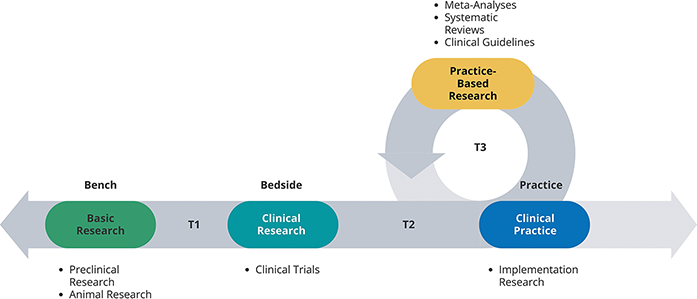
Figure 3.1 Long description
The diagram depicts linear progression from T 1, covering Basic Research (including Preclinical Research and Animal Research), through to Clinical Research (including Clinical Trials), and moving into T 2 (Clinical Practice, including Implementation Research). A loop from Clinical Practice into Practice and Practice-based Research (Meta-Analyses, Systematic Reviews and Clinical Guidelines) represents T 3 and connects back with T 2.
Genericness, a narrative feature discussed in Chapter 2, plays an important role in this context. Here translational research becomes deeply embedded within a particular set of scientific genres, which acquire authority as privileged spaces for credible narration – notably RCTs, systematic reviews, and clinical practice guidelines. These genres not only structure the production of biomedical knowledge but also delimit what is recognised as valid evidence. They serve both as epistemic instruments and as normative frameworks, shaping how knowledge is evaluated, standardised, and deemed actionable. To understand their significance and underlying assumptions, we must turn to a parallel development that fundamentally transformed modern medicine: the emergence of EBM. The practice of EBM did more than just elevate the RCT to a position of methodological privilege; it introduced a new logic of how medical knowledge should be produced, organised, and applied. As we will see, EBM laid the conceptual and infrastructural foundations for what would later be formalised as KT, and it continues to inform its methodological commitments and operational strategies to this day.
3.3 Evidence-Based Medicine and the Genres of Translation
EBM emerged in the early 1990s as a response to long-standing concerns that clinical decision-making relied too heavily on individual expertise, pathophysiological reasoning, and unsystematic clinical experience. As the EBM Working Group famously argued in their 1992 article in JAMA (Guyatt et al. Reference Guyatt, Cairns and Churchill1992), traditional approaches were insufficiently rigorous and vulnerable to bias. EBM aimed to reform clinical practice by anchoring it in a transparent and replicable model of assessment of the best available research evidence.
At the core of this reform was a reordering of epistemic authority – specifically, what constitutes good medical knowledge. As Timmermans and Berg emphasised, the rise of EBM is inseparable from a broad push to standardise the way in which medical knowledge is produced and used: ‘Evidence-based medicine is part of a wider movement to generate uniformity and quality control by streamlining processes’ (Timmermans and Berg Reference Timmermans and Berg2003:8). One of the most significant methodological shifts introduced by EBM was the privileging of the RCT as the ‘gold standard’ for evaluating therapeutic interventions. This change was not an arbitrary designation: RCTs had already gained regulatory prominence in the mid twentieth century through institutions such as the US Food and Drug Administration, but EBM gave them new epistemological weight, allowing scholars such as Sibbald and Roland (Reference Sibbald and Roland1998:201) to claim that ‘randomised controlled trials are the most rigorous way of determining whether a cause effect relation exists between treatment and outcome’. This methodological privileging was not simply about rigour; it reflected a more profound commitment to procedural transparency, reproducibility, and depersonalised judgement. The elevation of the RCT to the highest position in the EBM paradigm was further solidified through the development of formal hierarchies of evidence, which sought to rank different types of studies according to their presumed risk of bias and capacity to support causal inference. These hierarchies placed RCTs – and especially systematic reviews and meta-analyses of RCTs – at the top, while observational studies, case reports, and expert opinion were relegated to lower tiers (Burns et al. Reference Burns, Rohrich and Chung2011). As Timmermans and Berg noted, such grading systems institutionalised a mode of knowledge appraisal that systematically privileged a particular kind of evidence – one that could be abstracted, aggregated, and subjected to statistical synthesis: ‘evidence hierarchies … served as tools to transform disparate clinical studies into standardized, transportable knowledge forms’ (Timmermans and Berg Reference Timmermans and Berg2003:14).
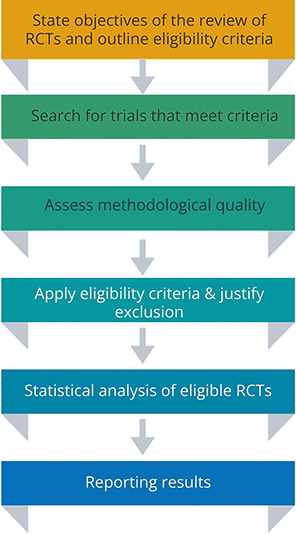
As outlined by Sackett and colleagues (Reference Sackett, Rosenberg, Gray, Haynes and Richardson1996, 2000), EBM was initially envisioned as a clinician-centred practice, where the individual practitioner was responsible for identifying, appraising, and applying research findings in patient care. This narrative presumed a scientifically literate clinician capable of engaging directly with primary studies, assessing their methodological soundness and translating their results into individualised treatment decisions. However, this ideal quickly encountered practical limitations. Most clinicians lacked the time or methodological training to routinely perform high-level critical appraisal of an ever-growing volume of literature. Consequently, systematic reviews gained prominence as tools that could aggregate and pre-appraise the ever-growing body of clinical trials. Systematic reviews offered a structured, reproducible method for summarising available evidence, reducing reliance on narrative reviews or selective citation. By applying rigorous inclusion criteria and standardised assessment tools, systematic reviews aimed to generate transparent and replicable knowledge ready for use by policymakers. Where possible, systematic reviews incorporate meta-analysis, a statistical technique that quantitatively combines the results of multiple studies to produce a single, more precise estimate of effect. The establishment of the Cochrane Collaboration in 1992 marked a key institutional moment in this shift towards centralised evidence appraisal. Designed explicitly to produce systematic reviews of RCTs according to uniform methodological principles, the Cochrane Collaboration became a cornerstone of the EBM movement, developing a specific methodology for synthesising evidence, as summarised in Figure 3.2.
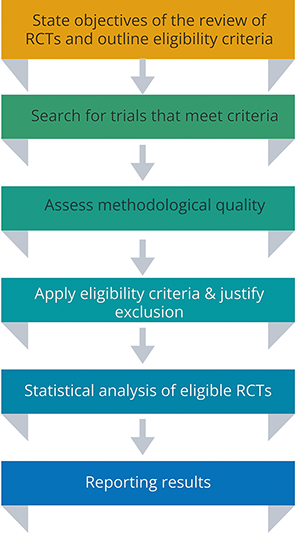
Figure 3.2 Long description
The diagram depicts the E B M (evidence-based medicine) method of conducting systematic reviews as a series of hierarchically organized steps, as follows: State objectives of the review of R C Ts and outline eligibility criteria; search for trials that meet criteria; assess methodological quality; apply eligibility criteria & justify exclusion; statistical analysis of eligible R C Ts; reporting results.
This consolidation of systematic review practices had far-reaching consequences, particularly for the development of clinical guidelines. Clinical guidelines are recommendations written for doctors and other healthcare professionals on how to diagnose and treat specific medical conditions. During the 1980s and early 1990s, clinical guidelines were typically developed through consensus panels composed of medical specialists, who debated contested topics and arrived at recommendations through deliberation. This model relied heavily on expert opinion and informal hierarchies of authority. The rise of EBM reoriented guideline production away from consensus and towards transparent, standardised evidence synthesis. In the EBM era, clinical guidelines increasingly draw on systematic reviews, especially meta-analyses of RCTs, as their evidentiary foundation, aiming to ensure that recommendations are transparent, reproducible, and methodologically rigorous, rather than based on expert authority and individual expertise.
In summary, the elevation of RCTs, systematic reviews, and clinical guidelines to a privileged position in EBM marked both an epistemological and institutional shift. It recast how medical knowledge is produced, evaluated, and applied, thus laying the conceptual and infrastructural groundwork for the later emergence of KT.
3.4 The Epistemic Politics of Knowledge Translation
The Canadian Institutes of Health Research (CIHR) played a pioneering role in shaping and institutionalising the concept of KT in health research. When the Canadian Institutes of Health Research Act was ratified in 2000, the Parliament of Canada legally mandated that CIHR must ‘excel … in the creation of new knowledge and its translation into improved health for Canadians, more effective health services and products and a strengthened Canadian health care system’.Footnote 3 Soon after, the CIHR introduced a formal definition of KT as ‘the exchange, synthesis, and ethically sound application of knowledge within a complex system of interactions among researchers and users’ (CIHR 2004).Footnote 4 This definition describes KT not merely as knowledge transfer or dissemination, but as a dynamic, reciprocal process embedded in social and institutional contexts. The WHO adopted a near-identical definition in the same year, establishing KT as the preferred framework for global health efforts aimed at closing the ‘know–do gap’ and accelerating the uptake of research innovations in policy and practice.
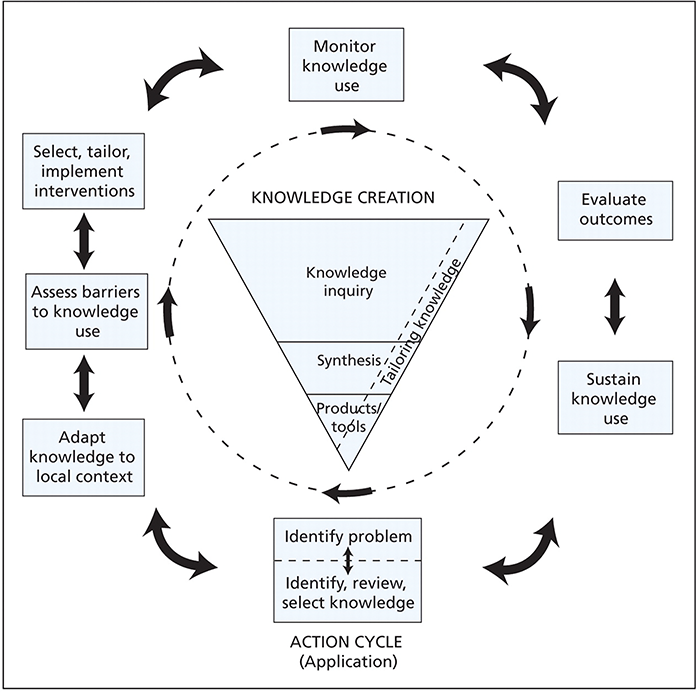
In these definitions, KT is conceptualised as an interactive, context-sensitive process embedded in social relationships and institutional dynamics. This framing marked a clear departure from the more sequential and technically oriented logic of translational research. While both KT and the later stages of translational research (T3 and T4) share the goal of transforming evidence into action, they are oriented towards different questions and challenges. Translational research, particularly in stages T3 and T4, is primarily focused on testing whether interventions that have proven effective in controlled environments maintain their effectiveness when implemented at scale. Stage T3 focuses on integrating interventions into routine clinical practice, while Stage T4 evaluates their effects on broader population health outcomes. Together, these stages aim to address feasibility, fidelity, equity, and system-level effectiveness – issues commonly described as the ‘second translational gap’. In contrast, KT is less concerned with evaluating whether an intervention works universally and more with making it work effectively and sustainably in a local context. It addresses the practical and cultural dimensions of implementation: how should evidence be communicated, adapted, and embedded within specific clinical, institutional, or community contexts? KT treats translation as a process that requires tailoring, negotiation, and co-creation with end users, as shown in the much-cited Knowledge-to-Action (KTA) framework (Figure 3.3; Straus et al. Reference Straus, Tetroe and Graham2009).
The KTA framework.
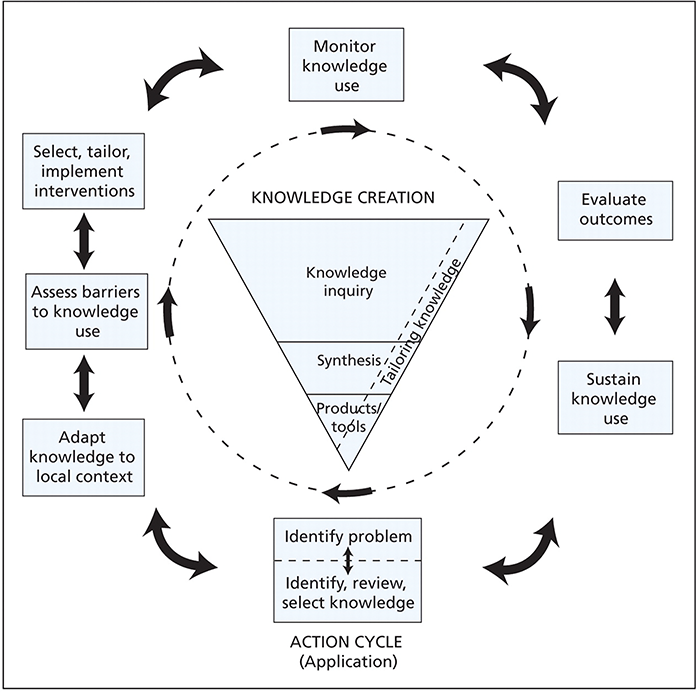
Figure 3.3 Long description
The diagram depicts an upside-down pyramid in the middle, summarizing the process of Knowledge Creation as consisting of three phases: Knowledge Inquiry at the top, followed by Synthesis and finally Product/tools. This is surrounded by 7 action phases representing the Action Cycle, separated by two-way arrows and forming a circle around the Knowledge Creation pyramid. The 7 action phases are: Monitor knowledge use; Evaluate outcomes; Sustain knowledge use; Identify problem/Identify, review, select knowledge; Adapt knowledge to local context; Assess barriers to knowledge use; and Select, tailor, implement interventions.
Unlike the linear, stage-based logic of the translational research continuum (T1–T4), KT is often conceptualised as a cyclical and adaptive process. The path from knowledge generation to practical application is understood as dynamic, recursive, and highly context-dependent, involving multiple feedback loops, local adaptation, and sustained engagement with users and systems. In this sense, KT is both pragmatic and participatory. It encompasses a range of strategies – guideline development, stakeholder engagement, context-sensitive adaptation, and ongoing evaluation – all aimed at ensuring that research findings not only reach the intended users but are also meaningful and usable in their particular settings. While translational research asks, ‘Does this intervention still work outside the trial?’, KT asks, ‘What needs to happen here for this intervention to take root and have an impact?’
However, despite this more flexible framing, the epistemological foundations of KT remain closely tied to translational research and the logics of EBM, as becomes evident when we examine the assumptions embedded in the KTA framework more closely (Figure 3.3). The framework distinguishes between ‘knowledge creation’ (the research enterprise) and ‘knowledge application’ (the implementation of synthesised evidence), implicitly reinforcing a producer–user divide that echoes translational research’s bench-to-bedside metaphor (Engebretsen et al. Reference Engebretsen, Umachandran, Ødemark and Greenhalgh2022).
More significantly, the process of knowledge creation in KT is heavily anchored in the privileged genre of the systematic review – a hallmark of EBM. As Grimshaw and colleagues (Reference Grimshaw, Eccles and Lavis2012) described it, ‘The results of individual studies need to be interpreted within the context of global evidence before deciding whether it is ready for knowledge translation. In other words, the basic unit of knowledge translation should be up-to-date systematic reviews or other syntheses of the global evidence.’ This framing implies that not all research counts as ‘knowledge’ in the KT sense – only research produced in credible sites of narration, as discussed earlier. Thus KT privileges evidence that has already undergone a particular kind of institutionalised validation – one that is cumulative, hierarchical, and methodologically filtered. It is not the singular, context-bound study that warrants translation, but the synthesised body of evidence, ideally a meta-analysis of well-conducted RCTs. In this respect, KT inherits EBM’s epistemic architecture, where systematic reviews serve as both the gatekeepers and drivers of applied research. As Straus and colleagues (Reference Straus, Tetroe and Graham2009:167) noted:
Systematic reviews are the foundation of most activities related to knowledge translation, reflecting that the totality of the evidence should be considered rather than the results of individual studies. We must also consider the quality of the evidence. For example, if we are considering a management issue, ideally, we need evidence from a systematic review of good-quality randomized trials.
Thus systematic reviews are more than just summaries; they serve as thresholds for action. They determine whether a body of research has reached sufficient maturity, coherence, and methodological quality to justify intervention. In this narrative, research becomes ‘translatable’ only when it conforms to predefined standards of evidence aggregation and quality control. This criterion shapes not only what knowledge is eligible for translation but also what counts as knowledge at all, and what counts the most is ‘good quality randomized trials’. However, we know that RCTs cannot escape the process of selective appropriation that is inherent in all narratives. As Jefferson and Jørgensen (Reference Jefferson and Jørgensen2018:46) explain, ‘Even the most faithful servant of evidence would not be able to publish a 10-pager based on a regulatory report without a radical selection of information and data’.
Aside from these inherent narrative features that cast doubt on the status of RCTs and systematic reviews as privileged knowledge gatekeepers, a number of scholars have critiqued the epistemological stance of both RCTs and KT frameworks for systematically marginalising local, Indigenous, and Global South epistemologies (Wong et al. Reference Wong, Gishen and Lokugamage2021). The reliance on RCTs and systematic reviews inherently privileges evidence produced by well-resourced institutions – often in the Global North – and in forms that those institutions recognise and endow with narrative authority. Moreover, in global health and development contexts, many RCTs are designed and sponsored by wealthy institutions in the Global North, while populations in the Global South are positioned primarily as research subjects rather than active participants in knowledge production. Some scholars have critiqued this asymmetry as a contemporary form of epistemic colonialism – one that perpetuates a model of extractive knowledge production and reinforces patterns of dependency and disempowerment, rather than fostering genuine co-production of knowledge (El-Mahdi and Atallah Reference El-Mahdi and Atallah2025). A 2023 report commissioned by the Institute of Development Studies in the UK examined KT practices in the Global South, concluding that ‘concepts of KT, knowledge management and knowledge mobilisation appear to have remained oriented towards the priorities and perspectives of large aid donors and actors in the [G]lobal North that have historically supported this field for application in the global South’ (Georgalakis and Siregar Reference Georgalakis and Siregar2023:8). To enable a more equitable and effective exchange, the report recommends that scholars and knowledge intermediaries in the Global South must participate in designing their own approaches to KT, shaped by their circumstances and priorities. For this to happen, funders in the Global North must ‘adopt a more nuanced understanding of KT that focuses on function or purpose (i.e. to facilitate use of evidence), rather than on narrowly defined activities or roles’ (Georgalakis and Siregar Reference Georgalakis and Siregar2023:8).
Because formal systematic reviews and RCTs are often regarded as the gold standard, other forms of knowledge production, such as qualitative, experiential, community-based, or Indigenous methodologies, often remain invisible or undervalued in KT frameworks. Unless local knowledge can be reformatted to fit the aggregation criteria, it is largely excluded from what counts as ‘evidence’. Consequently, dominant Western research paradigms have long marginalised Indigenous ways of knowing within prevailing definitions of evidence. Rooted in holistic, orally transmitted, and culturally embedded traditions, these knowledge systems often fail to conform to the standardised, written, and decontextualised formats privileged in systematic reviews and clinical trials, and thus are often dismissed as anecdotal or inferior (Tuhiwai Smith Reference Tuhiwai Smith2021). This dismissal constitutes a form of epistemic injustice, where Indigenous and experiential knowledge systems – holistic, culturally embedded, and often transmitted orally – are undervalued or disregarded due to their incompatibility with standardised quantitative methodologies (Fricker Reference Fricker2007). The report by the Institute of Development Studies cited earlier thus concluded that ‘doing KT in the [G]lobal South is … as much about bridging different ways of knowing as it is about the tools to mobilise knowledge’ (Georgalakis and Siregar Reference Georgalakis and Siregar2023:9).
The WHO’s concept of ‘global evidence’ further perpetuates this dynamic by emphasising methodological uniformity and scalability. According to the WHO (2020), ‘Global evidence assembles the best available findings on a specific thematic or health issue from around the world, and can be synthesized in the form of a systematic review or operationalized in a tertiary research product such as a guideline.’ The notion of global evidence presupposes that knowledge must be amenable to being aggregated, rendered generalisable and methodologically vetted – qualities that systematically privilege quantitative, replicable studies. Ironically, while KT frameworks emphasise adaptation to local context and stakeholder engagement, their epistemic entry points often reflect a narrow and formalised model of evidence – one that filters out local, experiential, or contested forms of knowing, unless they can be formally synthesised.
KT frameworks are also curiously impervious to the concrete, linguistic process of translation required as a first step for adapting and negotiating any content in a local context. Thus scholars exploring ways of developing perspectives on KT from Latin America and the Caribbean have needed to lay out an obvious recommendation for achieving ‘more inclusive, diverse, equitable KT in the Global South’ (Patiño-Lugo et al. Reference Patiño-Lugo, Simeon, dos Santos Boeira, Kuhn-Barrientos and Ann Hunte2022): ‘supporting Global South collaboration and partnerships by providing or facilitating simultaneous translation, translation of KT products, free access to scientific databases and travelling costs for meetings’.
From a more practical perspective, RCTs have also been criticised for failing to incorporate new advances in a wide range of fields because they take too long to design and complete, they are seriously hampered by ethical restrictions (Krittanawong et al. Reference Krittanawong, Johnson and Tang2019) and thus unsustainable, they do not account for real-world populations and heterogeneity of treatment effects in patient subgroups, and their rigid design and methods make them unable to provide reliable evidence for rare diseases, which are increasing in number and posing a major public health challenge. Moreover, randomisation does not ensure representativeness because ‘participation in clinical trials is not uniform across demographic … and other factors that influence health’, rendering them relevant ‘only for a subset of the population’ (Prosperi et al. Reference Prosperi, Min, Bian and Modave2018).
In summary, KT presents itself as a pragmatic and responsive process, yet it remains constrained by the epistemological commitments it inherits from EBM and translational science, and by the fact that it is firmly embedded in Western research paradigms that are insensitive to many factors involved in ‘translating’ knowledge for different contexts. Its cyclical form suggests dynamism and flexibility, but its gateways – systematic reviews, global evidence syntheses, guideline-driven implementation, and English as a lingua franca – signal a deep allegiance to a particular framework of biomedical rationality, one in which knowledge is language-independent, stable, scalable, and above all pre-validated.
The entire EBM movement, including RCTs as its gold standard, is currently being challenged by the advent of an alternative new paradigm: precision medicine (PM). Reliant on rapid developments in genomics and bioinformatics, PM is a rapidly changing field and a far-less-regulated paradigm of medical research and practice than EBM. It relies primarily on processing massive amounts of digitised data, including genomic information, to offer highly personalised treatment. Conducting traditional RCTs is not always feasible in this context, as the logic of PM depends on identifying and catering for very small groups with similar biomarkers, genetic mutations, and molecular signatures. It hence works against the design of RCTs: it is not possible to recruit a sufficiently large group of participants to detect statistically significant differences in outcomes between control and experimental groups. Thus alternative trials have been developed that focus, for example, on one drug across different diseases, provided the patients share the same genetic features, or on a single disease, such as lung cancer, and test several drugs in different subgroups of patients based on molecular profiles of their tumours.
Adopting and experimenting with various trial designs, PM promises to shift the methodological paradigm of EBM beyond the conduct of RCTs, which emphasise aggregate outcomes and generalisability, in other respects. Instead of the traditional EBM focus on the ‘average patient’ and the ‘one size fits all’ methodology of RCTs, PM increasingly draws on ‘real world data’ (RWD) – loosely defined as ‘different types of health care data that are not collected in conventional RCTs’ (Makady et al. Reference Makady, de Boer, Hillege, Klungel and Goettsch2017:859), such as data from registries, electronic health records, patient reported outcomes, and mobile apps. This shift in focus has ramifications for the entire epistemological structure of EBM. Systematic reviews and meta-analyses both depend on RCTs and, like RCTs, are labour-intensive and time-consuming. Therefore, they cannot keep pace with the rapid developments in PM, nor with the ever-growing volume of RWD it draws upon (Khoury et al. Reference Khoury, Gwinn, Dotson and Schully2012). In terms of guidelines, this new, developing context calls for a different logic – one in which recommendations are no longer directed at a single disease group but instead follow stratified algorithms that begin with a genetic or biomarker test and branch out based on the patient’s specific variant.
In the absence of standardised guidelines for reporting PM research, the BePRECISE Consortium (Better Precision-Data Reporting of Evidence from Clinical Intervention Studies and Epidemiology) developed a set of guidelines designed to improve how PM research is reported and translated into clinical practice (Lim et al. Reference Lim, Semnani-Azad and Morieri2024). The guidelines consist of a checklist modelled on the standard IMRaD section structure (Introduction, Methods, Results, and Discussion), thus still adhering to the narrative structure of this genre. The guidelines ‘are intended to enhance publication of research on precision medicine by improving quality and standardization of reporting’ (Lime et al. Reference Lim, Semnani-Azad and Morieri2024:1878); they are not intended to guide clinicians or policymakers, and thus cannot feed into KT or translational medicine frameworks.
The existing literature on KT in PM tends to include it as one step in a larger framework of ‘knowledge integration’ (Khoury et al. Reference Khoury, Gwinn, Dotson and Schully2012), which consists of knowledge management, knowledge synthesis, and KT as the final step. KT is understood in the same way as in EBM, as ‘the active process of disseminating synthesized information to influence policy, guideline development, practice, and research’, but the emphasis is on introducing ‘as much automation as possible … to keep up with the avalanche of information’ (Khoury et al. Reference Khoury, Gwinn, Dotson and Schully2012:646). The recognition that ‘the sheer volume and variety of information accumulating from primary research creates tremendous potential noise’ (Khoury et al. Reference Khoury, Gwinn, Dotson and Schully2012:644) is a recurrent theme in studies on PM and highlights the narrative paradox at the core of this new movement. Given that selective appropriation is an inherent feature of narrativity and a prerequisite for emplotment, like social media, PM threatens to unravel the very possibility of elaborating and responding meaningfully to a coherent set of narratives in the field.
All this suggests that PM is yet to drive the revolution in EBM and KT tools that is required and advocated for in this book.
3.5 Knowledge Translation and Textual Productivity
One of the conceptual limitations of the KTA framework is its treatment of key texts, such as RCTs, systematic reviews, and clinical guidelines, as fixed endpoints rather than as dynamic sites of ongoing narration. Within this framework, knowledge synthesis is framed as a form of closure; heterogeneous studies are aggregated, evaluated for methodological quality, and distilled into a unified summary that is then considered ‘ready’ for implementation. While this narrative is intended to emphasise rigour and standardisation, it also positions the resulting text as a stable, self-contained unit of meaning, suited for one-directional transfer into practice. What it overlooks is the inherently open, relational, and generative nature of texts as dynamic sites of narration – how they continue to produce new meanings through interpretation, contextualisation, and use.
This oversight reflects a reductive view of text – one that privileges epistemic clarity, coherence, and finality over discursive complexity, multiplicity, and contestation. Within such a framework, texts function as neutral containers of content, valued for their ability to transmit information unambiguously from evidence producers to users. Literary theorist Julia Kristeva offers a radically different account in her theory of intertextuality. For Kristeva, a text is not a bounded entity but an ‘exchange object’ or a ‘trans-linguistic apparatus that redistributes the order of language by relating communicative speech, which aims to inform directly, to different kinds of anterior or synchronic utterances’ (Kristeva Reference Kristeva1980:36). From her perspective, texts are inherently dynamic and relational – produced not in isolation but through a network of references, resonances, and recontextualisations. They are shaped by what comes before and what circulates around them; they do not merely convey meaning but participate in the ongoing negotiation of meaning.
This intertextual understanding of textuality has important implications for how we conceptualise evidence in health contexts, particularly in moments of public controversy. A striking example is the Cass Review, discussed at length in Chapter 4. The Cass Review sought to consolidate evidence on the use of puberty blockers in young people. Commissioned by NHS England in 2020 and led by pediatrician Hilary Cass, the review aimed ‘to ensure that children and young people who are questioning their gender identity or experiencing gender dysphoria receive a high standard of care’ (Cass Final Report 2024:20). Upon its release in April 2024, the report became a living, contested, and highly politicised text: cited, praised, denounced, excerpted, re-read, and reframed by different narrators across clinical, policy, activist, and media spheres. Although grounded in systematic evidence appraisals and stakeholder consultations, its recommendations diverged from the internationally recognised Standards of Care issued by the World Professional Association for Transgender Health (WPATH; Coleman et al. Reference Coleman, Radix and Bouman2022). This divergence sparked conflicting interpretations; some clinicians and commentators read the report as a long-overdue shift towards caution, while others viewed it as a regressive undermining of affirmative models of care. The British Medical Association (BMA) initially expressed scepticism and then reversed its stance under political pressure, announcing it would reassess the report ‘from a position of neutrality’ (BMJ 2024). These oscillations reveal that the report functioned less as a final verdict than as an open, generative site of ongoing discursive struggle; each new statement, letter, research article, or policy draft becomes an intertext that reshapes how the Cass Review itself is understood, circulated, and mobilised.
When read through Kristeva’s lens as ‘an exchange object’, and through the model of narrativity offered in this book as a dynamic, open-ended narrative, the Cass Review ceases to be a fixed repository of evidence and becomes a textual node within a wider discursive field. The Cass Review does not seal meaning; instead, it redistributes linguistic and epistemic orders, connecting clinical trial data, qualitative testimony, legal precedent, and moral argument in ways that invite further reinterpretation and re-narration. As we will explain in more detail in Chapter 4, every citation, media headline, or professional guideline that references the Cass Review reactivates and reconfigures its claims, producing new alignments and antagonisms. The Cass Review’s tumultuous reception demonstrates that a ‘body of evidence’ is never complete; it is an evolving narrative archive whose authority is constantly produced – and contested – through interpretation and use.
Applying this lens to the KT framework reveals two important insights:
1. Knowledge products are never singular or static; they are constantly evolving. Even a systematic review, often regarded as the gold standard of knowledge synthesis, is a narrativised construction, shaped by methodological choices; disciplinary norms; and implicit assumptions about relevance, quality, and generalisability. Approaching such texts as productive rather than conclusive allows us to view them not as end-points but as discursive sites open to reinterpretation, negotiation, and recontextualisation.
2. Translation always exceeds the boundaries of synthesis. No matter how rigorously a body of evidence is compiled, the act of translating knowledge into action will inevitably draw on other texts, values, and voices – those not formally included in the synthesis. These include clinical experience, local policy documents, community narratives, tacit knowledge, and even dissenting or marginalised perspectives. These unsynthesised – and often unsynthesisable – elements are not peripheral to KT; they are essential to how knowledge is made meaningful in specific contexts.
Therefore, the assumption that a systematic review can function as a self-contained, universally applicable unit of knowledge is untenable. Translation is not merely a technical process of ‘applying’ distilled knowledge but a textual practice – one that is fundamentally intertextual, interpretive, and dialogic. By ‘textual’, however, we do not mean necessarily or solely a linguistic artefact. Systematic reviews themselves exemplify this; they are composed not only of prose but also of tables, charts, flow diagrams, and other visual materials. Moreover, relatively recent research has shown the extent to which communication between clinicians and between practitioners and patients is increasingly characterised by the use of emojis and emoticons (Halverson et al. Reference Halverson, Donnelly, Weiner and Lee2023; He et al. Reference He, Lee and Davis2023; Petkoff et al. Reference Petcoff, Palaganas and Danesi2024). Therefore, like narration (see Chapter 1), translation is not an exclusively verbal performance, both within and beyond the context of healthcare.
Latour and Woolgar’s studies on scientific practice highlight this broader understanding of textuality. Drawing on Dagnognet (Reference Dagognet1973), they introduced the concept of inscription to refer to any recorded trace of information, ‘an operation more basic than writing’ (Latour and Woolgar Reference Latour and Woolgar1986:88). In their ethnography of a laboratory, they documented a ‘mania for inscription’ (Latour and Woolgar Reference Latour and Woolgar1986:49) – scientists feverishly producing graphs, tables, photographs, spectra, histograms, and other traces as evidence. Such inscriptions are literary in a broad sense – material signs that can be stored, copied, and circulated. Latour (Reference Latour1990) emphasised that the power of inscription lies not only in conveying meaning but in creating immutable mobiles – stable artefacts such as papers and figures that can travel between contexts and forge ‘rapid links between many unrelated problems’. Thus inscriptions function as devices that align diverse actors and findings, showing that textual practice inherently encompasses visual and numerical forms as well as words.
Derrida (Reference Derrida1976) reached a similar conclusion through a different line of reasoning. Whereas Saussure had treated writing as a secondary, imperfect reflection of meaning formed primarily in speech, Derrida argued that this so-called imperfection – the distancing and mediation inherent in writing – constitutes the very basis of signification (Engebretsen et al. Reference Engebretsen, Haagensen, Ødemark, Ødemark, Resløkken, Lillehagen and Engebretsen2024). As Spivak (Reference Spivak and Derrida1976:xcii) explained in her preface to Of Grammatology, ‘A careful reading of the Grammatology shows quickly that Derrida points out, rather, that speech too – grafted within an empirical context, within the structure of speaker-listener, within the general context of the language, and the possibility of the absence of the speaker-listener – is structured as writing, that in this general sense, there is “writing in speech”’.
To signify is always to represent something in its absence through a different medium (i.e., through an inscription). This concept is directly relevant to systematic reviews. Their authority rests precisely on the structure of writing in speech: they represent the voices of many individual studies – absent in themselves – through a textual and visual apparatus that claims to speak universally. The tables, charts, and forest plots in a systematic review are not neutral mirrors but inscriptions that stand in for the absent trials, making their findings present in a condensed and transportable form. Our approach, then, draws more closely on this Derridean notion than on Latour’s material emphasis. What interests us is less the physical substrate of inscriptions than their narrative productivity: any sign – whether textual trace, visual figure, emoji, or diagram of action – warrants a retelling, a re-inscription. In this sense, systematic reviews, with their blend of textual and visual elements, exemplify how KT is always a process of inscription in the broadest sense: interpretive, multimodal, and inexorably intertextual.
3.6 Narrative Evidence-Based Medicine and Translational Medicine
Narrative medicine has mainly been confined to the ultimate step of the translational process – the clinician’s encounter with the patient – while marginalising or overlooking the narrative structure of the preceding steps, typically cast as ‘scientific’. Even in the relatively few studies that explicitly recognise how narrative can enhance KT, such as Goyal and colleagues (Reference Goyal, Charon, Lekas, Fullilove, Devlin, Falzon and Wyer2008), the emphasis tends to remain on the final, patient-facing step.
Goyal and colleagues (Reference Goyal, Charon, Lekas, Fullilove, Devlin, Falzon and Wyer2008) proposed a ‘narrative evidence-based medicine’ (NEBM) as an elaboration of the translational medicine approach, arguing that it can bridge gaps in the research-to-practice paradigm by fostering transformative bidirectional relationships. They noted that most descriptions of the translational process focus on the transition from basic research to clinical research (T1) and from clinical research to practice (T2), while overlooking the critical influence of individual patient decisions (T3). Without these essential patient–clinician interactions, which ensure adherence and uptake of healthcare recommendations, the translational framework remains incomplete. Similarly, Charon and Wyer (Reference Charon and Wyer2008:296) stressed the need for NEBM to develop methods that can build on and complement existing models of translational research, focusing on ‘the so-called “T3 block”, the final step in the pathway that leads from research idea to improved patients’ outcomes, namely, patients’ own decisions to accept and execute offered interventions’.
Although Goyal and colleagues’ and Charon and Wyer’s extension of translational medicine is important, it nevertheless reinforces a clear separation between ‘science’ (in the earlier phases) and ‘narrativity’ (in the clinical phase). In contrast, we emphasise the integral role of narrativity throughout all phases of translational medical science, rather than restricting it to the final point of patient care. It is this narrative critique of the existing KT and translational medicine framework that allows us to examine their limitations, not only in terms of accommodating the specificities of the clinical encounter in T3, but also in terms of their assumptions about how knowledge circulates, about the privileged status of RCTs and systematic reviews, and about the relationship between the Global North and Global South.
Finally, as noted earlier, there is a narrative paradox in existing KT frameworks that narrative medicine and NEBM have both failed to engage with. These frameworks posit that a message becomes scientifically trustworthy through translational modifications and adaptation to new audiences, while also seeking to implement the original scientific message without altering its content. Our expanded approach to narrative medicine addresses this paradox by highlighting the narrative shifts involved in KT and offering a means of theorising them from a novel perspective based on a broad understanding of narrativity. We revisit these frameworks and offer an alternative narrative of KT in the final chapter of this book. In Chapters 4–6, we apply our expanded narrative approach to concrete case studies of KT in reproductive and sexual health – puberty blockers, mosaic embryos in in vitro fertilisation (IVF), and abortion care – demonstrating how narrative structures inform how medical evidence is interpreted, contested, and acted upon.

 Open access