“Gebbard” was the spur-of-the-moment, made-up name for the partnership between geology professor Gerard De Geer, and his wife Ebba Hult. It was coined on Hult's 42nd birthday. “In this hopeful year of grace, afresh will Gebbard spring embrace! . . . In the partnership De Geer, you’re the half that makes it dear!”Footnote 1 Together they examined layers of clay formed by deglaciation as well as the sun's impact on the climate of the ice age. Ebba Hult began her geology studies at Stockholm University College in 1906. There, at the age of 24, she met Gerard De Geer, who was 48. The geology professor had the “greatest confidence” in her, and they were married in 1908 (Hult De Geer Reference Hult De Geer1955). During the same period he divorced his first wife, Elisabeth Erskine.
De Geer had two sons from his first marriage, but none together with Hult. Instead, the spouses devoted their time and energy to scientific work. The marriage propelled Ebba Hult into the heart of Stockholm's academic élite. After having served at the Geological Survey of Sweden (SGU), De Geer took office as professor of geology at Stockholm University College in 1897, serving as its president from 1902 until 1911 and vice-president from 1911 until 1924 (von Post Reference von Post1931, 550; Hult De Geer Reference Hult De Geer1958, 19). At the time of his marriage, he was busy establishing a research program – geochronology – to which the couple was to devote a great deal of time over many years. In 1940, at the age of 82, De Geer published his last, comprehensive scientific work, his “testament”: the Geochronologia Suecica Principles. The dedication read: “To my wife, Ebba Hult De Geer, for more than thirty years my indefatigable scientific partner” (De Geer Reference De Geer1940, 1).
This article explores the partnership between the De Geers as part of a larger scholarly community. The overall argument is that marriage was a productive and culturally acknowledged form of collaboration, while it also produced a fractured position for Ebba Hult. In early twentieth-century Swedish geology (and the natural sciences more broadly) matrimony was a crucial part of an acceptable form of life. It strengthened Gerard De Geer's work and gave Ebba Hult access to geological research as wife and assistant. But how, more specifically, did marriage provide an avenue to the institutionalized settings of geology despite the obstacles that Hult faced as a woman? I will argue the importance of overlapping contexts, which gave her opportunities to partially become more than an assistant and contribute independently to research. In particular, I shall indicate the significance of cooperation with De Geer's disciples, the proximity to a larger academic circle in Stockholm and De Geer's private geochronological institute.
Of course, married life and academic institutions were both based on ideas about differences between men and women. How did norms and practices contribute to a division of power and independence between the spouses? Hult's primary role was that of an assistant, which is a repeated feminine position and a well-understood phenomenon in the history of science (Abir-Am, Pycior, and Slack Reference Abir-Am, Pycior and Slack1995a; Lykknes, Opitz, and Van Tiggelen Reference Lykknes, Donald Opitz and Van Tiggelen2012).
But I will also argue that she was caught between being perceived as an assistant and a scholar in her own right. Indeed, she maintained a fractured position – between inclusion and exclusion – because of gendered norms, expectations, and practices of the academic community. On the one hand, she could participate in geology research because of her marriage and was partly acknowledged as independent scholar. On the other hand, she never entirely moved out of her husband's research program and the role of supporter. This dual status became increasingly clear as Gerard De Geer aged and eventually died. After that, the productive framework that included marriage and the overlapping contexts was destabilized. Hult tried to defend his research program from increasing criticism without success.
Since the 1990s, studies of collaborative couples in the natural sciences have indicated the importance of invisible women (Abir-Am and Outram Reference Abir-Am and Outram1987; Abir-Am, Pycior, and Slack Reference Abir-Am, Pycior and Slack1995a). As much as I sympathize with this work, my aim goes beyond showing that Ebba Hult contributed to her husband's research. Instead of focusing on women's work, I wish to contribute to the growing research on the importance of family-based relationships in the history of science.Footnote 2 I will give a structural account of the role of marriage in the larger academic infrastructure, and show the strong link between private life and intellectual frameworks. Moreover, my ambition is to contribute to research on the gendered nature of marginality in the early twentieth century. Ebba Hult was not exceptional: several wives in Sweden and abroad had similar experiences of the gendered culture of early twentieth-century natural sciences (Berg, Florin, and Wisselgren Reference Berg, Florin, Wisselgren, Berg, Florin and Wisselgren2011). However, even though much of her life followed dominating norms, there was also space for negotiations, which formed a specific and individual trajectory through the dominating life forms of science.
The Spring of the Ice Age: Geochronological Research
Looking back 17 years after her husband's death, Ebba Hult described him as a “man of spring.” Like “the newborn, living power of light and warmth breaks the bonds of the winter cold,” De Geer had the power of renewal (Hult De Geer Reference Hult De Geer1960). The allusion to a receding winter was well chosen. During the nineteenth century questions about the ice age and land levels became increasingly important and studied in several parts of Europe, and the United States. Research efforts circled around the study of sedimentation, glaciation, and the wish to match patterns from different locales (Oldroyd Reference Oldroyd and Baigrie2006; Krüger Reference Krüger2013).
Gerard De Geer's career took shape in this scientific context. Detailed interpretations of Sweden's geological history and theories of the ice age were produced at the turn of the twentieth century. The question of land level changes came to predominate Swedish Quaternary geology, since it was considered characteristic of the nation's geological processes (Krüger Reference Krüger2013). De Geer became influential, primarily through his studies of inland ice recession during the latest glacial period. In 1882, he published his first article on the inland ice and the changes in land level that followed its recession (Ahlmann Reference Ahlmann1968–1974, 198; Lundqvist Reference Lundqvist1968–1974, 7–11; Nilsson Reference Nilsson1968–1974, 213–5; von Post Reference von Post1931, 556–7).
After the turn of the century, De Geer established, with great help from Hult, his own research program: the geochronological method and the Swedish time scale. The objective of his research was to create a dating of the entire period of inland ice recession. The work was based on “the varved clay”: layers of clay sedimented at the edge of the inland ice. The ice had melted first in the southern parts of Sweden, retreating northwards across the Swedish land mass. The clay layers revealed how the process had progressed (Lundqvist Reference Lundqvist1968–1974, 6; Nilsson Reference Nilsson1968–1974, 215). They were examined by studying a series of clay varves, so-called varve sequences. The younger layers lay on top of the older ones. In the south, the ice had melted away earlier so that the top layers found there lay deeper in the northern varve sequence. Thus, the clay layers overlapped “like roofing tiles” (Nilsson Reference Nilsson1968–1974, 215–16). Already in 1896, De Geer described the similarities between the varved clay and the annual rings of trees and concluded that one clay layer corresponded to an annual deposit of sediment (Hult De Geer Reference Hult De Geer1958, 7; De Geer Reference De Geer1940, 13; Lundqvist Reference Lundqvist1968–1974, 25).
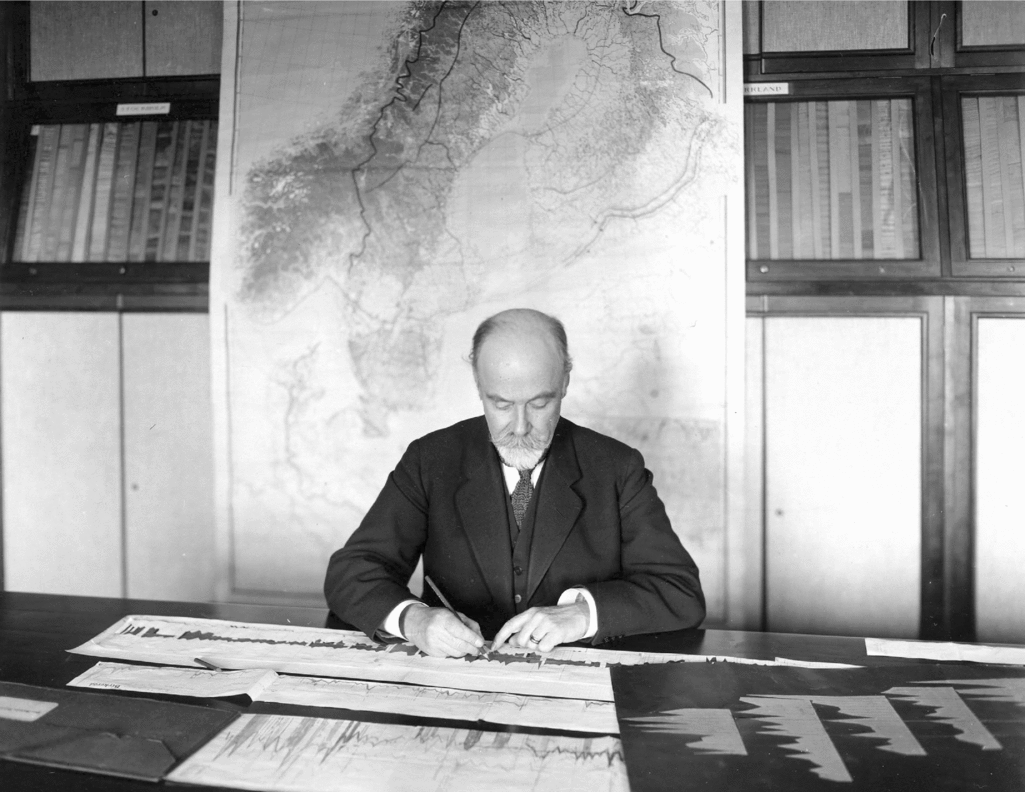
De Geer at his desk. Royal Academy of Sciences, Stockholm

In order to establish a comprehensive Swedish time scale, De Geer compared, or “connected,” distant varve sequences. Initially, series at a distance of only a few hundred meters were compared. After the marriage, around 1910, the distances were increased. De Geer and Hult carried out so-called “teleconnections.” They argued that distant varve series were consistent with one another. The sequences lay along the ice edge that had extended across Sweden from east to west; the ice had receded in giant steps (Nilsson Reference Nilsson1968–1974, 223 and 227).
Finally, the aim of the geochronological method was to link knowledge about the recession of the ice to climatological factors. A thicker clay varve indicated a warmer year because the melting went faster, thus depositing more mud. The climate factor emphasized by De Geer was solar heat radiation (Ahlmann Reference Ahlmann1968–1974, 198; Nilsson Reference Nilsson1968–1974, 217 and 228). The teleconnections of clay layers therefore had to be extended geographically. Only in this way could the impact of solar radiation be studied on a global scale. Because solar radiation had shifted in a constant fashion as a function of time the world over, De Geer argued that the Swedish time scale could be used as a “standard alignment” for ice age chronology and, thus, as a basis for a global time scale (Hult De Geer Reference Hult De Geer1931, 259). The clay varves provided a “thermograph” indicating similar climate changes in Northern Europe, North America, and other glaciated parts of the world (De Geer Reference De Geer1940, 239; Nilsson Reference Nilsson1968–1974, 228–30; von Post Reference von Post1931, 562).
With his theories of varved clay, De Geer became well known and reputed in international geology. As a professor at Stockholm University College he had a strong institutional foundation for his work. Pursuant to his position, he received his own research institute on his retirement in 1924 – The Geochronological Institute – which was placed adjacent to the De Geers’ private residence in Stockholm. But despite its success and status, the research did not go uncontested. Hypotheses about teleconnection and generalizations of the Swedish time scale were to be met with skepticism on the part of several geologists, primarily during the 1920s and 1930s (Ahlmann Reference Ahlmann1968–1974, 196).
Marriage, Partnership, Work
Only a few letters between the De Geer spouses remain, and additional material showing how they divided work is scarce. However, judging from sources in Hult's archive – invitation cards, letters, and table-seating diagrams – she was responsible for keeping a household and the kind of social life that was expected of an esteemed professor. This distribution of competencies was also in line with the gendered academic context.
In addition, Hult was responsible for secretarial duties, indoors as well as outdoors. During recreational outings on “sunny Sundays,” the spouses measured “shorelines on wooded hillsides” or looked for “measurable clay varves at building sites.” Hult brought along a “note-block and pencil” so that De Geer could dictate “a few pages in a park or on some veranda after coffee” (Hult De Geer Reference Hult De Geer1960, 3). Interestingly however, Hult's efforts were not limited to these traditionally feminine chores: the spouses performed virtually every part of research together. Indeed, De Geer stated as much in his magnum opus, Geochronologia Suecica Principles: his wife had been part of “all expeditions, every kind of fieldwork and redaction unto the last proof-leaf” (De Geer Reference De Geer1940, 1). The everyday run of the scientific mill included Ebba Hult: she took part in the research “with never-ending energy” (Ahlmann Reference Ahlmann1968–1974, 198).
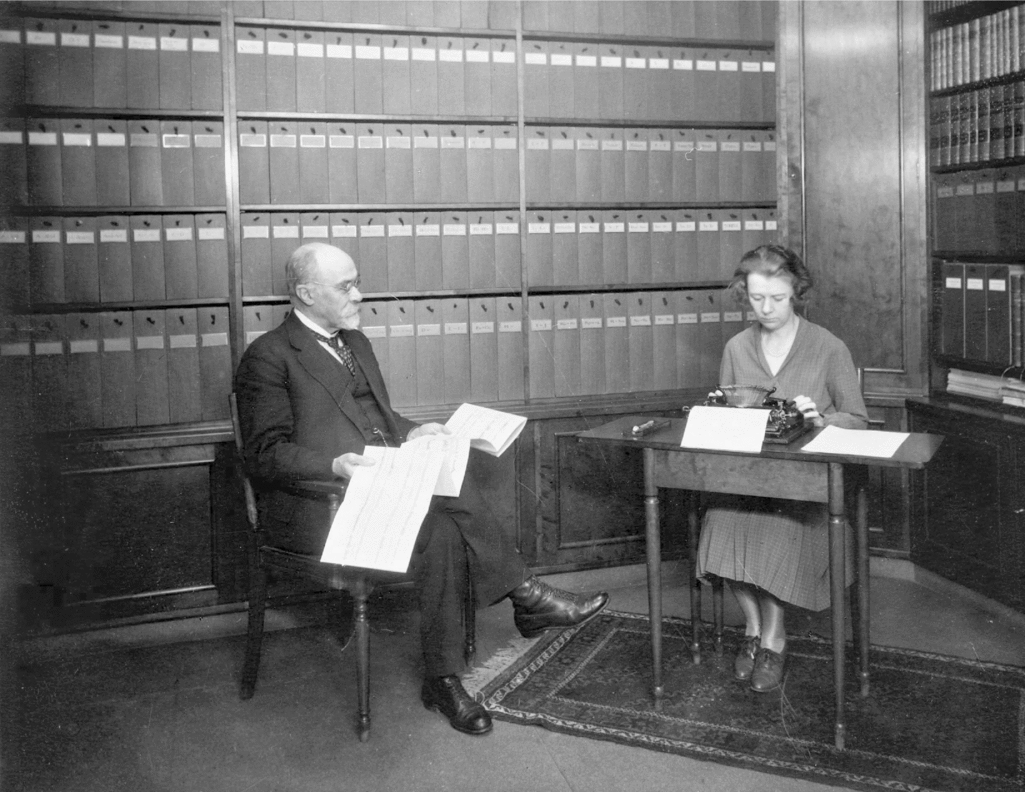
Indoor work. Royal Academy of Sciences, Stockholm
This meant that Hult accompanied her husband in the field, even though it was often argued in discussions about geological knowledge-making that field work was too harsh for women (Nordlund Reference Nordlund2001). Indeed, the fact that field work took place in the open enabled actors like her, without formal credentials, to partake (Kuklick and Kohler Reference Kuklick and Kohler1996). The De Geer couple went on many excursions in different areas of Sweden, Denmark, Norway, and Finland (De Geer Reference De Geer1940, 21–22; Hult De Geer Reference Hult De Geer1960, 9).Footnote 3 At different geological sites, one could encounter Gerard De Geer “and his wife . . . full of zest” (Ahlmann Reference Ahlmann1968–1974, 199; Nilsson Reference Nilsson1968–1974, 225). In 1920, they traveled to the US east coast as well as to the Alps. During their trip to the US, they wandered “duly equipped with spades, plate-metal pipes for sampling, bags and backpacks for various gear and food supplies” (Ahlmann Reference Ahlmann1968–1974, 199; von Post Reference von Post1931, 551).
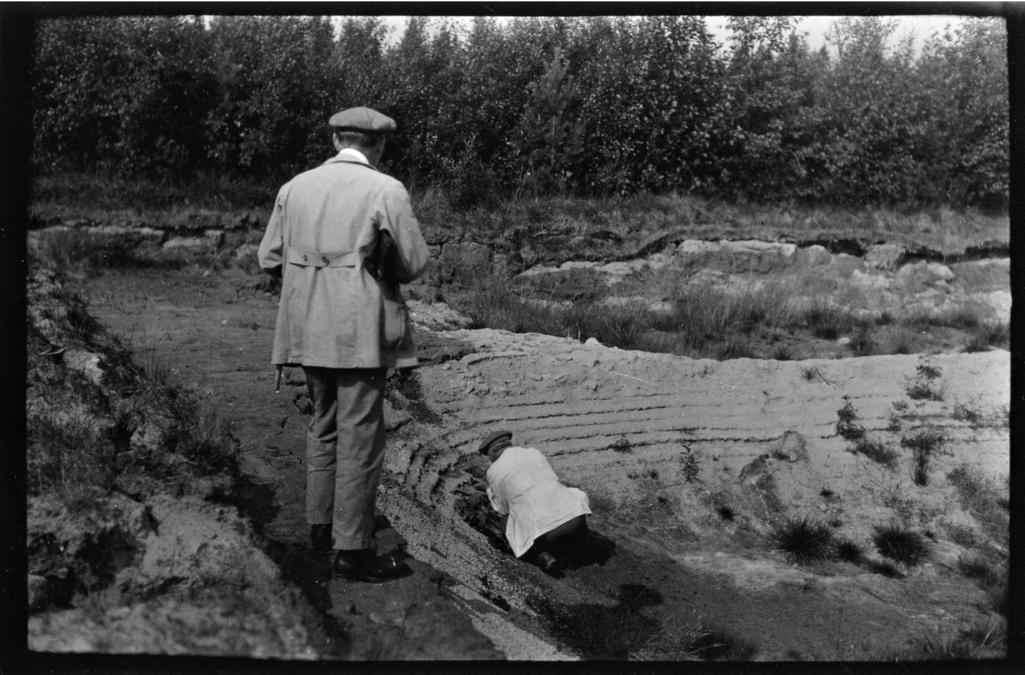
Gerard De Geer and Ebba Hult examining clay varves. Royal Academy of Sciences, Stockholm
Varved clay was studied on exposed, vertical surfaces under ground level. The surface of the exposed clay layers was leveled out, and the dividing lines between the layers were emphasized by making longitudinal sections. Varve sequences were documented in photographs or by tracing them on paper. Oblong strips of paper were affixed to the clay, and the varves were traced with a pencil. Sometimes a sample was taken from the series: an oblong zinc frame was pressed down into the clay and carefully pulled out. The clay stuck inside the frame and could then be forwarded to the geological laboratory (Ahlmann Reference Ahlmann1968–1974, 199; De Geer Reference De Geer1940, 19–21; Lundqvist Reference Lundqvist1968–1974, 87).
The indoor work included analyses of specimens of clay varves: sequences from different sites were mapped by studying either the clay samples that had been shipped from the field or the strips of paper representing different varves. The aim was to compare sequences from different geographical locations to obtain similarities and shared constellations of varves which indicated the sought after teleconnection (Nilsson Reference Nilsson1968–1974). The indoor work also included the construction of representations of varves in the shape of maps and diagrams.
There was a close connection between the knowledge-making practices in geochronology and the De Geer couple's configuration of private life. First, the study of varved clay was necessarily cooperative: large amounts of data were collected during endless hours of fieldwork. Gerard De Geer thought it would take “generations to gather material for a Swedish time scale” (Nilsson Reference Nilsson1968–1974, 218). He enrolled students and disciples to supply him with data. For example, in 1905 he organized a “clay campaign” where twenty students from Stockholm University College and Uppsala University were each instructed to look for clay varves along a 10-kilometer section on the outskirts of Stockholm (De Geer Reference De Geer1940, 239). Data were then collected which enabled De Geer to formulate the hypothesis that the ice recession along the distance in question had taken 800 years (Ahlmann Reference Ahlmann1968–1974, 198; Lundqvist Reference Lundqvist1958, 3; Lundqvist Reference Lundqvist1968–1974, 23).
A scientific project like De Geer's benefitted from a close co-worker. From the outset, the spouses explicitly arranged their shared life according to the demands of geochronology. In his proposal, De Geer not only suggested wedlock – he also asked if Hult would be willing to “help” him. She replied that she “would be delighted” to do so (Hult De Geer Reference Hult De Geer1955). With time, she became “the great professor's skilled assistant, and the “most loyal guardian of his work.”Footnote 4 Hult devotedly conformed to her duties, and “the Professor's urgent and extremely important duties.” Consequently, she gave up her own ambitions of obtaining a bachelor's degree (Hult De Geer Reference Hult De Geer1958, 24; idem 1955). The close scientific collaboration and intimate togetherness of their way of life were two sides of the same coin. In clay pits and at worktables, a common scientific worldview was formed, in which reliance on the possibilities of geochronological dating and teleconnections was fundamental, as was belief in the importance of solar radiation.
A Gendered Distribution of Power and Dependency
The spouses worked side by side, but the collaboration was strongly affected by gendered attitudes and practices in the academic community at the turn of the twentieth century. Broad political, cultural, and religious sensibilities sanctioned men's leadership and political rights, while women were made responsible for the private sphere (Florin and Kvarnström Reference Florin, Kvarnström, Florin and Kvarnström2001, 18). The institutional structures of the academic natural sciences generated power for Gerard De Geer while Ebba Hult remained dependent upon her husband.
Beginning in 1918, and with increasing frequency during the following 45 years, Hult published papers of her own, about 20 in sum. Importantly however, this research was never separated from her husband's program. In the publication “Late Glacial Clay Varves in Iceland,” she pointed out that “Professor De Geer entrusted me with the problem of teleconnecting some clay telegrams from Iceland, while he had to give his own eyes a rest after a cataract operation in the summer of 1927” (Hult De Geer Reference Hult De Geer1928, 297). In all articles that Hult published under her own name, Gerard was given prominence: he was the “discoverer” of “the well-known clay chronology” and the Swedish time scale (Hult De Geer Reference Hult De Geer1931, 249).
Albeit the couple performed research together, Gerard De Geer had the power to represent geochronology, including the method of teleconnections. He systematized the observations, published the results, defined the direction of research and the framework that his wife and other assistants became part of. They were expected to follow “the guidelines that had been set up to avoid unnecessary chaos” and that had “proven to be essential” (Hult De Geer Reference Hult De Geer1960, 10). In the early 1920s, the press reported on the work of the De Geer spouses. The daily Stockholmstidningen told about the couple's common journey to the United States in 1920, announcing that “Professor De Geer” was to report the results in a “scientific forum.” It was he who, upon his return, found “confirmation of his theories” about the annual rings of the glacial regression.Footnote 5 He was the person who represented the scientific knowledge.
The newspaper coverage of the De Geers was an effect of the public status of Gerard's work. As an influential scientist and professor in Stockholm, he was a celebrity in early twentieth-century Swedish society whose research “attracted interest” outside academic science (von Post Reference von Post1931, 552 and 563). “Every Swedish schoolchild” had heard about “varved clay” and about De Geer.Footnote 6 The event in his career that had the greatest media impact was the 11th International Geological Congress in Stockholm in 1910. The conference gave Swedish geology an opportunity to assert itself on the international arena. It was a cultural event comparable to the industrial fairs of the time (Nordlund and Sundquist Reference Nordlund and Sundquist2004). As president of the congress, De Geer gave the opening address before 700 international guests. In his speech, he introduced his geochronological method and the idea of the Swedish time scale. He suggested the term “varve” to describe the annual deposit of clay, and he launched the concept of geochronology. Comprehensive reports on the keynote speech were published in the daily press (Ahlmann Reference Ahlmann1968–1974, 196; De Geer Reference De Geer1940, 17; Nilsson Reference Nilsson1968–1974, 213 and 225; von Post Reference von Post1931, 561; Lundqvist Reference Lundqvist1958, 23).
The public nature of geochronology depended upon a specific link between science and national sensibilities at the time. Around the turn of the century surveying nature became an important part of shaping the Swedish nation. Geologists in particular mapped natural resources and contributed to constructing ideas about Sweden. These efforts received political support and opened up public arenas to the scientists. Part of the surveying involved a discourse about Sweden as the country of the ice age, which reinforced the Swedish identity (Crawford Reference Crawford and Frängsmyr1996, 114–16; Krüger Reference Krüger2013).
Gerard De Geer also gained institutional power and recognition in academic science. He received many honors: The Vega Medal from the Swedish Society of Anthropology and Geography (1915), the Wollaston Medal from the Geological Society in London (1920), and the Berzelius Medal from the Royal Swedish Academy of Sciences (1927). He was also elected member of the geological societies in St. Petersburg, Berlin, London, Paris, and New York, and of the American Geographical Society. The most esteemed honor was his membership in the Royal Society in London. Since the seventeenth century only fifteen Swedes had been given this distinction (von Post Reference von Post1931, 551 and 564).
In the Swedish natural sciences of the early twentieth century, power came through a formal position in academic institutions. Gerard De Geer was a leader who assumed responsibility for a research field and appeared as the spokesman of a scientific enterprise. De Geer's and Hult's collaboration was certainly beneficial for both, but they were not considered equal contributors to the geochronological program.
The Structure of Access: Researcher in Her Own Right?
After twenty-five years as her husband's collaborator and assistant, Ebba Hult was elected as the very first woman to Naturvetenskapliga föreningen (The Science Association) in Stockholm in 1933. Her husband had become an honorary member of the association five years prior. The election of Hult as a member attracted some interest in the printed media, and the reports display a tension in her status as a scholar. On the one hand, the daily Svenska Dagladet described her as a “professor's wife” who “in an ideal fashion combines the qualities of a housewife with those of a scientist.” On the other hand, the newspaper argued that she was “herself ‘professor’.” Footnote 7 Another daily, Stockholmstidningen, emphasized that Hult's election to the society was a “personal honor” for her “scientific achievement” as her husband's “tireless helper,” but also for her own “published scientific findings.”Footnote 8
How can we explain this ambivalent status as both wife and independent scholar? How did Hult perform scientific work, which came to be acknowledged as such, given the gendered context of early twentieth-century geology? In the following, I give a structurally informed account of her access to scientific environments and to her partial success. In particular, I argue the importance of overlapping contexts that the De Geers were part of. The most important part of this framework – for both spouses – was marriage. It was an established way of life in the organizational landscape of the academic natural sciences. It gave Gerard a close collaborator and Hult a platform to perform research, but it also functioned as a basis for a broader support structure.
While married to Gerard De Geer, Hult lived in direct connection to several of the arenas where geology research was performed. Among them were university departments, societies, the Geological Survey of Sweden (a government agency), and museums (Nordlund Reference Nordlund2001, 34–81; Kuklick and Kohler Reference Kuklick and Kohler1996, 8). As a member of the Swedish Society for Anthropology and Geography and of the Geological Society of Sweden, she participated in discussions and published texts in the influential “proceedings” of the latter.
In the overlapping contexts, family ties, friendship, and institutional collaborations coexisted. Accordingly, the De Geer partnership blurred the boundaries between public, institutional scientific work and private relations. This aspect of family life in science has been discussed in previous research (Abir-Am, Pycior, and Slack Reference Abir-Am, Pycior, Slack, Abir-Am, Pycior and Slack1995b, 7; Coen Reference Coen2007). Moreover, studies in gender history over the past few decades have deconstructed the boundary between “private” and “public”: historically, the private has been a crucial arena for political action and public life (Davidoff Reference Davidoff1995). For the De Geers, there were no sharp dividing lines between the home and the scientific workplace, or between work and leisure. In their conversations, private concerns and geological observations were mixed.Footnote 9
The Disciples and the Geological “Family”
Since the data collection and processing of geochronological research demanded collaboration, the De Geers developed cooperation with Gerard's disciples who shared many of his convictions. Students gathered around him and his research program with the result that the boundaries between family ties and professional relations became permeable. De Geer had two sons from his first marriage, Sten and Dag, both of whom participated in geological excursions together with other students of their father. Sten became an associate professor of geography, but passed away in 1933. Dag became a chief forester as an adult (Ahlmann Reference Ahlmann1968–1974, 197; Tunberg Reference Tunberg1957, 113). Gerard, his sons, and Ebba Hult lived in an extended geological family.
The science historian Christer Nordlund has explained how in the late nineteenth century, the idea of a “family” of geologists was used as metaphor for framing close scholarly relationships (Nordlund Reference Nordlund2001, 51). Laura Otis, moreover, has addressed the relationship between teacher and student as a form of family relationship (Otis Reference Otis2007). Her study of the research school of German physiologist Johannes Müller has bearing on early twentieth-century geochronologists as well. De Geer's disciples formed a scholarly community with shared interests and viewpoints as well as close relations.
De Geer's collaboration with students and disciples lasted from the late nineteenth century into the 1930s. Almost eighty geologists – the majority of whom were Swedes – participated in collecting the large geochronological material (De Geer Reference De Geer1940, 239; Ahlmann Reference Ahlmann1968–1974, 197–98; Nilsson Reference Nilsson1968–1974, 223; Hult De Geer Reference Hult De Geer1955). Among De Geer's long-term disciples and friends were future powerful geologists, including Hans W:son Ahlmann, and Lennart von Post (De Geer Reference De Geer1940, 240).
This configuration of scholarly collaboration was part of the specific demands of the geochronological research program. De Geer's idea was built on the ability to make global comparisons between varve sequences from Northern Europe, the eastern part of North America, Africa, Patagonia, and the Himalayas. Accordingly, the De Geers themselves set off for the US east coast in 1920, accompanied by the disciples Ragnar Lidén and Ernst Antevs who would help to cover the large area they wanted to study (Nilsson Reference Nilsson1968–1974, 228–30). Moreover, the De Geers went to the Alps to collect samples. Longer travels were performed by disciples who used the research trips as foundations for their own careers. Carl Caldenius and Erik Nilsson traveled to Patagonia and the Himalayas. Other disciples traveled to New Zealand and eastern Africa. De Geer's leading idea – that the ice receded simultaneously all over the globe because the process was driven by solar energy – implied that there should be a coupling between northern Europe and the southern hemisphere (ibid., 242).
Several disciples repeated the expected pattern of family life. In particular, several found wives who partook in scientific work, which in turn added to the gendering of the geochronological community. The world of Swedish geology was male and De Geer's disciples were all men. Finding an “amiable little wife” moreover, was part of their way of life and spouses were integrated in the scientific work, for instance through social practices and academic venues like the Geological Society (Nordlund Reference Nordlund2001, 51). Carl Caldenius was assisted by his wife Selma on excursions both in Sweden and abroad (Hult De Geer Reference Hult De Geer1931, 256–57). In a letter, Selma Caldenius told Hult about excursions in western Sweden in 1940, on which they had brought their daughter who was “a jolly company and became very energetic in the clay pits.”Footnote 10
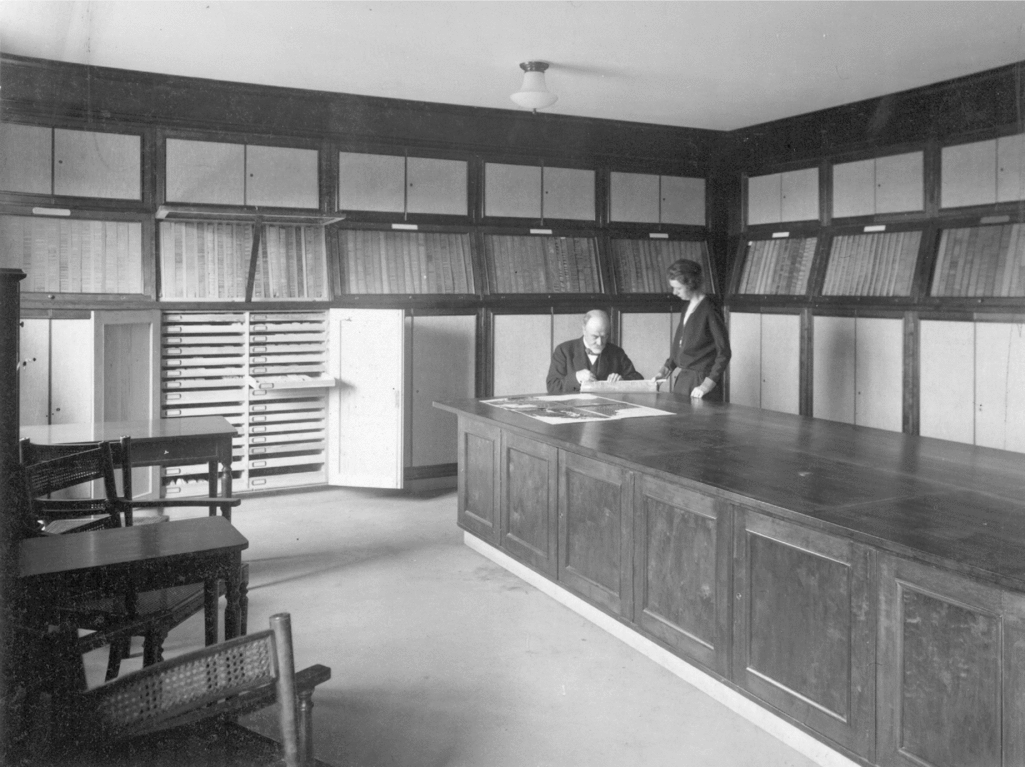
The Geochronological Institute. Royal Academy of Science, Stockholm
Lennart von Post – later a professor of geology at Stockholm University College – was another one of De Geer's students who added to the gendered mixing of family and work. He collaborated with Selma (“Tofsy”) Guldbrand, who was an assistant at the Geological Survey of Sweden, and the partnership later led to marriage. Tofsy thus became one of several “geology wives” who worked as amateurs (Nordlund Reference Nordlund2001, 53). These examples also indicate that the way of sharing work which followed family patterns were upheld by De Geer's disciples as well as by himself. Ebba Hult was thus not the only wife who was offering support and ending up partly invisible as researcher in her own right. Against this backdrop several of De Geer's followers criticized Hult later on when she tried to carry on her husband's research on her own and outside the well established role of wife and assistant.
In 1940, at the age of 82, Gerard De Geer thanked his assistants for their “enthusiastic cooperation in the field work, some of them during a life-long time” (De Geer Reference De Geer1940, 3 and 239). By then however, the previous support for his geochronological project had started to give way to criticism. The disciples had been part of a community built around shared research, intensive social life, and confidential relationships. But the loyalty towards De Geer did not last and in the end, geochronology did not survive its leading figure. As noted by Laura Otis, disciples in the sciences often tend to swerve away from their teachers work in order to establish their own, independent work (Otis Reference Otis2007). This would have tremendous implications for Hult after her husband's death, which I will return to below.
The Stockholm Circle
In addition to the collaboration with De Geer's students, the overlapping contexts for scientific research which benefitted Ebba Hult consisted of a circle of academic researchers in Stockholm. Her husband was an influential actor in the local cultural life of the Swedish capital, which was a small town at the turn of the century (Lundqvist Reference Lundqvist1968–1974, 2 and 5). As a professor, college president, and provost, De Geer had a strong position in a group of scientists centered at Stockholm University College. It was founded in 1878 and given a strong emphasis on physics, geology, and mathematics. Its laboratories were filled with students who did not have to fulfil admission or examination requirements. There were ten professors in this small-scale academic community, and social activities and informal discussions proliferated (Crawford Reference Crawford1984, 49–50; idem 1996, 111–12 and 118–19; Tunberg Reference Tunberg1957, 105).
According to previous research, the Stockholm academic sphere consisted of about one thousand people who lived in a small area in the capital and mixed in clubs, circles, and societies (Ahlmann Reference Ahlmann1968–1974, 195–96; Crawford Reference Crawford and Frängsmyr1996, 117; Nordlund Reference Nordlund2001, 100–101). They were a clearly audible group, as scientists at the time were regarded as “upholders of culture” and had an impact on ideas about the nation and its natural environment (Crawford Reference Crawford1984, 31). The circle also accommodated family ties, bonds of friendship, and professional loyalties. This coexistence was facilitated by the geographical concentration of the scientists and their laboratories. Hult and De Geer lived in the part of the Swedish capital that at the end of the nineteenth century was referred to as “science city” and where the Geological Institute of the University College was located (Hult De Geer Reference Hult De Geer1958, 20; Tunberg Reference Tunberg1957, 166).
As Gerard De Geer's wife, Ebba Hult had a firm and powerful position in the Stockholm circle. Members of the establishment socialized in homes, during scientific excursions, and at the University College departments (Ahlmann Reference Ahlmann1968–1974, 197).Footnote 11 Hult's archive contains dinner invitations, replies to invitations, condolences, and the like, often accompanied by informal greetings. In connection with her 50th birthday, congratulations were sent by a number of influential scientific families.Footnote 12
The Stockholm circle was built on the connection between family life and thriving academic and cultural associations. These were regular meeting places for scientists, and they interconnected friendships and academic working methods as well as professional encounters and social practices. The natural science societies were important as publishers of scientific publications and as contact points for researchers. The Geological Society provided a particularly important basis for strengthening geology research. Since it allowed members that were not professional geologists, the society also enabled amateurs to participate in scientific discussions (Nordlund Reference Nordlund2001, 77–78). Even though it was dominated by men, the Geological Society provided an opportunity for women like Hult to present their results in front of geologists as well as the chance to publish in the proceedings. Hult repeatedly used both opportunities.
Hult and De Geer were both members of the Geological Society, the Swedish Society for Anthropology and Geography, the Physiographical and Geophysical Society, and the Nya Idun Society.Footnote 13 They also met with other members, as society meetings were preceded by dinners where contacts were established, and guests came and went.Footnote 14 In the social life in the academic circles in Stockholm, marriage and family were important building blocks of the broader fellowships that generated reputations, status, and scientific success.
The Central Institution: The Geochronological Institute
The context that gave Ebba Hult access to geological research cannot be understood without taking into consideration the Geochronological Institute. It was a crucial part of the social and intellectual resources of the De Geer spouses. Indeed, when the Institute was inaugurated following Gerard's retirement in 1924 a new phase in the scientific life of the couple began. Completed in April 1925, the Institute accommodated a museum, a library, two laboratory spaces, and two offices for researchers (Nilsson Reference Nilsson1968–1974, 236). The source material on the actual lay out of its interior is scarce, but it seems that the couple worked side by side; they had data, equipment, and literature at their disposal. Hult was included in the day-to-day activities, used the facilities, and published in the publication series of the institute. It was housed in a “private office building” in the same house as the couple's apartment on Sveavägen (De Geer Reference De Geer1940, 241). Since it was not part of an official university site, it enabled Hult to partake on more equal terms.
Nevertheless, the status of the institute also displays her ambivalent position. In letters to friends, Hult called it hers and Gerard's “pet concern.”Footnote 15 In discussions with her husband she referred to it as “our institute.” But in official correspondence she called it her “husband's institute.”Footnote 16 Moreover, in official descriptions of the history of the institute Hult is completely invisible. The Institute is one-sidedly described as Gerard’s: it was established and led by him (Tunberg Reference Tunberg1957, 119 and 166).
The creation of the Geochronological Institute was a direct result of the prolific productive network relations of the De Geers. At his retirement, Gerard asked the University College for an opportunity to continue working with the geological material he had collected as a professor. Since people at the University College felt a “deep gratitude” for the professor's contribution, and were pleased that his affiliation could continue, funds were set aside to cover the costs of the Institute.Footnote 17 The lion's share of the funding came in the form of donations to the University College from “personal friends” and “individual patrons” (De Geer Reference De Geer1940, 241–42; Nilsson Reference Nilsson1968–1974, 236; Tunberg Reference Tunberg1957, 119 and 166).Footnote 18 The familiar, private, and institutional collaborations of the De Geers had previously generated influence, contacts, disciples, and trust. At this point the resources materialized as the contacts generated money.
Although the creation of the Institute was a success, and favorable to both spouses, running it required a great deal of hard work. The original allowance was granted for three years beginning in 1925, but its continuation was not in any way guaranteed.Footnote 19 The long-term perspective was not self-evident, as funds were required and De Geer was in his eighties. In January 1941 Hult aired hopes for a future period of greatness for the couple, yet she also worried about who would “take over the bulk of it all?”Footnote 20 After De Geer's death in 1943, Hult's difficulties with preserving the institute would become critical.
The Geochronological Institute was a home and an international center for geochronology with a “world-wide reputation” (Nordlund Reference Nordlund2001, 253). It was the De Geers’ private research institute, but also a node in a network of geochronological research since it connected Swedish researchers all over the world (Hult De Geer Reference Hult De Geer1931, 259; Caldenius Reference Caldenius1931, 1; De Geer Reference De Geer1940, 240; Nilsson Reference Nilsson1968–1974, 236).Footnote 21 The institute became an institutionalized structure for the marital partnership. It created a stable site in the couple's framework for research.
Ebba Hult's Scientific Success in Her Husband's Program
Taken together, the overlapping contexts of marriage, collaborations with the disciples, the Stockholm circle of researchers, and the Geochronological Institute generated access to resources and spaces of geological knowledge-making for Ebba Hult. She had some success in developing her husband's program and her own studies within it. The partnership with De Geer had given her scientific training and access to a research field with established collaborations. Accordingly, her success took place squarely within the program created by her husband.
Up until 1920, Hult had primarily taken part in the scientific work without any publications or impact of her own. After that, her independent efforts increased, partly due to the fact that De Geer suffered from eyesight problems during the 1920s and 1930s. His eye disorder prevented him from working with maps and diagrams (Nilsson Reference Nilsson1968–1974, 236). “During 1928, his blind year, I published a scientific paper in English about clay varves from Iceland,” Hult wrote.Footnote 22
Throughout the 1930s, Hult published her own articles, for instance in Geografiska Annaler, Scottish Geographical Magazine, and a brief paper on “Biochronology” for the British Association for the Advancement of Science (Hult De Geer Reference Hult De Geer1955; idem 1936a; idem 1939, 125).Footnote 23 Additional works were published in Universitetets oldaksamlings årsbok at the University of Oslo, the journal of Svenska skogsvårdsföreningen, the yearbook of Bromma hembygdförening, The Swedish Geographical Yearbook, Cahiers Géologiques de Thoiry, The Journal of Geology and Die Naturwissenschaften. These writings also appeared as offprints in the working papers of the Geochronological Institute. The journal where Hult published the greatest number of texts – articles, commentaries, and various contributions – was the Proceedings of the Stockholm Geological Society. She published works in this forum almost every year between 1942 and 1954.Footnote 24 In addition, she actively participated in the Geological Society (Hult De Geer Reference Hult De Geer1948 and 1954). In 1952 she was also elected fellow of the American Geographical Society.Footnote 25
Hult's own research was recognized in parts of Stockholm's scientific circles. One of her friends told her to feel “pleased and happy about having played such a great role” in De Geer's “epoch-making work.”Footnote 26 On the occasion of Hult's 50th birthday, geophysicist Wilhelm Carlheim Gyllensköld congratulated her: “The 50-year-old half of the 125-year-old research couple,” complimenting her “already achieved and future discoveries.”Footnote 27 And in their congratulations, Lennart von Post and his wife Tofsy emphasized her scientific contributions: “Cheers to the Queen of the Clay, on this and every coming day.”Footnote 28 Many congratulations alluded to her scientific work: “My compliments to the fiftieth annual ring I offer today, wishing a speedy connection between tree and clay,” or “Hearty congratulations on the occasion of the fifty varves.”Footnote 29
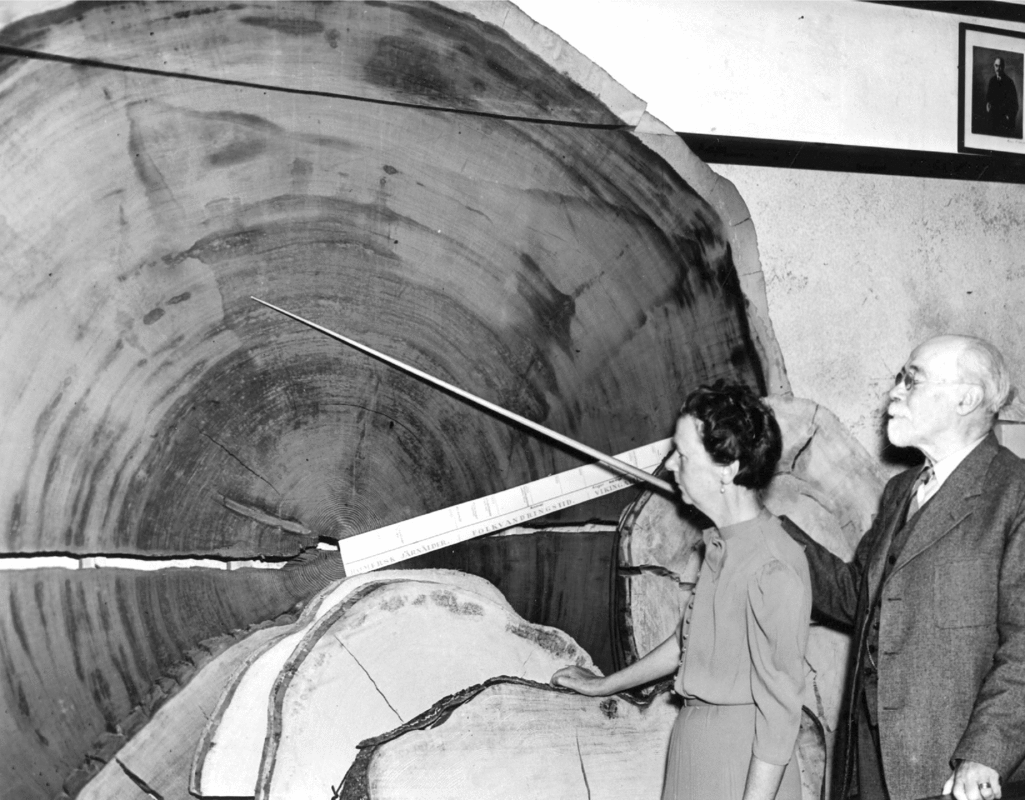
These acknowledgments notwithstanding, she stayed within the geokronologische Komparationsmethode as she labeled it in 1936, a method launched by “Gerard De Geer mit hilfe seiner Schule” (Hult De Geer Reference Hult De Geer1936b, 277). The field of dendrochronology moreover is illustrative of this contradictory status of Ebba Hult as independent scholar and her husband's supporter. Already in the 1870s, Gerard De Geer had suggested the resemblance between clay varves and tree rings (Oldroyd Reference Oldroyd and Baigrie2006). During the 1930s, he instigated their mutual efforts in dendrochronology, i.e. dating methods based on annual rings that revealed the age and annual growth of trees (Hult De Geer Reference Hult De Geer1931, 250 and 261; idem 1936a, 458).
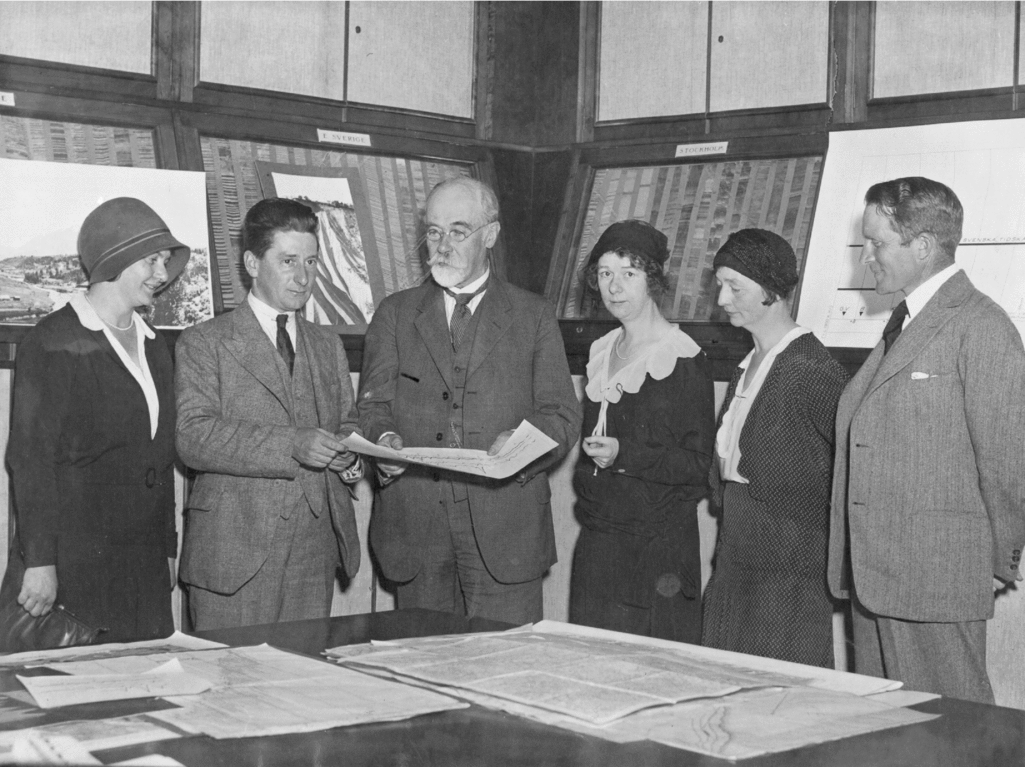
Meeting at the Geochronological Institute. 11 July, 1931. From left to right: Janet and George Davenport Osborne; Sydney, Gerard and Ebba De Geer, Selma and Carl Caldenius. Geochronological Museum, Stockholm University
Dendrochronology. Royal Academy of Science, Stockholm
In the early 1930s, Hult attempted to engage dendrochronology under her own name. She announced the work in the Swedish Society for Anthropology and Geography in 1931. In the introduction, she held that dendrochronological science complemented geochronology “in an advantageous way.” The point was to link the datings of dendrochronology to an absolute climatological time scale and to solar radiation considered as a climate factor, a leading idea in De Geer's research program (Hult De Geer Reference Hult De Geer1939, 124–26; idem 1936a, 458).
The presentation was undoubtedly an attempt from Hult to advocate her husband's as well as her own research. The idea of teleconnections and a Swedish time scale was reiterated and tied to dendrochronology, which in turn was a way of broadening the argument. Hult took the view that both geochronology and dendrochronology were “exact mathematical sciences” (Hult De Geer Reference Hult De Geer1931, 249 and 279–282). Later, she referred to the combination as an “exact physical science,” called varvology (Hult De Geer Reference Hult De Geer1961, 19–22). After Gerard's death in 1943 Hult continued her attempts to tie her own research to dendrochronology, while also continuously emphasizing the link to the authority at “the Geochronological Institute at Stockholm University College” (Hult De Geer Reference Hult De Geer1939, 125 and 130). Moreover, she tried to establish her own position within “varvology” by following a well-rehearsed practice at the time, namely to present research in articles aimed at the public.
In sum then, Hult became more than an assistant. The marital collaboration had made her scientific work possible, and the relations that had brought success to De Geer were also beneficial to her. Nevertheless, her status was ambivalent: albeit sometimes described as researcher in her own right she was also always incorporated in the geochronology created by Gerard. This fractured position would become increasingly problematic after her husband's demise, especially since the program itself fell into ill repute.
The Downfall of De Geer's Research Program
During the 1930s and 1940s, scientific criticism from other geologists against De Geer's research started to surface. The critique was sufficiently articulated to become a topic of discussion between the spouses (Nilsson Reference Nilsson1968–1974, 247; De Geer Reference De Geer1940). As Hult later recalled, the “persistent and contentious objections” caused “a melancholy mood” to take possession of her husband (Hult De Geer Reference Hult De Geer1958, 29). He complained about the “stubborn resistance from younger colleagues” (Hult De Geer Reference Hult De Geer1951; idem 1957, 94–98; idem 1958, 24).Footnote 30
A combination of factors paved the way for the criticism of De Geer's geochronological ideas. First, there were problems with obtaining unambiguous data that were accepted by the scholarly community. Ernst Antevs performed measurements of clay varves in the New York area as well as in the south of Sweden around 1920. None of these measurements supported De Geer's theories (Nilsson Reference Nilsson1968–1974). In particular, the attempts to use the Swedish time scale and the teleconnections to create a global geochronology as well as a global climate model based on solar radiation attracted doubts (von Post Reference von Post1931, 562; Oldroyd Reference Oldroyd and Baigrie2006; Lundqvist Reference Lundqvist1968–1974, 21; Nilsson Reference Nilsson1968–1974, 229–31). In retrospective memorial sketches, many characterized the teleconnections as a mistake: De Geer drew “surprisingly far-reaching conclusions” based on very little data (Nilsson Reference Nilsson1968–1974, 230; Lundqvist Reference Lundqvist1968–1974, 120). Hult contended that the possibility “of planetary varve connections had been doubted from the outset in many camps” (Hult De Geer Reference Hult De Geer1955).
In the 1950s moreover, critique against De Geer's methods was aired when it became obvious that he had made errors. He had argued that his method could match a single clay varve to a single year. It was now shown that he had miscalculated the “zero varve,” that is the youngest and last varve, by 84 years. This put his teleconnections and varve analyses into disrepute. At the same time, new techniques were developed and became dominant, among the most important were radiocarbon dating and pollen analyses (Oldroyd Reference Oldroyd and Baigrie2006, 139; Lundqvist Reference Lundqvist1958, 31–33).
Second, the old age of Gerard De Geer must be taken into consideration. In the 1920s, his arguments for teleconnections on a global scale were favorably received in many quarters. He was still an authority, but his growing age allowed for intensified criticism even though it was not always formulated openly. Most were skeptical in silence and explicit controversies were avoided “out of respect for a revered colleague,” but it was in fact a matter of gradual marginalization (Lundqvist Reference Lundqvist1968–1974, 110). Geochronologica Suecica Principles was published in 1940. At that point, however, “points of view and interests” in geology had changed “so substantially that the work by no means attracted the attention it would have done during the 1910s” (Lundqvist Reference Lundqvist1958, 23). It was considered by some to provide “a portrayal of the destiny of a highly merited researcher who wants to accomplish a monumental, lifetime achievement while developments pass him by” (ibid.). In retrospect, Hult thought that his “young researchers became too independent. They were not willing to accept his new deal, when he was about to create a global geochronology” (Hult De Geer Reference Hult De Geer1960, 10).
In the face of the criticism against geochronology, Ebba Hult was gradually isolated as the sole defender of De Geer's ideas. In 1937 and 1938, she complained about having struggled “alone for years for Gerard's future and ask[ed] his best friends to affectionately share in the struggle. But the whole world behaves almost as if Gerard did not exist.”Footnote 31 One of her friends replied that it must be difficult to see her husband “being so to speak put on the shelf by the University College.”Footnote 32 As David Oldroyd has noted in relation to the Serb Milutin Milankovic – who also addressed the problem of the ice age – theories can be ignored because the person launching them is geographically or socially peripheral (Oldroyd Reference Oldroyd and Baigrie2006). The same can be said about Hult. She made several failed attempts at defending her husband's methods and hypotheses: her confidence in him remained unshaken, and she paid tribute to him whenever she had the chance (Hult De Geer Reference Hult De Geer1918, 809). However she never succeeded in saving the program.
Left Alone: Broken Relations
Following De Geer's death Hult's problems with retaining her productive scientific context increased. As long as both spouses were alive, their marriage was a basis for a broader collaborative structure. When Hult was left alone, this stability crumbled. Several relations gave way and problems appeared immediately: the Geochronological Institute is the best example.
The Institute became a subject of discussion, primarily between Hult and Lennart von Post. After taking up De Geer's professorial chair and the leadership of the Geological Institute at the University College in 1929, von Post became the formal deputy superintendent of the Geochronological Institute in 1944 following De Geer's death (Tunberg Reference Tunberg1957, 166).Footnote 33 Since the institute and its assets were formally the property of Stockholm University College – and had been conferred on De Geer personally – Hult could not count on taking over the institute from Gerard. At the same time, she was determined to finish the second part of Geochronologia Suecica Principles, on which she had been working together with her husband when he passed away.
As early as 1942, the University College board had decided that upon De Geer's demise, the institute along with its substantial collections were to be transferred to the Geological Institute at Stockholm University College.Footnote 34 However, when De Geer died the following year, Hult was granted a set term to complete the second part of Geochronologia, as she had promised her husband. In March of 1943, she agreed with Lennart von Post that the institute would be transferred in the fall of 1945.Footnote 35 But the problems with financing the work still remained. Following De Geer's death, financial means had been withheld while Hult unsuccessfully applied for new grants.Footnote 36 In 1944, she continued arguing that funds from Stockholm University College should be assigned to her because she was her husband's inheritor. She wanted her husband's “grants and – at the next anniversary – full academic recognition of my truly pioneering initiatives in research on annual rings.”Footnote 37
Lennart von Post replied that the board of the University College had decided that the money had been donated to De Geer personally.Footnote 38 Furthermore, von Post held that the University College had already shown its good will by postponing the takeover of the Geochronological Institute.Footnote 39 Hult's obstinate attitude had made her “the worst opponent of the interests of geochronology.”Footnote 40 In her ambition to “further the interest of Gerard's life,” she had “made unreasonable demands on her friends’ helpfulness” and developed an “energy” that had exceeded “the limits of ruthlessness. People were simply exhausted.”Footnote 41
Thus, starting in the fall of 1944, Ebba Hult was left without the funding she had previously had at her disposal, but she was still in control of the Geochronological Institute. The institute was to be transferred to the University College in the fall of 1945, but she objected once again. Her husband had given his “firm veto” against the dissolution of the institute and had bequeathed her the task of “preserving and maintaining” it.Footnote 42 Once again, Lennart von Post asked Hult to prepare the transfer of the institute's archives of clay sequences, maps, profile measurements, and filing cabinets.Footnote 43 But Hult did not give up: “The institute has been created jointly by Gerard and myself: I maintain it at a considerable personal sacrifice.”Footnote 44 The board of the University College dropped the matter and decided that Hult should “in due course” hand over the institute in good order to Stockholm University College.Footnote 45 Von Post remained the formal deputy superintendent, but Hult kept the institute and its material.
At the same time, in the summer of 1945, she went on a self-financed excursion, which was repeated a year later. The results were presented at the Geological Society in Stockholm (Hult De Geer Reference Hult De Geer1950, 158–60).Footnote 46 Despite these activities and preserved control of the Geochronological Institute, funding was uncertain. Hult called on several sponsors, even those who had previously withdrawn their grants.Footnote 47 In 1946, she also asked von Post for 1500 kronor from the “De Geer fund.” The geology professor underscored that control over disbursement lay with the University College and himself and that any expenses should be “pre-approved.”Footnote 48 Hult also asked for financial support from friends and earlier financiers.Footnote 49
Lennart von Post's and the University College's disinclination to fund and support Ebba Hult resulted from the criticism against the De Geers’ research. The collections of the Geochronological Institute could be dispensed with, as few researchers were interested in geochronology. But the grants controlled by the University College were another matter. They could now be transformed into “Gerard De Geer scholarships” for supporting research in “Swedish Quaternary geology” – i.e., a much broader field than geochronology.Footnote 50 Von Post contended that “Gerard's lifetime achievement” would receive “fruitful continuation” through “new points of view and approaches to the problems.”Footnote 51
Still in the mid-1950s, the transfer of the Geochronological Institute had not been carried out (Tunberg Reference Tunberg1957, 166). Hult was insolvent and had sold parts of the institute's library and taken lodgers. The new head of the Department of Quaternary Geology (as it was now called) at the University College, Carl Gösta Wenner, wished to protect the scientific material of the Institute and placed it under the supervision of the University College.Footnote 52 At the beginning of the 1960s, Hult continued to work on varve chronology and De Geer's results, as well as her own investigations in dendrochronology (Hult De Geer Reference Hult De Geer1961, 10–12 and 17–18). The financial situation deteriorated, and in 1963 representatives of the University College found that the premises were falling into disrepair. The now 80-year-old Ebba Hult was put under guardianship, nevertheless still working on the second part of Geochronologia Suecia Principles: the book she had promised her spouse she would complete.Footnote 53
Without her husband, Ebba Hult lost a number of significant resources, not least funding for the Geochronological Institute, the link to academic geology at Stockholm University College and scholarly collaboration with his disciples. In the face of these difficulties she clung to the partnership with her deceased husband. She hoped, “in Gerard's name,” that the University College would show its understanding of her “scientific contributions.”Footnote 54 Her position was private; she owed “obedience only to my husband” and his will not to dismantle the institute.Footnote 55 She did not owe “a debt of gratitude” to the University College, but “was a continuation of Gerard himself.”Footnote 56 This strong connection to her husband also implied that she doggedly defended his research at the Geological Society (Hult De Geer Reference Hult De Geer1951, 557).Footnote 57 To Hult, the link to Gerard De Geer was as important as ever. But references to her husband's memory and the De Geer name were not strong enough to keep the research going as before.
Conclusion
Marriage enabled scientific work for both Gerard De Geer and Ebba Hult. This was not unique for them. Matrimony, family life, and a supporting wife was a social convention in early twentieth-century Swedish science. Just like his fellow professors at Stockholm University College – physical chemist Svante Arrhenius and chemist Otto Pettersson – De Geer was a family man (Bergwik Reference Bergwik2014). The marriage between Hult and De Geer generated a long-term confidence, a division of labor and, not least, a common scientific worldview. The spouses shared a belief in the fundamentals of geochronology. They had a joint perception of contemporary rivals and collaborators as well as of clay layers, the Swedish time scale, and the impact of solar radiation on land ice recession.
I have argued that their partnership must be understood in relation to local overlapping contexts. Private life was not isolated: it became productive as a scientific cooperation because it was linked to De Geer's disciples, the Stockholm circle, and the Geochronological Institute. In sum, these overlapping contexts gave Hult a structure of access to science. With her husband alive and the union intact, her role as the professor's wife was culturally robust and intelligible. But the overlapping contexts were crucial for De Geer as well. Indeed, on a more general level they display how men's public offices were deeply entrenched in private relations.
Hardly surprising, the case of Ebba Hult illustrates that early twentieth-century geology was a gendered institutional practice. Recent studies on collaborative couples have moved beyond a focus on barriers and women's work, towards a broader analysis of gender roles and norms of sexuality. This research points out the importance of understanding gender as a deeply relational category, which is reified by the practice of collaboration (Lykknes, Opitz, and Van Tiggelen Reference Lykknes, Donald Opitz and Van Tiggelen2012, 3). The academic structures gave great power to Gerard De Geer and other men who were individual representatives of research fields. He was the authority in geochronology, and as such he represented the program and placed himself in the middle of its central institution. Hult on the contrary came to inhabit a fractured position, between participation and exclusion. On the one hand she was acknowledged as the wife and assistant of an influential scholar, indeed intermittently even described as an independent scholar. On the other hand, she never managed to get out of the position of being merely Gerard De Geer's partner. Her contributions were incorporated into his research.
I have argued that Ebba Hult's marginality was structurally produced. Scholars in feminist science studies have displayed how being an “outsider” is the burden of someone who only partially can participate in standardized structures (Star Reference Star and Law1991; Bowker and Star Reference Bowker and Star1999, 301–2; Bergwik Reference Bergwik, Blomqvist and Ehnsmyr2010). Hult was affected by the standards of a masculine community, including ways of family life, practices of dividing work, norms of leadership and social interaction. The fact that her marginality was structural is also indicated by the fact that she shared experiences with other women trying to establish themselves as scientists in Swedish academia. Their participation became gendered in similar fashions. The clearest example is the nation's first associate professor in experimental physics Eva von Bahr who after a promising start had to quit science before reaching an influential position (Wennerholm Reference Wennerholm2009).
Moreover, several other women in Sweden at the time pursued their scholarly interests in the role of wives (Berg, Florin, and Wisselgren Reference Berg, Florin, Wisselgren, Berg, Florin and Wisselgren2011, 17). For instance, the chemist Astrid Cleve worked briefly at Stockholm University College at the same time as Hult; she benefitted from her marriage to chemist professor Hans von Euler-Chelpin, and her career was stalled following their divorce (Espmark and Nordlund Reference Espmark, Nordlund, Lykknes, Opitz and Van Tiggelen2012).
In the edited collection For Better or Worse: Collaborative Couples in the Sciences, Donald Opitz, Brigitte van Tiggelen, and Annette Lykknes have argued that partnerships must be understood as dynamic and malleable constructs, affected by specific historical contexts (Lykknes, Opitz, and Van Tiggelen Reference Lykknes, Donald Opitz and Van Tiggelen2012, 1–3). Indeed, even though Hult and other women were caught up in the same structures, their experiences were also marked by individual and local varieties.
Hult's work was heavily affected by the amassing of institutional resources, including a private institute, a group of disciples, and the many successes of her husband. Moreover, she managed to an unusual degree to retain some of these institutional resources after Gerard's death while also experiencing grave difficulties in utilizing them as she had done when he was alive. In discussions with Stockholm University College after Gerard's demise, she asked to be granted “safe conduct to move in all circles and to do research, wherever it may be.”Footnote 58 Freedom however was only possible with a powerful scholar at her side.
In sum, it was this radical shift that formed Hult's unique trajectory through academic science: from a well-respected professor's wife to a marginalized actor. As a widow she attempted to pass on Gerard De Geer's legacy, defended their joint work, and used her husband as a spokesman, even after he was gone. But invoking a dead life companion could not build a field of research or a functional intellectual fellowship.
The detailed nature of existing case studies in research on collaborative couples reveals the many twists and turns of marital partnerships. At the same time, these case studies also unravel common similarities, for instance the oppressive politics of professionalized science and the cross-cultural character of structures benefitting husbands and hindering wives. The study of collaborative couples effectively illustrates the relation between the structures of science and individual actions and experiences. Each case is particularly unique, yet also marked by the gendered frameworks of modern science. The case of Ebba Hult is no exception.
Coda
At a Stockholm University Council meeting on May 29, 1968, the future of the Geochronological Institute was discussed. The Council granted a proposal to the effect that the institute should cease, and its collections be transferred to the Department of Quaternary Geology. The transfer, which had been planned in the early 1940s, became a reality twenty-five years later.Footnote 59 But Hult had still not given up the battle. From a nursing home, she claimed that she was continuing her work on the second part of Geochronologia Suecica Principles. She was now 86 years of age.Footnote 60 In the spring of 1969, with her death just weeks away, she still struggled to maintain control over the institute. She informed Carl Gösta Wenner that her “deceased husband” had “given her the clear command to write and print a Geochronologia, Part II.” For this “difficult and lofty mission, I absolutely need to make use of the Geochronological Institute for another year.”Footnote 61 One month later, on July 28, 1969, Ebba Hult died, trying to the very end to honor her husband's wishes. After her death, she was again incorporated into his name: her remains were placed under a tombstone with the sole inscription “Gerard De Geer.”
Acknowledgments
This article is a rewritten version of an essay in Swedish which was published in an anthology on collaborative couples in politics and the sciences in twentieth-century Sweden (Bergwik Reference Bergwik, Berg, Christina and Wisselgren2011). It is part of the research project “On the outskirts of science: Women in Swedish science 1900–1950,” financed by The Swedish Research Council. I wish to thank Lars Brunnberg and Jan Lundqvist at the Department of Physical Geography and Quaternary Geology, Stockholm University, for discussions and advice concerning the De Geers. I am also grateful to Brunnberg and Stefan Wastegård for giving me access to the department's geochronological museum, where crucial archival material is stored. As usual I received excellent assistance with the archival material from Anne Miche De Malleray and Maria Asp at the Center for History of Science, The Royal Swedish Academy of Sciences, Stockholm. Many thanks also to Karin Hassan Jansson, Magnus Rodell, and the participants in the gender seminar at the Department of History, Uppsala University, as well as to Skúli Sigurdson, Karin Johannisson, Frans Lundgren, Per Wisselgren, Annika Berg, Christina Florin, and My Klockar Linder for valuable comments.