

INTRODUCTION
The face of corporate social responsibility (CSR), defined as ‘business activity for some social good beyond the interests of the firm and that which is required by law’ (McWilliams & Siegel, Reference McWilliams and Siegel2001: 117), has been changing. CSR has been typically understood as voluntary in nature, with the state playing a minimal role. Mounting debt burdens, civic responsibilities, social and environmental crises, and corporate irresponsibility scandals have contributed to the understanding that neither government nor business alone can resolve complex societal issues (Knudsen, Moon, & Slager, Reference Knudsen, Moon and Slager2015). This confluence of factors has led to the formulation of proposals comprising of a ‘smart mix’ of voluntary and regulatory policies with respect to CSR (European Commission, 2011: 7).
In recent years, government involvement in CSR has witnessed a shift from its traditional hands-off approach of endorsing and facilitating CSR through tax exemptions, subsidies, and dissemination of best practice information to a reassertion of regulatory oversight to hold businesses more accountable, increase global competitiveness, and foster economic development (Albareda, Lozano, & Ysa, Reference Albareda, Lozano and Ysa2007). For instance, France has legislated compulsory sustainable reporting for public listed companies and the European Union has mandated non-financial disclosures. The UK adopted mandatory domestic and international CSR policies such as participation in the Business Brokerage Scheme to facilitate business involvement in disadvantaged communities and Ethical Trading Initiative to improve the competitiveness of UK firms on the global stage (Knudsen et al., Reference Knudsen, Moon and Slager2015). Indonesia passed a law requiring all extractive industry firms to contribute to and report on their CSR activities (Waagstein, Reference Waagstein2011). Mauritius introduced a law requiring firms to pay 2% for their profit toward social and environmental development as part of a quid-pro-quo deal of reducing the corporate tax rate from 25% to 15% (Kinderman, Reference Kinderman2016). With the passage of The Companies Act (2013), India took a radical step in becoming the first and only country in the world to mandate minimum CSR spending and reporting by qualifying firms. According to the law (henceforth the 2% Law), effective on April 1, 2014, all firms operating in India that meet a minimum threshold in net worth or turnover or net profit are required to spend at least 2% of their average profit-after-tax over the last three years on CSR activities and publish annual reports on them. Paradoxically, while the 2% Law was designed to give firms disbursement control in CSR projects, it disqualified several activities of strategic importance to firms from being considered as CSR.
A deeper examination of some of the implications and consequences of the 2% Law is awaited, with extant scholarship being largely qualitative. Gatti, Vishwanath, Seele, and Cottier (Reference Gatti, Vishwanath, Seele and Cottier2018) provide a review of its theoretical implications, while Rajeev and Kalagnanam (Reference Rajeev and Kalagnanam2017), and Bergman, Bergman, Teschemacher, Arora, Jyoti, and Sengupta (Reference Bergman, Bergman, Teschemacher, Arora, Jyoti and Sengupta2019) highlight challenges in its design, and strengths and weaknesses. To evaluate its traction on the ground, Subramaniam, Kansal, and Babu (Reference Subramaniam, Kansal and Babu2017) interviewed senior managers from 21 government-owned firms and documented their unique challenges in implementing the law. Gopalan and Kamalnath (Reference Gopalan and Kamalnath2015), Krichewsky (Reference Krichewsky2017), and Van Zile (Reference Van Zile2011) assess the 2% Law from a legal and public policy perspective. Three quantitative studies used experimental (Desai, Pingali, & Tripathy, Reference Desai, Pingali and Tripathy2015) and archival data to estimate the impact of the law on CSR spending (Dharmapala & Khanna, Reference Dharmapala and Khanna2018; Manchiraju & Rajgopal, Reference Manchiraju and Rajgopal2017). They argue that while the policy would draw in firms spending nothing or less than 2% on CSR, curtailment of discretionary choice would lead those spending more than 2% to adjust their investment downwards and anchor at the required level. However, all these studies were conducted in the first year of policy enactment and heterogeneity in firm response was not considered.
Most research classifies organizational response to detrimental regulation as exit, voice, and loyalty (Hirschman, Reference Hirschman1970) or a hybrid of symbolic and/or partial adoption (Oliver, Reference Oliver1991). Observing that these options do not consider that some policies may be reversible with a shift in electorate preferences, Kozhikode (Reference Kozhikode2015) added organizational dormancy (a temporary reduction in activities) as another potential response strategy to disadvantageous public policy. Literature has used this theorizing to examine the organizational response to policies aimed at disciplining firms such as improving workplace conditions for employees, fair treatment of suppliers, curbing collusion with competitors, correcting environmental externalities, and expanding operations in rural areas. The premise of these policies was to tame irresponsible firms and compel them to be more considerate of their stakeholders. A significant question, however, remains unanswered. How will responsible firms (those that are already doing good and may not need to be disciplined) respond to a disadvantageous policy? Our research is an attempt to fill this gap in the literature.
India's transition from CSR being completely voluntary (2008) to mandatory (2014) in a span of less than six years is unprecedented and perceived as a significant imposition on the discretionary control of managers. Moreover, since the passage of the 2% Law, the definition of what constitutes CSR spending in India has changed, requiring major adaptation in CSR strategy and implementation. However, even among responsible firms contributing higher than 2% of their profits to CSR investments, some may be better positioned than others to make the extensive changes required for compliance with the 2% Law. In this investigation, we seek to answer the question: What differentiates firms that choose to invest more than 2% on CSR after the enactment of the 2% Law?
Drawing on the theory of organizational dormancy, we evaluate our hypotheses using panel data (2015–2019) of 238 of India's top-500 firms listed on the Bombay Stock Exchange (BSE) that fall under the purview of the 2% Law. Since changes in what is and is not considered CSR effectively rules out a direct comparison of CSR spending pre- and post-enactment, we use the law's effective date of April 1, 2014 as the baseline year to make our comparisons. Our key and non-intuitive finding is that firms already engaged in elevated levels of CSR spending choose to embrace and exceed the prescriptions of the 2% Law over dormancy. These findings diverge from existing quantitative studies on India's CSR Law (Dharmapala & Khanna, Reference Dharmapala and Khanna2018; Manchiraju & Rajgopal, Reference Manchiraju and Rajgopal2017). Our second noteworthy finding is that political awareness is a key factor in influencing firms to make the strategic choice of dormancy. In other words, politically aware firms are more likely to opt for a temporary scaling back of their CSR expenditures (going dormant) over complying with the 2% Law.
Our research contributes to strategic management, CSR, and public policy scholarship. Prior researchers have modeled firms’ CSR investments as a Prisoners’ Dilemma (Zhu & Li, Reference Zhu and Li2013) or a competitive positioning tactic (Du, Bhattacharya, & Sen, Reference Du, Bhattacharya and Sen2007). We are one of the first to use the lens of organizational dormancy (Kozhikode, Reference Kozhikode2015) or temporary scaling back of CSR activities, in response to a discretion-stifling public policy that has the potential to be reversed or amended. We show that even in the absence of choice in determining optimal CSR expenditure, rather than dormancy, Indian firms are making the choice of embracing and going beyond compliance in their CSR expenditures likely to expand their market and political viability in an unfavorable policy environment. However, as subsequent policy amendments have made the 2% Law more versus less stringent than expected, we see a trend of firms progressively scaling back on their year-over-year beyond compliance CSR expenditure since the 2% Law took effect. Furthermore, we extend existing theorizing on organizational response to a detrimental policy and identify factors that may drive response heterogeneity by firms in their CSR investments. Our study offers insights on organizational response to non-market events and what explains their choice of dormancy, compliance, or growth in CSR expenditure. In doing so, we advance understanding of micro- and macro-level implications of the voluntary-to-mandatory or ‘smart mix’ CSR trend. Additionally, we expand the existing managerial toolkit of exit, voice, and loyalty by demonstrating the viability and conditions under which dormancy and growth may be feasible alternatives. From a policy perspective, our study provides insights to those who may be considering CSR legislation.
THE COMPANIES ACT (2013)
Although India transitioned from a post-Independence socialist economy to a hybrid free-market economy (fourth in the world) by the mid-2000s, the simultaneous increase in socio-economic inequalities was indicative of the inequitable distribution of the benefits of its rapid growth. In an attempt to harness the success of profit-making enterprises into filling governance gaps, governments in developing countries like India (Ho, Reference Ho2013) use CSR as a social development tool (Ghosh & Chakraborti, Reference Ghosh and Chakraborti2010).
A series of Government of India (GOI) issued voluntary CSR guidelines dating back to 2009 culminated in the passage of The Companies Act (2013). This law mandates that effective April 1, 2014, all publicly traded and privately held firms operating in India (including foreign-owned firms) with a minimum net worth of ₹5,000 million (US$75 million)[Footnote 1], turnover of ₹10,000 million (US$150 million), or a net profit of ₹50 million (US$750,000) spend at least 2% of their average profit-after-tax over the last three years on CSR with a ‘comply-or-explain’ provision requiring publication of annual reports on CSR activities or an explanation why CSR expenditure requirements are not met in a particular year. The law further stipulates that any activities that generate profit for a firm, are undertaken outside India, directly or indirectly support a political party, benefit only employees and their families, or comply with other legislation would no longer be considered CSR. Moreover, it identifies a broad set of activities considered appropriate for CSR investment including promotion of education, gender equity and female empowerment, eradicating hunger and poverty, reducing child mortality, and improving maternal health, environmental sustainability, employment-enhancing vocational skills, contribution to the Prime Minister's Relief Fund, and other state and central government projects (MCA, 2013).
THEORETICAL BACKGROUND AND HYPOTHESES DEVELOPMENT
CSR Strategy in Response to Detrimental Regulation
The starting point of most theorizing on strategic response to state intervention is Hirschman's (Reference Hirschman1970) typology of exit, voice, and loyalty. Exit involves leaving the newly regulated market to limit the harm caused by the policy, voice comprises lobbying for change to minimize damage caused by the policy (Hillman, Keim, & Schuler, Reference Hillman, Keim and Schuler2004), and loyalty entails support of current policy makers through compliance (Dobbin & Dowd, Reference Dobbin and Dowd1997). Firms could alternatively consider a hybrid response of either symbolic adoption or compromise by embracing some aspects of the regulation and disregarding others (Oliver, Reference Oliver1991). From this lens of strategic response to state intervention, one would expect that the 2% Law will draw in eligible firms that were not participating or contributing less than 2% on CSR activities to increase their CSR investments, while at the same time exercising voice to regain their discretionary powers. What is less obvious is the reaction of firms typically engaged in high levels of discretionary CSR spending who might find that the new policy represents a curtailment of their agency.
Organizational Dormancy
Kozhikode (Reference Kozhikode2015) argues that the above choices do not consider the possibility of policy reversal due to shifts in political preferences or policy iterations from emergence to maturity. Typically, public policies in democratic societies emerge consequent to contested bargaining from constituents both inside and outside of government (Gutmann, Reference Gutmann, Goodin, Petit and Pogge1993) and are always accompanied with demands for change (Laver, Reference Laver2005). Based on this core assumption, Kozhikode (Reference Kozhikode2015: 192) proposes an alternative strategic option – that of organizational dormancy – defined as ‘a temporary reduction in an organization's activities following the onset of a detrimental public policy that allows it to avoid unwanted radical adaptation and rejuvenate when a favorable policy returns’. Remaining dormant allows firms to safeguard their practices, avert any damage caused by full compliance, and resurge upon policy reversal. Such a strategic choice offers the benefits of exit without losing legitimacy and leaves firms the option of exercising voice for policy turnaround. The theory of dormancy rests on three scope conditions: (1) the said activities are restricted and not banned, (2) the policy has the potential to be reversed, and (3) that firms subject to the policy are sufficiently independent from the state to be able to employ dormancy as a strategic choice.
The 2% Law meets all these three conditions. First, it does not ban CSR activity, it constrains it by pre-specifying the form of these activities, disqualifying several activities of strategic importance to firms from being considered CSR (e.g., in areas of core business operation, employees), and requiring a minimum amount to be spent. Second, the detrimental policy does allow political opportunity for disgruntled social actors to engage in collective action for change. Third, given that government ownership and control of a firm forces dependence on the incumbent government for legitimacy and survival, and effectively eliminates managerial discretion in adoption of a public policy (Kozhikode & Li, Reference Kozhikode and Li2012), we exclude government-owned firms from our analyses. The suitability of the 2% Law enables us to use organizational dormancy theory to examine how firms already engaging in high levels of CSR are likely to behave in response to the 2% Law.
Policy Contestation
Discontent about the 2% Law both, before and after its enactment, has been expressed by Indian corporate leaders, prominent NGOs – the very recipients of CSR funds, and trade and business associations such as the Federation of Indian Chambers of Commerce and Industry (FICCI), Confederation of Indian Industries (CII), and Association of Chambers of Commerce and Industry of India (ASSOCHAM), all of whom have played an active role in developing and influencing public policy that is favorable to industry and commerce in India since the 1980s (Kohli, Reference Kohli2006). Firms also used their direct political connections to draw policy makers’ attention to the reality that undermining the business case for CSR could be disadvantageous to both business and society. For example, ‘CSR need not be altruistic to be effective. Companies like PepsiCo and Coca-Cola invest in projects like water treatment facilities and a zero-waste footprint for their products because it helps them reduce their resource use, which in turn helps them become sustainable and achieve higher profits … . The Bill should not be expected to become a tool for companies to use CSR as a vehicle to promote philanthropy that has little or no alignment with their business – and therefore, tends to fall off the radar after the initial run’ (Vijayaraghavan, Reference Vijayaraghavan2013). Business, social services, and academic leaders at the Global Reporting Initiative's (GRI) Sustainability Reporting for Sustainable Development conference held in India the same year of the passage of the 2% Law, issued a joint Mumbai Declaration raising 13 concerns that the 2% ruling had the potential to result in forced philanthropy, tick-box behavior, tokenism, corruption, and data-masking to avoid compliance. Ratan Tata, the former chairperson of the $100 billion Tata Group, said: ‘We have a phenomenon which is meant to be good but is going to be somewhat chaotic … we don't as yet know what kind of monitoring there'll be in terms of how well this money is used’. Azim Premji, the philanthropist and head of the $4.6 billion Wipro Group which is part of the global Dow Jones Sustainability Index noted: ‘My worry is the stipulation should not become a tax at a later stage … Spending 2% on CSR is a lot, especially for companies that are trying to scale up in these difficult times. It must not be imposed’ (Prasad, Reference Prasad2014). Vikas Goswami, head of Godrej Industries’ sustainability program opined that with the passage of the 2% Law, the business rationale for corporate responsibility was now at risk: ‘For most organizations, the discussion at board level is now not about what we do, but does it count as CSR and does it meet the legal requirements’ (Balch, Reference Balch2016). Others raised concerns about the lack of tax exemption on CSR spending, lack of availability of appropriate projects to spend on, and CSR investments being used opportunistically to gain political favors (Rai, Reference Rai2020).
Dhaval Udani, CEO GiveIndia (NGO) noted, ‘It's a crazy idea. Once you make it mandatory, people will find ways and means to get out of it. The rules will be so vague that the reporting will be even vaguer’. Deval Sanghavi CEO and Co-Founder of Dasra, a strategic philanthropy foundation concurred: ‘I am not in favor of mandatory CSR. When you make things mandatory, the chances of their not being done are greater’ (Knowledge@Wharton, 2011). Interviews with 39 leaders of India's largest NGOs, found that implementation was ‘still in the early stages of getting organized’ and identified the need for businesses to ‘move beyond the check’ (Ohlrich, Reference Ohlrich2017). Similarly, Mark Hodge – Director Global Business Initiative on Human Rights opined that the new law will allow firms to ‘offset negative impacts in one area of their work with corporate philanthropy in another’ (Kirschke, Reference Kirschke2013).
The CII argued that compulsory corporate responsibility would be counterproductive as ‘Companies may resort to camouflaging activities to meet such regulations, particularly during recessionary periods and economic downturns’. Its rival FICCI proposed tax breaks for those who meet voluntary targets as a better alternative (Knowledge@Wharton, 2011).
The Planning Commission's Deputy Chairman Monek Singh Ahluwalia, siding with corporate India, expressed opposition to the enactment of the 2% Law arguing that it was tantamount to ‘privatizing of taxation’ and increasing the base corporate tax rate from 30% to 32% (The Economic Times, 2011). Spearheaded by Prime Minister Manmohan Singh under the Congress government, Modi's pro-business BJP party's landslide win in the 2014 national elections generated optimism that the 2% Law would be delayed or reversed (B The Change, 2016). In the midst of this policy contestation, the GOI has instituted annual CSR awards in three categories – CSR expenditure, CSR in challenging circumstances, and CSR contribution to national priority areas (MCA, 2017) as an incentive for firms to comply with the law and garner reputational advantage.
Organizational Heterogeneity and Dormancy
Prior to the 2% Law, all firms in India were making discretionary choices on whether or at what level to participate in CSR spending and what kinds of CSR activities to engage in, with no mandates on reporting their CSR allocations and activities. Their strategic choices were likely driven by the ‘business case’ for CSR investments including cheaper cost of capital (Dhaliwal, Li, Tsang, & Yang, Reference Dhaliwal, Li, Tsang and Yang2011), superior earnings quality and stock returns (Flammer, Reference Flammer2013), enhanced reputation leading to increased revenue (Lev, Petrovits, & Radhakrishnan, Reference Lev, Petrovits and Radhakrishnan2009), and advantage in attracting and retaining employees. These instrumental and value-enhancing benefits likely led firms to align their social and corporate goals and use CSR as a strategy to maximize firm and shareholder value, while also serving the interests of stakeholders such as employees, customers, etc. (Malik, Reference Malik2015).
We propose that heterogeneity in firms’ response on whether or not to enter dormancy may be influenced and guided by a series of factors including (1) their capability to meet demands of the new policy, (2) political awareness, (3) exposure to political pluralism (Kozhikode, Reference Kozhikode2015), and (4) ownership identity. We next elaborate on each of these factors leading to our predictions.
Firm Capabilities
A firm's capability is defined by its ability to take advantage of the environment in which it operates (Hannan & Freeman, Reference Hannan and Freeman1977). Different firms might respond differently to the same detrimental policy (Madhavan, Koka, & Prescott, Reference Madhavan, Koka and Prescott1998). For example, given the heterogeneity of firm routines and practices with respect to CSR engagement, one would expect variation in their capability to meet the requirements of the law. Research has found that externally imposed demands to adopt unfamiliar practices or make radical changes to functional routines make firms cautious (Newman, Reference Newman2000). From this perspective, if the stipulations of the 2% Law require firms to make significant modifications to their CSR strategy to maintain or improve their distinctiveness and valuation, then such firms will choose dormancy (temporary scaling back of their CSR activities) while simultaneously advocating for latitude in their CSR investments and activities. In other words, they will engage in just enough compliance with the 2% Law to maintain legitimacy with their stakeholders and policy makers while avoiding drastic adaptations. On the other hand, the 2% Law may not require firms already engaged in elevated levels of CSR to adopt unfamiliar practices or undertake major adaptations to their strategies as they may already be aligned with the mandates of the 2% Law. As a result, existing capabilities will allow these firms to maintain their current levels of CSR activities without interruption, gain immediate legitimacy with policy makers, and continue to harness the social and financial performance benefits of their CSR engagement. Thus,
Hypothesis 1: The better a firm's capabilities to meet the prescriptions of the 2% Law, the less likely it will be to reduce its CSR spending in a focal year.
Political Awareness
Useem (Reference Useem1985) argues that political awareness allows firms to nimbly respond to policies that affect them. However, not all firms have the same levels of political awareness (Kozhikode & Li, Reference Kozhikode and Li2012) such as information about policy makers and the policy-making process. One source of variation lies in the political ties each firm enjoys with key political players. Even though firms may hire lobbyists and external agents to pursue their interests, such tactics do not substitute the management's direct information and interests on prevailing political issues (Useem, Reference Useem1985). This information offers firm-specific advantages that assist in tailoring strategies to meet non-financial demands (Kozhikode, Reference Kozhikode2015). One method firms have traditionally used to develop political awareness is to set up offices near the political capital (Useem, Reference Useem1985) as the proximity allows them to meet one-on-one with important policy makers and gain inside information on policy developments that their competitors may not have access to (Kozhikode, Reference Kozhikode2015). We expect that firms with offices in the capital Delhi or its surrounding suburbs (National Capital Region comprising of the cities of Gurgaon, Faridabad, Noida, and Ghaziabad) will be more likely to make the strategic choice of temporarily scaling back on their CSR investments given their access to information on policy implementation, change, and reversal. Thus,
Hypothesis 2: The greater a firm's political awareness the more likely it will be to reduce its CSR spending under the unfavorable environment of the 2% Law in a focal year.
Exposure to Political Pluralism
Although some firms may be able to shield themselves from a negative policy through dormancy, they may still be vulnerable to government scrutiny and sanctions. However, political pluralism – when different branches of government are controlled by different political parties – can act as a check and balance and reduce such scrutiny (Kozhikode & Li, Reference Kozhikode and Li2012). In other words, when the state government is controlled by a political party that is different from the national (or federal) government, firms will be subject to less oversight, and they will have more latitude to adopt dormancy in response to the 2% Law. Therefore,
Hypothesis 3: Firms headquartered in politically plural states are more likely to reduce their CSR spending under the unfavorable environment of the 2% Law in a focal year.
Ownership Identity
Distinct from ownership concentration that captures the incentive and ability of owners to mitigate conflict and monitor managers, ownership identity examines the priorities owners assign to strategic choices (Hoskisson, Hitt, Johnson, & Grossman, Reference Hoskisson, Hitt, Johnson and Grossman2002). India's corporate landscape is unique in that it is dominated by state-owned enterprises, has a higher prevalence of family-owned firms than its Asian counterparts (Douma, George, & Kabir, Reference Douma, George and Kabir2006), and has been an attractive venue for FDI investment post-liberalization. While both market and non-market incentives drive CSR choices, the divergent utilities of ownership identity is a key driver of those choices (Aguilera, Rupp, Williams, & Ganapathi, Reference Aguilera, Rupp, Williams and Ganapathi2007).
Foreign-owned firms, for example, are often subject to greater scrutiny in host countries because of ‘liability of foreignness’ (LOF) defined as social and cultural barriers that limit assimilation of foreign firms in host countries (Zaheer, Reference Zaheer1995). LOF is a significant barrier in emerging economies whose stakeholders have a greater distrust of foreign firms. This is even more so in the case of India, where the Union Carbide Bhopal in 1984 and Enron Dahbol in 1993 disasters have made citizens and the government suspicious of foreign firms and Western companies particularly sensitive to the social and political risks of operating in India (Van Zile, Reference Van Zile2011). Foreign firms, therefore, can be expected to align themselves with even detrimental laws to gain and/or enhance their legitimacy and facilitate social integration (Campbell, Eden, & Miller, Reference Campbell, Eden and Miller2012) rather than choosing dormancy.
Among domestic firms, as noted earlier, government-owned firms’ dependence on the state renders them with compromised latitude in engaging in dormancy as a strategic choice. Family-owned firms, in contrast, make strategic choices that are routinely different from those made by non-family firms, demonstrating a strong preference for non-economic utilities such as preserving the family image and wealth for future generations (Gomez-Mejia, Cruz, Berrone, & Castro, Reference Gomez-Mejia, Cruz, Berrone and Castro2011). Several family firms in India were founded in the 19th century by merchant families like Birla, Bajaj, Shri Ram, Sarabhai, and Tata, each of whom contributed significantly to the fight for India's independence from British colonialism, Gandhi's ‘trusteeship’ reform, and nation-building programs through their CSR activities (Sood & Arora, Reference Sood and Arora2006). Their long-standing contribution to India's socio-economic development alongside government led them to have privileged modernizers ‘missionary’ status post-Independence (Ozen & Küskü, Reference Ozen and Küskü2009). We expect that compared to their non-family peers’ transactional and utilitarian approach to decision-making, family firms will be less inclined to embrace the 2% Law while continuing to leverage their deep political connections to lobby government for revision. Formally stated:
Hypothesis 4A: Foreign-owned firms are less likely to reduce their CSR spending under the unfavorable policy environment of the 2% Law in a focal year.
Hypothesis 4B: Family-owned firms are more likely to reduce their CSR spending under the unfavorable policy environment of the 2% Law in a focal year.
METHODS
Data and Measurement
Archival panel data on India's top-500 firms listed on the BSE from 2014 to 2019 (effective date of the 2% Law to most recent available) was sourced from the Prowess IQ database. This database is maintained by the Center for Monitoring the Indian Economy and is the largest available firm-level time series data set on Indian firms. These data were supplemented by additional data from the Economic Times Intelligence Group, the research arm of the leading business newspaper in India that also maintains time series data on India's top-500 firms, and corporate websites. Since meeting a minimum threshold in annual net worth, turnover and/or net profit are required for firms to fall under the purview of the 2% Law, the list of CSR eligible firms varied from year to year with several firms either joining or falling off. Some firms were government-owned (51% majority), while others had merged or dissolved, had negative values in net worth and/or net profit in focal years, or had missing values which rendered them unsuitable specific to our research methods. Therefore, to facilitate comparison, we created a subset of only those firms that fell under the purview of the 2% Law over the entire study period (2014–2019) and excluded all government-owned firms to meet the scope conditions of the dormancy construct. This sample comprised of 238 unique firms and 1,193 observations (one missing data observation for a firm-year combination).
Ideally, we would have liked to compare a firm's CSR spending before and after the 2% Law came into effect. However, our attempt to hand-collect equivalent and reliable data on CSR spending for 2011, 2012, and 2013 prior to the effective date of the new law was unsuccessful even for a small subset of firms, for two reasons. First, the definition of what constituted CSR spending prior to the law has radically changed after the passage of the 2% Law. Second, since reporting of CSR expenditures was not mandatory before the 2% Law, almost no firm on the BSE 500 list completely and accurately reported its CSR expenditures despite engaging in CSR activities. Even among the firms self-reporting non-audited CSR or charitable donations (companies used the word charity instead of CSR in many cases in their annual reports), complete details of all spending were not provided. For example, only 3 out of the top 100 non-government-owned BSE firms provided full details of all CSR spending including Ambuja Cement, Tech-Mahindra, and ACC Cement at 3.07%, 2.00%, and 1.95% of their net profits, respectively. This also highlights data validity issues with certain past research which assumes that firms not reporting an exact CSR spending number do not actually engage in CSR activities (Dharmapala & Khanna, Reference Dharmapala and Khanna2018). To illustrate, a closer examination of the 2010–2013 annual reports of the Reliance and Tata group of firms indicates that while they provide extensive descriptions of their CSR activities, they do not provide any information on the associated financial investments as reporting them was not mandatory. We propose that to classify them as not investing in CSR prior to 2014 would be incorrect. Considering these data availability issues prior to the passage of the 2% Law, it is not possible to run a statistically valid analysis on pre- and post-CSR without running into conflation issues.
Using the rationale that (1) the ‘comply or explain’ provision of the 2% Law offered firms some leeway in adjusting their strategic choices, (2) CSR eligibility and subsequent investment is based on the average profit-after-tax over the last three years and hence is likely continuous over a period of time, and (3) changes pre- and post- the 2% Law will affect every firm in the sample in the same way, we use the maiden year of the 2% Law, 2014–2015 as the base year to compare subsequent years of CSR investments to capture dormancy.
Dependent Variable
Dormancy
We use Kozhikode's (Reference Kozhikode2015) operationalization of organizational dormancy as the decline in level of firm activity in relation to its level of activity prior to the imposition of the 2% Law. Given the lack of availability on reliable pre-law CSR spending explained above and because making predictions on future CSR spending based only on the previous year's (1 year's) spending is likely to be highly inaccurate, we used firms’ ‘Actual (2015) CSR Spending’ as a proxy for ‘Predicted CSR Spending’ to calculate dormancy. Using past data allows for a plausible measure of a counterfactual – the amount of actual CSR spending firms would have done if the status quo had been preserved. Furthermore, since several firms in our sample had 0 ‘Actual CSR Spending’ in 2015, their ‘Predicted CSR Spending’ was also 0. As a result, we dropped these firms from our calculations leaving us with a final subsample of 214 unique firms with 855 observations from 2016 to 2019 (one missing data observation for a firm-year combination). Next, we computed the extent to which a firm's ‘Actual CSR Spending’ in a focal year (2017–2019) has been reduced in comparison to the proxy ‘Predicted CSR Spending’. In other words, if actual CSR spending in a focal year is less than the predicted CSR spending, dormancy is potentially at play as it would demonstrate a decrease in CSR spending compared to the 2015 level of activity. Therefore, we measured organizational dormancy as the rate of reduction in CSR activity and coded it as a spline function as follows:

The higher the value of dormancy, the more dormant a focal firm is in a focal year. The highest value of the variable is 1, the point where the firm did not engage in any CSR spending in a focal year. The lowest value of this variable is truncated at 0, the point where firms engage in CSR spending beyond the predicted value.
Independent Variables
Year
Coded as a dummy variable, it captures the value of dormancy in a focal year compared to 2016, the reference year.
Firm capability
The assumption that CSR expenditure or corporate philanthropy hinges on the availability of slack resources is widely accepted in the business and society literature (Waddock & Graves, Reference Waddock and Graves1997). Of the 66 studies included in a meta study examining the impact of slack on performance, 75% used ‘Return on Assets’ (Daniel, Lohrke, Fornaciari, & Turner, Reference Daniel, Lohrke, Fornaciari and Turner2004). Since the CSR amount required to be spent is based on the firm meeting a certain threshold in net worth or turnover or net profit, we used ‘Return on Assets’ as a proxy for a firm's capabilities to meet the stipulations of the 2% Law in each focal year.
Political awareness
We coded this variable as 1 if a firm in our database had a headquarter, administrative, zonal, regional or head office in the national capital New Delhi, the hub of the national political elite and a proxy of a firm's ability to influence public policy (Kozhikode, Reference Kozhikode2015; Useem, Reference Useem1985) or had an office in the surrounding suburbs of the National Capital Region including Gurgaon, Faridabad, Noida, and Ghaziabad. It was coded as 0 otherwise.
Exposure to political pluralism
For each of the 29 states and 2 union territories that have their own legislatures in India, over the study period 2014–2019, we examined whether the state was politically plural, that is, whether it was governed by a political party different from the one controlling the national government (Kozhikode, Reference Kozhikode2015). We then coded exposure to political pluralism as 1 if a firm had a headquarter or registered office in a politically plural state, and 0 otherwise (Bhatia, Reference Bhatia2019).
Ownership identity
We organized ownership identity as a dummy variable, with three analytic categories:
• Foreign firm. The majority of equity ownership is held by foreign investors. Coded 1 if foreign-owned, 0 otherwise.
• Family-owned or controlled firm. At least two of the following three criteria are met: (1) At least two board members have a family relationship; (2) family members own or control at least 5% of the voting stock of the firm; and (3) a family member serves as an executive officer on the board (Jain & Prakash, Reference Jain and Prakash2017). Coded 1 if family-owned or controlled, 0 otherwise.
• Non-family firm. Coded all remaining domestic firms in the database that did not fall into the family-owned category as 1, 0 otherwise. Used as a reference for comparison.
Control Variables
Prior research has found that corporate age predisposes a firm to engage in higher levels of CSR (Gray, Kouhy, & Lavers, Reference Gray, Kouhy and Lavers1995) and has observed a positive association between firm size and CSR (Brammer & Pavelin, Reference Brammer and Pavelin2008). Our model controls for these factors, with age coded as the number of years each firm has been in existence and the natural log of net worth used as a proxy for size.
Research Design and Analysis
Hypotheses 1–4 were tested by setting the dependent variable as organizational dormancy. Since organizational dormancy was truncated between 0 (the point where the firm exceeds the predicted level of CSR spending in a focal year) and 1 (where the firm does not invest in CSR at all), we used Tobit models as they are best suited for truncated dependent variables (Tobin, Reference Tobin1958). Furthermore, as data had a panel structure, a fixed effects Tobit model was specified.

RESULTS
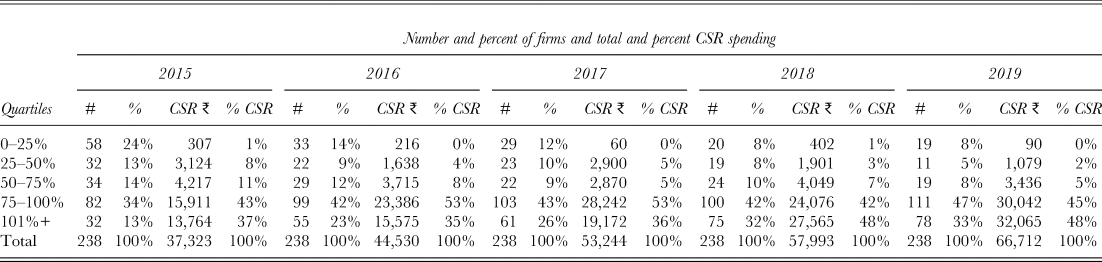
As shown in Table 1 and Figure 1, while the number of firms (238) in our sample remains constant over the study period (we use only those firms that fall under the purview of the 2% Law and report positive CSR expenditure), actual CSR spending has increased by over 56% over the 2014–2019 study period. The proportion of firms spending less than 1.5% of their CSR allocation has dropped from 51% to 21% while firms spending over 2% of their CSR allocation has increased by more than 2.5 times from 13% to 33% and their proportion of CSR investments has increased from 37% to 48% over the study period. These descriptive data suggest that the 2% Law has had significant success in motivating firms to increase their CSR contributions.
Number of firms and actual CSR spending in Rs million (2015-2019).

Breakdown of CSR spending in quartiles (2015–2019)

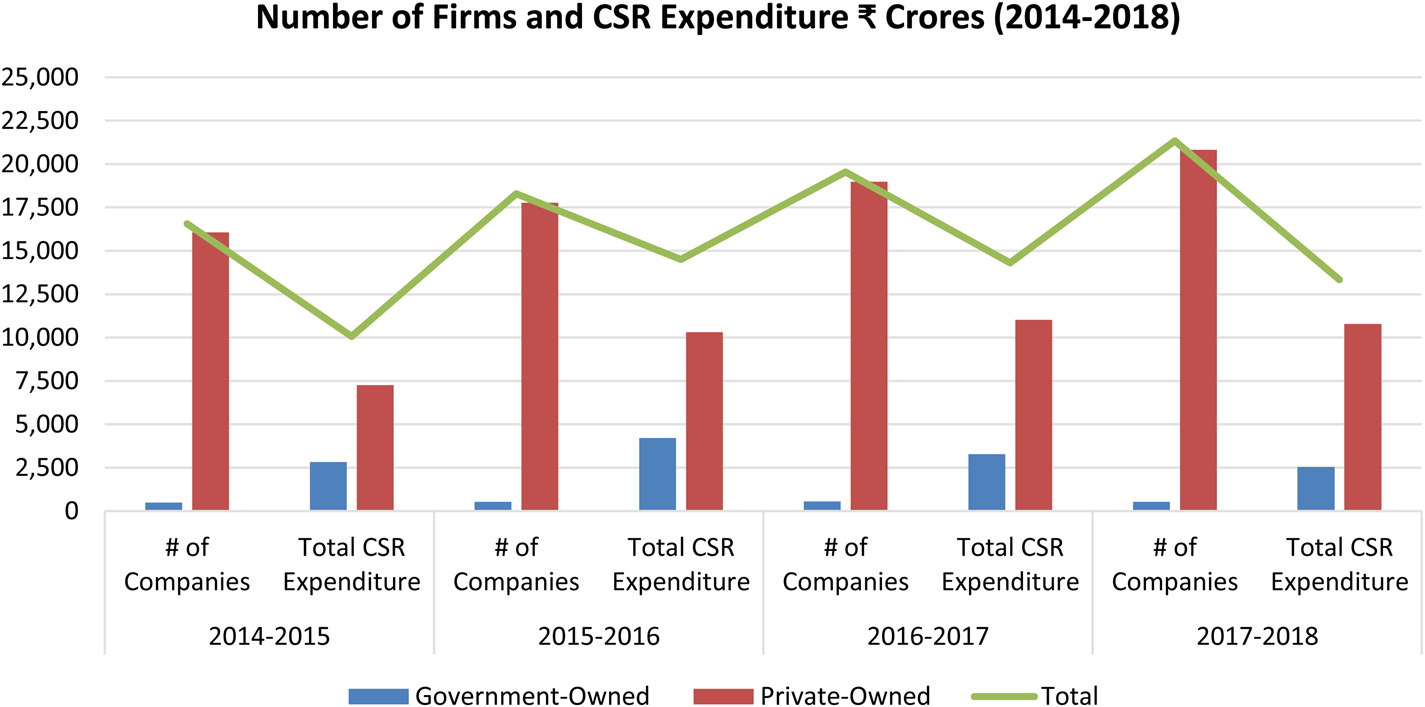
A similar trend is demonstrated in the annual CSR reports published by GOI's Ministry of Corporate Affairs on all Indian firms (see Figure 2) that show that the number of firms engaging in any form of CSR spending increased by 29% between 2014 and 2018 (2019 data is still being updated). Meanwhile, CSR expenditures increased by 44% in the first year of enactment, and this level has remained constant since.
Number of firms and CSR expenditure Rs crores (2014-2018)
Source: Ministry of Corporate Affairs, Government of India http://www.mca.gov.in/MinistryV2/annualreports.html

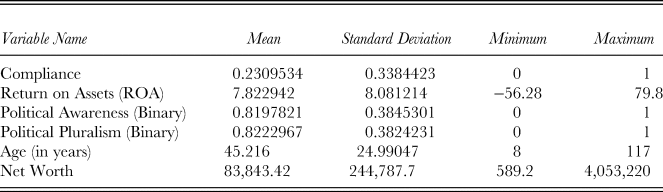
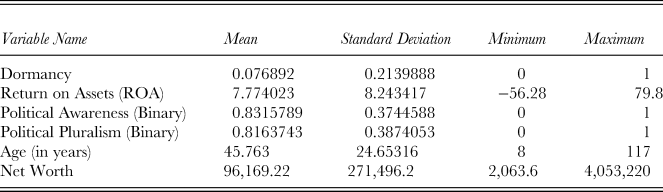
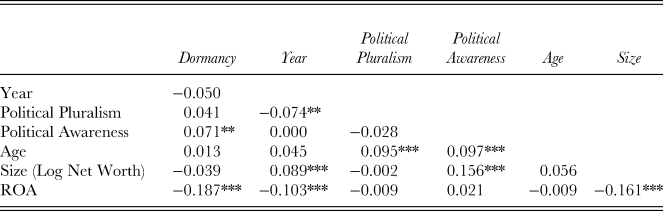
Tables 2 and 3 report the summary statistics of our full sample (compliance) and subsample (dormancy) whereas Table 4 reports the correlations relating to all non-dummy variables predicting organizational dormancy under the 2% Law.
Summary statistics (compliance sample) 238 firms/1,193 observations

Summary statistics (dormancy sample) 214 firms/855 observations

Correlation matrix (dormancy 1), 2017–2019

* Notes: p < 0.1; **p < 0.05; ***p < 0.01.
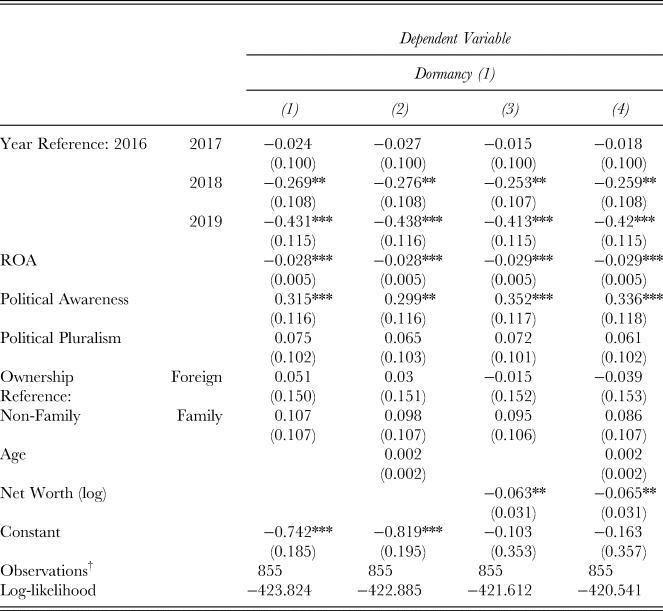
Table 5 reports the coefficients of the Tobit models that predict organizational dormancy. Model 1 is the baseline formulation with all independent variables including ROA, political awareness, exposure to political pluralism, and dummy variables for year and ownership identity. In Model 2, we add age and in Model 3, we include firm size (log of net worth) as control variables. Model 4 encompasses the full formulation with all independent and control variables.
Tobit regression results – organizational dormancy (1), 2017–2019 (bounded by lower = 0, upper = 1)

* Notes: p < 0.1; **p < 0.05; ***p < 0.01 (Standard Errors in Parentheses).
† One data point is missing because of lack of data on Return of Assets.
Models 1–4 tested Hypotheses 1–4. Since dormancy is truncated between 0 and 1, a single unit increase in the expected value of dormancy can be understood as a 100% increase in dormancy. In other words, a coefficient of 0.1 for a particular independent variable can be read as follows: a one-unit increase in the variable results in a 10% increase in the level of dormancy. A year-by-year comparison of dormancy values demonstrates negative coefficients suggesting that firms in our sample are not choosing dormancy as a strategic response to the 2% Law. Interestingly, compared to the reference year 2016, the findings show that the predicted value of dormancy is progressively reducing (2%, 26%, 42%) in each subsequent year since the passage of the 2% Law from −0.018 (not significant) → −0.259 (p < 0.05) → −0.42 (p < 0.01) over 2017, 2018, and 2019, respectively.
Hypothesis 1 predicted that the greater a firm's capability or fitness to meet the stipulations of the 2% Law, the less likely it is to reduce its CSR spending and engage in dormancy. As expected, we find that for a one-unit increase in ROA, there is an associated 3% decrease in the predicted value of dormancy for firms in the sample (−0.029, p < 0.01). Thus, Hypothesis 1 received strong support: firms are less likely to choose dormancy in response to a detrimental policy if their competencies fit the mandates of the policy and do not require significant change to their organizational routines.
Hypothesis 2 predicted that firms with political awareness (political awareness = 1) will choose dormancy under the policy environment of the 2% Law. As predicted, we found strong support that politically aware firms have a 34% higher dormancy value (0.336, p < 0.01) compared to firms with no political awareness (political awareness = 0). In other words, during the period of an unfavorable but potentially reversible policy, firms having an office proximate to the political capital are more likely to reduce their CSR spending compared to their politically unaware peers.
Hypothesis 3 predicted that firms headquartered in politically plural states are more likely to choose dormancy under the 2% Law. This coefficient is positive (0.061) but not significant. As such, we cannot confirm that exposure to political pluralism has an impact on dormancy choices. One explanation for this may be that the firms in our dataset are among the largest in India and have operations that span multiple states. Therefore, any gains from being headquartered in a politically plural state may be diminished if their operations in other locations do not enjoy the same privileges.
Hypothesis 4 predicted that foreign-owned firms are less likely to reduce their CSR spending under the unfavorable policy environment of the 2% Law. As predicted, this coefficient was negative (−0.061) though non-significant. Hypothesis 4B predicted that family-owned firms are more likely to reduce their CSR spending under the 2% Law. This coefficient was positive (0.086) though non-significant.
The Akaike Information Criteria (AIC) of Models 3–4 are lower than that of Model 1, suggesting that these models are a better fit despite having more parameters. Also, Model 4 has the lowest AIC and hence the greatest explanatory power. Similarly, in comparing the results of the likelihood ratio tests (LR χ 2 tests) of Models 2–4 with that of Model 1, we find Models 2–4 to be significant improvements over Model 1.
ALTERNATIVE CONCEPTUALIZATION OF PREDICTED CSR SPENDING
As described before, we have used the absolute value of CSR expenditure in 2015 as proxy for ‘Predicted CSR Expenditure’ to calculate Dormancy. More specifically, we employ the absolute value of CSR expenditure in 2015 to define baseline spending of CSR (and compare it to subsequent year CSR spending) in the absence of reliable comparable data from years prior to the passing of the Act. We consider this to be a reasonable proxy because existing research and popular press highlight the fact that firms care about specific financial requirements of the activities that they are contributing to when there is no reference to the minimum 2% spending limit (Desai et al., Reference Desai, Pingali and Tripathy2015). Furthermore, several large companies in India have established charitable foundations to channel their CSR spending (e.g., Reliance Foundation, Ambuja Foundation, Tata Trust, etc.) and such organizations operations are driven by the requirements of specific projects funded by them. This focus on specific project needs typically requires a fixed advance commitment beyond a particular year and irrespective of a particular year's CSR spending stipulation. Therefore, taking the base case as the actual CSR expenditure in 2015 is justified.
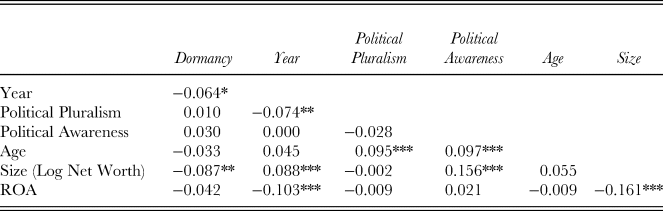
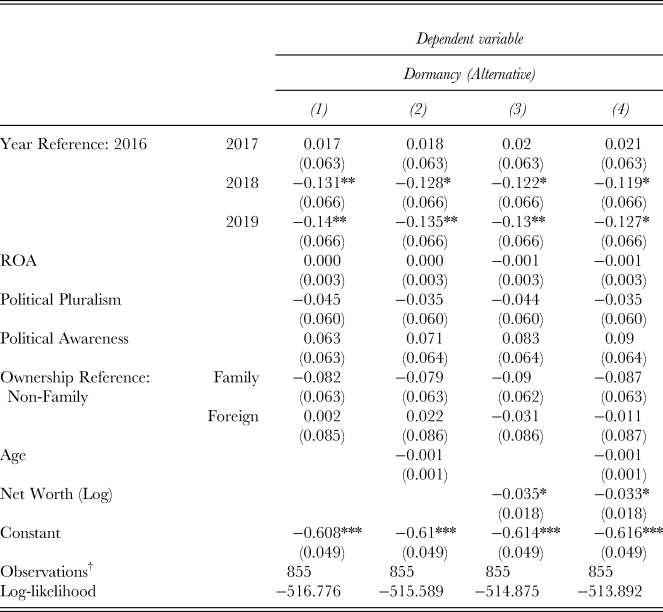
Having said that, we recognize that the percentage of profits spent in 2015 could also act as the relevant baseline. To that effect, we define the new variable, Dormancy_alternative taking the percentage of profits spent in 2015 on the CSR activities as a base case. We concede that there may be alternative conceptualizations for arriving at ‘Predicted CSR Expenditure’. For example, a firm's profits may fluctuate from year-to-year and CSR spending accordingly be adjusted upwards or downwards. One way to account for these changes could be to take the 2015 ratio of CSR expenditure to average net profit for the past three years as the baseline ‘Predicted CSR Expenditure’ value. If the Actual CSR Expenditure in subsequent years falls below the baseline ratio described above, we can conclude that the firm is moving toward dormancy in its CSR investments and if it exceeds the baseline ratio, it is embracing the CSR stipulation. We use this alternative method to estimate for ‘Predicted CSR Expenditure’ (2015 Actual CSR Expenditure 2015/2015 Avg. 3-Year PAT). Tables 6 and 7 report our correlations and Tobit coefficients for Dormancy 2 models.
Correlation matrix (dormancy alternative variable), 2017–2019

* Notes: p < 0.1; **p < 0.05; ***p < 0.01.
Tobit regression results – organizational dormancy (alternative), 2017–2019 (bounded by lower = 0, upper = 1)

* Notes: p < 0.1; **p < 0.05; ***p < 0.01 (Standard Errors in parentheses).
†One data point is missing because of lack of data on Return on Assets.
Our results are qualitatively similar and confirm our earlier findings, where a year-by-year comparison of dormancy values demonstrates negative coefficients suggesting that firms in our sample are not choosing dormancy in response to the 2% Law. Compared to the reference year 2016, the predicted value of dormancy has reduced from 0 to 12% since the passage of the 2% Law albeit with lower significance from 0.02 (not significant) → −0.119 (p < 0.10) → −0.126 (p < 0.10) over 2017, 2018, and 2019, respectively. Similarly, although politically aware firms do reflect a positive coefficient signifying dormancy, it is no longer significant.
SUPPLEMENTARY ANALYSES
We augmented our dormancy analyses by examining firms’ compliance with the 2% Law to evaluate conformance behavior in response to a detrimental public policy. We used the same methods and independent variables and coded Compliance as a spline function as follows:

The higher the value of compliance, the more non-compliant a focal firm is in a focal year. The highest value of the variable is 1, the point where firms did not engage in any CSR spending in a focal year. The lowest value of this variable is truncated at 0, the point where firms engage in CSR Spending at or beyond the required levels. A coefficient of 0.1 for a particular independent variable can be read as follows: a one-unit increase in the variable results in a 10% decrease in the level of compliance.

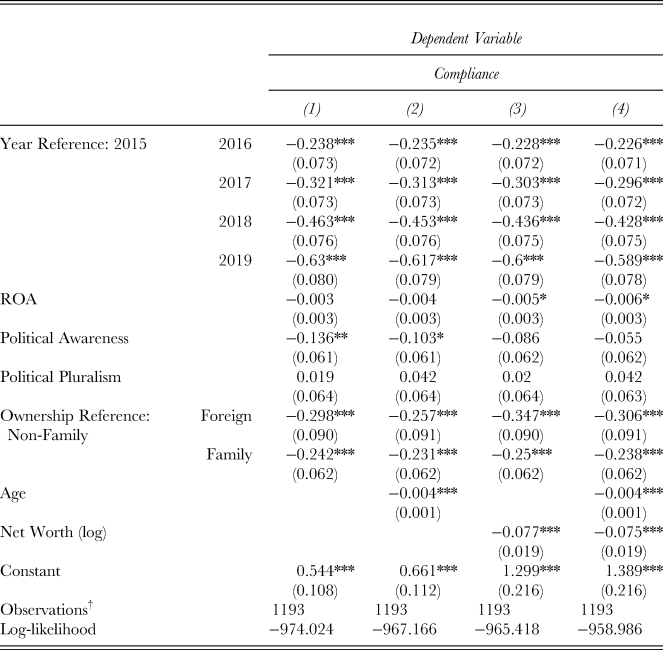
Compared to CSR spending in 2015, the compliance value of firms in our sample were 23% (−0.226, p < 0.01) → 30% (−0.296, p < 0.01) → 43% (−0.428, p < 0.01) → 59% (−0.589, p < 0.01) higher for 2016, 2017, 2018, and 2019, respectively. Like our dormancy findings, this suggests that firms in our sample are complying with or exceeding the 2% stipulation. Firm capabilities proxied by ROA also show that a one-unit increase in ROA results in a −0.006 (p < 0.10) increase in the level of compliance. Political awareness and political pluralism do not seem to have any significant impact on compliance. With respect to ownership identity, compared to non-family firms, foreign firms have a compliance value of −0.306 (p < 0.01) and family firms −0.238 (p < 0.01) also suggesting they exceed their expected CSR investments (Table 8 ).
Tobit regression results – organizational compliance, 2016–2019 (bounded by lower = 0, upper = 1)

* Notes: p < 0.1; **p < 0.05; ***p < 0.01 (Standard Errors in parentheses).
† Two data points are missing because of lack of data on Return on Assets.
DISCUSSION
A global first in mandating expenditure for the public good and formalizing the shift from shareholder centricity to a government-designed stakeholder inclusivity, India's unconventional CSR law has stirred debate among stakeholders and academia on its viability and efficacy.
In this study, we examine organizational dormancy as a viable corporate response to India's 2% Law mandating firms at a certain threshold of revenue or net worth or profit-after-tax to spend 2% of their three-year average profit-after-tax on pre-specified CSR activities. We theorized that there may be heterogeneity in organizational response contingent on existing capabilities to meet the demands of the law (proxied through ROA), their level of political awareness, exposure to political pluralism, and ownership identity. Observations from CSR investments of 238 firms between 2014 and 2019 reveal some unexpected and non-intuitive findings. Corporate response to the 2% Law has been consistent – to embrace and exceed stipulations compared to 2015, after considering several factors that may drive firm heterogeneity. Firms in India were found to be increasingly less likely to choose dormancy suggesting that they have the capabilities to embrace and outdistance the prescriptions of the new policy, although their beyond compliance investments have been progressively reducing with each year it has been in effect. On the other hand, a firm's level of political awareness made it more likely to choose dormancy whereas exposure to political pluralism had no influence. Compared to non-family firms, foreign firms were less likely and family-owned firms were more likely to embrace dormancy as their strategy, though the lack of statistical significance precludes ownership from being an influential factor. These findings of heterogeneity in organizational response to detrimental policy in the Indian context align in part with those of Kozhikode (Reference Kozhikode2015).
A supplemental analysis of compliance replacing dormancy as the dependent variable confirmed that compared to 2015, firms in our sample were meeting or exceeding the prescriptions of the 2% Law. Ownership was found to be an influential factor in corporate compliance with the 2% Law, with both foreign- and family-owned firms having negative and statistically significant values of compliance. That foreign-owned firms embrace and surpass the requirements of the 2% Law finds support in scholarship where philanthropy and CSR commitment are found to mitigate the ‘liability of foreignness’ from host country stakeholders and enhance socio-political legitimacy (Shirodkar, Beddewela, & Richter, Reference Shirodkar, Beddewela and Richter2018). Another explanation may be that foreign-owned firms also must appease home-country stakeholder demands to standardize strategies in their global operations (Jamali, Reference Jamali2010). In like vein, family firms have consistently outperformed non-family firms in their CSR engagement driven by their long-term orientation and desire to maintain family image and legacy (Jain, Fernando, Tripathy, & Bhatia, Reference Jain, Fernando, Tripathy and Bhatia2021; Jain & Prakash, Reference Jain and Prakash2017; Sahasranamam, Arya, & Sud, Reference Sahasranamam, Arya and Sud2020). That Indian firms (family firms comprise 70% of our sample) are contributing at higher than mandated levels of CSR aligns with extant literature that cultural, historical, and institutional contexts lend themselves to India leading its emerging economy peers in CSR engagement (Arrive & Feng, Reference Arrive and Feng2018; Lattemann, Fetscherin, Alon, Li, & Schneider, Reference Lattemann, Fetscherin, Alon, Li and Schneider2009). Also, firms in emerging countries use CSR expenditure as an important mechanism to signal superior capabilities to bridge existing institutional voids to their investors and stakeholders (Su, Peng, Tan, & Cheung, Reference Su, Peng, Tan and Cheung2016).
Theoretical Contributions
Our research has the potential to alleviate the fragmented understanding of organizational response to exogenous shocks (Mithani, Reference Mithani2020) and factors that influence heterogeneity in how they respond. As one of the first studies to empirically test the theory of organizational dormancy in response to an unfavorable policy (Kozhikode, Reference Kozhikode2015) and in a novel context – when highly successful and responsible firms are subjected to a detrimental policy – we demonstrate a seemingly ‘irrational’ corporate response and offer insights on superseding conditions when dormancy may not be adopted.
Typically, an exogenous shock – be it a natural disaster, a terrorist attack, or a disadvantageous policy – results in economic disruption and reduced organizational capacity to function. Building on Hirschman's (Reference Hirschman1970) framework of exit, voice, and loyalty and Kozhikode's (Reference Kozhikode2015) model of dormancy-related organizational response choices to external threats, our findings suggest that existing capabilities and available slack resources, lead high CSR spending Indian firms to not only meet but also exceed the stipulations of the 2% Law with scant change to their strategic choices. Extant scholarship offers various explanations why this may be the case, particularly for firms already investing in elevated levels of CSR in a contested policy environment. First, focused and disciplined CSR engagement may have contributed to established and responsive moral decision-making processes that are mutually beneficial across a range of stakeholders. Second, firms invest in CSR to garner reputation effects through virtue signaling (McWilliams & Siegel, Reference McWilliams and Siegel2001) and deploy it to strengthen their competitive advantage (Peloza, Reference Peloza2006). Additionally, CSR investment is argued to build goodwill reserves for times of crisis (Bhattacharya & Sen, Reference Bhattacharya and Sen2004) and mitigate risk by creating insurance ‘safety nets’ for sustained superior financial performance (Roberts & Dowling, Reference Roberts and Dowling2002).
Managerial and Policy Implications
This study offers insights on organizational response to non-market events and evaluation strategies on whether to deploy CSR insurance protection or not. Even high performing and responsible firms are not immune from sudden and short- or long-term exposure to external threats, and our study empirically demonstrates the viability of both dormancy and growth as alternative choices for a managerial toolkit, thereby extending current options of exit, voice, and loyalty. In this study, we found a preference for embracing and exceeding CSR stipulations over dormancy, lending support to Peloza's (Reference Peloza2006) claim that firms’ failure to consider the insurance value of CSR is to significantly underestimate the returns of CSR investments. Moreover, we identified factors that decision-makers can consider when evaluating alternative choices, such as their knowledge of the policy environment, their assessments of organizational capabilities through internal routines and resources, the risks associated with implementing a particular choice, and social and financial outcomes of their choices. Importantly, managers should be cognizant and cautious that stipulations of the 2% policy – that firms must engage in CSR activities exclusively with their external stakeholders and in issue-areas that are at best, indirectly related with their core operations may come at the cost of consumer trust and confidence.
From a policy perspective, even 5 years after its passage the 2% Law remains in flux, continues to be contested, and to iterate. The GOI has undertaken an estimated 30 revisions of The Companies Act (2013) via three formal amendments in 2015, 2017, and 2019 (MCA, 2019). The most recent amendment to The Companies Act (2019) has eliminated the ‘comply and explain’ provision and replaced it with penalties for non-compliance – monetary (₹50,000–₹2.5 million or $700–$35,000) and imprisonment of up to three years. In addition, all firms falling under the purview of the law must invest in projects of a maximum duration of three years or transfer any unspent CSR amounts within six months of each financial year to government sponsored programs such as the Prime Minister's Relief Fund (MCA, 2019). Further in 2019, the Indian Ministry of Corporate Affairs set up a committee to review CSR compliance. Their recommendations have made the 2% Law more stringent by disallowing the practice of carrying forward unspent CSR funds to the next financial year and requiring stricter adherence of projects to the set list of CSR activities (USIBC, 2019). We posit that these iterations toward a more stringent policy and away from an expectation of reversal, may be a key explanation for why beyond compliance expenditures have been progressively reducing year-over-year since the policy came into effect.
On the other hand, the GOI has not enforced the imprisonment clause in response to strong push back from business and is considering new amendments that would allow all CSR spending to be tax-deductible (Sikarwar, Reference Sikarwar2019).
If with the 2% Law, the GOI has co-opted business into fulfilling political objectives of alleviating social tensions and resource redistribution, our findings suggest that this gamble has paid off, as contrary to expectations, CSR investments have steadily increased since policy inception. Subsequent iterations may deliberate incorporating clauses that draw in a larger percentage of operating firms, reverse clauses that separate CSR from core business operations, and set up checks and balances to insulate CSR from political capture.
Limitations and Future Research
Given that the 2% Law is a global first, generalizability of our findings to other emerging economies faced with similar economic growth and income disparity divides, while limited due to inherently Indian institutional characteristics, could potentially provide insights to regulators seeking similar policy solutions. Second, as individual firm-level data on CSR projects become more consistently available, scholars could examine how incumbent firms are changing their choice of CSR projects to differentiate themselves from competition. Future research could also propose how CSR can be made less vulnerable to political capture and delve further into ownership identity and industry-level variation in CSR spending. Fourth, both dormancy and growth involve risk and may not be sustainable over the long-term and new scholarship could examine inflection points after which the risk exceeds the reward.
In conclusion, as several developing economies have reverted back from liberalization to re-nationalization (Einhorn, Reference Einhorn2007), the GOI has designed a unique CSR prototype to address the country's developmental needs. While not without flaws, this prototype of hybrid ‘smart mix’ CSR may well be the start of a new CSR pedigree for addressing modern-day social ills and an alternative to reversal from liberalization to re-nationalization in emerging economies contexts.