

Many secondary school students diagnosed with autism spectrum conditions (ASC) are of average or above intelligence and have aspirations to engage in further and/or higher education (White, Ollendick, & Bray, Reference White, Ollendick and Bray2011). A large number of these students transition to further education before moving on to higher education, in order to begin pursuing their goals of achieving academic success (Shmulsky & Gobbo, Reference Shmulsky and Gobbo2013). Understanding the diverse needs of a student population with ASC can therefore assist in enabling educators to provide a range of academic and supportive accommodations essential to the success of these individuals (Glennon, Reference Glennon2001). Although this article reflects an international context, the language used regarding educational systems aligns to terminology used in the United Kingdom. The term further education refers to education post-16 years that occurs following secondary education (from 11 to 16 years). It is delivered either in a 6th-form college, as part of a secondary school, or in an independent further education college. The term higher education is used to describe education post-18 years, which takes place in distinct institutions such as universities.
Young People With ASC in Education
ASC is a neurodevelopmental disorder characterised by (a) impairments in social communication and interaction, and (b) restricted, repetitive patterns of behaviour, interests, or activities (American Psychiatric Association, 2013). While there is much debate currently surrounding terminology and whether the term disorder or condition is better suited to autism, the authors concur with Baron-Cohen et al. (Reference Baron-Cohen, Cassidy, Auyeung, Allison, Achoukhi, Robertson and Lai2014) who ‘favour the use of the term autism-spectrum condition rather than autism-spectrum disorder as it is less stigmatising, and it reflects that these individuals have not only disabilities that require a medical diagnosis, but also areas of cognitive strength’ (p. 500). The term autism spectrum condition (ASC) rather than autism spectrum disorder (ASD) has therefore been used throughout this article.
Succeeding in further and higher education requires more than academic skills alone, with everyday student life comprising a wide range of activities related to being a student (Adolfsson & Simmeborn Fleischer, Reference Adolfsson and Simmeborn Fleischer2013). Since ASC affects social and communication skills, many academically able young people with ASC face challenges with student life (Shattuck et al., Reference Shattuck, Narendorf, Cooper, Sterzing, Wagner and Taylor2012). As a consequence, students with ASC may have difficulties with loneliness, isolation, social interactions, and self-advocacy (White et al., Reference White, Ollendick and Bray2011). Furthermore, they may find themselves in an environment that is less structured than they have been used to at school and thus have trouble with practicalities such as time management and scheduling (White et al., Reference White, Ollendick and Bray2011). In accounting for such difficulties, it comes as no surprise that increases in mental health issues are noted among students with ASC in universities (e.g., anxiety and depression), and that these may affect academic attainment (VanBergeijk, Klin, & Volkmar, Reference VanBergeijk, Klin and Volkmar2008).
The difficulties that many individuals with ASC experience may be due to the lack of understanding across multiple environments about what it really means to live with ASC (Simmons, Reference Simmons2008). In response to this, colleges and universities need to make efforts to educate both staff and students about the nature of ASC, its increased prevalence, and the issues that people with ASC commonly face (Nevill & White, Reference Nevill and White2011). Such an approach would not only increase understanding and awareness, but also have the potential to reduce the social isolation of students and support their transition to further and higher education (Griffith, Totsika, Nash, & Hastings, Reference Griffith, Totsika, Nash and Hastings2012; Matthews, Ly, & Goldberg, 2014; Nevill & White, Reference Nevill and White2011). Additionally, it is important to support students in tasks of daily living, enhance and promote social skills (Glennon, Reference Glennon2001), develop organisational skills, and engage in vocational training (VanBergeijk, Klin, & Volkmar, Reference VanBergeijk, Klin and Volkmar2008). Outside educational establishments, many individuals with ASC also require ongoing support from their families and others to ensure success (Hewitt, Reference Hewitt2011). Indeed, some individuals with ASC report remaining highly dependent on their families or support services while studying (Howlin, Goode, Hutton, & Rutter, Reference Howlin, Goode, Hutton and Rutter2004; Jennes-Coussens, Magill-Evans, & Koning, Reference Jennes-Coussens, Magill-Evans and Koning2006).
Transition
Previously, little was known about how successful transition to further and higher education could be facilitated for students with ASC (White et al., Reference White, Ollendick and Bray2011). However, research in this area has started to emerge in recent years (e.g., Mitchell & Beresford, Reference Mitchell and Beresford2014; Van Hees, Moyson, & Roeyers, Reference Van Hees, Moyson and Roeyers2015). It has been highlighted that as well as facing challenges in further and higher education, many individuals with ASC face difficulties during the transition to these settings (Shattuck et al., Reference Shattuck, Narendorf, Cooper, Sterzing, Wagner and Taylor2012). Transitioning to further and higher education can contribute to comorbid mental health conditions such as depression and anxiety, since individuals with ASC may experience self-doubt, low self-esteem, and social failure, leading to a struggle in forming relationships (Liptak, Kennedy, & Dosa, Reference Liptak, Kennedy and Dosa2011). As a potential solution, parents and individuals with ASC have indicated that neurotypical mentors and buddy systems could perhaps ease this transition (Camarena & Sarigiani, Reference Camarena and Sarigiani2009).
Due to difficulties with self-awareness, some individuals with ASC may not recognise the challenges they face. Parents, however, are often acutely aware and play a vital role in supporting the young adult to address these challenges (Lawrence, Alleckson, & Bjorkland, Reference Lawrence, Alleckson and Bjorklund2010). Due to this, assessing both the individual's abilities and parents’ concerns can be essential to a successful transition to further and higher education (Lawrence et al., Reference Lawrence, Alleckson and Bjorklund2010). The view of educators can also be vital, as these are the people who provide pastoral support (i.e., support for students in relation to their social and emotional learning) and are often the first point of contact when additional support is needed, such as a referral for counselling.
A Role for Counsellors and Psychologists Working in Schools
Since individuals with ASC often experience various emotional and social challenges (Lugnegard, Hallerback, & Gillber, Reference Lugnegard, Hallerback and Gillberg2011; Shattuck et al., Reference Shattuck, Narendorf, Cooper, Sterzing, Wagner and Taylor2012; VanBergeijk, Klin, & Volkmar, 2001; White et al., Reference White, Ollendick and Bray2011; Woods, Mahdavi, & Ryan, Reference Woods, Mahdavi and Ryan2013), it can be argued that these individuals may require more support than other students in order to be successful in further and higher education settings. Since counsellors and psychologists work to address the wide range of emotional and social issues that people with ASC may experience, there appears to be a vital role for these professionals. They might not only deliver advisory support to students while they are studying (Nevill & White, Reference Nevill and White2011), but also provide assistance to students when they transition from secondary school to a further or higher education setting (Stodden & Zucker, Reference Stodden and Zucker2004).
Rationale
There is a high degree of consensus among individuals with autism, their families and those who work with them that future priorities for autism research should lie in areas important to the autistic community (Pellicano, Dinsmore, & Charman, Reference Pellicano, Dinsmore and Charman2014). This includes prioritising research in areas such as improving life opportunities — for example, employment, friendship, health, and material wellbeing (Howlin et al., Reference Howlin, Goode, Hutton and Rutter2004; Howlin, Moss, Savage, & Rutter, Reference Howlin, Moss, Savage and Rutter2013), as well as identifying how the needs of this group of people can be met (Pellicano et al., Reference Pellicano, Dinsmore and Charman2014). With this in mind, qualitative research that focuses upon the experiences of individuals and communities living and working with ASC has the potential to provide insights into appropriate ways of working. Historically, qualitative research has often been considered inferior to its quantitative counterpart due to a perceived lack of scientific rigour (Bolte, Reference Bölte2014). As a result of this, qualitative research has traditionally been excluded from systematic reviews. However, there has been a shift in emphasis towards the inclusion of more diverse types of evidence within systematic reviews (Dixon-Woods et al., Reference Dixon-Woods, Bonas, Booth, Jones, Miller, Sutton and Young2006). Furthermore, the guidance on undertaking systematic reviews published by the NHS Centre for Reviews and Dissemination specifically considers the inclusion of qualitative research evidence (Centre for Reviews and Dissemination, 2009). Since the present review was not focused upon testing a priori hypotheses (Krogh & Lindsay, Reference Krogh and Lindsay1999), but instead sought to present rich and detailed descriptions, quantitative studies were not included. This review therefore aims to systematically examine the qualitative research literature published to date in a developing yet important field. The following research questions were addressed:
-
1. What are the factors that facilitate individuals with ASC transitioning to and/or in further and higher education?
-
2. What are the factors that serve as obstacles for individuals with ASC transitioning to and/or in further and higher education?
-
3. What are the support needs for individuals with ASC transitioning to and/or in further and higher education?
Methodology
A systematic review (Hanley & Cutts, Reference Hanley and Cutts2013) was undertaken to synthesise the qualitative research, focusing upon individuals with ASC and their experience of transitioning to further and higher education. Ethical approval for this study was obtained from the host university's research ethics committee.
Search Procedures
The aim of the literature search was to locate research relating to the following areas: individuals who have a diagnosis of ASC, and generic and specific obstacles to, and facilitators of, further and higher education. A purposeful selection of databases was chosen. Searches were conducted in five electronic databases: ERIC, PsycINFO, MEDLINE, Embase and CINAHL Plus. Although the publication year was not restricted, the search was limited to studies written in English and appearing in peer-reviewed journals. On all of the databases, the keywords, autism* OR autism spectrum disorder* OR autism spectrum condition* OR ASD OR ASC OR Asperger* OR pervasive developmental disorder* AND education* OR transition* OR academic OR college* OR university* OR postsecondary OR post-secondary OR ‘higher education’ OR ‘further education’ NOT primary, NOT child* were searched. Additional search strategies were incorporated to increase the likelihood that all potentially relevant studies were identified. This included reviewing the reference lists of included articles to identify additional papers for inclusion. In order to find recent studies that may not be listed in the databases, hand searches were completed for the journals that had published at least one of the included studies.
Inclusion and Exclusion Criteria
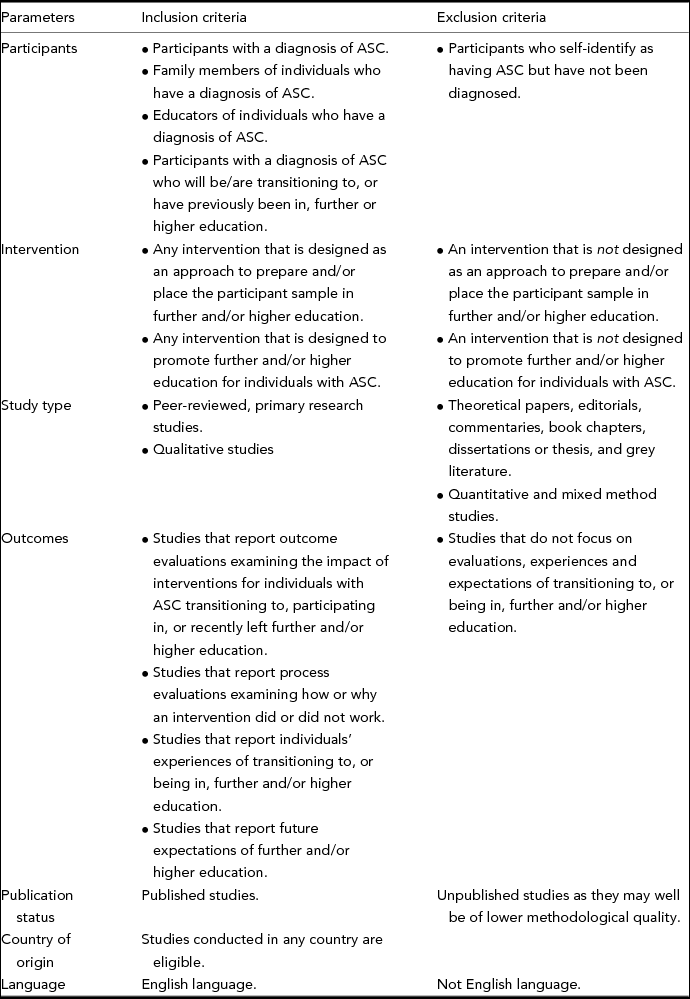
All of the retrieved studies were assessed against the inclusion and exclusion criteria in Table 1.
Inclusion and Exclusion Criteria

Data Extraction
Of the retrieved studies from the searches, the titles and abstracts were initially screened against the inclusion and exclusion criteria in order to identify potentially relevant studies. A decision was made at this stage as to whether the study would be selected for advancement to the second stage of inclusion, which involved screening the full text. Where there was doubt, and the inclusion criteria were not clear from the title or abstract, the full text of the study was retrieved in order to determine eligibility. Full texts of the titles and abstracts advanced from stage 1 were retrieved in order to determine whether the study met the inclusion criteria for review.
Quality Criteria and Assessment
The studies that met the inclusion criteria were assessed in accordance with the guidelines for reviewing qualitative research, as outlined by Elliott, Fischer, and Rennie (Reference Elliott, Fischer and Rennie1999). The guidelines to assess each study were: owning one's perspective, situating the sample, grounding in examples, providing credibility checks, coherence, accomplishing general versus specific research tasks, and finally, resonating with readers. The first and second authors independently assessed the quality of all of the included studies.
Data Synthesis
The method of thematic synthesis outlined by Thomas and Harden (Reference Thomas and Harden2008) formed the basis for the analysis and synthesis of the data in the identified studies. Ideas from thematic analysis were also assimilated (Braun & Clarke, Reference Braun and Clarke2006). The initial stage of the synthesis involved line-by-line reading and rereading of the results or findings sections of each of the included studies. Codes were extracted if they were considered to address the research questions. The codes were translated across the studies, and related line-by-line codes were grouped together to construct descriptive themes. These descriptive themes formed the basis for the next interpretative level of synthesis in which higher order analytical themes were generated. These superordinate themes allowed for the construction of a cumulative conceptual account of the obstacles, facilitators, and needs for students with ASC in relation to further and higher education.
Findings and Discussion
Study Flow
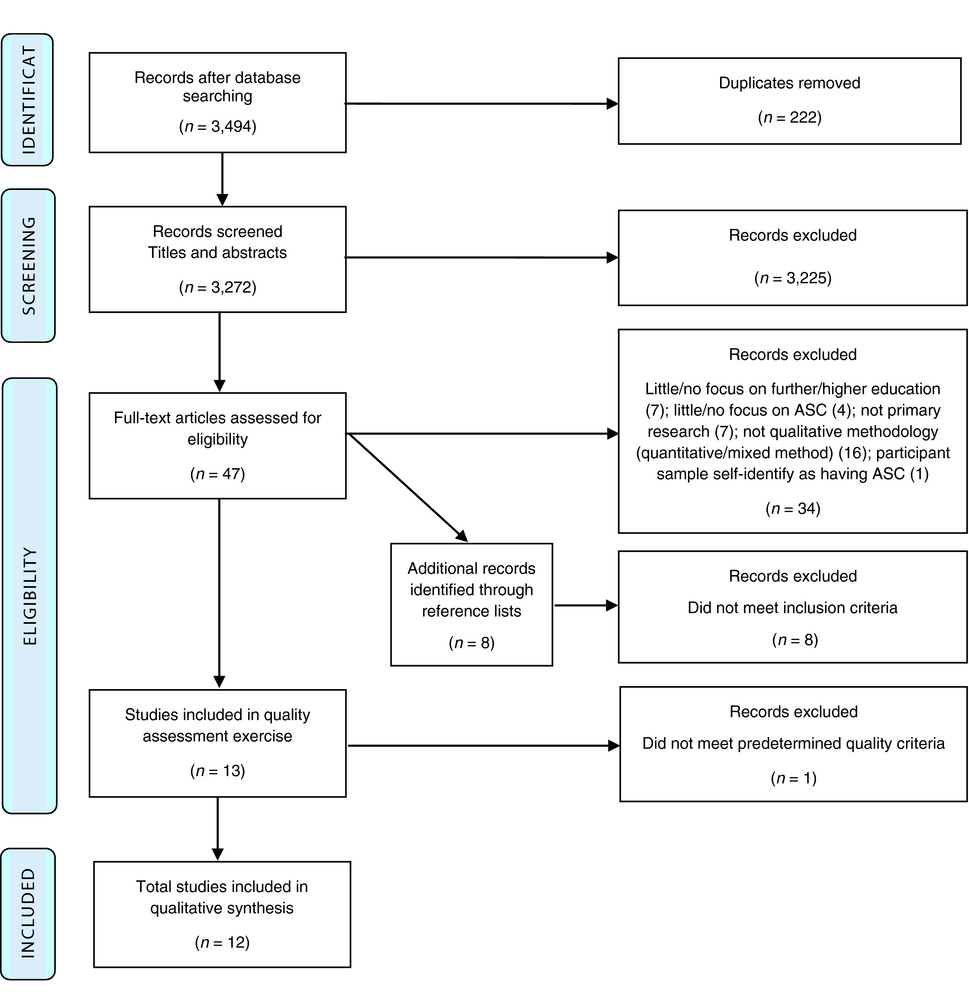
The database searches resulted in a total of 3,494 references (Figure 1). After duplicates were removed, a review of the title and abstract of the remaining 3,272 articles was performed. This resulted in the removal of 3,225 articles, mainly due to a lack of relevance of aims, sample characteristics, and designs. A full-text review was undertaken against the inclusion and exclusion criteria for the remaining 47 articles. On the basis of this, 34 articles were eliminated due to little or no focus on further and/or higher education (N = 7), little or no focus on ASC (N = 4), not being primary research (N = 7), and being quantitative or mixed method design (N = 16). No additional articles were identified. A total of 13 studies met the inclusion criteria for quality assessment.
PRISMA flow diagram of the article search process in the systematic review of the literature.

Quality of the Included Studies
From the 13 studies that met the inclusion criteria for quality assessment, one study (MacLeod & Green, Reference MacLeod and Green2009) did not meet the predetermined quality criteria as outlined by Elliott, Fischer, and Rennie (Reference Elliott, Fischer and Rennie1999). Since this study was intended more as a practitioner discussion piece, data were not collected and analysed in a systematic way, and so it was omitted from the analysis.
Characteristics of the Included Studies
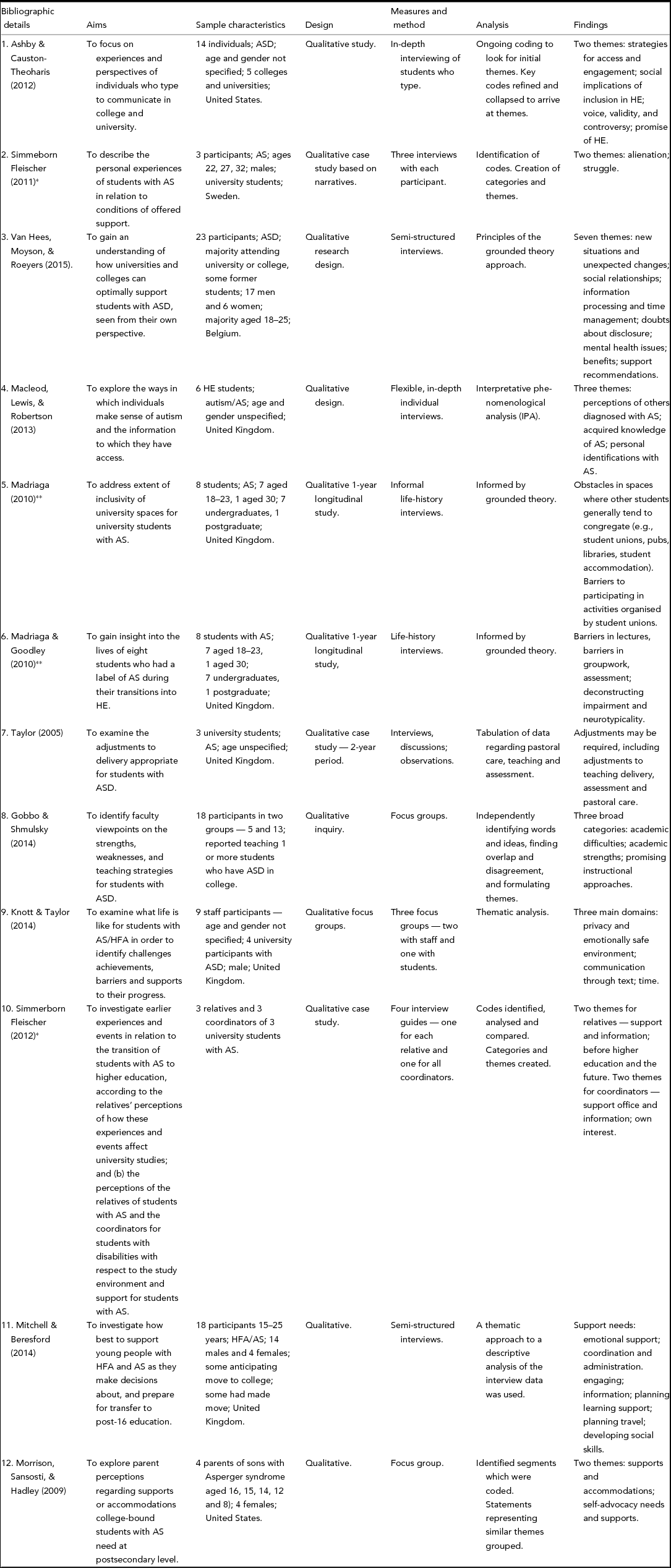
From the twelve studies included in the analysis (see Table 1), eight studies (1–7) focused on the perspectives of students with ASC in relation to further and higher education. More specifically, two out of these eight studies (1, 3) focused on students with ASC in both college and university, and six of the studies (2, 4–7) maintained a focus on students specifically within a university setting. One of these studies (3) had a participant sample that consisted of both former and current students, while the rest of the studies (1, 2, 4–7) consisted of a participant sample of current students. As well as studies focusing on the perspectives of students with ASC, there was one study (8) that focused solely on staff who had experience of teaching one or more students with ASC in a college setting. Furthermore, one of the included studies (9) incorporated the perspectives of both staff and students in university, and another study focused on the perspectives of the relatives and coordinators of students with ASC in a university setting (10). In addition to the studies focusing on students with ASC in further and higher education, three studies (10–12) placed an emphasis on transition to post-16 education. One of these studies (11) focused on students who were anticipating the move to college as well as some who had transitioned, while the other focused on parents of males with ASC who would be transitioning to college at some point. The detailed methodological characteristics of these twelve studies are presented in Table 2. They have been summarised in terms of: (a) bibliographic details, (b) aims, (c) sample characteristics, (d) design, (e) measures/method, (f) analysis, and (g) findings.
Characteristics of the Included Studies

Note: *These studies are part of the same research project. The project involves three cases, and each case consists of one student with AS, one relative and one coordinator. Study 2 (Simmeborn Fleischer, Reference Simmeborn Fleischer2011) reports on the perspectives of students with AS. Study 10 (Simmeborn Fleischer, Reference Simmeborn Fleischer2012) reports on the data collected from relatives and coordinators. **These studies are part of the same year-long longitudinal study.
AS = Asperger syndrome; ASD = autism spectrum disorder; HFA = higher functioning autism; HE = higher education.
Synthesis of the Data
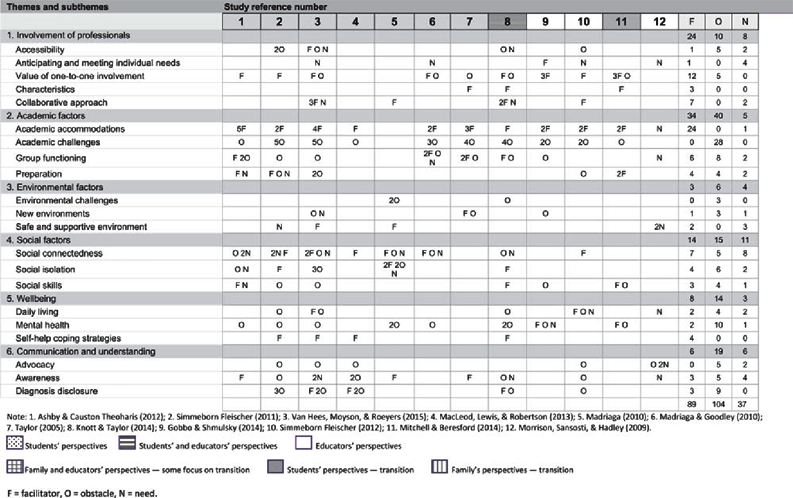
Six superordinate themes emerged from the thematic synthesis of the data and generated considerable information in relation to the facilitators, obstacles, and needs for students with ASC in terms of further and higher education. The findings highlighted the diversity inherent in the way that students with ASC transition to and access further and higher education, and how this diversity reflects the heterogeneous nature of ASC. More importantly, there was evidence that the characteristics of ASC cannot (and should not) be generalised. Thus, there appeared a need for a collaborative approach to accommodate the diverse and individual needs of students with ASC, with the aim of ensuring access to these educational settings. Table 3 presents a summary of the themes and subthemes of the facilitators, obstacles, and needs for students with ASC in relation to further and higher education, as well as the contribution of each study. These are presented and discussed in turn below. So that the reader is provided with a sense of where the themes were identified in articles, the numbers allocated to these in Tables 2 and 3 are utilised in this discursive component. Please note that, in keeping with the qualitative design adopted, the authors do not intend for prevalence of a theme to indicate priority.
Facilitators, Obstacles, and Needs in Relation to Further and Higher Education for Students With ASC, and the Contribution of Each Study

Theme 1: Involvement of Professionals
The involvement of professionals was valued by students with ASC, their families, and staff. Aspects relating to accessibility to support systems, anticipating and meeting individuals’ needs, value of one-to-one involvement, characteristics of professionals, and a collaborative approach were described in the literature.
A key area highlighted in this theme was the importance of working responsively and sensitively with difference (6). Placing the voice of the student at the heart of educational processes helped to ensure that students were able to actively offer their individual opinions and suggestions, thereby positively shaping their educational experience (see also Barnhill, Reference Barnhill2014). Furthermore, findings indicated that having access to psychological support (3) was also of importance to individuals with ASC. Support for some students, however, was not readily available (2, 3, 10) at a time when a range of accessible support services may be essential. Examples of facilitative one-to-one support services found in this review were: mentoring (5, 8), psychological support (3, 10), counselling (3, 8), and coaching (3). Provision of such accessible support echoes the common priorities of young people more broadly (Gibson, Cartwright, Kerrisk, Campbell, & Seymour, Reference Gibson, Cartwright, Kerrisk, Campbell and Seymour2015). Arguably, such services have the potential to empower students to make choices about the way they experience further and higher education, and to have more control over their future.
The students identified qualities of professionals that they perceived to facilitate their educational experience. Relational qualities such as adopting a non-judgmental approach (9; e.g., Rogers, Reference Rogers1957), alongside having experience, knowledge and understanding of ASC (3, 9–11), and being reliable during the transition period (11) were perceived as beneficial. In contrast, there were traits that were identified as hindering, such as a lack of insight about ASC among lecturers (3), and a lack of interest in what the students need (6). As noted above, taking into account the students’ perceptions is therefore of great importance. This can enable students to play an active role in improving the quality of support and teaching, and consequently their own learning. Finally, the synthesis of the findings here demonstrates that collaboration among individuals with autism, their families, and educators was perceived as a factor that improved the educational experience for the students. Thus, a collaborative, ecologically minded approach (Bronfenbrenner, Reference Bronfenbrenner1979) is advocated. As was evident in one of the studies (11), such an approach might include involving school and/or college staff, and/or parents when making arrangements for the support needs of the young person. This indicates that taking a collaborative approach can help facilitate each party in bringing forward their own unique expertise in order to provide maximum benefit for students with ASC.
Theme 2: Academic Factors
The students with ASC, together with their educators and families, described academic factors relating to academic accommodations, academic challenges, group functioning, and preparation.
Wide ranges of academic accommodations were perceived to facilitate the educational experiences of students with ASC. Factors such as receiving additional time (1, 2, 6, 7) and having more structured teaching and learning (1, 3, 8, 9, 11) were perceived to be of importance. The obstacles reported in the studies related to the academic challenges that students face. These included executive functioning problems, such as difficulties with time management (2, 3, 7, 8) and difficulties with planning and structure (2, 3, 7, 8, 10). Due to difficulties with expressive and receptive language as well as social skills, working in groups was also challenging for some students with ASC, and alternatives to group work were therefore sought (6, 12). Aspects related to preparation were also perceived to be of importance. Gaining as much information as possible in advance (1, 2, 11), as well as opportunities for visits for prospective students to let them experience academic and social life on campus before enrolment (11), were perceived as factors that facilitated preparation.
These findings demonstrate the value of academic accommodations to enable students with ASC to overcome the challenges that may well affect their success in further and higher education settings (Barnhill, Reference Barnhill2014; Brown & Wolf, Reference Brown, Wolf, McPartland, Klin and Volkmar2014). Given the findings included in the theme ‘involvement of professionals’, it may be helpful to adopt a collaborative approach in order to establish strategies to accommodate the academic challenges that these students experience. It is also vital that the students’ views are sought in relation to strategies that may have enabled them to succeed in their previous or current educational settings.
While these findings indicate a need for appropriate academic accommodations (as well as more holistic support), it is important to note that colleges and universities must also endeavour to provide more than solely academic adjustments. Students with ASC may not only require an interpreter of the social world in order to navigate the social complexities of college and university environments, but also accommodations to address concerns with life skills, socialising, and getting along with others (VanBergeijk et al., Reference VanBergeijk, Klin and Volkmar2008). Secondary schools could partner with colleges and universities to create summer bridge programs for students with ASC one or two years before finishing secondary school. This could prepare students for the environmental and social demands of college and university life, as well as help families to determine specific knowledge and skills students need to transition to these settings effectively (VanBergeijk, Reference VanBergeijk2013). Providing accommodations that target the difficulties associated with the multidimensional aspects of ASC has greater potential to facilitate success for these students.
Theme 3: Environmental Factors
Environmental factors were described by the students as being related to the educational, living and social environments that comprise further and higher education settings. Environmental challenges were reported and included: excessive noise (5, 8), large crowds (8), and feeling frightened about facing new surroundings and structures (3). A need was highlighted for parental support and providing students with ASC with the option to live at home or in sole occupancy accommodation (12). Some of the facilitative aspects of this theme related to the students feeling safe and supported in their environment.
These findings give some insights into the kind of supports that students may value in their educational, living, and social environments. First, increasing staff awareness of the impact of sensory processing difficulties on students with ASC may help prevent the issues commonly reported in these studies. Further, implementing social alternatives (e.g., providing the opportunity to students with ASC to attend social events without noise and crowds [5]) can enable students to successfully access their social environments. This has the potential to offset the effects of social isolation, anxiety, and depression found in many individuals with ASC (Muller, Schuler, & Yates, Reference Müller, Schuler and Yates2008). While living at home or in sole occupancy accommodation may well suit some students with ASC, educators must be aware of the potentially excluding and isolating aspects of these options. In order to facilitate the effective transition of students to university halls of residence, establishing a designated person to whom the student could go to if they have questions or concerns appears important (Jekel & Loo, Reference Jekel and Loo2002). For example, residential advisors can play a vital role in not only working with students with ASC individually to increase their independence, but also increase autism awareness and understanding among peers.
In order for students with ASC to succeed in their academic, living and social environments, educators should be trained to understand ASC; and furthermore, have an understanding of what constitutes an accessible and inclusive living environment for these students. Moreover, each student with ASC has unique needs, and not all students with ASC have difficulties with sensory processing, for example. Therefore, educators, by taking into account the recommendations of students with ASC from their own perspective, should provide tailored and individualised support to suit the unique needs of these individuals.
Theme 4: Social Factors
This theme describes aspects of the literature associated with social connectedness, social isolation, and social skills. Some students reported having social interactions (2, 3, 5, 6) and engaging in their social environments (5, 8), and perceived this to facilitate their sense of social connectedness. In contrast, other students reported difficulties gaining these connections and loneliness (1, 3, 5, 6, 8). One of the studies (5) highlighted a need for more inclusive and accessible spaces to increase students’ opportunities to engage socially in university life. Despite the difficulties highlighted in relation to these factors, the included studies reported a real need among the students for a sense of belonging (1, 2), social interaction (1, 2, 3, 5, 6, 8), and support with managing social skills (1).
These findings are indicative of the need for interventions to promote social opportunities (Orsmond, Shattuck, Cooper, Sterzing, & Anderson, Reference Orsmond, Shattuck, Cooper, Sterzing and Anderson2013), whereby students with ASC can develop their social skills and establish friendships. Since students with ASC are often subjected to bullying (2, 10), educating peers about ASC and its impact has the potential to promote awareness, acceptance, understanding, and empathy (Gardiner & Iarocci, Reference Gardiner and Iarocci2013), and in turn can facilitate the social integration of students with ASC. However, providing basic facts that increase knowledge about ASC may not be enough (Gardiner & Iarocci, Reference Gardiner and Iarocci2013). Research suggests that knowledge gained by peers through experiential learning (i.e., direct contact) has better potential for increasing their acceptance of students with ASC (Mahoney, Reference Mahoney2008). By taking into account the uniquely important role of contact (Gardiner & Iarocci, Reference Gardiner and Iarocci2013), educators can provide opportunities to promote greater understanding among the peer group. This may reduce the social isolation of students with ASC. Furthermore, enabling the students to make meaningful social connections with their peers may protect against the risk of bullying.
In addition to this, it appears essential to provide this group of students with social skills training through strategies such as role play with peers and behavioural practice (Wehman et al., Reference Wehman, Schall, McDonough, Kregel, Brooke, Molinelli and Thiss2014). The teaching of social skills could be implemented prior to students’ enrolment in further and higher education settings. This would equip students with strategies to deal with social interactions more effectively once in these settings. Educators can promote the successful social inclusion of students with ASC by providing social alternatives that meet their unique needs (5), and by assisting these students in accessing social networks that are reflective of their specific interests (12). Moreover, a collaborative approach incorporating the perspectives of students with ASC, their educators, and their family members (MacLeod & Green, Reference MacLeod and Green2009) should lie at the heart of the implementation of interventions that promote social opportunities.
Theme 5: Wellbeing
This theme referred to the wellbeing of students with ASC in relation to daily living, mental health, and self-help coping strategies. The students reported experiencing difficulties in everyday student life. These included remembering to eat, lacking initiative to wash clothes (despite having the physical ability to do so), cleaning, and attending appointments (2–3, 8, 10). Receiving support from family members, however, facilitated daily living for the students. As identified in other research (e.g., VanBergeijk et al., Reference VanBergeijk, Klin and Volkmar2008), more than half of the studies highlighted the mental health challenges that this group of students face. This includes anxiety and/or stress (1–3, 5, 6, 8, 9, 11), and depression (5, 8). A need to employ strategies such as minimising anxiety-provoking situations and offering intervention at the onset of agitation was highlighted (9). Aspects of parental support that the students valued were that their parents were readily available to offer emotional support and understood their individual needs. This enabled the students to discuss their anxieties and concerns at their own pace (11).
Some of the students indicated that they were better able to manage everyday student life by developing self-help strategies (2, 3, 4, 8). Examples of these strategies are: making time for leisure activities (3), finding alternative solutions for problems via social imitation (i.e., observing how others act in situations [2]), exchanging experiences with other students with ASC in a support group (3), gaining insight into how ASC affected their information processing (3), and training themselves to reduce a need for structure in order to cope better with unexpected occurrences (3). These findings suggest that increasing staff awareness in relation to the day-to-day stressors that contribute to the students’ anxiety is vital. By recognising the early signs of student stress and anxiety, staff can intervene to prevent more serious issues such as disengagement and depression (9). Furthermore, these findings indicate a need for a designated person on campus to whom students can turn for confidential advice and support (Adreon & Durocher, Reference Adreon and Durocher2007). This would help reduce reliance upon parental support, and consequently promote the student's transition to independence.
These findings also underline the importance of physical fitness and exercise in reducing mental health issues such as depression and anxiety (Strohle, 2008), and promoting cognitive function (Gomez-Pinilla & Hillman, Reference Gomez-Pinilla and Hillman2013). Data from the 2007 U.S. National Survey of Children's Health indicated that children with ASC were 42% more likely to be obese in comparison to children without ASC (Curtin, Anderson, Must, & Bandini, Reference Curtin, Anderson, Must and Bandini2010). Given that children who are obese are more likely to be obese as adults (Guo, Wu, Chumlea, & Roche, Reference Guo, Wu, Chumlea and Roche2002), physical fitness and exercise can not only enhance the mental health and cognitive function of individuals with ASC but also reduce potential future health risks.
Given the complexity of the difficulties that students with ASC face, pluralistic approaches of support (Hanley, Williams, & Sefi, Reference Hanley, Williams, Sefi, Hanley, Humphrey and Lennie2013) that consider support methods that include both community and individually focused interventions are likely to be most helpful. Approaches such as these could potentially facilitate students with ASC in reducing the practical, emotional, and mental health issues frequently associated with further and higher education, thereby enhancing students’ wellbeing.
Theme 6: Communication and Understanding
This theme describes aspects of the literature related to advocacy, awareness raising, diagnosis, and disclosure. The findings indicated that the students often lacked self-advocacy skills (2–4, 10, 12). Needs were identified for both self-advocacy (12) and professionals serving as advocates (12) for the students. Factors relating to awareness were also highlighted, including lack of staff awareness (2, 8) and lack of student self-awareness (4). Educator acknowledgement of the diversity of ASC (1, 5, 7) and listening to students’ experiences about what is useful for them (3) were also perceived as relevant for some students. Further, findings related to this theme highlighted mixed experiences related to the disclosure of ASC diagnosis. While this contributed to gaining support for some students (3, 4, 8), others reported that it led to stigma (2, 3, 4). Some also had doubts regarding the disclosure of their diagnosis, not only to peers (2, 8, 10) but also academic staff (3). A number of students regarded their diagnosis as stigmatising (2), while others were concerned about privacy (3). Some students reported that disclosing their diagnosis did not have a positive impact on their ability to complete their university studies (2).
These findings highlight that further and higher education settings require independent functioning on the part of the student. However, there appears to be a need for both families and professionals to support student independence in these settings. Support in the form of self-advocacy training could be delivered to students before their enrolment in further and higher education. This would provide students with time to essentially find their own voice. Paramount to self-advocacy training would be the need to facilitate the students’ self-awareness, not only in relation to their self-advocacy rights (Test, Fowler, Wood, Brewer, & Eddy, Reference Test, Fowler, Wood, Brewer and Eddy2005) but also in relation to ASC. More specifically, students with ASC must be aware of their areas of difficulty, helpful learning methods, and accommodations needed to facilitate their success (Cavanagh & VanBergeijk, Reference Cavanagh, VanBergeijk, Franklin, Harris and Allen-Meares2012). Role-plays entailing practising self-identification could enable the students to develop their skills in relation to how and when to disclose their ASC (Cavanagh & VanBergeijk, Reference Cavanagh, VanBergeijk, Franklin, Harris and Allen-Meares2012), and how and when to ask for accommodations (Cavanagh & VanBergeijk, Reference Cavanagh, VanBergeijk, Franklin, Harris and Allen-Meares2012; Brinckerhoff, Reference Brinckerhoff1994). It is important to bring to light that students with ASC are at high risk of not self-identifying as having ASC (Cavanagh & VanBergeijk, Reference Cavanagh, VanBergeijk, Franklin, Harris and Allen-Meares2012) and therefore do not receive the support and accommodations they need. Through the development of effective self-advocacy skills, students with ASC may well be more likely to self-identify and consequently receive adequate and timely support once in further and higher education settings, thereby contributing to their success.
It is important to note that while increasing student independence is essential, it is equally important to acknowledge the role that further and higher education institutions have in accommodating the diverse needs of these individuals. Educators need to work cooperatively and creatively, and not only provide ‘reasonable adjustments’ to students with ASC but also strive towards an inclusive ethos that better understands and accommodates the diversity of this group of students.
Strengths, Limitations and Future Research
A key aim of autism research is to enhance the lives of people living with ASC (Pellicano et al., Reference Pellicano, Dinsmore and Charman2014). The value in understanding the strengths, skills, knowledge, and potential that individuals with ASC possess, along with those of their families and educators, is essential in ensuring a meaningful quality of life. To that end, this systematic review was purposive in exploring and understanding the lived experiences not only of individuals with ASC, but also their families and educators. The included studies employed a range of qualitative designs, including case study, focus groups, and longitudinal methodologies. Rooted in the perspectives of the individuals, families and educators, these qualitative studies enabled a first-hand, in-depth insight into the facilitators, obstacles, and needs of individuals with ASC as they transition to, and participate in, further and/or higher education.
Although this systematic review was rigorously executed, the findings are limited by the decision taken not to include quantitative studies. Future reviews could adopt a multiple methods strategy and include quantitative studies in an attempt to reflect a more holistic perspective of research in this area. It is also noteworthy that the assessment of qualitative research for such reviews is a contestable arena (e.g., Carroll, Booth, & Lloyd-Jones, Reference Carroll, Booth and Lloyd-Jones2012). As such, the authors have presented the work in such a way that the conceptual interpretations made are both clear and transparent.
Implications for Counsellors and Psychologists Working in Schools
A number of implications for counsellors and psychologists working in schools arise from the findings of this review. In particular, the included articles highlight the importance of understanding the perspectives of students with ASC and their parents. These views can enrich and enhance the way that professionals work with this group of people and highlight the need to develop responsive interventions tailored to each individual and context. Various obstacles and needs are also identified in this review, many of which professionals could potentially address. For instance, in addition to offering one-to-one therapy, counsellors and psychologists could aid the dissemination of education and awareness programs, and assist in preparing students with ASC for further and higher education. This need for early intervention appears essential, not only to prepare students for the process of transition into further and higher education but also to prevent the various challenges that these students often face while in these settings. Finally, as the present review highlights many factors that are facilitators and obstacles to success in further and higher education, professionals could incorporate these findings into associated awareness-raising packages. Raising awareness has the potential to enable educational institutions to strive towards a more inclusive ethos, and in doing so move away from the previous deficit-led approach to understanding autism (Billington, Reference Billington2006).
Conclusion
The findings from this review provide a unique overview of the way that students with ASC transition to and experience further and higher education. The first-hand accounts synthesised provide a valuable insight into the broad array of challenges that students face (personal and environmental). They also highlight numerous factors that can be used to inform the creation of effective support packages. These are likely to be varied in format and might include offering group-based awareness training and individualised counselling. As such, counsellors and psychologists working in schools are therefore encouraged to adopt pluralistic ways of working that are responsive to individual students’ personal and community contexts. Such flexible approaches have the potential to help students to experience further and higher education in a more accessible and inclusive way.