




No CrossRef data available.
Article contents
Analysis of the beta-tubulin codon 200 genotype distribution in a benzimidazole-susceptible and -resistant cyathostome population
Published online by Cambridge University Press: 09 October 2003
Abstract
To study the prevalence of the polymorphism in position 200 of the beta-tubulin gene in the mechanism of benzimidazole (BZ) resistance in cyathostomes of horses, an allele-specific PCR was used to detect the genotype of individuals of BZ-susceptible and BZ-resistant populations. The molecular analysis of 100 adults recovered from an anthelmintic-naïve horse revealed 80% homozygous TTC/TTC individuals, 17% heterozygous TTC/TAC and 3% homozygous TAC/TAC. A naturally infected horse was treated with increasing fenbendazole (FBZ) dosages to select a BZ-resistant population of cyathostomes. The PCR based analysis of 3rd-stage larvae (L3) during the experiment revealed a decrease of the homozygous TTC/TTC genotype and an increase in heterozygous TTC/TAC and homozygous TAC/TAC individuals. After treatment 42·3% of the adults (n=104) were homozygous TTC/TTC, 55·8% were heterozygous TTC/TAC and only 1·9% showed the homozygous genotype TAC/TAC. The results of the molecular analysis lead to the proposal that polymorphism within codon 200 is not the only reason for the development of BZ resistance in small strongyles.
Keywords
Information
- Type
- Research Article
- Information
- Copyright
- 2003 Cambridge University Press
INTRODUCTION
Small strongyles (cyathostomes) are currently one of the predominant groups of endoparasites of horses worldwide. They are considered to be a major cause of health problems in equines (Herd, 1990). Control of these parasites is complicated by the presence of larval stages, which are refractory to many commonly used anthelmintics, and by their ability to develop resistance to anthelmintic agents. Resistance of cyathostomes to anthelmintics has been recognized for more than 3 decades, and resistance to benzimidazoles (BZ) was first reported in 1965 (Drudge & Lyons, 1965). Since that time, BZ-resistant cyathostomes have been recorded in many countries (Lyons, Tolliver & Drudge, 1999). As cyathostomes have become more prominent in terms of prevalence and intensity of infection and since resistance impairs parasite control, the detection of anthelmintic resistance in cyathostomes has become an important area of study. In vitro tests such as the faecal egg count reduction (FECR) test and the egg hatch test (EHT) have been the most common methods of resistance detection, but they are relatively expensive, time-consuming and laborious. For example, Pook et al. (2002) developed a larval development assay (LDA) for the detection of anthelmintic resistance in horse cyathostomes. A common limitation of all in vitro methods is the relatively low sensitivity, as they detect resistance only when [ges ]25% of the parent generation are resistant (Martin, Anderson & Jarrett, 1989). In contrast, PCR assays can provide sensitive molecular tools for the early detection of genetic changes associated with selection of BZ resistance (e.g. Roos, Kwa & Grant, 1995) and have the capacity to detect as little as 1% resistant individuals in a sample of a susceptible population. In nematodes of small ruminants, such as Haemonchus contortus, Teladorsagia circumcincta, and Trichostrongylus colubriformis, BZ resistance is proposed to be primarily controlled by a point mutation in position 200 of isotype 1 beta-tubulin gene, which is linked with a substitution of tyrosine for phenylalanine (Kwa, Veenstra & Roos, 1994; Elard & Humbert, 1999). Allele-specific PCRs have been developed to determine the allele frequency of the beta-tubulin codon 200 genotypes in these parasites (Kwa et al. 1994; Humbert & Elard, 1997). Extending from this work, cDNA of the beta-tubulin gene of several cyathostome species was sequenced, leading to the discovery of a polymorphism in position 200 (Pape, von Samson-Himmelstjerna & Schnieder, 1999; von Samson-Himmelstjerna et al. 2001; Pape, Schnieder & von Samson-Himmelstjerna, 2002), and the development of an allele-specific PCR approach for the detection of the different genotypes relating to codon 200 (von Samson-Himmelstjerna et al. 2002 a). In the present study this PCR method was used to investigate and compare nucleotide polymorphism at this codon position in BZ-susceptible and BZ-resistant cyathostome populations in an attempt to elucidate the mechanism of the development of BZ resistance in these parasites.
MATERIALS AND METHODS
Parasites
Two cyathostome populations (BZ-susceptible, BZ-resistant) were investigated in this study. BZ-susceptible adult worms were collected at necropsy from a horse of a herd which had never received anthelmintic treatment. In order to select a BZ-resistant population of cyathostomes, a naturally infected horse with nematodes of unknown resistance status was treated, beginning in March, with increasing dosages of fenbendazole (FBZ) (Panacur®, Intervet, Unterschleissheim, Germany) (Table 1; Fig. 1). This animal was housed together with another horse, experimentally infected with the same cyathostome population, in an open stable with a paddock during winter and free access to a pasture in spring, summer and autumn. A faecal sample was collected weekly, the faecal numbers of strongylid eggs was enumerated by a flotation method (Schmidt, 1971) (Fig. 1) and the faeces were cultured for 8 days at 26 °C in darkness and at a relative humidity of 70–90% to produce 3rd-stage larvae (L3) for re-infection or for the extraction of genomic DNA. To increase the number of BZ-resistant cyathostomes, the horse was re-infected at days 294, 301 and 308 with 5300, 8300 and 8000 L3, respectively (Fig. 1), which had been collected from faecal samples cultured 1 week after therapeutic treatment (days 280, 287, 294). After 482 days of the experiment adult worms were collected at necropsy. Morphological identification of adult nematodes was carried out according to the key of Lichtenfels (1975). The head and tail of each worm were cut off and cleared in a drop of a solution of 80% phenol and 20% absolute ethanol to which 5% glycerol was added. The remainder of each worm was used for the isolation of genomic DNA. The L3 were identified to subfamily (Cyathostominae) based on the presence of 8 mid-gut cells and used for the extraction of genomic DNA.

Fig. 1. Faecal egg counts (FEC) during the experimental selection of a phenotypically BZ-resistant cyathostome population. The period of subtherapeutic treatment is underlined. The dates of therapeutic treatment, re-infection and molecular analysis of 3rd-stage larvae are indicated by arrows.

DNA extraction
Pools of several thousand L3 were exsheathed by incubation for 10 min in a tube containing 5 ml of larval suspension and 100 μl of sodium hypochlorite (aqueous solution of about 12% active Cl, Roth, Karlsruhe, Germany) at 37 °C shaking at 150 rpm. The suspension was washed 3 times by centrifugation for 10 min at 823 g. The supernatant was decanted and the tube was refilled with autoclaved double-distilled water (ddw). The L3 were then killed by heating at 95 °C for 5 min. The extraction of the genomic DNA was carried out with the NucleoSpin®Tissue kit (Macherey-Nagel, Düren, Germany). Single larvae were incubated in 18 μl of T1 lysis buffer and 2·5 μl proteinase K (10 mg/ml) at 56 °C overnight, and DNA extraction was carried out according to the manufacturer's protocol using 1/10 of the recommended buffer volumes. The DNA was eluted twice with 25 μl of ddw and stored at −20 °C. Genomic DNA was extracted from adult worms using the same purification kit according to the manufacturer's recommendations, eluting DNA with 200 μl of ddw.
Allele-specific PCR
The PCR assay was carried out as described previously (von Samson-Himmelstjerna et al. 2002 a). Two allele-specific forward primers Cn24FS (5′ GGT TGA AAA TAC AGA CGA GAC TTT 3′) and Cn25FR (5′ GGT TGA AAA TAC AGA CGA GAC TTA 3′) were used separately together with an isotype 1-specific, but not allele-specific reverse primer Cn30R (5′ AGC AGA GAG GGG AGC AAA GCC AGG 3′). Cn24FS is able to detect the base associated with phenylalanine in codon 200, whereas Cn25FR detects tyrosine at this position. Thereby only the final base at the 3′ end of each forward primer, corresponding to the middle base of amino acid 200, confers the specificity. PCR reactions were performed in 50 μl volumes and contained 1×GeneAmp® PCR Buffer II, 1·5 mM magnesium chloride (MgCl2), 40 μM of each deoxynucleotide triphosphate (dNTP), 50 pmol of each primer and 1 U AmpliTaq Gold® (Applied Biosystems, Weiterstadt, Germany). A volume of 12 μl (single L3) or 1 μl (single adult worm) of genomic DNA was added to each reaction. Control reactions without template DNA were also included. The cycling conditions comprised an initial AmpliTaq Gold® activation step for 10 min at 95 °C, followed by 40 cycles of denaturation at 94 °C for 60 s, annealing for 60 s at 63 °C and extension at 72 °C for 60 s, followed by a final extension of 72 °C for 10 min.
PCR products were examined in 2% (w/v) agarose gels and stained with GelStar® (Biozym, Hessisch Oldendorf, Germany).
The allele-specific PCR was used to investigate 100 adult worms of a BZ-susceptible cyathostome population, L3 during BZ treatment (100 L3 on day 0, 101 L3 on day 343 and 121 L3 on day 406) and 104 adults representing the phenotypically BZ-resistant population.
An EHT (von Samson-Himmelstjerna et al. 2002 b) was also performed before treatment and on day 400 of the experiment to determine the phenotype of resistance.
Data analysis
The global comparison as well as the pairwise comparison of the results of the molecular analysis of single larvae during the course of BZ treatment was carried out by chi-square test (Sachs, 1992) using the Bonferroni procedure to control the significance level in the pairwise comparison. The analysis of the data obtained by the investigation of adult worms of the BZ-susceptible and -resistant population was done with Fisher's-exact test (SAS 1997, SAS/STAT Software: Release 6.12 Cary, NC).
RESULTS
Molecular analysis of BZ-susceptible cyathostome populations
Adult small strongyles were collected after necropsy from a horse which had never received anthelmintic treatment. A total of 100 worms were identified to 4 different Cylicocyclus species (Table 2) and used for genomic DNA extraction and molecular analysis. The analysis revealed that 80% of the adults were homozygous TTC/TTC, 17% heterozygous TTC/TAC and 3% showed the homozygous TAC/TAC genotype, and the allele frequencies were 88·5% for TTC and 11·5% for TAC. The distribution of the genotypes among the different cyathostome species is shown in Table 2. No statistically significant difference between the genotype distribution in each species could be detected (P>0·05).

To sustain a BZ-susceptible cyathostome population, a foal was infected with L3 from faeces of the anthelmintic-naïve horse. The EHT revealed an ED50 of 0·05 μg/ml for thiabendazole, which indicated BZ susceptibility. The PCR based analysis of 110 L3 from eggs excreted by the foal showed 99·1% TTC and 0·9% TAC alleles. Within codon 200 none of the L3 examined showed the homozygous TAC/TAC genotype.
Experimental selection of a BZ-resistant population of cyathostomes
A naturally infected horse was treated with increasing dosages of FBZ (Table 1) to produce a phenotypically BZ-resistant population of cyathostomes. At the beginning of the experiment, the horse excreted 1250 strongylid eggs per gram of faeces (epg). After the first treatment with a subtherapeutic dosage of 3·75 mg FBZ per kg body weight (bw) the FEC was reduced by 92%. During the period of subtherapeutic treatment (days 0–245), the FEC ranged from 50 to 700 epg (Fig. 1). During the following period (days 259–287) of therapeutic treatment with the recommended dosage of 7·5 mg FBZ per kg bw, the FEC values ranged from 100 to 150 epg. The horse was subsequently re-infected 3 times with L3 to intensify the infection with BZ-resistant cyathostomes. Nine weeks (day 357) after the first re-infection the FEC increased to 450 epg. Between days 449 and 462 the FECs were higher (400 to 800 epg). To critically establish the status of resistance, the horse was finally treated with 7·5 mg FBZ per kg bw 7 days prior to necropsy (day 475). Subsequently, the faeces were collected, and 25 individual worms were expelled on day 2 after treatment, 57 worms were recovered from the faeces on day 3 and 10 worms on day 4 after treatment. The horse was necropsied on day 482. The caecum and large colon were opened and the contents collected. A total of 1847 adult cyathostomes were collected after necropsy. Hence, the final treatment eliminated 92 worms and reduced the worm burden by less than 5%. In addition, the phenotype of resistance was determined by EHT at several time-points during the experiment. During the course of the experiment, the ED50 value increased from 0·070 μg/ml (before the first treatment) to 0·228 μg/ml on day 400 following consecutive treatment (Fig. 1).
Molecular analysis of a cyathostome population during BZ treatment
During the experimental selection of a BZ-resistant population of cyathostomes, 100 (day 0), 101 (day 343) and 121 (day 406) L3 were examined by PCR based analysis. Before BZ treatment (day 0) the frequency of the TTC allele was 88·5%, whereas the proportion of this allele was reduced to 48·0% (day 343) and 55·8% (day 406) during the course of treatment. The percentage of the TAC allele varied from 11·5% (day 0) before treatment to 52·0% (day 343) and 44·2% (day 406) under BZ treatment. Compared to the pre-treatment status, the homozygous TTC/TTC genotype within codon 200 decreased, whereas the homozygous TAC/TAC genotype increased during BZ treatment (Table 3). The global comparison as well as the pairwise comparison of the results of the 3 dates revealed statistically significant differences between the genotype distribution at each time-point (P<0·0001).

Molecular analysis of a BZ-resistant cyathostome population
A random subsample of 104 adults, identified to species (Table 2), of the BZ-resistant cyathostome population was analysed, revealing 70·2% TTC and 29·8% TAC alleles with 42·3% of the adult worms being homozygous TTC/TTC, 55·8% heterozygous TTC/TAC and only 1·9% homozygous TAC/TAC. The distribution of the genotypes among the species identified is listed in Table 2. The exact test of Fisher revealed no statistically significant difference between the genotype distribution in the different species (P>0·05).
DISCUSSION
BZ resistance in cyathostomes has been recognized for more than 3 decades, but the molecular mechanisms of the development of BZ resistance in these horse parasites is still unknown. Given the mode of action of BZs (Lacey, 1988) and based on molecular studies of H. contortus and T. circumcincta, BZ resistance was shown to be associated with a phenylalanine-to-tyrosine shift in position 200 of the isotype 1 β-tubulin (Kwa et al. 1994; Elard, Comes & Humbert, 1996). Based on this information it is proposed that beta-tubulin is also involved in the development of BZ resistance in cyathostomes.
In the present study an allele-specific PCR was carried out for the investigation of the beta-tubulin isotype 1 codon 200 of a BZ-susceptible and a BZ-resistant population of adult cyathostomes. Furthermore, L3 were analysed during a period of 482 days with BZ treatment. The PCR based analysis of 100 adult worms of a BZ-susceptible population isolated from an anthelmintic-naïve horse revealed a high proportion (80%) with the homozygous genotype TTC/TTC, whereas only 3% of the adults were homozygous TAC/TAC. These findings were supported by the analysis of L3 isolated from an experimentally infected foal. The paucity of homozygous TAC/TAC individuals was probably due to their overall rareness and the small sample size examined (110 larvae).
At the beginning of BZ treatment, the resistance status of the cyathostomes used for the selection of a BZ-resistant population was unknown. Assessment of BZ susceptibility of the original population was inferred by the low ED50 value of 0·070 μg/μl at the beginning of the study as well as the reduction of the FEC of 92% in the horse by treatment with a FBZ dosage of 3·75 mg per kg bw. The results of the molecular analysis for L3 at the beginning of the experiment were in accordance with these findings.
A certain degree of natural infection was due to the uptake of L3 from the pasture. But to ensure the maintenance of the infection and to enhance the proportion of BZ-resistant individuals, the horse was re-infected 3 times with L3 isolated from faeces one week after BZ treatment. The pre-patent periods of cyathostomes usually range from 5·5 to 14 weeks (Reinemeyer, 1986). Until 7 weeks after the last experimental infection there was no detectable increase in the FEC. Thirteen weeks after the final experimental re-infection, a BZ treatment with 7·5 mg FBZ per kg bw was carried out to eliminate any BZ-susceptible adult worms which may have persisted. To reduce the proportion of BZ-susceptible adults, the horse was treated on day 339 (February 2001) and day 399 (April 2001). This was done since it is known that in a northern temperate climate the emergence of L4 occurs seasonally in the first months of the year (Reinemeyer, 1986). The ED50 value of >0·1 μg/ml thiabendazole in the EHT after the seventh treatment indicates the presence of BZ resistance (Whitlock et al. 1980; Kelly et al. 1981; Coles et al. 1992). In the present study, the worm burden was reduced by [les ]5% by treatment, which, together with the low efficacy of the anthelmintic as indicated by the ED50 value, provided evidence of a phenotypically resistant cyathostome population. Molecular analysis revealed only a limited increase in the homozygous TAC/TAC individuals to 32·7% (day 343) and 38·0% (day 406) during treatment, while still 28·7% (day 343) and 49·6% (day 406) of the larvae were homozygous TTC/TTC. This high proportion of homozygous TTC/TTC individuals after BZ treatment is supported by recent investigations of BZ resistance in cyathostomes of horses in Chile (von Samson-Himmelstjerna et al. 2002 b). The changes in genotype frequencies observed in the larvae investigated at different time-points during the course of BZ treatment were statistically significant, which indicates an effect of selection caused by treatment. This information indicates that the distribution of the genotypes for the L3 of the cyathostome population investigated herein is distinctly different from the pattern typical for trichostrongyloid nematodes (Roos et al. 1995; Elard & Humbert, 1999). Hence, the adult worms were also investigated after treatment. Analysis of the adult worms supported the results obtained for L3, since a high proportion of homozygous TTC/TTC individuals were detected whereas the majority of worms was heterozygous TTC/TAC, and only a small proportion showed a homozygous TAC/TAC genotype.
Elard & Humbert (1999) investigated 2 isolates of T. circumcincta differing in the level of resistance before and after BZ treatment and showed that all genotypes (TTC/TTC, TTC/TAC, TAC/TAC) were present in partially BZ-resistant populations. In contrast to the present findings for cyathostomes, Elard & Humbert (1999) found that only homozygous TAC/TAC individuals survived BZ treatment. This elimination of homozygous TTC/TTC and heterozygous TTC/TAC individuals after BZ treatment has also been demonstrated for adult H. contortus (Roos et al. 1995). Exclusively homozygous TAC/TAC individuals of T. circumcincta and of H. contortus were BZ-resistant, indicating that resistance is recessive. Indeed, an early study (LeJambre, Royal & Martin, 1979) revealed that thiabendazole resistance is inherited as an autosomal and semi-dominant trait. The very low proportion (1·9%) of homozygous TAC/TAC individuals in the phenotypically BZ-resistant cyathostome population selected in this study and the high proportion (55·8%) of heterozygous TTC/TAC individuals surviving BZ treatment may indicate a co-dominant mode of inheritance in cyathostomes. The statistical analysis of the genotype distribution among different species from BZ-susceptible and BZ-resistant adults did not indicate a species related effect of selection.
Investigation of anthelmintic resistance in H. contortus to BZs, levamisole and macrocyclic lactones has shown the involvement of different genes and different modes of inheritance in the development of resistance in different populations (Prichard, 2001). The high proportion of homozygous TTC/TTC adult worms in a phenotypically BZ-resistant cyathostome population leads to the proposal that the mutation within codon 200 is not the only reason for the development of BZ resistance in the small strongyles. Recent studies of BZ resistance in H. contortus suggest the involvement of an additional point mutation in the mechanism of resistance (Prichard, 2001). A mutation at position 167 of the isotype 1 beta-tubulin also causes a phenylalanine-to-tyrosine change. In a recent study the complete beta-tubulin isotype 1 cDNA of a single worm of seven cyathostome species, Cylicocyclus nassatus, Cylicocyclus radiatus, Cylicocyclus insigne, Cylicocyclus elongatus, Cyathostomum coronatum, Cyathostomum pateratum, and Cyathostomum catinatum, isolated from the anthelmintic-naïve horse used herein, was determined (Pape et al. 2002). Sequencing revealed phenylalanine at position 167 in all seven worms. Also, recent study of the cDNA of the beta-tubulin isotype 1 gene of phenotypically BZ-resistant adult worms has shown an A/T polymorphism in codon 167 (unpublished data). Amplification and sequencing of the codon 167, 200 and possibly others of further individuals from the BZ-susceptible population and comparison with BZ-resistant cyathostomes might clarify a possible involvement of these and other mutations in the development of BZ resistance in cyathostomes.
This study was supported by a grant of the German Research Council (DFG, SCHN 267/13, SA 973/1-2). We are grateful to Judith McAlister-Hermann, Ph.D. and William J. Blackhall, Ph.D. for assistance with revising the manuscript.
References
REFERENCES
COLES, G. C.,
BAUER, C.,
BORGSTEEDE, F. H.,
GEERTS, S.,
KLEI, T. R.,
TAYLOR, M. A. &
WALLER, P. J.
(1992).
World Association for the Advancement of Veterinary Parasitology (W.A.A.V.P.) methods for the detection of anthelmintic resistance in nematodes of veterinary importance.
Veterinary Parasitology 44,
35–44.Google Scholar
DRUDGE, J. H. &
LYONS, E. T.
(1965).
Newer developments in helminth control and Strongylus vulgaris research.
Proceedings of the Annual Meeting of the American Association of Equine Practitioners 11, 381–389.Google Scholar
ELARD, L.,
COMES, A. M. & HUMBERT, J. F.
(1996).
Sequences of beta-tubulin cDNA from benzimidazole-susceptible and -resistant strains of Teladorsagia circumcincta, a nematode parasite of small ruminants.
Molecular and Biochemical Parasitology 79,
249–253.CrossRefGoogle Scholar
ELARD, L. &
HUMBERT, J. F.
(1999).
Importance of the mutation of amino acid 200 of the isotype 1 beta-tubulin gene in the benzimidazole resistance of the small-ruminant parasite Teladorsagia circumcincta.
Parasitology Research 85,
452–456.CrossRefGoogle Scholar
HERD, R. P.
(1990).
The changing world of worms: the rise of the cyathostomes and the decline of Strongylus vulgaris. Compendium on Continuing Education for the Practicing Veterinarian 12,
732–734.Google Scholar
HUMBERT, J. F. &
ELARD, L.
(1997).
A simple method for rapidly detecting defined point mutations. Technical Tips Online, http://tto.trends.com, T40076.
KELLY, J. D.,
WEBSTER, J. H.,
GRIFFIN, D. L.,
WHITLOCK, H. V.,
MARTIN, I. C. &
GUNAWAN, M.
(1981).
Resistance to benzimidazole anthelmintics in equine strongyles. 1. Frequency, geographical distribution and relationship between occurrence, animal husbandry procedures and anthelmintic usage. Australian Veterinary Journal 57,
163–171.CrossRefGoogle Scholar
KWA, M. S.,
VEENSTRA, J. G. &
ROOS, M. H.
(1994).
Benzimidazole resistance in Haemonchus contortus is correlated with a conserved mutation at amino acid 200 in beta-tubulin isotype 1.
Molecular and Biochemical Parasitology 63,
299–303.CrossRefGoogle Scholar
LACEY, E.
(1988).
The role of the cytoskeletal protein, tubulin, in the mode of action and mechanism of drug resistance to benzimidazoles.
International Journal for Parasitology 18,
885–936.CrossRefGoogle Scholar
LeJAMBRE, L. F.,
ROYAL, W. M. &
MARTIN, P. J.
(1979).
The inheritance of thiabendazole resistance in Haemonchus contortus.
Parasitology 78,
107–119.CrossRefGoogle Scholar
LICHTENFELS, J. R.
(1975).
Helminths of domestic equids.
Proceedings of the Helminthological Society of Washington 42,
1–92.Google Scholar
LYONS, E. T.,
TOLLIVER, S. C. &
DRUDGE, J. H.
(1999).
Historical perspective of cyathostomes: prevalence, treatment and control programs.
Veterinary Parasitology 85,
97–111.CrossRefGoogle Scholar
MARTIN, P. J.,
ANDERSON, N. &
JARRETT, R. G.
(1989).
Detecting benzimidazole resistance with faecal egg count reduction tests and in vitro assays.
Australian Veterinary Journal 66,
236–240.CrossRefGoogle Scholar
PAPE, M.,
SAMSON-HIMMELSTJERNA, G. von &
SCHNIEDER, T.
(1999).
Characterisation of the beta-tubulin gene of Cylicocyclus nassatus.
International Journal for Parasitology 29,
1941–1947.CrossRefGoogle Scholar
PAPE, M.,
SCHNIEDER, T. &
SAMSON-HIMMELSTJERNA, G. von (2002).
Investigation of diversity and isotypes of the beta-tubulin cDNA in several small strongyle (Cyathostominae) species.
Journal of Parasitology 88,
673–677.CrossRefGoogle Scholar
POOK, J. F.,
POWER, M. L.,
SANGSTER, N. C.,
HODGSON, J. L. &
HODGSON, D. R.
(2002).
Evaluation of tests for anthelmintic resistance in cyathostomes.
Veterinary Parasitology 106,
331–343.CrossRefGoogle Scholar
PRICHARD, R.
(2001).
Genetic variability following selection of Haemonchus contortus with anthelmintics.
Trends in Parasitology 17,
445–453.CrossRefGoogle Scholar
REINEMEYER, C. R.
(1986).
Small strongyles. Recent advances.
Veterinary Clinics of North America Equine Practice 2,
281–312.CrossRefGoogle Scholar
ROOS, M. H.,
KWA, M. S. &
GRANT, W. N.
(1995).
New genetic and practical implications of selection for anthelmintic resistance in parasitic nematodes.
Parasitology Today 11,
148–150.CrossRefGoogle Scholar
SAMSON-HIMMELSTJERNA, G. von,
HARDER, A.,
PAPE, M. &
SCHNIEDER, T.
(2001).
Novel small strongyle (Cyathostominae) beta-tubulin sequences.
Parasitology Research 87,
122–125.CrossRefGoogle Scholar
SAMSON-HIMMELSTJERNA, G. von,
PAPE, M.,
von WITZENDORFF, C. &
SCHNIEDER, T.
(2002 a).
Allele-specific PCR for the beta-tubulin codon 200 TTC/TAC polymorphism using single adult and larval small strongyle (Cyathostominae) stages.
Journal of Parasitology 88,
254–257.Google Scholar
SAMSON-HIMMELSTJERNA, G. von,
von WITZENDORFF, C.,
SIEVERS, G. &
SCHNIEDER, T.
(2002 b).
Comparative use of faecal egg count reduction test, egg hatch assay and beta-tubulin codon 200 genotyping in small strongyles (Cyathostominae) before and after benzimidazole treatment. Veterinary Parasitology 108,
227–235.Google Scholar
SCHMIDT, U.
(1971).
Parasitologische Kotuntersuchung durch ein neues Verdünnungsverfahren.
Tierärztliche Umschau 26,
229–230.Google Scholar
WHITLOCK, H. V.,
KELLY, J. D.,
PORTER, C. J.,
GRIFFIN, D. L. &
MARTIN, I. C. A.
(1980).
In vitro field screening for anthelmintic resistance in strongyles of sheep and horses. Veterinary Parasitology 7, 215–232.CrossRefGoogle Scholar
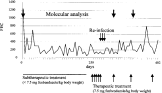
Fig. 1. Faecal egg counts (FEC) during the experimental selection of a phenotypically BZ-resistant cyathostome population. The period of subtherapeutic treatment is underlined. The dates of therapeutic treatment, re-infection and molecular analysis of 3rd-stage larvae are indicated by arrows.
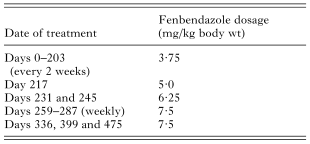
Table 1. Schedule of treatment for the experimental selection of a BZ-resistant cyathostome population
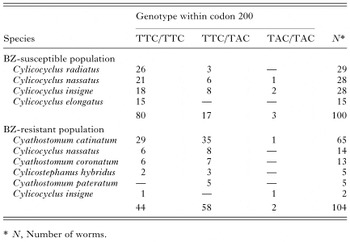
Table 2. Genotype distribution among the species differentiated in the BZ-susceptible and -resistant cyathostome population
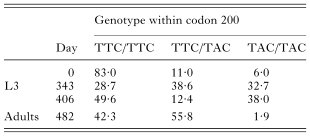
Table 3. Frequencies (%) of the codon 200 genotypes of 3rd-stage larvae during BZ treatment and adults at necropsy
 You have
Access
- 40
- Cited by