Introduction
It is a little over 100 years since James Murray, biologist with Shackleton’s 1907–09 British Antarctic Expedition, published his account of microscopic life in lakes at Cape Royds, Ross Island (Murray Reference Murray1910). Murray’s monographs on rotifers and tardigrades (and less so for nematodes) were the most comprehensive early accounts of limno-terrestrial biology from Antarctica. Their existence provides a unique opportunity to address two relevant issues: species introductions and biogeographical distribution of Antarctic microfauna. The threat of exotic species introductions to Antarctica has never had a higher profile (McGeoch et al. Reference McGeoch, Shaw, Terauds, Lee and Chown2015, Houghton et al. Reference Houghton, McQuillan, Bergstrom, Frost, van den Hoff and Shaw2016), but while introduced species are known for the Maritime Antarctic and also inside some stations in Antarctica, no exotics have been established at the more climatically extreme continental regions (see Chown et al. Reference Chown, Huiskes, Gremmen, Lee, Terauds, Crosbie, Frenot, Hughes, Imura, Kiefer, Lebouvier, Raymond, Tsujimoto, Ware, van de Vijver and Bergstrom2012, Hughes et al. Reference Hughes, Pertierra, Molina-Montenegro and Convey2015).
Currently, there remains uncertainty about the actual diversity and endemicity of Antarctic microfauna. This, in part, may be a consequence of the difficulty in identifying new taxa (especially when most were originally identified using Northern Hemisphere keys) in areas where most species are microscopic and inconspicuous, and in many regions lack adequate surveys documenting the biota (Adams et al. Reference Adams, Bardgett, Ayres, Wall, Aislabie, Bamforth, Bargagli, Cary, Cavacini, Connell, Convey, Fell, Frati, Hogg, Newsham, O’Donnell, Russell, Seppelt and Stevens2006, Stevens & Hogg Reference Stevens and Hogg2006, Terauds et al. Reference Terauds, Chown, Morgan, Peat, Watts, Keys, Convey and Bergstrom2012). Rotifers, tardigrades and nematodes are amongst the most likely invaders, being widespread, easily dispersed and mostly tolerant of desiccation and other extreme conditions (Sohlenius & Boström Reference Sohlenius and Boström2008, Velasco-Castrillón et al. Reference Velasco-Castrillón, Gibson and Stevens2014a). Furthermore, Cape Royds (and Ross Island in general) is a prime location for exotic introductions, having high visitation from explorers, scientists and tourists, including during periods of national programme activity when quarantine management was not prioritized (see Woehler et al. Reference Woehler, Ainley and Jabour2014, O’Neill et al. Reference O’Neill, Balks and López-Martínez2015). A re-evaluation of these microfauna from lakes will provide an indication of whether 100 years of discontinuous human occupation of Antarctica may have had an impact on local biota and thus provide a baseline for risk assessment of invasive taxa in Continental Antarctica.
The current paradigm for Antarctic terrestrial biogeography, that numerous refugia persisted through glaciations, where biota was able to survive and later expand from, has implications for assessing and managing isolated populations in Continental Antarctica (Stevens & Hogg Reference Stevens and Hogg2003, Nolan et al. Reference Nolan, Hogg, Stevens and Haase2006, Hills et al. Reference Hills, Stevens and Gemmill2010, McGaughran et al. Reference McGaughran, Torricelli, Carapelli, Frati, Stevens, Convey and Hogg2010b). The extreme fragmentation of populations into refugia has promoted genetic differences between populations, and in some cases, speciation of new taxa has resulted (Stevens & Hogg Reference Stevens and Hogg2006, Convey & Stevens Reference Convey and Stevens2007, McGaughran et al. Reference McGaughran, Stevens and Holland2010a). For managers, this highlights a need to consider protection of populations, rather than species, with movement of organisms between locations in Antarctica potentially as risky to regional diversity as introductions from outside of the continent. The regionality shown by taxonomic groups varies according to their dispersal capacities (Velasco-Castrillón & Stevens Reference Velasco-Castrillón and Stevens2014, Velasco-Castrillón et al. Reference Velasco-Castrillón, Page, Gibson and Stevens2014b, Reference Velasco-Castrillón, McInnes, Schultz, Arróniz-Crespo, D’Haese, Gibson, Adams, Page, Austin, Cooper and Stevens2015), and comparisons of genetic diversity between populations of microinvertebrates from Cape Royds will provide an opportunity to evaluate the extent of regional isolation within what should be a readily distributing group of organisms.
The aim of this study was to compare microfaunal species diversity found by James Murray during the 1907–09 British Antarctic Expedition with that found from recent collections over 100 years later. Morphological and molecular (mitochondrial COI gene) data were used to aid the identification of species collected from Cape Royds to address three questions: i) Are there any changes in the diversity within and between the lakes? ii) Are there any introductions? If so, iii) are these introductions of known Antarctic species (from within Antarctica) or potential exotics (from outside Antarctica)?
Methods
Sample collection
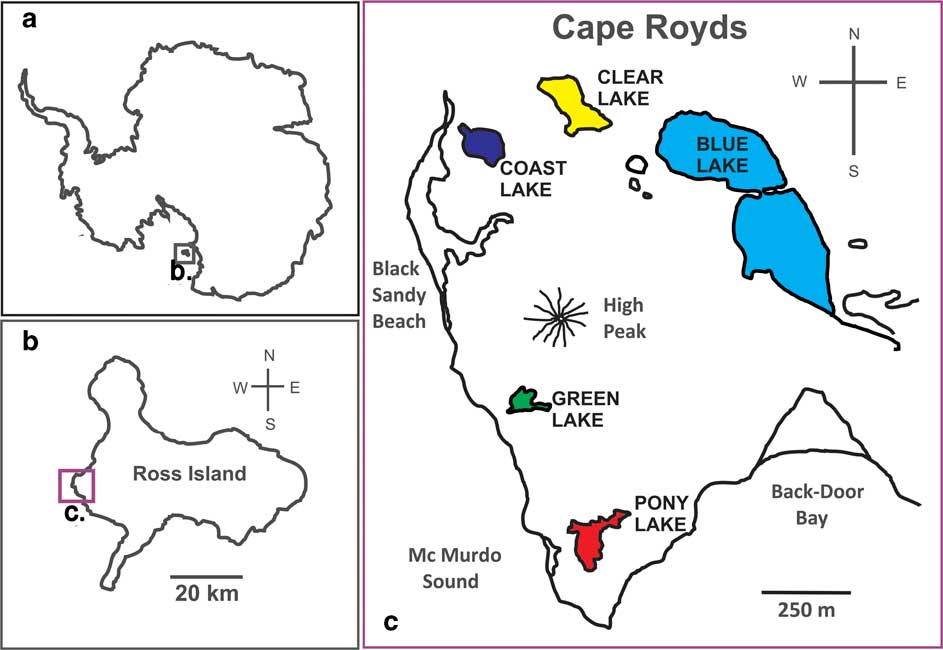
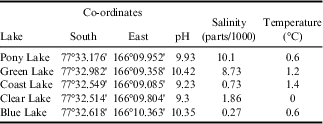
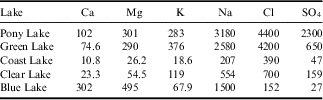
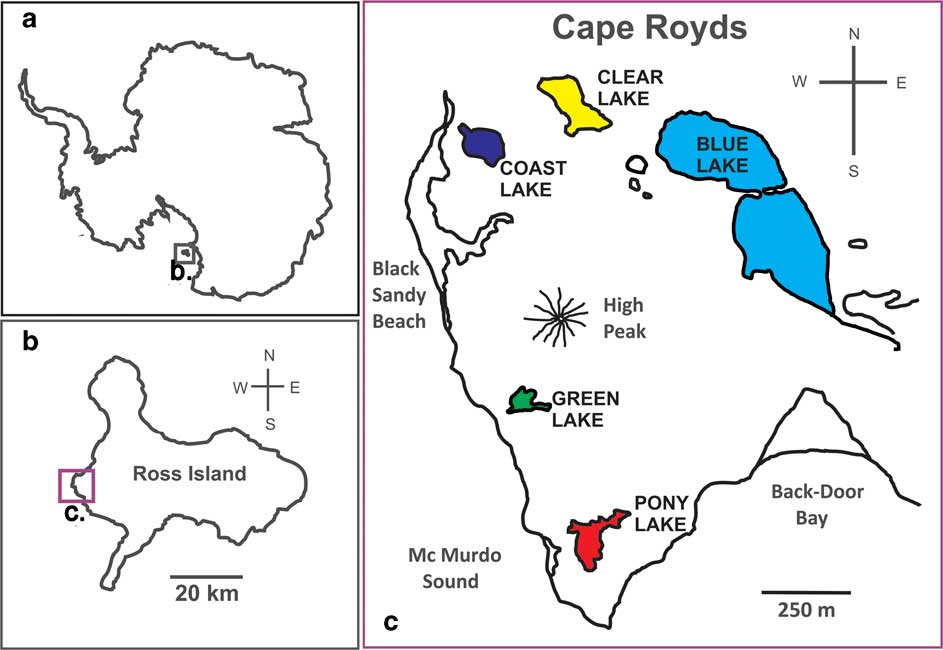
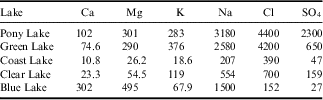
The collection methods in the current study were designed to replicate the methods described in Murray (Reference Murray1910). Microfauna were extracted from cyanobacterial mats and the water column from the five largest lakes on Cape Royds (Pony, Green, Coast, Clear and Blue; Fig. 1). Three squares of cyanobacterial mats (6.5 cm2) were collected from within each lake and placed in a bucket with 2 l of water. These were broken down into small pieces by the use of a sterilized spatula, the content was poured onto a 400 µm mesh sieve and the flow-through was kept in a separate container. Cyanobacteria retained in the 400 µm mesh sieve were photographed and later discarded. The filtrate from the 400 µm mesh sieve was poured through a 38 µm sieve, and the retained material (fine sediment and microfauna) was transferred into a 50 ml tube for later analysis. Microfauna were also collected from the water column. A 20 l bucket was used to collect 60 l of water, which was passed through the 38 µm sieve, where the microfauna were retained (when present). All buckets and sieves were cleaned thoroughly before and after each use. Water chemistry (pH, salinity and temperature) was also recorded for each lake (Table I), and water samples were taken to be analysed for major ions using standard techniques (Table II).
Maps showing the location of the sampled area. a. Antarctica. b. Ross Island. c. Cape Royds (adapted from James Murray’s manuscript).
Cape Royds lakes: locations and field measurements.
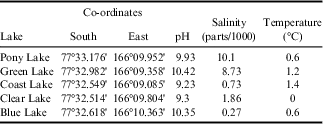
Co-ordinates are given in the World Geodetic System 1984 (WGS84).
Cape Royds lakes: water chemistry. All values g m-3.
Microfauna isolation
Rotifers, tardigrades and nematodes were extracted following a modified version of a sugar centrifugation protocol (Velasco-Castrillón et al. Reference Velasco-Castrillón, Schultz, Colombo, Gibson, Davies, Austin and Stevens2014c). Tubes containing fine sediment from cyanobacteria extract were centrifuged twice at 500 RCF. In the first cycle tubes were filled up with water and spun for 5 min. In the second cycle tubes were spun for 1 min in a 1.3 M sucrose solution (methods described in Velasco-Castrillón et al. Reference Velasco-Castrillón, Schultz, Colombo, Gibson, Davies, Austin and Stevens2014c). The supernatant fraction was then decanted into the 38 µm mesh sieve, back-washed into a clean 50 ml tube (this process was performed for each of the five lakes) and stored at 4 °C for a couple of days. The content of the tubes was placed in a Petri dish and examined under a stereo dissecting microscope. Microfauna were morphologically examined and then isolated using Irwin loops. Morphospecies were transferred onto water droplets on a slide located under a digital microscope (Celestron, LCD Digital Microscope, USA) where digital images were taken. Representatives of each morphospecies were kept in tubes with 100% ethanol for DNA extraction.
DNA extraction and amplification
Total DNA was extracted from the whole specimen (following a modified extraction protocol; see Appendix S1 found at http://dx.doi.org/10.1017/S095410201800007X). The polymerase chain reaction (PCR) product of the COI gene was amplified using the universal primers LCO1490 (5’-GGTCAACAAATCATAAAGATATTGG-3’) and HCO2198 (5’-TAAACTTCAGGGTGACCAAAAAATCA-3’) (Folmer et al. Reference Folmer, Black, Hoeh, Lutz and Vrijenhoek1994). These primers amplified a 658–661 bp fragment (excluding primers). Reactions were carried out on an Eppendorf thermocycler with the following conditions: an initial step of 94 °C for 10 min, followed by 35 cycles at 94 °C for 1 min, denaturation at 50 °C for 1.5 min and extension at 72 °C for 1 min, with a final cycle of 72 °C for 10 min. The 25 µl PCR reaction mix for one reaction included 5 µl of DNA template, 0.1 µl of IMMOLASE DNA polymerase (5 U µl-1), 1 µl of each 5 µM primer (Invitrogen), 12.9 µl of ultrapure water and 5 µl of 5× MRT buffer (5× immolase buffer, 4 mM dNTP mix, 0.25 mg ml-1 BSA) diluted 1/5. The PCR products were run in a 1.5% agarose gel, and subsequently stained in a red-gel solution for 30 min and visualized in a transilluminator. The PCR products with positive amplification were sent for sequencing to Macrogen and AGRF (Australian Genome Research Facility). All GenBank accession numbers are provided in Table S1 found at http://dx.doi.org/10.1017/S095410201800007X.
Sequence analysis
Mitochondrial COI sequences were checked visually and chromatograms were inspected to resolve unclear base calls. For each PCR product, forward and reverse sequences were assembled in the bioinformatics package Geneious 3.8 (Biomatters, Auckland, NZ). Consensus alignments were generated separately for each of the three phyla (Rotifera, Tardigrada and Nematoda) using the default settings of the Geneious alignment algorithm (cost matrix: 65% similarity; gap open penalty: 12; gap extension penalty: 3). Primer sequences were removed and sequences were translated into amino acids to confirm the absence of stop codons choosing the invertebrate mitochondria genetic code (as implemented in Geneious). Sequences were matched against those in GenBank using the BlastN algorithm to confirm that they belonged to the targeted phyla. Contaminated or misidentified sequences were disregarded. Alignments for each phylum were complemented with the closest hits from GenBank. Once all the alignments were produced, the best models of nucleotide substitution were calculated with Modeltest PAUP block in PAUP* 4.0a152 (Swofford Reference Swofford2002) and the Akaike information criterion (AIC) in Modeltest 3.7 (Posada & Crandall Reference Posada and Crandall1998). The evolutionary models TrN+I+G, HKY+G and TrN+I (for rotifers, tardigrades and nematodes, respectively) were selected for the maximum likelihood (ML) analyses run in MEGA7 (Kumar et al. Reference Kumar, Stecher and Tamura2016) together with 1000 bootstrap replicates.
Results
Present study
Microfauna were present in four of the five lakes (Green, Coast, Clear and Blue), and absent from Pony Lake. The four lakes with microfauna contained low salinity or freshwater, whereas Pony Lake was the most saline, with the highest concentrations of Ca, Mg, Na, Cl and SO4 (Tables I & II). Presence of all three phyla (Rotifera, Tardigrada and Nematoda) was observed for the three least saline lakes (Coast, Clear and Blue), while for Green Lake, only rotifers where found. Most of the specimens recovered from the four lakes came from the cyanobacterial samples; only a small proportion (< 5%) were found in the water column. Presence of the nematode Scottnema lindsayae Timm and the monogonont rotifer Cephalodella catellina (Müller) occurred solely in the water column.
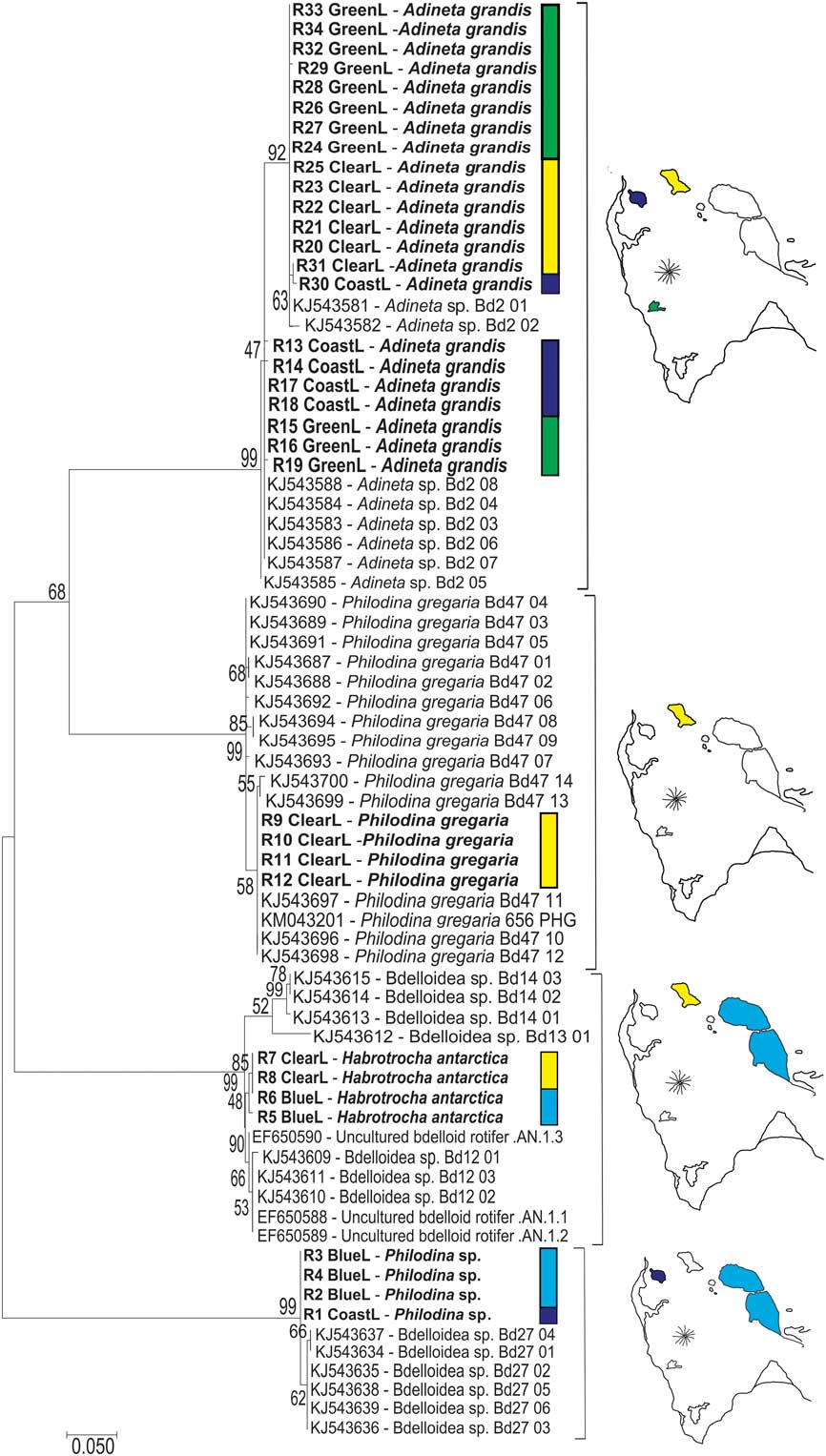
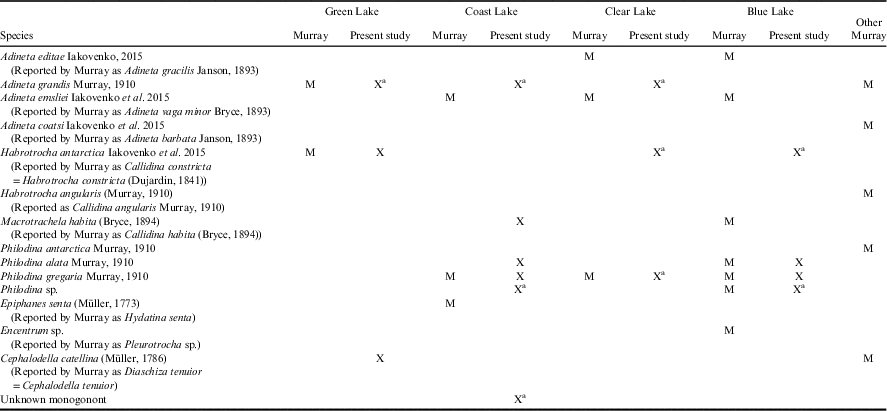
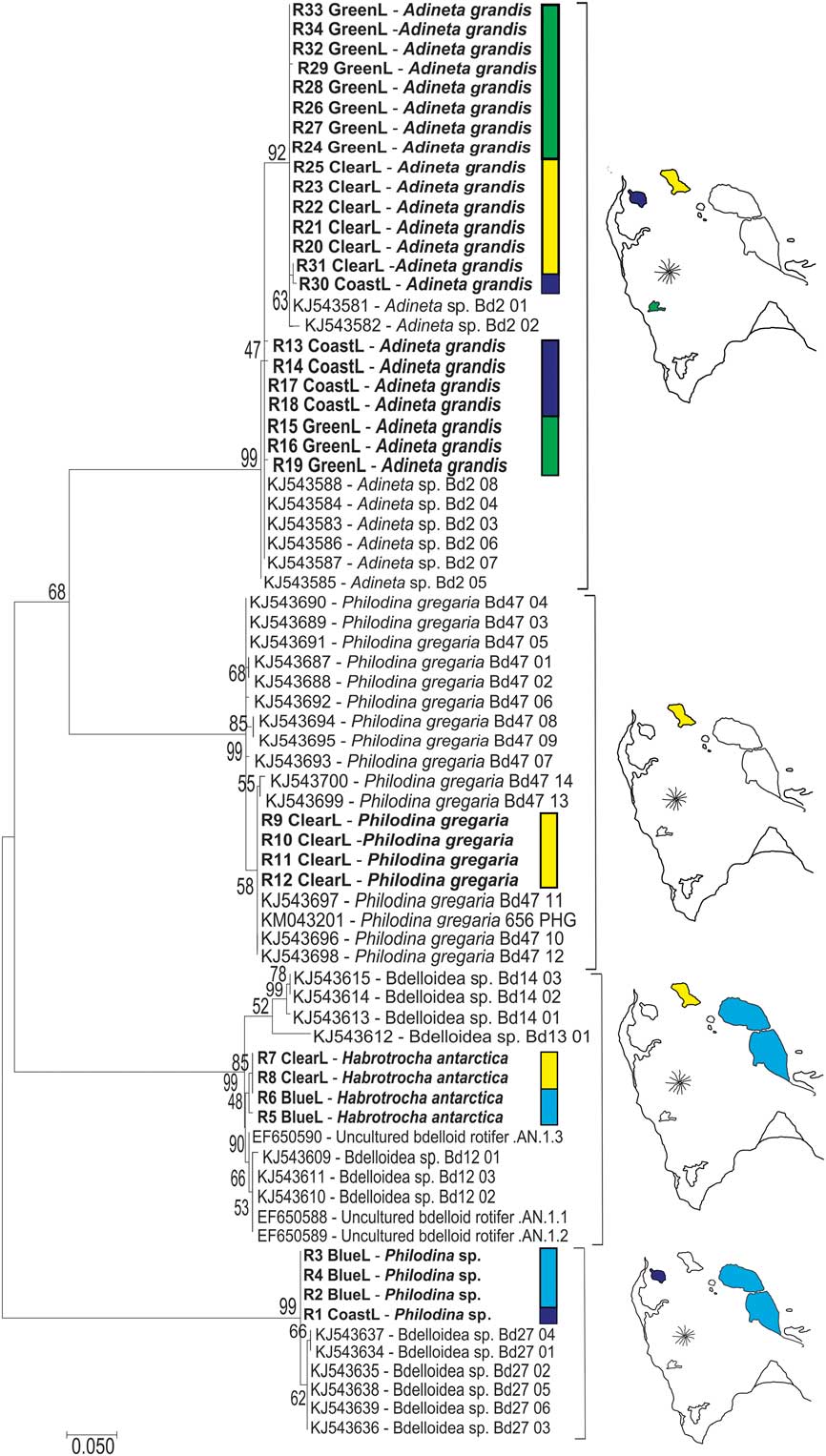
Rotifers showed the highest diversity; eight species were found, five of which were supported by the COI data (Table III, Fig. 2). The most abundant and widespread of all rotifer species was the viviparous bdelloid Adineta grandis Murray. This species was present in three lakes (Table III) and it was highly abundant in Green Lake. The other viviparous bdelloid recorded for Cape Royds, Philodina gregaria Murray, was predominant in Clear Lake (confirmed with COI) and present in Coast and Blue lakes. Also, for the latter two lakes, the highly conspicuous Philodina alata Murray (determined by morphology) and an unidentified Philodina species were found in small numbers. Two other bdelloid species were found in the lakes: Habrotrocha antarctica Iakovenko et al., a numerous bdelloid present in Green Lake and confirmed using COI for Clear and Blue lakes; and a variant of the cosmopolitan Macrotrachela habita (Bryce) present in Coast Lake (determined morphologically). Monogonont rotifers were not as diverse as bdelloids; only two species were recorded. One was an unidentified egg from Coast Lake (determined with COI) and the other corresponded to Cephalodella catellina from Green Lake.
Mitochondrial c oxidase subunit I (COI) dendrogram of bdelloid rotifers. The evolutionary history was inferred by using the maximum likelihood (ML) method based on the Tamura-Nei model with invariant sites and Gamma distribution (TrN+I+G). The analysis involved 73 COI sequences. Values next to branches indicate ML bootstrap values. Newly generated sequences are indicated in bold.
Rotifer diversity in Cape Royds lakes. Species found by Murray are indicated by the letter ‘M’ and species found in the present study are indicated by the letter ‘X’.
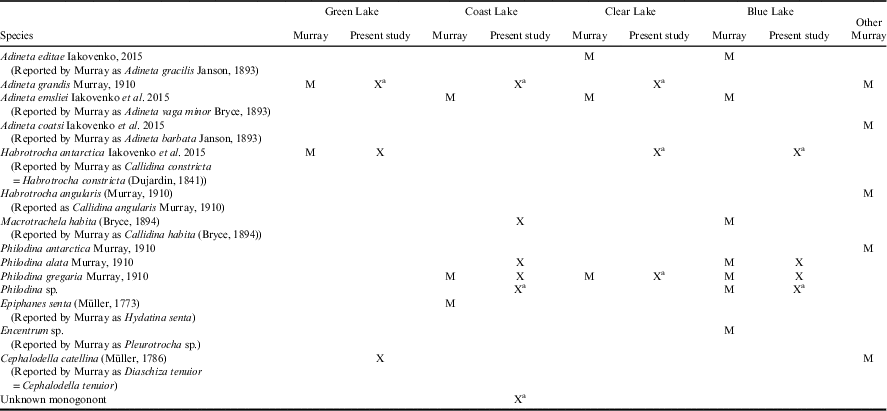
a Confirmed by molecular analysis.
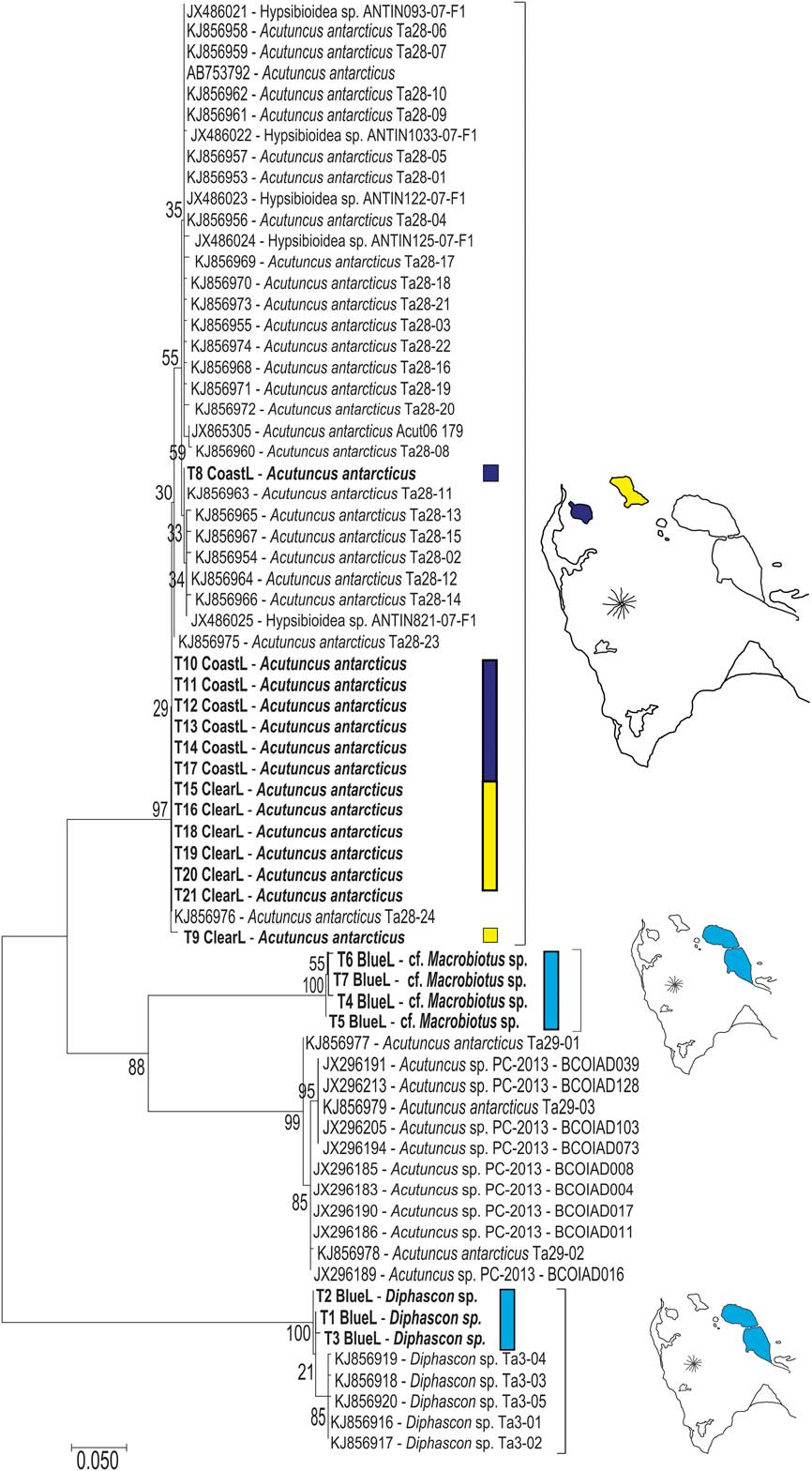
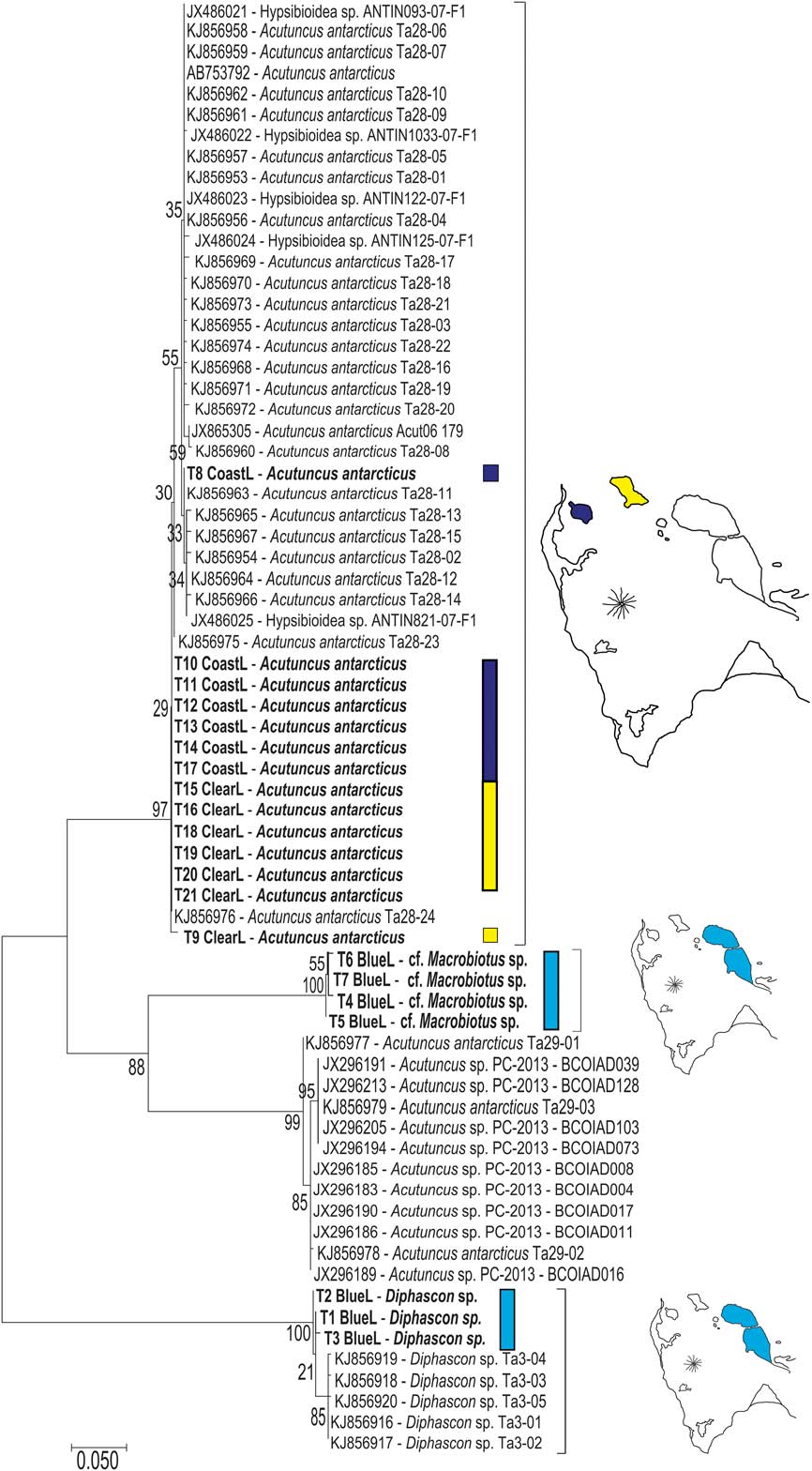
Tardigrades were found in three lakes (Coast, Clear and Blue; Table IV and Fig. 3) with lower salinity, SO4, Na, Cl, K and Ca concentrations (Tables I & II). Acutuncus antarcticus (Richters) was the most abundant and widespread tardigrade, present in Coast and Clear lakes. Two other tardigrade species were found in lesser numbers, Diphascon sp. and cf. Macrobiotus sp., both occurring in Blue Lake, the largest and least saline water body at Cape Royds (Fig. 1 and Table I).
Mitochondrial c oxidase subunit I (COI) dendrogram of tardigrades. The evolutionary history was inferred by using the maximum likelihood (ML) method based on the Hasegawa-Kishino-Yano model with Gamma distribution (HKY+G). The analysis involved 69 COI sequences. Values next to branches indicate ML bootstrap values. Newly generated sequences are indicated in bold.
Tardigrade diversity in Cape Royds lakes. Species found by Murray are indicated by the letter ‘M’ and species found in the present study are indicated by the letter ‘X’.

a Confirmed by molecular analysis.
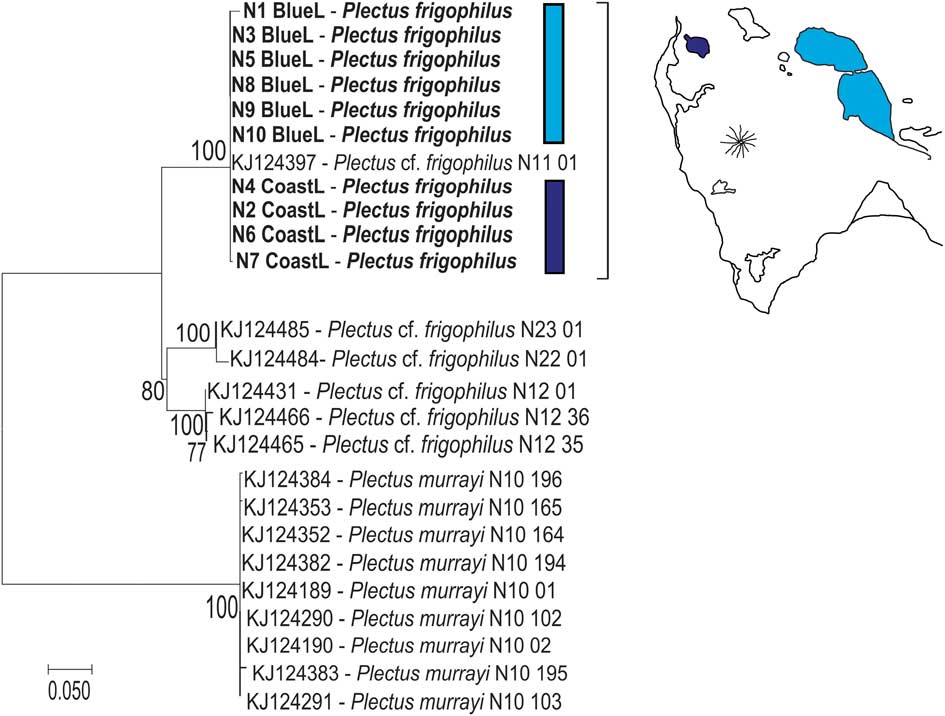
Distribution of nematodes in lakes coincides with that of tardigrades and was almost entirely represented by the aquatic species Plectus frigophilus Kirjanova (Table V and Fig. 4). Two other nematode species were scarce but present in the lakes: Plectus murrayi Yeates was observed in Coast Lake and Scottnema lindsayae in Clear Lake (Table V). These two species have been mainly reported for terrestrial environments (Adams et al. Reference Adams, Wall, Virginia, Broos and Knox2014, Velasco-Castrillón & Stevens Reference Velasco-Castrillón and Stevens2014).
Mitochondrial c oxidase subunit I (COI) dendrogram of nematodes. The evolutionary history was inferred by using the maximum likelihood (ML) method based on the Tamura-Nei model with invariant sites (TrN+I). The analysis involved 25 COI sequences. Values next to branches indicate ML bootstrap values. Newly generated sequences are indicated in bold.

Nematode diversity in Cape Royds lakes. Species found by Murray are indicated by the letter ‘M’ and species found in the present study are indicated by the letter ‘X’.

a Confirmed by molecular analysis.
British Antarctic Expedition 1907–09
James Murray during Shackleton’s Antarctic expedition to Cape Royds noticed that rotifers were the most abundant of all invertebrates, both in numbers and species. He found 13 species in lakes and small ponds (Table III), five of which were previously unknown to science: Adineta grandis, Philodina alata, Philodina antarctica Murray, Philodina gregaria and Habrotrocha angularis (Murray). The other species (see Table III) differed slightly from the original descriptions found in Europe. Two additional rotifers, Philodina sp. and Encentrum sp. (=Pleurotrocha sp.), were found in Blue Lake but were insufficiently described and assigned only to their genera (refer to Table III for species list). The most numerous species across ponds and lakes in Cape Royds was Philodina gregaria; although absent in the highly saline Green Lake, it was in nearly all the other sampled water bodies. Its abundance in Coast Lake was significant. Adineta grandis was present among cyanobacterial mats in Cape Royds lakes. It was the most generally distributed of all the rotifers and occurred in saline lakes from which most of the other species were absent.
Murray collected four tardigrade species (Table IV), two of which were found in lakes. The most numerous tardigrades corresponded to Acutuncus antarcticus (=Macrobiotus arcticus (Murray)), and per Murray, it occurred in numbers comparable to those of the bdelloid rotifers Philodina gregaria and Adineta grandis. The other tardigrade species found in lakes corresponded to a variant of the European Diphascon alpinum Murray, which occurred in Blue Lake (and other smaller ponds) but was not as abundant as Acutuncus antarticus. Two further species, collected from terrestrial habitats, were Ramazzottius oberhäuseri (Doyère), present in a single moss sample from the High Moraines at Cape Royds, and a single specimen referred doubtfully to the genus Diphascon, found ‘in dried vegetation, probably of lake origin’ (Murray Reference Murray1910).
Nematodes were not of particular interest to Murray, he mentioned only that two kinds of free-living nematodes were common in lakes. One of those species is likely to be Plectus frigophilus (determined using the images in Murray Reference Murray1910), which was the largest and the most abundant. The other species was described as having the skin minutely annulated, a feature typical of Scottnema lindsayae.
Discussion
Over the last 100 years improvements in microscopy and molecular analyses have led to examination of the supposed cosmopolitan species found by Murray in Antarctica. Several have been recently redescribed and identified as endemic Antarctic species. Such is the case of members of the genus Adineta; recent morphological studies have shown that Adineta emsliei Iakovenko et al., Adineta editae Iakovenko and Adineta coatsi Iakovenko et al. represent the ‘Antarctic variants’ of Adineta vaga minor Bryce, Adineta gracilis Janson and Adineta barbata Janson, respectively (see Iakovenko et al. Reference Iakovenko, Smykla, Convey, Kašparová, Kozeretska, Trokhymets, Dykyy, Plewka, Devetter, Duriš and Janko2015). Based on molecular analyses of Adineta vaga from populations across the world, there are no records to confirm its presence in Antarctica (see Fontaneto et al. Reference Fontaneto, Barraclough, Chen, Ricci and Herniou2008, Reference Fontaneto, Iakovenko, Eyres, Kaya, Wyman and Barraclough2011, Iakovenko et al. Reference Iakovenko, Smykla, Convey, Kašparová, Kozeretska, Trokhymets, Dykyy, Plewka, Devetter, Duriš and Janko2015). This is also similar for Adineta gracilis and Adineta barbata. Molecular analysis of the COI gene for these species has shown Antarctic representatives to be divergent from other non-Antarctic populations (Fontaneto et al. Reference Fontaneto, Barraclough, Chen, Ricci and Herniou2008, Velasco-Castrillón et al. Reference Velasco-Castrillón, Page, Gibson and Stevens2014b, Iakovenko et al. Reference Iakovenko, Smykla, Convey, Kašparová, Kozeretska, Trokhymets, Dykyy, Plewka, Devetter, Duriš and Janko2015).
Even though Murray included Habrotrocha constricta (Dujardin) (=Callidina constricta) as one of the species from Cape Royds, he noticed that the description of the species by Dujardin was insufficient and could fit equally well to several members of the genus. Habrotrocha constricta from Antarctica has now been redescribed as Habrotrocha antarctica Iakovenko et al. (Iakovenko et al. Reference Iakovenko, Smykla, Convey, Kašparová, Kozeretska, Trokhymets, Dykyy, Plewka, Devetter, Duriš and Janko2015). Macrotrachela habita (Bryce) (=Callidina habita (Bryce)) was also found in Cape Royds lakes, but differs from the original descriptions of the European type. Two variants of Macrotrachela habita were reported by Murray for Blue Lake, one of which was found in Coast Lake for the present study. Currently, the name Macrotrachela habita still stands for the Antarctic bdelloid. Further molecular studies will probably resolve the Antarctic clade as endemic for the continent. The Philodina spp. found in the lakes (during Murray’s expedition and this study; Table III) comprise solely Antarctic endemics described by Murray in 1910; from those, only Philodina gregaria and the unnamed Philodina sp. have records in GenBank and BOLD (Barcode of Life Data).
The bdelloid species Philodina gregaria and Adineta grandis, when present, flourished in lakes with a mid-range of salinity and other water chemistry (Tables I & II). Their viviparous reproduction and offspring survival are possibly a key factor for their success under extreme conditions (see Murray Reference Murray1910, Dartnall Reference Dartnall1992). Monogonont rotifers, never as abundant as bdelloids, were also part of the lakes’ microfauna. Based on the illustrations of Diaschiza tenuior Gosse (=Cephalodella tenuior) shown in Murray (Reference Murray1910), it is now believed that this species corresponds to Cephalodella catellina (Müller) (see Dartnall & Hollowday Reference Dartnall and Hollowday1985). Cephalodella catellina has a world wide distribution including Antarctica and the sub-Antarctic (Dartnall & Hollowday Reference Dartnall and Hollowday1985, Porazinska et al. Reference Porazinska, Fountain, Nylen, Tranter, Virginia and Wall2004). Murray also raised the possibility of alien species in Antarctica. Such was the case of Epiphanes senta (Müller) (=Hydatina senta), found only in Coast Lake. Its narrow distribution led to the suggestion of its recent introduction to the frozen continent. As pointed out by Murray (Reference Murray1910), this species is commonly found in Europe in ponds around farmhouses, and eggs could have adhered to farm products that were brought to Cape Royds. Molecular analyses are yet to be conclusive regarding the similarities between the European and Antarctic Monogonont species. In our study, a single sequence was obtained for a monogonont rotifer (R35_CoastL), which was not included here. The closest match in GenBank to the monogonont rotifer (R35_CoastL) was found to correspond to Brachionus sp., but at 76% sequence identity it was not closely related.
Similarities were also seen by Murray between the Antarctic tardigrades and those occurring elsewhere. Such was the case for the species Acutuncus antarcticus, which Murray reported as Macrobiotus arcticus. Murray’s initial description of Macrobiotus arcticus from the Arctic region had close resemblance to that found for the Antarctic ‘Macrobiotus arcticus’ (Murray Reference Murray1907); he also noticed that description of the species was insufficient and could correspond to his early data on the cosmopolitan Macrobiotus oberhäuseri (Dastych Reference Dastych1991). Molecular studies have shown Acutuncus antarcticus to have a pan-Antarctic distribution including the McMurdo region (Czechowski et al. Reference Czechowski, Sands, Adams, D’Haese, Gibson, McInnes and Stevens2012, Velasco-Castrillón et al. Reference Velasco-Castrillón, McInnes, Schultz, Arróniz-Crespo, D’Haese, Gibson, Adams, Page, Austin, Cooper and Stevens2015). It was the most abundant tardigrade reported by Murray and by the present study. Its numbers could well be the result of the species’ ability to cope and thrive in a wide range of environments and geochemical conditions (Adams et al. Reference Adams, Bardgett, Ayres, Wall, Aislabie, Bamforth, Bargagli, Cary, Cavacini, Connell, Convey, Fell, Frati, Hogg, Newsham, O’Donnell, Russell, Seppelt and Stevens2006, Smykla et al. Reference Smykla, Iakovenko, Devetter and Kaczmarek2012, Velasco-Castrillón et al. Reference Velasco-Castrillón, Schultz, Colombo, Gibson, Davies, Austin and Stevens2014c). It is also thought that high reproduction rate may be part of its success (see Altiero et al. Reference Altiero, Giovannini, Guidetti and Rebecchi2015, Tsujimoto et al. Reference Tsujimoto, Komori and Imura2016). The other aquatic tardigrade species found by Murray resembles the Scottish Diphascon alpinum. Slight morphological variations of the Antarctic representative were mentioned by Murray (Reference Murray1910). Diphascon specimens found in our study had sequences that only matched those (98.5–99.1% similarity) reported from aquatic and terrestrial samples from Larsemann Hills, East Antarctica (Velasco-Castrillón et al. Reference Velasco-Castrillón, McInnes, Schultz, Arróniz-Crespo, D’Haese, Gibson, Adams, Page, Austin, Cooper and Stevens2015). It was not possible to morphologically identify to species cf. Macrobiotus sp. from Blue Lake and there was no close match to any publicly available sequence in BOLD or GenBank; further conclusions about this species will be possible with wider sampling and DNA barcoding.
When comparing nematode species from our sampling with those reported by Murray, Plectus frigophilus is still the most abundant and widespread of all nematodes for Cape Royds lakes (Table V). Sequences from Plectus frigophilus obtained in this study match those previously found for limno-terrestrial habitats from East Antarctica (see Lineage N11 in Velasco-Castrillón & Stevens Reference Velasco-Castrillón and Stevens2014). The rare presence of Plectus murrayi and Scottnema lindsayae in our sampling is not surprising given their preference for terrestrial habitats over aquatic ones (Velasco-Castrillón & Stevens Reference Velasco-Castrillón and Stevens2014, Velasco-Castrillón et al. Reference Velasco-Castrillón, Schultz, Colombo, Gibson, Davies, Austin and Stevens2014c), and both species have been reported for Victoria Land and the McMurdo region (i.e. Adams et al. Reference Adams, Bardgett, Ayres, Wall, Aislabie, Bamforth, Bargagli, Cary, Cavacini, Connell, Convey, Fell, Frati, Hogg, Newsham, O’Donnell, Russell, Seppelt and Stevens2006, Reference Adams, Wall, Virginia, Broos and Knox2014, Raymond et al. Reference Raymond, Wharton and Marshall2014). As far as we know, this is the first time a nematode species (Scottnema lindsayae) has been recorded for Clear Lake (Table V).
We may expect an increase in diversity with continuous sampling across different seasons. The present study represents the diversity during midsummer, yet reveals close correlations to the patterns reported by Murray during his sampling across all four seasons (Murray Reference Murray1910), albeit with some species assemblage differences within and between lakes. Our study reveals that no new named species (introduced from elsewhere or endemic to Antarctica) were found at Cape Royds despite some variation in species diversity within lakes. Some species reported by Murray for Antarctica have already been shown to be endemic to Antarctica and further comparisons will probably reveal that the remaining species, although similar to Northern Hemisphere types, are also Antarctic endemics. Such comparisons (morphological and molecular) are necessary to resolve accurate species identifications and are important for baseline biodiversity studies and assessing potential exotic species introductions into the future.
Acknowledgements
The authors would like to express their immense gratitude to COMNAP for the post-doctoral fellowship (to AV-C) that enabled the fieldwork in Antarctica and lab work in Australia and NZ. We are grateful to Antarctic New Zealand, Scott Base staff and the team personnel from K020 (DryVER ‘15/’16) for their various contributions during our successful 2016 Antarctic field trip. We also would like to thank Georgia Wakerley for helping with lake sampling, and Maud Billaud for lab work and sample sorting. Finally, we are thankful to Professor David W.H. Walton, Diego Fontaneto and an anonymous reviewer for their comments and feedback. The authors declare that there are no conflicts of interest and that permission for all fieldwork sampling was obtained from the appropriate Antarctic authorities.
Author contributions
AV-C, IH and MIS conceived and designed the study. AV-C and IH carried out the field sampling. AV-C performed laboratory work, molecular analyses and taxonomic work. AV-C analysed the data and wrote the draft manuscript. All authors collaborated in revising the manuscript.
Detail of data deposit
The depository of all data for this article is in the Terrestrial Invertebrates Section, South Australian Museum, Adelaide (SAMA). All data will be available from the corresponding author (a.velascocastrillon@gmail.com) upon request.
Supplemental material
A supplemental appendix and a table presenting the accession numbers will be found at https://doi.org/10.1017/S095410201800007X.