INTRODUCTION: HETEROGENEITY OF MINORITY POLITICS
Although various forms of barriers to participation still exist for many racial and ethnic minorities, the non-White share of the electorate is rapidly increasing with recent demographic shifts,Footnote 1 and both scholars and the public alike are becoming more interested in the specific ways in which minorities engage with political institutions. Moving beyond a simplified portrayal of minority voters (e.g., “Black voters support Democrats”), popular political commentary has started highlighting intra-group differences (e.g., “some Latinos embrace Trump, whereas the majority are against him”). Recent developments in the theories of race and ethnicity, on the other hand, have emphasized the historically contingent nature of racial and ethnic categories, calling for a more fine-grained approach to intra-group differences (Brubaker et al., Reference Brubaker, Loveman and Stamatov2004; Emirbayer and Desmond, Reference Emirbayer and Desmond2015; Martin and Yeung, Reference Martin and Yeung2003; Omi and Winant, Reference Omi and Winant1994). In contrast, survey-based analyses of minority politics still often treat racial and ethnic minority groups as homogeneous entities, thereby failing to grasp the complexities of minority politics in the contemporary United States.
In this article, I offer a new theoretical and methodological approach that goes beyond the simplified portrayal of minority politics. Rather than assuming that all members of a minority group engage with politics in a similar manner, I start by supposing that there are multiple configurations of individual dispositions (e.g., education level, political interest…) and political acts (e.g., voting, participating in protest…)—what I term political “styles” (Greeley Reference Greeley1974) —among all individuals regardless of their race and ethnicity. Then, I observe distribution of the styles across racial and ethnic groups, generating a two-way matrix of identity categories and political styles. The results effectively capture intra- and inter-group differences in political participation, displaying where each group differs and where they overlap. In doing so, this approach reduces the gap between statistical analysis and contemporary theories of race and ethnicity.
This article is composed of three parts: first, after reviewing existing studies of political participation, I explain how my analytical strategy departs from them; second, an empirical illustration of my approach is provided through an analysis of the Immigration and Intergenerational Mobility in Metropolitan Los Angeles dataset (IIMMLA 2004); and lastly, I interpret my results in relation to the history of ethnic politics in Los Angeles, CA followed by a discussion on the implications of my approach.
MODELS OF POLITICAL PARTICIPATION: DIFFERENT MODELS FOR DIFFERENT GROUPS
Previous studies on political participation—at least those based on survey data—focus on predicting individual-level political behavior, most notably voting in elections. The canonical model in this literature is the socio-economic status (SES) model: people with higher socio-economic status possess more resources for participation, such as money, time, and civic skills (i.e., knowledge and know-how of public institutions); hence they are more likely to participate in politics (Brady et al., Reference Brady, Verba and Schlozman1995; Verba and Nie, Reference Verba and Nie1972).
On the other hand, scholars discovered early on that the standard model did not apply as well to the voting behaviors of racial minorities (Greeley Reference Greeley1974). They point towards the group identity of minorities as a reason, and assume that the specific mechanisms through which the identity is enforced, affirmed, and perceived within society matter in political participation (Lee Reference Lee2008). Ever since emancipation, African Americans, for example, have historically maintained a relatively high level of willingness to participate in politics, although legal and illegal barriers to their voting rights sometimes hindered their actual participation (Keyssar Reference Keyssar2001). In explaining this trend, Michael Dawson (Reference Dawson1994) pointed to the belief in a shared collective interest, or “linked fate,” as the driving force behind the participation. Subsequent works on minority politics followed suit and emphasized that along with socio-economic status, group-level factors were in effect. Experiences of racial prejudice (Schildkraut Reference Schildkraut2005; Shingles Reference Shingles1981); race and ethnicity of politicians (Bobo and Gilliam Jr., Reference Bobo and Gilliam1990; Junn and Masuoka, Reference Junn and Masuoka2008); pan-ethnic identity and national identity (Leighley and Vedlitz, Reference Leighley and Vedlitz1999; Sanchez Reference Sanchez2006; Wong et al., Reference Wong, Ramakrishnan, Lee and Junn2011); and group size and local demographics (Jang Reference Jang2009) have all been highlighted as factors contributing to the political participation of minorities. Research on immigrants and their children has largely fallen into the same pattern (Cho Reference Cho1999; Kasinitz et al., Reference Kasinitz, Mollenkopf, Waters and Holdaway2008; Ramakrishnan Reference Ramakrishnan2005), confirming the role of group-level factors in addition to SES. Notably, Jane Junn (Reference Junn1999) argued that the studies of minority politics would not only revise the SES model but also lead scholars to re-evaluate what counted as politics within the system of American liberal democracy, by highlighting different forms of political acts such as street protests.
Two key points emerge from this survey of the literature: first, the standard SES model does not seem to apply as well to minorities, at least not to the extent that it does to Whites; second, researchers have revised the standard model by accounting for various group-level factors, resulting in a series of different models for different groups. For instance, in Seung-jin Jang’s (Reference Jang2009) research we see that, in addition to individual-level SES, the interaction between group size and group-level income is an important indicator of political participation for Latinos, but not for Asians. In the case of Asians, absolute group size and local racial demographics matter more. Here we have two different models for Latinos and Asians—yet we do not know why these two groups differ and how these two models are related. Even when scholars levelled a significant theoretical challenge to the existing paradigm, such as in Junn (Reference Junn1999), they largely kept intact its methodological apparatus, adhering to the variations of the standard SES model.
As we move from pan-ethnic groups to national origin and ethnic groups, variations in models proliferate, with the emergence of many exceptions (Leighley and Vedlitz, Reference Leighley and Vedlitz1999; Ramakrishnan Reference Ramakrishnan2005; Wong et al., Reference Wong, Ramakrishnan, Lee and Junn2011). For example, in Karthick Ramakrishnan’s (Reference Ramakrishnan2005) study, we see that Korean, Italian, and Japanese immigrants and their children are exceptions to the SES model in the sense that education fails to account for their participation; yet we do not know why these groups, among others, are exceptional. In a similar vein, Philip Kasinitz and colleagues (2008) show that for Chinese and Russian Jewish children of immigrants in New York City, the negative effect of ethnic identity on participation exceeds the positive one from education, but once again, it is not clear why only these two groups stand out as exceptions. In short, not much progress has been made to advance beyond Andrew Greeley’s (Reference Greeley1974) important finding that “different causal models for political participation seem to apply to different ethnic collectivities” (p. 160). In consequence, while differences between racial and ethnic groups are amply documented and conceptualized through different models, differences within the groups hardly receive any attention; moreover, commonality across groups has rarely been a subject of inquiry.
This investigative dead end is especially problematic for two reasons: Although numerous scholars have recently called for more attention to intra-group differences within racial and ethnic groups (e.g., Brubaker et al., Reference Brubaker, Loveman and Stamatov2004; Cohen Reference Cohen2010; García Bedolla Reference García Bedolla2005; Hochschild and Weaver, Reference Hochschild and Weaver2015), the development and application of statistical models capturing these differences have been slow, leading to a mismatch between theory and empirical analysis. Second, by describing only different models for different groups and not explaining what these models share, we ignore the fact that different groups do engage with each other within a common political field, and that sometimes the boundaries marking the differences become fuzzy, resulting in different groups employing a similar kind of political behavior. As the classic work by Nathan Glazer and Daniel Moynihan (Reference Glazer and Moynihan1970) demonstrates, ethnic politics occur within a common institutional boundary, such as New York City’s municipal government, and groups regularly cooperate and compete with each other in securing a foothold in the local power structure. In the process, their political behaviors are shaped in relation to the other groups and the institutional environment in which they are embedded (Saito Reference Saito1998). In this case, without specifying intra-group difference and inter-group commonality, our understanding of minority politics remains fragmented and incomplete.
In short, stating that different groups are different captures only a part of the story. In reality, different racial and ethnic groups are both different and similar at the same time: each group does maintain intra-group differences while sharing at least some features with other groups, because they share a common institutional environment. Rather than merely observing the difference, the challenge is to capture both intra- and inter-group difference simultaneously and reveal the larger matrix in which it is embedded (Bonikowski Reference Bonikowski, Skey and Antonsich2017; Bonikowski and DiMaggio, Reference Bonikowski and DiMaggio2016; Knight and Brinton, Reference Knight and Brinton2017). In the next section, I present an analytical strategy geared towards this goal.
ANALYTICAL STRATEGY: LOOKING FOR PATTERNS WITHOUT ASSUMPTIONS
In addition to assuming racial and ethnic groups as natural unit of analysis, previous studies also introduced another assumption in understanding political participation of minorities—namely that their participation patterns can be described in a series of linear regression models. Andrew Abbott’s (Reference Abbott2001) criticism of “general linear reality” (p. 37) applies to the minority politics literature as well: researchers often attempt to make reality amenable to specific methodological tools—such as linear regression models—with which they feel comfortable, rather than designing a new model that better reflects reality. Following this formula, innovations in the minority politics literature have focused on extending the applicability of the standard SES model by adding in group-level variables. Yet as Christopher Achen (Reference Achen2002) points out, overt reliance on “garbage can regression” (p. 424) (i.e., including all the possible independent variables into a regression model without proper theoretical justification for them) can seriously undermine the accuracy of coefficients, let alone the substantial meaning of the model.
Principles of relational sociology (Bourdieu Reference Bourdieu1984; Emirbayer Reference Emirbayer1997; Emirbayer and Desmond, Reference Emirbayer and Desmond2015; Fourcade et al., Reference Fourcade, Schofer and Lande2016) can assist us in bypassing this gridlock. Relational sociology has inspired a large body of work on formal analysis of meaning structures (Mohr Reference Mohr1998) employing a variety of statistical techniques, such as relational class analysis (Baldassarri and Goldberg, Reference Baldassarri and Goldberg2014; Goldberg Reference Goldberg2011), network analysis (Boutyline and Vaisey, Reference Boutyline and Vaisey2017), correspondence analysis (Bourdieu Reference Bourdieu1984; Fourcade et al., Reference Fourcade, Schofer and Lande2016), lattice analysis (Mohr Reference Mohr1997), and latent class models (Bonikowski and DiMaggio, Reference Bonikowski and DiMaggio2016; Bonikowski Reference Bonikowski, Skey and Antonsich2017; Knight and Brinton, Reference Knight and Brinton2017). At the most general level, relational sociology can be characterized as a perspective that highlights relationships over the substance of an entity. For instance, in a relational perspective, a person is defined not according to her own innate personality, but through her relationships with others around her; likewise, a variable is defined not by the substance that it aims to measure, but within the matrix of the relationships it maintains with other variables (Emirbayer Reference Emirbayer1997, p. 287). In the context of political participation, relational sociology would focus not on specifying the most influential independent variable that determines political behavior, but instead lead us to ask, “what are the relationships among the variables that structure participation, and how do those relationships construct a recurring set of patterns?”
This mode of approaching data is not entirely unprecedented. Classic works on political participation (Brady et al., Reference Brady, Verba and Schlozman1995) and ethnic politics (Greely Reference Greeley1974) hinted at this feature, although in slightly different contexts from those discussed here. In discussing political participation of the elderly, for example, Henry Brady and his co-authors used the phrase, “bundles of politically relevant characteristics,” to note the fact that “politically relevant characteristics rarely travel on their own...they ordinarily come bundled together” (1995, p. 172). In other words, politically relevant characteristics (i.e. age, education, political interest, ideology, and specific forms of political behavior) often cluster together to define a group.
Along similar lines, Greeley (Reference Greeley1974) used the term “style” to describe ethno-religious differences in types of political behavior. The members of different ethnic and religious groups, according to Greeley, seemed to have different sets of political repertories, originating from differences in immigration history, cultural heritage, and relationships with the institutions of power (Bonikowski Reference Bonikowski, Skey and Antonsich2017). A certain set of political characteristics was often found bundled together with ethnicity and religion, even though there were no intrinsic reasons for these traits to cluster together. Greely termed these clusters “styles,” noting the differences in political behaviors without making strong causal assumptions about what caused those differences.
I combine and modify these two precedents to formulate my approach. The goal in my analysis is, again, to go beyond “different models for different groups,” and to capture intra- and inter-group differences in political participation. The “bundles” approach takes us out of the linear models, and allows us to observe patterns in variables without a priori assumptions about the relationships among them. Greeley’s “styles” keenly capture how the “bundles” tend to overlap with racial and ethnic categories, but does not tell us much about differences that cut across the boundaries of group membership.
Building on these works, I define a political “style” as a configuration of individual dispositions (e.g., education, political interest…) and different types of political acts (voting in elections, participating in protests…). Whereas the literature on political behavior focuses on explaining the latter through the former (e.g., higher education level leads to higher likelihood of voting), I focus on inductively detecting different configurations of these variables that exist within empirical data, without supposing a strong causal relationship between dispositions and political acts. For instance, there may be a group of people who display high education level, high interest in politics, and high likelihood of voting, but with low likelihood of participating in street protest; on the other hand, there may be a group of people who display high education level but low interest in politics and low likelihood of voting, with high likelihood of participating in protest.Footnote 2 I do not presuppose the nature of these associations—rather, by calling them “styles,” I imply that the variables are “bundled” (Brady et al., Reference Brady, Verba and Schlozman1995) without a principle tying them together. My interest lies not in explaining why political styles appear in the way they do, but in observing how they distribute across different racial and ethnic groups, and how they can help us understand intra-group difference and inter-group commonalities in political participation.
In doing so, my analysis proceeds in two steps. First, I identify “bundles of politically relevant characteristics,” or a common set of political “styles,” in a given data set without regards to race and ethnicity. Then, I observe their distributions across racial and ethnic groups.
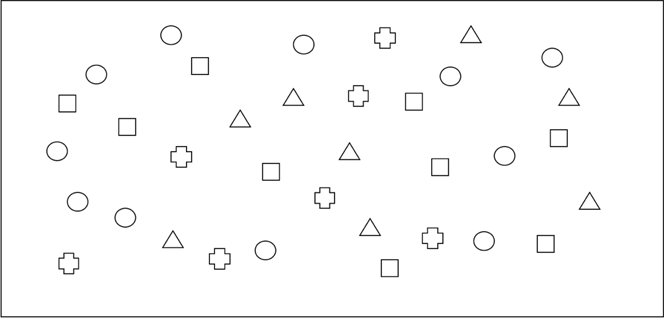
Figure 1 represents the first step of my analysis. There are recurring patterns in variables, represented by circle, triangle, square, and rhombus, that correspond to different political styles. In the first stage, I focus on empirically identifying theses styles without paying attention to race and ethnicity.
Distribution of Political Styles within a Hypothetical Dataset

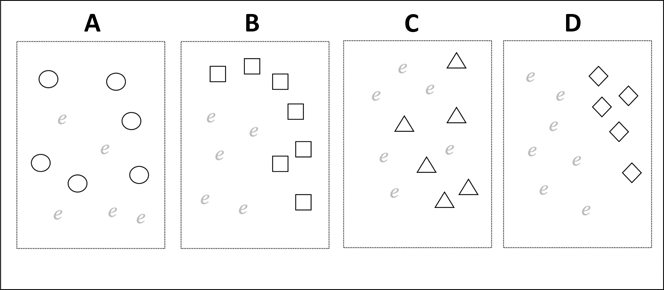
Figure 2 represents how much of the existing scholarship adhere to the principle of “the different models for different groups” when conceptualizing minority political participation. In this perspective, each racial and ethnic group, marked by alphabet letters, is seen as a natural unit of analysis which maintains a single, unified model of political participation, represented by circle for group A, square for group B, and so on. To be fair, researchers do recognize that there are many cases within each group that do not fit into these models, but these instances are treated largely as statistical anomalies. The symbol e in Figure 2 represents those statistical anomalies as such. The intra-group difference is acknowledged but not given due analytical attention.
“Different Models for Different Groups”

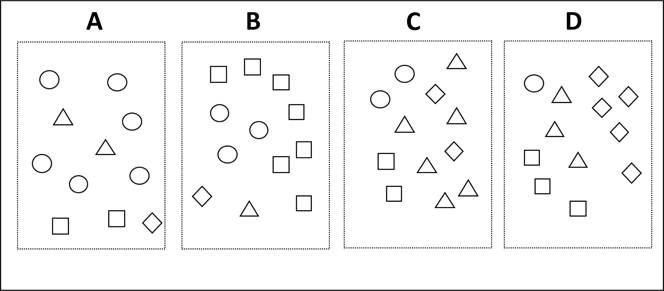
The logic of the proposed model is represented in Figure 3. In Figure 2, or abiding by the principle of “different models for different groups,” group A was represented only by circle, mainly because the circle was the predominant type within the group. The model presented in Figure 3 captures this aspect, featuring the circles in the highest frequency, but still paying attention to other styles found less often within group A. However, whereas those other styles were designated as error terms e in Figure 2, the proposed approach takes them into account by making them visible through square, triangle, and rhombus. This way the model captures the predominant trend and intra-group difference at the same time without overgeneralizing.
The Proposed Model

Using this approach, we can further disaggregate inter-group differences. Under “different models for different groups,” we witness the difference in the most dominant trend in each group. In Figure 2, A and B differ because circle and square are, obviously, different. However, through the model presented in Figure 3, we can also acknowledge that the difference also lies in the composition of each group: A retains two squares, two triangles, and a rhombus while B includes three circles, a square, and a rhombus. In addition to circle and square being different, we see other kinds of more minute differences. Hypothetically, we can think of cases where the predominant trends within groups are similar, but the residual compositions are starkly different. In such a case, the “different models for different groups” approach would have treated two groups practically the same; the new approach, however, would capture the differences in the compositions.
This feature of compositional difference does more than merely conveying that heterogeneity exists beyond apparent group-level differences. Namely, the composition presents each group as sharing a common set of political styles, and differing only in their distributions. This feature becomes a key in understanding commonality across groups. For instance, A and B are different in many aspects, but they both include the circle in their midst. Compared to D, which has only one circle, A and B are more similar to each other. Likewise, C and D, represented in Figure 2 through triangle and rhombus, respectively, share affinity through triangles. Although A, B, C, and D all look different in Figure 2, in fact A and B have more affinity to each other than other groups, and likewise, C and D have more in common with each other than other groups. All of this information, however, is muted in Figure 2.
In other words, in this approach, a group is characterized by the composition of different styles within the group; likewise, difference and similarities between groups are made manifest by how each group relates and compares to others through this composition. This is why I call this approach relational: rather than highlighting a single variable or group identity being a source of difference, the relational model captures difference and commonality simultaneously through a matrix composed of racial and ethnic identity categories and political styles. In the next section, I present empirical examples corresponding to Figures 1, 2, and 3, using survey data from Los Angeles.
DATA, VARIABLES, AND METHOD
Immigration and Intergenerational Mobility in Los Angeles (IIMMLA)
The Immigration and Intergenerational Mobility in Los Angeles (IIMMLA 2004) data set is used for the demonstration of the relational model. The IIMMLA data consist of survey responses from 4655 individuals who were living in the metropolitan Los Angeles area from April to October 2004. The survey specifically targeted children of immigrants, from age twenty to forty, ranging from 1.5 to second generation.Footnote 3 The data set includes six major immigrant groups, namely Mexican, Salvadoran/Guatemalan, Chinese/Taiwanese, Korean, Vietnamese, and Filipino. The survey also features “other Asian” and “other Latino” categories, which encompass other nationalities besides the six major groups, as well as native-born Blacks and Whites as comparison groups. By combining these categories, it is also possible to generate pan-ethnic group categories (i.e., Asian, Latino, Black, and White). The multi-level structure in group membership provides an ideal setting to observe intra- and inter-group differences at different levels (for more information, see Rumbaut Reference Rumbaut2008).
The analysis proceeds in two steps. First, based on previous research on minority political participation, I conduct Latent Class Analysis (Goodman Reference Goodman1974) using selected variables to identify recurring configurations of dispositions and political acts—or what I call political styles (Figure 1). Then I examine the distribution of the styles across racial and ethnic groups (Figure 3).
Variables
In selecting the variables, I start with the behavioral tradition in political participation research. In further specifying the SES model, scholars have pinpointed education as the most meaningful predictor of political participation: not only does education grant individuals with time and money for participation by providing them with better job opportunities, it also trains them on the knowledge and know-how of public life, leading them to engage more confidently with political institutions (Scholzman et al., Reference Scholzman, Verba and Brady2012). Therefore, I include education level as an important component of political styles.
In terms of political acts, I start with voter registration status. Scholars have regarded voting in elections as the most prominent and consequential political act in a liberal democracy (Brady et al., Reference Brady, Verba and Schlozman1995; Junn Reference Junn1999). In the literature, voting is typically measured through questions on whether a respondent voted in the last presidential or congressional election. However, voting in a specific election can be a one-time activity and influenced by numerous contingent factors specific to context.Footnote 4 By being registered as a voter, however, individuals are placed within the circuit of electoral politics, through which information, know-how, and mobilization attempts circulate. In studies of minority political participation, voter registration is often pointed out as the “weak link” in the causal chain leading to participation (Wong et al., Reference Wong, Ramakrishnan, Lee and Junn2011, p. 289). A study based on counterfactual estimation shows that the voter turnouts for Asian Americans and Latinos would increase greatly without registration requirements, almost to the level comparable to Whites (Humphries et al., Reference Humphries, Muller and Schiller2013; Xu Reference Xu2005).
At the same time, voting in elections or being registered as a voter captures only one side of the story in minority politics. As Junn (Reference Junn1999) notes, minorities go beyond these “system-directed activities” and engage in direct forms of political action, such as participating in street protest. Dawson (Reference Dawson1994) points out that African American participation has not been confined to voting alone, as suggested by many forms of protest activity before, during, and after the Civil Rights Movement (Lee 2002). Therefore, in addition to voter registration status, I also include participation in street protest as another component of political styles.
In addition to resources and political acts, scholars have also found that subjective dimensions, such as self-assessed political knowledge and interest, function as important mediators between resource and political acts (Brady et al., Reference Brady, Verba and Schlozman1995; Scholzman et al., Reference Scholzman, Verba and Brady2012). Building on this tradition, I include a respondent’s confidence in her political knowledge as a component of political styles.
As discussed previously, the literature on minority politics has demonstrated that group-level factors—things that remind individuals of their racial and ethnic identity—explain many of the differences in political behavior between Whites and non-Whites. Most notably, Dawson (Reference Dawson1994) has demonstrated that experiences of discrimination led the majority of African Americans to invest strongly in their group identity and to develop a unique mode of political participation, engaging not only in system-directed activities but also in direct action and organizing (Shingles Reference Shingles1981). The same effect has been confirmed for Latinos (Schildkraut Reference Schildkraut2005) and Asians (Wong et al., Reference Wong, Ramakrishnan, Lee and Junn2011), although to a lesser degree. Therefore, I include experience of racial discrimination as a component of political styles.
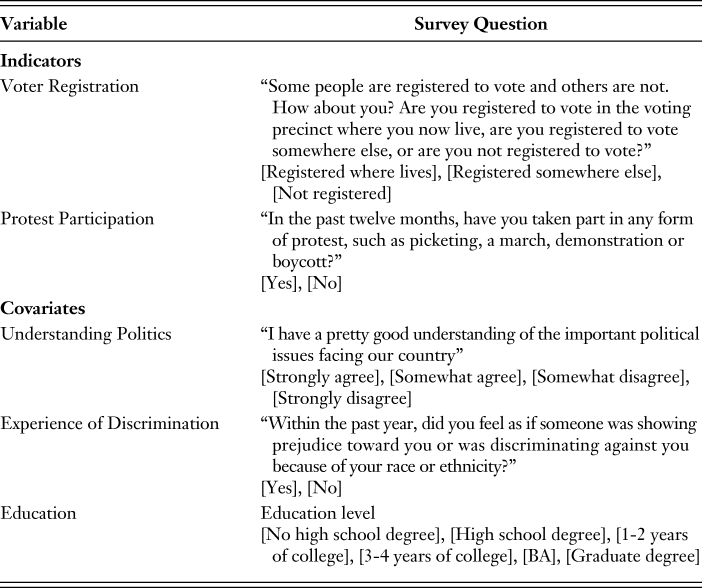
Table 1 presents survey questions and response categories for the five variables included in the model.Footnote 5
Survey Questions and Response Categories

Specifying Latent Class Model
Latent Class Analysis (LCA) hypothesizes that observed traits (i.e., survey responses) are indicators of unobserved, latent characteristics of a class, and finds an optimized number of categorical variables (i.e., latent classes) to account for the combination of observed variables. In our case, survey responses are observed variables, whereas latent classes, or underlying dimensions of those observed variables, correspond to political styles. Respondents with similar patterns in their survey responses can be grouped together as sharing the same political style. This feature is congruent with the “ideal type” approach often employed in analysis of interview or historical data (Haggenars and Halman, Reference Hagenaars and Halman1989).Footnote 6
The probably structure of a common latent class model can be written as the following (see also Bonikowski and DiMaggio Reference Bonikowski and DiMaggio2016):
 $$P\left( {Y = y} \right) = \mathop \sum \limits_t P\left( {X = t} \right)P\left( {Y = y{\rm{|}}X = t} \right)$$
The left-hand side of the formula notes the probability of a given combination of observations on the variables (y) included in the model. X stands for latent variables, which comprises a number of latent classes (t) (see also Goodman Reference Goodman1974). In a nutshell, by estimating common configurations of responses in a given set of variables, latent class models detect a set of underlying patterns in the given data, which can be expressed through different latent classes.
In addition to this basic formulation, I explore two kinds of extensions to LCA (Bonikowski and Dimaggio, Reference Bonikowski and DiMaggio2016). First, I distinguish between indicators and covariates (Hagenaars Reference Hagenaars1993) in constructing latent classes. Whereas indicators are direct manifestations of latent classes and feature centrally in constructing classes, covariates, when considered “active,” improve the assignment of individual respondents into different latent classes. Scholars typically use indicators to account for the variables of immediate interest and covariates to factor in socio-demographic variables in the classification procedure. In my model, I use two variables measuring political acts—voter registration and protest participation—as indicators, and three variables measuring individual-level dispositions—education, understanding politics, and experience of discrimination—as active covariates. Because I am interested in configurations of political acts and individual-level dispositions, I interpret the conditional probabilities of both indicators and covariates simultaneously to make sense of the results.
Second, in observing distribution of different classes across racial and ethnic groups, I employ the improved three-step approach developed by Jeroen Vermunt (Reference Vermunt2010). This approach takes into consideration the classification errors and probabilistic allocation of latent class membership, thereby producing a more accurate distribution.
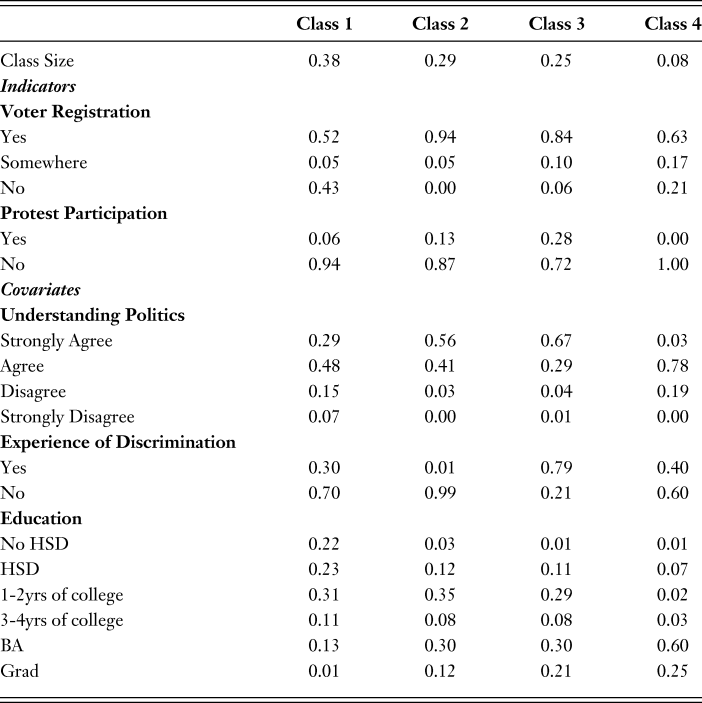
Among the possible models, I choose the four-class model, and Table 2 displays the resulting profiles of classes, in terms of both indicators and covariates.Footnote 7 A posterior analysis of bivariate residuals indicated that all variables are conditionally independent within latent classes. Respondents with any missing data in the five variables were excluded from the analysis, yielding N of 4108. I used Latent Gold® 5.1 for all analyses.
Profiles of Classes

RESULTS
Four Political Styles
Class size indicates the proportion of respondents belonging to each class. For instance, 38% of the respondents belong predominantly to “A” class (approximately 1561 individuals), while 8% to “D” class (approximately 329 individuals). The numbers for the variable response categories indicate the characteristics of the class. For example, if one belongs to “A” class, one is very unlikely to have participated in a street protest (0.06), while somewhat likely to be registered to vote (0.52+0.05=0.57).
When compared to those in other classes, the respondents in “A” class are the least active participants; their likelihood to be registered or have participated in a protest is relatively low among the four classes (0.52 and 0.06, respectively). They report experiencing some discrimination based on their race and ethnicity (0.30 for yes), and they display the lowest level of educational attainment among the four classes (nearly half of them have high school degree or less). They are somewhat confident that they understand politics (0.29 for “strongly agree” and 0.48 for “agree”), even more than those in “D” class, who display higher educational levels and voter registration rates. I name “A” class “inactive participants,” denoting their relatively low participation in both electoral and contentious politics.
The respondents in “B” class seem to fit into the SES model; they are highly likely to be registered to vote (0.94) and come second among all classes in their likelihood of protest participation (0.13). They are highly educated (85% of them have experienced college education) and confident about their knowledge of politics (0.56 and 0.41 for “strongly agree” and “agree,” respectively), but have not experienced much discrimination due to their race and ethnicity (only 0.01 for yes). Those in “B” class correspond closely to the normative implication of the standard SES model (Junn Reference Junn1999); educated and confident citizens who engage actively with democratic institutions through various modes of participation. Hence I name this class “engaged participants.”
The respondents in “C” class are the most active group. Most of them (0.85) are registered as voters, and their likelihood of having participated in protest stands out from all the other classes (0.28). They show very high level of education (88% of them have experienced college) and confidence in their understanding of politics (0.67 for “strongly agree” and 0.29 for “agree”). This group’s likelihood of having experienced discrimination based on their race or ethnicity (0.79) is also the highest among all classes. Based on protest participation and experience of discrimination, I name this class “conscious participants,” as individuals who are very aware of their social positions and, in some cases, not hesitant to engage in direct action as well as electoral participation.
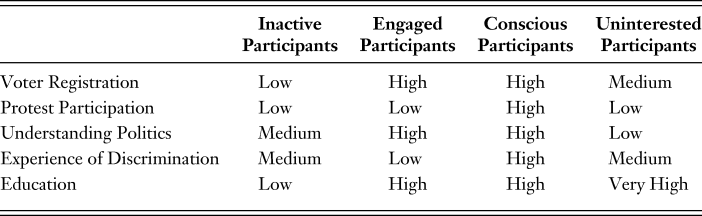
The respondents in “D” class are slightly more difficult to characterize than other classes. Although their education level is the highest among all the classes (more than 92% of them have at least some experience of college), they are relatively less likely to be registered as voters (0.63), especially when compared to “engaged participants” and “conscious participants,” who display slightly lower levels of education. None of them have participated in protests. More strikingly, they show relatively less confidence in their understanding of politics (only 0.03 for “strongly agree” and 0.78 for “agree”) than do “inactive participants” (0.29 and 0.48, respectively), whose educational levels are much lower. The difference between “strongly agree” and “agree” in confidence alone may not be very significant, but combined with their high educational level and somewhat low registration rates, it gives us important information in characterizing members of this group. Even though they are highly educated, those in “D” class do not have full confidence in their understanding of politics, especially when compared to other classes with lower education level. As noted previously, the political science research has generally assumed that education results in “civic skills,” or the knowledge and know-how required to participate in public life, including politics (Brady et al., Reference Brady, Verba and Schlozman1995). This group, however, stands in a stark contrast to this expectation, almost as if they are refusing to put their civic skills to use. I name them “uninterested participants,” highlighting their relatively low level of confidence in their understanding of politics and low likelihood of engaging in both electoral and contentious politics. Table 3 summarizes these interpretations.
Simplified Profiles of the Classes

Distribution of Political Styles across Racial and Ethnic Groups
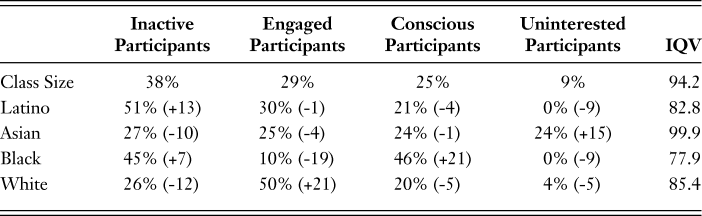
Table 4 displays distribution of the classes across four pan-ethnic categories,Footnote 8 composed out of ten subgroups, along with indices of qualitative variation (IQV),Footnote 9 which measure the degree of heterogeneity within each group. The percentages listed should be considered in relation to the general distribution of classes across all groups in the data set. For instance, although “uninterested participants” make up only 24% of Asians, the ratio is highest among all pan-ethnic groups, and 15% higher (+15) than the overall class size. This indicates that Asians are relatively more likely to belong to “uninterested participants” than others.
Classes by 4 Pan-ethnic Groups

The first thing to note in Table 4 is the contrast between Asians, on the one hand, and Latinos, Blacks, and Whites, on the other. Asians display high degrees of intra-group differences within themselves, as indicated by the IQV of 99. Latinos, Blacks, and Whites are relatively more homogenous with lower IQVs, yet upon closer inspection, they are considerably different from each other. In the cases of Latinos and Whites, a single category (“inactive participants” and “engaged participants”) makes up approximately half of the total (51% and 50%), while three other classes make up the rest. Blacks, on the other hand, are evenly divided between two classes—“inactive participants” (45%) and “conscious participants” (46%)—that make up more than 90% of the group. Whereas Latinos and Whites are one-style majority groups, we can understand Blacks as having two major political styles within the group, as discussed in the previous literature reporting the bifurcation of Black politics (Cohen Reference Cohen2010). This shows not only that relatively the degree of heterogeneity matters, but also that the specific composition of groups should be taken into account in assessing intra-group differences.
These results also reiterate the findings from previous research on minority politics: many among Whites, Latinos, and Asians are “engaged participants,” confirming the previous research showing that the standard SES model applies to Whites and at least to subsets of minority groups. The predominance of “conscious participants” among Blacks, on the other hand, affirms the African-American model of political participation (Dawson Reference Dawson1994). In addition, Latinos are most likely to be “inactive participants” (51%), whereas Asians are highly likely to be “uninterested participants” (24%). This is also in line with findings from the previous research: Latinos are often lacking resources to participate in politics, whereas many Asians participate less actively despite having a high level of education (Hero Reference Hero1992; Ramakrishnan Reference Ramakrishnan2005; Wong et al., Reference Wong, Ramakrishnan, Lee and Junn2011).
More importantly, however, Table 4 shows that there is more to the groups than a single model reveals. Although the existing studies identified the most dominant style within each group, they neglected the others, which make up more than nearly a half of each pan-ethnic group. For instance, the “inactive participants” class explains roughly a half of Latinos, whereas the “uninterested participants” class applies to a quarter of Asians. When ascribing a single model of political participation to a group, however, there is always a significant component of the group that cannot be explained through the model. This is why the literature on minority politics produced uneven results, explaining some members of minority groups while neglecting others. The results also explain why the standard SES model was more successful in predicting the political behavior of Whites than minorities. Whites have a relatively more homogenous distribution of political styles, centering around “engaged participants,” whereas other groups featured other political styles.
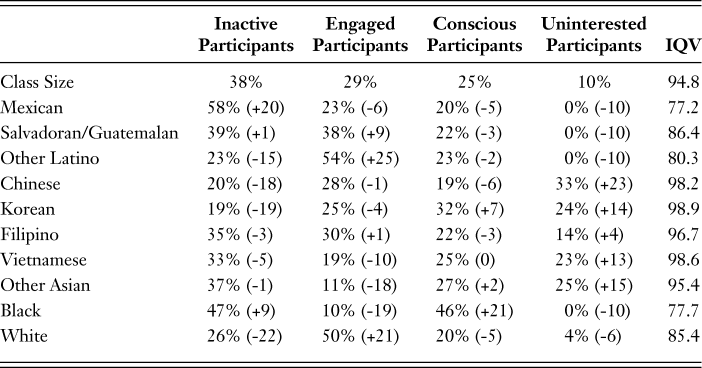
Table 5 depicts the same results, this time broken down by the ten racial and ethnic groups. The first thing to observe is how much additional intra-group difference exists within each of the pan-ethnic groups. For instance, Latinos are now separated into three groups—Mexican, Salvadoran/Guatemalan, and “Other Latino”—each subgroup with a with different make up of classes. In fact, the distribution of political styles within the “Other Latino” group is much more similar to Whites than Mexican or Salvadoran/Guatemalan. To a lesser degree, Asian groups—Chinese, Korean, Filipino, Vietnamese, and “Other Asian”—also display additional intra-group differences.
Classes by 10 Racial and Ethnic Groups

Just like the pan-ethnic groups, there is a predominant trend within each subgroup. Mexicans are most likely to belong to “inactive participants” (+20), whereas Blacks are more likely to be “conscious participants” (+21) than “engaged participants” (-19); Chinese, Vietnamese, and Filipino are highly likely to be “uninterested participants” (+23, +13, and +4, respectively); and Whites, Salvadoran/Guatemalan, and “other Latino” are more likely to be “engaged participants.” There are, however, other trends. For instance, Koreans are usually either “engaged participants” (25%) or “uninterested participants” (24%); yet if we look closely, there is a considerable number of “conscious participants” (32%)—the size, in fact, comes in at the second place among the ten groups, only after Blacks (46%). This feature is not visible when we collapse Koreans with other Asian groups, or when we simply characterize Koreans as being dominated by “engaged participants” or “uninterested participants.”
Detecting the “conscious participants” among Koreans is important in its own right, but the discovery is even more meaningful when comparing Asian groups. Chinese, Korean, Filipino, and Vietnamese, for example, display a similar make-up, except for one: Koreans are more likely to be “conscious participants” (32%) than other groups (19% for Chinese, 22% for Filipino, and 25% for Vietnamese). The difference from the overall class size, roughly 7%, may be small, but considering the fact that “conscious participants” are found at a relatively low rate in the data set (overall class size of 25%), this is a notable feature, especially when considering the fact all other Asians groups (with an exception of “other Asian”) are less likely to be “conscious participants” than the overall average.
More importantly, by focusing on this relatively small difference, we can specifically understand why groups are similar and different at the same time: namely, Chinese, Korean, and Filipino are similar in the sense that “engaged participants” and “uninterested participants” make up roughly two thirds of the groups; however, the significant presence of “conscious participants” (32%) among Koreans shows that there is a difference that cannot be captured through the major trends. In other words, whereas the majority of the Chinese, Koreans, and Filipinos have similar political styles, Koreans are different in the sense that some of them are more inclined to be “conscious participants.”
In summary, with Tables 4 and 5, it is possible to comprehend two things that were not visible when applying the principle of “different models for different groups.” First, instead of overgeneralizing—representing a group with a single model—we can specify the composition of each group with political styles, capturing intra-group difference. By moving between pan-ethnic categories, subgroups, and political styles, we see that racial and ethnic categories are not natural units of analysis, but nested structures that encompass different distributions of styles. Second, we also confirm that the intra-group difference consists of a common set of repertoire—namely the four political styles. Even though the groups differ in their composition, the four styles are present in six out of ten groups, and the remaining four groups (Mexican, Salvadoran/Guatemalan, Other Latino, and Blacks) feature three out of the four styles. The notion of political styles provides a common vocabulary to understand inter-group differences. In the next section, I discuss why such findings are meaningful by considering them in light of the politics in Los Angeles, where the IIMMLA survey was conducted.
DISCUSSION: LOS ANGELES POLITICS
Existing research on ethnic politics in Los Angeles is largely ethnographic and historical (Chung Reference Chung2007; García Bedolla Reference García Bedolla2005; Kurashige Reference Kurashige2008; Mollenkopf et al., Reference Mollenkopf, Champeny, Sonenshein and Drayse2006; Saito Reference Saito1998; Sonenshein Reference Sonenshein1993). Arguing against classic urban politics literature that emphasizes the role of machine politics in the East Coast cities, these works highlight factors specific to Los Angeles, such as fragmented, largely suburban spatial organization; rapid expansion due to immigration; racial and ethnic diversity; and absence of strong party mobilization apparatus—features that led one historian to characterize the city as a “fragmented metropolis” (Fogelson Reference Fogelson1967). Although residential segregation by race has been a prominent feature in Los Angeles, as in any other large American city, it was manifested not through the isolation of Blacks, but through the removal of Whites from a variety of non-White groups. In the middle decades of the twentieth century, Blacks, Mexicans, Japanese, and Chinese lived alongside each other in the city’s non-White neighborhoods (Kurashige Reference Kurashige2008). However, “the multiracial character of the city, which mitigated the harshest effects of residential segregation, actually exacerbated the effects of employment discrimination by increasing competition at the lower end of the labor market” (Sides Reference Sides2003, p. 23). In other words, the multicultural metropolis was far from a racial utopia; rather, the city featured a pyramid-like structure of power and wealth—the White business elite based in the downtown area controlled the important public institutions, while various non-White groups competed against each other in the city’s vast low-level labor market.
With de-industrialization and the increase in immigration from Latin America and Asia after the 1970s, the fragmentation of the city only intensified. As wealthy White residents moved out of the city area and established a series of small, newly incorporated gated communities (Fulton Reference Fulton1997), upwardly-mobile Asian immigrants engaged in their own exodus, moving to suburban ethnic enclaves such as Monterey Park, hailed as the nation’s first suburban Chinatown (Saito Reference Saito1998; Wong Reference Wong2006). Newly arrived Mexicans and other Latino groups occupied central and eastern Los Angeles, while the majority of the Black residents came to reside in the heavily segregated south central area. As Fulton (Reference Fulton1997) lamented, residential segregation has been transforming the metropolitan Los Angeles area into a collection of communities practicing “cocoon citizenship”—small groups of citizens focused on policing the boundaries of belonging and not interested in bridging the divide between groups. In short, the most diverse metropolis in the United States is also the most fragmented and unequal one.
Political fragmentation accompanies segregation by race and class. Ironically, however, the White flight to the suburbs coincided with the decline of a White monopoly on political power, and resulted in the increase of political representation for diverse communities of color. Now, the competition for the control of the municipal government in Los Angeles is characterized by the dynamics of cooperation and competition among different racial and ethnic groups. The absence of party machines and mobilization apparatus means that these dynamics can change very rapidly, depending on the specific election. Just like other major metropolitan cities, Los Angeles has also seen a series of liberal, non-White mayoral candidates since the 1960s, some of whom have been successful in capturing city hall thanks to the broad interracial coalition of voters that they amassed. For instance, Raphael Sonenshein (Reference Sonenshein1993) chronicles the rise of Tom Bradley in the 1960s, leveraged through the formation of a new interracial coalition, while John Mollenkopf and colleagues (2006) attribute Antonio Villaraigosa’s electoral victory in 2005 to the rise of a new coalition of broad interests. The key for both candidates was to effectively bridge communities and overcome fragmentation by emphasizing the commonalities among groups as well as recognizing their differences.
Previous survey-based research on minority political participation offers little connection to these processes because, for the most part, it treats each racial and ethnic groups as monolithic entities, existing independently of other groups. The realpolitik in Los Angeles, however, relied heavily on understanding intra- and inter-group differences as well as bridging those differences to build a political coalition. In other words, there is a slight mismatch between the survey-based models of minority political participation and the realities of ethnic politics in Los Angeles.
The most obvious benefits of the relational model come from its focus on intra-group difference. For instance, we can read the intra-group difference among Latinos as reflecting differences in class and immigration experiences. A first-generation Mexican immigrant in East Los Angeles who does not speak English and lacks educational experiences in the United States will have a very different political style from that of a college-educated, U.S.-born Latino professional living in largely middle-class Montebello (García Bedolla Reference García Bedolla2005). The difference between “inactive participants” and “engaged participants” documented in the cases of Latino groups speaks to this divide.
In addition, the set of political styles used to describe those complexities renders the inter-group differences commensurable. For instance, as reported in the literature, Blacks are most likely to engage in direct political actions, leaning heavily towards “conscious participants.” Yet somewhat surprisingly, Koreans, among other groups, stand out as “conscious participants,” even though the trend is not visible when examining the most dominant feature of each group. In the aftermath of the Rodney King riots, John Lie and Nancy Abelmann (Reference Lie and Abelmann1995) discovered that the Korean community in Los Angeles was characterized by polarization in class background and political perspectives. They found a surprising number of Korean business owners and activists sympathetic to the plight of poor Black and Latino youth, even though the mainstream media described the riots as the clash between the two groups. These Korean interviewees saw their own marginalized positions in American society in the rioters, and instead criticized the police, city authorities, and the “social structure” as the underlying cause of the violence, while also acknowledging the racial and class divide between themselves and the poor Black and Latino youth. In other words, implausible as it may sound, a small part of Korean community saw that they had something in common with the rioters.
These discussions anticipate Angie Chung’s (Reference Chung2007) analysis of generational transition in Koreatown community organizations. The dire experience of the 1992 riots paved the way for a new wave of young, progressive organizers within the Korean community. Represented by new organizations such as Korean Immigrant Workers Alliance (KIWA), these organizers take a different stance from more established community organizations, working to organize Latino workers employed in Korean-owned businesses. Through the experience of the riot and other conflicts, the organizers realized that intra- and inter-group solidarity are not necessarily at odds with each other. Rather than being confined to a narrow understanding of the community, the new generations of organizers attempt to cross the established ethnic and class boundaries through interracial organizing. Although these young activists are clearly not the majority in the Korean community, they represent an important transition in Korean American politics, if not ethnic politics in Los Angeles more generally (Chung Reference Chung2007).
The key point in these analyses is that they go beyond the superficial caricature of ethnic conflict as occurring between two homogenous interest groups (e.g., “the Black-Korean conflict”). Although major divisions between racial and ethnic groups do exist, there are also commonalities that lead to the erosion and “reworking” of group boundaries (Jung Reference Jung2006; Saito Reference Saito1998). In fact, commonalities in political styles, such as sharing the “conscious participants” outlook on politics, can serve as a catalyst in the formation of new interracial coalitions. For instance, if we are to explore what kinds of new coalitions could emerge in Los Angeles politics, we can start by looking at commonalities of political styles across different groups, and perhaps complement this analysis by on-the-ground inquiry of organizations and social movements, in order to pinpoint where exactly different groups can meet to work together. In addition to highlighting intra-group difference, the relational model is uniquely equipped to identify commonalities across the groups through a set of political styles, providing a means through which to better understand inter-group differences.Footnote 10
With such understanding, future studies can develop a more nuanced and realistic account of minority politics in the United States. For instance, both scholars and popular commentators alike have asked why and how Asian Americans, who had traditionally been associated with conservatism and therefore the Republican Party, have transformed into strong supporters of the Democratic Party within a period of a single generation. The concept of political styles can help us understand which specific segment of the group was at the forefront of this political shift. In addition, by identifying inter-group commonalities, we can trace the coalition-building process between a segment of Asian Americans and other constituents of the Democratic Party, further clarifying the process through which the partisan re-alignment occurred.
Furthermore, the concept of political styles also raises a new set of questions about political institutions. Simply put, what is the relationship between political styles and institutions? For instance, do people support the parties that match their political styles, or do parties shape political styles through dissemination of information and mobilization attempts, possibly for temporary or long-term political gains? These questions push scholars to go beyond political beliefs and ideologies to think about the manners through which individual dispositions and political acts relate to partisanship. For example, since the Civil Rights Movement, the figure of “conscious participants”—highly educated and knowledgeable individuals who participate in direct action as well as electoral politics with a keen sense of who they are—has been associated with left-leaning, progressive politics and, to a lesser degree, the Democratic Party. The rise of the Tea Party during the Obama era caused a fissure in this coupling of a political style and an institution, and today we witness many sides competing to claim the rhetoric of “conscious participants,” seeing themselves as struggling against mainstream institutions with a sense of awakening. From the rhetoric of “red pill” to the claims of “reverse discrimination,” the political style of the Civil Rights Movement and Anti-war protesters has travelled across the partisan divide and generated a series of unexpected legacies (Belew Reference Belew2018). What exactly happened? Although this article does not attempt to answer this question, the concept of political styles can help us understand that relationship between race, political institutions, and the mode in which individuals engage with both their identity and politics (Bonikowski and DiMaggio, Reference Bonikowski and DiMaggio2016).
However, I do not imply that the model presented in this article meets all of the challenges associated with studying political participation of minorities. For one, it does not say much about how different styles compete with each other within each racial and ethnic group, or precisely how different groups compete against and collaborate with each other in their struggles for political power. These questions will be important topics for future research on minority politics.
Also, my analysis utilized an existing dataset (IIMMLA), and relied on its racial and ethnic classification scheme while not addressing issues associated with the measurement of race and ethnicity. The possibility of multiple identifications (i.e., claiming a membership in two or more groups) was not discussed in my analysis. In this article, I focused more on maximizing the utility of the existing survey data and less on developing alternatives to the existing measurements (Lee Reference Lee and Abdelal2009). Future research can examine whether and how alternative measurements of group identity can enrich the relational understanding of minority political participation.
CONCLUSION
Contemporary theories of race and ethnicity have repeatedly emphasized heterogeneity and contingency of identity categories. Rather than focusing only on the most visible trend in each racial and ethnic group, these theories encourage scholars to look for neglected intra- and inter-group differences, and to explain how those differences are socially conditioned.
Survey-based studies of minority political participation have considered heterogeneity and contingency of categories but have not as of yet devised models to properly capture them. In this article, I presented a possible first step towards that goal, one that reduces the gap between theory and empirical analysis of race and ethnicity. Taking inspiration from theoretical principles of relational sociology, I proceeded to develop a relational model of political participation by identifying four different types of political styles, through response patterns in a set of variables, and examining the distribution of the styles across racial and ethnic groups, capturing both intra- and inter-group differences.
The results, displayed in Tables 4 and 5, present racial and ethnic groups in a new light, implying that the groups are not just independent, homogenous entities, but heterogeneous categories defined through the different distribution of political styles. Attention to intra-group difference leads us to discover previously neglected patterns, such as the relative prevalence of “conscious participants” among Koreans. In addition, by focusing on commonality across groups—such as existence of “conscious participants” across all ten groups—the model also presents new ways to understand inter-group differences. These insights bring the survey-based models of minority political participation one step closer to the realpolitik on the ground, as discussed in relation to the politics in Los Angeles. As the United States transitions into a majority-minority polity in the near future, these insights will also help us better understand not only minority politics but also political participation in general.
SUPPLEMENTARY MATERIAL
To view supplementary material for this article, please visit https://doi.org/10.1017/S1742058X19000201
ACKNOWLEDGMENTS
I would like to thank Irene Bloemraad, Carlos Bustamante, Paul Chung, Marion Fourcade, Cybelle Fox, Eric Giannella, Mary Grover, Jasone Houle, Michael Hout, Jee Seon Jeon, Dong-Kyun Im, Keun Bok Lee, Taeku Lee, Chaeyoon Lim, Mara Loveman, Christian Phillips, Aliya Saperstein, and Hyungjun Suh. I am also grateful to anonymous reviewers for their comments and suggestions.