Introduction
Research on childhood exposure to potentially traumatic events (PTEs; e.g., maltreatment, community violence, natural disaster) has been characterized by inconsistent measurement and analysis. What is considered a PTE varies markedly across studies, such as when two studies aim to examine “PTE,” “adversity,” or “trauma,” but focus on different sets of events (e.g., Krupnik, Reference Krupnik2019). Further, there is a plethora of PTE measurement tools available for researchers to select from, most of which assess an overlapping but inconsistent set of events (e.g., Eklund et al., Reference Eklund, Rossen, Koriakin, Chafouleas and Resnick2018). For example, Oh et al. (Reference Oh, Jerman, Boparai, Koita, Briner, Bucci and Harris2018) reviewed exposure assessment tools and identified over 32 different measures of cumulative PTE and adversity exposure, even when using strict inclusion criteria (e.g., published 2012–2016 and in 2+ studies). In their review of adverse childhood experiences (ACEs) measures, Carlson et al. (Reference Carlson, Yohannan, Darr, Turley, Larez and Perfect2020) found more than 14 different versions of ACEs assessments, with instruments measuring from 6 to 20 events.
PTE measurement tools are not only diverse in their scope but also in terms of scoring. This can occur across different research projects using the same PTE assessment. For example, Haahr-Pedersen et al. (Reference Haahr-Pedersen, Ershadi, Hyland, Hansen, Perera, Sheaf, Bramsen, Spitz and Vallières2020) identified more than five different methods (e.g., various categorical and continuous metrics) used to score PTE exposure for the Juvenile Victimization Questionnaire (JVQ; Finkelhor et al., 2005). There are also “within-project” differences when investigators use different approaches to the same PTE construct using the same dataset and PTE measure. Examples of this can be found when examining publications from publicly available datasets with PTE exposure (e.g., Longitudinal Studies on Child Abuse and Neglect [LONGSCAN], National Survey of Adolescents-Replication [NSA-R], National Survey of Children’s Exposure to Violence [NatSCEV]).
Differences in PTE exposure measurement between- and within projects do not necessarily indicate that researchers are using flawed measurement strategies. Rather, the field lacks consensus or a “gold standard” for the assessment of youth PTE exposure. For example, beyond the brief descriptions provided in the DSM-5 (text revision; DSM-5-TR) for a Criterion A “trauma” (i.e., exposure to a deadly event or the threat of death or serious injury or sexual violence; American Psychiatric Association [APA], 2022), there is no universally adopted criteria for a PTE or “trauma” (Kilpatrick, Reference Kilpatrick, Beck and Sloan2022). Furthermore, even the DSM-5 definition has often been challenged for excluding important stressful life events (SLEs; i.e., non-Criterion A events) and for ignoring characteristics of exposure that may increase impairment (e.g., Kilpatrick, Reference Kilpatrick, Beck and Sloan2022; Krupnik, Reference Krupnik2019). Thus, the decision-making process that goes into selecting a measurement approach is often subjective, with many “researcher degrees of freedom” existing within the data collection and analysis phases of a study (Steegen et al., Reference Steegen, Tuerlinckx, Gelman and Vanpaemel2016; Wicherts et al., Reference Wicherts, Veldkamp, Augusteijn, Bakker, Van Aert and Van Assen2016). A clear understanding of how such variability in PTE measurement may influence findings is lacking. Greater attention to the impact of PTE measurement choices on findings would help address these issues.
Dimensionality of PTE type or polyvictimization
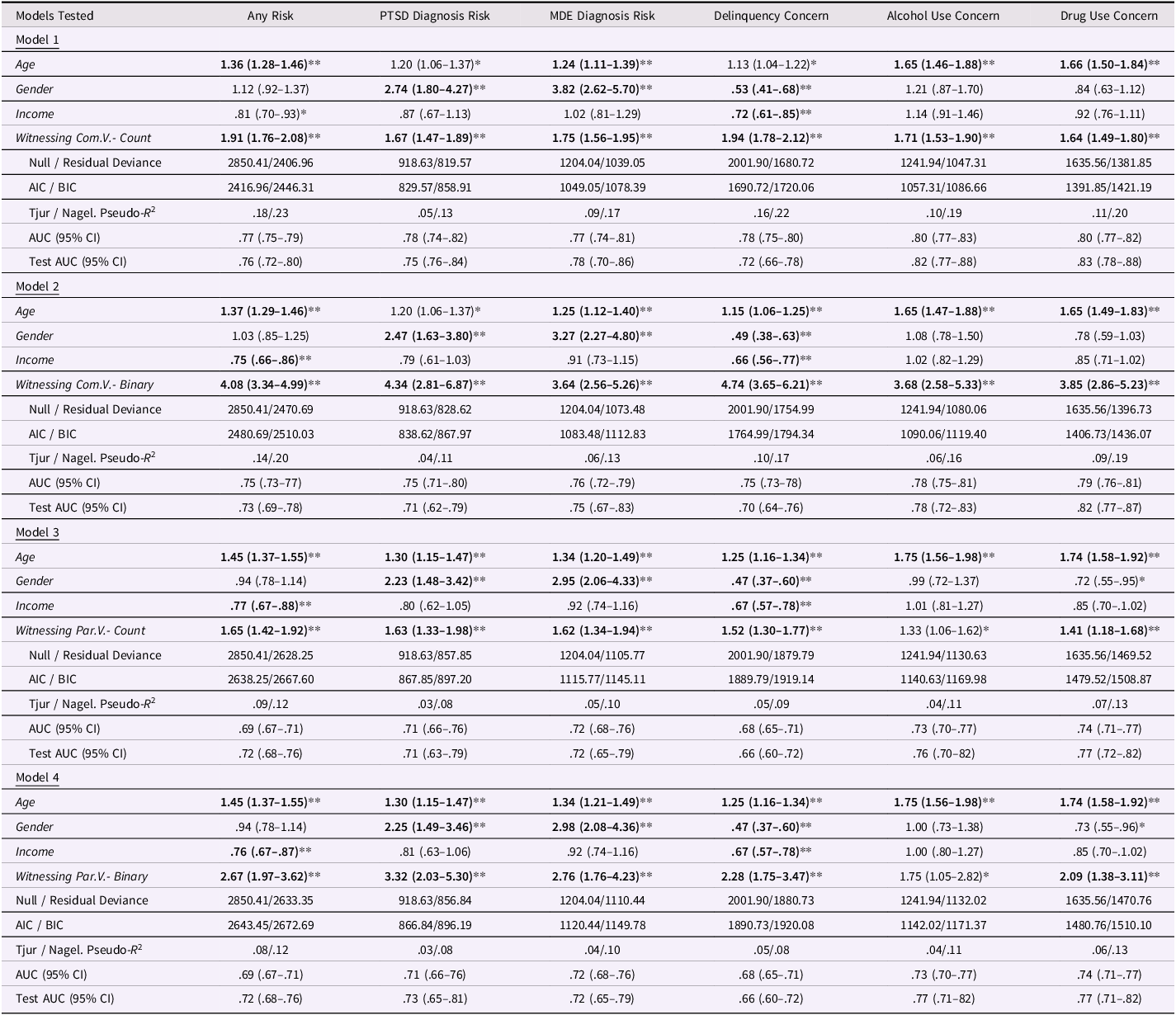
One measurement or operationalization approach to PTE exposure that has been widely adopted over the last few decades is polyvictimization or summing together different types of exposure (Finkelhor et al., Reference Finkelhor, Ormrod and Turner2007; Radtke et al., Reference Radtke, Wretman, Fraga Rizo, Franchino-Olsen, Williams, Chen and Macy2024; Wolfe, Reference Wolfe2018). Polyvictimization can refer to exposure across different types of PTEs (e.g., physical assault, sexual assault) and within them (e.g., attacked with and/or without an object for physical assault). One reason for the wide use of polyvictimization as a PTE exposure metric is grounded in research that has consistently demonstrated the importance of dose–response or cumulative risk theories of exposure, such that exposure to more types of events is associated with increased likelihood of maladjustment (e.g., Hamby et al., Reference Hamby, Elm, Howell and Merrick2021). For example, Haahr-Pedersen et al. (Reference Haahr-Pedersen, Ershadi, Hyland, Hansen, Perera, Sheaf, Bramsen, Spitz and Vallières2020) found a positive association between polyvictimization and mental health challenges in youth in 21 of 22 studies included in their review of polyvictimization measured using the JVQ. Similar findings have consistently been noted in reviews on polyvictimization among youth across different types of populations and health outcomes (e.g., Lee et al., Reference Lee, Pigott, Watson, Reuben, O’Hara, Massetti and Self-Brown2023). Taken together, polyvictimization appears to help explain why some youth demonstrate poor(er) adjustment following multiple PTE exposures compared to other PTE exposure patterns (Finkelhor et al., Reference Finkelhor, Ormrod and Turner2007).
Unsurprisingly, given how widely polyvictimization measurements are used, measurement inconsistencies are particularly common among studies on polyvictimization. Inconsistencies across studies often relate to the breadth of assessment, which refers to how many types of PTE are assessed for, and how these indicators are then used in analyses (i.e., range of the scale of the PTE polyvictimization construct). The smallest level of differentiation of PTE exposure is the binary or yes/no approach in which youth are categorized into one of two “levels:” (a) exposed or (b) not exposed to any type of PTE. In this measurement approach, exposure to different types of PTE is combined into a single exposure level. This approach has been widely adopted within PTE research when using PTE as a predictor variable or to conduct group comparisons between exposed and nonexposed youth (e.g., Lee et al., Reference Lee, Pigott, Watson, Reuben, O’Hara, Massetti and Self-Brown2023; Radtke et al., Reference Radtke, Wretman, Fraga Rizo, Franchino-Olsen, Williams, Chen and Macy2024). Beyond the binary approach, measurement of PTE exposure breadth can expand multidimensionally as various classes or types of PTE exposure are considered. As such, PTE polyvictimization scores can range from a few select groups of events (e.g., exposure to different forms of maltreatment), to the commonly used 10 types of ACEs events, to more than 20 types of events, inclusive of “typical” Criterion A PTEs and other SLEs (e.g., hostility and bullying, educational neglect; Lee et al., Reference Lee, Pigott, Watson, Reuben, O’Hara, Massetti and Self-Brown2023; Loomis et al., Reference Loomis, Feely and Kennedy2020).
When considering what might be an optimal level of assessment breadth for measuring PTE polyvictimization to properly identify youth at risk for maladjustment, there is minimal guidance in the literature. At the smallest level (i.e., yes vs. no), there does seem to be a notable distinction theoretically between exposure to some type of life threatening or serious frightening event and non-exposure, such as in the case for determining risk for PTSD, suggesting that a binary distinction may be meaningful. However, general statistical principles suggest more information is better for prediction. For example, dichotomization of most continuous and count variables results in loss of information, such as reducing variance in a sample (e.g., MacCallum et al., Reference MacCallum, Zhang, Preacher and Rucker2002; Royston et al., Reference Royston, Altman and Sauerbrei2006). This suggests that dichotomizing PTE into exposure vs. non-exposure groups is not optimal, and that treating this variable as a count variable with larger ranges may improve prediction compared to binary variables or a count variable with a small range by allowing for more variance in the metric that might be used to differentiate risks for poor functioning. However, direct comparisons among measurement methods for PTE polyvictimization as it relates to count vs. dichotomous variables are lacking. Thus, it is unclear whether such general statistical principles apply in a similar manner to exposure to PTE and thus how researchers should approach their measurement strategies for polyvictimization. Some initial data does suggest that more information on PTE helps clarify the relation between PTE and functioning in youth. For example, in one of the very few known studies to compare binary vs. more complex polyvictimization measurement approaches, Ettekal et al. (Reference Ettekal, Eiden, Nickerson and Schuetze2019) compared model performance between binary and count measured risk factors among 169 children in relation to externalizing concerns, which included some forms of PTE (e.g., family violence) and other SLE risk factors (e.g., caregiver psychopathology). The authors found that models containing a count variable for each risk factor tended to have more explanatory power. However, such findings are often limited in scope to specific outcomes and specific PTE forms.
There are also several other components to consider beyond just the binary vs. count distinction when examining PTE polyvictimization operationalization. For example, this includes considering whether being exposed to 10 vs. 30 types of PTEs would be equivalent (e.g., Anda et al., Reference Anda, Porter and Brown2020; Briggs et al., Reference Briggs, Amaya-Jackson, Putnam and Putnam2021). In other words, this entails examining whether there are differences in prediction performance among different levels of breadth or number of types of PTE considered when trying to identify youth at risk for poor functioning. Moreover, it is also unclear whether similar patterns of prediction exist across specific forms of PTE exposure when comparing binary vs. count PTE polyvictimization scoring approaches (e.g., binary vs. count scores for specific forms of sexual assault), as well as whether considering exposure to SLEs (i.e., non-criterion A events) influences prediction (e.g., Kilpatrick, Reference Kilpatrick, Beck and Sloan2022).
There are also several nonstatistical reasons that further illustrate the need for this research. For example, if a researcher wishes to know more about PTE exposure among youth that will usually require asking more questions. This can place an additional burden on the youth since they will be asked more questions about a topic that can be challenging to discuss, which raises ethical considerations related to research participation burden (e.g., Runyan, Reference Runyan2000). From the researcher’s perspective, asking more questions often requires more resources (e.g., financial, time considerations). Given these considerations, there is need to compare how PTE is measured to determine which approaches may be most efficient under what circumstances.
Secondary data multiverse replication for PTE research
To address questions pertaining to PTE measurement differences, the current study employed what is being termed a secondary data multiverse replication (SDMR), a novel methodological and analytic approach that draws upon several methods for helping to address concerns with replication and measurement variability within the psychological sciences (Baldwin et al., Reference Baldwin, Pingault, Schoeler, Sallis and Munafò2022; Laws, Reference Laws2016; Steegen et al., Reference Steegen, Tuerlinckx, Gelman and Vanpaemel2016). This approach seeks to conduct a mixed form of direct and conceptual replication research based on previous studies published using existing datasets. However, moving beyond just a simple form of replication or secondary data analysis using a single approach, this approach also incorporates a multiverse analysis framework. A multiverse analysis involves the testing and comparison of multiple data analytic choices that are reasonable and justified to test a hypothesis (Harder, Reference Harder2020; Steegen et al., Reference Steegen, Tuerlinckx, Gelman and Vanpaemel2016). In the case of SDMR, multiple data analytic approaches to measurement of a construct are identified from previous studies with the dataset, and then the models are (re)tested (and in some cases directly replicated) with each approach. Overall, this combined approach has several potential advantages. The examination of multiple analytical approaches using a multiverse framework can help to establish robustness and thus confidence in the findings by comparing multiple previously used PTE operationalization techniques in a single study (McGuire & Jackson, Reference McGuire and Jackson2024; Steegen et al., Reference Steegen, Tuerlinckx, Gelman and Vanpaemel2016). Additionally, multiverse analyses as part of secondary data analysis can also address researcher bias toward certain data analytic methods based simply on previous statistically significant findings (Baldwin et al., Reference Baldwin, Pingault, Schoeler, Sallis and Munafò2022). Further, the use of already existing data helps make such analyses more feasible by eliminating the need to collect new data. Similar aspects of this approach have already been utilized in other fields of psychological research and identified how analytic variability may contribute to replication concerns (e.g., education; Bokhove, Reference Bokhove2022). However, these approaches are rarely considered in PTE research.
Current study
Using the SDMR framework, the current study sought to systematically (re)evaluate measurement approaches to polyvictimization across and within PTE types using the National Survey of Adolescents-Replication (NSA-R), a federally funded, longitudinal study examining exposure to PTEs, risk factors associated with PTE exposure, and mental health concerns among a nationally representative adolescent sample. Specifically, this study examined how differences in polyvictimization scoring methods (which varied in breadth and some methods including non-Criterion A SLEs) may influence the observed relation between PTE exposure and psychological functioning (e.g., PTSD, depression, substance use concerns, and delinquency). This was completed by reviewing and then selecting for replication polyvictimization operationalization methods from over 30 previously published studies using the NSA-R dataset in a multiverse analysis. It was hypothesized that the polyvictimization measurement methods that incorporate more categories (i.e., greater range) of exposures would demonstrate better model performance and greater prediction discrimination for identifying those youth participants with psychological functioning concerns. It was hypothesized that this would be the case both between different types of PTE and within specific forms of PTE (i.e., exposure to maltreatment and violence).
Methods
Dataset and procedures
Data and procedures for the current study were obtained from the National Survey of Adolescents-Replication (NSA-R; Please see Supplementary Table S1 for a list of studies using the NSA-R dataset). The project ran from 2005 to 2010 and included three data collection timepoints for each family, each one year apart. Only data from the first time point of the project were used in the current study. Households across the United States (U.S.) were contacted by SRBI, a survey research firm. SRBI used a multistage, stratified, area probability, random-digit-dialing sample procedure for contacting eligible households. Interviews were completed with the caregiver and youth participants using a structured computer assisted telephone interview. To be eligible, youth participants needed to (a) reside in the U.S., (b) be between ages 12 and 17, and (c) speak English or Spanish. First, informed consent was obtained from the caregiver. Following consent procedures, the caregiver completed a brief interview assessing household demographics and perception of their youth’s well-being. Next, the youth participants provided their assent and then completed their portion of the interview. Wolitzky-Taylor et al. (Reference Wolitzky-Taylor, Ruggiero, Danielson, Resnick, Hanson, Smith, Saunders and Kilpatrick2008) provide more information on study recruitment and sampling procedures. All procedures were approved by the authors’ institutional review board.
Participants
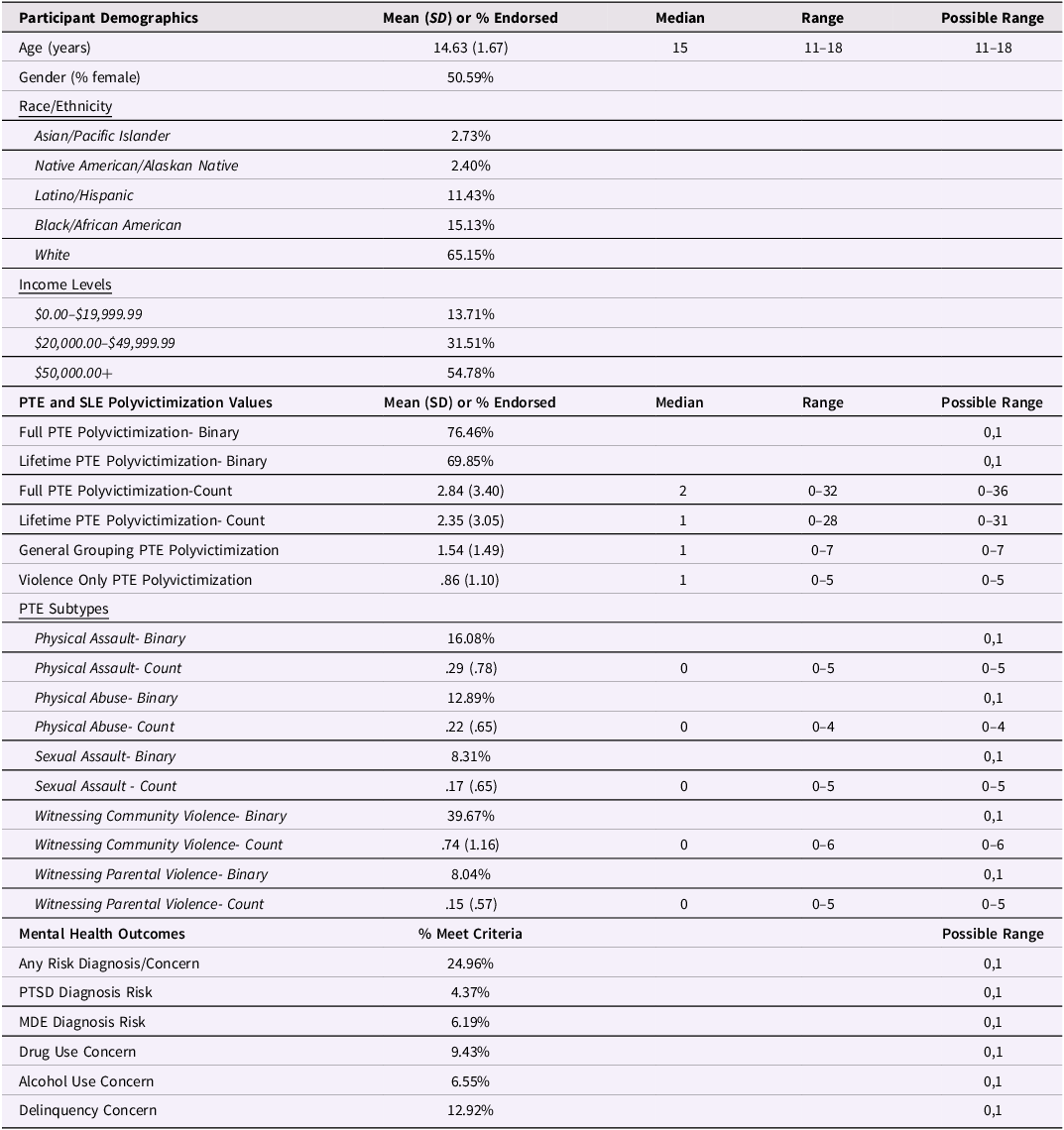
In total, 6694 families were contacted via household calling where there was a caregiver interview completed and a youth living in the household. Of those families, 3080 did not complete the youth portion of the interview because (a) the individual was unable to be contacted following completion of the caregiver portion (48.9%), (b) the caregiver refused to let the youth participate (41.2%), the youth refused to participate (6.1%), or the youth did not complete the full interview (3.9%). Among the 3614 youth participants who completed the first wave, 78 youth participants were removed for declining to answer sexual assault questions, and another 239 youth participants were removed for not providing information on family income. Thus, the current study utilized data from the 3297 youth participants (M age[SD] = 14.63[1.67]; 50.59% female) who completed the full interview at the first wave.Footnote 1 The majority of youth participants identified as White (65.15%), followed by Black or African American (15.13%) and Hispanic or Latino (11.43%). Most youth participants (54.78%) were reported to be living in a household with a combined yearly income >$50,000 (see Table 1 for more demographic information).
Participant information and study variable values

N = 3297. SD = Standard deviation. PTE = Potentially traumatic event. SLE = Stressful life event. PTSD = Posttraumatic stress disorder. MDE = Major depressive episode.
Measures
Potentially Traumatic Event (PTEs) and Stressful Life Events (SLEs)
The aims and methodology of the NSA-R project placed considerably more emphasis on assessing exposure to some types of PTEs than others. Specifically, the NSA-R was designed to conduct a more comprehensive assessment of PTEs involving exposure to interpersonal violence victimization (IPVV) than other types of PTEs that did not involve IPVV. This decision was driven by several factors including a relative shortage of data among adolescents measuring exposure to PTEs involving IPVV using behaviorally specific screening questions, considerable data showing that this type of PTE exposure is a particularly potent risk factor for PTSD and related disorders, and the efficacy of the original NSA measures for capturing exposure (Kilpatrick et al., Reference Kilpatrick, Ruggiero, Acierno, Saunders, Resnick and Best2003). Consequently, there were many more screening questions and follow-up questions for IPVV than for other PTEs or SLEs, which has consequences for analyses and interpretation of findings.
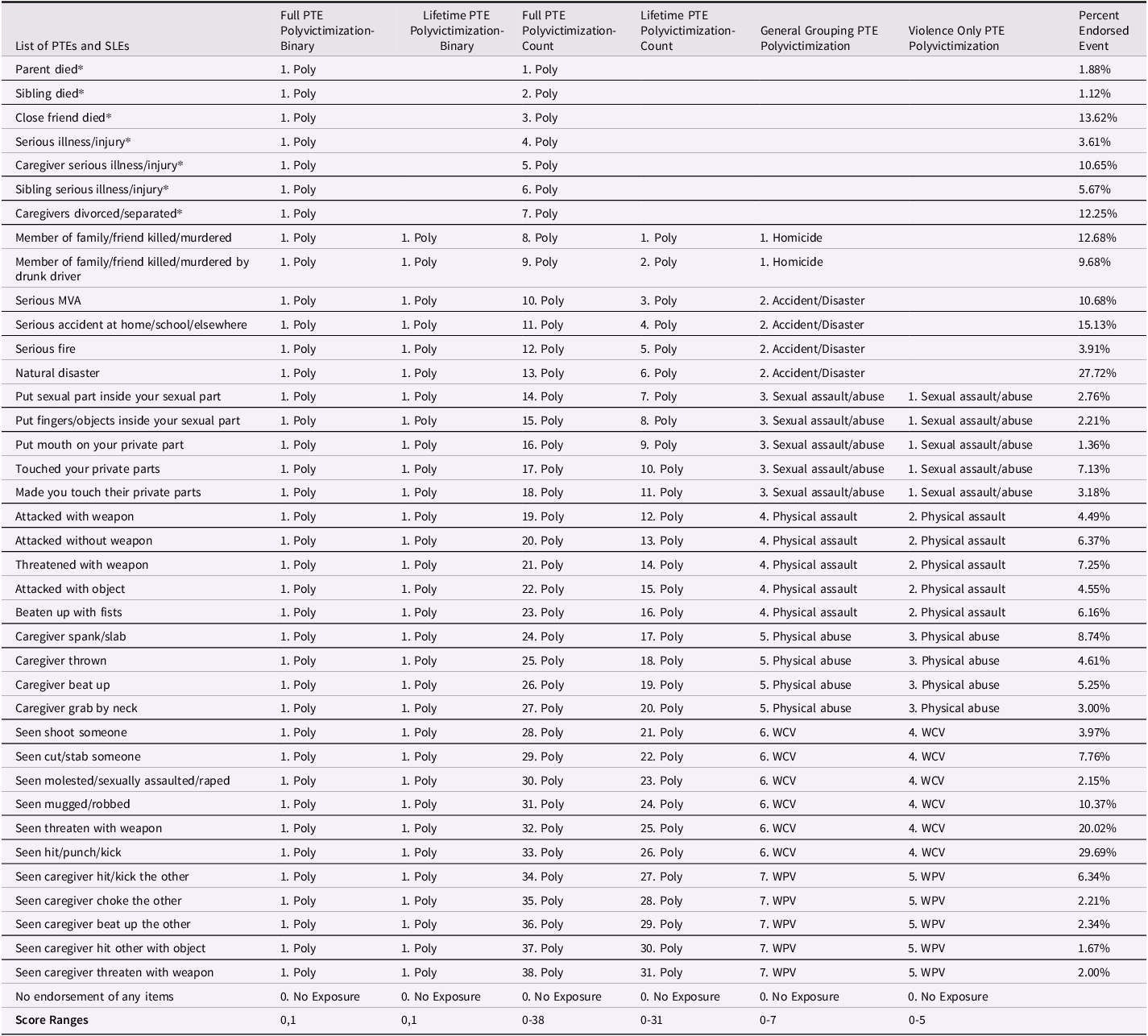
Lifetime and past year exposure to PTEs and SLEs were assessed among youth participants using a series of standardized, highly structured interview questions. In total, there were 38 different events assessed for both male and female participants. A full list of the events can be found in Table 2. Questions about the events were written in a behaviorally specific manner to help reduce ambiguity with respect to events, and many item sets provided prefatory statements to encourage accurate responding (Kilpatrick et al., Reference Kilpatrick, Ruggiero, Acierno, Saunders, Resnick and Best2003). For some PTEs (e.g., sexual abuse and assault), follow-up questions were asked pertaining to characteristics of the exposure beyond type. However, because not all events included follow up questions, only information pertaining to exposure type was utilized in the data analyses. Seven of the 38 events were only assessed for exposure over the last year, and these events (e.g., parental divorce, serious illness/injury to friends or family) were conceptualized as “stressful events” (i.e., SLEs) and not necessarily PTEs (e.g., Kilpatrick, Reference Kilpatrick, Beck and Sloan2022). For each type of event, a dichotomous indicator was created related to exposure or endorsement (0 = No exposure, 1 = Exposure/endorsement of the event). These binary indicators were then used to create the various polyvictimization score categorization variables (further described in the data analysis section).
Potentially traumatic event (PTE) and stressful life event (SLE) types and categorizations

*= Stressful life events that were only assessed for over the last year, N = 3297. The numbers for each grouping in the columns for each categorization represent the potential value ranges for each PTE group. PTE = Potentially traumatic event, SLE = Stressful life event. Poly = Polyvictimization, WCV = Witnessing community violence, WPV = Witnessing parental violence.
PTSD and MDE diagnosis symptoms
To assess for the presence of PTSD and major depressive episode (MDE) symptoms, participants completed a structured interview with developmentally tailored prompts that followed DSM-IV-TR diagnostic criteria for PTSD (20 items; Cronbach’s α = .83) and MDE (13 items; Cronbach’s α = .82). This interview was validated in large samples of youth, demonstrating satisfactory psychometric properties, including concurrent validity with well-established measures for each symptom set (e.g., Kilpatrick et al., Reference Kilpatrick, Ruggiero, Acierno, Saunders, Resnick and Best2003; Wolitzky-Taylor et al., Reference Wolitzky-Taylor, Ruggiero, Danielson, Resnick, Hanson, Smith, Saunders and Kilpatrick2008). The structured interview for each diagnosis used a yes/no response format to assess each symptom both in the youth’s lifetime and in the last six months, yielding a “lifetime” and “current” diagnostic status for each disorder. Risk for these diagnoses were based on endorsing the number of required DSM-IV-TR symptoms for each disorder, as well as functional impairment. In the current study, six-month diagnosis risk was used in the data analyses, where youth participants were categorized as either having or not having a past six-month diagnosis risk for PTSD (0 = No PTSD Diagnosis Risk, 1 = PTSD Diagnosis Risk) and MDE (0 = No MDE Diagnosis Risk, 1 = MDE Diagnosis Risk).
Drug use concerns
Youth participants were asked to report on their frequency of use of several different types of drugs over the last year. This included reporting on use of prescription drugs for nonmedical reasons (e.g., tranquilizers, steroids; 5 items), illegal drugs (e.g., crack cocaine; 5 items), and club drugs (e.g., ecstasy; 6 items). These questions and the time frame of the questions were developed to be consistent with DSM-IV-TR requirements for substance use disorders (Kilpatrick et al., Reference Kilpatrick, Ruggiero, Acierno, Saunders, Resnick and Best2003). Thus, following DSM-IV-TR criteria, youth participants were categorized into the drug use concerns group if they reported using drugs four or more times in the past year (0 = No drug use concerns, 1 = Drug use concern).
Alcohol use concerns
Youth participants were asked to report on alcohol consumption in the last year, with a drink of alcohol defined in the survey as one shot of liquor, one 4-ounce wine glass, or one can of beer. They were also asked to report yes or no on functional impairment in six categories related to alcohol use, such as if they had ever been in trouble for drinking alcohol at school, had difficulties with their friends because of drinking, or had been in trouble with police or arrested because of drinking. These questions were consistent with the DSM-IV-TR symptom categories of functional impairment for alcohol abuse (Kilpatrick et al., Reference Kilpatrick, Ruggiero, Acierno, Saunders, Resnick and Best2003). Youth participants were categorized into the alcohol use concern group if they endorsed drinking and endorsed at least one alcohol use functional impairment item (0 = No alcohol use concern, 1 = Alcohol use concern).
Delinquency
To examine engagement in delinquent behaviors, youth participants completed an adapted version of the National Youth Survey (Elliott et al., Reference Elliott1985) delinquency module. This 9-item measure assessed for lifetime engagement in various types of delinquent behaviors, including damaging/destroying property, stealing, assaulting another individual, selling drugs, gang involvement, and justice system involvement. Youth participants were asked to indicate either yes or no to whether they had engaged in any of the behaviors. This measure has demonstrated acceptable validity and reliability psychometric properties in various samples of adolescent youth exposed to PTE (e.g., Adams et al., Reference Adams, McCart, Zajac, Danielson, Sawyer, Saunders and Kilpatrick2013; Robertson & Burton, Reference Robertson and Burton2010). The measure demonstrated satisfactory reliability in the current study (Cronbach’s α = .60). Youth participants were categorized into a delinquency concern group if they endorsed at least one of the items in the past year (0 = No delinquency concern, 1 = Delinquency concern).
Demographics
Youth participants reported on their age (based on date of birth), gender (a. male, b. female), race (a. Asian/Pacific Islander, b. Native American/Alaskan Native, c. Black/African American, and d. White), and ethnicity (a. Hispanic, b. not Hispanic) from a pre-determined list of categorical options, which participants could only select one option for (Table 1). Caregiver participants provided information on family income by indicating one of three options: a. < $20,000, b. $20,000–$50,000, and c. > $50,000.
Previous publication review and information extraction
To determine available methods for measuring PTE and SLE exposure and outcomes of interest, a targeted review was conducted with all published studies utilizing data from the NSA-R project. Several methods were utilized to ensure all studies incorporating data from NSA-R were obtained. First, the NSA-R grant project webpage of the National Institutes of Health’s RePORTER (https://reporter.nih.gov/) was reviewed, where publications citing the NSA-R as a funding source are listed. Additionally, general searches of the literature citing the NSA-R publications through online databases (e.g., PubMed, PsycInfo, and Google Scholar) were also conducted. Further, the project investigators were also contacted for review of the obtained list of studies to ensure no other known projects were missed. Only published, peer-reviewed article formats were considered as part of the review. Other types of scientific works (e.g., poster or other types of speaker presentations at conferences, unpublished papers) were not considered. From this review, 40 publications were identified for consideration. Among these, 8 publications were excluded because they did not examine PTE as a predictor variable (n = 6) or did not use data from the NSA-R dataset (e.g., follow-up from the original NSA; n = 2). The remaining 32 studies that were used to develop the current replication study are summarized in Supplementary Table S1, which also includes all 40 NSA-R publication references from the review.
Among the 32 studies reviewed, the majority examined multiple health outcomes of interest (62.5%). The most commonly examined outcome in relation to PTE exposure was PTSD diagnosis risk or symptoms (56.3%), followed by alcohol use (40.6%) and substance use concerns (37.5%) and then MDE diagnosis risk or symptoms (34.4%). Additionally, most studies examined PTE exposure as a binary variable (59.4%), whereas the remaining studies evaluated PTE exposure as a polyvictimization sum score (21.9%) or another method (18.8%; e.g., ordinal scale or latent variable model). Moreover, the majority of previous NSA-R studies examined multiple forms of PTE (50.0%) in their analysis, whereas 37.5% examined multiple forms of PTEs and SLEs, and 12.5% focused on a single exposure type.
Data analysis
PTE and SLE variable processing
Using the 38 dichotomous indicators of exposure to PTEs and SLEs, a series of exposure grouping variables were created based on the previously published studies using the NSA-R dataset (Table 2). First, a Full PTE Polyvictimization- Count score was calculated, which could range from 0 to 38, where youth participants’ endorsement of each lifetime PTE and past year SLE exposure types were summed together. A Lifetime PTE Polyvictimization – Count score was created by summing together only exposure to the 31 different PTE types assessed over the participants’ lifetime. Based on the full and lifetime polyvictimization variables with all events, two overall binary variables representing exposure to any type of PTE and SLE were created. The Full PTE Polyvictimization-Binary score was calculated as either a 1 or 0, with youth participants receiving a 1 if they endorsed any type of the 38 lifetime or past year PTEs or SLEs. Additionally, a separate binary, lifetime PTE exposure was created (termed Lifetime PTE Polyvictimization- Binary score), where youth participants received a score of 1 (i.e., exposure to PTE) if they endorsed any of the 31 different lifetime PTE item types, or a 0 (i.e., no exposure to PTE) if they did not endorse any of these items. Additionally, smaller groupings of PTEs were examined. These included a General Grouping PTE Polyvictimization score, which could range from 0 to 7 based on the following primary PTE types previously used in the NSA-R publications: 1) Family/Close Friend Homicide, 2) Accident/Disaster, 3) Sexual assault/abuse, 4) Physical assault, 5) Physical abuse (i.e., physical assault from caregiver), 6) Witnessing community violence, and 7) Witnessing parental violence. Youth participants were given a score of 1 if they endorsed any item within each PTE type group, and then the group endorsements were summed together. Given that a large majority of the previously published NSA-R studies only examined forms of violence exposure, a specific Violence Only PTE Polyvictimization score was also calculated. This score could range from 0 to 5 based on only the five main types of PTE violence victimization: 1. Sexual assault/abuse, 2. Physical assault, 3. Physical abuse, 4. Witnessing community violence, and 5. Witnessing parental violence. Youth participants were given a score of 1 if they endorsed any item within each PTE type group, and then the group endorsements were summed together.
In addition to the polyvictimization scores using multiple types of PTE, several specific scores were calculated for exposure to the violence types that were frequently examined in previous publications using the NSA-R dataset. This included the following specific types of PTE: Physical assault (five items), physical abuse (four items), sexual assault/abuse (five items), witnessing community violence (six items), and witnessing parental violence (five items). For each of these violence types, a binary score was created for any endorsement of any of the items (e.g., for witnessing community violence: 1 = endorsement of any of the six items, 0 = no endorsement of any of the six items). A polyvictimization count score was also created, which involved summing together all endorsed items within a given group.
Hypothesis testing
In the first part of the data analysis process, the correlations between the variables of interest in the current study were calculated, which can be found in Supplementary Table 2. Next, the association and predictive ability of each of the PTE operationalization methods were examined in relation to the commonly used measures of functioning previously examined in the NSA-R dataset. This included the following binary outcomes of interest, which were each tested in their own independent models: 1. PTSD Diagnosis Risk, 2. MDE Diagnosis Risk, 3. Delinquency Concern, 4. Alcohol use Concern, and 5 Drug Use Concern. A composite risk category, termed “Any Risk,” was also created so that a youth participant was classified as 1 if they met criteria or level of concern for any of the five outcomes, and 0 if they did not meet criteria for any outcome.
Models were constructed such that the polyvictimization variable of interest was included as a predictor variable, and age (in years), gender (0 = Male, 1 = Female), and income (0 = < $20,000, 1 = $20,000–$50,000, 2= > $50,000) were included as covariates based on review of the previously published NSA-R studies. The outcome of interest was regressed onto these variables using multiple binary logistic regression with maximum likelihood estimation. Prior to the model testing, youth participants were randomly split into a model building or training dataset (80% of the total sample [n = 2615]) and a testing dataset (20% of the total sample [n = 682]) using a randomizer function in R. This allowed for sufficient sample sizes in both datasets, while also ensuring accurate representation of the study sample in both datasets (e.g., Awaysheh et al., Reference Awaysheh, Wilcke, Elvinger, Rees, Fan and Zimmerman2019; Lantz, Reference Lantz2019). The splitting of the dataset into building/training and testing samples allowed for examining the generalizability model as part of model testing.
Several approaches were used to evaluate the potential utility of each operationalization method of polyvictimization exposure and overall model performance. At the predictor level, the polyvictimization variable coefficient and other covariates included in the models were examined for statistical significance at p < .001, given the sample size and number of analyses conducted in the current study. Overall model performance was evaluated using several different metrics. These included evaluating the null and residual deviance, Akaike Information Criteria (AIC) value, Bayesian Information Criteria (BIC) value, and Tjur’s and Nagelkerke’s Pseudo-R 2 to assess for changes in model likelihood compared to a null model (Hemmert et al., Reference Hemmert, Schons, Wieseke and Schimmelpfennig2018). Moreover, prediction or classification performance was also evaluated for each model using the area under the curve (AUC) value for a receiver operating characteristic (ROC) analysis of both the training and testing datasets. This provided an estimate of the models’ ability to correctly classify those youth participants in the “at-risk” or “concern” grouping (e.g., identifying those youth participants with and without a past six-month PTSD diagnosis risk). The following general cutoffs for AUC values were used as part of evaluating model performance: <.50–.70 = no or poor discrimination, .70–.80 = acceptable discrimination, .80–.90 = excellent discrimination, and >.90 = outstanding discrimination (Hosmer et al., Reference Hosmer, Lemeshow and Sturdivant2013).
Results
Descriptive information on PTE and SLE exposure can be found in Table 1. In total, 76.46% of youth participants reported exposure to at least 1 of the 38 types of lifetime PTEs and previous year SLEs assessed, and 69.85% reported exposure to at least 1 of the 31 types of lifetime PTEs assessed. For polyvictimization, 46.53% of youth participants reported exposure to ≥2 types of the 31 total lifetime PTEs. The percentage endorsement of each event is provided in Table 2. Among the PTE and SLE variables, there were medium to strong correlations (rs > .40) between the polyvictimization binary and count variables, as well as within and between the polyvictimization variables and individual PTE subtype binary and count variables (Supplementary Table S2). When considering risk or concern categories (i.e., PTSD, MDE, Delinquency, Alcohol Use, and Drug Use concerns), 76.19% did not meet the criteria for any of the risk categories, 13.38% met criteria for only one risk category, 6.64% for two risk categories, 2.70% for three risk categories, .76% for four risk categories, and .33% for five risk categories.
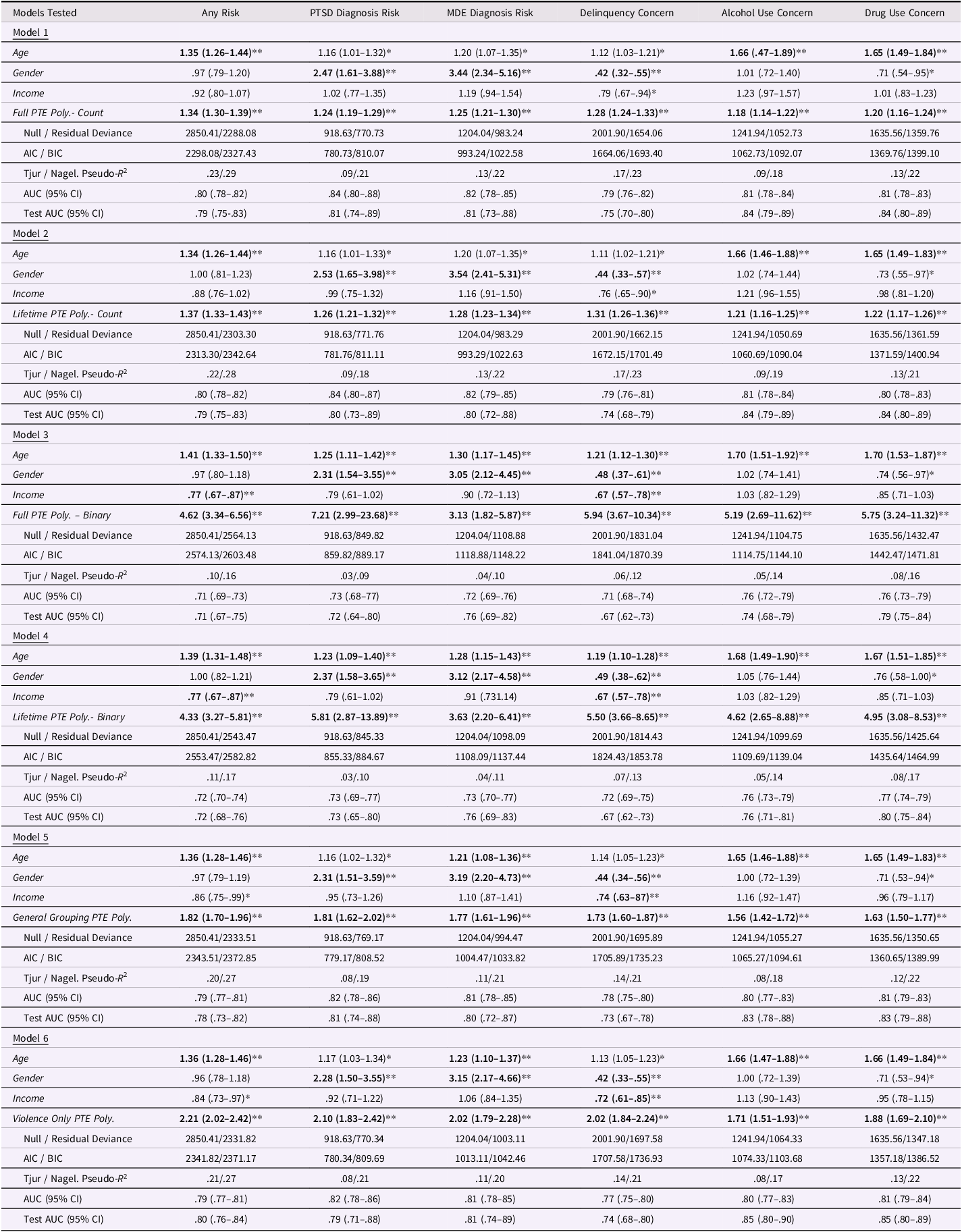
Polyvictimization models
Table 3 provides the model results, including the odds ratios (ORs) and 95% confidence interval [CI], for all six of the polyvictimization measurement approaches examined across all six outcomes. Across all 36 models, each polyvictimization measurement approach was significantly associated with each of the six outcomes in the individual models (ps < .001). In each case, the OR was greater than one, indicating that youth who experienced PTE and/or SLE, whether measured as a count or binary variable, had greater odds of meeting criteria for all of the risk categories (including the composite Any Risk outcome), compared to youth participants with no reported PTE/SLE exposure (by definition, a dichotomous measurement). In all the models predicting Any Risk, Alcohol Use Concern, and Drug Use Concern, age was also significantly associated with greater odds of being classified as at-risk (ps < .001), indicating that older youth participants generally had greater odds of reporting these concerns compared to younger youth. Age was also significantly associated with PTSD Diagnosis Risk, MDE Diagnosis Risk, and Delinquency Concern in the models examining PTE as a binary variable (both Lifetime PTE and Full PTE polyvictimization variables), but not in most measurement approaches that measured polyvictimization as a count variable. The only exceptions were that age was associated with MDE Diagnosis Risk in the models where PTE was measured through the General Grouping and Violence Only PTE polyvictimization approaches.
Model results for different measurement approaches of polyvictimization for potentially traumatic events (PTEs)

**= p < .001. *= .001 < p < .05. n = 2615 for initial model building. n = 682 for the testing dataset. Predictors are presented in italics under each model. Values displayed for each predictor are the predictor’s odds ratio with the 95% confidence interval. For analyses involving binary measurements, “0” or no exposure was the reference group compared to “1” or exposure. Test AUC = AUC value when model applied to the testing dataset. PTE = Potentially traumatic event. AIC = Akaike information criterion, BIC = Bayesian information criterion, Nagel = Nagelkerke, AUC = Area under the curve value. Poly = Polyvictimization. PTSD = Posttraumatic stress disorder. MDE = Major depressive episode. Com.V. = Community violence. Par.V. = Parental violence.
Gender was statistically significantly associated with PTSD Diagnosis Risk, MDE Diagnosis Risk, and Delinquency Concern in all models (ps < .001), revealing that female youth had a greater odds of meeting criteria for PTSD or MDE diagnosis risk, and lower odds of meeting the criteria for a Delinquency Concern, compared to male youth. Income was only statistically significantly associated with the Any Risk outcome in the models that examined PTE as a binary variable (ps < .001). Income was also significantly associated with Delinquency Concern criteria only in the models that examined polyvictimization as a binary variable (including the Full PTE polyvictimization variable [PTEs + SLEs] and Lifetime PTE polyvictimization variable [PTEs only]) or with the General Grouping PTE and Violence Only PTE polyvictimization approaches (ps < .001). In all these models, results suggested that youth participants from households with more income tend to have lower odds of meeting criteria for at least one of the risk categories, and more specifically the Delinquency Concern category, compared to youth participants from lower income households.
The models using the count versions of the Full PTE and Lifetime PTE polyvictimization values (Models 1 and 2) tended to perform better compared to the binary and more general grouping polyvictimization models (Models 3 and 4), as indicated by lower residual deviance values and AIC/BIC values, as well as higher pseudo-R 2 values. When comparing these metrics between the General Grouping PTE and Violence Only PTE polyvictimization approaches (Models 5 and 6) with the binary polyvictimization metrics for Full PTE and Lifetime PTE polyvictimization exposure, the General Grouping PTE and Violence Only PTE polyvictimization approaches tended to perform better as determined by lower residual deviance values and AIC/BIC values, as well as higher pseudo-R 2 values (Table 3). Overall, the fit metrics (e.g., deviance values, AIC, BIC, pseudo-R 2) for those models using the Full PTE and Lifetime PTE polyvictimization count measures were similar to the model metrics that used the General Grouping and Violence Only PTE polyvictimization approaches.
All models demonstrated acceptable discrimination or prediction performance, as determined by AUC values for the training dataset models being greater than .70. This was also the case when the models were applied to the testing dataset (i.e., AUC values <.70), apart from the AUC values being in the poor discrimination range (i.e., between .60 and .70) in Model 3 and 4 when predicting Delinquency Concern with the polyvictimization binary variable. The pattern of discrimination performance tended to favor models with events measured as a count variable (Models 1, 2, 5, and 6), as determined by the AUC values for these models being approximately 5 to 10 units higher than the AUC values for those models utilizing a binary variable (Models 3 and 4) of PTE (e.g., PTSD Diagnosis Risk Model 1 AUC value = .84, PTSD Diagnosis Risk Model 2 AUC value = .73). There was a non-noticeable difference in discrimination performance (i.e., AUC values) between the models using the Full PTE and Lifetime PTE polyvictimization count measures (Models 1 and 2) and those using General Grouping PTE and Violence Only PTE polyvictimization approaches (Models 5 and 6; e.g., Alcohol Use Concern Model 1 AUC value = .81, Alcohol Use Concern Model 5 AUC value = .80).
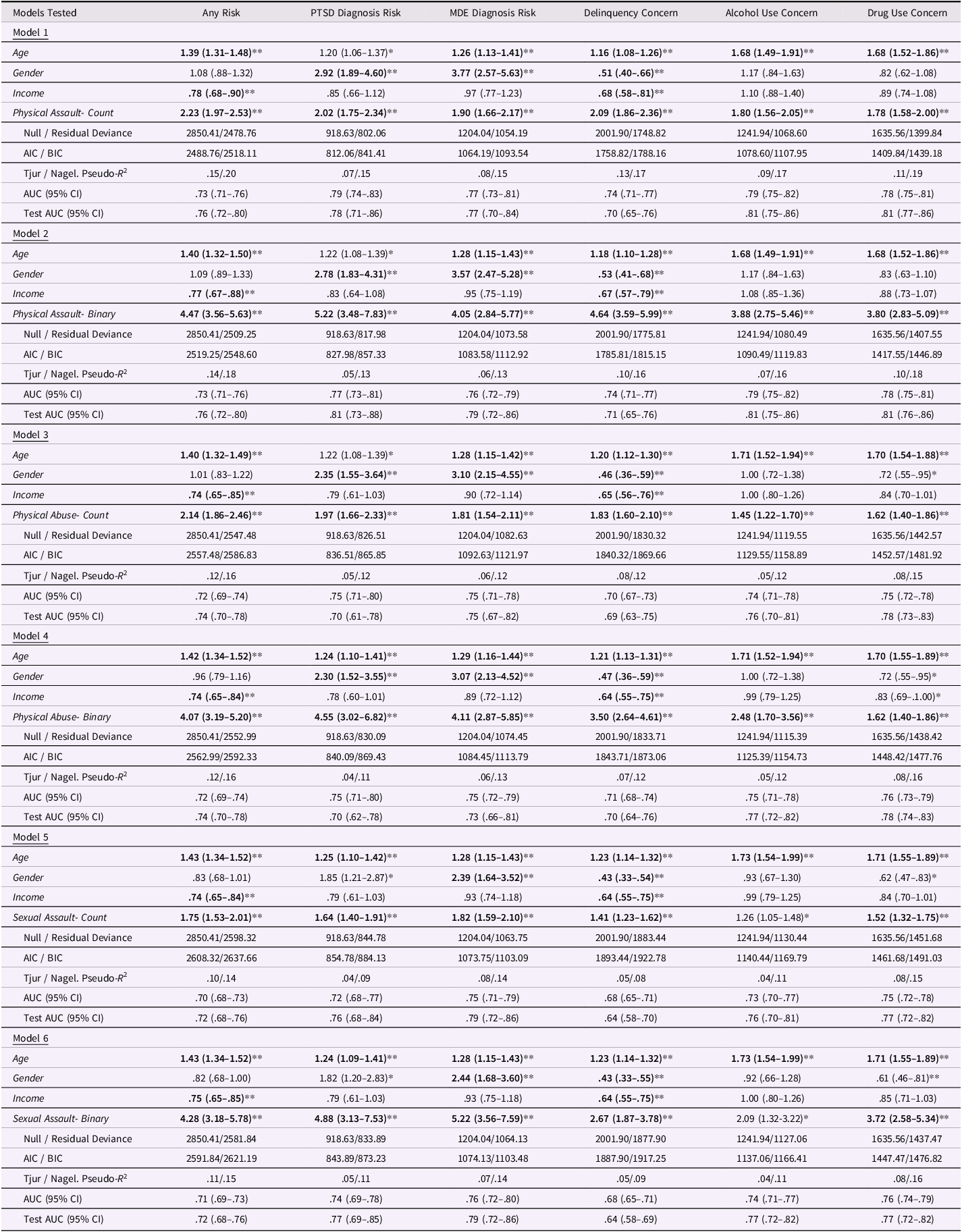
Violence models
Table 4 provides the model results for the six specific PTE polyvictimization measurement approaches for the various forms of assault and abuse (i.e., physical assault, physical abuse, and sexual assault). Table 5 provides the model results for the four witnessing community and parental violence PTE measurement approaches. Across all models examining physical abuse, physical assault, and witnessing community violence, each PTE measurement approach was significantly associated with each of the six outcomes (ps < .001). In each case, the ORs were significantly greater than one, suggesting that there is a greater odds of a youth participant meeting criteria for all of risk outcomes when experiencing more types of that specific PTE (when the PTE types were measured as a count variable), or when experiencing at least one type of that specific PTE as compared to youth participants with no exposure (i.e., PTE types were measured dichotomously). The only exceptions to these patterns were in the models predicting Delinquency Concern for sexual assault and witnessing parental violence, such that the count and binary predictors for these types did not reach statistical significance (p > .001).
Model results for different measurement approaches of abuse and assault

**= p < .001. *= .001 < p < .05. n = 2615 for initial model building. n = 682 for the testing dataset. Predictors are presented in italics under each model. Values displayed for each predictor are the predictor’s odds ratio with the 95% confidence interval. For analyses involving binary measurements, “0” or no exposure was the reference group compared to “1” or exposure. Test AUC = AUC value when model applied to the testing dataset. PTE = Potentially traumatic event. AIC = Akaike information criterion. BIC = Bayesian information criterion. Nagel = Nagelkerke. AUC = Area under the curve value. Poly = Polyvictimization. PTSD = Posttraumatic stress disorder. MDE = Major depressive episode. Com.V. = Community violence. Par.V. = Parental violence.
Model results for different measurement approaches of witnessing community and parental violence

**= p < .001. *= .001 < p < .05. n = 2615 for initial model building. n = 682 for the testing dataset. Predictors are presented in italics under each model. Values displayed for each predictor are the predictor’s odds ratio with the 95% confidence interval. For analyses involving binary measurements, “0” or no exposure was the reference group compared to “1” or exposure. Test AUC = AUC value when model applied to the testing dataset. PTE = Potentially traumatic event. AIC = Akaike information criterion. BIC = Bayesian information criterion. Nagel = Nagelkerke. AUC = Area under the curve value. Poly = Polyvictimization. PTSD = Posttraumatic stress disorder. MDE = Major depressive episode. Com.V. = Community violence. Par.V. = Parental violence.
In all models for each measurement approach to the specific PTE type when predicting the Any Risk, MDE Diagnosis Risk, Alcohol Use Concern, and Drug Use Concern outcomes, age produced an odds ratio greater than one (ps < .001). This suggests that each year of participant age was associated with greater odds of meeting criteria for these concerns. In some cases, age produced ORs>1.0 for PTSD Diagnosis Risk and Delinquency Concern, but this was not consistent across all models when different PTE types were examined. Additionally, gender was statistically significantly associated with MDE Diagnosis Risk and Delinquency Concern in all models (ps < .001), indicating that on average female participants had greater odds of meeting criteria for MDE, as well as lower odds of meeting the criteria for a Delinquency Concern, compared to male youth. Of note, gender produced ORs>1 for PTSD Diagnosis Risk in all models, except those that examined sexual assault specifically as a predictor. Income was also significantly associated only with Delinquency Concern criteria across all models (ps < .001), suggesting that participants from households with more yearly income tended to have lower odds of meeting criteria for the Delinquency Concern category.
There were three instances where the significance of a covariate (at p < .001) changed between the models predicting an outcome based on whether a count or binary variable for the specific PTE type was used. In the models examining physical abuse in relation to PTSD Diagnosis Risk, age was significant in the model utilizing physical abuse as a binary variable, OR[95% CI] = 1.24 [1.10–1.41], p < .001, but not in the model utilizing physical abuse as a count variable, OR[95% CI] = 1.22 [1.08–1.39], p = .002. Similarly, in the model predicting Delinquency Concern in which witnessing community violence was measured as a binary variable, age was significant, OR[95% CI] = 1.15 [1.06–1.25], p < .001. However, age was nonsignificant when witnessing community violence was measured as a count variable predicting Delinquency Concern, OR[95% CI] = 1.13[1.04–1.22], p = .003. Lastly, income was significant in the model utilizing witnessing community violence as a binary variable predicting Any Risk outcome, OR[95% CI] = .75 [.66–.86], p < .001, but not in the model utilizing this PTE as a count variable predicting the Any Risk outcome, OR[95% CI] = .81 [.70–.93], p = .002.
Regarding model performance, there appeared to be a slight improvement in model performance when measuring physical assault as a count vs. binary variable, as determined through minimally lower AIC, BIC, and residual deviance values, as well as minimally higher pseudo-R 2 values. This was also the case when comparing the models that examined witnessing community violence as a count vs. binary variable. Observations across the fit metrics (e.g., deviance values, pseudo-R 2 values, AIC/BIC) for the different models examining physical abuse and witnessing parental violence across each of the outcomes suggested similar performance. For sexual assault, the model performance values suggest slightly better model performance across almost all outcomes in those models utilizing a binary as opposed to count variable for sexual assault. This was determined through minimally lower AIC, BIC, and residual deviance values, as well as minimally higher pseudo-R 2 values. Regarding discrimination or prediction performance for the models, most models tended to have acceptable to excellent prediction performance, as determined by AUC values across all models being <.70 for both the training and testing datasets. The only exception to this pattern was observed when the AUC values were >.70 in the models predicting Delinquency Concern when examining sexual assault and witnessing parental violence, as well as when predicting the Any Risk outcome with the witnessing parental violence predictor models.
Discussion
Assessment and measurement of PTEs often lack consistency between and even within studies using similar datasets and measures. These measurement variations may be limiting knowledge about the relation between PTE exposure and functioning in youth. Utilizing a novel approach that combines the strengths of replication and multiverse analysis research frameworks with secondary data, this study sought to use what has been termed a SDMR approach to systematically (re)evaluate PTE measurement approaches to polyvictimization using data from the NSA-R project across different classes of PTE (including some SLEs) and for certain forms of violence exposure.
Since this study sought to use a replication framework, it is important to first note that the findings of the current study tended to align with research demonstrating that greater levels of exposure to PTEs and SLEs are associated with greater risk for poor emotional and behavioral functioning. This includes replicating previous research specifically with the NSA-R dataset, as well as aligning with the broader literature on the cumulative risk theories of PTE exposure (e.g., Hamby et al., Reference Hamby, Elm, Howell and Merrick2021). These findings help build on this previous literature by demonstrating the potential robustness of the association between PTE and poor psychological functioning through the different measurement approaches to PTE using a multiverse analysis. That is, no matter how polyvictimization of PTE was examined, PTE (with and without SLEs) was still found to be significantly associated with each outcome of interest examined in this study, as well as for most individual PTE violence types. The current study also replicated gender and age-related findings, such as how older compared to younger youth were more at risk for delinquency and substance use concerns (e.g., Halladay et al., Reference Halladay, Woock, El-Khechen, Munn, MacKillop, Amlung, Ogrodnik, Favotto, Aryal, Noori, Kiflen and Georgiades2020), and that female compared to male youth were at more risk for PTSD and MDE concerns (e.g., Garza & Jovanovic, Reference Garza and Jovanovic2017).
Moving beyond reaffirming whether an association existed between PTE exposure and poor psychological functioning, the findings of the current study generally support the study’s hypothesis that PTE polyvictimization measurement approaches that incorporated more categories (i.e., greater range) of exposures demonstrated better model and prediction performance, as compared to the binary PTE variable models. Those models that measured PTE as a count variable were better at fitting the data and better at classifying those youth with a psychological concern (e.g., PTSD diagnosis risk, alcohol use concern), as compared to those models using a binary PTE variable. The finding that generally more detailed information on the types of PTE exposure youth experience tends to provide better statistical estimation performance is in line with broader psychometric guidance (e.g., greater number of individual differences among youth provides more power to detect a relation between the variable and an outcome of interest; MacCallum et al., Reference MacCallum, Zhang, Preacher and Rucker2002). This suggests that the models were better able to use these individual differences to distinguish between those youth with and without psychological concerns according to their PTE exposure, in addition to the other covariates included in the model. This pattern could also be observed in the correlations among variables, as the strength of correlations between the count polyvictimization variables and each risk outcome was approximately two times greater compared to the binary variable correlations (e.g., Full PTE polyvictimization count and MDE Diagnosis Risk r = .30; Full PTE Polyvictimization binary and MDE Diagnosis Risk r = .11).
These findings also align with the small amount of available research within the literature that has compared measurement approaches to polyvictimization and recommendations about moving beyond a binary approach (e.g., Ettekal et al., Reference Ettekal, Eiden, Nickerson and Schuetze2019; Lacey & Minnis, Reference Lacey and Minnis2020). The current study complements this research by demonstrating that patterns associated with better model fit and prediction also apply when examining PTE’s relation across multiple types of concern or risk and at varying levels of PTE categorization types (e.g., general vs. full categorizations), as well as when including SLEs. These findings also highlight concerns about dichotomizing a continuous variable like PTE exposure, since that appears to reduce correlation coefficients and may therefore mask relations between exposure and functioning (e.g., MacCallum et al., Reference MacCallum, Zhang, Preacher and Rucker2002).
While the findings generally suggested that count variables were superior regarding model performance compared to binary variables, the idea that more assessment is better did not appear to be supported by the findings. That is, while all count-based models tended to perform better compared to the models using the PTE binary variable, the amount of difference in model performance and prediction between the Full PTE (0–38 events) and Lifetime PTE (0–31 events) PTE count variable models and General Grouping (0–10 events) and Violence Only (0–5 events) PTE variable models was small or absent. This was also the case when comparing the models with the Full PTE polyvictimization variable that included the added SLEs with the models that included the Lifetime PTE variables without the SLEs. Comparisons across these models suggested that in the case of polyvictimization involving different PTE types and in some cases SLEs, there may be a maximum benefit or asymptote in model performance (i.e., predicting youth at risk of poor functioning) that is reached after a certain number of different types of PTEs are considered. For example, knowing if a youth has been exposed to between 0 and 10 different types of PTEs may provide just as much information as knowing exposure to between 0 and 30 different types of PTEs when determining if they might be at risk for PTSD concerns. This finding may partially align with literature that has examined “cutoff” scores that signify significant risk for poor outcomes among ACEs exposure, such as findings demonstrating that once an individual has a cumulative risk score of more than four or five ACEs, the differences between individuals at higher levels of exposure are negligible (e.g., Naicker et al., Reference Naicker, Ahun, Besharati, Norris, Orri and Richter2022).
Another notable finding emerged for subtypes of violence; in these models, the value of binary vs. count PTE variables in predicting outcomes was less pronounced. Overall, the utility of more detailed information about PTE types appeared to be less important when outcomes were examined within one subtype of PTE than it was when examined across multiple PTE types. This was determined through evaluation of change in model performance metrics being greater when comparing the count vs. binary approaches among the PTE polyvictimization models that included multiple PTE types, as compared to the differences between the count vs. binary models for the specific forms of violence for most outcomes. One possibility is that this difference may be explained by differences in the potential range of values inherent in each approach. For example, the count PTE polyvictimization measure could range from 0 to 31 for lifetime exposure, which is greater in difference to the binary PTE approach (i.e., 0 or 1) when compared to the difference in scores for individual subtypes of PTE, which could only range from zero to six at most. The smaller range of the individual PTE subtype count variables may weaken their incremental predictive value above a dichotomous variable, relative to the larger polyvictimization models. However, the attenuated variable range may not be a sufficient explanation because the General Grouping (0–7) and Violence Only (0–5) PTE count measures had smaller ranges but produced comparable model results to the larger Full PTE and Lifetime PTE polyvictimization methods. Another hypothesis might be that within PTE subtypes, some events are more influential predictors than others (e.g., within sexual assault, events involving sexual penetration may predict negative outcomes more strongly than non-penetration events).
Taken together, these findings help illustrate the importance of not only considering PTE exposure as a construct beyond a binary operationalization but also the need to take multiple PTE exposures (“polyvictimization”) into account to better understand risk for poor functioning. This contrasts with focusing on a single type of exposure, even if an individual has multiple indicators of exposure to that PTE (e.g., Evans et al., Reference Evans, Li and Whipple2013). This aligns with previous research on the unique aspect of being exposed to multiple PTE types. For example, Finkelhor et al. (Reference Finkelhor, Ormrod and Turner2007) found that youth exposed to multiple types of PTE demonstrated more mental health challenges (e.g., anxiety) than those with chronic exposure to a single PTE type. Also, the Violence Only PTE count variable and the Lifetime PTE polyvictimization measure – both with and without SLEs – performed quite similarly across analyses. This suggests that identifying different types of violence exposure (as opposed to other PTEs and SLEs) may be maximally influential when it comes to predicting risk for poor functioning, such as forms of child maltreatment (e.g., physical abuse, sexual abuse/assault) and witnessing violence in the home or community. This also aligns with research on relatively brief screeners for trauma-related symptoms showing validity in measures that only include a small number of violence focused PTEs in the exposure assessment component (e.g., The Child Trauma Screen; only assesses four violence focused events; Lang & Connell, Reference Lang and Connell2017). Unfortunately, this finding could not be interrogated further in this study because of the differing level of PTE measurement breadth.
It is also necessary to consider the potential influence that differences in PTE measurement may have within the broader context of the analysis. Notably, differences emerged in the association of covariates included in the model (i.e., age, gender, and income level) depending on how the PTE exposure variable was calculated. Of course, this will happen in all multivariate model testing when one of the multiple variables included in a model is changed. However, there was a distinct pattern in the current study. In the multiple situations observed (both across and within PTE types), one predictor variable or covariate would be statically significant in a model where PTE polyvictimization (with or without SLEs) was measured dichotomously but would be nonsignificant in the same model when PTE polyvictimization was measured as a count variable. This pattern suggests that less extensive measurement of a PTE variable in a given model may increase the apparent importance of other factors in the model. For example, considering how dichotomizing can influence relations between variables, this might also change the interplay between predictor variables in the model, which in turn has other “downstream” effects on a different variables’ observed association with the outcome variable (MacCallum et al., Reference MacCallum, Zhang, Preacher and Rucker2002), such as through decreasing the strength of the correlation between the binary PTE variable and covariates. This was observed between the Full PTE and Lifetime PTE polyvictimization binary and count variables and income correlations. Taken together, these findings point not only to the importance of more thoroughly measuring PTE exposure but also to the importance of how other factors or variables of interest may be influenced by the PTE variable. These findings are especially relevant to studies that seek to examine moderator or mediator effects of other risk or protective factors and PTE (e.g., using binary variables in interaction terms) and suggest that dichotomization of PTE exposure could introduce measurement bias and error (Royston et al., Reference Royston, Altman and Sauerbrei2006). It is these moderators and mediators that are often the target of applied work in this field that seeks to create supports and services to alleviate the negative impacts of PTE exposure on youth’s functioning (e.g., Zhao et al., Reference Zhao, Han, Teopiz, McIntyre, Ma and Cao2022).
Further, it is also necessary to consider sample characteristics and their relation to these measurement concerns. For example, the NSA-R was a large, nationally representative sample of youth. However, even within this large sample, the PTE polyvictimization measurement method appeared to alter the observed predictive ability of that variable and other covariates included in the model. This further illustrates the importance of proper measurement with PTE and the potential risks associated with measuring PTE as a binary variable, as small sample sizes tend to be more susceptible to sampling error and changes in observed associations between variables when dichotomized (MacCallum et al., Reference MacCallum, Zhang, Preacher and Rucker2002). These issues most certainly apply to the field of PTE research in youth, where concerns of small and unrepresented samples are often described (e.g., McLaughlin et al., Reference McLaughlin, Weissman and Bitrán2019). It is also necessary to consider how such findings on PTE polyvictimization may translate to other populations of youth, especially youth from backgrounds that tend to be exposed to more types of PTEs, such as youth from families whose incomes are below the federal poverty level and youth in foster care (e.g., Loomis et al., Reference Loomis, Feely and Kennedy2020). For example, such populations may tend to be exposed to more forms of PTE compared to the higher socioeconomic samples or community samples, so model performance may be worse for the binary measurement compared to a count variable for PTE polyvictimization. Further, it may be the case that SLEs in these populations (e.g., placement changes for youth in foster care, forms of neglect) play a more important role in functioning and thus improve prediction when added to the model, compared to what was observed in the current study.
Limitations
It is necessary to evaluate the study’s findings within the context of its limitations. First, although the NSA-R assessed for several types of PTEs and SLEs, the range of potential events it assessed was not exhaustive. Some common forms of PTEs found to be associated with psychological functioning were not measured. For example, certain forms of maltreatment, such as neglect and psychological abuse, were not assessed, although they have been previously found to contribute to the development and severity of concerns like PTSD and MDE (e.g., McGuire et al., Reference McGuire, Huffhines and Jackson2021; McNeil et al., Reference McNeil, Andrews and Cohen2020). Additionally, as described previously, the current study had uneven measurement across PTE types (e.g., only having two questions about exposure to homicide vs. six questions about witnessing community violence). This limitation, along with missing certain major forms of PTE, limited the types of analyses that could be conducted when examining different levels of PTE groupings and individual PTE types beyond forms of violence. Another limitation is that the variables utilized for PTEs, SLEs, and the outcomes of interest all relied on youth self-report interviews. Reports from other informants (e.g., caregivers) may have helped improve measurement of both predictor and outcome variables. Lastly, while this study examined last year or past six-month psychological functioning concerns and lifetime exposure to PTEs, the current study used cross-sectional data from a single timepoint. This limited conclusions that can be made about causation and temporal effects, as well as the bidirectional influence of functioning impairment and PTE exposure.
Recommendations and conclusions
Despite these limitations, the current study’s findings offer empirical support for several recommendations regarding PTE exposure measurement. Primarily, the current study’s findings follow other calls in the literature to discontinue measuring PTE exposure, especially exposure to multiple PTE types, as a binary variable. This includes using binary variables not only as predictors but also as a grouping variable, such as in cases where an individual may do group t-tests or other comparisons between populations differentiated by their PTE exposure. Instead, researchers should rely on dimensional operationalizations of PTE that incorporate information on different types of exposure. One recommendation when assessing for multiple types of PTE is to include individual, behaviorally specific questions asking about different subtypes of that exposure to ensure variability in measurement is obtained both within and between PTE types. This can also help inform future research in this domain to determine at what level of assessment breadth is most helpful in identifying youth at risk for poor functioning. This may be especially important for those PTEs that may not be traditionally considered Criterion A traumas as defined by the DSM-5 (APA, 2022) and determining whether there may be unique differences in polyvictimization measurement between violent vs. nonviolent or indirect forms of PTE or SLE exposure (e.g., death of a close individual, caregiver divorce).
Although the current study focused on polyvictimization, there are several other characteristics used to operationalize or define PTE that may provide important information in determining which youth are at risk of poor functioning. These include dimensions associated with PTE exposure such as frequency, severity, or age of onset, all of which have been uniquely found to be associated with youth functioning (e.g., Jackson et al., Reference Jackson, Gabrielli, Fleming, Tunno and Makanui2014). Further, these dimensions have been found to serve as key indicator variables when using more complex statistical modeling methods, such as latent variable measurement models or latent profile analysis (e.g., McGuire et al., Reference McGuire, Gabrielli and Jackson2024; Warmingham et al., Reference Warmingham, Handley, Rogosch, Manly and Cicchetti2019). While a polyvictimization sum or cumulative risk measurement approach may have some benefits (e.g., parsimony, increased statistical power in most cases; Evans et al., Reference Evans, Li and Whipple2013), there are still several notable limitations to the sum score polyvictimization approach. For example, this approach assigns equal weight to every type of PTE and fails to account for other important characteristics of exposure (Lacey & Minnis, Reference Lacey and Minnis2020). Moreover, evidence suggests that more complex variable-centered and person-centered analytic techniques may be more optimal ways of measuring PTE exposure when predicting youth’s functioning compared to cumulative or sum score approaches (e.g., Ettekal et al., Reference Ettekal, Eiden, Nickerson and Schuetze2019; Lian et al., Reference Lian, Kiely and Anstey2022). Thus, it is recommended that researchers collect information on not only type of exposure but other characteristics of the exposure (e.g., severity, age of onset), which can then be used to compare or combine with polyvictimization scores.
Relatedly, the field would benefit from additional multiverse analyses with existing datasets examining PTE. These studies might examine models that utilize different levels of breadth or complexity related to polyvictimization, similar to what was conducted in the current study. Additionally, they might also compare models that utilize different PTE characteristics (e.g., frequency and severity). Such analyses could demonstrate that an observed association is not simply a by-product of a specific data processing or measurement selection (McGuire & Jackson Reference McGuire and Jackson2024; Steegen et al., Reference Steegen, Tuerlinckx, Gelman and Vanpaemel2016). Further, this type of approach may also help further determine the strengths and weaknesses of the many measurement approaches that currently exist. It is key, though, that researchers using this approach be transparent about their data processing and analytic decisions and clearly explain how and why certain PTE analytic decisions were made, as well as ensure that multiple metrics are incorporated into model evaluation (Steegen et al., Reference Steegen, Tuerlinckx, Gelman and Vanpaemel2016).
This study provides empirical insight into how decisions regarding data assessment and processing may influence the observed relations between PTE exposure and youth functioning. Results highlight the theoretical importance and modeling benefits associated with measuring PTE beyond just a binary variable and utilizing PTE conceptualizations that account for the diverse set of experiences that so many youths unfortunately tend to experience. It is necessary to be thoughtful and conscientious about the approaches utilized to assign numbers to concepts or constructs that involve complex experiences for participants, including PTE. Until consensus is reached as to how best to capture and conceptualize these experiences in youth, there should be more research conducted to better under current and past methods for measuring PTE.
Supplementary material
The supplementary material for this article can be found at https://doi.org/10.1017/S0954579424001354.
Funding statement
This research was supported by Grant 1R01HD046830-01 from the National Institute of Child Health and Human Development (PI: Kilpatrick). Dr McGuire was supported by grant T32MH018869 from the National Institute of Mental Health (PI: Danielson/Kilpatrick) for preparation of this paper.
Competing interests
The authors declare that they have no conflicts of interest.