





Impact statement
Biocrusts are the living skin of drylands and pillars of the functioning of the ecosystems they inhabit, yet in many locations they are diminished by anthropogenic disturbances. Their loss can degrade drylands and, once degraded, their unassisted recovery may be orders of magnitude slower than their loss. Therefore, there is considerable interest and value in restoring biocrusts. In the past few decades, researchers have made progress in learning how to produce biocrust biota in dedicated biocrust cultivation farms (hereafter referred to simply as ‘farms’), labs, greenhouses, etc., for use as inoculum. However, a remaining bottleneck is that field establishment of biocrust inoculum often fails or occurs more slowly than desired. Here, we review a new generation of emerging solutions and put forward a generalized recipe for supporting biocrust recovery: adding inoculum, retaining it in place and passively mitigating environmental stresses and resource limitations. By optimizing these biocrust restoration methods and developing others following the same principles, we can improve natural dryland and human environments.
The problem, the promise and the challenge
Biological soil crusts (biocrusts) are a thin, coherent soil surface layer aggregated and inhabited by communities of tiny photoautotrophic and heterotrophic organisms (Weber et al., Reference Weber, Belnap, Büdel, Antoninka, Barger, Chaudhary, Darrouzet-Nardi, Eldridge, Faist, Ferrenberg, Havrilla, Huber-Sannwald, Issa, Maestre, Reed, Rodriguez-Caballero, Tucker, Young, Zhang, Zhao, Zhou and Bowker2022). These desiccation-tolerant communities contribute key ecosystem functions in areas with low vascular plant cover, such as drylands, high latitude or altitude ecosystems and disturbed mesic areas (Weber et al., Reference Weber, Belnap, Büdel, Antoninka, Barger, Chaudhary, Darrouzet-Nardi, Eldridge, Faist, Ferrenberg, Havrilla, Huber-Sannwald, Issa, Maestre, Reed, Rodriguez-Caballero, Tucker, Young, Zhang, Zhao, Zhou and Bowker2022). Biocrusts cover an estimated 12% of Earth’s terrestrial surface, across many major biomes (Rodriguez-Caballero et al., Reference Rodriguez-Caballero, Belnap, Büdel, Crutzen, Andreae, Pöschl and Weber2018). Biocrust composition can range widely in the dominance of key photosynthetic groups (i.e., cyanobacteria, algae, lichens and bryophytes) and can be strongly influenced by microsite conditions (Durham et al., Reference Durham, Doherty, Antoninka, Ramsey and Bowker2018), climate (Ferrenberg et al., Reference Ferrenberg, Reed, Belnap and Schlesinger2015; Phillips et al., Reference Phillips, McNellis, Howell, Lauria, Belnap and Reed2022), disturbance regimes (Condon and Pyke, Reference Condon and Pyke2018) and subsequent succession (Weber et al., Reference Weber, Bowker, Zhang, Belnap, Weber, Büdel and Belnap2016). Of these factors, physical disturbances of the soil surface are a major constraint on biocrust development and distribution; biocrusts can be degraded or lost in hours to days during disturbance events but take years to decades (or more) to recover (Weber et al., Reference Weber, Bowker, Zhang, Belnap, Weber, Büdel and Belnap2016). Warming climates and shifting precipitation patterns can have similar negative effects (Ferrenberg et al., Reference Ferrenberg, Reed, Belnap and Schlesinger2015; Phillips et al., Reference Phillips, McNellis, Howell, Lauria, Belnap and Reed2022). Soil disturbance with associated effects on biocrust is expected to increase globally (Rodriguez-Caballero et al., Reference Rodriguez-Caballero, Belnap, Büdel, Crutzen, Andreae, Pöschl and Weber2018) due to high demands on croplands and rangelands, increasing needs for energy production and urbanization (Olsson et al., Reference Olsson, Barbosa, Bhadwal, Cowie, Delusca, Flores-Renteria, Hermans, Jobbagy, Kurz, Li, Sonwa, Stringer, Shukla, Skea, Buendia, Masson-Delmotte, Pörtner, Roberts, Zhai, Slade, Connors, van Diemen, Ferrat, Haughey, Luz, Neogi, Pathak, Petzold, Pereira, Vyas, Huntley, Kissick, Belkacemi and Malley2019). The loss of biocrusts results in the loss of their ecosystem functions, including soil stabilization (Phillips et al., Reference Phillips, McNellis, Howell, Lauria, Belnap and Reed2022) and erosion resistance (Rodriguez-Caballero et al., Reference Rodriguez-Caballero, Stanelle, Egerer, Cheng, Su, Canton, Belnap, Andreae, Tegen, Reick, Pöschl and Weber2022), soil water cycling and storage (Duniway et al., Reference Duniway, Geiger, Minnick, Phillips and Belnap2018; Eldridge et al., Reference Eldridge, Reed, Travers, Bowker, Maestre, Ding, Havrilla, Rodriguez-Caballero, Barger, Weber, Antoninka, Belnap, Chaudhary, Faist, Ferrenberg, Huber-Sannwald, Issa and Zhao2020), building soil fertility and cycling nutrients (Rodriguez-Caballero et al., Reference Rodriguez-Caballero, Belnap, Büdel, Crutzen, Andreae, Pöschl and Weber2018) and influencing other biotic communities (Havrilla et al., Reference Havrilla, Chaudhary, Ferrenberg, Antoninka, Belnap, Bowker, Eldridge, Faist, Huber-Sannwald, Leslie, Rodriguez-Caballero, Zhang and Barger2019). Technology for restoring biocrusts is advancing rapidly, driven by the scale of environmental degradation in drylands and other biocrust habitats worldwide.
Biocrust restoration often begins with inoculation, the reintroduction of biocrust biota to sites where they have been lost or diminished. Inoculation reduces propagule scarcity as a barrier to ecosystem recovery (Bowker, Reference Bowker2007). Propagules are materials that propagate the biota, such as spores, tissue fragments, gemmae or live cells, depending on the species. Biocrust inoculation approaches require a supply of biocrust propagules that can be added as inoculum. Researchers may use biocrust directly salvaged from the field, but techniques have been developed over the past ~20 years to first cultivate or culture this material into a larger quantity, hereafter termed “inoculum production” (Doherty et al., Reference Doherty, Antoninka, Bowker, Ayuso and Johnson2015; Antoninka et al., Reference Antoninka, Rowe, Weser, Langenfeld, Brady, Sprague and Day2024). Inoculum production creates more material for use in restoration projects, allowing for larger-scale treatments while decreasing or eliminating the need to obtain biocrust material from the field. Inoculum production has advanced significantly, especially in the last two decades (refer to reviews in Zhou et al., Reference Zhou, Zhao, Belnap, Zhang, Bu and Zhang2020; Palanački Malešević et al., Reference Palanački Malešević, Meriluoto, Mihalj, Važić, Marković, Jurca, Codd and Svirčev2024). Production methods may target single isolates (Giraldo-Silva et al., Reference Giraldo-Silva, Nelson, Barger and Garcia-Pichel2018), populations of a target species (Doherty et al., Reference Doherty, Bowker, Antoninka, Johnson and Wood2018) or whole community cultures (e.g., Antoninka et al., Reference Antoninka, Bowker, Chuckran, Barger, Reed and Belnap2018; Velasco Ayuso et al., Reference Velasco Ayuso, Giraldo-Silva, Barger and Garcia-Pichel2020). There are multiple production systems and modes, including liquid media cultures (e.g., Roncero-Ramos et al., Reference Roncero-Ramos, Román, Gómez-Serrano, Cantón and Acién2019; Chamizo et al., Reference Chamizo, Adessi, Torzillo and Philippis2020), fog chambers (e.g., Doherty et al., Reference Doherty, Grover, Bowker, Durham, Antoninka and Ramsey2020b), soil-based greenhouse growing beds (e.g., Velasco Ayuso et al., Reference Velasco Ayuso, Giraldo-Silva, Barger and Garcia-Pichel2020) and outdoor farming (Antoninka et al., Reference Antoninka, Rowe, Weser, Langenfeld, Brady, Sprague and Day2024). In general, cyanobacteria and mosses have proven to be amenable to inoculum production Zhao et al., Reference Zhao, Bowker, Zhang, Zaady, Weber, Büdel and Belnap2016), but most lichens cannot be produced using existing techniques (Zhao et al., Reference Zhao, Bowker, Zhang, Zaady, Weber, Büdel and Belnap2016), with a few exceptions (Bowker et al., Reference Bowker, Antoninka and Durham2017). Some of these methods have potential for up-scaled production, namely outdoor farming (Jech et al., Reference Jech, Day, Barger, Antoninka, Bowker, Reed and Tucker2023; Antoninka et al., Reference Antoninka, Rowe, Weser, Langenfeld, Brady, Sprague and Day2024), repeated inoculation and harvest of solar fields (Heredia-Velásquez et al., Reference Heredia-Velásquez, Giraldo-Silva, Nelson, Bethany, Kut, González-de-Salceda and Garcia-Pichel2023) and large liquid raceway ponds (Roncero-Ramos et al., Reference Roncero-Ramos, Román, Gómez-Serrano, Cantón and Acién2019; Zhou et al., Reference Zhou, Zhao, Belnap, Zhang, Bu and Zhang2020). Different production targets and systems are appropriate in different settings and for different groups of biota, depending on the environment being treated, the goals and scale of the project and the type of biocrust to be regenerated.
Inoculum production is only one major bottleneck in the biocrust restoration process; another significant challenge is the successful establishment of inoculum in the field. In our collective experience, we observe the best establishment results if we can achieve three objectives at or near the same time: inoculation (defined above), retention (retaining inoculum at an application site, reducing its loss) and amelioration (“softening” the environment; Figure 1).
Illustration of the inoculation–retention–amelioration approach to biocrust restoration. Assisted biocrust recovery from disturbance can be thwarted by propagule insufficiency, transport of propagules off-site or environment (abiotic stress and resource limitation). Inoculation is an approach to reduce propagule insufficiency. Retention is an approach to reduce losses of propagules to wind, water and animals. Amelioration is an approach to reduce abiotic stressors or enhance access to limiting resources such as water. Bundling all of these strategies and integrating them into a single product or process is an approach to increase successful establishment (widen the arrow). This review presents emerging and developing techniques that adhere to this principle.

Figure 1. Long description
A sandy path begins at the top right labeled START.
* The first branch to the right is labeled Propagule Insufficiency and ends in a red X.
* The main path continues down to a section labeled I for Inoculation. A green arrow from a greenhouse at the top left delivers biocrust material, shown as a green hand and microscopic organisms, onto the path.
* A branch to the left labeled Transport shows ants and wind carrying material away, ending in a red X.
* The main path reaches a section labeled R for Retention. A green mesh grid is placed over the sand to prevent loss.
* A branch to the right labeled Abiotic Stress and Resource Limitation shows cracked earth and intense sun waves, ending in a red X.
* The main path reaches a section labeled A for Amelioration. A watering can and a green umbrella represent resource addition and protection from U V radiation and heat.
* The final section at the bottom left is labeled RESTORED, showing a healthy, dark biocrust layer.
In the top right corner is the logo for E C O S super S, Center for Ecosystem Science and Society at Northern Arizona University.
Retaining inoculum on treated areas is challenging, with wind, water or animals like ants moving materials off-site before establishment (Grover et al., Reference Grover, Bowker, Fulé, Sieg and Antoninka2022). Early applicators spread crumbled biocrust without amendments (Belnap, Reference Belnap1993), relying only on fragment mass for retention and risking loss. Practitioners subsequently reduced losses by containing inoculum, fixing it to soil or enhancing adhesion. For example, simply watering spread inoculum aids soil adhesion (Condon and Pyke, Reference Condon and Pyke2016; Ballesteros et al., Reference Ballesteros, Ayerbe, Casares, Cañadas and Lorite2017; Antoninka et al., Reference Antoninka, Bowker, Barger, Belnap, Giraldo-Silva, Reed, Garcia-Pichel and Duniway2020). Soil surface imprinting is another retention practice (Doherty et al., Reference Doherty, Crouch and Roberts2020a). Biocrust inoculum successfully retained on site has an opportunity to establish, but must then overcome harsh environmental conditions that curtail or delay growth and establishment.
Amelioration of harsh environmental conditions can enhance biocrust establishment (reviewed in Palanački Malešević et al., Reference Palanački Malešević, Meriluoto, Mihalj, Važić, Marković, Jurca, Codd and Svirčev2024). Four such conditions include: 1. active sediment movement, 2. resource limitations, 3. abiotic stress factors, and 4. biotic stress factors. Active sediment movement can result in inoculum loss from erosion, but it may also affect biocrust inoculants through soil deposition and burial. Biocrusts have an organism-specific tolerance of burial, and partial burial may enhance establishment for some species (Martínez and Maun, Reference Martínez and Maun1999; Jia et al., Reference Jia, Li, Liu, Gao and Li2008; Williams and Eldridge, Reference Williams and Eldridge2011).
Water is the primary resource limitation in dryland biocrust habitats; biocrusts persist but cannot grow while desiccated. Therefore, successful multihectare applications have often included temporary irrigation (Zhou et al., Reference Zhou, Zhao, Belnap, Zhang, Bu and Zhang2020). In some habitats, nutrients may be equally or more limiting than water (Gretarsdottir et al., Reference Gretarsdottir, Aradottir, Vandvik, Heegaard and Birks2004). Other abiotic stressors include soil salinity or sodicity (Wu et al., Reference Wu, Farías, Torres, Xia, Song, Saber and Lan2022), UV exposure (Belnap et al., Reference Belnap, Phillips and Smith2007) and temperature extremes (Bu et al., Reference Bu, Li, Wang and Bowker2018). Biotic stress includes herbivory (Rinehart and Hawlena, Reference Rinehart and Hawlena2022), pathogens (Bethany et al., Reference Bethany, Johnson and Garcia-Pichel2022), physical disturbance (Rengifo-Faiffer and Arana, Reference Rengifo-Faiffer and Arana2019) and competition (Ridenour et al., Reference Ridenour, Lortie and Callaway2023). Vascular plants, especially exotic invasives, compete for resources and space while depriving biocrust of light through shading and litter (Dettweiler-Robinson et al., Reference Dettweiler-Robinson, Bakker and Grace2013; Serpe et al., Reference Serpe, Roberts, Eldridge and Rosentreter2013). They also increase fire frequency and severity, causing direct mortality, though some biocrust survival has been observed when fire is the sole disturbance (Hilty et al., Reference Hilty, Eldridge, Rosentreter, Wicklow-Howard and Pellant2004; Condon et al., Reference Condon, Shinneman, Rosentreter and Coates2023). Counteracting these stressors and limitations can increase restoration success.
The purpose of this review is to summarize recent progress in finding solutions to mitigate these barriers to biocrust restoration success. We emphasize approaches that simultaneously integrate inoculation–retention–amelioration (Figure 1) into a product or process. We also seek to catalyze expanded use of these products and processes in applications ranging from traditional ecological restoration to novel ecological engineering and sustainable infrastructure applications. Biocrust restoration with these methods may be deployed in wildlands to reverse degradation and boost recovery of ecosystem function or structure, including postmining landscapes (Schultz et al., Reference Schultz, Sluiter, Allen, Machado-de-Lima and Muñoz-Rojas2022), postfire landscapes (Muñoz-Rojas et al., Reference Muñoz-Rojas, Machado de Lima, Chamizo and Bowker2021) and abandoned roads (Chiquoine et al., Reference Chiquoine, Abella and and Bowker2016). However, biocrusts may also be deployed for direct societal benefits, such as conserving cultural artifacts like heritage structures (Cao et al., Reference Cao, Bowker, Delgado-Baquerizo and Xiao2023). The industrial human-built environment provides multiple potential uses for these biocrust restoration tools and practices. For example, green roofs incorporating biocrusts boost biodiversity, retain water and cool the human environment (Rocha et al., Reference Rocha, Paço, Luz, Palha, Milliken, Kotzen, Branquinho, Pinho and de Carvalho2021). Another example is on roadside slopes and embankments where biocrusts are associated with greater soil stability or ecosystem development (Garcia-Palacios et al., Reference García-Palacios, Bowker, Maestre, Soliveres, Valladares, Papadopoulos and Escudero2011; Concostrina-Zubiri et al., Reference Concostrina-Zubiri, Arenas, Martínez and Escudero2019). Further, biocrusts can reduce wind erosion from bare soil beneath utility-scale photovoltaic installations (Wang et al., Reference Wang, Hill, Bu, Li, Yuan, Yang, Yuan, Zhang, Cao and Zhang2021). Restored or engineered biocrusts could act as natural fire barriers, slowing wildfires and protecting vulnerable areas by discouraging exotic annual grasses that carry fire (Muñoz-Rojas et al., Reference Muñoz-Rojas, Machado de Lima, Chamizo and Bowker2021; Condon et al., Reference Condon, Shinneman, Rosentreter and Coates2023). With further testing, refinement and upscaling, inoculation–retention–amelioration methods for biocrust restoration may help us realize many of these applications.
A classification of emerging inoculation–retention–amelioration solutions
In recent years, a variety of potential new solutions have been advanced to assist the recovery of biocrusts in degraded ecosystems or anywhere their introduction might be beneficial, through implementing inoculation–retention–amelioration. These approaches rely on attachment of biocrust organisms to, containment of biocrust organisms within or suspension of biocrust organisms in other materials. Once deployed, these approaches do not require additional inputs to maintain their retention or amelioration functions. These new approaches vary in the potential scale of use and intended outputs. Some lend themselves to broader applications, whereas others are targeted, small-scale interventions (Box 1). Because these approaches are relatively new or undergoing renewed research effort, they are not extensively covered in other recent synthesis products such as Faist et al. (Reference Faist, Tucker, Reed, Antoninka, Bowker, Barger, Dohrenwend, Day, Bellagamba, Belnap, Duniway, Fick, Giraldo-Silva, Nelson, Bethany, Velasco-Ayuso and Garcia-Pichel2019).
A key to emerging inoculation–retention–amelioration solutions to biocrust restoration.
1a. Biocrust delivered on or in solid media, not suspended in viscous semi -liquid
2a. Biocrust growing on or reinforced by cloths, fabrics or sheets ……………………………………………………………………………………………………3
3a. Biocrust growing directly on soil, underlain by cloths, fabrics or sheets
Biocrust sods (sod; Figure 2) are rollable and movable pieces of living biocrust. To date, they have been grown in outdoor farms, and though they can be variably sized, 1 × 3 m has been a common dimension. Biocrust sods have a base layer formed of a nonrigid cloth, fabric or sheet, overlaid by soil and finally the biocrust (a sod is ≥1 cm in thickness), with the optional addition of a shade/wind cloth surface layer. Sods can be unrolled over degraded soil surfaces to nearly instantly create a patch of well-developed biocrust. Most intended applications of biocrust sods are small scale (e.g., treating erosional features, trail or road decommissioning, etc.), although some strategic uses could be envisioned that have large scale effects (e.g., creation of a firebreak). Sods can be created using different materials for different desired outcomes, the most essential variable being the base layer.
Variations:
Plant-permeable biocrust sods are specifically intended to establish biocrusts without excluding, and possibly encouraging, vascular plants (particularly native plants). These could be used when both enhanced native plant and biocrust abundance is desired to meet restoration or other management goals (e.g., control of soil erosion). Typically, in this type of sod, the base layer is a woven organic cloth (burlap has been commonly tested, but other possibilities exist). The weave must not only be tight enough to contain biocrusted soil but also be penetrable by roots growing from above or shoots growing from below.
Weed-blocking biocrust sods are specifically intended to establish biocrusts while discouraging vascular plants (particularly exotics). These could be used when high prevalence of exotic plants discourages biocrust development, or when low vascular plant abundance is desired to meet management goals (e.g., some photovoltaic arrays, fire breaks). Typically, in this type of sod, the base layer is one of various biodegradable weed barriers, such as those made from maize-derived polylactic acid (PLA), though other options exist. Another layer of a reinforcing organic cloth (e.g., burlap) may also be present atop the base layer.
3b. Biocrust growing directly on cloths, fabrics or sheets with no or minimal soil
Biocrust cloths (Figure 3) are pieces of organic cloth or other materials covered in or infused with biocrust organisms. This product has primarily been tested specifically with biocrust mosses, with the growth occurring in fog chambers. The cloth material provides a medium for biocrust attachment that can be applied to soil surfaces with the biocrust-covered surface oriented downward to shelter the biocrust. Biocrust cloths have the advantage of being lightweight and can easily be cut to various sizes either before or after growth of the biocrust organisms. Most intended uses of biocrust cloths are small-scale and targeted, though if strategically placed could have medium-scale outcomes.
Variations:
Plant-permeable biocrust cloths are intended to establish biocrusts while having neutral or positive effects on vascular plants. To date, this type of biocrust cloth has been created using burlap cloth, which has a loose weave that allows vascular plant seedlings to grow through from above or below.
Weed-blocking biocrust cloths establish biocrusts while discouraging vascular plants. To date, maize-derived PLA sheeting has proven to be the most effective material.
2b. Biocrust contained or embedded within another solid material in small, broadcastable units
Biocrust pellets and capsules are meant to be dispersed, either by hand or using machines (such as farm equipment and drones) at small to large scales. To date, all tested examples have been ≤1 cm3. Pellets and capsules physically shield biocrusts from abiotic and biotic stressors in their environment while the inoculum is gradually released. Both pellets and capsules can also contain other biological materials in addition to biocrust biota, such as soil microbiota or seed. Both can also contain various adjuncts that might benefit biocrust establishment by repelling herbivores, boosting stress tolerance or providing/retaining resources……………………………………………………………………………4
4a. Biocrusts are embedded within pieces of mineral or organic media
Biocrust pellets (Figure 4) incorporate biocrust organisms into structures aggregated together by minerals or binders. Clay is the most common mineral binding agent because it can be mixed into a dough-like medium; however, pellets based on diatomaceous earth and other materials have also been tested. Through time, pellets dissolve through wetting cycles, releasing biocrust propagules. Clay pellets in particular may retain moisture, enabling survival and encouraging growth of biocrusts even before the pellet has disintegrated.
4b. Biocrusts are contained within gel capsules
Biocrust capsules (Figure 5) are made by filling gel capsules, like those used for medicines, with biocrust biota. Gel capsules are made of various materials, all designed to dissolve with water or acidity. These also dissolve, crack or disaggregate when exposed to the elements outdoors. When wet, they may partially attach to the soil surface, anchoring them in place. Most capsules are at least partly transparent, potentially allowing biocrust photosynthesis to occur inside the capsules.
1b. Biocrusts are suspended in a viscous semi -liquid.
Biocrust slurries (Figure 6) are made by mixing and suspending biocrust biota in water prior to application. Unlike wet applications of growth media containing biocrust biota, slurries contain some suspended tissue or soil solids and/or adjuncts such as tackifiers that promote adherence to the soil surface or protection of the biota from environmental stressors.
History and state of the art
Biocrust sods
History
Biocrust sods (Figure 2) originated from an outdoor cultivation method where practitioners spread thin layers of inoculum over soil between fabric layers and allowed it to grow (Jech et al., Reference Jech, Day, Barger, Antoninka, Bowker, Reed and Tucker2023). These “quesadillas”(an analogy to a food in which a thin layer of fillings is layered between thin flatbread) are multilayered assemblies atop a base of synthetic weed cloth, where the sod itself consists of a bottom layer of organic biodegradable cloth (sometimes multiple types), a thin soil layer inoculated with crumbled or sieved biota and a top layer of shade cloth, all drip-irrigated. This method enhances growth by increasing moisture retention, reducing UV exposure, preventing wind loss of inoculum and moderating temperature. These favorable conditions allow biocrust to remain active for weeks, as opposed to biocrust in situ, which spends significant amounts of time dormant, resulting in a well-developed crust in less than a year. Early harvest consisted of scraping the cultivated material from the sod, but a key advance was utilizing the entire sod in the restoration process, as detailed below. Sods are grown in long rows (up to 30 m), approximately 1 m width. At harvest, the rows are cut to 3 m length and rolled into tightly packed cylinders for transport to the target site, where they can be unrolled directly on the application surface while maintaining greater intactness compared to scraping and crumbling (Figure 2A–C). As opposed to scattering inoculum, installing biocrust sod creates an instant island of robust biocrust (inoculation) attached to fabric-reinforced soil (retention), reducing local soil erosion and weed pressure (amelioration) (Figure 2D,E). We note that the biocrust sod bears a resemblance to the hypothetical “pan-life-carpet” proposed by Palanački Malešević et al. (Reference Palanački Malešević, Meriluoto, Mihalj, Važić, Marković, Jurca, Codd and Svirčev2024), demonstrating that other researchers are converging on similar restoration solutions.
Production, harvest and use of biocrust sods. (A) Harvesting and rolling sods at the southern Utah sod farm. (B) Unrolling a sod in the Sonoran Desert. Sods were wetted before harvest to increase cohesion when rolling, transporting and unrolling. (C). Harvested rolls of sod and buckets of crumbled biocrust at the southern Utah farm. (D) A biocrust sod with a corn-derived, biodegradable weed barrier base layer plus a layer of burlap, shown here surrounded by the exotic grass Bromus rubens L. in the Sonoran Desert; E. A biocrust sod in the Sonoran Desert 3 months after initial installation. Photo credits: Colin Tucker (A and C); Keven Griffen (B, D, and E).

Figure 2. Long description
A multi-panel set of five photos labeled A through E.
Panel A. A wide shot at a southern Utah sod farm where Colin Tucker and other researchers are harvesting biocrust. One researcher in a green jacket uses a shovel while two others roll a long strip of biocrust sod over a white P V C pipe. The farm consists of long, parallel rows of biocrust in a red-rock desert valley.
Panel B. Keven Griffen, wearing a blue hooded shirt, unrolls a dark biocrust sod onto the desert floor in the Sonoran Desert. The sod is being laid out in a long, rectangular strip over dry, sandy earth.
Panel C. An aerial view by Colin Tucker showing dozens of harvested biocrust sods rolled onto white pipes and stacked in rows. To the left, several black buckets and yellow-lidded bins contain crumbled biocrust. Three researchers sit among the stacks.
Panel D. A close-up by Keven Griffen of a rectangular biocrust sod installed in the Sonoran Desert. The sod features a biodegradable weed barrier and burlap base. It is surrounded by dense, reddish-purple exotic grass, Bromus rubens L.
Panel E. A top-down view by Keven Griffen of a biocrust sod three months after installation. A yellow measuring tape is stretched horizontally across the textured, grayish-brown crust, which is secured at the corners with blue-capped pins.
From 2017 to 2019, an outdoor biocrust farm in southern Utah produced about 6,000 m2 of biocrust from multiple local and nonlocal sources, harvesting a portion as sods (Faist et al., Reference Faist, Tucker, Reed, Antoninka, Bowker, Barger, Dohrenwend, Day, Bellagamba, Belnap, Duniway, Fick, Giraldo-Silva, Nelson, Bethany, Velasco-Ayuso and Garcia-Pichel2019). Sods were first field tested in southern Utah, installed in the field with or without shade cloth. One year postinstallation, moss and lichen coverage was <1% in untreated locations but increased to ~3% with unshaded sods (both local and nonlocal sources) and ~17% with locally sourced sods with shade cloth. After 5 years, biocrust cover ranged from complete loss in heavily grazed areas to as much as ~80% moss cover in shaded, locally sourced sods (Tucker et al., Reference Tucker, Young, Anenberg, Bowker, Jech, Reed and Antoninka2025). Sod application also reduced exotic cheatgrass (Bromus tectorum L.) cover to <1.2%, one-third the coverage in untreated controls (Jech et al., Reference Jech, Day, Barger, Antoninka, Bowker, Reed and Tucker2023).
In 2019, researchers compared biocrust establishment of biocrust cultivated in three ways at a Sonoran Desert farm; the three ways were in quesadillas (where the shade cloth sits directly on the inoculum), in hoophouses (holding shade cloth 1 m above the cultivation substrate) and in a greenhouse (Antoninka et al., Reference Antoninka, Rowe, Weser, Langenfeld, Brady, Sprague and Day2024). Each inoculum was then applied in the field as both small sods and as loose inoculum after scraping the cultivated biocrust off the fabric (Rowe et al., Reference Rowe, Antoninka, Langenfeld, Brady, Sprague, Fastiggi, Kollath, Ramsey and Barker2025). Outdoor production methods produced inocula that established better than greenhouse-produced inoculum and allowed an improved opportunity to germinate and eliminate weeds prior to deployment (Antoninka et al., Reference Antoninka, Rowe, Weser, Langenfeld, Brady, Sprague and Day2024). The quesadilla method best retained source community composition (Antoninka et al., Reference Antoninka, Rowe, Weser, Langenfeld, Brady, Sprague and Day2024). Sods outperformed scattered inoculum over soil but performed similarly to scattered inoculum over burlap, demonstrating burlap’s retentive and ameliorative value (Rowe et al., Reference Rowe, Antoninka, Langenfeld, Brady, Sprague, Fastiggi, Kollath, Ramsey and Barker2025). Overlaid biocrust sods suppressed native seeding success, though seeding under burlap alone was beneficial (Rowe et al., Reference Rowe, Antoninka, Langenfeld, Brady, Sprague, Fastiggi, Kollath, Ramsey and Barker2025).
Recent developments and innovations
More recent findings suggest biocrust sods can be used to combat erosion. Olney (Reference Olney2025) installed plant-permeable biocrust sods perpendicularly across small catchments, upslope from erosional features in the Sonoran Desert. Beyond attaining high biocrust coverage associated with well-developed biocrusts (>40% initial coverage of dark cyanobacteria, moss and lichens), this coverage more than doubled during the 1-year study, indicating field growth even with below-average precipitation. Treated plots had several times the coverage of untreated controls after two growing seasons. Furthermore, sod placement increased soil surface aggregate stability between sods and reduced sediment flux during some monitoring periods (Olney, Reference Olney2025).
The authors have explored recent refinements of biocrust sods to include innovations in materials and farming methods (e.g., Olney, Reference Olney2025). Combining multiple fabrics, such as PLA weed barrier overtopped by burlap cloth, can confer weed resistance and enhanced structural soundness. Limiting soil to 0.5–1 cm thickness versus earlier iterations with ≥2 cm results in lighter sods, which are more compact and easier for two people to carry. Moistening sods on transport days makes them more pliable for rolling with less damage if field-installed within about 1 day; however, they should not remain rolled and hydrated for extended periods or exposed to hot temperatures while wet.
Outdoor biocrust farming succeeds best in cool seasons (ideally <19 °C; Fischer and Subbotina, Reference Fischer and Subbotina2014; Condon and Pyke, Reference Condon and Pyke2016), creating logistical challenges with alignment of the completion of farming and ideal application times. Once daytime highs consistently reach 27 °C, it is best practice to stop irrigation to minimize stress, curtailing the growing season and creating fallow periods. Ongoing trials by the authors indicate that ceasing summer irrigation and resuming when weather cools may stimulate additional successional development, producing active, vigorous biocrust synchronized with ideal fall installation windows rather than months of desiccated storage. Another solution could exploit climate differences among multiple farms. Growing low elevation-sourced biocrust at cooler, high-elevation farms during warm seasons may prove quite productive and produce well-timed harvests for low-elevation deployment, with preliminary observations by the authors suggesting sufficient field establishment. Multiple biocrust sod farms on elevation gradients could theoretically supply two or more harvest periods annually.
Before introduction into field sites, we must ensure sods are weed-free. In the production phase, sods are kept moist to maximize biocrust growing time, which can trigger the germination of seeds sourced either from the original field-collected biocrust starter or from the farm site. Triggering weed germination could help exhaust a pre-existing seed bank within the biocrust, but only if emerging weeds are prevented from setting seed. Manual control of weeds can be expensive, labor-intensive and disturb the biocrust surface. Growing sods may be treated with herbicides to greatly reduce weed growth, without preventing biocrust development (Rowe et al., Reference Rowe, Antoninka, Weser, Wiggins and Bowker2026). Some herbicides begin losing their toxicity to native plants at sod harvest, meaning that treated sods need not introduce active herbicides into the field unless desired (Rowe et al., Reference Rowe, Antoninka, Weser, Wiggins and Bowker2026).
Remaining challenges and opportunities
There are remaining practical challenges in sod production. One is that during the production of plant-permeable biocrust sods (with a burlap base), the burlap may decay to a degree that could hinder rolling and transporting the sod for deployment elsewhere. Weed-blocking sods that feature an extra base layer (biodegradable weed barrier) may not degrade as quickly, but are specifically designed not to be permeable to plants once deployed. Alternative bottom layers could be identified that outlast burlap alone yet are permeable to vascular plant emergence shortly after deployment.
There are opportunities to increase the spatial scale of outcomes of biocrust sod use through their arrangement and grouping in space. A single biocrust sod creates only a patch of restored biocrust and erosion protection, and in some cases, exotic plant reduction. However, the modularity of the units means that practitioners can arrange sods to serve their goals, such as linking them together end-to-end to create a fire break or to stabilize a hillslope on contour, or grouping them to create restoration islands along with integrated seeding or planting. Additional tests can help determine how best to use sods to boost native plant establishment.
In these early trials and in ongoing work by the authors, biocrust sods have always been initiated with natural biocrust material, salvaged prior to a planned disturbance. When added at the initiation of sod farming, all major groups of the biocrust biota have been observed to survive and often grow. Cyanobacterial growth rates are generally the fastest, followed by mosses, and both can attain a high coverage. Lichens may grow during sod farming, but less quickly and less consistently. It remains to be determined if biocrust sods can be created with ex situ cultured biocrust biota, rather than field-sourced material.
The potential utility of biocrust sods is not limited to degraded dry wildlands. They could be used in a variety of settings in the human environment, such as rejuvenating cropland soils, containing pollutants or creating green roofs in dry to mesic regions (Rocha et al., Reference Rocha, Paço, Luz, Palha, Milliken, Kotzen, Branquinho, Pinho and de Carvalho2021).
Biocrust cloths
History
Fabrics and geotextiles have often been used as restoration and rehabilitation tools to reduce runoff and soil erosion (Krenitsky et al., Reference Krenitsky, Carroll, Hill and Krouse1998) and establish vegetation (Tamura et al., Reference Tamura, Lulow, Halsch, Major, Balazs, Austin, Huxman and Kimball2017). Fabrics can ameliorate the environment through shading, protecting plants from freezing conditions and increasing available moisture similar to mulch (Bainbridge, Reference Bainbridge2007; Kertész et al., Reference Kertész, Szalai, Jakab, Tóth, Szabó, Madarász, Jankauskas, Guerra, Bezerra, Panomtaranichagul, Thu and Yi2011). Based on the success of fabrics for vascular plant restoration, researchers began testing similar methods for combining biocrust inoculation with placement of fabrics, including jute net (Condon and Pyke, Reference Condon and Pyke2016; Bowker et al., Reference Bowker, Antoninka and Chuckran2020; Slate et al., Reference Slate, Durham and Pearson2020), burlap (Doherty et al., Reference Doherty, Grover, Bowker, Durham, Antoninka and Ramsey2020b) and weed fabrics (Bowker et al., Reference Bowker, Anenberg, Antoninka, Ramsey and Durham2025). Condon and Pyke (Reference Condon and Pyke2016) first tested the ameliorative efficacy of fabrics (jute net) on biocrust inoculum (salvaged moss) and found that it increased cover and establishment. Slate et al. (Reference Slate, Durham and Pearson2020) confirmed the efficacy of the technique in conjunction with moss inoculum addition. Plant-based fabrics, including jute net, burlap and similar materials, have also been shown to facilitate the establishment and increase of cyanobacterial and mixed inoculum in diverse settings on multiple continents (Bowker et al., Reference Bowker, Antoninka and Chuckran2020; Román et al., Reference Román, Chamizo, Roncero-Ramos, Adessi, Philippis and Cantón2021; Zhao et al., Reference Zhao, Wang, Zhang, Pan and Jia2021).
An early study pioneered a distinct usage of fabrics in biocrust restoration, infusing small pieces of hemp cloth with cyanobacteria as a delivery mechanism for biocrust inoculum to the field, resulting in a short-term increase in the abundance of cyanobacteria but ultimately no long-term effect (Kubečková et al., Reference Kubečková, Johansen, Warren and Sparks2003). Bringing together the infusion of inoculum with cloth (Kubečková et al., Reference Kubečková, Johansen, Warren and Sparks2003) and the demonstrated ameliorative effects of fabrics in the field (Condon and Pyke, Reference Condon and Pyke2016) resulted in a greater degree of success in moss biocrust establishment. Doherty et al. (Reference Doherty, Grover, Bowker, Durham, Antoninka and Ramsey2020b) developed a cultivation system for mosses using a chamber equipped with fog emitters producing submicron water droplets, circulating across multiple layers of burlap fabric substrate (Figure 3). The authors cultivated the moss Syntrichia ruralis (Hedw.) F. Weber and D. Moh on burlap, achieving a 17% biomass increase over 2.5 months. The fog system enables space-efficient cultivation, with the potential for stacking multiple layers of burlap vertically to maximize production. This produced moss-colonized burlap sheets, which can be attached to soil surfaces (Doherty et al., Reference Doherty, Grover, Bowker, Durham, Antoninka and Ramsey2020b). Using these “moss cloths,” a high degree of establishment (~60% cover) was achieved over two growing seasons, relative to free-living wild and cultivated materials, especially when the biocrust cloth was applied with the moss-covered side facing the soil. This method may be successful because the moss propagules (inoculation) are both attached to the cloth material and held underneath it against the soil (retention), and the cloth material provides a cooler, moister growing environment fostering establishment (amelioration).
Production and use of biocrust cloths. (A) Syntrichia ruralis growing on a burlap base in a greenhouse fog chamber, where the moss accumulates biomass and attaches to the cloth. (B) A multilevel system of racks irrigated with fog (fog-retaining row cloth cover not shown) is used to produce moss cloths. (C) Field-established S. ruralis burlap cloth, shown after surviving one summer season with mosses emerging through remaining cloth fibers (herbaceous vascular plants are incidental colonists). (D) A patch of high moss cover established using biocrust cloth in which the cloth is no longer detectable; (E) Squares of biocrust cloths made of the moss S. ruralis grown on a variety of bases, including burlap and various weed barriers. Photo credits: Jasmine Aviña.

Figure 3. Long description
A multi-panel figure with five photos labeled A through E.
* Panel A: A close-up photo inside a greenhouse fog chamber showing a dense bed of green S. ruralis moss growing upward through the coarse weave of a brown burlap cloth base.
* Panel B: A wide photo of a multilevel rack system with four white P V C shelves. Each shelf holds rows of moss-covered cloths. A researcher stands to the right, inspecting the growth.
* Panel C: A top-down field photo showing a square of burlap cloth integrated into the soil. Green moss is emerging through the grid of the weathered cloth fibers alongside small incidental weeds.
* Panel D: A top-down field photo of a mature moss patch where the original cloth base is no longer visible, completely covered by a thick carpet of green S. ruralis and surrounded by dry soil and weeds.
* Panel E: A top-down photo of a large tray containing a grid of small experimental squares. These squares test different base materials, including brown burlap and dark grey weed barriers, each seeded with varying amounts of green moss.
Recent developments and innovations
Recently, researchers have explored variations of the moss cloths described above, altering the materials used and exploring new uses for the established technique (Doherty et al., Reference Doherty, Grover, Bowker, Durham, Antoninka and Ramsey2020b). One study investigated the efficacy of biocrust moss cloths as a weed barrier, with the goals of simultaneously reducing exotic plants and establishing biocrust propagules (Bowker et al., Reference Bowker, Anenberg, Antoninka, Ramsey and Durham2025). S. ruralis was grown over burlap and four new weed barrier fabrics ranging in durability and composition, then patches of the various cloths were field tested. In addition to burlap, a maize-derived, biodegradable PLA weed fabric also promoted moss biocrust field establishment in addition to reducing weed abundance over one growing season but not long-term (Bowker et al., Reference Bowker, Anenberg, Antoninka, Ramsey and Durham2025). Bowker et al. (Reference Bowker, Anenberg, Antoninka, Ramsey and Durham2025) suspect this is the case because the weed barrier did not persist long enough in the environment. Thus, a longer-lasting biodegradable weed barrier might be the key to simultaneous biocrust establishment and longer-term weed reduction.
Given the effectiveness of burlap moss biocrust cloths in the establishment of biocrust mosses, Anenberg (Reference Anenberg2025) investigated whether the cloths might also facilitate the establishment of seeded herbaceous vascular plants through habitat amelioration and crossed experiments with rodent exclusion. Burlap (without moss), burlap moss biocrust cloth and moss detached from burlap all similarly boosted the success of seeding compared to seeding alone, in the absence of rodents. However, in the presence of rodents, the cloths had no effect on seeding success. The presence of the rodents reduced the residence time of the burlap on the soil surface. Thus, moss cloths could plausibly be deployed both to boost biocrust cover and establishment rates of seeded vascular plants under ideal conditions, but rodent pressure remains a barrier to overcome.
Remaining challenges and opportunities
At this time, the biocrust cloth methods described above have mostly been tested using a single moss species, and we do not yet know if other types of biocrusts could be established in a similar way. Cooke (Reference Cooke2024) tested the broader applicability of fog chamber inoculum production for additional species. In addition to S. ruralis, the moss Homalothecium aureum (Spruce) H. Rob. was demonstrated to grow under fog cultivation but two lichens (Cladonia spp., Peltigera rufescens (Weiss) Humb.) did not (Cooke, Reference Cooke2024). Kebede (Reference Kebede2023) also found that a fog cultivation system produced positive growth of three additional biocrust mosses: Ceratodon purpureus (Hedw.) Brid., Bryum argenteum Hedw., Funaria hygrometrica Hedw. Though neither study produced biocrust cloths, these results suggest that cloths covered with any of these moss species could likely be produced, opening the door to a multispecies product and restoration of biocrust communities. So far, researchers have been unable to extend the technique to lichen biocrusts and have not explored it for cyanobacteria beyond very small cloth fragments.
The authors have also observed fungal contamination of cultures, which may affect the growth and viability of the biocrust cloths. While the origin of these fungi is not clear, likely candidates could include residues from wild-harvested moss or perhaps spores from the greenhouse facilities in which fog chambers are situated. Cultures may require a combination of fungal decontamination, preventative fungal control treatments and adaptations to the chamber design, which are still being examined.
Perhaps the greatest challenge and an interesting opportunity is learning how to integrate the use of biocrust cloths with vascular plant-based restoration practices. Already, there is some evidence that biocrust cloths can modify the success or failure of both exotic and native plants (Anenberg, Reference Anenberg2025; Bowker et al., Reference Bowker, Anenberg, Antoninka, Ramsey and Durham2025), but we know very little beyond small test patches in a few sites. Possibly, biocrust cloths could provide the erosion control, or weed-free window that native perennial plants require to establish on eroding slopes, burned environments, herbicide-treated areas and other contexts. Techniques exist to facilitate plant establishment in such environments (e.g., herbicide use, geotextiles, etc.), but biocrust cloths may provide the additional benefit of biocrust establishment and thus a potential long-term, self-maintaining weed- and erosion-deterrent.
Biocrust pellets
History
Seed pellets in restoration trace back to the 1940s, when seedlings emerging from rabbit droppings inspired seed-infused clay pellets for aerial seeding (Jordan, Reference Jordan1967; Roundy, Reference Roundy, Roundy, McArthur, Haley and Mann1995). Seed pellets are variously called “balls,” “bombs,” “pods,” “pillows,” “pasta” and “nendo dango”(clay dumpling), but all are based on seeds mixed with binders formed into shapes by hand, using rotating drums or with pasta machines (Madsen et al., Reference Madsen, Davies, Boyd, Kerby and Svejcar2016a; Gornish et al., Reference Gornish, Arnold and Fehmi2019; Kannan et al., Reference Kannan, Dhivya and Janani2021). Seed pellets aggregate seeds within another medium, most often bentonite clay, though pectin, psyllium, xanthan gum, cellulose and polyvinyl acetate glue have been used (Liu et al., Reference Liu, Zhou, Li and Zhang2021). Pelletizing can protect seeds from herbivory and wind/water transport while aiding dispersal in aerial seeding (Chadwick et al., Reference Chadwick, Tuner, Springfield and Reid1969; Gornish et al., Reference Gornish, Arnold and Fehmi2019).
Seed pellet methodologies could be adapted for biocrust restoration. Seed pellets are often infused with adjunct ingredients to reduce stress and enhance resource access (Madsen et al., Reference Madsen, Davies, Mummey and Svejcar2014; Madsen et al., Reference Madsen, Hulet, Phillips, Staley, Davies and Svejcar2016b). Absorbent ingredients such as clay, pectin and synthetic hydrogels help reduce water stress. Growth-promoting adjuncts include plant hormones like abscisic acid, minerals such as azomite and limestone, and organic matter, including biochar, compost and fertilizer (Richardson et al., Reference Richardson, Badrakh, Roundy, Aanderud, Petersen, Allen, Whitaker and Madsen2019; Anderson et al., Reference Anderson, Hoose, Anderson, Hansen, Stringham, Summers, Gunnell, Landeen and Madsen2021). Diatomaceous earth has protected seed and biocrust propagules from ant predation (Grover et al., Reference Grover, Bowker, Fulé, Sieg and Antoninka2022). Other additives, such as chili powder or oils, could protect against mammals (Taylor et al., Reference Taylor, Cass, Armond, Madsen, Pearson and Clair2020).
Early biocrust pelletization began with cyanobacteria mixed with coagulating agents like starch or alginate; though lab and greenhouse trials were promising, later field trials were less successful (Buttars et al., Reference Buttars, St. Clair, Johansen, Warren and Pendleton1994; Buttars et al., Reference Buttars, St. Clair, Johansen, Sray, Payne, Webb, Terry, Pendleton and Warren1998; Howard and Warren, Reference Howard and Warren1998). Modern seed pellet methods were adapted by Román et al. (Reference Román, Chilton, Cantón and Muñoz-Rojas2020), who created extruded clay and cyanobacteria pellets, resulting in enhanced cyanobacterial colonization in a greenhouse. Liu et al. (Reference Liu, Zhou, Li and Zhang2021) found peat pellets successful for growing biocrust moss but did not intend them as restoration tools. Grover et al. (Reference Grover, Bowker, Fulé, Sieg and Antoninka2022) created diatomaceous earth pellets infused with moss tissue to protect propagules from ant herbivory in postfire contexts, finding pelletization increased moss establishment. A later test of this method indicated a short-term benefit for mixed biocrust establishment in the Sonoran Desert (Antoninka et al., Reference Antoninka, Rowe, Weser, Langenfeld, Brady, Sprague and Day2024). These findings sparked inquiry into adapting pellet technology for biocrust restoration, as pellets may deliver biocrust inoculum (inoculation), increase inoculum residence time or soil adherence (retention) and include additives that enhance resource access or blunt stressors (amelioration).
Recent developments and innovations
Biocrust pellets containing the moss S. ruralis were tested in the sagebrush steppe of Montana to identify if pellet size, shape and content alter moss establishment compared to inoculation with scattered moss fragments (Aviña et al., Reference Aviña, Antoninka, Durham, Ramsey and Bowker2026). All pellets were clay-based and used the same moss inoculum, previously cultivated in a fog chamber (Figure 4). The pellets were formed into four combinations of size and shape, and two different formulations of pellet contents were used. One formulation contained more cellulose and no pectin as adjuncts, whereas the other included pectin and less cellulose. After 2 years in the field, some but not all pellet types established more moss than scattered moss fragments, with the single best performing pellet being small, round and containing pectin. Pectin inclusion was the most important positive factor for increasing moss establishment. This study demonstrates that biocrust pellets can in fact lead to greater biocrust establishment but serves to illustrate that not all pellets are equally effective (Aviña et al., Reference Aviña, Antoninka, Durham, Ramsey and Bowker2026).
Manufacture and application of biocrust pellets. (A) A clay-based pellet “batter” being mixed before it is formed into pellets. (B) Biocrust pellets being forced through a pasta extruder. The extruded pellets can then be cut to the desired length by hand. (C) Hand-forming biocrust pellets. Hand-forming allowed for greater control over the pellet shape and for the testing of multiple pellet types in early experiments. This step could plausibly be automated for greater efficiency. (D) Pellets in situ immediately after deployment in western Montana. (E) Pellets disintegrating after 6 months from fall through spring in western Montana. (F) Successful cultivation of S. ruralis from pellets 2.5 years after deployment in western Montana. Photo credit: Jasmine Aviña.

Figure 4. Long description
The six panels are organized as follows.
* Panel A: A top-down view of a stainless steel mixing bowl containing a thick, grey-green clay batter being stirred with a blue spatula.
* Panel B: A close-up of a brass pasta extruder plate with circular holes. Small, dark clumps of biocrust material are being pushed through the openings.
* Panel C: Jasmine Anenberg, wearing a green fleece and a face mask, stands at a lab bench hand-forming pellets and placing them into a metal tray.
* Panel D: A top-down view of four light-colored, spherical pellets placed on dark soil inside a white circular P V C ring in a rocky field environment.
* Panel E: The same P V C ring 6 months later. The pellets have disintegrated into flat, light-colored patches on the soil surface.
* Panel F: A close-up view inside the P V C ring 2.5 years after deployment. Dense, vibrant green and yellow-tipped moss, identified as S. ruralis, has successfully grown and colonized the soil within the ring.
Codelivery of biocrust biota (S. ruralis tissue) and vascular plant seeds (Achillea millefolium L.) in clay-based pellets containing hydrogel polymer was tested in a greenhouse over irrigated sand beds, compared to unpelletized controls. Inclusion of seeds or biocrusts in pellets decreased their establishment. This may have occurred because pellets are designed to enhance retention and ameliorate stressors, but these benefits may not materialize in controlled, low-stress environments. Any hindrance to biocrust or seed viability from pellet manufacture or suboptimal composition could thus be expressed as negative pelletization effects. A significant finding was that when both were incorporated into pellets, S. ruralis positively affected A. millefolium establishment, while A. millefolium negatively affected S. ruralis establishment (Antoninka et al., Reference Antoninka, Bowker, Doherty, Anenberg, Durham, Ramsey, Chuckran, McCuistion, Sloan, Rowe and Tucker2022). Though we cannot determine if different biocrust-seed combinations would yield similar patterns, the findings suggest species interactions play important potential roles in biocrust-seed pellet use.
Subsequent field studies of biocrust establishment from pellets failed to achieve the Montana trial’s success (Aviña et al., Reference Aviña, Antoninka, Durham, Ramsey and Bowker2026), indicating much remains to be learned. Clay-based pellets (16 types) containing three postfire biocrust moss species (C. purpureus, F. hygrometrica and B. argenteum) were deployed into an experimental burn area in northern Arizona, and the authors observed a lower biocrust cover from pellets compared to scattered inoculum (Bowker et al., Reference Bowker, Kebeda, Antoninka and Fulé2023). In another Sonoran Desert test, cyanobacteria and native plant seeds in clay-based pellets failed to increase biocrust cover after one season but slightly boosted seeded plant emergence (Antoninka et al., Reference Antoninka, Rowe, Weser, Langenfeld, Brady, Sprague and Day2024). While these trial failures are difficult to explain, possible factors include insufficient biocrust inoculum quantity, incompatibility of certain taxa with pelletization, unfavorable weather or unfavorable propagule release timing.
Oliveira et al. (Reference Oliveira, Santos, de Oliveira, Figueredo and Maciel-Silva2026) have very recently developed an alternative pellet-like method: transparent alginate beads impregnated with biocrust biota. Initial viability tests showed that multiple organismal groups retained viability through the bead-preparation process, but this method has not yet been trialed in the field.
Remaining challenges and opportunities
Early biocrust pellet trials have spanned multiple ecosystems and experimental contexts, making it challenging to identify what differentiates successful deployments from failures. Differences in the traits of biocrust biota merit investigation as predictors of pelletization benefits. The moss S. ruralis benefitted from inclusion in some pellets, perhaps because its large size and strong morphological changes upon wetting may break open pellets upon hydration (Rosentreter et al., Reference Rosentreter, Bowker and Belnap2007; Mishler, Reference Mishler2007). Taxa readily establishing from leaf fragments, including Syntrichia spp. (Liu et al., Reference Liu, Zhou, Li and Zhang2021), may be primed for pellet benefits, though regeneration can be sensitive to fragment size (Hurtado et al., Reference Hurtado, Estébanez, Aragón, Hortal, Molina-Bustamante and Medina2022). Since only B. argenteum among the three fire moss species established from diatomaceous earth pellets (Grover et al., Reference Grover, Bowker, Fulé, Sieg and Antoninka2022), and this species propagates from specialized asexual propagules (Horsley et al., Reference Horsley, Stark and McLetchie2011), gemmae or tuber production may also predict pelletization compatibility. Lichens and cyanobacteria have very different traits than these mosses and will likely have unique determinants of pellet compatibility. Systematic, multisite, multispecies trials of identical pellets could test these trait hypotheses.
If different settings and/or incorporation of different taxa yield different outcomes, whether one best pellet type exists becomes questionable. Different pellet types may prove optimal in different settings. Systematic tests could be used to create production and use guidelines for various applications, ideally identifying general principles for optimizing biocrust pellets per setting. Even within single projects, using multiple pellet types (e.g., fast- and slow-release combinations) may prove most successful through bet-hedging, increasing likelihood that some materials will respond to different advantageous establishment conditions (Rader et al., Reference Rader, Chiquoine, Weigand, Perkins, Munson and Abella2022).
Biocrust–vascular plant interactions are complicated and context-dependent (Havrilla et al., Reference Havrilla, Chaudhary, Ferrenberg, Antoninka, Belnap, Bowker, Eldridge, Faist, Huber-Sannwald, Leslie, Rodriguez-Caballero, Zhang and Barger2019), creating potential for diverse positive and negative outcomes when restoring both simultaneously. Codelivered biocrust and seed may support mutual establishment or alternatively inhibit each other. Mixed interactions will likely occur, with interaction nature shifting based on community members and environmental conditions. Dadzie et al. (Reference Dadzie, Moles, Erickson, Slavich and Muñoz-Rojas2022) observed this when seed pellets inoculated with cyanobacteria and/or heterotrophic bacteria were planted at a mine site. Some bacteria promoted seedling emergence while others showed no effect, and cyanobacteria decreased survival in one plant species. Improved prediction can help determine whether biocrust-seed pellet combinations will be synergistic or antagonistic.
Biocrust capsules
History
Biocrust capsules are the newest technique reviewed here, developed to improve upon some of the shortcomings of biocrust pellets. One shortcoming is that biocrust tolerates long-term storage only when dry; storing wet or hydrating in the dark leads to loss of carbon and biomass, negatively affecting viability (Coe et al., Reference Coe, Belnap and Sparks2012; Johnson et al., Reference Johnson, Kuske, Carney, Housman, Gallegos-Graves and Belnap2012; Guo et al., Reference Guo, Zhao and Downing2020; Chen et al., Reference Chen, Li, Alsaif, Saber and Lan2024). Because the current clay-pelletization process requires biocrust inoculum to be mixed with wet clay, hydrating it and embedding it into a dark environment, pelletization could degrade inoculum (we note that light-transmitting pellets could plausibly avoid this problem; Oliveira et al., Reference Oliveira, Santos, de Oliveira, Figueredo and Maciel-Silva2026). The need for binding agents in pellets also limits the relative volume of propagules that can be included. To address these issues, researchers began exploring the use of medical pill capsules as an alternative method of copackaging biocrust inoculum, seeds and additives. To our knowledge, there is no peer-reviewed literature about this method, although a similar use of “seed pills” employed by guerilla gardeners is documented in online sources such as blogs (e.g. The Subversive Gardener, 2009; Seed Pills for Guerrilla Gardening, 2013). Capsules can be inexpensive, biodegradable and can be filled with dry ingredients. Because binders are not needed, the amount of inoculum included can be maximized. Multiple manufacturers produce a variety of capsule sizes and materials, allowing for fine-tuning of capsule properties. Capsule filling systems can range from low-cost hand-operated devices that produce small batches (e.g., 100) at a time (Figure 5A), to automated systems used by the pharmaceutical industry for mass production. Hand production with manual machines can be challenging, depending on specific capsule contents, but with further refinement, automated production might allow for the rapid production of consistent biocrust capsules. The relative ease of creation, customizability and low cost could allow for widespread and versatile uses. Like pellets, biocrust capsules may deliver biocrust inoculum (inoculation), increase inoculum residence time or soil adherence (retention) and include additives that enhance resource access or blunt stressors (amelioration).
Manufacture and testing of biocrust capsules. (A) Producing capsules in batches of 100 using a capsule filling machine. Empty capsules can be filled with sieved biocrust inoculum, native seeds and any other desired additives. Automated capsule filling equipment exists and could greatly speed production. (B) Capsules filled with biocrust inoculum and a variety of herbivory deterrents being prepared for field deployment. (C) Biocrust capsules immediately after being deployed in the Mojave Desert. (D) Biocrust capsules disintegrating after repeated wetting in a greenhouse trial. The capsules shown here are a mix of various plant- and gelatin-based capsules which displayed different rates of capsule breakdown. (E) Capsules with various water-holding additives disintegrating and dispersing their contents after repeated wetting in a greenhouse trial. Photo credits: Keven Griffen (A), Madeline Mayorga (B, D and E) and Lydia Bailey (C).

Figure 5. Long description
The five panels are organized as follows.
* Panel A: A photo of Keven Griffen using a manual capsule filling machine. A researcher in blue gloves holds a green plastic template over a metal base containing a grid of 100 brown, cylindrical biocrust pellets.
* Panel B: A photo by Madeline Mayorga showing ten white square trays arranged in two rows. Each tray contains capsules with different colored bands and handwritten yellow labels indicating additives such as pectin, diatomaceous earth, habanero powder, coyote urine, and bergamot.
* Panel C: A photo by Lydia Bailey showing a ground-level view of the Mojave Desert. Dozens of light-colored biocrust capsules are scattered on the sandy soil near small green plants and red plastic markers.
* Panel D: A photo by Madeline Mayorga showing a close-up of a greenhouse trial. Several capsules are resting on red sand inside a container. One capsule is partially dissolved, revealing a white interior, while others show signs of structural breakdown from wetting.
* Panel E: A photo by Madeline Mayorga showing a high-angle view of multiple circular petri dishes filled with red sand. Each dish contains several biocrust capsules in various states of disintegration, appearing as dark, moist clumps after being subjected to water-holding additive tests.
Recent developments and innovations
In the past 2 years, members of this author group have implemented a variety of studies with the aims of identifying how biocrust capsule formulation influences biocrust establishment success and how establishment varies by 1. differences between capsule materials, 2. differences between inoculum biocrust source, including the community makeup and the soil texture, 3. effects of different additives on establishment success and inoculum properties and 4. the inclusion of vascular plant seeds. This research effort has been spearheaded by students (graduate, undergraduate and high school).
A series of greenhouse-based biocrust capsule experiments explored these factors, testing seven capsule material types, five biocrust sources including greenhouse cultivated biocrusts and field collected biocrusts and the addition of native seeds (Mayorga et al., Reference Mayorga, Charley, Bailey, McCuistion, Pablo, Bia, Bowker and Antoninka2026). In these experiments, biocrust capsules broke down with exposure to water, releasing biocrust biota and inducing their establishment. Capsule material strongly affected breakdown rate (Figure 5D). Vegetable cellulose (fast) and tapioca capsules (slow) were both promising and complementary in their breakdown rate, with vegetable cellulose capsules breaking down 2.75–3 times faster than tapioca, allowing the possibility of using both together to increase the probability of breakdown of at least some of the capsules coinciding with favorable conditions, a form of bet-hedging (Rader et al., Reference Rader, Chiquoine, Weigand, Perkins, Munson and Abella2022). The biocrust inoculum type (varying in source, composition and soil texture) also influenced the rate at which the capsule materials dissolved or broke open. For example, moss-dominated inoculum appears to break through capsule walls more quickly, plausibly due to strong expansion upon wetting.
After promising greenhouse results, additional trials addressed the value of antiherbivory and other adjunct ingredients. Antiherbivory additives (diatomaceous earth, bergamot oil, coyote urine, pectin and habanero powder; Figure 5B) did not change the rate of capsule breakdown in one site, but this test was also inconclusive regarding herbivory deterrence because loss of capsules to herbivores was minor (Mayorga et al., Reference Mayorga, Charley, Bailey, McCuistion, Pablo, Bia, Bowker and Antoninka2026). In the greenhouse, germination of vascular plants was not inhibited by encapsulation with biocrust; however, the timing of germination was delayed compared to dispersed unencapsulated seed (Mayorga et al., Reference Mayorga, Charley, Bailey, McCuistion, Pablo, Bia, Bowker and Antoninka2026). For example, Olney (Reference Olney2025) tested biocrust-seed capsules containing diatomaceous earth in a degraded field site for two growing seasons. Encapsulated application led to greater biocrust development (cover of mosses, lichens or dark-pigmented cyanobacteria) compared to no additions of biocrust; unencapsulated broadcast of inoculum was not clearly distinguishable from no additions. Seeding boosted the number of native plant germinants, but encapsulation neither increased nor decreased the germination rates.
Pill capsules could be used as an agent for boosting biocrust field establishment. They can provide similar protective value yet are easier and faster to produce than clay pellets, but there are some limitations. Mosses, lichens and cyanobacteria are potentially compatible with encapsulation, as long as the propagules are in a solid state (i.e., not suspended in liquid media), are small enough to fit within the capsules, and there is a means to produce or obtain propagules. The capsule diameter limits the size, shape and traits of seeds which can be included in the capsules (e.g., awned seeds may be less compatible). Biocrust used to fill capsules must be sieved to remove rocks or organic debris that would damage the capsules while filling. The biocrust capsules must also be carefully stored to remain dry so they do not begin dissolving and clumping together before deployment. While this is also the case for clay pellets, the issue is more pronounced for biocrust capsules.
Remaining challenges and opportunities
Biocrust establishment and thus biocrust capsule efficacy are dependent on numerous environmental factors, such as rainfall, which are highly unpredictable, particularly under climate change (Pascale et al., Reference Pascale, Carvalho, Adams, Castro and Cavalcanti2019; Seager et al., Reference Seager, Ting, Alexander, Liu, Nakamura, Li and Newman2023; Tan et al., Reference Tan, Wu, Huang, Fu, Tan, Deng, Liu, Gan and Liu2023). Multiyear monitoring in multisite studies is likely needed to begin to understand the utility of biocrust capsules in restoration projects. Experiments simulating different climate and weather scenarios could add yet another dimension, illuminating what could have happened under different conditions (e.g., simulated wet and dry years).
Possibly, the greatest challenge regarding biocrust capsules is the vast number of possible variations, and one type of capsule may not be universally useful. Every site and project has unique challenges that could inhibit biocrust establishment. Rather than a universal biocrust capsule for all settings, a universal process could be used to select among the different capsule permutations and match one or more of them to a project. We can envision a set of guidelines in the form of a decision tree, based on a systematic series of field trials confronting capsule variations with site-specific establishment barriers. These trials could also include explicit tests of bet-hedging, comparing applications of multiple types of capsules together versus the individual types alone.
Biocrust slurries
History
Biocrust slurries (slurry; Figure 6) are created by mixing fragments of biocrust, often with adherent soil or other solids, with water or another solution to create a semi-liquid inoculum. Here, we distinguish slurries from biocrust biota applied in a liquid medium because of some of the emergent properties of introducing more solid materials and additives into a suspension of greater viscosity. The concept of inoculating with biocrust slurries was first introduced by St. Clair et al. (Reference St. Clair, Johansen and and Webb1986), who used biocrust inoculum salvaged from unburned areas mixed into distilled water (250 g biocrust L−1), with the goal of quickly stabilizing landscapes after wildfire in central Utah. Their slurry promoted cyanobacterial recovery and lichen recovery to a degree but did not promote eukaryotic algae after 1 year. Maestre et al. (Reference Maestre, Martín, Díez, López-Poma, Santos, Luque and Cortina2006) directly compared the efficacy of slurry inoculation to the addition of discrete biocrust fragments in a growth chamber, also manipulating resource availability through inclusion of sewage sludge and varying watering frequency. They found that inoculating with slurry was more successful than adding dry fragments, and that the concurrent addition of biocrust slurry, watering and fertilization (in the form of composted sludge) had even larger success rates in increasing chlorophyll a, CO2 exchange and nitrogen fixation. Condon and Pyke (Reference Condon and Pyke2016) experimented with mixing mosses into slurries and found regular success from year to year and establishment was found to be greatest when combined with habitat amelioration treatments such as jute net. Bu et al. (Reference Bu, Li, Wang and Bowker2018) developed a method of slurry application resembling hydroseeding in which pulverized moss fragments, wood fiber and a binder were all mixed into water and applied with a mechanical sprayer into experimental field plots, in a postagricultural semi-arid ecosystem. Both slurry application and broadcast of moss biocrust fragments resulted in high biocrust cover, but the authors did indicate some ameliorative properties of the slurry (namely, water retention and soil stabilization) compared to the broadcast method that might have resulted in faster results. Like others, Bu et al. (Reference Bu, Li, Wang and Bowker2018) also found that additional habitat ameliorations (shading or nutrient addition) were strong factors in aiding biocrust establishment regardless of the application method. The above examples indicate that mosses, lichens and cyanobacteria are potentially compatible with slurries, as long as there is a means to produce or obtain propagules for these biota. These early studies served to illustrate that in addition to being a method for delivery of biocrust propagules to a site (inoculation), slurries also provide a means to adhere inoculum to the soil surface or at least create larger inoculum-infused aggregations that are more resistant to transport (retention), all while being a possible vehicle for additional substances meant to improve the habitat (amelioration), such as nutrients, wood fiber or polymeric binders and gelling agents.
Examples of two methods for applying biocrust slurries to soil surfaces, adaptable to different scales and budget scenarios. (A) Using a hydroseeder to apply biocrust slurry. (B) Using a low-cost, low-technology method to disperse slurry: manual expulsion from a plastic bag. (C) Hydroseeding resulted in a uniform distribution of slurry across the plot area, but reliance on machinery limits the spatial extent of applicability. (D) Manual expulsion from a bag created a less uniform inoculation but is easier to deploy in less accessible areas. Photo credits: Anita Antoninka (A and C), Cara Lauria (B and D).

Figure 6. Long description
The four-panel photo layout is organized as follows.
* Panel A, top left: Researcher Anita Antoninka stands in a field of green vegetation holding a large hose connected to a hydroseeder. She is spraying a dark biocrust slurry onto a rectangular patch of soil.
* Panel B, top right: Researcher Cara Lauria, wearing a sun hat and plaid shirt, stands on dry, tilled earth. She is manually squeezing a dark slurry from a plastic bag onto the ground, creating a concentrated stream.
* Panel C, bottom left: A close-up of the plot from panel A after hydroseeding. The dark slurry is spread in a very smooth, uniform layer across the square plot, which is marked with pink flags at the corners.
* Panel D, bottom right: A wide view of the area from panel B. Two researchers are visible in the distance applying slurry. In the foreground, the manual application has resulted in uneven, blotchy dark patches across the tilled soil rows rather than a continuous coating.
Recent developments and innovations
Like Bu et al. (Reference Bu, Li, Wang and Bowker2018), some recent field studies have tested slurries versus dry inoculum, plus various habitat amelioration treatments (Slate et al., Reference Slate, Durham and Pearson2020; Ficko et al., Reference Ficko, Haughland and Naeth2023). Generally, habitat amelioration treatments overwhelm any effect of the biocrust delivery method. Ficko et al. (Reference Ficko, Haughland and Naeth2023) found habitat ameliorations such as erosion control blanket or jute net effectively promoted arctic lichen biocrust recolonization in mining-disturbed environments, whereas slurried or dry inoculum was far less influential. Likewise, Slate et al. (Reference Slate, Durham and Pearson2020) reported that applying jute net to bare ground before adding clay-enriched slurry or dry inoculum significantly accelerated lichen and moss growth compared to untreated plots, but both established poorly without jute net. From these studies, we can hypothesize that although slurries can improve retention and ameliorate habitat, their efficacy may be enhanced further when combined with additional habitat amelioration treatments.
Some recent research has sought to improve slurry retention and amelioration effects through varying composition. Tackifiers have particular potential as slurry additives, and multiple studies have investigated their utility in slurries and other effects on biocrust inoculum. For instance, in arid, postmining ecosystems, Shultz et al. (Reference Schultz, Sluiter, Allen, Machado-de-Lima and Muñoz-Rojas2022) found that slurry dilution ratios can be quite low (1:100 vs 1:10 performed similarly) and that adding psyllium husk powder (a plant-derived tackifier) into slurries creates a mucilage that binds the soil surface, providing a cohesive substrate for biocrust development and potentially ameliorating habitat for longer-term establishment. Among multiple common hydroseeding tackifiers, exposure of biocrust moss fragments to psyllium had neutral to positive effects on moss growth (dosage dependent), while guar gum and polyacrylamide had neutral to negative effects (Blankenship et al., Reference Blankenship, Condon and Pyke2020). Broader literature supports psyllium’s value in promoting biocrust recovery, either as additional treatment or as an additive in liquid media inoculants (Fick et al., Reference Fick, Barger and Duniway2019; Alameda-Martín et al., Reference Alameda-Martín, Chamizo, Maggioli, Roman, Machado-de-Lima, Muñoz-Rojas and Cantón2024; Rowe et al., Reference Rowe, Antoninka, Langenfeld, Brady, Sprague, Fastiggi, Kollath, Ramsey and Barker2025), making its use as a slurry tackifier promising.
Remaining challenges and opportunities
Slurries show promise for biocrust restoration, but a significant current challenge is a relative lack of research about this approach. Collectively, we are only scratching the surface of possible variations in slurry composition, and we lack studies that incorporate multiple slurry variations or test slurries across multiple sites. Beyond the incorporation of tackifiers like psyllium (Schultz et al., Reference Schultz, Sluiter, Allen, Machado-de-Lima and Muñoz-Rojas2022), nutrient sources like composted sewage sludge (Maestre et al., Reference Maestre, Martín, Díez, López-Poma, Santos, Luque and Cortina2006), or water-retentive substances such as wood fiber (Bu et al., Reference Bu, Li, Wang and Bowker2018), what additional enhancements can be made and how can they be combined for maximal effect?
Two factors seem to limit the scale at which biocrust slurries might be valuable: the source and supply of biocrust inoculum and the means of dispersal and application. Most studied biocrust slurries have been created using field-collected natural biocrusts. However, inoculum produced using various biocrust cultivation technologies could be used to create slurries, expanding the treatable area. Some benefits of slurry techniques may be observed using cultivated rather than field-collected biocrusts.
Slurries would ideally be produced locally with dry ingredients mixed with water near the application site, shortly before use. Doing so could avoid some of the costs of transporting heavy loads over long distances and could decrease the amount of time that biocrust biota remained active in the absence of light (e.g., within opaque containers). Slurry application with ground-based machinery seems most plausible, whereas aircraft dispersal could be technically feasible (e.g., slurry bombers), but potentially cost-prohibitive. Ground-based equipment already exists for semi-liquid distribution – namely hydroseeders and slurry spreaders – which could deploy biocrust slurry for medium-scaled problems. Road access for machinery may limit where slurries could be deployed. These technologies have not yet been tested in a project-scale, machine-assisted application of biocrust slurries for restoration.
Conclusions – increasing and broadening the benefits of biocrust restoration
Globally, biocrusts are major Earth system players. Recent estimates suggest that >40% of terrestrial N-fixation is conducted by biocrusts (Rodriguez-Caballero et al., Reference Rodriguez-Caballero, Belnap, Büdel, Crutzen, Andreae, Pöschl and Weber2018), and global dust emission would be 60% greater without biocrusts (Rodriguez-Caballero et al., Reference Rodriguez-Caballero, Stanelle, Egerer, Cheng, Su, Canton, Belnap, Andreae, Tegen, Reick, Pöschl and Weber2022). Locally, biocrust loss leads to accelerated soil erosion, fertility loss and exotic plant invasions. A need for biocrust restoration methods has been recognized since the 1980s (St. Clair et al., Reference St. Clair, Johansen and and Webb1986), with much innovation since, especially in the production of biocrust inoculum. However, it has proven challenging to achieve successful assisted recovery of biocrusts using human-produced inoculum, and some of the most successful examples with regards to speed or spatial scale have required inputs like irrigation that would not be feasible in most situations, either due to resource, financial or infrastructural limitations (Liu et al., Reference Liu, Chen and Hu2013; Zhao et al., Reference Zhao, Bowker, Zhang, Zaady, Weber, Büdel and Belnap2016; Zhou et al., Reference Zhou, Zhao, Belnap, Zhang, Bu and Zhang2020). An oft-overlooked element of biocrust restoration is application methods for field inoculum. Selection of proper application techniques might be the most influential factor determining success, and a way to reduce resource intensity and broaden use cases. This review highlights approaches integrating inoculation–retention–amelioration in single applications, requiring no additional inputs.
Biocrust restoration has been described as limited in capacity, largely because of limitations in the quantity of biocrust propagules that can be produced (i.e., “a scaling barrier” Heredia-Velásquez et al., Reference Heredia-Velásquez, Giraldo-Silva, Nelson, Bethany, Kut, González-de-Salceda and Garcia-Pichel2023); this is particularly true for lichen production. One partial solution is the expansion of the spatial scale of biocrust propagule production. The global push towards sustainable energy production may align well with the need for expanded biocrust propagule production. Supplying the world’s electricity demand through solar power may require roughly 0.3% of the Earth’s surface, or about 38 million hectares (Victoria et al., Reference Victoria, Haegel, Peters, Sinton, Jäger-Waldau, del Cañizo, Breyer, Stocks, Blakers, Kaizuka, Komoto and Smets2021). The shade produced by solar panels can facilitate biocrust propagation, as shade may enhance biocrust establishment (Antoninka et al., Reference Antoninka, Bowker, Chuckran, Barger, Reed and Belnap2018). Thus, the opportunity exists to scale up some types of biocrust propagation using solar power station shade (Heredia-Velásquez et al., Reference Heredia-Velásquez, Giraldo-Silva, Nelson, Bethany, Kut, González-de-Salceda and Garcia-Pichel2023), perhaps in the form of the products and application methods we review here. Technical and efficiency barriers limit some biocrust propagule production methods. Though production ceilings of biocrust materials are real current limitations, we can do more with the propagule supply that we can produce. One strategy to do more with limited inoculum production capability is maximizing postinoculation establishment probability. If survivorship and establishment can be doubled (as in Doherty et al., Reference Doherty, Grover, Bowker, Durham, Antoninka and Ramsey2020b, Román et al., Reference Román, Chamizo, Roncero-Ramos, Adessi, Philippis and Cantón2021, Bowker et al., Reference Bowker, Anenberg, Antoninka, Ramsey and Durham2025), treatable area increases proportionally. The methods in this review advance this goal by boosting survivorship and establishment. A second approach is strategic spatial placement to maximize outcomes. Restoration islands concentrate resources on high-quality habitat patches within degraded areas rather than spreading effort evenly (Hulvey et al., Reference Hulvey, Leger, Porensky, Roche, Veblen, Fund, Shaw and Gornish2017). Successful islands become propagule sources, allowing recovery to expand outward. Given biocrusts’ naturally heterogeneous distribution, they could similarly serve as nuclei for broader recovery (Young et al., Reference Young, Reed, Ferrenberg, Faist, Winkler, Cort and Darrouzet-Nardi2021). Strategic placement also includes creating elongated treated patches in fire-prone ecosystems – high in biocrust abundance but resistant to flammable exotic plants. Such fuel breaks, whether newly created or enhanced from existing roads, trails or ridgelines, would constrain fire spread landscape-wide while treating only small portions (Condon et al., Reference Condon, Shinneman, Rosentreter and Coates2023). A final strategy is leveraging mechanized dispersal over hand labor. Tractor-draft implements like rangeland drills and imprinters could scale moss biocrust establishment (Doherty et al., Reference Doherty, Crouch and Roberts2020a). Pelletized, encapsulated or cloth-fixed organisms could be distributed via seed drills or drones; slurries via manure spreaders. Integrating next-generation biocrust products with mechanized techniques enables efficient distribution over larger areas.
The next-generation techniques for biocrust restoration that we describe here can be used for small- to medium-scaled challenges now, and with increased production efficiency and informed, strategic use of the products, could be used for large-scaled challenges in the future. Solutions at all scales can be beneficial. Main considerations for choosing among these methods for deployment or further research include: the problem’s nature and spatial extent, desired biocrust types and road or foot access feasibility. Cloths, sods and slurries best suit targeted applications such as erosional features, restoration islands or firebreaks, whereas pellets and capsules could be broadly dispersed. Cloths and sods intertwine product and inoculum production; cloths appear better for moss biocrusts, while sods can generate cyanobacteria-moss-lichen mixtures if appropriately “seeded.” For slurries, capsules and pellets, inoculum production is separate, making them theoretically compatible with various biocrust biota. However, field tests suggest greater pellet compatibility with large mosses, with limited data on slurry or capsule compatibility with mixed organismal groups. Finally, sods and cloths require hand labor and safe foot access. Ground-based vehicle access appears prerequisite for upscaling slurries, whereas lightweight pellets and capsules potentially adapt to many dispersal techniques, perhaps even from aircraft. Beneficial outcomes of biocrust restoration can be enhanced by the methodologies used to establish biocrust propagules. These techniques describe a few applications of inoculation–retention–amelioration to help solve the challenge of enhancing biocrust recovery under high abiotic stress, without relying on ongoing resource inputs.
Data availability statement
This review paper does not present original data.
Acknowledgments
We thank Cathy Propper for her co-mentorship of many of the early-career authors of this work through the NSF RAMP, NIH RISE and A.P. Sloan Foundation MITSI programs. We thank Victor O. Leshyk supported by the Center for Ecosystem Science and Society, Northern Arizona University for the illustration. Karen Nuñez Solano kindly improved the Spanish translation of our abstract. Any use of trade, firm or product names is for descriptive purposes only and does not imply endorsement by the U.S. Government.
Author contribution
M.B. developed the idea for this review with input from S.R., J.A., L.B., A.A., C.T., C.L., C.T., J.A., K.D., K.G., L.B., L.C., M.B., M.M., P.R. and S.G. drafted sections. K.G., K.G., M.B. and L.B. conceptualized and prepared figures. L.B. and M.B. were the lead editors. All authors edited the manuscript and/or contributed original ideas.
Funding statement
We are grateful for financial support from the following sources: The National Science Foundation (USA) awards DEB-2350456 (A.A., M.B., S.G., S.R.) and DBI-2216704 (A.A., M.M., S.C.); the MPG Ranch Foundation (A.A., B.C., J.A., K.D., P.R., R.D., S.G.); Salt River Project (A.A., D.O., H.R., K.G., M.B.); Wildlife Conservation Society Climate Adaptation Fund (A.A., C.T., M.B., S.G.); U.S. Department of Energy, Southwestern Mountains Climate Resilience Center award DESC0024490 (P.Z.F.), The National Institutes of Health RISE program award 1R25GM127199-01 (A.A., N.N., B.C.); the Bureau of Land Management agreements L21AS00339 (A.A., L.B., M.B.) and L17AC00216 (A.A., L.B., M.B.); The A.P. Sloan Foundation (A.A., B.C.) and The US Department of Agriculture AFRI Foundational program award 2021-67019-34248 (A.A., H.G., H.Y., M.B., P.Z.F.).
Declaration of interest
The authors declare no conflicts of interest.
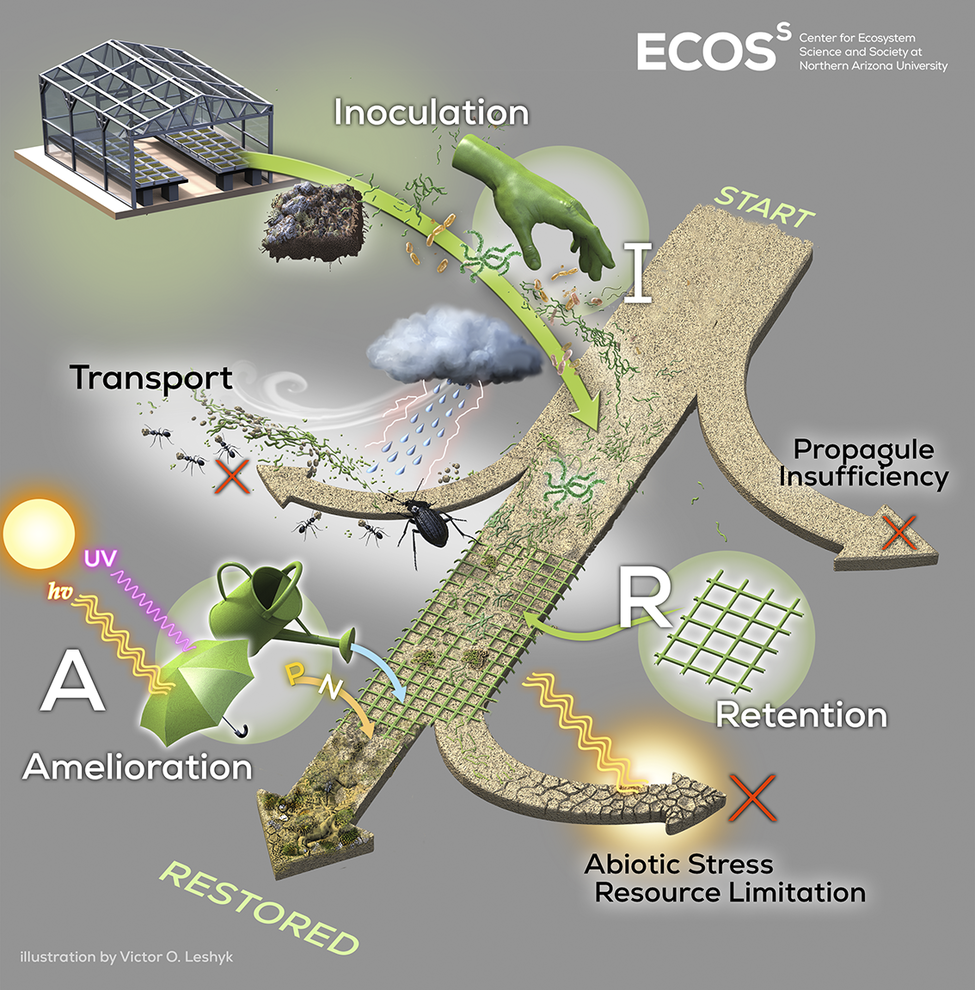
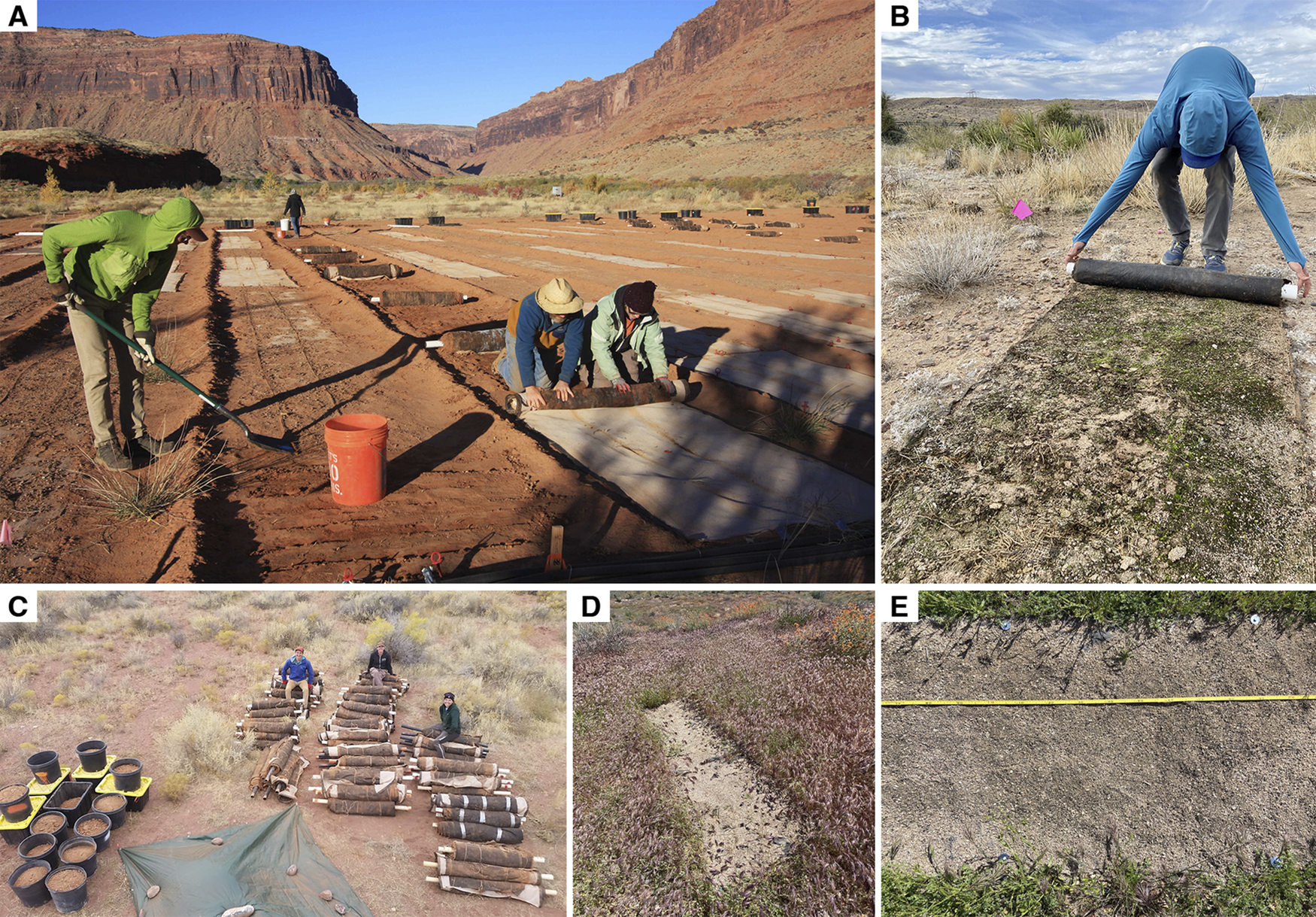
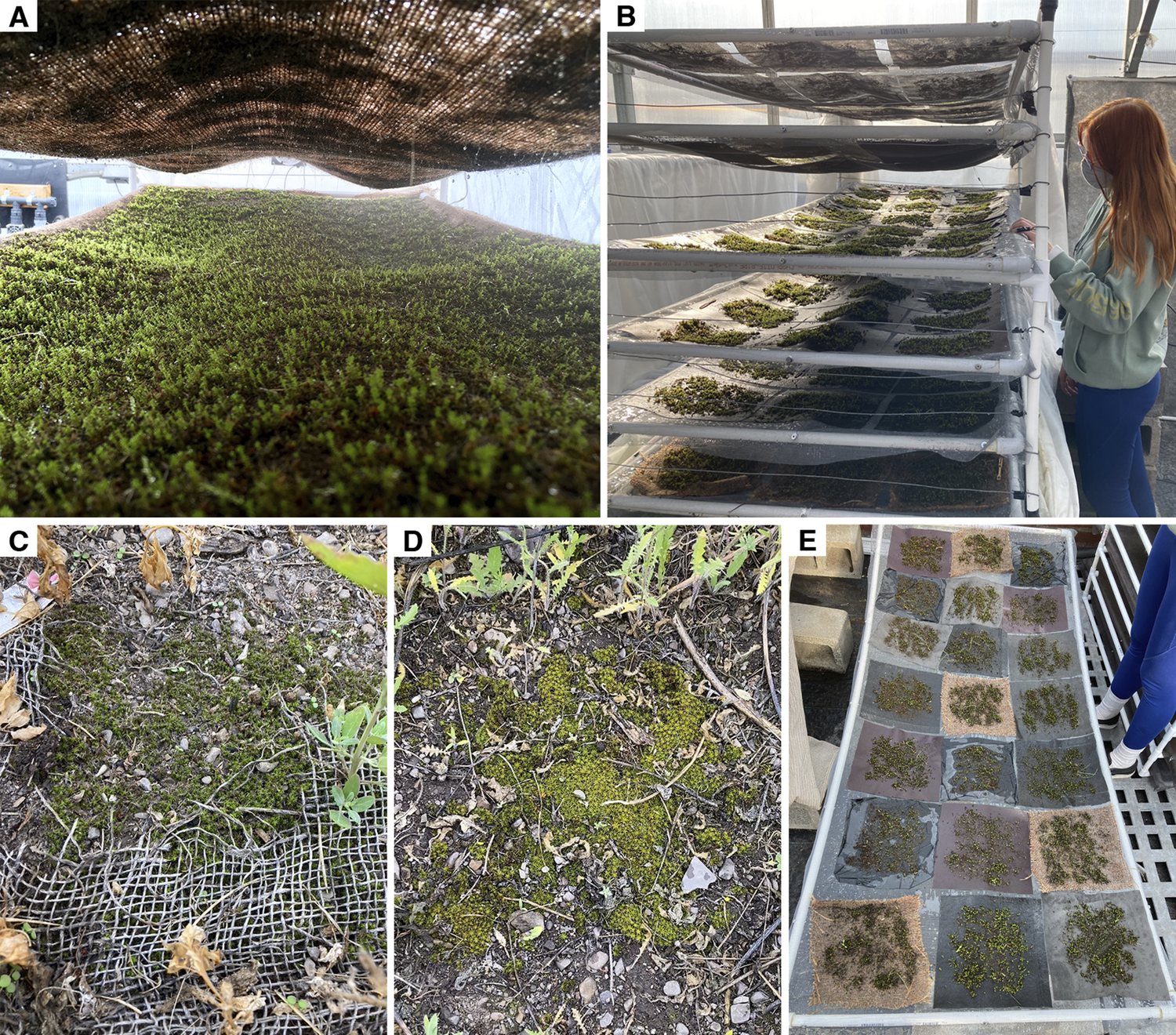
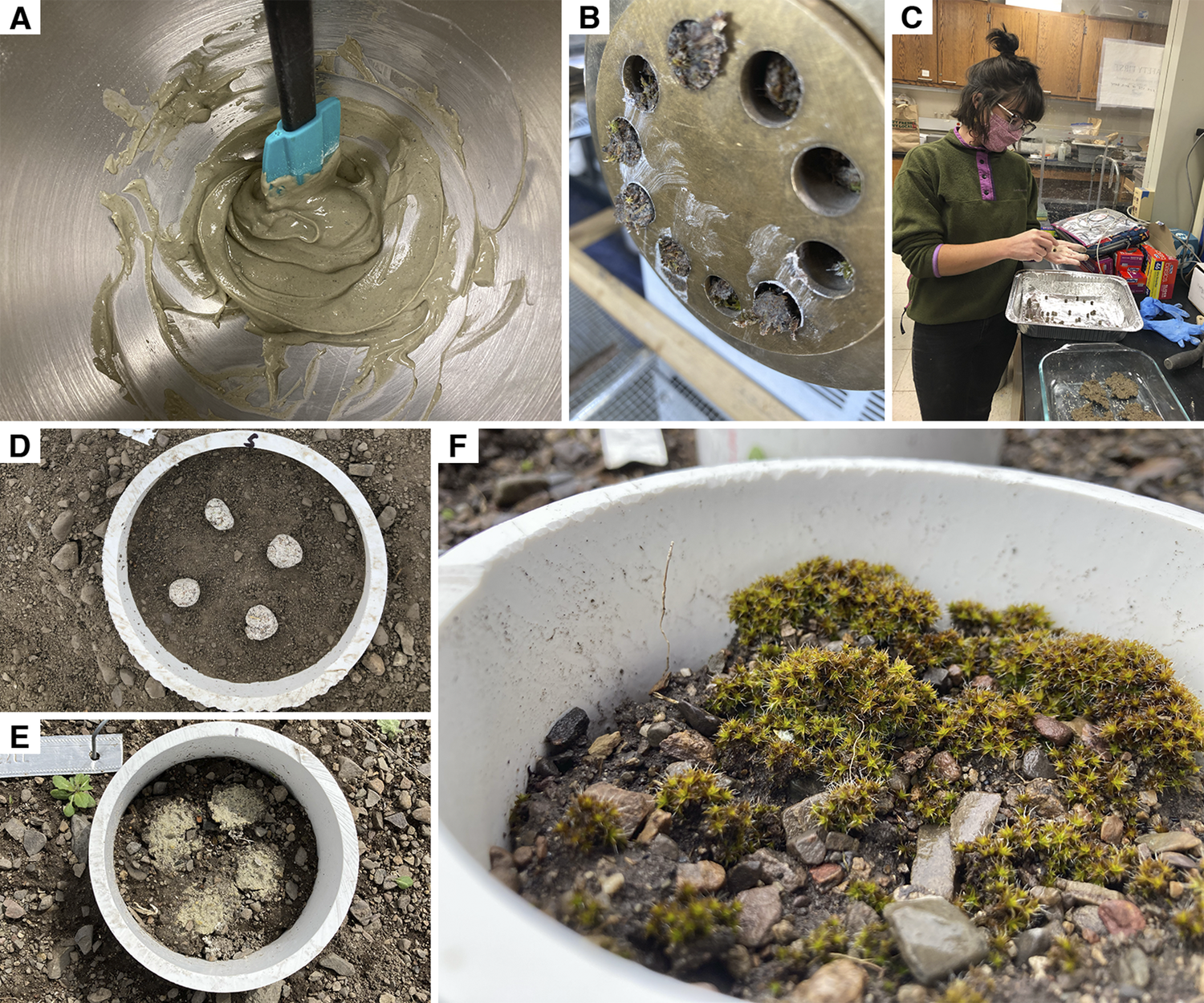
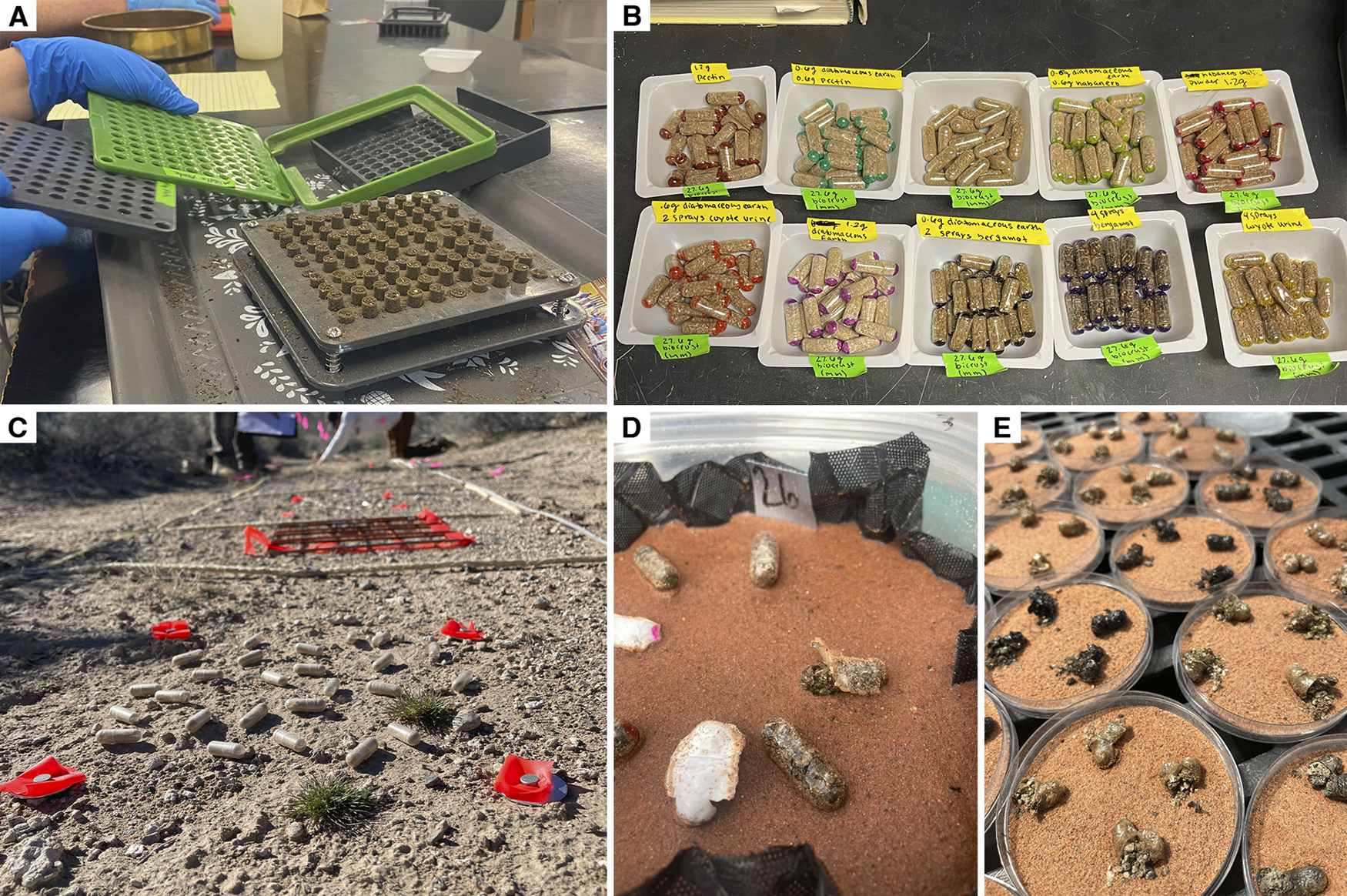
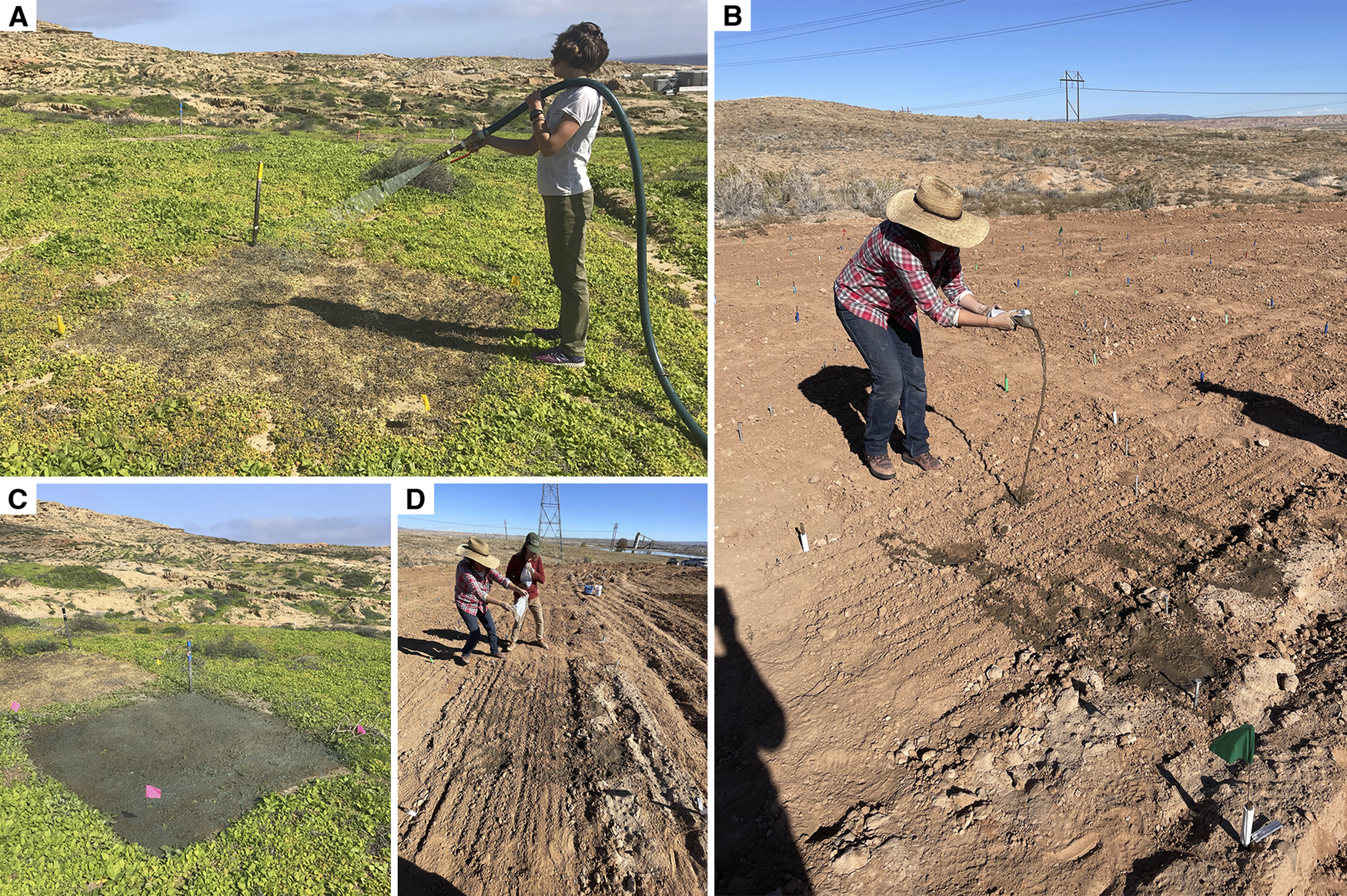


 Open access


Comments
Dear Editors,
We are submitting The next generation of products and methodologies to establish biocrusts in degraded ecosystems for consideration as an overview review paper in Cambridge Prisms: Drylands. This is an original manuscript and is not currently under consideration for publication elsewhere. I first contacted the editors-in-chief, Drs. Sala and Eldridge about this review idea in 2024 and both encouraged submission to Drylands. Since that time, a special issue has been proposed in <u>Drylands</u> (Innovations in biological soil crust restoration), providing a perfect home for this submission.
We view biocrust restoration as one of the most promising potential avenues to reverse dryland degradation because of the strong effects of biocrusts not only on local ecosystem health, but also as major components of the Earth System. For example, a recent study estimated that without biocrusts, global dust emissions from drylands would be 60% greater. There are other review papers on biological restoration, but <b>this one is unique</b> in that it focuses not on production of biocrust inoculants, but instead on <b>cutting edge methods to deploy inoculants and establish biocrusts in the field</b>. In our estimation, achievement of better field establishment is one of the primary bottlenecks in the transition of biocrust restoration from a research topic to a land management practice.
Our paper has a strong conceptual foundation (the <b>inoculation-retention-amelioration</b> principle) which states that assisted biocrust establishment is most effectively achieved by overcoming (1) propagule insufficiency with inoculation, (2) transport by wind, water and animals with retentive mechanisms, and (3) abiotic stressors and limitations with habitat ameliorations. Our review would focus on five specific products/processes that exemplify simultaneous integration of inoculation-retention-amelioration (biocrust sods, cloths, pellets, capsules and slurries), most having only been developed in the last handful of years. Some of these methods have not been described in the literature yet, thus our review features new innovations that readers will not have encountered yet. It also provides a broad, transferable idea in the inoculation-retention-amelioration principle that could inspire additional new approaches in the future.
We think this could become a very well-cited and enduringly useful paper because it fills a unique synthesis gap in the literature. By way of comparison, other biocrust restoration syntheses have been successful. For example, Bowker 2007 (Rest. Ecol. 15: 13-23) has been cited 507 times. Antoninka et al. 2020 (Rest. Ecol. 28:53-58) is on a similar trajectory, having already been cited 123 times. We also believe that the inclusion of our review in the special issue will serve as an impact magnifier for the other papers by providing a broader context linking them and by synthesizing a path to future advances.
A final exciting aspect of this paper is that it features an unusual number of early career researchers and diverse voices that have been involved in developing and testing these methods. This includes three post-doctoral scholars, and 12 students (graduate, undergraduate, and one high school student), many from groups underrepresented in STEM (including 5 Native American authors). We are enthusiastic about sharing the work of these individuals with the readership of Drylands.
Please note that some authors are employees of the US Geological Survey, which requires a separate interval review and approval process. The USGS authors will handle this process concurrently with the journal review process, which must be completed before any version is posted online.
Thank you for your consideration. We look forward to your assessment.
Matthew Bowker, on behalf of the authors