Significant outcomes
This is the first study to report an association between maternal prenatal stressors and distress with an altered bacterial profile in their infants’ meconium and longitudinal stool specimens.
Maternal prenatal exposure to intimate partner violence (IPV) is associated with differences in faecal bacterial profiles of mothers at delivery (Lactobacillaceae and Peptostreptococcaceae) and of infants at birth (family Enterobacteriaceae) and 4–12 weeks of age (genus Weissella). These infants had increased proportions of taxa within the family Enterobacteriaceae (Citrobacter; OTU 101; OTU 615; OTU 616) during the first 6 months after birth compared to infants from mothers with no/low IPV exposure.
Higher psychological distress during pregnancy is associated with lower infant faecal bacterial profiles of the family Veillonellaceae at 20–28 weeks.
Limitations
Missing faecal specimens over time.
Limited number of mothers with posttraumatic stress disorder.
Introduction
The prevalence of maternal prenatal stressors and distress is particularly high in rural South Africa. Previous studies reported that 30–40% of pregnant mothers have depression (Rochat et al., Reference Rochat, Richter, Doll, Buthelezi, Tomkins and Stein2006; Hartley et al., Reference Hartley, Tomlinson, Greco, Comulada, Stewart, le Roux, Mbewu and Rotheram-Borus2011; Vythilingum et al., Reference Vythilingum, Roos, Faure, Geerts and Stein2012), 11–19% have posttraumatic stress disorder (PTSD) (Koen et al., Reference Koen, Brittain, Donald, Barnett, Koopowitz, Maré, Zar and Stein2016; van Heyningen et al., Reference van Heyningen, Honikman, Myer, Onah, Field and Tomlinson2017) and 21–32% experienced intimate partner violence (IPV) within the past year (Koen et al., Reference Koen, Brittain, Donald, Barnett, Koopowitz, Maré, Zar and Stein2016; Bernstein et al., Reference Bernstein, Phillips, Zerbe, McIntyre, Brittain, Petro, Abrams and Myer2016). Psychological stressors and distress during pregnancy may have a range of negative consequences on the development and health of the foetus and infant, including premature delivery, impaired cognitive development, poor infant growth and dysregulated behaviour of infants (Stein et al., Reference Stein, Pearson, Goodman, Rapa, Rahman, McCallum, Howard and Pariante2014). The biological mechanisms responsible for the intergenerational transmission of the effects of maternal psychological stress during pregnancy are, however, still unclear. Studies in mice (Gur et al., Reference Gur, Shay, Palkar, Fisher, Varaljay, Dowd and Bailey2017) and monkeys (Bailey et al., Reference Bailey, Lubach and Coe2004) have found that exposure to psychological stressors during pregnancy alters the profile of the maternal faecal microbiota, which is then transferred to the offspring. There are, however, few human studies. A Dutch human study (Zijlmans et al., Reference Zijlmans, Korpela, Riksen-Walraven, de Vos and de Weerth2015) found that a higher self-reported stress during pregnancy was associated with temporal differences in infants’ faecal bacterial profiles, starting 7 days after delivery. Furthermore, infant faecal bacterial profiles from mothers reporting higher stress levels were characterised by higher relative abundances of Proteobacteria (including the Enterobacteriaceae Escherichia, Serratia and Enterobacter) and a lower relative abundances of lactic acid bacteria and Bifidobacteria (Zijlmans et al., Reference Zijlmans, Korpela, Riksen-Walraven, de Vos and de Weerth2015). A recent study examined the associations of maternal prenatal anxiety, depression and stress during pregnancy with changes to the microbiome in meconium of 75 newborns (Hu et al., Reference Hu, Ly, Zhang, Huang, Glover, Peter, Hurd and Nomura2019). Higher measures of pregnancy-related anxiety were associated with lower abundances of an unidentified genus in the family Enterobacteriaceae (Hu et al., Reference Hu, Ly, Zhang, Huang, Glover, Peter, Hurd and Nomura2019). However, the association of other types of psychological stressors and distress during pregnancy with the temporal changes in the infant faecal microbiome has not yet been studied.
The acquired faecal microbiota may contribute to child neurodevelopment and health trajectories (Jašarević et al., Reference Jašarević, Rodgers and Bale2015; O’Mahony et al., Reference O’Mahony, Clarke, Dinan and Cryan2017; Sordillo et al., Reference Sordillo, Korrick, Laranjo, Carey, Weinstock, Gold, O’Connor, Sandel, Bacharier, Beigelman, Zeiger, Litonjua and Weiss2019). A delayed or altered establishment of a mature intestinal microbiota in childhood (termed microbiota immaturity) has been associated with various diseases, including diarrhoea, malnutrition, atopic conditions, inflammatory bowel disease, obesity, diabetes, neurological conditions and impaired neurodevelopment (Arrieta et al., Reference Arrieta, Stiemsma, Amenyogbe, Brown and Finlay2014; Carlson et al., Reference Carlson, Xia, Azcarate-Peril, Goldman, Ahn, Styner, Thompson, Geng, Gilmore and Knickmeyer2018). Studies in mice have demonstrated that the gut microbiome may function as mechanistic link between maternal prenatal stress and reduction in social behavioural and neurobiological changes, that is, neuroinflammation, in the offspring (Gur et al., Reference Gur, Shay, Palkar, Fisher, Varaljay, Dowd and Bailey2017; Gur et al., Reference Gur, Palkar, Rajasekera, Allen, Niraula, Godbout and Bailey2019). The early establishment of the gut bacterial environment may have long-lasting effects on health and brain functioning. In this respect, a study in germ-free mice showed that colonisation of the gut directly after birth was essential for the development of the hypothalamic–pituitary–adrenocortical axis (Sudo et al., Reference Sudo, Chida, Aiba, Sonoda, Oyama, Yu, Kubo and Koga2004). A study in humans also showed that changes in gut bacteria at 1 year of age were associated with with lower cognition, including visual reception and expressive language skills in infants at 2 years of age (Carlson et al., Reference Carlson, Xia, Azcarate-Peril, Goldman, Ahn, Styner, Thompson, Geng, Gilmore and Knickmeyer2018). However, evidence for the association between maternal prenatal psychological adversities with changes to the infant gut microbiome in utero, that is, meconium, is still limited.
Aims of the study
The primary aim of this study was to determine the association between different profiles of maternal prenatal stressors and distress (including IPV, psychological distress, depression, and PTSD) experienced by South African mothers and the development of infants’ faecal microbiome early in life. The secondary aim included the investigation of the relationship of these prenatal psychological adversities with maternal faecal bacterial profiles at delivery.
Materials and methods
Study participants
Mother–infant dyads were evaluated in a subsample from the Drakenstein Child Health Study (DCHS). The DCHS is multidisciplinary birth cohort study investigating determinants of child health over time. Further details of participant recruitment, data collection and the setting of the DCHS have been provided previously (Zar et al., Reference Zar, Barnett, Myer, Stein and Nicol2015; Stein et al., Reference Stein, Koen, Donald, Adnams, Koopowitz, Lund, Marais, Myers, Roos, Sorsdahl, Stern, Tomlinson, van der Westhuizen, Vythilingum, Myer, Barnett, Brittain and Zar2015). Pregnant women were recruited from two low socio-economic communities, TC Newman and Mbekweni in a peri-urban area outside Cape Town, South Africa. Enrolment of pregnant women took place at 20–28 weeks of gestation at routine antenatal visits to health care facilities. Mothers provided informed written consent for enrolment of their infants at the time of delivery and follow-up until 5 years of age. Inclusion criteria for this substudy were longitudinal collection of faecal specimens and availability of maternal prenatal psychological measurements. Exclusion criteria for this substudy were maternal age < 18 years, residence outside of the Drakenstein subdistrict and intention to move out of the region within 2 years of giving birth.
This study and parent study (DCHS) both received ethical approval from the Faculty of Health Sciences, Human Research Ethics Committee of the University of Cape Town (401/2009 and 742/2013, respectively) (Zar et al., Reference Zar, Barnett, Myer, Stein and Nicol2015).
Measurements of maternal prenatal psychological stress and distress
Locally validated and reliable psychological measures of stress and distress were performed in pregnant mothers when enrolled at the antenatal clinic as previously described (Stein et al., Reference Stein, Koen, Donald, Adnams, Koopowitz, Lund, Marais, Myers, Roos, Sorsdahl, Stern, Tomlinson, van der Westhuizen, Vythilingum, Myer, Barnett, Brittain and Zar2015; Zar et al., Reference Zar, Barnett, Myer, Stein and Nicol2015; Koen et al., Reference Koen, Brittain, Donald, Barnett, Koopowitz, Maré, Zar and Stein2016). The measures for maternal prenatal stressors and distress in this substudy were evaluated at a gestational age of 27.4 ± 4.2 weeks by field workers in the absence of the partner/husband. On-site female fieldworkers administered a battery of self-report measures described below. Female fieldworkers were selected based on criteria previously found to affect women’s willingness to divulge intimate information, including measures of IPV exposure (Jansen et al., Reference Jansen, Watts, Ellsberg, Heise and García-Moreno2004). All female fieldworkers had at least a Grade 12 certificate and had prior experience in psychiatric/psychological research. They were fluent both in English and Afrikaans or isiXhosa and were therefore able to administer questionnaires in the participants’ preferred language. Further, fieldworkers received extensive in-service training on all aspects of Good Clinical Practice (WHO, 2002).
The self-reporting questionnaire 20-item (SRQ-20) (Harding et al., Reference Harding, de Arango, Baltazar, Climent, Ibrahim, Ladrido-Ignacio, Murthy and Wig1980), a WHO-endorsed measure of symptoms of psychological distress, with good face validity and reliability, has been used widely in international studies and in South African settings (Mari & Williams, Reference Mari and Williams1986; Rumble et al., Reference Rumble, Swartz, Parry and Zwarenstein1996). Symptoms of depression were measured by the Beck Depression Inventory-II (BDI-II), a widely used and reliable measure of depressive symptoms (Beck et al., Reference Beck, Steer and Carbin1988; Beck et al., Reference Beck, Steer and Brown1996). The modified PTSD Symptom Scale (MPSS) is a 17-item self-report scale with excellent internal consistency, high test–retest reliability and concurrent validity to diagnose PTSD consistent with Diagnostic and Statistical Manual of Mental Disorders, fourth edition (DSM-IV) criteria as defined by DSM-IV (Falsetti et al., Reference Falsetti, Resnick, Resick and Kilpatrick1993; Foa & Tolin, Reference Foa and Tolin2000). The validity of the MPSS was established in a South African student sample with a Cronbach’s alpha of 0.92, in relation to a diagnosis by psychiatrists based on clinical interviews for PTSD, for which kappa was found to be 0.68 (McGowan & Kagee, Reference McGowan and Kagee2013).The IPV questionnaire used in this study was adapted from the WHO multi-country study (Jewkes, Reference Jewkes2002) and the Women’s Health Study in Zimbabwe (Shamu et al., Reference Shamu, Abrahams, Temmerman, Musekiwa and Zarowsky2011). The IPV questionnaire assesses lifetime and recent (past year) exposure to emotional, physical and sexual IPV. Each category of violence was assessed across multiple items measuring the frequency of a number of specified violent acts. Each item is scored using a frequency scale from 1 (‘never’) to 4 (‘many times’). Bivariable analyses were performed on scoring guidelines based on prior work in South Africa (Dunkle et al., Reference Dunkle, Jewkes, Brown, Gray, McIntryre and Harlow2004). Psychological assessments of IPV were previously validated and optimised in local studies of maternal mental health for their use in the South African setting (Stein et al., Reference Stein, Williams and Kessler2009).
Faecal bacteria analyses
Details of the study methods related to the analyses of faecal bacteria have previously been reported (Claassen-Weitz et al., Reference Claassen-Weitz, Gardner-Lubbe, Nicol, Botha, Mounaud, Shankar, Nierman, Mulder, Budree, Zar, Nicol and Kaba2018). In short, faecal specimens were collected using sterile spatulas and faecal screw cap containers. Study staff collected faecal specimens from mothers and infants prior to hospital discharge or during visits to clinics. All specimens collected at hospital or visits to clinics were immediately stored at −20°C. Mothers were instructed to collect and immediately store infant faecal specimens at −20°C in the event where faecal specimens were not passed at hospital or during scheduled visits to clinics. All home collections were transported to clinics using ice boxes and were delivered to study staff within 24 h of collection. Transport of faecal specimens between the study site and laboratory was performed under controlled conditions using ice boxes. Upon arrival at the laboratory, faecal specimens were stored at −80°C until further processing. Faecal specimens included in this study were selected based on the availability of faecal specimens from mother–infant dyads at birth and at follow-up visits. Specimens were selected to include the maximum number of longitudinal sample sets at the time of study.
Nucleic acid was extracted from each of the faecal specimens using approximately 50 mg of starting material as described previously (Claassen et al., Reference Claassen, du Toit, Kaba, Moodley, Zar and Nicol2013; Claassen-Weitz et al., Reference Claassen-Weitz, Gardner-Lubbe, Nicol, Botha, Mounaud, Shankar, Nierman, Mulder, Budree, Zar, Nicol and Kaba2018). A detailed description of the amplicon library preparation, sequencing and bioinformatics steps was published previously, including access to the raw sequence files supporting the findings of this manuscript (Claassen-Weitz et al., Reference Claassen-Weitz, Gardner-Lubbe, Nicol, Botha, Mounaud, Shankar, Nierman, Mulder, Budree, Zar, Nicol and Kaba2018). Briefly, amplicon library preparation was performed by amplifying the V4 hypervariable region of the 16S ribosomal ribonucleic acid (rRNA) gene (Claassen-Weitz et al., Reference Claassen-Weitz, Gardner-Lubbe, Nicol, Botha, Mounaud, Shankar, Nierman, Mulder, Budree, Zar, Nicol and Kaba2018). Sequencing was carried out using the Illumina® MiSeqTM platform and the MiSeq Reagent Kit v3, 600 cycles (Illumina, CA, USA) (Claassen-Weitz et al., Reference Claassen-Weitz, Gardner-Lubbe, Nicol, Botha, Mounaud, Shankar, Nierman, Mulder, Budree, Zar, Nicol and Kaba2018). Quality filtering steps of raw sequences, removal of potential contaminants, de-replication of sequences occurring more than twice, clustering of sequences into operational taxonomic units (OTUs), removal of chimeras and taxonomic assignment was performed using an in-house bioinformatics pipeline incorporating various software tools (Claassen-Weitz et al., Reference Claassen-Weitz, Gardner-Lubbe, Nicol, Botha, Mounaud, Shankar, Nierman, Mulder, Budree, Zar, Nicol and Kaba2018).
Covariates
Data on maternal demographics (residential area, education) and health (HIV status, smoking) were obtained at enrolment. Maternal body mass index (BMI) was determined at 6–10 weeks post-partum. Data for mode of delivery, gestational age, birth weight and length, infant sex, antibiotic use and household members were obtained at the time of delivery at Paarl Hospital, where all births took place. Information on feeding practices was obtained at infant follow-up visits at 4–12 and 20–28 weeks of age (Zar et al., Reference Zar, Barnett, Myer, Stein and Nicol2015). The covariates included in this study were chosen based on their potential effect on faecal bacterial profiles as shown previously (Claassen-Weitz et al., Reference Claassen-Weitz, Gardner-Lubbe, Nicol, Botha, Mounaud, Shankar, Nierman, Mulder, Budree, Zar, Nicol and Kaba2018). Variables that were associated with prenatal psychological measures; or bacterial taxa at phylum, class, order, family or genus level at each of the time points under study; or diversity indices at each of the time points under study were included as covariates and referenced in the results section. Measures for other covariates, for example, maternal diet at birth, that may affect the associations investigated in this study, were not assessed in this study.
Statistical analyses
R software version 3.1.1 (R_Development_Core_Team, 2014) together with RStudio software version 0.98.50751 was used for all statistical analyses as well as graphical representations of the data. Count data (Anders & Huber, Reference Anders and Huber2010) were transformed to compositional data by calculating the relative abundance of each OTU per specimen (McMurdie & Holmes, Reference McMurdie and Holmes2014; Fernandes et al., Reference Fernandes, Reid, Macklaim, McMurrough, Edgell and Gloor2014). Alpha diversities were determined using the Shannon diversity (H′) index (Shannon, Reference Shannon1948; Morgan & Huttenhower, Reference Morgan and Huttenhower2012) using the vegan R package (Oksanen et al., Reference Oksanen, Blanchet, Kindt, Legendre, Minchin, O’hara, Simpson, Solymos, Stevens and Wagner2013). Beta diversities were computed based on the ‘w’ metric as decribed in Koleff et al. (Reference Koleff, Gaston and Lennon2003) with the vegan R package and represented in a SMACOF (Scaling by MAjorizing a COmplicated Function) multidimensional scaling map (Borg and Groenen, Reference Borg and Groenen2005). Maternal prenatal psychological measures in this study included symptoms of depression, psychological distress, measures for IPV and PTSD. Measures for psychological distress (SRQ-20) and symptoms of depression (BDI-II) were used as continuous variables. Dichotomised measures for IPV were used and PTSD was categorised according to ‘trauma-exposed PTSD’, ‘suspected PTSD’ and ‘no exposure to PTSD’. A multivariate approach was followed, testing simultaneously which covariates significantly influenced the microbiome composition by performing Permutational multivariate analysis of variance (PERMANOVA) (Anderson, Reference Anderson2001) on the Bray–Curtis dissimilarity matrix (calculated using the [vegdist] function from the R package vegan) (Bray & Curtis, Reference Bray and Curtis1957; Faith et al., Reference Faith, Minchin and Belbin1987; Clarke and Warwick, Reference Clarke and Warwick2001; Morgan & Huttenhower, Reference Morgan and Huttenhower2012). For those covariates identified as significant, generalised linear models (GLMs) with a log link function and a quasi-Poisson family allowing for overdispersion were used to evaluate the association of prenatal psychological measures with each taxon and alpha diversity at each of the time points under study (Claassen-Weitz et al., Reference Claassen-Weitz, Gardner-Lubbe, Nicol, Botha, Mounaud, Shankar, Nierman, Mulder, Budree, Zar, Nicol and Kaba2018). Similarly, generalised linear mixed models (GLMMs) were used to investigate covariate effects across time points using a subset of 36 infants with complete longitudinal data sets. Hypothesis testing was performed at a 5% significance level and since the GLM and GLMM models were fitted for one taxon at a time, multiple testing necessitated controlling the false discovery rate with the Benjamini–Hochberg correction (Benjamini and Hochberg, Reference Benjamini and Hochberg1995).
Results
Study characteristics
Faecal specimens of 90 mothers, 107 infants at birth, 72 infants at 4–12 weeks and 36 infants at 20–28 weeks were collected and successfully sequenced (Claassen-Weitz et al., Reference Claassen-Weitz, Gardner-Lubbe, Nicol, Botha, Mounaud, Shankar, Nierman, Mulder, Budree, Zar, Nicol and Kaba2018). Maternal prenatal psychological measures were not collected from six of the mothers. These mothers and their infants (six infants at birth and three infants at 4–12 weeks) were excluded from this study. Associations between prenatal distress measures and infant faecal bacterial profiles were therefore investigated from 101 infant meconium specimens, 69 faecal specimens collected at 4–12 weeks and 36 faecal specimens collected at 20–28 weeks. Associations between prenatal distress measures and maternal faecal bacterial profiles were analysed from 84 maternal faecal specimens collected at the time of delivery. A median of 5465 [interquartile range (IQR): 3159–9877)] post-filtered reads per specimen were obtained following the removal of potential contaminant reads. Infant meconium specimens produced the highest number of post-filtered reads (median: 10 002; IQR: 5065–14 830), followed by infant faecal specimens collected at 4–12 weeks (median: 6407; IQR: 4069–9042) and 20–28 weeks (median: 5636; IQR: 4228–7084) (Claassen-Weitz et al., Reference Claassen-Weitz, Gardner-Lubbe, Nicol, Botha, Mounaud, Shankar, Nierman, Mulder, Budree, Zar, Nicol and Kaba2018). Maternal faecal specimens sampled at birth produced the lowest number of post-filtered reads (median: 3155; IQR: 2104–4355) (Claassen-Weitz et al., Reference Claassen-Weitz, Gardner-Lubbe, Nicol, Botha, Mounaud, Shankar, Nierman, Mulder, Budree, Zar, Nicol and Kaba2018). All specimen types produced sufficient sequencing depth for calculating Shannon diversity indices in our study (Supplementary Fig. 1).
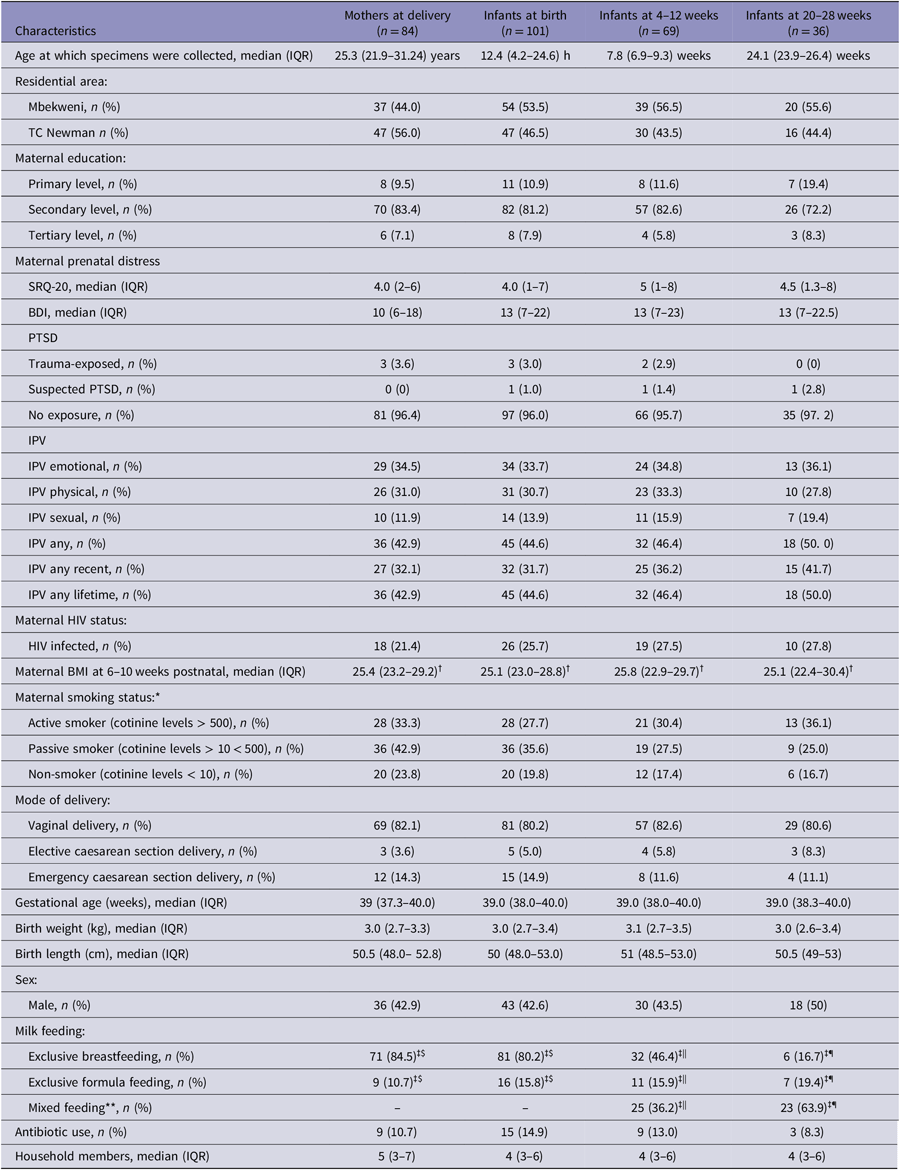
Demographic and clinical data of the mothers and infants are reported in Table 1. The median (IQR) measures for psychological distress (SRQ-20) and for symptoms of depression (BDI) from mothers with available data (n = 101) were 4.0 (1–7) and 13 (7–12), respectively. Trauma-associated PTSD was diagnosed among 3% (3/101) of mothers. A total of 45% (45/101) of the mothers were exposed to any form of IPV, of which 32% (34/101) experienced emotional abuse, 29% (31/101) physical abuse and 13% (14/101) sexual abuse. Furthermore, 30% (32/101) of the mothers were recently exposed to IPV (during the past 12 months), and 45 % (45/101) had lifetime IPV exposure.
Demographic and clinical characteristics of mothers and infants included in the study

IQR, Interquartile range; SRQ-20, psychological distress; BDI, Beck depression inventory; PTSD, Posttraumatic stress disorder; IPV, Intimate partner violence; BMI, Body mass index.
*Number of observations recorded: Mothers at delivery: 84; Infants at birth: 84; Infants at 4–12 weeks: 52; Infants at 20–28 weeks: 28.
†Number of observations recorded: Mothers at delivery: 52; Infants at birth: 65; Infants at 4–12 weeks: 51; Infants at 20–28 weeks: 27.
‡Number of observations recorded: Mothers at birth: 86; Infants at birth: 103; Infants at 4–12 weeks: 71; Infants at 20–28 weeks: 36.
$Feeding recorded prior to discharge from hospital.
||Feeding recorded at 4–12 weeks.
¶Feeding recorded at 20–28 weeks.
**Breast milk, formula milk and/or solids.
Association of maternal prenatal psychological measures with infant faecal bacterial profiles
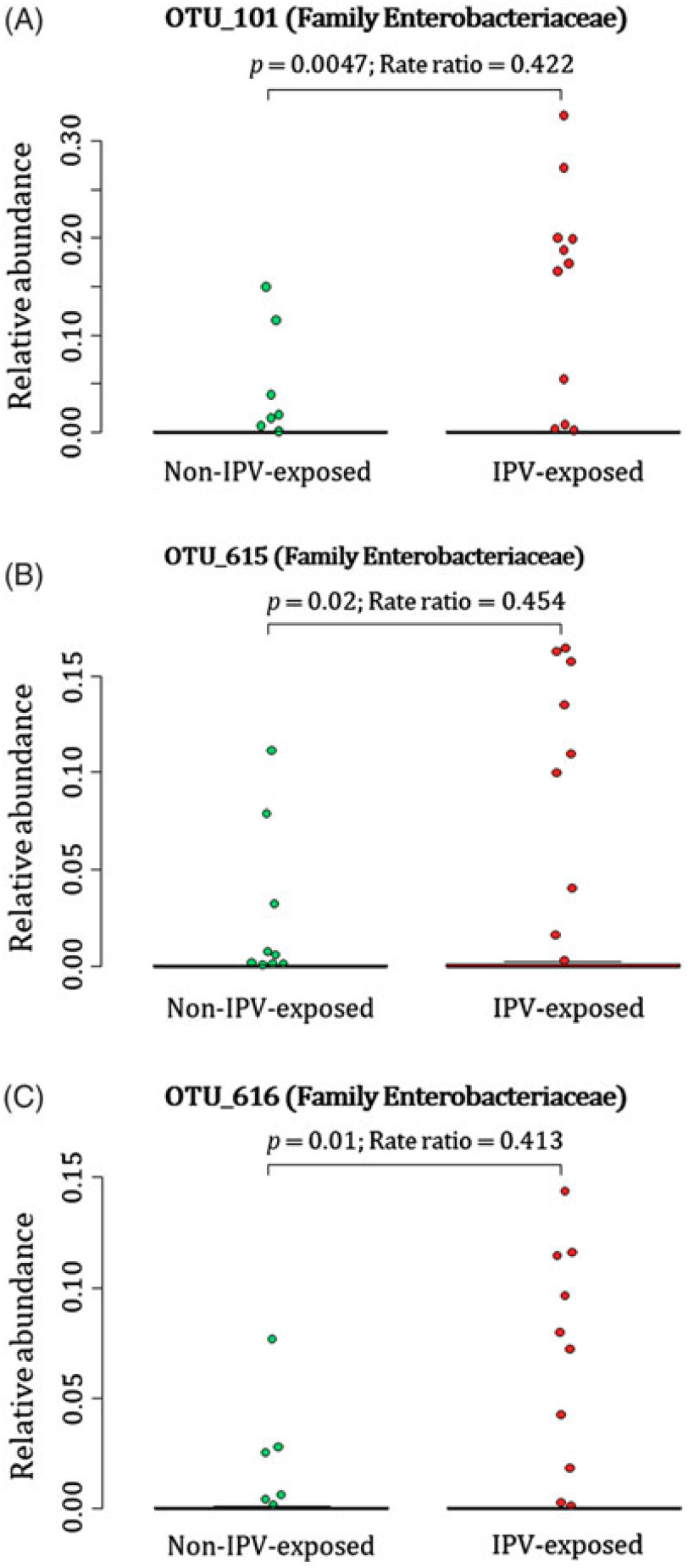
Infants born to mothers with exposure to lifetime IPV had higher proportions of unclassified genera within the family Enterobacteriaceae [OTU 101 (p < 0.01); OTU 615 (p = 0.02); OTU 616 (p = 0.01)] measured from meconium (Fig. 1(A)–(C)) (covariates significantly associated with prenatal psychological measures or bacterial taxa that were included in the statistical model: maternal BMI and breastfeeding).
Relationship between maternal lifetime exposure to IPV and the infant meconium bacterial profiles. The number of participants represented in this figure was infants from which we detected the respective OTUs at proportions > 0. (A) Differences in proportions of OTU_101 detected from 88 infant meconium specimens; (B) differences in proportions of OTU_615 detected from 73 infant meconium specimens; and (C) differences in proportions of OTU_616 detected from 71 infant meconium specimens at proportions > 0. IPV = intimate partner violence.

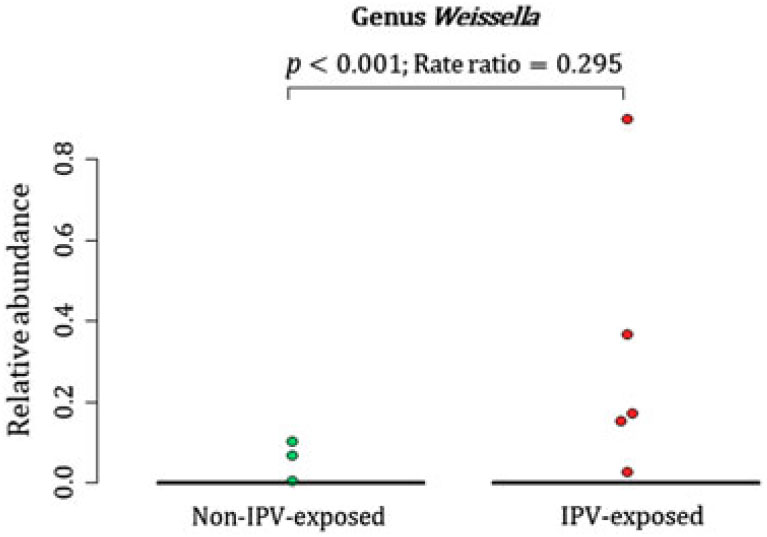
A total of 88 participants at birth had OTU 101, 73 infants had OTU 615 and 71 infants had OTU 616 detected at proportions > 0 from their meconium (Fig. 1(A)–(C)). At 4–12 weeks of age, infants born to mothers with exposure to lifetime IPV had higher proportions of the genus Weissella (Phylum Firmicutes; Class Bacilli; Order Lactobacillales; Family Leuconostocaceae) (p < 0.001) when compared to infants born to mothers who were not exposed to lifetime IPV (Fig. 2) (covariates significantly associated with prenatal psychological measures, bacterial taxa or diversity that were included in the statistical model: area and maternal HIV status). A total of 44 infants at 4–12 weeks of age had Weissella detected at proportions > 0 from their faecal specimens (Fig. 2). This association was not found to be significant at birth or at 20–28 weeks (Supplementary Fig. 2).
Relationship between maternal lifetime exposure to IPV and the infant faecal bacteria at 4–12 weeks. The figure presents differences in proportions of genus Weissella that was detected from 44 infant faecal specimens at proportions > 0. IPV = intimate partner violence.

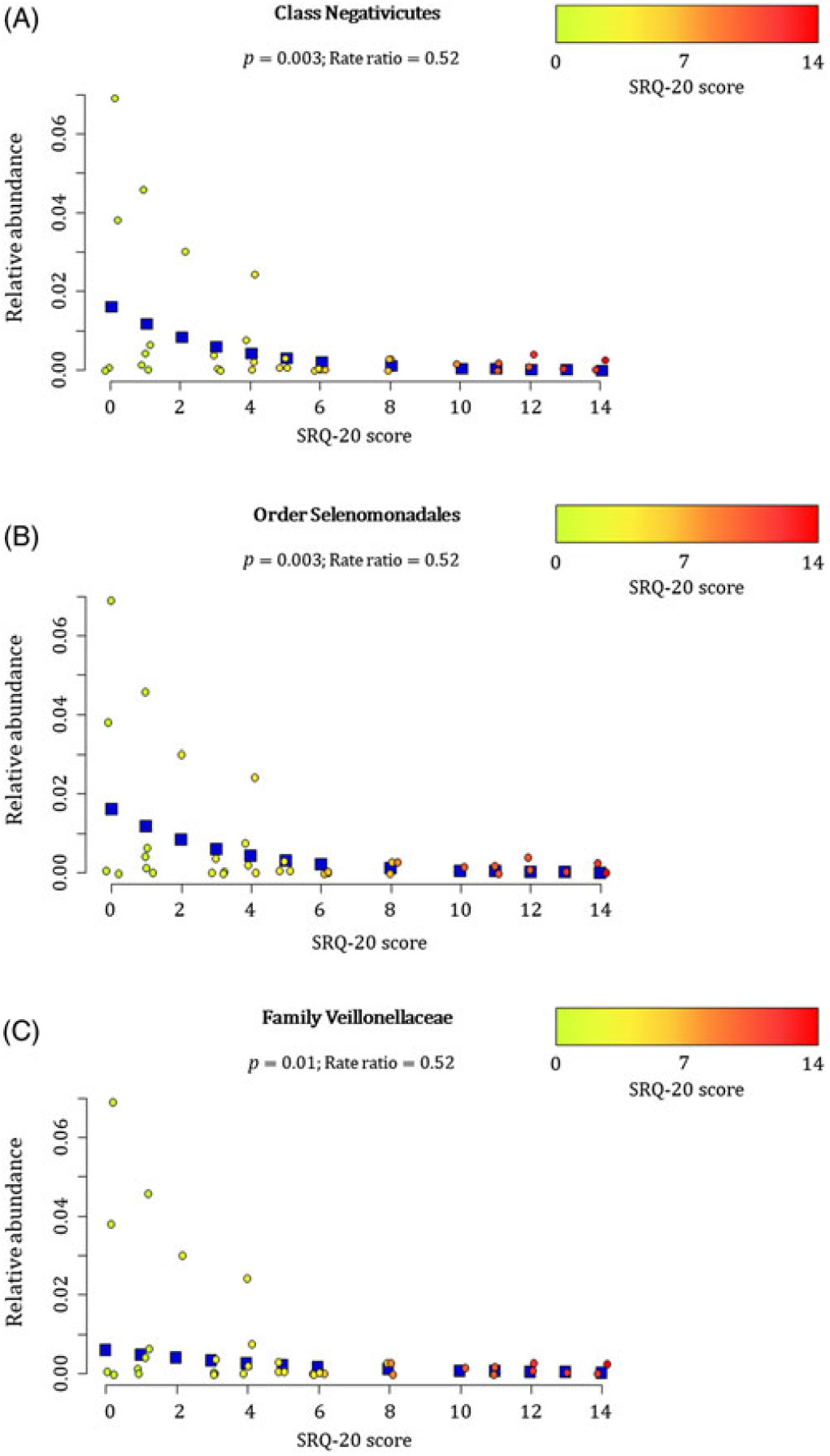
At 20–28 weeks, increased measures of maternal psychological distress (SRQ-20) were significantly associated with lower proportions of the family Veillonellaceae (Phylum Firmicutes, Class Negativicutes (p = 0.003), Order Selenomondales (p = 0.003)) (p = 0.01) (covariates significantly associated with psychological measures, bacterial taxa or diversity which were included in the statistical model: area, maternal HIV status, maternal education and gender of infant) (Fig. 3(A)–(C)). This association was only significant at 20–28 weeks (Supplementary Fig. 3).
Relationship between maternal prenatal psychological distress (SRQ-20) and infant faecal bacterial profiles at 20–28 weeks. Proportions of the (A) class Negativicutes, (B) order Selenomonadales and (C) family Veillonellaceae observed from faecal specimens collected at 20–28 weeks were inversely correlated with maternal psychological distress (SRQ-20) (p < 0.01). Individual maternal SRQ-20 scores for the 36 infants investigated at 20–28 weeks are represented by circles using a gradient of colours ranging from green (low SRQ-20 scores) to red (high SRQ-20 scores). Blue squares represent the non-parametric regression smoother used to show the trend in the observations.

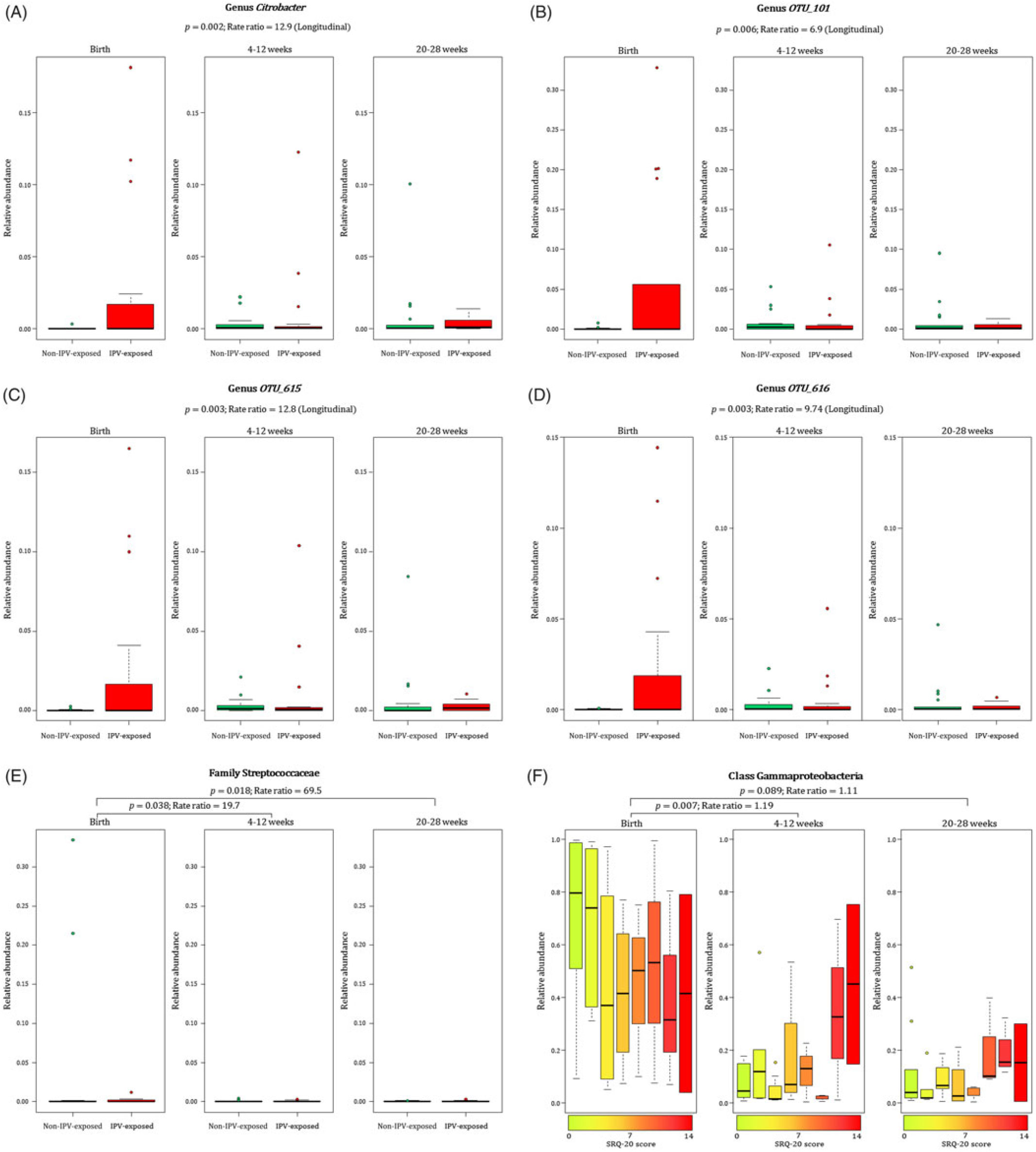
When measuring the effect of maternal prenatal stressors and distress on n = 36 infant faecal bacterial profiles over time, we found that infants from mothers with exposure to lifetime IPV had increased proportions of taxa within the family Enterobacteriaceae [genus Citrobacter (p = 0.002) (Fig. 4(A)) and unclassified genera OTU 101 (p = 0.006) (Fig. 4(B)), OTU 615 (p = 0.003) (Fig. 4(C)) and OTU 616 (p = 0.003) (Fig. 4(D))] at birth through to 20–28 weeks when compared to infants from mothers with no/low IPV exposure (covariates significantly associated with psychological measures or bacterial taxa that were included in the statistical model: gender, area and maternal HIV status). No interaction for age and bacterial proportions with reference to the four genera within the family Enterobacteriaceae from IPV-exposed or non-IPV-exposed infants was found, and longitudinal analyses were therefore performed for results presented in Fig. 4(A)–(D). A significant interaction effect between age and IPV exposure was found for the family Streptococcaceae (p = 0.046) and analysis was therefore stratified according to the age groups under investigation (Fig. 4(E)). Higher proportions of the Streptococcaceae family was found at birth in infants born to mothers with IPV versus infants from IPV-unexposed mothers when compared to these infants at 4–12 weeks (p = 0.038) and 20–28 weeks (p = 0.018) of age (Fig. 4(E)). A significant interaction effect (p = 0.003) was found between age and SRQ for the class Gammaproteobacteria as shown in Fig. 4(F). Overall, lower proportions of the class Gammaproteobacteria was observed at age groups 4–12 weeks and 20–28 weeks compared to the proportions detected at birth (Fig. 4(F)). This decrease was more pronounced in infants born to mothers with low prenatal psychological distress at 4–12 weeks (p = 0.007), and a similar non-significant trend was observed at 20–28 weeks (p = 0.089) of age, compared to these infants at birth (covariates significantly associated with psychological measures or bacterial taxa that were included in the statistical model: gender, area and maternal HIV status) (Fig. 4(F)).
Relationship between maternal exposure to lifetime IPV, psychological distress and temporal changes with infant faecal bacterial profiles. Longitudinal changes to the proportions of (A) Genus Citrobacter and unclassified genera within the family Enterobacteriaceae (B–D) [OTU_101 (p = 0.006); OTU_615 (p = 0.003); OTU_616 (p = 0.003)] in the infants born to mothers exposed to lifetime IPV compared to infants from mothers exposed to no/low lifetime IPV. (E) Differential decrease in proportions of the family Streptococcaceae from birth to ages 4–12 weeks (p = 0.038) and from birth to 20–28 weeks (p = 0.018) with a more pronounced decline in Streptococcaceae for infants from mothers with no/low lifetime IPV exposure compared to infants from mothers exposed to lifetime IPV. (F) Association of continuous measures of maternal prenatal psychological distress (SRQ-20) with faecal Gammaproteobacteria in infants at birth compared to the infants at ages 4–12 weeks (p = 0.007) and 20–28 weeks (p = 0.089). Individual maternal SRQ-20 scores for the 36 infants with faecal specimens collected at all three time points are represented by a gradient of colours ranging from green (low SRQ-20 scores) to red (high SRQ-20 scores). IPV = intimate partner violence.

No significant associations with infant faecal bacterial profiles were found when assessing symptoms of depression or PTSD. Supplementary Figs. 4–8 show different measures for maternal prenatal stressors and distress with the infant microbiota at genus level measured over time. No significant associations were found between any maternal prenatal psychological measures and infant faecal bacterial diversity indices (data not shown).
Prenatal psychological measures and maternal faecal bacterial profiles at delivery
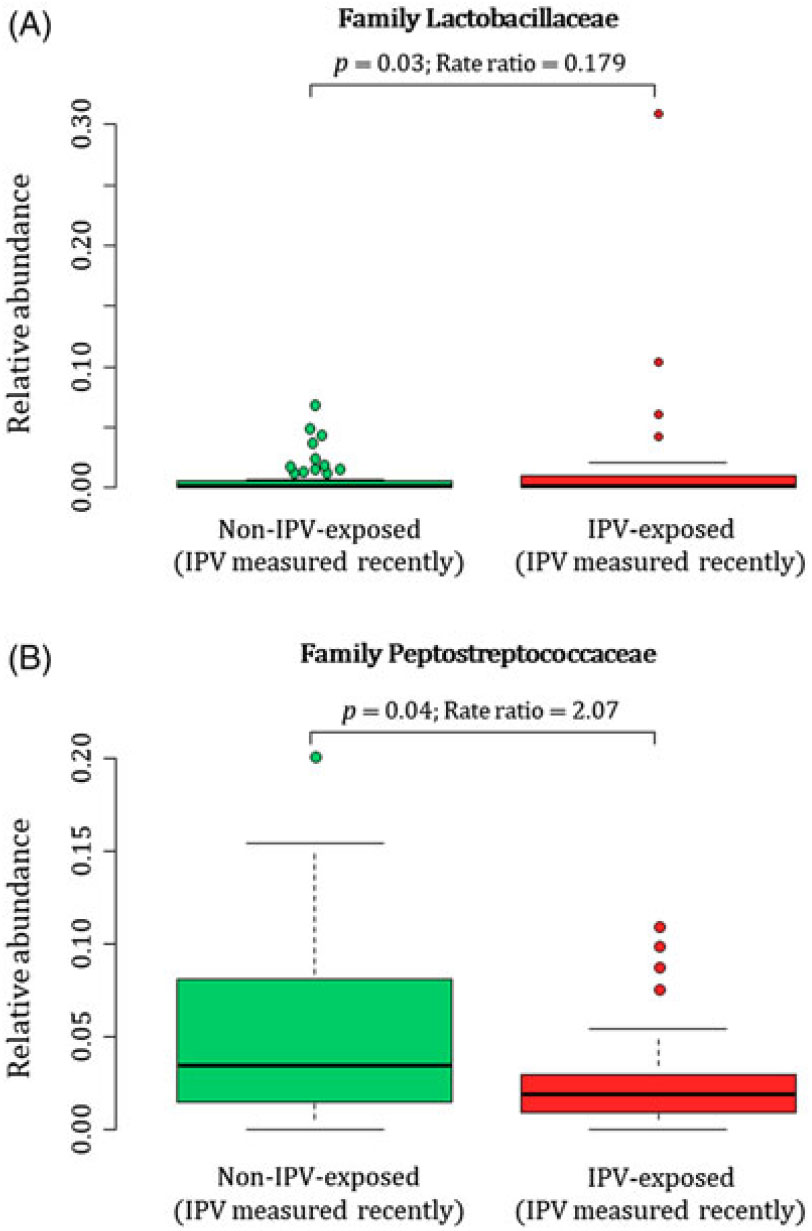
Maternal exposure to recent IPV (past year) was associated with higher proportions of the family Lactobacillaceae (p = 0.03) (phylum Firmicutes, class Bacilli, order Lactobacillales) and lower proportions of the family Peptostreptococcaceae (p = 0.04) (phylum Firmicutes, class Clostridia, order Clostridiales) in maternal faecal specimens at delivery (covariates significantly associated with psychological measures or bacterial taxa that were included in the statistical model: mode of delivery) (Fig. 5(A) and (B)). None of the prenatal psychological measures were associated with maternal faecal bacterial diversity indices (data not shown).
Relationship between maternal exposure to recent IPV (past year) during pregnancy and maternal faecal bacterial profiles at delivery. IPV = intimate partner violence.

Beta diversity and measures for maternal psychological adversities
No clustering patterns were apparent for maternal or infant faecal bacterial profiles in relation to any of the prenatal measures for psychological adversities based on the ‘w’ metric for beta diversities (results not shown).
Discussion
This study characterised the association of maternal prenatal stressors and distress with early-life infant faecal and maternal bacterial profiles. Our results demonstrate that maternal exposure to lifetime IPV and psychological distress were significantly associated with early infant faecal bacterial profiles.
Until recently, the foetus has been considered to exist in a sterile environment with initial microbial colonisation of the newborn taking place during birth (D’Argenio, Reference D’Argenio2018). Recent studies have reported the detection of microbes from amniotic fluid, placenta and meconium, suggesting that microbial colonisation may begin in utero (Willyard, Reference Willyard2018; Stinson et al., Reference Stinson, Boyce, Payne and Keelan2019). In addition, a number of studies have reported bacterial communities from meconium specimens (Seferovic et al., Reference Seferovic, Belfort, Major, Chu, Racusin, Castro, Carroll, Stewart, Versalovic and Aagaard2018). Dysbiosis of faecal bacterial profiles early in life has been associated with a number of neonatal diseases, including asthma, allergic diseases and obesity (D’Argenio, Reference D’Argenio2018), which further emphasises the importance of in utero colonisation on the health of newborns.
With cross-sectional analysis, we detected higher abundances of unclassified taxa (OTU 101, OTU 615 and OTU 616) within the family Enterobacteriaceae from meconium specimens of infants born to mothers exposed to IPV. Analysis of longitudinal data showed that these findings persisted over the first 6 months after birth in this study, as higher proportions of these unclassified Enterobacteriaceae taxa, as well as the genus Citrobacter (also a member of the family Enterobacteriaceae), were detected from infants born to IPV-exposed mothers as compared to infants from non-IPV-exposed mothers. Our findings in relation to the family Enterobacteriaceae is of interest, given previous findings. A higher cumulative score of self-reported maternal stress during pregnancy has previously been associated with increased relative abundances of Proteobacteria in infant faecal specimens over time (Zijlmans et al., Reference Zijlmans, Korpela, Riksen-Walraven, de Vos and de Weerth2015). The family Enterobacteriaceae (within the phylum Proteobacteria) has also been associated with depression in an adult population (Jiang et al., Reference Jiang, Ling, Zhang, Mao, Ma, Yin, Wang, Tang, Tan, Shi, Li and Ruan2015), and leakage of lipopolysaccharide from Enterobacteriaceae into the circulation has been associated with major depression. Increased faecal Enterobacteriaceae in infants at 3–6 months of age has also been associated with impaired follow-up fine motor skills in the children at 3 years (Sordillo et al., Reference Sordillo, Korrick, Laranjo, Carey, Weinstock, Gold, O’Connor, Sandel, Bacharier, Beigelman, Zeiger, Litonjua and Weiss2019). Our findings on the other hand differ from a study by Hu and colleagues that showed an association of higher scores for pregnancy-related anxiety with lower abundances of an unclassified genus in the family Enterobacteriaceae from meconium of 75 infants (Hu et al., Reference Hu, Ly, Zhang, Huang, Glover, Peter, Hurd and Nomura2019). This discrepancy may be due to differences of the psychological measures and possibly the larger proportion of mothers (27% vs. 11%) that used antibiotics prior to delivery compared to our study.
We also found that infants born to mothers with IPV exposure had higher proportions of the genus Weissella (phylum Firmicutes) at 4–12 weeks of age. The relative abundance of Weissella increased in all infants with age. However, this increase occurred earlier for infants born to mothers with IPV exposure and subsequently reached the same level for all infants at 20–28 weeks of age. To the best of our knowledge, no prior associations have been reported between psychological stressors or distress and the genus Weissella. Furthermore, premature delivery has been associated with distinct infant faecal bacterial profiles, including higher abundances of Weissella (Arboleya et al., Reference Arboleya, Binetti, Salazar, Fernández, Solís, Hernández-Barranco, Margolles, de los Reyes-Gavilán and Gueimonde2012). However, the infants assessed in this study sample had a median gestational age of 39 weeks (IQR: 38–40) (Claassen-Weitz et al., Reference Claassen-Weitz, Gardner-Lubbe, Nicol, Botha, Mounaud, Shankar, Nierman, Mulder, Budree, Zar, Nicol and Kaba2018). Moreover, there were no significant age differences (p > 0.5) between infants from mothers that were IPV-exposed versus non-IPV-exposed at any of the time points at which specimens were collected.
Our results further show that proportions of Gammaproteobacteria detected from stool decreased at 4–12 and 20–28 weeks compared to profiles detected from infants at birth. This decrease was less pronounced at 4–12 and 20–28 weeks after birth for infants born to mothers with a higher ratio of psychological distress (SRQ-20). Our results therefore indicate that infants from mothers with higher measures of psychological distress (SRQ-20) had a slower decrease in Gammaproteobacteria during the first 6 months after birth. The class Gammaproteobacteria (and family Enterobacteriaceae in particular) are the most abundant faecal bacteria in the first month of life, subsequently substituted by anaerobes (Bokulich et al., Reference Bokulich, Chung, Battaglia, Henderson, Jay, Li, D Lieber, Wu, Perez-Perez, Chen, Schweizer, Zheng, Contreras, Dominguez-Bello and Blaser2016). Slower reduction rates of these bacteria over time may be an indication of impaired maturation of the infant’s gut bacteriome (Bokulich et al., Reference Bokulich, Chung, Battaglia, Henderson, Jay, Li, D Lieber, Wu, Perez-Perez, Chen, Schweizer, Zheng, Contreras, Dominguez-Bello and Blaser2016). Furthermore, higher measures of maternal prenatal psychological distress were associated with lower relative abundance of Veillonellaceae (phylum Firmicutes) in infant faecal specimens at 20–28 weeks. The median relative abundance of Veillonellaceae increased with age overall amongst infants in this study. However, at the age of 4–12 weeks, this abundance was relatively lower (not significant) in infants from mothers with higher scores for psychological distress and more pronounced and significantly lower in these infants at the age of 20–28 weeks. Veillonellaceae are lactate-utilising bacteria that are abundant in infant faecal specimens up to 6 months and subsequently decrease during the transition to toddler and then remaining at stable levels throughout healthy adulthood (Laursen et al., Reference Laursen, Andersen, Michaelsen, Mølgaard, Trolle, Bahl and Licht2016; Pannaraj et al., Reference Pannaraj, Li, Cerini, Bender, Yang, Rollie, Adisetiyo, Zabih, Lincez, Bittinger, Bailey, Bushman, Sleasman and Aldrovandi2017; Drell et al., Reference Drell, Štšepetova, Simm, Rull, Aleksejeva, Antson, Tillmann, Metsis, Sepp, Salumets and Mändar2017). Decreased abundances of Veillonellaceae have been found in children with autism (Kang et al., Reference Kang, Park, Ilhan, Wallstrom, LaBaer, Adams and Krajmalnik-Brown2013), as well as in patients with depression (Jiang et al., Reference Jiang, Ling, Zhang, Mao, Ma, Yin, Wang, Tang, Tan, Shi, Li and Ruan2015). A recent Belgian population cohort showed that the genus Dialister (within the family Veillonellaceae) was significantly deceased in depression, a finding that was further validated in a large Dutch cohort (Valles-Colomer et al., Reference Valles-Colomer, Falony, Darzi, Tigchelaar, Wang, Tito, Schiweck, Kurilshikov, Joossens, Wijmenga, Claes, Van Oudenhove, Zhernakova, Vieira-Silva and Raes2019). These findings suggest a consistent association between decreased abundance of Veillonellaceae and neurodevelopmental impairment or psychological distress.
Overall, our results illustrate that the associations of different psychological profiles during pregnancy on faecal bacteria may vary. Exposure to lifetime IPV, in particular, was associated with differences in the infant and maternal faecal bacteria. IPV is a traumatic stressor that often occurs over prolonged and repeated episodes (Thompson et al., Reference Thompson, Bonomi, Anderson, Reid, Dimer, Carrell and Rivara2006) and IPV during pregnancy often persists post-partum (Charles & Perreira, Reference Charles and Perreira2007; Groves et al., Reference Groves, Moodley, McNaughton-Reyes, Martin, Foshee and Maman2015; Barnett et al., Reference Barnett, Halligan, Heron, Fraser, Koen, Zar, Donald and Stein2018). It should be noted that other effects of IPV which were not controlled for in this study may contribute to its association with changes to infant faecal bacterial composition. For example, mothers who have experienced IPV are more likely to have weakened bonding with their infant (Zeitlin et al., Reference Zeitlin, Dhanjal and Colmsee1999; Barnett et al., Reference Barnett, Halligan, Heron, Fraser, Koen, Zar, Donald and Stein2018), which may in turn affect the infant faecal bacterial composition. Supporting evidence from animal work has showed that male rat pups that were stressed by maternal separation had elevated faecal levels of Enterobacteria and Bacteroides during adulthood (Garcia-Rodenas et al., Reference Garcia-Rodenas, Bergonzelli, Nutten, Schumann, Cherbut, Turini, Ornstein, Rochat and Corthesy-Theulaz2006). Another animal study found that maternal separation of pups resulted in a reduced ratio of Firmicutes to Bacteroides in the adult gut of these female rats (Pusceddu et al., Reference Pusceddu, El Aidy, Crispie, O’Sullivan, Cotter, Stanton, Kelly, Cryan and Dinan2015). The effect of IPV on child feeding may also contribute to faecal bacterial changes. Studies have showed that maternal IPV can contribute to infant malnutrition in low- to middle-income countries (Rico et al., Reference Rico, Fenn, Abramsky and Watts2011; Misch & Yount, Reference Misch and Yount2014; Barnett et al., Reference Barnett, Halligan, Heron, Fraser, Koen, Zar, Donald and Stein2018). Malnutrition has been associated with marked changes in infants’ faecal bacterial composition (Kane et al., Reference Kane, Dinh and Ward2015). Therefore, other measures that accompany IPV post-partum may play a role in the development of infant faecal bacterial composition.
Several limitations to our study deserve emphasis. First, there were missing faecal specimens over time, due mainly to the inability to collect stool at the scheduled study visits (stool was only collected if the infant was able to produce a stool sample during the study visit). Therefore, our results should be interpreted with caution, especially at the 20–28 weeks interval. Second, given the limited number of mothers with PTSD, our analysis has insufficient statistical power to draw definitive conclusions about the possible association between PTSD and an altered faecal bacteriome. Third, the cross-sectional analysis for the individual time points does not allow for definitive conclusions about their longitudinal changes in the faecal bacterial profiles. Further work is needed to understand whether IPV is a proxy for other key variables that may affect the associations found with the infants’ faecal gut bacteria.
In summary, maternal prenatal psychological stressors and distress, particularly lifetime IPV, are associated with early changes in infant faecal bacterial profiles in a semi-rural South African area. Further studies are needed to verify our findings, and to determine whether these changes to the gut bacteriome due to maternal prenatal psychological stressors and distress are associated with neurodevelopmental impairments in children over time. In addition, it would be of interest to examine if preventative strategies to reduce the risk of prenatal psychological stressors and distress can prevent longitudinal changes to the infant’s gut bacteria and associated health risks. Such work may provide further insights into understanding relevant mechanisms and identifying appropriate targets, with the ultimate aim of preventing the negative effects of intergenerational transmission of psychopathology on the developing brain.
Supplementary materials
To view supplementary material for this article, please visit https://doi.org/10.1017/neu.2019.43
Acknowledgements
We would like to thank the families and their children that participated in this study. We thank the study staff, administrative staff and clinical staff of the Western Cape Government Health Department at TC Newman and Mbekweni clinics, and Paarl Hospital for their support of the study. Petrus Naudé, Shantelle Claassen-Weitz, Mamadou Kaba, Heather Zar, Mark Nicol and Dan Stein contributed to the concept and design of the study. Shantelle Claassen-Weitz, Sugnet Gardner-Lubbe, Gerrit Botha and Mamadou Kaba contributed to the acquisition and analysis of data. All mentioned authors contributed to the interpretation of the results presented in this manuscript. Petrus Naudé and Shantelle Claassen-Weitz drafted the manuscript. The critical revisions by Sugnet Gardner-Lubbe, Gerrit Botha, Mamadou Kaba, Heather Zar, Mark Nicol and Dan Stein were essential for the intellectual content of this manuscript. All listed authors provided final approval of the version to be published.
Financial support
The DCHS is funded by Bill and Melinda Gates Foundation (OPP1017641; OPP1017579). HJZ and DJS are supported by the South African Medical Research Council. This study was also supported by an H3Africa U01 award from the National Institutes of Health of the USA to MPN and HJZ (1U01AI110466-01A1). MK is a recipient of Carnegie Corporation of New York (USA) early-career fellowship, Wellcome Trust Training Fellowship, United Kingdom (102429/Z/13/Z) and CTN International fellowship (Canada). PJWN is supported by the National Alliance for Research on Schizophrenia and Depression Young Investigator Grant (No. 25199) and Scott-Gentle Foundation.
Conflict of interest
None
Ethical standards
The authors assert that all procedures contributing to this work comply with the ethical standards of the relevant national and institutional committees on human experimentation and with the Helsinki Declaration of 1975, as revised in 2008.