





Impact statement
This research demonstrates how plant root systems can function as both biological role models and active materials in design and architecture, combining laboratory cultivation, digital simulation and material-driven design. By establishing practical methods for co-designing with living roots and generating a transferable library of five physical and digital experiment strands, the project supports the development of resilient, ecologically integrated and scalable bio-integrated design approaches for future built environments.
Introduction
Root systems are multifunctional plant elements that can serve as role models and inspiration in architectural design and engineering. Examples are structural systems of buildings, anchoring and supply systems and novel fibre-based materials. Roots can solidify aggregate substrates through entanglement, holding promise for more sustainable future building practices (Fayemi et al. Reference Fayemi, Wanieck, Zollfrank, Maranzana and Aoussat2017; Speck et al. Reference Speck, Bold, Masselter, Poppinga, Schmier, Thielen, Speck, Geitmann and Gril2018; Stachew et al. Reference Stachew, Houette and Gruber2021; Vincent Reference Vincent2016). This identifies principles of plant root growth for design inspiration through a radical exploration methodology. Two biodesign (Chayaamor-Heil et al. Reference Chayaamor-Heil, Perricone, Gruber and Guéna2023; Fayemi et al. Reference Fayemi, Wanieck, Zollfrank, Maranzana and Aoussat2017; Gruber Reference Gruber2011; Knippers et al. Reference Knippers, Nickel and Speck2016; Roth-Nebelsick et al. Reference Roth-Nebelsick, Miranda, Ebner, Konrad and Traiser2021; Speck et al. Reference Speck, Bold, Masselter, Poppinga, Schmier, Thielen, Speck, Geitmann and Gril2018) trajectories are applied: investigating coarse tree root systems (Gruber et al. Reference Gruber, Houette and Stachew2024; Houette et al. Reference Houette, Stachew, Naményi, Miesbauer and Gruber2023; Houette et al. Reference Houette, Dibia, Mahabadi and King2024) through digital tools and exploring fine root systems in hybrid material-driven experiments in a biolab environment at an architecture faculty. Plant growth experiments exploring fine root systems add to biological and design knowledge as a basis for co-designing living architecture (Chayaamor-Heil et al. Reference Chayaamor-Heil, Houette, Demirci and Badarnah2024; Grobman et al. Reference Grobman, Weisser, Shwartz, Ludwig, Kozlovsky, Ferdman and Perini2023; Sanders and Scherer Reference Sanders and Scherer2020; Zhou et al. Reference Zhou, Barati, Wu, Scherer and Karana2021). This research contributes to the advancement of existing methods and technologies to develop novel root-inspired designs. It presents various approaches to engage with roots in an architectural context, serving as a foundation for further experimentation and inquiry into architectural design with roots. Working with rather than against nature, this research addresses current planetary challenges by innovating architecture and the building industry, thereby improving the sustainability, efficiency and resilience of contemporary designs.
Several researchers and designers have investigated how plant roots can be directly integrated or how root systems can serve as role models for biomimetic design and architecture. For example, (Zhou et al. Reference Zhou, Barati, Wu, Scherer and Karana2021) explored various techniques that incorporate plant roots as a living material. Their work has served as a guide for this research, especially regarding the methods for material explorations. Others explored how root systems can serve as bio-inspired, resilient solutions to coastal erosion (Stachew et al. Reference Stachew, Houette and Gruber2021). Their findings suggest that terrestrial plant roots can stabilise loose ground by acting as thread-like elements that entangle with the granular media, like a textile filament. Furthermore, the presence of plant roots favours a microbiome that supports bacteria that bind soil particles through biomineralisation and microbially induced calcium carbonate precipitation (DeJong et al. Reference DeJong, Fritzges and Nüsslein2006; Van Wijngaarden et al. Reference Van Wijngaarden, Vermolen, Van Meurs and Vuik2011; Whiffin et al. Reference Whiffin, Van Paassen and Harkes2007). Plant roots have also been investigated as role models for non-linear burrowing systems (Del Dottore et al. Reference Dottore, Emanuela, Sadeghi, Mattoli and Mazzolai2017; Hawkes et al. Reference Hawkes, Blumenschein, Greer and Okamura2017; Sadeghi et al. Reference Sadeghi, Tonazzini, Popova and Mazzolai2014). Artists, too, among them Amsterdam-based artist Diana Scherer (Scherer Reference Scherer2023), have explored co-creating with plant roots and soil (Beesley et al. Reference Beesley, Macy, Payne, Pepperell, Stacey and Stankievech2007; House Reference House2025).
In current architectural research, the biological paradigm is increasingly important as the only model, besides human technology, we can follow in response to the climate catastrophe (Cruz and Parker Reference Cruz and Parker2022). Biodesign encompasses a beyond-human design approach, researching, including and integrating other organisms and ecosystems in a co-creation process (Myers and Antonelli Reference Myers and Antonelli2018). The transfer of principles from biology into biomimetics, the harvesting of grown materials, co-designing with living organisms and the exploration of hybrids of living and non-living matter are being explored by many research groups. However, few concepts have been translated into products, taken up by the building industry and applied beyond prototyping in labs, workshops and exhibitions. As the building industry is notoriously conservative, the gap between a functional prototype and implementation is wide and entails not only patenting but also certification at multiple levels to ensure the safety required for human application. Biotechnological methods and tools, as well as learnings from agriculture, microbiology and ecology, need to be integrated not only in research and teaching but also in production environments. The establishment of biolabs in many architecture schools is a first step towards integration. Fundamentally, it needs to be clarified that biodesign and bio-integrated design differ from traditional biomimetic, biomimicry or bio-inspired design approaches, in that they work with living organisms and/or the biomaterials they produce. Biofabrication is a field of biotechnology concerned with producing biologically functional structures, such as tissues and organs, by combining living cells and biomaterials through techniques such as bioprinting (Camere and Karana Reference Camere and Karana2018; Mironov et al. Reference Mironov, Trusk, Kasyanov, Little, Swaja and Markwald2009; Zhou et al. Reference Zhou, Barati, Wu, Scherer and Karana2021). Bio-integrated design is an approach that incorporates living systems into material and speculative practices, integrating biological and technical functions into a unified design process (Parker and Cruz Reference Parker and Cruz2022) (Figure 1).
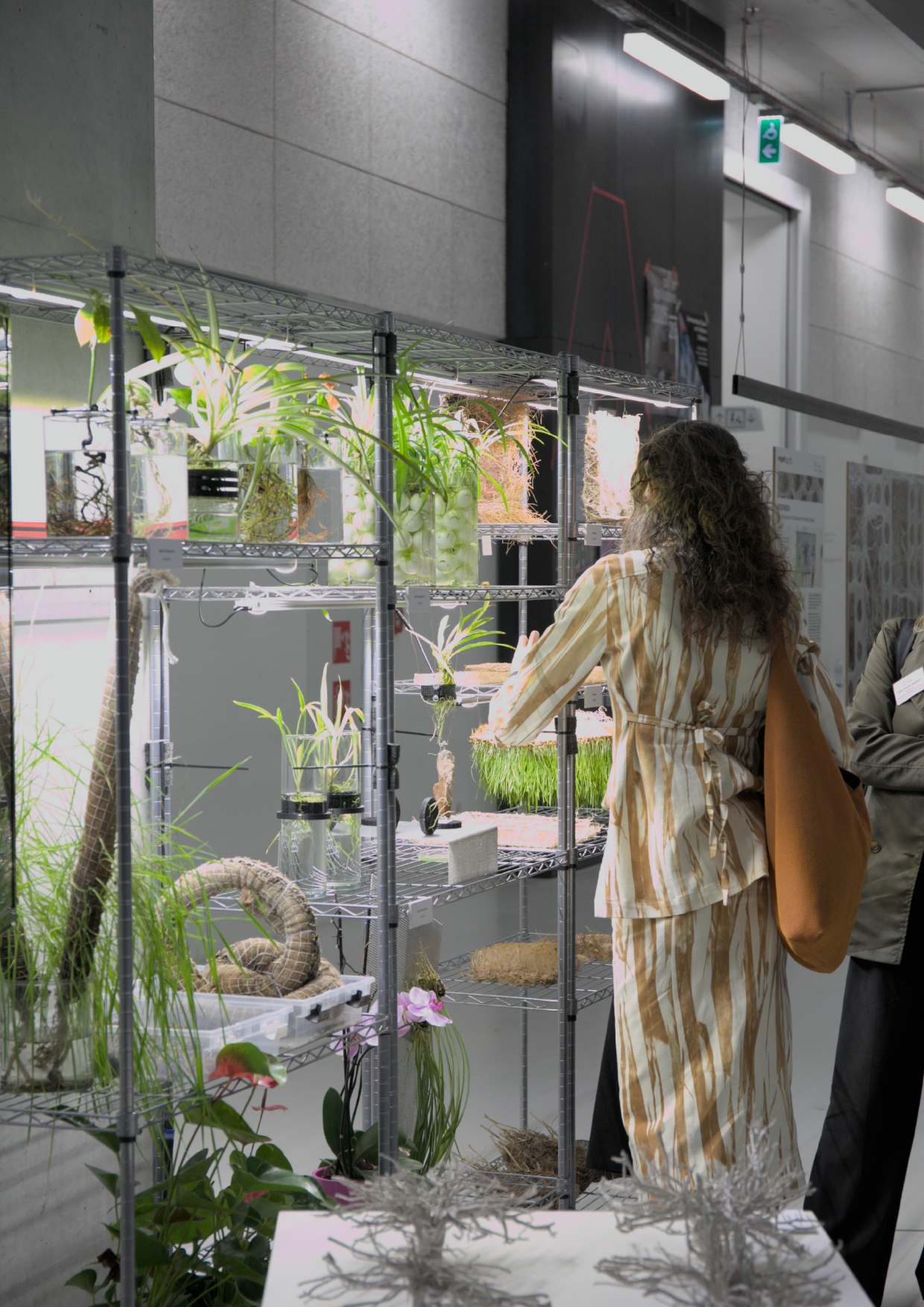
Exhibition of research output to increase public awareness for plant roots as promising inspiration and role models for architecture and design.

Radical exploration
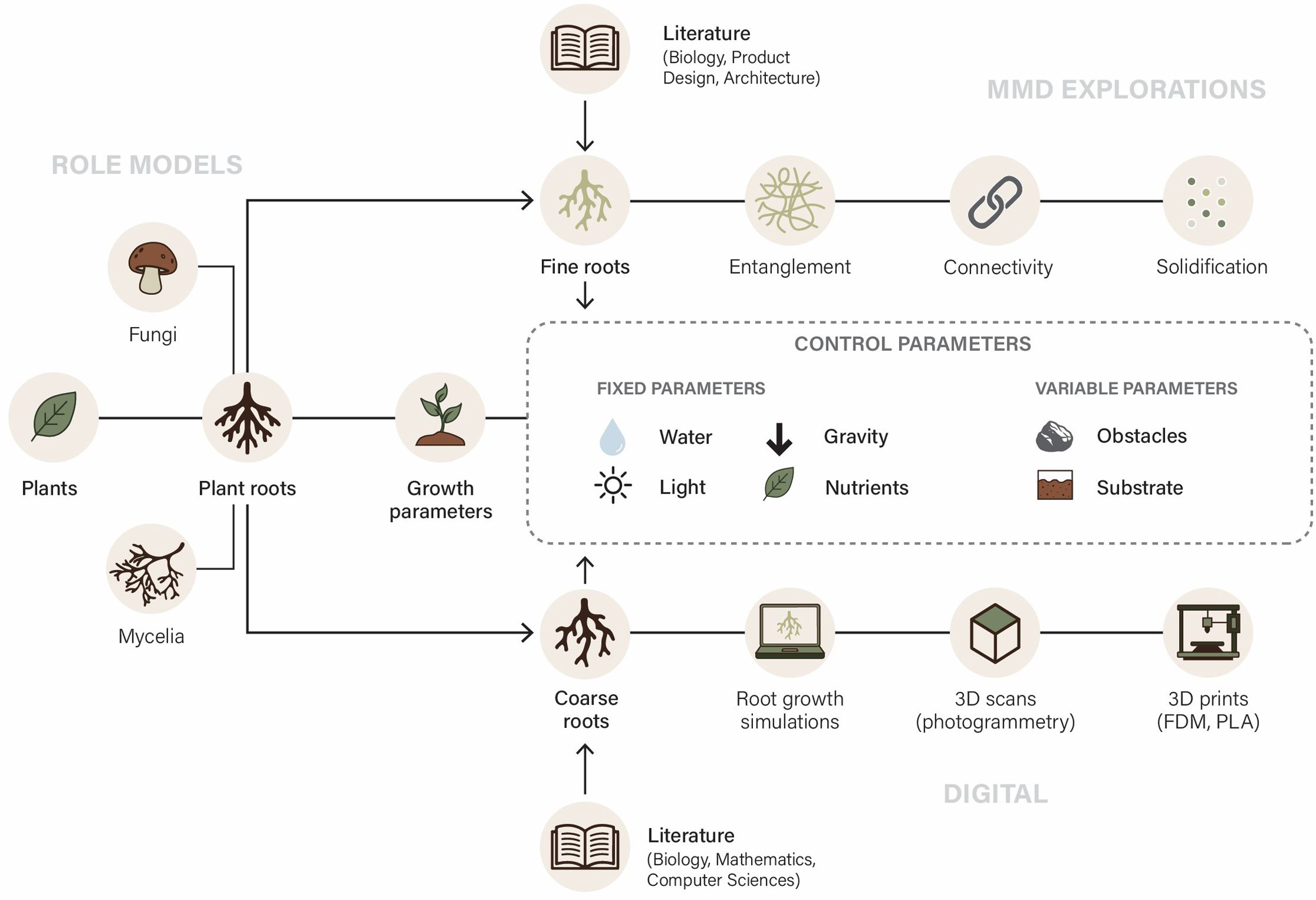
Working with experimental biomaterials, such as plant roots, can offer the opportunity to see what architecture ‘could be’ (Armstrong (Reference Armstrong2019), 17). In architecture, several research methods, such as quasi-experimental, qualitative, design case studies and simulation research, are often combined (Wang and Groat Reference Wang and Groat2013). The research on plant roots for architecture roughly falls into two categories: A) the exploration of plant roots as biomimetic role models for architectural design and construction is basic research, and B) experiments on how various plant roots can be directly used for Material-Driven Design (MDD). Consequently, this generative approach can be characterised as focusing on proposing artefacts rather than generalisable findings, being temporally focused on future scenarios and gaining momentum from emerging problems rather than predefined questions (Wang and Groat (Reference Wang and Groat2013), 26). However, the research project’s overarching aim to investigate a series of broad questions was formulated during open, multidisciplinary workshops: How can root systems be integrated into buildings? How can root systems serve as load-bearing structures? Can root entanglement perform structurally? Can root systems serve as new forms of grown/cultivated connections in building construction? These questions constitute the departure point for the framing of the experiments. The approach taken in this project is exploratory: It is situated at the intersection of biology and architecture, spanning across laboratory research, design, making, workshops and interdisciplinary research environments. The project, a one-year research effort, explored several pathways for root design, without yet focusing on a specific application field or product. The project benefited from research-led teaching in a Biodesign course, which is regularly held as part of Master’s education in architecture and also serves art and design programmes. The production of rootmats was explored in class as a precursor to the research project and the following year, root research was offered as a thematic framework for the exercise portion of the class. Research-led teaching was applied as a scouting opportunity to transfer known root-growth principles into prototypical design solutions. ‘Playing with stuff’ in our digital age is not only a pedagogical necessity but also a discovery method that, by working with materials, organisms and computational tools, yields unexpected and surprising findings that have the potential to spark further research into novel concepts and unprecedented trajectories. In this way, student experiments preceded the rootmat and connectivity studies conducted during the research. The prototypes developed in the frame of the research project by the team still remain qualitative design experiments that each open up a field of opportunities, questions and scenarios (Figure 2).
Research approach, departing from plant root systems as role models for architecture. The experiments explore different growth parameters, primarily by modulating variables such as the location of growth-inhibiting obstacles and substrate composition. Light, water, nutrients and gravitropism are provided as ideal conditions.

Background
Plant roots are an integral part of ecosystems across all scales (Wang et al. Reference Wang, Yu and He2021). They can be roughly divided into coarse and fine root systems (Silver and Miya Reference Silver and Miya2001; Tobin et al. Reference Tobin, Cermák, Chiatante, Danjon, Di Iorio, Dupuy and Eshel2007; Zhang and Wang Reference Zhang and Wang2015). This common divide is mainly defined by root diameter: roots with a diameter below 2mm are categorised as fine roots (Cusack et al. Reference Cusack, Chou, Yang, Harmon and Silver2009). While this definition suffices for the scope of this paper, it must be noted that other morphological traits, such as root length and root tissue density, also play crucial roles (Zhang and Wang Reference Zhang and Wang2015). The two root types fulfil distinct functions: coarse roots support the plant’s structure and are responsible for nutrient and water transport. In mature plants, fine roots are attached to coarse roots and obtain oxygen, nutrients and water through symbiotic mycorrhizal fungi (Eissenstat et al. Reference Eissenstat, Wells, Yanai and Whitbeck2000; Houette et al. Reference Houette, Stachew, Naményi, Miesbauer and Gruber2023; Stachew et al. Reference Stachew, Houette and Gruber2021; Tobin et al. Reference Tobin, Cermák, Chiatante, Danjon, Di Iorio, Dupuy and Eshel2007; Zhang and Wang Reference Zhang and Wang2015). Both fine and coarse root growth are highly complex systems, including multiple factors, and are specific to plant species, soil type and habitat. Plant root biology is furthermore highly responsive to environmental changes, such as water availability, nutrient levels and soil and atmospheric temperatures (Lombardi et al. Reference Lombardi, De Gara and Loreto2021; Morris et al. Reference Morris, Griffiths, Golebiowska, Mairhofer, Burr-Hersey, Goh, Von Wangenheim, Atkinson, Sturrock, Lynch, Vissenberg, Ritz, Wells, Mooney, Malcolm and Bennett2017; Tripathi et al. Reference Tripathi, Corpas and Yadav2024). A key parameter of root growth on Earth is gravitropism: a terrestrial plant’s ability to perceive gravity, leading to shoots growing upwards and roots downwards (Chin and Blancaflor Reference Chin, Blancaflor and Blancaflor2022; Edelmann Reference Edelmann2018; Moulia and Fournier Reference Moulia and Fournier2009; Roychoudhry and Kepinski Reference Roychoudhry and Kepinski2024). While this means that land plant roots generally grow down into the soil, their growth direction is coordinated by the root cap (Sievers and Braun Reference Sievers and Braun1996). It is an organ at the distal end of the root tip that enables soil penetration, regulates water and mineral uptake, limits heavy metal exposure, shapes rhizosphere microbiota and releases auxin that guides lateral root formation and adaptive growth under changing conditions (Ganesh et al. Reference Ganesh, Shukla, Mohapatra, George, Bhukya, Das, Kola, Suresh and Ramireddy2022). Plant roots, both coarse and fine, show potential as both biomimetic role models and as biomaterials for architecture and construction.
Material-driven design
MDD is a radically different approach to conventional design processes, placing the material at the start (Directory 2025). In the specific case of this paper, the material is the plant root, a living organism (Armstrong Reference Armstrong2015; Beesley Reference Beesley2016; Chayaamor-Heil et al. Reference Chayaamor-Heil, Houette, Demirci and Badarnah2024; Gazit Reference Gazit2016; Imhof and Gruber Reference Imhof and Gruber2016). Simultaneously with digital design experiments and participatory workshops, the research investigated plant roots for architecture through MDD, considering the experience of working with a material as an integral part of the design process (Karana et al. Reference Karana, Barati, Rognoli and Zeeuw van der Laan2015). For this research, MDD is accompanied by other material-centred approaches, including computation and ecology (Chayaamor-Heil et al. Reference Chayaamor-Heil, Perricone, Gruber and Guéna2023; Oxman Reference Oxman2004; Speck et al. Reference Speck, Bold, Masselter, Poppinga, Schmier, Thielen, Speck, Geitmann and Gril2018). However, in all experiments, the material, in this case plant roots of various species, dictates the form hand in hand with the idiosyncratic objects placed as obstacles in the substrate.
Methodology
The project aims to better understand root growth principles by developing new digital design and production methodologies and conducting MDD studies. Future studies can then build on the findings to develop new construction methods and to inform design speculations. Accordingly, the approach includes a wide variety of methods: 1) physical experiments in a custom biolab environment to co-design with living plants and better understand the basics of root attachment and growth, 2) analysis and interpretation of pre-existing photogrammetry 3D scans (Houette et al. Reference Houette, Stachew, Naményi, Miesbauer and Gruber2023) of coarse root systems to identify macro-morphologies of tree roots to develop digital-twin models, 3) collecting conceptual ideas and speculations in multi-disciplinary workshops, including artists, architects, biologists, ecologists and mathematicians and 4) developing digital simulation and fabrication workflows for generating and materialising complex root structures.
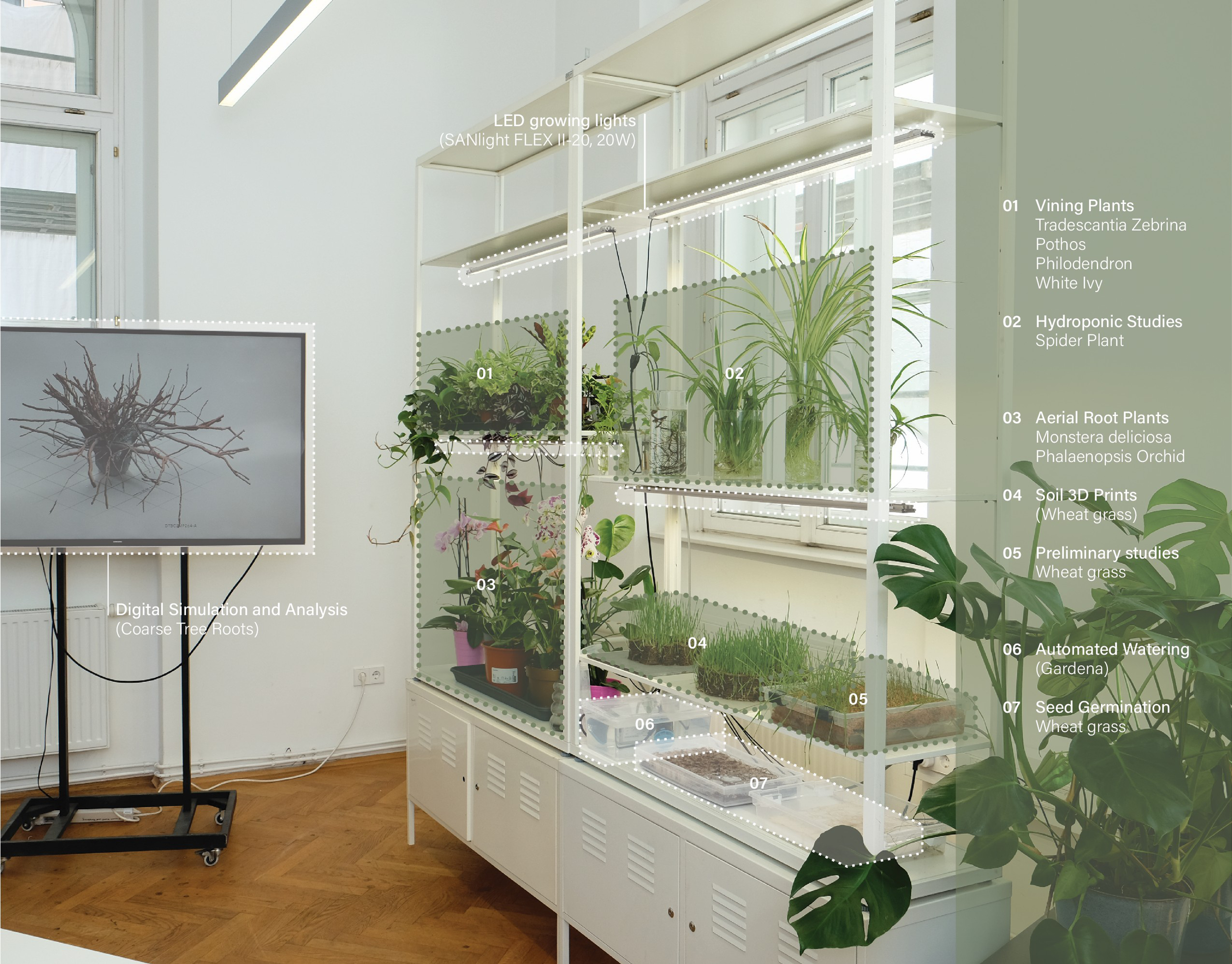
The experiments were structured as five clusters and mostly conducted in parallel by the different team members, including principal investigators, research assistants and student assistants. Regular meetings and workshops were held to generate ideas, evaluate outcomes and decide on the next iteration of the different experiments and research threads. An open workshop call at the project’s beginning linked to experts from other departments (data visualisation, mathematics, ceramics) and sparked inspiring conversations but did not yet lead to collaboration within the project timeframe. The team decided on the different options for experimentation, considering the success of preliminary trials, growth duration, time constraints, available cultivation options and clarity of the further application idea. Two important themes were followed: the integration of roots to serve in a structural capacity and the creation of a hybrid system with longer-term living components. To observe root growth across all MDD experiments, a temporary biolab was set up as a research space. It is equipped with LED growing lights (SANlight FLEX II-20, 20W) and an automated watering system (Gardena) to provide optimal growing conditions across most growth parameters. The MDD growth experiments were placed on racks at different levels below the lights for the growing period. The two main plant species were spider plant (Chlorophytum comosum) and wheatgrass (Triticum aestivum), chosen for their availability, growth rates and hydroponic-friendliness (Figure 3).
Biolab setup for controlled growth experiments under ideal conditions for material-driven design.

Figure 3. Long description
A biolab setup with various plants and equipment for controlled growth experiments. The setup includes LED growing lights labeled SANlight FLEX II 20, 20W. There are several sections labeled with numbers and descriptions: 01 Vining Plants with Tradescantia Zebrina, Pothos, Philodendron, and White Ivy; 02 Hydroponic Studies with Spider Plant; 03 Aerial Root Plants with Monstera deliciosa and Phalaenopsis Orchid; 04 Soil 3D Prints with Wheat grass; 05 Preliminary studies with Wheat grass; 06 Automated Watering with Gardena; and 07 Seed Germination with Wheat grass. A digital simulation and analysis screen displays coarse tree roots. The lab environment includes various plants and equipment for experimental purposes.
Experiment 01: Soil 3D printing
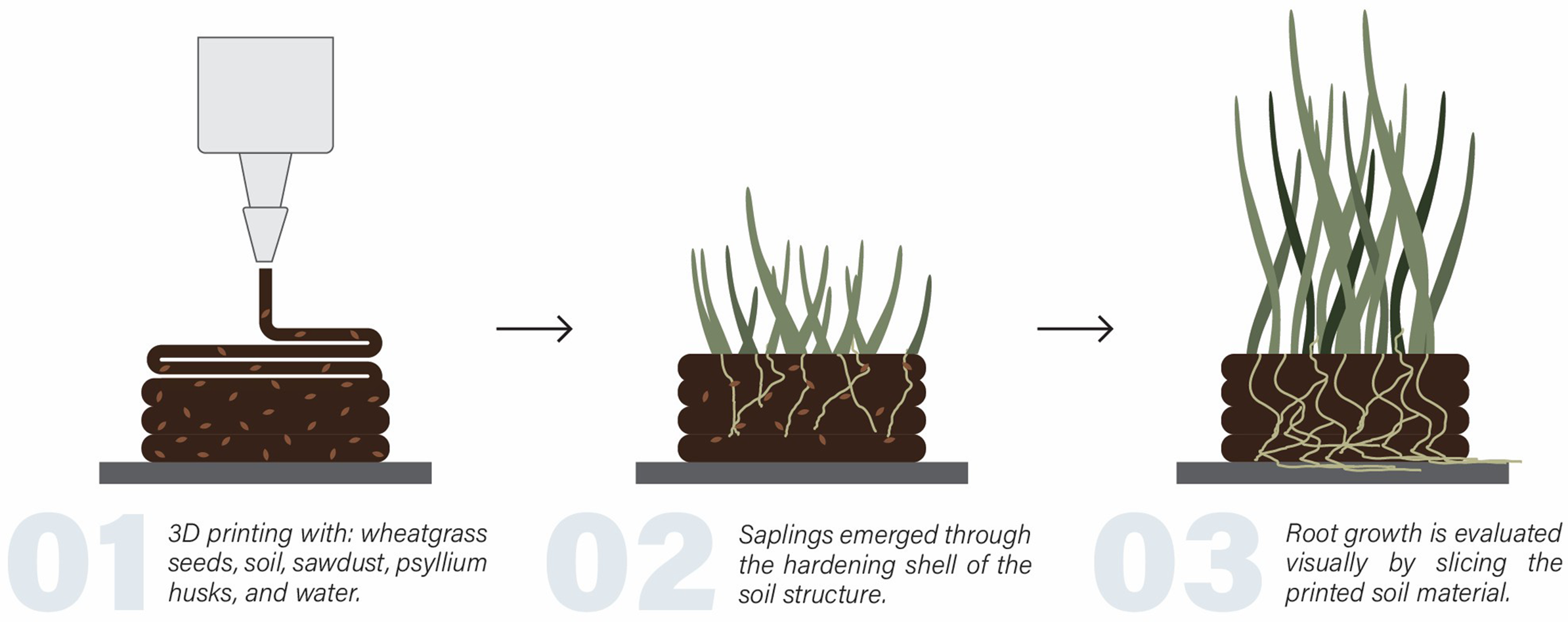
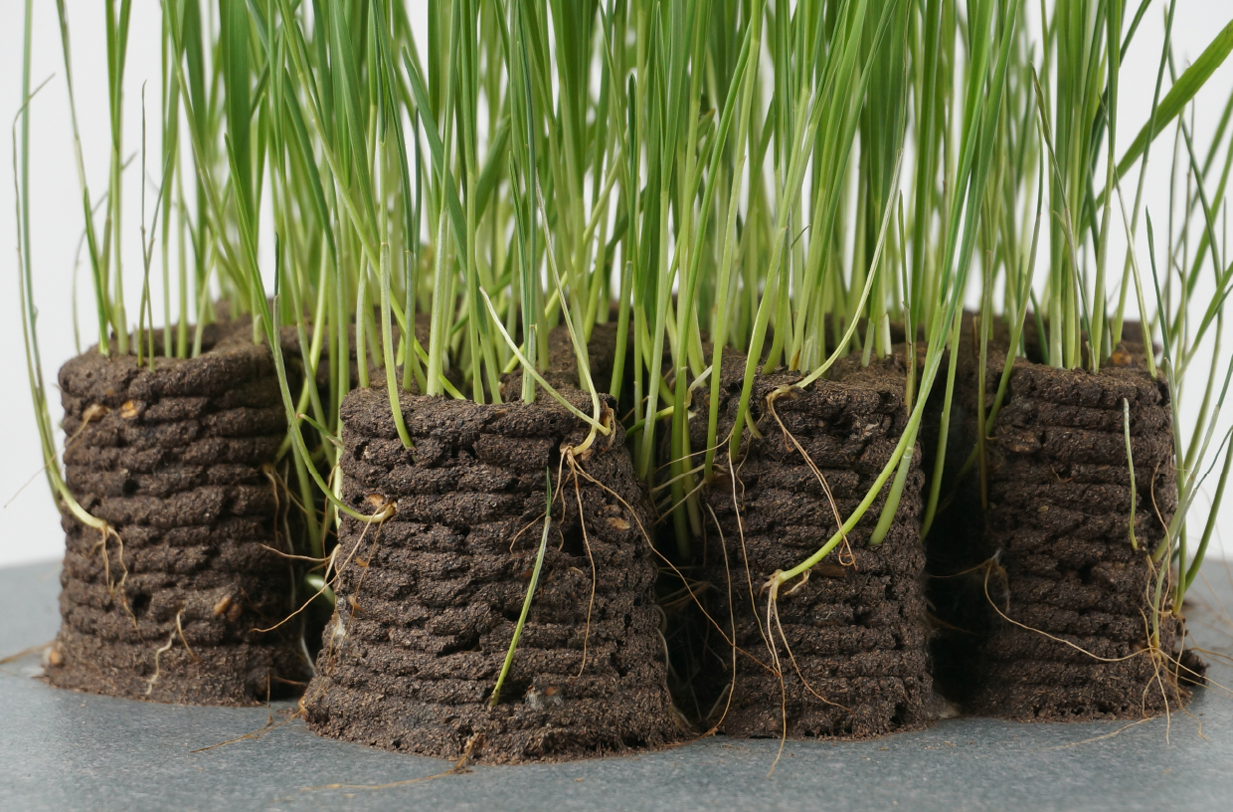
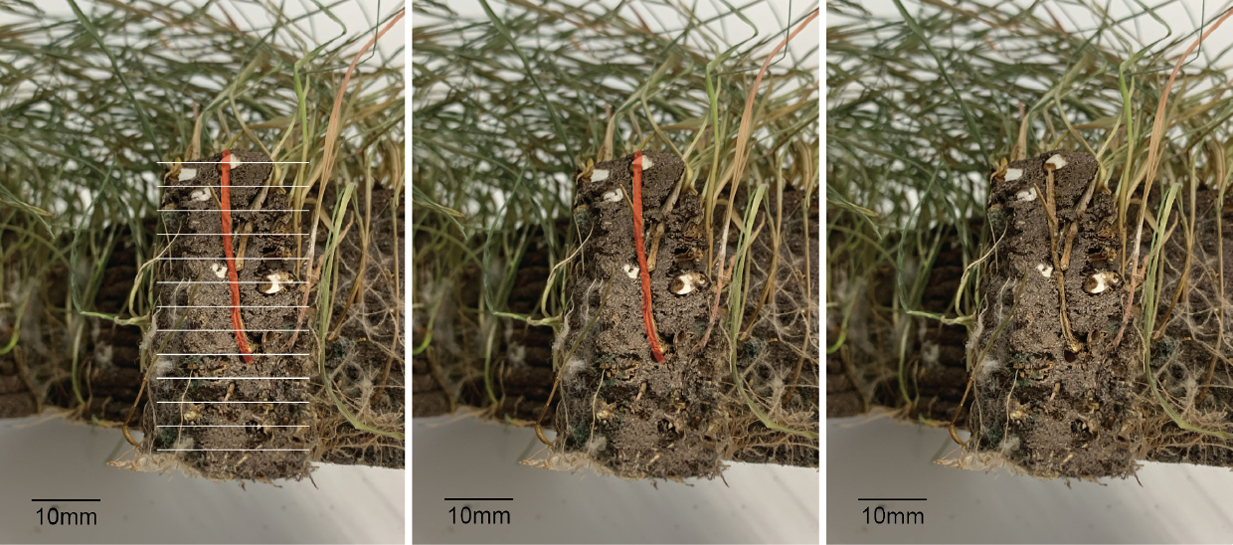
The explorations presented in this paper build on research on coarse root morphologies and their use for erosion control and ground solidification (Gruber et al. Reference Gruber, Houette and Stachew2024). When integrating plant roots into building construction, they are often considered for soil solidification due to their ability to hold loose aggregate together (Hao et al. Reference Hao, Wang and Liu2023; Houette et al. Reference Houette, Stachew, Naményi, Miesbauer and Gruber2023; Zhang et al. Reference Zhang, Huang, Xiang, Zhang, Ciantia, Liu, Yin and Qin2025). In product design, fashion and art, plant roots have been explored artistically and scientifically as both role models and biomaterials (Sanders and Scherer Reference Sanders and Scherer2020; Zhou et al. Reference Zhou, Barati, Wu, Scherer and Karana2021). Simultaneously, advances in additive manufacturing (AM), specifically 3D printing with pastes, has allowed architects and designers to integrate soil, mud and earth as living substrates into the architecture. They range from 3D printing mycelia substrates (Goidea Reference Goidea2020) to vast soilscapes and multi-material structures in public spaces (Aouf Reference Aouf2022; Barnes et al. Reference Barnes, Kirssin, Needham, Baharlou, Carr and Ma2022; Colletti et al. Reference Colletti, Derme, Riedl and Vorreiter2019; Mitterberger and Derme Reference Mitterberger and Derme2019; Mitterberger and Derme Reference Mitterberger and Derme2020). Others explored aspects of decay and bio-integration, seeing such earthen structures as hosts to kick-start growth, including bio-remediation concepts (Biocene et al. Reference Devadass, Rozas, Franceschini, Cruz and Parker2023; Mayrhofer-Hufnagl and Ennemoser Reference Mayrhofer-Hufnagl and Ennemoser2024; Olesti et al. Reference Olesti, Rozas, Morlie, Salmane, Devadass, Cruz and Parker2025). Additive manufacturing with earth and soil for architecture has gained momentum in recent years. In response to this trend, 3D printing with integrated plant seeds was explored. A mixture of soil, sawdust, psyllium husks and water was printed with a modified ceramic 3D printer. To enable 3D printing of highly viscous biomaterials, a pneumatic extrusion system was developed as an auxiliary research task, improving material flow consistency and enabling higher printing speeds. An 8 mm nozzle was used to extrude a vase-like shape with a bio-inspired differential growth footprint. To advance the work of others, the wheatgrass seeds were placed in the moist substrate rather than added later (Barnes et al. Reference Barnes, Kirssin, Needham, Baharlou, Carr and Ma2022; Mitterberger and Derme Reference Mitterberger and Derme2020). After fabrication, saplings emerged, penetrating the hardening shell of the soil structure. The samples were dried before the plants matured. Root penetration was evaluated visually by slicing the objects (Figures 4–6).
Embedded root growth for structural reinforcement of soil 3D prints. Over time, the saplings grow, and roots reinforce the horizontal layers.

Wheatgrass shoots growing out of a 3D-printed soil object. The project investigated how plant roots interact with substrates and how they can be used to solidify them.

Root penetration (red) and seed distribution in 3D-printed substrates (cross section).

Experiment 02: Root mats
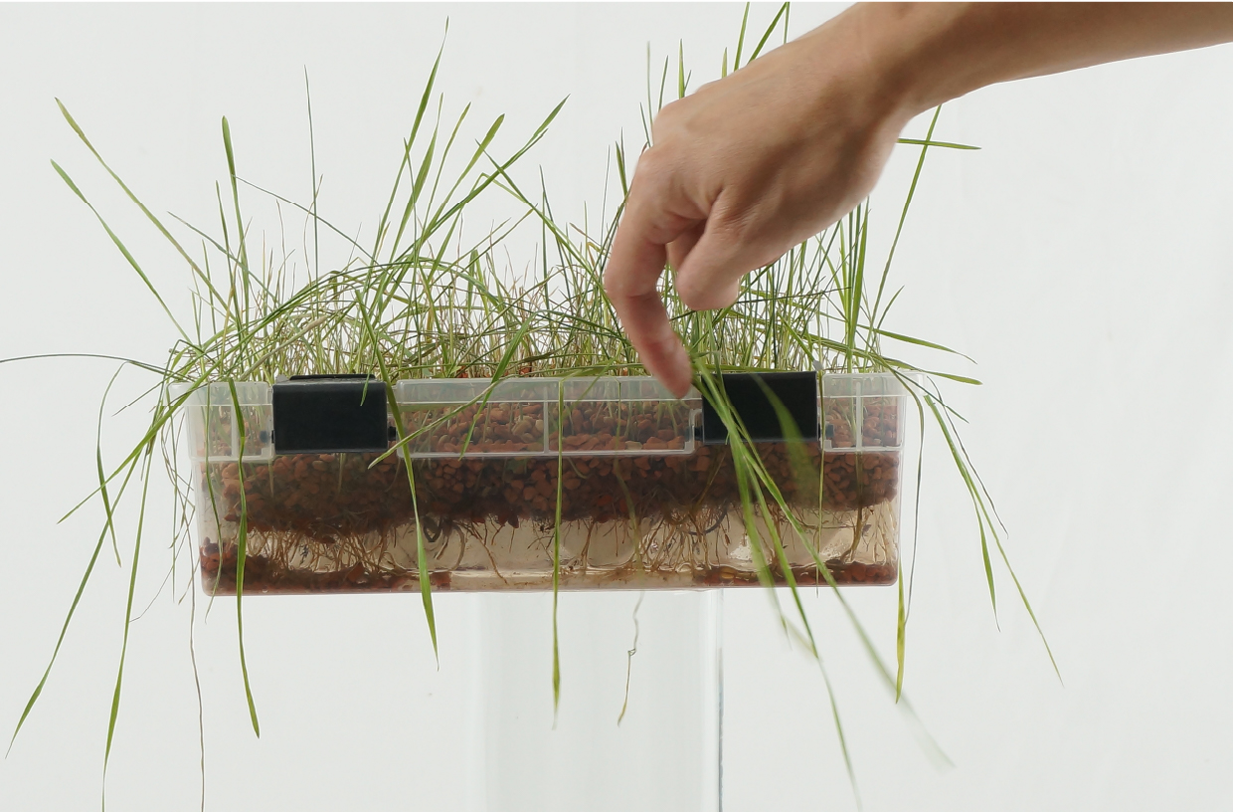
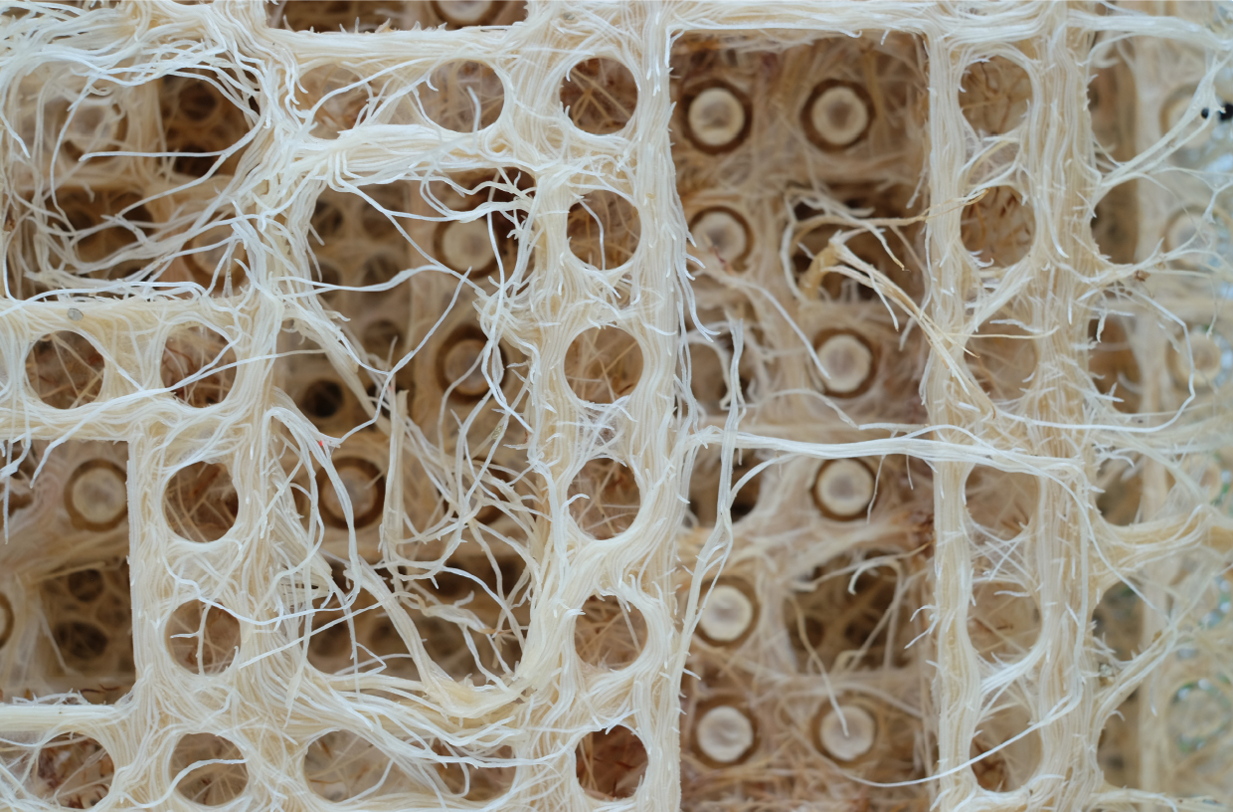
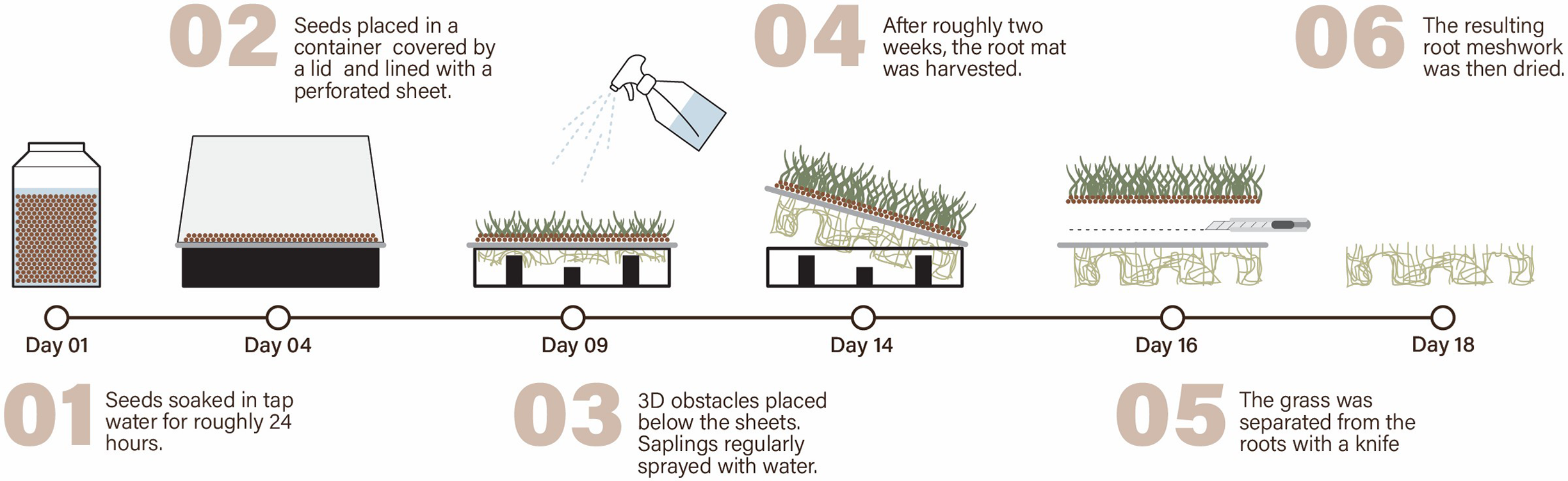
Growing fine wheat grass roots into intricate patterns yields highly ornamental root mats (Rootfull 2025; Sanders and Scherer Reference Sanders and Scherer2020; Zhou et al. Reference Zhou, Barati, Wu, Scherer and Karana2021). Seeds were first soaked in tap water for about 24 hours, then placed in a shallow container lined with a porous mesh or a perforated sheet. Below the sheets, 3D-printed or other modular polymer obstacles were placed, thus guiding the growing roots into specific patterns of varying densities. For the first three days, the container was covered with an upside-down plastic container to increase humidity. During the three to twelve-day growing period, the saplings were regularly watered with a spray. After roughly two weeks, the root mat was harvested, and the grass was separated from the roots with a knife. The resulting root meshwork was then dried. Several iterations and patterns of root mats were explored to achieve maximum thickness and spatial pattern complexity (Figures 7, 10). The maximum thickness grown was 7 cm (Figure 8).
Basic setup for root mat experiments: Guided by gravitropism, wheatgrass roots grow through a mesh, submerged in water. Depending on the obstacles placed below the mesh, the roots form intricate patterns.

Fine roots of wheatgrass saplings efficiently fill the gaps between impenetrable obstacles. In this photo, toy polymer bricks were used to create an intricate, three-dimensional maze.

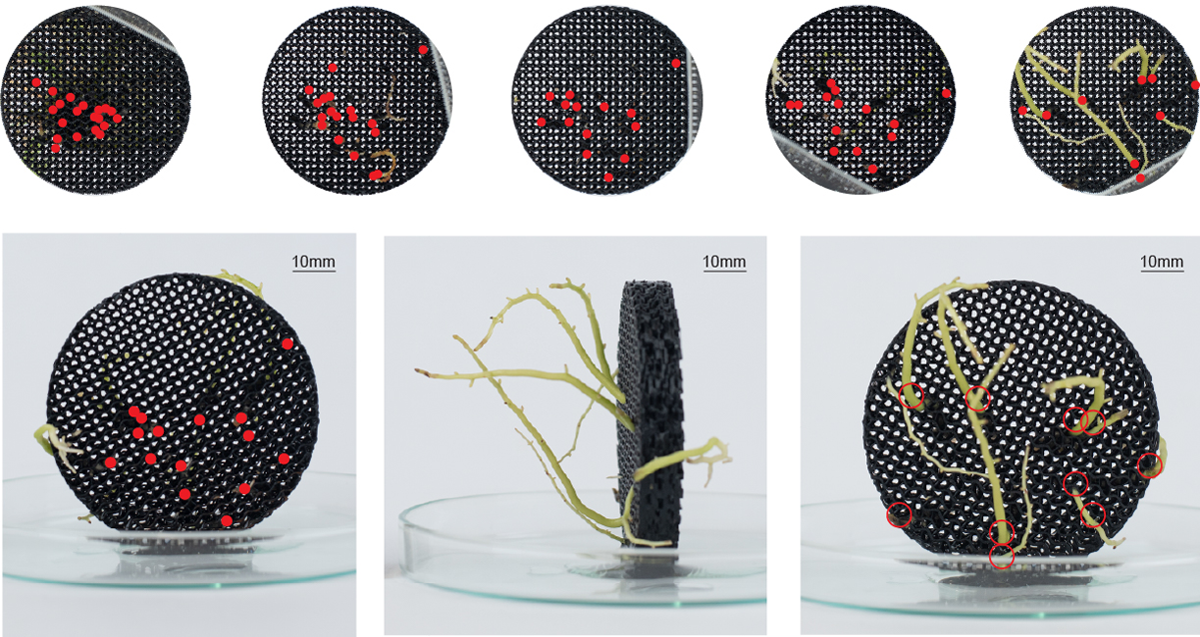
Root connectivity between porous discs is assessed by severing connections and counting the number of connections.

The principal method to grow root mats from wheatgrass consists of six main steps.

Experiment 03: Connectivity and entanglement
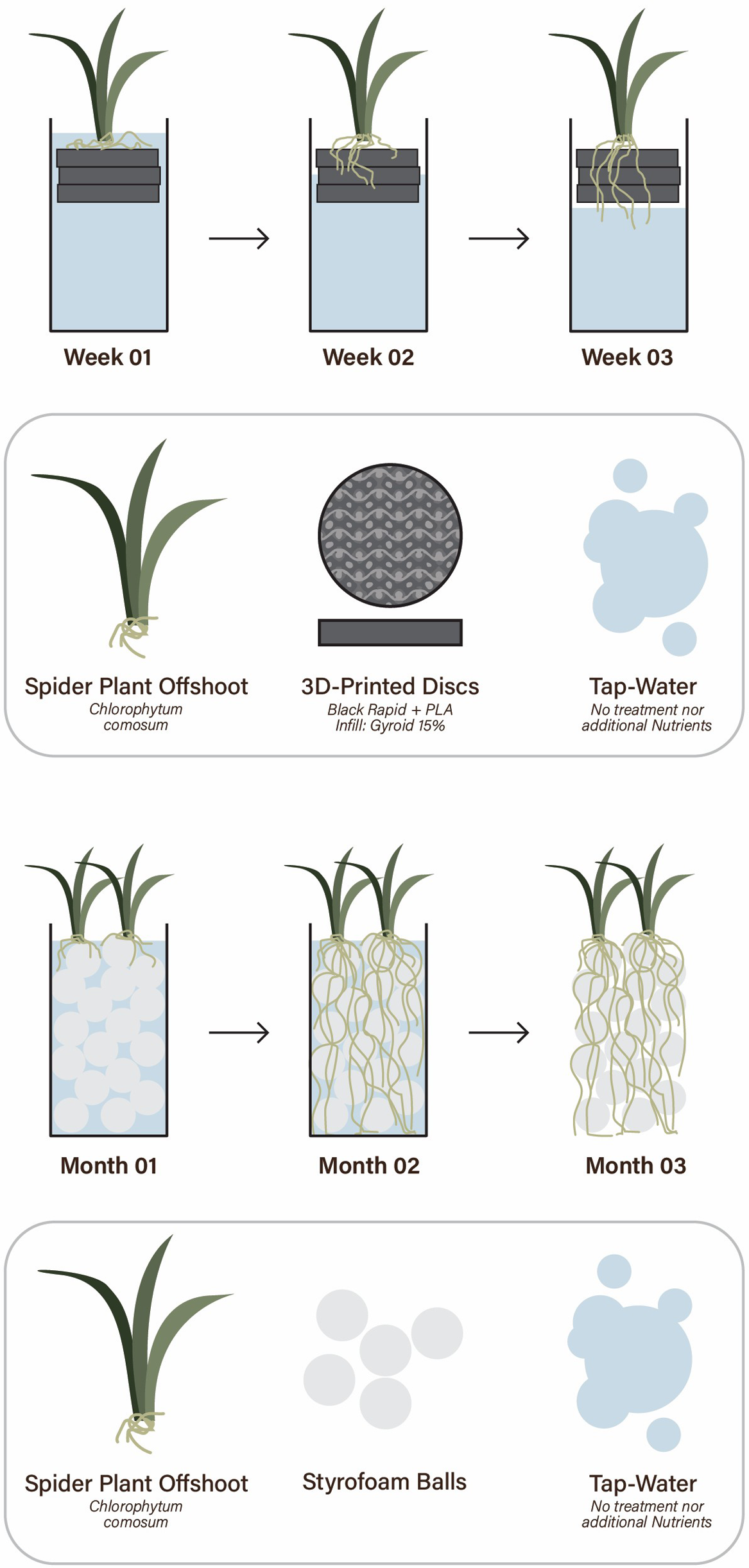
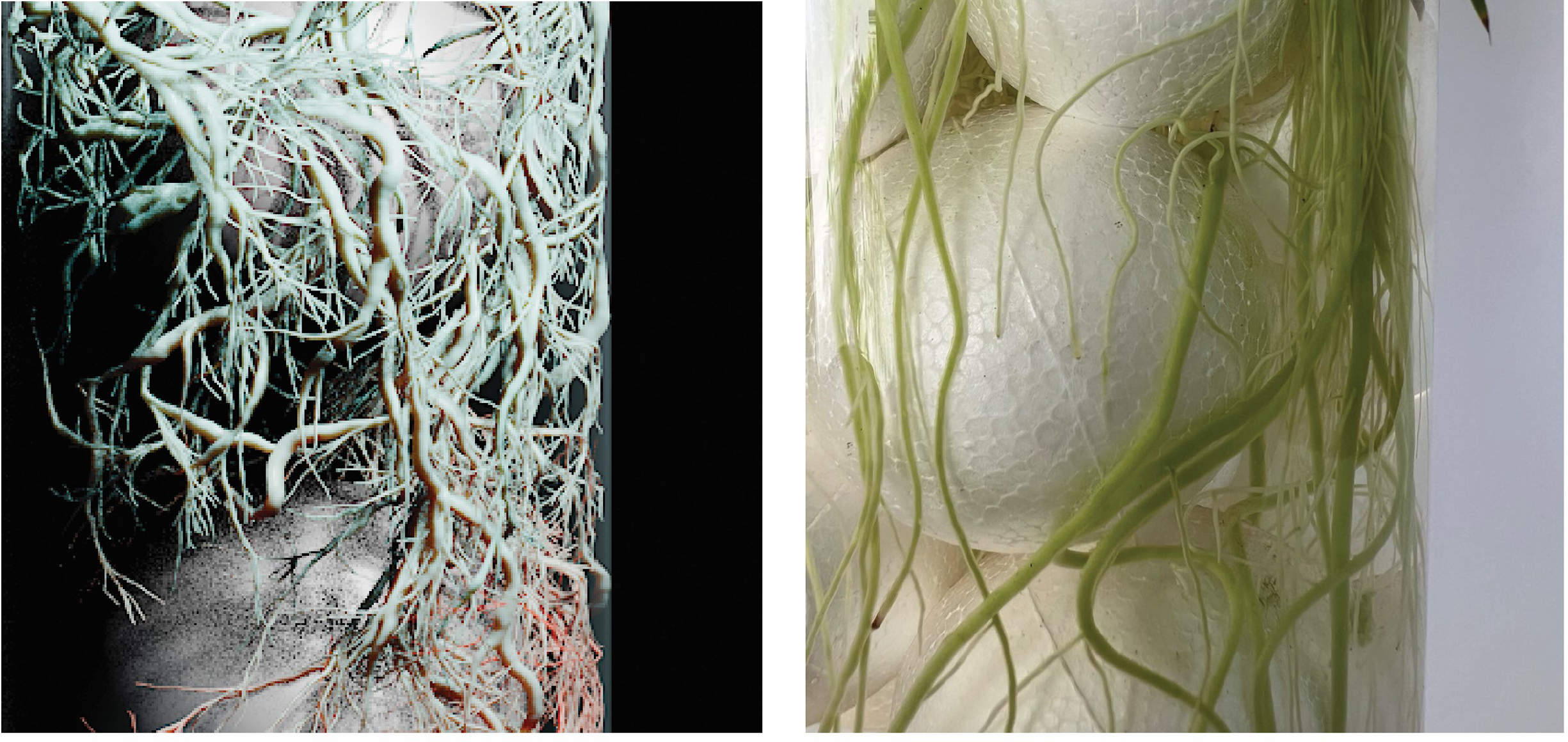
To explore the potential of plant roots to connect different inert objects, spider plant shoots were suspended in a water-filled glass cylinder (70 mm cross section, 220 mm height) above three 10 mm-thick porous discs with a 68 mm diameter. These obstacles were 3D-printed in PLA using a desktop 3D printer (Bambu Lab P1S). The porosity of the cylindrical extrusions was generated with a 15% gyroid infill, without a bottom layer and with no wall loops in the printer’s slicing software. The discs were positioned at approximately the water level using four magnets, held in place by four corresponding magnets on the outside. After filling the vessel with tap water, gravitropism (Chin and Blancaflor Reference Chin, Blancaflor and Blancaflor2022; Moulia and Fournier Reference Moulia and Fournier2009; Roychoudhry and Kepinski Reference Roychoudhry and Kepinski2024) guided root growth downwards through the three discs. No nutrients were added. Over a few weeks, the spider plant roots grew through the gyroid matrix, structurally connecting the three discs. For evaluation, the discs were severed and the connections were mapped relative to the disc area. To better understand root growth through an assembly of impenetrable obstacles in a hydroponic setup, entanglement experiments investigated root pathing. Three glass cylinders (90 mm diameter, 220 mm height) were filled with water and Styrofoam spheres with diameters of 30–40 mm. A metal mesh on top held the spheres in place. Spider plant shoots were placed on the mesh on top. Gravitropism and root growth guided by the root caps allowed the plants to fill the gaps between the spheres (Ganesh et al. Reference Ganesh, Shukla, Mohapatra, George, Bhukya, Das, Kola, Suresh and Ramireddy2022). Over a six-month period, root entanglement began to connect the loose aggregate spheres. Liquid fertiliser was added every 3 months. The experiment was evaluated using photos and is still ongoing (Figures 9 & 11).
Experimental setups for hydroponic growth investigations for root connectivity (top row) and entanglement (bottom row). Over time, the roots grow through the porous discs (3D prints) or loose aggregates (Styrofoam spheres), structurally connecting the elements.

Experiment 04: Green ‘Sausages’
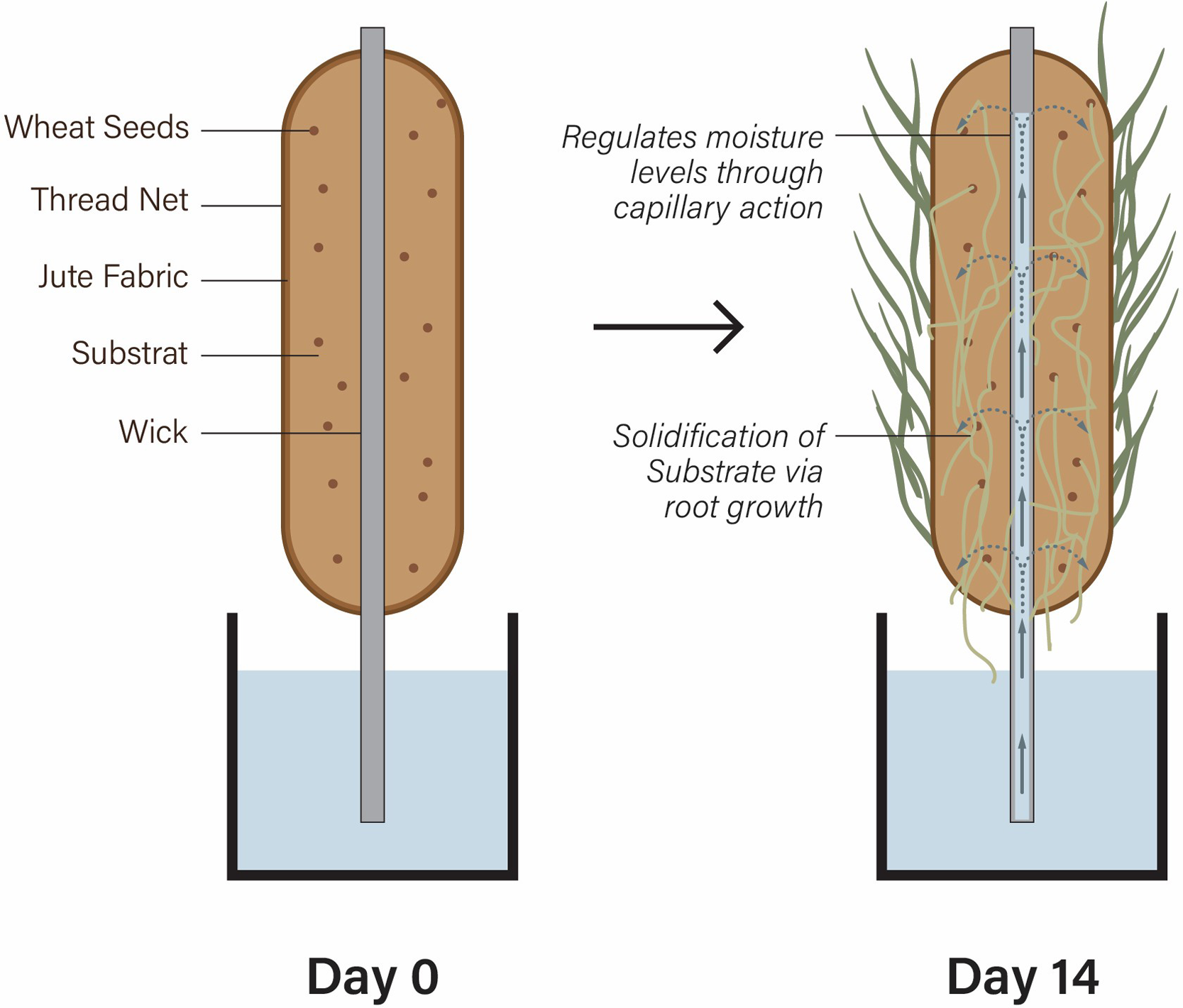
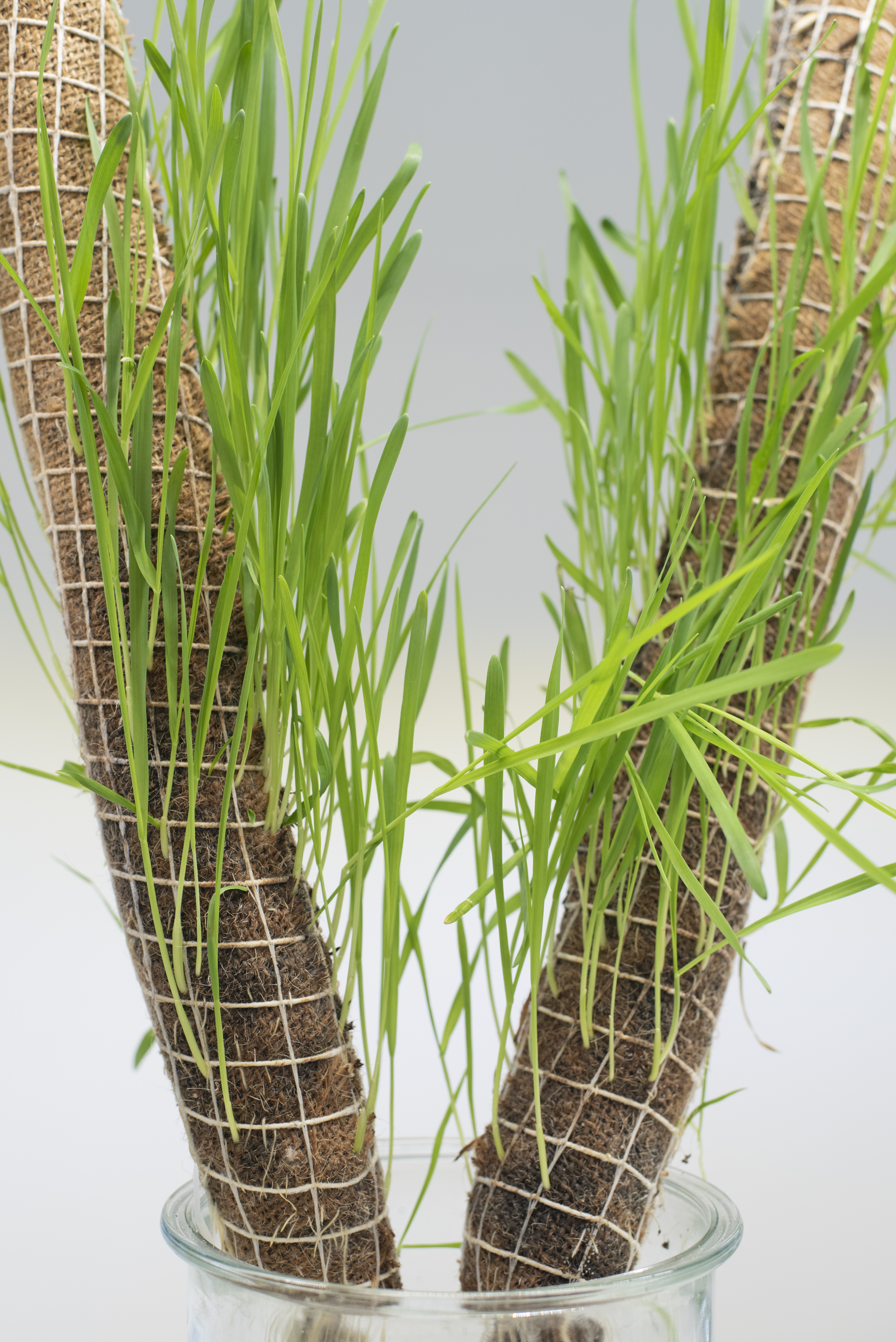
Combining tensile, fibre-based materials with granular soils is a well-established technique in structural engineering (Windapo et al. Reference Windapo, Jarrat, Adetooto, Pomponi and Emuze2022). A common strategy is to stack sandbags to form load-bearing structures. However, these assemblies lack internal cohesion and can be easily demolished by cutting the bags, compromising the entire structure. The ‘green sausage’ concept addresses this limitation. In the experiment, the soil was mixed with wheat seeds, which began to germinate when water was added. Within a short period, the developing root network binds the soil internally, complementing the tensile skin’s stabilising effect. This means that even if the outer mesh is locally damaged, the structure retains its overall stability. For prototyping, materials and tools from the food industry were repurposed, leveraging existing sausage-making technology. The outer skin was made with a thread net typically used for meat stuffing, while a secondary inner layer of jute fabric was added to contain the fine soil particles. In addition to evaluating the structural capacity of the system, the experiment explored moisture management within the soil–root composite and across different substrate compositions. Root systems rely on water drawn from their surroundings, yet this is limited by capillary rise (Caron and Elrick Reference Caron and Elrick2008; Fang et al. Reference Fang, Li, Ji and Wang2017; Kazemi et al. Reference Kazemi, Van De Riet and Curet2017). Introducing a wick along the cylinder’s axis mimics this natural mechanism and effectively maintains the required moisture levels (Figures 12 and 13).
Principles and growth stages of the green ‘sausage’ experiments, where a wick pulls up water through capillary rise, slowly moistening a substrate contained in a porous mesh.

Wheat grass sprouting from the green ‘sausage’.

Experiment 05: Simulating root growth
Simulating root growth computationally requires balancing stochastic branching behaviour, environmental response and hierarchical structure. Scientific models such as RootBox (Leitner et al. Reference Leitner, Klepsch, Bodner and Schnepf2010; Schnepf et al. Reference Schnepf, Leitner, Landl, Lobet, Mai, Morandage, Sheng, Zörner, Vanderborght and Vereecken2018) and SimRoot (Lynch et al. Reference Lynch, Nielsen, Davis and Jablokow1997; Postma et al. Reference Postma, Kuppe, Owen, Mellor, Griffiths, Bennett, Lynch and Watt2017) prioritise biological accuracy, coupling nutrient uptake, soil mechanics and species-specific growth parameters to predict root system architecture. At the other end of the spectrum, procedural tools used in game engines and visual effects, such as SpeedTree (SpeedTree 2022), treat branching parameters as dimensionless artistic controls, optimising for visual plausibility rather than physical fidelity. For architectural and design applications, neither extreme is fully adequate: scientific models lack the flexibility for speculative form-finding, while purely artistic tools offer no connection to structural or material constraints.
RootSim, developed as a Grasshopper/Rhino C# component, represents an initial step toward combining biologically accurate root growth simulations with procedural generation. It is implemented as a C# script component within Grasshopper for Rhino 8 (McNeel Reference McNeel2023). It operates as an agent-based system in which root tips act as frontier nodes, advancing through a random walk modulated by gravitropism, branching probability and collisions with mesh geometry representing soil or obstacles. At each iteration, tips may branch stochastically based on configurable parameters including branch angle, depth bias and growth attenuation. The resulting structure is a lightweight node-edge graph that can be relaxed and simplified through built-in operations (Figure 14). Rather than generating volumetric geometry directly, RootSim exports a PLY file that encodes per-vertex attributes: distance to root, distance to tip and branching depth, as normalised colour channels. This data is then read by a Blender Geometry Nodes setup that generates the final 3D root meshes and drives growth animation from the embedded attributes.
RootSim combines findings from hydroponic experiments, computational root simulations based on biological parameters and the procedural generation of root structures through obstacles for design purposes.

Findings
The explorations yielded a variety of results, ranging from digital models to MDD experiments. In each case, the root growth was documented with close-up photos. While the project explored both coarse and fine plant root systems as biological role models and for MDD, the results are roughly divided into two groups. On the one hand, the coarse root systems were predominantly investigated digitally, using 3D-printed models derived from 3D scans. On the other hand, fine root systems were examined through material and growth experiments with different plant species across different substrates.
Material sample library
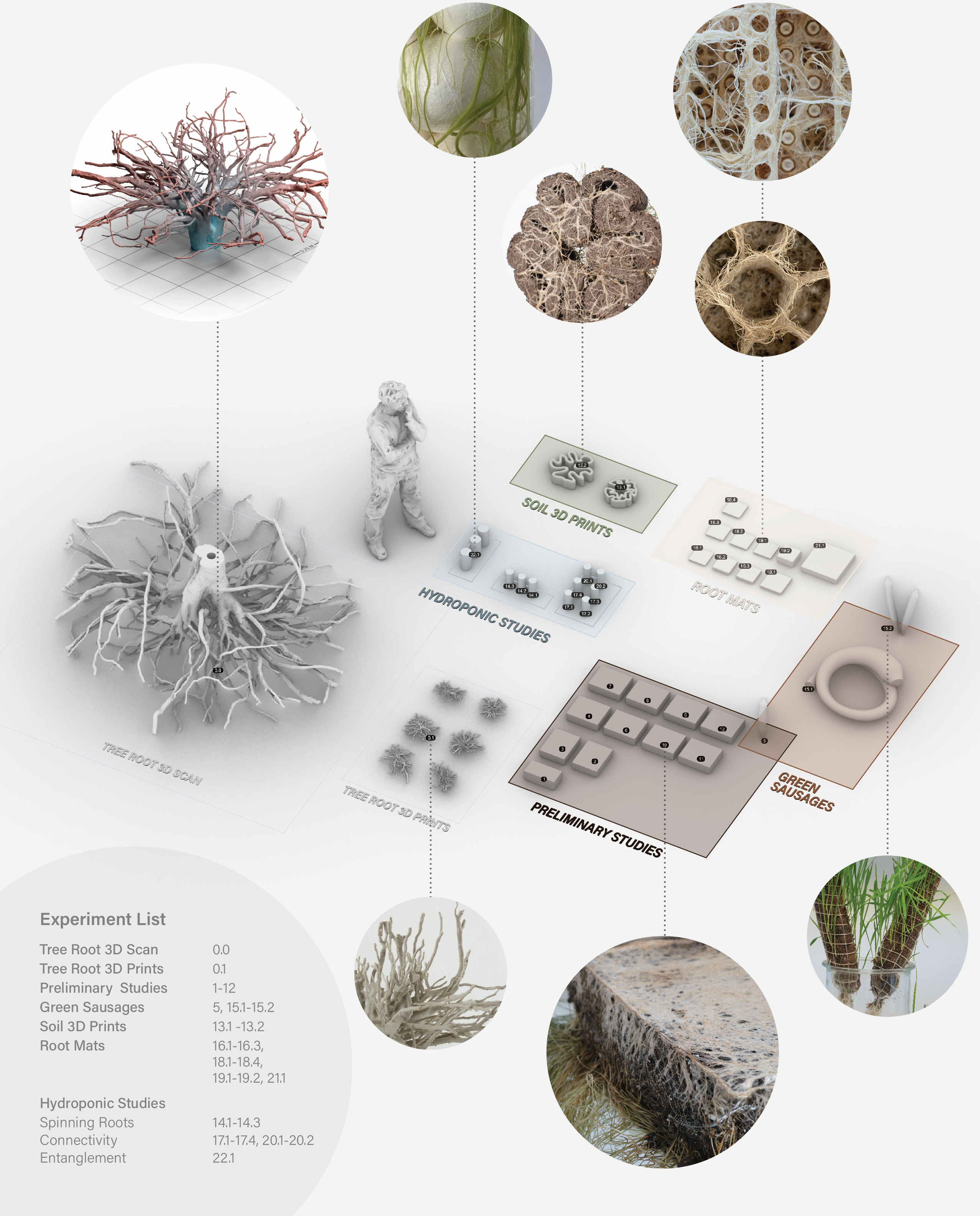
The five experimental approaches’ successfully physical outcomes can be categorised as follows: A) root mats hydroponically grown from wheatgrass seeds to form various patterns defined by 3D-printed obstacles, B) 3D-printed earthen structures with embedded wheatgrass seeds, C) different soil compositions shaped into longitudinal ‘sausages’ by synthetic and natural meshes, D) spider plant root entanglements in liquid solutions with various loose obstacles made from polymers and E) structural water spider plant root connections of various porous 3D prints in liquid solution (Figure 15). The research has yielded a broad range of material samples that form a key library for future studies. Building on the research by Zhou et al. (Reference Zhou, Barati, Wu, Scherer and Karana2021), the explorations presented here advance the research on roots in architecture. The work has shown that growing roots in a DIY biolab is challenging, especially concerning root gnats and fungal infestations. Such experiments naturally involve monoculture setups, which are easy prey. The root mat results are promising, with a maximum mat thickness of 70 mm. The root entanglement and connectivity investigations yielded promising results concerning the mechanical performance of roots as live connectors of inert parts. When the sausages were positioned vertically and watered from below, capillary forces lifted the water only about 200 mm. As a result, applications such as green façades require top-down watering. Because the system distributes water internally rather than relying on external irrigation, it is highly water-efficient. In urban environments, the consistently moist soil mass also provides a natural cooling effect.
Labelled overview of all experiments to scale, thematically grouped as outcomes A-E.

Conclusions
As organisms that remain fixed in place, plants continuously negotiate environmental conditions over extended timescales, developing adaptive, flexible and resource-efficient strategies for survival and growth. They stabilise and structure their surroundings, explore open space through hierarchical and anisotropic organisation and establish resilient layers both above and below ground. As integrated living components, plants contribute to shading, cooling, ecosystem formation and resource capture, transforming solar energy into material while reintegrating ecological processes into built environments. Their performance characteristics include lightweight construction, multi-level organisation, non-toxic materiality and circularity and offer valuable insights for sustainable architectural systems. In particular, root networks exemplify structural entanglement and soil reinforcement, forming effective root–soil composites that stabilise terrain, anchor structures and regulate water and nutrient flows. These properties become increasingly relevant in the context of climate change and environmental disruption, where resilient, adaptive infrastructure is urgently needed. By studying roots as hybrid ground–structure interfaces, this research explores their potential for self-adapting, resource-responsive and multifunctional systems, capable of stabilising terrain, harvesting resources, supporting above-ground applications and fostering further ecosystem development.
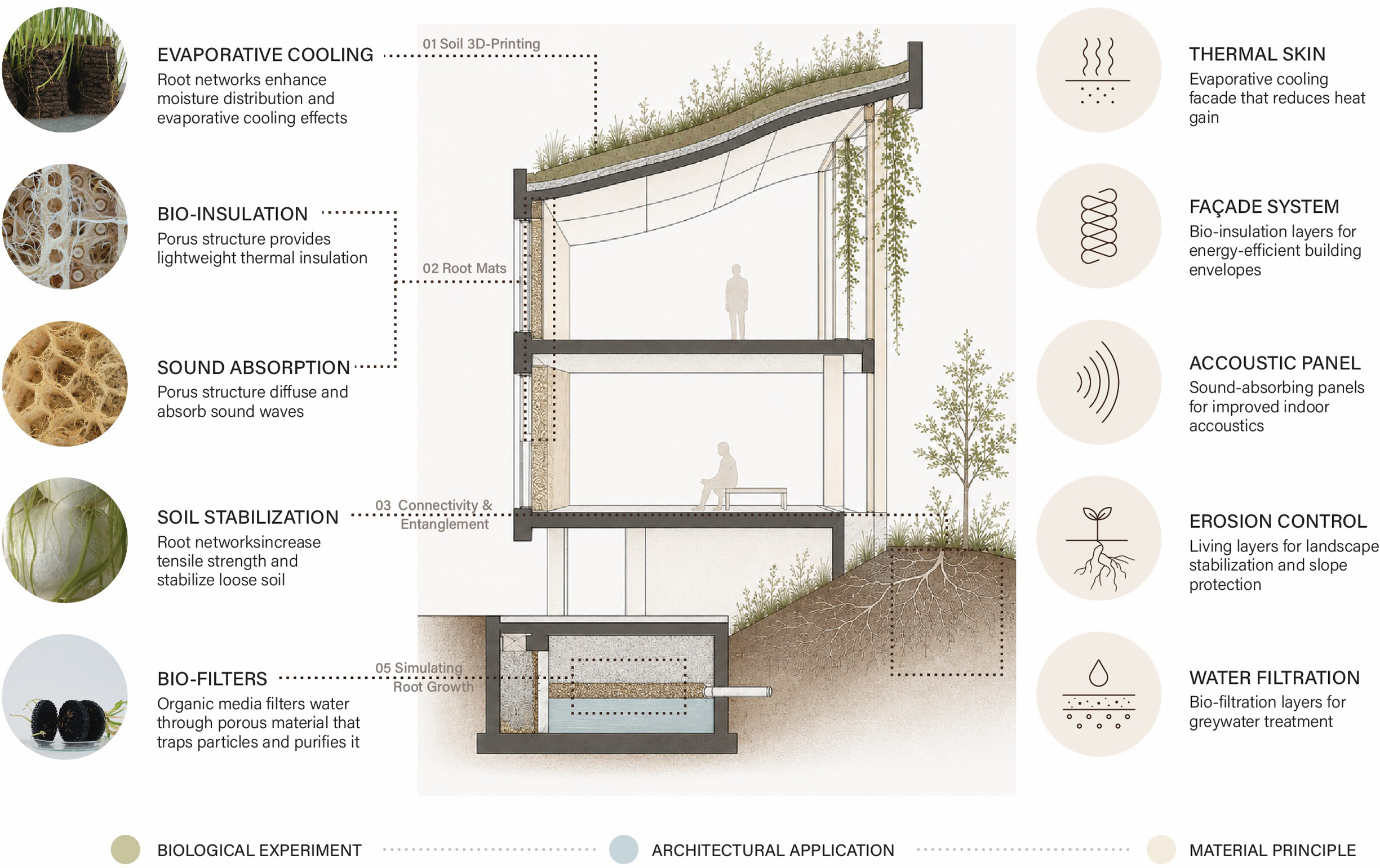
This research’s preliminary insights highlight the significant potential of plant root systems as both biological role models and active materials for future architectural practices (Figure 16). Through a combination of digital modelling, MDD and laboratory-based growth experiments, the project has revealed how fine and coarse roots can contribute to structural connectivity, soil stabilisation and adaptive material systems. The diverse prototypes, ranging from root mats and entanglement studies to embedded growth in 3D-printed substrates, illustrate how living systems can be integrated into design processes to generate resilient, resource-efficient and ecologically responsive architectures. While the experiments remain exploratory and largely qualitative, they establish a valuable foundation for further technological development and interdisciplinary collaboration. The limitations of working with plant roots as living organisms in architectural design require further investigation. The difference between implementing living organisms and harvested inert biomaterial must be considered. Designing for living or hybrid systems requires careful ecosystem design: species-specific environments and long-term care throughout the full life cycle. At an architectural scale, this can be translated into a specific construction environment integrating a watering and nutrient supply system and, potentially, substrate layers, supported by plant-specific building technology that allows for change due to growth, ecosystem support and long-term monitoring and cultivation options. Importantly, the work highlights the need to bridge biological research, architectural experimentation and production environments to move beyond laboratory prototypes. By positioning roots as co-designers rather than mere inspirations, this research contributes to emerging biodesign paradigms and opens new perspectives on how built environments may actively participate in ecological processes. Future research will focus on scaling, long-term performance and regulatory integration to support real-world implementation.
Overview of different root applications for the built environment.

Figure 16. Long description
A diagram of the applications of plant roots in the built environment. The diagram is divided into several sections, each representing different functions and applications of plant roots. The sections include Evaporative Cooling, Bio-Insulation, Sound Absorption, Soil Stabilization, Bio-Filters, Thermal Skin, Facade System, Acoustic Panel, Erosion Control, and Water Filtration. Each section is labeled with a title and a brief description of its function. The diagram also includes visual representations of the root systems and their interactions with the built environment. The sections are interconnected, showing how plant roots can be integrated into various aspects of architecture and design to enhance sustainability and functionality.
Data availability statement
No new qualitative data were created in this study.
Acknowledgements
Research assistants: Domink Einfalt and Rebekka Waters. Biodesign course students: Ramita Keeratiurai, Réka Nisnánszky, Moritz Pfister, Kiana Arshadbakhtiari, Hoda Balouchi, Florentin Emanuel Schumann, Helena Or Schenavsky, Arthur Wostry and Weichen Zhou. Invited guest lecturers: Ferdinand Ludwig, Barbara Mazzolai, Antonia Ablass, Maria Kuptsova, Amanda Rasmussen and Daniel Leitner. To increase public awareness of the relevance of plant roots to architecture, the results were exhibited at the Circular Strategies Symposium 2025 and the Angewandte Festival in 2025.
Author contributions
Conceptualisation: Petra Gruber and Andreas Körner. Methodology: All authors. Data visualisation: Rebekka Waters, Dominik Einfalt, Andreas Körner and Damjan Minovski. Writing original draft: Petra Gruber, Andreas Körner, Dominik Einfalt, Damjan Minovski and Clemens Preisinger. All authors approved the final manuscript.
Financial support
This research was supported by an INTRA grant 2024 from the University of Applied Arts Vienna, Austria (Angewandte Programm für inter- und transdisziplinäre Projekte in Kunst und Forschung).
Competing interests
None.
Ethical statement
The research did not involve human or animal subjects.

 Open access

