Since mid-December 2019, the coronavirus disease 2019 (COVID-19) pandemic, caused by the novel severe acute respiratory syndrome coronavirus 2 (SARS-CoV-2), has caused a major public health issue, affecting almost 84 million people worldwide and resulting in more than 1,831,703 deaths. 1 To date, COVID-19 appears to have a milder clinical course in children, or even asymptomatic, than in adults. Reference Toubiana, Poirault and Corsia2,Reference Dong, Mo and Hu3 However, a series of resembling atypical/typical Kawasaki’s disease, toxic shock syndrome and macrophage activation syndrome has emerged in Europe and parts of North America and rapidly spreading to various parts of the world. Reference Riphagen, Gomez, Gonzalez-Martinez, Wilkinson and Theocharis4–Reference Whittaker, Bamford and Kenny6 This new clinical condition has been named paediatric inflammatory multi-system syndrome temporally associated with SARS-CoV-2. The World Health Organization (WHO), Centers for Disease Control and Prevention (CDC), European Centre for Disease Prevention and Control and Royal College of Paediatrics and Child Health had published the case definitions. 7–10 Previous studies suggested that the clinical spectrum of paediatric inflammatory multi-system syndrome generally includes cardiac complications, in addition to gastrointestinal and systemic manifestations, especially fever. Reference Bertoncelli, Guidarini and Della Greca11,Reference Kaushik, Gupta, Sood, Sharma and Verma12 Nevertheless, there is limited information regarding the epidemiology, clinical patterns, including cardiac involvement, treatment modalities and outcomes of paediatric inflammatory multi-system syndrome.
In this study, we aimed to investigate the epidemiological, clinical and laboratory characteristics, treatment modalities and outcomes in children with paediatric inflammatory multi-system syndrome and compare the clinical and laboratory features of children with and without cardiac involvement.
Material and methods
Study design, data collection and definitions
This prospective, single-centre study examined 57 children with paediatric inflammatory multi-system syndrome at Başakşehir Çam ve Sakura City Hospital, Istanbul, Turkey, between November, 2020 and March, 2021. Paediatric inflammatory multi-system syndrome was diagnosed according to the CDC and WHO case definitions, depending on clinical manifestations, multi-system (two or more) organ dysfunctions, evidence of infection with positive SARS-CoV-2 PCR and/or serology testing or COVID-19 exposure and exclusion of alternative diagnoses. 7,8
The following demographic information, clinical features, laboratory results, management and outcome data were recorded: age, gender, underlying medical conditions, exposure (close contact) to a person infected with COVID-19, family history of COVID-19, duration of symptoms and antibiotic therapy, duration of hospital stay, complete blood count, liver and kidney function tests, inflammatory biomarkers (procalcitonin, erythrocyte sedimentation rate and C-reactive protein), biologic enzyme levels (lactate dehydrogenase and creatine kinase), D-dimer, cardiac biomarkers (troponin-T and pro-brain natriuretic peptide), SARS-CoV-2 PCR and serology tests, chest X-ray and CT scan imaging, echocardiographic findings, treatment modalities and outcomes.
Follow-up echocardiographic examinations were performed in children with abnormal echocardiographic findings. Echocardiographic evaluations were performed by the same paediatric cardiologist using Philips Affiniti 50 (Philips Healthcare, Andover, Netherlands) with an 8S or 5S probe. All patients were evaluated using two-dimensional, M-mode, colour-flow Doppler; pulsed Doppler and continuous-wave Doppler echocardiography, according to the American Society of Echocardiography guidelines. Reference Ayres, Miller-Hance and Fyfe13 A fractional shortening of <28% or an ejection fraction of <55% indicated systolic dysfunction. Patients who exhibited a left ventricular end-diastolic diameter Z-score of >2 with systolic dysfunction were classified as having dilated cardiomyopathy.
Statistical analysis
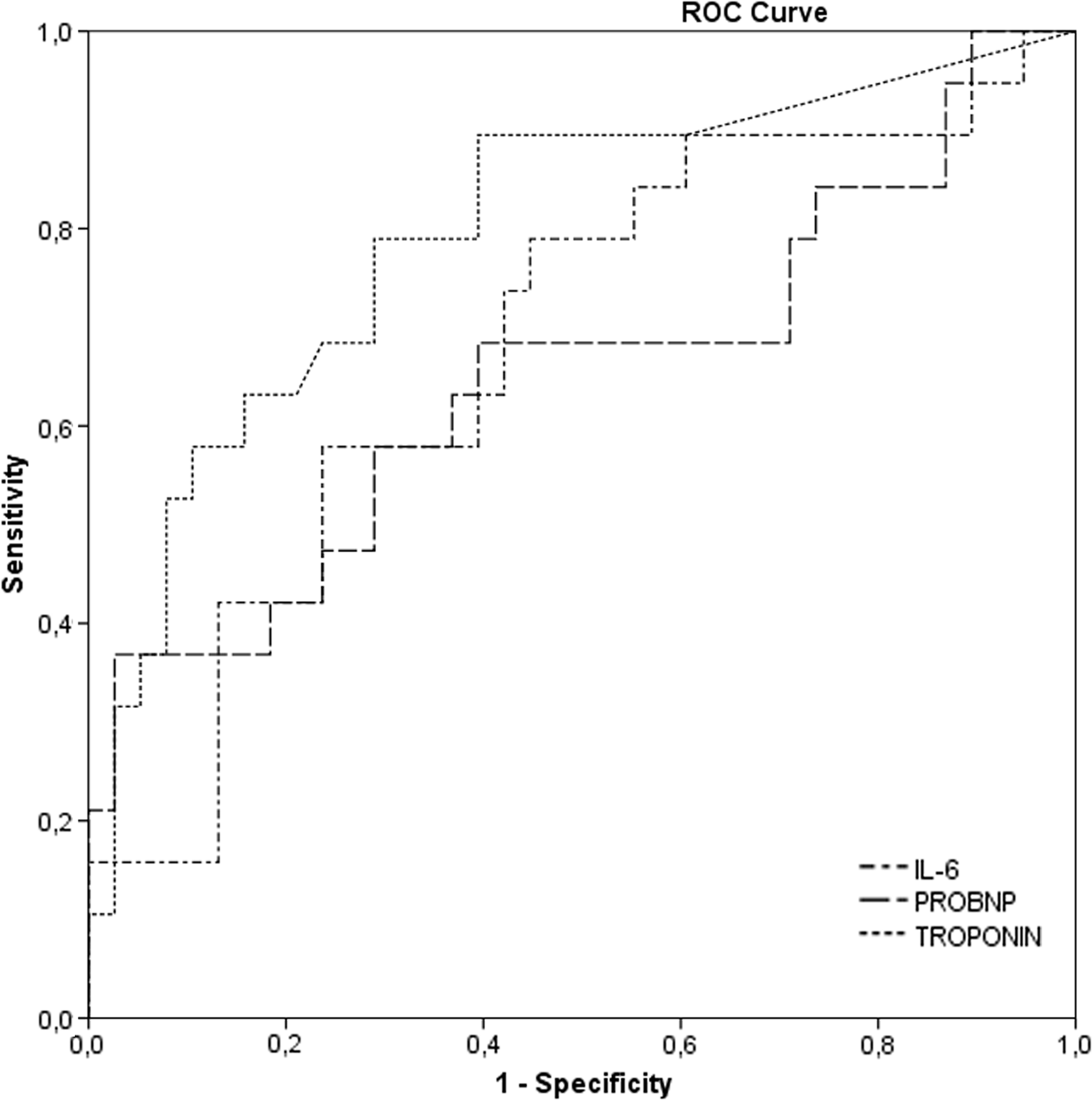
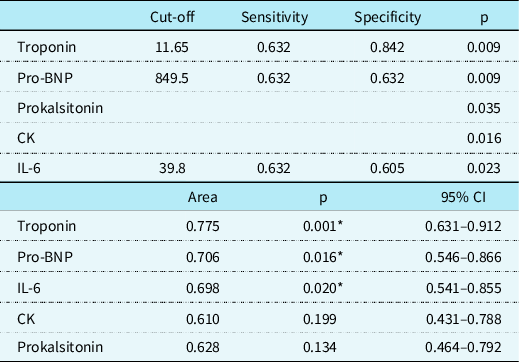
Statistical analysis was performed using Statistical Package for Social Sciences program for Windows version 20. Data are summarised as frequencies, medians and means with standard deviations. Normally distributed data were assessed using means and Student’s t-test. The significance of non-parametric data was assessed using the Mann–Whitney U test. The statistical significance of dichotomous outcomes was determined using Fisher’s exact test and Yates’s continuity correction. A receiver operating characteristic curve analysis was performed to determine the cut-off levels of creatine kinase, pro-brain natriuretic peptide, procalcitonin, troponin T and interleukin 6 to predict cardiac involvement. P-value <0.05 was considered statistically significant.
This study was approved by the Marmara University School of Medicine Ethics Committee (Date: 6 November, 2020; Decision No: 09.2020.1238) and the Turkish Ministry of Health (2020-11-03T22_05_27).
Results
Patient characteristics, clinical features and treatment modalities
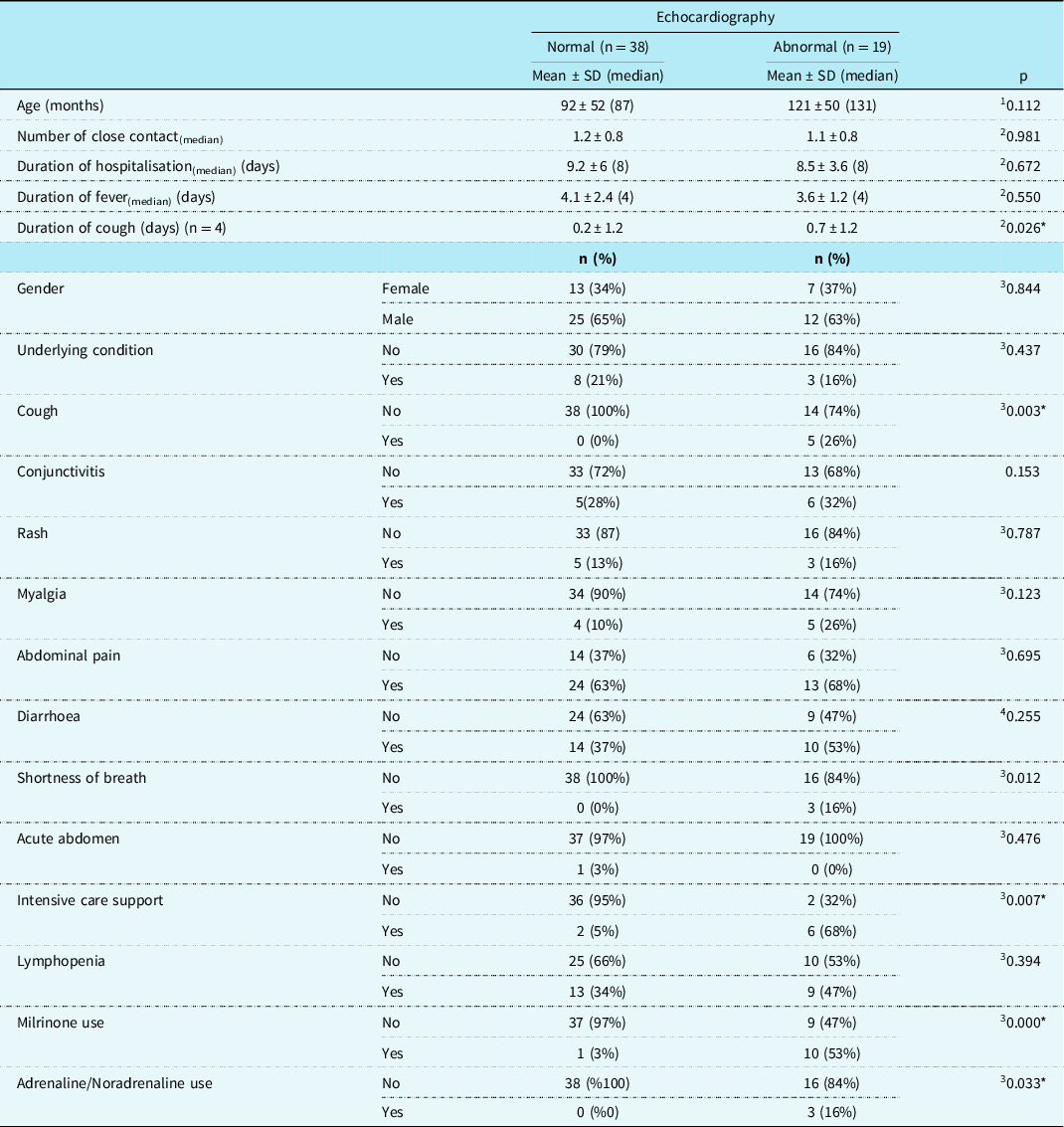
Overall, 57 (male 37, 65%; female 20, 35%) children with paediatric inflammatory multi-system syndrome were examined in Başakşehir Çam ve Sakura City Hospital, Istanbul, Turkey, between November, 2020 and March, 2021. The mean age was 8.8 ± 4.5 years (range, 10 months–16.7 years). On admission, the most common symptoms were fever in all patients (100%), abdominal pain in 37 (65%), diarrhoea in 24 (42%), conjunctivitis in 11 (19%) and rash in 8 (14%). Furthermore, 11 patients (20%) had underlying medical conditions. Underlying medical conditions were CHD in three patients, obesity in two patients, asthma in two patients, immune deficiency, hypothyroidism, epilepsy and type 1 diabetes mellitus in one patient each. Most of the patients (77%) reported prior contact with people infected with SARS-CoV-2 and confirmed by a positive molecular test from a nasopharyngeal swab specimen. SARS-CoV-2 PCR test from the oropharyngeal and nasopharyngeal specimens was positive in 3 (5%) patients. SARS-CoV-2 serology tests were positive in 52 (91%) patients. Two patients with both SARS-CoV-2 antibody and SARS-CoV-2 PCR negative had a history of close contact with COVID-19 diagnosed family members. The mean duration of hospital stay was 9 ± 5.46 (range, 4–38) days. Seven patients required non-invasive mechanical ventilation, and one patient required mechanical ventilation in the ICU. All the patients received high-dose intravenous immunoglobulin with dose of 2 g/kg; 51 (89%) received broad-spectrum antibiotics for possible bacterial superinfections, septic shock or toxic shock syndrome; 39 (68%) received aspirin; 13 (23%) received low-molecular weight heparin and 49 (86%) received systemic corticosteroids. Systemic corticosteroids were administered with dose of 2 mg/kg/day in mild and moderate cases; 10–30 mg/kg/day for 3 days followed by 2 mg/kg/day in severe cases. Steroid treatment was tapered and discontinued over 4–6 weeks. Low-molecular weight heparin therapy was administered with dose of 1 mg/kg twice daily for 1–2 weeks. Aspirin treatment was continued for 2 months. Four patients (7%) received anakinra (IL-1 receptor antagonist). Patients’ characteristics and treatment modalities are presented in Table 1. All patients were discharged without any complications.
The comparison demographic, clinical characteristics and treatment modalities of the patients according to echocardiographic findings

1 Student’s t test.
2 Mann Whitney U test.
3 Fisher’s Exact test.
4 Yates’s continuity correction.
* p < 0.05.
Laboratory and radiological findings
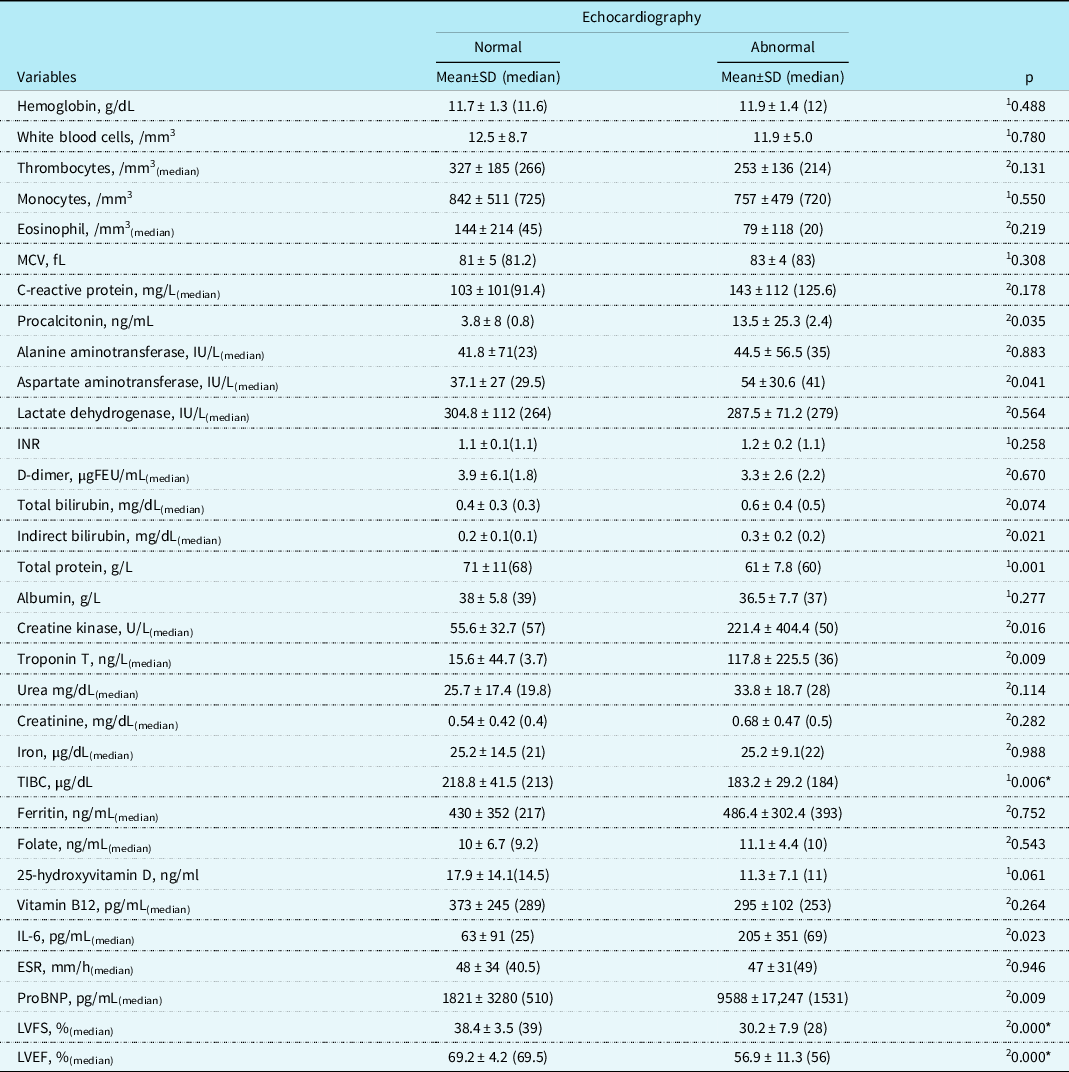
On admission, inflammatory biomarkers, including C-reactive protein, erythrocyte sedimentation rate, procalcitonin and ferritin, and cardiac biomarkers, including pro-brain natriuretic peptide, were elevated in most of the patients. Lymphopenia was present in 22 (39%) patients. The mean white blood cell and lymphocyte counts and C-reactive protein and IL-6 levels were 12,322.1 ± 7643.7/mm3 (range, 3830–48,570), 3642.1 ± 5365.7/mm3 (range, 260–38,180), 116.62 ± 105.68 mg/L (range, 0.2–463) and 110.57 ± 223.23 pg/mL (range, 1.5–1467), respectively. The patients’ laboratory findings are presented in Table 2.
The comparison of the laboratory findings of the patients according to echocardiographic findings

LVEF: left ventricular ejection fraction; LVFS: left ventricular fractional shortening; TIBC: total iron-binding capacity; ESR: erythrocyte sedimentation rate.
1 Student t test.
2 Mann Whitney U test.
* p < 0.05.
Chest X-ray was performed in all patients. Of 57, 51 (89%) patients had normal chest X-ray findings, whereas 6 (11%) patients had potentially pathological findings. Chest CT scan performed for 18 patients revealed bilateral ground-glass opacity in 27% of them and unilateral ground-glass opacity in 22%. Abdominal CT scan performed for 13 patients revealed 62% free abdominal fluid and 8% findings compatible with appendicitis.
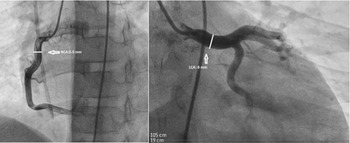
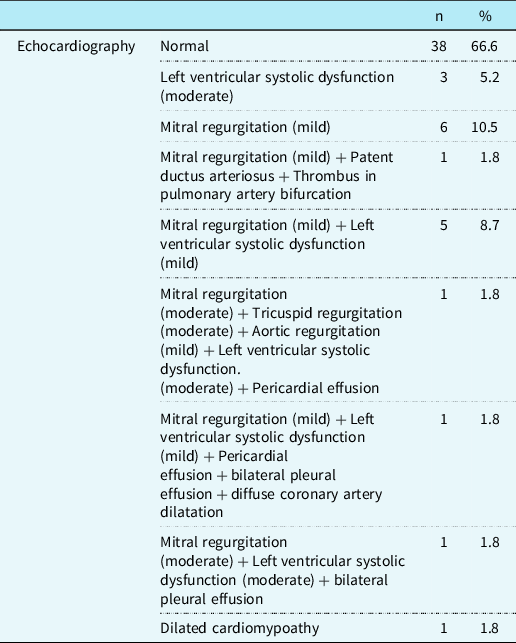
Echocardiography was performed in all patients; of 57, 19 (33%) patients had abnormal echocardiographic findings. The most common abnormal echocardiographic findings were left ventricular systolic dysfunction (11 patients) and mitral regurgitation (15 patients). Only one patient had coronary artery abnormality (Fig 1). The patients’ echocardiographic findings are presented in Table 3. On day 7 of admission and the first and second months of the diagnosis, control echocardiography was performed in patients with cardiac involvement. Left ventricular systolic dysfunction and valvular regurgitations significantly improved in all the patients.
Coronary artery angiogram of the patient with diffuse coronary artery dilatation.

Echocardiographic findings of PIMS patients.

Factors associated with cardiac involvement
Patients were divided into two groups: patients with cardiac involvement (group 1; n = 19) and patients with normal echocardiographic findings (group 2; n = 38). We compared the demographic, clinical and laboratory characteristics and treatment modalities of both groups. The male to female ratio was similar between the two groups. Five patients with complaints of cough had cardiac involvement. The complaint and duration of cough were significantly more frequent and longer in group 1 (p = 0.003 and p = 0.026, respectively) as compared to group 2. Eight patients who required intensive care support had cardiac involvement. The intensive care support rate was significantly higher in group 1 (p = 0.007) than in group 2. Furthermore, milrinone and adrenaline/noradrenaline use were significantly higher in group 1 than in group 2. No other demographic, clinical features or treatment modalities showed significant differences between the two groups (Table 1).
Comparison of laboratory features showed that creatine kinase, pro-brain natriuretic peptide, procalcitonin, troponin T, IL-6, AST and indirect bilirubin levels was significantly higher in group 1 (p < 0.05) than in group 2. Total iron-binding capacity level was significantly lower in group 1 (p < 0.05) than in group 2 (Table 2).
Predictors for cardiac involvement
According to the receiver operating characteristic curve analysis, the cut-off levels were as follows:
-
Troponin T > 11.65 ng/L (95% confidence interval [CI], 0.63–0.90; sensitivity, 0.63; specificity, 0.84; area under the curve: 0.775, p = 0.009),
-
Pro-brain natriuretic peptide > 849.5 pg/mL (95% CI, 0.54–0.86; sensitivity, 0.63; specificity, 0.63; area under the curve: 0.706, p = 0.009),
-
IL-6 > 39.8 pg/mL (95% CI, 0.54–0.85; sensitivity, 0.63; specificity, 0.60; area under the curve: 0.698, p = 0.023) (Table 4, Fig 2).
ROC curves for Troponin, Pro-BNP and IL-6.

ROC curve analysis for cardiac involvement in patients with PIMS

* p < 0.05.
Discussion
This study aimed to evaluate the clinical and laboratory features that can predict the risk of cardiac involvement in patients with paediatric inflammatory multi-system syndrome. The major findings of our study indicated that elevations in troponin T (>11.65 ng/L), pro-brain natriuretic peptide (>849.5 pg/mL) and IL-6 (>39.8 pg/mL) threshold values could be a predictor for cardiac abnormality in echocardiographic evaluation. To the best of our knowledge, there are limited studies concerning cardiac evaluation in paediatric inflammatory multi-system syndrome patients; hence, we believe that our study provides a comprehensive review of the current literature regarding cardiac involvement in paediatric inflammatory multi-system syndrome.
Initially, the number of paediatric patients with COVID-19 with benign clinical characteristics, milder disease progression and good outcomes was lower as compared to adult patients. Reference Shen, Yang and Jiang14–Reference Dhochak, Singhal, Kabra and Lodha16 However, currently, an increasing number of case reports describing older school-aged children and adolescents presenting with fever, abdominal pain and cardiac involvement, which develops after the acute stages of SARS-CoV-2 infection, has been reported. Reference Riphagen, Gomez, Gonzalez-Martinez, Wilkinson and Theocharis4–Reference Whittaker, Bamford and Kenny6 However, the incidence, pathogenesis and management of paediatric inflammatory multi-system syndrome remain unclear.
Previous studies reported that paediatric inflammatory multi-system syndrome was more commonly seen in children aged >5 years. Reference Toubiana, Poirault and Corsia2,Reference Verdoni, Mazza and Gervasoni5,Reference Walker and Tolentino17–Reference Cheung, Zachariah and Gorelik20 Similarly, the median age in our study was 8.8 ± 4.5 years.
Although the clinical manifestations and findings vary in various studies, fever was the most commonly reported symptom, followed by gastrointestinal manifestations with elevated inflammatory biomarkers. Reference Whittaker, Bamford and Kenny6,Reference Dufort, Koumans and Chow21,Reference Feldstein, Rose and Horwitz22 According to a retrospective study conducted by Mamishi et al Reference Mamishi, Movahedi and Mohammadi23 in Iran, the most common symptoms were abdominal pain (58%), nausea/vomiting (51%), mucocutaneous rash (53%), conjunctivitis (51%) and hepatomegaly (10.3%). In addition, unusual symptoms and findings, including status epilepticus, appendicitis, myalgia and lethargy, have been reported. Reference Mamishi, Movahedi and Mohammadi23,Reference Davies, Evans and Kanthimathinathan24 Similar to previous studies, the most common symptoms here were fever in all patients (100%), abdominal pain in 37 (65%), diarrhoea in 24 (42%), conjunctivitis in 11 (19%) and rash in 8 (14%). Furthermore, pulmonary symptoms were unusual in children in our study in contrast to children with severe COVID-19 infection. This finding is consistent with previous studies showing that pulmonary symptoms were less frequent manifestations in children with paediatric inflammatory multi-system syndrome. Reference Verdoni, Mazza and Gervasoni5
Many studies have shown that laboratory evidence of recent or past disease or a history of close contact with a person infected with COVID-19 was found in most patients. Reference Whittaker, Bamford and Kenny6,Reference Kaushik, Aydin and Derespina18,Reference Belot, Antona and Renolleau19,Reference Dufort, Koumans and Chow21,Reference Moraleda, Serna-Pascual and Soriano-Arandes25–Reference Balasubramanian, Nagendran, Ramachandran and Ramanan28 A systematic review by Kaushik et al. reported that 33 and 54% of patients were positive for SARS-CoV-2 PCR and antibodies, respectively. Forty-four (7%) patients tested positive for both SARS-CoV-2 PCR and antibodies. Ninety-nine (15%) patients had a history of close contact with an infected person. Reference Kaushik, Gupta, Sood, Sharma and Verma12 In our study, SARS-CoV-2 PCR and antibodies were positive in 5 and 91% of patients, respectively, and 77% of the patients had a history of close contact with an infected person.
Due to the lack of controlled clinical studies and subsequently the limited information regarding paediatric inflammatory multi-system syndrome treatment, determining the optimal treatment modalities for the disease is challenging. There are currently no widely accepted guidelines recommended for the treatment of paediatric inflammatory multi-system syndrome; however, most research has suggested treatment protocols such as intravenous immunoglobulin, corticosteroids, anti-cytokine and immunomodulatory agents and antibiotics for possible sepsis. Reference Kaushik, Gupta, Sood, Sharma and Verma12,Reference Davies, Evans and Kanthimathinathan24,Reference White, Tiesman, Handforth and Kenny29 In our study, all the patients received intravenous immunoglobulin, most (89%) received antibiotics for possible sepsis and 14 received inotropic agents for low cardiac output due to cardiac involvement. Many studies reported that most patients with paediatric inflammatory multi-system syndrome required intensive care, especially patients who received single or multiple inotropic agents. Reference Whittaker, Bamford and Kenny6,Reference Davies, Evans and Kanthimathinathan24,Reference Chiotos, Bassiri and Behrens26,Reference Ocal Demir, Tosun and Ozturk30 In our study, 8 (14%) patients needed intensive care support, and none of them died; comparatively, the patients here required a low rate of intensive care. Despite these short-term outcomes, long-term follow-ups for these children are important for a reliable prognosis.
In this study, most of the patients had elevated inflammatory biomarkers, including C-reactive protein, erythrocyte sedimentation rate, procalcitonin and ferritin, and cardiac biomarkers, including pro-brain natriuretic peptide, in line with previous reports. Reference Whittaker, Bamford and Kenny6,Reference Dhochak, Singhal, Kabra and Lodha16,Reference Walker and Tolentino17,Reference Ocal Demir, Tosun and Ozturk30–Reference Pouletty, Borocco and Ouldali32 Since the first report of patients with paediatric inflammatory multi-system syndrome, one of the most observed laboratory findings was lymphopenia. Reference Kaushik, Gupta, Sood, Sharma and Verma12,Reference Cheung, Zachariah and Gorelik20,Reference Mamishi, Movahedi and Mohammadi23,Reference Davies, Evans and Kanthimathinathan24,Reference Chiotos, Bassiri and Behrens26 Similar to previous studies, 65% of the children in our study had lymphopenia.
Cardiac involvement has been reported in many previous studies with PIMS. Reference Whittaker, Bamford and Kenny6,Reference Kaushik, Gupta, Sood, Sharma and Verma12,Reference Kaushik, Aydin and Derespina18,Reference Feldstein, Rose and Horwitz22,Reference Moraleda, Serna-Pascual and Soriano-Arandes25,Reference Lee, Day-Lewis and Henderson27 In a retrospective study comparing echocardiographic findings of patients with paediatric inflammatory multi-system syndrome and Kawasaki’s disease, Matsubara et al reported that only one patient had coronary artery dilatation, and left ventricular systolic dysfunction and left ventricular diastolic dysfunction were more common in the paediatric inflammatory multi-system syndrome group. Reference Matsubara, Kauffman and Wang33 Theocharis et al Reference Theocharis, Wong and Pushparajah34 reported that 50% of the patients had ejection fraction < 55%, 75% had valvular regurgitation and 50% had myocardial oedema. Left main coronary artery dimensions were significantly larger at discharge than on admission. In addition, this report suggested that ventricular dysfunction, oedema and coronary artery abnormalities can persist despite improved inflammatory biomarkers. In our study, LV systolic dysfunction and valvular regurgitation were observed in 19 patients, and only one patient had coronary artery dilatation during follow-up. On short-term follow-up, all abnormal echocardiographic findings were improved, except for the patient with coronary artery dilatation.
Although cardiac manifestations and imaging findings in paediatric inflammatory multi-system syndrome have also been identified in previous reports, there were no comparisons made between patients with and without cardiac involvement. In this study, the complaint and duration of cough were significantly more frequent and longer in patients with cardiac involvement, respectively. Although pulmonary symptoms, such as cough, may not be a significant feature of most patients with paediatric inflammatory multi-system syndrome, the presence of cough, especially of a longer duration, should be considered as a warning sign for cardiac involvement. According to the univariate analysis, milrinone use and intensive care support rate were significantly higher in patients with cardiac involvement. These results can be explained by the fact that almost all of the patients who required intensive care also needed inotropic or vasoactive agents.
In this study, we found that left ventricular ejection fraction and left ventricular fractional shortening were significantly lower in patients with cardiac involvement. Similar to our study, Matsubara et al Reference Matsubara, Kauffman and Wang33 reported that left ventricular systolic dysfunction and left ventricular diastolic dysfunction were more common in the paediatric inflammatory multi-system syndrome group. In another study, Theocharis et al Reference Theocharis, Wong and Pushparajah34 reported that ejection fraction was <55% in 50% of the patients, and this pathology may persist on follow-up despite improved inflammatory biomarkers. Contrary to this report, Matsubara et al Reference Matsubara, Kauffman and Wang33 demonstrated that there was good recovery of systolic function and no coronary abnormalities on follow-up, which is in line with our study that systolic dysfunction and valvular regurgitations recovered on short-term follow-up.
In this study, we showed that creatine kinase, pro-brain natriuretic peptide, procalcitonin, troponin T, IL-6, AST and indirect bilirubin levels were significantly higher and total iron-binding capacity level was significantly lower in patients with cardiac involvement than in those without it. The severity of paediatric inflammatory multi-system syndrome usually correlates with elevated inflammatory biomarkers. Reference Whittaker, Bamford and Kenny6 Cardiovascular involvement in paediatric inflammatory multi-system syndrome patients generally includes acute myocardial injury such as myocarditis and coronary artery dilatation. Reference Malviya and Mishra35 Elevated inflammatory biomarkers correlated with the severity of disease. Reference Whittaker, Bamford and Kenny6 However, the pathogenesis of myocardial dysfunction and predictors for risk of cardiac involvement in paediatric inflammatory multi-system syndrome patients remains unidentified. In this study, we showed that higher pro-brain natriuretic peptide, troponin T and IL-6 levels may predict risk for cardiac involvement in patients with paediatric inflammatory multi-system syndrome. Previous research detected that elevation of troponin and BNP/NT-proBNP is associated with intensive care support need and death in adult patients. Reference Shi, Qin and Cai36–Reference Niaz, Hope and Fremed38
In PIMS, the pathogenesis of myocardial injury remains unclear. Circulating inflammatory mediators, such as IL-6, or viral invasion leading to abnormal type I and III interferon-gamma response or both mechanisms can contribute to cardiac involvement in paediatric inflammatory multi-system syndrome. The pathogenesis of myocardial affection related to elevated C-reactive protein and IL-6 is believed to be similar to myocardial dysfunction in bacterial infections. Reference Malviya and Mishra35 Acute myocarditis, myocardial ischaemia/infarction, hypoxia-induced apoptosis, acute cor pulmonale and systemic inflammatory response syndrome have been reported as causes of myocardial dysfunction in adults with COVID-19. Different mechanisms including acute myocardial injury and post-viral systemic inflammation may contribute to ventricular dysfunction. Coronary artery dilation and aneurysms caused by inflammatory vasculopathy have been reported in 6–24% of patients with paediatric inflammatory multi-system syndrome. Reference Sperotto, Friedman, Son, VanderPluym, Newburger and Dionne39 In this study, we found that only one patient had coronary artery dilation. The coronary involvement is different than that in Kawasaki syndrome, which is similar to coronary artery aneurysms. The coronary artery involvement is diffused and without aneurismal narrowing. Nonetheless, we are unable to determine the outcome for this patient during long-time follow-up.
Study limitations
This study has some limitations. First is the small sample size and single-centre design of this study. Second is the lack of electrocardiographic findings. We could not perform cardiac MRI for every patient to determine cardiac involvement; however, we are performing MRI for all new patients. In addition, none of the patients’ ECG evaluations was abnormal. Therefore, we did not have the analysis of all ECGs at the time of writing this manuscript and hence did not include it in the cardiac involvement criteria.
Conclusion
Cardiac involvement in patients with paediatric inflammatory multi-system syndrome is common and often associated with intensive care support, which is generally reversible during a short-term follow-up. Considering the lack of data regarding mid- and long-term cardiovascular morbidities in paediatric inflammatory multi-system syndrome patients, cardiac evaluation and follow-up are crucial. Troponin T, pro-brain natriuretic peptide and interleukin 6 levels may predict risk for cardiac involvement in patients with paediatric inflammatory multi-system syndrome.
Acknowledgements
None.
Financial support
This research received no specific grant from any funding agency, commercial or not-for-profit sectors.
Conflicts of interest
None.
Ethical standards
This study was approved by the Marmara University School of Medicine Ethics Committee (Date: 6 November, 2020; Decision No: 09.2020.1238) and the Turkish Ministry of Health (2020-11-03T22_05_27).