1. Introduction
In México, Columbian mammoth remains (Proboscidea, Elephantidae, Mammuthus columbi) are found all over the country, except for the Yucatan Peninsula states (Campeche, Quintana Roo and Yucatán; Arroyo-Cabrales et al. Reference Arroyo-Cabrales, Polaco, Laurito, Johnson, Alberdi and Valerio-Zamora2007). Findings included isolated molars and several bones from one or several individuals, such as those found in Tocuila, State of México, where remains from five individuals (four adults and one juvenile) were excavated and considered to belong to a single herd (Morett, Arroyo-Cabrales & Polaco, Reference Morret, Arroyo-Cabrales and Polaco1998; Siebe, Schaaf & Urrutia-Fucugauchi, Reference Siebe, Schaaf and Urrutia-Fucugauchi1999).
Several studies have focused on different aspects of the mammoths, such as taxonomic questions (Arroyo-Cabrales et al. Reference Arroyo-Cabrales, Polaco, Laurito, Johnson, Alberdi and Valerio-Zamora2007), taphonomic investigations (Morett, Arroyo-Cabrales & Polaco, Reference Morret, Arroyo-Cabrales and Polaco1998; Johnson, Arroyo-Cabrales & Morett, Reference Johnson, Arroyo-Cabrales, Morett, Seetah and Gravina2012), inferences about diet and habitat using stable isotopes (Pérez-Crespo et al. Reference Pérez-Crespo, Arroyo-Cabrales, Alva-Valdivia, Morales-Puente and Cienfuegos-Alvarado2012 b) and the definition of possible routes for migration, using geomorphological patterns (García-Zepeda et al. Reference García-Zepeda, Arroyo-Cabrales, Hernández Madrigal, Garduño-Monroy, Polaco and Johnson2007; Servín, Reference Servín2010). The latter studies showed that mammoths moved from Mexican Central Plateau valleys to Pacific and Gulf of México coastal plains. However, these studies did not show the animals' movement areas, nor if they could wander over small or large distances.
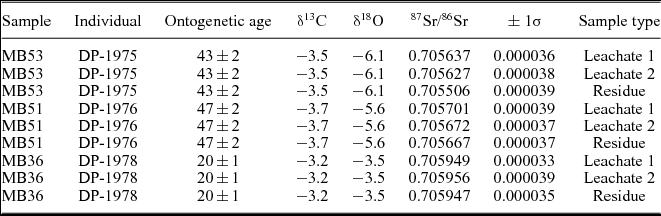
At Laguna de las Cruces (San Luis Potosí, México), at least three mammoth individuals have been found, whose remains were previously tested for carbon and oxygen stable isotopes in dental enamel, resulting in the discovery of differences between them (Pérez-Crespo et al. Reference Pérez-Crespo, Arroyo-Cabrales, Benammi, Polaco, Santos-Moreno, Morales-Puente, Cienfuegos-Alvarado and Otero2013). It was concluded that the heterogeneous carbon isotopic values could be the result of different mammoth ontogenetic ages, since two individuals (DP-1975, DP-1976) were adults with a C3/C4 mixed-feeder diet, and the other (DP-1978) was a juvenile, with a completely grazing diet. Sukumar, Bhattcharya & Krisnhnamurthy (Reference Sukumar, Bhattcharya and Krisnhnamurthy1987) and Sukumar & Ramesh (Reference Sukumar and Ramesh1992) have observed in present elephant populations that adults tend to consume more tree leaves than juveniles. The δ13C values for the mammoth population from Laguna de las Cruces seem to show the same tendency (Table 1).
87Sr/86Sr isotopic (mean±1s.d.) results from the mammoth enamel samples from Laguna de las Cruces. Ontogenetic ages were recorded from Pérez-Crespo et al. (Reference Pérez-Crespo, Arroyo-Cabrales, Benammi, Polaco, Santos-Moreno, Morales-Puente, Cienfuegos-Alvarado and Otero2013)

The oxygen isotope ratios (18O/16O) in mammoth remnants give information about the ingested water, depending on altitude, latitude and weather conditions. Information about the origin can be obtained by sampling the oxygen isotope ratios of water from lakes, springs or any other water source (Castillo, Morales & Ramos, Reference Castillo, Morales and Ramos1985). Animals can drink water from several sites when they move in search of food, thus resulting in a mixture of different oxygen isotope values (Hoppe, Reference Hoppe2004). With respect to the Laguna de las Cruces mammoths, the differences in δ18O values could be the result of drinking from different water sources along their migratory routes (Table 1). However, by using oxygen isotope data alone, it is not possible to point out the distances and the geographic areas where the animals drank.
In order to propose possible migration areas and routes, we in this contribution applied strontium isotope analysis to the same tooth samples that were analysed by Pérez-Crespo et al. (Reference Pérez-Crespo, Arroyo-Cabrales, Benammi, Polaco, Santos-Moreno, Morales-Puente, Cienfuegos-Alvarado and Otero2013) for oxygen isotopic studies, accompanied by analyses of soil and plant samples.
1.a. Some facts about strontium isotopes
Strontium has four naturally occurring isotopes – 84Sr, 86Sr, 88Sr and 87Sr – of which 87Sr is the only radiogenic isotope, formed as a decay product of 87Rb, with a half-life of 4.88x10¹⁰ years (Steiger & Jäger, Reference Steiger and Jäger1977). The 87Sr/86Sr ratio of a rock depends mainly upon its age and on the initial rubidium content; consequently, young rocks will have a lower 87Sr contribution than older ones (e.g. Sealy, Reference Sealy, Brothwell and Pollard2001; Slovak & Paytan, Reference Slovak, Paytan and Baskaran2011). Also, since strontium has an ionic ratio similar to calcium, it tends to appear in high concentrations in Ca-rich minerals such as calcite, apatite and plagioclase (Faure, Reference Faure1977).
Rocks turn into soils, owing to different chemical, physical or biological alteration processes. However, those processes do not extensively damage the original isotopic signal and, as such, the soil will have approximately similar strontium values to the rock from which it formed (e.g. Beard & Johnson, Reference Beard and Johnson2000). Also, as a result of human activities, soil can acquire strontium from fertilizers that can alter the original 87Sr/86Sr by up to 10% (Capo, Brian & Chadwick, Reference Capo, Brian and Chadwick1998).
Strontium is incorporated into the animals via the plants they eat, and the plants conserve the strontium from the soil; however, contrary to carbon, which is an essential element for the synthesis of many organic compounds, strontium is not important for the organism. Being similar in ionic ratio to calcium, strontium partially substitutes it in bones and teeth (Schoeninger, Reference Schoeninger1979). The animal digestive system tends to discriminate against strontium in comparison with calcium, a process named biopurification (Elias, Hirao & Patterson, Reference Elias, Hirao and Patterson1982). While the Sr/Ca value can be modified during a change in the trophic level, 87Sr/86Sr remains unaffected, since there is no process that fractionates the 86Sr and 87Sr isotopes (Rubenstein & Hobson, Reference Rubenstein and Hobson2004). Consequently, the strontium isotopic values for a carnivore will be very similar to those shown by the herbivores consumed by them, and in turn the herbivore's strontium isotopic value is very similar to the soil value, and eventually to the original rock (Koch et al. Reference Koch, Heisinger, Moss, Carlson, Fogel and Behrensmeyer1995; Ábelová, Reference Ábelová2006; Radloff et al. Reference Radloff, Mucina, Bond and Le Roux2010). Therefore, 87Sr/86Sr can be helpful when trying to infer movements, home range or mammal migratory patterns, both for extinct and living animals (Feranec, Hadly & Paytan, Reference Feranec, Hadly and Paytan2007, Reference Feranec, Hadly and Paytan2009; Arppe, Reference Arppe2009; Fenner & Frost, Reference Fenner and Frost2009).
2. Materials and methods
2.a. Study site
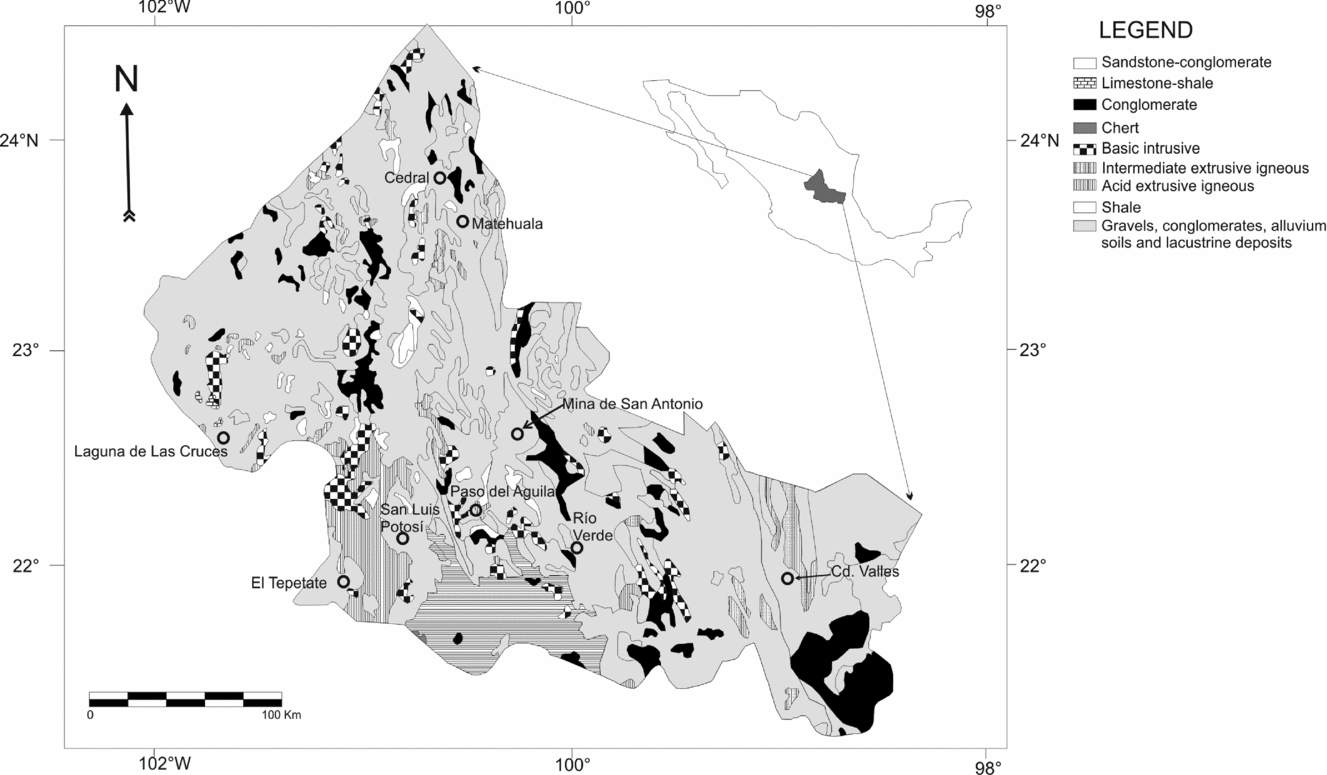
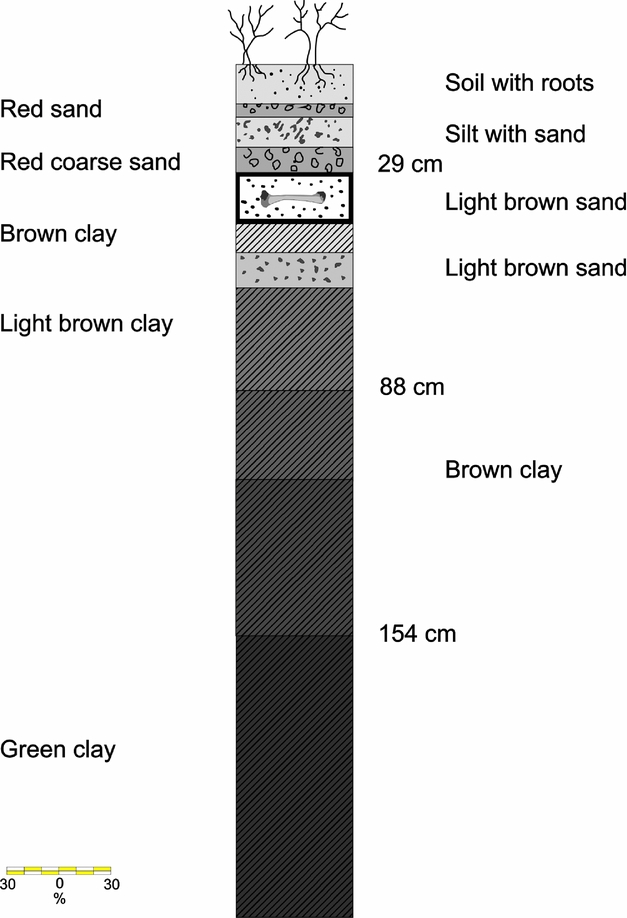
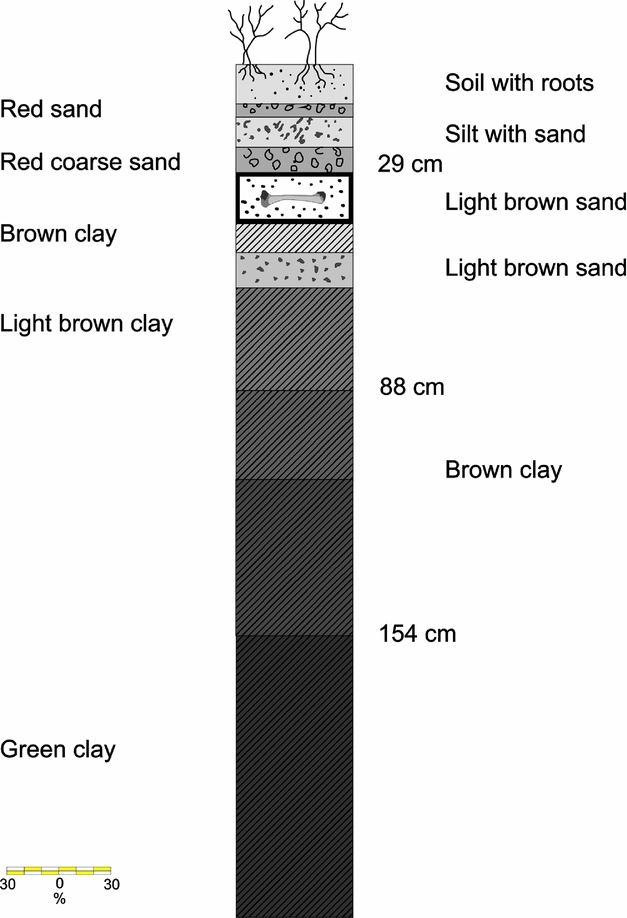
Laguna de las Cruces is located to the west of the town of Salinas, San Luis Potosí State, central México (22°43ʹN, 102°01ʹW) (Mirambell, Reference Mirambell and Mirambell1982; Fig. 2). In this locality remains were found from Columbian mammoths (Mammuthus columbi), horses (Equus sp.), camels (Camelops hesternus) and bison (Bison bison) (Alvarez, Reference Alvarez and Mirambell1982; Mirambell, Reference Mirambell and Mirambell1982). Based on their presence, it can be inferred that the complex has a Rancholabrean (Late Pleistocene) Land Mammal Age, ranging between 120000 and 10500 years before present (Bell et al. Reference Bell, Lundelius, Barnosky, Graham, Lindsay, Ruez, Semken, Webb, Zakrzewski and Woodburne2004). However, there is no radiometric age associated with the deposit. The stratigraphy of the local sediments is composed of Cretaceous limestone and shale overlain by igneous rocks, red soils, tuffaceous material and lacustrine sediments, where most of the fossils were found (Flores, Reference Flores and Mirambell1982; Reyes, Reference Reyes and Mirambell1982); light brown sand was identified as a lacustrine sediment (Fig. 2; Flores-Diaz, pers. comm. 2015).
2.b. Analytical procedures
Mammoth enamel samples previously studied by Pérez-Crespo et al. (Reference Pérez-Crespo, Arroyo-Cabrales, Alva-Valdivia, Morales-Puente and Cienfuegos-Alvarado2012 a) were used in this study. Additionally, soil and plant specimens were collected from five different regions within the State of San Luis Potosí: Cedral, Mina de San Antonio, Paso del Águila, El Tepetate and Laguna de las Cruces itself (Fig. 1).
Geologic map of the state of San Luis Potosí, central Mexico, with locations of Laguna de las Cruces, Cedral, El Tepetate, Mina de San Antonio and Paso del Aguila.

Soil stratigraphy of the Upper Pleistocene deposits at Laguna de las Cruces. Inset box shows the stratum where fossils were found, represented by the light brown sand. Modified from Flores (Reference Flores and Mirambell1982).
One bulk sample was taken from each of the permanent third molars of the specimens DP-1975, DP-1976 and DP-1978. They were pre-cleaned with H2O2 (30%), leaving the samples for 30 minutes in an ultrasonic bath (USB). They were then washed for 2 minutes with deionized water (H2O Milli-Q). Washed samples were ultrasonicated for 3 minutes with NH4Cl (1N), leaving them for 24 hours. Beyond that, the samples were further washed five times for 5 minutes with H2O (Milli-Q) in a USB.
In order to get rid of any secondary contaminant or any post-mortem external agent that could alter the Sr isotopic values, the samples were treated with a leaching process, which is carried out in three steps: The first leaching is performed with 0.1N acetic acid for 30 minutes (USB). The solution is decanted and dried under infrared light (= Enamel Leach 1). The residue is further leached for 15 minutes in 1N acetic acid (USB) and subsequently stored overnight for 12 hours in the same acid without ultrasonication. The solution is decanted and dried (= Enamel Leach 2). The residue is dissolved in 8N HNO3 (= Enamel Residue 3) together with Enamel Leach 1 and Enamel Leach 2. A total of three aliquots from each mammoth molar is obtained from this leaching process, which was first applied to human teeth samples (Schaaf et al. Reference Schaaf, Solís, Manzanilla, Hernández, Lailson, Horn and Manzanilla2012).
Plant sampling was focused on shrubs and tree samples, since those have deep roots instead of the herbaceous species, which had shallow roots, thus probably being affected by a strontium contribution originating from mixed sources such as wind. Later, leaves were cut into 100–150 mg pieces, followed by calcination in a high-temperature furnace at 900°C for approximately 24 hours. Eleven samples were burnt to ashes and digested in 8N nitric acid.
Soils were taken from the abovementioned sites where the plant samples were collected, at a depth of approximately 30 cm, which represents the B horizon. The soil samples were pulverized and dried in an oven at 90°C. They were leached with H2O (Milli-Q), decanted and dried down. Subsequently, samples ranging between 100 and 150 mg were digested in c. 7 ml of hydrofluoric acid (HF) and some drops of perchloric acid (HClO4) in closed Teflon® beakers on a hot plate at 90°C for 48 hours, followed by evaporation. The dry samples were dissolved in c. 7 ml 6N hydrochloric acid (HCl), stored for 24 hours at the same temperature and then evaporated. The residues were re-dissolved with HNO3 (8N).
After sample digestion, Sr from the teeth, plant and soil samples was extracted with Sr-Spec (EICHROM®) ion exchange column chemistry. Sr isotopes were measured with a thermal ionization mass spectrometer (TIMS) Finnigan MAT 262 at the Laboratorio Universitario de Geoquímica Isotópica–(LUGIS). Detailed mass spectrometric procedures are given in Schaaf et al. (Reference Schaaf, Stimac, Siebe and Macías2005, Reference Schaaf, Solís, Manzanilla, Hernández, Lailson, Horn and Manzanilla2012).
3. Results
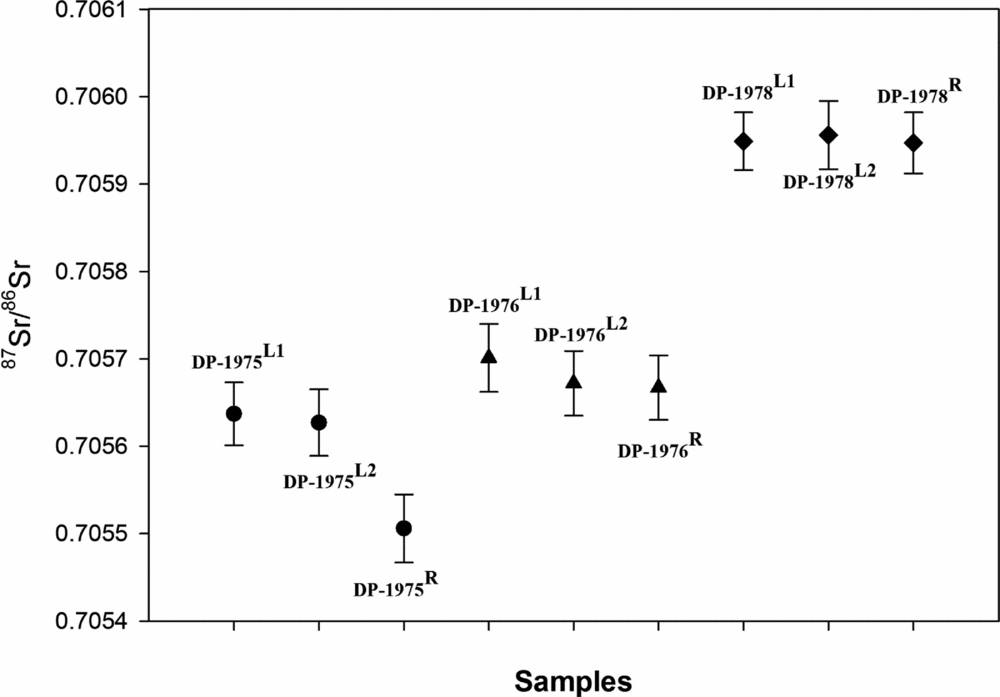
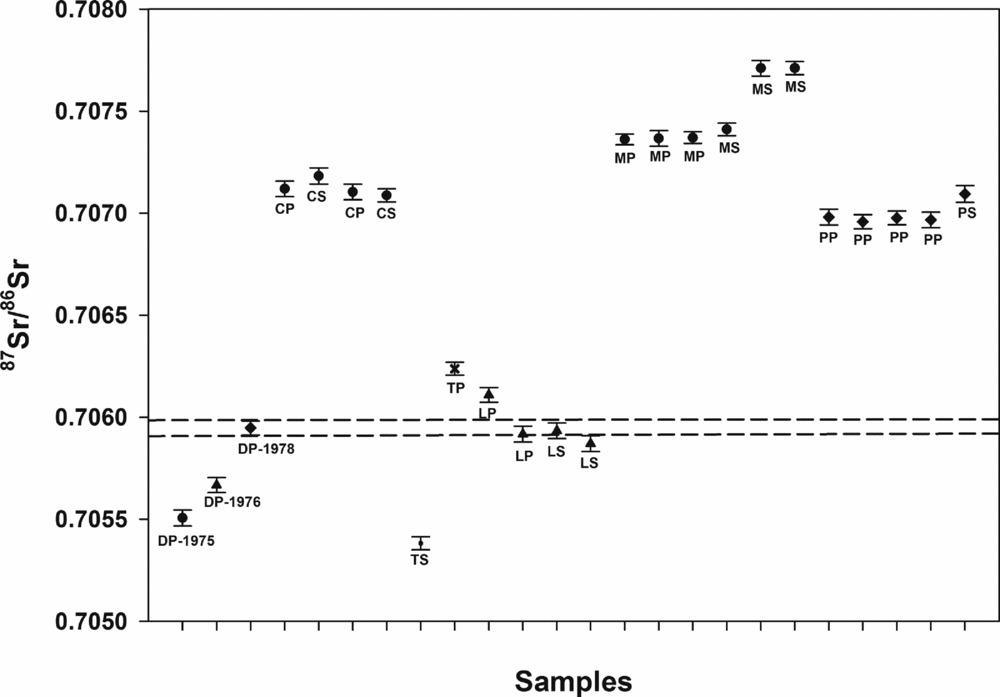
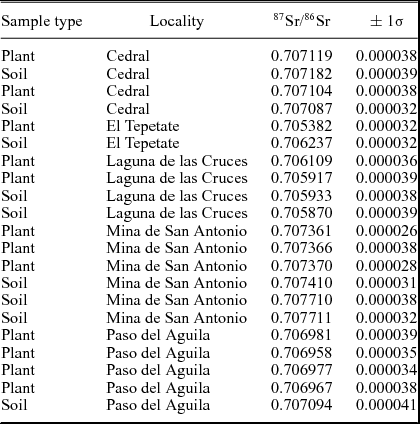
The strontium isotopic results from the mammoth dental enamel are shown in Table 1 and Figure 3. For individual DP-1976, 87Sr/86Sr values for the two leachates are similar to the residue value within standard deviations (± 1σ) (Fig. 3). The same pattern is found for individual DP-1978. On the other hand, individual DP-1975 shows lower 87Sr/86Sr for the residue in comparison to the two leachates from the same sample, evidencing some secondary Sr input. Table 2 shows the 87Sr/86Sr values from the 9 soil and 12 plant samples, which are plotted in Figure 4 along with the enamel residue values (samples DP-1975, -1976 and -1978). The strontium isotopic ratio for individual DP-1978 is close to the 87Sr/86Sr values obtained for the soil and plants from Laguna de las Cruces (Fig. 4). Concerning individuals DP-1975 and DP-1976, their 87Sr/86Sr ratios are distinct from those shown by all the soils and the majority of the plants. Only the Tepetate plant sample (Tp) plots close to the DP-1975 enamel. Figure 4 also shows that only strontium values for soil and plants from Cedral are homogeneous within standard errors. The Mina de San Antonio and Paso del Águila soil ratios are slightly different to those from plants of the same locality. The largest difference is displayed by the El Tepetate soil and plant 87Sr/86Sr.
Comparison of 87Sr/86Sr values for sampled dental enamel. Vertical lines show one standard deviation (±1σ) error bars. L1 – leachate 1; L2 – leachate 2; R – residue (explanation in the text).

Graph comparing 87Sr/86Sr values (Residue values; Table 1) from Laguna de las Cruces individuals with those from sampled plants and soils. Tp – Tepetate plants; Ts – Tepetate soil; Cp – Cedral plants; Cs – Cedral soil; Lp – Laguna de las Cruces plants; Ls – Laguna de las Cruces soil; Mp – Mina de San Antonio plants; Ms – Mina de San Antonio soil; Pp – Paso del Águila plants; Ps – Paso del Águila soil. The error bar range of individual DP-1978 is highlighted.

87Sr/86Sr of studied plants and soils from several localities near Laguna de las Cruces

4. Discussion
4.a. Heterogeneous 87Sr/86Sr for plants and soils
Some authors such as Price, Burton & Bentley (Reference Price, Burton and Bentley2002) and Bentley (Reference Bentley2006) have pointed out that strontium from soil can be removed by weathering, but that Sr can also be gained owing to wind or dust from other geological sources and fertilizers. In the case of El Tepetate, a large difference in the 87Sr/86Sr for the soil and plants was observed (Table 2; Fig. 4). In the surroundings of this sampling location a 100 ka rhyolitic ash layer is exposed (Mahood, Reference Mahood1980), which possibly contributed via wind-transported particles to the plant 87Sr/86Sr. Koch (Reference Koch, Michener and Lajtha2007) also indicated that, depending on the plant root depth, the 87Sr/86Sr for plants can differ from that of the surrounding soil.
4.b. Comparison of the 87Sr/86Sr values for mammoths, plants and soils
Strontium isotopic ratios for the investigated mammoth individuals are heterogeneous when considering their 1 sigma standard deviation errors (0.705506±0.000039; 0.705667±0.000037; 0.705947±0.000035, residue values, Table 1), suggesting that the Laguna de las Cruces mammoth population was formed by individuals from different regions. However, mammoth molars are enamel plates, surrounded by dentine and cement (Maglio, Reference Maglio1972), which are formed, erupted, worn and substituted by a new one up to the sixth molar (Ferretti, Reference Ferretti2003; Dirks, Bromage & Agenbroad, Reference Dirks, Bromage and Agenbroad2012). Consequently, molars could have been formed during different seasons throughout the year, as well as at different locations along the animals’ migration paths, giving rise to a variation in their dental enamel 87Sr/86Sr even among individuals from the same herd (Hoppe, Reference Hoppe2004; Fenner, Reference Fenner2008).
Considering all this, the strontium isotopic value for individual DP-1978 indicates that this may be the only native from Laguna de las Cruces. To show the 87Sr/86Sr similarities of individual DP-1978 with – and only with – the Laguna de Las Cruces soils and plant samples within their standard deviations, we highlighted the error bar range in Figure 4. In contrast, the 87Sr/86Sr ratios for individuals DP-1975 and DP-1976 give strong evidence that they obtained their signatures from other geographic areas. Keeping the behaviour of recent elephants in mind, Haynes (Reference Haynes, Fox, Smith and Wilkins1992) suggested that mammoths did not live permanently in the same territory, but wandered around in the search for food and water. Taking this into account, Hoppe et al. (Reference Hoppe, Koch, Carlson and Webb1999) and Hoppe & Koch (Reference Hoppe, Koch and Webb2006, Reference Hoppe and Koch2007) performed strontium isotopic studies on Floridan mammoths and mastodons, observing that mastodons moved N–S and backwards for around 250 km between Florida and Georgia. On the other hand, some mammoths only moved up to 150 km, but without any specific directional or annual patterns, while others, as Churcher (Reference Churcher1980) proposed for Mammuthus columbi, moved up to a distance of 2400 km. Floridan mammoths had a nomadic behaviour similar to the current African elephants. Several groups made different journeys for their nutrition – in different seasons and in different directions (Haynes, Reference Haynes1991; K. E. Britton, unpub. Ph.D. thesis, Univ. Durham, 2009).
Laguna de las Cruces is a location that currently has a water deposit connected to other nearby small lagoons. Some studies have pointed out that in Late Pleistocene time those ponds and lagoons could have had a much larger extent (Reyes, Reference Reyes and Mirambell1982). In addition, palynological studies in northern México by Ortega-Ramírez et al. (Reference Ortega-Ramírez, Valiente-Banuet, Urrutia-Fucugauchi, Mortera-Gutiérrez and Alvarado-Valdez1998), Castiglia & Fawcett (Reference Castiglia and Fawcett2006) and Metcalfe (Reference Metcalfe2006) have shown the existence of several permanent water reservoirs during the mentioned time period, which dried up during the transition to the Holocene.
The presence of water deposits offered the animals a place to drink and eat (Johnson, Arroyo-Cabrales & Polaco, Reference Johnson, Arroyo-Cabrales, Polaco, Jiménez, González, Pompa y Padilla and Ortíz2006). Individual DP-1978 might have been part of a resident family group in Laguna de las Cruces, wandering to nearby areas. Individuals DP-1975 and DP-1976 were identified as not being local, but it was not possible to determine their exact migration paths and movement distances. However, it could not be ruled out that those animals also used the Laguna de las Cruces site to systematically satisfy their need for food and water.
Differences similar to those seen in the oxygen isotopic values (Pérez-Crespo et al. Reference Pérez-Crespo, Arroyo-Cabrales, Benammi, Polaco, Santos-Moreno, Morales-Puente, Cienfuegos-Alvarado and Otero2013; Table 1) are also displayed in the strontium isotopic values when looking at the same individuals. The oxygen isotopic composition of ingested water may be affected by factors such as altitude, latitude and temperature (Dansgaard, Reference Dansgaard1964), which made the oxygen isotopic values differ between the two sites. In the case of individual DP-1978, its 87Sr/86Sr value suggests that it was the only individual native to Laguna de las Cruces. Its oxygen isotopic value was even different to those from other individuals, indicating that this individual drank water from diverse water sources, different from other individuals (Table 2).
Ceballos, Arroyo-Cabrales & Ponce (Reference Ceballos, Arroyo-Cabrales and Ponce2010) proposed the presence of several Pleistocene corridors to explain the current distribution of several mammal species, one of which was found in central México. García-Zepeda et al. (Reference García-Zepeda, Arroyo-Cabrales, Hernández Madrigal, Garduño-Monroy, Polaco and Johnson2007) and Servín (Reference Servín2010) pointed out that the animals moved throughout the Pacific and Gulf Coast plains, using valleys and plains in central México to migrate from the northeast to southeast, from north to south, and from east to west, in order to profit from the food resources of the savannas developed in the region and the abundant water deposits in central México. This examination was done using digital models, geomorphological studies and physiographic information from the Mexican mammoths. Our study supports the previous proposal that, similar to the Floridan mammoths (Hoppe & Koch, Reference Hoppe and Koch2007), the Potosian individuals may have moved around 150 km during their lifetime.
5. Conclusions
The Laguna de las Cruces mammoth population was made up by individuals from different origins, as shown by 87Sr/86Sr enamel analyses. Enamel leaching was applied here for the first time to mammoth molars and the result is an important tool to get reliable and significant Sr isotopic ratios by eliminating diagenetic and other Sr isotope alterations. This was clearly demonstrated in this work when looking at the three leaching steps performed for individuals DP-1975, DP-1976 and DP-1978. This study gives evidence that only individual DP-1978 was almost entirely local, while the other two individuals (DP-1975 and DP-1976) very probably did not originate from any of the soil and plant sampled regions in Cedral, Mina de San Antonio, Paso del Aguila or El Tepetate. Instead, their enamel 87Sr/86Sr ratios were in the range of the soil and plant values from El Tepetate and Laguna de las Cruces, a fact that gives information about their possible migration areas. Their movements are considered nomadic, in the search for water and food, similar to what was reported for Florida mammoths.
Acknowledgements
We thank Consejo Nacional de Ciencia y Tecnología for the graduate scholarship to the first author and for its funding to support this project (CONACYT grant numbers 200441 and 132620). We also thank to Ing. Teodoro Hernández Treviño and Ing. Vianney Meza García from the Laboratorio Universitario de Geoquímica Isotópica (LUGIS), Instituto de Geofísica, UNAM, for their help with the strontium isotopic analyses. Two anonymous reviewers also contributed with useful comments.