Introduction
Good nutrition and effective treatment during pregnancy, delivery with a skilled birth attendant and access to timely emergency obstetric care can reduce the burden of unnecessary deaths and morbidity among women and newborns (Berer, Reference Berer2007). During the last decade, there has been a substantial improvement in the utilization of health facilities for childbirth in India – from 38.7% in 2005–06 to 78.9% in 2015–16 (IIPS & ICF, 2017). There has been a considerable reduction in the maternal mortality rate (MMR) in the country – from 254 per 100,000 live births in 2004–06 to 122 per 100,000 live births in 2015–17 – with an average annual rate of reduction (AARR) of 6.5. In the Empowered Action Group (EAG) states and Assam (the states with the highest mortality rates) MMR reduced from 375 to 175 per 100,000 live births, with an AARR of 6.7 over the same period (Office of the Registrar General and Census Commissioner, 2019). The neonatal mortality rate (NMR) declined substantially – from 36.7 per 1000 live births in 2005 to 23 per 1000 live births in 2017, with an AARR of 4.2 (Office of the Registrar General and Census Commissioner, 2013, 2017). However, the majority of high-risk districts in terms of NMR are unlikely to achieve Sustainable Development Goal-3 by 2030 (Bora & Saikia, Reference Bora and Saikia2018), which aims to reduce NMR to as low as 12 per 1000 live births.
The National Rural Health Mission (NRHM) was launched in India in 2005 to help movment towards use of a health facility for childbirth instead of choosing a home birth. In addition to strengthening infrastructure and resources, two important strategies were launched to promote institutional births: the Accredited Social Health Activists programme (ASHA) and the Conditional Cash Incentive Programme. The ASHA educates and promotes health awareness and behaviour among women to inculcate the practice of maintaining regular contact with health professionals, while the Conditional Cash Incentive Programme under Janani Surakshya Yojana (JSY) provides financial support for choosing a health facility for childbirth. Studies suggest that the Conditional Cash Transfer Programme has contributed significantly to the reduction in perinatal and neonatal deaths in India by increasing the utilization of health facilities for childbirth (Lim et al., Reference Lim, Dandona, Hoisington, James, Hogan and Gakidou2010).
The factors associated with institutional delivery are well documented. Studies in low- and middle-income countries show that the proximity of an obstetric care facility in terms of distance and travel time is significantly associated with institutional delivery (Tegegne et al., Reference Tegegne, Chojenta, Loxton, Smith and Kibret2018). However, in the context of rural India, economic status is more important than access to a health facility (Kesterton et al., Reference Kesterton, Cleland, Sloggett and Ronsmans2010; Jat et al., Reference Jat, Ng and San Sebastion2011). Though public health investment during the last decade has contributed to increasing delivery in health facilities, geographical factors are critical to achieving universal coverage (Joe et al., Reference Joe, Perkins, Kumar, Rajpal and Subramanian2018). Studies in India at the sub-national level have shown that health facility readiness and access to emergency transport are crucial in accessing maternal health care services (Navaneetham & Dharmalingam, Reference Navaneetham and Dharmalingam2002; Dehury, Reference Dehury and Dash2015; Vidler et al., Reference Vidler, Ramadurg, Charantimath, Katageri, Karadiguddi and Sawchuck2016). Moreover, in the context of India the utilization of health facilities for childbirth has been found to be low for higher birth orders (Jat et al., Reference Jat, Ng and San Sebastion2011; Nair et al., Reference Nair, Ariana and Webster2012). A community-based cross-sectional study in a district in Jharkhand found no major difference in the experience of birth at home and in a facility (Bhattacharyya et al., Reference Bhattacharyya, Srivastava, Roy and Avan2016). Studies on the utilization of health services for successive births have shown that utilization of institutional delivery for successive birth is strongly related to services utilized for previous birth (Mekonnen, Reference Mekonnen2003; Johnson et al., Reference Johnson, Padmadas and Matthews2013; Dixit and Dwivedi, Reference Dixit and Dwivedi2016).
Several studies have examined the factors associated with institutional birth at the national and sub-national levels in India. However, most have focused either on the most recent birth or an average of five years’ birth history. Few have attempted to examine the pattern of switching childbirth locations in low- and middle-income countries (Johnson et al., Reference Johnson, Padmadas and Matthews2013) and in India at the national level (Dixit & Dwivedi, Reference Dixit and Dwivedi2016) using the third round of the National Family and Health Survey. None of the existing studies attempted to study the preference of childbirth location for the last two successive births at the sub-national level. National and state-level analysis masks large variations across regions and districts and within states. The regions, which are basically a group of districts within a state, are classified according to homogeneity in their agro-climatic features, geographical contiguity, population densities and ecological similarities within the state. Regional analysis in childbirth location will be helpful in identifying regions with a high level of switching of childbirth location in favour of the home.
The present research addressed a critical aspect of shifting patterns in childbirth location for the last two successive births and its determinants at the state and regional levels. The study attempted to address the following research questions. First, do women switch the location of childbirth in favour of a health facility for successive births? Second, if the shift is more towards home, in which regions does this occur? Third, what are the state-specific determinants of shifting birthplace for the last two successive births?
Methods
Data
Data from the fourth round of the National Family Health Survey (NFHS-4) conducted in 2015–16 were used in the analysis. The NFHS-4 is a nationally representative population-based survey that interviewed 601,509 households and 699,686 eligible women. For the first time in the NFHS series, the fourth round survey provides indicators at the district level. The NFHS-4 adopted a stratified two-stage sample (see IIPS & ICF, 2017 for further details of the survey sampling design). It provides information on population, health and nutrition. The survey canvassed four questionnaires, namely, the Household Questionnaire, Womenʼs Questionnaire for women in the age group 15–49, Menʼs Questionnaire for men in the age group 15–54 and the Biomarker Questionnaire, using Computer Assisted Personal Interviewing (CAPI). A region variable was created in the data set by grouping districts based on the 68th round of National Sample Survey (NSS) of 2011–12. The sample size was too small in most of the districts to examine the switching pattern at the district level. So, this study explored switching patterns in 88 regions comprising 640 districts.
Measurements
Retrospective birth histories were analysed. Women who had had a live birth in the five years preceding the survey were asked about the location of childbirth for all the births that had taken place during the past five years (N = 190,898). Switching location of childbirth was analysed for the two most recent births. Thus, in this analysis the sample was restricted to those women who had had at least two childbirths during the five years preceding the survey (N = 59,629). Twins or multiple births were considered one. ‘Childbirth at a health facility’ included births that had taken place at a public health facility, NGO or trust hospital or private hospital/maternity home/clinic, while those that took place at the respondentʼs home/parentʼs home/other home were considered ‘Childbirth at home’.
Outcome variable
‘Shift of location of childbirth between health facility and home’ was the outcome variable of interest. Two outcome measured were considered; i) a switch in the location of childbirth for successive births (among the last two births) indicating a shift from one location to another, where 0 = ‘did not switch’ and 1 = ‘did switch’ (N = 59,629); and ii) a switch in the location of childbirth from home to a health facility, where, 0 = ‘home to home’ and 1 = ‘home to health facility’ (N = 18,346); this measures the net shift in location of childbirth in favour of a health facility.
Independent variables
The independent variables included in the analysis were selected based on the existing literature on determinants of institutional delivery and switching childbirth location (Singh et al., Reference Singh, Rai, Alagrajan and Singh2012; Johnson et al., Reference Johnson, Padmadas and Matthews2013; Dixit & Dwivedi, Reference Dixit and Dwivedi2016; Bhattacharyya et al., Reference Bhattacharyya, Srivastava, Roy and Avan2016) and the availability of variables in the data set. These included maternal age (15–24, 25–29, 30–34, 35+ years), education (no education, primary, secondary, higher), caste (Scheduled Caste [SC], Scheduled Tribe [ST], Other Backwards Caste [OBC], other), religion (Hindu, Muslim, other), place of residence (rural, urban), wealth quintile (poorest, poorer, middle, richer, richest), birth order (2nd, 3rd, 4th or more), birth interval (<24 months, 24–35 months, 36+ months), ever had a terminated of pregnancy (no, yes), received a minimum of four antenatal care (ANC) visits (no, yes) and geographical region (North, Central, East, North-east, West, South). These variables are thought to be associated with switching the location of childbirth and also switching childbirth location in favour of a health facility.
Statistical analysis
The institutional delivery rate in the five years preceding the survey and switching in the location of childbirth for the last two births were computed at state and regional levels. Bivariate analysis and multivariate binary logistic regression were used to examine the key predictors of the shift in the location of childbirth and its direction. STATA 15.0 was used for analysis.
Results
Geographical disparities in institutional delivery
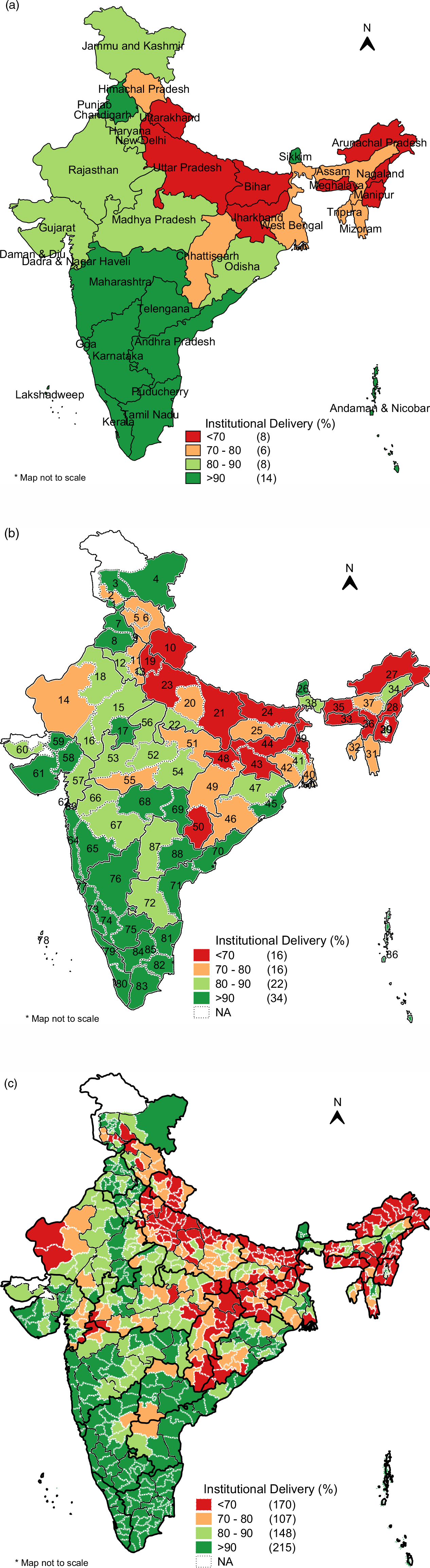
At the national level, 78.9% of births in the five years preceding the survey took place at a health facility. Figure 1a presents the geographical pattern in institutional delivery at the state level, showing how this varied widely across the states, from 32.8% in Nagaland to 99.8% in Kerala, while among the Union Territories (UTs) it varied from 84.4% in Delhi to 99.9% in Puducherry. Of the 36 states and UTs, eight had less than 70% institutional delivery, six had 70–80%, eight had 80–90% and fourteen had more than 90%. The level of institutional delivery was higher in the southern states, while it was lower in the northern and north-eastern states. However, the institutional delivery rate at the regional level showed large geographical variations within the states (Fig. 1b). In the southern states of Kerala, Tamil Nadu and Karnataka, all regions had more than 90% institutional delivery, while a greater regional disparity was observed in the central and northern states. For example, the institutional delivery rate in Odisha varied from 78% in the Southern region to 92% in the Coastal region. Similarly, in Uttar Pradesh, the institutional delivery rate varied from 63% in the Southern Upper Ganga Plain to 82% in Southern Uttar Pradesh. In West Bengal, the rate varied from 68% in the Eastern Plain region to 86% in the Central Plain region.
Institutional delivery (%) in the a) states, b) regions and c) districts of India.

District-level variations are illustrated in Fig. 1c. Among the 640 districts in India, institutional delivery was more than 90% in one-third of the districts (215) in the southern and coastal parts of India. In contrast, it was less than 70% in 170 districts (26.6%) concentrated in the northern and north-eastern parts of the country. A large inter-district disparity in the utilization of institutional delivery was observed within the states and regions of India, especially in states with a low institutional delivery rate. For example, among the 38 districts in Bihar, the institutional delivery rate varied from 37.2% in Sitamarhi district to 86.4% in Patna, which showed a nearly 50 percentage point difference. Similarly, in Uttar Pradesh, it varied from 30.7% in Balrampur district to 89.6% in Mahoba district. Of the 71 districts in Uttar Pradesh, nearly thirteen had less than 60% institutional delivery, while in twelve districts institutional delivery was more than 80%. The inter-district range in each state was computed by taking the difference in institutional delivery in the highest and lowest districts to examine the inter-district disparity within the states. In nine states, the inter-district range was more than 50 percentage points (Haryana, Uttar Pradesh, Manipur, Madhya Pradesh, Assam, Arunachal Pradesh, Mizoram, Jammu & Kashmir and Meghalaya), in eleven states the inter-district range was 30–50 percentage points, while in six states the inter-district range was 10–30 percentage points.
Pattern of shifting childbirth location and net shift in favour of a health facility
Geographical pattern
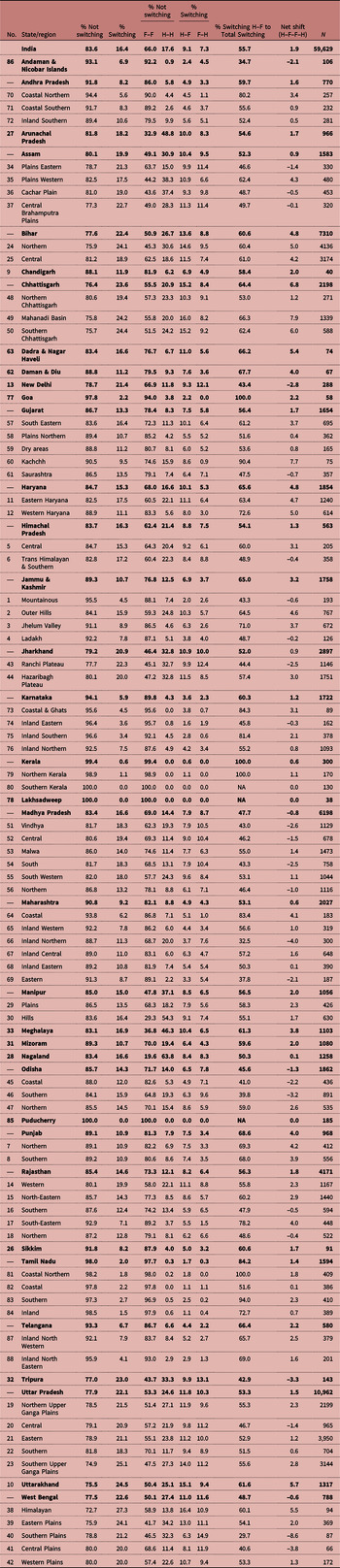
Although the majority of women chose the same childbirth location for their last two births, a shift in choice between successive births was evident (Table 1). About 83.6% chose the same location; 66% chose a health facility for both births; and 17.6% chose home for both childbirths. About 16.4% of the women switched the location of childbirth for the last birth; 9.1% switched from home to health facility, while 7.3% switched from health facility to home. The switching pattern varied substantially across the states of India, with the maximum shift observed in Uttarakhand, where about a quarter (24.5%) switched their location of childbirth, followed by Chhattisgarh (23.6%), Tripura (23.0%), West Bengal (22.5%), Bihar (22.5%), Uttar Pradesh (22.1%), Delhi (21.4%), Jharkhand (20.9%) and Assam (19.9%). Shifting of location of childbirth was lowest in Kerala, Tamil Nadu, Goa, Karnataka, Telangana, Andaman & Nicobar Islands, Andhra Pradesh and Maharashtra. In these states, less than 10% of the women shifted the location of their last birth.
Womenʼs choice of location of childbirth for their last two successive births in the five years preceding the survey by state/region, India, NFHS-4

H: home; F: health facility.
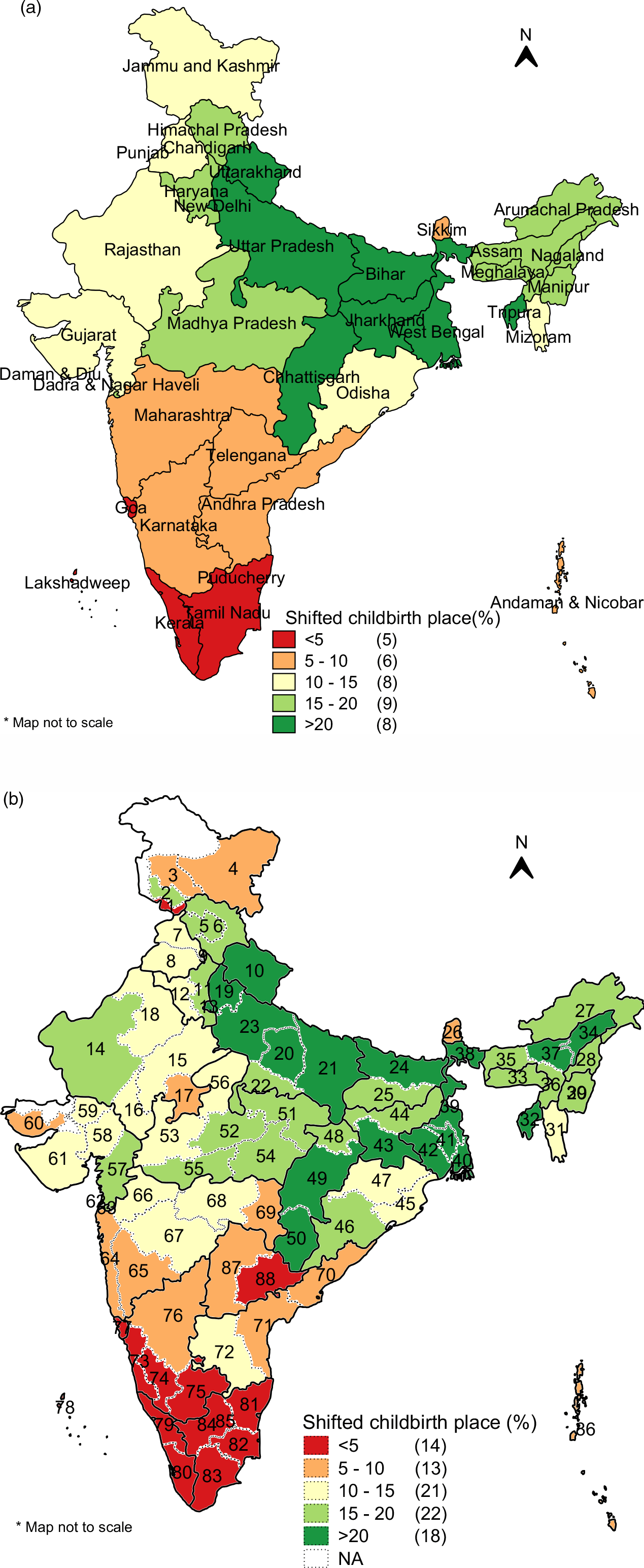
Figure 2a presents the geographical pattern of switching childbirth location in the states/UTs of India indicating that the states with a lower rate of institutional delivery had a higher percentage of switching and viceversa. Six states/UTs switched the location of childbirth by 5%–10%, eight states/UTs by 10%–15%, nine states/UTs by 15%–20% and eight states/UTs by more than 20%. Figure 2b presents the geographical pattern of the percentage of women who shifted the location of childbirth in 88 regions in India. In fourteen regions the percentage of women who shifted was <5%, in thirteen it was 5%–10%, in 21 it was 10%–15%, in 22 it was 15%–20% and in eighteen regions more than 20% of the women switched childbirth location. Though the regional pattern followed the state pattern in switching the location of childbirth, there is clear evidence of inter-region variations within the state.
Percentage of women who shifted their location of childbirth in the a) states and b) regions of India.

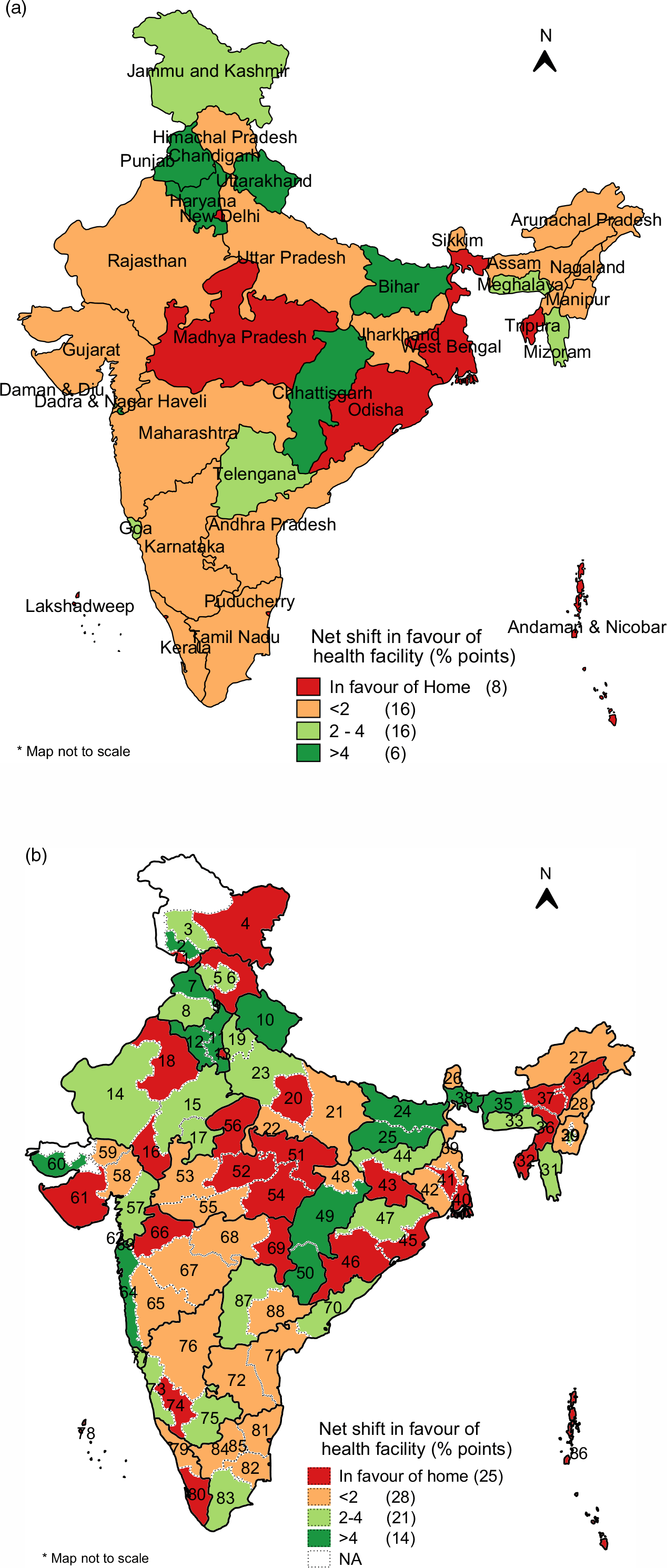
The shift of location did not necessarily translate in favour of a health facility, as only 55.7% of the total switching was in favour of health facility, indicating that a substantial proportion of births (44.3%) showed movement away from health facility towards home (Table 1). There is evidence of shifting of childbirth location in favour of health facility across all states except for Delhi, Odisha, Madhya Pradesh and West Bengal, where the shift was in favour of the home. Owing to the shift in childbirth location, the overall institutional delivery rate increased by 1.9 percentage points for the last childbirth compared with the previous childbirth. Shifting in favour of health facility delivery was observed to be greatest in Chhattisgarh, with a 6.8 percentage point net increase in institutional delivery, followed by Uttarakhand (5.7 percentage points), Haryana (4.8 percentage points), Bihar (4.7 percentage points) and Punjab (4.0 percentage points). Figure 3a presents the net increment in institutional delivery at the state level and shows that eight states/UTs had a net shift in favour of home, sixteen had a <2 percentage point increment towards health facility, six had a 2–4 percentage point increment and another six had a >4 percentage point increment. Figure 3b presents the net increment in institutional delivery at the regional level and shows that there was a net shift in favour of home in 25 regions. The percentage point increment towards a health facility was <2 in 28 regions, 2–4 in 21 regions and >4 in fourteen regions.
Net shift in location of childbirth in favour of health facility in the a) states and b) regions of India.

Socio-demographic and economic patterns
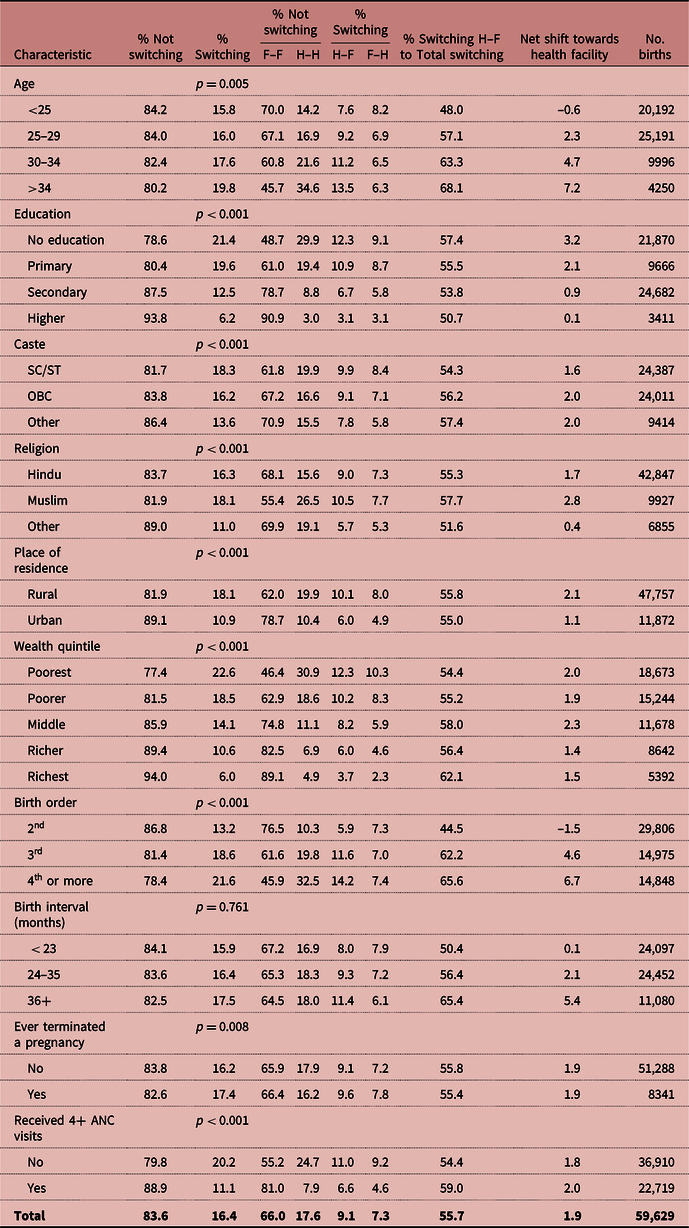
Table 2 presents womenʼs choice of childbirth location for their last two successive births by socio-demographic and economic characteristics. The results show that the shifting of childbirth location was higher among women who were older, less educated, of Scheduled Castes (SC)/Scheduled Tribes (ST), from rural areas, higher birth order, poor households and who received four or more ANC visits compared with their counterparts. Although a substantial proportion of women belonging to these categories had opted for a home birth for both their childbirths, the net shift towards a health facility was higher than the shift towards a home birth. For example, among women aged 34 years or more, 19.8% switched locations, of whom 13.6% switched towards a health facility, whereas among women in the age group 15–19 years, 15.8% switched locations, of whom 7.6% switched towards a health facility. Among women without education, 57% of total switching (21.4%) was towards a health facility, compared with 53.8% of total switching (12.5%) among those who had secondary education. Similarly, 44.5% of total switching (13.2%) was towards a health facility, compared with 65.6% of total switching (21.6%) among those who had four live births or more. Although total switching was higher among those who did not receive four or more ANC visits (20.2% vs 11.1%), the percentage switching towards a health facility was higher among those who received four or more ANC visits.
Womenʼs choice of childbirth location for their last two successive births in the five years preceding the survey by background characteristics, NFHS-4

H: home; F: health facility.
Correlates of shifting location of childbirth
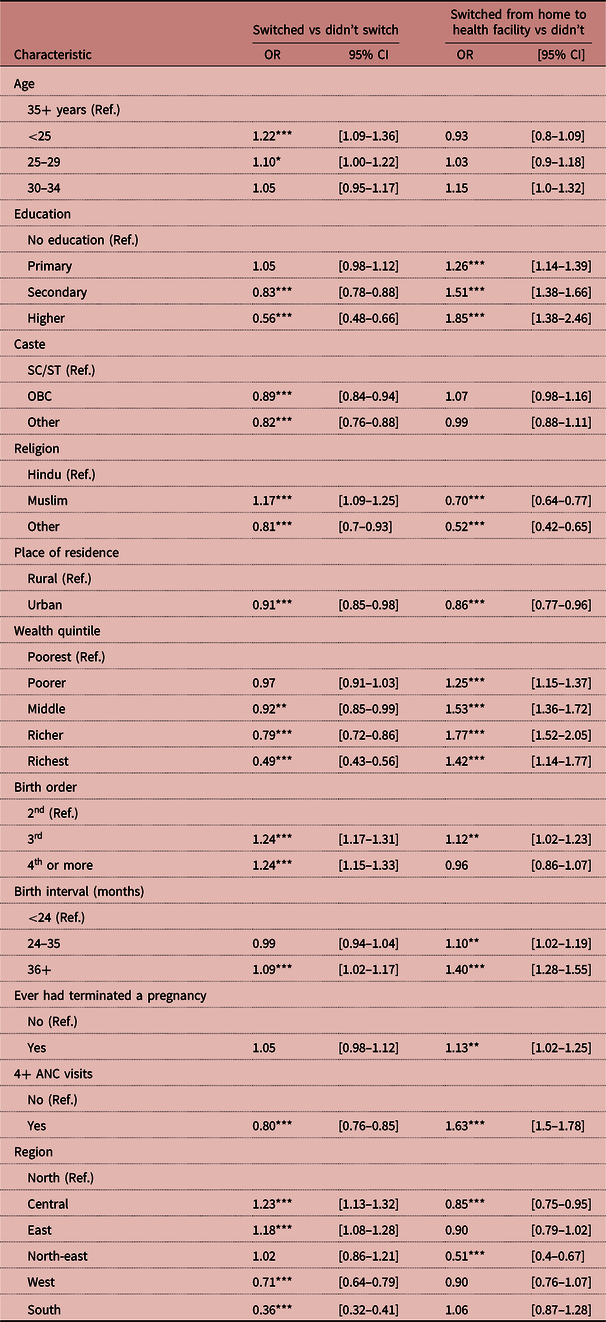
The adjusted odds ratios (and 95% CI) for switching place of birth and for switching from home to health facility births are shown in Table 3. Two dependent variables were considered to understand the switching pattern and the direction of switching. The first, ‘switching location of childbirth’, helps understand the factors associated with switching location of childbirth, and the second, ‘switching location of childbirth towards health facility’, helps understand the factors associated with switching location of childbirth from home to health facility. The factors found to be significantly associated with switching the location of childbirth were age, education, caste, religion, birth order, wealth quintile and received four+ ANC visits. Younger mothers in the age group <25 years had an OR of 1.22 (95% CI: 1.09–1.36) for switching location of childbirth compared with older mothers (35 years and above). Compared with mothers who had no education, educated mothers had a lower OR of switching location of childbirth; those who had secondary education had an OR of 0.83 (95% CI: 0.78–0.88) and those who had higher education had an OR of 0.56 (95% CI: 0.48–0.88). Compared with SC/ST, the OR for switching location of childbirth among OBCs was 0.89 (95% CI: 0.84–0.94) and among the ‘other’ category it was 0.82 (95% CI: 0.76–0.88). Mothers who belonged to the Muslim religion had a higher OR, while those who belonged to ‘other’ religions had a lower OR for switching location of childbirth compared with mothers who belonged to the Hindu religion. Compared with second birth order mothers, the OR was 1.24 among those who had third or fourth+ birth orders. The OR for switching location of childbirth decreased by wealth quintile compared with those who belonged to the poorest wealth quintile households. The OR among the richer wealth quintile was 0.79 (95% CI: 0.72–0.86) and among the richest wealth quintile it was 0.49 (95% CI: 0.43–0.56).
Odds ratios and 95% confidence intervals [95% CI] for switching location of place of childbirth

Ref.: Reference category.
***p < 0.01; **p < 0.05; *p < 0.1.
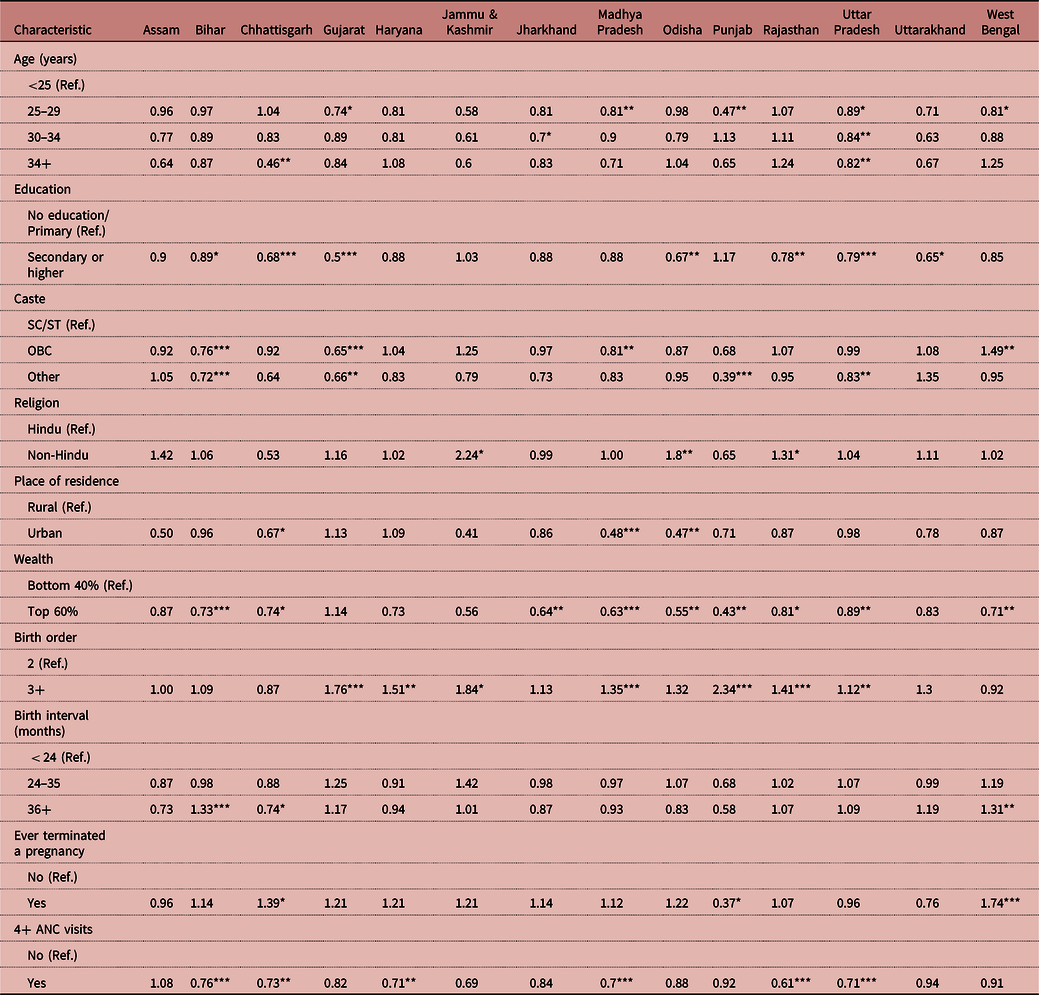
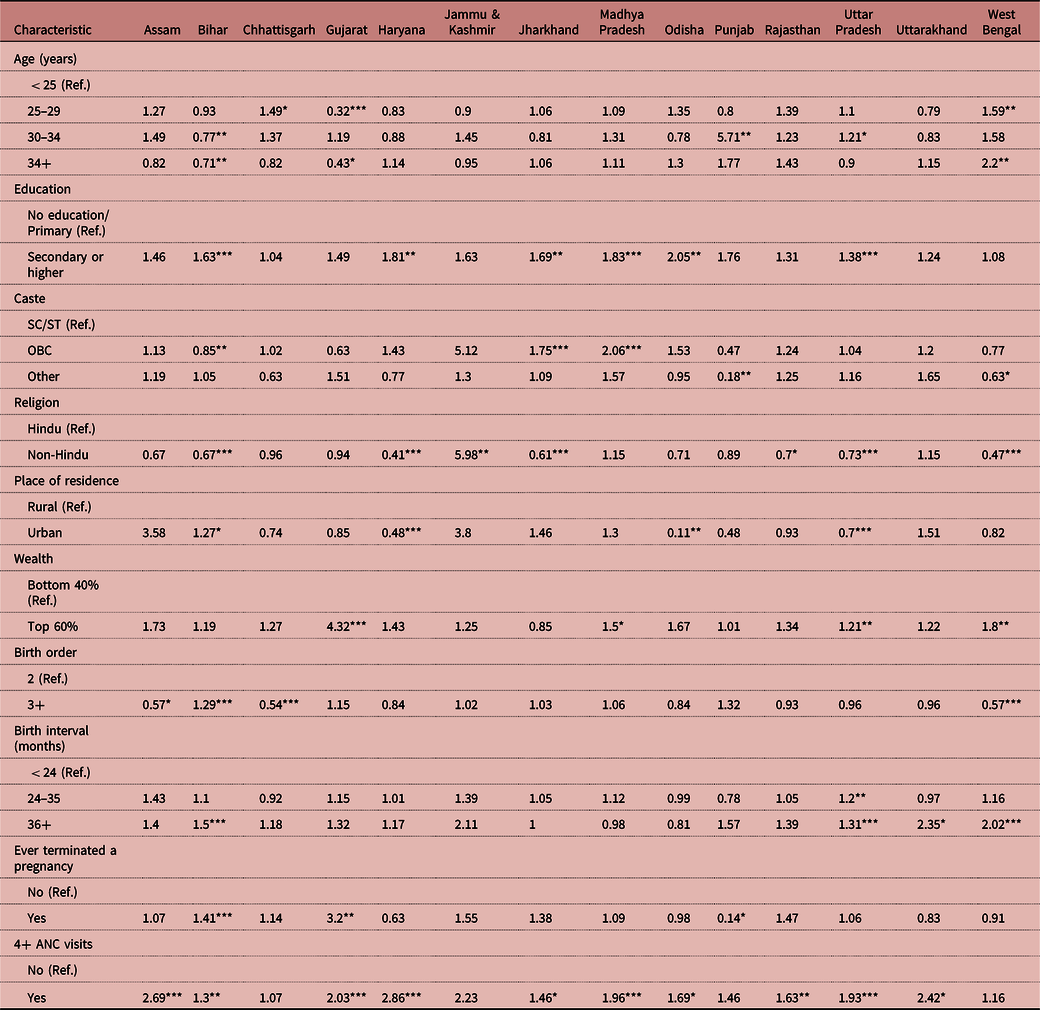
The factors that were significantly associated with switching the location of childbirth in favour of a health facility were education, religion, place of residence, birth order, birth interval, wealth quintile, ever had a pregnancy terminated and received four+ ANC visits. Compared with mothers with no education, educated mothers had a higher OR for switching towards health facilities. Mothers with primary education had an OR of 1.26 (95% CI: 1.14–1.39), those with secondary education had an OR of 1.51 (95% CI: 1.38–1.66), while those with higher education had an OR of 1.85 (95% CI: 1.38–2.46). Compared with mothers who belonged to the Hindu religion, those of Muslim (OR = 0.70; 95% CI: 0.64–0.77) and ‘other’ religions (OR = 0.52; 95% CI: 0.42–0.65) had lower ORs for switching location of childbirth in favour of health facility. Compared with mothers with <24 months of birth interval, mothers with 36+ months birth interval had an OR of 1.40 (95% CI: 1.28–1.55). Mothers in higher wealth quintile households had higher odds of switching location of childbirth in favour of a health facility compared with those from the poorest wealth quintile households. The adjusted ORs for switching the location of childbirth and switching in favour of health facility were estimated separately for fourteen major states, where more than 10% switched location of childbirth (Tables 4 and 5). The evidence generated from the multivariate models for different states was similar to that at the national level.
Adjusted odds ratios of switching childbirth location by state of Indiaa

a States with more than 10% switching location of childbirth.
Ref.: Reference category.
***p < 0.01; **p < 0.05; *p < 0.1
Adjusted odds ratios of switching childbirth location in favour of health facility in the states of India

Ref.: Reference category.
***p < 0.01; **p < 0.05; *p < 0.1.
Discussion
The NRHM programme, through community mobilization by frontline health workers and the Conditional Cash Incentive Programme, has motivated mothers in India to utilize health facilities for childbirth and has succeeded in increasing institutional birth significantly (Varma et al., Reference Varma, Khan and Hazra2010; Randive et al., Reference Randive, Diwan and Costa2013). Overall, the utilization of health facilities for childbirth has increased substantially in the post-NRHM period in India (IIPS & ICF, 2017). However, large geographical disparities persist across the states, regions and districts of the country. The majority of the districts in the southern states have achieved more than 90% institutional delivery, while greater variation persists in the central, northern and north-eastern states of the country.
Earlier studies reported substantial proportions of mothers switching their childbirth location in successive births in India (Johnson et al., Reference Johnson, Padmadas and Matthews2013; Dixit & Dwivedi, Reference Dixit and Dwivedi2016), and this was confirmed in the current study. The study found that 16% of women switched their childbirth location was, while 9% switched from home to health facility and 7% switched from health facility to home. Switching of childbirth location varied widely, being higher in the states and regions where overall utilization of health facilities for childbirth was low. In Chhattisgarh, Jharkhand, Bihar, West Bengal, Uttar Pradesh, Uttarakhand and Tripura more than a fifth of women switched childbirth location. In these states, the majority of institutional births are covered under the JSY programme (Randive et al., Reference Randive, Diwan and Costa2013), so a shift in childbirth location towards health facilities would be expected. However, not all the switching was in favour of health facilities, as a substantial proportion of women among those who switched childbirth locations preferred a home birth over a health facility resulting in a low institutional delivery rate. The shift was more in favour of home in Odisha, Madhya Pradesh and West Bengal, while it was more in favour of health facility in Chhattisgarh, Bihar, Punjab and Haryana, where more than 4 percentage points of net increment were seen in the institutional delivery rate. Of the 88 Indian regions, 25 had a shift in favour of home, and these largely belonged to the states Odisha, Madhya Pradesh, Assam, Uttar Pradesh and Rajasthan. Of the 25 regions, fourteen need special attention in generating awareness and improving availability, accessibility and quality of service provisioning as more than 15% of women switched their location of childbirth. The reasons for home delivery were analysed for the last birth in the five years preceding the date of the survey in those fourteen regions and it was found that the majority of the respondents reported that delivering at a health facility was not necessary (44%), cost too much (17%), the health facility was too far away or that they had no transport (15%), the health facility was not open (12%), their husband/family didn’t allow it (12%) or that they didn’t trust the facility or thought it gave poor service (10%) (data not shown).
Studies in the Indian context suggest that the preference for health facility delivery is influenced by the availability of medicine and perceived good health outcomes for the mother and newborn (Bhattacharyya et al., Reference Bhattacharyya, Srivastava, Roy and Avan2016; Das et al., Reference Das, Alcock, Azad, Kuddus, Manandhar and Shrestha2016). This information could not be included in the study as it was not available in the data set. Previous studies have indicated that the majority of women in India do not have access to life-saving interventions for emergency obstetric complications and newborn care (Ameh et al., Reference Ameh, Msuya, Hofman, Raven, Mathai and Broek2012), which perhaps has influenced the shift in childbirth location towards home. Previous studies have shown a growing preference for facility delivery among women in the higher age group, educated women, those who were economically better off and those who had received antenatal check-ups (Bhattacharyya et al., Reference Bhattacharyya, Srivastava, Roy and Avan2016). The present study has also demonstrated that women with high parity and large birth intervals have higher odds of switching their birth location, and in favour of a health facility. Similarly, mothers with education, who received at least four ANC visits and who belonged to higher wealth quintile households have higher odds of switching place of birth in favour of a health facility despite lower odds of switching place of birth suggesting that awareness and frequent contact with health care providers can influence womenʼs decision towards safe delivery.
This study had its limitations. First, it did not account for supply-side factors in analysing the determinants of switching location of childbirth, which could be more relevant for policymakers to address switching towards home rather institutional births. Second, it didn’t segregate public and private health facilities while analysing switching of childbirth place. Availability and quality of obstetric care may differ between public and private health facilities. Hence, the experience of adverse outcomes of previous childbirth would have played a major role in switching childbirth location towards home. Third, the study presented findings up to the regional level due to inadequate sample size at the district level. However, district-level variations within the region might be seen.
In conclusion, by analysing switching patterns at the regional level from the NFHS-4 data, this study found that a substantial proportion of women in India switched the location of their last birth between home and health facility, and in certain geographies, the switch was more in favour of home delivery. The findings suggest that in order to ensure universal health coverage with respect to accessing health facilities for childbirth, low institutional delivery rate geographical areas, particularly where the switching was more towards home, must be identified and special attention paid to improving the quality of service provisioning. Future studies could analyse the switching pattern at the district level and segregate health facility delivery into public and private sectors, particularly in those states with a low overall institutional delivery rate. Addressing the quality of services in the health facilities will go a long way in understanding switching towards home delivery. Qualitative research is also encouraged to address the reasons for switching of childbirth location from health facilities to home, especially in low institutional delivery regions.
Acknowledgment
The authors would like to thank the reviewer and the editorial board of the Journal of Biosocial Science. They would also like to thank the International Institute for Population Sciences, Mumbai, India, for access to the NFHS data.
Funding
This research received no specific grant from any funding agency, commercial entity or not-for-profit organization.
Conflicts of Interest
The authors have no conflicts of interst to declare.
Ethical Approval
This research was based on the publicly available secondary data, so no ethical clearance was required.