


In the United States, governments at all levels, as well as private institutions, are increasingly turning to the use of incentives and disincentives to bring about desired policy outcomes. Nonetheless the use of incentives in public policy often leaves people with vaguely defined ethical qualms. There are many examples from a wide variety of policy areas: plea-bargaining, welfare benefits offered only to women who agree to take birth control pills, company payments to public schools willing to install soda machines or televisions, grants of federal dollars to the states to influence state policies in areas constitutionally outside of the jurisdiction of the federal government. Should incentives such as these elicit ethical concerns?
Theoretically, if incentives are understood from the perspective of economics, there should be no ethical issue. An incentive is an offer of something of value, sometimes with a cash equivalent and sometimes not, meant to influence the payoff structure of a utility calculation so as to alter a person's course of action. The person offering the incentive means to make one choice more attractive to the person responding to the incentive than any other alternative. Both parties stand to gain from the resulting choice. In effect, an incentive understood in this way is a form of trade. And, the first thing one learns in economics about trading is that it is inherently ethical. A trade is a voluntary transaction that will occur only if it is beneficial to both of the parties involved. Trading is free and rational and, thus, can be considered an ethical relation between persons.
But despite this general claim, there are some forms of trade that are often considered unethical. Many people view bribery and blackmail as ethically problematic even though both can be described in neutral terms as situations in which a simple trade takes place: how much is it worth to a customs official to fail to notice a smuggling operation? How much is it worth to a candidate for public office to know that someone will not reveal damaging personal information? Offers that produce ethical qualms also include those with “strings attached”; offers that may formally resemble the ideal model of a voluntary transaction but nonetheless involve manipulation or control. How can the power relations implicit in these transacations be recognized? All offers are not alike from the point of view of ethical considerations, but if we consider incentives exclusively within an economic framework, as simple trades, the differences between them tend to be obscured.1
The economic approach usually highlights the question, “What counts as a voluntary transaction?” For typical disputes see Hardin 1987, Katz 1996, and Posner 1996 on blackmail; Surjadinata 1998 on bribery; Kipnis 1976 and Wertheimer 1979 on plea bargaining. On the difference between threats and offers and distinguishing voluntary consent from coercion see Cohen 1983, Faden, Beauchamp, and King 1986, chapter 10, Nozick 1972, and Steiner 1975.
A strong trend in contemporary political science has been to subsume all kinds of political phenomena under an economic paradigm. The choices voters make are considered analogous to consumer choices, for example (Elster 1986b, 127). Or, the principal–agent model, appropriate to employer–employee relations, is applied to constituent–representative relations.2
For a critique of this approach see Grant and Keohane 2005, 32.
Moreover, this approach opens an additional dimension to the consideration of the ethics of incentives as a policy tool. We are accustomed to considering incentives as an alternative to “command and control,” as if the alternatives for guiding people's choices were market transactions on the one hand and government regulation on the other (Driesen 1998, 290–93; Taylor 1996, 2–3). Within this framework, as inducements in a voluntary transaction, incentives seem to have the moral high ground over coercion as an alternative. But coercion is not the only conceivable alternative. Incentives might just as readily be considered in contrast to persuasion. Persuasion, along with coercion and incentives, must be included among the alternative means of exerting power. Incentives attempt to circumvent the need for persuasion by giving people extrinsic reasons to make the choices that the person or institution offering the incentive wishes them to make. When incentives are employed, there is no need to convince people that collective goals are good or to motivate them to pursue those goals by appeals to rational argument or personal convictions. Experts and powerful elites can thus direct institutions and shape people's choices without the sort of public discussion and consent that characterizes democratic processes of decision making. From this point of view, incentives seem problematic indeed. When the salient contrast is persuasion rather than coercion, the ethical superiority of the use of incentives is not obvious at all.
The question of the ethics of incentives goes to the heart of a long-standing confrontation between two sorts of moral attitudes. The first might be called “the moralistic attitude” according to which the quality of character of the members of society ought to be a central public concern. Because societies can only function at their best if their members, and especially their leaders, are capable of virtues like self-restraint, personal sacrifice and public responsibility, matters of motivation and character formation are critical for politics. The contrasting view I will call “the economic attitude” or the “Mandevillian attitude.” Bernard Mandeville (1989), in his The Fable of the Bees published in 1714, made famous the view that private vices often yield public benefits. Our public concern should be the aggregate outcomes of individual choices and not their motivation or moral quality. The skillful politician is the one who so manages the society that even the self-indulgence and vanity of its members produces public goods. The “Mandevillians” scorn the “moralists” as soft-headed and irrational, willing to sacrifice all sorts of beneficial developments on the altar of an illusory project of moral perfection. The “moralists,” in turn, condemn the “Mandevillians” as reductionist cynics who destroy, by denying, the higher human possibilities. It is an argument that goes back a long way and takes many forms. One can find it today whenever the ethics of incentives arises as an issue. For example, in the debate over whether to offer payment as an incentive to blood “donors,” Richard Titmuss plays Shaftesbury to Kenneth Arrow's Mandeville (Arrow 1972; Titmuss 1997). The “Mandevillian attitude” obviously favors the use of incentives of all kinds, while the “moralists” condemn them. But neither position gives grounds for making ethical distinctions amongst them.
By adopting an alternative political approach to incentives, I hope to be able to do exactly that. When considering forms of power, the classic alternatives are force and persuasion: I can make you do what I want you to do or I can convince you to want to do what I want you to do. But I can also give you something that you want in exchange for your compliance with what I want. Coercion, persuasion, and bargaining are alternative forms of power. Each is sometimes legitimate and sometimes not. Examining the standards for the legitimacy of all kinds of power will help clarify the criteria for distinguishing legitimate from illegitimate uses of incentives in a way that the analysis of incentives as economic transactions cannot.
There is considerable historical support for this approach (Grant 2002). The term incentive does not appear in the British writings that are the source of classical ideas about trade, markets, and liberal political economy. With one or two exceptions, it is absent from the writings of John Locke, Adam Smith, Bernard Mandeville, David Hume, James Madison, Jeremy Bentham, James Mill, and John Stuart Mill. Instead, the term appears in America around the turn of the twentieth century in three different discourses: in the new field of scientific management, in behavioral psychology, and in the debate over socialism. In each case, incentives were thought to be necessary to correct the failures of automatic forces, whether of habit, of instinct, or of the market, in order to bring about progressive social change. During this period, the language of social control and of social engineering was quite prevalent, and incentives were understood to be one tool in the social engineers' toolbox—an instrument of power.
Incentives were also extremely controversial at this time. Opposition to the new scientific management techniques of industrial production played a major role in strikes and labor unrest. Opponents viewed scientific management as a heartless system for the dominance, exploitation and dehumanization of the common man. Behavioral psychology, with its analysis of incentives as a means of directing behavior, provoked the very same ethical critique; its detractors condemned it as dehumanizing, heartless, and manipulative.3
For the connections between behavioral psychology and the assumptions of economic theory see Homans 1967, 38–9, Schwartz 1986 and Staddon 2001.
POWER: COERCION, PERSUASION, AND BARGAINING
Generally speaking, the ethical superiority of persuasion to coercion is taken for granted. Moreover, this judgment of the relation between them has important political implications in that it grounds claims for free and democratic government. Aristotle famously argues that the human capacity for logos is the condition for a self-governing political community (1998, 1253a). Publius remarks that the alternative is “whether societies of men are really capable or not of establishing good government from reflection and choice, or whether they are forever destined to depend … on accident and force (Hamilton and Madison 1961, no. 1, my emphasis).” The superiority of persuasion to force is commonly tied in Western thought to the view that rationality is the distinctive human characteristic. Beasts, who, lacking reason, are not amenable to persuasion, can be rightly subjected to “brute force”—note the term. For the moment, let us accept the judgment that persuasion is ethically superior to coercion and consider incentives in relation to these other forms of power. We would ask ourselves, “Are incentives more like persuasion or more like coercion?” Or we might consider whether incentives are legitimate when the alternative to their use is force (e.g., an argument for economic sanctions in international relations), but illegitimate whenever persuasion is a viable option (e.g., an argument against buying votes).
We could proceed in this way, as if coercion lies at one end of the ethical spectrum and persuasion lies at the other. But, as is so often the case, on reflection the situation becomes considerably more complicated. There are varieties of coercion as well as varieties of persuasion, and they are not all equally legitimate. The use of force includes the legitimate police powers of the state as well as tyranny; it includes a fair fight as well as overpowering the defenseless. Persuasion too is not a simple category. It includes demagoguery, begging, flattery, and fraud as well as rational conviction. It includes courtship as well as seduction. In the opening scene of Sophocles' Philoctetes (1957), Neoptolemus, who would gladly fight to get what he wants, is reluctant to employ a deceitful scheme to achieve his ends. Deceit is a dishonorable way to overpower an opponent. Cicero concurs with this judgment, arguing that there are two ways of doing injustice; force and fraud. Both are beastly, but in his view, fraud is worse (1991, I. 13. 41). Perhaps we ought to question the claim that persuasion is categorically superior to coercion as an ethical mode of exercising power.
Moreover, in addition to the complexity within each category, the categories themselves can be defined in different ways, and in almost every case, the way in which the definitions are delineated has powerful ethical and political implications. Consider, for example, Machiavelli's revision of Cicero's assessment. According to Machiavelli (1985), there are two ways of fighting; force and law. Force, the way of beasts, is divided into the way of the lion, using strength, and the way of the fox, using cunning. According to this analysis, deception is a kind of force (chap. 18). Adam Smith characterizes bargaining as a form of persuasion and, as such, identifies it as a distinctively human capacity. In his account, the relatively high ethical status of persuasion thus becomes attached to bargaining as well.4
In fact, bargaining is described as a superior form of persuasion to begging, which even dogs will do. This is the context of Smith's (1976) famous remark about the butcher and the baker (Book I, chap. 2, 17–18). See Grant 1997, 37–8.
Nonetheless, in my view, a person who can influence others' choices through intelligence and eloquence is more powerful than one who cannot.
The question before us here is how to distinguish between legitimate and illegitimate uses of incentives. On what basis can such a judgment be made? What are the standards that operate in judging among various modes of power? The presumption of the analysis is that incentives, as a form of power, ought to be judged according to the same criteria as other forms of power. To discover those criteria requires comparing positive and negative ethical judgments of a variety of different forms in which power is exercised. This requires, in turn, maintaining the distinctions among categories of power, rather than collapsing them, as well as employing definitions that do not already entail ethical judgments.
Power, in general, I take to be the capacity to achieve one's purposes (Hobbes 1968, 150). The particular focus of this analysis is the capacity to affect the actions of others in order to achieve one's purposes. Power comes in varying degrees: it ranges from strict control, where one can get others to act “against their will,” to strong influence, where others are pressured or enticed to act “against their better judgment,” to mild influence, where others are convinced to choose one particular alternative among a set of alternatives otherwise indifferent to them. The continuum suggested by “control” at one pole and “influence” at the other is defined by the degree to which the target of an act of power is in a position to make a meaningful choice.
Power also comes in varying forms: coercion, bargaining and persuasion. As has already been suggested, it is tempting to view this as a continuum also and, in fact, to identify it with the continuum of degrees of power ranging from control to influence; simply identifying coercion with control, on the one hand, and persuasion with influence, on the other (compare Nye 2004, 1–10). But, again, this would be a mistake. It would imply, for example, that bargaining, located between coercion and persuasion, lies somewhere between control and influence as well. But, bargaining in the form of ideal market transactions rather resembles rational persuasion in the minimal degree of power either party exerts over another. On the other hand, bargaining in the form of blackmail and persuasion in the form of fraud both fall towards the “control” end of the continuum. The degrees of power must be distinguished from the forms of power.
For the purposes of this analysis, then, “coercion” means “the use or threat of force to control or influence people's behavior;” “bargaining” means “the use or promise of an exchange of gains or losses to control or influence people's behavior;” and “persuasion” means “the use of speech or other symbols to control or influence people's, beliefs, judgments or behavior, apart from coercion or bargaining.”6
These definitions were developed with the help of Duke University's “Persuasion Group,” an informal seminar of political science faculty. I am grateful to my colleagues for their help throughout my work on this project.
STANDARDS OF LEGITIMACY
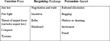
We have noted that persuasion is usually considered ethically superior to force. But we have also noted that each category contains subcategories that could be ranked hierarchically from most to least legitimate. Coercion includes at least law, a fair fight, tyranny, conquest, and the threat of these.7
And here I mean just laws enforceable by sanctions. Not every law is coercive; for example laws allowing for tax deductions or customary international law. These lists are meant to be suggestive; I do not claim that they are complete, nor that the items are listed in precisely descending order.
Although persuasion as a category is generally considered superior to the others, within each category, we would tend to judge the subcategories listed first more favorably than those listed later. Why? What is the implicit standard employed in making these judgments?
I will argue that any form of power can be judged according to three primary criteria: first, by whether it serves a legitimate purpose; second, by whether it allows a voluntary response; and third, by its effect on the character of the parties involved. Bribery, for example, invites a person to violate his duty; its end is illegitimate and it undermines character as well. Blackmail often takes the form of “an offer she couldn't refuse” and to succumb to it is arguably involuntary. Concerns with character are reflected in criticisms of incentive systems which encourage people to ask only “what's in it for me?” or in criticisms of demagogic political rhetoric which motivates people by appealing to their worst passions. Consider also the argument mentioned above that a fair fight might be considered morally superior to fraud or deception. In a case of fraud, the dupe is really not in a position to choose freely, since informed consent is not possible, and the second criterion is violated. Paradoxically, a fair fight, understood as one in which both parties have an equal chance to emerge victorious, could be considered more legitimate. The combatants are fully informed, able to influence the outcome by their own actions, and voluntarily join in combat. The enforcement of just laws is another type of coercion which is often justified, not only by the purposes it serves, but also by the notion that those subject to the laws have consented to them.8
This is another reason why it is a mistake simply to identify “coercion” and “control.”
Although the first two criteria seem fairly obvious—that is, the legitimacy of the aim and the voluntariness of the action—the concern with character requires some explanation. Character, in the first instance, means nothing more than the tendency or predisposition to behave in certain ways; a person's characteristic way of doing things. But when we say that a person has character, we often mean to imply that he or she has a strong or a good character; that is, that this person is unlikely to be swayed from behaving according to his or her characteristic dispositions and that those dispositions are good (Kupperman, 1991). The various ways in which power is predominantly exercised in a given social setting and the sorts of things that are used to influence people's decisions have an impact both on people's characteristic dispositions and on what good character is understood to be.
People can be led or governed in a variety of ways, and which ways are employed makes a difference for good character. Bribery is corrupt, but it is also corrupting to the extent that it weakens the disposition to put duty above interest. Some people respond to flattery more readily than others, but indulging this propensity certainly encourages it. Some people who are handled coercively become bullies who readily threaten force to assert control. These people do not have the same sorts of moral predispositions, and the various forms of persuasion, coercion, and bargaining appeal to them differently and affect them differently.
Not only what we do, but why we do it, has a bearing on moral character. A person who sometimes does the wrong thing for the right reason is more trustworthy than a person who sometimes does the right thing for the wrong reason. It makes an ethical difference, both for individual character and for social norms, whether people are motivated by fear of punishment, desire for reward, generosity, or rectitude, and so forth. For example, some argue that incentives may induce people to do the right thing for the wrong reason, thus undermining altruism, responsibility, or other important values (Kohn 1993; Taylor 1996; Titmuss 1997). And so, effect on character is included along with legitimacy of purpose and voluntariness of response among the criteria for assessing the forms of power. These, then, are the criteria that ground the hierarchy of the list within each category of Figure 1.

Forms of Power
On the basis of these same three criteria, it is also easy to see why the attempt to persuade on the basis of reason alone might be considered the morally exemplary form of power. Rational conviction is at the top of the list in what is usually taken to be the highest category because rational persuasion meets all three conditions simultaneously. If there is a convincing logic to support the choice of a course of action, part of that logic will be a justification of its purpose. To act on the basis of your own conviction is to be guided by reason, to be self-governing, and hence to act voluntarily—the choice is unconstrained, not only by external forces but also by internal influences of passion and desire. Thus, it is also to act virtuously in the sense that it involves subjecting the passions to the government of the higher faculties of reason. The person who is self-governing in this respect is, thus, also a person of good moral character; tending to act reasonably and unlikely to be moved from his or her rational convictions.
This position, of course, depends on a certain contestable understanding of reason as a capacity both to provide insight into human purposes and to regulate the passions; and it is a nutshell description of an argument that can be found, perhaps most famously, in Plato's Gorgias (1960). In this dialogue, Plato has Socrates challenge Gorgias, a celebrated teacher of rhetoric, to defend the practice of using the art of rhetoric to persuade the people on political questions or in judging cases at law. In the course of the conversation, Socrates establishes the superiority of an ideal sort of rational speech aimed at convincing one's interlocutor by demonstrating the truth of a proposition and condemns more public and political forms of persuasion as species of flattery which pander to the desires of the audience and show the speaker to be, in fact, thoroughly dependent on the audience. Only a dialogue aimed at true conviction respects human freedom and rationality. In effect, the three criteria I have suggested amount to the claim that any act of power ought to be judged by whether or not it respects human beings as free and rational.
I asked earlier “what are the implicit standards we employ” when making judgments about power. But of course, relying on common sense intuitions does not supply a firm foundation for ethical argument. Intuitions need to be subjected to examination and their premises exposed. In this case, the examination revealed the presupposition that human beings ought to be respected as free and rational. This presupposition is the basis for the shared intuitions about the legitimacy and illegitimacy of power in its various forms. Without offering a complete philosophic defense of the presupposition here, I will note only that this presupposition could be seen as the minimal grounding for ethical inquiry itself. It would make little sense to undertake a project to establish criteria for ethical judgment if one did not presuppose that people are capable of making judgments and guiding their conduct by them. Thus, when I assert that people ought to be treated with respect as free and rational beings, what I mean by that is that they ought to be treated as independent agents capable of moral responsibility. This is a presupposition that can carry the argument quite a long way.
But the meaning of this presupposition will vary considerably depending on the particular conceptions of freedom and rationality which it presupposes in turn. Freedom and rationality are susceptible to widely varying interpretations: there is enormous disagreement as to what counts as “freedom” and what counts as “rationality.” For Thomas Hobbes (1968), for example, even the agreement to submit to a conquering army counts as legitimate consent and an act of freedom (chapter 17, 21). For Immanuel Kant (1981), on the other hand, free action can only proceed on a pure rational principle. For this reason, the response to an incentive can never be morally worthy (2–3, 11). The opposition between Kant and Hobbes echoes that between the “moralists” and the “Mandevillians”mentioned at the outset. In short, we might secure agreement on the specific criteria for legitimacy, or at least on the criteria of legitimacy of purpose and voluntariness, and we might even secure agreement on their deeper ground, namely, that legitimate incentives must respect human freedom and rationality, but, without greater specification of the key concepts, we will not have provided workable standards.
In contemporary economic theory, rationality and freedom are minimally construed. Rationality does not refer to the capacity to regulate the passions or to judge amongst human purposes. It only requires adjusting beliefs to the available evidence and acting consistently with your preferences given the constraints and opportunities in your situation. Reasoning is understood to be a form of calculating for the sake of maximizing utility (Elster 1986a; Smelser 1992). Freedom is also minimally defined. The requirements of freedom are met by voluntariness; having alternatives and the capacity to choose among them. This is why the distinction between threats and offers, and even between voluntariness and coercion, is always threatening to collapse (see footnote 1). This conceptual vocabulary makes it particularly difficult to recognize the ethical issues involved with the use of incentives in those “gray areas” that produce discomfort.
Isaiah Berlin made the point with respect to the insufficiency of voluntariness minimally construed when he wrote:
If in a totalitarian state I betray my friend under threat of torture … I can reasonably say that I did not act freely. Nevertheless, I did, of course, make a choice … the mere existence of alternatives is not, therefore, enough to make my action free (although it may be voluntary) in the normal sense of the word. (Berlin 1969, n. 9)
To judge the ethics of this situation requires recognizing the power relations that structure the choice situation.
Similarly, the minimalist conception of rationality employed in contemporary economic theory also makes it difficult to judge the ethics of incentives. All choices are made essentially for the same reason: to maximize utility. But is this an adequate account? Consider a situation where incentives are being offered as an alternative to persuasion. In this case, it can be an insult to be offered an incentive—and in three different ways. First, it might imply that you are crass; that is, that there is no good reason for you to do the thing you are being asked to do, but that your compliance can be bought. Second, it might imply that you are stupid and would not be able to appreciate the good reasons for doing what you are being asked to do so that an appeal to your selfish interests must take the place of argument. Last, it might imply that you are not well-intentioned and must be induced to do the right thing by extrinsic benefits, because you would not respond positively to the good reasons to do it.9
For a fascinating study of the greater willingness of people to accept public goods than to accept money in compensation for public bads see Mansfield, Van Houtven, and Huber 2000. Monetary compensation is often perceived as a bribe, and people do not feel that it is respectable to accept it.
To illustrate: teachers might well be insulted for the first two of these reasons when they are offered a bonus to adopt a certain method of teaching reading in the classroom. As professionals, they might expect to be treated with respect for their expertise and for their ability to make rational decisions in quite a different sense than utility calculation; that is, to compare the intrinsic qualities of the competing reading programs and to decide accordingly. The third sort of insult is implied when teachers are offered a bonus if the scores of their minority students improve relative to those of their White students. Incentive systems in this case carry the implication that the problem of the minority achievement gap is a problem of neglect on the part of the teachers. If they cannot be motivated to serve minority students for the right reasons, perhaps they can be motivated by the promise of a reward. Economic analysis would treat the case of incentives and persuasion in exactly the same way. Whether teachers are persuaded or “incentivized” to adopt a certain course of action, they will act “rationally” by making the choice that accords most closely to their preferences. “Good reasons” cannot be distinguished from any other kind, and the matter of professional respect goes unrecognized. Consequently, the use of incentives in cases like these appears to be perfectly legitimate.
When freedom and rationality are defined more expansively, incentives will be subjected to stricter scrutiny. We might move, for example, from mere voluntariness and calculation as governing conceptions toward autonomy, where human freedom would be understood to include the capacity to set one's own ends or purposes according to some rational standard. Making this move increases the likelihood that incentives will be judged illegitimate because they are paternalistic, manipulative, or exploitative. These are “gray areas” between total control and benign influence, and all of them can be considered assaults on autonomy. From this perspective, paternalism can be described as treating another person as if he is incapable of recognizing for himself what his ends ought to be; manipulation, as a broad category of actions that deceive a person into believing that they are acting autonomously when they are actually being used for someone else's purposes; and exploitation, as taking advantage of another's weakness to secure his compliance in subordinating his own ends to yours. Finally, seduction might be considered a particular kind of exploitation where the weaker party is also deceived as to the true purposes of the stronger.10
There is a large literature concerned with the meaning of exploitation, particularly in economic and legal contexts. See, for example, Reeve 1987; Roemer 1986; and Wertheimer 1996.
What remains to be considered is whether the standards for legitimacy that I have identified are helpful in sorting through the ambiguities and competing claims involved when incentives are proposed as solutions to practical policy problems. Are the standards employed (legitimacy of purpose, voluntariness, and character) adequate to encompass the complexity of actual ethical relationships in practice? Recall that these three standards support the ethical claim for the superiority of persuasion in the form of rational dialogue. Returning to the Gorgias for a moment, we find that Plato recognizes full well how abstracted Socrates' standards are from practical reality. If we had to condemn all forms of persuasion that deviated from Socrates' philosophic ideal, we would find ourselves condemning most, if not all, democratic politics and politicians—as Socrates does in the dialogue. (Even Pericles appears as no better than a pastry chef serving up sugary speeches to please greedy children.) We would also find ourselves condemning most of what works in civic conversation more generally. Through the dramatic action of the dialogue, Plato shows Socrates very effectively silencing those who disagree with him through subtle public shaming and other rhetorical devices. Despite his lofty case for rational argument, Socrates actually wins without convincing anybody. As Rousseau put it in a striking phrase, it is often critically necessary “to persuade without convincing” (1997a, 71; 1997b, 243).
In short, if we adopt a standard as lofty as the Socratic one, we would have to reject every practical possibility as illegitimate. We would be unable to make the sorts of distinctions we need to make among the alternative means of exercising control and exerting influence that are available to us and most often actually in use around us. Each case must be measured both by its proximity to the ideal and by its relation to the alternatives.11
Rousseau's defense of a public rhetoric that “persuades without convincing,” appealing to the sentiments rather than to the intellect, is an example of this approach. Because effective reasoned political discourse is an impossibility in his view, if we reject symbolic appeals to religious and national identities, the only remaining alternative will be force (Kelly 1987).
Where, then, does this leave us? On the most abstract level, any particular instance of the use of an incentive or disincentive can be understood as an exercise of power. Power is legitimate only to the extent that the parties involved are treated as beings capable of moral agency on account of their rationality and capacity for freedom. People should not be governed as if they were beasts, through the exercise of brute force. Somewhat more concretely, this means that incentives, like other acts of power, can be judged by whether they serve a rationally defensible purpose, whether they allow for a voluntary response or are based on freely given consent, and whether they accord with the requirements of moral character. But the application of these standards remains a complex affair. It is a distinct advantage of the political approach that it brings the complexities to the fore. We are not condemned to choose between the posture of the “moralists,” who find incentives reprehensible, and that of the “Mandevillians,” who embrace them. Instead, we have the conceptual materials to make distinctions amongst incentives, just as we would in judging the use and abuse of other forms of power.
APPLYING THE STANDARDS
On an immediate practical level, articulating the criteria allows us to identify what sorts of questions need to be asked in judging incentives. The federal government restricts highway funds to states lowering the drinking age to decrease traffic deaths: is that a legitimate objective of federal authority? The International Monetary Fund (IMF) offers loans to governments on condition that they adopt certain policies. These governments often cannot tap private financial markets. Is the cost of refusing the loans “prohibitive,” effectively leaving the governments without a choice? Students are given incentives to volunteer for community service. Does this have a positive or a negative effect on character? Examples could be multiplied endlessly. Many cases are straightforward; they meet the three criteria of legitimacy of purpose, voluntariness, and benign impact on character without raising any additional difficulties. Tax deductions for charitable giving or express traffic lanes for cars carrying more than two passengers during rush hour are clear cases, in my view. It is worth emphasizing that the political perspective I have been advocating allows for the legitimacy of many, perhaps even most, incentives.
But, while questions of purpose, voluntariness and character are the starting point for ethical analysis of incentives, they are not a simple “rule of thumb” that can be mechanically applied to produce sound ethical judgments of the legitimacy or illegitimacy of incentives in every case. Many cases are quite complex. This is so, first, because there is often more than one way in which the three criteria can be met, and, second, because the proposed incentive must also be compared to the alternative available forms of power in any given case before a judgment can be reached.
To illustrate the first sort of difficulty, consider the situations in which there are conflicting purposes, both legitimate. A judgment as to the legitimacy of the incentive requires a judgment as to which purpose takes priority. It is not sufficient to establish that an incentive serves a legitimate purpose. For example, some Health Maintenance Organizations (HMOs) have instituted incentives for doctors to contain costs by allotting a certain sum per patient and then allowing the doctors to keep any remaining funds if they spend less than their allotment (“capitation plans”). These plans are instituted to serve the legitimate purpose of cost containment in health care (Pearson, Sabin, and Emmanuel 1998). But, of course, doctors also must remain committed to delivering the best care they can to patients. To the extent that capitation plans discourage overtreatment of patients, they serve both to cut costs and to promote optimal health care. But, to the extent that they create incentives for doctors to undertreat patients, they are tantamount to bribery and cannot be considered legitimate. The doctor receives a pecuniary benefit for neglecting his or her primary duty and serving the interests and purposes of the one offering the benefit instead, the insurance company in this case.12
The U.S. Supreme Court was recently asked to consider a claim that provision of medical sevices under terms rewarding physicians for limiting medical care violated the HMO's legal responsibility “since the terms created an incentive to make decisions in the physicians' self-interest, rather than the plan participants' exclusive interests.” The Court did not uphold the claim in this case. See Lori Pegram, et al., Petitioners v. Cynthia Herdrich, 68 U.S. L. W. 4501 (June 12, 2000).
Moreover, the three criteria can conflict with one another, and judgments may vary over which criterion ought to matter most. “Moralists,” of course, tend to weigh considerations of character more heavily than others do. In my view, these judgments ought to take account of the context. For example, it makes some sense to give more weight to the matter of character in the elementary school classroom, where character formation is part of the objective of the enterprise, than in the workplace. In the military, voluntariness is a less important criterion than it is in civilian life, and so forth.
A second source of complexity, when incentives are considered as a form of power, is that each proposed incentive must be compared to coercion and persuasion as means to meet a particular goal. Among other considerations, this requires an assessment of the effectiveness of the incentive in meeting that goal relative to the alternatives. For example, any defense of the use of economic sanctions in international affairs would have to include a showing that neither persuasive diplomacy nor coercive action is likely to produce the desired result at lower cost. Moreover, the positive case must be made that sanctions are likely to produce the desired result. And this is an ethical question: it is not only useless, but also unethical, to expend resources and cause hardships needlessly. In public policy, effectiveness or efficiency is one aspect of ethical responsibility.13
For example, because medical research can provide critical public benefits, the efficacy of incentives in recruiting research subjects is one element in their favor over persuasion alone. Protocols that create shortages of subjects for critical research carry an ethical burden (Grant and Sugarman 2005).
Incentives are often employed to increase efficiency within organizations. But here, the comparison with persuasion highlights the limits of incentives in the long run. Consider the effects of incentives on institutional culture. The concern with the ethics of institutional culture is nothing other than the concern with character writ large. What happens to loyalty and responsibility within an organization once it becomes common to receive a bonus of some kind for each particular service to the insitution? Programs which create the expectation of additional individual reward can undermine both fellowship and professionalism. People come to construe their responsibilities to the organization and its common enterprise narrowly. And once an institutional culture is transformed from one in which a team spirit is cultivated to one in which the prevailing norm is “each man for himself,” individuals entering those institutions are affected accordingly—likely to be less altruistic where altruism is not expected or appreciated (Frank, Gilovich, and Regan 1993). In other words, incentive programs instituted precisely to motivate employees to contribute more to the organization can backfire in the long run. Once the incentive stops, so does the motivation. And the incentive itself has a corrosive effect on the group norms supporting dedication. If, on the other hand, people are persuaded of a more expansive sense of their responsibilities to the enterprise, the effect is likely to be longer lasting (Taylor, 1996). Note that the definition of persuasion is the only one that includes an impact on beliefs as well as behavior.
Incentives are not always unequivocally preferable to coercion either. Let us return to the case of the relation between HMOs and physicians. Suppose HMOs attempt to guide physician's decisions in great detail through the structuring of incentives aimed at getting the amount and kinds of treatment “just right,” avoiding both overtreatment and undertreatment of patients. Formally, the incentives present the doctor's with a choice, and the criterion of voluntariness is always met. Consequently, the physicians, and not the HMOs, are held responsible for the results of medical treatment decisions.14
See footnote 12.
One final example will illustrate how the questions involved in considering the ethics of incentives are multiplied when incentives are seen as an exercise of power. Suppose that the World Bank offers grants or low-interest loans to a poor democratic country for purposes like providing education for girls or privatizing state enterprises.15
I am grateful to Robert Keohane for the example.
Course development grants to university faculty pose identical issues. It matters a great deal who is offering the grant—the university or a private entity. It is a question of “undue influence,” where power which is legitimate in one sphere is used to gain power in an entirely different sphere (Walzer 1983). By offering grants to individual faculty members, outside agents can preempt the regular procedures for determining the university's curriculum. At what point does the university as a corporate body of professional educators begin to lose control of its educational objectives? Moreover, in a democracy, it is particularly important for elites to appreciate the problems associated with the connection of wealth and influence. Questions of character and of the social norms governing elite behavior are involved in this case. It is one thing to use your wealth to support an institution through unrestricted giving or a gift to fund a program initiated by the university. It is another thing to influence its agenda through grants for particular objectives set by the donor (Hollinger 2000). Of course, no university and no professor need accept particular, private offers. But the fact that individual decisions are voluntary does not mean that the ethical questions are settled with regard to their systemic effects.
Unlike the economic approach, the political approach moves quickly beyond voluntariness as the sole criterion for judging the ethics of incentives. When incentives are considered as a form of power and compared to its other forms, multiple ethical questions must be raised. We need to ask, first, whether the incentive serves a legitimate purpose, allows a voluntary response, and affects character positively or not at all. But we also need to ask a number of other questions. Which of several purposes is most important here? Is the incentive likely to be effective as compared to the alternatives? What will be its long-term impact on institutional culture? Does this incentive system mask accountability? Is this incentive system a legitimate use of power and not a case of “undue influence”? In short, we need to consider all of the factors that arise in making judgments about the use and abuse of power, whatever its form.
BEYOND VOLUNTARINESS
I have tried to show that framing the problem of incentives as a problem of power reveals the ethical issues with greater depth and complexity than placing the issue in an economic frame of reference and considering incentives as a form of trade. The framework I have suggested allows us to differentiate among types of bargaining that would look quite similar if approached from an economic perspective. Consider the array of possibilities in legislative bargaining. Legislators can buy and sell their votes to the highest bidder, considering only their own self interest. They can trade votes, agreeing to vote for each other's favorite projects, in order to secure a majority for legislation that only serves special interests. They can also negotiate a compromise which serves the public interest where a majority is formed when each side relinquishes some of what it wants so long as the other side does the same. The ethical differences among these types of bargains are obvious where considerations of purpose and character are in play. Yet, these three types of bargains would look quite similar if they were considered simply as trades: voluntary and mutually beneficial transactions. The very real differences between them only appear when questions about both purpose and character are raised.16
Rational choice theorists would consider the second type of legislative bargain a special case of the third type. See, for example, Weingast 1979 and Niou and Ordeshook 1985.
These are not the ethical questions typically raised by economists. The loci of their ethical concerns are most often questions of efficiency and fairness of distribution. Much less often does one find consideration of either moral character or purpose within economic discourse. Economic models, because of their psychological assumptions, have difficulty accounting for habitual behavior or dispositions over time. Rational agents are presumed to have complete preferences and to act deliberately, comparing all of the feasible alternatives before making a choice.17
I am indebted to an anonymous reviewer for this point.
Most importantly, with respect to ethics and incentives, the effect of the economists' approach to preferences is to collapse the two criteria applied to trades into one. Recall that trades are considered ethical because they are both voluntary and mutually beneficial. But, since I am the sole judge of what is beneficial to me, my choice becomes the sole test of what counts as beneficial. This means that, as a practical matter, the only ethical question regarding any interaction is whether it is voluntary. Consent becomes the sole criterion for judgment that everyone can recognize. The result is that other sorts of ethical concerns are either neglected or squeezed into the vocabulary of coercion and consent in a distorted form.
Is freely given consent the only issue that ought to concern us about markets for organs, surrogate motherhood, or sadomasochistic relationships, for example?18
The suggestion was recently made that sadomasochism be deleted from the official list of pathologies. Those opposed argued that such behavior is compulsive, and hence, cannot be considered voluntary; as if that were the only issue. American Association of Sex Educators, Counselors and Therapists, Miami, FL, May 2002. Source: conversation with Rosilene Ziegler.
The ethical standards governing recruitment of medical research subjects state that “excessive” incentives constitute “undue inducement” which compromise “valid consent,” especially when offered to “vulnerable” populations (U.S. National Commission for Protection of Human Subjects 1979).
The thrust of my argument is that voluntariness is not the sole criterion for judging incentives, just as it is not the sole criterion for judging other sorts of power. There are offers that should not be made, even if they can be freely accepted or rejected. Bribery, blackmail, and seduction would be included on the list of such offers, but would not exhaust it. Voluntariness is only one criterion; legitimacy of purpose and effects on character are also basic standards. Moreover, voluntariness itself can be understood in different ways. “To have a choice” is not the same thing as “to act autonomously.” Adopting the latter conception leads to considering not only coercive offers, but also manipulative, exploitive, paternalistic or seductive ones. Finally, in applying the standards, additional issues emerge, including preventing undue influence, assuring accountability and effectiveness, and providing positive institutional cultures. These issues cannot be avoided when the question of incentives is framed as a question of the exercise of power and incentives are compared to persuasion and coercion.
Because I have considered incentives as a form of power, I have called this a political analysis. My examples and illustrations are drawn from many areas of public life because power relationships are ubiquitous and incentives are employed everywhere. But, while I believe that this approach is useful in a wide variety of areas, it is particularly important for politics. Politics is at least as much a matter of noncoercive forms of power as it is a matter of coercion. This is particularly true of democratic politics. Politicians cannot govern without the cooperation of voters, coalition partners and allies of all sorts; and that cooperation cannot be compelled (Grant 1997, 20–21, 53–54; Neustadt 1960, 78–9). The only options besides coercion are bargaining and persuasion. Persuasion is often limited in its effectiveness. And those forms of persuasion that are effective are not always desireable. That means that some form of bargaining often will be the only effective method available—usually incentives. For these reasons, there is always pressure towards the use of incentives in politics. It is particularly important, then, to understand and articulate the complex ethical issues involved in their use as a tool of government: to recognize that incentives are not necessarily preferable to all forms of coercion; that incentives sometimes substitute for persuasive processes, which is a real cost in a democracy; and that the fact that incentives are voluntary transactions does not settle the ethical questions raised by their use.
Ethical inquiry is about making distinctions; distinctions of the sort that cannot be made by observation of behavior alone. How do we distinguish between education and manipulation, government and the mafia, socialization and cultural oppression, courtship and seduction, and so on? I have tried to show that, when the question is one of distinguishing on ethical grounds among the uses of incentives, a political framework is far more useful than an economic one. When incentives are understood within the horizon of market economics, the ethical problematic involved in the use of incentives becomes obscured. One sees a voluntary transaction, and other questions are not raised. But, as incentives are increasingly employed as the preferred means to assert control and to bring about change, they inevitably raise the questions of who is doing what to whom, how and why. And for these sorts of questions, political analysis is indispensable.
I am grateful for the help of many colleagues and of students at Duke University and at the Dupont Summer Seminar. I would especially like to thank Geoffrey Brennan, Peter Euben, Michael Gillespie, Stephen Grant, Robert Keohane, Alisa Kessel, Michael Munger, David Soskice, and Robert Taylor for their comments and generous assistance. Anonymous reviewers for this journal provided extremely helpful comments as well. The National Humanities Center and Duke's “New Beginnings” program provided fellowship support for which I am very grateful.



Comments
No Comments have been published for this article.