Introduction
Homelessness presents a multifaceted challenge impacting millions globally, with urban areas bearing a significant burden. Within these urban landscapes, homeless individuals often find themselves congregating in makeshift dwellings near their workplaces, such as under flyovers, along footpaths, near dumping grounds, and in makeshift shelters on railway platforms (Sahoo and Jeermison, Reference Sahoo and Jeermison2018). While these locations may offer a semblance of convenience, they also subject the homeless to a plethora of health hazards and safety risks (Singh et al., Reference Singh, Koiri and Shukla2018). Moreover, the absence of basic necessities like shelter facilities with essential amenities poses a significant livelihood challenge for the homeless population. Beyond the common struggle for survival, they also contend with pervasive social issues like social exclusion, stigma, discrimination, and marginalization (Bhattacharya, Reference Bhattacharya2022). The intersection of poverty, inadequate living conditions, and social exclusion compounds the health risks among homeless individuals (Rahaman et al., Reference Rahaman, Das, Rana and Chatterjee2024a), underscoring the need for research attention to contextualize the health status among them, with their health-seeking behaviours.
Existing literature suggests that the health status of homeless individuals is significantly poorer than that of housed individuals (Sun et al., Reference Sun, Irestig, Burström, Beijer and Burström2012). Furthermore, a gender divide in health status among homeless individuals highlights that homeless women experience higher health vulnerabilities than their male counterparts (Clark et al., Reference Clark, Weinreb, Flahive and Seifert2019; Teruya et al., Reference Teruya, Longshore, Andersen, Arangua, Nyamathi, Leake and Gelberg2010). The additional burden of reproductive health morbidities, coupled with a high risk of sexual, physical, and emotional violence, exacerbates the health vulnerabilities of homeless women. Additionally, unsafe sexual behaviours, unmet need for family planning, and high-risk fertility behaviours are common characteristics among homeless women, which are positively linked with sexually transmitted diseases (STIs), maternal mortality, adverse birth outcomes, and overall health vulnerabilities (Galvin et al., Reference Galvin, Lewis, Walters and Thompson2023; Terefe et al., Reference Terefe, Abebe and Teka2022). In addition, substance abuse among homeless women also negatively impacts their health and reproductive health outcomes (Crawford et al., Reference Crawford, Trotter, Hartshorn and Whitbeck2011). Furthermore, poor living conditions expose homeless women to environmental hazards that further decline their health and well-being. Societal factors, including social exclusion and lack of family support among homeless women, lead to higher rates of depression, anxiety, and loneliness (Adedze et al., Reference Adedze, Osei-Yeboah, Morhe and Ngambouk2022; Paisi et al., Reference Paisi, March-McDonald, Burns, Snelgrove-Clarke, Withers and Shawe2021; Phipps et al., Reference Phipps, Dalton, Maxwell and Cleary2019). Therefore, the multifaceted mental and physical health challenges, coupled with risky health behaviours and social exclusion, underscore the high demand for healthcare among homeless women (Clark et al., Reference Clark, Weinreb, Flahive and Seifert2019), particularly during the childbearing phase.
Although the demand for healthcare among homeless reproductive-aged women is substantially high (Clark et al., Reference Clark, Weinreb, Flahive and Seifert2019), particularly during the antenatal, delivery, and postnatal periods, the unmet healthcare needs and substandard healthcare choices are found to be substantially high among them (Clark et al., Reference Clark, Weinreb, Flahive and Seifert2019; Richards et al., Reference Richards, Merrill and Baksh2011; Teruya et al., Reference Teruya, Longshore, Andersen, Arangua, Nyamathi, Leake and Gelberg2010). Barriers to accessing standard healthcare services among homeless women include poverty, social exclusion, healthcare unawareness, language barriers, transient lifestyle, lack of health insurance, and lack of government policies and programmes (Clark et al., Reference Clark, Weinreb, Flahive and Seifert2019; Richards et al., Reference Richards, Merrill and Baksh2011; Teruya et al., Reference Teruya, Longshore, Andersen, Arangua, Nyamathi, Leake and Gelberg2010). Despite substantial literature highlighting the antenatal health of homeless women and associated healthcare utilisation in developed nations (Crawford et al., Reference Crawford, Trotter, Hartshorn and Whitbeck2011; Mill et al., Reference Mill, Singh and Taylor2012; Richards et al., Reference Richards, Merrill and Baksh2011), such research is limited in the Indian context. In India, most of the research has been focused on drivers of homelessness (Singh et al., Reference Singh, Koiri and Shukla2018), gender-based violence (Bhattacharya, Reference Bhattacharya2022), mental health, and health-seeking behaviours among the homeless population (Moorkath et al., Reference Moorkath, Vranda and Naveenkumar2018) in India, whereas a limited amount of research contextualises sexual and reproductive health of homeless women (Farooq & Srivastava, Reference Farooq and Srivastava2023; Negi, Reference Negi2023; Patra and Anand, Reference Patra and Anand2008; Ray et al., Reference Ray, Biswas, Kumar, Chatterjee, Misra and Lahiri2001). Furthermore, when specifying antenatal health of homeless women, the research evidence is very limited in Indian settings.
About 1.7 million individuals are homeless in India, with nearly half of them being female (Rahaman et al., Reference Rahaman, Das, Rana and Chatterjee2024a; Sahoo and Jeermison, Reference Sahoo and Jeermison2018). Moreover, a higher proportion of homeless women reside in urban settings compared to their rural counterparts. Therefore, the present study focuses exclusively on the antenatal health of homeless women in urban India, with Kolkata Municipal Corporation (KMC) selected as the study area. The KMC is chosen for several reasons. Firstly, it stands as the second most homeless populated urban centre, with 69,798 individuals, and is the top female homeless populated urban centre in India (Office of the Registrar General and Registrar General of India, Reference Patra and Anand2011). Additionally, the homeless population in KMC witnessed a positive growth during the last decade (2001–2011), unlike other mega urban centres (Roy and Siddique, Reference Roy and Siddique2018a). Furthermore, studies have shown a prevalence of high-risk fertility behaviours among homeless women in this area (Roy and Siddique, Reference Roy and Siddique2018b). The objective of this study was to examine antenatal health, healthcare utilisation, and associated factors among homeless women in KMC. The present study hypothesises that the self-rated antenatal health status varies with homeless women’s background characteristics, that patterns of unmet need for healthcare and utilisation of healthcare services vary with the type of health problems, and that factors of unmet need for healthcare and utilisation of substandard healthcare services are complex in nature among homeless women. Due to the lack of existing research on the antenatal health of homeless women in urban India, the present study will contribute to understanding antenatal health of such population, specifically in KMC. The present study findings will also help understand the variation in antenatal health and health-seeking behaviours with existing literature in Indian settings and elsewhere. The overall study outcomes will support policy formulation and the achievement of Sustainable Development Goal 3.
Methods
Study settings
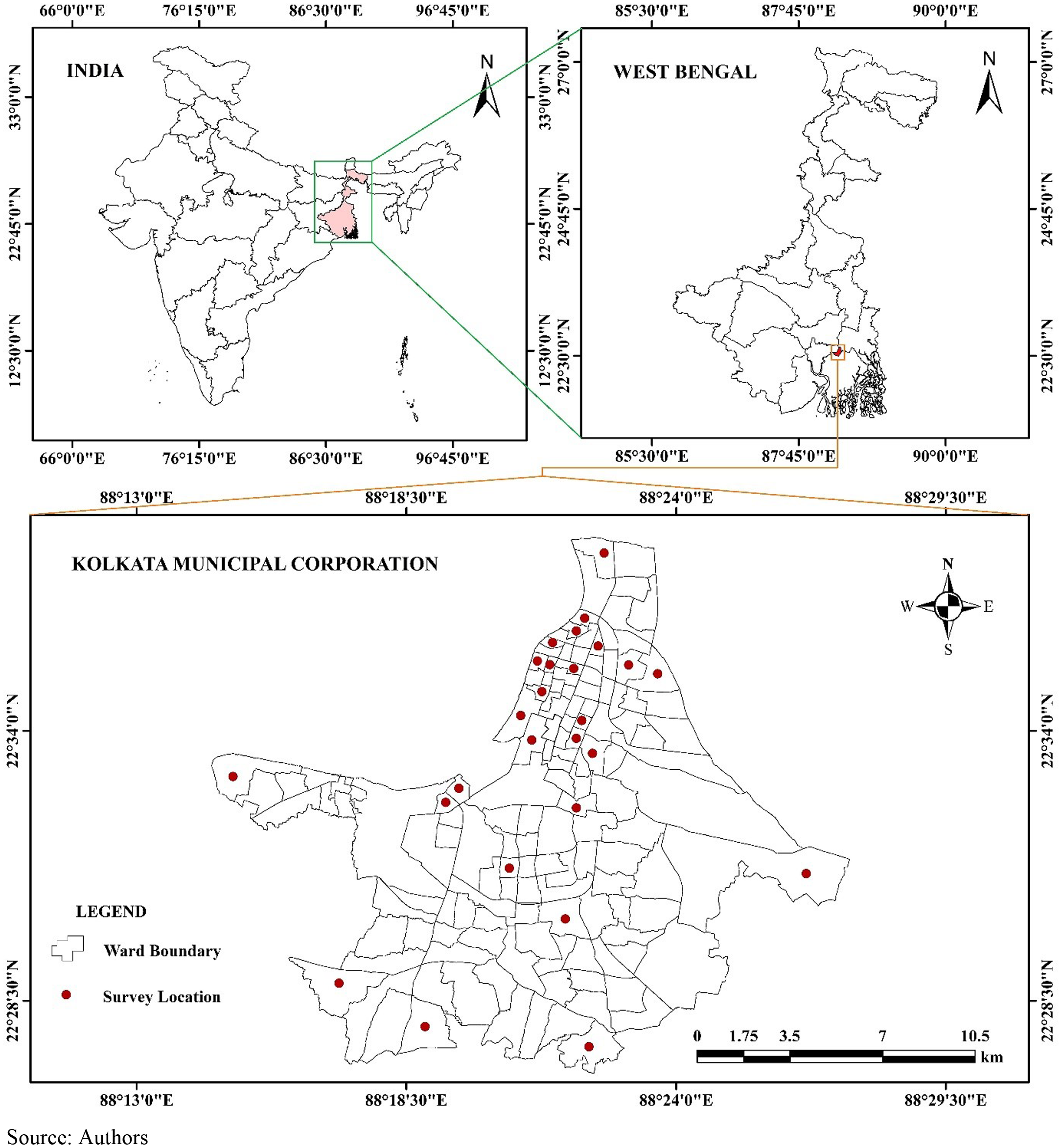
Kolkata, once known as Calcutta until 2003, held the prestigious title of India’s capital until 1911 during British Empire rule. Currently, Kolkata is the capital of the West Bengal state under the Indian Union and is one of the oldest port cities. Additionally, Kolkata is India’s third most populated urban agglomeration (Office of the Registrar General and Registrar General of India, 2011). Its geographical extension lies between 22° 24′39″ North to 22° 46′37″ N latitudes and 88° 11′19″ E to 88° 34′25″ E longitudes. The KMC within Kolkata district was selected as the study area. The KMC area is administratively divided into 144 wards and 16 boroughs, each with 7 to 12 wards (Figure 1). Delving into its demographic tapestry, the KMC recorded a population of 4,496,694 in the 2011 census, which has surged to an estimated 6,386,000 by 2024 (Office of the Registrar General and Registrar General of India, 2011). Notably, the 2011 census data revealed a poignant statistic – KMC harboured the largest number of homeless females among urban areas in India (Roy and Siddique, Reference Roy and Siddique2018a), shedding light on the pressing social issues within its urban landscape.
Geo-referenced location of the study area.

Research design
This study employed a cross-sectional exploratory design, utilising a mixed-method approach to gather quantitative (cross-sectional survey) and qualitative (in-depth interviews [IDIs]) data. The research was conducted in KMC between October 2022 and March 2023. The study assessed status of self-rated health (SRH), self-reported diseases, healthcare utilisation, and related factors among participants (homeless women) during their last antenatal period.
Study population
In the cross-sectional study, the study population under investigation was homeless women within the reproductive age group (15–49 years). Homeless women are defined as those who do not reside in census-defined houses but instead inhabit open spaces such as roadsides, pavements, hume pipes, religious sites, under flyovers and escalators, unstructured tents, etc. (Office of the Registrar General and Registrar General of India, 2011). A ‘census house’ denotes a structure or segment of a building identified as an independent unit by virtue of possessing its distinct main entrance from the street or shared courtyard or staircase and similar criteria (Office of the Registrar General and Registrar General of India, 2011). The inclusion criteria for the cross-sectional study participants were as follows: having experienced at least one birth history within three years prior to the survey, being married, proficient in Bengali or Hindi, and providing informed consent. These same criteria, in addition to poor SRH and an unmet need for healthcare services, were also applied in the IDIs. The study exclusively enrolled married women, as childbearing outside of marriage is socially unacceptable and often underreported in Indian society despite its legal status (Khanna, Reference Khanna1997).
Sampling
The sample size for the cross-sectional survey was determined to be 423 using the William Cochran method (Cochran, Reference Cochran1963). This estimation was based on the proportion of homeless childbearing women (50%) in Kolkata (Roy and Siddique, Reference Roy and Siddique2018b), with a 95% confidence interval, an absolute precision level of 0.05, and considering a non-response rate of 10%. Samples were collected from 26 homeless clusters (Figure 1) utilising the time and location sampling (TLS) technique and conducting face-to-face interviews. The TLS technique is particularly suited for sampling from mobile populations such as homeless individuals, migrants, informal workers, blood donors, nomads, and other mobile groups (Karon, Reference Karon2005). Data in this section were collected using a structured questionnaire covering various aspects of the study participants’ profiles, including socioeconomic status, reasons for homelessness, knowledge, attitudes, and practices related to sexual and reproductive health, self-reported health during the antenatal period, healthcare utilisation, delivery care, and postnatal care. Data entry was performed using CSPro 4.0 software, and analysis was conducted using Stata 14.1 software. The equation of the sample estimation (Cochran, Reference Cochran1963) is as follows:
 $${n = {{{{\rm{{\rm Z}}}^2}Pq} \over {{e^2}}} \ \ \ \ \ \ \ \ \ \ \ \ \ \ \ \ \ \ \ \ {\rm{(Cochran, 1963)}}}$$
Further, IDIs were conducted with respondents who experienced poor health and did not seek care from public or private healthcare facilities during their antenatal period, employing purposive sampling. A total of 52 IDIs were conducted in the 26 wards (two IDIs per ward), purposively selected (Figure 1), considering the saturation point of the qualitative information collection. In qualitative research, the term ‘saturation point’ signifies the stage at which researchers cease data collection because no additional or pertinent information is being revealed. At this juncture, data collection is complete, and adequate information is garnered to address the research questions and fulfil the study’s objectives (Flick, Reference Flick2018). Semi-structured interview manuals were utilised for the participants involved in the IDIs. To ensure consistency and accuracy, the interview guide was initially drafted in English, translated into Bengali and Hindi (the regional languages), and back-translated and reviewed by another individual. The interview guide comprised open-ended questions about attitudes and practices regarding healthcare-seeking behaviour. Probing inquiries was essential for eliciting comprehensive information about the aforementioned themes. Interviews were prearranged, and appropriate venues were chosen to ensure maximum privacy. Each interview was conducted in regional dialects, lasted 25 to 45 minutes per participant, and was recorded with the respondents’ consent. Following each interview, annotations were made, incorporating observations of participant behaviour and contextual factors to facilitate cross-verification of the data with the recordings.
Study variables
In the quantitative section, the key outcome variable was self-rated antenatal health. Participants were asked to rate their overall health during their last pregnancy using a Likert scale ranging from very poor to very good. The present study followed previous studies to develop valid self-reported health scaling and categories (Fajardo-Bullón et al., Reference Fajardo-Bullón, Esnaola, Anderson and Benjaminsen2019; Rahaman et al., Reference Rahaman, Roy, Chouhan, Kapasia and Muhammad2024b). In line with previous study (Fajardo-Bullón et al., Reference Fajardo-Bullón, Esnaola, Anderson and Benjaminsen2019), SRH is categorised into three categories – poor (very poor and poor), fair, and good (good and very good) – to present the result. Further, two follow-up questions, i.e., major self-reported diseases and diseases-specific healthcare utilisation, were asked of the respondents who reported fair, poor, and very poor SRH. Therefore, the study included major self-reported diseases and diseases-specific healthcare utilisation as secondary outcome variables. The major self-reported diseases included gestational diabetes (no, yes), hyperemesis gravidarum (no, yes), difficulty with vision during daylight (no, yes), swelling of legs, body, and face (no, yes), prolonged vaginal bleeding (no, yes), depression and anxiety (no, yes), and other issues (no, yes). All self-reported diseases were measured using ad-hoc instruments following the National Family and Health Survey (International Institute for Population Sciences [IIPS] and Inter City Fund, 2022). The healthcare utilisation was constructed based on the question- ‘which healthcare provider did you visit for such health problems?’ Response options were: did not visit any healthcare (categorised as unmet need); district hospital/sub-district hospital, primary health centre, community health centre, health post/sub-centres, and Government Ayurveda, Yoga and Naturopathy, Unani, Siddha and Homeopathy (AYUSH) hospital (categorised as public health service); private hospital, private clinic, private AYUSH hospital (categorised as private health service); and non-governmental organisation (NGO), trust and church-run hospital or pharmacy, mobile healthcare unit, untrained practitioners, and others (categorised as other health services). The categorisation of healthcare services followed the previous study (Rahaman et al., Reference Rahaman, Roy, Chouhan, Kapasia and Muhammad2024b).
Consistent with previous studies (Crawford et al., Reference Crawford, Trotter, Hartshorn and Whitbeck2011; Mill et al., Reference Mill, Singh and Taylor2012; Richards et al., Reference Richards, Merrill and Baksh2011; Stein et al., Reference Stein, Andersen and Gelberg2007), the present study incorporated a variety of explanatory variables, including respondent’s age (15–19, 20–24, 25–34, 35 and above), marital status (currently married and ever married), parity (2 and below, 3 and more), religion (Hindu, Muslim, and other), education level (no formal education, primary, secondary, and higher), household annual income (<₹12000, ₹12001–₹24000, >₹24000), occupation (not working, beggar, rag picker, maidservant, and other), nature of homelessness (chronic and temporary), living with family (no or yes), consuming tobacco (no, yes), drinking alcohol (no, yes), any chronic diseases (no, yes) (Rahaman et al., Reference Rahaman, Roy, Chouhan, Kapasia and Muhammad2024b), and number of antenatal care (ANC) contacts (0, 1–3, 4, & above). Chronic homelessness refers to individuals born, brought up, and currently living as homeless in the city, whereas temporary homelessness refers to individuals who have a home in their native place and are temporarily living as homeless in the city (Rahaman et al., Reference Rahaman, Das, Rana and Chatterjee2024a).
Statistical analysis
Descriptive statistics, bivariate analysis with Pearson chi-square significance test, and thematic analysis were employed to achieve the study objectives. Descriptive statistics were used to present the background characteristics of the study population and the distribution of self-reported health problems. Bivariate analysis was performed to present the levels of SRH with respect to the respondent’s background characteristics. The Pearson chi-square test was utilised to test the independence of the variables. The equation of the Pearson chi-square test is as follows:
 $$ = \sum {{{{(O - E)}^2}} \over E}$$
where x2 = chi-square test; ∑ = the sum of; O = observed frequency; and E = Expected frequency. Graphical presentation was applied to display the prevalence of self-reported health problems and health problem-specific healthcare choices during antenatal. Finally, thematic analysis was used to present the drivers of healthcare choice for antenatal health problems based on IDI narrations. The authors performed simultaneous data analysis alongside data collection. All qualitative interviews were audio-recorded, and the field notes were transcribed verbatim into the local languages of Bengali and Hindi. Subsequently, the transcribed documents were translated into English after carefully reviewing the audio and field notes. Each transcribed document was imported as a separate primary document into the Atlas.ti7 software, further coded and analysed in a new hermeneutical unit (Flick, Reference Flick2018). The raw data were systematically categorised and coded into themes and sub-themes after multi-round revision of transcribed documents. Central themes were constructed based on the natural meaning of categories and were made non-repetitive (Flick, Reference Flick2018). Finally, the themes that emerged after analysis were cross-checked. An inductive approach was used throughout the data analysis to identify the themes and sub-themes (Flick, Reference Flick2018). The analyses were performed using Stata 14.64-bit, Microsoft Office 2021, and ATLAS.ti software.
Ethical considerations
The institutional review board approved the study under the approval number IIPS/AC/MR/IO-889/2022. After several rounds of screening and modification of the questionnaire and research objectives, the IIPS, Mumbai provided an ethical certificate for the study’s conduction. The certificate is a testament to the careful consideration and diligence exercised by the researchers in ensuring that ethical standards were met throughout the study. To ensure the ethical conduct of the study, eligible individuals were provided with a participant information sheet and informed consent form in a language they could read. In cases where an individual was illiterate, the documents were read out to them in a language they were familiar with, in the presence of a witness. Participants were interviewed at a convenient time, and they were provided the flexibility to quit the interview at any point. To maintain anonymity, all participating homeless women were informed that their responses would be treated confidentially, and pseudonyms were used to protect their identity. The researchers took great care to ensure the participants felt comfortable and safe throughout the study.
Results
Background of the study participants
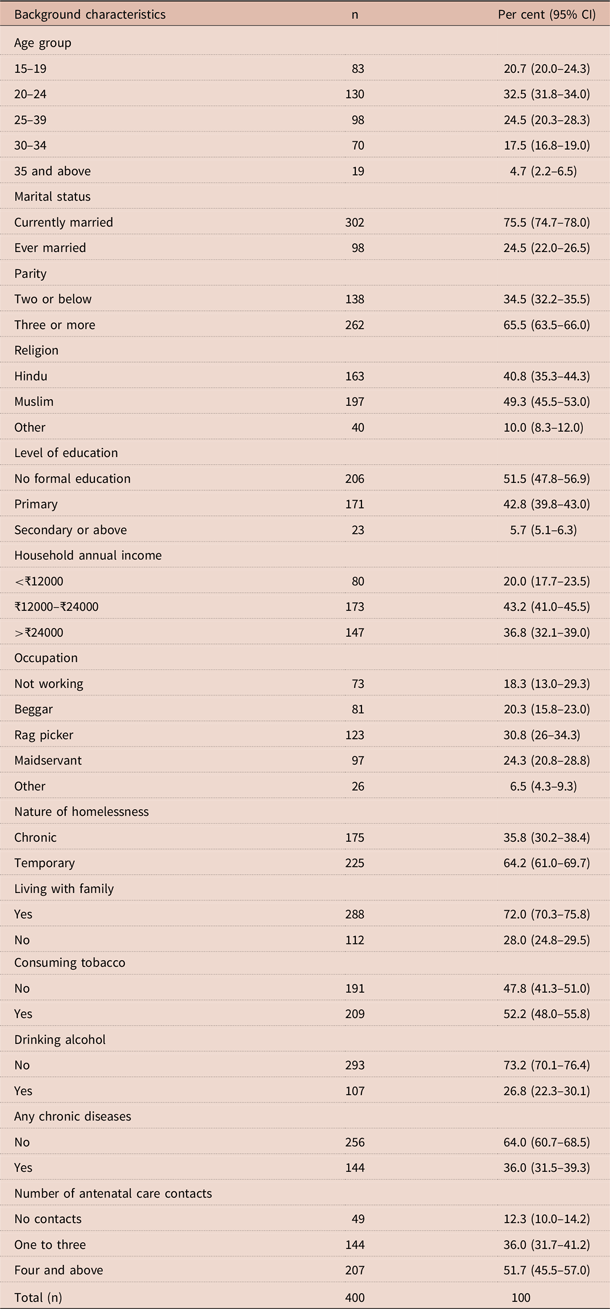
The study included 400 women aged 15–49 years after excluding non-response and partial responses for analysis (Table 1). Among the total study sample of 400 participants, about one-third were aged 20–24 years (32%), engaged in rag picking (31%), reported chronic homelessness (36%), and living alone (28%). The majority of respondents indicated a parity of three or more (65%). About 30% of respondents reported a last birth interval of less than 24 months. About half of the respondents were illiterate (51%), and Muslims (49%). One-fifth of the respondents reported that their average annual household income was less than ₹12,000. Most respondents (52%) reported consuming tobacco, while about 27% reported drinking alcohol. About 36% of the respondents reported having any chronic diseases. More than half of the respondents (52%) reported about four or more times ANC contacts.
Background characteristics of the study participants included in quantitative section, Kolkata Municipal Corporation, India, 2022–23

Note: CI denotes Confidence Interval
Prevalence of poor SRH
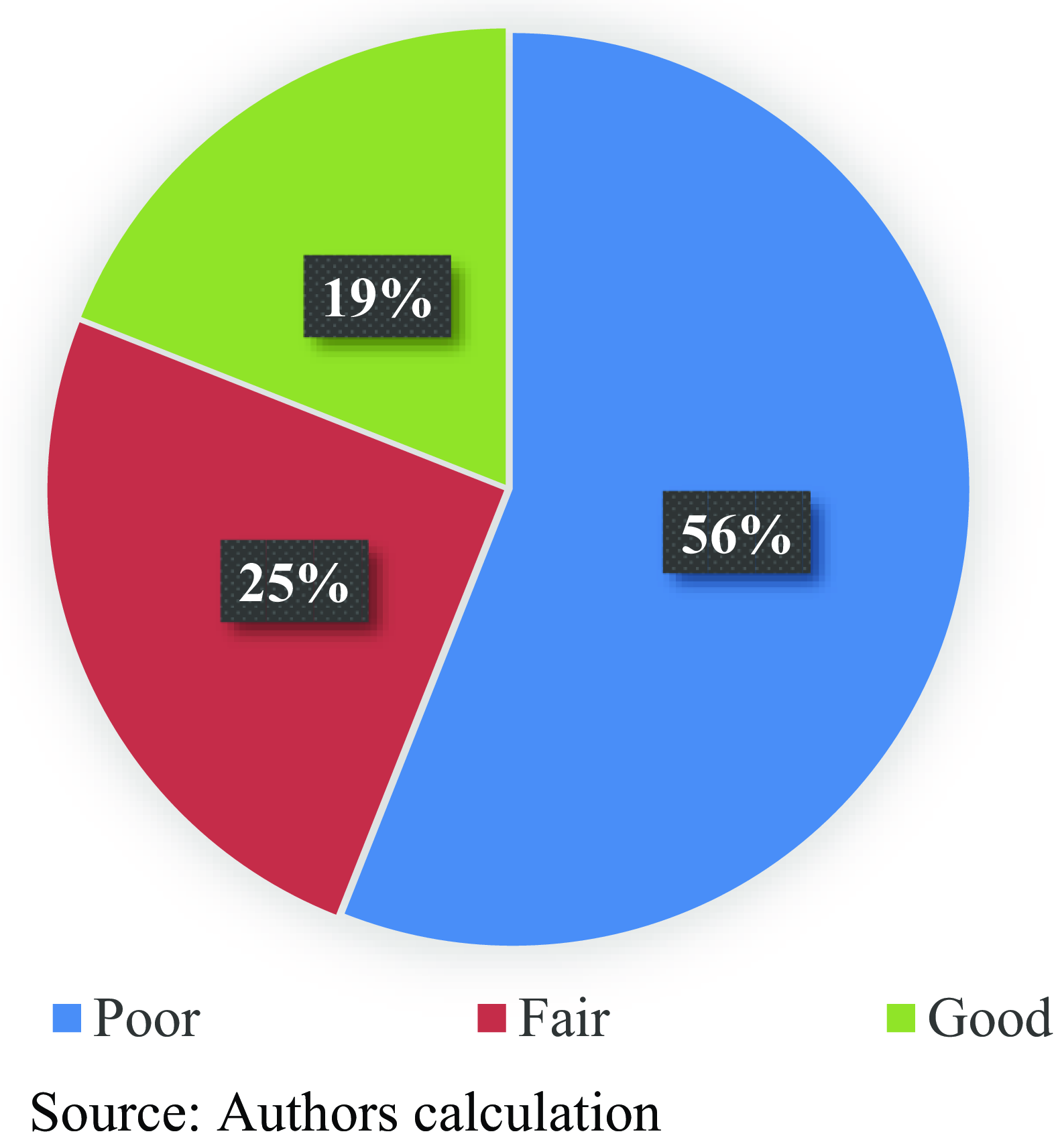
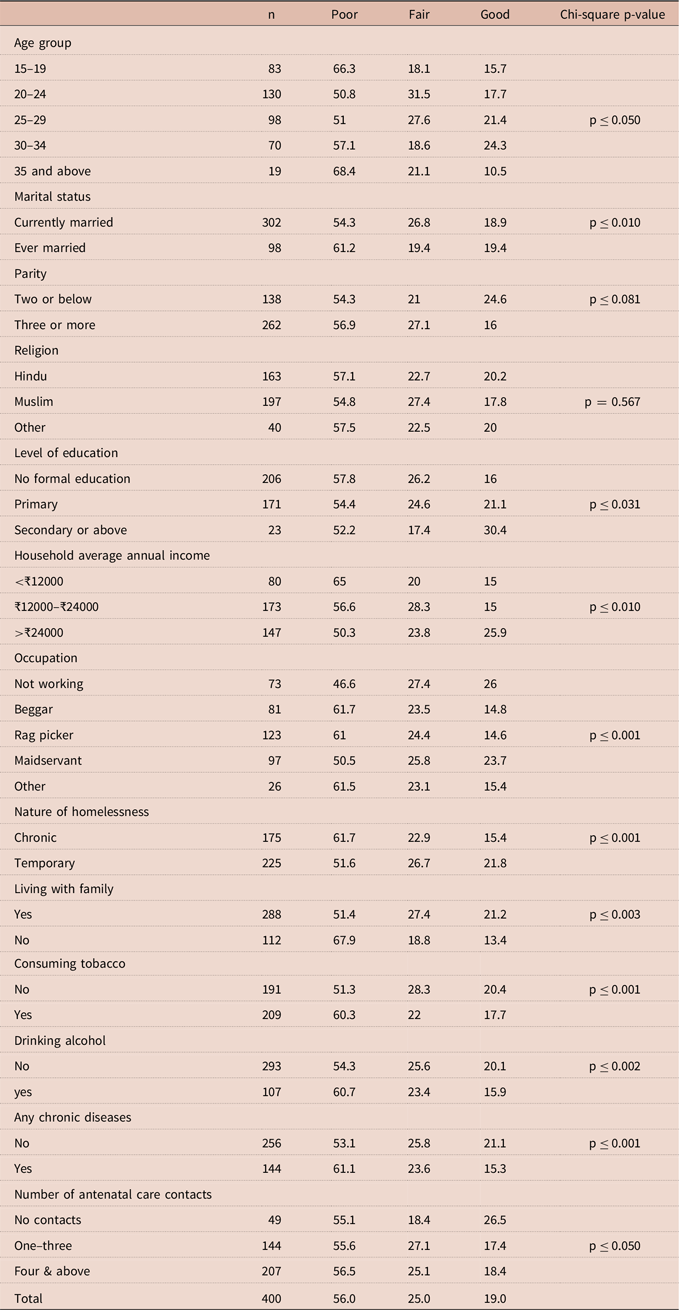
Out of the total study population, 56% rated their overall health status as poor (Figure 2). Bivariate analyses reveal significant variations in poor SRH based on respondents’ backgrounds (Table 2). For instance, poor SRH prevalence was higher among respondents aged 15–19 (63.3%) and 35 and above (68.4%) compared to other age groups. Ever-married women exhibited a higher prevalence (61.2%) than currently married women (54.3%), while the gap narrowed between those with no formal education (57.8%) and higher education (52.2%). Additionally, poor SRH decreased with increasing household annual average income, with a prevalence of 65% among households earning less than ₹12,000 annually, compared to 50.3% among those earning ₹24,000 and above. Occupational backgrounds also influenced SRH, with beggars (61.7%), rag pickers (61%), and others (61.5%) reporting higher rates than non-working individuals (46.6%) and maidservants (50.5%). The nature of homelessness, living arrangement, tobacco and alcohol consumption, and chronic diseases further varied status of SRH (Table 2). Chronic homelessness and living alone showed higher rates of poor SRH (61.1% and 67.9%, respectively) than their counterparts. Tobacco and alcohol consumers exhibited elevated rates of poor SRH (60.3% and 60.7%, respectively) compared to non-consumers. Similarly, respondents with chronic diseases reported slightly higher poor SRH (61.1%) than those without (53.1%). Except for religious and parity-wise variation in SRH, all bivariate associations were statistically significant (chi-square p-value ranges between p ≤ 0.050 to p ≤ 0.001).
Prevalence of poor self-reported status among the study participants, Kolkata Municipal Corporation, India, 2022–23.

Percentage distribution of self-rated health during antenatal period among the study participants by background characteristics, Kolkata Municipal Corporation, India, 2022–23

Major self-reported health problems
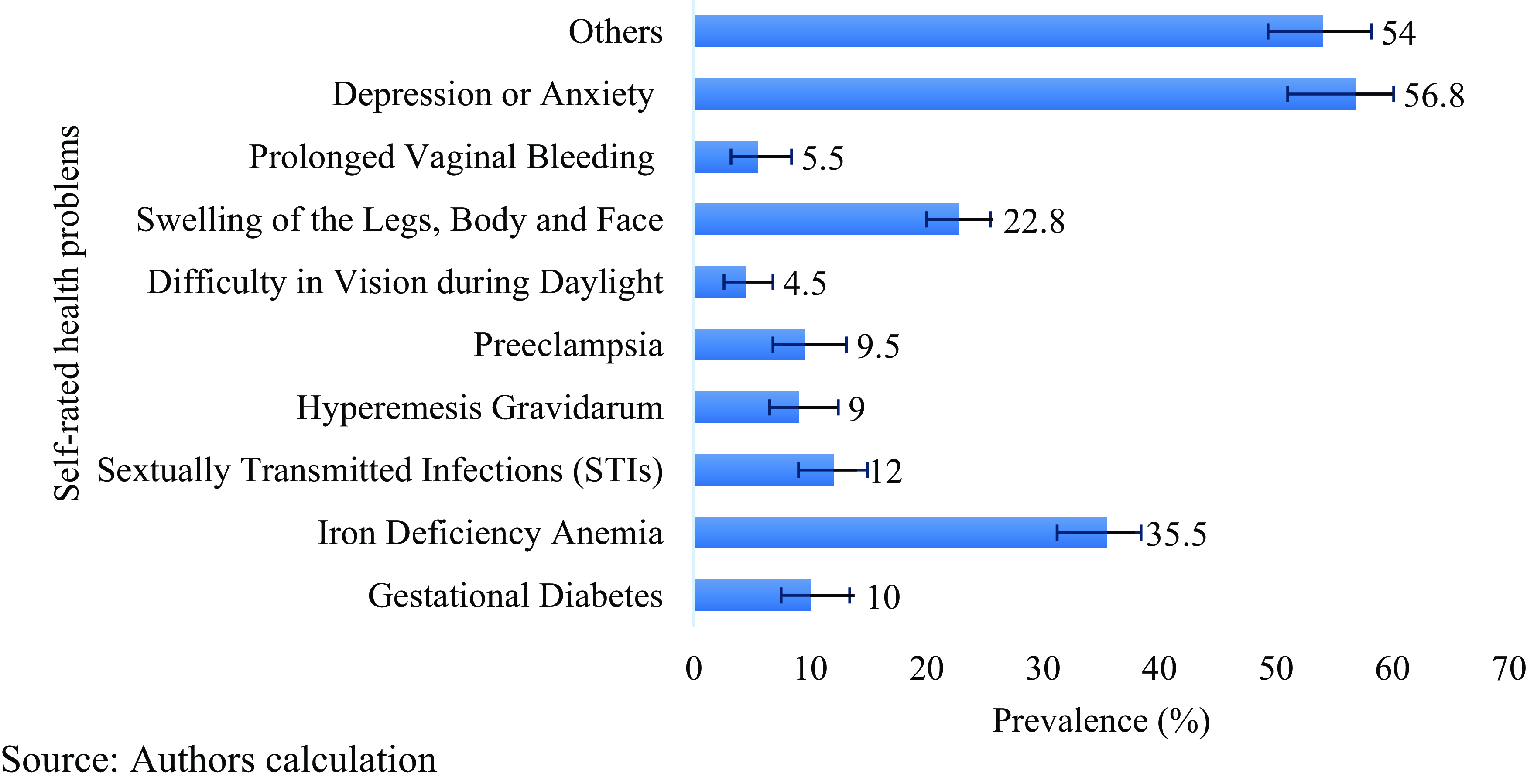
During the antenatal period, depression or anxiety (56.8%) found as the most prevalent health issue among the respondents, followed by iron deficiency anaemia (35.5%), swelling of the legs, body, or face (22.8%), and STIs (12%). Additionally, approximately one in ten respondents experienced hyperemesis gravidarum, gestational diabetes, and preeclampsia (Figure 3). However, a smaller proportion of respondents reported a history of prolonged vaginal bleeding (5.5%) and vision difficulties during daylight (4.5%).
Prevalence of self-reported health problems during the antenatal period among the study participants with poor or fair self-rated health (n = 324), Kolkata Municipal Corporation, India, 2022–23.

Patterns of disease-specific healthcare utilisation
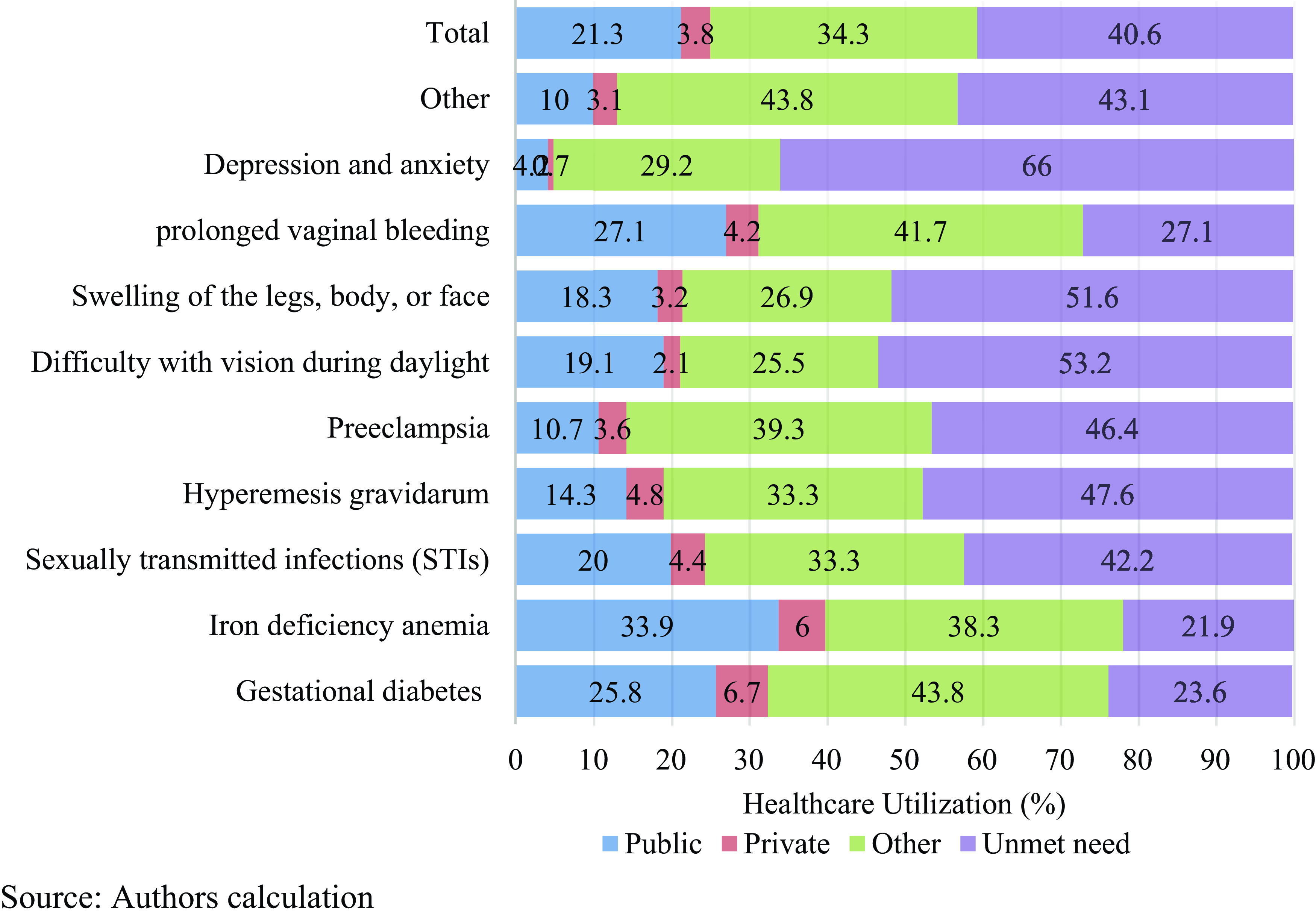
About 41% of individuals did not seek any healthcare services (unmet need for healthcare), which was notably higher among those who experienced depression and anxiety (66%), difficulty with vision during daylight (53.2%), and swelling of the leg, body, and face (51.6%). Apart from the unmet need for healthcare, the utilisation of other healthcare facilities was widespread (34.3%) compared to public (21.3%) and private (3.8%) healthcare services (Figure 4). Although public healthcare services were underutilised overall, visiting public healthcare services was noteworthy for specific health concerns like iron deficiency anaemia (33.9%), prolonged vaginal bleeding (27.1%), and gestational diabetes (25.8%).
Percentage distribution of self-reported disease-specific healthcare utilisation among the study participants with poor or fair self-rated health (n = 324), Kolkata Municipal Corporation, India, 2022–23.

Description of the study participants included in the qualitative section
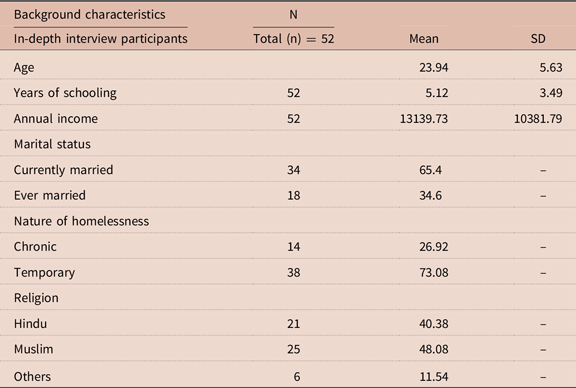
Out of the total 52 respondents included in the qualitative section of the study, most of them were currently married (65.4%), temporarily homeless (73.1%), and Muslim (48.1%). Additionally, the mean age and mean years of schooling of the respondents were 23.94 and 5.12, respectively (Table 3).
Description of the study participants included in qualitative section, Kolkata Municipal Corporation, India, 2022–23

Key factors of unmet need for healthcare and preference for substandard healthcare services
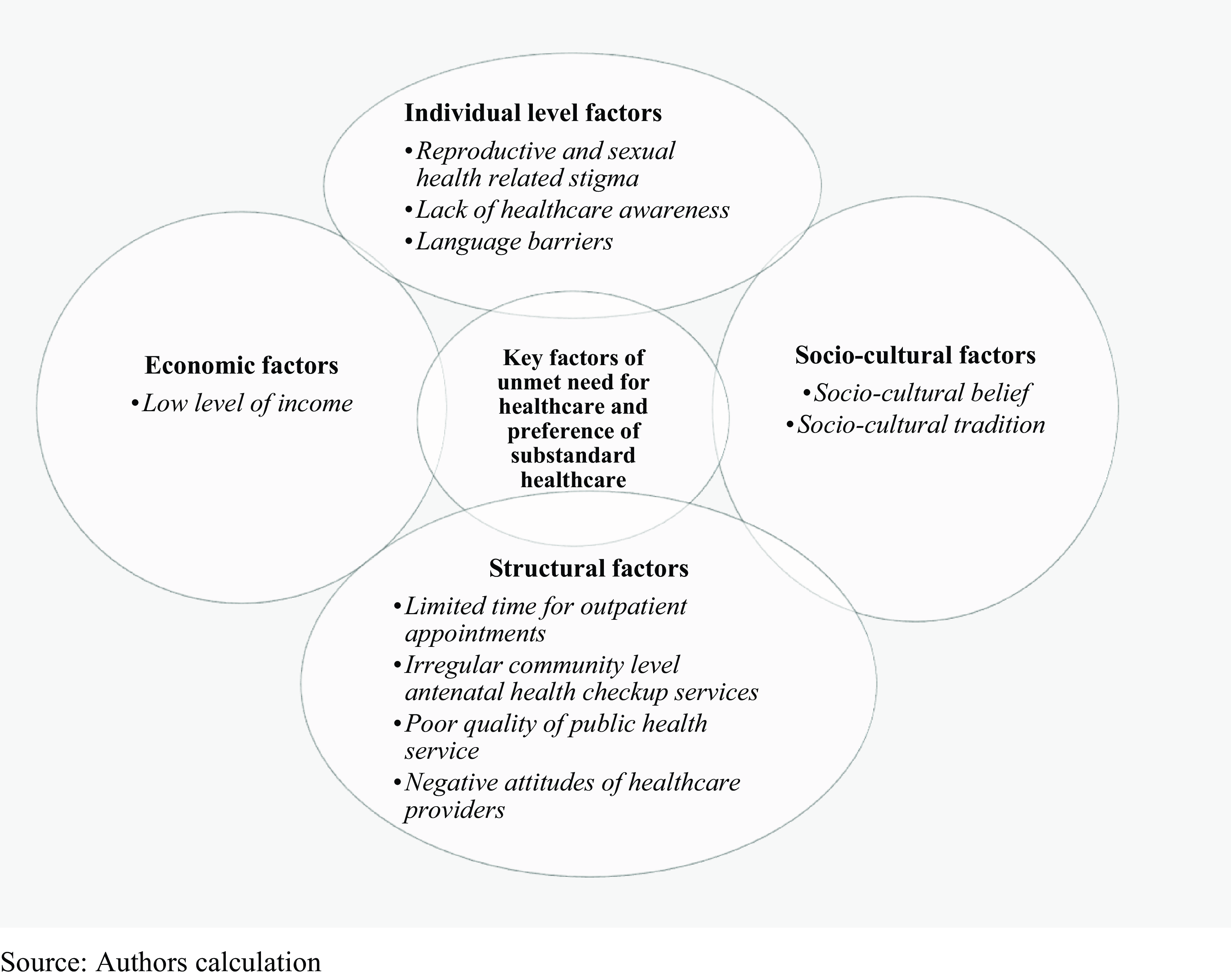
The high prevalence of unmet healthcare needs and the preference for substandard healthcare among the study population (Figure 4) are attributed to a complex interplay of various factors, notably stigma, competition for earnings, time constraints, economic constraints, quality of care, and lack of interest in healthcare (Figure 5). These factors are organised into major themes, including socio-cultural, economic, individual, and structural factors (Figure 5).
Key factors of unmet need for healthcare and preference of substandard healthcare services among the study participants (n = 52), Kolkata Municipal Corporation, India, 2022–23.

Socio-cultural factors
Socio-cultural belief
The majority of interviewees expressed that their healthcare decisions are primarily influenced by socio-cultural beliefs. In particular, most respondents noted that their community typically views antenatal health issues as general health concerns, often not warranting healthcare seeking unless deemed serious. Many hold the belief that pregnancy is a divine gift and consider certain health issues during pregnancy and the childbearing period as common occurrences, therefore opting to adjust rather than seek medical attention. Moreover, there was a prevailing sentiment among participants that frequent healthcare visits and medication intake could pose risks, including pregnancy loss. As an illustration, a 26-year-old mother recounted her experience of encountering blurred vision and swollen legs during her pregnancy, reflecting on her beliefs and decision-making process. An interviewee expressed that-
‘I’ve experienced blurred vision and swollen legs during each antenatal period. When it first happened, I was scared. However, my household members and others in the community assured me it would naturally resolve after childbirth, with God’s blessing. As they said, after a few months of delivery, the symptoms vanished without medication…. I tend to avoid healthcare visits. If it’s not in God’s will to resolve our health issues, no treatment can cure us’. – Ayesha (name changed), In-depth interviewee, 26 years old.
Socio-cultural tradition
Most respondents expressed a preference for seeking ANC from unskilled herbalists and traditional healers within their community due to intergenerational tradition. In instances where treatment from community healers proves ineffective, they often turn to quack doctors or directly purchase medication from pharmacies or other medicine shops. Many participants highlighted a perceived link between black magic and antenatal health complications, particularly concerning psychosomatic health issues during this period. It was commonly noted that individuals typically seek treatment for antenatal depression from black magic practitioners instead of opting for modern healthcare services. For instance, an interviewee reported that-
‘I was truly distressed and anxious during my last antenatal period because all my previous pregnancies ended in stillborn babies. Following my grandmother’s advice, I sought blessings from a Tantik, who provided me with a special amulet to shield me from evil spirits….I felt immensely better - joyful and relieved’. – Shrabani (name changed), In-depth interviewee, 31 years old.
Individual level factors
Reproductive and sexual health-related stigma
Several respondents expressed discomfort when discussing reproductive and sexual health matters, particularly with male or unfamiliar healthcare providers. This stigma surrounding such issues led to a significant number of individuals avoiding seeking treatment from both public and private healthcare facilities in person. Instead, they commonly turned to pharmacies, often relying on their male partners to procure medication, or sought help from community-level traditional practitioners. Additionally, some participants opted for home remedies as a means of addressing their sexual health concerns. One poignant example of this phenomenon was provided by a 35-year-old interviewee, who shared that-
‘Experiencing white vaginal discharge and weakness during my pregnancy was concerning, but the idea of discussing these personal issues with male doctors felt daunting. Instead, I turned to our trusted female Kabiraz (traditional healer), for guidance. She recommended a month-long regimen of Guduchi plant roots mixed with water. Regrettably, I later suffered a miscarriage!’ – Payel (name changed), In-depth interviewee, 35 years old.
Lack of healthcare awareness
Many respondents acknowledged a lack of familiarity with the availability, accessibility, and affordability of healthcare services tailored to address specific health concerns. Additionally, they revealed a limited understanding of government and charitable health initiatives that could offer support. This lack of information frequently contributes to hesitancy in seeking healthcare assistance. Some individuals even admitted to uncertainty about determining when it is appropriate to seek medical attention, leading to delays or unaddressed healthcare needs. Consequently, due to this insufficient awareness about health resources and services, many individuals struggle to prioritise their health needs, resulting in delayed or neglected care.
Language barriers
A small proportion of respondents, particularly those belonging to tribal communities, expressed that they often refrain from seeking treatment at public health facilities due to language barriers. They explained that although they can understand and speak Bengali, the primary language in Kolkata, expressing complex health issues in Bengali poses difficulties, particularly when discussing sensitive topics like sexual and reproductive health. Consequently, they often feel more comfortable seeking assistance from traditional healers within their own community, where language barriers are less of a concern.
Economic factors
Low level of income
Most of the respondents expressed that the cost of treatment is substantially higher than their earnings, and they cannot afford private healthcare fees. In addition, even when they visit public healthcare, the cost of medicine and various medical tests are costly, leading to high out-of-pocket medical expenses. Consequently, they usually avoid treatment for minor health problems and only need healthcare when the illness becomes severe.
‘I rely on rag picking for my livelihood, but it’s a tough field with a lot of competition. I work long hours every day, sorting and selling the rags, but at the end of the day, I only earn 300 rupees. This isn’t enough for me to afford healthcare, medical tests, or expensive medicines. I can only hope that I don’t get seriously ill and rely on God’s protection’. – Pinky (name changed), In-depth interviewee, 29 years old.
Many of the temporarily homeless migrants shared a common struggle: their earnings are meagre, and after sending remittances, there’s little left to maintain a better livelihood and healthcare. One participant, a migrant labourer, articulated this challenge poignantly:
‘I’m in a constant battle to secure a brighter future and lift us out of homelessness. I hold onto the hope for a better lifet, and therefore, I try to send remittances to my native place for the improvement of our houses and the economic betterment of my left-behind family by adjusting healthcare and living costs’. – Rubi (name changed), In-depth interviewee, 22 years old.
Structural factors
Limited time for outpatient appointments
Most of the participants revealed that their days are consumed by daily earning tasks such as collecting trash, doing laundry, and earning a living through begging. Consequently, they find themselves with little to no spare time to seek treatment from public healthcare systems. Moreover, some participants pointed out that rigid outpatient visiting hours, along with overcrowding and extensive wait times, pose significant barriers to accessing care at public health facilities. During an IDI, one participant shared the predicament:
‘I have four children, and their daily sustenance depends on my begging. With such responsibilities, I have no time to visit public health facilities because it takes a long waiting time’. – Joya (name changed), In-depth interviewee, 28 years old.
Similarly, another participant, a migrant labourer, echoed these sentiments:
‘The public antenatal hours clash with our working hours, which makes it impossible for us to visit these facilities’. – Ruma (name changed), In-depth interview, 22 years old.
Irregular community-level antenatal health check-up services
The majority of respondents voiced a common concern: while charity-run medical check-up camps do offer ANC, their irregular nature poses a significant hurdle in receiving routine check-ups. Additionally, they noted that government-run health check-up camps for their community are also infrequent. This irregularity in community-level health services for the homeless translates to low levels of modern healthcare utilisation, resulting in delayed care and a high unmet need for health check-ups.
Poor quality of public health service structure
Many respondents reported that inadequate healthcare infrastructure discourages them from utilising healthcare services. They highlighted issues such as shortages of general physicians, obstetricians, gynaecologists, poor quality laboratory services, and a scarcity of labour rooms. Additionally, the poor quality of subsidised medicines was also another concern. Some respondents further stated that local brokers in hospitals demand money for arranging hospital seats and doctor appointments. One respondent shared a story about the infrastructure of a primary hospital, which is outlined below:
‘I had severe antenatal health issues, but the doctors at the primary hospital were unable to provide me with the necessary treatment. The doctor referred me to a district medical hospital, which was far from our homeless cluster. I was worried and anxious about the referral because I had heard stories about the difficulties in getting healthcare at the district hospital!’ – Suktara (name changed), In-depth interviewee, 20 years old.
Negative attitudes of healthcare providers
Several interviewees shared narratives depicting encounters with negative attitudes from healthcare providers and receiving inadequate counselling during their healthcare visits. Instances were reported where individuals were subjected to disdain by healthcare personnel due to their unkempt appearance. These distressing experiences were highlighted as significant deterrents for some individuals in seeking further healthcare assistance. For example, a 25-year-old mother employed as an informal waste-collecting worker recounted her experience:
‘Once morning, while collecting waste near the district hospital, I was struck by severe lower back pain. Seeking relief, I decided to visit the outpatient department. However, upon arrival, I was met with disdainful glances from the attending nurse, who made disparaging remarks about my dirty clothing’. – Fulia (name changed), In-depth interviewee, 29 years old.
Discussion
This cross-sectional exploratory study significantly contributes to the existing literature on the antenatal health of homeless women in urban Indian settings. Firstly, it addresses a crucial yet underexplored aspect by providing insights into the antenatal health status of this vulnerable population in India. Secondly, while a substantial number of studies have examined the reproductive health of homeless populations in developed nations (Crawford et al., Reference Crawford, Trotter, Hartshorn and Whitbeck2011; Mill et al., Reference Mill, Singh and Taylor2012; Richards et al., Reference Richards, Merrill and Baksh2011), the socio-cultural, demographic, and behavioural backgrounds of homeless women in India differ significantly. Therefore, extrapolating findings from research conducted in developed countries may not be suitable for understanding the antenatal health and healthcare-seeking behaviours among homeless women in Indian settings. This underscores the importance of our study in providing context-specific insights into this critical issue. Moreover, by exploring the factors contributing to the unmet need for ANC and the utilisation of substandard healthcare facilities among homeless women, our research aims to fill an important gap in understanding the complexities of their healthcare experiences. By elucidating the health status and healthcare challenges faced by homeless women during the antenatal period, the study’s findings have important implications for designing targeted interventions and improving access to quality ANC services for this vulnerable population.
The current study’s findings highlight a high prevalence of poor SRH among the study population. Previous studies in India and elsewhere have also emphasised that the physical and mental health of homeless women is significantly poorer compared to both male homeless individuals and housed women (Negi, Reference Negi2023; Phipps et al., Reference Phipps, Dalton, Maxwell and Cleary2019). The risk of poor SRH among homeless women may be attributed to factors such as poor living conditions, poverty, multiple disease conditions, risky reproductive behaviour, substance abuse, susceptibility to various forms of violence, and inadequate access to healthcare (Phipps et al., Reference Phipps, Dalton, Maxwell and Cleary2019). Similarly, inadequate sleep has been linked to worsened physical and mental health among individuals experiencing homelessness (Huynh et al., Reference Huynh, Kendzor, Ra, Frank-Pearce, Alexander, Businelle and Samson2023). Therefore, the present study recommends the provision of safe and permanent support shelter services for homeless women to promote their overall well-being. Additionally, the study identifies significant variations in SRH based on demographic characteristics. Notably, poor SRH is more prevalent among teenagers and older reproductive-aged individuals. Consistent with these findings, existing literature highlights the heightened vulnerability of teenage homeless girls to poor health outcomes due to factors such as unsafe sexual practices and violence exposure (Moorkath et al., Reference Moorkath, Vranda and Naveenkumar2018). Early-age childbearing among homeless individuals also contributes to higher rates of antenatal complications and reproductive health vulnerabilities among teenagers (Begun, Reference Begun2015). Conversely, the increased risk of multimorbidities or childbirth complications in older reproductive-aged homeless women may further exacerbate poor SRH in this subgroup. Consistent with previous research (Saha et al., Reference Saha, Rahaman, Mandal, Biswas and Govil2022), the current study also found a significant association between marital status and SRH, with ever-married women reporting higher levels of poor SRH compared to their currently married counterparts. Previous studies have consistently shown that individuals who are currently married tend to report better SRH compared to those who have never been married (Saha et al., Reference Saha, Rahaman, Mandal, Biswas and Govil2022), as well as those who have been previously married (Saha et al., Reference Saha, Rahaman, Mandal, Biswas and Govil2022). Two common processes used to explain these health differences based on marital status are selection and social causation (Joung et al., Reference Joung, Van De Mheen, Stronks, Van Poppel and Mackenbach1998). The selection hypothesis suggests that individuals’ health status influences their likelihood of getting married or divorced, while research on social causation indicates that the health-promoting effect of marriage is partly attributable to psychosocial and cultural factors such as social trust and support (Lindström et al., Reference Lindström, Rosvall and Lindström2017). While the selection hypothesis focuses on temporal factors, the social causation hypothesis highlights the role of mediators, such as social trust, in the relationship between marital status and SRH. Therefore, understanding the complex linkage between marital status and SRH requires further systematic analysis of the study population. Similar to marital status, a notable variation in SRH based on economic status was observed in the current study. Consistent with previous research (Saha et al., Reference Saha, Rahaman, Mandal, Biswas and Govil2022), individuals with low-level incomes exhibited elevated levels of poor SRH. Homeless individuals with low income often engage in activities like begging and precarious work, exposing them to increased health hazards and various forms of violence, which may contribute to poorer SRH. Consistent with previous studies (Sun et al., Reference Sun, Irestig, Burström, Beijer and Burström2012), the current research identifies a significant variation in SRH among homeless women based on the nature of homelessness. Specifically, respondents who were intergenerational homeless or living alone reported higher rates of poor SRH compared to their counterparts. Existing literature supports these findings, indicating higher physical and mental health problems among chronically homeless women and those living alone (Teruya et al., Reference Teruya, Longshore, Andersen, Arangua, Nyamathi, Leake and Gelberg2010). These individuals may face prolonged exposure to sexual exploitation and environmental hazards, contributing to their overall diminished well-being. Although variations in SRH are evident based on living arrangements, such as living alone or with family, the homeless experience is universally perilous for women of all ages. Aligning with previous literature, the current study reveals an elevated prevalence of poor SRH among homeless women who consume tobacco and alcohol. Furthermore, chronic morbidities are found to be linked with poor SRH among homeless women. Previous research suggests that chronic illnesses and substance abuse contribute to decreased physical and mental well-being, exacerbating the reporting of poor health ratings (Phipps et al., Reference Phipps, Dalton, Maxwell and Cleary2019). Given the high prevalence of poor SRH among homeless women due to multifaceted challenges, there is a pressing need to promote health and well-being by providing a health-supportive environment and promoting healthy lifestyles.
Consistent with previous studies (Azarmehr et al., Reference Azarmehr, Lowry, Sherman, Smith and Zuñiga2018; Bassuk and Beardslee, Reference Bassuk and Beardslee2014; Chauhan et al., Reference Chauhan, Chokhandre, Kulaste and Sivanandan2023), the current research identifies depression or anxiety, iron deficiency anaemia, swelling of the legs, body, or face, and STIs as common health issues among homeless women during the antenatal period. To address the challenge of the high prevalence of anaemia, the Ministry of Health and Family Welfare (MoHFW) launched the Weekly Iron and Folic Acid Supplementation Programme aimed at adolescent girls and boys. Additionally, in 2018, the MoHFW introduced the Anaemia Mukt Bharat strategy to reduce anaemia prevalence in women, children, and adolescents through a life cycle approach (Chauhan et al., Reference Chauhan, Chokhandre, Kulaste and Sivanandan2023). However, despite these efforts, the persistently high prevalence of anaemia among homeless women raises concerns regarding programme undercoverage, particularly for underprivileged sections such as homeless women. Similarly, the high prevalence of STIs among homeless women underscores the need for policy revision of existing Indian STI control programmes like the National AIDS and STD Control Programme, with a special focus on vulnerable groups like the homeless and migrant populations. The current study also found that although antenatal health problems are high among homeless women, the level of unmet need for healthcare visits is also high among them. Additionally, those who visit healthcare facilities mostly prefer substandard healthcare facilities. Despite MoHFW implementing several programmes for safe motherhood, the underutilisation of public health facilities among homeless women raises questions about service coverage. A similar pattern of unmet need for healthcare has been observed among slum dwellers and displaced populations (Brott and Townley, Reference Brott and Townley2022; Coleman et al., Reference Coleman, Levy-Philipp, Balt, Zuiderent-Jerak, Mander, Bunders and Syurina2022; Ghosh-Jerath et al., Reference Ghosh-Jerath, Devasenapathy, Singh, Shankar and Zodpey2015). In line with the previous study (Gelberg et al., Reference Gelberg, Lu, Leake, Andersen, Morgenstern and Nyamathi2008; Paisi et al., Reference Paisi, March-McDonald, Burns, Snelgrove-Clarke, Withers and Shawe2021), the present study observed that socio-cultural beliefs and traditions, reproductive health-related stigma, economic deprivation, lack of time to visit long-waited ANC public services, and poor quality of public health services are factors of healthcare underutilisation. Kaur (Reference Kaur2012) also provides a concise overview of India’s obligations in maternal health, both nationally and internationally. Through the lens of the Shanti Devi case, the author sheds light on governmental failures in upholding the fundamental rights to life and health, particularly for migrant and homeless women. The narrative underscores the underutilisation of modern maternal healthcare services among these marginalised communities, largely due to their insufficient awareness of reproductive rights and entitlements, coupled with deficient government outreach efforts and accountability mechanisms within health programmes. Therefore, the present study suggests the need for reproductive and sexual health policy revision by providing mobile and homeless cluster-based healthcare services to promote modern healthcare access among homeless mothers.
Limitations and strengths of the study
The study has several limitations, as follows: First, the primary and secondary outcome variables included in the quantitative section, i.e., self-rated antenatal health, self-reported health diseases, and healthcare utilisation, are measured based on the latest antenatal period during the last three years prior to the survey, which may be subject to recall bias and affect the reliability of results. Secondly, the results are based on self-reported responses, which could be affected by the reporting (under or over-reporting) based on the socio-economic background of the population, site, and situation during the interview. Third, due to the cross-sectional design, the study is limited to describing the causal relationship between the outcome variable and associated factors. Fourth, the study used a five-point SRH scale but converted it to three sub-categories (poor, fair, and good) due to the insubstantial distribution of sample size in each point, limiting more reliable estimation with the ordered logit regression model. Further, sensitivity analyses are also needed to explore the reliability of the findings. Finally, the result is restricted to only the selected study population and cannot be generalised. Therefore, the present study recommends a further longitudinal survey to capture reliable figures on maternal health among homeless women.
Although the present study has certain drawbacks, it also possesses several strengths. This is the first updated study in the Indian context that contextualises homelessness and antenatal health. Therefore, the study findings will be helpful for researchers in understanding the maternal health issues among homeless women and formulating more systematic future studies. In addition, the study contributes to our understanding of the factors associated with healthcare choices among homeless women.
Conclusion
In conclusion, the study underscores the vulnerability of homeless women residing in urban areas, who face destitution and a myriad of health challenges, including prevalent poor health and multiple antenatal complications. Despite the availability of public and substandard healthcare facilities, a significant proportion of homeless women refrain from seeking healthcare services for their antenatal health issues. Socio-cultural beliefs and traditions, lack of awareness about reproductive health, poverty, irregular charity-run health services, poor quality of public healthcare facilities, and negative experiences are identified as key factors contributing to this unmet need for healthcare utilisation. To address these issues, concerted efforts from public institutions and NGOs are imperative. Initiating reproductive health programmes tailored to the needs of homeless women is crucial. Healthcare providers must receive adequate training and resources to effectively cater to this vulnerable population. Implementing mobile healthcare services within homeless clusters can alleviate time and economic constraints, ensuring better access to healthcare. Moreover, healthcare providers need to demonstrate cultural sensitivity and awareness of diverse beliefs and practices prevalent among homeless women. By addressing these multifaceted challenges, stakeholders can work towards improving the overall health and well-being of homeless women in urban areas.
Acknowledgements
The authors are grateful to the editor and anonymous reviewers for their valuable suggestions and evaluations. The authors are also thankful to Rumanara Khatun for her editing support.
Author contributions
MR conceptualised and designed the study and wrote the manuscript. MR conducted the statistical analysis. MR assisted with writing/editing. MR and KCD revised and prepared the final draft of the manuscript. All authors read and approved the final manuscript.
Funding statement
This research received no specific grant from any funding agency, commercial entity, or not-for-profit organisation.
Competing interests
The authors have no conflict of interest to declare.
Ethical standard
The authors assert that all procedures contributing to this work comply with the ethical standards of the relevant national and institutional committees on human experimentation and with the Helsinki Declaration of 1975, as revised in 2008.