Introduction
Currently, UK female personnel serve in all combat roles in the Navy and Royal Air Force (RAF) but not in the Royal Marines or Army. They are not permitted to serve in the Royal Marines General Service (as Royal Marine Commandos), the Household Cavalry and Royal Armoured Corps, the Infantry or the RAF Regiment (except in administrative or support roles) (www.mod.uk). This difference in role has potential implications for examining gender differences in exposure to combat-related events. However, because of the expansion of military roles and, in particular, the nature of recent and current campaigns characterized by unconventional, ‘360 degree’ warfare, personnel in combat support and combat services support roles (including women) are increasingly exposed to combat (Scott et al. Reference Scott, McCone, Jackson, Sayegh and Don Looney2011). Thus, in their combat and combat support roles, such as mechanics, pilots, military police, drivers and medics, women have been exposed to a significant amount of combat-related stressors while carrying out front-line duties (Bell et al. Reference Bell, Roth and Weed1998; Hoge et al. Reference Hoge, Clark and Castro2007; Rona et al. Reference Rona, Fear, Hull and Wessely2007; Street et al. Reference Street, Vogt and Dutra2009). During the current and recent wars in Afghanistan and Iraq, eight women have regrettably lost their lives to date.
Evidence for gender differences in psychological distress associated with deployment is mixed (Wolfe et al. Reference Wolfe, Brown and Kelley1993; King et al. Reference King, King, Gudanowski and Vreven1995; Unwin et al. Reference Unwin, Hotopf, Hull, Ismail, David and Wessely2002; Adler et al. Reference Adler, Huffman, Bliese and Castro2005; Vogt et al. Reference Vogt, Pless, King and King2005); however, most studies refer to earlier conflicts in Vietnam and the Gulf or to peacekeeping missions. Research that examines the impact of more recent operations in Iraq and Afghanistan on women is growing, as interest in this increasingly active military subpopulation increases (Street et al. Reference Street, Vogt and Dutra2009). These studies generally report gender differences in post-deployment mental health that reflect differences commonly found in the general population. In particular, alcohol misuse is more prevalent among men and common mental disorders (CMD), such as depression and anxiety, are more common among women (Kessler et al. Reference Kessler, McGonagle, Zhao, Nelson, Hughes, Eshleman, Wittchen and Kendler1994; Rona et al. Reference Rona, Fear, Hull and Wessely2007; McManus et al. Reference McManus, Meltzer, Brugha, Bebbington and Jenkins2009; Luxton et al. Reference Luxton, Skopp and Maguen2010). Findings in relation to post-traumatic stress disorder (PTSD) have been mixed; whereas some studies report men to be at greater risk of post-deployment PTSD, others report little or no differences by gender (Rona et al. Reference Rona, Fear, Hull and Wessely2007; Fontana et al. Reference Fontana, Rosenheck and Desai2010; Haskell et al. Reference Haskell, Gordon, Mattocks, Duggal, Erdos, Justice and Brandt2010; Luxton et al. Reference Luxton, Skopp and Maguen2010; Maguen et al. Reference Maguen, Ren, Bosch, Marmar and Seal2010). The findings from these studies have been difficult to interpret because of various methodological limitations. These include the use of selective or treatment-seeking samples, small numbers of women in samples and lack of adequate inclusion of potential confounders.
There are several gaps in the literature examining gender differences in post-deployment mental health. In particular, although some studies have controlled for self-reported combat exposure and/or have acknowledged that the exposures they experience may differ, none have yet examined how men and women differ in the specific types of combat exposure they have experienced or whether different types of exposure are differentially associated with mental health problems in men and women (Zinzow et al. Reference Zinzow, Grubaugh, Monnier, Suffoletta-Maierle and Frueh2007; Street et al. Reference Street, Vogt and Dutra2009).
This study used data from a representative sample of UK Armed Forces personnel and had three main aims: (1) to assess gender differences in self-reported exposure to combat events and in post-deployment symptoms of PTSD, symptoms of CMD and hazardous alcohol use; (2) to examine whether gender moderates the association between degree of combat exposure and mental health; and (3) to determine whether measures of combat exposure are differentially associated with mental health outcomes among men and women.
Method
Data came from the second phase of a cohort study examining the mental health of a representative sample of UK Armed Forces personnel. Data collection procedures and participant details have been published previously (Hotopf et al. Reference Hotopf, Hull, Fear, Browne, Horn, Iversen, Jones, Murphy, Bland, Earnshaw, Greenberg, Hacker Hughes, Tate, Dandeker, Rona and Wessely2006; Fear et al. Reference Fear, Jones, Murphy, Hull, Iversen, Coker, Machell, Sundin, Woodhead, Jones, Greenberg, Landau, Dandeker, Rona, Hotopf and Wessely2010). Op TELIC is the UK operational name given to the Iraq war and Op HERRICK is the operational name given to the current campaign in Afghanistan. In short, phase 1 of the cohort study included full-time serving, ex-service and reserve personnel deployed to the first phase (the war-fighting period) of the Iraq war between January and April 2003 (TELIC 1 sample, n=4722) and those serving but not deployed during that time (ERA sample, n=5550). Reservists were oversampled with a 2:1 ratio. A response rate of 59% was achieved.
Phase 2 of the cohort study included the follow-up of 9395 participants from the phase 1 cohort, plus two additional samples. The first additional sample was a random sample of those deployed to Afghanistan between April 2006 and April 2007 (HERRICK group, n=1789) and the second was a random sample of those who had joined the military since 2003 (Replenishment group, n=6628). These two new samples were included in phase 2 of the cohort study to ensure that the study represented the current composition of the UK Armed Forces and reflected the current operational deployments. The phase 2 response rate was 56% (n=9986).
Data for phase 2 were collected by postal questionnaires between November 2007 and September 2009. The questionnaires collected data on sociodemographic characteristics, service history, experiences on participants' most recent deployment to Iraq and Afghanistan, mental and physical health, and post-service experiences for those who had left the Armed Forces.
Combat exposure
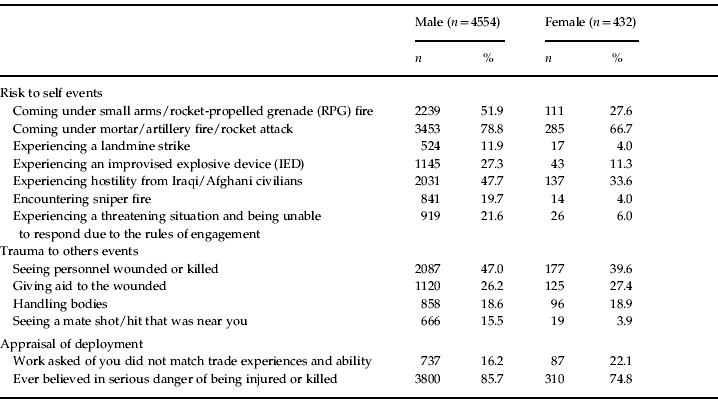
Combat exposure was assessed using data collected on 13 specific experiences. Participants were asked to report the frequency of each experience during their most recent deployment. Possible responses ranged from ‘never’ to ‘⩾10 times’ on a five-point scale (scored 0–4). Two questions assessed perceptions of the deployment: ‘How often during your most recent deployment did you believe that you were in serious danger of being injured or killed?’ (responses ranged from ‘never’ to ‘many times’ on a four-point scale, scored 0–3); and ‘Did you feel that the work asked of you in theatre generally matched your trade experiences and ability?’ (yes/no, scored 0/1). The relationship between individual experiences and mental health outcomes could not be examined because of a lack of statistical power, and therefore, as in Iversen et al. (Reference Iversen, Fear, Ehlers, Hacker Hughes, Hull, Earnshaw, Greenberg, Rona, Wessely and Hotopf2008), combat experiences were grouped into three types: ‘risk to self’ events (e.g. coming under small arms fire, experiencing a landmine strike), ‘trauma to others’ events (e.g. seeing personnel seriously injured or killed, having a mate hit/shot who was near them) and ‘appraisal of deployment’ (categorization detailed in Table 1). Responses to the combat experience items were scored and summed, such that a higher score reflected a greater frequency of experience or more negative perceptions about their deployment, and binary variables were created around the median score to represent ‘low’ or ‘high’ scores within each type. ‘Risk to self’ scores ranged from 0 to 28 and were divided into ‘low’ (0–5) and ‘high’ (⩾6); ‘trauma to others’ scores ranged from 0 to 16 (low 0–1, high ⩾2); ‘appraisal of deployment’ scores ranged from 0 to 4 (low 0–2, high ⩾3).
Number and proportion of personnel endorsing combat exposure event types

Mental health outcomes
The outcomes examined were: symptoms of common mental disorders, using the 12-item General Health Questionnaire (GHQ-12) with a validated cut-off of 4 (Goldberg et al. Reference Goldberg, Gater, Sartorius, Ustun, Piccinelli, Gureje and Rutter1997); symptoms of PTSD, using the PTSD Checklist – Civilian Version (PCL-C) with a validated cut-off of 50 (Weathers et al. Reference Weathers, Litz, Herman, Huska and Keane1994); and alcohol misuse in terms of ‘hazardous drinking’, using the World Health Organization (WHO) Alcohol Use Disorders Identification Test (AUDIT) with a validated cut-off of 8 (Babor et al. Reference Babor, Higgins-Biddle, Saunders and Monteiro2001; Fear et al. Reference Fear, Iversen, Meltzer, Workman, Hull, Greenberg, Barker, Browne, Earnshaw, Horn, Jones, Murphy, Rona, Hotopf and Wessely2007).
Statistical analyses
Analyses were weighted to account for sample type (follow-up, HERRICK or replenishment) and predictors of non-response (including gender, rank, engagement type, age, sample, and the interaction between sample and engagement type). Characteristics of the non-responders and details of how non-response weights were generated are described elsewhere (Fear et al. Reference Fear, Jones, Murphy, Hull, Iversen, Coker, Machell, Sundin, Woodhead, Jones, Greenberg, Landau, Dandeker, Rona, Hotopf and Wessely2010). Data on deployments to Iraq and Afghanistan were collated to make an ‘any recent deployment’ group because of the small number of females in the deployed group; for those who had been deployed to both operations (n=1058), information from their most recent deployment was included.
Bivariate associations between variables were examined using Pearson's χ2 analyses with Rao–Scott second-order corrections for survey design. Univariable and multivariable logistic regression analyses were carried out to identify associations between gender and mental health outcomes overall and separately by ‘low’ and ‘high’ scores for each of the three experience types. To investigate whether gender moderates any relationship between degree of combat experience and post-deployment mental health, interaction terms were made between each binary measure of experience type and gender. Regression analysis was used to examine whether there were any associations between the interaction terms and the outcomes of interest. Finally, logistic regression was used to examine the impact of ‘high’ versus ‘low’ exposure scores on each mental health outcome for men and women separately. Adjusted odds ratios (ORs) and 95% confidence intervals (CIs) are presented. Because of the small number of PTSD cases, particularly among females, symptoms of PTSD were examined as a score using negative binomial regression; adjusted incidence rate ratios (IRRs) and 95% CIs are shown. Statistical significance was defined as p<0.05. All analyses were adjusted for the following potential confounders: age (as a continuous variable), rank, marital status, educational attainment, enlistment status (regular or reservist), and service type (Royal Navy and Royal Marines, Army or RAF). These variables were associated with both gender and mental health outcomes. Analyses were also adjusted for medical role in theatre because women were significantly more likely to have been medics. Having a medical role was strongly associated with exposure to ‘trauma to others’ events and has also been found to have a relationship with psychological distress after deployment among UK personnel (Jones et al. Reference Jones, Fear, Greenberg, Jones, Hull, Hotopf, Wessely and Rona2008).
Results
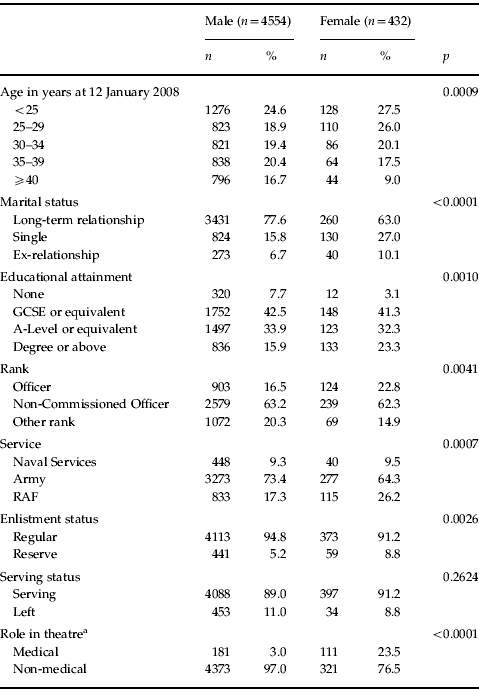
A total of 4986 participants (46.0%) had been on operations in Iraq and/or Afghanistan, of whom 7.4% (n=432) were female (weighted percentages). Table 1 illustrates the number and proportion of personnel endorsing each of the items included in the combat exposure event types. Women were less likely to report many of the items than men. Nevertheless, a large proportion of deployed women endorsed exposure to potentially traumatic events; for example, 74.8% reported ever feeling that they were in danger of being killed or seriously injured and 66.7% reported coming under mortar/artillery fire/rocket attack (Table 1). Table 2 shows a comparison of sociodemographic characteristics between deployed men and women. Compared to deployed men, deployed women were in general younger, less likely to be in a long-term relationship, more likely to be an officer rather than ‘other’ rank, to have higher educational attainment, to be a reservist, to be in the RAF (than in the Army), and to have a medical role.
Gender comparison of sociodemographic characteristics among personnel deployed to Iraq and Afghanistan

Numbers may not add up because of missing data.
a n=991 men and n=67 women were deployed to both operations; data from their most recent deployment are included.
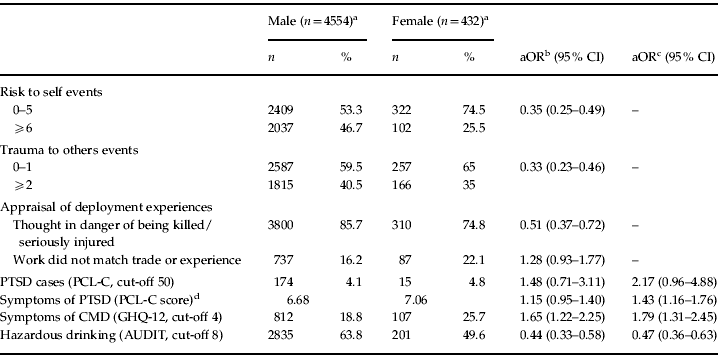
Table 3 compares combat experiences and mental health outcomes among deployed men and women. Overall, women reported fewer experiences of all three aggregated measures of combat exposure. PTSD caseness was the least prevalent disorder (4.1% men and 4.8% women) whereas hazardous drinking was the most prevalent (63.8% men and 49.6% women). After adjustment, the PCL-C score and CMD were associated with being female whereas hazardous drinking was associated with being male.
Gender comparison of combat experiences and mental health outcomes among personnel deployed to Iraq and Afghanistan

PTSD, Post-traumatic stress disorder; PCL-C, PTSD Checklist – Civilian Version; CMD, common mental disorder; GHQ-12, 12-item General Health Questionnaire; AUDIT, Alcohol Use Disorders Identification Test; aOR, adjusted odds ratio; CI, confidence interval.
Numbers may not add up because of missing data.
a n=991 men and n=67 women were deployed to both operations; data from their most recent deployment are included.
b Adjusted for age (continuous), rank, marital status, enlistment status, education, service and medical role in theatre.
c Additionally adjusted for risk to self events, trauma to others events and appraisal of deployment.
d Mean PCL-C score and incidence rate ratio (95% CI) calculated using negative binomial regression.
Gender differences in ‘low’ and ‘high’ exposure groups
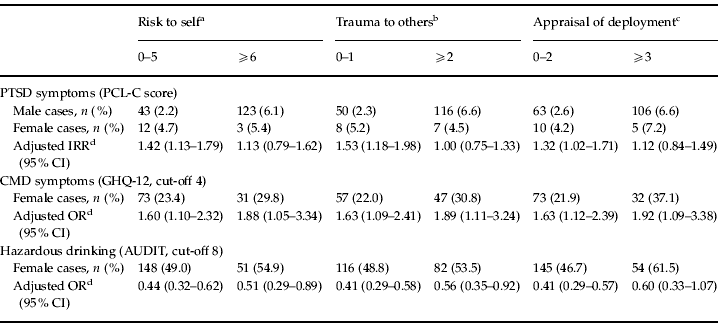
Table 4 compares the likelihood of each outcome by gender among those reporting higher and lower scores of each combat exposure type. The PCL-C score was associated with female gender in the ‘low’ but not the ‘high’ exposure groups for each type of combat experience. Symptoms of CMD were associated with female gender in both ‘low’ and ‘high’ levels of each combat exposure type.
Gender comparison of mental health outcomes among those with below and above the median scores on self-reported exposure to three measures of combat experience during deployment to Iraq and Afghanistan

PTSD, Post-traumatic stress disorder; PCL-C, PTSD Checklist – Civilian Version; CMD, common mental disorder; GHQ-12, 12-item General Health Questionnaire; AUDIT, Alcohol Use Disorders Identification Test; IRR, incidence rate ratio; OR, odds ratio; CI, confidence interval.
Numbers may not add up because of missing data.
a Coming under small arms fire, coming under mortar attack, experiencing a landmine, experiencing hostility from civilians, experiencing an improvised exploding device (IED), encountering sniper fire and experiencing a threatening situation and being unable to respond.
b Giving aid to wounded, seeing personnel seriously wounded or killed, handling bodies, having a mate shot/hit who was near you.
c Perceived threat of being injured or killed and whether work in theatre matched trade experience and ability.
d Adjusted for age (continuous), rank, marital status, enlistment status, education, service type and medical role in theatre.
Hazardous drinking was associated with male gender among the ‘low’ exposure groups for each type of combat experience and among the ‘high’ exposure groups for ‘risk to self’ and ‘trauma to others’ events. There was no association between gender and hazardous drinking among those in the group that reported more negative deployment appraisals.
None of the interaction terms generated between gender and binary measures of combat experience type were found to be significant, but there was some evidence that gender moderated the impact of exposure to ‘trauma to others’ events on the PCL-C score (p=0.048) (data not shown).
Impact of combat exposure level on mental health outcomes
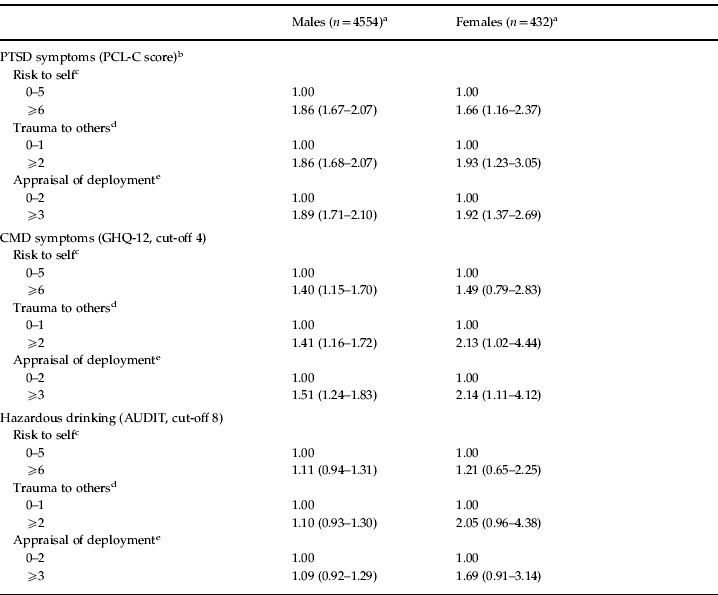
Table 5 shows the impact of exposure to ‘high’ versus ‘low’ levels of each combat experience type on mental health outcomes for men and women separately. After adjustment, higher scores in each combat exposure type were positively associated with PCL-C scores and symptoms of CMD, but there was no evidence for an association with hazardous drinking among men or women. Reporting a ‘high’ score for ‘risk to self’ events was associated with symptoms of CMD among males but not females, although this may reflect the small number of women in this group.
Comparison of mental health outcomes among those with below and above the median scores on self-reported exposure to three measures of combat experience in males and females deployed to Iraq and Afghanistan

PTSD, Post-traumatic stress disorder; PCL-C, PTSD Checklist – Civilian Version; CMD, common mental disorder; GHQ-12, 12-item General Health Questionnaire; AUDIT, Alcohol Use Disorders Identification Test.
Values given as odds ratios (ORs) adjusted for age (continuous), rank, marital status, enlistment status, education, service type and medical role in theatre with 95% confidence intervals (CIs) in parentheses.
Numbers may not add up due to missing data.
a n=1058 were deployed to both operations; data from their most recent deployment are included.
b Incidence rate ratios are shown based on PCL-C score (negative binomial regression).
c Coming under small arms fire, coming under mortar attack, experiencing a landmine, experiencing hostility from civilians, experiencing an improvised exploding device (IED), encountering sniper fire and experiencing a threatening situation and being unable to respond.
d Giving aid to wounded, seeing personnel seriously wounded or killed, handling bodies, having a mate shot/hit who was near you.
e Perceived threat of being injured or killed and whether work in theatre matched trade experience and ability.
The variable measuring negative appraisals of deployment includes two items that ask about perceptions of deployment experience rather than actual experiences. As these two items ask about conceptually different phenomena, analyses were re-run to examine the impact of exposure to these two items separately while adjusting for the other to check whether either item was driving the associations seen in Tables 4 and 5. The majority of the additional analyses run in Table 4 suggested that each item had an independent effect on the associations between gender and mental health, although some differences did emerge.
The association between female gender and symptoms of CMD among the higher level of negative appraisals (Table 4) seemed to be driven by greater perceived threat to life or serious injury (OR 1.79, 95% CI 1.16–2.77) rather than perceiving that their work was above their trade or experience (OR 1.49, 95% CI 0.77–2.88). Furthermore, although female gender was associated with lower levels of alcohol misuse among those endorsing higher levels of perceived threat to life (OR 0.52, 95% CI 0.34–0.79) and that work did not match their trade or experience (OR 0.31, 95% CI 0.17–0.58), this association was not significant when looking at higher levels of the composite score (Table 4). Examining the impact of exposure to each appraisal of deployment item separately by gender, as in Table 5, suggested that perceived threat to life or serious injury (men OR 1.72, 95% CI 1.53–1.93; women or 1.70, 95% CI 1.21–2.40) and whether work matched trade and experience (men OR 1.46, 95% CI 1.29–1.65; women OR 1.48, 95% CI 0.97–2.26) both contribute independently and additively to the association between appraisal of deployment and PCL score in men and women (Table 5). However, whereas among men the association between negative appraisals of deployment and CMD was driven by whether the work asked of them matched their trade and experience (OR 1.84, 95% CI 1.46–2.31), among women it was driven by the frequency of perceived threat to life or serious injury (OR 2.05, 95% CI 1.15–3.65) (data available on request).
Discussion
Main findings
This study found several differences in the sociodemographic characteristics of men and women deployed to Iraq and Afghanistan. After adjustment, deployed women reported fewer incidences of combat exposures involving a risk to themselves or trauma to others and were less likely to report negative appraisals of their deployment than men. Although some differences across the post-deployment mental health outcomes were found, the impact of exposure to higher levels of potentially traumatic experiences on mental health was similar among men and women. Some of the evidence suggested that there were gender differences in mental health outcomes across different levels of exposure. However, examination of interaction terms suggested that gender only moderated the impact of exposure to ‘trauma to others’ events on symptoms of PTSD.
Comparison to previous studies
Most other research examining gender differences among those deployed to Iraq and Afghanistan is US based and difficult to compare to the current study because of the methodological differences outlined earlier. Studies of treatment-seeking samples will over-represent the burden of mental illness among women because they are more likely to seek treatment than men in both civilian and deployed military populations (Wang et al. Reference Wang, Michael, Olfson, Pincus, Wells and Kessler2005; Cohen et al. Reference Cohen, Gima, Bertenthal, Kim, Marmar and Seal2009; Visco, Reference Visco2009; Sareen et al. Reference Sareen, Belik, Stein and Asmundson2010). Previous studies have used a large variety of measures to assess mental health problems, making comparisons of prevalence rates difficult. These are exacerbated by cultural differences between the USA and UK. For example, whereas in the UK there is universal health care free at the point of delivery through the National Health Service (NHS), US personnel may not have had access to such care. Having a service-related disability may therefore affect a person's entitlement to health care, and the likelihood of reporting symptoms. Differences in tour length, previous deployment experience and the proportion of reserve forces deployed add further complexity to such comparisons (Fear et al. Reference Fear, Jones, Murphy, Hull, Iversen, Coker, Machell, Sundin, Woodhead, Jones, Greenberg, Landau, Dandeker, Rona, Hotopf and Wessely2010).
Exposure to combat
Little information is available from previous research regarding the prevalence of exposure to specific combat events by gender. Using data from phase 1 of the current UK cohort study, Rona et al. (Reference Rona, Fear, Hull and Wessely2007) found that, among those deployed to the first operational phase of the Iraq war (in 2003), women reported lower levels of exposure to potentially traumatic events than were found in the current study. Differences between the nature of the early campaign in Iraq and later action in Iraq and Afghanistan may account for this. Op TELIC 1 was an offensive campaign, so most combat exposure would have been sustained by combat troops. Later operations were, and are, marked by greater risk of improvised explosive devices (IEDs) and indirect fire (IDF) to which all personnel are at risk. The current study found that, even after controlling for sociodemographic characteristics and medical role in theatre, men still reported greater exposure to most of the combat-related events.
Mental health outcomes
PTSD
The prevalence of PTSD among females who had been deployed to Iraq or Afghanistan in this study (4.8%) is lower than that reported in US studies of gender differences among personnel after deployment (Freedy et al. Reference Freedy, Magruder, Mainous, Frueh, Geesey and Carnemolla2010; Nunnink et al. Reference Nunnink, Goldwaser, Heppner, Pittman, Nievergelt and Baker2010). Findings from US studies have been mixed; some studies report men to be at greater risk for PTSD (Fontana et al. Reference Fontana, Rosenheck and Desai2010; Haskell et al. Reference Haskell, Gordon, Mattocks, Duggal, Erdos, Justice and Brandt2010; Maguen et al. Reference Maguen, Ren, Bosch, Marmar and Seal2010) whereas others report no gender differences in rates of PTSD (Lapierre et al. Reference Lapierre, Schwegler and LaBauve2007; Seal et al. Reference Seal, Metzler, Gima, Bertenthal, Maguen and Marmar2009; Luxton et al. Reference Luxton, Skopp and Maguen2010). Using phase 1 of the current cohort to examine UK personnel deployed to the Iraq war, Rona et al. (Reference Rona, Fear, Hull and Wessely2007) and Iversen et al. (Reference Iversen, Fear, Ehlers, Hacker Hughes, Hull, Earnshaw, Greenberg, Rona, Wessely and Hotopf2008) also found no gender differences in post-traumatic stress reaction symptoms. None of these studies, however, have adequately adjusted for potential confounders and a range of measures of PTSD and cut-off scores have been used. It is also important to note that, as in the current study, previous research is typically limited to the use of screening instruments, so do not provide true diagnostic rates and are likely to overestimate the true burden of the disorder.
Although this study found that, after adjustment, there was a slightly higher rate of PTSD symptoms among deployed women in terms of PCL-C score, the differences in these scores were confined to those experiencing lower levels of each exposure type. Furthermore, examination of the effect sizes for each outcome in response to being in the higher category of each exposure type separately by gender suggests that men and women react similarly to exposure to combat stress. Although this may suggest that women have higher underlying levels of traumatic symptoms, and when exposed to combat stress react similarly to men, more information on pre-deployment PTSD symptoms and trauma, and also on other potential sources of trauma during deployment, is needed to understand the origins of such differences. For example, research suggests that there may be gender differences in exposure pre- and post-deployment traumatic experiences, thus conferring differences in vulnerability to PTSD (Engel et al. Reference Engel, Engel, Campbell, McFall, Russo and Katon1993; King et al. Reference King, King, Foy, Keane and Fairbank1999; Zinzow et al. Reference Zinzow, Grubaugh, Monnier, Suffoletta-Maierle and Frueh2007, Reference Zinzow, Grubaugh, Frueh and Magruder2008; Smith et al. Reference Smith, Wingard, Ryan, Kritz-Silverstein, Slymen and Sallis2008; Carter-Visscher et al. Reference Carter-Visscher, Polusny, Murdoch, Thuras, Erbes and Kehle2010).
CMD
The current findings are consistent with other studies from the UK and the USA that report females deployed to Iraq and Afghanistan to have increased post-deployment rates of depression or CMD compared to men. The findings are also concordant with findings from the general population (Kessler et al. Reference Kessler, McGonagle, Zhao, Nelson, Hughes, Eshleman, Wittchen and Kendler1994; Lapierre et al. Reference Lapierre, Schwegler and LaBauve2007; Rona et al. Reference Rona, Fear, Hull and Wessely2007; McManus et al. Reference McManus, Meltzer, Brugha, Bebbington and Jenkins2009; Seal et al. Reference Seal, Metzler, Gima, Bertenthal, Maguen and Marmar2009; Fontana et al. Reference Fontana, Rosenheck and Desai2010; Haskell et al. Reference Haskell, Gordon, Mattocks, Duggal, Erdos, Justice and Brandt2010; Maguen et al. Reference Maguen, Ren, Bosch, Marmar and Seal2010; Wells et al. Reference Wells, LeardMann, Fortuna, Smith, Smith, Ryan, Boyko and Blazer2010). Although this study found deployed women to be at greater risk for symptoms of CMD, overall and across levels and type of exposure, examining each gender separately suggested similar effects of reporting ‘high’ levels of exposure on each outcome among men and women. These findings again suggest that, although women may report more symptoms of CMD overall, the impact of being exposed to greater combat stress on symptoms of CMD did not differ by gender.
Alcohol abuse
Little information on alcohol misuse has been presented in previous studies of gender differences among personnel deployed to Iraq and Afghanistan, although available research also finds women to be at lower risk for alcohol abuse or dependence than men (Rona et al. Reference Rona, Fear, Hull and Wessely2007; Fontana et al. Reference Fontana, Rosenheck and Desai2010), and similar findings are reported for the general population (Kessler et al. Reference Kessler, McGonagle, Zhao, Nelson, Hughes, Eshleman, Wittchen and Kendler1994; McManus et al. Reference McManus, Meltzer, Brugha, Bebbington and Jenkins2009). Using data from the current study, Fear et al. (Reference Fear, Iversen, Meltzer, Workman, Hull, Greenberg, Barker, Browne, Earnshaw, Horn, Jones, Murphy, Rona, Hotopf and Wessely2007) reported that deployment to the first phase of the Iraq war was associated with binge drinking for women but not for men. Although, in males, hazardous drinking was associated with deployment to the first phase of the Iraq war, this association was not examined in women because of small numbers (Fear et al. Reference Fear, Iversen, Meltzer, Workman, Hull, Greenberg, Barker, Browne, Earnshaw, Horn, Jones, Murphy, Rona, Hotopf and Wessely2007). The current study found the association of hazardous drinking with male gender to be consistent across different levels of combat exposure. However, when examining men and women separately, greater levels of all types of combat exposures were not associated with hazardous drinking for men or women. Hazardous alcohol use has been shown to be common among UK Armed Forces personnel in phase 1 of the current study regardless of deployment status (Fear et al. Reference Fear, Iversen, Meltzer, Workman, Hull, Greenberg, Barker, Browne, Earnshaw, Horn, Jones, Murphy, Rona, Hotopf and Wessely2007). Therefore, the level of consumption may be associated more with cultural factors than with potentially traumatic experiences on deployment.
Strengths and weaknesses
The current study used data from a representative non-treatment-seeking sample of UK Armed Forces personnel and includes a reasonable number (n=432) of female personnel. Unlike other military studies examining gender differences, the proportion of deployed women in the current sample (7.4%) is consistent with the average proportion of women deployed to Afghanistan (7.4%) and Iraq (6.1%) since 2007. Personnel from all three services, in addition to those serving in combat, combat support and combat services support roles, are included. Additionally, although information on non-combat-related stressors was limited, the list of combat-related experiences participants were asked to consider was more comprehensive than many previously published studies looking at gender differences, such that the relevance to non-combat troops (and therefore women) is increased.
This study adds to previous research examining gender differences in post-deployment mental health. Previous studies often do not include combat exposure in analyses (thus ignoring likely differences in combat exposure); they simply adjust for combat exposure in analyses (thus effectively comparing gender differences when combat exposure is at a baseline level); or restrict analyses to men and women in similar roles (which avoids the examination of the impact of actual exposure rather than role). These studies, as noted by Street et al. (Reference Street, Vogt and Dutra2009), do not address the question of whether any relationship between gender and post-deployment psychological health varies across different levels of exposure. By examining the significance of interaction terms between gender and exposure on mental health outcomes and by assessing gender differences at two different levels of exposure, this study therefore goes further than previous research in relation to deployments to Iraq and Afghanistan. The study used data from a cohort survey with a response rate of 56%, which is relatively high, given the difficulties of tracking military personnel (Fear et al. Reference Fear, Jones, Murphy, Hull, Iversen, Coker, Machell, Sundin, Woodhead, Jones, Greenberg, Landau, Dandeker, Rona, Hotopf and Wessely2010). The response rate differed significantly by gender (63% female, 55.3% male); however, response weights were included in analyses to account for this.
The limitations of the current study are acknowledged. This study compares like with like in terms of the self-reported combat exposures endorsed in a questionnaire; however, the nature of such exposure may differ by gender. No information about the severity of duration of exposure to combat was included in the questionnaire even though both factors have been shown to be associated with post-deployment mental health (Sternke, Reference Sternke2011). In addition, because of the small numbers, there was insufficient statistical power to examine the impact of combat exposure across more levels.
There may be gender differences in the perceptions surrounding combat exposure; for example, there is evidence that men and women may perceive risk differently and may differentially report symptoms of mental health (Tolin & Foa, Reference Tolin and Foa2006; Sternke, Reference Sternke2011). The context in which male and female personnel experience combat may also differ in terms of non-combat-related factors such as social support, operating in a male-dominated environment, children, coping mechanisms and help-seeking. These factors may differentially impact the risk of mental health problems post-deployment among male and female personnel. Any differences found may help to determine if and how men and women respond to such exposures.
Information about other potentially traumatic exposures was not available, such as the prevalence of military sexual trauma or harassment during deployment to Iraq and Afghanistan, which has been found to be high among women in US studies (Fontana et al. Reference Fontana, Rosenheck and Desai2010; Haskell et al. Reference Haskell, Gordon, Mattocks, Duggal, Erdos, Justice and Brandt2010) and is a well-documented risk factor for psychological problems, in particular PTSD (Kessler et al. Reference Kessler, Sonnega, Bromet, Hughes and Nelson1995). No information on lifetime exposure to trauma or pre- and post-deployment stressful life events was available; therefore, it is possible that there are gender differences in pre-deployment vulnerabilities to adverse mental health. Pre-deployment levels of the mental health outcomes examined were not available. However, this may not have biased results because data from the general population suggest that the gender differences in mental health found in the current study are mirrored in the civilian population (Kessler et al. Reference Kessler, McGonagle, Zhao, Nelson, Hughes, Eshleman, Wittchen and Kendler1994; McManus et al. Reference McManus, Meltzer, Brugha, Bebbington and Jenkins2009).
The ‘negative appraisals of deployment’ measure was intended to capture subjective perceptions about participants' deployment; however, it is acknowledge that the items making up this measure are conceptually different. Nevertheless, analyses suggest that the two items act independently and sometimes additively. The two items may also act differently in their impact on different mental health outcomes among men and women.
Data on the number of previous deployments were not included in analyses; unlike in the USA, UK findings suggest that the number of deployments is not associated with post-deployment mental health (Fear et al. Reference Fear, Jones, Murphy, Hull, Iversen, Coker, Machell, Sundin, Woodhead, Jones, Greenberg, Landau, Dandeker, Rona, Hotopf and Wessely2010). There is a potential effect of recall bias, given that personnel may have filled out their questionnaire in relation to deployments occurring several years ago; however, given the aim was to examine gender differences, it is unlikely that any bias would differentially impact reporting in men and women. In addition, Fear et al. (Reference Fear, Jones, Murphy, Hull, Iversen, Coker, Machell, Sundin, Woodhead, Jones, Greenberg, Landau, Dandeker, Rona, Hotopf and Wessely2010) found only weak evidence for a slight increase in PTSD symptoms with time since return from deployments.
The civilian version of the PCL screening instrument was used rather than the military version. The only difference between these instruments is that the latter asks about whether personnel have experienced the symptom list in relation to stressful military experiences. It is therefore possible that the symptoms reported may be related to other potentially traumatic experiences unrelated to the military. However, the civilian version has been used in previous studies of UK personnel (Hotopf et al. Reference Hotopf, Hull, Fear, Browne, Horn, Iversen, Jones, Murphy, Bland, Earnshaw, Greenberg, Hacker Hughes, Tate, Dandeker, Rona and Wessely2006; Fear et al. Reference Fear, Jones, Murphy, Hull, Iversen, Coker, Machell, Sundin, Woodhead, Jones, Greenberg, Landau, Dandeker, Rona, Hotopf and Wessely2010) and a civilian version is also used in notable US studies examining post-deployment mental health (e.g. Hoge et al. Reference Hoge, Castro, Messer, McGurk, Cotting and Koffman2004). The usual limitations with cross-sectional self-report data also apply.
Conclusions
Although gender differences in self-reported experiences of combat and mental health exist among deployed personnel, there was little evidence of gender differences in the impact of exposure to combat on mental health. Further research examining differences in pre-deployment mental health and exposure to trauma, with particular attention to more detailed assessments of specific exposures, would help to enhance our understanding of how deployment affects men and women in the Armed Forces.
Acknowledgements
All work for this paper was carried out within the Academic Centre for Defence Mental Health (ACDMH)/King's Centre for Military Health Research (KCMHR), which receives funding from the UK Ministry of Defence (MOD). The authors' work was independent of the UK MOD, who had no role in the analysis, interpretation or decision to submit this paper. We disclosed the paper to the MOD at the point we submitted it for publication. S.W. is partially funded by the National Institute for Health Research (NIHR) Biomedical Research Centre for Mental Health at the South London and Maudsley NHS Foundation Trust/Institute of Psychiatry NIHR Biomedical Research Centre. S.L.H. is supported by the NIHR Biomedical Research Centre for Mental Health at the South London and Maudsley NHS Foundation Trust and the Institute of Psychiatry, King's College London.
Declaration of Interest
C.W., N.T.F. and S.W. work for the ACDMH/KCMHR at King's College London, which receives funding from the UK MOD. S.W. is an honorary Civilian Consultant Advisor in Psychiatry to the British Army.