Introduction
Mistletoe extracts are commonly used for cancer patients, in whom they are claimed to improve survival and quality of life.Reference Horneber, Bueschel, Huber, Linde and Rostock1 In Europe, extracts from Viscum album, the European white-berry mistletoe, are widely used to treat patients with cancer. The evidence that supports its use, however, is conflicting. Whilst mistletoe has a convincing role in improving cancer patients' quality of life and ability to cope autonomously with disease (via psychosomatic self-regulation),Reference Büssing, Raak and Ostermann2 and in combating the side-effects of cancer therapy,Reference Klopp, Schmidt, Werner, Werner, Niemer and Beuth3 the evidence regarding its role as an actual cure remains, to many authors, inconclusive.Reference Horneber, Bueschel, Huber, Linde and Rostock1
We present the case of a patient who, despite being deemed terminally ill from aggressive stomal recurrence of his laryngeal cancer, made a full recovery once conventional curative treatment was withdrawn and mistletoe treatment initiated.
Case report
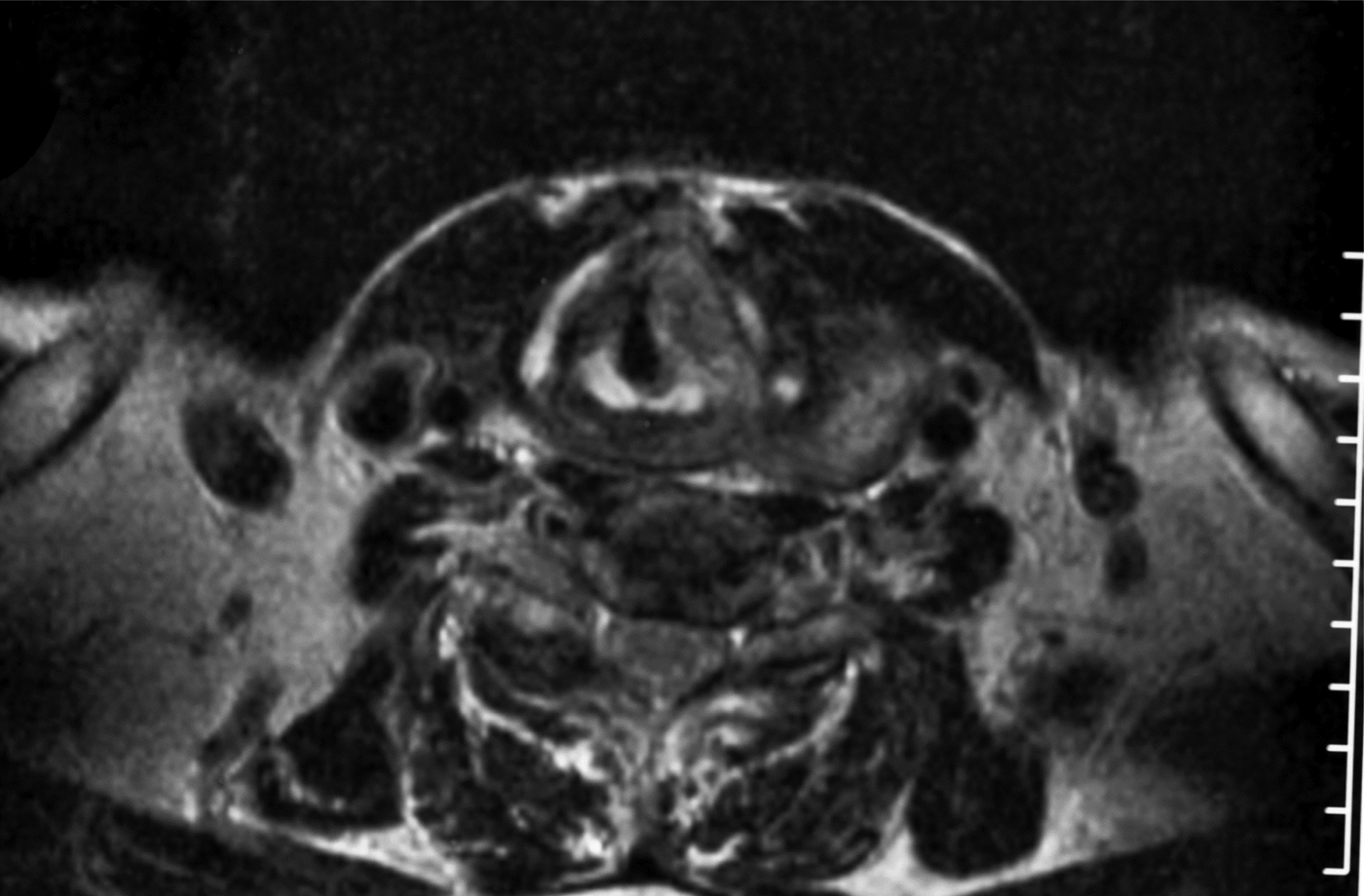
A 68-year old, Caucasian, male smoker with a history of moderate wine intake was diagnosed with left, tumour stage 3, node stage 0, metastasis stage 0, transglottic, laryngeal squamous cell carcinoma (Figure 1). He received radical radiotherapy (55 Gy in 20 fractions) with concurrent single agent chemotherapy (cisplatin 100 mg/m2).
Axial magnetic resonance imaging scan showing left transglottic laryngeal squamous cell carcinoma, staged as tumour three, node zero, metastasis zero.

One year later, and six months after the completion of chemoradiotherapy, multiple biopsies were taken at laryngoscopy due to persistent laryngeal oedema and hoarseness, though no obvious evidence of recurrence was seen. These biopsies confirmed carcinoma in situ; however, because of the patient's symptoms and the superficial nature of the biopsies, the multidisciplinary team concluded that chemoradiotherapy had failed. The decision was made to undertake surgery, and, after discussion with the patient, total laryngectomy was decided upon.
At nine months post-laryngectomy, the patient complained of pain on the left side of his stoma. Fullness was noted at the left side of the proximal trachea, but with no mucosal lesions in the stoma or in the pharynx. A magnetic resonance imaging (MRI) scan revealed left parastomal recurrence (3 × 3 cm) (Figure 2), and incisional biopsy of the mass confirmed squamous cell carcinoma recurrence.
Axial magnetic resonance imaging scan showing left parastomal recurrence of squamous cell carcinoma post-treatment. R = right.

The patient was offered further surgery to excise the recurrence. The procedure was carried out by a team of otolaryngology and cardiothoracic surgeons. Intra-operatively, the tumour was found to be much more advanced than the MRI scan had suggested. The tumour was encircling 75 per cent of the trachea and pharynx. There was significant retrosternal extension, with no plane of dissection behind the manubrium, and the necrotic tumour was extending across the midline to reach the right retroclavicular region. Despite extensive dissection, the tumour was deemed inoperable, and was therefore debulked with refashioning of the stoma.
Post-operatively, the patient was given palliative radiotherapy to the retrosternal region; this was well tolerated but stomal healing was slow.
At this stage, while the stomal wound was slowly healing, the patient consulted his local general practitioner, requesting to receive mistletoe treatment.
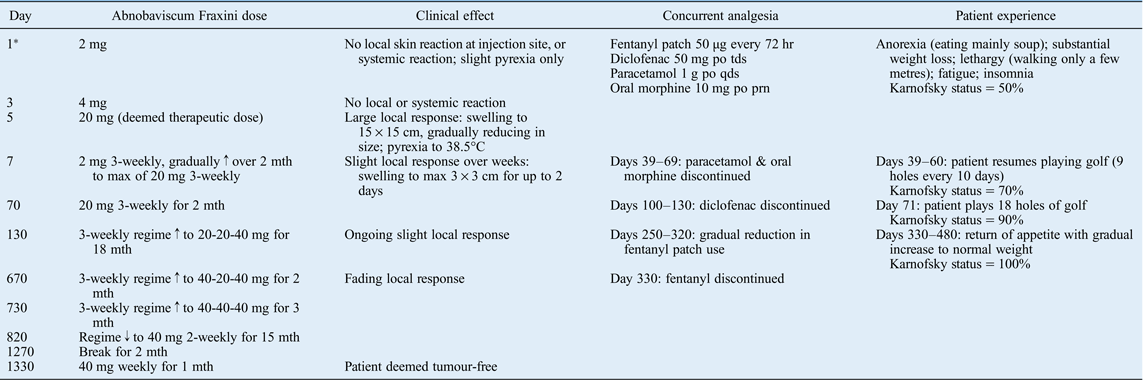
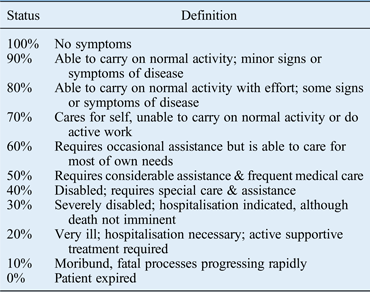
Three months post-radiotherapy, the patient received mistletoe therapy for his inoperable cancer. This was administered as subcutaneous abdominal injections of Abnobaviscum Fraxini (Abnoba Heilmittel, Pforzheim, Germany) over the course of 72 months, between November 2006 and December 2012, by one of the authors (SG), a general practitioner and practitioner of anthroposophic medicine. (This branch of medicine is viewed by its practitioners as an integrative approach to disease which is an extension of the conventional medical model.) The patient's treatment regime is outlined in Table I. His general well-being during treatment was monitored and recorded at follow-up appointments using the Karnofsky performance scale, outlined in Table II. The patient was also followed up in the head and neck clinic; complete stomal wound healing was noted, together with continued general improvement.
Laryngeal stomal cancer recurrence treatment regime with subcutaneous abnobaviscum fraxini: summary
*Induction. Hr = hours; po = per orally; tds = thrice daily; qds = four times daily; prn = as required; ↑ = increased; mth = months; max = maximum; ↓ = decreased
Karnofsky performance scale
Subsequently, the patient underwent secondary tracheoesophageal puncture and speaking valve insertion.
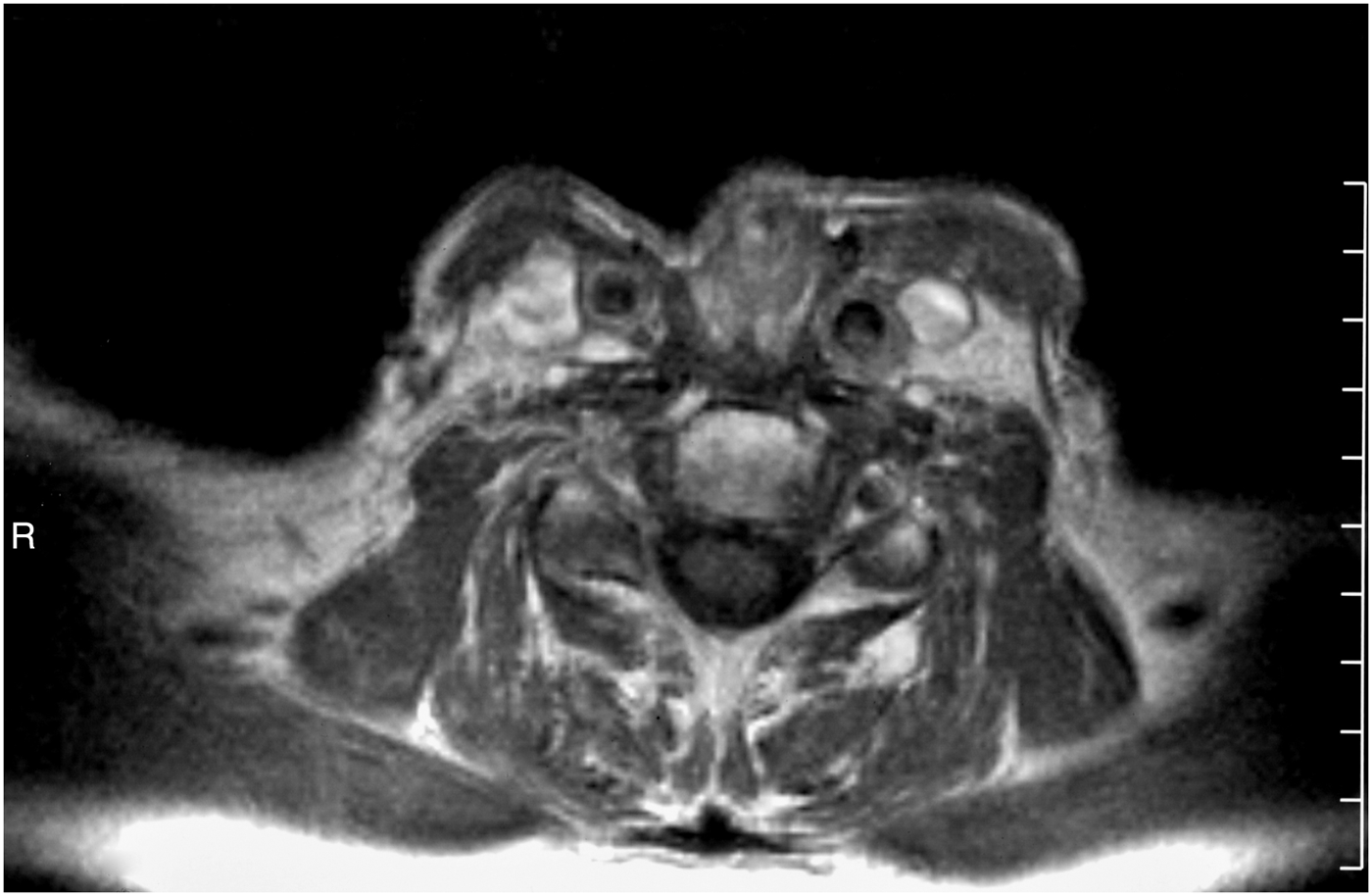
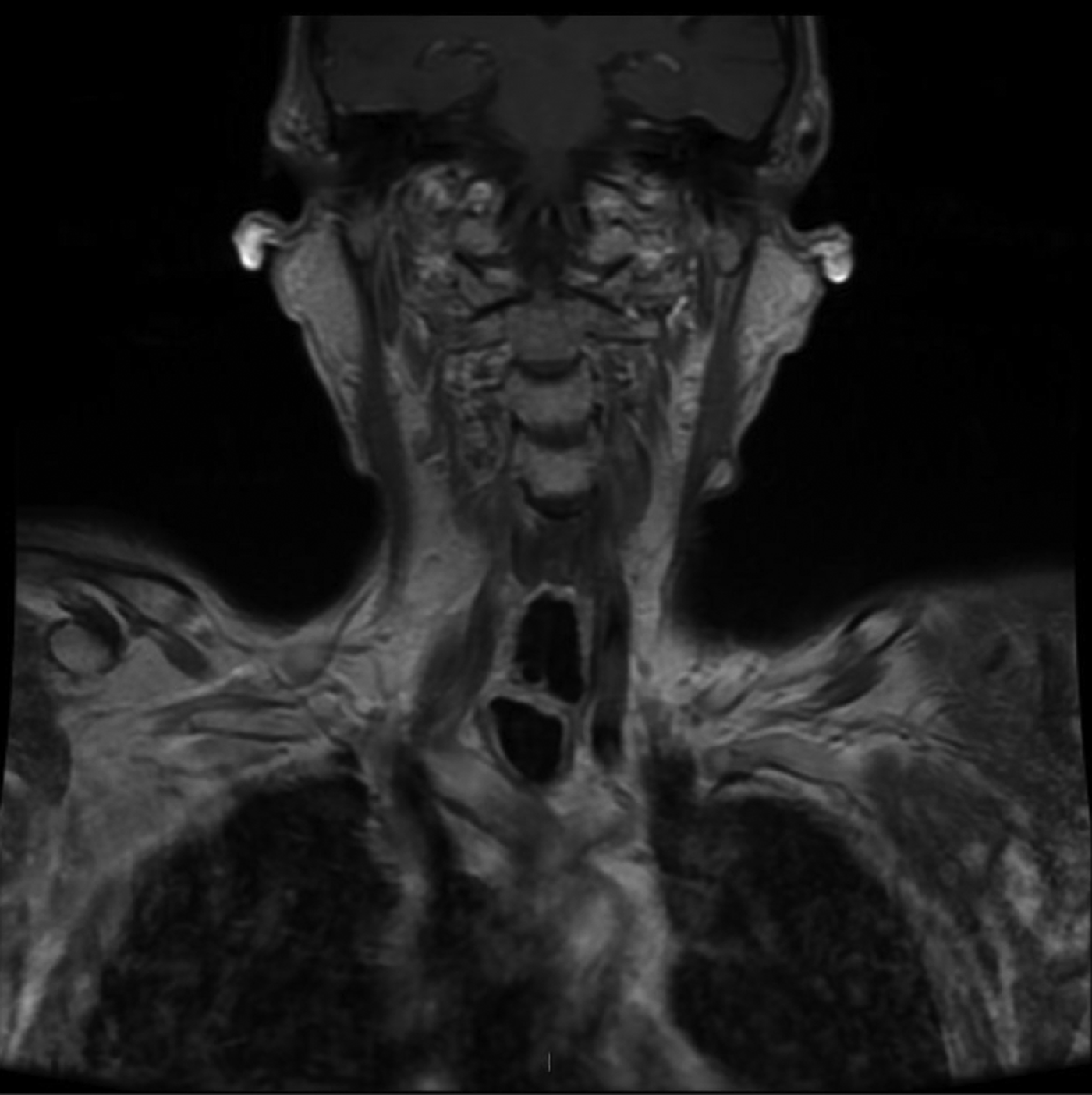
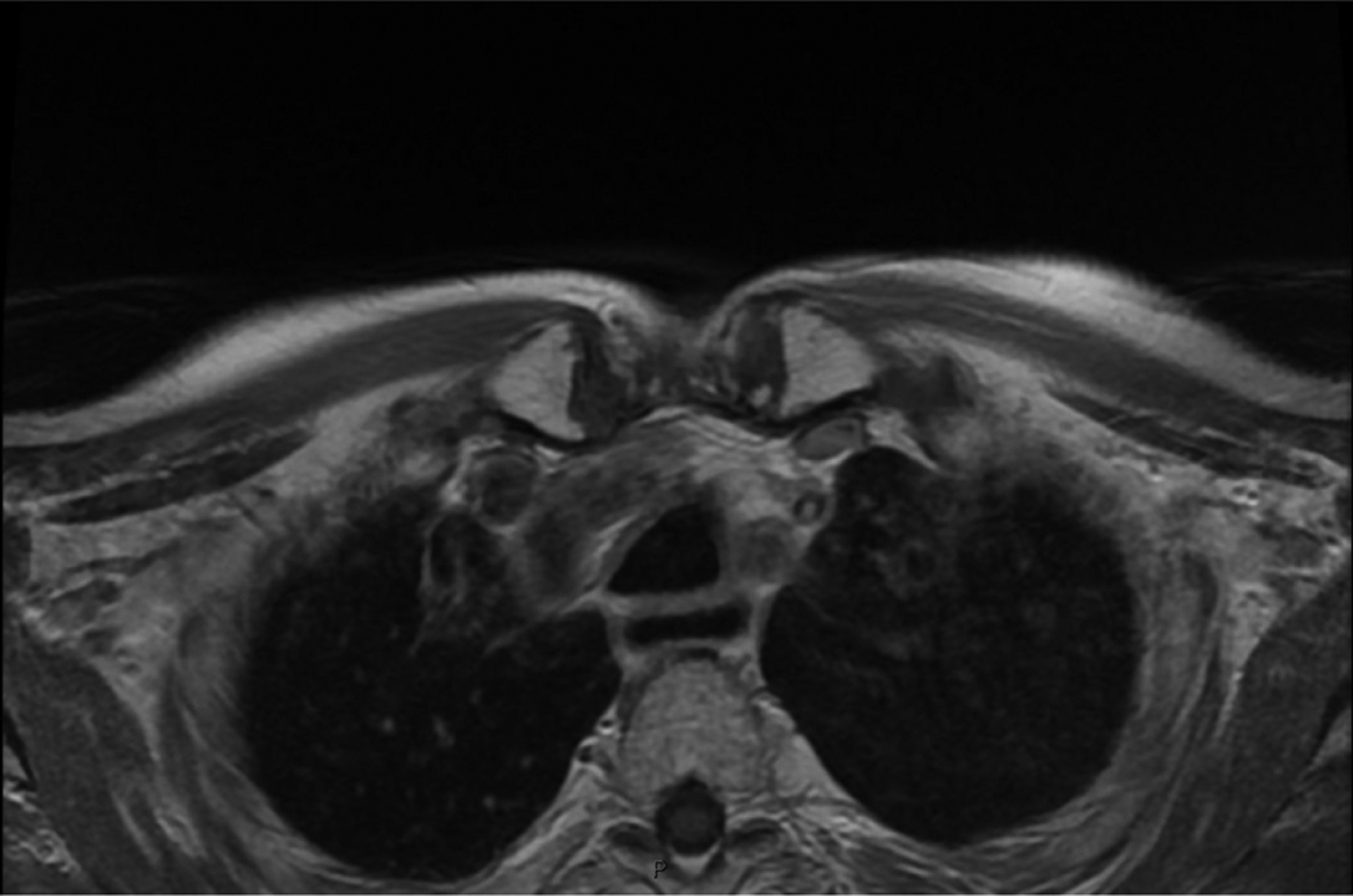
Thereafter, the patient was followed up every four months. His parastomal and mediastinal recurrences were seen to disappear completely. Over the seven years following initiation of mistletoe extract therapy, i.e. up to the time of writing, the patient continued to show no evidence of loco-regional recurrence. At his last visit, in February 2013, the mistletoe injections were reduced to a short course twice yearly as he was deemed cancer-free both clinically and radiologically. In April 2013, follow-up MRI scans showed no residual parastomal or mediastinal disease (Figures 3 and 4), and the patient was discharged from our care.
Coronal magnetic resonance imaging scan showing resolution of stomal recurrence following mistletoe therapy.
Axial magnetic resonance imaging scan showing resolution of stomal recurrence following mistletoe therapy.
Discussion
‘Mistletoe’ is the common name used for obligate hemi-parasitic plants in several families within the Santalales order. The name was originally used solely for the species Viscum album, or European mistletoe, the only species native to the UK and much of Europe. This plant may cause acute gastrointestinal problems if ingested, including stomach pain and diarrhoea, along with bradycardia. However, it is this species that is the centre of much research with respect to its extracts and their purported uses in the treatment of cancer.
Use of mistletoe as an anti-cancer agent was first popularised by the German Rudolf Steiner, who referred to mistletoe as a remedy for cancer. Steiner (the founder of anthroposophy) proposed that its physical and spiritual qualities supported re-establishment of the harmonious integration of the alleged four different entities of human existence in a patient. Whilst there was no scientific basis for his claims, much of the research into mistletoe's benefits has been conducted in Germany, where its use remains frequent.Reference Horneber, Bueschel, Huber, Linde and Rostock1
Mistletoe extracts are mainly prepared as aqueous solutions and are usually administered subcutaneously. The most commonly used commercial formulation is Iscador (Weleda, Ilkeston, UK), but other forms are available, including Abnobaviscum Fraxini (Abnoba Heilmittel), which has been used mainly in cancer therapy, as in our patient. The use of mistletoe extracts has been deemed safe,Reference Huber, Ludtke, Wieber and Beckmann4 although subcutaneous administration is known to carry a risk of inflammation at the injection site.Reference Finall, McIntosh and Thompson5
The pharmacological properties of mistletoe have been studied at the cellular level. The active compounds in mistletoe are lectins and viscotoxins.Reference Pryme, Bardocz, Pusztai and Ewen6 Phase one clinical trials have shown that recombinant mistletoe lectin (aviscumine), produced in Escherichia coli, has immunomodulatory and cytotoxic activity in vitro and in animal models, and can target tumour cells.Reference Schöffski, Riggert, Fumoleau, Campone, Bolte and Marreaud7 One suggested mechanism for these actions is induction of the production of potentially tumour-promoting cytokines such as interleukin-6.Reference Huber, Ludtke, Wieber and Beckmann4 In view of its abilities, mistletoe has been classified as a biological response modifier. Its antiproliferative, cytotoxic and immunomodulatory properties are dose-dependent; reported tumour remissions are associated with doses higher than the commonly recommended dosage, with intratumoural application and with accompanying fever, as in our patient. The latter is likely to be important in determining the dosage required to affect the clinical outcome. Orange et al.Reference Orange, Fonseca, Lace, von Laue and Geider8 have postulated that high-dose febrile induction therapy, in various combinations of intratumoural, subcutaneous and intravenous application, can affect disease response. In addition to immunomodulatory effects, high doses of mistletoe extract have cytotoxic properties and elicit immunogenic apoptotic and necrotic tumour cell death in a dose-dependent manner.
Whilst much of the anti-cancer effects of mistletoe has been described in breast, uterine and ovarian cancer, mistletoe extracts have been shown in some studies to target laryngeal cancer cells.Reference Sáenz, Ahumada and García9
The characteristics of the immune responses to these types of mistletoe extract applications require further research.
One of the main benefits of mistletoe seems to be psychosomatic,Reference Büssing, Raak and Ostermann2 and it may have more of a role in the holistic care of the cancer patient, at least in the short term.
Yet, mistletoe extract appeared to have benefited our patient, who had a stomal recurrence of laryngeal squamous cell carcinoma following chemoradiation and laryngectomy, a diagnosis with a poor prognosis. Whilst there is no conclusive evidence that mistletoe therapy cured his recurrence, clinical monitoring and recent MRI scanning confirmed complete resolution of recurrent cancer during this treatment. When taken in the context of his treatment time-line and declining prognosis, and against a background of increasingly robust research, our patient's response makes for a compelling case. While the contribution of his palliative radiation cannot be ascertained, alone it is unlikely to have been curative for an extensive local recurrence which had previously failed to respond to chemoradiation and surgery. It may be assumed that the mistletoe was the primary agent responsible for the reduction of mediastinal lymphadenopathy.
• Mistletoe extract is a form of complementary and alternative medicine
• It may have a role in cancer management, acting via biological response modification
• It improves cancer patients' ability to autonomously cope with disease, via psychosomatic self-regulation
Finally, our patient is one of an increasing number of patients in the UK who turn to complementary and alternative medicine, often as a first line of treatment for their ailments. The reasons for this choice are varied and include cost, the nature of the illness (acute versus chronic), gender, age, accessibility of complementary and alternative medicine, the publicly perceived safety and efficacy of therapies, failure of conventional medical interventions, dissatisfaction with modern health care, and cultural background. In the UK, there are currently an estimated 50 000 complementary and alternative medicine practitioners, 10 000 of whom are registered health care professionals. Featherstone et al.Reference Featherstone, Godden, Gault, Emslie and Took-Zozaya10 surveyed the prescribing practice of 323 Scottish general practitioners and found that 60 per cent prescribed herbal medicines.Reference Featherstone, Godden, Gault, Emslie and Took-Zozaya10 Clinicians must not only have an understanding of the various forms of complementary and alternative medicine currently available, their potential side effects, and their possible interactions with conventional medications, but must also be willing to accommodate patients' wishes and make allowances for complementary and alternative medicine use when recommending conventional therapies, or, as in our patient, when conventional therapies fail.
Conclusion
Mistletoe is a form of complementary and alternative medicine that is increasingly being considered in the management of cancer patients in many parts of Europe. Whilst its anti-cancer effect is still under scrutiny, it seems to be of benefit in the holistic management of cancer patients. In this setting, it has been shown to improve quality of life via a psychosomatic effect, but it may also have dose-dependent antiproliferative, cytotoxic and immunomodulatory properties that could cause tumour regression. It should be considered in the management of selected patients, including cases in which conventional therapies are unlikely to provide a cure, especially as it has been shown to have a good safety profile regardless of the outcome.
Acknowledgements
The patient outlined in this case report has read the manuscript and agreed to its publication. He is quoted as saying,
Nearly six years have passed since I was told I only had weeks to live. I hope my story will give cancer sufferers hope and the will to fight. I also wish for mistletoe's role in cancer therapy to be further investigated and more often recommended by cancer specialists.
We are grateful to the consultant oncologist Dr D Hurman for his help and advice in the preparation of this manuscript.