Introduction and Background
The US Public Health Service (PHS) is 1 of 8 federal uniformed services as defined under 10 USC §1072 and is assigned to the Department of Health and Human Services (HHS).1 The other uniformed services are the National Oceanic and Atmospheric Administration, assigned to the Department of Commerce, plus the 6 services that form the Armed Forces, consisting of the Army, Navy, Marines, Air Force, and Space Force, assigned to the Department of Defense, and the Coast Guard assigned to the Department of Homeland Security.
The PHS has been called to disasters caused by a variety of conditions since its establishment in 1889 to respond to public health crises.Reference Koop and Ginzburg2 Initially, the disaster response approach relied on each officer’s skills, without a national infrastructure or plan to frame the activity.
In the 1980s, PHS officers volunteered to form the first PHS-based Disaster Medical Assistance Team where each officer had a role and the team trained together, often with federal and civilian partners to provide comprehensive capabilities. Subsequently, the PHS disaster response capabilities evolved including the establishment of a Commissioned Corps Readiness Force, which was replaced by specialized units known as Rapid Deployment Forces (RDF). These teams rotated responsibility every month to be first on-call for public health emergency responses. An RDF had a multidisciplinary roster composed of approximately 125-150 Officers.Reference Iskander, McLanahan, Thomas, Henry, Byrne and Williams3 The PHS system of preconfigured teams was replaced in 2019 with a system of tiered rosters from which officers are selected for specific deployments.
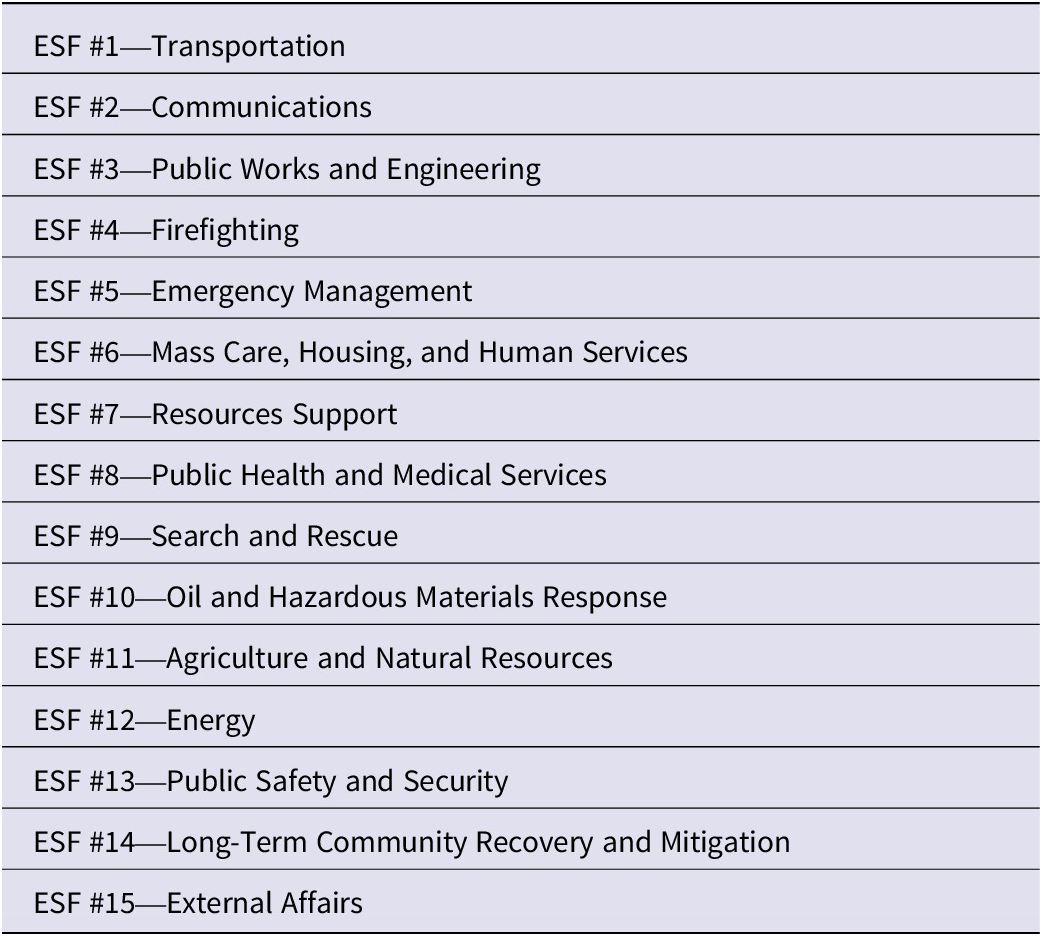
The National Disaster Medical System (NDMS), which began in the 1980s, also evolved as a partnership between the Departments of HHS, Veterans Affairs, and, after it was established in the early 2000s, Homeland Security.Reference Franco, Toner and Waldhorn4 The NDMS is coordinated by HHS through the Administration for Strategic Preparedness and Response (ASPR). NDMS has the authority to provide surge support to local, state, regional, and federal medical systems, including the Department of Defense, and response capabilities. The NDMS has both federal and civilian components, providing opportunities for engagement on either a career or an as-needed responder (NDMS website link). The NDMS is part of the larger National Response Framework (NRF). The NRF has Emergency Support Functions (ESF), which are listed in Table 1. The HHS ASPR has responsibility for ESF-8: Public Health and Medical Services and shared responsibility for ESF-6: Mass Care, Housing, and Human Services.
Emergency Support Functions under National Response Framework. Shown are the 15 emergency support functions that are carried out by responding teams from sources such as local governments, tribal governments, state governments, the federal government, selected contractors, and the American Red Cross

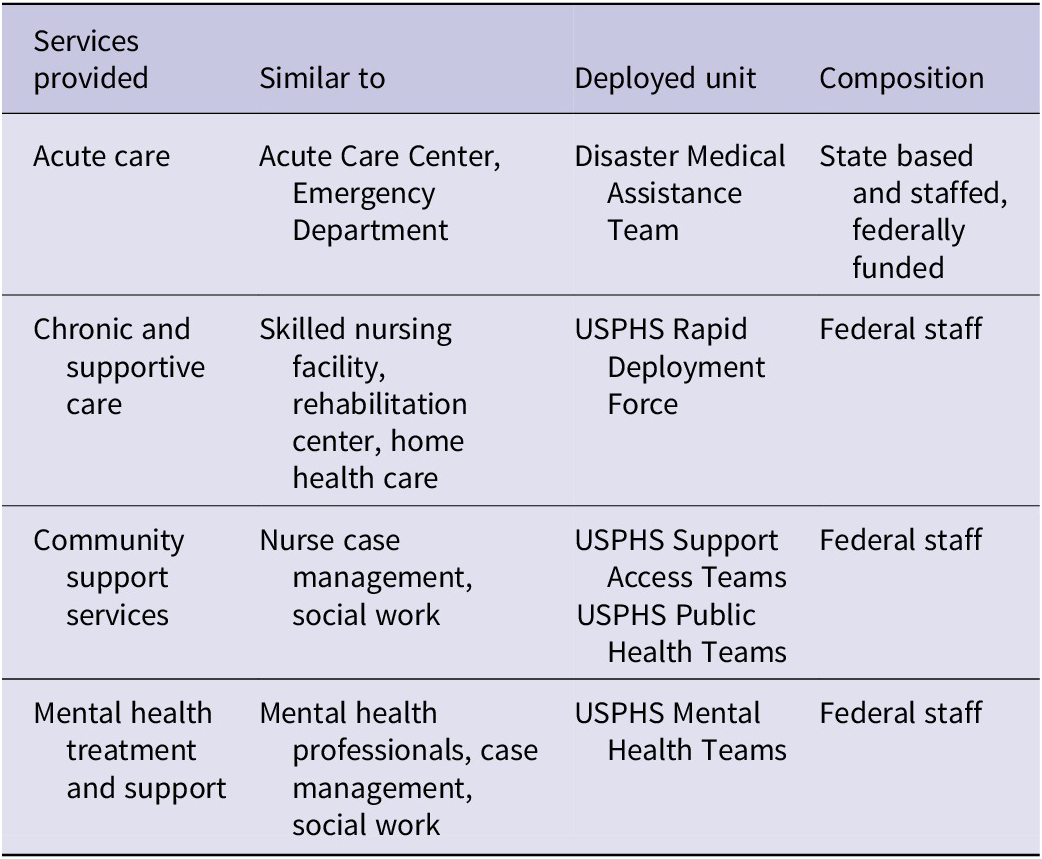
One unique RDF mission type was to staff a Federal Medical Station (FMS), a special needs shelter concept piloted during Hurricane Katrina in 2005. An FMS is a temporary facility located typically in a building of opportunity near the disaster area, to care for individuals and family units that are dependent upon ongoing support for activities of daily living and therefore require additional medical support and assistance not typically available in general shelters in the context of a disaster response using a continuum of care model as listed in Table 2.
Examples of on-site coordination based on a continuum of care model. Shown are examples of specific specialty teams based on needs and available resources that were used in the period 2005-2018

The FMS has a modular configuration, with each component mobile for maximum flexibility and geographic distribution. The concept is modeled for all population ages and for subacute care conditions. The basic FMS unit includes 250 beds, which can be scaled up or down, generally in 50-bed increments. The FMS can accommodate individuals, individuals with caretakers, and family units.
The FMS cache of equipment, medications, and supplies can be provided to state and other organizations to run themselves or the cache can be set up and run by Federal staff, including USPHS officers and others. The cache contents were developed and selected by the USPHS and have evolved over time.
This report is intended to capture and disseminate some of the key practices and processes that emerged from the FMS experience.
Three Deployments that shaped the Operational Approach to Displaced Populations with chronic health needs
1) Hurricane Ike in 2008. The RDF PHS-1 was called for a deployment response in September 2008 to Louisiana for the Category 4 Hurricane Gustav but the mission quickly altered to redeploy to College Station, Texas, to respond to Hurricane Ike, another Category 4 storm with 1-minute sustained winds of ≥145 mph.5 The USPHS experience during that deployment was seminal for understanding the needs and care of displaced populations in the context of an FMS, and identifying and solving challenges that were applied to future deployments and HHS policy.
Transport to the FMS facility. Texas residents at risk for displacement based on their health care status and geographic location relative to the path of the hurricane were transported by ground and military aircraft to shelter in place in College Station, TX, in advance of the arrival of the most intense elements of the storm. Local authorities with federal support ordered mandatory evacuation of Galveston Island and 3 counties with an additional 4 counties, all east of the city of Houston undergoing voluntary evacuation. The facility used for the FMS was the Reed Sports Arena of Texas A&M University with the central floor available for setup and receiving.
During the setup, the team became aware that, due to storm conditions, not all expected equipment and supplies had arrived. The team made alliances, most critically with leadership and staff at Texas A&M University, and subsequently partnered with local vendors, including private sector pharmacies, to identify and inventory what might be available to fill gaps and provide care. Further, the team sought providers of general support services such as food, sanitation, communication lines, and security.
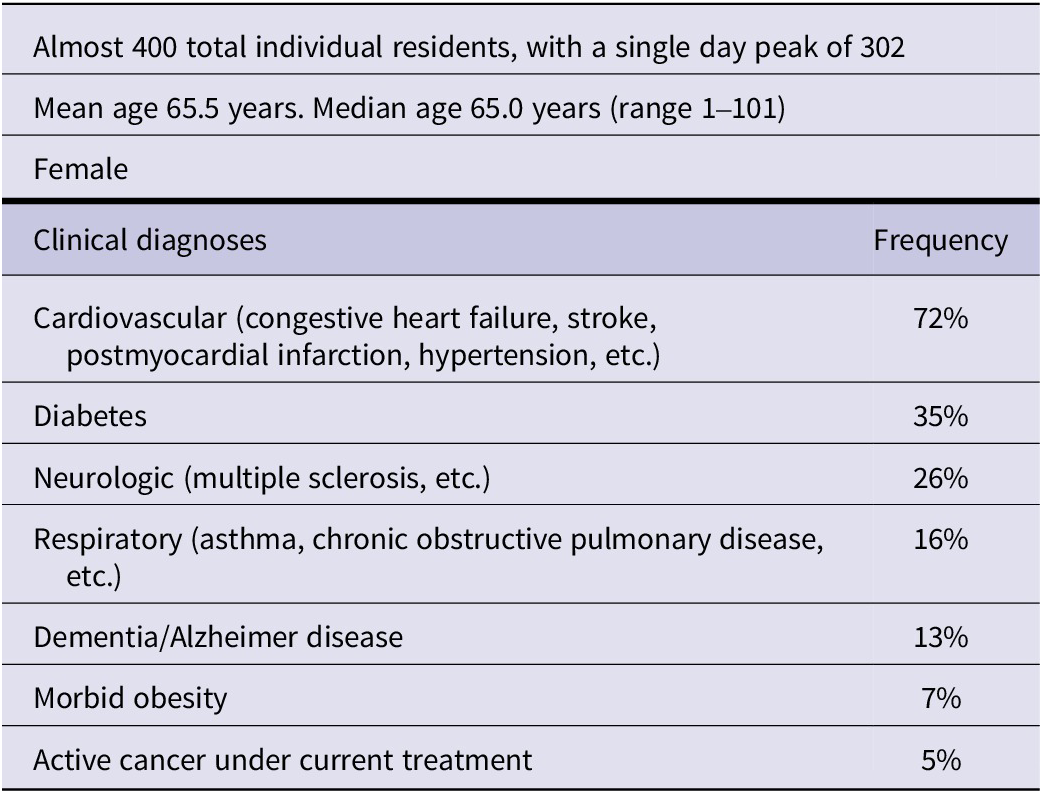
Initial assessments of evacuees. In anticipation of the need to process hundreds of people in a short time period, the team organized the Operations Section to assign deployed individuals who were not primary medical caretakers into a unit called Intake, Consult, and Discharge (ICD). The role of this unit was to focus on the initial intake and concurrently identify the type of destination, such as hospital, skilled nursing facility, general shelter, temporary housing, or return to home, for more definitive care when conditions permitted. While a precise destination was generally unknown for most individuals and family units, the needs status of the individual and criteria for discharge could be established. The initial intake site also included several cots set up for emergent acute care and resuscitation, to be staffed by a colocated Disaster Medical Assistance Team from Georgia, to which individuals in need could be diverted. During initial intake, the team processed approximately 300 individuals over a period of 10 hours. During subsequent days, another 30 individuals were admitted in small groups into the FMS. The characteristics of the total admitted population are summarized in Table 3.
Demographics of FMS residents at College Station, TX, September 2008. Most FMS residents had a chronic medical condition on admission, with many having multiple conditions, which is why the total exceeds 100%

General operations principles. The organizing operational principle at the FMS was to develop a suitable physical structural layout, workflow, support services, and overall schedule to mitigate the disorientation and anxiety induced by disaster conditions and displacement. Options and decisions had to be made quickly, given the circumstances, the physical layout of the facility, available personnel, and other resources.
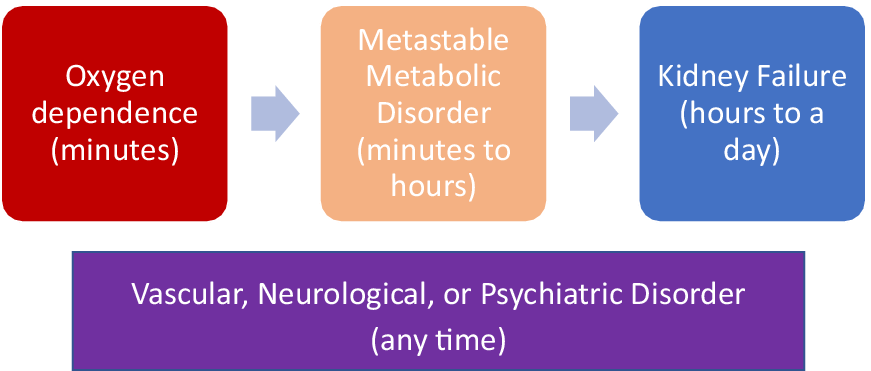
The USPHS team arranged to have the provider care station located at center court on the arena floor and arranged the cots in a grid with numbered rows and lettered columns to quickly identify the location of any individual. People with an increased risk of decompensation due to oxygen dependence, metabolic instability, kidney failure, or vascular, neurological such as seizure disorder, or psychiatric disorders were placed in close proximity to the central care station, dependent upon the estimated time to decompensation (see Figure 1). In addition, individuals at risk for abuse for a range of reasons were also placed to maintain appropriate monitoring. Examples of other practices and processes the response team implemented were: designated washrooms, a quarantine area, secure pharmacy cache, confiscation of patient controlled substances coordinated with tracking and documentation through nursing administration, predictable and well publicized sleep cycles, meal schedules, nighttime quiet and curfew times, a communication system reliant on verbal public announcements supplemented by written notifications, a designated and supervised smoking area with schedule, and resident check in and check-out procedures for activities such as group walks or smoking breaks.
Time to acute decompensation following loss of support.
Note: Reading from left to right, the likelihood of medical deterioration during an emergency situation decreases. Individuals with metastable chronic mental health conditions (e.g., chronic schizophrenia, manic-depressive disorder), vascular disease, or neurological disease (e.g., seizure disorder) may decompensate at any point during a disaster situation. Separation from usual medical providers, loss of social supports, and lack of medication may precipitate deterioration.

Domestic animals that accompanied FMS residents were maintained in a separate area of the FMS under the care of a veterinarian with liberal daytime visiting and release privileges to promote resident morale.
Whenever possible, FMS residents were permitted and encouraged to use objects and artifacts from their home environment. Based on the information provided at intake to the FMS, anyone with a special day such as a birthday was provided the opportunity for recognition of the event.
Due to storm damage and impassable roads, oxygen supply was limited to a few tanks and a few regulators in the FMS cache. In order to support people with supplemental oxygen needs, the solution was to use oxygen concentrators borrowed from local facilities to provide sufficient enrichment to compensate for the lack of oxygen supply. Even with this solution, the team had to connect several patients to each concentrator using extension tubing, constraining their mobility but allowing them to breathe comfortably. The need to improvise respiratory support in disaster settings has been noted by others.Reference Trotter6
Providing clean bedding for over 300 people was based on an adequacy or sufficiency of care model, with cots supporting 1-inch plastic mattresses covered with sheets made of paper on one side and plastic on the other. For some people, particularly those with mobility challenges including morbid obesity, this arrangement resulted in skin breakdown, including decubitus ulcers.
Staffing. In view of the magnitude of the disaster, care providers and support personnel were mobilized and deployed with diverse skills, training, and experience, posing challenges in allocating staff over the course of 24 hours. It was key to establish a local incident command structure (ICS) that could direct operations within the FMS and interact with the central command structure operating at a regional, state, and national level. The on-site ICS had to meld all personnel, including federal, state, volunteer, and local teams, into 1 functional unit. In this deployment staffing was supported and facilitated by Texas A&M University, particularly the School of Medicine and School of Nursing. Texas A&M provided on-site personnel on a 24/7 basis.
A priority was to inform and rapidly train newly onboarded team members of the Adequacy or Sufficiency of Care model, status of available resources, current operational status, accountability and responsibility expectations, and priorities in a dynamic environment. The care model requires a clear and detailed explanation to staff to understand that the care offered is not the same as the standard of care in a clinic or hospital. It is therefore essential to have written procedures available for all staff at all times in multiple locations that are readily accessible. Staffing was augmented by volunteers from the community, particularly Texas A&M University students in medicine, nursing, pharmacy, and other allied health professions. An 8-hour shift schedule helped manage the inevitable fatigue and burnout that staff experience with working under stressful conditions and attempting to obtain adequate sleep.
All staff participated in morning and evening meal service, as feeding hundreds of people while concurrently dispensing medication and assisting with personal hygiene was not possible with the personnel assigned to a single shift. Individuals and small teams were designated for assignments such as mental health consultation, infection control, and wound care. The colocated Disaster Medical Assistance Team functioned as an on-site Rapid Response and Code Team. The RDF Intake, Consult, and Discharge subteam provided consult and ancillary services such as physical therapy, occupational therapy, and dietary guidance. The pharmacy staff provided individual medication counseling and performed vaccination for tetanus and influenza protection on an as-needed basis. Additional staff were assigned to orienting, coordinating, and training volunteers as new care team members arrived. A communications subteam was tasked with providing follow through for general communications to ensure that policies and plans, including safety and security procedures, were received and understood by the various personnel, particularly the local volunteers, who were on site.
Wound care. Many of the people who were admitted to the FMS no longer had access to comprehensive skin care. Further, many had conditions such as diabetes or circulatory compromise that, in combination with the use of the temporary bedding material, predisposed them to skin breakdown, decubitus formation, and infection. To address the needs of people with skin breakdown, infected wounds, or at risk for such complications, the PHS RDF formed a dedicated wound care team that made rounds daily. After an initial assessment, the PHS RDF recognized the need for experienced surgical consultation to perform debridement, packing, and drainage. A military-trained surgeon from the USPHS Reserves was able to deploy for 3 days and brought wound care supplies donated by the National Institutes of Health Clinical Center. That short-term deployment and intervention had a major impact on the ability to safely manage wounds and improve the care and comfort of FMS residents.
Security. Lack of physical barriers in a large sports arena and lack of resources become vulnerabilities during a disaster. The pharmacy is likely to be a particular target for theft, as well as personal medications and belongings of staff and FMS residents. Medications and personal items can rapidly become exchange commodities to obtain contraband or other items.
Individuals may be victims of abuse in its many forms, and under stressful conditions they may become more of a target. Therefore, in addition to the presence of a uniformed security team to provide visibility at all times, the PHS RDF made it a priority to enlist all deployed staff to augment the security team to observe and report any questionable activity.
The PHS RDF established, disseminated, and enforced security policies including a zero tolerance for contraband, substance abuse, and abuse of other persons. The PHS RDF made a proactive effort to educate all FMS residents and engage collaboratively and recognize the efforts of local security support and building staff.
Deployment follow-up. For all deployed personnel, the PHS RDF developed a stand-down process that consisted of a debriefing on site, followed by optional opportunities for group teleconferences 1 and 2 weeks later to provide a sense of closure. Mental health consultants were made available to deployed officers for consultation on a per-request basis, as responders have a risk of developing posttraumatic stress disorder.Reference Asaoka, Koido and Kawashima7–Reference Spall, Van der Auwera and Gerstner15 PHS officers that served with RDF PHS-1 received a Letter of Appreciation to their personnel file and several were nominated for additional awards.
On a national level, members of RDF PHS-1 attended a follow-up conference in Tennessee, with the outcome of that meeting and additional policy review resulting in a restructuring of the disaster response capability. Post Hurricane Ike, the Department of Health and Human Services designated permanent specialized teams based on the models developed by RDF PHS-1 to train and focus on postdisaster discharge and patient movement and staffing of local and regional events of significance such as large gatherings for national holidays and international meetings. In parallel, a new generation of policies and general operating procedures was developed.
2) Superstorm Sandy in 2012. Several aspects of the storm were unusual including the timing of the occurrence in late October 2012 and the geographic breadth of the impact affecting eight countries and 24 states within the United States. Sandy was the largest Atlantic storm on record, causing nearly $70 billion of damage. Particularly hard hit were New Jersey and the New York City area, with tens of millions of people directly affected. Multiple factors including infrastructure damage and the overwhelming scope of the needs delayed a rapid recovery.Reference Lempert and Kopp16–18
Among those most profoundly affected were residents of assisted care and rehabilitation facilities in Brooklyn, NY, where the structures were rendered uninhabitable by direct storm damage and flooding from the adjacent ocean waters. For residents of 3 such facilities, the staff and residents were temporarily relocated to unused portions of a building that was part of the Brookdale Medical Center, an approximately 500-bed tertiary care and teaching facility with a catchment area of about a million people serving primarily Eastern Brooklyn (Kings County) and parts of Queens County. The deployment framework was one of providing care for an undefined time period and not the more familiar scenario of a temporary FMS as a bridge to transfer to more definitive care in a time span of 14 to 21 days. As a result, 3 USPHS RDF teams were deployed sequentially to cover the mission. Some details highlighting the unique aspects of the mission follow.
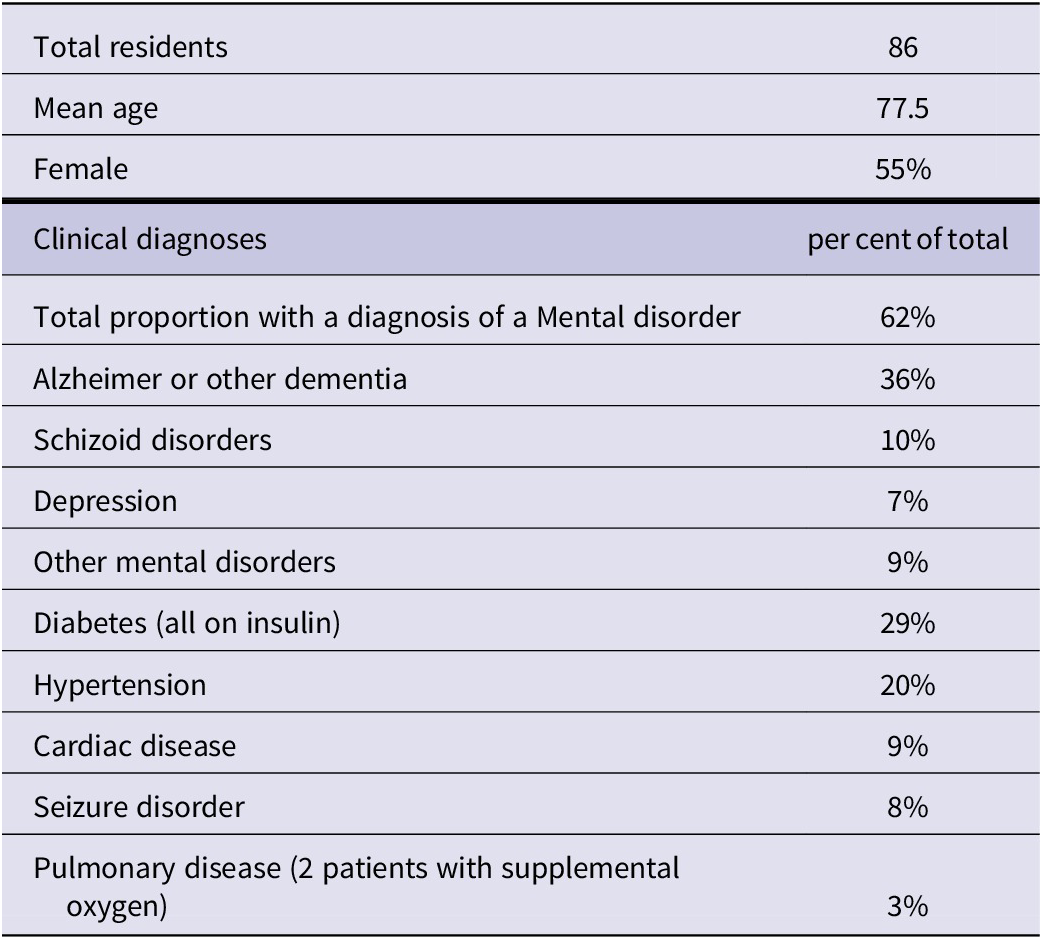
Displaced population. The 86 residents from 3 extended care facilities were accompanied by professional care takers, most of whom were also displaced by the storm damage. The professional care takers knew the facility residents and provided valuable background and support, while the USPHS team focused on providing immediate medical care, logistical support, and preparation for eventual patient discharge. The elderly population was characterized by a lack of mobility, the majority were receiving treatment for a mental health disorder, and almost half were under Do Not Resuscitate status. The characteristics are shown in Table 4 and reflect that the FMS residents came from assisted living facilities that provided support for daily living activities for people with chronic medical conditions that limited their capacity to live independently.
Demographics of FMS Residents at Brookdale Medical Center, Brooklyn, NY, October 2012, to indicate range of chronic conditions. The elderly population was characterized by a lack of mobility, receiving treatment for a mental health disorder, and almost half were under do-not-resuscitate status

Shelter. The proximity of the FMS to the activities and services of a functioning hospital meant that many of the support services, for which provision which could be challenging in other circumstances (a meal kitchen, access to durable medical equipment, imaging facilities, and medical subspecialty consultation, etc.) were available through negotiation combined with generosity of spirit and willingness to collaborate of the host institution, Brookdale Medical Center. As in prior deployments, all hands participated in serving meals.
Health care. The displacement of residents disrupted their normal routines. It did, however, provide an opportunity for a reassessment of their health care needs, which for many changed as a consequence of the storm conditions. The USPHS teams were able to address both ongoing and new health care needs through the expertise of individuals and by arranging for external evaluations. While medical and surgical issues could be readily addressed, the evolving mental health needs required augmentation of mental health professionals with prescribing expertise, so 2 additional officers with such capabilities were deployed and added to staff. With complex medical problems as a substrate, the management of mental health in a generally frail population emerged as a priority.
Follow-up. As with previous deployments, RDF Command Staff implemented group and individual follow-up of deployed personnel with recognition, a sense of closure, and to address any individual issues.
3) Gulf Coast Hurricanes in 2017. Hurricane Irma made landfall in the Florida Keys as a Category 4 storm on September 10, 2017, with winds of 130 mph and set a record for the strongest hurricane for maximum sustained winds outside the Gulf of Mexico and the Caribbean. Hurricane Maria made landfall on September 20, 2017, in Puerto Rico as a Category 4, with winds of 155 mph. The following discussion is focused on the Hurricanes Irma and Maria experience in Florida.19–22 RDF PHS-1 was deployed to Florida prior to Hurricane Irma’s landfall to be prepositioned for a mission assignment. Following a brief 38-hour assignment to Ft. Myers in western Florida, the team was reassigned to be stationed at Florida International University (FIU) in Miami. By coincidence, the National Hurricane Center is colocated with the University.
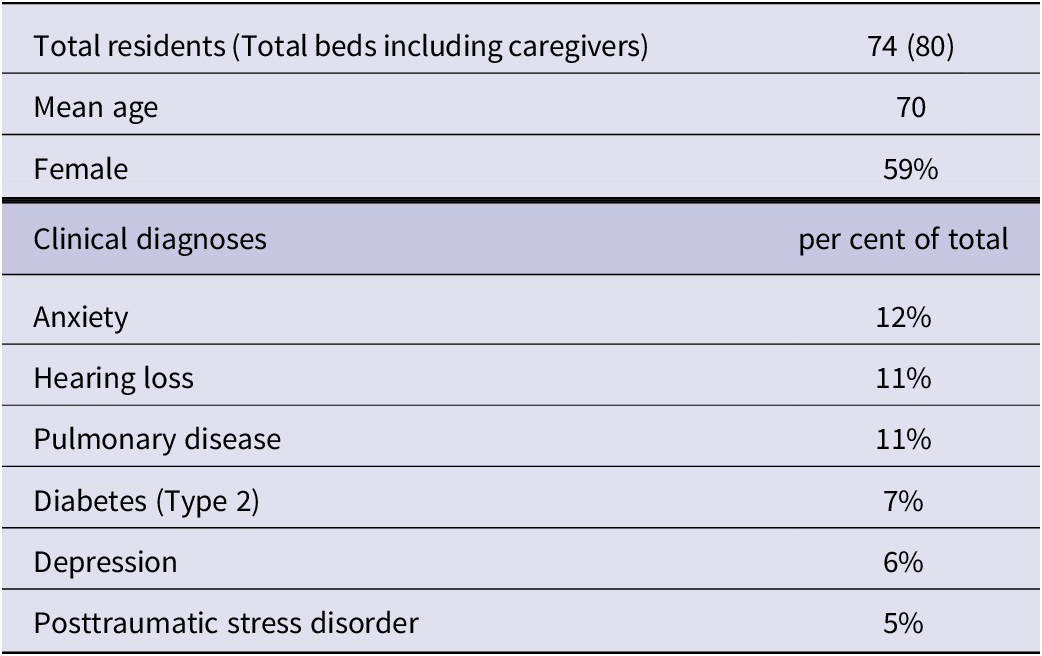
Displaced population. The initial assignment was to care for approximately 80 people displaced from the Florida Keys who were housed in a vacant retail space in a mixed-use building. The initial population characteristics are summarized in Table 5 and consisted primarily of senior citizens with chronic medical conditions that limited their ability to live independently. A few days later, an annex with another 40 people with similar demographics was added to the mission.
Population Characteristics Disaster Response FMS Florida International University, Miami September 2017. Shown are selected demographic and diagnostic categories of FMS residents, at Florida International University, Miami, FL September 2017

Shelter. Florida International University is a state-designated hurricane shelter facility with multiple spaces that can be configured based on needs. The 2 empty spaces were used as an FMS for the 120 people from the Florida Keys, which had toilet and shower facilities. To provide visualization of all residents while maintaining security, the central staffing station, consisting of several desks, was placed near the street entrance. FIU provided 24-hour coverage of uniformed security personnel.
Staffing. All officers participated in serving meals to clients, turning, lifting, assisting clients, and maintaining safe and sanitary conditions. FIU nursing, medical, and other students performed limited duty under supervision to gain experience with the disaster response care model.
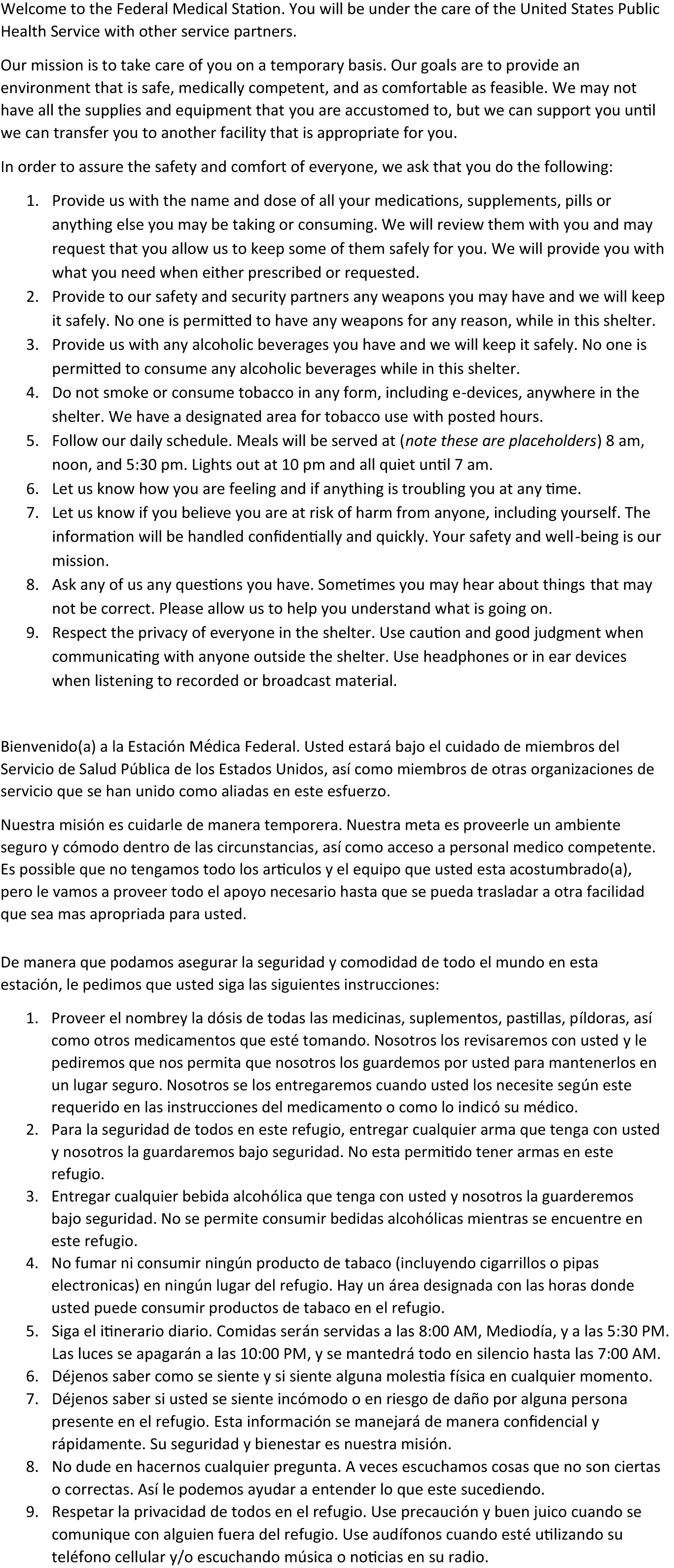
Health care. Establishment of local partnerships, particularly with pharmacies, was essential to provide continuity of care and avoid exacerbations of chronic illness with acute decompensation. Emergency services were available through arrangements with providers at local hospitals that were functional after the storm passed. Based on prior experience, the RDF team distributed an information sheet to all FMS residents and staff in English and Spanish, translated by a native of Puerto Rico, to provide a rapid orientation to expectations. Copies of the sheet are shown in Figure 2.
FMS orientation for residents, in English and Spanish.
Note: Living through a disaster is disorienting and frightening for most people, but particularly for those with chronic conditions that require support on a daily basis. Arriving in a shelter can compound the sense of disorientation. To help address the transition RDF PHS-1 developed a document in English and Spanish to set expectations.

Second wave. When the initial wave of 120 FMS residents was discharged, a second wave of 87 people arrived, most of whom had end-stage kidney disease and were receiving chronic hemodialysis. The patients were residents of and were initially cared for in the US Virgin Islands, but due to posthurricane infrastructure destruction, were transported as a group to Puerto Rico to receive dialysis. With the imminent arrival of Hurricane Maria, the group was quickly evacuated to Miami in order to obtain their dialysis treatment.
To prepare for the arrival of the dialysis patients, RDF PHS-1 cleaned the entire facility and, using funds contributed by Officers, bought enough pillows on the local commercial market to ensure that everyone being transferred to the facility would have one for the night.
The management of the dialysis cohort required a systems approach.Reference Kopp, Ball and Cohen23–Reference Mendoza AVILÉS and Finne26 Most hemodialysis services in the United States are provided by 2 major vendors and coordination is through federal contractors. To establish the logistics for the group, the PHS RDF held an all stakeholders meeting with the coordination contractors, the transportation vendor, Florida International University representatives, and the USPHS staff to develop a schedule and set of responsibilities that integrated meal content and times, medication administration, patient preparation for transport, transport, dialysis, and return to the facility so that each dialysis patient had the proper regimen of diet, medication, and treatment. The USPHS Services Access Team was charged with the on-site coordination of patient preparation and transport.
Through this systems approach for all aspects of health care, feeding, and transport, resources and effort were efficiently used.
Follow-up. As with previous deployments, RDF Command Staff implemented group and individual follow-up of deployed personnel with recognition, a sense of closure, and to address any individual issues.
Discussion
The populations served in an FMS or other shelter are generally those dependent on the support of others, tend to the elderly but can have a wide age range, frequently have mobility and/or sensory limitations, and may have mental health needs.
Each of the scenarios provided additional experience for RDF PHS-1 to develop effective care policies. The first scenario was characterized by people primarily from private dwellings, with an expectation to return to those dwellings. The second scenario was characterized by people from assisted living facilities that were either destroyed or uninhabitable due to the storm, and had to be distributed to other facilities. In addition, the population had a high proportion of individuals with a psychiatric diagnosis and do-not-resuscitate status. The third scenario was characterized by people from widely scattered geographic areas including outside the continental United States. A large proportion of these individuals were on kidney dialysis and required developing and implementing an ongoing complex logistical plan to maintain proper care.
The cumulative experience resulted in a systems approach to providing temporary care for displaced populations that included:
-
• Transition to an adequacy or sufficiency of care model (rather than an optimal care model), where resources are limited.
-
• Identification and resource allocation for individuals based on risk and potential rate of decompensation.
-
• Flexibility in staff roles and assignments including all hands participation in meal service and on-call readiness or scheduled time slots by subteams for medical rapid response and resuscitation, wound care, occupational and physical therapy, infection control, and mental health counseling.
-
• Proactive engagement with local assets, vendors, and partners to cover potential shortfalls and needs. This process builds on what previously was referred to as the “Mercy Model” for public health missions but adapted to domestic disaster response.Reference McGuinness, Perez and Coady27, Reference Perez, Coady and De Jesus28 Included are dietary needs, oxygen supply, medications, durable medical equipment, hospice, and dialysis services as appropriate.
-
• Maintain ongoing awareness of situational dynamics, such as accompanying care takers needing care themselves, security, resident abuse potential, contraband use, and general mental health needs.
-
• Establish redundant communication channels, including verbal and written, for the displaced population, for the response teams and staff, and for community partners.
-
• Establishment of a structured environment serves both the displaced population and the care providers and partners well, minimizing uncertainty and providing some level of consistency. A structured environment includes predictable day and night schedules, admission of natural daylight into the facility if feasible, consistent meal schedules, curfew hours, facility entering and leaving policies, quarantine areas, no smoking within the facility, and prohibition of self-medicating and use of controlled substances other than those dispensed by the designated health care team. A smoking policy with a designated supervised smoking area and possibly restricted hours can address the needs of residents with nicotine addiction. Controlled substances that are prescribed to individuals should be confiscated upon admission and kept in the pharmacy.
-
• Provide follow-up for deployed personnel with recognition, a sense of closure, and to address any individual issues.
Given that in the United States, more than 50% of all adults have at least 1 chronic medical conditionReference Boersma, Black and Ward29 and that more than 25% have multiple chronic diseases, the need to address their needs in a disaster response would benefit from applying the principles and practices applied by RDF PHS-1.
The experiences and practices described here derive from multiple disaster deployments and thus can be confidently recommended to be incorporated into disaster response plans to improve the care for selected populations that require support with activities of daily living. That said, new situations and new populations may require further adaptations to optimize outcomes. The USPHS RDF team structure has recently been dissolved; alternative training and deployment models will be needed to ensure optimal care is delivered in the context of a disaster. The formal and structured assessment of response deployments similar to those described here with wide dissemination of the findings can continue to contribute to improving the focused and specialized care of those most in need.
Acknowledgments
The success of the missions described was only possible through the cooperation and support of the collaborating partners that included the administration, faculty, staff, and students of Texas A&M University, the Brookdale Medical Center, and Florida International University. We acknowledge the inspirational leadership of RADM Boris Lushniak in his support of the personnel and mission of the US Public Health Service and its critical role in disaster response.
Competing Interests
The authors declare none.