Introduction
The study of the role of business sectors in crimes against humanity, specifically violence against workers, and accountability for their participation in such crimes, is of growing interest at both national and international levels.Footnote 1 In Argentina, both military and civilian participation in these crimes has tended to be prosecuted mostly in the domestic judiciary system, particularly through criminal lawsuits, although there have also been civil suits. These cases have not only opened up an avenue for prosecuting corporate responsibility in human rights violations, but have also been important in giving the victims the opportunity to tell their stories in their own voices.
Argentina’s so-called ‘Última Dictatura’ or ‘Last Dictatorship’, self-proclaimed as the ‘Proceso de Reorganización Nacional’ (‘National Reorganisation Process’; 24 March 1976–10 December 1983), carried out a systematic plan of illegal repression, which led to the disappearance of 30,000 people. Many others were kidnapped, tortured and then released.Footnote 2 The causes, significance and consequences of the ‘Última Dictatura’ remain the subject of ongoing debate within historiography and broader political and social discussions. Dominant interpretations have primarily emphasised the political aspects, particularly highlighting the role of the armed forces in their conflict with political organisations and guerrilla groups. In contrast, the experiences of the working class and the labour movement during this period have long been marginalised in academic research, despite workers comprising at least one-third of the victims.Footnote 3 This article aims to contribute to the understanding of the forms of repression suffered by the working class in the sugar industry and the involvement of business sectors in these repressive practices.
In Argentina, references to corporate participation in state terrorism date back to at least the early 1980s. They appeared in landmark documents such as CONADEP’s 1984 report Nunca Más Footnote 4 – established to investigate crimes committed during state terrorism – and, at the provincial level, in the Informe produced by the Comisión Bicameral Investigadora de las Violaciones de los Derechos Humanos en la Provincia de Tucumán (hereafter ‘Comisión Bicameral’).Footnote 5 Among other findings, these entities documented the military use of company premises as clandestine detention centres (CDCs). While some key political–economic studies into the role of business actors and their links to state terrorism were published at the end of the twentieth century,Footnote 6 this issue did not become the subject of sustained scholarly inquiry until the twenty-first, as pointed out by Horacio Verbitsky and Juan Pablo Bohoslavsky.Footnote 7 Their edited volume – a significant milestone in this field – brought together researchers to examine the economic structures underpinning the ‘Última Dictatura’ and the complicity of business sectors, opening up new lines of investigation.
There have been efforts from below, through civil society mobilisation and institutional innovators,Footnote 8 to bring these corporate actors to account. For example, in 2014, a team of researchers from the Secretaría de Derechos Humanos de la Nación and the Programa Verdad y Justicia de la Nación, which are both part of the Ministerio de Justicia y Derechos Humanos de la Nación Argentina, the Centro de Estudios Legales y Sociales (CELS), and the Economics and Technology Department of the Facultad Latinoamericana de Ciencias Sociales (FLACSO) carried out a joint research project resulting in 2015 in the publication of the report Responsabilidad empresarial.Footnote 9 This report focused on the repression of workers in 25 companies throughout the country during Argentina’s ‘State Terrorism’. It was first handed over to the Procuraduría de Crímenes contra la Humanidad (PCCH)Footnote 10 and later distributed among human rights, victims’ and other organisations. The report revealed a pattern of ‘repressive business practices’ that made it possible to identify strategies by economic actors to control the working class through state terrorism and showed that these repressive policies were deployed by both national and foreign businesses in six different regions.Footnote 11 The Argentine judiciary is investigating and prosecuting some of the companies mentioned in the report, although progress is variable.
Previous investigations into and reports on the Concepción and La Fronterita sugar mills had provided relevant but fragmented evidence.Footnote 12 By contrast, Responsabilidad empresarial was the first study to systematically and exhaustively address corporate responsibility for crimes against humanity in the two sugar mills.Footnote 13
In Tucumán, the report’s impact extended directly into the judicial arena: the chapter on La Fronterita became a central source for the prosecutorial indictment. The La Fronterita case was initially filed in September 2016,Footnote 14 and subsequently, in April 2018, the prosecution filed formal charges with a request for the indictment of six individuals linked to the company,Footnote 15 as will be discussed below. Subsequent work developed these lines of inquiry from historical, economic and social perspectives,Footnote 16 while Gabriel Pereira analysed the process of bringing this case to trial,Footnote 17 and Ana Sofía Jemio, Silvia Nassif and Daniela Wieder provided a perspective that underscored the importance of community organisation in La Fronterita.Footnote 18
Across Latin America, the field has expanded significantly in recent years. Leigh Payne, Pereira and Laura Bernal-Bermúdez conducted a comparative analysis of how victims have driven accountability initiatives against companies that collaborated with dictatorships and armed conflicts – processes they define as efforts to hold corporate actors accountable for their participation in, or facilitation of, gross human rights violations – drawing on cases from Argentina, Brazil, Colombia and Guatemala.Footnote 19 They stress that, even in the absence of active international pressure for accountability, business veto power often emerges through the economic, social and political connections of the corporate sector with the ruling elite; state dependence on the private sector for income, employment and resources; and active lobbying and campaigning efforts.Footnote 20 This dynamic has been particularly visible in Tucumán, where some corporate actors have maintained strong bonds with groups controlling the state, ensuring both economic and political influence and often restricting access to corporate records, thereby hampering accountability efforts.
A key development was the creation, in 2018, of the Red Internacional sobre Procesos Represivos, Empresas, Trabajadores y Sindicatos en América Latina, RIProR), which brought together diverse research teams. As a result of these exchanges, a collective volume was published in 2022, analysing cases from several countries in the region, including Brazil, Chile and Uruguay.Footnote 21
In recent times, the most significant development has been the conviction in 2018 of senior executives from the multinational Ford. Their trial focused on crimes committed against 24 of Ford’s workers at the General Pacheco plant. The trial was held in San Martín, a district of Buenos Aires. The Ford company itself could not be charged, given that criminal trials can investigate the responsibility only of individuals, not of corporations. Instead, two of Ford Argentina’s top managers – a former production manager and a former head of plant security – and a retired military officer were tried. The trial lasted a year, and the two Ford officials, Héctor Sibilla and Pedro Müller, were sentenced to 12 and 10 years in jail, respectively, as they were considered ‘partícipes necesarios’ (‘willing participants’) in the crimes committed. Santiago Omar Riveros, the area’s military chief, was sentenced to 15 years in prison. The reasoning behind the verdict held that a central motive of the military and the corporation was to subjugate workers and combat trade union activity.Footnote 22
In this paper, the working class and business sectors are seen as opposing forces in accountability efforts. This perspective informs our analysis of the conflict in Tucumán, and draws a link between two dictatorships: the so-called ‘Revolución Argentina’ (1966–73), and the second, more recent dictatorship, the ‘Proceso de Reorganización Nacional’ (1976–83). A common feature of these two dictatorships is the monopolistic concentration of sugar production for the exclusive benefit of specific business sectors, which was successful due to the dramatic restructuring of labour relations and the severe repression of the working class, carried out in coordination with the armed forces. This explains why the companies in question provided the essential tools for the crimes to be committed: through these repressive methods, they were able to break down the working-class union structure, which stood in their way, and obtain enormous corporate benefits in return.
The methodology of this article combines a quantitative approach, used in the analysis of sugar production and the study of victims, with a qualitative approach that draws on oral testimonies, judicial and governmental documents, and other sources from provincial and national archives, as well as previous academic research. The triangulation of multiple sources made it possible to overcome knowledge gaps resulting from the scarcity or deliberate destruction of documentation.Footnote 23 The article pulls together some of the most relevant findings of recent research on the organisation of the Tucumán sugar workers’ movement and the repressive policies it faced, with particular attention paid to the role of business actors and the possibilities of holding them accountable. It presents findings developed in Responsabilidad empresarial and in subsequent studies, focusing on the cases of the La Fronterita and Concepción sugar mills, with a more detailed analysis of the former, as the only one of these two cases to have advanced significantly in judicial proceedings. The historical analysis reveals how, in a province whose economy remains heavily dependent on the sugar agro-industry, a business sector promoted the repression and subjugation of the working class in coordination with the state apparatus, and sheds light on the extent of the veto power it continues to wield in the region.
This article furthermore identifies and describes specific practices of corporate collaboration with state terrorism, exposing the connection between business interests and the repressive apparatus, particularly in underexplored sectors such as the rural workforce. By analysing the political, economic and social situation alongside the judicial trajectory of the La Fronterita case, it underscores how business actors and the armed forces acted in concert to commit crimes against workers. At the same time, it highlights the role of social mobilisation and institutional innovation in driving judicial investigations.
Worker Conflict in the Province of Tucumán
Brief Historical Contextualisation
In the 1960s and 1970s, significant economic transformation occurred alongside the political radicalisation of the working class against the backdrop the Cold War, which had already become a global battle between the United States and the Soviet Union. During the decolonisation of Africa and Asia, the Cuban Revolution of 1959 became a catalyst for popular struggle in Latin America. In response, the United States worked with local dominant sectors to promote a series of dictatorships, claiming that they were ‘modernising’ regimes in order to bolster their support for the US struggle against communism,Footnote 24 and to uphold its National Security Doctrine.Footnote 25 The coup d’état in Argentina of June 1966 (the ‘Revolución Argentina’) against President Arturo Illia (1963–6) by General Juan Carlos Onganía, that in Brazil of 1964, and the US military intervention in Santo Domingo in 1965 were all part of the same process.Footnote 26
The period during the mid-1970s was closely linked to the global economic crisis of capitalism that began in 1973, as well as economic and social reconfiguration. It also led to a reactionary offensive against labour worldwide. In Argentina, Peronism returned to power in May 1973 after 18 years of political proscription, initiating what is known as the ‘third Peronist government’, only to be rapidly succeeded by the self-proclaimed ‘Proceso de Reorganización Nacional’ dictatorship, which seized power during a coup in March 1976. This led to state terrorism on a national scale, as well as a regressive reconfiguration of the country’s economic and social structure, which weakened industry and the domestic market and led to a drastic decline in wage earners’ share of the country’s income (45 per cent in 1974; 22 per cent in 1982),Footnote 27 exacerbated by deindustrialisation and a strong emphasis on financial activities, ushering in economic policies known globally as ‘neoliberal’.Footnote 28
The Sugar Province of Tucumán and FOTIA
In the late nineteenth century, sugar became the most important industry in the province of Tucumán. Social relations were structured around sugar; mill owners and sugar cane producers fought over the price of raw materials, and mill owners and their workers over salaries. The corporate power wielded today by Tucumán’s sugar companies goes a long way back in the province’s history.
Since sugar cane must be processed quickly once it is cut, all the mills’ sugar facilities – the fields where the sugar cane was grown and the factories where the sugar was processed – were in close proximity. As a result, factories were built in the middle of plantations, leading to a large concentration of industrial and rural workers in the same area.
During the 1960s and early 1970s, a period of significant economic growth and social transformation throughout the world, there were high rates of social conflict in Tucumán as tensions over wealth inequality rose. The most prominent activists were working-class members of the FOTIA union, founded in 1944.Footnote 29 From the beginning, FOTIA was linked to Peronism. However, activists with other political agendas, such as radicals, communists, Trotskyists and socialists, also coexisted within the organisation.
By the end of 1965, the province of Tucumán was in the midst of an economic, social and political crisis. During that year, despite a successful harvest, a severe overproduction crisis exacerbated the economic hardships faced by workers.Footnote 30 Labour conflicts reached new heights. Employers sought to tackle the crisis by deferring the payment of wages, thereby penalising the workers.Footnote 31
The self-proclaimed ‘Argentine Revolution’ dictatorship, and what the regime officially called its economic ‘rationalisation’ plan,Footnote 32 inflicted unprecedented damage on the local economic structure. By the end of the dictatorship in 1973, the results were as follows: 11 of the 27 sugar mills that had existed in Tucumán until 1966 had closed, more than 50,000 jobs had been cut, more than 200,000 people had emigrated from the province, and the monopolistic concentration of the sugar industry had intensified, resulting in enormous financial benefits for a select group of Tucumán industrialists. However, the main victims of economic rationalisation were members of the working class, the small and mid-range sugar cane producers, and other members of the popular sectors.Footnote 33
As a ‘solution’ to the overproduction crisis and the alleged ‘inefficiency’ and economic vulnerability caused by the ‘mono-production’ of the sugar industry, the government encouraged and accelerated a policy of technological modernisation, entailing the concentration of the industry, which would benefit the owners of the biggest mills in the northwestern provinces of Salta and Jujuy, as well as in Tucumán. In 1973, the harvest was 25 per cent better than in 1965, but with significantly fewer workers and mills. In other words, although sugar production continued to be the most important economic activity in the province, the numbers employed had decreased drastically. To enforce labour relations and suppress growing working-class resistance, the government and the dominant business sectors resorted to systematic repression. Federal police forces were deployed in a significant part of the provincial territory. Worker conflicts and protests continued to increase in the affected sugar towns, but so did repressive measures by the government. During this period, several protests had high degrees of participation, including from the university student movement.Footnote 34
Despite the end of the ‘Argentine Revolution’ dictatorship and the accession of the third Peronist government in May 1973, conflict in Tucumán was exacerbated as social classes confronted one another. In September 1974, the workers went on a strike – organised by FOTIA – that lasted for more than two weeks. This strike occurred at the zenith of FOTIA’s power as a union. Factory and plantation workers fought for better wages and improved labour conditions against the sugar industrialists, who tried to increase profits through lowering salaries and introducing technological innovations that reduced labour. Plantation workers fought the sugar cane producers for salary increases, and small and medium sugar cane producers confronted industrial producers over the price of the raw material.
One of the most pressing issues for workers, which had long been discussed by FOTIA, was that of labour displacement by advanced machinery and measures of ‘economic rationalisation’ in both the fields and the factories. The workers reported that each mechanical harvester replaced between 90 and 260 plantation workers. In a provincial context of high unemployment levels compared to the national average due to the policies described above, the advanced machinery threatened to deepen the employment crisis. For this reason, FOTIA rejected any attempts at advanced technology until new jobs were created. It also demanded employment stability for field workers.Footnote 35
In February 1975, the military campaign code-named ‘Operativo Independencia’, ordered by President María Estela Martínez de Perón, was unleashed on Tucumán.Footnote 36 This operation was supposedly in response to campaigns waged by the PRT-ERP guerrillas in the Tucumán hills from May 1974.Footnote 37 Despite the low number of guerrillas involved (fewer than 150) more than 5,000 troops were deployed in the province.
Under Operativo Independencia, workers in Tucumán experienced arrests, kidnapping, forced disappearance and repressive measures within the workplace. During the resulting court case, also known as ‘Operativo Independencia’,Footnote 38 the high number of worker victims was brought into the open and the deployment of the military in Tucumán was revealed to be an example of the violence that would later deepen in the province and continue at a national scale. Operativo Independencia entailed the armed forces’ occupation of public spaces and drastically limited the social and political activities of the workers’ movement, a key actor in the province. The use of the armed forces for internal repression paved the way for the coup d’état of 1976: members of the armed forces, in partnership with business and civilian sectors, thought it necessary to overthrow the Peronist government in order for state terrorism to truly take root at a national level under their centralised control. The new regime launched an economic project characterised by deindustrialisation, financial speculation and capital flight, accompanied by a sharp rise in external debt and a marked increase in unemployment and in the precariousness of employment. All these developments laid the foundations for the neoliberal policies that, to varying degrees, continue to be in place up to the present day.
On 24 March 1976, the day of the coup, FOTIA was in the midst of a 36-hour strike to protest against the assassination of its general secretary, Atilio Santillán, two days earlier. Tucumán’s dictatorial governor, General Antonio Domingo Bussi,Footnote 39 used force to put down the strike. This type of dictatorial repression concentrated on the workers’ movement in the sugar industry and other key combative popular sectors, and made use of the ‘repressive network’.Footnote 40
Corporate Responsibility in Human Rights Violations: Concepción and La Fronterita
Responsabilidad empresarial, which analysed military–business collaboration in crimes against humanity in Tucumán, focused on two sugar mills, Concepción and La Fronterita, which dominated all economic activities in the region, and thus serve as highly relevant case studies.Footnote 41 Both companies had a long-standing presence in the province and in the communities that had settled around the mills, dominating the local labour scene. In addition to their mills, both firms owned vast areas of land in the sugar cane plantations.
The Concepción sugar mill, founded in 1835 and located in Banda del Río Salí, around 5 km from the provincial capital San Miguel de Tucumán, continues to be regionally significant in terms of production. Between 1974 and 1983, the firm that owned the sugar mill was the Compañía Azucarera Concepción, dominated by the Paz family until 2004. Notable is the close relationship between the Paz family and Bussi, provincial governor and military leader, documented in a photograph of Bussi with Luis Manuel Paz, with the caption: ‘The military governor visiting the sick at the new El Bracho Hospital, with his dear friend Luis Manuel Paz.’Footnote 42 Other researchers have also noted this relationship. For instance, the historian Eduardo Rosenzvaig found that the mill was ‘key for the intelligence and counterinsurgency operations of the armed forces. It provided logistical support to General Bussi.’Footnote 43 According to journalist Hernán López Echagüe, Bussi installed an operations base at the Concepción mill, with a heliport built specially for his visits and a room where he would spend the night.Footnote 44 Journalist Marcos Taire too pointed to the heliport and the close links between the Paz family and Bussi as evidence that the family ‘was collaborating with the military’.Footnote 45
La Fronterita sugar mill was founded in 1923 and owned by the José Minetti company until 2016. It is located approximately 45 km from San Miguel de Tucumán in the department of Famaillá, a key sugar zone. Many mills continue to operate in this area alongside Highway 38, which crosses the province from north to south. Famaillá is also one of the locations where the Operativo Independencia military was deployed most intensively in February 1975. The José Minetti business group owned not only the sugar mill and the refinery but also large quantities of land with sugar cane plantations.Footnote 46
In recent years, both mills have changed hands. In 2016, more than 93 years after the José Minetti company founded La Fronterita, the mill was sold to the multinational Arca Continental, the second-largest Coca-Cola bottler in Latin America. The José Minetti company did, however, maintain its land holdings in the area. The Concepción mill was sold by the Compañía Azucarera in March 2017 to Emilio Luque, who is linked to a well-known supermarket and wholesaler chain in Tucumán. In January 2026, Luque sold the mill to Santiago Blaquier, heir to the Ledesma group.Footnote 47
The influence of these business sectors should not be minimised. They are still key actors in Tucumán and, therefore, still exert veto power. In Minetti’s case, this power has a national reach. In his analysis of the La Fronterita case, Pereira highlights that this national reach influenced efforts to achieve accountability. He finds that the Minetti company, with its close links to people in high places in politics and the judiciary, was able to stall judicial proceedings.Footnote 48 Despite this, as described below, progress has been made in the search for accountability.
Victims of Repression at the La Fronterita and Concepción Sugar Mills
Just as families, human rights organisations and social and political sectors were looking for information on the whereabouts of kidnapped workers, the Argentine state was denying that illegal repression was taking place.Footnote 49 The number of victims at the sugar mills has yet to be determined, for several reasons. In the first place, the perpetrators of state terrorism attempted to hide any evidence. Another explanation is related to the irregular hiring practices at the mills: a significant number of sugar workers, especially those who worked in the fields, either did not have a formal labour relationship with the mills for which they worked (so that the mills could avoid paying employment charges) or were temporary workers; in both cases employment records are difficult to find. In addition, plantation workers, especially during the harvest period, were often helped by their family members, even though only one salary was paid out to the ‘head of the family’: women and children peeled sugar cane during the harvest, and women also provided meals for the men, essential for their productivity.
Furthermore, not all victims or their relatives have had the opportunity to seek redress for the crimes they suffered, either because of lack of awareness (owing to the precarious conditions in which they live), or out of fear of retaliation. Although there is no doubt that a capitalist production relationship was established between employees and businesses from 1970 onwards, it was paternalistic and domineering. This was particularly true of the Paz family, which continues to exert power in the area, as explained by Luis Savino in his study of workers at the Concepción sugar mill. The Paz family had founded the town’s educational, recreational, religious and welfare institutions:
All areas of daily life [were] controlled in one way or another by the Paz family … The mill of ‘The Paz [family]’ had such a direct relationship with the institutions of the city of Banda del Río Salí that it was difficult for its inhabitants to see where the mill began and where they ended. In their life stories, the mill was everything.Footnote 50
Fear of retaliation was reported by the Comisión Bicameral in its 1984, which stated that family victims ‘were reluctant to actually file the necessary complaints, as they considered the repressive apparatus still remained in force in the province’.Footnote 51
Although more than 30 years have passed since the re-establishment of democracy in Argentina, there are strong signs that the perpetrators and their interests still dominate part of the state – particularly in a province like Tucumán, where they remained in political power long after the demise of the dictatorship. For instance, Bussi, the commander of Operativo Independencia, who then served as the province’s de facto governor during the ‘Última Dictatura’, was elected governor and served from 1995 to 1999. He was later sentenced to life imprisonment for crimes against humanity. Furthermore, not only victims and their families but also professionals like human rights lawyer Laura Figueroa have been subjected to intimidation: the latter has been threatened on several occasions and has even had her house attacked.Footnote 52
Responsabilidad empresarial produced a first preliminary report on the fate of 51 victims from the La Fronterita and Concepción sugar mills.Footnote 53 Of these, 17 were kidnapped and subsequently released (one in three); 30 were kidnapped and disappeared (nearly two in three); and four were murdered. If we categorise the victims according to the periods when they were assaulted (see Table 1) we find that Period 1 (under Operativo Independencia) shows differences in the repressive dynamics compared to Period 2 (the ‘Última Dictatura’, i.e. the regime that governed after the 1976 coup): for every three worker victims, two were kidnapped during the ‘Última Dictatura’. Furthermore, during Operativo Independencia, for every four workers kidnapped, one disappeared; whereas after 24 March 1976, this relation is reversed: for every five workers kidnapped, four disappeared.
Worker victims from the La Fronterita and Concepción mills

Table 1 Long description
Counts are organized by period, with columns for kidnapped and subsequently released, kidnapped and disappeared, murdered, and total. Prior to Operativo Independencia on 13 Oct. 1974, 1 person is recorded as murdered, total 1. Under Operativo Independencia under Vilas from 8 Feb. 1975 to 18 Dec. 1975, 6 were kidnapped and subsequently released and 1 was kidnapped and disappeared, total 7. Under Operativo Independencia under Bussi from 18 Dec. 1975 to 24 March 1976, 4 were kidnapped and subsequently released and 2 were kidnapped and disappeared, total 6. During the governorship of Bussi from 24 March 1976 to 5 Dec. 1977, 5 were kidnapped and subsequently released, 17 were kidnapped and disappeared, and 1 was murdered, total 23. During the governorship of Montiel Forzano from 5 Dec. 1977 to 10 Dec. 1978, 10 were kidnapped and disappeared, total 10. Two people were detained on separate occasions before and during the Ultima Dictatura, listed under kidnapped and subsequently released, total 2, and exact dates unknown lists 2 murdered, total 2.
Source: Nassif, ‘Terrorismo de Estado en la Argentina: Tucumán’, p. 72.
However, judicial and academic research work continued and intensified after publication of Responsabilidad empresarial, resulting in an increase in the number of declared victims of state terrorism: in April 2018, in the indictment presented by Tucumán’s Fiscal Federal (Federal Prosecutor) Pablo Camuña, 68 victims were cited in the La Fronterita case.Footnote 54 The Argentine judiciary has recorded its appreciation of academic institutions’ efforts to compile lists of victims. Nassif’s 2020 article ‘Terrorismo de Estado’ was mentioned by Federal Prosecutor Camuña in the La Fronterita indictment; he indicated that the results of her investigation were ‘extremely relevant and beneficial for trials of crimes against humanity, even in pre-trial proceedings’.Footnote 55
It is also essential to highlight the union ties of the victims: at the La Fronterita sugar mill, at least 12 of the 25 victims were linked to the union’s executive committee and/or its representative bodies and, at the Concepción plantation, at least 12 out of the 26 victims had union links. This means that almost half of the victims at these two mills were active union members. According to the testimonies of relatives, the kidnappings were linked to the victims’ union activities; for instance, captors frequently raided the victims’ homes looking for information about the union. During torture, victims of kidnap were interrogated about participants in union activities.Footnote 56
At both mills, senior staff members of the executive committees – general secretaries and their deputies, together with other FOTIA members – were kidnapped, which clearly highlights the dictatorship’s policy of eliminating its leaders. The union was known for its high levels of activism, and had played an active role in organising the September 1974 strike.
Corporate Practices of Repression
Evidence points to the participation of the Minetti company and the Paz family in the commission of crimes against humanity, and to the fact that many of the victims at these two mills were trade unionists. There is substantial testimonial, documentary and historical evidence for the role of businesses like La Fronterita and Concepción in the illegal repression of their workers. In the most extreme case, the La Fronterita mill transferred part of its private property to the armed forces to be used as a CDC, where many human rights violations occurred.
It is also relevant to note that, once democracy was re-established, the owners of La Fronterita did not file any complaints regarding the kidnapping and torture of their workers, nor have they protested against or complained about the installation of military facilities on their private property. They did not provide information regarding what had happened to the workers under their leadership. Despite this, there is evidence that the company knew what was going on.Footnote 57 The mill collaborated with the military in numerous ways. For instance, the workers at La Fronterita had to carry an ID card issued by the military while at the mill.Footnote 58 Many of the workers were detained on entry to or exit from the mill, on private property. The military presence at La Fronterita thus increased fear among workers.
Half of the victims at the Concepción sugar mill were kidnapped from the company’s labour establishment in the colonias. These ‘colonies’ were created to exploit the lands owned by the sugar companies and came to represent the worker production units at the mill. In other words, the workers lived and laboured in the same area. The mill owned their homes, and they were allowed to remain there if they complied with company rules. This means that all the workers who were kidnapped from their homes were kidnapped from the company’s private property. Despite this, the mill owners never put forward any claims. Responsabilidad empresarial was the first study to highlight this aspect of the case, representing a methodological innovation by insisting that the geographical focus of the investigation into corporate accountability needed to be expanded to cover all the territory controlled by these business sectors due to the production characteristics of the sugar agro-industry.Footnote 59 This conclusion was based upon the fact that not only the factory itself but also the fields and workers’ housing constituted corporate property – another example of the extent of the power these companies had over the lives of their workers.
After the 1976 coup, kidnapping became so widespread that even the Concepción workers’ union building was used as a CDC. The perpetrators also used union vans as mobile units for the abuse of victims. It is no coincidence that the perpetrators chose the Concepción union building as one of their centres for repression: using the space where previously protests had been coordinated as a place of torture added to the terror. The Concepción’s union had been one of the most active during the period prior to the ‘Última Dictatura’, with a high level of participation.
In the case of the La Fronterita sugar mill, owner Minetti and manager Camilo Bergero not only handed over part of the company’s private property to state perpetrators but also requested the kidnapping of their own workers. This was evident from the testimony of worker and trade union leader Antonio Narciso Maciel, who was subjected to multiple abductions. He was first kidnapped on 11 March 1975, and again a few days before the coup in March 1976 (he was eventually released on 13 June 1979). He reported that his captors asked him about the guerrillas while he was being tortured but that they told him that they knew he ‘had nothing to do with the guerrillas and that he was only a sugar union leader’. They also warned him: ‘Now you know what can come your way; your bosses can send you to jail.’Footnote 60 Maciel also indicated that he could see Bergero’s signature when he was forced to sign documents while detained.Footnote 61 Although the documents’ contents remain unknown, the fact that Bergero’s signature was visible suggests company involvement in military affairs.
In addition to demanding the torture of trade union leaders, the management of the sugar cane mills provided the armed forces with logistical resources, vehicles and information essential to their repressive activities. Like La Fronterita, the Concepción sugar mill provided vehicles for the kidnapping and transfer of victims; this was confirmed during the trial known as ‘Arsenales II – Jefatura II’.Footnote 62
The Concepción mill also provided information to the Tucumán Police Headquarters’ intelligence section, known as ‘D-2’, through its private security company, Ecos SA. This was revealed in June 2010 in evidence presented by Juan Carlos Clemente, a witness during the ‘Jefatura I’ trial, which focused on the CDC known as ‘La Jefatura’ (the Tucumán Police Headquarters building).Footnote 63
Additionally, managers at La Fronterita provided detailed information to the military about its workers and their union activities. One of the witnesses in the ‘Arsenales II – Jefatura II’ trial, Juan Martín, stated that the owners and bosses of the La Fronterita mill had ties to military perpetrators.Footnote 64 This was confirmed by José David Costa, a former worker:
The owners of the company are aware of everything that happened, of everything the military did. They accused us of being on the Left, communists, socialists … big capitalists are like that. The army spoke with the company bosses to get their help with a list of the people who lived in the colonia and to tell them who … was with the union. They saw people at union meetings … the managers would pass by and make note of who was there and then go and tell the military.Footnote 65
Another worker made similar observations, stating that some of the bosses in the company kept track of who participated in the union meetings in order to pass this information on to the military.Footnote 66
In several cases the mills fired employees while they were ‘disappeared’. In other words, in addition to the illegal and repressive activities of the armed forces, many workers also faced extreme labour abuse and discrimination. For instance, Fidel Jacobo, the general secretary of the La Fronterita union in 1975, filed legal reports in defence of his colleagues, many of whom were fired while missing. Jacobo disappeared after filing these reports. Maciel, mentioned above in respect of the mill owners’ complicity with the military, was similarly fired while ‘disappeared’. He was first kidnapped in March 1975. In June 1975, an intimidating telegram arrived at his home, stating that he had been fired for failure to carry out his work. The union attempted to intervene on his behalf, but the company refused to reconsider the dismissal. Following his kidnapping, Maciel was imprisoned until 1979. When he regained his freedom in 1979 and returned to the mill, the manager Camilo Bergero (‘Beryera’) informed him that he had lost his job because he had been in prison for four years.Footnote 67
Such illegal dismissal practices also occurred at the Concepción mill. A former worker said that, when he returned from captivity in 1979, he attempted to go back to his job at the mill, where he encountered ‘an impenetrable wall of military personnel’. They did not let him return to the mill; he learned, furthermore, that a military representative named Ledesma was now in charge of the union.Footnote 68 These forced dismissal and removal practices were often linked to worker disappearances, and increased when kidnapping became more systematic and widespread after 1976. The armed forces and business sectors joined forces for a purpose: to get rid of activist workers through the criminal practices of the terrorist state.
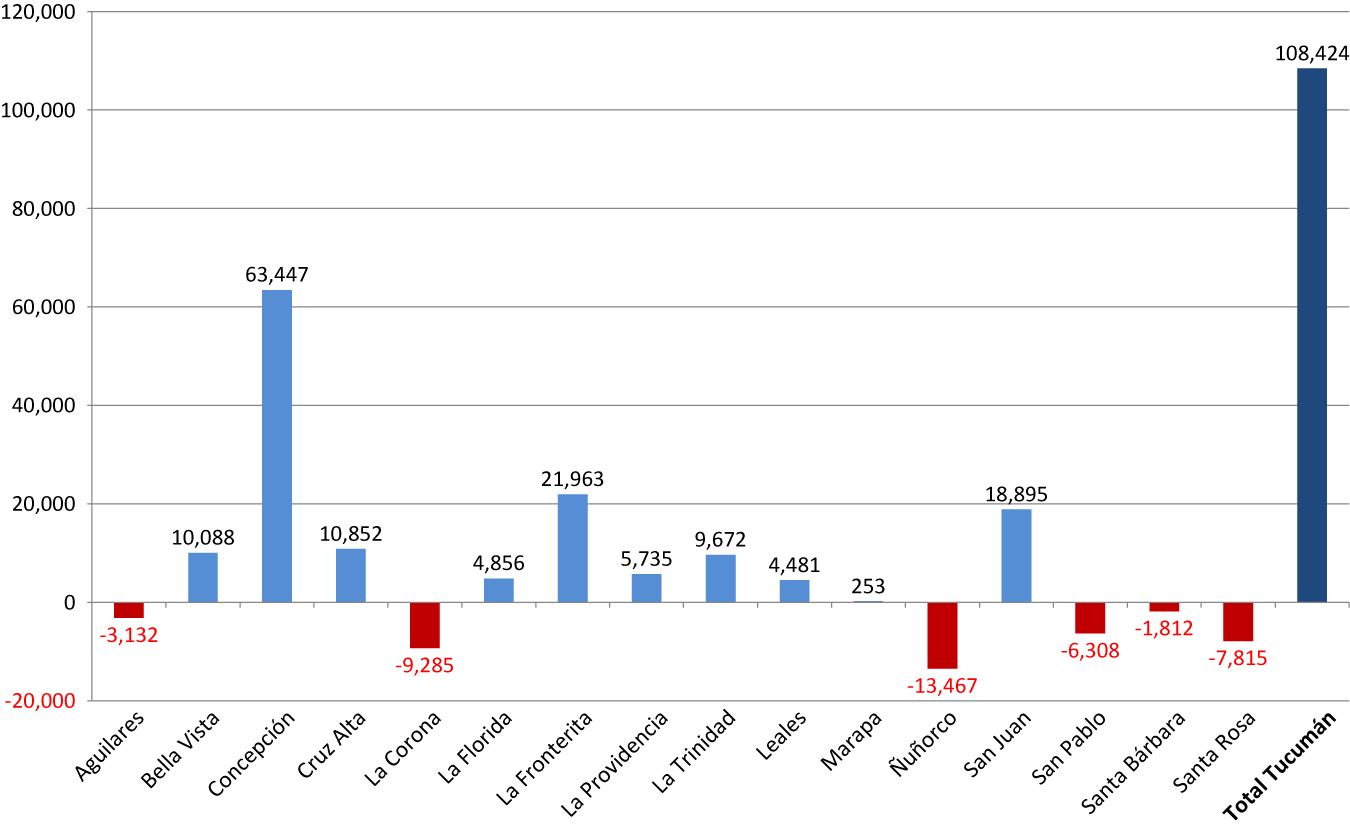
Noteworthy also are the financial contributions that both sugar mills made to the Fondo Patriótico Azucarero, created by executive decree under Bussi.Footnote 69 This fund created a link between the leaders of the sugar industry and the military, and was used in part to finance repression. It is no coincidence that the biggest monetary contribution to the fund – estimated at between US$700,000 and US$900,000 – was made by the Concepción mill. La Fronterita contributed between US$300,000 and US$400,000.Footnote 70 All this takes on greater significance in the light of the big increases in sugar production from which these corporations benefitted between 1976 and 1983 (see Figure 1) resulting from the repressive policies that led to a massive reduction in worker protests.Footnote 71
Variation in sugar production by sugar mill in Tucumán between 1976 and 1983 (tonnes)

This was especially true of the Concepción mill, at the time the biggest sugar producer of the 16 in Tucumán, which implied requiring the most labour. By 1973, under the ‘Argentine Revolution’, production at the Concepción mill increased by 116 per cent compared to 1965. During the 1976 harvest, the Concepción mill employed 5,077 workers. For the following harvest in 1977, the number of workers decreased sharply to 2,279 (a reduction of approximately 56 per cent).Footnote 72 The mill’s peak of productivity occurred during the period of the ‘Última Dictatura’: it produced 42 per cent more sugar by the end of the dictatorship in 1983 than it had in 1976, while simultaneously reducing its labour force by more than a half. Considering the previous impact of union strikes on the mill’s productivity, it is clear why the bosses should have been interested in crippling union representation through kidnapping and ‘disappearing’ its leaders.
The La Fronterita mill similarly benefitted during this period: it increased its production by 30.7 per cent between 1976 and 1983,Footnote 73 and its owner, the Minetti group, acquired the Bella Vista mill in 1979.Footnote 74 There were also significant reductions in employment levels at La Fronterita, especially among plantation workers.
To these reductions in employment levels was added a decrease in the negotiating power of the sugar plantation workers.Footnote 75 This was directly linked to the increase in the use of advanced sugar production technology, against which the workers had long protested and which was the subject of the FOTIA strike in 1974 (see above).
In summary, this analysis of Concepción and La Fronterita sugar mills demonstrates coordination between the armed forces and business sectors, which worked together to abuse and murder workers in order to achieve their shared objectives. For the military, the objective was ideological and tactical: eradicating perceived ‘subversion’ and dismantling militant unionism to impose strict social order.Footnote 76 This included dismantling the executive committees and representative bodies, enabling the perpetrators to impose new labour and production relationships to their own benefit. The business sectors had been attempting to make some of these changes since the 1960s but were able to fully achieve them only by joining forces with the violent regimes that ruled from 1973 onwards.
Institutional Innovators and Corporate Accountability Efforts in Tucumán
Of the two sugar mills under scrutiny, only the case against La Fronterita has made any progress, and it is therefore the focus of this section. The charge in this case is based on the criminally relevant contributions that the owners of the La Fronterita sugar mill made to the systematic plan of human rights violations carried out in the province of Tucumán from February 1975. The case was also raised during the Operativo Independencia trial,Footnote 77 during which an expert witness referred to La Fronterita in her testimony before the court.Footnote 78 Under the Argentine justice system, the abuses committed by the owners of the mill have been classified as crimes against humanity and are not subject to any statute of limitations.Footnote 79
The trial seeks to hold accountable both those who exercised administrative functions within the sugar mill and the members of the board of directors who endorsed collaboration with the army for the execution of its criminal plan. This collaboration included the cession of the property for the installation of a military base that operated as a CDC, authorisation of the free movement of military forces within the property and their access to the mill workers’ homes, as well as the supply of vehicles used in the kidnapping operations.
In terms of the applicable legal norms and standards, the crimes against humanity committed in Argentina between 1975 and 1983 have been tried under national legislation,Footnote 80 operating under the norms of international criminal law, which proscribes such conduct, and under the regional human rights system, within the framework of the IAHCR and the Inter-American Court of Human Rights.Footnote 81
The involvement of various Tucumán companies in crimes against humanity was first reported by CONADEP in 1984 and by the Comisión Bicameral, which established that part of the private property of the La Fronterita sugar mill was used as a CDC.Footnote 82 However, the Ley de Punto Final (the ‘Full Stop Law’, No. 23492 of 1986), the Ley de Obediencia Debida (the ‘Due Obedience Law’, No. 23521 of 1987) and the presidential pardons (1989–90) granted to the generals who had been convicted of genocide prevented these crimes being prosecuted.Footnote 83 Following the annulment of these laws by the National Congress and the Supreme Court,Footnote 84 trials for crimes against humanity were resumed in 2005, marking a turning point in the prosecution of crimes perpetrated during state terrorism nationwide. In this new context, some victims and their families found themselves more able to testify.Footnote 85 This represented a qualitative leap forward in the pursuit of truth and justice: new questioning and lines of inquiry by prosecutors and plaintiff lawyers including regarding the victim’s occupation and union-related and political activities at the moment of kidnapping. This information later proved to be invaluable for investigating and determining corporate responsibility as evidenced, for example, in the Ford case.Footnote 86
Towards the end of 2015, following preliminary investigations, a prosecution was initiated in 2016 for crimes against humanity in the case that became known as ‘La Fronterita’. As discussed elsewhere in this article (see ‘Introduction’ and ‘Institutional Innovators and Corporate Accountability Efforts in Tucumán’; see also note 15), this represented the first court case in Tucumán to investigate the participation of economic actors in crimes during the period of state terrorism. Such a delay in judicial accountability was not unique to Tucumán. On the contrary, ‘in spite of existing multiple judicial cases of workers and trade-union victims across the country, it was not until September 2015 that, for the first time in national history, a trial investigating crimes against humanity perpetrated by an executive during the dictatorship took place: [that of] Marcos Levín, owner of La Veloz del Norte, a transport company from Salta’.Footnote 87
In 2014, an interdisciplinary team was formed to produce Responsabilidad empresarial. Lawyers prosecuting corporate complicity, human rights activists, victims and their families, and specialists were constantly consulted. The authorship team selected for detailed analysis the cases of La Fronterita and Concepción sugar mills from a survey of documentary, press, judicial and bibliographic sources which provided evidence of corporate participation in crimes against humanity.Footnote 88 Research by the Responsabilidad empresarial team and the Tucumán’s PCCH mutually reinforced each other, and fed into the court cases themselves. Actors from academia, human rights organisations and the judiciary have advanced the cause of institutional innovation despite the power and influence of businesses in the province.
Responsabilidad empresarial was the first publication backed by prestigious state and non-governmental organisations to list systematically the corporate responsibility of the Tucumán sugar mill owners in these crimes against humanity, and it did this by organising and analysing a wealth of information that had previously been fragmented and dispersed,Footnote 89 including a file containing union and business information at the offices of Tucumán’s Delegación Regional del Ministerio de Trabajo (Regional Delegation of the National Ministry of Labour). This, cross-referenced with multiple other archives and documents, allowed us to identify a total of 51 worker victims from the two sugar mills.Footnote 90
In the cases investigated, social–historical contextualisation made it possible to understand the relationship between the strategic position of sugar-related activity in the province’s economy, the economic fabric of the business groups, worker organisation and conflict, and repression. In this way, the conditions that led to the crimes against workers were exposed, opposing the official discourses that tried to justify the 1976 coup d’état and the ensuing dictatorship as a mere ‘war against subversion’. Social–historical contextualisation also resulted in the revaluation of the union and political activity of the victims, constituting another methodological innovation. This innovation was brought to bear in the first stage – the public hearings, which took place between 2016 and 2017 – of the Operativo Independencia and Ford trials, with Responsabilidad empresarial being presented and used by expert witnesses.Footnote 91 Furthermore, as discussed earlier in this article, understanding the territorial influence of these agro-industrial companies has also been key, given the characteristics of their labour relations.
Following this trend, the National Congress enacted a law in 2015 that mandated the establishment of a commission to produce a report on corporate accountability.Footnote 92 However, Mauricio Macri became president only a week after the law’s enactment, and the Commission has still not been established. His government’s four-year term entailed the resurgence of denialist government discourse – which sought to downplay state terrorism and question the figure of 30,000 disappeared – alongside the underfunding of research into crimes against humanity.Footnote 93 This context was also propitious for the Supreme Court’s attempt to reduce the sentences of those who had been found guilty of crimes against humanity, which could not however be carried through due to a huge negative reaction on the part of the populace.Footnote 94
Despite the problematic human rights context, Tucumán’s Federal Prosecutor sought an indictment in April 2018 for the arrest and investigation of six La Fronterita executives for the kidnapping of 68 people, many of whom were former workers and trade union leaders; one of his sources was Responsabilidad empresarial.Footnote 95 The defendants were Jorge Alberto Figueroa Minetti, Alfredo José Martínez Minetti, Eduardo Butori and Fernando Cornú de Olmos, all members of the board of La Fronterita when the crimes were committed. Carlos Alfredo Allende Pinto and José Camilo Bergero, in his capacity as deputy director, were also charged.
In another example of legal innovation, in mid-2018 human rights organisation ANDHES appeared as a plaintiff in the case against the six La Fronterita executives in order to represent the family of trade union secretary Fidel Jacobo Ortiz, who is still missing.Footnote 96
In May 2019, a Federal Judge ruled that there was insufficient evidence to prosecute the six executives,Footnote 97 although he recommended that Tucumán’s Federal Prosecutor further the investigation. As critically noted by the Subsecretaría de Derechos Humanos, the judge controversially justified his ruling by arguing that he ‘considered that the former executives had been victims of the repressive forces, the same way that the workers, activists and union members had been’.Footnote 98
In June 2020, in a different international and national political context (that of the COVID-19 pandemic), the La Fronterita case was dismissed for ‘lack of merit’ by Tucumán’s Federal Appellate Chamber. Tucumán’s PCCH and ANDHES filed a ‘motion for reconsideration’ to be reviewed by the Federal Criminal Cassation Chamber. Finally, in December 2020, Chamber IV of the Federal Criminal Cassation Chamber annulled the ‘lack of merit’ which had originally been declared in favour of the executives.Footnote 99 In 2022, the PCCH requested the seizure of part of the property of the La Fronterita sugar mill (although the group had sold the factory, it still owned land): the effect of this was to freeze the mill’s assets and prevent the sale or disposal of its property while the court proceedings were under way.
The public proceedings in the trial for crimes against humanity at La Fronterita have not yet been scheduled, even though the case began years ago. Two of the six original defendants have died, demonstrating how the passing of time and economic veto power benefit the business sectors. At the end of 2023, Javier Milei and Victoria Villarruel, known for their denialist stance on crimes against humanity, won the presidential elections. In this new scenario, characterised by a worsening economic crisis and repression by the current government, this trial and others are likely to be significantly affected.
Conclusion
In Argentina, throughout the twentieth century, the labour movement played a crucial role in national politics, the economy and society. This was especially true in Tucumán where, despite the debilitating policies of economic ‘rationalisation’ imposed by the ‘Argentine Revolution’ dictatorship, the workers’ movement stayed organised, resisted, and fought back, bringing together small and medium sugar cane producers and inspiring other popular sectors, like the student movement. The labour movement also gained an important role within business establishments, successfully challenging corporate authority and calling out unjust relations of production. This happened not only at the mills but also in the countryside through FOTIA, which united factory and plantation workers. It additionally brought together other smaller unions and representative bodies that followed different political agendas. The workers developed a claims-and-complaints programme that went beyond salary negotiations, demanding the nationalisation and diversification of the sugar industry. Through such intensive action, the movement made significant progress during the third Peronist government, achieving concrete social gains that secured better wages and improved working conditions both in factories and on plantations. The workers openly opposed sugar production centralisation policies and the policies of the elite ruling classes that aimed to eliminate their jobs.
The military and business offensive against union members had been effective. These two actors joined together and abused the workforce to impose the neoliberal economic and social transformations fashionable globally during the 1970s. This paper has focused on accountability for the responsibility of the business sector in the human rights violations that occurred in two sugar mills, drawing attention to the following repressive practices: the cession of part of private mill property to the armed forces to be used as CDCs; orders for the detention of workers by managers; the use of vehicles from both mills in kidnapping operations; the use of mill managerial staff to document workers who participated in union activities; kidnappings of workers at labour establishments, especially in the colonias; close personal and institutional links between the Paz family (the Concepción mill) and the military; and, finally, the vast economic benefits that accrued to both mills through cooperation with the armed forces.
Forty years after the facts and issues analysed here, the cases of La Fronterita and Concepción in Tucumán show that these economic actors continue to exert strong territorial, economic and political power to evade accountability for crimes against their workers. However, different social sectors have come together, demanding that the Argentine state deliver Memory, Truth and Justice. In the last decade, this mobilisation has also translated into judicial proceedings that have illuminated the role of both the armed forces and business leadership in labour repression. As mentioned, the legal innovations brought to bear by judicial and academic institutions have been of huge value.
In particular, social–historical contextualisation has proven to be extremely helpful to prove the corporate interests behind the crimes against workers. The establishment of a CDC on the territory of the La Fronterita company is not under discussion, since it is a fact proven on many different occasions. However, historical analysis was necessary to prove that the armed forces did not engage unilaterally in repression but that the business leaders benefitted economically from such repressive measures. Using these methods they could crack the political and union structure of the working class, which had become a threat to them. Incorporating this historical dimension contributes to analysing past and present social disputes and provides a better understanding of the persistent power exerted by some corporate groups. Such action at the local level makes an important contribution to international efforts to analyse and prosecute economic actors responsible for human rights violations.
Acknowledgements
I presented preliminary versions of this article at conferences at the invitation of Leigh Payne, Gabriel Pereira and Laura Bernal-Bermúdez: first, at the Conference on Corporate Accountability and Transitional Justice, the Latin American Centre, University of Oxford, in 2017; and later at the panel entitled ‘Looking to Latin America for Innovation: Transitional Justice Bringing Economic Actors to Account for Past and On-Going Complicity with Atrocities’, Conference of the Latin American Studies Association, Barcelona, in 2018.
This publication was carried out within the framework of the Proyecto ‘Transformaciones productivas y laborales en la agroindustria azucarera en el NOA y represión a los/as trabajadores: El caso del ingenio La Fronterita (1966–1983)’, Proyecto de Investigación bianual para investigadoras/es asistentes y adjuntas/os de reciente ingreso al CONICET (PIBAA), financiado por CONICET 11/2022 hasta el 11/2023 y dirigido por Silvia Nassif; Proyecto de Investigación Científica y Tecnológica ‘Participación empresarial en la represión a trabajadores/as y sindicalistas durante procesos dictatoriales en América Latina en la segunda mitad del siglo XX: Contribuciones desde el caso de Argentina (1976–1983)’, directed by Victoria Basualdo, and financed by the Ministerio de Ciencia, Tecnología e innovación Productiva, Agencia Nacional de Promoción Científica y Tecnológica, Fondo para la Investigación Científica y Tecnológica, 2021–2024; the Collaboration Agreement between the CONICET and FOTIA; the Convenio de Asistencia Técnica en Redes (Networks Technical Assistance Agreement) between CONICET and the Subsecretaría de Derechos Humanos of the Ministerio de Justicia y Derechos Humanos de la Nación Argentina, 2021–2024; and the Proyecto de ‘Red federal de cooperación científica y vinculación tecnológica para el fortalecimiento y avance de procesos de Memoria, Verdad y Justicia’, Programa de apoyo a redes científico-tecnológicas de alto impacto, Ministerio de Ciencia y Tecnología e Innovación.
This work has been supported by significant contributions from different specialists on the subject, together with the author’s research over the last 15 years on the labour movement and popular uprisings in Tucumán in the 1960s and 1970s. It also benefitted from the author’s participation in the research team that published Responsabilidad empresarial (see note 9 for bibliographical details).
I am grateful for comments and suggestions from Victoria Basualdo, Pablo Camuña and Julia Vitar. From the Journal of Latin American Studies, I thank the editors, reviewers and copy-editor Virginia Catmur.