Prologue
In the early morning of 20 February 1905, officials in Beijing were overwhelmed with memorandums submitted from various ministries and offices. One reported that the Japanese army had launched an attack in the hopes of containing Russian forces in Mukden,Footnote 1 while the other reported that there was a huge blaze in the Kangxi emperor’s cemetery.Footnote 2 Alongside the many urgent incidents, an invitation had been telegraphed all the way from Italy. The Italian government had decided to host a universal exposition the following year in Milan, the country’s leading financial centre at the time.Footnote 3 China was cordially invited to attend the exposition to display its recent developments in multiple sectors, ranging from art and culture to science and industrial technology. It also specifically mentioned that an international fisheries exposition would be held simultaneously. The Qing court was asked to select a few fisheries representatives to participate in the event.Footnote 4 In Western tradition, fisheries expositions were one of the many specific world’s fairs that took place in nineteenth century Europe and America. One of the examples was the International Fisheries Exhibition held in Britain in 1883.Footnote 5 It was considered the largest such event to be held in the world to that point.Footnote 6 After extensive deliberations on the Italian government’s invitation, both the Chamber of Commerce and the Foreign Ministry were in favour of participating in this world fair. They were even keener to join after discovering that most of the leading international powers, namely Great Britain, France, Germany, the USA, and Japan, had agreed to take part.
Tracing back to the mid-nineteenth century, the Qing government had been less enthusiastic about these international expositions. At the time of the first world’s fair—the Great Exhibition of the Works of Industry of all Nations—which was hosted in London in 1851, China had recently suffered a humiliating defeat in the First Opium War and had signed the Treaty of Nanjing. Despite China’s defeat at the hands of the British, the Qing court was rather ironically reluctant to accept the fact that industrialization, which resulted in rapid and promising development in the West, had already reshaped the world’s political and economic landscape. Except for a few scholar-officials in the Daoguang administration, the majority in the ruling elites did not feel the necessity of reforming the country according to a new model of scientific and technological advancement. Leading politicians and scholars, such as Mujangga 穆彰阿 (1782–1856) and Qi Junzao 祁寯藻 (1793–1866), did not see Western science and technology as key catalysts to turning the tide of industry and society but simply as a cluster of ‘magical skills and improper cleverness (qiji yinqiao奇技淫巧)’.Footnote 7 Even Lin Zexu 林則徐 (1785–1850), once a national hero and advocate of learning from the West, was subject to heavy criticism, being denounced as a ‘treasonous official’, who was among those responsible for bringing the Qing empire to its knees.Footnote 8 Additionally, the 1850s was a difficult decade for the Manchu regime. This was the time when the devastating Taiping Rebellion broke out in southern China. When the news of the Great Exposition reached the capital, in December 1850,Footnote 9 the Qing court was occupied with the alarming ‘Taiping question’ and showed no interest in sending a delegation to London. However, a Chinese merchant in Shanghai saw this world’s fair as an opportunity.
Xu Ruiheng 徐瑞珩 (1822–1873) worked as an agent for Dent & Co., in Shanghai, and had been selling Chinese silk and tea to the West for many years. A traditional scholar with business acumen and wisdom, Xu was convinced that the world exposition would be an effective platform from which to promote the fine products he manufactured. He selected 12 packages of Yungkee Huzhou silk and took them to the London exhibition. His exhibits attracted a great deal of attention. He was even awarded gold and silver prizes, which Queen Victoria presented in the closing ceremony.Footnote 10 Although Xu was the only Chinese exhibitor at the first world’s fair, a variety of Chinese and Japanese commodities were on display, including porcelain, lacquer, and tea. Even though most of these commodities had been circulating globally since the seventeenth century, if not earlier, they were brought to London by British merchants and diplomats, such as Sir Rutherford Alcock (1809–1897) and P. W. Ripley, to display to a sizeable group of consumers who came from various parts of the world.Footnote 11
The Great Exhibition in London was a huge success. Following on the heels of the British, the Americans and the French decided to host similar events in 1853 and 1855, respectively. Like the one held in London, both expositions, the American one in New York and the French one in Paris, attracted more than a million visitors from around the world. They were also noteworthy as they marked a significant era in the history of the manufacturing and producing industry. These impressive expositions were then met with enthusiasm among government administrators and the business community.Footnote 12 In the decades that followed, hosting a world’s fair became a global trend. In the words of Anna Jackson, these world’s fairs were arguably all-encompassing. At the same time, they exerted long-lasting and profound impacts on ‘developments in architecture and urban planning, transportation, mass communication, consumerism, science, technology, art, industrial design, popular culture, entertainment, and leisure’.Footnote 13
The Qing court was not unaware of these world’s fairs, but it was not until 1861, when Prince Gong (1833–1898) launched the Self-Strengthening Movement, that the Qing authorities began to adjust their attitudes towards these universal expositions. The reason for such a change was quite obvious, as China at the time was committed to better engaging with European powers and Western progress. Hitherto, the Chinese products on display in previous world’s fairs, held in London, New York, and Paris, were primarily presented by European and American businessmen and diplomats. The Qing court only received their first official invitation to attend an exhibition in 1866. This came from the organizing committee of the Paris Universal Exposition which was to take place in 1867.Footnote 14 Robert Hart (1835–1911), the Inspector General commanding the Qing’s customs office, was then tasked with lining up a team to participate in the event.Footnote 15 A delegation of foreign customs officers and Chinese merchants set sail for the exposition.Footnote 16 This was undoubtedly a pioneering journey as it was the first time China had been formally invited to a universal exposition and had officially decided to take part.
It is well known that Sino-foreign relations further deteriorated in the late nineteenth century owing to a series of foreign encroachments on China. However, we should not forget that the late Qing government did not always maintain a hostile attitude towards Western (including Japanese) imperialists. On the contrary, at the turn of the twentieth century, the Manchu regime was even more proactive in becoming less distanced from these imperial powers. Their participation in the following world’s fairs serve as convincing examples. After attending the Paris Exposition in 1867, the Qing court continued to participate in these global events organized in the West. Between 1873 and 1903, China attended more than 20 universal expositions held in Philadelphia (1876), Paris (1878 and 1900), New Orleans (1884), Osaka (1903), and so forth.Footnote 17 Most Chinese viewed participation in these fairs as the best way to change the widespread perception that China was weak and pathetic. It was therefore not surprising to see that the Qing ministries were positive about the 1906 exposition in Milan, which opened on 28 April and ran until 31 October.Footnote 18 What made the Italian invitation unusual, nonetheless, was the fisheries exhibition.
While most of us are fairly familiar with the aforementioned large-scale world expositions that were hosted in Europe and the USA, few of us are, however, conversant in the history of fisheries exhibitions, in spite of the fact that many of the world’s fairs that took place during the nineteenth century hosted major fisheries exhibits as one of their signature events. Fisheries exhibitions became even more popular when the expansion of commercial fishing accelerated the invention of new fishing technologies, which, in turn, piqued the interest of a larger number of scientific workers. Added to this was the appropriation and facilitation of sea power at a pace that went beyond what had been accomplished in previous centuries. The exclusive right to fish across territorial waters was regarded as one of the foundations of maritime sovereignty. The economic exploitation of the seas also paralleled a country’s economic and military advancement. The one hosted in Milan serves as an illustrative example.
Even though China had also been a participant in fisheries fairs held in Berlin and London, according to a late Qing periodical Zhenhua wuri dashi ji, ‘China was not fully prepared for those fisheries exhibitions as those who participated in these events were lost in the wrong direction’,Footnote 19 while as reported by Robert Hart, ‘the Chinese government was invited to take part in the International Fishery Exhibition to be held this year in Berlin (in 1880), and the Zongli yamen entrusted the matter to the undersigned (the customs office). Time would not admit of an attempt to illustrate the fisheries of the Chinese waters generally, and it was decided to confine participation to the preparation of an Exhibit illustrative of the fishery of the waters of one port, Ningpo, a considerable fishing centre.’Footnote 20 By contrast, the Qing court was more equipped to take part in the Milan assembly, which we will examine in greater detail below. Specifically, by studying the way the Qing court approached, prepared for, and participated in this global fisheries affair in 1906, we can then comprehend the connections between fisheries governance and the appropriation of maritime sovereignty as a concept and idea in the final few years of late imperial China. The fisheries exhibition being hosted concurrently with the universal exposition in Italy was more than any other typical world’s fairs the Qing court had attended. It should be regarded as an arena in which the Qing worked to re-establish itself as a sea power. Indeed, a group of new fishing elites who represented the Qing had not lost hope of reforming and resurrecting an empire that was now standing on its last legs.
At the turn of the nineteenth century, these new fishing elites shared a common goal of strengthening the Qing empire through its engagement in the fishing industry. Although most of these elites were traditional by nature, as they had trained in the civil examination system, they were perceptive enough to understand that the global order had been reshaped by Euro-American powers over the past two decades. They also considered that developing and strengthening a country’s fishing rights was a way to consolidate its sovereignty across its domestic seas.
These elites were not necessarily scholar-officials, but they might have maintained close, strong connections with the government. The most convincing example would have been Zhang Jian 張謇 (1853–1926), a remarkable reformist who served in the Qing court and later became a successful industrialist who formed solid social networks with the ruling elites in Beijing and many other provinces. In addition, these fishing elites also gained relevant experience in the commercial fisheries and other related industrial sectors. Most were entrepreneurs, businessmen, or intellectuals who were positioned in the frontlines of their respective industries and, thereby, witnessed the fierce competition that prevailed among different powers and stakeholders on the Asian Sea. Not only had they proved to be skilful and proficient in fishing matters but they were also pioneers who advocated the importance of adjusting the direction of fisheries development during the Qing empire. Unlike the officials who were in charge of fisheries governance in the late nineteenth century, these new fishing elites were relatively well-informed about what had happened in the West. They were also keen to deconstruct the existing model of governance, which mainly focused on how to keep fishermen under control in order to maintain political stability—as fishermen had long been considered a group of frontiersmen having close, if not intimate, connections with pirates and smugglers in late imperial China.Footnote 21
Compared with its Euro-American counterparts before 1906, the Qing court had been fairly modest and unambitious in the way it had organized the fishing industry, as we will further examine in due course. Alternatively, the new fishing elites, such as Zhang Jian and Guo Fengming, saw the importance of expanding the industry from an artisanal, mostly subsistence, small-scale, near-shore commercial fishing to a more modernized, organized, orderly, large-scale operation. In the eyes of these new fishing elites, fishing was a necessary means through which to uphold China’s maritime claims. To them, it was a matter closely related to national security and sovereignty at a time when the use and control of the sea had become imperative.
Zhang Jian the Protagonist
Zhang Jian was among the first group of intellectuals Beijing informed that the Qing court had decided to attend the fisheries exhibition in Milan. Bestowed the title as the chief adviser to the Chamber of Commerce (Shangbu toudeng guwen商部頭等顧問), Zhang was also a central figure who marshalled the Chinese delegation to participate in the exposition. A respected industrial entrepreneur and social reformer in the late Qing, Zhang Jian was born in 1853 to an aristocratic family in Haimen, Jiangsu province. Although in historiography he is renowned as an industrialist, Zhang also sat for the civil examination in 1894, achieving the highest score in the country that year. He subsequently left the Hanlin Academy for a little while. After the First Sino-Japanese War, Zhang began to invest in modern enterprises. He was the founder of the Dasheng Cotton Mill, one of the earliest and most successful industrial enterprises in Chinese history. He also established modern China’s first normal school and museum.Footnote 22 While the role Zhang Jian played in China’s modernization has received abundant scholarly attention,Footnote 23 his involvement in the fisheries exposition as well as his ties with maritime governance in late imperial China have been surprisingly underexamined, especially in the Anglophone sphere. An exception is a few sections in Micha S. Muscolino’s classic Fishing wars and environmental change in Late Imperial and Modern China, in which Zhang Jian is mentioned in relation to the development of China’s fisheries and its modern fisheries management.Footnote 24 Yet Muscolino’s focus is not on the fisheries exhibition but more on the Jiangsu Provincial Fisheries School, a remarkable institution staffed by many faculty members who had trained in Japan.Footnote 25 The other exception is a working paper produced by Ma Min and Ai Xianfeng. These two authors, both associated with Huazhong Normal University, touched upon Zhang Jian and the universal exposition in Milan, but the article is too descriptive as a whole.Footnote 26 Although the authors were able to historicize the importance of global world fairs in the late Qing, their arguments should be better situated within a broader historical context in connection with the global rivalry of international powers at the turn of the twentieth century. There is, in other words, certainly room for discussion in terms of its intellectual depth. One concern in the present paper, therefore, is to examine Zhang’s efforts to (re)shape China’s image in terms of how he used the fisheries exposition to connect with the conception and projection of China’s sea power at the time.
The moment he learnt from the Foreign Ministry that China had accepted the invitation, Zhang Jian was absolutely thrilled. Similar to Xu Ruiheng, Zhang was conscious that these international expositions were magnificent shows where a world of progress and modernity was portrayed in miniature. To Zhang, these world’s fairs were more than a mere carnival to promote Chinese communities to the wider public, they provided an effective juncture through which China could present itself as a modern, progressive nation with deep roots in a glorious past.Footnote 27 After all, for those leading imperial empires of the late nineteenth century, universal exhibitions were considered settings where they could display their power and expansionist interests as well as their racial and cultural superiority. These were very much stages of nationalism and economic imperialism fashioned in international cosmopolitanism, or in Michael Godley’s words, ‘a place where imperialists met in thinly disguised competition’.Footnote 28 For developing, peripheral, or/and semi-colonial nations, such as Qing China, Porfiriato Mexico, and the South African Republic, to name a few, these world’s fairs were opportunities to be part of a cosmopolitan concert of nations and, above all else, to enhance their status internationally.
After the tragic and violent Boxer Uprising that occurred between 1899 and 1901, the Qing state was keen to reinstate itself as a competent power by maximizing its current fortitude and wealth in the short term. After the Empress Cixi (1835–1908) issued a famous edict that initiated a new policy reform (xinzheng 新政),Footnote 29 two groups of leading officials were sent abroad to Europe, the USA, and Japan, in 1905 and 1906, respectively, to facilitate ‘quickly choosing the best elements of foreign government institutions and emulating them’.Footnote 30 In light of these expeditions, Zhang Jian saw participation in the 1906 fisheries exposition as one of the most effective ways to change the widespread perception that China was indifferent to fisheries management and consolidating its sea power. In his enthusiastic reply to the central government, Zhang asserted that:
Since 1682, European fishermen had started to gather in London to discuss fishing matters and exchange ideas … [I]n less than ten years, [the Kingdom of Great Britain] was capable of extending their fishing boundary from 3 nautical miles to 2,500 miles. Germany, France, the United States, Russia, Italy, and Austria then followed suit. It is obvious that there existed an intrinsic connection between the fisheries and the demonstration of sovereignty across territorial seas … China had long overlooked the importance of fisheries governance, while scholar-officials are ignorant of the doctrine of maritime sovereignty … [I]n participating in this exposition, on one hand, we can announce to the world that the Seven Provinces Fishing Company has been established, on the other, we can then fortify the nation’s maritime sovereignty.Footnote 31
According to Zhang Jian, it was pretty clear that the development of fisheries management in China was critical in relation to projecting its sea power in the early twentieth century. If fishing territories and rights were not clarified, then the country could not expand its sea power. Zhang also noted that China had never had a professional fisheries administration, while most cognoscenti were unable to converse on the concept of sea power. If the Qing did not shake off its passivity and formulate a better plan before it was too late, their fishing territories would be violated. To Zhang Jian, this was exactly why it was necessary for China to actively participate in the fisheries exposition in Milan. Zhang’s assertion, according to Micah Muscolino, was principally derived from his visit to Japan in 1903, where he witnessed advances in the country’s fishing and shipping industries that had taken place during the final decades of the nineteenth century.Footnote 32 Although Meiji Japan gradually, if not strangely, became influential in Qing China as a model of modernity and a filter for European influences after the latter was defeated by the former in the First Sino-Japanese War,Footnote 33 in my view, Zhang Jian did not base his vocation to modernize China’s fisheries only on a Japanese prototype of fisheries management. In fact, his proposed model was more cosmopolitan in nature than has been suggested.
First, by advocating that China participate in the global fisheries exposition, it is fairly obvious that Zhang was keen to learn from a variety of models directly from those Western imperialists in order to actualize China’s maritime power by developing the nation’s fisheries. This exposition served as an opportunity for the Qing court to formulate plans to reform China’s fishing industry according to a relatively more modern vision of fisheries governance that originated in Western Europe. Among other reform-minded officials, Zhang Jian was also keen for the Qing to gain exposure in the global environment, noting how its European counterparts had amalgamated their sea power through the consolidation and expansion of their fishing rights and territories. In order to prevent sacrificing the Qing’s fishing rights to any foreign powers, Zhang Jian proposed the establishment of a cross-coastal fishing company that extended along several provinces: The Seven Provinces Fishing Company (Qisheng yuye zonggongsi七省漁業總公司).Footnote 34
The Seven Provinces Fishing Company, commonly known as the China Fishery Company (Zhongguo yuye zonggongsi 中國漁業總公司; hereafter CFC), originated from the Zhiang-Jie Fishing Company (Jiangzhe yuye gongsi 江浙漁業公司; ZJFC) that had been established by Zhang Jian. In March 1904, Zhang obtained approval from the Ministry of Commerce to establish the ZJFC by bringing together 450,000 liang from local merchants and entrepreneurs such as Fan Fen, a tycoon in Zhejiang who conducted shipping businesses in China and Southeast Asia. In addition to receiving funds from these shareholders, Zhang would not have been able to attain the government’s green light without the support of a number of officials and leading intellectuals, Wei Guangdao 魏光燾 (1837–1916), Yuan Shuxun 袁樹勳 (1847–1915), Wang Qingmu 王清穆 (1860–1941), and Chen Jugang 陳巨綱, all of whom had previously had personal contact with Zhang for several years prior. The inaugural ceremony for the ZJFC was held in Wusong, Shanghai. By then Zhang had been appointed chairman of the company and Fan Fen 樊棻 was its chief managing director (zongdong 總董); the company also included two other directors (dongshi 董事) and a manager (jingli 經理). Among the many missions related to fisheries development, Zhang Jian and the ZJFC’s directors were primarily responsible for modernizing fishing techniques and liaising with various local fishing parties (whether the yuhang or yubang). The company’s goal was to transform fisheries administration in China from a rather local provincial model to a comprehensive nationwide endeavour. In the years that followed the company’s inauguration, Zhang Jian tirelessly promoted his plan of ‘nationalizing’ and ‘modernizing’ the fisheries in other maritime provinces, while using the ZJFC as a model. His idea received fairly positive responses from governors, fish brokers, and shippers in Guangdong, Fujian, Shandong, and Zhili, which then led to the establishment of the China Fishery Company in November 1905. Within the administrative structure of the CFC, Zhang also set up the first Association of Aquatic Products (shuichan xuehui 水產學會), a training station for fishermen to master operating modern fishing boats (jiashi lianxi suo 駕駛練習所), as well as a school for the study of the fisheries and marine creatures (shuichan xuexiao 水產學校). The team that formed the delegation that attended the Milan exposition was also supported by and affiliated with the CFC.Footnote 35
Zhang Jian was so devoted to set up the CFC not only because he saw that the Japanese had initiated something similar but also very much due to the immediate dangers posed by the Germans in Qingdao. Guo Fengming 郭鳳鳴 (1871–1938), a close associate of Zhang, once recalled that:
Zhang and I had been working closely in business for thirty years; we devoted a lot of time and energy in the fishing sector. We are convinced that China could benefit from fishery and that it maintains a close connection with maritime sovereignty. After bans on maritime trade were lifted, we become more aware of the developments in the agricultural, industrial, and commercial sectors, but none of us talks about the fishing industry. It was not until the Germans penetrated our territorial sea with their steamships that we began to realize the importance of fisheries management. Therefore, we decided to gather scholar-officials and intellectuals together in Shanghai and to call upon the establishment of the Seven Provinces Fishing Company.Footnote 36
It was the Germans, therefore, who made Zhang aware of the problem of not establishing an institutionalized association, in close relationship with the government, to protect the country’s fishing rights and, thereby, China’s maritime sovereignty. In Zhang’s view, this fisheries exposition would be a timely opportunity to demonstrate that he was heading in the right direction. As he declared in one of his writings:
[B]y participating in this exposition, we will be able to learn the ways of fishing from various countries. After collecting the [necessary] skills, we can then modify and advance our fishing industry. The Seven Provinces Fishing Company should first test these techniques and then ensure that other coastal provinces obtain the same knowledge gathered from the exposition. This is the foundation of learning and healthy competition, which is of significant importance.Footnote 37
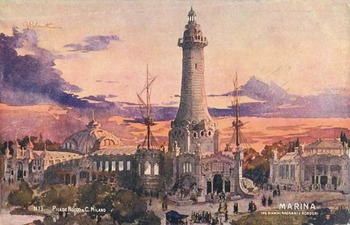
The fisheries exposition (featured in fig. 1), as a result, was not only an arena where China could showcase its recent development but it was also a chance for various coastal fishing companies to unite in order to strengthen China’s role in the global competition that had spread across the maritime domain. In Zhang’s description, we learn that there was a lack of collaboration between these coastal companies in fishing, fish processing, and manufacturing techniques, while China, as a whole, would not benefit from such a fragmented and disorganized structure. The Milan exposition would provide the Qing court with a platform from which to learn more directly from foreign advisors and observe more closely how these dominating seafaring powers operated, especially in terms of their fisheries governance. In Zhang’s assessment, their fisheries management was structured as not only prevailing but also modern and progressive. Needless to say, some might argue that Zhang Jian was too optimistic and idealistic. After all, it is complicated and difficult to learn from the West by participating in a single exposition. Yet what Zhang had planned and advocated suggests that these modernist approaches to fisheries governance pioneered by the West had already implanted a profound influence among Qing China’s fisheries elites, if not the broader Asian region. As Zhang saw it, the only way to make the best of the fishing industry was to follow a Western agenda and mode of thought. In fact, the industrialization that took place in Victorian Britain had stirred up a revolution in the fishing industry across Western Europe. For example, rather than drying or salting, ice was reportedly used in the 1790s to transport fresh salmon from Scotland to London,Footnote 38 while side trawling designs were also improved to allow fishing in deeper waters at the turn of the eighteenth century, not to mention the steam-powered trawlers that rapidly spread across the North Sea, in the early 1880s, leading to massive increases in catches and an expansion of the area where herring, flatfish, and cod could be harvested.Footnote 39
A postcard featuring the naval pavilion at the 1906 Milan Exposition (painted by Giuseppe Palanti).

Fisheries Governance in China Prior to the Milan Exposition
By this point, it seems as if it was only when Zhang Jian promoted the importance of fishing rights that the Qing court began to realize the importance of fisheries governance. It is worth mentioning that the Qing government had been focusing considerable concern on the development of its fisheries long before Western gunboats began their incursions along the Asian Sea. Beginning in the late seventeenth century, after the Manchu had annexed Taiwan, the Qing court was already keeping a close eye on the fishermen who were plying their trade along the coast. Fishermen, in the view of the government, were assumed to be more likely than other occupations to become pirates and participate in the various types of seaborne banditry that were taking place along China’s southern coast.Footnote 40 According to a variety of Qing legal documents, piracy and fishing had a lot in common as both required similar sailing and navigation skills while at the same time providing the coastal population with ‘an important source of income’.Footnote 41 Here, we find an interesting parallel between these Qing documents and the classic account written by Paul Thompson, who argued that, in most cases, the British ‘fishing communities represented social disturbance rather than tradition, a response of the disinherited driven to the margin’.Footnote 42 As a consequence, in the early eighteenth century, the Kangxi emperor issued severe restrictions on fishing off China’s coast in order to prevent people who ‘fished from collaborating with pirates’.Footnote 43 His son and grandson, Yongzheng and Qianlong, followed suit and constantly reminded their officials of the potential dangers of overlooking the troubles these two specific communities might cause. Having said this, however, the three high Qing emperors were also aware of the problem of supressing the fishermen too harshly.Footnote 44 It is notable that for some coastal provinces in China, namely Shandong, Fujian, and Guangdong, an agricultural economy could hardly be formed due to their geographical or climatic limitations. If the government completely ‘eliminated fishing as a source of income’ for these coastal populations, then ‘impoverished fishermen would have no choice but to turn to piracy to make a living’.Footnote 45 As a result, the Qing court had to ensure that the fishermen could feed themselves and run their businesses, while also ensuring it maintained a balance between this and tipping fishermen over to joining those who raided and plundered for their livelihoods.
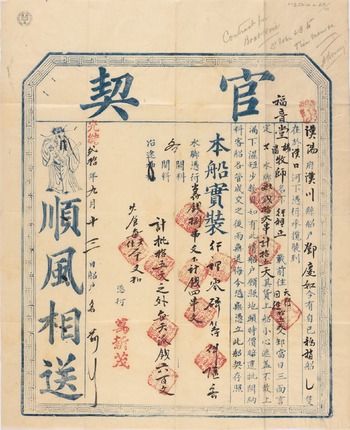
In order to achieve harmony, the Qing set up a series of rules and regulations pertaining to fishing and, to a large extent, seafaring activities. For instance, they restricted fishermen to fishing only within a designated area close to shore, or the ‘inner sea’. There were also regulations standardizing the length of the ships, the colour painted on the boats,Footnote 46 as well as the type of timber used in constructing these vessels. Shipowners had to apply for a permit (chuanzhao or guanqi; see fig. 2) from the respective authority in order to sail in inner waters, while the coastal officials would only issue passes for boats that met these measurement requirements.Footnote 47 Fishing vessel sizes were limited to prevent fishermen from navigating too far from the coast and, above all, from venturing out to sea for too long. As stated in many Qing writings, it would be easier for the navy to keep smaller boats under surveillance because they had to stay within reach of shore. This would make it less likely to see them being ‘engaged in piracy or other illegal seaborne activities such as smuggling and human trafficking’.Footnote 48 In addition to regulating the length, width, and depth of fishing boats, coastal officials were also entitled to inspect the basic necessities such as fresh water and edible grain on board to ensure that these fishermen did not exceed the allowed limits. All of these regulations appeared structured and comprehensive. Moreover, if we look at the aforementioned policies from an environmental perspective, these official restrictions also protected the fish stocks along China’s coast. In a way, these restrictions brought on the unintended consequence of ‘protecting China’s fisheries from the full effects of human exploitation’, namely overfishing.Footnote 49
A guanqi for shipowner issued in 1894. It clearly indicated the details of the ship as well as the background of the owner. As shown in this piece of document, the owner needed to report to the authority the destination he would be heading to, and also the estimated duration of his journey. Source: Bodleian Libraries, University of Oxford. MS. China.a.24 (10).

Although the above regulations seemed to have been all-encompassing, we can imagine that fisheries production and development suffered a lot under this stringency, especially during the late seventeenth and early eighteenth centuries. Compared with the Dutch, who designed various specific types of fishing vessels for the ‘small fishery (kleine visserij)’ and the ‘great fishery (groote visserij)’ in the Baltic and North Seas,Footnote 50 Qing fishermen lagged far behind their European counterparts in this regard. However, as the population grew throughout the eighteenth century, there existed a huge demand of fisheries production. Fishermen and boatmen thus began to defy the existing government policies in response to the increasing demand for fish and profits. In addition, even local officials who were in charge of ‘enforcing these regulations’ often turned a blind eye to those who violated them ‘in exchange for various informal gifts and rewards’.Footnote 51 Official supervision over fishermen readily slipped into collusion. More importantly, most coastal officials found it challenging and tricky to oversee and regulate so many fishing boats, starting from the mid-eighteenth century, when residents began to move around more frequently between provinces and along the coast. Beginning in the 1730s, some fishermen even wasted no time migrating to small islands off the coast for better quality fish and marine resources. For instance, migrants ‘began to move from Zhenhai, Cixi, and Yin counties, in the vicinity of Ningbo, and from areas in Shaoxing prefectures to Daishan Island in the Zhoushan Archipelago’.Footnote 52 As recorded in a Zhenhai county gazetteer published in the 1750s, ‘[M]any coastal people rely on fishing as their profession, and their vessels are usually light and fast. They brave dangers and travel to and from remote islands and areas previously unfrequented by human beings’.Footnote 53
Thanks to the wave-like processes of migration and expansion, China witnessed a significant development of its fishing industry starting from the mid-eighteenth century. As the population dispersed and expanded and the fishing market developed and varied, the Qing court began to loosen its control over the fishery as they found it difficult to manage. The power to regulate most of fishing matters thus fell into the hands of two specific types of local organizations: fish brokers (yuhang 漁行) and regionally based fishing clans (yubang 漁幫). As in other European markets, such as Amsterdam, London, and Livorno, fish brokers in China mediated and arranged commercial transactions between buyers and sellers and earned commissions when deals were executed. Since they provided capital to fishermen in the form of loans, these fish brokers also served as sellers and the principal party to these deals. Meanwhile, fishermen coming from the same provinces would usually establish their regionally based fishing clan, that is yubang in Chinese, to protect their collective rights and consolidate power within specific locales.Footnote 54 In addition to these yubang, fishermen also found the need to set up platforms to settle the many disputes that arose between themselves and other fish merchants, including arguments over prices, weights and measures, and commissions. In the nineteenth century, a specific organization referred to as a fishing lodge (yuye gongsuo 漁業公所) was then established in major port towns to serve as locations for these tribunals.Footnote 55
These local clans and organizations functioned and operated fairly well throughout the nineteenth century. The problem was that these regional, individual yubang, yuhang, and yuye gongsuo seldom spoke to or collaborated with each other. These were crucial factors for boosting the development of the fishing industry regionally, but they could be considered as having been obstacles to more coherently developing the fishing business at a national level. For instance, proponents of modern fishing technology had trouble penetrating these local bonds. There always existed an inertia among those fishermen to not reform the existing order or their mode of living. As there was a lack of governmental control, the reforms initiated by open-minded elites in the late Qing also had limited impacts on these fishing communities. Additionally, the majority of the fishermen who existed within a relatively confined local setting could hardly comprehend the connections between fishing, sea power, and national pride. They did not see the need to facilitate rational transformation, let alone to actualize the vision advocated by Zhang Jian and other foreign-educated Chinese fisheries specialists. Zhang was particularly worried, especially in light of German incursions into Shandong as well as the intensifying foreign competition that was emerging across the Asian seas. He found it crucial to call for the replacement of these regional fishing clans with a more centralized, state-directed fishing association that could act as a mechanism for reforming the fisheries community and for strengthening the Qing empire. Consequently, the 1906 exposition in Milan was opportune timing to reify his plan and ambitions, as he stated very clearly, ‘[W]e should take this opportunity of participating in the exposition to tell the world that we are keen to consolidate our sovereignty across territorial seas and to establish a coherent, national, and systematic fishing company’.Footnote 56
Preparing for the Exposition
In his letter replying to the Chamber of Commerce and also some of his writings, Zhang Jian asserted that ‘[S]ea power and fishing territories are tightly connected to each other.’ He also added that ‘our maritime sovereignty extends as far as the bounds of our fishing (漁界所至, 海權所在也)’.Footnote 57 In other words, ‘if maritime sovereignty is not consolidated, one cannot protect fishing territories (漁業遂與國家領海主權有至密極切之關係)’.Footnote 58 To prevent the danger of losing fishing grounds to any foreign powers, the Chamber of Commerce moved in line with what Zhang Jian had suggested. Since the middle of the nineteenth century the Chamber had seen the necessity of fortifying China’s national fishing rights in order to stand up to foreign aggression. They also agreed with Zhang that China entering the Milan exposition would signal a more direct attempt to allow Chinese fishermen to learn from their European counterparts and adopt modern fishing technology. Within a couple of days of receiving Zhang’s letter, the commerce ministry gave the green light for him to proceed with his plan; he was also appointed representative in charge of all matters pertaining to the exposition (張修撰所陳一切, 不為無見, 即所籌辦法, 亦尚切實可行).Footnote 59
Learning from the Qing’s lack of a cohesive approach to previous universal expositions, Zhang Jian was meticulous in his planning. In order to produce a complete, comprehensive, accurate, and up-to-date image of China and its fisheries development, Zhang came up with a detailed agenda entitled ‘Yuye gongsi xinding fu Yiguo Milanuo Yuye saihui zhangcheng 漁業公司新訂赴義國秘拉諾漁業賽會章程’ with the aim of acquiring a more or less clear strategy. He called for a committee that would include members ranging from fisheries experts, such as Guo Fengming, to devoted government officials and intellectuals, such as Luo Kaixun 羅開軒, Sun Xichun 孫錫純, Zhu Lixuan 朱禮璇.Footnote 60 Zhang also proposed setting up a display room in Suzhou to demonstrate the exhibits the commerce ministry had shortlisted for the Milan exhibition. He suggested the Chamber of Commerce divide the exhibits into the six categories, namely fishing territories, fishing equipment, fishing boats, fisheries, aquatic products, and machinery, and then distributed this list and a request for selected items to every viceroy in China, including those in Fengtian, Zhili, Jiangsu, Zhejiang, Fujian, and Guangdong. As Zhang noted:
[T]he selected items from all viceroys should be submitted to the showroom in Suzhou on time. After that they will be exhibited openly for a while and then we can pick the best out of the selection. Items could be accompanied by a model or picture, and the details must be listed clearly in both Chinese and English.Footnote 61
Zhang’s suggestions, to a substantial extent, can be considered an effort to make the delegation to Italy a national endeavour, in which all districts were asked to encourage local participation. In a sense, China’s attendance at the fisheries exposition would then appear to be a way of internationally promoting its socioeconomic maturity or at least to reveal the idea that a modern Chinese fishing industry was in the making.
Zhang Jian also saw it essential to emphasize the historical continuity of the development of the Chinese fishery. To Zhang, and as agreed by the committee members, the Milan exposition would be a timely opportunity to portray the long history of China’s fishing tradition as a way to project the fact to this audience that China had never lost sight of its fishing rights across its domestic waters. To this end, Zhang appointed a team in Suzhou to compile a volume that detailed fisheries development in imperial China, specifying the connections between its past and present. Apart from this publication, Zhang asked Admiral General Sa Zhenbing 薩鎮冰 (1859–1952) to produce a map of China’s fishing boundaries, entitled Yuye jietu 漁業界圖 (hereafter fisheries map).Footnote 62 This was a pioneering cartographic project because we have not seen similar sea charts from this time. According to Zhang Jian, the design and format of this particular map should ‘follow the admiralty charts produced by the Topographic Department of the British Navy, which consisted of both longitudes and latitudes; and it had to be colourful and high quality (按英國海軍海圖局第三次本中國海方局書加以考核, 準經緯線著色精繪)’. The reason Zhang was particularly keen to work on this map is straightforward. He believed that if the fishing grounds off the coast of China ‘were not pictured and delineated perceptibly, it would not be significant enough to demarcate domestic and foreign rights, and China would not be able to declare jurisdiction over its domestic seawaters without a comprehensive and illustrative diagram’.Footnote 63 Along a similar vein, Zhou Fu 周馥 (1837–1921), Viceroy of Jiangsu, Anhui, and Jiangxi (Liangjiang zongdu 兩廣總督) were very supportive of the idea of producing the fisheries map, arguing that,
[A]ll the coastal provinces are working tirelessly to protect their maritime boundary these days, however, there is not enough awareness when it comes to sovereignty across our domestic maritime space. The coastal area of South-eastern China is of primary importance, as a result there is a need to illustrate the coastal frontier vigilantly and to apply the measurements of longitudes and latitudes on the map. The places visited by Chinese fishermen should also be indicated properly in both Chinese and English on the map. In such a case, the westerners will understand the fishing areas included within our boundary, thereby we can demonstrate our sovereignty across these sea spaces.Footnote 64
After receiving orders from Zhang Jian, Yuan Shuxun 袁樹勛 (1847–1915), the minister from Shanghai, immediately collaborated with officials in Suzhou and Hangzhou to work on the showroom to display the exhibits selected and shortlisted from viceroys across the country. Shen Tongfang 沈同芳 (1894 jinshi), Yuan Shuxun’s private adviser (muliao), was assigned to author the book that detailed the history of fisheries development in China. Shen swiftly completed the book entitled Zhongguo Yuye lishi in only a few months. It consisted of 168 pages and was considered the first concise, comprehensive study of the fishing history in imperial China. To compile the fishing map, Sa Zhenbing established a specific survey unit named Nanyang Yuye huitu chu 南洋漁業繪圖處, in Suzhou, to collect all of the relevant details concerning the fishing grounds off China’s coast. He also collaborated with Chen Jitong 陳季同 (1851–1907), governor of Jiangsu, Jiangxi and Anhui, in finalizing the details of the map. The sea chart was completed prior to their departure for the exposition.Footnote 65 And even though it was recorded as one of the items the delegation brought to Milan, unfortunately, it seems not possible to view this map anymore, at least I failed to locate it in China, the USA, or Europe. This map would allow us to more properly study how fishing grounds were mapped at the time.
The orientation and tone of the exhibition team were all set. The idea of participating in this exposition, apparently, was to create an image of a China that was no longer a sick man in East Asia but a country that was competent enough to administrate its fishing rights, which was regarded as one of the criteria of becoming a sea power. This goal required that the physical, historical, economic, and social diversity of the country be reduced to an analytical reality through the selected exhibits and the ordering of booklets, sea charts, photographs, albums, fishing equipment, and statistics. In addition, the exhibition team had to rearrange China’s feeble national characteristics so they fit the criteria of a rising modern nation. As a result, on one hand, the humiliating past was selectively interpreted and utilized to construct a modern, sensible, forward-looking stage for the Qing. For instance, what Shen Tongfang advocated in his book was to demonstrate the uniqueness of the country, which he interpreted in a progressive fashion in terms of its fisheries development. On the other hand, the content of Shen’s book as well as the items selected for the exposition pointed towards an overall civilized nation that had long been greatly admired in Asia.Footnote 66 By all accounts, these strategic aspects were highlighted in order to overcome the foreign prejudices against China that prevailed at the turn of the nineteenth century.
Towards the end of the preparation, five representatives were handpicked by Zhang Jian to attend the Milan exposition. Among them were Guo Fengming, Luo Kaixun, Sun Xichun, Zhu Lixuan, and Wang Yuan 王沅. All were renowned figures in business and the fishing industry. Guo Fengming, in particular, was exceptional amongst the group. Born into a scholar-official family in Wenzhou, Guo graduated from the Zhejiang Law School. He then became an editor of a journal entitled Lijie Xuetang bao 利濟學堂報. In 1902, he was invited by Sun Yirang 孫詒讓 (1848–1908), a distinguished philologist, educator, and politician, to serve as a school governor of the Zhejiang Ruian High School. Two years later, Sun recommended Guo for managerial positions in the Wenzhou Shipping Company and the Zhejiang Fishing Association. Zhang Jian was to later select Guo on the strength of Sun’s recommendations. Guo was not only appointed auxiliary to the exposition team for his excellent and experienced service in the fishing and shipping industries but was also assigned to manage the Seven Provinces Fishing Company under Zhang’s supervision. Guo was also the one who recorded the Milan exposition in detail after his journey. His record entitled Yidali wanguobolanhui jilüe: Diaocha ouxi shiye jiyao 義大利萬國博覽會紀略·調查歐西實業紀要 was published in September 1907.Footnote 67 Sun Yirang contributed the preface, while Zhang Jian inscribed the book’s title. This is the only valuable account that documents the Milan exposition in Chinese as well as how the Chinese delegate performed and were received in Italy.
In hindsight, we can see that the exhibition team was quite competent and the recruitment of the team members was very much based on personal and political connections as well as on particular professional expertise. As a committee, the team functioned in a centralized and hierarchical fashion led by Zhang Jian; but, to a substantial extent, the various components of their submission, such as the content of Shen’s book and the fisheries map, enjoyed a certain autonomy, again depending on the exhibitor’s personal and political connections and field of expertise. Because the Chamber of Commerce put Zhang in charge of almost all matters relating to the exposition, each individual on the team had direct access to Zhang without having to go through intermediaries. Its effectiveness was based on fidelity to a set of shared interests and to the value of strengthening the Qing as a potential sea power in East Asia. Meanwhile, this expedition team also represented a move away from depending on the foreign-run Customs Service to participate in these world’s fairs.
The Legacy
On paper, it looked as if the exhibition team had been quite successful, as various sources recorded that ‘the exhibits were displayed in good and decent order; they were also praised by the Westerners (此次前來賽會佈置井然, 西人亦有稱讚者)’.Footnote 68 Its success seems to have been measured in an open competition. At the end of the Milan exposition, the exhibits, specimens, and exhibition team were awarded ‘more than a hundred prizes, medals, and certificates of merit for works that demonstrated progress in their endeavour (計得獎憑、獎牌百餘張)’.Footnote 69 As the Second Secretary of Imperial Chinese Legation in Washington Wei-Ching Yen put it in 1908, ‘two years ago the bureau (CFC) succeeded in sending a very complete exhibit of the fisheries of our Empire to the Milan Exposition, and those of you who were present will remember the numerous models of fishing boats and fishing nets and the hundreds of finny creatures caught in Chinese waters that were placed on view’.Footnote 70 These accounts seemingly constituted a record of progress in the view of the exhibition team. And by obtaining these recognitions, China was exalted not only for being among the best but also for being among the most progressive. However, Huang Gao 黃誥 (1865–?), the Qing ambassador to Italy, was honest enough in accepting the fact that ‘[T]he exhibits presented by the team in the exposition were, in actuality, not comparable to those by the Europeans (中國賽物究不及人); and China was still stuck on an old path of formulating a modernised and new agenda (舊制未能盡除)’. Those medals awarded to China, commented Huang, ‘were very much given as a kind of diplomatic courtesy (各國評議人員多因邦交起見)’. In light of this, Huang specifically left a reminder to the exposition team that China should not pay too much attention to these awards since ‘they were too superficial (虛獎)’. In order to strengthen the nation as a sea power, China would need to be ‘more practical and substantial (必須切實講求進步)’ in exercising its fishing rights and in developing its marine governance.Footnote 71
Although we might assume that the exposition team had given full measure to utilizing their presentations and exhibits as the attire of a nation that was aiming to catch up with modernity and assert its sea power, Huang was absolutely right that we should not evaluate whether the Milan exposition was a success for the Qing court by simply focusing on the number of medals the team was awarded. Huang also made very fair points that China had to be more practical in consolidating its power across the sea, especially in the fishing industry. The fisheries exposition, as such, was an occasion where those new fisheries elites could identify China’s flaws and weaknesses compared with other seafaring imperialists. The legacy of the Milan exposition in relation to fisheries governance in the late Qing, as such, is in many ways more significant and worthy of examination.
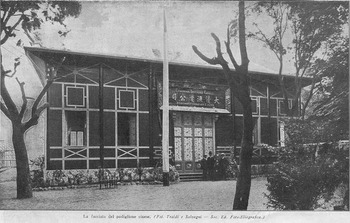
First of all, China’s presence at the 1906 fisheries exposition was a debut for the Qing court; it allowed it to deliberately perform as a power that did not overlook its fishing rights. Although the Chinese display, as commented by Huang, was not exceptionally impressive, compared with those presented by its foreign counterparts, they portrayed some aspects and included some new elements of the nation’s image (see fig. 3 and fig. 4). In brief, I would argue that the Qing’s participation in Milan can be seen from two perspectives: from the continuity of administrative and intellectual tendencies that had acquired special correlations between marine governance and the fisheries, and from the point of view of the emergence of new techniques, strategies, and models that both reinforced and reformed traditional continuities. These continuities were noticeable in the focus on the nation’s marine resources and countless sea species as well as in the glorification of the long history of imperial China’s fisheries development, as presented in Shen Tongfang’s study. These continuities were also in the exhibits that were used to achieve both the impression of both traditional wisdom and relatively more modern, up-to-date development. The fisheries map, for instance, was an amalgamation of British styles and modern surveying techniques and measurements.
The exterior of the Qing exhibition hall set up by the Chinese in the Milan fisheries exhibition.

The interior of the exhibition hall.

The exposition committee and the delegation to Milan also represented a loosening of China’s central authority. We are always under the impression that the Qing court, even in its final decade, was the crucial force in managing all foreign affairs, including the planning of these universal expositions. From this Milan example, we can see that the Chamber of Commerce and the Foreign Ministry worked closely with technocrats, businessmen, and intellectuals trained in the best fashion of the post-Boxer era. From the beginning, the entire preparation was more or less under the full control of Zhang Jian, who was no longer an official at the time, while Beijing did not appoint the delegation. In a way, attending the 1906 International Exposition was an expression of people’s diplomacy, instead of the kind of formal diplomacy that generally took place between officials and governors. From the preparations for the event to the presentations in Milan, this sort of diplomatic engagement between China and the world was different from those involved in concluding a treaty or the type of formal negotiations orchestrated by the local elites to supplement traditional state-to-state diplomacy. In fact, compared with conventional state diplomacy, attending an international exposition was a more effective means to obtain the support of people who were otherwise averse to imperialistic Western powers.Footnote 72 What this combination of official elites and local experts did facilitate was the formation of various tactics and views that provided an image of China as a country in the process of redefining itself as a modern power within the international community.
Such a redefinition would not have been complete without China’s participation in this fisheries exposition. By interacting more directly with the world in Milan, those new fisheries elites became more engaged with fisheries development in China. They were aware of the fact that China lagged far behind its competitors in numerous sectors, ranging from naval armaments to fishing technology. They were impressed by the Western exhibits and even found the need to advocate that the government dispatch specialists to Europe in order to more carefully and thoroughly study their secrets of success (‘似宜派專門之員前往歐洲, 細心考察, 將來回國可資取法’).Footnote 73 Li Hongbin 李鴻賓, one of the officials in the Chinese embassy in Italy, came up with a reflective report after attending the exposition:
The fishery is closely related to maritime sovereignty. It is not enough to simply set up policies regulating fishermen and fishing lodges along the coast. As we can see in Europe, they did invest a lot in researching the school of fishery. In addition, the Europeans were keen and active in operating their Chambers of Fisheries, legalising fishing rights, publishing fisheries newsletters, establishing fisheries schools, and organising international fisheries expositions. These are all essential steps to expanding fisheries development.Footnote 74
Li Hongbin also noted that ‘the British, German, French, Italian, and Austrians all developed their skills according to their own historical and cultural backgrounds (若英、若德、若法、若義、若奧, 均各擅長) … [China] as a country attached to numerous lakes, rivers, and a vast and expansive ocean full of countless types of fish (我中國江河湖海極闊, 魚類極多)’, should therefore make use of its natural advantages to further advance its fishing industry. In a word, ‘China’s potential to become a fisheries giant is immeasurable (未可限量)’.Footnote 75 Apparently, the exposition did leave a profound impact on intellectuals and officials such as Li in modernising China’s fishing industry in the first decade of the twentieth century.
Concluding Remarks
From before the turn of the twentieth century, the great powers had held grand commercial, industrial, and specific universal exhibitions to showcase the fruits of their progress and to give their citizens a glimpse of where civilization was or should be heading. According to Muaricio Tenorio-Trillo, ‘from the great openings to the colossal closings, world’s fairs epitomized a full cycle of a linear and progressive realisation of time’.Footnote 76 To those participating countries considered ‘less successful’ in these grand finales, such as the late Qing, on one hand, world fairs provided them with a window to the future, on the other, it gave them a platform from which to learn, imitate, and publicize their own ideas of progress and development. In addition to displaying to the world that China was not necessarily moribund or incompetent, the exhibition team also made the idea of becoming part of the modern world even more suitable for China’s specific interests and circumstances. Yet at the same time, in participating in these world’s fairs, these Chinese elites were brought closer to the so-called universal truths and principles China needed to consolidate into its pursuit of national and international status. These men attempted to discover and study more directly what was fundamental in those universal principles, ranging from form, etiquette, and style, to equipment, façades, and laws. China’s fishing elites, exhibition planners, and delegation to Milan serve as a good example of such a strategy. By participating in the fisheries exposition, they were in fact guided by the necessary components of a modern ‘fishing power’ in line with Western notions of white supremacy. In these world’s fairs, only one form of prosperous advancement could be derived from revising and reinventing the past and present on European terms.
China’s presence at this specific exposition also demonstrates the fact that the late Qing was not doomed to failure in the early twentieth century. Serious and significant ‘strengthening efforts’ took place across the country in various sectors, including in the fishery, during the post-Boxer decade. Although some might question the efficacy and significance of those late Qing reforms, as it has been argued that Empress Cixi and the Manchu authority would not let go of their power,Footnote 77 there were apparently some energies from below that inflamed a passion for change and progress, which then collided with reforms in public administration at the metropolitan, provincial, and local levels. Zhang Jian and his team were people who actualized plans and got things done. Their monumental efforts to reform the fishing industry was especially visible in their involvement in the Milan exposition. In other words, the late Qing as a whole was not as hopelessly reactionary or purblind as its critics had elaborated. Even some conservatives in Beijing, at the time, acknowledged the need to be more proactive and to protect the nation’s fishing rights and sovereignty across its blue domain. By actively engaging with the fisheries exposition, the Qing court was keen to prove to its foreign counterparts that its traditional leadership was capable of modernizing its fishing industry and, ultimately, of becoming a modern sea power. It might be difficult to judge how successful the exhibition team was in Milan, as well as how far the nation still had to travel, but this fisheries fair provides a case study of China’s changing values and an opportunity to reassess the late Qing if we were to discuss its maritime vision and power in the early twentieth century.
In summary, this paper shows the promise of examining the Milan Universal Exposition of 1906 in relation to fisheries governance in the final decade of Late Imperial China. While it is incontrovertible that the dynasty fell in 1912, what these ‘new fisheries elites’ made clear is that they devoted their time and energy to formulating an agenda and a template for a reform that might have saved the Qing empire from an inevitable collapse. As Roger Thompson and others have argued, the final few years of the late Qing was ‘a radical period and one that needs to be understood much better’.Footnote 78 Now, the People’s Republic of China is asserting itself on the seas and facilitating its geo-political ambitions by deploying fishing fleets into the waters of other nations, while at the same time, the government has invested billions of yuan every year to further enhance the structural and technological developments of its fishing industry, which includes measures of taking, culturing, processing, preserving, transporting, marketing and selling fish products, since the beginning of the twenty-first century. Apparently, Beijing views the fishing industry in both economic and strategic terms: economically because the fishery is one among a number of China’s expanding marine industries; strategically as it plays a prominent role in safeguarding food security and firming up its territorial claims in the South China Sea and beyond. It is therefore not improper to recall the precedent to all these outgoing and enterprising activities, an era during which China was struggling to seek strength and maintain its fishing grounds in the Asian seas.
Appendix
English translation of Chinese quotations
1) 歐洲漁業自西曆一千六百八十二年始設會於倫敦……[英人] 不數十年, 由三海里之漁界, 擴充至二千五百余海裡。德、法繼之, 美、俄復繼之, 義、奧諸國又繼之, 漁業遂與國家領海主權有至密極切之關係……中國漁政久失, 士大夫不知有所謂海權… …七省漁業公司之名宜及此表明於世界, 是有二義, 一則正領海主權之名……一則踐合興漁業公司之實
Since 1682, European fishermen had started to gather in London to discuss fishing matters and exchange ideas … [I]n less than ten years, [the Kingdom of Great Britain] was capable of extending their fishing boundary from 3 nautical miles to 2,500 miles. Germany, France, the United States, Russia, Italy, and Austria then followed suit. It is obvious that there existed an intrinsic connection between the fisheries and the demonstration of sovereignty across territorial seas … China had long overlooked the importance of fisheries governance, while scholar-officials are ignorant of the doctrine of maritime sovereignty … [I]n participating in this exposition, on one hand, we can announce to the world that the Seven Provinces Fishing Company has been established, on the other, we can then fortify the nation’s maritime sovereignty.Footnote 79
2) 鳳鳴與張南通共事實業界垂三十年, 從事於漁之日尤多。蓋以漁天然大利也, 且與海權有密切關係。第以斯學失傳……海通以後, 雖漸有註意農工商業, 而於漁則無人言及。自德人以捕魚汽船入我領海, 識者始有覺悟。乃集海內士紳, 期會於滬, 創設七省漁業公司
Zhang and I [Fengming] had been working closely in business for thirty years; we devoted a lot of time and energy in the fishing sector. We are convinced that China could benefit from fishery and that it maintains a close connection with maritime sovereignty. After bans on maritime trade were lifted, we become more aware of the developments in the agricultural, industrial, and commercial sectors, but none of us talks about the fishing industry. It was not until the Germans penetrated our territorial sea with their steamships that we began to realize the importance of fisheries management. Therefore, we decided to gather scholar-officials and intellectuals together in Shanghai and to call upon the establishment of the Seven Provinces Fishing Company.Footnote 80
3) 又趁此會場, 參考各國捕魚之法, 先由總公司規仿改良, 漸次及於各省之總會, 庶收聯絡合群之益, 亦即學問競勝之基, 此又一義也
[B]y participating in this exposition, we will be able to learn the ways of fishing from various countries. After collecting the [necessary] skills, we can then modify and advance our fishing industry. The Seven Provinces Fishing Company should first test these techniques and then ensure that other coastal provinces obtain the same knowledge gathered from the exposition. This is the foundation of learning and healthy competition, which is of significant importance.Footnote 81
4) 限期解送吳淞漁業賽會匯集出品公所, 分別陳列, 先自考察, 去枯留良, 汰粗易精, 或製模型, 或照相片, 列表著說, 附譯英文
[T]he selected items from all viceroys should be submitted to the showroom in Suzhou on time. After that they will be exhibited openly for a while and then we can pick the best out of the selection. Items could be accompanied by a model or picture, and the details must be listed clearly in both Chinese and English.Footnote 82
5) 現在濱海各省, 於保衛疆土, 不遺餘力, 而領海主權, 多未籌及。南洋爲衝要之區, 江海各防尤關重要, 應將此項圖志, 加以考覈, 準經緯線, 着色精繪江海漁界全圖, 並該書內載中國漁船所到之處地名及注說明華文, 兼譯英圖原文如下, 俾外人明曉, 趁此會場, 據此表明漁界, 即可以表明領海主權
‘[A]ll the coastal provinces are working tirelessly to protect their maritime boundary these days, however, there is not enough awareness when it comes to sovereignty across our domestic maritime space. The coastal area of South-eastern China is of primary importance, as a result there is a need to illustrate the coastal frontier vigilantly and to apply the measurements of longitudes and latitudes on the map. The places visited by Chinese fishermen should also be indicated properly in both Chinese and English on the map. In such a case, the westerners will understand the fishing areas included within our boundary, thereby we can demonstrate our sovereignty across these sea spaces.Footnote 83