



1 Introduction
A discrete group G is said to have the Haagerup property if there exists a sequence of positive definite functions
$\{\phi _n\}_{n\in \mathbb {N}}$
 on G that vanish at infinity and converge pointwise to
$1$
 . This notion was introduced by Haagerup [Reference Haagerup9], who proved that free groups have this property. The Haagerup property is strictly weaker than amenability and is equivalent to Gromov’s a-T-menability.
The Haagerup property has since been extended to operator algebraic settings. Choda [Reference Choda2] introduced an analogue for von Neumann algebras and Dong [Reference Dong3] formulated the Haagerup property for unital
$C^*$
 -algebras equipped with a faithful tracial state. Motivated by these developments, You [Reference You16] and Meng [Reference Meng12] investigated the permanence of the Haagerup property under crossed product constructions arising from (global) group actions.
Partial actions of discrete groups on
$C^*$
 -algebras were introduced independently by Exel [Reference Exel6] and McClanahan [Reference McClanahan11]. They provide a flexible framework that generalises global actions and gives rise to rich classes of
$C^*$
 -algebras. For instance, important examples such as Bunce–Deddens algebras and certain AF-algebras can be realised as partial crossed products (see, for example, [Reference Exel5, Reference Exel7]). Partial crossed products have since become an important tool in the study of
$C^*$
 -algebraic dynamical systems.
The goal of this article is to study the Haagerup property in the setting of partial crossed products. Inspired by the work of You [Reference You16] for global actions, we introduce the notion of the Haagerup property for a partial action. We show that if a partial action
$\alpha $
 and the underlying
$C^*$
 -algebra A have the Haagerup property, then the reduced partial crossed product
$A\rtimes _{\alpha ,r} G$
 also has the Haagerup property. Our main result establishes a converse under a mild hypothesis on the partial action. More precisely, let
$(A,G,\alpha )$
 be a (unital) partial dynamical system and let
$A\rtimes _{\alpha ,r} G$
 denote the associated reduced partial crossed product. We prove that the following conditions are equivalent:
-
(1) the partial crossed product $A\rtimes _{\alpha ,r} G$
 has the Haagerup property;
-
(2) both A and G have the Haagerup property;
-
(3) the partial action $\alpha $
has the Haagerup property and A has the Haagerup property.


This provides a characterisation of the Haagerup property for partial crossed products in terms of the underlying algebraic and dynamical data.
In addition, motivated by results of Suzuki [Reference Suzuki15] on permanence properties of the Haagerup property (such as stability under direct sums and free products), we show that the Haagerup property is preserved under inductive limits of
$C^*$
 -algebras. As an application, we study the Haagerup property for inductive limits of partial crossed products.
There are three sections following this one. Section 2 contains preliminaries on partial actions, partial crossed products and the Haagerup property for
$C^*$
 -algebras. In Section 3, we introduce the Haagerup property for partial actions and prove the main characterisation theorem for partial crossed products (Theorem 3.6). In Section 4, we establish the stability of the Haagerup property under inductive limits (Proposition 4.3) and apply this to inductive limits of partial crossed products (Corollary 4.4).
2 Preliminaries
Throughout, G denotes a discrete group with identity element e, A is a unital
$C^*$
 -algebra and
$\mathbb B(\mathcal H)$
 denotes the algebra of all bounded linear operators on a separable Hilbert space
$\mathcal H$
 .
2.1 Partial crossed products
In this section, we recall the basic definitions and notions of partial actions and associated partial crossed products from [Reference Exel8, Reference McClanahan11].
Definition 2.1 [Reference Exel8, Definition 11.4]
A partial action of G on a
$C^*$
 -algebra A is a pair
$\alpha = (\{D_g\}_{g\in G}, \{\alpha _{g}\}_{g\in G})$
 , consisting of closed two-sided ideals
$\{D_g\}_{g\in G}$
 of A and a
$^*$
 -isomorphism
$\alpha _{g}\colon D_{g^{-1}} \to D_{g}$
 for
$g\in G$
 satisfying:
-
(1) $D_e= A$
and
$\alpha _{e} \colon D_e\to D_e$
is the identity map; -
(2) $\alpha _{g}\circ \alpha _{h} \subseteq \alpha _{gh}$
for
$g,h\in G$
.




The composition
$\alpha _{g}\circ \alpha _{h}$
 is not defined in the usual sense. Its domain is

As a result, Condition (2) in Definition 2.1 asserts that
$\alpha _g(\alpha _h(x)) = \alpha _{gh}(x)$
 for
${x\in \text {dom}(\alpha _g\circ \alpha _h)}$
 . In other words,
$\alpha _{gh}$
 extends the composition
$\alpha _g\circ \alpha _h$
 . We refer to
$(A,G, \alpha )$
 as a
$C^*$
 -algebraic partial dynamical system.
Let
$(B, G, \eta )$
 be a (global)
$C^*$
 -dynamical system and let A be a closed two-sided ideal of B. Define
$D_{g} =\eta _{g}(A)\cap A$
 and
$\alpha _{g}\colon D_{g^{-1}} \to D_{g}$
 by the restriction of
$\eta _{g}$
 on
$D_{g^{-1}}$
 . Then,
$\alpha = (\{D_{g}\}_{g\in G}, \{\alpha _{g}\}_{g\in G})$
 is a partial action, called the restriction partial action. We say that
$\eta $
 is a globalisation of the partial action
$\alpha $
 (see [Reference Exel8, Definition 28.1]) if

Note that a globalisation of a given partial action need not exist. However, if it exists, then it is unique (see [Reference Exel8, Proposition 28.2]). A partial action is said to be unital if each ideal
$D_g$
 has a unit
$1_g$
 and every
$\alpha _{g}$
 is unital. Note that
$1_g$
 need not coincide with the unit of the algebra A; in fact, each
$1_g$
 is a central idempotent in A. Moreover, a partial action is unital if and only if it admits a globalisation (see [Reference Exel8, Theorem 6.13]).
The collection of all finite formal sums
$\sum _{g\in G} a_g\delta _g$
 with
$a_g\in D_g$
 is denoted by
$A\rtimes _{\text {alg}}G$
 . The multiplication and involution on
$A\rtimes _{\text {alg}} G$
 are given by

for
$a\in D_g, b\in D_h$
 and
$g,h\in G$
 (see [Reference Exel8, Ch. 8]). Let
$\pi \colon A \to \mathbb B(\mathcal H) $
 be a representation. For
$g\in G$
 , define
$\pi _g\colon D_{g} \to \mathbb B(\mathcal H)$
 by
$\pi _g(a) =\pi (\alpha _{g^{-1}}(a))$
 . Then, there exists a unique extension of
$\pi ^{\prime }_g$
 of
$\pi _g$
 to A which annihilates

Define
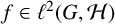
$\widetilde {\pi }\colon A\to \mathbb B(\ell ^2(G,\mathcal H))$
 by

where
$f\in \ell ^2(G,\mathcal H)$
 and
$g\in G$
 . Proposition 3.1 of [Reference McClanahan11] ensures that the left regular representation
$\lambda \colon G \to \mathbb B(\ell ^2(G,\mathcal H))$
 satisfies the covariance condition

for
$a\in D_{g^{-1}}$
 and
$g\in G$
 , and
$\lambda _g$
 is given by
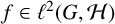
$\lambda _g(f)(h) = f(g^{-1}h)$
 for
$f\in \ell ^2(G,\mathcal H)$
 . The integrated form of
$(\widetilde {\pi }, \lambda )$
 is given by
$\widetilde {\pi }\rtimes \lambda (\sum _{g\in G} a_g\delta _g) = \sum _{g\in G} \pi ^{\prime }(a_g)\lambda _g $
 . The reduced norm on
$A\rtimes _{\text {alg}}G$
 is defined by

The completion of
$A\rtimes _{\text {alg}}G$
 with respect to
$\| \cdot \|_r$
 is called the reduced partial crossed product and is denoted by
$A\rtimes _{\alpha , r}G$
 . Whenever no confusion arises, we omit the word reduced and refer to it simply as the partial crossed product.
Consider the partial dynamical system
$(A,G,\alpha )$
 . The map
$i\colon A \to A\rtimes _{\alpha , r}G$
 defined by
$a\mapsto a\delta _e$
 is an embedding. Moreover, there is a canonical conditional expectation
$E\colon A\rtimes _{\alpha , r}G \to A$
 given by

for
$g\in G$
 and
$a\in A_g$
 . A tracial state
$\tau $
 on A is called G-invariant if
$ \tau (\alpha _{g}(a)) =\tau (a) $
 for all
$a\in D_{g^{-1}}$
 . If
$\tau $
 is a G-invariant tracial state on A, then
$A\rtimes _{\alpha , r}G$
 has a tracial state
$\widetilde {\tau } = \tau \circ E$
 . If G is supramenable, then any tracial state on A induces a tracial state on
$A\rtimes _{\alpha , r}G$
 (see [Reference Scarparo14]).
2.2 The Haagerup property for
$C^*$
-algebras

The Haagerup property was originally introduced for groups by Haagerup in [Reference Haagerup9] as a notion weaker than amenability. It was subsequently extended to von Neumann algebras by Choda in [Reference Choda2] and later to unital
$C^*$
 -algebras by Dong in [Reference Dong3]. In this section, we briefly recall the Haagerup property for
$C^*$
 -algebras. For a more comprehensive treatment, we refer the reader to [Reference Dong3, Reference Dong and Ruan4].
Let A be a
$C^*$
 -algebra. A linear map
$\phi \colon A\to A$
 is called completely positive if
$\phi _n\colon \mathrm {M}_n(A) \to \mathrm {M}_n(A)$
 is positive for all
$n\in \mathbb {N}$
 , where
$\mathrm {M}_n(A)$
 denotes the set of all
$n\times n$
 matrices on A. We say that
$\phi $
 is unital completely positive if it is completely positive and unit preserving. Let
$\tau $
 be a faithful tracial state on A. A completely positive map
$\phi $
 is said to be
$\tau $
 -decreasing if
$\tau \circ \phi \leq \tau $
 . A
$\tau $
 -decreasing completely positive map
$\phi $
 can be extended to a contraction
$\widetilde {\phi }\colon L^2(A,\tau ) \to L^2(A,\tau )$
 by

where
$L^2(A,\tau )$
 is the GNS Hilbert space associated to
$\tau $
 and
$N_{\tau } =\{a\in A: \tau (a^*a) =0\}$
 . We write
$\| \cdot \| _{2,\tau }$
 for the Hilbert space norm on
$L^2(A, \tau )$
 to emphasise its dependence on the tracial state
$\tau $
 and to distinguish it from the
$C^*$
 -algebra norm on A. We say that
$\phi $
 is
$L_2$
 -compact if
$\widetilde {\phi }$
 is a compact operator on
$L^2(A,\tau )$
 . Using finite-rank operators, one can see that
$\phi $
 is
$L_2$
 -compact if and only if, for every
$\epsilon>0$
 , there exists a finite-rank operator
$R\colon A\to A$
 (which can be viewed as a map from
$L^2(A,\tau ) \to L^2(A,\tau )$
 given by
$a+N_{\tau } \mapsto R(a)+N_{\tau }$
 ) such that

Definition 2.2 [Reference Dong3, Definition 2.3]
Let A be a unital
$C^*$
 -algebra with a faithful tracial state
$\tau $
 . Then,
$(A, \tau )$
 is said to have the Haagerup property if there exists a
$\tau $
 -decreasing sequence of unital completely positive maps
$\{\phi _n\}_{n\in \mathbb {N}}$
 on A such that:
-
(1) $\phi _n$
is
$L_2$
-compact for all
$n\in \mathbb {N}$
; -
(2) $\| \phi _n(a)-a\| _{2,\tau }\to 0$
as
$n\to \infty $
for all
$a\in A$
.





3 Haagerup property for partial crossed products
Let
$(A,G, \alpha )$
 be a partial dynamical system. For a map
$h\colon G \to A$
 and
$g_1,g_2,\ldots , g_n \in G$
 , we define

where
$i,j=1,2,\ldots , n$
 . We say that the map h is positive definite with respect to the partial action
$\alpha $
 if, for any
$g_1,g_2,\ldots , g_n \in G$
 , the matrix
$(a_{i,j})_{1\leq i,j\leq n}\geq 0$
 in
$\mathrm {M}_{n}(A)$
 , where
$a_{i,j}$
 is given by (3.1). From [Reference You16], a map
$h\colon G\to A$
 is vanishing at infinity with respect to a faithful tracial state
$\tau $
 on A if for any
$\epsilon>0$
 , there exists a finite subset F of G such that
$\| h(g)\| _{2,\tau }<\epsilon $
 for all
$g\notin F$
 , where
$\| \cdot \| _{2,\tau }$
 is the norm on the GNS Hilbert space
$L^2(A,\tau )$
 . We denote this by
$h\in C_{0,\tau }(G,A)$
 .
Motivated by the amenable action of a discrete group on a
$C^*$
 -algebra (see [Reference Brown and Ozawa1, Definition 4.3.1]), You in [Reference You16, Definition 1.3] defined the Haagerup property for a (global) action of groups on
$C^*$
 -algebras and proved a result analogous to [Reference Brown and Ozawa1, Theorem 4.3.4], that is, if a (global) action has the Haagerup property and the
$C^*$
 -algebra has the Haagerup property, then the associated crossed product also has the Haagerup property. With this result as motivation, we introduce the Haagerup property for partial actions on
$C^*$
 -algebras.
Definition 3.1. Let
$(A,G, \alpha )$
 be a partial dynamical system. We say that the partial action
$\alpha $
 has the Haagerup property with respect to a faithful tracial state
$\tau $
 on A if there exists a sequence of bounded positive definite functions
$\{h_n\colon G\to Z(A)\}_{n\in \mathbb {N}} \subseteq C_{0,\tau }(G,A)$
 such that
$h_n(g)\in D_g$
 for all
$g\in G$
 and
$h_n\to 1$
 pointwise with respect to
$\tau $
 , that is,
$\| h_n(g)-1\| _{2,\tau }\to 0$
 as
$n\to \infty $
 for all
$g\in G$
 .
Recall the definition of globalisation of a partial action from Section 2. Suppose
$\eta $
 is the globalisation of a partial action
$\alpha $
 of G on A. Then,
$\alpha $
 has the Haagerup property with respect to a tracial state
$\tau $
 on A if and only if the globalisation
$\eta $
 has the Haagerup property in the sense of You [Reference You16, Definition 1.3].
Lemma 3.2. Let
$(A,G, \alpha )$
 be a partial dynamical system and let
$h\colon G\to Z(A)$
 be a positive definite map (with respect to
$\alpha $
 ) satisfying
$h(g)\in D_g$
 for
$g\in G$
 . If
$\phi \colon A\to A$
 is a unital completely positive map, then the map
$\Phi \colon A\rtimes _{\alpha , r}G\to A\rtimes _{\alpha , r} G$
 defined by

is unital completely positive.
The proof is analogous to that of [Reference Dong and Ruan4, Theorem 3.2] in the case of global actions and we therefore omit the details.
Lemma 3.3. Let
$(A,G, \alpha )$
 be a partial dynamical system with a faithful G-invariant tracial state
$\tau $
 on A and let
$h\colon G\to Z(A)$
 be a positive definite map (with respect to
$\alpha $
 ) satisfying
$h(g)\in D_g$
 for
$g\in G$
 . Suppose
$\phi \colon A\to A$
 is a
$\tau $
 -decreasing unital completely positive map which is
$L_2$
 -compact. Let
$\Phi $
 be the unital completely positive map on
$A\rtimes _{\alpha , r}G$
 defined by (3.2). If h vanishes at infinity with respect to
$\tau $
 , then the induced operator
$\widetilde {\Phi }$
 on
$L^2(A\rtimes _{\alpha , r}G, \widetilde {\tau })$
 is compact (recall that
$\widetilde {\tau } =\tau \circ E$
 , where E is given by (2.1)).
Proof. Since h is vanishing at infinity with respect to
$\tau $
 , for each
$n\in \mathbb {N}$
 , there exists a finite set
$F_n\subset G$
 such that
$\| h(g)\| _{2,\tau }<1/n$
 for
$g\notin F_n$
 . Since
$\phi $
 is
$L_2$
 -compact, there exists a sequence of finite-rank operators
$\{\phi _n\}_{n\in \mathbb {N}}$
 on A such that
$\| \widetilde {\phi }-\widetilde {\phi }_n\| _{2,\tau }<1/n$
 . Define
$T_n$
 on
$A\rtimes _{\alpha , r}G$
 by

where
$\sum _{g\in G} a_g\delta _g \in A\rtimes _{\text {alg}}G$
 . The induced map
$\widetilde {T}_n$
 on
$L^2(A\rtimes _{\alpha , r}G, \widetilde {\tau })$
 is finite-rank as
$\phi _n$
 is so. For
$x=\sum _{g\in G}a_g\delta _g \in A\rtimes _{\text {alg}}G$
 ,

Denote these two sums by
$M_1$
 and
$M_2$
 , respectively. We estimate each term separately and use the inequality
$\| \widetilde {\Phi }(x)-\widetilde {T}_n(x)\| ^2_{2,\tilde {\tau }} \leq 2(\| M_1\| ^2_{2, \tilde {\tau }} + \| M_2\| ^2_{2, \tilde {\tau }})$
 . For
$M_1$
 , we compute

Since
$\| \widetilde {\phi }-\widetilde {\phi }_n\| _{2,\tau }<1/n$
 and h is bounded, the last term above is dominated by

where
$K=\sup _{g\in G}\| h(g)\| ^2_{2,\tau }$
 . For
$M_2$
 , using
$\| h(g)\| _{2, \tau } \leq {1}/{n}$
 for
$g\notin F$
 and the boundedness of
$\widetilde {\phi }$
 , a similar computation gives

Therefore,
$\| \widetilde {\Phi }(x)-\widetilde {T}_n(x)\| _{2,\tilde {\tau }} \leq ({1}/{n})(2(K+\| \widetilde {\phi }\| ^2_{2,\tau }))^{{1}/{2}}\| x\| _{2,\tilde {\tau }}$
 . Thus,
$\widetilde {\Phi }$
 is compact.
Proposition 3.4. Let
$(A,G, \alpha )$
 be a partial dynamical system such that
$\alpha $
 has the Haagerup property with respect to a G-invariant faithful tracial state
$\tau $
 on A. If
$(A, \tau )$
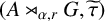
 has the Haagerup property, then the partial crossed product
$(A\rtimes _{\alpha , r}G, \widetilde {\tau })$
 also has the Haagerup property.
Proof. Since
$(A, \tau )$
 has the Haagerup property, there exists a
$\tau $
 -decreasing sequence of unital completely positive maps
$\{\phi _n\}_{n\in \mathbb {N}}$
 on A satisfying conditions (1) and (2) of Definition 2.2. The Haagerup property of
$\alpha $
 yields a sequence of bounded positive definite functions
$\{h_n\colon G\to Z(A)\}_{n\in \mathbb {N}} \subseteq C_{0,\tau }(G,A)$
 such that
$h_n(g)\in D_g$
 for
$g\in G$
 and
$h_n\to 1$
 pointwise with respect to
$\tau $
 . For
$n\in \mathbb {N}$
 , define a completely positive map
$\Phi _n$
 on
$A\rtimes _{\alpha , r}G$
 corresponding to
$\phi _n$
 and
$h_n$
 as in (3.2). The sequence
$\{\Phi _n\}_{n\in \mathbb {N}}$
 is
$\widetilde {\tau }$
 -decreasing since
$\{\phi _n\}_{n\in \mathbb {N}}$
 is
$\tau $
 -decreasing. By Lemma 3.3,
$\Phi _n$
 is
$L_2$
 -compact for all
$n\in \mathbb {N}$
 . Let
$f=\sum _{g\in F}a_g\delta _g \in A\rtimes _{\text {alg}}G$
 for some finite set
$F\subset G$
 . Then,

where
$K=\sup _{g\in F}\| \phi _n(a_g)\| _{2,\tau }\leq \sup _{g\in F} \| a_g\| _{2, \tau }$
 as each
$\phi _n$
 is unital. Therefore,
$\Phi _n$
 converges pointwise to the identity map on
$L^2(A\rtimes _{\alpha , r}G, \widetilde {\tau })$
 . This completes the proof.
Lemma 3.5. Let
$(A,G, \alpha )$
 be a partial action with a G-invariant faithful tracial state
$\tau $
 on A. If
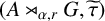
$(A\rtimes _{\alpha , r}G, \widetilde {\tau })$
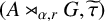 has the Haagerup property, then
$(A, \tau )$
 has the Haagerup property.
Proof. Since
$(A\rtimes _{\alpha , r}G, \widetilde {\tau })$
 has the Haagerup property, there exists a sequence
$\{\Phi _n\}_{n\in \mathbb {N}}$
 of unital completely positive maps on
$A\rtimes _{\alpha , r}G$
 satisfying the conditions of Definition 2.2. Recall the conditional expectation
$E\colon A\rtimes _{\alpha , r}G\to A$
 from (2.1). For
$n\in \mathbb {N}$
 , define a unital completely positive map on A by

Then,
$\tau \circ \phi _n \leq \tau $
 as
$\widetilde {\tau }\circ \Phi _n \leq \widetilde {\tau }$
 . Let
$\epsilon>0$
 . Since
$\Phi _n$
 is
$L_2$
 -compact, there exists a finite-rank operator
$R_n$
 on
$A\rtimes _{\alpha , r}G$
 such that

for
$f\in A\rtimes _{\alpha , r}G$
 . Now,
$E\circ R_n$
 is also a finite-rank operator on A and

For
$a\in A$
 ,

Therefore,
$(A, \tau )$
 has the Haagerup property.
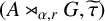
Theorem 3.6. Let
$\alpha =(\{D_g\}_{g\in G}, \{\alpha _g\}_{g\in G})$
 be a unital partial action of G on A, that is, each
$D_g$
 is unital and
$\tau $
 is a G-invariant tracial state on A. Then, the following statements are equivalent:
-
(1) the partial crossed product $(A\rtimes _{\alpha , r}G, \widetilde {\tau })$
has the Haagerup property; -
(2) both $(A, \tau )$
and G have the Haagerup property; -
(3) the partial action $\alpha $
has the Haagerup property and
$(A,\tau )$
has the Haagerup property.


Proof. (1)
$\implies $
 (2). Lemma 3.5 ensures that
$(A, \tau )$
 has the Haagerup property.
Since
$(A\rtimes _{\alpha , r}G, \widetilde {\tau })$
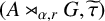 has the Haagerup property, there exists a sequence
$\{\Phi _n\}_{n\in \mathbb {N}}$
 of unital completely positive maps on
$A\rtimes _{\alpha , r}G$
 satisfying the conditions of Definition 2.2. To prove that G has the Haagerup property, we define
$\eta _n\colon G\to \mathbb {C}$
 by

where
$1_g$
 is the unit of
$D_g$
 ,
$g\in G$
 and
$n\in \mathbb {N}$
 . Now,
$\eta _n(e) =\widetilde {\tau }(\Phi _n(1_e\delta _e)1_e\delta _e) =1 $
 . For
$g_1,g_2,\ldots ,g_k\in G$
 and
$c_1,c_2,\ldots , c_k\in \mathbb {C}$
 ,

Therefore,
$\eta _n$
 is positive definite on G. For
$g\in G$
 ,

Therefore,
$\eta _n\to 1$
 pointwise. Moreover,
$\eta _n$
 is vanishing at infinity as
$\Phi _n$
 is
$L_2$
 -compact. Hence, G has the Haagerup property.
(2)
$\implies $
 (3). Since G has the Haagerup property, there exists a sequence of positive linear functions
$\{\eta _n\}_{n\in \mathbb {N}}$
 such that
$\eta _n(e)=1$
 ,
$\eta _n$
 is vanishing at infinity for all
$n $
 and
$\eta _n\to 1$
 pointwise. Let
$1_g$
 be the unit element of
$D_{g}$
 for
$g\in G$
 . For
$n\in \mathbb {N}$
 , we define
$h_n(g)=\eta _n(g)1_g$
 . Then, the sequence
$\{h_n\}_{n\in \mathbb {N}}$
 fulfils the requirement of Definition 3.1 for the partial action
$\alpha $
 . Therefore,
$\alpha $
 has the Haagerup property.
(3)
$\implies $
 (1). This follows from Proposition 3.4.
4 Haagerup property for inductive limits of
$C^*$
-algebras

In this section, we show that the Haagerup property is preserved under inductive limits and apply this result to study the Haagerup property for inductive limits of partial crossed products.
Let
$(A^{(n)}, \phi _n)_{n\in \mathbb {N}}$
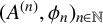 be an inductive system in a category
$\mathcal {C}$
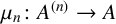
 . An inductive limit of this system is a pair
$(A, \mu _n)$
 , where A is an object of
$\mathcal {C}$
 and each
$\mu _{n}\colon A^{(n)} \to A$
 is a morphism in
$\mathcal {C}$
 satisfying
$\mu _{n+1}\circ \phi _n = \mu _{n}$
 for
$n\in \mathbb {N}$
 . Moreover, the inductive limit is unique up to a canonical isomorphism: if
$(B,\lambda _n)$
 is another limit of the same system, then there exists a unique morphism,
$\lambda \colon A \to B$
 such that
$\lambda \circ \mu _n = \lambda _n$
 for
$n \in \mathbb {N}$
 . Inductive limits may not always exist in a category. For example, inductive limits do not exist in the category of finite sets. However, inductive limits always exist in the category of
$C^*$
 -algebras (see [Reference Rørdam, Larsen and Laustsen13, Proposition 6.2.4]).
Lemma 4.1. Let
$ (A^{(n)},\phi _n)_{n\in \mathbb {N}} $
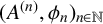 be an inductive system of unital
$C^*$
 -algebras and let
$\{\tau _n\}_{n\in \mathbb {N}}$
 be faithful tracial states such that
$ \tau _{n+1}\circ \phi _n=\tau _n$
 for all
$n\in \mathbb {N}$
 . Let
$(A,\tau )=\varinjlim (A^{(n)},\tau _n)$
 , where
$\tau $
 is the unique tracial state on A satisfying
$\tau \circ \lambda _n=\tau _n$
 for
$n\in \mathbb {N}$
 and
$\lambda _n\colon A_n\to A$
 is the canonical embedding. Then, there is a canonical unitary

where the Hilbert space inductive limit is taken with respect to the isometric maps

Proof. Since
$\tau _{n+1}\circ \phi _n=\tau _n$
 , each map
$U_n$
 is a well-defined isometry:

Hence, we may identify each
$L^2(A^{(n)},\tau _n)$
 as a subspace of
$L^2(A^{(n+1)},\tau _{n+1})$
 . Set

and let
$\mathcal H$
 be the Hilbert space completion of
$\mathcal {H}_0$
 . Then,
$\mathcal H=\varinjlim L^2(A^{(n)},\tau _n)$
 . Let
$\lambda _n\colon A^{(n)}\to A$
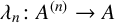 denote the canonical embedding of the inductive limit. Define a linear map
$\pi _0 \colon \bigcup _{n\geq 1}\lambda _n(A^{(n)})\to \mathcal {H}_0$
 by

If
$\lambda _n(a)=\lambda _m(b)$
 in A, then choose some
$k\geq n,m$
 with
$\phi _{n,k}(a)=\phi _{m,k}(b)$
 , where
$\phi _{n,k}\colon A^{(n)} \to A^{(k)}$
 is given by
$\phi _{n,k}=\phi _k\circ \phi _{k-1}\circ \cdots \circ \phi _{n+1}\circ \phi _n$
 . Similarly,
$\phi _{m,k}$
 . Analogously, we can define
$U_{n,k}$
 and
$U_{m,k}$
 . Since

the map
$\pi _0$
 is well defined. Moreover,

so
$ \pi _0 $
 preserves the inner product induced by
$\tau $
 . Thus,
$\pi _0$
 extends uniquely to an isometry
$\pi \colon L^2(A,\tau )\to \mathcal H$
 . Since
$\bigcup _{n\geq 1}\lambda _n(A^{(n)})$
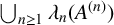 is dense in A and
$\mathcal H_0$
 is dense in
$\mathcal H$
 , the range of
$\pi $
 is dense in
$\mathcal H$
 . Hence,
$\pi $
 is unitary.
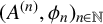
Lemma 4.2. Let
$(A^{(n)},\phi _n)_{n\in \mathbb {N}}$
 be an inductive system of unital
$C^*$
 -algebras with faithful tracial states
$\{\tau _n\}_{n\in \mathbb {N}}$
 satisfying
$\tau _{n+1}\circ \phi _n = \tau _n$
 for all
$n\in \mathbb {N}$
 . Let
$(A,\tau )=\varinjlim (A^{(n)},\tau _n)$
 and identify
$L^2(A,\tau )\cong \varinjlim L^2(A^{(n)},\tau _n)$
 as in Lemma 4.1. Fix
$n\in \mathbb {N}$
 and identify
$L^2(A^{(n)},\tau _n)$
 as a closed subspace of
$L^2(A,\tau )$
 . If
$T\in \mathbb {K}(L^2(A^{(n)},\tau _n))$
 is compact, then the operator
$T^{\prime } \colon L^2(A,\tau )\to L^2(A,\tau )$
 given by

is also compact.
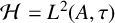
Proof. Let
$\mathcal H=L^2(A,\tau )$
 and
$\mathcal {H}_n=L^2(A^{(n)},\tau _n)$
 , viewed as a closed subspace of
$\mathcal H$
 . Let
$P_n$
 denote the orthogonal projection of
$\mathcal H$
 onto
$\mathcal H_n$
 . Then, the operator
$T^{\prime }$
 can be written as
$T^{\prime } = T P_n$
 . Thus,
$T^{\prime }$
 acts on
$\mathcal H_n$
 as T and zero on
$\mathcal H_n^{\perp }$
 . Since T is compact on the Hilbert space
$\mathcal H_n$
 , there exists a sequence of finite-rank operators
$T_m$
 on
$\mathcal H_n$
 such that

Define
$T^{\prime }_m = T_m P_n$
 on
$\mathcal H$
 . Then, each
$T^{\prime }_m$
 has finite-rank in
$\mathcal H$
 , because its range is contained in the finite dimensional subspace
$\text {range}(T_m)\subseteq H_n$
 . Moreover,

Hence,
$T^{\prime }$
 is compact.
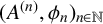
Proposition 4.3. Let
$(A^{(n)},\phi _n)_{n\in \mathbb {N}}$
 be an inductive system of unital
$C^*$
 -algebras with a sequence of faithful tracial states
$\{\tau _n\}_{n\in \mathbb {N}}$
 satisfying
$\tau _{n+1}\circ \phi _n = \tau _n$
 for all
$n \in \mathbb {N}$
 . Let
$(A, \tau ) = \varinjlim (A^{(n)}, \tau _n)$
 . If each
$(A^{(n)}, \tau _n)$
 has the Haagerup property, then the inductive limit
$(A, \tau )$
 has the Haagerup property.
Proof. Since each
$(A^{(n)}, \tau _n)$
 has the Haagerup property, there exists a sequence
$\{\varphi _{n,k}\}_{k\in \mathbb {N}}$
 of unital completely positive maps on
$A^{(n)}$
 such that
$\tau _n\circ \varphi _{n,k}\leq \tau _n$
 for all
$k\in \mathbb {N}$
 . Moreover,
$\varphi _{n,k}$
 is
$L_2$
 -compact for all
$k\in \mathbb {N}$
 and
$\| \varphi _{n,k}(a)-a\| _{2,\tau _n}\to 0$
 as
$k\to \infty $
 for all
$a\in A^{(n)}$
 . We extend
$\varphi _{n,k}$
 to a unital completely positive map
$\psi _{n,k}$
 on A satisfying
$\psi _{n,k}(\lambda _n(a)) = \lambda _n(\varphi _{n,k}(a))$
 for all
$a\in A^{(n)}$
 . Then,
$\psi _{n,k}$
 is
$\tau $
 -decreasing, that is,
$\tau \circ \psi _{n,k}\leq \tau $
 . Set
$\psi _n =\psi _{n,n}$
 for
$n\in \mathbb {N}$
 . Lemma 4.2 ensures that
$\psi _n$
 is
$L_2$
 -compact for all
$n\in \mathbb {N}$
 . Let
$x=\lambda _n(a)\in \bigcup _{m}\lambda _m(A^{(m)})$
 , where
$a\in A^{(n)}$
 . Then,

After passing to the limit, we conclude that
$\| \psi _n(x)-x\| _{2,\tau } \to 0$
 as
$n\to \infty $
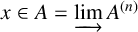
 for all
$x\in A=\varinjlim A^{(n)}$
 . Therefore,
$(A, \tau )$
 has the Haagerup property.
Recall from [Reference Hossain10, Definition 3.2] that an inductive system of partial dynamical systems is a family
$((A^{(n)}, G, \alpha ^{(n)}), \phi _n)_{n\in \mathbb {N}}$
 , where
$(A^{(n)}, \phi _n)_{n\in \mathbb {N}}$
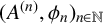 is an inductive system of
$C^*$
 -algebras and
$\phi _n\colon A^{(n)} \to A^{(n+1)}$
 is G-equivariant for
$n\in \mathbb {N}$
 . Proposition 3.3 of [Reference Hossain10] says that if
$((A^{(n)}, G, \alpha ^{(n)}), \phi _n)_{n\in \mathbb {N}}$
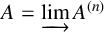
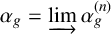
 is an inductive system of partial dynamical systems, then there exists a unique partial action
$\alpha $
 of G on
$A =\varinjlim A^{(n)}$
 such that
$\alpha _g = \varinjlim \alpha _g^{(n)}$
 for all
$g\in G$
 . We refer to
$\alpha $
 as the inductive limit partial action.
Corollary 4.4. Let
$((A^{(n)}, G, \alpha ^{(n)}), \phi _n )_{n\in \mathbb {N}}$
 be an inductive system of partial dynamical systems with a sequence of G-invariant faithful tracial states
$\{\tau _n\}_{n\in \mathbb {N}}$
 satisfying
$\tau _{n+1}\circ \phi _n = \tau _n$
 . Assume that G is an amenable group. If each
$\alpha _n$
 has the Haagerup property and each
$(A^{(n)}, \tau _n)$
 has the Haagerup property, then the partial crossed product
$A\rtimes _{\alpha ,r}G$
 has the Haagerup property, where
$\alpha $
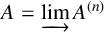
 is the inductive limit partial action and
$A =\varinjlim A^{(n)}$
 .
Proof. Since G is amenable, by [Reference Hossain10, Theorem 3.6],

As
$\{\tau _n\}_{n\in \mathbb {N}}$
 is a G-invariant sequence of tracial states, A has a G-invariant tracial state
$\tau $
 and
$\widetilde {\tau } = \varinjlim \widetilde {\tau }_n$
 , where
$\widetilde {\tau }= \tau \circ E$
 (see [Reference Hossain10, Proposition 4.10]). Since each
$\alpha _n$
 has the Haagerup property and
$(A^{(n)}, \tau _n)$
 has the Haagerup property, it follows from Proposition 3.4 that
$( A^{(n)}\rtimes _{\alpha ^{(n)},r}G, \widetilde {\tau }_n)$
 has the Haagerup property. Therefore, Proposition 4.3 ensures that
$(A\rtimes _{\alpha , r}G, \widetilde {\tau })$
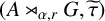 has the Haagerup property.



