




No CrossRef data available.
Article contents
MESOAMERICA'S FORMATIVE SCHOLAR: GARETH W. LOWE, 1922–2004
Published online by Cambridge University Press: 28 March 2006
Extract
The challenge in summing up the active life and productive career of any famous person is to put the important facts on record while steering a respectful path between hagiography and recitation of his curriculum vitae. We attempt to do this for our esteemed colleague and mentor, one of Mesoamerica's last originals, Gareth W. Lowe (Figure 1). With his death on March 8, 2004, in Tucson, Arizona, at age 82, Gareth left behind a legacy that reaches far beyond his well-deserved international reputation. Gareth spent 50 years of his life working in Mesoamerica, principally on the Formative period in Chiapas, Mexico. He first went to southern Mexico in 1953 as a crew member of the newly organized New World Archaeological Foundation (NWAF). Two years later, the NWAF was rescued by the sponsorship of the Church of Jesus Christ of Latter-Day Saints, and much later (in 1976) it became part of Brigham Young University. Gareth served two stints as NWAF field director (1956–1959, 1961–1975), basically as de facto director, and finally served officially as director from 1975 to 1987. In a real sense, Gareth was the NWAF, and its successes and agenda were largely his. The story of one cannot be understood without the other.
Information
- Type
- Research Article
- Information
- Copyright
- © 2005 Cambridge University Press
The challenge in summing up the active life and productive career of any famous person is to put the important facts on record while steering a respectful path between hagiography and recitation of his curriculum vitae. We attempt to do this for our esteemed colleague and mentor, one of Mesoamerica's last originals, Gareth W. Lowe (Figure 1). With his death on March 8, 2004, in Tucson, Arizona, at age 82, Gareth left behind a legacy that reaches far beyond his well-deserved international reputation. Gareth spent 50 years of his life working in Mesoamerica, principally on the Formative period in Chiapas, Mexico. He first went to southern Mexico in 1953 as a crew member of the newly organized New World Archaeological Foundation (NWAF). Two years later, the NWAF was rescued by the sponsorship of the Church of Jesus Christ of Latter-Day Saints, and much later (in 1976) it became part of Brigham Young University. Gareth served two stints as NWAF field director (1956–1959, 1961–1975), basically as de facto director, and finally served officially as director from 1975 to 1987. In a real sense, Gareth was the NWAF, and its successes and agenda were largely his. The story of one cannot be understood without the other.

Gareth Lowe at the excavation of Ojo de Agua, Chiapas, 1980, a Classic period site in the Grijalva River Basin.
The profession recognizes Gareth for his insightful research on early cultures of Chiapas, Mexico, his vast knowledge of the Formative period for all parts of Mesoamerica and adjacent regions, and his avid interest in others' research and his willingness to share his knowledge with others, regardless of their station in the profession (Figure 2). His research on the beginnings of Mesoamerican cultures is a lasting contribution but not his principal legacy (see the Published Works for an exhaustive list of Gareth's publications and major manuscripts). As director of the NWAF, Gareth promoted, guided, and aided scores of other researchers and projects, and as content editor of the Papers of the New World Archaeological Foundation, Gareth's was the final, firm hand that maintained the quality and accuracy of the information published in the first 52 Papers. Having observed Gareth in his various roles for many years, we know that he spent more than half of his time helping colleagues with their projects at the expense of his own. Each of us whom he helped know about his generosity and his commitment to getting the facts straight, but this profound influence has remained invisible to most in the profession because it was done behind the scenes and without fanfare.

Gareth Lowe visiting with Richard MacNeish in Belize, 1982.
We cannot hope to provide a full measure of the man and scholar here, only to sketch some of his lasting contributions. Numerous colleagues have memorable stories of Gareth, some of them even legendary; the ones that have been conveyed to us concern Gareth's being unusually helpful to virtual strangers or up-and-coming nobodies like ourselves (Figure 3). In a profession renowned for breeding sharks, Gareth was remarkably kind, humble, approachable. He was naturally shy and reserved and avoided the limelight, sometimes at considerable cost. He rarely gave papers at professional meetings, and doing so was a painful chore he approached with dread. His public persona was forgettable; his private one, indelible.

Gareth Lowe and John Clark at La Venta, Tabasco, 1994.
One would be hard pressed to find an explicit statement of Gareth's theoretical position. His approach was basically that of culture history in the tradition of Jimmy Griffin or Jim Ford, in the finest sense of recovering the history of peoples. Gareth was interested in broad questions but thought that they could be addressed only by mastery of minute archaeological details, so he was a virtuoso in matters both large and small. He is appropriately remembered as a grand synthesizer as well as a primary producer; he did not occupy an ivory tower or a comfortable La-Z-Boy. Gareth supervised his own excavations and was always visiting those of others. He had to handle potsherds to know how things fit in the grand scheme of things. Gareth's principal academic contribution, however, probably will prove to be his guidance of NWAF research and his constant efforts in keeping the institution afloat. From a 52 year retrospective, the NWAF looks like a remarkably stable organization flush with funds. Neither was the case. The NWAF never had more than a three-year commitment, even in the best of times, so Gareth spent his entire career, sometimes working without pay, balancing primary research and editing with efforts to convince superiors to fund the organization yet another year or two. In evaluating Gareth's signal accomplishments against the possibilities of his times and circumstances, it would be appropriate for future scholars to remember that he worked under constantly stressful circumstances and with a bureaucratic load worthy of any college dean or journal editor. It did not help that those of us who worked for him did not always get along. Gareth's skills as umpire were frequently called on. Details of Gareth's directorship can be found in his correspondence, now part of the permanent collections of the Harold B. Lee Library of Brigham Young University. Here we present highlights of his life and archaeological research.
LIFE SKETCH
Gareth was born on March 4, 1922, in Stavely, Alberta, Canada, the second of three boys. His family moved many times while he was growing up but eventually settled in California. Gareth graduated from Long Beach Polytechnic High School in 1939. After several years working in a printing company, in plant nurseries in California, and in other assorted trades, Gareth was drafted into the Air Force in November 1942 and trained as an aerial radio operator and gunner. He served in England for nine months with a B-17 “Flying Fortress” crew in the 5th Air Force, 358th Squadron, flying dozens of missions over Germany. He earned the Distinguished Flying Cross, Air Medal, Service Medal with three Bronze Stars, and a Good Conduct Medal. Gareth's interest in archaeology began at this time with National Geographic articles and books he read in town libraries in the Cambridge, England, area.
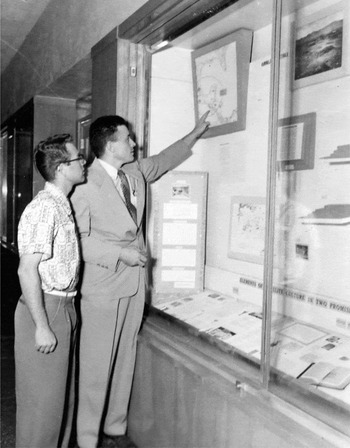
Gareth returned home in 1945 and married Hope Davies the same year. They are the parents of four boys (Ronald, Charles, Norman, and John) and one adopted daughter (Elizabeth). Taking advantage of the GI Bill, Gareth enrolled at Brigham Young University (BYU) in 1947. When he was not in classes, he worked part time for a local newspaper and, during summers, on his father-in-law's ranch in west-central Utah. Gareth graduated from BYU in 1953 with a bachelor of arts degree in archaeology, and he went to Mexico on the first NWAF expedition that winter (Figure 4). He was doing masonry work in Moab, Utah, when he was offered the position of field director of the NWAF in 1956. He accepted, and so began his association with the foundation that lasted beyond his retirement in 1987.

Gareth Lowe and Bruce Warren in the 1950s during NWAF research at Chiapa de Corzo.
Given his responsibilities for directing NWAF research in southern Mexico, Gareth was unable to follow a normal course of graduate studies that he so much desired. He gave up his position in the NWAF and moved his family to Tucson in 1959 so he could study at the University of Arizona, but he never completed a degree. In 1969, he was finally able to complete a master's degree in anthropology at the University of the Americas in Puebla. In 1972, he was granted an honorary doctorate from Brigham Young University. Gareth had a keen mind and loved reading, but most of his knowledge came from primary research rather than graduate classes.
ARCHAEOLOGICAL RESEARCH
Gareth was the foremost authority on the prehistory of Chiapas, Mexico, and he directed numerous site excavations and surveys there, beginning in 1956. As per his original charge to investigate the origins of Mesoamerican civilizations for the NWAF, Gareth was particularly interested in the Formative or Preclassic era, and he made many key contributions for this time period. He is best known for discovering some of the earliest ceramics in Mesoamerica, the Barra complex, which came to light at the site of Altamira on the Pacific Coast of Chiapas. In addition to excavations and potsherds, he was interested in the broad history of Mixe-Zoque and Maya peoples of southern Mexico and Guatemala, particularly their stone monuments.
When Gareth first came to Chiapas in 1953, the region was virtually unknown archaeologically. Sporadic archaeological interest in Chiapas began with the writings of Karl Sapper at the turn of the twentieth century, and various individuals had worked at different sites or in specific areas (see Lowe and Mason 1965; Shook 1956). Matthew Stirling's publications of his Gulf Coast work at Olmec sites included descriptions and photos of visits he made to Chiapas; he described the ruins of Chiapa de Corzo, recorded the sculptures of Izapa (Stirling 1943), and excavated at Padre Piedra with Philip Drucker (never fully published). These publications of the 1930s and 1940s brought Chiapas to the attention of a wider North American audience and to archaeologists, but it was not until the NWAF began its efforts in 1953 “to fulfill its planned destiny as a moving force in the search for the origins of the ancient Middle American civilizations” (Lowe 1959:1) that systematic archaeological surveys of Chiapas were undertaken. Carlos Navarrete (1959, 1960), Fredrick Peterson (1958), John Sorenson (1956), Ed Shook (1956), and Gareth Lowe (1959) led these early surveys, and Gareth, later working in editorial concert with J. Alden Mason, was completely familiar with all their findings.
Gareth surveyed the length of the Grijalva River Valley in 1955, then one of the least-known regions archaeologically in Chiapas (Lowe 1959). During the dry season, in trucks, on foot, and sometimes by boat, he documented, mapped, and assembled artifact collections from many sites. Along with the usual discussion of artifacts and time periods in his report, he concluded with statements on how the archaeological data related to Maya and Zoque prehistory. For example, he noted that the Grijalva River served as a divide for Mayas and Zoques at the time of the Spanish Conquest, and such was seemingly the case as far back as the Classic and Preclassic periods. This observation was later confirmed by the Upper Grijalva Maya Project (Lee 1975) and other excavations (Bryant and Clark 1983). Gareth's earliest work demonstrated his interest in the cultural history of the peoples of Chiapas.
One of Gareth's notable synthetic works was derived from this early period of explorations. Written in 1961 with Mason, and incorporating much of the work then done in Chiapas, “Archaeological Survey of the Chiapas Coast, Highlands and Upper Grijalva Basin” appeared in the Handbook of Middle American Indians in 1965. Gareth's collaborations with Mason were always productive, and this early synthesis presents a variety of Gareth's insights aided by Mason's editorial clarity and objectivity. Perhaps most overlooked is Gareth's explication of the geography of Chiapas and its relevance to understanding prehistory, first presented in his survey work in the upper Grijalva region (Lowe 1959). The Handbook article also presented the highlights of survey findings from all over Chiapas in concise summary by region. In addition, Lowe and Mason presented findings from excavations undertaken at Tonalá, Santa Marta Cave, the central highlands, and Chiapa de Corzo. A brief but illustrated survey of the chronology of Chiapa de Corzo from Early Preclassic through Postclassic periods also appears in the article.
The NWAF was not just doing surveys in the late 1950s; extensive excavations were undertaken at the site of Chiapa de Corzo from 1955 to 1961, with some salvage work done in 1965 and 1969. Heinrich Berlin was Field Director in 1955 when work began, with Gareth assuming this responsibility in 1956. Chiapa de Corzo did not possess many large pyramids, nor were many sculptures recovered there. Instead, its importance lies in the history of its occupation; to date, it is the longest occupied city known in Mesoamerica, beginning about 1000 BC and running to the present day (Lowe and Agrinier 1960:1). The NWAF project was able to test more than 20 mounds at the site and to provide an overall view of the prehistoric occupation as well as more in-depth analyses from detailed work in the site's southwestern quadrant, particularly Mounds 1 and 5—a temple and a palace, respectively. Much of the excavation work was published by 1964, a remarkable accomplishment for the time. Unfortunately, the glaring exception was the ceramic descriptions and chronological summary for the site. Working with more than 100,000 sherds and 3,000 whole vessels, and bogged down in his statistical analyses, the ceramic analyst was unable to complete a publishable work, and Gareth by then was too involved in other projects to take responsibility for this one. His forbearance and patience was not rewarded in this case.
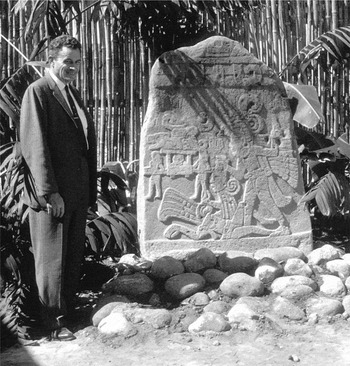
Izapa was Gareth's next major project (Figure 5); the stone sculptures at this coastal city had been brought to scholars' attention by Stirling (1943). The purposes of NWAF excavations at the site were to (1) produce a site map; (2) investigate and conserve the monuments already exposed; and (3) investigate a number of mounds to determine the chronology of the site (Lowe et al. 1982:75). These goals were largely accomplished, and although the publications took a long time to produce, Izapa: An Introduction to the Ruins and Monuments (Lowe et al. 1982), together with V. Garth Norman's (1973, 1976) companion catalogs of the photos and illustrations of the monuments, constitute a complete synthetic statement of the site, uniting a wealth of data to provide a context for the monuments, as well as some understanding of the site's history from the Early Preclassic to the Early Postclassic period. The importance of Izapa for understanding the Late Preclassic period in Chiapas and Mesoamerica has only increased with time; its monuments are a critical component in tracing developments of Mesoamerican literacy and ancient beliefs.

Gareth Lowe with Stela 21 at Izapa in the 1960s.
While excavations at Izapa were ongoing, other NWAF work was progressing. Navarrete (1973) was continuing surveys, particularly along the Pacific Coast of Chiapas, and various Formative-period sites were coming to light. Gareth oversaw the 1963 field work of Dee Green at Padre Piedra and Altamira. Gareth returned to Altamira in 1965 to obtain a better sample of Early Formative materials. At the time, the La Victoria ceramic sequence of Pacific Coast Guatemala had been published (Coe 1961). With field work by Michael Coe and Kent Flannery (1967) having been completed in 1965 but not yet published, Gareth was aware of their recent findings that expanded the Early Formative sequence. With excavations at Izapa, particularly at Mound 30 (Ekholm 1969), Gareth was in the middle of refining the Formative sequence and his understanding of the peoples involved. From excavations at Altamira, Gareth first proposed the existence of the pre-Ocos occupation and ceramics of the Barra phase (Green and Lowe 1967), with a more expanded definition of its types and the development of sedentary life, agriculture, and ceramics following in later publications (Lowe 1971, 1978).
At the end of a busy year, 1965, archaeological survey was begun in the Malpaso region of the La Venta River. The construction of the Nezahualcoyotl Dam would flood some 20 miles of the lower La Venta River where it joins the Grijalva, as well as another 24 miles along the middle Grijalva River, an area of some 30,000 hectares (Lowe 1967:135, 1998b). A project coordinated by the Instituto Nacional de Antropología e Historia (INAH) and led in the field by Navarrete, together with the NWAF, attempted to survey and record occupations in the region (L. Lowe 1998). Engineers working on the dam project discovered the large site of San Isidro, which led to the three-and-a-half-month salvage project headed by Gareth in 1966. His excavations ended when the rising water covered the site in June of that year. San Isidro was a principal site of some 30 mounds arranged around several plazas along the Grijalva River, 20 km east of the confluence of the Grijalva and La Venta rivers. Excavations there revealed a thriving occupation from the late Early Formative to Early Postclassic periods (1100 b.c.–a.d. 1000) (Lee 1974; Lowe 1998a, 1999), an important center of Zoque civilization (Lowe 1999). It is perhaps best known for its greenstone ax offerings and burials arrayed along a central axis and buried in front of Mound 20, similar to coeval ax offerings recovered from La Venta (Lowe 1981, 1998a).
San Isidro was the last major excavation Gareth directed by himself, and it was the basis of his Master's Thesis. He continued fieldwork into the 1980s with co-principal investigators. In 1969 and 1970, Gareth and the NWAF joined an ongoing project at Chinkultic directed by Stephan Borheghyi of the Milwaukee Public Museum. In 1971, Gareth and the NWAF cooperated with another massive salvage project along the Grijalva River with INAH, this time in the Angostura region located upstream from Chiapa de Corzo about midway between this site and the Guatemala border. Gareth supervised excavations at several important Formative sites, but more important, he got to know and became fast friends with many INAH archaeologists, many of whom he sponsored in later research in Chiapas.
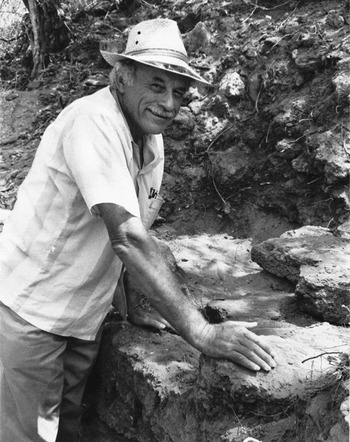
Some of these INAH colleagues and other graduate students worked on what became known as the Upper Grijalva River Basin Project (Figure 6), a regional survey and excavation program focused on the eastern half of the Grijalva River Basin and surrounding areas (Clark et al. 2005; Lee 1975). Overall direction for this project was provided by Thomas Lee Jr., NWAF field director, with work beginning in 1973 and continuing into the early 1980s. This project broadened the NWAF's approach to understanding the Formative era by considering the cultural evolution for a single region from the Archaic through the Colonial period. Gareth supervised work by Don Miller in 1975 and 1976 at La Libertad and assisted in test pitting in nearby sites (Miller 1976; Miller and Lowe 1976). He also worked with Doug Bryant at Ojo de Agua in 1981 (Lowe and Bryant 1981). Gareth's final work in the field was to help John Clark and Michael Blake start their research in the Mazatan region of coastal Chiapas on the Early Formative period, one of Gareth's first and enduring loves.

Gareth Lowe at Excavations at Ojo de Agua, Chiapas, 1980.
CODA
One of the most productive periods of Gareth's career followed his retirement in 1987 and release from bureaucratic and editorial concerns. Gareth published three major books and various articles during this period on the Olmecs and Zoques (Lowe 1998a, 1998b, 1999). He also completed many laboratory projects, the most impressive of which was his study of the ceramic artifacts recovered by INAH during the Angostura salvage project. In the early 1980s, we noticed that these collections were improperly stored and would soon rot away if something were not done. Gareth solicited and received from INAH permission to study the several tons of ceramics involved. He also helped with a massive study of all of the ceramics from the upper Grijalva Basin Project (Bryant et al. 2005), completed another study of the ceramics from Izapa, and helped with Pierre Agrinier's final study of the materials from Mirador (Agrinier et al. 2000; Lowe 2000).
In early July 1996, Gareth was on a trip to assess the feasibility of becoming involved with a major survey project in western Chiapas. On the trip, he slipped on wet flagstone pavement in Tonalá and hit his head. He suffered headaches soon afterward from what proved to be brain hemorrhaging. An emergency flight to Tucson and surgery saved his life, but complications from the operation and hospital care and blood thinners extracted their toll, and Gareth progressively lost mobility and some mental acuity. He was never able to complete his synthesis of the Middle Formative period of Chiapas, but it was a concern up to the end, and he did produce an advanced draft of his ideas that we will publish. During his final years of active research, he revised the Chiapas Formative chronology and recognized another ceramic complex and phase (Lowe 2000).
Gareth was concerned about Chiapas archaeology to the very end. As all field archaeologists know, you can take some of it with you. Gareth's good friend and honorary son, Mario Vega, slipped some Preclassic sherds from Chiapa de Corzo into Gareth's open casket at the final viewing, and both are buried in a small cemetery in Tucson. Gareth must still be smiling about this one.
GARETH W. LOWE'S PUBLISHED WORKS
1956
Summary of New World Archaeological Foundation Investigations at Chiapa de Corzo, Chiapas: 1955. New World Archaeological Foundation, Publication No.1, pp. 38–42. Orinda, CA.
1957
Summer Excavations at Chiapa de Corzo, Chiapas. New World Archaeological Foundation, Publication No. 2, Summary Notes No. 1, pp. 1–12, 14–24. Orinda, CA
1959
Archaeological Exploration of the Upper Grijalva River, Chiapas, Mexico. Papers of the New World Archaeological Foundation, No. 2. Orinda, CA
The Chiapas Project, 1955–1958: Report of the Field Director. Papers of the New World Archaeological Foundation, No. 3. Orinda, CA.
1960
Brief Archaeological History of the Southwest Quadrant. In Mound 1, Chiapa de Corzo, Chiapas, Mexico, pp. 7–12. Papers of the New World Archaeological Foundation, No. 8. Brigham Young University, Provo, UT.
The Chiapa de Corzo Archaeological Site. In Mound 1, Chiapa de Corzo, Chiapas, Mexico, pp. 1–6. Papers of the New World Archaeological Foundation, No. 8. Brigham Young University, Provo, UT.
The Mound 1 Caches. In Mound 1, Chiapa de Corzo, Chiapas, Mexico, pp. 56–63. Papers of the New World Archaeological Foundation, No. 8. Brigham Young University, Provo, UT.
Mound 1, Chiapa de Corzo, Chiapas, Mexico, with Pierre Agrinier. Papers of the New World Archaeological Foundation, No. 8. Brigham Young University, Provo, UT.
1962
Algunos resultados de la temporada 1961 en Chiapa de Corzo, Chiapas. Estudios de Cultura Maya 2:185–196.
Mound 5 and Minor Excavations, Chiapa de Corzo, Chiapas, Mexico. Papers of the New World Archaeological Foundation, No. 12. Brigham Young University, Provo, UT.
1964
Burial Customs at Chiapa de Corzo. In The Archaeological Burials at Chiapa de Corzo and Their Furniture, by Pierre Agrinier, pp. 65–75. Papers of the New World Archaeological Foundation, No. 16. Brigham Young University, Provo, UT.
1965
Desarrollo y función del incensario en Izapa. Estudios de Cultura Maya 5:53–64.
Archaeological Survey of the Chiapas Coast, Highlands, and Upper Grijalva Basin, with J. Alden Mason. In Handbook of Middle American Indians, vol. 2, edited by Gordon Willey, 195–236. University of Texas Press, Austin.
1966
Southeastern Mesoamerica, Current Research. American Antiquity 31(3):453–563.
1967
Preface, Discussion, and Appendix: Results of the 1965 Investigations at Altamira. In Altamira and Padre Piedra, Early Preclassic Sites in Chiapas, Mexico, by Dee F. Green and Gareth W. Lowe, pp. vi–vii, 53–79, 81–130. Papers of the New World Archaeological Foundation, no. 20. Brigham Young University, Provo.
Eastern Mesoamerica, Current Research. American Antiquity 32(1):135–141.
Altamira and Padre Piedra: Early Preclassic Sites in Chiapas, Mexico, with Dee F. Green. Papers of the New World Archaeological Foundation, No. 20. Brigham Young University, Provo, UT.
1968
Eastern Mesoamerica, Current Research. American Antiquity 33(1):128–132.
Eastern Mesoamerica, Current Research. American Antiquity 33(3):418–420.
Situación arqueológica de las esculturas de Izapa, with Thomas Lee, Jr. Editorial “Dr. Rodolfo Figueroa,” Sección 40 del SNTE, Tuxtla Gutiérrez, Chiapas.
1969
Eastern Mesoamerica, Current Research. American Antiquity 34(3):353–357.
The Olmec Horizon Occupations of Mound 20 at San Isidro in the Middle Grijalva Region of Chiapas. Master's thesis, Universidad del Las Américas, Puebla, Mexico.
1970
Eastern Mesoamerica, Current Research. American Antiquity 35(4):510–514.
1971
The Civilizational Consequences of Varying Degrees of Agricultural and Ceramic Dependency within the Basic Ecosystems of Mesoamerica. Contributions of the University of California Archaeological Research Facility 11:212–248.
1972
The Life Work of William E. Gates: A Biography with Notes and a Final Chapter by J. Eric S. Thompson. In Register of the William E. Gates Collection of Maya Documents. Special Collections, H.B. Lee Library, Brigham Young University, Provo, UT.
1974
Foreword. In The Linguistic, Geographic, and Demographic Position of the Zoque of Southern Mexico, by Norman Thomas, p. v. Papers of the New World Archaeological Foundation, No. 36. Brigham Young University, Provo, UT.
1975
La cultura Barra de la costa del Pacífico de Chiapas; un resúmen y nuevos datos. XIII Mesa Redonda, Xalapa, vol. II:11–20. Sociedad Mexicana de Antropología, Mexico.
The Early Preclassic Barra Phase of Altamira, Chiapas. Papers of the New World Archaeological Foundation, No. 38. Brigham Young University, Provo, UT.
1977
The Mixe-Zoque as Competing Neighbors of the Early Lowland Maya. In The Origins of Maya Civilization, edited by Richard E.W. Adams, pp. 197–248. School of American Research Seminar, University of New Mexico Press, Albuquerque.
1978
The Early Preclassic Barra Phase of Altamira, Chiapas: A Review with New Data. Papers of the New World Archaeological Foundation, No. 38. Brigham Young University, Provo, UT.
Eastern Mesoamerica. In Chronologies in New World Archaeology, edited by Robert Taylor and Clement Meighan, pp. 331–393. Academic Press, New York.
1981
Olmec Horizons Defined in Mound 20, San Isidro, Chiapas. In The Olmec and Their Neighbors, edited by Elizabeth Benson, pp. 231–255. Dumbarton Oaks, Washington, DC.
1982
Izapa Religión, Cosmology and Ritual. In Izapa: An Introduction to the Ruins and Monuments, by Gareth Lowe, Thomas Lee Jr., and Eduardo Martínez, pp. 268–305. Papers of the New World Archaeological Foundation, No. 31. Brigham Young University, Provo, UT.
The Izapa Sculpture Horizon. In Izapa: An Introduction to the Ruins and Monuments, by Gareth Lowe, Thomas Lee Jr., and Eduardo Martínez, pp.18–40. Papers of the New World Archaeological Foundation, No. 31. Brigham Young University, Provo, UT.
Izapa: An Introduction to the Ruins and Monuments, with Thomas A. Lee Jr. and Eduardo Martínez Espinosa. Papers of the New World Archaeological Foundation, No. 21. Brigham Young University Press, Provo, UT.
1983
Los olmecas, mayas y mixe-zoques. In Antropología y historia de los mixe-zoques y mayas: Homenaje a Frans Blom, edited by Lorenzo Ochoa and Thomas A. Lee Jr., pp. 125–130. Universidad Nacional Autónoma de México and Brigham Young University, Mexico City.
1989
Algunas aclaraciones sobre la presencia olmeca y maya en el preclásico de Chiapas. In El preclásico o formativo: Avances y perspectivas, edited by M. Carmona, pp. 363–383. Instituto Nacional de Antropología e Historia and Museo Nacional de Antropología, Mexico City.
Los Mixe-Zoque como Vecinos Rivales de los Mayas en las Tierras Bajas Primitivas. In Los Orígenes de la civilizacíon Maya, edited by R.E.W. Adams, pp. 219–274. Fondo de Cultura Económico, Mexico City.
The Heartland Olmec: Evolution of Material Culture. In Regional Perspectives on the Olmec, edited by David Grove and Robert Sharer, pp. 33–67. School of American Research Advanced Seminar Series. Cambridge University Press, Cambridge.
1990
Buscando una cultura olmeca en Chiapas. In Primer foro de arqueología de Chiapas, pp. 111–130. Instituto Chiapaneco de Cultura, Tuxtla Gutiérrez, Chiapas.
Izapa: Between Olmec and Maya. In Mexico: Splendors of Thirty Centuries, pp. 72–86. Metropolitan Museum of Art, New York.
Izapa, entre los olmecas y los mayas. México: Esplendores de treinta siglos, pp. 72–86. Metropolitan Museum of Art and Los Amigos de las Artes de México. Arnoldo Mondadori Editore, Verona.
1993
La gran importancia de las ofrendas del preclásico terminal en Izapa. In Segundo y tercero foros de arqueología de Chiapas, pp. 179–210. Instituto Chiapaneco de Cultura, Tuxtla Gutiérrez, Chiapas.
1994
Comunidades de Chiapas relacionadas con los olmecas. In Los olmecas en Mesoamérica, edited by John E. Clark, pp.113–127. El Equilibrista, Mexico, and Turner Libros, Madrid.
Southern Olmecs and Preclassic Zoques in Western Chiapas: Summary of Research and Writing, 1993. Manuscript on file, New World Archaeological Foundation. Brigham Young University, Provo, UT.
1995
Presencia maya en la cerámica del preclásico tardío en Chiapa de Corzo. In Memorias del segundo congreso internacional de mayistas, pp. 321–341. Universidad Nacional Autónoma de México, Mexico City.
La distribución de la cerámica con pseudo-glifos mayas en la región de La Angostura, Chiapas, with Lynneth S. Lowe. In VIII simposio de investigaciones arqueológicas en Guatemala, 1994, edited by Juan Pedro Laporte and Hector L. Escobedo, pp. 441–445. Ministerio de Cultura y Deportes, Instituto de Antropología e Historia, and Asociación Tikal, Guatemala.
1998
Chiapa de Corzo, una capital zoque durante el periodo clásico medio. In Cultura y etnicidad zoque, edited by Dolores Aramoni, Thomas A. Lee Jr., and Miguel Lisbona, pp. 15–26. Universidad de Ciencias y Artes del Estado de Chiapas and Universidad Autónoma, Tuxtla Gutiérrez, Chiapas.
Mesoamérica olmeca: Diez preguntas. Instituto Nacional de Antropología e Historia, Mexico City.
Los olmecas de San Isidro en Malpaso, Chiapas. Instituto Nacional de Antropología e Historia, Mexico City.
1999
Los zoques antiguos de San Isidro. Libros de Chiapas. Consejo Estatal para la Cultura y las Artes de Chiapas, Tuxtla Gutiérrez, Chiapas.
2000
Middle Preclassic Chronology at Mirador: Some Additional Comments. In Mound 27 and the Middle Preclassic Period at Mirador, Chiapas, Mexico, by Pierre Agrinier, pp. 36–37. Papers of the New World Archaeological Foundation, No. 58. Provo, UT.
Appendix: Three Early Ceramic Complexes from Miramar, Chiapas, Mexico, with Pierre Agrinier and David Cheetham. In Mound 27 and the Middle Preclassic Period at Mirador, Chiapas, Mexico, by Pierre Agrinier, pp. 177–213. Papers of the New World Archaeological Foundation, No. 58. Brigham Young University, Provo, UT.
2001
Chiapa de Corzo. In Archaeology of Ancient Mexico and Central America: An Encyclopedia, edited by Susan T. Evans and David L. Webster, pp. 122–123. Garland Publishing, New York.
San Isidro and Environs (Chiapas, Mexico). In Archaeology of Ancient Mexico and Central America: An Encyclopedia, edited by Susan T. Evans and David L. Webster, p. 644. Garland Publishing, New York.
Mirador, with John E. Clark. In Archaeology of Ancient Mexico and Central America: An Encyclopedia, edited by Susan T. Evans and David L. Webster, p. 427. Garland Publishing, New York.
2005
Middle Preclassic Ceramics, with Donald E. Miller, Douglas Donne Bryant, and John E. Clark. In Ceramic Sequence of the Upper Grijalva Region, Chiapas, Mexico, edited by Douglas D. Bryant, John E. Clark, and David Cheetham. Papers of the New World Archaeological Foundation, No. 67. Brigham Young University, Provo, UT.
References
REFERENCES
Agrinier, Pierre,
David Cheetham, and
Gareth W. Lowe
2000
Appendix: Three Early Ceramic Complexes from Miramar, Chiapas,
Mexico. In
Mound 27 and the Middle Preclassic Period at Mirador, Chiapas,
Mexico,
by Pierre Agrinier, pp.
177–213.
Papers of the New World Archaeological Foundation, No.
58.
Brigham Young University,
Provo, UT.Google Scholar
Bryant, Douglas D., and
John E. Clark
1983
Los primeros mayas precolombinas de la cuenca superior del
Río Grijalva. In
Homenaje a Frans Bloom: Antropología e historia de los
mixe-zoques y mayas, edited by
Lorenzo Ochoa and
Thomas A. Lee Jr., pp.
223–239.
Universidad Nacional Autónoma de Mexico,
Mexico City.Google Scholar
Bryant, Douglas D.,
John E. Clark, and
David Cheetham (editors)
2005
Ceramic Sequence of the Upper Grijalva Region, Chiapas,
Mexico.
Papers of the New World Archaeological Foundation, No.
67.
Brigham Young University,
Provo, UT.Google Scholar
Clark, John E.,
Thomas A. Lee Jr., and
Douglas Donne Bryant
2005
Introducing the Grijalva Maya Project. In
Ceramic Sequence of the Upper Grijalva Region, Chiapas,
Mexico.
Papers of the New World Archaeological Foundation, No.
67.
Brigham Young University,
Provo, UT.Google Scholar
Coe, Michael D.
1961
La Victoria, an Early Site on the Pacific Coast of Guatemala.
Papers of the Peabody Museum of Archaeology and Ethnohistory, Vol.
53.
Harvard University,
Cambridge, Mass.Google Scholar
Coe, Michael D., and
Kent V. Flannery
1967
Early Cultures and Human Ecology in South Coastal Guatemala.
Smithsonian Contributions to Anthropology, Vol. 3.
Smithsonian Institution,
Washington, DC.CrossRefGoogle Scholar
Ekholm, Susanna M.
1969
Mound 30a and the Early Preclassic Ceramic Sequence of Izapa,
Chiapas, Mexico.
Papers of the New World Archaeological Foundation, No.
25.
Brigham Young University,
Provo, UT.Google Scholar
Green, Dee F., and
Gareth W. Lowe
1967
Altamira and Padre Piedra: Early Preclassic Sites in Chiapas,
Mexico.
Papers of the New World Archaeological Foundation, No.
20.
Brigham Young University,
Provo, UT.Google Scholar
Lee Jr., Thomas A.
1974
Mound 4 Excavations at San Isidro, Chiapas, Mexico.
Papers of the New World Archaeological Foundation, No.
34.
Brigham Young University,
Provo, UT.Google Scholar
Lee Jr., Thomas A.
1975
The Uppermost Grijalva Basin: A Preliminary Report of a New Maya
Archaeological Project. In
XIII Mesa Redonda: Balance y perspective de la antropología
de Mesoamérica y del norte de México, vol. 2, pp.
5–47.
Sociedad Mexicana de Antropología,
Mexico City.Google Scholar
Lowe, Gareth W.
1959
Archaeological Exploration of the Upper Grijalva River, Chiapas,
Mexico.
Papers of the New World Archaeological Foundation, No. 2.
Orinda, CAGoogle Scholar
Lowe, Gareth W.
1967
Eastern Mesoamerica, Current Research.
American Antiquity
32(1):135–141.Google Scholar
Lowe, Gareth W.
1971
The Civilizational Consequences of Varying Degrees of Agricultural
and Ceramic Dependency within the Basic Ecosystems of Mesoamerica.
Contributions of the University of California Archaeological
Research Facility
11:212–248.Google Scholar
Lowe, Gareth W.
1978
Eastern Mesoamerica. In
Chronologies in New World Archaeology, edited by
Robert Taylor and
Clement Meighan, pp.
331–393.
Academic Press,
New York.Google Scholar
Lowe, Gareth W.
1981
Olmec Horizons Defined in Mound 20, San Isidro, Chiapas. In
The Olmec and Their Neighbors, edited by
Elizabeth Benson, pp.
231–255.
Dumbarton Oaks,
Washington, DC.Google Scholar
Lowe, Gareth W.
1998a
Mesoamérica olmeca: Diez preguntas.
Instituto Nacional de Antropología e Historia,
Mexico City.Google Scholar
Lowe, Gareth W.
1998b
Los olmecas de San Isidro en Malpaso, Chiapas.
Instituto Nacional de Antropología e Historia,
Mexico City.Google Scholar
Lowe, Gareth W.
1999
Los zoques antiguos de San Isidro.
Libros de Chiapas.
Consejo Estatal para la Cultura y las Artes de Chiapas,
Tuxtla Gutiérrez, Chiapas.Google Scholar
Lowe, Gareth W.
2000
Middle Preclassic Chronology at Mirador: Some Additional
Comments. In
Mound 27 and the Middle Preclassic Period at Mirador, Chiapas,
Mexico,
by Pierre Agrinier, pp.
36–37.
Papers of the New World Archaeological Foundation, No.
58.
Provo, UT.Google Scholar
Lowe, Gareth W., and
Pierre Agrinier
1960
Mound 1, Chiapa de Corzo, Chiapas, Mexico.
Papers of the New World Archaeological Foundation, No. 8.
Brigham Young University,
Provo, UT.Google Scholar
Lowe, Gareth W., and
Douglas Donne Bryant
1981
Excavaciones en las ruinas de Ojo de Agua, Municipio de La
Trinitaria, Chiapas, 1980. Report submitted to the
Instituto de Antropología e Historia,
Mexico City.Google Scholar
Lowe, Gareth W., and
J. Alden Mason
1965
Archaeological Survey of the Chiapas Coast, Highlands, and Upper
Grijalva Basin. In
Handbook of Middle American Indians,
vol. 2, edited by
Gordon Willey,
195–236.
University of Texas Press,
Austin.CrossRefGoogle Scholar
Lowe, Gareth W.,
Thomas A. Lee Jr., and
Eduardo Martínez Espinosa
1982
Izapa: An Introduction to the Ruins and Monuments.
Papers of the New World Archaeological Foundation, No.
21.
Brigham Young University Press,
Provo, UT.Google Scholar
Lowe, Lynneth
1998c
El salvamento arqueológico de la presa de Mal Paso, Chiapas:
Excavaciones menores.
Centro de Estudios Mayas, cuaderno 24.
Universidad Autónoma Nacional de México,
Mexico City.Google Scholar
Miller, Donald E.
1976
La Libertad: A Major Middle and Late Preclassic Ceremonial Center in
Chiapas, Mexico. Preliminary report submitted to the
Instituto de Antropología e Historia,
Mexico City.Google Scholar
Miller, Donald E., and
Gareth W. Lowe
1976
Test Excavations at Sites on or near the La Libertad–Entre
Ríos Peninsula: Field Report. Preliminary report submitted to
the
Instituto de Antropología e Historia,
Mexico City.Google Scholar
Navarrete, Carlos
1959
A Brief Reconnaissance of the Tonalá Region, Chiapas,
Mexico.
Papers of the New World Archaeological Foundation, No. 4.
Orinda, CA.Google Scholar
Navarrete, Carlos
1960
Archaeological Explorations in the Region of the Frailesca, Chiapas,
Mexico.
Papers of the New World Archaeological Foundation, No. 7.
Orinda, CA.Google Scholar
Navarrete, Carlos
1973
El sistema prehispánico de comunicaciones entre Chiapas y
Tabasco.
Anales de Antropología
X:33–92.Google Scholar
Norman, V. Garth
1973
Izapa Sculpture, Part 1: Album.
Papers of the New World Archaeological Foundation, No. 30, Part
1.
Brigham Young University,
Provo, UT.Google Scholar
Norman, V. Garth
1976
Izapa Sculpture, Part 2: Text.
Papers of the New World Archaeological Foundation, No. 30, Part
2.
Brigham Young University,
Provo, UT.Google Scholar
Peterson, Frederic
1958
Reconnaissance of the La Venta and Cintalapa Rivers.
Manuscript on file,
New World Archaeological Foundation,
Chiapas, Mexico.Google Scholar
Shook, Edwin M.
1956
An Archaeological Reconnaissance in Chiapas, Mexico.
New World Archaeological Foundation, Publication 1, pp.
20–37.
Orinda, CA.Google Scholar
Sorenson, John L.
1956
An Archaeological Reconnaissance of West-Central Chiapas,
Mexico.
New World Archaeological Foundation, Publication 1, pp.
7–19.
Orinda, CA.Google Scholar
Stirling, Matthew W.
1943
Stone Monuments of Southern Mexico.
Bureau of American Ethnology, Bulletin 138.
Smithsonian Institution,
Washington, DC.Google Scholar
Gareth Lowe and Bruce Warren in the 1950s during NWAF research at Chiapa de Corzo.
Gareth Lowe with Stela 21 at Izapa in the 1960s.
Gareth Lowe at Excavations at Ojo de Agua, Chiapas, 1980.
 You have
Access