In 1931, Chinese communists and Russian revolutionary linguists came together in Vladivostok to devise the Chinese Latin Alphabet (CLA), also known as Sin Wenz. For the designers of the script, the CLA was the harbinger of a revolutionary age in China. The new script was meant to replace the Chinese characters, which the revolutionaries considered to be a feudal remnant, preciously guarded by the ruling elites to keep the masses away from enlightenment. Immediately after its invention, the CLA was embraced by hundreds of intellectuals, and dozens of textbooks in a variety of Chinese languages were printed in latinized letters. By the end of the decade, however, the movement lost its momentum as the country plunged into war. The alphabetical revolution gradually lost its power in the following years, and the CLA finally left its place to pinyin in 1958, which the Chinese Communist Party (CCP) officially recognized as an auxiliary phonetic script that would not replace the Chinese characters.
How did the Chinese Latin Alphabet become a revolutionary script in the 1930s? And why was the revolution never carried out? This article traces the history of the CLA to rethink the tumultuous years of Chinese script reforms—the effort to alphabetize and/or simplify the Chinese characters. The first call for script reforms in China came at the turn of the twentieth century, when dozens of intellectuals around the empire began devising phonetic scripts in search of national progress. The absence of a phonetic script was such a critical issue that the Republic of China's Ministry of Education convened a nationwide conference in 1913, only one year after the fall of the Qing dynasty (1637–1912), to invent a new script for China. The outcome of that conference was the National Phonetic Alphabet (guoyin zimu, NPA), which later evolved into Phonetic Symbols (zhuyin fuhao) in 1930 and is still the most commonly used phonetic script in Taiwanese textbooks and computer technologies. But in the 1930s, the NPA was hardly the only new script, as some wanted to simplify the characters, and others wanted to get rid of them altogether. It was during this period of phonetic anxiety and uncertainty that the Chinese Latin Alphabet was born.
The history of Chinese script reforms is often told as a history of Chinese language reforms (DeFrancis Reference DeFrancis1950; Kaske Reference Kaske2008). From the vernacularization movement (baihua) to the designation of Mandarin as the national language in the 1920s, historians have largely focused on language as the most volatile and politicized medium of communication (Tam Reference Tam2020). While the significance of language politics in modern China is beyond doubt, it is only recently that scholars have started to recognize the conceptual problems arising from prioritizing the history of language reforms over script reforms (Zhong Reference Zhong2019). As Lydia Liu (Reference Liu2015, 379) has noted, language reforms in China and the world “in reality sought to eradicate one or another foreign script, resulting in a code switch that happened more radically at the level of script than it did at the level of language.” Understanding this “code switch” requires more than an understanding of language reforms. It demands a new history of scripts.
This article proposes to rethink scripts as material and ideological artifacts that stood at the forefront of a global information age. Precipitated by the communications revolution of the nineteenth century, the global information age was heralded by new infrastructures, technologies, and an industrializing knowledge economy that transformed the sociotechnical practices of communication at large. Amid ubiquitous telegraphic networks, industrial printing, and new demands for education and literacy, scripts in China and across the world turned into technologies of sociopolitical change. Script reforms were the means to cope with these momentous transformations, as a new information order changed the value of knowledge itself and instituted a new clerical and mental labor regime.
Morse code offers a simple yet potent example to show the changing information order in China. Designed for the twenty-six letters of the English alphabet, Morse code posed an infrastructural anomaly for the nonalphabetical Chinese writing system when it first arrived in the Qing Empire in the 1870s (Baark Reference Baark1997). The alphabetical incongruence was temporarily resolved by assigning four-digit numbers to each Chinese character, compelling the telegraph operators to go through a two-step process to transmit information: first, they had to locate a given character in the telegraph codebook, which was composed of more than 9,000 characters indexed according to the lexicographical principles of the Kangxi Dictionary with 214 radicals, and then they had to translate the assigned four-digit number into Morse code. The trouble for many of the script reformers from the 1890s onward was the inefficiency of the clerical labor required for this process, which they believed could be circumvented with a phonetic script.
The trouble was not only with Morse code. The information age was intimately tied to the global forces of imperialism and capitalism that fundamentally transformed the political economy of knowledge production in China. Chinese sciences were imperiled by Western epistemologies; the millennium-old Civil Service Examination System came to an end in 1905; and mass literacy turned into a modernist desire to increase the flow of information. As the Chinese knowledge economy was rapidly disassembled, the Chinese script turned into a pivotal technology to reassemble that economy and ponder alternative political futures for the information age. Script, like any technology, was at once a material and an ideological medium (Winner Reference Winner1980). Each proposed script from the turn of the century onward was a technopolitical artifact that embodied a particular ideological vision for a modernizing China. The CLA was one of them.
The impact of the information age on the Chinese script has recently garnered scholarly attention, as exemplified by Thomas Mullaney's (Reference Mullaney2017) work on the Chinese typewriter. Identifying Chinese alphabetization as a product of Western Orientalist discourses, Mullaney sought an alternative history of information in the technological management of the Chinese characters and offered a new narrative of “Chinese” information technologies. But his emphasis on the technical particularities of Chinese typewriters clouded the ideological forces that stood behind all Chinese scripts. For the Chinese script reformers, there was a wide range of political possibilities that arrived with script engineering. Scripts could be socialist like the CLA, liberal like the simplified characters, conservative like the traditional characters, or fascist like the Phonetic Symbols. Both in its alphabetical and nonalphabetical forms, the technologization of the Chinese script was never simply a technical problem; it was consistently intertwined with deeper ideological reckonings that must be situated within the technopolitics of the global information age.
Chinese reformers and revolutionaries were not alone in coping with the infrastructural, technological, and ideological issues unleashed by this age. Script reforms were integral to all modernizing knowledge economies across the world, from Vietnam to Mongolia to the USSR to Turkey; Chinese script reformers, especially the latinists, were deeply intertwined with these transnational networks. The revolutionary zeal for the CLA was indeed an outcome of a larger socialist and internationalist latinization movement that reached its zenith in the 1920s and 1930s in the Soviet Union, following the global transformation of communications infrastructures and the collapse of major imperial regimes—Ottoman, Russian, Persian, and Chinese. Within the postimperial ideological vacuum, all non-Latin scripts came under attack as revolutionaries positioned the Latin alphabet as the neutral medium of efficiency and the natural medium of linguistic representation, effectively erasing the alphabet's own imperialist history.
The universal neutrality of the Latin alphabet became even more pronounced once the socialist ideologues of the Soviet Union turned it into a weapon for internationalism and world revolution. The CLA was thus the product of a larger Eurasian latinization movement that was spearheaded by the USSR and stretched from Baku to Vladivostok. In 1926, at the First All-Union Turcology Congress in Baku, Turkic and Russian revolutionaries almost unanimously agreed to latinize the Arabic script in use across Central Asia. In 1928, they invented the Unified New Turkic Alphabet (unifitsirovannyi novyi tiurkskii alfavit, UNTA), which became the blueprint for latinizing not only Turkic languages, but all languages across Eurasia, to foster a new revolutionary culture. In 1931, when it reached the Pacific shores of the USSR, the Chinese communists in Vladivostok revised it as the Chinese Latin Alphabet.
This article proposes to step away from China-centered histories and situate Chinese script reforms within the transnational networks of the global information age. In particular, it brings to life the forgotten actors who devised the CLA's letters and reveals the significance of Arabic script reforms and revolutionary internationalism in the making of Chinese scripts. The first section thus begins with the birth of the Latin alphabet as a revolutionary script at the First All-Union Turcology Congress in Baku in 1926. The second section situates the CLA within the script ecology of the 1920s and 1930s in China, carefully teasing out the technical and ideological differences between different scripts. The last section integrates the histories of latinization in the Soviet Union and China, demonstrating the material and phenomenological limits of revolutionary internationalism. Going beyond language reforms, the following pages propose a history of scripts that scrutinizes the ambitions, struggles, and contradictions embedded in the scripts themselves.
Latinization across Eurasia: A Prehistory of the Chinese Latin Alphabet
Let us start with the letters. The Chinese Latin Alphabet was invented in Vladivostok in 1931, and it eventually metamorphosed into pinyin in 1958. But a closer look at the letters of the CLA and pinyin demonstrates the stark differences between the two scripts. Yuyan (language), for instance, was transcribed as yjan in the CLA. Ladinghua (latinization) was transcribed as latinxua, and Qing as cing. What, one may ask, was the reason for these discrepancies? Why did the letters of the CLA have the phonetic values that they did? Where did these letters come from?
Identifying the origins of the CLA's letters takes us on a transnational journey across Eurasia and into the latinization of the Arabic script in the Socialist Republic of Azerbaijan. The majority of the CLA's letters were indeed identical to the letters of the UNTA, devised immediately after the First All-Union Turcology Congress that convened in Baku in 1926. The oil-rich town of Baku was a center for transnational reformist thought since the late nineteenth century, as it stood at the intersection of the Russian, Ottoman, and Persian Empires. Following the Bolshevik Revolution, it also became a center for socialist movements, and in 1920, it hosted the First Congress of the Peoples of the East—an anti-imperialist congress organized by the Comintern and convened with the participation of communists from all around the world (Erturk Reference Erturk2013; Riddell Reference Riddell1993). The same anti-imperial spirit was palpable at the First Turcology Congress as well, convened only six years later in the same city with a single purpose: to latinize the Arabic script of the Turkic nationalities. It was at this Congress that the CLA's letters were born.
The question of the Arabic script had been a contested issue in the Ottoman, Russian, and Persian Empires since the mid-nineteenth century. The first calls for Arabic alphabet reform had started in the 1850s and 1860s in Istanbul, Tbilisi, and Tehran. Analogous to the birth of script reforms in the late Qing, Arabic script reforms were also a product of the new communications and information infrastructures that arrived with Western imperialism, especially the telegraph and industrial print technologies. The main issue for the reformers was the multiple glyphs used for most Arabic letters. Since letters took different shapes depending on their place in a word, this caused problems both for telegraphic communication and for printing with movable type. Contrasting their script with the separate-lettered scripts of the age (e.g., Latin, Cyrillic, and Armenian), the reformers, much like their Chinese counterparts, contended that the Arabic alphabet was an inefficient medium for the production and distribution of information in a new media ecology (Kuzuoglu Reference Kuzuoglu2020). By the 1910s, there were more than a dozen proposals for a new script in the Muslim world, and by the early 1920s, following the Bolshevik Revolution and the fall of the Ottoman Empire, the Azerbaijanis in Baku championed the movement by inventing the latinized New Turkic Alphabet (jeni turq elifbasi) in 1922.
For the Soviet intellectuals in the 1920s, the future of the alphabet was nothing less than the future of the “East” and world socialism in an industrializing age. “Latinization,” in the alleged words of Lenin, was “the great revolution in the East!” (Martin Reference Martin2001, 187) because its principles of efficiency and the creation of a new culture of knowledge resonated not only with the universalist principles of socialism, but especially with the principles of the “Scientific Organization of Labor” (Nauchnaia Organizatsiia Truda, hereafter NOT). Coined by Aleksei Gastev (1882–1939), an admirer of Taylorism and scientific management, NOT was an early Soviet search for industrial productivity. For Gastev, new instruments of production could optimize the neurophysiological human body indefinitely and increase intellectual and creative output at an unprecedented magnitude (Gastev Reference Gastev1972, 198). The “installment” (ustanovka) of a new proletarian culture of work offered a mode of existence not simply for industrialists and workers, but for writers, performance artists, and philologists and linguists (Fore Reference Fore2006). Latinization was thus quickly absorbed into a world of revolutionary industrial dreams: a common alphabet could standardize and optimize mental labor for all nations and nationalities and fuel the seamless flow of information between different linguistic communities. The question was how to achieve this human-machine integration through a new alphabet.
More than 130 representatives from across the USSR and other countries convened at the Turcology Congress to respond to that question and create a new socialist mind (PVTS 1926, 423–26). For some, the optimal integration between the human and the machine demanded a mathematical calculation of phonemes. Nikolai F. Iakovlev (1892–1974), who was later appointed as the president of the techno-graphic commission of the All-Union Central Committee of the New Alphabet, took mechanization to the extreme by inventing a mathematical formula for alphabet invention to economize writing (Iakovlev Reference Iakovlev1925). The Latin alphabet, according to Iakovlev and many others in the Congress, was not only the most efficient script, but also the only one that could overcome the imperial Russification policies and Cyrillization projects, such as those spearheaded by the infamous Orientalist Nikolai Il'minskii (Reference Il'minskii1883). Latinization as such signified the complete abandonment of Russian imperialism. Iakovlev summoned the linguists to latinize even Russian itself to affirm the break with a colonialist past. The Latin alphabet, he noted, was a better fit not only for an anticolonial ideology, but also for the “modern man's” (sovremennyi chelovek) physiological moves of the hands and eyes—according to his calculations, the speed of writing in Latin was 14 to 15 percent faster than Cyrillic, and it was four times faster to read Latin (Iakovlev Reference Iakovlev1930, 37). While the latinization of Russian never took place, the same logic of efficiency and productivity permeated all discussions surrounding scripts in the USSR.
Within an industrializing knowledge economy, revolutionaries had to make a decision about what constituted efficiency in script. The Arabic alphabet was the main issue at the Congress since it was used widely across Soviet Central Asia, but some of the participants in the Congress had disparate thoughts about the question of efficiency. Lev I. Zhirkov (1885–1963), a linguist and an Iranologist, for example, believed that the technical principles offered by NOT provided a guideline for script revolution. A given script's convenience to the reader's eye, its ease of reproduction on a given surface with the available technology, and its simplicity for educating the masses were the three conditions for a “good” script. The Arabic alphabet, according to Zhirkov (Reference Zhirkov1925), did not conform to any of these rules—the lack of vowels and the alleged difficulty of writing, printing, and typing posed a mental and physical obstacle to progress.
Galimjan Sharaf (1886–1950), a member of the Tatar delegation hailing from Kazan, disagreed. A strong proponent of Arabic letters, Sharaf delivered a long speech at the Congress to claim that the Arabic alphabet did comply with NOT. First of all, diacritical marks could be used to signify the exact sounds and help the Arabic alphabet reach phonetic accuracy. In fact, according to his calculations through comparisons of Yakuts, Bashkirs, Tatars, and Azeris, Latin letters worked only with 47 to 56 percent of the sounds in Turkic languages; for the rest, either the Latin letters had to be given new phonetic values, or entirely new letters were needed. The Arabic alphabet, on the other hand, needed only 15 percent more signs to achieve linguistic accuracy.
In terms of the speed of writing, Sharaf believed that the Arabic alphabet was physiologically more suitable to the productive moves of the hand. In writing Latin letters, although the line was written from left to right, the movement of the hand followed a counterclockwise direction, such as in o, b, e, and so on, which was the reason for writing the line from left to right. In Arabic, the movement was in the reverse order: while the letters و ر س followed a clockwise direction of the hand in production, the line itself followed an order from right to left. The order of the line and the manual moves were thus in conformity. In other words, the physiology of the hand and the manual production of a letter were in compliance with the principles of NOT.
The latinists were right, Sharaf claimed, in pointing out the deficiency of the Arabic alphabet in print—the number of words in Arabic letters that fit into a line could not compete with those in latinized letters; the diacritical marks slowed down the speed of typesetting; and the number of yearly publications did not match those in the Latin alphabet. However, the reform of Arabic letters had already been in progress in Kazan since the late nineteenth century, noted Sharaf, and printers had already started achieving remarkable results (PVTS 1926, 246–64). In sum, reforming the Arabic letters was a better solution to optimize labor while keeping the temporal flow of information from the past to the future unobstructed.
Technical arguments about efficiency, however, were not sufficient. A major issue that the proponents of the Arabic script rarely addressed was the perceived political problem of pan-Turkism and pan-Islamism. For Sharaf and others who favored alphabet reform from within, latinization would bring an end to the cultural and literary unity of Turkic people—a unity that some Muslim reformers in Russia had been fighting for since the 1880s (Khalid Reference Khalid1998). But it was a delicate problem to address, for anything that even remotely hinted at a Turkic cultural and literary unity was potentially “counterrevolutionary.” As such, the defense of the Arabic alphabet was almost a lost cause from the start, despite all the arguments in favor of NOT. Calls for the creation of a new economy and culture of knowledge that rejected the counterrevolutionary ties to the past proved to be more powerful than the seemingly neutral calculations of efficiency and productivity. Indeed, when put to vote, 101 participants voted for latinization, 7 voted against, and 9 were impartial. The future of the Arabic script was thus determined.
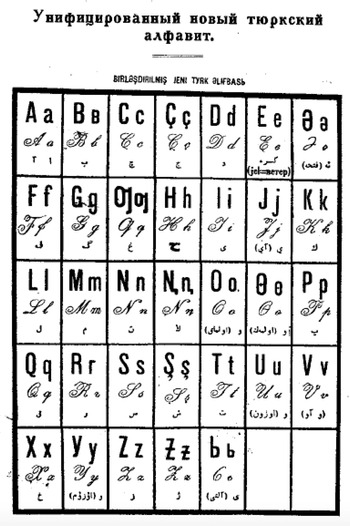
Immediately after the Congress was over, preparations began to devise the UNTA (figure 1). Things moved fast. The UNTA was created in 1927 and put into practice in 1928 (Agazade and Karakashly Reference Agazade and Karakashly1928). All the revolutionaries involved, Turkic and Russian alike, were aware of the implications of the UNTA. It was not simply an alphabet for latinizing the languages of the Turkic nationalities, but a blueprint for latinizing all languages inside and outside the USSR. The UNTA thus became the basis for all national alphabets, such as Mongolian, Avarian, Darginian, and Abkhazian (Khansurov Reference Khansurov1932). Moreover, apart from offering a shared materiality for a coveted socialist future, the UNTA also helped the Central Committee expand its influence into non-USSR lands. Latinization of Tajik, for instance, broadened the Soviet Union's communication channels into Iran and Afghanistan. Latinization of Kurdish was aimed at Kurds living in Iran, Turkey, and Iraq. The UNTA, in other words, was the USSR's internationalist technology for instigating a socialist revolution.
The Unified New Turkic Alphabet (Kul'tura i Pis'mennost’ Vostoka, kniga vtoroia [Baku: Izdanie VTsK NTA, 1928]).

The UNTA had its most lasting impact in China. Immediately following the UNTA's invention, Soviet revolutionaries turned their attention to a small diasporic Chinese Muslim community living across Central Asia. Known as the Dungans, who later acquired their own nationality status in the USSR, this community had emigrated from Xinjiang to present-day Kyrgyzstan and Kazakhstan during the tumultuous years of the 1870s (Dyer Reference Dyer1979, Reference Dyer2000). According to the official census, their population in Kyrgyzstan and Kazakhstan was 14,600 in 1926, and according to the ethnographer Vasil'ev's (Reference Vasil'ev1931) account, their language was a mixture of vernacular languages spoken in Shaanxi and Gansu Provinces in the northwest, with loanwords from Turkish, Arabic, Russian, and other languages. While its population was almost negligible, the Dungans offered a gateway for the Soviet revolutionaries to win over the “East.” “Although the [UNTA] is used for small nations (narod), such as the Dungans,” wrote Iakovlev, “we must not forget that behind that small nation, we have a great national mass in the East—behind them stands China” (SOTP 1929, 82).
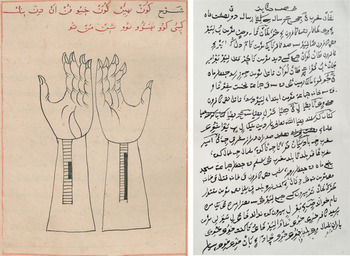
The crucial difference between Dunganese and other Chinese vernacular languages was that the former was written with an Arabic script known as xiao'erjin 小兒錦. The origin and development of xiao'erjin are little known, but the earliest examples of using the Arabic script to transcribe Chinese sounds come from a fourteenth-century Persian translation of a Chinese medical treatise (figure 2). During the Ming and Qing dynasties, and up until today, the Chinese Muslims continued to use the Arabic script to transcribe Chinese sounds (Lipman Reference Lipman1997, 50–51), hence its use by the Dungans in Russia and the USSR during the early twentieth century (figure 3). The rate of literacy in xiao'erjin was arguably never high, but it proved to be a convenient starting point for latinizing Chinese, for the Soviet Union already had a template, the UNTA, to transliterate the Arabic letters into Latin letters.
On the left, Chinese words written in the Arabic script in 1313 (Türkiye Yazma Eserler Kurumu Başkanlığı, Süleymaniye Kütüphanesi, Ayasofya 3596, Tanksukname-i Ilhani 1313, 157). On the right, a twentieth-century manuscript in xiao'erjin (Bai Reference Bai1953).

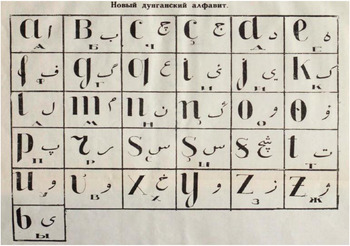
The first proposal to latinize Dunganese was drafted by the Kyrgyz Committee of the New Alphabet, and the second one by Dungan students in Tashkent, who used the UNTA as their model and added a few more signs that resembled Cyrillic letters. In 1928, these students even printed the first Dunganese newspaper, May 1 (Iusupov Reference Iusupov1977, 149). In order to finish the project, Yakub Zhon, the director of the only Dungan school in Frunze, Kyrgyzstan, was summoned to Baku, and the New Dunganese Alphabet was finalized in the same year. As he noted in a speech to the All-Union Central Committee of the New Turkic Alphabet, the New Dunganese Alphabet was based on the Arabic script in use, not on other phoneticization projects of Chinese languages taking place in China (Chobanzade Reference Chobanzade1928). As a matter of fact, Dungan students studying in Tashkent in the 1920s had started reforming the Arabic script before latinizing it (Dyer Reference Dyer1991, 241). The slight differences between the Turco-Muslim Arabic script and the Dunganese Arabic script (i.e., reformed xiao'erjin) can be seen in figure 4; they corresponded with the slight differences between the UNTA and the latinized New Dunganese Alphabet.
The New Dunganese Alphabet, 1928 (Chobanzade Reference Chobanzade1928, 24–25).

With the support of Evgenii Polivanov (1891–1938), a leading Sinologist, the first textbooks and literature in the New Dunganese Alphabet were printed by the Dunganese students. A revised version of the UNTA thus became the foundation for transcribing Chinese sounds into the Latin alphabet, and only three years later, it was revised once again in Vladivostok as the Chinese Latin Alphabet.
The history of Chinese alphabetization is often described either as an extension of language reforms or a product of Orientalist discourses that deemed the Chinese characters “backward.” While it is true that alphabetization in China and around the world was intimately linked to the phonocentric assumptions of a Eurocentric modernity, following the letters of the CLA invites a new genealogy that expands the geographical limits and the ideological presuppositions of Chinese alphabetization. The CLA's immediate predecessor, the New Dunganese Alphabet, was borne out of transnational revolutionary networks that were activated by industrializing knowledge economies. As such, the material composition of the New Dunganese Alphabet had nothing to do with the usual suspects of alphabetization—such as Western missionaries, diplomats, or Orientalists—and everything to do with the latinization of the Arabic alphabet within an internationalist moment in the USSR. The latinization of the Dunganese xiao'erjin, as Iakovlev noted, was a means to a greater end, for behind the Dungans stood China.
National Phonetic Alphabet, Gwoyeu Romatzyh, and the Chinese Latin Alphabet
How did the New Dunganese Alphabet turn into the CLA? And how does this new genealogy differ from the extant narratives of Chinese latinization? The history of the CLA, or Sin Wenz, as it is commonly referred to in Chinese, is often narrated as the invention of Qu Qiubai (1899–1935), a young socialist who traveled to Moscow in the early 1920s and began reporting on daily life under socialism. Qu certainly played an important role in devising the CLA, as he published Chinese Latinized Alphabet (Kitaiskaia latinizirovannaia azbuka) in Moscow in 1930, a year before the CLA was officially ratified in Vladivostok. A closer look at Qu's letters and the finalized version of the CLA, however, indicate that the two were not in fact the same. The final version of the CLA was instead a compromise between Qu's proposal in 1930 and the UNTA-based New Dunganese Alphabet, with some of the letters closely aligned with the phonetic values of the latter. This section thus revises the current literature and situates the birth of the CLA within the larger ideological and alphabetical forces that governed the Sino-Soviet space.
China was an object of literary and artistic fascination in the early years of the Soviet Union—a place of Orientalist wonder, the cradle of world revolution, and a center of early Soviet search for “internationalist aesthetics” (McGuire Reference McGuire2018; Tyerman Reference Tyerman2014). Besides the Soviet artists’ engagement with China, there were also Chinese students, artists, and revolutionaries studying and working in Moscow from the early 1920s onward, hoping to bring the revolution to China (Yu Reference Yu1995). The Latin alphabet stood at the center of this internationalist revolutionary culture, and young Chinese socialists including Qu Qiubai engaged with it directly.
The Chinese revolutionaries’ engagement with the Latin alphabet also stemmed from the script ecology of China in the 1910s and 1920s. Since the late Qing, Chinese reformers had been trying to invent a phonetic script for the new nation. Their efforts culminated in the National Phonetic Alphabet (guoyin zimu, NPA), also known as bopomofo, which was promulgated by the central government in 1918 and revised in 1926. Designed by the nativist scholar Zhang Taiyan (1869–1936) based on the graphic qualities of the Chinese script, the NPA was in certain ways a response to nineteenth-century Western attempts at romanizing/latinizing Chinese. The major problem with the NPA, however, was that it only represented Mandarin as spoken in the north. In other words, none of the other Chinese languages such as Cantonese, Hokkien, or Shanghainese, could be represented with the letters of the NPA—it was merely a technology for standardizing and imposing one language over the entire nation. The “native” quality of the script later attracted the Chinese Nationalist Party (Guomindang, GMD) during the Nanjing decade (1927–37), when the party's increasingly fascist tendencies put a renewed emphasis on “native culture” (guyou de wenhua). Eliminating the Chinese characters was anathema to the GMD's conservative ideals, but the nativeness of the NPA was irresistible since it could function as an auxiliary script in teaching Mandarin to the whole nation.
Chinese revolutionaries’ embrace of Soviet latinization was as much a desire for socialist internationalism as a potent response to the GMD's script and language politics. When Qu Qiubai drafted a proposal for the CLA with the Russian Sinologist V. S. Kolokolov (1896–?) in February 1929 and published Chinese Latinized Alphabet in 1930 in Moscow, he posed the new script as a critique of the linguistic and political developments in China under the GMD. At the heart of Qu's critique was the National Language in Roman Alphabet (Gwoyeu Romatzyh, hereafter GR), which was the romanized/latinized version of the NPA (figure 5). Designed by Yuen Ren Chao (1892–1982), arguably the most prominent Chinese linguist, GR was thus a romanized alphabet for representing Mandarin as spoken in Beijing. It was officially recognized by the GMD as the “Second National Phonetic Alphabet” in 1927, a year before the invention of the New Dunganese Alphabet and four years before that of the CLA. The novelty of GR was Chao's innovative method to designate the four tones of Mandarin. Instead of using diacritics, Chao suggested to use the letters themselves. The sound “ia,” for instance, was written as “ia” if it was in the first tone, “ya” in the second tone, “yea, -ea” in the third tone, and “yah, -iah” in the fourth tone (“Guoyu” 1927). It was ingenious indeed, for the tones were incorporated into the phonetically written words. But while it evoked awe and admiration among other liberal intellectuals, Qu condemned it vehemently.
Gwoyeu Romatzyh: The Second National Phonetic Alphabet (“Guoyu” 1927, accessed via quanguo baokan suoyin 全國報刊索引).

The problem, for Qu Qiubai, was that GR could only be used for the officially recognized Mandarin with four tones. It was technically impossible for GR to accommodate any other language in China with more than four tones, such as Hokkien or Cantonese. Reminiscent of Antonio Gramsci's critique of language and hegemony, Qu argued that GR's hegemonic undertones disqualified it as a national phonetic writing system, for it imposed standardization at the expense of linguistic diversity. Indeed, the biggest difference between romanization (GR) and latinization (CLA) was that the former sought to standardize Chinese based on one dialect, Mandarin as spoken in Beijing, whereas the latter wanted to allow disparate vernacular linguistic communities free expression. GR, in the words of Qu, was not a “Romanized (luomazide 羅馬字的) Chinese script” but a “disgusting (roumazide 肉麻字的) Chinese script” (Zhong Reference Zhong2019, 70). “Romanization” was “bourgeois latinization,” and the choice of Beijing as the language of the nation reflected the “exploitative practices” of the ruling class (Laikhter Reference Laikhter1931).
Qu Qiubai was not entirely correct in accusing Chao Yuen Ren's GR of representing the ruling class. Chao (Reference Chao1943) was a believer in the future alphabetization of China, although he never had a clear stance regarding the alphabetization of what he called “non-Mandarin dialects,” that is, the mutually incomprehensible regional languages across the nation. Apart from his unfair attack on Chao, Qu Qiubai's theory of language also rested on questionable grounds, for he took multilingualism as the sole medium to eliminate class differences in speech. As Jing Tsu (Reference Tsu, Tagliocozzo, Siu and Perdue2015) notes, Chao Yuen Ren's consideration of “dialects” was indeed more nuanced than Qu Qiubai's ideas of linguistic representation. For Chao, there could be dialects even within a given linguistic community that still represented class differences, such as the “dialects” of highly educated elites and of immigrant laborers. Multilingual representation, in other words, did not necessarily eliminate class differences, even if it did, in principle, offer a cultural technology for the “masses.”
Despite his critique, Qu's letters in Chinese Latinized Alphabet (Reference Tsiui and Qiubai1930a) owed a lot to Chao's GR. Even though Qu and Kolokolov started working on the CLA immediately after the invention of the New Dunganese Alphabet, Qu's Chinese Latinized Alphabet was significantly different from it. Composed of twenty-three letters in total (a b c d e f g h i j k l m n o p r s t u w y z) and an extra “ń” for “ng,” it was much closer to the GMD-approved GR (Tsiui Reference Tsiui and Qiubai1930b). The difference between the two was more political than technical. When Qu was devising his latinized letters as an alternative to the romanized letters approved by the GMD, the main problem he encountered was the representation of “five tones” (wu sheng). Known as the “checked tone,” the fifth tone (rusheng) was absent in Beijing Mandarin but widely used in southern Chinese languages. The fifth tone had troubled Chinese script reformers for decades, and Qu was attentive to it, since it constituted an essential difference between GR and the CLA. But as opposed to previous reformers who tried to represent the fifth tone with an extra letter or sign, Qu made a strange decision: the tones, he claimed, did not matter. Likening the tones, wrongly, to “accents” in Indo-European languages, Qu decided to take not only the fifth but all of the tones out of his alphabetical system (Tsiui Reference Tsiui and Qiubai1930a).
Qu's alphabet was thus ambiguous on more than one front. On the one hand, certain letters were closer to GR than to the USSR's UNTA. For instance, as in GR, Qu made use of digraphs (zh, ch, sh, jh), even though digraphs did not exist in the UNTA. Further, in places where the use of tones was an absolute necessity, he adopted the GR's technique of representing tones with the letters themselves—as in mae 買 (to buy) and mmae 賣 (to sell), or she 是 (to be) and sshe 使 (to use) (Tsiui Reference Tsiui and Qiubai1930a, 11). On the other hand, it was not clear which languages Qu's alphabet was meant to represent. The title of his book, Chinese Latinized Alphabet, obscured more than it revealed, and some of the transcriptions made it clear that the sounds the latinized letters stood for were a mix of northern and southern linguistic sounds without a clear rationale. Furthermore, Qu's decision to step away from the Soviet Union's UNTA was also enigmatic. The decision to use digraphs such as ch or sh instead of the UNTA's ç or ş was later framed as a practical decision to use typewriters, which seems like a plausible explanation since typewriters for the UNTA were not available in the USSR when Qu wrote Chinese Latinized Alphabet (Ni Reference Ni1978, 25–26). But one wonders whether Qu's decision was part of an effort to resist a possible Sovietization and instead preserve a sovereign place for China. Or perhaps he wanted to distance Chinese latinization from a Sino-Muslim latinization?
Whatever the reasons might have been, Qu's alphabet went through a radical change in May 1930, when the Chinese latinists invited Alexander A. Dragunov (1900–1955), who was then working on Dunganese, to help reform the alphabet. The invitation came at a critical moment. Just a month earlier, the Central Executive Committee of the GMD had changed the name of the “National Phonetic Alphabet (NPA)” to “Phonetic Symbols” (zhuyin fuhao). The change was a deliberate decision to emphasize the infallible place of the Chinese characters themselves. The committee noted that the Phonetic Symbols were like Japanese hiragana—that is, “symbols” that were only used to phonetically indicate the characters, not to replace them. The Phonetic Symbols were resolutely anticommunist, and the GMD considered the script the most convenient medium for propaganda, since it could be learned quickly and printed next to Chinese characters. “If the party adopts the Phonetic Symbols,” the committee declared, “it can save strokes and ink in propagating the doctrines (xuanchuan zhuyi) and spreading them to reach large numbers of illiterate masses. . . . When [nationwide] mobilization is in order, intelligentsia may do its utmost for propaganda, and like in Japan, [people] may read general books and newspapers with [Phonetic Symbols].”Footnote 1 While the committee did not make any direct reference to the ongoing Chinese latinization efforts in the USSR, it was probably not a coincidence that the GMD's decision came right after the publication of Qu's first essay on Chinese latinization in Moscow, which called for the elimination of the Chinese characters. Regardless, the fate of the Chinese script was taking shape within a larger Sino-Soviet space.
For Dragunov, who immediately started reforming Qu's script, the revolutionary alphabet was the UNTA, and since he was one of the main Sinologists working on the New Dunganese Alphabet, he had intimate knowledge of Chinese languages at large. Most of the letters between Qu's alphabet and the UNTA already had the same phonetic values—after all, Roman or Latin, they all used the same letters. But Dragunov replaced some of Qu's phonetic values with those of the UNTA. “H” was replaced with “x خ ” to render the phonetic values of [x]/[h]/[ɕ], “c” was given the phonetic value of “c چ ” to render [tɕh] and [tsh], and “j” was given the only value of “y ی” ([ɥ] and [j]). Qu's “jy” (yu) was replaced with the single letter “y و” ([y]/[ü]), and “jh” was replaced with “rh” [ɻ~ʐ] (closer to the pronunciation of “r” in the UNTA). The only letters from Qu's proposal that were significantly different from the UNTA and that remained in the final version of the CLA were the digraphs zh [ʈʂ], ch [ʈʂh], sh [ʂ], and gi [tɕ]. His ń was replaced with “ng” [ŋ], which did not exist as a digraph in the UNTA.
So, who, after all, invented the CLA? While stenographic records are not available, the physicality of the letters and their phonetic values demand a revision of the extant narrative that posits Qu Qiubai as its sole designer. Instead of searching for a single inventor, it is more meaningful to reckon the CLA as an artifact of the ideologically charged Sino-Soviet space, for its letters embodied a compromise between the USSR's UNTA and Qu Qiubai's GR-inspired Latin alphabet. This compromise, especially the five digraphs, would cause some headaches for the Chinese latinists in the following years. But in the meantime, the Chinese communists in the USSR at last joined the revolutionary wave of latinization, and the final version of the CLA was approved in Vladivostok during the First Chinese Latinization Conference in September 1931. For many, it was the dawn of a latinized age.
Revolutionary Contradictions
The First Chinese Latinization Conference in Vladivostok was the most significant event in the history of Chinese latinization, as it spelled out the purpose of the CLA. Among the participants of the conference was Xiao San (1896–1983), the future biographer of Chairman Mao and the strongest name in Chinese latinization after Qu Qiubai. Standing up against the elitist literary culture, he gave a fervent speech advocating the elimination of the Chinese characters. “Imperialists and the GMD,” he noted, “are trying to extinguish the movement for a proletarian culture, . . . banning baihua (colloquial literary style), and propagating against the Latin alphabet [with] the National Phonetic Alphabet [Phonetic Symbols] as a way to keep the ideographic writing system.” In the spirit of internationalism and proletarian revolution, the conference resisted phonetic alphabets that were graphic permutations of logographs, such as Korean hangul, Japanese hiragana, and Chinese Phonetic Symbols. The Latin alphabet, which used to be an instrument of Western colonialism, became an anti-imperialist weapon in the hands of the communists.
Then, the conference drafted a highly radical resolution that pushed back against the GMD's monolingual policies and stated that “the dialect (kouyin) of a certain place cannot be made into the standard dialect of the entire country.” It instead divided Chinese languages into five main regions—Northern, Guangdong, Fujian, Zhejiang, and Hunan and Jiangxi—and claimed that each of these places should be given the right to develop their own local literary cultures.Footnote 2 In 1931, the only textbook published in the CLA was that of Northern Mandarin, but the plan was to publish textbooks, compile dictionaries, and thereby codify the non-Mandarin vernacular languages as well (Sh Reference Sh and Siao1931).
The initial formulation of this linguistic vision was confusing. According to the USSR's nationality policies, language was one of the central instruments in the definition of nationalities, and at first glance, the Chinese latinists’ determination to give each vernacular a “culture” of its own seemed like a copy of the USSR's policies. Even Xiao San, during his speech at the conference, identified these mutually incomprehensible languages as “nationalities” (natsional'nosti).Footnote 3 On the face of it, it may seem that Qu Qiubai, Xiao San, and others tried to impose a Stalinist vision on China by implying that different languages indicated separate nationalities. But the resolutions of the First Chinese Latinization Conference made it clear that the CLA's politics of representation was a carefully crafted appropriation of Soviet nationality policies for the local linguistic and political conditions of China. A comparison of the conference resolutions in Russian and Chinese translations clarifies this point. As mentioned earlier, the resolution in Chinese stated that “the dialect [kouyin] of a certain place cannot be made into the standard dialect of the entire country” (不能以某一個地方的口音作為全國的標準音); but the original resolution in Russian stated that “one out of many local Chinese dialects cannot be used as the standard for the whole country” (нельзя употребить один из местных китайских диалектов в качестве стандартного для всей страны). Possibly because of the lack of commensurability between kouyin and “dialect,” the Russian resolution was later edited to insert the following correction: “one out of many local Chinese languages or dialects of China cannot be used as the standard for the whole country” (нельзя употребить один из местных китайских языков или диалектов в китая в качестве стандартного для всей страны).Footnote 4 In other words, the resolutions never spoke of a “multi-national” system; instead, they were careful to emphasize a “Chinese National Culture (zhongguo minzu wenhua)” in which latinization would enable a multilingual coexistence, but the represented languages would not be designated as separate nationalities.Footnote 5 Latinized China, to put it succinctly, was a multilingual vision for one Chinese nation, which was significantly different from both the Soviet model and the GMD model, and even from what the nation turned out to become under the People's Republic of China.
Despite the emphasis on linguistic diversity, however, the resolution was unclear about when or how exactly this codification was to take place. Even though multilingualism was the primary goal of the CLA, textbook and dictionary compilation for different languages across China was a scientific enterprise that required meticulous work, preferably in China. Given the geographical distance and the extant political problems between the two countries, Soviet linguists never conducted linguistic work on the ground. Their knowledge of Chinese languages and “dialects” came either from the main journal of the Chinese Folklore Movement, Geyao zhoukan, or from the publications of “bourgeois” Chinese linguists, such as Chao Yuen Ren, Liu Fu, Wang Li, Zhou Bianming, and others.Footnote 6 Early in 1932, an ambitious plan to conduct work in Chinese languages and dialects was created—for Shanghai, Guangzhou, Nanjing, Hankou, Fuzhou, Changsha, Nanchang, Shanxi, Gansu, Jiangxi, Hunan, and Hubei—but none was carried out.Footnote 7 The only non-Mandarin linguistic work that came close to being carried out in the Soviet Union was that of Cantonese by Vasilii S. Pukhov (1908–37), a Chinese of Cantonese origin working as a language instructor in the Oriental Institute in Leningrad, but it never crystallized.Footnote 8 Almost every year, the Scientific Research Commission of the Far Eastern Committee of the New Alphabet, which had Xiao San as its president, had dialectological work in its plans, but every year, it was postponed to the next.Footnote 9
As a matter of fact, even linguistic work in northern Mandarin was not coming along as successfully as imagined in the USSR. Right after the conference, the Far Eastern Committee of the New Alphabet (dal'nevostochnyi komitet novogo alfavita [DVKNA]) was founded. Administered by the Chinese revolutionaries including Xiao San, Wu Yuzhang, and Lin Boqu, its purpose was to spread the CLA in the Far Eastern Soviet Union, where illiterate Chinese population was the largest (Datsychen Reference Datsyshchen2008). The CLA was thus put in practice in the Far East, particularly in Vladivostok, Khabarovsk, Blagoveshchensk, and Artyom, but the sociotechnical limitations did not facilitate the ambitions of the movement. To start with, there were not enough teachers to teach the CLA.Footnote 10 Second, the DVKNA was having chronic problems with printing, to the extent that printing simply stopped in July 1932 because of the lack of typesets.Footnote 11 There were only three print shops, one in Vladivostok, one in Khabarovsk, and one in Blagoveshchensk, that were supposed to publish works for latinized Chinese, Korean, and the ethnic minorities of the “Peoples of the North” (narody severa), but despite constant calls from the Chinese, Koreans, and other minorities, they had still not received the typesets they needed by July 1932.Footnote 12
The material issues that revolutionaries were troubled by are important to recognize. The proponents of latinization were so enamored by the alphabet's modernist promises of progress that they hardly thought about the infrastructural and technological materiality of scripts at large. There was in fact a constant discrepancy between their modernist ideals and grounded realities. Almost none of the revolutionary latinists, for instance, had any hands-on experience with printing. They were under the fallacious phonocentric assumption that once scripts phonetically represented languages, efficiency in mental and clerical labor would increase and enlightened knowledge would follow. In reality, however, the new alphabet required a new social and technological infrastructure—typewriters, linotype machines, textbooks, schools, and teachers, among other components. The internationalism espoused by the latinists, in other words, required a sociotechnical assemblage that the revolutionaries were not prepared to shoulder.
Latinized typewriters offer a good example of the material limits of internationalism. The first latinized typewriter in the USSR, known as Janalif, was invented under the supervision of Mukhammed Ibragimovich Idrisov (1882–1948), a Tatar engineer from Kazan. Following the principles of NOT (and Underwood typewriters), Idrisov tried to optimize “finger work” (rabota pal'tsev) in typing by calculating the letter frequencies for each language. In 1929, Idrisov began his work and devised different keyboard arrangements for twenty nationalities in total.Footnote 13 While an expanding bureaucracy increased the need for latinized typewriters, this was the first time that typewriters were ever produced in the USSR, and jamming was only the most basic of issues.Footnote 14 The factories in Kazan and Leningrad were not producing typewriters fast enough to meet the demands from the republics. As late as 1934, standardized latinized keyboards were manufactured only for Azeri, Bashkir, Kazan-Tatar, Kazakh, and Crimean Tatar.Footnote 15 In 1936, there was still a demand for the standardization of keyboards for fifteen more languages, which was never achieved by the typewriter factories.Footnote 16 The prospects were even worse for linotype machines. Some Tatar engineers tried to invent them, but they all failed, and the machines were eventually imported from the Mergenthaler Setzmaschinen-Fabrik in Berlin, which also supplied the same machines to the frustrated latinists of the Far East, including those for latinized Chinese and Korean in 1932.Footnote 17 Paradoxically, in other words, the pivotal technology of internationalism—that is, the Latin alphabet—turned out to be its greatest obstacle.
Even with linotype machines and partial success in typewriters, the problems continued to soar, for the ideological power of Soviet internationalism was also wilting by the mid-1930s. The first major breaking point in the movement came in 1932–33, when the ethnic, national, and linguistic policies in Ukraine and Belorussia turned out to be a catastrophe, resulting in the terror campaigns of 1933. The repercussions, as Terry Martin (Reference Martin2001, 202–7) has shown, were felt across the USSR as Russification suddenly started replacing internationalism. In 1933, Semen Dimanshtein, the director of the Institute of Nationalities, noted that Russian language no longer had the same class content as before the revolution, which meant that it could be imposed on all nationalities. Only two years later, in 1935, the first crucial shift in latinization took place in the Far East, when the latinized alphabets of the Peoples of the North were replaced by the Cyrillic alphabet. As the initial project of an internationalist order was rapidly turning into a network of national languages governed by Russian, latinization started to crack under pressure. And the CLA eventually could not escape the All-Union persecution.
One of the major accusations against the CLA came from Stanislav Antonovich Vrubel (1904–?), an instructor at Sun Yat-sen University, who had not been content with the reformed CLA since the beginning. According to Vrubel, the CLA was closer to the “bourgeois” English alphabet (i.e., GR) than to the UNTA of the USSR as exemplified by the New Dunganese Alphabet. There had in fact always been a subtle tension between Dunganese latinization and Chinese latinization. Dragunov had moved the CLA closer to the Dunganese alphabet in 1930, but the tension between the two was still not resolved. In 1932, the New Dunganese Alphabet was slightly reformed in Kazakhstan, and then in 1933, it was reformed again and given the same alphabet as the CLA. But according to reports from 1934, it was rejected by the Dungans, who after all had their own nationality, and did not want to be consumed under a greater Chinese identity.Footnote 18
Vrubel's issue with the CLA was a product of this extant tension. His main point of attack was the CLA's use of five digraphic signs (ch, sh, zh, rh, and ng) that were not a part of the UNTA, hence its bourgeois English quality. In December 1935, the People's Commissariat for Education (Narkompros) followed Vrubel and announced that the CLA was oriented toward the English alphabet. Within the increasingly politicized environment, a conference was immediately put together in Moscow in March 1936 by the leading latinists of Chinese, including Xiao San and Dragunov, to debunk the Narkompros's accusations and show that apart from the digraphic signs, almost all other letters were the same as the UNTA.Footnote 19 As a matter of fact, both sides of the dispute were correct. Some of the signs, after all, were coming from the Chinese “bourgeois” Roman alphabet, but the rest of the letters were from the Dunganese/UNTA. This mix of letters did not necessarily signal a deviation from Soviet internationalism; it was rather a compromise that allowed socialist internationalism to reach beyond the USSR. Nevertheless, the arguments of the latinists were ignored, since the revolutionary vision behind internationalism was already falling apart.
In June 1937, Liubin and Baum, members of the Presidium of the DVKNA, sent an angry telegram from Khabarovsk to the Central Committee in Moscow and stated that “from 1935 to 1937, the All-Union Central Committee of the New Alphabet has neither guided, nor helped, nor been interested in the work of the Northern and Chinese sections of the Far Eastern Committee of the New Alphabet.”Footnote 20 Teachers were not enough, textbooks were not enough, print shops and typesets were not enough, and given that Xiao San never finished the compilation of the much-awaited Russo-Chinese dictionary, terminologies were never clearly defined. According to a report written in the same year, students in the Chinese Leninist School in Vladivostok studied the CLA only during their first year, and partly in their second. There were no textbooks in the CLA for more advanced students, so they were simply studying books written in Chinese characters “to the extent that the graduates of this school forget the CLA and are not able to use it any further.” What made things even more farcical was that a certain Comrade Nosov, who was supposed to teach instructors how to teach the CLA, himself did not know the alphabet! As the members of the Presidium succinctly put it, “the Presidium of the DVKNA regards the works of the DVKNA in the past two years as utterly dissatisfactory.”Footnote 21 With no support from the Central Committee, changing political waves concerning the nationalities, typographical problems, and the tension between Dunganese and Chinese, the Chinese Latinization Movement in the USSR turned out to be a fiasco.
Surprisingly, however, as the movement was losing steam in the USSR, it was gaining popularity in China, known under the name Sin Wenz. From 1932 onward, when the initial challenges in typography were temporarily overcome in the Soviet Far East, there was a steady increase in the number of latinized works. Dictionaries and propaganda materials, textbooks in Northern Mandarin, mathematics, geography, and history were published; and in the following couple of years, there was a proliferation in publications as Xiao San, Wu Yuzhang, Lin Boqu, Kolokolov, Liu Changsheng, Dragunov, Laikhter, Shprintsin, and others started translating works into the CLA. From 1934 to 1936, Sin Wenz Research Societies (xinwenzi yanjiuhui) were established throughout the nation in Shanghai, Beijing, Tianjin, Guizhou, Henan, Shanxi, Guangxi, Chongqing, Sichuan, and other provinces.
With the Research Societies came primers in Sin Wenz, which were alarming for the GMD (Ni Reference Ni1978, 34–83). In November 1934, one of these primers came to the attention of the GMD authorities, which narrated the history of latinization as it developed in the Soviet Union and propagated the use of Sin Wenz for the Chinese working masses. For the Military Political Bureau, the content proved that Sin Wenz textbooks were designed by the CCP Central Committee and used to train workers in the doctrines of the party. “This,” the bureau noted, “is a new turn in propaganda methods used in China. Police forces and military offices around the whole country must all be alert and seize [the publications].”Footnote 22
Sin Wenz publications were not in fact spearheaded by the CCP, as the Latin alphabet was embraced by many intellectuals from various political backgrounds. In December 1935, the Shanghai Sin Wenz Research Society published a manifesto, “Our Views on Promoting Sin Wenz,” signed by more than 150 famous figures, communists and noncommunists, including Tao Xingzhi, Hu Yuzhi, Ba Jin, and even Cai Yuanpei. The manifesto clearly laid out the stakes involved and echoed the sentiments of the First Chinese Latinization Conference in 1931:
The National Language in Roman Alphabet [gwoyeu romatzyh, GR] venerates the dialect of Beiping as the National Language; nominally advocates the unification of the National Language, but actually it sets up a dictatorship of the Beiping dialect. . . . What the masses need in the way of a new script is a new phonetic writing, a new writing without the nuisance of tone-indication, one that breaks away from the dictatorship of one local dialect. . . . Right now, the Proposal for Shanghainese Sin Wenz has already been published by experts in Shanghai, and we look forward to criticisms. Proposals for Xiamen and Hakka dialects have been prepared and are currently under examination. Guangzhou, Fuzhou, and Huizhou dialects are being prepared. (Shanghai zhongwen xin wenzi yanjiu hui 1936; DeFrancis Reference DeFrancis1950, 118–19).
After the First Conference in Vladivostok, the left-wing manifesto was the second most significant moment in the history of Chinese latinization. It was striking that the latinists in Shanghai were putting the Soviet plan into action just when the movement was in jeopardy in the Soviet Union. The signatories vowed to publish higher-level textbooks, novels, journals, and newspapers in Sin Wenz; invent a new stenography method and even a typewriter; and carry out linguistic simplification to reach the masses. As a testimony to the power of latinization in China, the manifesto also indicated how the movement had evolved into something that far surpassed the USSR's lead. Soviet latinists were happy, and perhaps surprised, to see that the movement was indeed progressing in China, despite its gradual demise in the USSR.Footnote 23 It was clear that the success owed more to the inspiration that Soviet latinization ignited in China than to the financial and organizational support provided by the USSR in carrying it out, which, especially by 1935, amounted to nil.
The latinists’ excitement was the GMD's misery. The support that Sin Wenz received from the society at large attested that the movement was not led by the CCP. It was instead an anti-GMD movement, which made it even more dangerous for the party. The infiltration of Sin Wenz into multiple vernacular languages posed an immediate concern, since a direct channel between antiparty intellectuals and multilingual communities could undermine the GMD's consolidation of power. As the reach of Sin Wenz kept expanding, the much-distressed Central Propaganda Bureau issued the final verdict. On April 7, 1936, the bureau wrote a long report to the Central Standing Committee on Sin Wenz, suggesting in the typical right-wing language that it be banned “in order to preserve native culture and wipe out heretical ideas.”Footnote 24
But that was not the end for Sin Wenz. As a matter of fact, it grew even stronger during the early years of the Second World War, especially in the International Settlement in Shanghai and in Hong Kong, where Cantonese primers as well as latinized primers in other Chinese languages were published (DeFrancis Reference DeFrancis1950, 120–29). During these early years of the war, even the CCP got involved in promoting Sin Wenz, especially in Shaanxi-Gansu-Ningxia, but the movement took a downturn by the end of the decade as Japanese aggression increased in the coastal provinces and forced the latinists to cease publications.
In the meantime, the Soviet Union took new measures. In 1938, Joseph Stalin ordered the Cyrillization of all national languages in the Soviet Union. It was not a coincidence that the order came a year after the start of the Great Purge, when the latinists also became the target of oppression. Renowned Turcologists were executed, and those who defended Chinese latinization were not spared either. Pukhov, the Chinese communist from Guangdong, was executed in 1937, and Xiao San's close friend Liubin, the member of the Presidium of the DVKNA, was arrested in 1938. Even Xiao San himself was not permitted to leave the country until he finally received permission in 1939 to go to Yan'an (Siao Reference Siao2011, 59–65). A year later, Xiao San and other latinists of the CCP officially toned down their support for the alphabet. In 1940, a statement signed by ninety-nine people, including Xiao San and Wu Yuzhang, noted that they were not endorsing an immediate replacement of the Chinese characters by Sin Wenz (Ni Reference Ni1948, 165). The CCP was equally uninterested in latinizing non-Mandarin languages for the time being. The war had impacted even those who were the most ardent supporters of character annihilation only a few years prior, and it forced the CCP to move closer to the GMD in terms of its linguistic vision for the nation. With the exacerbating conditions, latinization was suspended until the establishment of the PRC, and when it finally came back in the 1950s, it appeared in an utterly different form. When pinyin was officially promulgated in 1958, not only were its letters slightly different from those of the CLA, but, more importantly, it was merely an auxiliary script that only represented Mandarin. With the birth of pinyin, the CLA officially died.
Conclusion
Latinization across Eurasia was one of the most radical movements in the global age of information. Stretching from the Caspian Sea to the Pacific Ocean, the UNTA had an indelible impact on the information politics of diverse nations and nationalities, especially in China. The CLA was both a nationally contrived reaction to the GMD's hegemonic attempts to transform Chinese society and a transnationally contrived product of global historical conditions. Its star shone bright as an antihegemonic technology that promised linguistic pluralism and offered the material means to change the social and political practices of communication. As such, latinization in China was destined to initiate not only a material and ideological revolution, but also a cognitive one that sought to reprogram the embodied and mental practices of information access and topple the social hierarchy of linguistic sounds. The latinists of China embarked on a radical cognitive journey, perhaps without fully realizing the gravity of its consequences.
There was one person, Xiao San, who did realize the deeper contradictions that the Latin alphabet could unleash. In 1936, when he came together with other latinists and Soviet Sinologists in Moscow to discuss the attacks against the CLA, he addressed a variety of issues that must have startled the latinists. In a generous act of self-criticism, he first claimed that Qu Qiubai had been wrong all along in excluding the tones from the CLA. Second, he noted that the entire project of multilingualism had been a disaster, and what they should have done instead was to promote Beijing Mandarin to unify language—a suggestion that ran counter to everything that the latinists had been fighting for.
But his most quixotic remark came last. “The last question,” he said, “which might not even be on the agenda right now, is the question of cultural language based on the new alphabet.” As a writer himself, Xiao San had been at the forefront of latinization because he believed that the CLA could offer a better technology to write revolutionary literature and reach the masses. “When I started working on latinization,” he said, “I wanted to write a literary piece of work [in CLA] based on the most popular colloquial language of the people.” But then he added the following remark: “Yet it was painful for me, for I just could not succeed in writing . . . This is a very difficult and complicated question. . . . I will talk about this more the next time.”Footnote 25
But there was no next time. Xiao San fell silent in the face of probably the largest contradiction that the CLA generated—the discrepancy between universal modernist ideals and embodied realities. If latinization was the revolution, Xiao San's moment of doubt showed the phenomenological limits of that revolution, for the leading proponent of the CLA was yearning for the Chinese characters. The CLA could, perhaps, internationalize China and tie it into a socialist network of nations. It could even open up new venues of internationalist solidarity and exchange. But Xiao San's shocking revelation showed that there was a hidden value in the centuries-old intertwinement between characters and literary creativity that the Latin alphabet simply could not replicate. Latinized letters could certainly replace Chinese characters with the force of a modern state apparatus, like it did across Eurasia. But was it worth it?
Latinization's greatest source of power—the universalist discourse of progress, efficiency, and productivity—was also its biggest weakness, for it completely disregarded regional and historical specificities. The internal contradiction of latinization was apparent even in Lenin's alleged dictum: “Latinization is the great revolution in the East!” Its emergence out of Baku was apparently sufficient to render it as the revolution in the “East” that stretched from there to Shanghai. In reality, the Comintern's revolutionary program for the East was built on universalist principles that were woefully uninformed of local conditions. This ignorance became clear in the case of Chinese latinization as well, which turned out to be a dream that ignored the historically and socially embodied practices of communication.
Despite the internal contradictions of latinization itself, the CLA offers a path to rethink the history of scripts at large. Scripts were not merely instruments limited to the representation of linguistic sounds. They were the media that bridged the gap between ideological worlds and material infrastructures. They were the historical artifacts and technological agents that embodied the fantasies, ambitions, and fallacies of their inventors. They deserve to be studied on their own terms, for the technopolitics of their designs are at least as important as the politics of language in understanding humans, technologies, and societies. The CLA was just one among a plethora of world scripts in the modern age, whose histories desperately await historical scrutiny.
Author Bio
Uluğ Kuzuoğlu is Assistant Professor of History at Washington University in St. Louis.