Introduction
Retropharyngeal and parapharyngeal infections are serious entities with the potential to cause significant complications such as thrombophlebitis, internal jugular vein thrombosis, mediastinitis, sepsis and airway compromise. Although uncommon, other sequelae of group A streptococcal infections, such as rheumatic fever, glomerulonephritis and paediatric autoimmune neuropsychiatric disorders associated with streptococcal infections, should not be forgotten.Reference Cai, Meyer and Lesperance1 Typical presenting symptoms include sore throat, fevers, reduced oral intake, neck stiffness and torticollis. Increased work of breathing or stridor should alert the physician to impending airway obstruction and appropriate emergency management should be implemented. While the traditional mainstay of management was surgical, in recent decades, safe and successful conservative management has been reported at rates between 34 and 100 per cent.Reference McClay, Murray and Booth2–Reference Wilkie, De and Krishnan7
Anecdotally, there was an increase in the incidence of retropharyngeal and parapharyngeal infections in the latter half of 2022. This coincided with a globally observed increase in the number of notified invasive group A streptococcal infections.Reference Aboulhosn, Sanson, Vega, Segura, Summer and Joseph8–11 The increased incidence gives us pause to re-examine our management strategies for these cases, such as the timing and utility of computed tomography (CT), the indications for surgical intervention and the role of steroids as an adjunct to antibiotics. This study aimed to examine the management of paediatric patients with retropharyngeal and parapharyngeal infections at our institution to propose a treatment algorithm that may guide the role and timing of CT imaging and surgical intervention.
Methods
This study was a retrospective review of patients treated for retropharyngeal or parapharyngeal infections at a tertiary paediatric referral centre between 1 October 2022 and 30 April 2023. The study proposal was reviewed and approved by the Children’s Health Ireland Research Ethics Committee. Patients admitted via the emergency department and those transferred from other hospitals were included in the review. The inclusion criteria were patients aged between 0 and 16 years and clinically and/or radiologically diagnosed with retropharyngeal or parapharyngeal infections. A clinical diagnosis was based on presentation with signs, symptoms and investigations consistent with a retropharyngeal and or parapharyngeal infection diagnosis (i.e. high temperature, drooling, neck pain and stiffness, torticollis, raised neutrophils and C-reactive protein (CRP)). Patients with a peritonsillar or lateral neck abscess were excluded from the review.
Systematic data collection was conducted by reviewing medical records (paper and electronic). The data collected included patient age, date of admission and discharge, date of readmission where applicable, referral source (i.e. self-referral, general practitioner referral, other hospital referral), presenting symptoms, duration of symptoms, preceding upper respiratory tract infection, use of antibiotics before hospital attendance, presence of torticollis on examination, CT timing and findings, ultrasound timing and findings, antibiotic regimen, steroid administration, and microbiology and virology findings.
Computed tomography findings suggestive of an abscess or phlegmon were as described by Saluja et al.Reference Saluja, Brietzke, Egan, Klavon, Robson and Waltzman4 wherein a phlegmon appeared as a central hypodensity with or without subtle or incomplete rim enhancement. Findings suggestive of an abscess were well-demarcated lesions with pronounced central hypodensity and complete clear rim enhancement.
Conservatively managed patients were defined as those treated with antibiotics without surgical intervention. Surgically managed patients were treated with antibiotics and surgical intervention during acute illness (i.e. needle aspiration, incision and drainage, tonsillectomy). The presence of pus during surgical intervention was recorded, as was the length of hospital stay before and after surgical intervention.
Descriptive and statistical analysis was performed. Statistical analysis employed STATA/SE 16.0 (Copyright 1985–2019 STATACorp LLC, College Station, Texas, USA). The chi-square test compared categorical data between conservatively and surgically managed groups. The Mann–Whitney U test was used to compare non-parametric quantitative data between the two groups. The statistical significance was p < 0.05. This study was written in accordance with the Strengthening the Reporting of Observational Studies in Epidemiology guidelines.
Results
Overview
Thirty-four patients were identified in the study period. One patient who presented with symptoms consistent with retropharyngeal and/or parapharyngeal infection and stridor underwent emergency intubation and was subsequently diagnosed with a carotid pseudoaneurysm, therefore 33 patients were included for descriptive and statistical analysis. All 33 patients were immunocompetent and haemodynamically stable at presentation. None had stridor or acute airway concern. No patient in this cohort required intensive care unit admission.
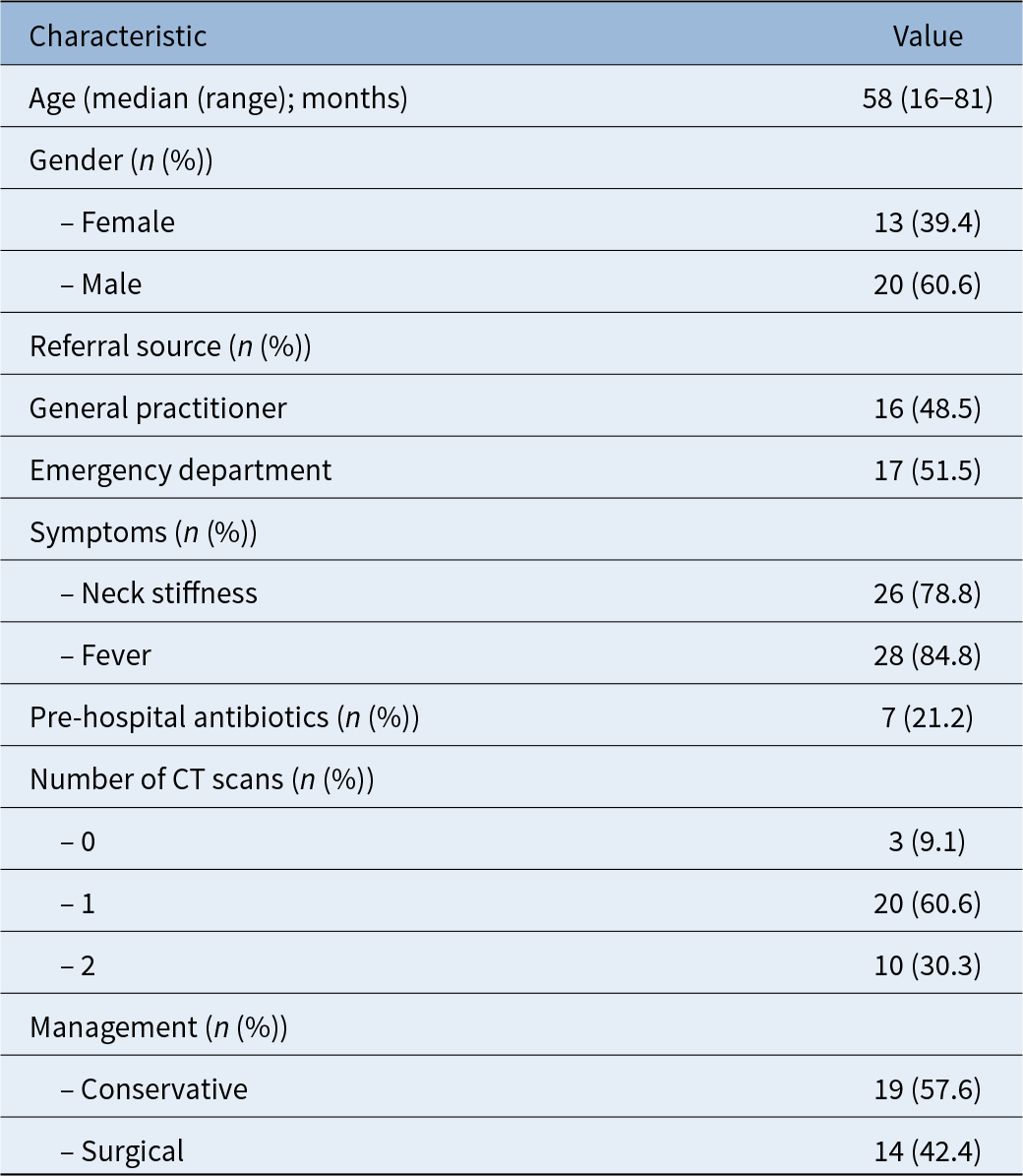
The median age at presentation was 58 months (interquartile range, 44–73 months) with a male-to-female ratio of 1.5:1. The mean overall length of stay was 5.9 days (±3.2 days). Almost half of patients were referred by their general practitioner (48.5 per cent), while 7 of 33 (21.2 per cent) had received oral antibiotics before attending hospital. A summary of descriptive statistics is shown in Table 1.

Imaging
Computed tomography imaging was acquired for 30 of 33 patients (90.9 per cent). Almost one-third of patients (30.3 per cent) underwent a second CT scan. The first CT scan was performed within 24 hours of presentation in 25 of 30 cases (83.3 per cent).
Three patients (9.1 per cent) diagnosed with a retropharyngeal or parapharyngeal infection based on clinical presentation did not have a CT scan because their condition improved such that a CT scan was deemed unnecessary.
A second CT scan was performed for 10 patients (30.3 per cent). The indication for the second CT scan was slow clinical improvement in 6 cases (60 per cent) and to ensure resolution of focal carotid or internal jugular vein narrowing in 4 cases (40 per cent). When slow clinical improvement was the indication, the timing of the second CT scan was between 3 and 7 days after admission. Subsequent surgical intervention was undertaken for four of these six patients.
Fourteen patients (42.4 per cent) patients had surgical intervention. An abscess was reported on a CT scan in 11 of 14 patients (78.6 per cent) before surgery, while a phlegmon was reported in 3 of 14 patients (11.4 per cent). The sensitivity of CT imaging for the presence of pus at the time of surgery was 81.8 per cent and the positive predictive value was 81.8 per cent. Of the 3 patients with a reported phlegmon who underwent surgical intervention, pus was found in 2 cases (false-negative rate, 14 per cent). Five patients with a CT-reported abscess were treated conservatively.
Management
Fourteen patients (42.4 per cent) underwent a surgical intervention. Surgical intervention comprised transoral needle aspiration in 2 of 14 cases (14.3 per cent), and incision and drainage in 12 of 14 cases (85.7 per cent). There were no external transcervical surgical approaches. Concurrent tonsillectomy was performed in 4 of 14 cases (28.6 per cent).
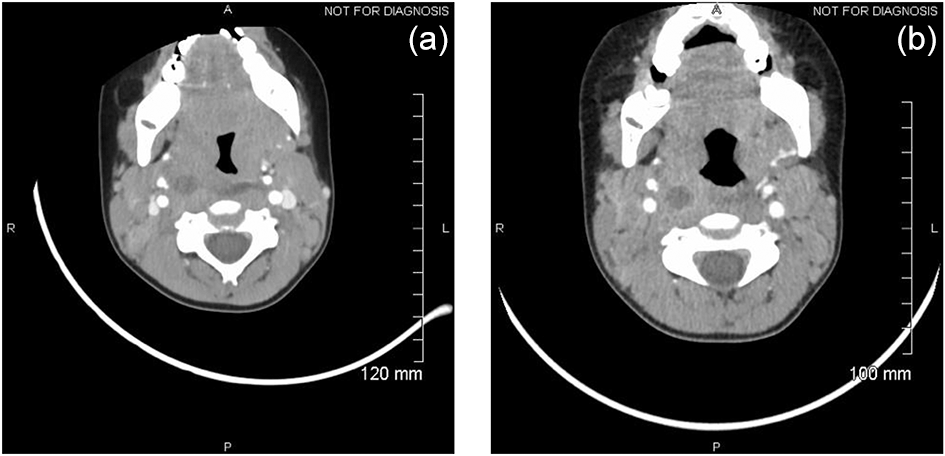
Fifty per cent of patients (7 of 14) had surgery within 24 hours of admission and 50 per cent (7 of 14) had surgery after an initial period of conservative management (range, 3–7 days). Figure 1 illustrates the maturation of a parapharyngeal abscess in a surgically treated patient. The average length of stay trended towards being shorter in the early surgical group, but the difference was not statistically significant (4.9 vs 7.6 days, p = 0.09). The mean duration of antibiotics did not differ significantly based on the timing of surgical intervention (21 vs 18.9 days, p = 0.76).
Patient treated surgically. (a) CT at presentation: discrete focal abnormality with faintly enhancing margin inferior to right skull base at level C1–2, 0.8 × 0.6 × 0.7 cm. (b) CT at 6-day interval indicated for slow clinical improvement: right parapharyngeal well-defined rounded hypodensity 1.0 × 2.0 with mild peripheral enhancement, slightly increased in size from previous study. CT = computed tomography.

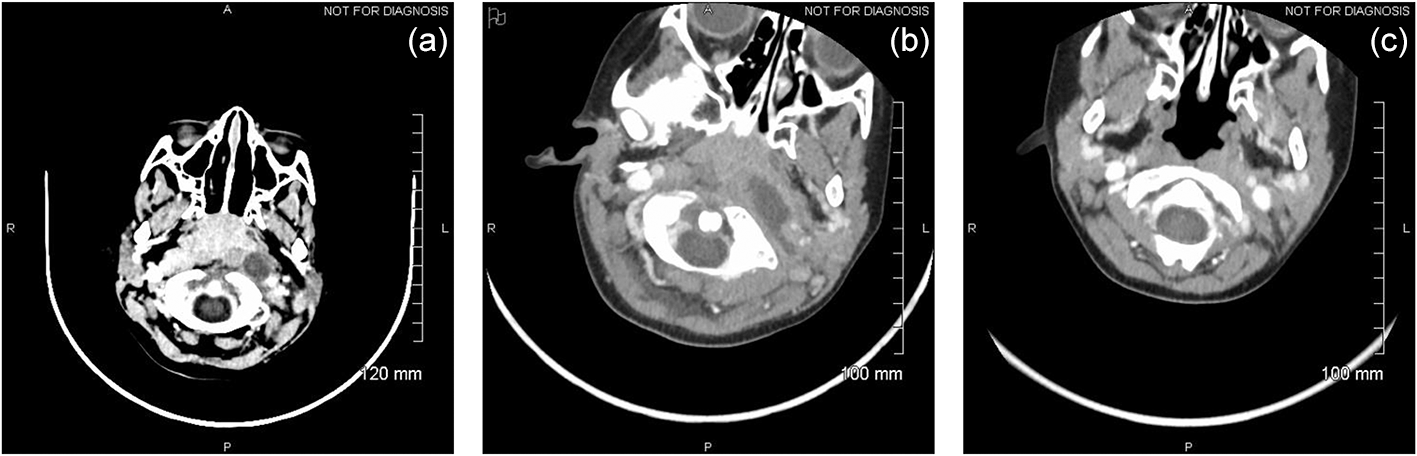
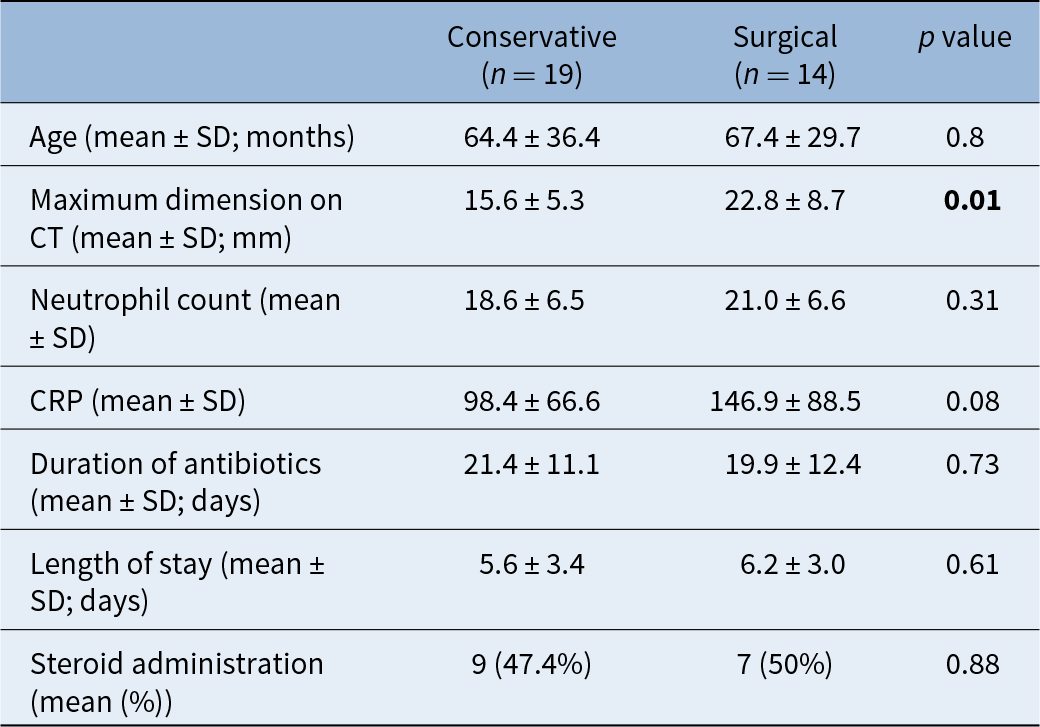
Nineteen patients (57.6 per cent) were successfully treated with antibiotics without surgical intervention (i.e. conservative management). Figure 2 demonstrates the evolution and resolution of infection for a conservatively treated patient. The mean maximum dimension of the abscess or phlegmon on CT imaging was larger in the surgically managed group (p = 0.01) and the CRP trended towards being higher in this group but was not statistically significant (p = 0.08). Other characteristics, including age, duration of antibiotics and length of hospital stay, did not differ between the two management modality groups (Table 2).
Patient treated conservatively. (a) CT at presentation: 1.8 × 2.5 × 1.5 hypoattenuating focus in the left prevertebral region at the level of the nasopharynx with subtle rim enhancement and abutting the body of C1 on the left. (b) CT at 3-day interval: interval evolution of the collection becoming more oblique in shape, 3.8 × 1.2 × 2.5 cm. Involvement of the left carotid sheath with narrowing of the lumen of the cervical segment of the internal carotid artery. (c) CT at six-week interval: complete resolution of the left prevertebral collection with patent carotid artery. CT = computed tomography.

Comparison of the two management modality groups

SD = standard deviation; CT = computed tomography; CRP = C-reactive protein. *Bold values indicate statistically significant results (p < 0.05).
The mean total duration of antibiotic administration was 21.4 days in the conservatively managed group and 19.9 days in the surgically managed group. The mean duration of intravenous (IV) administration was similar for both conservatively and surgically managed patients (8.7 vs 7.7 days, p = 0.7). Out-patient parenteral antimicrobial therapy facilitated an extended duration of IV antibiotics beyond the in-patient stay for 26.3 per cent (5 of 19) of the conservative group and 42.9 per cent (6 of 14) of the surgical group. All 33 patients were prescribed dual IV antibiotics of cefotaxime or ceftriaxone, and clindamycin at diagnosis of retropharyngeal and/or parapharyngeal infection.
The mean maximum diameter of the lesion (abscess or phlegmon) on the CT scan was smaller in the conservatively managed cohort compared with the delayed surgical group without reaching statistical significance (15.6 vs 20.3 mm, p = 0.1). Similarly, the average length of stay trended towards being shorter in the conservatively managed group (5.6 vs 7.6 days, p = 0.2), while the total duration of antibiotics did not differ between the groups (21.4 vs 18.9 days, p = 0.61).
Steroids were administered to equal proportions of patients in the conservatively and surgically managed groups (47.4 vs 50 per cent, p = 0.88). Among patients treated conservatively initially, administration of steroids did not reduce the odds of having surgery (odds ratio, 0.83; 95 per cent confidence interval (CI), 0.1–6.56).
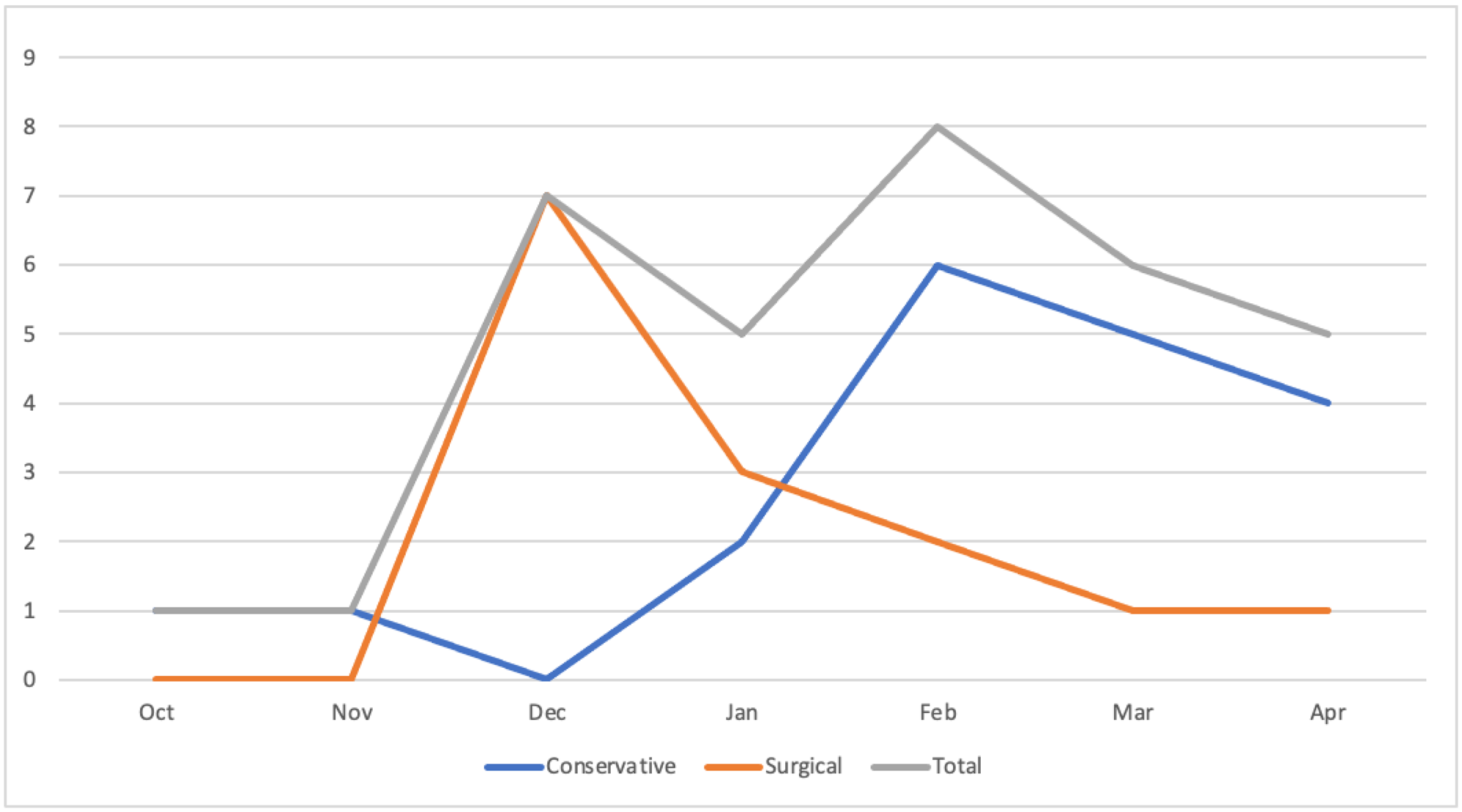
Patients treated between October and January were more likely to undergo surgical intervention than those treated between February and April (odds ratio, 9.38; 95 per cent CI, 1.52–63.06). The maximum lesion diameter on CT was not significantly different between these two groups (20.2 vs 18.4 mm, p = 0.57). Figure 3 shows management modality by month of presentation.
Management by month.

Bacteriology and virology
Bacterial throat swabs were taken for 17 of 33 patients (51.5 per cent). Pus was obtained in 11 of 14 (78.6 per cent) surgically managed cases. Group A streptococcus was isolated in 13 of 33 cases (39.4 per cent) (6 from throat swabs in the conservative group and 7 from pus samples).
Nasopharyngeal viral swabs were performed for 24 of 33 patients (72.7 per cent), of which 8 of 24 (33.3 per cent) were positive. Adenovirus was detected in three cases, influenza A in three cases, influenza B in one case and rhinovirus in one case. One patient tested positive for both influenza A and respiratory syncytial virus. Of the eight patients with positive viral swabs, five underwent surgical intervention, four of whom had an intra-operative finding of pus with subsequent positive bacterial growth.
Discussion
Traditionally, paediatric retropharyngeal and parapharyngeal abscesses were treated surgically. However, studies have shown successful conservative management (i.e. antibiotics) in many patients.Reference McClay, Murray and Booth2–Reference Wilkie, De and Krishnan7, Reference Johnston, Schmidt and Barth12 An initial trial of conservative management is appropriate for selected patients. Indeed, the BMJ Best Practice13 approach proposes this for patients without signs of airway compromise. Nevertheless, strict criteria to select patients requiring surgical intervention do not exist.
Most patients (57.6 per cent) in our study were successfully treated conservatively (i.e. antibiotics without surgical intervention). The treatment modality did not impact the length of hospital stay or duration of antibiotic administration. These findings add to the evidence in support of a trial of conservative management for appropriately selected cases of paediatric retropharyngeal and parapharyngeal infections.Reference Wong, Brown, Mills, Spielmann and Neeff14
The median length of stay reported among other authors ranges from 3 to 11 days.Reference Dona, Gastaldi, Campagna, Montagnani, Galli and Trapani15, Reference Cheng and Elden16 Several studies reported a shorter stayReference Saluja, Brietzke, Egan, Klavon, Robson and Waltzman4, Reference Vural, Gungor and Comerci6, Reference Cheng and Elden16 or no difference in the average length of stayReference Virbalas and Friedman5, Reference Wilkie, De and Krishnan7, Reference Dona, Gastaldi, Campagna, Montagnani, Galli and Trapani15, Reference Demongeot, Akkari, Blanchet, Godreuil, Prodhomme and Leboucq17, Reference Bi, Chen, Zhou and Fu18 between conservatively and surgically managed patients. This is consistent with our findings that the mean length of stay for the conservative group was 5.6 days compared with 6.2 days for the surgical group. When comparing length of stay for early (<48 hours) and late (>48 hours) surgical intervention, Velhonoja et al.Reference Velhonoja, Laaveri, Soukka, Hirvonen, Kinnunen and Irjala19 found a shorter hospital stay in the early surgical group. Similarly, in our study, patients treated surgically within 24 hours trended towards having a shorter stay (4.9 days) compared with patients who had delayed surgery (7.6 days) (i.e. those who failed an initial trial of conservative management).
Saluja et al.Reference Saluja, Brietzke, Egan, Klavon, Robson and Waltzman4 reported a shorter duration of antibiotics for surgically managed patients (9.3 vs 13.6 days). This benefit has yet to be shown in other studies in which the antibiotic duration is similar for both treatment modalities.Reference Dona, Gastaldi, Campagna, Montagnani, Galli and Trapani15, Reference Demongeot, Akkari, Blanchet, Godreuil, Prodhomme and Leboucq17 In our review, surgical intervention did not result in a shorter total number of days (21.4 vs 19.9 days) or IV course of antibiotics (8.7 vs 7.7 days).
The role of systemic steroids in the management of retropharyngeal and parapharyngeal infections needs to be clearly defined. A retrospective review of 2259 paediatric patients reported lower odds (odds ratio, 0.28) of surgical intervention when systemic steroids were included in the initial treatment regimen for retropharyngeal and parapharyngeal infections.Reference Goenka, Hall, Shah, Florin, Leone and Narayanan20 In our study, half of the patients in both groups received steroids, and the administration of steroids did not reduce the likelihood of undergoing delayed surgical intervention.
Wang et al.Reference Wang, Chen, Jia, Teng and Pan21 reviewed 111 patients and found a lower rate of surgical intervention and shorter hospital stay for patients who received steroids as part of their treatment. In contrast, Dona et al.Reference Dona, Gastaldi, Campagna, Montagnani, Galli and Trapani15 reported that 29 per cent of conservatively treated patients received steroids compared with 57 per cent of surgically treated patients. The decision to use steroids as an adjunct in the treatment of retropharyngeal and parapharyngeal infections seems to vary from institution to institution and physician to physician.Reference Goenka, Hall, Shah, Florin, Leone and Narayanan20 In airway compromise, IV dexamethasone is recommended.13 For stable patients, steroids can be used on a case-by-case basis, but further prospective research is required to determine their utility and best treatment regimen.
Several studies have sought to establish factors predicting successful conservative retropharyngeal and parapharyngeal infection treatment. Surgical intervention has been reported to be more likely for larger abscesses.Reference Wilkie, De and Krishnan7, Reference Dona, Gastaldi, Campagna, Montagnani, Galli and Trapani15, Reference Lawrence and Bateman22 There are conflicting reports on the influence of age in predicting conservative treatment failure.Reference Bi, Chen, Zhou and Fu18, Reference Lawrence and Bateman22 Demongeot et al.Reference Demongeot, Akkari, Blanchet, Godreuil, Prodhomme and Leboucq17 reported that a higher neutrophil count was associated with conservative treatment failure and the need for surgical intervention. In our study, the surgically managed cohort did have a larger phlegmon/abscesson CT (22.8 vs 15.6 mm). Our group’s largest successfully conservatively treated abscess measured 27 mm in maximum diameter. CRP trended towards being higher at admission in the surgically treated cohort without reaching statistical significance. Other parameters, including age and neutrophil count, were similar between groups. The phlegmon/abscess size on CT appears to be the most consistent predictor of the need for surgical management. However, some larger lesions will respond to conservative treatment. As such, treatment should be tailored on a case-by-case basis.
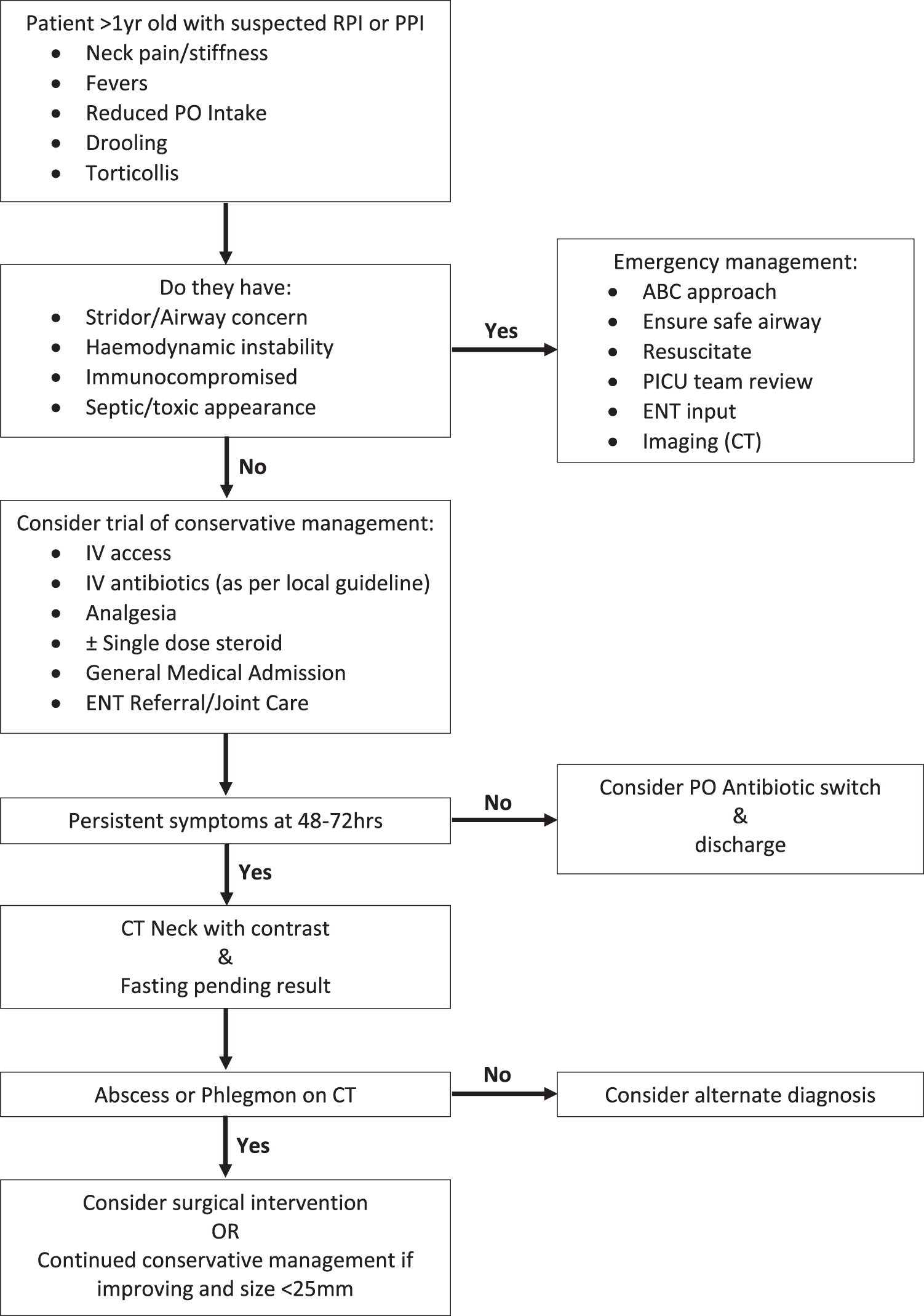
Patients who present with signs and symptoms suggestive of retropharyngeal and parapharyngeal infection typically undergo immediate CT imaging. However, it may be appropriate for select patients to undergo a delayed CT scan pending clinical response to an initial 24–48-hour period of conservative management. Such an approach has been proposed by other authors.Reference Virbalas and Friedman5, 23 Figure 4 depicts our proposed algorithm for selecting patients suitable for a trial of conservative management and delayed CT imaging. Unsuitable patients should be managed emergently according to paediatric advanced life supportReference Samuels and Wieteska24 and paediatric sepsis management guidelines.Reference Weiss, Peters, Alhazzani, Agus, Flori and Inwald25, 26 Such patients are likely to undergo early CT and surgical management.
Management algorithm for paediatric retropharyngeal and parapharyngeal infection. RPI = retropharyngeal infection; PPI = parapharyngeal infection; PO = per oral; ABC = Airway, Breathing, Circulation; PICU = Paediatric Intensive Care Unit; CT = computed tomography; IV = intravenous.

Features on CT scans such as clear central hypodensity and clear ring enhancement suggest pus.Reference Saluja, Brietzke, Egan, Klavon, Robson and Waltzman4, Reference Vural, Gungor and Comerci6 However, distinguishing cellulitis or phlegmon from definite abscess on CT scans is not always accurate. The positive predictive value of a CT-reported abscess for pus at surgery in our study was 81.8 per cent. This is similar to other studies.Reference Saluja, Brietzke, Egan, Klavon, Robson and Waltzman4, Reference Vural, Gungor and Comerci6 Furthermore, Vural et al.Reference Vural, Gungor and Comerci6 reported a false-negative rate of 20 per cent, similar to our study (14 per cent). This indicates that clinicians should suspect pus and consider surgical intervention for patients who fail to improve with conservative management, even if the radiological investigation suggests a phlegmon.
Our management of these patients evolved during the study period. This is evident in that patients presenting in the first four months of the study were more likely to undergo surgical management than those presenting in the last three months. While there may be confounding factors, it is noteworthy that the size of the lesions on CT imaging did not differ between these two groups (20.2 vs 18.4 mm), therefore this most likely represents a growing confidence in exclusive conservative management.
The limitations of this study include the small sample size and retrospective nature. Recollection and documentation of presenting symptoms (e.g. fever, neck stiffness) could not be considered valid predictors of clinical course. Data such as patient age, CRP, neutrophil count and size of lesion on the CT scan were therefore more appropriate measures of comparison between groups. Optimal management protocols, including the role of steroid adjunct, would be best informed by prospective, randomised studies.
While this study was conducted at a single tertiary paediatric centre, there were six consultant otolaryngologists overseeing the care of individual patients. As such, some management decisions (e.g. decision for surgery, decision to give steroids) could be influenced by the personal preference of the treating physician.
This study spanned a seven-month period. As highlighted, our management choices appeared to favour a conservative approach in the latter months. It is possible that clinical judgement, including reporting the nuances of CT scan appearance, were influenced by cognitive bias towards recent experience as the study period progressed and this could impact management decisions.
• The primary management of paediatric retropharyngeal and parapharyngeal infections has long considered to be surgical treatment
• In certain cases, exclusively conservative management with intravenous antibiotics with or without steroids is appropriate
• Larger abscesses on computed tomography (CT) imaging are more likely to undergo surgical intervention but there is no size cut-off that mandates surgical management
• For stable patients, a 48–72-hour trial of conservative management is appropriate
• CT imaging and possible subsequent surgical intervention can be reserved for those patients who fail to improve after the trial period
Conclusion
Conservative management with antibiotics is a viable management option for appropriately selected paediatric patients presenting with signs and symptoms of retropharyngeal or parapharyngeal infection.
For stable patients, following thorough assessment by a senior paediatrician and otolaryngologist, an initial 48–72-hour trial of conservative management is appropriate, with CT imaging and surgical intervention reserved for those who fail to improve.
Competing interests
None declared