





Myanmar refugees in the neighbouring countries
More than 1.6 million refugees and asylum seekers from Myanmar have sought safety in neighbouring countries, including Bangladesh, India, Indonesia, Malaysia and Thailand, as of February 2026. 1 The military takeover against the civilian government in Myanmar on 1 February 2021 was followed by numerous human rights violations and widespread battles. The operations of the Myanmar military to suppress the pro-democracy coalitions of Ethnic Armed Organisations and the newly established local People’s Defence Forces led to a dire humanitarian situation. 2 The escalation of armed conflict has resulted in a substantial increase in internally displaced persons and refugees, reaching more than 2.3 million internally displaced persons across the country in 2024 and an estimated total of 1 353 800 refugees who have fled from Myanmar. 3
Myanmar refugees in Thailand, Bangladesh, India, Malaysia and Indonesia face various challenges because of differing conditions in each host country. In Thailand, the majority of Myanmar refugees reside in protracted border camps, where resources are limited and access to mental health services is limited. Reference Kaiser, Benner and Pohlmann4 Mostly Karen and Karenni refugees from Myanmar have lived in nine officially designated border camps since the 1980s, representing one of the most protracted refugee situations in the world. Thailand does not formally recognise refugee status under domestic law, leaving camp residents without legal protection, the right to work or freedom of movement beyond their camps, and limited access to services. Reference Kaiser, Benner and Pohlmann4,Reference Allden, Murakami and Maung5 In Bangladesh, the Rohingya refugees live in precarious conditions, exacerbating mental health issues. Reference Jahan, Amin and Arafat6 The majority of over one million Rohingya refugees fled mass violence and forced displacement from Myanmar, and reside in overcrowded camps in Cox’s Bazar. Reference Elshazly, Budosan, Mahmudul Alam, Khan and Ventevogel7,Reference Harrison, Ssimbwa, Elshazly, Mahmuda, Islam and Sumi8 These camps are regarded as among the most restrictive globally, with refugees facing severe limitations on movement, livelihoods, access to services and ongoing safety concerns within the camps. 9 In India, refugees often lack legal recognition, leading to restricted access to essential services. 10 Myanmar refugees (Rohingya, Chin and other ethnic groups) are referred to as illegal immigrants in India, and face persistent risks of detention, deportation and restricted access to healthcare, education and livelihood opportunities. 11,Reference Mahmood, Wroe, Fuller and Leaning12 In Malaysia, the lack of formal refugee status results in limited rights and access to healthcare. Reference Tay, Rees, Miah, Khan, Badrudduza and Morgan13 Rohingya and other Myanmar refugees have no formal legal status, no right to work and face constant risk of detention, resulting in precarious living conditions in different settlements and limited access to healthcare, education and psychosocial support. Reference Tay, Rees, Miah, Khan, Badrudduza and Morgan13,Reference Pereira, Verghis, Hoe, Ahmed, Nagiah and Fernandez14 In Indonesia, Rohingya refugees arriving as maritime asylum seekers in Aceh province face protection challenges related to Indonesia’s absence of a domestic refugee law and stance as a temporary transit country only, facilitating Office of the United Nations High Commissioner for Refugees (UNHCR)-led identification and third-country resettlement, not providing integration or permanent protection. Reference Gunawan, Novendra and Febrila15,Reference Azis, Petcharamesree and Capaldi16 These varying circumstances highlight the need for tailored mental health interventions in each country.
Mental health conditions among refugees
Significant mental health problems have been linked to negative experiences pre, during and post flight escalate the vulnerability of refugees. Reference Silove, Ventevogel and Rees17,Reference Blackmore, Boyle, Fazel, Ranasinha, Gray and Fitzgerald18 Before, during and after displacement, displaced populations are disproportionately exposed to potentially traumatic events (PTEs) and daily stressors related to living in displacement and develop mental illnesses like depression and post-traumatic stress disorder (PTSD), and they also present with somatic symptoms that co-occur with or represent psychological distress. Reference Kirmayer, Narasiah, Munoz, Rashid, Ryder and Guzder19 A systematic review on the prevalence of mental illness among refugees and asylum seekers in 2020 showed that the occurrence of PTSD and depression were almost a third of participants. Anxiety disorders were present in approximately 11% of cases and psychosis was observed in over 1% of individuals. Reference Blackmore, Boyle, Fazel, Ranasinha, Gray and Fitzgerald18 Despite such considerable prevalence, violence, trauma and mental disorders experienced by refugees remain inadequately addressed. Reference Jannesari, Lotito, Turrini, Oram and Barbui20,Reference Turrini, Purgato, Ballette, Nosè, Ostuzzi and Barbui21
Factors associated with mental health conditions
There are many factors associated with mental health outcomes among refugee populations. Because of their exposure to PTEs, various stressors and ongoing life challenges, forcibly displaced refugees face an increased risk of mental health issues, which can negatively affect their subjective well-being and overall quality of life. Reference Beiser and Hou22,Reference van der Boor, Amos, Nevitt, Dowrick and White23 Anxiety, depression, PTSD and emotional distress are common mental disorders observed within refugee communities. Reference Blackmore, Boyle, Fazel, Ranasinha, Gray and Fitzgerald18
Even among Myanmar refugees resettled in high-income countries, studies have reported substantial psychological distress and associated challenges. A study on mental health status of people with Burmese refugee backgrounds in Australia found a high prevalence of psychological distress at symptomatic levels (PTSD at approximately 9%, anxiety at around 20%, depression at almost 36%), alongside significant symptoms of somatisation (about 37%). Participants also reported experiencing numerous and severe PTEs before migration. Reference Schweitzer, Brough, Vromans and Asic-Kobe24 A study among Karen refugees in the USA originally from Myanmar showed that two health factors – reporting poorer health and experiencing more trauma symptoms – were significantly associated with increased psychological distress. Reference Kim, Kim, Lin, Baltimore and Lin25 These findings suggest the need to examine the larger population remaining in regional host countries.
The journal Intervention’s 2019 special issue on the mental health and psychosocial well-being of Rohingya refugees represents a notable body of practitioner-oriented literature in this field. Reference Ager, Horn, Mozumder, Riley and Ventevogel26 Comprising one editorial and 28 articles (9 primary research articles, 14 field reports and 5 personal reflections), the special issue mainly documents programmatic experiences and psychosocial support initiatives, the large majority of which were concentrated in Bangladesh. Although this body of work provides valuable contextual insights, it does not cover the full range of regional host countries where Myanmar refugees reside, such as Thailand, India and Indonesia, and reports the burden of mental health conditions such as PTSD, depression, anxiety disorders and psychological stress. Moreover, the predominance of field reports and programmatic contributions limits the ability to draw generalisable conclusions about the prevalence of mental health conditions and their associated factors. Therefore, a systematic review that synthesises higher-level primary research evidence across all neighbouring host countries and enables a comparable assessment of the mental health burden among Myanmar refugees beyond a single country or single ethnic group is valuable.
Objective of the systematic review
Myanmar refugees have primarily fled to several neighbouring countries and regions such as Thailand, Bangladesh, India, Indonesia and Malaysia, because of political instability, ethnic conflicts and human rights violations. Some have resettled in Western countries, including the USA, Canada and Australia, through resettlement programmes. 27–29 The existing literature on the mental health of Myanmar refugees underscores the need for comprehensive, context-specific research to inform effective interventions. Although some studies have focused on specific populations, such as the Rohingya in Bangladesh, Reference Tay, Riley, Islam, Welton-Mitchell, Duchesne and Waters30 there is limited information that consolidates findings across regional host countries and different refugee groups from Myanmar. To our knowledge, this is the first systematic review that covers a large sample and comparable regional host countries to identify common challenges and distinctive factors affecting various refugee groups.
The objectives of this systematic review were (a) to identify and synthesise evidence on mental health conditions (including PTSD, depression, anxiety disorders and psychological stress) among Myanmar refugees in neighbouring countries, (b) to analyse factors associated with mental health outcomes in this population and (c) to examine how these challenges and factors vary across different host countries and refugee subgroups.
The review focuses on refugees and asylum seekers of all ages who have fled from Myanmar to neighbouring countries, including Thailand, India, Bangladesh, Malaysia and Indonesia. By synthesising findings across diverse settings, including refugee camps, host communities and resettlement areas, this systematic review aims to provide a comprehensive understanding of the mental health landscape for Myanmar refugees and inform evidence-based interventions and policies.
Method
We followed the Preferred Reporting Items for Systematic Reviews and Meta-Analyses (PRISMA) checklist (Appendix A). A systematic search of empirical original studies reporting on common mental disorders and factors affecting the mental health of Myanmar refugees was performed. We searched five multidisciplinary and psychology databases, covering the fields of psychology and public health. Additionally, we conducted a grey literature search on ReliefWeb, which hosts relevant reports from non-governmental organisations (NGOs) and United Nations agencies. We registered the review protocol on the International Prospective Register of Systematic Reviews (PROSPERO) database on 23 March 2024 (identifier CRD42024499404, www.crd.york.ac.uk/PROSPERO). Data extraction began on 10 May 2024 after consulting the pre-piloted result, using the standardised form in our team meeting. An updated search on 21 July 2025 identified 114 additional records supplementing the initial search, which was conducted in March 2024.
Eligibility criteria
Primary studies were eligible if they employed quantitative, qualitative or mixed-methods approaches. We included all study designs if prevalence or associated factors were reported: cross-sectional, case–control, cohort studies, etc. Case reports, case series, case studies, commentaries, correspondences, editorials and opinion pieces were excluded. Studies were required to address mental health conditions including depression, anxiety, psychological stress, or PTSD among refugees or asylum seekers of all ages who fled from Myanmar. Grey literature, i.e. reports from United Nations agencies and NGOs, were also eligible for inclusion if they reported on mental health challenges. Studies focusing on refugee populations other than Myanmar refugees and studies about Myanmar refugees residing in countries those are not neighbouring countries to Myanmar (e.g. the USA, Australia) were excluded.
Information sources
We conducted searches across five databases: PubMed, PsycINFO, Web of Science, Embase and Scopus, from their inception until July 2025. Although we mentioned Google Scholar in the review protocol registered in PROSPERO, our review team decided that the aforementioned five databases are comprehensive enough without including it. Additionally, we searched grey literature on ReliefWeb, which hosts relevant reports from NGOs and United Nations agencies, and specifically reports from organisations supporting Myanmar refugees in regional neighbouring countries through https://reliefweb.int/search-help.
Search strategy
The search strategy incorporated terms related to three main concepts, using the ‘AND’ operator: (a) refugees/asylum seekers in general, (b) mental health conditions (including depression, anxiety, psychological stress and PTSD) and (c) Myanmar-specific as country of refugee origin. The synonyms inside each main concept were combined using the ‘OR’ operator. We searched in all mentioned databases by using the following combination of three main blocks with their synonyms: (refugee AND mental health AND Myanmar/Burma/Burmese/Rohingya). We reported the complete search strategy for all databases in the Supplementary Material (Appendix B). We also checked the list of references of the included studies as additional sources.
Selection process
The selection process followed a two-stage screening approach. First, two independent reviewers (M.C. and S.M.) screened all retrieved records based on titles and abstracts to identify relevant studies. Inter-reviewer agreement was assessed with Cohen’s κ. Disagreements were resolved through discussion. Second, reviewers assessed full-text articles for eligibility, using predefined inclusion and exclusion criteria. Inter-reviewer agreement was also assessed. Reviewer disagreements were resolved through discussion when required. The results of the final complete search conducted in July 2025 were screened by both reviewers, using the same process. Duplicate records were removed before screening, using both automated (Covidence, Veritas Health Innovation Ltd, Melbourne, Australia; www.covidence.org) and manual methods. We excluded studies that did not present separate data on Myanmar refugees. The PRISMA flowchart (Fig. 1) shows the details of this selection process, including the number of studies at each phase and reasons for exclusion.
PRISMA flowchart of study selection process. PRISMA, Preferred Reporting Items for Systematic reviews and Meta-Analyses.

Data collection process and data items
Data extraction was performed independently and dually by 2 reviewers (M.C. and S.M.) by using a standardised, pre-piloted form for all 14 included studies. Regular meetings were held to verify consistency in the coding process. The data extraction template was iteratively refined when new relevant variables emerged during the review process. Any disagreements between the two reviewers were discussed and negotiated during bi-weekly team meetings until agreement was reached. Additionally, the development of the data extraction tool and the conduct of the actual data extraction was closely discussed and monitored by the supervision of review team, where all co-authors were included. The final agreed data-set was used for all analyses.
From each study, the following and other objective-related data were extracted: author(s), publication year, study design, participant demographics (age, gender, ethnicity, refugee status), mental health outcomes (PTSD, depression, anxiety disorders, psychological stress), measurement tools used (e.g. Generalised Anxiety Disorder-7, Harvard Trauma Questionnaire (HTQ), Hopkins Symptoms Checklist-25 (HSCL-25), Patient Health Questionnaire-9 (PHQ-9)), associated factors with mental health conditions and challenges.
Study risk-of-bias assessment
Methodological quality and risk-of-bias assessment were conducted independently by two reviewers (M.C. and S.M.), using appropriate Joanna Briggs Institute (JBI) Critical Appraisal Checklists for each study design (cross-sectional, cohort or qualitative). Two reviewers independently appraised each study, rating individual criteria as ‘Yes’, ‘No’, ‘Unclear’ or ‘Not Applicable’. Interrater agreement was assessed using Cohen’s κ. Disagreements were resolved through discussion. Detailed risk-of-bias reports can be found in the Supplementary Material (Appendix D).
Additionally, reporting completeness of the included studies was evaluated with design-appropriate reporting guidelines: the Strengthening the Reporting of Observational Studies in Epidemiology checklist for cross-sectional and cohort studies, and the Standards for Reporting Qualitative Research checklist for the qualitative study. Each item was rated as ‘Yes’, ‘No’, ‘Partial’ or ‘Not Applicable’ by two independent reviewers (M.C. and S.M.), with discrepancies resolved through discussion. Detailed reporting completeness results are presented in the Supplementary Material (Appendix E).
Effect measures
The primary effect measures included the proportions of study populations experiencing specific mental health outcomes and the frequencies of factors associated with these mental health outcomes.
Synthesis methods
We employed a narrative synthesis approach to analyse and present the findings. Quantitative assessments of mental health outcomes and associated factors were synthesised where available. Descriptive subgroup analyses were conducted where data permitted, based on age group, gender and host country.
Ethical and consent statement
This systematic review did not require separate ethical approval and informed consent as it synthesised publicly available data and did not involve direct human participants.
Results
Study selection
The initial database search in March 2024 returned 1469 records across 5 databases (Embase: 506; PubMed: 301; PsycINFO: 234; Web of Science: 233; Scopus: 195) with an additional 31 records from grey literature (ReliefWeb), yielding 1500 records in total. The updated database search in July 2025 identified additional 114 records (Embase: 42; PubMed: 24; PsycINFO: 10; Web of Science: 17; Scopus: 21) with no additional grey literature record, yielding 1583 records across 5 databases. Finally, 1583 records from 5 databases plus 31 records from grey literature made 1614 records in total before deduplication (see Fig. 1 PRISMA flowchart). After removing 499 duplicates (490 identified by Covidence, 9 identified manually), 1115 records underwent title and abstract screening. Inter-reviewer agreement statistics at title and abstract screening step (κ = 0.63) indicated substantial agreement. Through title and abstract screening, 1074 records were excluded and reviewers assessed 41 studies in full text. Inter-reviewer agreement for full-text screening was κ = 0.80, which indicated very strong agreement. Of these, 27 articles were excluded: 23 did not meet inclusion criteria and 4 did not provide original data. Detailed reasons for exclusion can be found in the Fig. 1 PRISMA flowchart. Finally, 14 studies, covering >10 800 participants, were included in the analysis. All of these studies were from databases and registers, as none of the grey literature sources met the eligibility criteria. A review of selected study references did not yield any new additional potentially eligible publications. All included studies were published in English.
Study characteristics
The included studies were conducted in three host countries: Bangladesh (n = 9, 64.3%), Thailand (n = 3, 21.4%) and Malaysia (n = 2, 14.3%) (see Fig. 2). They comprised 13 quantitative studies (12 cross-sectional studies Reference Cardozo, Talley, Burton and Crawford31–Reference Alam, Das, Clara, Mohsin, Rumi and Wahab42 and 1 prospective cohort study Reference Fellmeth, Plugge, Fazel, Nosten, Oo and Pimanpanarak43 ) and 1 qualitative study, Reference Ullah, Pratley, Shariful Islam, Islam and Roy44 published between 1996 and 2023. Ten studies focused exclusively on Rohingya refugees, whereas the other four studies included Karenni, Burman, Karen, Chin and Kachin refugees. Sample sizes ranged from 104 to 4523 participants. Thirteen out of 14 studies used the term ‘refugees’ to report on the study population and the remaining 1 study reported with the term ‘persons of concern’, which is an overarching term traditionally used to refer to all persons for whom the UNHCR is mandated to provide protection, solutions and assistance, Reference Allden, Poole, Chantavanich, Ohmar, Aung and Mollica33 regardless of their specific legal status. All studies reported fair gender distribution ranging from 33.4 to 78.8% of male respondents, with the exception of one study that reported 100% pregnant female refugees. Reference Fellmeth, Plugge, Fazel, Nosten, Oo and Pimanpanarak43 Study populations included different refugee groups such as adults, older adults, adolescents and pregnant women. The included studies reported mean participant ages between 16.2 and 71.7 years. A list of all included studies can be found in Supplementary Appendix C, and a detailed summary of study characteristics can be found in Table 1.
Number of included studies and Myanmar refugees across the regional neighbouring countries. Source of refugee population: https://data.unhcr.org/en/situations/myanmar (as of 31 January 2026). This map was created by the authors, with QGIS version 3.38 Grenoble for Windows (QGIS Development Team; https://qgis.org/downloads-list/).

Characteristics of eligible studies

Table 1 Long description
A table summarizing characteristics of eligible studies on refugees in Bangladesh, Thailand, and Malaysia. The table has 14 rows and 8 columns. Column headers are: First Author, year, Country, Location, Study population, Age in years, mean (s.d.), Gender, %, Study population ethnicity, Study design, and Sample size, n. Row 1: Cardozo, 2004, Thailand, Refugee camps, Mae Hong Son, Karenni (Myanmar) refugees living in camps, 34.2, Male: 42%, Female: 58%, Karenni, Cross-sectional, 495. Row 2: Mistry, 2021, Bangladesh, Refugee camp OB8, Cox’s Bazar, Elderly Rohingya refugees residing in refugee camps, 67.7, Male: 60.3%, Female: 39.7%, Rohingya, Cross-sectional, 416. Row 3: Hossain, 2020, Bangladesh, Two refugee camps, Cox’s Bazar, Rohingya refugees living in refugee camps, 41.6, Male: 53.3%, Female: 46.7%, Rohingya, Cross-sectional, 150. Row 4: Fellmeth, 2021, Thailand, Maela refugee camp, Tak province, Pregnant/postpartum migrant and refugee women on Thai-Myanmar border, Median: 25, Female: 100%, Burman, Karen, other Rohingya, Prospective cohort, 451 (218 refugees without 233 migrants). Row 5: Riley, 2017, Bangladesh, Kutupalong and Nayapara refugee camps, Cox’s Bazar, Rohingya refugees residing in refugee camps, 34 (11.44), Male: 47.3%, Female: 52.7%, Rohingya, Cross-sectional, 148. Row 6: Ritsema, 2023, Bangladesh, Refugee camps, Cox’s Bazar, Rohingya refugees living in Cox’s Bazar, 31.53 (15.35), Male: 44.9%, Female: 55.1%, Rohingya, Cross-sectional, 4523 (depression) 4410 (PTSD). Row 7: Kaur, 2020, Malaysia, Informal settlements, Selangor, Adult Rohingya refugees ages 18 years and above, 33.5, Male: 52.7%, Female: 47.3%, Rohingya, Cross-sectional, 220. Row 8: Hossain, 2021, Bangladesh, Kutupalong refugee camp, Cox’s Bazar, Rohingya refugees residing in Cox’s Bazar, 35.1, Male: 52.8%, Female: 47.2%, Rohingya, Cross-sectional, 1184. Row 9: Tay, 2020, Malaysia, Urban area, Kuala Lumpur, Chin, Kachin and Rohingya refugees from Myanmar living in Malaysia, Overall: 30.5 (8.6), Male: 63.89%, Female: 36.11%, Chin, Kachin, Rohingya, Cross-sectional, Overall: 2058 (Chin: 761, Kachin: 338, Rohingya: 959). Row 10: Allden, 1996, Thailand, Bangkok, Burmese political dissidents registered with the UNHCR as ‘persons of concern’, 24.5, Male: 78.8%, Female: 21.2%, Not stated, Cross-sectional, 104. Row 11: O’Connor, 2021, Bangladesh, Refugee camps in Teknaf and Ukhia, Cox’s Bazar, Rohingya adolescent refugees living in camps, 16.2, Male: 49%, Female: 51%, Rohingya, Cross-sectional, 361. Row 12: Riley, 2020, Bangladesh, Refugee camps, Cox’s Bazar, Rohingya refugee adults residing in camps, 36, Male: 47%, Female: 53%, Rohingya, Cross-sectional, 495. Row 13: Alam, 2023, Bangladesh, Kutupalong refugee camp, Cox’s Bazar, Elderly Rohingyas aged ≥60 years residing in refugee camp, 71.7 (7.8), Male: 46.7%, Female: 53.3%, Rohingya, Cross-sectional, 430. Row 14: Ullah, 2023, Bangladesh, Refugee camps, Cox’s Bazar, Rohingya adult refugees in Cox’s Bazar camps, Not stated, KIIs Male: 33.4%, Female: 66.6%, FGDs: Male: 50%, Female: 50%, Rohingya, Qualitative, 27 KIIs, 4 FGDs.
PTSD, post-traumatic stress disorder; UNHCR, United Nations High Commissioner for Refugees; KII, key informant interview; FGD, focus group discussion.
a. Ritsema and Armstrong-Hough (2023) conducted a secondary cross-sectional analysis using data from the Cox’s Bazar Panel Survey (CBPS), a longitudinal panel dataset jointly collected by the World Bank and Yale University as part of the Gender and Adolescence: Global Evidence (GAGE) research programme. Reference Baird, Davis, Genoni, Lopez-Pena, Mobarak and Palaniswamy45
Risk of bias in studies
The risk-of-bias assessment identified methodological limitations in some studies, including relatively small sample sizes, Reference Allden, Poole, Chantavanich, Ohmar, Aung and Mollica33,Reference Hossain, Walton, Arafat, Maybee, Sarker and Ahmed37,Reference Riley, Varner, Ventevogel, Taimur Hasan and Welton-Mitchell38 reliance on self-reported data and varying assessment tools. The qualitative study lacked standardised reporting measures, and two cross-sectional studies with potential selection bias (one employed convenience sampling Reference Mistry, Ali, Irfan, Yadav, Siddique and Peprah36 and one did not state the sampling method Reference Hossain, Walton, Arafat, Maybee, Sarker and Ahmed37 ) may limit the generalisability of the results.
Risk-of-bias assessment was assessed with JBI checklists for 12 cross-sectional, 1 cohort and 1 qualitative study. Overall, 11 studies were rated as having a low risk of bias, 2 studies as having a moderate risk of bias and 1 study as having a high risk of bias. Interrater agreement was 95.6% (κ = 0.71), indicating substantial agreement at the item level pooled across all 14 included studies, with ‘not applicable’ items excluded (N = 113 valid item pairs). Disagreements on remaining five items were resolved through discussion. The results of the risk-of-bias assessment by both independent reviewers (M.C. and S.M.) are provided in the Supplementary Material (Appendix D).
Results of individual studies and syntheses
All studies employed pre-existing instruments previously validated in other refugee and non-Western populations for assessing mental health symptoms (see Table 2). Eight different instruments were used in the included studies. In 13 out of 14 studies, questionnaires were completed by face-to-face interviews, whereas 1 study Reference Fellmeth, Plugge, Fazel, Nosten, Oo and Pimanpanarak43 used structured clinical interviews. The prevalence of mental health conditions varied considerably across studies and refugee populations, depression rates ranged from 30.0 to 89.0%, anxiety from 39.3 to 41.8% and PTSD from 3.7 to 61.2%.
Findings on mental health challenges and associated factors

Table 2 Long description
The table presents findings on mental health challenges and associated factors from multiple studies. It includes columns for the first author and year, outcomes or health items, assessment methods, prevalence or incidence with confidence intervals, factors associated with mental health, odds ratios with confidence intervals, and mental health challenges. The table has 14 rows and 7 columns. Each row corresponds to a different study, detailing specific mental health outcomes such as anxiety, depression, and PTSD, along with their prevalence rates and associated factors. For example, the study by Cardona in 2004 reports anxiety at 40.9 percent, depression at 41.8 percent, and PTSD at 29.4 percent, with associated factors including harassment, punishment, and violence. Another study by Misary in 2021 focuses on geriatric depression, with a prevalence of 14.6 percent and associated factors such as living alone and feelings of being left out. The table also includes studies on social media use, perinatal depression, and various other mental health challenges, each with specific prevalence rates and associated factors. The data highlights the variability in mental health conditions across different refugee populations and the multifaceted factors contributing to these conditions.
PTSD, post-traumatic stress disorder; HSCL-25, Hopkins Symptoms Checklist-25 Reference Derogatis, Lipman, Rickels, Uhlenhuth and Covi46 ; HTQ, Harvard Trauma Questionnaire Reference Mollica, Caspi-Yavin, Bollini, Truong, Tor and Lavelle47 ; GDS-15, Geriatric Depression Scale-15 Reference Yesavage, Brink, Rose, Lum, Huang and Adey48 ; NCD, non-communicable disease; PHQ-9, Patient Health Questionnaire-9 Reference Kroenke, Spitzer and Williams49 ; WHOQOL-BREF, World Health Organization Quality of Life-Brief; SCID, Structured Clinical Interview for Diagnostic and Statistical Manual of Mental Disorders-IV Reference Glasofer, Brown, Riegel and Wade50 ; MDD, major depressive disorder; GAD, generalised anxiety disorder; MINI, Mini-International Neuropsychiatric Interview Reference Lecrubier, Sheehan, Weiller, Amorim, Bonora and Sheehan51 ; PTSS, post-traumatic stress symptoms; IES-R, Impact of Event Scale-Revised Reference Creamer, Bell and Failla52 ; DSM-5, Diagnostic and Statistical Manual of Mental Disorders-Fifth Edition; R-MHAP, Refugee Mental Health Assessment Package Reference Tay, Mohsin, Badrudduza, Balasundaram, Morgan and Parthiban35 ; MHPSS, Mental Health and Psychosocial Support; IASC, Inter-Agency Standing Committee; WHO, World Health Organization; mhGAP, Mental Health Gap Action Programme.
Common mental disorders
Fourteen studies reported depression, PTSD and anxiety. None of these reported ‘perceived stress’ or ‘psychological distress’ as a specific disorder, although we included stress and synonyms in the search terms. All included quantitative studies reported current or recent-period prevalence of mental health outcomes, with recall windows varying by instrument: 1 week for the HSCL-25, HTQ and Impact of Event Scale-Revised (IES-R); 2 weeks for the PHQ-9 and DSM-5 criteria for major depressive disorder (MDD); 1 month for DSM-5 criteria for PTSD and 6 months for DSM-5 criteria for generalised anxiety disorder (GAD). No study reported lifetime prevalence. These differences in recall periods across instruments and across disorders represent an important source of methodological heterogeneity that limits direct comparability of prevalence estimates across studies.
Depression
As shown in the Table 2, depressive symptoms were assessed in 12 studies, using different tools, such as the HSCL-25 (n = 4), PHQ-9 (n = 3), Geriatric Depression Scale-15 (GDS-15) (n = 2), Mini-International Neuropsychiatric Interview (MINI) (n = 1), Structured Clinical Interview for DSM-IV (SCID) (n = 1) and Refugee Mental Health Assessment Package (R-MHAP) (n = 1). Depression was assessed with both screening and diagnostic tools. Symptom screening scales such as the HSCL-25, PHQ-9 and GDS-15 were mainly used in the included studies. Reference Cardozo, Talley, Burton and Crawford31,Reference Allden, Poole, Chantavanich, Ohmar, Aung and Mollica33,Reference O’Connor and Seager34,Reference Mistry, Ali, Irfan, Yadav, Siddique and Peprah36–Reference Ritsema and Armstrong-Hough39,Reference Riley, Akther, Noor, Ali and Welton-Mitchell41,Reference Alam, Das, Clara, Mohsin, Rumi and Wahab42 Regarding diagnostic tools, one study used the SCID, Reference Fellmeth, Plugge, Fazel, Nosten, Oo and Pimanpanarak43 whereas another one study employed the MINI Reference Kaur, Sulaiman, Yoon, Hashim, Kaur and Hui32 and one study employed the R-MHAP, which is based on DSM-5 criteria. Reference Tay, Mohsin, Badrudduza, Balasundaram, Morgan and Parthiban35
Extremely high prevalence rates exceeding 75% were documented in three studies, ranging from 77.3 to 89% Reference Hossain, Walton, Arafat, Maybee, Sarker and Ahmed37,Reference Riley, Varner, Ventevogel, Taimur Hasan and Welton-Mitchell38,Reference Riley, Akther, Noor, Ali and Welton-Mitchell41 all conducted among Rohingya refugees in Bangladesh’s Cox’s Bazar camps through symptom screening tools (PHQ-9 and HSCL-25 subscales), which can yield higher prevalence estimates rather than diagnostic interviews. The highest estimate of 89% Reference Riley, Varner, Ventevogel, Taimur Hasan and Welton-Mitchell38 was obtained from a relatively small sample (n = 148) using the HSCL-15 item subscale in a single camp setting among Rohingya refugees who had been residing in Bangladesh for several years, representing a prolonged encampment, which may explain this exceptional value. High prevalence rates, ranging from 54.7 to 57.9%, have been reported, with 57.9% of 430 elderly study participants Reference Alam, Das, Clara, Mohsin, Rumi and Wahab42 and 54.7% of 361 adolescent study participants Reference O’Connor and Seager34 showing depressive symptoms. Moderate prevalence rates, between 26 and 50%, were documented in the remaining seven studies. Reference Cardozo, Talley, Burton and Crawford31–Reference Allden, Poole, Chantavanich, Ohmar, Aung and Mollica33,Reference Tay, Mohsin, Badrudduza, Balasundaram, Morgan and Parthiban35,Reference Mistry, Ali, Irfan, Yadav, Siddique and Peprah36,Reference Ritsema and Armstrong-Hough39,Reference Fellmeth, Plugge, Fazel, Nosten, Oo and Pimanpanarak43
PTSD
Nine studies assessed PTSD symptoms by using a range of assessment tools, such as the HTQ (n = 6), MINI (n = 1), R-MHAP (n = 1) and IES-R (n = 1), as shown in the Table 2. The HTQ emerges as the most frequently utilised instrument, being implemented in six studies. Reference Cardozo, Talley, Burton and Crawford31,Reference Allden, Poole, Chantavanich, Ohmar, Aung and Mollica33,Reference O’Connor and Seager34,Reference Riley, Varner, Ventevogel, Taimur Hasan and Welton-Mitchell38,Reference Ritsema and Armstrong-Hough39,Reference Riley, Akther, Noor, Ali and Welton-Mitchell41 Diagnostic interview tools with clinically significant cut-offs were employed in three studies. One study utilised the MINI, Reference Kaur, Sulaiman, Yoon, Hashim, Kaur and Hui32 whereas one study employed the R-MHAP based on DSM-5 criteria. Reference Tay, Mohsin, Badrudduza, Balasundaram, Morgan and Parthiban35 The final study used the IES-R to screen post-traumatic stress symptoms. Reference Hossain, Baten, Sultana, Rahman, Adnan and Hossain40
The prevalence of PTSD among refugee populations varied considerably across studies, revealing both concerning rates and significant heterogeneity in findings. High prevalence rates (>30%) were documented in four studies, ranging from 36 to 61.2%. Reference Kaur, Sulaiman, Yoon, Hashim, Kaur and Hui32,Reference Riley, Varner, Ventevogel, Taimur Hasan and Welton-Mitchell38,Reference Hossain, Baten, Sultana, Rahman, Adnan and Hossain40,Reference Riley, Akther, Noor, Ali and Welton-Mitchell41 Low to moderate prevalence rates ranging from 3.7 to 23.1% (<30%) were reported in the remaining five studies. Reference Cardozo, Talley, Burton and Crawford31,Reference Allden, Poole, Chantavanich, Ohmar, Aung and Mollica33–Reference Tay, Mohsin, Badrudduza, Balasundaram, Morgan and Parthiban35,Reference Ritsema and Armstrong-Hough39 Interestingly, the substantial variation in PTSD prevalence ranging from 3.7% among adolescents (lowest by O’Connor and Seager Reference O’Connor and Seager34 ) to 61.2% among adults (highest by Riley et al Reference Riley, Akther, Noor, Ali and Welton-Mitchell41 ) was found in two studies that used the same HTQ tool among the same Rohingya refugee population displaced to the similar setting in Cox’s Bazar, Bangladesh. Population-specific vulnerability to PTSD likely reflects genuine age-specific risk rather than measurement artefact. Adolescents may exhibit different responses to PTEs than adults, express PTSD symptoms through different behaviours not captured by the HTQ or may have had different levels of exposure to PTEs.
The timing of data collection represents another important contextual factor that should be considered when interpreting prevalence estimates across studies. This is illustrated by the two studies conducted by Riley and colleagues among Rohingya refugees in Bangladesh, which employed comparable methodologies but captured populations at different stages of displacement. Riley et al Reference Riley, Varner, Ventevogel, Taimur Hasan and Welton-Mitchell38 surveyed refugees who had been residing in Bangladesh for many years reported comparatively lower prevalence of PTSD (36%). By contrast, Riley et al Reference Riley, Akther, Noor, Ali and Welton-Mitchell41 examined refugees who had arrived more recently with recent losses and acute exposure to PTEs either before or shortly following the mass influx reported relatively higher prevalence of PTSD (61%).
Anxiety
As shown in the Table 2, anxiety symptoms were assessed in four studies by using the three diverse tools such as the HSCL-25 (n = 2), R-MHAP (n = 1) and MINI (n = 1). The HSCL-25 emerged as the predominant instrument, utilised in two studies. Reference Cardozo, Talley, Burton and Crawford31,Reference Riley, Akther, Noor, Ali and Welton-Mitchell41 The HSCL-25 includes a ten-item anxiety subscale specifically designed to measure symptoms of anxiety. Diagnostic interview tools were also employed in two studies to assess anxiety disorders according to established diagnostic criteria. One study utilised the MINI to diagnose GAD, Reference Kaur, Sulaiman, Yoon, Hashim, Kaur and Hui32 whereas another one study employed the R-MHAP based on DSM-5 criteria to identify GAD. Reference Tay, Mohsin, Badrudduza, Balasundaram, Morgan and Parthiban35
Similar prevalence estimates of anxiety (ranging from approximately 39.3 to 41.8%, when excluding combined measures of a study by Riley et al Reference Riley, Akther, Noor, Ali and Welton-Mitchell41 ) was found in three studies. Reference Cardozo, Talley, Burton and Crawford31,Reference Kaur, Sulaiman, Yoon, Hashim, Kaur and Hui32,Reference Tay, Mohsin, Badrudduza, Balasundaram, Morgan and Parthiban35 When anxiety and depression were assessed in combination, Riley et al Reference Riley, Akther, Noor, Ali and Welton-Mitchell41 study reported the highest rate (84.0%) of ‘emotional distress’.
Factors associated with common mental disorders
Based on our findings, we categorised factors into four overarching domains: trauma-related factors, sociodemographic characteristics, post-migration stressors and protective factors. The strength of associations was evaluated based on reported odds ratios, regression coefficients and correlation coefficients. A summary table of associated factors and statistical associations with mental health outcomes can be found in the Supplementary Material (Appendix H).
Trauma-related factors
Trauma or violence exposure emerged as the most commonly reported risk factor in ten studies. Reference Cardozo, Talley, Burton and Crawford31–Reference Tay, Mohsin, Badrudduza, Balasundaram, Morgan and Parthiban35,Reference Riley, Varner, Ventevogel, Taimur Hasan and Welton-Mitchell38–Reference Riley, Akther, Noor, Ali and Welton-Mitchell41,Reference Fellmeth, Plugge, Fazel, Nosten, Oo and Pimanpanarak43 Pre-migration traumatic experiences showed strong associations with adverse mental health outcomes. Kaur et al identified exposure to violence as dramatically increasing PTSD risk compared with the non-exposed group, Reference Kaur, Sulaiman, Yoon, Hashim, Kaur and Hui32 representing one of the strongest statistical associations. Additionally, the significant statistical associations between trauma or violence and common mental disorders (odds ratios ranging from 1.63 to 4.6) were documented in eight studies.
One study distinguished between different types of traumatic experiences: Reference Cardozo, Talley, Burton and Crawford31 Cardozo et al Reference Cardozo, Talley, Burton and Crawford31 categorised trauma into different domains of ‘harassment (including forced relocation and forced labour), violence (murder, injury) and separation (isolation, forced separation)’. Each category demonstrated significant associations with anxiety, depression and PTSD.
O’Connor et al explored further between witnessing and experiencing PTEs, finding that both types incrementally contributed to depression and PTSD symptoms. Reference O’Connor and Seager34 Similarly, three studies found that a greater frequency of traumatic experiences is associated with higher levels of PTSD symptoms. Reference Allden, Poole, Chantavanich, Ohmar, Aung and Mollica33,Reference Riley, Varner, Ventevogel, Taimur Hasan and Welton-Mitchell38,Reference Riley, Akther, Noor, Ali and Welton-Mitchell41
Sociodemographic characteristics
Gender
Gender emerged as a significant factor for depression and PTSD in four studies, Reference Kaur, Sulaiman, Yoon, Hashim, Kaur and Hui32,Reference Allden, Poole, Chantavanich, Ohmar, Aung and Mollica33,Reference Riley, Varner, Ventevogel, Taimur Hasan and Welton-Mitchell38,Reference Hossain, Baten, Sultana, Rahman, Adnan and Hossain40 although with varying patterns across mental health outcomes. Three studies identified being female as associated with increased risk of depression and PTSD. Reference Kaur, Sulaiman, Yoon, Hashim, Kaur and Hui32,Reference Allden, Poole, Chantavanich, Ohmar, Aung and Mollica33,Reference Riley, Varner, Ventevogel, Taimur Hasan and Welton-Mitchell38 Conversely, Hossain et al identified male gender as associated with increased post-traumatic stress symptoms. Reference Hossain, Baten, Sultana, Rahman, Adnan and Hossain40
Age
Older age demonstrated consistent risk associations with mental health outcomes in two studies. Reference Riley, Varner, Ventevogel, Taimur Hasan and Welton-Mitchell38,Reference Alam, Das, Clara, Mohsin, Rumi and Wahab42 Riley et al found that increasing age was associated with PTSD and depression symptoms. Reference Riley, Varner, Ventevogel, Taimur Hasan and Welton-Mitchell38 Alam et al reported that older age (≥80 years) was associated with higher risk of geriatric depression than counterpart refugees who are younger than 80 years. Reference Alam, Das, Clara, Mohsin, Rumi and Wahab42
Family member support
Two studies identified the significance of family support on mental health outcomes of older refugees. Reference Mistry, Ali, Irfan, Yadav, Siddique and Peprah36,Reference Alam, Das, Clara, Mohsin, Rumi and Wahab42 Mistry et al identified that older adult refugees with no dependable family members had 3.4 times higher odds of suffering from geriatric depression as compared with those who had dependency on family members. Reference Mistry, Ali, Irfan, Yadav, Siddique and Peprah36 Similarly, elderly participants who had fewer than five members in their household were at 82% higher risk of geriatric depression compared to their counterparts in the study by Alam et al. Reference Alam, Das, Clara, Mohsin, Rumi and Wahab42
Post-migration stressors
Post-migration living difficulties
Three studies reported an association between mental health outcomes and post-migration difficulties. Reference Tay, Mohsin, Badrudduza, Balasundaram, Morgan and Parthiban35,Reference Riley, Varner, Ventevogel, Taimur Hasan and Welton-Mitchell38,Reference Riley, Akther, Noor, Ali and Welton-Mitchell41 Tay et al documented strong dose–response relationships between common mental disorders and post-migration difficulties in terms of access to water, hygiene facilities, shelter, education, healthcare, social services and employment. Moderate post-migration difficulties (≤15) significantly increased depression risk, whereas severe difficulties (>16) showed even stronger associations. Reference Tay, Mohsin, Badrudduza, Balasundaram, Morgan and Parthiban35
Inadequate social support
Inadequate post-migration social support consistently emerged as a significant risk factor in two studies. Reference Kaur, Sulaiman, Yoon, Hashim, Kaur and Hui32,Reference Mistry, Ali, Irfan, Yadav, Siddique and Peprah36 Mistry et al found that living alone substantially increased depression risk, although feelings of being left out were also significant contributors. Reference Mistry, Ali, Irfan, Yadav, Siddique and Peprah36 Kaur et al reported that low or moderate social support increased depression risk. Reference Kaur, Sulaiman, Yoon, Hashim, Kaur and Hui32
Food insecurity
Food insecurity represented a significant stressor across two studies. Kaur et al found that food insecurity increased both depression risk and PTSD risk. Reference Kaur, Sulaiman, Yoon, Hashim, Kaur and Hui32 Similarly, Cardozo et al identified that lack of ‘basics’ (lack of food, water, shelter) as significant predictors of anxiety and depression. Reference Cardozo, Talley, Burton and Crawford31
Health-related risk factors
Five studies reported associations of existing health-related factors to mental health outcomes. Reference Kaur, Sulaiman, Yoon, Hashim, Kaur and Hui32,Reference Mistry, Ali, Irfan, Yadav, Siddique and Peprah36,Reference Ritsema and Armstrong-Hough39,Reference Alam, Das, Clara, Mohsin, Rumi and Wahab42,Reference Fellmeth, Plugge, Fazel, Nosten, Oo and Pimanpanarak43 These studies identified several physical and mental health conditions associated with depression among refugees. These included diabetes mellitus, hypotension, malnutrition, Reference Alam, Das, Clara, Mohsin, Rumi and Wahab42 poor memory, perceived COVID-19 risk, Reference Mistry, Ali, Irfan, Yadav, Siddique and Peprah36 physical injuries, Reference Kaur, Sulaiman, Yoon, Hashim, Kaur and Hui32 previous depression history Reference Fellmeth, Plugge, Fazel, Nosten, Oo and Pimanpanarak43 and access to healthcare. Reference Ritsema and Armstrong-Hough39
Protective factors
Employment and economic factors
Refugees are not legally entitled to work and are confined within the established camps in Bangladesh and Thailand. Reference Hossain, Baten, Sultana, Rahman, Adnan and Hossain40,Reference Fellmeth, Plugge, Fazel, Nosten, Oo and Pimanpanarak43 In Bangladesh, some Rohingya refugees work as paid day labourers who help construct roads, prevent landslides and clear sewage, and assist as paid volunteers with outreach and coordination in the sprawling camps. A few of the refugees have small grocery stores. Reference Hossain, Baten, Sultana, Rahman, Adnan and Hossain40 In Thailand, work opportunities for Myanmar refugees are limited and most refugees have no means of earning an income. Reference Fellmeth, Plugge, Fazel, Nosten, Oo and Pimanpanarak43 A few income-generating activities include NGO stipend work in the camps 53,Reference Lee54 and informal daily labour. Reference Brees55 Economic factors emerged as protective factors in three studies. Reference Ritsema and Armstrong-Hough39,Reference Hossain, Baten, Sultana, Rahman, Adnan and Hossain40,Reference Fellmeth, Plugge, Fazel, Nosten, Oo and Pimanpanarak43 Employed refugees showed lower rates of post-traumatic stress symptoms and sufficient humanitarian aid was associated with reduced post-traumatic stress. Reference Hossain, Baten, Sultana, Rahman, Adnan and Hossain40 Telephone ownership, a proxy for disposable income and higher income was associated with reduced depression risk Reference Fellmeth, Plugge, Fazel, Nosten, Oo and Pimanpanarak43 and PTSD risk. Reference Ritsema and Armstrong-Hough39
Challenges related to common mental disorders
The analysis of 14 studies reported various mental health challenges among refugee populations is shown in Table 2.
Individual-level challenges
Four studies reported the mental health challenges related to individual factors. Reference O’Connor and Seager34,Reference Mistry, Ali, Irfan, Yadav, Siddique and Peprah36,Reference Alam, Das, Clara, Mohsin, Rumi and Wahab42–Reference Ullah, Pratley, Shariful Islam, Islam and Roy44 Elderly Reference Mistry, Ali, Irfan, Yadav, Siddique and Peprah36,Reference Alam, Das, Clara, Mohsin, Rumi and Wahab42 and adolescent Reference O’Connor and Seager34 refugees faced age-specific vulnerabilities, and pregnant and postpartum refugees experienced maternal-specific vulnerabilities. Additionally, pre-existing medical conditions and trauma history Reference Fellmeth, Plugge, Fazel, Nosten, Oo and Pimanpanarak43 compound these individual-level vulnerabilities. A qualitative study by Ullah et al also documented ‘limited familiarity with mental health services’ and ‘dependency on traditional healing methods’ as challenges. Reference Ullah, Pratley, Shariful Islam, Islam and Roy44
Interpersonal-level challenges
The interpersonal-level challenges revealed social isolation as a critical challenge in three studies. Reference Kaur, Sulaiman, Yoon, Hashim, Kaur and Hui32,Reference Allden, Poole, Chantavanich, Ohmar, Aung and Mollica33,Reference Mistry, Ali, Irfan, Yadav, Siddique and Peprah36 Mistry et al identified ‘social isolation’ as a primary challenge, Reference Mistry, Ali, Irfan, Yadav, Siddique and Peprah36 Allden et al documented ‘lack of social support’ Reference Allden, Poole, Chantavanich, Ohmar, Aung and Mollica33 and the effect of inadequate social support was evident in Kaur et al’s findings. Reference Kaur, Sulaiman, Yoon, Hashim, Kaur and Hui32
Organisational-level challenges
A predominant challenge identified across five studies Reference Cardozo, Talley, Burton and Crawford31,Reference Kaur, Sulaiman, Yoon, Hashim, Kaur and Hui32,Reference Ritsema and Armstrong-Hough39,Reference Riley, Akther, Noor, Ali and Welton-Mitchell41,Reference Fellmeth, Plugge, Fazel, Nosten, Oo and Pimanpanarak43 was the limited availability of appropriate mental health services. Two studies highlighted ‘limited access to mental health services’ in Bangladesh, Reference Ritsema and Armstrong-Hough39,Reference Riley, Akther, Noor, Ali and Welton-Mitchell41 whereas Kaur et al noted ‘insufficient mental health resources’ in Malaysia. Reference Kaur, Sulaiman, Yoon, Hashim, Kaur and Hui32 Fellmeth et al underlined the ‘scarce mental health services’ in camp settings in Thailand. Reference Fellmeth, Plugge, Fazel, Nosten, Oo and Pimanpanarak43 The organisational challenge of providing culturally appropriate interventions was identified by Cardozo et al. Reference Cardozo, Talley, Burton and Crawford31
Community-level challenges
Five studies Reference Kaur, Sulaiman, Yoon, Hashim, Kaur and Hui32,Reference Allden, Poole, Chantavanich, Ohmar, Aung and Mollica33,Reference Tay, Mohsin, Badrudduza, Balasundaram, Morgan and Parthiban35,Reference Riley, Varner, Ventevogel, Taimur Hasan and Welton-Mitchell38,Reference Ullah, Pratley, Shariful Islam, Islam and Roy44 identified community-level challenges covering broader social dynamics that affect refugee mental health. Ullah et al’s Reference Ullah, Pratley, Shariful Islam, Islam and Roy44 qualitative study identified ‘stigma’ and ‘cultural beliefs’ as significant challenges to mental health in Rohingya refugee populations. Daily environmental stressors compound these community-level challenges. Two studies emphasised the effect of daily stressors on refugee mental health: ‘daily environmental stressors’ Reference Riley, Varner, Ventevogel, Taimur Hasan and Welton-Mitchell38 and ‘ongoing post-displacement stressors’ Reference Ritsema and Armstrong-Hough39 in the post-displaced community. Further studies identified socioeconomic challenges facing refugee populations: ‘limited support from the society’, Reference Kaur, Sulaiman, Yoon, Hashim, Kaur and Hui32 ‘financial instability’ Reference Allden, Poole, Chantavanich, Ohmar, Aung and Mollica33 and ‘barriers to employment, education, healthcare’. Reference Tay, Mohsin, Badrudduza, Balasundaram, Morgan and Parthiban35
Policy-level challenges
Four studies Reference Cardozo, Talley, Burton and Crawford31–Reference Allden, Poole, Chantavanich, Ohmar, Aung and Mollica33,Reference Hossain, Baten, Sultana, Rahman, Adnan and Hossain40 highlighted challenges related to refugees’ precarious legal status and security concerns. Cardozo et al identified ‘ongoing uncertainty about security’ and ‘restrictive refugee policies’ as mental health challenges. Reference Cardozo, Talley, Burton and Crawford31 Two studies noted ‘lack of legal status’ as a significant issue Reference Kaur, Sulaiman, Yoon, Hashim, Kaur and Hui32,Reference Allden, Poole, Chantavanich, Ohmar, Aung and Mollica33 and one study documented ‘lack of legal employment rights’ for refugees. Reference Hossain, Baten, Sultana, Rahman, Adnan and Hossain40
Certainty of evidence
The certainty of evidence was rated as ‘very low’ because of (a) observational study design limitations (risk of bias in some of the included studies), (b) inconsistency (variations in the results and differences in study populations, exposures, contexts measured across different studies) and (c) imprecision (variable measurements using different tools around the effect estimates). The Grading of Recommendations Assessment, Development and Evaluation (GRADE) summary of findings tables are reported in the Supplementary Material (Appendices F and G).
Discussion
This systematic review contributes to the refugee mental health literature by providing three major findings. First, Myanmar refugees experience exceptionally high rates of common mental disorders, with depression prevalence ranging from 30.0 to 89.0% and anxiety from 39.3 to 41.8%, which is higher than prevalences reported in many other refugee populations. Second, we extracted 9 key risk and protective factors, associated with mental health outcomes from the 14 articles included. These are important for developing targeted interventions and strategies. Third, significant variations in mental health challenges exist across host countries: prolonged and restrictive camp settings in Thailand, legal insecurity and informal settlements in Malaysia, and restrictive and overcrowded living conditions in Bangladesh. These different settings are associated with distinct mental health risk profiles that require tailored intervention approaches.
Myanmar refugees in Thailand, Bangladesh and Malaysia live in precarious socio-legal environments that compound the pre-migration PTE exposure and post-migration stressors. The forced displacement of Myanmar refugees is rooted in decades of ethnic and religious persecution. Reference Mahmood, Wroe, Fuller and Leaning12,Reference Tay, Riley, Islam, Welton-Mitchell, Duchesne and Waters30,Reference Koning56 Myanmar refugees in Thailand have been confined in the designated camps since the 1980s without legal protection, the right to work or freedom of movement beyond their camps, and limited access to services. Reference Kaiser, Benner and Pohlmann4,Reference Allden, Murakami and Maung5 In Malaysia, immigration law fails to distinguish between refugees, asylum seekers and undocumented migrants, leaving refugees without a domestic framework of legal recognition that generates vulnerability to exploitation, labour trafficking and detention. Reference Pereira, Verghis, Hoe, Ahmed, Nagiah and Fernandez14,Reference Smith57,58 Refugee camps in Bangladesh represent one of the world’s most overcrowded humanitarian settings, where refugees face severe limitations on movement, livelihoods, access to services and ongoing safety concerns within the camps. Reference Jahan, Amin and Arafat6,9 Across all three settings, the convergence of pre-displacement PTEs exposure with post-migration stressors were found as contributors to mental health outcomes of Myanmar refugees. Reference Pereira, Verghis, Hoe, Ahmed, Nagiah and Fernandez14,Reference Cardozo, Talley, Burton and Crawford31,Reference Riley, Varner, Ventevogel, Taimur Hasan and Welton-Mitchell38,Reference Riley, Akther, Noor, Ali and Welton-Mitchell41,Reference Shaw, Karim, Bellows and Pillai59
Prevalence of common mental disorders
Consistent with previous systematic reviews on other refugees, Reference Blackmore, Boyle, Fazel, Ranasinha, Gray and Fitzgerald18,Reference Bogic, Njoku and Priebe60–Reference Nguyen, Guajardo, Sahle, Renzaho and Slewa-Younan62 our findings show high and heterogeneous mental disorder prevalences, both in comparison to the prevalence rates of global refugee meta-analyses Reference Blackmore, Boyle, Fazel, Ranasinha, Gray and Fitzgerald18,Reference Nguyen, Guajardo, Sahle, Renzaho and Slewa-Younan62,Reference Steel, Chey, Silove, Marnane, Bryant and van Ommeren63 and that of other Myanmar refugee populations resettled in Australia and the USA. Reference Schweitzer, Brough, Vromans and Asic-Kobe24,Reference Kim, Kim, Lin, Baltimore and Lin25,Reference Kim64 Beyond the studies captured by our systematic search, one article of the 2019 special issue of the Intervention journal reported that 97% of Rohingya refugees sampled from two intervention research projects in Malaysia screened positive for emotional distress. Reference Shaw, Karim, Bellows and Pillai59 Hence, extremely high depression rate and relatively higher anxiety prevalence are specific to Myanmar refugees. This high prevalence may be attributed to the different types of persecution over extended periods that Myanmar refugees exposed unlike others fleeing from single conflict events and protracted displacement for decades.
The heterogeneity could be explained by the use of diverse assessment instruments (eight different tools across the reviewed studies), post-migration living conditions in different countries and sociodemographic factors similarly in the previous systematic reviews of refugee mental health globally. Reference Blackmore, Boyle, Fazel, Ranasinha, Gray and Fitzgerald18,Reference Turrini, Purgato, Ballette, Nosè, Ostuzzi and Barbui21,Reference Bogic, Njoku and Priebe60–Reference Nguyen, Guajardo, Sahle, Renzaho and Slewa-Younan62,Reference Lindert, Ehrenstein, Priebe, Mielck and Brähler65,Reference Henkelmann, de, Deckers, Jensen, Shahab and Elzinga66 However, our review stands out by including wider age groups (adolescent to elderly) and considering diverse post-migration living conditions in regional host countries where Myanmar refugees are present, compared with others resettled in high-income countries. These distinctions help explain the disparities in mental disorder prevalence across studies.
The instruments used across the included studies have well-established utility in refugee mental health research, but cross-cultural limitations in this context should be acknowledged. Adaptations of the HSCL-25 and HTQ for Myanmar populations have been conducted among Burmese survivors of systematic violence in Mae Sot, Thailand, finding good internal consistency and test–retest reliability, although criterion validity was not demonstrated. Reference Haroz, Bass, Lee, Murray, Robinson and Bolton67 None of the included studies employed the Refugee Health Screener-15 (RHS-15), which was developed in the USA with refugees from three countries, including Burma (Myanmar). Reference Hollifield, Verbillis-Kolp, Farmer, Toolson, Woldehaimanot and Yamazaki68 A formal validation study of the RHS-15 among Karen and Burmese women on the Thai–Myanmar border found that psychometric properties were reasonable, although the Likert-type response format posed significant usability challenges in a low-literacy setting. Reference Fellmeth, Plugge, Fazel, Charunwattana, Nosten and Fitzpatrick69 The heterogeneity in assessment tools and methodologies across studies requires caution for direct comparisons of prevalence rates. The use of different assessment tools (diagnostic and symptom screening) and sampling approaches likely contributed to the observed variations in prevalence estimates. Most studies relied on screening tools rather than diagnostic interviews. Studies using symptom screening tools (e.g. HSCL-25, PHQ-9) generally reported higher prevalence rates compared to those employing structured diagnostic interviews (e.g. SCID, MINI). Additionally, cultural variations in symptom expression and reporting could influence these assessments, particularly given the diverse ethnic backgrounds of Myanmar refugees. Reference Tay, Riley, Islam, Welton-Mitchell, Duchesne and Waters30,Reference Haroz, Bass, Lee, Murray, Robinson and Bolton67 Importantly, the large differences often observed in the prevalence of mental disorders may be influenced by contextual factors, methodological differences, variations in assessment tools and differences in the time passed since the conflict. Reference Bogic, Njoku and Priebe60,Reference Nguyen, Guajardo, Sahle, Renzaho and Slewa-Younan62,Reference Steel, Chey, Silove, Marnane, Bryant and van Ommeren63,Reference Charlson, Flaxman, Ferrari, Vos, Steel and Whiteford70 However, persistently high prevalence rates across studies point out the critical need for professional psychosocial services and targeted intervention programmes addressing refugee mental health needs.
Factors associated with common mental disorders
This systematic review identified several key factors associated with mental health outcomes among Myanmar refugees.
Trauma-related factors
Traumatic experiences emerged as the most consistent risk factor among the nine key factors, which were associated with mental health outcomes among Myanmar refugees across studies, with particularly strong associations observed for PTSD. Reference Kaur, Sulaiman, Yoon, Hashim, Kaur and Hui32,Reference O’Connor and Seager34,Reference Riley, Varner, Ventevogel, Taimur Hasan and Welton-Mitchell38–Reference Riley, Akther, Noor, Ali and Welton-Mitchell41 Our findings align with a universal pattern across refugee populations globally, Reference Blackmore, Boyle, Fazel, Ranasinha, Gray and Fitzgerald18,Reference Bogic, Njoku and Priebe60–Reference Nguyen, Guajardo, Sahle, Renzaho and Slewa-Younan62,Reference Chen, Hall, Ling and Renzaho71 confirming that trauma exposure is a primary risk factor associated with mental health outcomes. Qualitative evidence provides insights into how trauma continues to affect refugees’ mental health long after displacement. Ullah et al documented that traumatic experiences manifest not only as diagnosable symptoms, but also through ‘flashbacks’ and ‘nightmares’ that bother into daily life. Reference Ullah, Pratley, Shariful Islam, Islam and Roy44
Our findings further explained the effect of trauma on mental health by demonstrating the dose–response relationship Reference Tay, Mohsin, Badrudduza, Balasundaram, Morgan and Parthiban35 and the differential impacts of various types of traumatic experiences. In one study, Reference Cardozo, Talley, Burton and Crawford31 categorisation of trauma into harassment, basics deprivation, violence and separation revealed that each type of traumatic experience contributed differently to specific mental health outcomes. Notably, separation experiences showed particularly strong associations with PTSD, which is in line with the findings of a study conducted in Australia by Chen et al among refugees originally from 35 countries. Reference Chen, Hall, Ling and Renzaho71
Sociodemographic characteristics
Female gender was associated with depression and PTSD in three studies, Reference Kaur, Sulaiman, Yoon, Hashim, Kaur and Hui32,Reference Ritsema and Armstrong-Hough39,Reference Hossain, Baten, Sultana, Rahman, Adnan and Hossain40 and one study reported higher post-traumatic stress symptoms in men, Reference Hossain, Baten, Sultana, Rahman, Adnan and Hossain40 where cultural, contextual and methodological factors influence gender and mental health relationships. Such inconsistencies were also found among other refugee groups, Reference Blackmore, Boyle, Fazel, Ranasinha, Gray and Fitzgerald18,Reference Henkelmann, de, Deckers, Jensen, Shahab and Elzinga66,Reference El Husseiny, Farran, El Sheikh, Yehya, El Hayek and El Husseiny72 where some found female vulnerability whereas others reported no significant gender differences, highlighting the need for context-specific research to understand gender-mental health relationships among refugee groups of different cultures. Older age demonstrated more consistent associations with adverse mental health outcomes, Reference Mistry, Ali, Irfan, Yadav, Siddique and Peprah36,Reference Alam, Das, Clara, Mohsin, Rumi and Wahab42 aligning with global refugee patterns of the particular vulnerabilities of elderly refugees. Reference El Husseiny, Farran, El Sheikh, Yehya, El Hayek and El Husseiny72
Lack of family and social support emerged as crucial risk factors associated with depression. Reference Mistry, Ali, Irfan, Yadav, Siddique and Peprah36,Reference Alam, Das, Clara, Mohsin, Rumi and Wahab42 The vulnerabilities of elderly Myanmar refugees, including dependency on family support systems, reflect universal age-related refugee challenges. This finding underscores the importance of family reunification policies and interventions that strengthen social support networks for refugee populations in general. Reference Chen, Hall, Ling and Renzaho71,Reference Li, Liddell and Nickerson73
Post-migration stressors
Post-migration stressors demonstrated substantial associations with mental health outcomes, aligning with universal refugee patterns. Tay et al Reference Tay, Mohsin, Badrudduza, Balasundaram, Morgan and Parthiban35 documented strong dose–response relationships between post-migration difficulties and mental health outcomes. This finding supports the Miller and Rasmussen’s ‘ecological model’ of refugee mental health, which suggests that ongoing post-displacement challenges significantly affect psychological well-being beyond the effects of traumatic exposure. Reference Miller and Rasmussen74
Several specific post-migration stressors were consistently associated with adverse mental health outcomes. Food insecurity emerged as a significant risk factor for both depression and PTSD, Reference Cardozo, Talley, Burton and Crawford31,Reference Kaur, Sulaiman, Yoon, Hashim, Kaur and Hui32 highlighting how basic needs insecurity continues to affect refugee mental health years after initial displacement. Reference Li, Liddell and Nickerson73 Inadequate social support consistently increased depression risk across studies, Reference Kaur, Sulaiman, Yoon, Hashim, Kaur and Hui32,Reference Mistry, Ali, Irfan, Yadav, Siddique and Peprah36 underscoring the protective role of social connections in mitigating psychological distress. Reference Chen, Hall, Ling and Renzaho71 Additionally, health-related factors, including chronic conditions, poor memory and physical injuries, were associated with increased depression risk. Reference Kaur, Sulaiman, Yoon, Hashim, Kaur and Hui32,Reference Mistry, Ali, Irfan, Yadav, Siddique and Peprah36,Reference Alam, Das, Clara, Mohsin, Rumi and Wahab42
Our findings on post-migration stressors gain deeper understanding through qualitative statements of daily lived experiences. Ullah et al revealed that ‘daily stressors’ reflected not merely objective hardships (food, sanitation, safety), but also subjective experiences of dependency, restrictive movement and lack of access to employment opportunities. A 55-year-old female respondent described feeling ‘suffocated’ by camp life, and a 46-year-old male respondent compared his life before and after displacement that ‘I used to work in a school and I had a good income, a good house with bathroom; but look at here what I have; 10 people staying in one small hut’. Reference Ullah, Pratley, Shariful Islam, Islam and Roy44 Interventions addressing post-migration daily stressors proven effective for other refugee groups provide a foundation for Myanmar refugee with adaptations to contexts, given their particularly diverse regional displacement contexts.
Protective factors
Our systematic review identified several consistent protective factors similar to universal patterns. The protective roles of employment, income and humanitarian support align with findings from other refugee populations. Reference Ritsema and Armstrong-Hough39,Reference Hossain, Baten, Sultana, Rahman, Adnan and Hossain40,Reference Fellmeth, Plugge, Fazel, Nosten, Oo and Pimanpanarak43 Li et al recommended that policies and programmes that help refugees gain employment and develop social networks in their new communities can significantly reduce mental health symptoms and adjustment difficulties. Reference Li, Liddell and Nickerson73 These consistent findings highlight the potential value of interventions that strengthen integration of refugees into host communities.
Employment and income were associated with better mental health outcomes in three studies. However, interpretation requires careful contextualisation when refugees in Bangladesh and Thailand lack the legal right to work. In these contexts, employment and income may serve as a proxy for social connectedness, family support networks or reduced acute deprivation rather than economic security among those able to access even informal and precarious works. Legal pathways to employment represent a crucial structural intervention for refugee mental health. Since late 2025, Thailand has introduced a policy change that allows Myanmar refugees residing in official border camps to access the right to work, representing a significant development that may create new opportunities for self-reliance and improved mental health among this long-encamped population. 75 Evidence from other refugee settings further supports the psychosocial value of employment access. Hussam et al demonstrated significant mental health benefits of employment opportunities among camp-based refugees, Reference Hussam, Kelley, Lane and Zahra76 and Borak and Haque have argued that allowing Rohingya refugees in Bangladesh to work legally is an urgent mental health priority. Reference Borak and Haque77
Challenges across different host countries and refugee subgroups
Our systematic review revealed significant variations in mental health challenges and associated factors across different host countries and refugee subgroups. Similar findings regarding variations across different host countries were identified in the previous systematic reviews among other refugees. Reference Fazel, Wheeler and Danesh61,Reference Lindert, Ehrenstein, Priebe, Mielck and Brähler65 In Thailand, where most studies focused on Karenni and Karen refugees residing in long-established camp settings, mental health challenges were often linked to protracted displacement, restricted movement and limited livelihood opportunities. Reference Cardozo, Talley, Burton and Crawford31,Reference Allden, Poole, Chantavanich, Ohmar, Aung and Mollica33,Reference Fellmeth, Plugge, Fazel, Nosten, Oo and Pimanpanarak43 The relatively structured but confined camp environment in Thailand presents unique challenges, with studies highlighting the psychological impact of prolonged encampment and dependency on external assistance. Reference Cardozo, Talley, Burton and Crawford31
In Malaysia, studies identified legal insecurity as a primary stressor, with the lack of formal refugee status resulting in limited rights and precarious living conditions. Reference Kaur, Sulaiman, Yoon, Hashim, Kaur and Hui32,Reference Tay, Mohsin, Badrudduza, Balasundaram, Morgan and Parthiban35 As Malaysia is not a signatory to the 1951 Refugee Convention, 58 there is no legal or administrative protection in place. The constant threat of uncertainty, combined with limited access to formal employment, healthcare and social services, appears to create post-migration challenges that contribute to mental health outcomes. Reference Kaur, Sulaiman, Yoon, Hashim, Kaur and Hui32,Reference Tay, Mohsin, Badrudduza, Balasundaram, Morgan and Parthiban35
In Bangladesh, where the majority of studies focused on Rohingya refugees, particularly high rates of depression and PTSD were observed, potentially reflecting the acute and severe nature of the persecution that led to their displacement, coupled with challenging living conditions in overcrowded camps. Reference O’Connor and Seager34,Reference Riley, Varner, Ventevogel, Taimur Hasan and Welton-Mitchell38,Reference Hossain, Baten, Sultana, Rahman, Adnan and Hossain40,Reference Riley, Akther, Noor, Ali and Welton-Mitchell41 These findings align with previous research highlighting the severe persecution experienced by Rohingya populations before displacement, as well as challenging living conditions in Bangladesh’s refugee camps. Reference Tay, Riley, Islam, Welton-Mitchell, Duchesne and Waters30
Our findings highlight particular vulnerabilities among specific refugee subgroups. The distinct needs of elderly refugees identified in studies by Mistry et al Reference Mistry, Ali, Irfan, Yadav, Siddique and Peprah36 and Alam et al Reference Alam, Das, Clara, Mohsin, Rumi and Wahab42 highlight the importance of age-sensitive interventions, whereas the higher vulnerability of peri-natal women and adolescents may indicate the need for targeted interventions. Reference O’Connor and Seager34,Reference Fellmeth, Plugge, Fazel, Nosten, Oo and Pimanpanarak43 Qualitative research reveals how cultural and operational barriers create distinct challenges in service delivery settings. Ullah et al documented that refugees demonstrated sensitivity to the gender and religion of service providers. One non-Muslim female counsellor reported that ‘Rohingya women are very conservative in their culture. It takes time to establish rapport’, and she described having to deflect questions about her religion to maintain therapeutic relationships. Reference Ullah, Pratley, Shariful Islam, Islam and Roy44 These findings are in line with previous findings in other refugee groups Reference Henkelmann, de, Deckers, Jensen, Shahab and Elzinga66,Reference El Husseiny, Farran, El Sheikh, Yehya, El Hayek and El Husseiny72 and suggest the need for targeted approaches addressing the specific needs of diverse refugee subgroups.
Clinical implications and policy recommendations
Clinical implications
The high burden of mental health conditions documented across all host countries underscores an urgent need for action. The primary challenge facing Myanmar refugees is limited treatment access. Several relevant trials have already been conducted in Bangladesh and Malaysia and provided a valuable foundation for service provision. In Bangladesh, scalable interventions for Rohingya refugees, such as group integrative adapt therapy and peer-support models, have been examined and showed feasibility, but with considerable challenges. Reference Tay, Miah, Khan, Mohsin, Alam and Ozen78–Reference Corna, Tofail, Chowdhury and Bizouerne80 In Malaysia, tailored psychological interventions (integrative adapt therapy) for Rohingya, Chin and Kachin refugees, including adapted stepped-care and community-based psychosocial approaches, were examined and reported positive outcomes. Reference Tay, Mung, Miah, Balasundaram, Ventevogel and Badrudduza81,Reference Tay, Miah, Khan, Badrudduza, Alam and Balasundaram82 Clinicians and researchers working with Myanmar refugee populations should build upon, adapt and evaluate these existing approaches with particular attention to scalability, task-shifting to non-specialist workers and integration with existing humanitarian health platforms. Clinical services should address both pre-migration trauma and post-migration stressors, as our findings demonstrate their dual impact on mental health outcomes. Culturally adapted treatment approaches should prioritise vulnerable subgroups including elderly refugees and pregnant women, while incorporating social and economic support components, given the protective effects of employment and family connections.
Policy recommendations
Given the documented barriers to care, such as limited service availability and lack of culturally adapted interventions, policy makers and humanitarian actors should prioritise investment in mental health service provision and integrate routine mental health services into existing refugee health programmes rather than standalone services. Country-specific adaptations are essential: in camp settings like those in Thailand and Bangladesh, interventions might focus on mitigating the psychological impacts of encampment through meaningful activities, education and livelihood opportunities. In urban settings like Malaysia, addressing legal insecurity and discrimination may be prioritised alongside traditional mental health services. Given the significant associations between post-migration stressors and mental health outcomes, interventions should address both trauma-focused treatment and practical support to alleviate daily stressors, including legal insecurity, food insecurity and limited livelihood opportunities. Cultural competency training for healthcare providers and community health worker programmes are essential for addressing service barriers.
Beyond clinical and psychosocial interventions, our findings underscore the need for host country governments and international protection agencies to meaningfully expand the socioeconomic rights of Myanmar refugees. Thailand’s recent (late 2025) policy enabling camp-based Myanmar refugees to access the right to work represents a positive precedent that other host countries should consider. Restrictions on the right to work, access to formal education and pursue sustainable livelihoods constitute structural determinants of poor mental health that the therapeutic interventions cannot completely solve. Policies enabling legal employment, vocational training and educational access would not only reduce material health issues, but address the chronic uncertainty, loss of role identity and social marginalisation that emerged consistently across included studies as drivers of psychological distress. These structural interventions may have greater population-level mental health impact than clinical services alone. Coordinated delivery of these interventions across multiple sectors should be guided by established humanitarian frameworks such as the Minimum Service Package for mental health and psychosocial support Reference Weissbecker, Bhaird, Alves, Ventevogel, Willhoite and Hijazi83 and the Inter-Agency Standing Committee Guidelines on Mental Health and Psychosocial Support in Emergency Settings, 84 which provide practical standards for integrating mental healthcare into various programmes.
Strengths and limitations
Strengths
This systematic review demonstrates several methodological strengths. First, the inclusion of diverse refugee subgroups such as elderly people, peri-natal women and adolescents and multiple ethnic groups from Myanmar (Rohingya, Karenni, Karen, Chin, Kachin) provides a comprehensive perspective on mental health challenges faced by different populations displaced from Myanmar. Second, our geographic focus on regional neighbouring countries significantly contributes to the literature as most existing refugee mental health research focuses on high-income resettlement countries. Additionally, we applied rigorous risk-of-bias and quality assessment using the appropriate JBI Critical Appraisal Checklists for each study design, with independent dual review by two assessors.
Limitations
Our study also had some limitations: First, the inclusion of both diagnostic tools and symptom screening instruments created challenges for direct comparison of prevalence estimates across studies. However, this inclusive approach was necessary given the diverse methodological approaches used in refugee mental health research.
Second, our grey literature search was limited to a single source, the ReliefWeb, which is a leading source of reports from United Nations agencies and NGOs such as the UNHCR, International Organisation for Migration, Human Rights Watch and others. However, we may have missed reports hosted by other humanitarian databases or organisational websites, although this limitation was mitigated by our comprehensive academic database search.
Third, most included studies employed cross-sectional designs, limiting causal inferences regarding risk and protective factors. Longitudinal studies examining how mental health outcomes evolve over time and across different phases of displacement would provide valuable additional insights.
Fourth, no eligible studies were identified from India and Indonesia despite our comprehensive search strategy including all neighbouring countries. The geographical distribution of included studies was uneven, with most conducted in Bangladesh (n = 9) and fewer in Thailand (n = 3) and Malaysia (n = 2), whereas none were identified from India or Indonesia despite known Myanmar refugee populations in these countries. This geographic imbalance limits the comprehensiveness of our findings regarding mental health challenges across all neighbouring host countries.
Finally, a major limitation is the near absence of studies focusing on children under 16 years, despite this group comprising a substantial proportion of refugee populations. The mental health needs of refugee children and youth remain critically underresearched.
To summarise, the consistently high prevalence underscores the need to prioritise mental health as a central component of refugee healthcare and interventions should be implemented across multiple sectors, including education, child protection, gender-based violence services and livelihood programmes based on available evidence. The high and heterogeneous prevalence across host countries suggests the context-stratified models of care. The findings on both pre-migration PTEs exposure and post-migration risk factors, social support and economic protective factors suggest that interventions should be person-centred and target post-migration challenges by improving daily living conditions, enhancing social support systems and expanding economic opportunities. The dual burden of pre-migration PTEs and post-migration stressors raises the hypothesis that post-migration living conditions may mediate or moderate the relationship between PTEs exposure and mental disorder severity, a causal pathway that longitudinal and interventional research should examine.
Notable variations in mental health challenges across host countries and refugee subgroups, as well as barriers such as stigma, cultural beliefs and limited awareness, highlight the complex relationship between displacement, host country conditions and mental health. These findings stress the importance of developing context-specific and culturally sensitive mental health interventions tailored to each refugee group’s unique needs.
By focusing specifically on Myanmar refugees in multiple host countries, this review adds valuable comparative insights and identifies key gaps in the literature. Future research should employ longitudinal designs, assess culturally adapted interventions, address neglected populations and regions, and examine implementation challenges in low-resource settings, while applying standardised assessment tools to improve study comparability.
Supplementary material
The supplementary material is available online at https://doi.org/10.1192/bjo.2026.12080
Data availability
The data that support the findings of this study are available from the corresponding author, A.D., on reasonable request. The systematic review was conducted according to the prespecified protocol and methodology as described in the Method section. Any deviations from the original study plan, including modifications to search strategies, inclusion/exclusion criteria and analytical approaches made during the review process, have been transparently reported and justified within the manuscript. All data extraction, quality assessments and qualitative syntheses have been accurately reported, including studies that were excluded and the reasons for exclusion. The findings presented reflect the complete evidence base identified through our comprehensive search strategy, and all conclusions are supported by the data presented.
Acknowledgements
We acknowledge the Heidelberg University for financial support of the publication fee under the ‘Open Access Publikationskosten’ funding programme and appreciate the support of the ‘Heidelberg Research to Practice Group’ throughout the whole process of this systematic review. When preparing the draft of this manuscript, the corresponding author used Claude Sonnet 4 85 to assist with clarity of English language. After using the tools, the authors reviewed and edited the content as needed, and take full responsibility for the content of the publication.
Author contributions
M.C.: conceptualisation, methodology, protocol registration, data acquisition, quality grading, formal analysis, writing, review and editing. S.M.: conceptualisation, methodology, data acquisition, quality grading, review and editing. I.H.: conceptualisation, methodology, review and editing. V.R.L.: conceptualisation, methodology, review and editing. M.L.W.: conceptualisation, methodology, review and editing. O.H.: conceptualisation, methodology, critical input during re-submission, review and editing. P.D.: conceptualisation, methodology, map creation, review and editing. A.D.: conceptualisation, methodology, supervision, review and editing. Critical revision of the manuscript for important intellectual content: all authors. Final approval of the version to be published: all authors. All authors agree to be accountable for all aspects of the work.
Funding
M.C. received a scholarship stipend during his doctoral study from the Katholischer Akademischer Ausländer-Dienst. This research received no specific grant from any funding agency.
Declaration of interest
None.


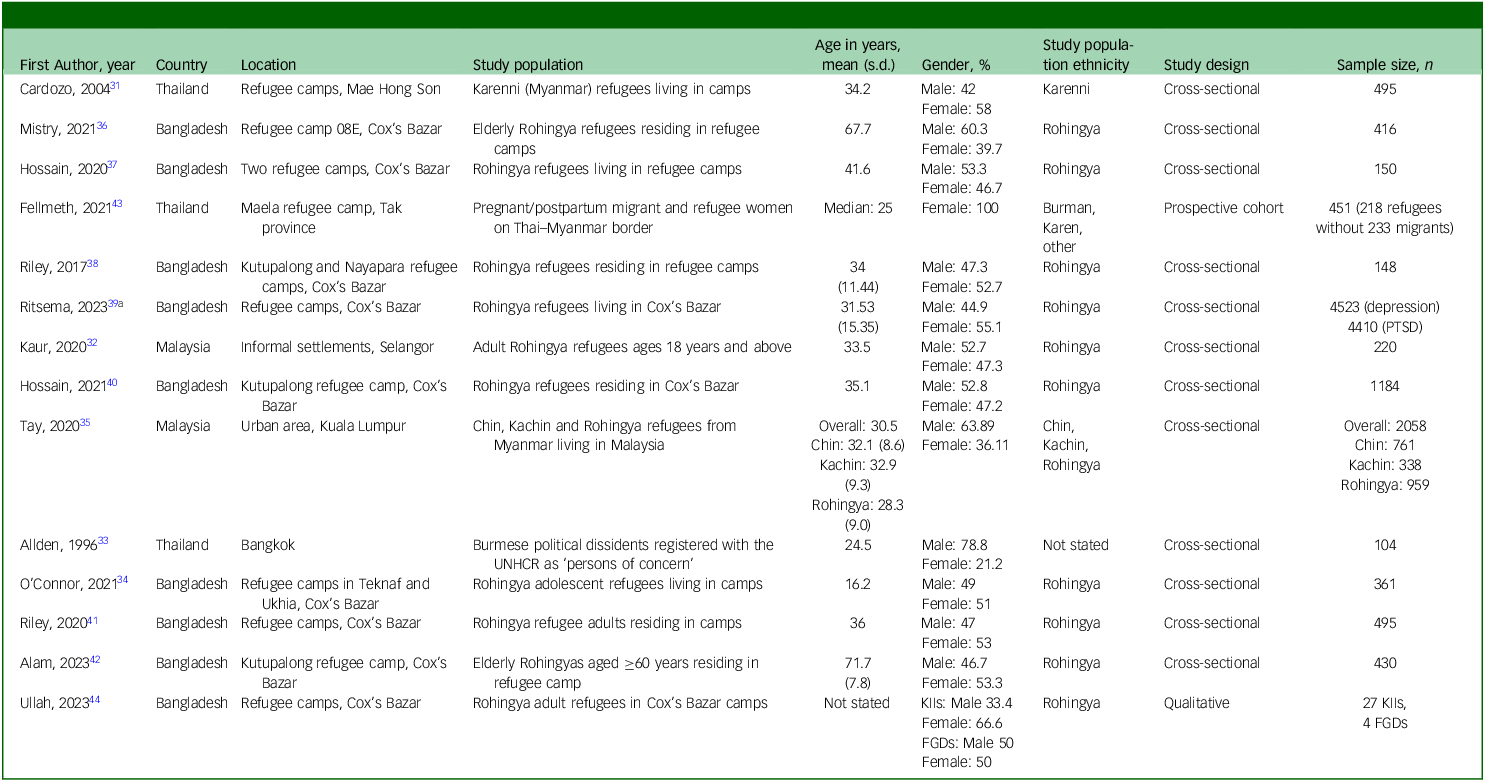


 Open access


eLetters
No eLetters have been published for this article.