Introduction
It is customary today to make a distinction between policy failure and policy success. This is, however, a contrast that has taken shape in its present-day sense only in the last two decades (e.g. Dunleavy, Reference Dunleavy1995; Bovens and ’t Hart, Reference Bovens and ’t Hart1996; Bovens, ’t Hart and Peters, Reference Bovens, ’t Hart and Peters2001; Stone, Reference Stone2002; Davidson, Reference Davidson2005; Handmer and Dovers, Reference Handmer and Dovers2007; McConnell, Reference McConnell2010). We have recently learned that policy may be conceived of as having three realms – processes, programmes and politics – and may succeed and/or fail in each of these and along a spectrum of success: resilient success, conflicted success, precarious success and failure (McConnell, Reference McConnell2010). However, this argument contains at least two shortcomings. Firstly, it fails to capture policies that may be too successful (e.g. successful or spectacularly successful policies whose outcomes hurt the policy initiators as much as the policy target).Footnote 1 Secondly, it does not encompass “too much” and/or “too soon” patterns of policy. There is a need, therefore, to widen the spectrum of policy outcomes that are studied by policy scholars.
The idea advanced in this article is that a fruitful way to confront this challenge is to ask, for example, what the likely policy outcomes are in situations whereby policy-makers believe they are more talented and competent than they actually are, have more control over the event at hand than they in fact do, have greater chances of success in solving the policy problems than they genuinely do, and perceive the information that they possess as more precise than it actually is (Kahneman, Reference Kahneman2011). Based on this idea, this article introduces the concept of policy overreaction, which is defined as policy that imposes objective and/or perceived social costs without producing offsetting objective and/or perceived benefits. The article then links overconfident behaviour by policy-makers and groupthink over positive and negative events to modes of policy overreaction, and gauges the mechanisms for changing or coordinating people's behaviour that characterise each mode of policy overreaction. The analytical framework advanced here puts the spotlight on two dimensions: (i) the effects of overestimation and accurate estimation of information, and (ii) the effects of positive and negative (adverse or threatening) events. Based on these dimensions, the article identifies four modes of policy overreaction that reflect differences in the nature of implemented policy.Footnote 2Pre-emptive overreaction emerges when policy-makers overestimate information regarding a negative event (e.g. a misperception that a risk poses an imminent threat); regulatory overreaction occurs when policy-makers accurately estimate information regarding a negative event (e.g. a realistic recognition of the scope and intensity of a threat, and of the urgent need to gather information regarding the threat); “calibrated” overreaction emerges when policy-makers overestimate information regarding a positive event (e.g. a misperception that a new policy idea, model or theory precisely mimics some particular parameters of reality); and nearly-mandatory overreaction occurs when policy-makers accurately estimate information regarding a positive event (e.g. a realistic recognition regarding the deeply contested nature of a scientific innovation and the derived implications in terms of the speedy implementation of policy and the aggressive information-gathering in light of a potential public backlash).
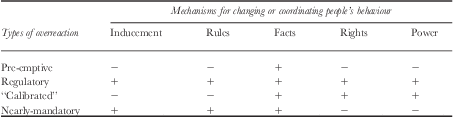
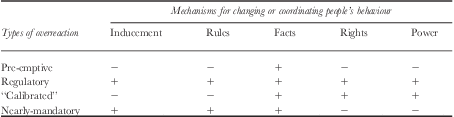
According to the analytical framework, the policy tools menu for each mode of policy overreaction may be dominated by unique mechanisms for changing or coordinating people's behaviour that, once established, produce excessive – objective and/or perceived – social costs. Based on Stone's (Reference Stone2002) taxonomy of general mechanisms for changing or coordinating people's behaviour (i.e. “inducement”, “rules”, “facts”, “rights” and “powers”), the following association between overreaction type and coordination mechanisms may emerge. Pre-emptive overreaction will tend to rely on persuasion (“facts”) through pre-emptive talk, force and/or spectacle in an attempt to defeat or deter a perceived inevitable threat and/or to gain a strategic advantage in an allegedly unavoidable swing of public mood. Classic examples are the cull of all pigs in Egypt during the swine flu crisis of 2009, even though not a single case of this disease either among humans or even pigs had been reported in Egypt, as well as the slaughter of around five million animals for precautionary reasons following the Bovine Spongiform Encephalopathy (BSE) crisis in the UK. Regulatory overreaction will tend to rely on all five mechanisms in order to undertake an aggressive information search, including rapid implementation of legislation that permits exceptional, far-reaching and often overtly authoritarian measures in the search for information, combined with increasing individual and organisational anxiety over the issue in order to facilitate greater cooperation between government agencies and the general public. A classic example is the US government response to 9/11. “Calibrated” overreaction will tend to rely on “facts”, “rights” and “power” in an attempt to implement a consensual policy by anchoring the relevant experts who master the new intellectual model at the core of the executive, ensuring that all relevant policies are in line with the model, undertaking regular assessments of the “calibrated” policy, and presenting them to the general public. Classic examples are the use of the Phillips Curve in United States economic policy during the 1960s and 1970s,Footnote 3 the shock therapy marketisation/transition model in post-Communist Russia during the early 1990s, the implementation of radical, far-reaching programmes of public management reforms in New Zealand during the late 1980s and 1990s, and the intellectual model that drove economic policy-making in much of the Western world after the 1970s, namely, that macro-economic stability could be achieved by using monetary policy, with government intervention in markets restricted to cases of clear market failure. Nearly-mandatory overreaction will tend to rely on “rules”, “inducements” and “facts” in an attempt to implement a contested policy programme by imposing responsibility on individuals (e.g. parents) through public schools or other organisations close to the state while allowing wide opt-outs in order to limit public backlash, and searching for information in order to persuade the public regarding the merit of the policy. Classic examples are school-based human papillomavirus (HPV) vaccination in the UK, Canada and Australia, as well as bike helmet laws in states and municipalities across the United States since the invention of the modern protective helmet.
The analytical framework and the subsequent illustrations of each type of policy overreaction contribute to our understanding of a large spectrum of policy overreactions. Each type of policy overreaction has a unique politics of its own and should therefore be studied in its own right. Surprisingly, no conceptual statement regarding this diversity has ever been made before, so this study is a lone voice crying out for more research on this topic. Because policy overreaction is a feature of all polities at some point in time, policy scholars everywhere may look at the research programme described in the concluding section and use it to provide a detailed and nuanced perspective of this phenomenon in their polities. I also encourage policy scholars to read this article in conjunction with my study on policy underreaction (Maor, Reference Maor2012) and follow the aforementioned direction for future research.
The term “policy-makers” is used throughout this article, recognising that decision-making in parliamentary systems may be based on the core executive model, which emphasises the importance of networks and policy communities (e.g. Dunleavy and Rhodes, Reference Dunleavy and Rhodes1990), or the presidential model, which stresses the prime ministerial predominance within the changing structure of parliamentary systems (e.g. Poguntke and Webb, Reference Poguntke and Webb2005). The term is useful because it captures the possibility that political power may be a relational category due to the need of actors to cooperate in decision-making. This, in turn, requires incorporating aspects of groupthink into the analytical framework. The term “people's behaviour” is used throughout this article to indicate members of the general public as well as members of the judiciary, legislative and executive branches.
The analysis proceeds as follows: the second section surveys the relevant literature, the third presents the analytical distinction amongst the four modes of policy overreaction, the fourth elaborates on the measurement of this concept, the fifth illustrates each mode of policy overreaction, and the final section elaborates a future research agenda.
Surveying the literature
In recent years, economists, psychologists and political scientists have devoted a great deal of attention to the emergence of overreaction (e.g. Sunstein, Reference Sunstein2002; Sunstein and Zeckhauser, Reference Sunstein and Zeckhauser2008; Jones and Baumgartner, Reference Jones and Baumgartner2005; Daniel, Hirshleifer and Subrahmanyam, Reference Daniel, Hirshleifer and Subrahmanyam1998; Kahneman, Reference Kahneman2011). In this research literature, decision-making biases, strong emotions and overconfidence, which “occurs when confidence exceeds accuracy” (Griffin and Brenner, Reference Griffin and Brenner2004, 178), have been shown to explain excessive patterns of behaviour. Surprisingly, studies of policy success (e.g. Bovens, ’t Hart and Peters, Reference Bovens, ’t Hart and Peters2001; Stone, Reference Stone2002; McConnell, Reference McConnell2010), policy failure (e.g. Kerr, Reference Kerr1976; Ingram and Mann, Reference Ingram and Mann1980; Dunleavy, Reference Dunleavy1995; Bovens and ’t Hart, Reference Bovens and ’t Hart1996; Boin, ’t Hart and Sundelius, Reference Boin, ’t Hart, Stern and Sundelius2005) and policy change (e.g. Baumgartner and Jones, Reference Baumgartner and Jones1993; Sabatier and Weible, Reference Sabatier and Weible2007; Kingdon, Reference Kingdon1995) have largely ignored issues related to policy overreaction. The disproportionate information-processing model (Jones and Baumgartner, Reference Jones and Baumgartner2005) may be an exception because it deals with emotions as a cause of policy-makers’ inattention to powerful signals indicating the need for policy change. Yet this approach does not consider the consequences of overconfidence among policy-makers, the nature of the event at hand and the mechanisms for changing or coordinating people's behaviour that characterise each mode of policy overreaction.
One study by policy scholars did, however, coin a few terms related to the issue at hand. Hogwood and Peters (Reference Hogwood and Peters1985) devised the terms over-steering, which refers to “moving back past the correct path to another set of mistakes in the opposite direction” (p. 83); over-targeting, which refers to “[t]he use of as many instruments as there are objectives” (p. 167), and overinstrumenting, which refers to a case in which “many instruments all target the same client group or objective” (pp. 167–8). But they did not delve into the nuances of policy overreaction. Neither did a recent study on US presidents and foreign policy that has proposed a general theory of mistakes (Walker and Malici, Reference Walker and Malici2011). Differentiating between mistakes of omission and commission, the authors have identified three general domains – morality, intelligence (i.e. diagnosis) and policy (i.e. prescription) – but have combined only the latter two into a typology. This typology points at four possible policy mistakes (two of which are relevant here): too much policy following a mistake of commission in the diagnosis stage of decision-making, and policy that is implemented too soon, following a mistake of omission in the prescription stage of decision-making (Walker and Malici, Reference Walker and Malici2011). Although this intuitive typology is insightful, it does not bring the complex concept of policy overreaction into sharper focus.
The mechanisms by which policy overreaction occur are subtle, and they are to be found deep in the way government organisations work and their members behave, as well as in the way society at large is organised and its members behave. Based on research in behavioural decision-making and emotions, the next section views policy overreaction as a predictable response (Jones and Baumgartner, Reference Jones and Baumgartner2005), and tries to conceptually tie it to the overconfidence of policy-makers and the nature of the event.
Analytical framework
Policy overreactions are policies that impose objective and/or perceived social costs without producing offsetting objective and/or perceived benefits. This definition reconciles the tension between the objective and subjective dimensions of “overreaction” as both dimensions are built into the definition. Policy overreaction implies policy inefficiency. However, there is more than one way to take inefficiency into account. Policy overreaction may be a result of overconfidence by policy-makers and the nature of the event, but may also derive from recognition by the policy-makers of the expected inefficiency inherent in the policy process itself. This analytical framework assumes that the contribution of the expected inefficiency inherent in the policy process is relatively modest compared to the contribution of overconfidence by policy-makers and the nature of the event (Assumption I). I recognise, however, that there may be a policy response that is designed solely in response to an expected inefficiency in the policy process. This case falls outside of the analytical framework.
The theoretical framework advanced here draws insights from research on overconfident behaviour. Policy-makers form overly positive judgements of their abilities and of the precision of the information they possess. They do so because they might simply be unable to accurately assess their own competence (e.g. Moore and Healy, Reference Moore and Healy2008) and/or they may be motivated to be overconfident because of its psychological benefits, such as improving self-esteem, mental health, and task motivation and persistence (e.g. Alicke, Reference Alicke1985). Overconfidence is important for three reasons. The first is related to De Bondt and Thaler's (Reference De Bondt and Thaler1995) observation that “perhaps the most robust finding in the psychology of judgment is that people are overconfident”. The second accords with Plous’ (Reference Plous1993, 217) argument that “[n]o problem in judgment and decision-making is more prevalent and more potentially catastrophic than overconfidence”. The third refers to the finding that the effects of overconfidence endure over time (Cameron and Sebastien, Reference Cameron and Sebastien2010).
Overconfidence has been studied in three different ways, namely: overestimation of one's actual ability, performance, level of control or chance of success; overplacement (i.e. when people believe themselves to be better than others); and overprecision (i.e. when people believe that the information that they have is more reliable than it actually is) (Moore and Healy, Reference Moore and Healy2008, 502). Based on illustrative experiments, Moore and Healy (Reference Moore and Healy2008, 502) have found that excessive overestimation can arise from an overly precise subjective probability distribution in an individual's mind (overprecision) or from an overestimation of one's ability to resolve the policy problem (overestimation), and that these two are really one and the same for single-item confidence judgements (Moore and Healy, Reference Moore and Healy2008). In addition, whereas overestimation increases with task difficulty, overplacement decreases with task difficulty (Moore and Healy, Reference Moore and Healy2008, 512).
According to Kahneman (Reference Kahneman2011, 194), extreme predictions and a willingness to predict rare events from weak evidence are both manifestations of System 1, which produces fast and intuitive thinking, as opposed to System 2, which produces slow thinking. Applying this insight in the realm of public policy requires recognition that policy-makers are intendedly rational actors who try to get policy right (Simon, Reference Simon1982; Jones, Reference Jones1999). However, they occasionally face important decisions on issues over which they have little evidence. But even poor evidence can still make a very good story. Considering the limits of policy-makers’ forecasting abilities, how little they know and the fact that only the evidence at hand counts, the excessive confidence in what policy-makers believe may trigger excessive policy.
The theoretical framework also draws insights from research on groupthink, which is defined in Merriam-Webster's dictionary as “a pattern of thought characterized by self-deception, forced manufacture of consent, and conformity to group values and ethics”. Analysing policy decisions such as the Bay of Pigs invasion, the Cuban missile crisis and the escalation of the Vietnam War, Janis (Reference Janis1972) identified eight symptoms for which he coined the term “groupthink”. These symptoms were illusions of invulnerability, collective rationalisation, belief in inherent morality, stereotyped views of out-groups, direct pressure on dissenters, self-censorship, illusion of unanimity, and self-appointed mindguards. The most salient antecedent of groupthink is high cohesiveness. Cohesiveness is defined as the “degree to which the members value their membership in the group” (Janis, Reference Janis1972, 245) and is referred to in terms of amiability and esprit de corps as well as other aspects of friendship (Janis Reference Janis1972, 245–247). Recently, Bénabou (Reference Bénabou2009) found that “while each person decides how to interpret objective reality, that reality – promising, disappointing, or scary – is itself shaped by the actions of others, and therefore by their subjective mindsets” (p. 2). This implies that “in organisations where some agents have a greater impact on others’ welfare than the reverse, strategies of realism or denial will ‘trickle down’ the hierarchy, so that subordinates will in effect take their belief from the leader” (italics in original, Bénabou, Reference Bénabou2009, 2).
The theoretical framework advanced here also draws insights from research on emotions, which are the cornerstone of Jones and Baumgartner's (Reference Jones and Baumgartner2005) disproportionate information processing model. Emotions may degrade cognitive performance, thereby interfering with decision processes (e.g. Hancock and Warm, Reference Hancock and Warm1989). Emotions tend to run high, for example, when individuals are facing negative events or dreadful possibilities. When emotions take charge, probabilities are neglected and the result is harmful overreaction to risk (Sunstein and Zeckhauser, Reference Sunstein and Zeckhauser2010, 116). Governments also suffer from action bias because of their own natural tendencies to take some action regardless of whether it is needed (Patt and Zeckhauser, Reference Patt and Zeckhauser2000). Consequently, the government may tend to take excessive preventive actions “if the relevant actors are able to obtain credit from themselves or from the public for responding to the risk” (Sunstein and Zeckhauser, Reference Sunstein and Zeckhauser2010, 116).
The discussion so far brings to the fore the importance of two analytical dimensions: (i) the effects of positive and negative events, and (ii) the effects of overestimation and accurate estimation of information. These dimensions are mutually exclusive: whether an event is positive or negative is related neither to an individual's overconfidence, which exists in human behaviour because people often have imperfect information about their own performances, abilities, or chances of success, and even worse information about others (Moore and Healy, Reference Moore and Healy2008), nor to groupthink, which is “endogenously spread, horizontally and vertically, through all or part of the organization” (Bénabou, Reference Bénabou2009, 4). Attention now turns to a brief discussion of these dimensions.
Negative and positive events
Negative events are defined as ones that have “the potential or actual ability to create adverse outcomes for the individual” (Taylor, Reference Taylor1991, 67). According to Kasperson, Kasperson, Pidgeon and Slovic (Reference Kasperson, Kasperson, Pidgeon and Slovic2010, 332), such events “often take the form of specific, well-defined incidents”, as opposed to positive events that, “although sometimes visible, are often fussy or indistinct”. Negative events elicit strong and rapid psychological, cognitive, emotional and social responses (e.g. Taylor, Reference Taylor1991). But which attributes of such events create a greater sense of fear? Scholars have found that the characteristics that are conducive to disproportionate fear include involuntary exposure, unfamiliarity and invisibility (Stern, Reference Stern2002/03). In addition, disproportionate fear may result when victims do not realise that they have been exposed to particular risks, when the effects of the risks are delayed, when the mechanism of harm is poorly understood or when long-term effects or the number of people likely to be affected is difficult to predict (Slovic, Fischhoff and Lichtenstein, Reference Slovic, Fischhoff and Lichtenstein1980).
Once negative emotions are brought into the picture, it is necessary to provide some nuance. For example, recent studies of anxiety and anger have shown that negative emotions do not have uniform effects (Lerner, Gonzales, Small and Fischhoff, Reference Lerner, Gonzales, Small and Fischhoff2003). Based on a distinction between perceived threat and the anxiety it can elicit, Huddy, Feldman, Taber and Lahav (Reference Huddy, Feldman, Taber and Lahav2005) corroborated these findings in their research on American attitudes toward war after 9/11. They showed that the minority of Americans who experienced high levels of anxiety in response to the 9/11 attacks were less supportive of aggressive military action against terrorists, less approving of President Bush, and were in fact more likely to favour increased American isolation. This finding is in line with psychology research indicating that anxiety leads to an overestimation of risk and risk-averse behaviour (e.g. Lerner and Keltner, Reference Lerner and Keltner2000). The majority of Americans who perceived a high threat of future terrorism in the United States supported the administration's antiterrorism policies. This finding is in line with psychological research indicating that external and perceived threats increase support for outwardly focused retaliatory action (e.g. Herrmann, Tetlock and Visser, Reference Herrmann, Tetlock and Visser1999).
In light of these findings, the analytical framework assumes that overreacting policy-makers are aware of the link between external and perceived threats, and popular support for outwardly focused retaliatory action, and therefore may implement policies that manipulatively increase external and perceived threats (Assumption II). A classic example is President Bush's issuance of terrorist alerts into the early months of 2002 (Huddy, Feldman, Taber and Lahav, Reference Huddy, Feldman, Taber and Lahav2005, 604). In addition, because of the intensity of the 9/11 events, we have to acknowledge the opposite possibility, namely that an event may contain positive and negative sub-events. These cases naturally weaken the analytical framework advanced here. We therefore assume that this framework is limited to events that are either strongly-positive or strongly-negative (Assumption III).
An additional nuance is related to short-term vs long-term impacts of negative/positive events in relation to policy overreaction. Taylor (Reference Taylor1991) highlighted the asymmetrical reaction over time, i.e. short-term mobilisation and long-term minimisation. Although no single theoretical mechanism could explain the mobilisation-minimisation pattern (Taylor, Reference Taylor1991), there has been no attempt to transcend lower-level responses (e.g. arousal and attention) and higher-level responses (e.g. judgement formation) to focus on exogenous factors that may impact upon both sets of responses (e.g. the media). Numerous studies have suggested that negative aspects of an object, event or choice are weighted more heavily than positive aspects in judgements (Kahneman and Tversky, Reference Kahneman and Tversky1984; for a comprehensive review of this literature, see Taylor, Reference Taylor1991, 69–71). In this respect, the media is no different than individuals. Just as individuals pay more attention and give greater weight to negative events, so does the media (e.g. Slovic, Reference Slovic1993). The extraordinary media coverage that such events generate in the short term implies that public announcements and live reporting of an ongoing event disseminate instantaneously throughout the general public and to policy-makers. In other words, every policy-maker simultaneously receives more or less the same update. In the long term, however, media interest declines as other issues top the agenda.
Accurate and overestimation of information
This theoretical framework is anchored in the literature on overconfident behaviour and particularly in models in which overconfidence increases the perceived precision of information (overprecision) and the perceived ability, level of control and chances of success in solving the policy problems (overestimation) (Moore and Healy, Reference Moore and Healy2008, 502). These two confidence judgements are really one and the same for a single-item confidence judgement (Moore and Healy, Reference Moore and Healy2008). The fundamental assumption of the analytical framework advanced here is that major negative and positive events require, first and foremost, an overarching decision – similar to a single-item confidence judgement – regarding the direction of policy (Assumption IV). In other words, when major negative or positive events occur, policy-makers’ beliefs that the information at their disposal is more reliable than it actually is (i.e. their precise subjective probability distribution in their minds), and their overestimation of their ability, performance, level of control or chances of success to resolve the policy problem, are indistinguishable. This assumption also allows us to ignore the effects of overplacement because major events are characterised by increased task difficulty – a condition under which overplacement decreases while overestimation increases (Moore and Healy, Reference Moore and Healy2008, 512).
The presence of group overconfidence would have implications for how organisations work. A policy-maker who is overconfident in his/her social group may put less effort into looking outside his or her social group when searching for new advisors. Overconfidence may also explain why policy-makers often hire individuals to whom they are connected in some way, as well as why decision-making groups often fail to draw on valuable outside information, even when that information could easily be obtained (Janis, Reference Janis1972). Recently, Healy and Offenberg (Reference Healy and Offenberg2007) found that “the overall magnitudes of individual and group confidence are approximately the same” (p. 4). Given the asymmetric roles that exist in bureaucratic organisations and the finding that realism and denial trickle down from the leaders (Bénabou, Reference Bénabou2009, 1), when a number of interdependent policy-makers interact within numerous overlapping, interlocking networks in the core executive, one may expect that they “will contagiously invest excessive faith in a leader's ‘vision’ ” (italics in original, Bénabou, Reference Bénabou2009, 18). The leader's preferences that favour some activities or world views over others may serve as a commitment device to reduce policy-makers’ concerns over their status in the core executive (e.g. Rotemberg and Saloner, Reference Rotemberg and Saloner2000). The leader's request from policy-makers to seek new information may result in the latter obtaining information that is in line with the leader's (expected) signal (e.g. Prendergast, Reference Prendergast1993). “Both mechanisms thus lead [policy-makers] to ‘conform’ their behavior to [the leader's] prior beliefs” (Bénabou, Reference Bénabou2009, n22). Given that policy-makers believe they are more talented and competent than they actually are, have more control over the event at hand than they actually have, have more chances of success in solving the policy problems than they actually do, and perceive the information they possess as more precise than it actually is, the finding that the overall magnitudes of individual and group confidence are approximately the same (Healy and Offenberg, Reference Healy and Offenberg2007) implies that organisations and institutions are not likely to be able to protect against the enthusiasm and/or misjudgement of policy-makers.
Assumptions
In addition to the aforementioned assumptions, there are other assumptions that are related, among others, to policy-makers’ attention and decision biases. Psychologists have provided a great deal of evidence indicating that it is difficult to process numerous information sources and perform complex tasks at the same time. Based on this interfering effect of extraneous information, the analytical framework assumes that there is no neglect by policy-makers of public information signals, and no competing signals that draw policy-makers’ attention away from a given event (Assumption V). It also assumes that public and private information arrives sequentially over time and is revealed symmetrically to the key policy-makers (Assumption VI). It further assumes that policy-makers are proportionally influenced by information precision and the positive/negative nature of the event at hand, rather than disproportionally influenced by one at the expense of the other (Assumption VII). Another assumption is that policy-makers’ considerations are not clouded by conservatism bias and, if so, they are able to undo this bias (Assumption VIII). Regarding policy-makers’ incentives, it assumes that the policy horizon is relatively short; hence, no action may incur significant costs, even catastrophic ones (Assumption IX).
The policy tools menu
The policy tools menu of each mode of policy overreaction is dominated by unique mechanisms for changing or coordinating people's behaviour that, once established, produce excessive social costs. Before turning to the mechanisms themselves, it is important to clarify the rationale underlying their creation by policy-makers. Accurate estimation of information naturally leads to the establishment of mechanisms that enable intensive or sometimes even aggressive information searches. By contrast, overestimation of information is not likely to lead to a similar response because the longer the policy appears calibrated (Lichtenstein, Fischhoff and Lawrence, Reference Lichtenstein, Fischhoff and Lawrence1982, 307), the more confident the policy-makers become about the reliability of the information at their disposal. Negative events, especially those that trigger strong emotions and fears, may lead to the establishment of mechanisms that facilitate policy-makers’ responsiveness to public demand for too much policy and/or their willingness to curtail such demand by a pre-emptive, dramatic policy act. Overestimation of information may lead to the creation of mechanisms that sustain policy continuity when the policy appears miscalibrated (e.g. a mass media campaign). Positive events that result in policies with contested merit may lead to the establishment of mechanisms that facilitate the delivery of the policy to the highest number of people in the shortest period of time (e.g. imposing responsibility for policy implementation on state schools, state prisons and state hospitals) as well as policy tools that make it possible to pacify or neutralise a public backlash (e.g. exemption mechanisms).
To delve into the nuances of the distinct coordination patterns that characterise each mode of policy overreaction, the analytical framework relies on Stone's (2002) taxonomy of general mechanisms for changing or coordinating people's behaviour, namely “inducement”, “rules”, “facts”, “rights” and “powers”. Inducements refer to “changing people's behavior with rewards and punishments or incentives and sanctions” (Stone, Reference Stone2002, 261). Rules refer to “commands to act or not act in certain ways” (p. 261–2). They are divided into laws as well as social customs and traditions, informal norms, moral rules, and the rules and bylaws of private associations (p. 285). Facts refer to “strategies that rely principally on persuasion. They change people's behavior by operating on their minds and their perceptions of the world” (p. 262). This definition is extended here to include persuasion by talk, force and by spectacle (i.e. a show). Rights refer to “strategies that allow individuals, groups or organizations to invoke government power on their behalf […]. Although rights must rest on authoritative rules from the state, they are a distinctive policy instrument in their heavy reliance on citizens for enforcement and their use of special adjudication process” (p. 262). Power refers to “strategies that seek to alter the content of decisions by shifting the power of decision-making to different people […] these strategies include changing the membership or size of policy making bodies, and shifting decision-making authority from one part of government to another” (p. 262).
Modes of policy overreaction
Table 1 presents a typology of modes of policy overreaction that emerge out of the aforementioned two dimensions. Pre-emptive overreaction appears when policy-makers overestimate information regarding a negative event; regulative overreaction occurs when policy-makers accurately estimate information regarding a negative event; “calibrated” overreaction takes place when policy-makers overestimate information regarding a positive event; and nearly-mandatory overreaction occurs when policy-makers accurately estimate information regarding a positive event.
Modes of policy overreaction

Table 2 presents the four types of policy overreaction and their mechanisms for changing and coordinating people's behaviour. Because persuasion is part and parcel of any policy – e.g. aiming to persuade the relevant policy audiences regarding the merit of the policy, deterring them from doing something or avoiding/minimising blame – it may be utilised in all modes of policy overreaction. In addition, as long as aggressive and urgent action is required (e.g. aggressive information searches), all mechanisms may be utilised. Inducements and rules may be implemented in cases of contested policy programmes, and rights and power in cases of consensual policy programmes, because such programmes facilitate the formation of oversized coalitions that are required for significant constitutional changes.
Modes of policy overreaction and the mechanisms utilised for changing or coordinating people's behaviour
Pre-emptive overreaction
In the case of pre-emptive overreaction, the most likely mechanism for changing or coordinating the behaviour of people will be persuasion by talk, force or by a spectacle. This category is divided into two subcategories – genuine pre-emptive overreaction and manipulative pre-emptive overreaction – on the basis of the nature of risk perceived by policy-makers. Genuine pre-emptive overreaction occurs when policy-makers overestimate a threat – believing it is an imminent threat (e.g. clear and present danger that the enemy country in question is about to attack you) – and take an aggressive step to neutralise it and deter the opponent from further hostile action.Footnote 4 Threats and risks are predominantly treated here as “anything to do with situations where “bad” […] things may, or may not happen” (Spiegelhalter, Reference Spiegelhalter2011, 17).
Manipulative pre-emptive overreaction occurs when policy-makers attempt to gain a strategic advantage in an allegedly unavoidable swing of public mood. Threats and risks are predominantly treated here in terms of blame (Hood, Reference Hood2011). Policy-makers will try to convey information that provides a new perspective on the event at hand, or divert attention away from damning information related to this event. At the outset, negative events evoke strong public emotions and this, in turn, increases the policy-makers’ need for legitimisation and the wish for credit claiming (e.g. Sunstein and Zeckhauser, Reference Sunstein and Zeckhauser2010). This need and wish are exacerbated if a policy-maker knows s/he is being observed while making a decision. According to Kleindorfer (Reference Kleindorfer2010, 72), “this will have predictable effects on the process and outcomes of decision-making”. To understand these effects, one has to recognise that “decisions could be aided by re-valuing emotion goals in a different frame and by making more salient alternative plans for dealing with strong emotion” (Krantz, Reference Krantz2010, 67, italics in original). Policy-makers may therefore try to regain control in the contest between frames and counterframes in order to “impose their frames upon the public understanding of the crisis and its wider implications” (Boin, ’t Hart and McConnell, Reference Boin, ’t Hart and McConnell2008, 287). Given the importance of visual imagery in shaping people's understanding of risk events, policy-makers may look for proactive framings of crisis management, especially the use of non-language in the form of highly visual and dramatic information that is easily remembered (Ferreira, Boholm and Löfstedt, Reference Ferreira, Boholm and Löfstedt2001).
Opting for this type of pre-emptive overreaction implies a decision to initiate a spectacle in order to provide a different frame for the interpretation of the event, or to divert attention to alternative facts in order to make the option of sitting at home and watching the powerful images of the disaster and the rescue operation more salient and attractive to the public. The idea here is to solely rely on the “facts” of the spectacle in order to create the impression that the crisis is under control. The belief held by policy-makers employing this mode of action is that shaken confidence can be restored through more intensive, credible and convincing communication at the confidence level (Siegrist, Gutscher and Keller, Reference Siegrist, Gutscher and Keller2007, 283). This implies that the “facts” refer not only to “the facts of the case” but also primarily to “knowledge about the concerns and values of […] the target audience” (Siegrist, Gutscher and Keller, Reference Siegrist, Gutscher and Keller2007, 283).Footnote 5 So, whereas in one context a declaration of responsibility or a broad public warning campaign may suffice, in another, a spectacle of leadership “under fire” is necessary to regain public trust, while in a further case, a spectacle related to other matters will do.
Regulatory overreaction
In the case of regulatory overreaction, all five mechanisms for changing or coordinating the general public are likely to be utilised in an attempt by the government to implement far-reaching regulation and supervision over large swathes of society, with particular emphasis on law enforcement, in response to a perceived threat. Threats and risks are to be treated here as “anything to do with situations where “bad” […] things may, or may not happen” (Spiegelhalter, Reference Spiegelhalter2011, 17). Policy-makers will tend to initiate processes of sense-making, and, for that purpose, relevant information will be aggressively sought. A continuous search for information requires a legal, technical and human infrastructure to support information search and exchange, cultural openness to new information, and an effective inference system capable of recognising new signals and symbols (Feldman and March, Reference Feldman and March1981) and of using mental models (Weick, Reference Weick1995). This poses a distinct challenge for decision-makers who must ensure reliable performance of the relevant infrastructures under stress in order to achieve coordination among a large number of actors who are engaged in the response to the negative event (Comfort, Reference Comfort2002, 30). They must develop continuous search and exchange processes in order to acquire valid information upon which to undertake action. To this end, all five mechanisms are utilised so that enforcement agencies, as well as the general public, will scan the environment for information and use it to develop a plausible course of action in a turbulent context (e.g. Weick, Reference Weick2001).
Regulatory overreaction therefore requires rapid implementation of legislation that enhances the jurisdiction and powers of enforcement agencies, including intrusions into private life, access to confidential personal information, introduction of surveillance systems, background security checks, disclosure of personal or other sensitive information, tighter controls, house, bag and body searches, and other exceptional, far-reaching and often overtly authoritarian measures. Because policy-makers fear a worst-case scenario, they encourage the general public to act as informants in the search for relevant information by increasing individual and organisational anxiety over the issue at hand, thereby increasing public engagement.
Regulatory overreaction provides the general public with meaning and enabling capabilities, transforming not just their strategic behaviour but also their goals and abilities. The general public is encouraged to involve itself in a pro-active manner, hand-in-hand with government agencies, to follow their instructions and maintain watch and ward over public spaces. The idea is to increase the subjective faith in one's abilities to help government deal with the crisis, and to increase trust in elected officials and bureaucrats, even if said citizen disagrees or does not understand their decisions. One way of doing this is to label those with divergent ideas as “soft on the issue at hand” as well as to personally attack and defame them. This may be complemented by a mobilisation of political discipline and a vast rhetorical arsenal used to elicit negative emotions during the implementation of such changes. Because policy-makers fear a worst-case scenario and the public is afraid, citizens will overpay for policies that promise a resolution of the policy problem (Friedman, Reference Friedman2011). Negative emotion, furthermore, leads the public to demand too much policy (e.g. Friedman, Reference Friedman2011).
“Calibrated” overreaction
This mode of policy overreaction revolves around the relationship of new ideas or models (i.e. positive events) to reality.Footnote 6 Overestimation of information derived from a new idea or model implies recognition by policy-makers that the parameters of the model at hand guarantee that it precisely mimics some particular parameters of reality. Threats and risks derived from this reality are treated here mainly as “anything to do with situations where […] ‘good’ […] things may, or may not happen” (Spiegelhalter, Reference Spiegelhalter2011, 17). Policy-makers will rely on “facts”, “rights” and “power” in order to anchor the relevant experts who master the new model at the core of the executive, ensuring that all relevant policies are implemented in accordance with the model, undertaking regular assessments of the “calibrated” policy, and presenting them to the general public.
The longer the policy appears calibrated (Lichtenstein, Fischhoff and Lawrence, Reference Lichtenstein, Fischhoff and Lawrence1982, 307) – that is, there is a relatively high correspondence between policy predictions and their actual occurrence – the more confident the policy-makers become. Furthermore, the longer policy-makers are confident and/or the judgement task is difficult, the more overconfident they become (e.g. Lichtenstein Fischhoff and Lawrence, Reference Lichtenstein, Fischhoff and Lawrence1982, 315). Consequently, the public is presented with “facts” that it is encouraged to accept as “truths”. These “facts” may serve as “anchors” towards which people's estimates are pulled (Tversky and Kahneman, Reference Tversky and Kahneman1974). In addition, the more confident the policy-maker becomes, the more inclined s/he is to publicly demonstrate leadership ability and executive authority.
In this type of overreaction, policy-makers who support and advance the policy are never on the losing side of a vote. An important source of this policy weight is the reluctance among policy-makers to challenge the policy proposed by the main policy-maker (e.g. the President or the Prime Minister) who, in turn, relies on experts’ advice. The main policy-maker/s come close to dictating decisions or unilaterally claiming agenda-setting rights and decision-making rights while underweighting dissent and disagreement over policies. The need for coordination between government actors is furthermore neglected as long as the new model remains firmly in place. In addition, as long as the policy feedback is slow and “noisy”, there are long lags during which signals from the general public, private interests, legislators and bureaucrats are poorly utilised by the relevant policy-maker. The general public and expert organisations have no incentive to acquire information in the absence of “noise” because they are faced with facts that are conveyed as “true” by policy-makers and scholars. In other words, policy-makers appear to have perfectly assembled all available information. Once signals become clearer, “calibrated” overreaction will grow to be perceived as a severe problem. Consequently, mechanisms may be established in order to “hide” this problem (e.g. media campaign) and to maintain policy continuity.
Nearly-mandatory overreaction
In the case of nearly-mandatory overreaction, policy-makers will tend to rely on “inducements”, “rules” and “facts” in an attempt to implement a contested policy programme by: (i) thrusting responsibility onto individuals (e.g. parents) and organisations close to the state (e.g. state schools); (ii) allowing wide opt-outs from the policy enacted in order to limit public backlash; and (iii) searching for information in order to persuade the public regarding the merit of the policy. This type of policy overreaction also includes mandatory policy programmes based on legislative trade-offs of rights, which allow individuals to opt-out of the mandate without claiming a general objection to the policy on any particular grounds. Threats and risks are treated here mainly as “anything to do with situations where […] ‘good’ […] things may, or may not happen” (Spiegelhalter, Reference Spiegelhalter2011, 17). A classic example is Virginia's mandatory HPV vaccination programme (Palmer, Reference Palmer2009, 655). Mandatory policies with no opt-outs do not fall under this category of policy overreaction, but may belong to any one of the aforementioned types of overreactions.
At the outset, as positive as an event may be, it may also be perceived as scientifically risky by some experts and some segments of the public (Slovic, Reference Slovic2000), or one that creates ethical, personal, religious or philosophical problems. Under these conditions, the merit of the policy may be contested. The potential consequences of disagreements between policy experts or between experts and the general public – when lay people know something that the experts do not (e.g. Slovic, Reference Slovic2010) – lead policy-makers to initiate the following steps: (i) generate anxiety and sometimes even panic among the targeted population (e.g. Connell and Hunt, Reference Connell and Hunt2010); (ii) speedily press their heavily subsidised policy mainly through institutions, which may be distinct from the state but operate in close proximity (e.g. state schools, state hospitals, army, prisons, workhouses, asylums and so on) and which exercise discipline through professional training and repetition (i.e. informal “rules”); (iii) promote the intervention of responsible related others (parents, mothers, wives, community representatives and so on) in the decision of the target audience to comply (informal “rules”); (iv) search for and utilise information in highly focused educational campaigns directed at members of target institutions in order to generate powerful discursive legitimacy for the policy (“facts”); and (v) allow wide opt-outs in order to limit public backlash (“inducements”).
There are at least three ways to criticise the aforementioned conceptual analysis. One is the classic objection that the logic of classification is superseded by measurement. The second is the argument that the types of policy overreaction are only abstractions. The third is that policy overreaction is a static concept, while the field of policy science is in need of dynamic concepts. To respond to the first criticism, the next section discusses issues of measurement in policy overreaction. To answer the second and the third criticisms, the section afterwards illustrates the concrete and dynamic nature of the concept at hand.
Operationalisation and measurement
Measuring the link between overconfidence and groupthink, on the one hand, and policy choices, on the other, should be guided by the hypothesis that a higher degree of policy-makers’ overconfidence and groupthink leads to significant policy activity. This hypothesis may be highly relevant as long as past policy pay-offs are a proxy for overconfidence, president's decisions followed in governmental committees are a proxy of the degree of group cohesiveness (i.e. loyalty), and policy changes within a short time are a proxy for policy activity.Footnote 7 Past policy pay-offs may be operationalised in terms of public opinion or media coverage about the policy at hand, and be measured relative to other policies. The rationale is that, following high levels of past policy pay-offs, policy-makers may believe they are more talented and competent than they actually are with regard to the policy area at hand. Another proxy for overconfidence may be gender, because higher degrees of overconfidence and groupthink were found among men than among women (Barber and Odean, Reference Barber and Odean2001).
Survey research may also be employed in the measurement of policy overreaction but, because this concept is a complicated one and is likely to be biased when respondents use the response categories in different ways (referred to in the literature as differential item functioning or as heterogeneity in reporting behaviour), it should be employed in conjunction with a correction mechanism. King, Murray, Salomon and Tandon (Reference King, Murray, Salomon and Tandon2004) introduced anchoring vignettes as a tool to correct self-assessments for heterogeneity in reporting behaviour. An anchoring vignette is a short description of aspects of hypothetical persons or situations. This means that survey respondents not only assess their own situation but also the situation of the person in the vignette. Based on this approach, students of policy may ask policy-makers for self-assessments of confidence before, during and after the implementation of the policy at hand along with assessments, on the same scale, of several hypothetical situations described by short vignettes. Thereafter, they may estimate the responses in comparison to the vignette's individual baseline or, better yet, they may create the suggested delta measure and compare it to some delta baseline in order to directly measure whatever incomparability exists in the interpretation of identical survey questions related to policy overreaction, and correct for it. Numerous examples of the use of simple recodes to correct whatever incomparability exists, or statistical models designed to save survey administration costs, can be found elsewhere (a comprehensive list is available at the Anchoring Vignettes website). The next section illustrates modes of policy overreaction.
Illustrations
This section employs a narrative technique to illustrate the relationships among the constituent parts of policy overreaction. Among the many flavours of “analytic narratives” (Levi, Reference Levi2004), this section historically narrates a process by which the sequences and variables are disaggregated in a way that highlights the phenomenon, resting on the analytical framework developed here. It alerts us to differences amongst types of policy overreaction, which in turn helps us to handle what has, up to now, been considered a no-man's land. The illustrations presented here, however, are not case studies in a structured comparative research. They were selected because they differ so radically from each other, so much so that the features of the analytical framework advanced here come out clearly. Due to the page constraints in this article, the illustrations remain at the general level. We therefore omit a comprehensive presentation of the environment, the actors, the interactions and the end results of each case. The interested reader will find this information in the referenced literature for each case.
Pre-emptive overreaction
An excellent example of pre-emptive overreaction is the case of Israel's 2008 offensive against Hamas in the Gaza Strip, known as Operation Cast Lead. The operation was conducted two years after the disappointing military performance by the Israel Defense Forces (IDF) during the Second Lebanon War in 2006. Following that war, the top military leadership had been replaced, combat tactics had been re-evaluated and a new plan implemented for dealing with the media (Caldwell, Murphy and Menning, Reference Caldwell, Murphy and Menning2009; Farquhar, Reference Farquhar2009).
The operation in Gaza was a response to eight years of Hamas rocket fire on population centres in southern Israel, continuing even during the three years after the Israeli withdrawal from Gaza, and culminating in the two months prior to the operation, when 160 rockets and mortars were fired at Israel (Barak, Reference Barak2009). The Israeli government decision to embark on this operation had been intended to counter the perceived threat of Hamas launching hundreds of rockets at Israel during an outbreak of military violence on one of Israel's other borders (or, alternatively, with Iran) as well as to convince the Israeli public of the continued supremacy of the Israeli military (Schachter, Reference Schachter2010).
Once the fighting began, media reports provided the Israeli public with a spectacle of decisive military might, which was especially manifested by the use of white phosphorus bombs to create smokescreens (Frenkel, Reference Frenkel2009). Only a few days into the operation, though, it became readily apparent that the Israeli military had overestimated the strength of the Hamas fighting force in nearly every area of military preparedness, and had thus launched a concentrated barrage of firepower that had assumed a much stronger enemy than actually existed (Farquhar, Reference Farquhar2009, 72). An amount of force that was calibrated by the IDF as a deterrent against future action against Israel instead looked like a major coordinated assault on an ill-prepared and amateurish fighting force. Additionally, victim reports illustrated that, even if Israel had indeed learned how to limit civilian deaths, the ratio of Palestinian deaths (militants and civilians alike) to Israeli deaths was highly skewed (Platt, Reference Platt2009).Footnote 8 An IDF interim report concluded that “IDF officers and defense experts [had] overestimated Hamas’ ballistic capabilities, which were said to allow the organization to launch up to 200 rockets per day while under fire from launcher-hunting Israel Air Force aircrafts” (IDF Interim Report, reported in Harel and Sinai, Reference Harel and Sinai2009). The IDF and defence experts also simultaneously overestimated the signs of panic by residents of the targeted areas in the Negev (IDF Interim Report, reported in Harel and Sinai, Reference Harel and Sinai2009).
Regulatory overreaction
A prime example of regulatory overreaction is the American response to the terrorist attacks of 11 September 2001, in which all five mechanisms for changing or coordinating behaviour were utilised. In the immediate aftermath of 9/11, the US military invaded Afghanistan and Iraq, which quickly reframed the situation, portraying the United States as an avenger rather than a defenceless victim. This was bolstered in the public mind by moral absolutist rhetoric like “axis of evil” (e.g. Kassop, Reference Kassop2003). In terms of legislation, overwhelming majorities in Congress passed the USA PATRIOT Act (“the Act”), the most far-reaching and comprehensive response to a terrorist act in American history. The Act dramatically reduced restrictions on law enforcement agencies’ ability to monitor telephone calls, emails, and medical and financial records as well as homes or businesses without the permission or knowledge of the owner or occupant (Zakaria, Reference Zakaria2010; Taylor, Reference Taylor2003). The Act also expanded the Secretary of the Treasury's ability to regulate financial transactions, and authorised the indefinite detention and/or deportation of immigrants suspected of terrorism-related activity with little to no burden of proof. The legislation served to fundamentally redefine terrorism in United States law to include domestic terrorism, which in turn allowed all of the above provisions to apply to the United States domestically (e.g. Andreas, Reference Andreas2003). The founding of the Department of Homeland Security (DHS), however, was the major structural power shift to come about as a result of the events of 9/11. Since its establishment, the DHS has grown to become the third largest governmental department, after the Department of Veteran Affairs and the Department of Defense, with more than 200,000 employees. Some of the agencies that were “hurriedly pulled together into DHS in 2002 [such as the Federal Emergency Management Agency and the Secret Service][…] are not primarily concerned with counterterrorism” (Friedman, Reference Friedman2011, 84). The State Department, however, was given jurisdiction over the Rewards for Justice Program, the primary and much-touted rewards programme for information regarding suspected terrorists or suspicious activity. In terms of budget, homeland security spending has grown from about $12 billion in the fiscal year 2000 to around $66 billion for the fiscal year 2009 (Friedman, Reference Friedman2011, 84). The specific DHS budget grew from $31 billion in the fiscal year 2003 to $55 billion in the fiscal year 2010 – over 45 per cent growth after adjusting for inflation (Friedman, Reference Friedman2011, 84). These figures do not include the increase in state and local homeland security spending (Friedman, Reference Friedman2011, 84).
“Calibrated” overreaction
A key example of “calibrated” overreaction is the application of a shock therapy marketisation/transition model in post-Communist Russia during the early 1990s. The positive events are the evolution of the shock therapy model and its successful implementation in Poland. At the outset, the shock therapy model was first championed by renowned economist and Nobel Laureate Milton Friedman, and then later by US economist Jeffrey Sachs of Harvard University (Nelson and Kuzes, Reference Nelson and Kuzes1995, 87) and Swedish economist Anders Åslund. By the time Boris Yeltsin and Prime Minister Egor Gaider, a renowned economist and free market advocate himself (Tompson, Reference Tompson2002), began to consider utilising the shock therapy model in order to quickly transform Russia's highly centralised structure into a liberalised, market economy, Sachs and Åslund had already successfully advised other Eastern European and South American countries in using the shock therapy model and had thus amplified its reputation as well as their own. The general consensus amongst world economists in regard to countries transitioning into market economies was that there were two possible directions: through gradualism, which would slowly reform and privatise the Russian market over time, and through shock therapy, the new and much-touted model that advocated simultaneous privatisation, liberalisation and institution-building within a very short period of time (e.g. Marangos, Reference Marangos2003). Yeltsin, on the advice of Gaider, who was impressed by the signs of early success, particularly in Poland, chose to implement shock therapy on the premise that it would be much more politically advantageous for himself if the economy was hit hard for a short period of time and then steadily improved (Medvedev, Reference Medvedev2000, 15–16), a forecast delivered by Western advisors. On 28 October 1991, Yeltsin addressed the Congress of People's Deputies in a landmark speech in which he outlined the plan for implementation of shock therapy and set expectations for the path that lay ahead. At the beginning of November, Congress authorised Yeltsin to begin carrying out his shock therapy plan by voting him special powers to issue mandatory decrees (Nelson and Kuzes, Reference Nelson and Kuzes1995, 35). Economists in Russia, however, were more than wary, due to the still somewhat unproven nature of shock therapy in the long term and in large, complicated centralised economies, and because the unique situation in Russia made it a less than ideal candidate in contrast to Poland (e.g. Azizian, Reference Azizian1999). The decision, however, was taken out of their hands and Western economists, including Jeffrey Sachs and Anders Åslund, were brought in to advise the programme (Tompson, Reference Tompson2002; Medvedev, Reference Medvedev2000, 15; Angner, Reference Angner2006). Companies of all varieties formerly owned by the government were hastily privatised and citizens were given special vouchers to buy into these new private enterprises, and as a trade-off for the near total loss of private savings as a result of price stabilisation efforts (Nelson and Kuzes, Reference Nelson and Kuzes1995). However, within less than a year, confusion and corruption had seeped in and it became abundantly clear that Russia was on a disastrous course (Cudahy, Reference Cudahy2010; Nelson and Kuzes, Reference Nelson and Kuzes1995), even as the Yeltsin government continued to recalibrate the programme and to assure optimism as to its eventual success. As Russian economists had predicted, Russian workers were for the most part ill-equipped to run the enterprises in which they had previously worked, and had little understanding of the nature or process of private investment. At the same time, International Monetary Fund (IMF) investment requirements, which Russia was asked to meet in order to receive Western funding necessary for success, exacerbated internal issues by constraining the options available to fully tailor the programme to fit moment-by-moment needs (Nelson and Kuzes, Reference Nelson and Kuzes1995). This ensured that Gaider and Yeltsin were heavily constrained in their ability to fully address problems that were specific to the Russian situation.
Near-mandatory overreaction
An example of near-mandatory overreaction can be found in the human papillomavirus (HPV) vaccination across the UK, which started in 2008. At the outset, HPV can cause all varieties of cervical cancer and genital warts (National Conference of State Legislatures, NCSL, 2011). There are more than 30 strains of HPV and two scientific breakthroughs that have shown high efficacy in treating some of them: one vaccine (Cervavix) protects patients against the two strains of HPV (types 16 and 18), responsible for 70 per cent of cervical cancer cases, and another vaccine (Gardasil) offers additional protection against HPV types 6 and 11, which cause over 90 per cent of genital warts cases (e.g. NCSL, 2011). HPV, unlike measles, mumps or rubella, is only transmitted through sexual contact and is thus not in danger of causing an epidemic, the primary reason for mandating compulsory vaccinations (Colgrove, Reference Colgrove2006). In addition, there was some fear that, as effective as the HPV vaccine appeared from initial testing, there were still a number of unknowns relating to its long-term safety, particularly for pre-teen girls who had only made up 1,184 out of 25,000 patients in the clinical trial (Vamos and McDermott, Reference Vamos and McDermott2008). Moreover, females can benefit from two complementary modalities to prevent disease and death due to HPV infection and cervical cancer: Pap screening as well as surgical or medical treatment of cancer (Connell and Hunt, Reference Connell and Hunt2010).
In 2008, a recommendation was made by the Joint Committee on Vaccination and Immunisation to begin routine vaccination. Two national programmes of HPV vaccination for girls have been instituted since September 2008: a routine programme for 12- and 13-year-olds and a catch-up programme for 17- and 18-year-olds. The cervical cancer vaccine that does not protect against genital warts was chosen by the Department of Health, although at that time both vaccines were available. The arrangements for administering the vaccine were devolved to local primary care trusts (PCTs), most of which followed the Joint Committee's recommendation in opting for school-based delivery of the routine programme (Kumar and Whynes, Reference Kumar and Whynes2011, 172). The decision to opt for school-based delivery provided a clear-cut solution to the challenge of this vaccination programme, namely its acceptability by adolescents. The “organised vaccination program during normal school hours reduces the need for personal effort to virtually zero” (Kumar and Whynes, Reference Kumar and Whynes2011, 176). Indeed, data for the first full year of the scheme indicated that around 88 per cent of girls in England who are eligible received the first dose of the vaccine.
Given the low public awareness of HPV and its link to cervical cancer (Waller, McCaffery and Wardle, Reference Waller, McCaffery and Wardle2004), an educational campaign was initiated, including an information sheet with details on HPV and its links to cervical cancer, educational DVDs for girls and a consent form for parents. Those who refused vaccination were asked to state the reason on these forms (Stretch, Chambers, Wittaker, Critchley, Jackson, Montgomery, Roberts and Brabin, Reference Stretch, Chambers, Wittaker, Critchley, Jackson, Montgomery, Roberts and Brabin2008). However, parents could either write down the reason for their refusal or withdraw the consent verbally. In addition, individual and joint school parents’ evenings were organised during which parents and girls were invited to attend information evenings, and school nurses ran education sessions (Stretch et al., Reference Stretch, Chambers, Wittaker, Critchley, Jackson, Montgomery, Roberts and Brabin2008). A few Catholic schools refused to participate in the vaccination campaign, and the scheduled vaccination session was relocated to a local health centre. The fact that the educational campaign had been undertaken in schools is rather important because “mass media has a key role to play in the perceived desirability and acceptability of vaccines, and hence a key determinant of the uptake of HPV vaccination programme will be the media coverage it receives” (Hilton, Hunt, Langan, Bedford and Petticrew, Reference Hilton, Hunt, Langan, Bedford and Petticrew2010, 943). As long as gaps in parents’ and girls’ understanding of the benefits and risks of a vaccine are bridged by in-school educational campaigns, there is a relatively low probability that adverse publicity about the safety of immunisation and fear-inducing messages will reach the national media. The resulting powerful discursive legitimacy increases the acceptability rate. The aforementioned experience has not been unique to the UK. Australia and Canada have executed mass HPV vaccination campaigns along similar lines (e.g. Connell and Hunt, Reference Connell and Hunt2010).
Although it is generally considered unprofessional for political scientists to base their analytical frameworks on a description of relatively few illustrations, it may be justified to bring these illustrations to the attention of the readers because the term “overreaction” carries immense psychological freight and because the illustrations indicate that the analytical framework devised here is not far-fetched.
Conclusions
No consideration has so far been given to the fact that the concepts of policy failure and policy success, as well as their corollary terms, have seen their boundaries demarcated in a way that excludes different types of policy overreaction from scholarly view. Based on one of the most robust findings in the psychology of judgement, namely that many people are overconfident, this article links overconfident behaviour by policy-makers and groupthink as well as the nature of events to modes of policy overreaction, and gauges the mechanisms for changing or coordinating people's behaviour that characterise each mode of policy overreaction. In formulating a relatively clear analytical framework, this article adds a classification that tries to explain yet understudied modes of policy overreaction to the policy sciences literature. Classifying policy overreaction is the first step to keeping it under control since different types of overreaction can be named and analysed. If attempts to control it are made, the rate of overreaction in a certain policy area will decrease but it will rarely go down to zero.
Future research may systematically examine modes of overreaction in specific policy sectors, expecting that they will vary along world views within policy domains. Researchers may also examine modes of policy overreaction in relation to policy moods (Kingdon, Reference Kingdon1995) and the “thermostat” model (Wlezien, Reference Wlezien1995). Researchers may also rely on impression formation theories from social psychology in order to examine how members of the public make judgements about policy-makers’ overreactions. Another avenue is the link between policy overreaction and advocacy coalitions (Weible and Sabatier, Reference Weible and Sabatier2009), which may be seeking to institutionalise their preferences in the policy (overreaction) enacted. Students of public policy may also explore the potentially positive and negative attributes of policy overreaction. Still another direction is the link between policy overreaction and reputational concerns (Carpenter, Reference Carpenter2001; Maor, Reference Maor2007, Reference Maor2010 and Reference Maor2011; Maor and Sulitzeanu-Kenan, Reference Maor and Sulitzeanu-Kenan2012; Maor, Gilad and Ben-Nun Bloom, forthcoming).
Future research may also adopt a fundamentally different approach and, instead of focusing on the psychology and cognitive biases of the individual policy-maker, it may look at the contextual factors within which a policy-maker operates. Attention to psychological, cultural, historical, geographical and technological contexts does not clutter the explanation advanced here but, on the contrary, promotes in-depth knowledge of the phenomenon under study. Relatedly, researchers may look at the interaction between heterogeneous but bounded rational policy-makers. This is because “Confidence is not just the emotional state of an individual. It is a view of other people's confidence, and of other people's perceptions of other people's confidence. It is also a view of the world – a popular model of current events, a public understanding of the mechanism of economic change as informed by the news media and by popular discussions” (Akerlof and Shiller, Reference Akerlof and Shiller2009, 55). This research direction may distinguish between policy-makers who could each bring some subset of the available public information to the process, or between those who are privy to private signals about the case at hand.
Another avenue is to look at learning from policy overreaction by focusing on the quality of policy feedback (i.e. information precision and timeliness), and the consequences of policy overreaction in terms of the penalty imposed on policy-makers by the general public. The extent to which the public is tolerant of policy errors when information is precise and timely may provide an indication as to the inclination of policy-makers to avoid overreaction in future cases. Another path for future research may focus on a distinction between types of information produced by different events, which may engender a hypothesis that policy overreaction to one type of information may be distinct from policy overreaction to information of another type. A further possible direction may focus on the magnitude of policy overreaction and the variance across contexts of the subsequent correction/s in the long run. Future research may also look for patterns of policy overreaction cycles.
There is therefore reasonable ground to believe that a focus on the effects of positive and negative events and the overconfidence of policy-makers regarding the precision of their information hold great promise in explaining the different modes of policy overreaction and their mechanisms for coordinating people's behaviour. It is hoped that future research will benefit from the analytical framework advanced here and will continue to investigate the role of confidence and emotions in public policy dynamics.
Acknowledgements
Earlier versions of this paper were presented at the 2011 International Conference on Behavioral Decision Making, the Interdisciplinary Center Herzliya (IDC), and the 2012 SOG Conference on Public Policy and Public Management, the University of Melbourne. The article has benefited enormously from these audiences, and from comments and advice by Ira Sharkansky, Hanan Haber, Ilana Shpaizman, Mark Hoipkemier, Raanan Sulitzeanu-Kenan, Don Moore, Dan Kahan, Claude Berrebi, Gary King, Frank Baumgartner, Bryan Jones and the co-editors and referees of this journal. The author also thanks Elizabeth Kaplan for her superb research assistance on this paper. Errors are solely my responsibility.