Concern over the effects of interparental aggression on child adjustment is well founded. Estimates indicate that 15.5 million American children live in families in which interparental violence occurs (McDonald, Jouriles, Ramisetty-Mikler, Caetano, & Green, Reference McDonald, Jouriles, Ramisetty-Mikler, Caetano and Green2006), and exposure to verbally aggressive and unresolved conflicts is likely to be more common. Although linkages between interparental aggression and child adjustment problems are well established, the specific processes and pathways accounting for these associations are still poorly understood (Cummings, El-Sheikh, Kouros, & Buckhalt, Reference Cummings, El-Sheikh, Kouros and Buckhalt2009). Emotional security theory suggests that interparental aggression undermines children's feelings of safety and security in the family, which may heighten the risk for adjustment problems (Cummings & Davies, Reference Cummings and Davies1996). Emerging evidence indicates that these security concerns may negatively impact attention skills, placing children's adjustment at risk (Davies, Woitach, Winter, & Cummings, Reference Davies, Woitach, Winter and Cummings2008). However, the relations between interparental aggression, the development of attention in infancy and toddlerhood, and early childhood behavior problems have yet to be investigated. Thus, the current study sought to address this gap by examining the longitudinal links between interparental aggression and young children's attention skills, as well as the implications of impaired attention and interparental aggression for early childhood behavior problems.
Designed to account for how and why high levels of interparental conflict are associated with a wide range of maladaptive child outcomes, emotional security theory suggests that interparental aggression is a strong threat to children's feelings of safety and protection; it is this sense of emotional insecurity that is thought to play a critical role in placing children's adjustment at risk (Davies & Cummings, Reference Davies and Cummings1994). Chronic security concerns triggered by exposure to violent, verbally aggressive, or unstable interparental relationships are theorized to heighten child distress and vigilance, depleting psychobiological resources necessary for adaptive functioning (Davies, Winter, & Cicchetti, Reference Davies, Winter and Cicchetti2006). As focusing and sustaining attention requires the coordination of cognitive, emotional, and motivational resources, Davies and colleagues (2008) suggest that these attention skills may be especially susceptible to aggressive conflict because security concerns may impair self-regulatory skills across these domains. In line with this premise, interparental aggression is clearly stressful for children (Bogat, Dejonghe, Levendowsky, Davidson, & von Eye, Reference Bogat, DeJonghe, Levendosky, Davidson and von Eye2006; Saltzman, Holden, & Holahan, Reference Saltzman, Holden and Holahan2005), and a large body of research suggests that high levels of stress impair attentional performance (Lupien & McEwen, Reference Lupien and McEwen1997; Mendl, Reference Mendl1999). Further, impaired abilities to focus and maintain attention are characteristic of children who have been exposed to chronic stressors such as violence in the home (DeBellis, Reference DeBellis2001; Margolin & Vickerman, Reference Margolin and Vickerman2007).
However, it is unknown if interparental aggression alters the early development of attention skills. This is a notable gap, as young children are disproportionally exposed to interparental aggression (Fantuzzo & Fusco, Reference Fantuzzo and Fusco2007) and infants and toddlers are clearly attuned to, and distressed by, interparental conflict (Cummings, Zahn-Waxler, & Radke-Yarrow, Reference Cummings, Zahn-Waxler and Radke-Yarrow1981). Of more importance, attention skills undergo rapid development during early childhood (Rothbart, Ziaie, & O'Boyle, Reference Rothbart, Ziaie and O'Boyle1992) as frontal cortical areas become more functional toward the end of first year of the child's life, bringing the emergence of volitional, endogenous direction of attention (Colombo, Reference Colombo2002; Diamond, Reference Diamond1991). The corresponding increases over the next year in effortful engagement with objects and activities, as well as the ability to direct attention to meet situational demands are considered foundational skills necessary for the development of self-regulation, the executive control of behavior, and social and cognitive development across domains (Kochanska, Murray, & Harlan, Reference Kochanska, Murray and Harlan2000; Ruff & Rothbart, Reference Ruff and Rothbart1996).
Although there is marked normative development in the child's capacity to focus, redirect, and sustain attention across early childhood, there is reason to believe adversity may influence individual differences in these skills. Recurring stress associated with exposure to repeated conflict between adults has been linked with persistent activation of the stress–response system (Pendry & Adam, Reference Pendry and Adam2007), which could have adverse effects on developing brain systems responsible for attentional control. Animal models suggest that chronic stress arousal may promote atrophy in the hippocampus and prefrontal cortex, the neural systems responsible for selective attention and inhibitory control (Bremner & Vermetten, Reference Brenmer and Vermetten2001; McEwen, Reference McEwen2006). Evidence indicates that stressful family contexts, such as low-quality home environments or insensitive and intrusive parenting, may impair the development of attention skills in early childhood (Fearon & Belsky, Reference Fearon and Belsky2004; National Institute of Child Health and Human Development Early Child Care Research Network [NICHD ECCRN], 2003). Thus, although the constitutional basis for individual differences in attention is widely recognized (e.g., Ruff & Rothbart, Reference Ruff and Rothbart1996), a growing body of research suggests that stressors within the early family environment may also shape the development of attentional control.
There is reason to believe that impaired attention skills may be a critical link between interparental aggression and increased risk for behavior problems in early childhood. Interparental aggression features prominently as a risk factor for both attention-deficit/hyperactivity disorder (ADHD) symptoms and conduct problems (e.g., Biederman et al., 2009; Shaw, Owens, Giovannelli, & Winslow, Reference Shaw, Owens, Giovannelli and Winslow2001), and early deficits in sustained, self-regulated attention are central in theories of the etiology of these disorders (Barkley, Reference Barkley1997; Lynam & Henry, Reference Lynam, Henry, Hill and Maughan2001). Difficulties in sustaining and directing attention have been linked with diminished social competence (Raver, Blackburn, Bancroft, & Torp, Reference Raver, Blackburn, Bankroft and Torp1999), increased physical aggression (Eisenberg, Fabes, Nyman, Bernzweig, & Pinuelas, Reference Eisenberg, Fabes, Nyman, Bernzweig and Pinuelas1994), and externalizing problems across the spectrum (Olson, Sameroff, Kerr, Lopez, & Wellman, Reference Olson, Sameroff, Kerr, Lopez and Wellman2005). For example, toddler's inability to sustain and direct attention to toys and activities has been linked with difficulties tolerating frustration, as well as hyperactivity and attention problems in early childhood (Ruff, Lawson, Parrinello, & Weissberg, Reference Ruff, Lawson, Parrinello and Weissberg1990). With respect to the interparental relationship, in a longitudinal study of 6-year-olds and their parents, Davies and colleagues (2008) found evidence for attention difficulties as a mechanism linking interparental conflict and children's school adjustment. Specifically, difficulties focusing and sustaining attention at 7 years of age accounted for over one-third of the association between children's insecure representations of the interparental relationship at age 6 and children's social and behavioral competence over a 1-year period. Although these findings provide preliminary evidence for the important role of attention skills in accounting for associations between interparental conflict and child adjustment, much work remains to be done in understanding the longitudinal linkages between interparental aggression, attention skill development, and early childhood behavior problems, particularly among infants and young children.
As previously noted, there is a strong theoretical rationale for interparental aggression impairing early attention development. However, the specific direction of effects has yet to be investigated. Consistent with a family systems perspective (Cox & Paley, Reference Cox and Paley1997), scientists increasingly recognize the active role of children in shaping family dynamics. More specifically, it has been suggested that deficits in child attention may heighten stress within the family system, increasing or intensifying marital conflict over time (Johnston & Mash, Reference Johnson and Mash2001; Wymbs, Pelham, Molina, & Gnagy, Reference Wymbs, Pelham, Molina and Gnagy2008). Although yet to be explored with respect to early attention skills, there is some evidence to suggest that children's dysregulated behavior may lead to more destructive interparental relations (Schermerhorn, Cummings, DeCarlo, & Davies, Reference Schermerhorn, Cummings, DeCarlo and Davies2007), even within the infancy period (Belsky & Rovine, Reference Belsky and Rovine1990). Nonetheless, as higher order attention skills are emergent toward the end of first year of the child's life (Diamond, Reference Diamond1991; Rothbart, Derryberry, & Posner, Reference Rothbart, Derryberry, Posner, Bates and Wachs1994), it stands to reason that the primary direction of influence with respect to early attention development would be from the interparental relationship to the child. Research that examines the transactional pathways between early attention and interparental aggression is needed.
Further, there is evidence to suggest that gender differences may exist in these processes, with boys being more vulnerable than girls to developing behavior problems in response to interparental aggression, particularly in early childhood (e.g., Cummings & Davies, Reference Cummings and Davies1994, Kerig, Reference Kerig1996). Boys may be more likely to perceive interparental aggression and violence as threatening (Cummings, Davies, & Simpson, Reference Cummings, Davies and Simpson1994; Kerig, Reference Kerig1998), and previous research has found more consistent relationships between interparental discord and behavior problems for boys (e.g., Emery & O'Leary, Reference Emery and O'Leary1984, Jouriles, Murphy, & O'Leary, Reference Jouriles, Murphy and O'Leary1989). Gender differences in attention skills have also been found (e.g., Kochanska & Knaack, Reference Kochanska and Knaack2003), suggesting that additional attention impairments due to aggression may be especially detrimental for boys. However, meta-analyses have often failed to find consistent gender effects in response to interparental conflict (e.g., Buehler et al., Reference Buehler, Anthony, Krishnakumar, Stone, Gerard and Pemberton1997), and Davies and colleagues (2008) found no gender differences in the pathways linking insecure representations of the interparental relationship, attention difficulties, and children's school adjustment. It remains to be seen if associations between interparental aggression, child attention, and behavior problems in early childhood vary according to child gender. Thus, the present study explored whether boys were at greater risk for developing ADHD symptoms or conduct problems in the face of interparental aggression across infancy and toddlerhood.
Finally, despite repeated calls for research examining the effects of conflict in different contexts (e.g., Davies et al., Reference Davies, Winter and Cicchetti2006), studies that incorporate more diverse samples are still clearly needed. In particular, it is unknown if interparental aggression may differentially influence attention development and subsequent risk for behavior problems for children in low-income households (Davies et al., Reference Davies, Woitach, Winter and Cummings2008). Although some studies suggest the associations between interparental aggression and child outcomes operate in a similar fashion regardless of socioeconomic status (e.g., El-Sheikh, Cummings, Kouros, Elmore-Staton, & Buckhalt, Reference El-Sheikh, Cummings, Kouros, Elmore-Staton and Buckhalt2008; Kitzman, Gaylord, Holt, & Kenny, 2003), it is possible that the chronic stress associated with low-income environments may further deplete critical resources necessary for optimal attention development, exacerbating the effects of interparental aggression. Consistent with this notion, research has found exposure to multiple risks (including interparental conflict or violence) to be linked with reduced self-regulatory capacities and impaired attentional control for children living in poverty (e.g., Evans & English, Reference Evans and English2002; Li-Grining, Reference Li-Grining2007), and there is some evidence to suggest stronger linkages between interparental discord and behavior problems for families lower in socioeconomic status (SES), compared to higher SES families (Jouriles, Bourg, & Farris, Reference Jouriles, Bourg and Farris1991). Alternatively, it has been theorized that the influence of interparental conflict may be overshadowed by numerous other stressors present in low-income households (e.g., Davies et al., Reference Davies, Winter and Cicchetti2006; Ingoldsby, Shaw, Ownes, & Winslow, 1999), with children having already passed a threshold for environmental risk. Previous research indicates that familial influences on behavior problems may be overwhelmed by other risks in more deprived environments (Shonberg & Shaw, Reference Schonberg and Shaw2007). The differential effects of interparental aggression on child behavior problems according to income status, however, have yet to be investigated with respect to the development of attention skills.
Although it is still unclear whether the effects of interparental aggression may be overshadowed or exacerbated in low-income environments, both rationales suggest that it is not income per se, but rather the presence of multiple proximal stressors in low-income homes that may account for differential associations. Children in low-income families are more likely to face a number of stressors in their daily lives, including household crowding, disorganization, and unpredictable home environments (Evans, Gonnella, Marcynszyn, Gentile, & Salpekar, Reference Evans, Gonnella, Marcynyszyn, Gentile and Salpekar2005). Such chaotic living conditions are thought to tax critical resources necessary for effective regulation of attention and behavior, placing children's adjustment at risk (Evans & English, Reference Evans and English2002; Evans et al., Reference Evans, Gonnella, Marcynyszyn, Gentile and Salpekar2005). Thus, differential effects of interparental aggression in low-income households may be primarily due to the high levels of chaos that are often present in these homes. To date, however, no studies have examined whether interparental aggression has differential effects on child outcomes depending on levels of household chaos in low-income families.
In order to address these gaps, the current study examined the longitudinal associations between interparental aggression, attention skill development in infancy and toddlerhood, and early childhood behavior problems in a diverse sample of families living in predominately low-income, nonmetropolitan communities. Specifically, the current investigation sought to address the following three questions. First, what is the direction of effects between interparental aggression and the development of early attentional control? Given that higher order attentional skills are newly emerging, it was hypothesized that the primary direction of effects would be from the interparental relationship to the child, with aggressive, unstable interparental relationships impairing attention skill development. Second, do interparental aggression and attention skills in toddlerhood contribute to early childhood behavior problems? We hypothesized that both child attention and interparental aggression would contribute to the development of ADHD symptoms and conduct problems in early childhood. Third, do the longitudinal associations between interparental aggression, child attention, and behavior problems vary according to child gender and income status? We hypothesized that boys would be differentially susceptible to the negative effects of interparental aggression. Given the mixed literature on differential effects of interparental aggression depending on household income, no specific hypotheses were made regarding income status. However, if associations were found to vary for low-income families, we sought to explore if the differential effects of interparental aggression on child outcomes were dependent on levels of chaos in these households.
Method
Participants
Participants were drawn from the Family Life Project, an ongoing longitudinal study of 1,292 families residing in predominately nonmetropolitan areas in Pennsylvania and North Carolina with a high incidence of chronic poverty. Families were recruited over a 1-year period from local hospitals shortly after the birth of a child, oversampling for low-income and African American families. For additional information regarding recruitment procedures and the sampling plan for the Family Life Project, see Vernon-Feagans et al. (Reference Vernon-Feagans, Pancsofar, Willoughby, Odom, Quade and Cox2008).
The current study focused on infancy, toddler, and 3-year home visits that took place when the target child was approximately 7, 15, and 36 months of age. Of the 1,204 families seen at the infancy visit, 791 (66%) included families in which the child's biological mother resided with a romantic partner. Ninety-five percent of these families (n = 752) participated in the toddler visit, and 92% (n = 726) at the 3-year visit. No significant differences were found between families who participated in all three assessments and those that did not on any of the variables of interest in the current analyses. Because of our focus on the direction of effects between the interparental relationship and child attention, 62 families were excluded from the current analyses because the mother was no longer living with or had changed partners by the toddler assessment. In order to maximize developmental differences between the emergent, volitional direction of attention developing in the latter half of the first year of life and the rapid improvement in attentional control across the second year (and to be consistent with previously established cut-points for this sample; e.g., Blair et al., Reference Blair, Granger, Kivlighan, Mills-Koonce, Willoughy and Greenberg2008), the decision was made to restrict the analyses to children that were seen between 5 and 9 months of age (M = 7.21, SD = 1.04) at the infancy visit, and between 13 and 19 months of age (M = 15.5, SD = 0.94) at the toddler visit. This restriction resulted in the exclusion of 44 children 10 months or older at the infant assessment and 49 additional children 20 months or older at the toddler assessment. Children were approximately 36 months of age at the 3-year visit (M = 36.8 months, SD = 1.5). Of this final sample of 636 families, 94% (n = 599) of the mothers were still residing with the same partner. Approximately half of the children were female (48%), and 23% were identified as Black (77% White). Mothers were 28 years of age on average at the infancy visit (M = 28.28, SD = 5.55), and 22% identified as Black (78% White), and their romantic partner's were on average 31 years of age (M = 30.93, SD = 6.55) and 23% identified as Black (77% White). The majority of the couples were married (77%), and 48% of the families had household incomes equal or less than 200% of the federal poverty threshold.
Procedures
Trained research assistants conducted in-home interviews at the infancy, toddler, and 3-year visit. Mothers reported demographic information on all household members, and completed questionnaire data via laptop computer. Observational assessments of the target child were made by research assistants over the course of the visits, which lasted 2–3 hr at each occasion.
Measures
Background information
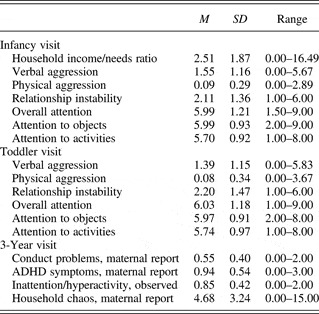
Mothers reported on total household income, marital status, and child gender, age and ethnicity. In order to compare processes in low-income and middle to upper income families, the income/needs ratio of the family at the infancy visit was calculated by dividing the total household income by the federal poverty threshold for that year, adjusted for the number and types of individuals living in the home (see Table 1 for descriptive information). Often used in child development research as an indicator of the degree of poverty in a household (e.g., Brooks-Gunn, Klebanov, & Liaw, Reference Brooks-Gunn, Klebanov and Liaw1995; NICHD ECCRN, Reference Brooks-Gunn and Duncan1997), an income/needs ratio of 1.0 indicates that the income of the household is equal to the official poverty threshold for a family that size and composition. Consistent with previous research (e.g., Han, Waldfogel, & Brooks-Gunn, Reference Han, Waldfogel and Brooks-Gunn2001), a family was considered low income if the household had an income/needs ratio of 2.00 or below (i.e., ≤200% of the federal poverty threshold).
Means and standard deviations of primary study variables

Note: ADHD, attention-deficit/hyperactivity disorder.
Interparental aggression
Two separate measures were used to form the latent interparental aggression construct. Mothers reported on their partners’ use of verbal and physical aggression during the past 12 months at the infancy and toddler assessmentFootnote 1 (Conflict Tactics Scale—Couple Form R; Straus & Gelles, Reference Straus and Gelles1990). The verbal aggression scale consisted of six items, assessing the frequency with which the partner used verbal acts that symbolically hurt the other party (sample α = 0.80–0.81; e.g., “How often has he insulted or swore at you?”). The physical aggression scale consisted of nine items, and assessed the frequency with which the partner used physical force as a means of resolving the conflict (sample α = 0.78–0.85; e.g., “How often has he kicked, bit, or hit you with a fist?”). As this variable was highly skewed (71% of mothers reported no violence), the physical aggression scale was categorized, with 0 = no physical aggression reported in the past year, 1 = a single incidence of physical aggression, or 2 = more than one incidence of physical aggression reported.
In addition, mothers completed a 5-item version of the Dimensions of Relationship Quality Scale (adapted from the Dimensions of Marital Quality; Johnson, White, Edwards, & Booth, Reference Johnson, White, Edwards and Booth1986), assessing the instability of the romantic relationship. Mothers reported on their perception of relationship instability, as well as how recently they engaged in behaviors such as discussing breaking up or divorce (sample α = 0.85–0.86; e.g., “Has the thought of separation crossed your mind?”). In order to form a latent construct of interparental aggression, the two scales from the Conflict Tactics Scale—Couple Form R (mean verbal and categorized physical aggression), and the Dimensions of Relationship Quality Scale were used as indicators at each occasion.
Child attention skills
After the infant and toddler visit, two research assistants independently rated the child's behavior using an adaptation of the Infant Behavior Record (IBR; Bayley, Reference Bayley1969), which has been used to assess individual differences in attention for both infants and toddlers (Braugart, Plomin, DeFries, & Fulker, Reference Braungart, Plomin, DeFries and Fulker1992; Miceli, Whitman, Borkowski, Braungart-Rieker, & Mitchell, Reference Micelli, Whitman, Borkowski, Braungart-Rieker and Mitchell1998). In the current study, the IBR was applied globally to behavior observed across the entire visit (Stifter, Willoughby, & Towe-Goodman, Reference Stifter, Willoughby and Towe-Goodman2008); thus, ratings included observations of the child's behavior over the course of 2–3 hr, during which time the research assistants completed developmental assessments, structured observations, and spent nonstructured time with the child. Items were rated 1–9, with higher scores indicating greater attention skills. Items used in the current analyses included the child's attention to objects, which assessed the degree to which the child demonstrated sustained interest in toys, test materials, or other objects (a score of 1 indicated the child did not look at or in any way indicate interest in objects, whereas a score of 9 indicated sustained interest in objects, to the point at which they were reluctantly relinquished), attention to activities, which assessed the child's persistence in attending to activities with toys, objects or persons (a score of 1 indicated the child showed a fleeting attention span, whereas a score of 9 indicated long-continued absorption), and overall attention, which assessed the child's attention across the demands of the home visit (a score of 1 indicating the child tired easily and quickly regresses to lower levels of functioning, whereas a score of 9 indicates that the child continued to respond well and with interest, even during prolonged tasks at difficult levels). The mean of the home visitors’ ratings were used for each item; interclass correlations ranged from 0.66 to 0.80. A latent construct of child attention skills was constructed using the scores for the child's overall attention, attention to objects, and attention to activities at both ages, respectively.
Early childhood behavior problems
In order to assess early childhood conduct problems, mothers completed the conduct problems subscale of the Strengths and Difficulties Questionnaire (SDQ) when their child was 3 years of age (Dadds, Fraser, Frost, & Hawes, Reference Dadds, Fraser, Frost and Hawes2005). The conduct problems subscale consists of 5 items assessing behavior problems the child exhibited over the past 6 months (sample α = 0.69; e.g., “Often fights with other children or bullies them”). Because this was the only assessment of conduct problems at this age, the mean score on this scale was used as a manifest indicator of child conduct problems.
Children's ADHD symptoms at 3 years of age were assessed using two indicators. Mothers completed the DSM-IV ADHD Questionnaire at the 3-year visit (Weiler, Bellinger, Marmor, Rancier, & Waber, Reference Weiler, Bellinger, Marmor, Rancier and Waber1999), a 22-item measure assessing the child's hyperactive–impulsive and inattentive symptoms. Mother's reported on the frequency with which their child displayed attention problems during the past 6 months (sample α = 0.93; e.g., “How often is your child easily distracted?”); mean scores for ADHD symptoms were used. In addition, both research assistants independently completed the 5-item hyperactivity/inattention subscale of the SDQ, rating the child's attention problems over the course of the 3-year home visit (sample α = 0.86; e.g., “Easily distracted, concentration wanders”); the mean of the home visitors reports were used (r = .63). Only 10% of children were rated on the SDQ by the same home visitors that completed the IBR attention ratings at the toddler visit. In order to form a latent construct of child ADHD symptoms, the maternal reported DSM-IV ADHD scores and the home visitor reported SDQ hyperactivity/inattention scores were used as separate indicators of child ADHD symptoms.
Household chaos
At the 3-year visit, mothers reported on the degree of chaos in the home, using the 15-item Confusion, Hubbub, and Order Scale (Matheny, Wachs, Ludwig, & Phillips, Reference Matheny, Wachs, Ludwig and Phillips1995), which has previously been linked with observational measures of environmental noise, crowding, and confusion in the home. Mothers answered “true” or “false” to statements about their household environment (sample α = 0.68; e.g., “You can't hear yourself think in our home,” “No matter what our family plans, it usually doesn't seem to work out”).
Plan of analysis
In order to assess the direction of associations between interparental aggression and the development of child attention, latent variable, cross-lagged longitudinal models were estimated across the infant and toddler assessment using LISREL 8.80 (Jöreskog & Sörbom, Reference Jöreskog and Sörbom2006). Although cross-lagged structural equation models cannot prove causality, they can be used to indicate whether the pattern of associations supports bidirectional relations, or supports one set of causal relations over another. As such, cross-lagged models were uniquely suited to examine the direction of effects between interparental aggression and child attention skills across infancy and toddlerhood. For each model, the chi-square value was used to assess model fit. However, as the chi-square test for goodness of fit may be overly sensitive in cases where the sample size is large (Bentler & Bonett, Reference Bentler and Bonett1980), the root mean square error of approximation (RMSEA; Browne & Cudeck, Reference Browne, Cudeck, Bollen and Long1993; RMSEA ≤ 0.05 represents close model fit), normalized fit index (NFI) and nonnormalized fit index (NNFI; NFI and NNFI ≥ 0.90 suggests acceptable fit; Bentler & Bonett, Reference Bentler and Bonett1980), and comparative fit index (CFI; CFI ≥ 0.90 suggests acceptable fit; Bentler, Reference Bentler1990) were used as alternative practical indices of model fit. Race and marital status were entered as covariates, as previous research suggests these processes may vary based on family structure or marital status (e.g., McLoyd, Harper, & Copeland, Reference McLoyd, Harper, Copeland, Grych and Fincham2001). Site (North Carolina, Pennsylvania) was also entered as a covariate to control for differences due to data collection location. Nonsignificant pathways were removed to obtain the most parsimonious model; full information maximum likelihood was used to account for missing data (21.4% families missing data on one or more indicators).
Next, 3-year ADHD symptoms and conduct problems were added separately to assess the longitudinal relations between interparental aggression, child attention, and early childhood behavior problems. Associations between toddler attention, interparental aggression, and 3-year attention and conduct problems were estimated. Then separate two-group models were estimated to examine whether associations between interparental aggression, child attention, and child behavior problems varied depending child gender (boys vs. girls), or income status (low income vs. middle to upper income). Specifically, differences were examined by constraining all the pathways to be equal across the two groups, then freeing pathways individually; although the current investigation was only interested in whether associations differed between interparental aggression in infancy and attention in toddlerhood, toddler attention, and 3-year behavior problems, or aggression in toddlerhood and 3-year behavior problems, all pathways were tested to determine if other, unexpected differences emerged. The change in chi-square value between these models was examined to determine which, if any, pathways differed significantly between the groups. Finally, for associations that were found to vary according to income status, we divided the low-income sample into “low chaos” and “high chaos” groups using a median split, and examined whether these associations varied for low-income families according to levels of chaos in the home.
Results
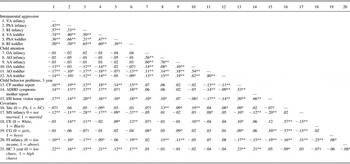
Table 2 presents the bivariate associations between demographic characteristics, interparental aggression, child attention, and early childhood behavior problems. Relations were largely as was expected, with negative associations between interparental aggression in infancy and child attention skills at the toddler visit. Notably, infant attention skills were unrelated to concurrent interparental aggression.
Intercorrelations of primary study variables

Note: VA, verbal aggression; PhA, physical aggression; RI, relationship instability; OA, overall attention; AO, attention to objects; AA, attention to activities; CP, conduct problems; ADHD, attention-deficit/hyperactivity disorder; I/H, inattention/hyperactivity; PA, Pennsylvania; NC, North Carolina; MS, marital status; CE, child ethnicity; CG, child gender; FI, family income; HC, household chaos.
†p < .10. *p < .05. **p < .01.
Cross-lagged models: Interparental aggression and child attention
One-factor measurement models for interparental aggression and child attention were first tested separately for each occasion. Supporting the fit of the measurement model, factor loadings for all of the manifest indicators of the latent constructs were significant in the expected direction (p < .01), and standardized loadings of the manifest indicators ranged from 0.57 to 0.93 (M = 0.74) For the cross-lagged longitudinal models, factor loadings for the same construct were constrained to be equal across the two time points, and the highest factor loading was fixed at one for model estimation (e.g., Kline, Reference Klien2005). The stability of the constructs and cross-lagged relations were then estimated.
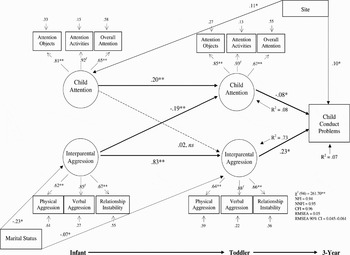
Model fit was acceptable for the resulting cross-lagged model of interparental aggression and child attention, χ2 (82) = 249.33, p < .01; NFI = 0.94; NNFI = 0.95; CFI = 0.96; RMSEA = 0.06; RMSEA CI90 = 0.049–0.065. With respect to the covariates, children at the PA site were rated higher in infant attention (β = 0.11, p < .01), and married couples reported less aggression in both infancy (β = −0.23, p < .01) and toddlerhood (β = −0.07, p < .05). Results suggested that early interparental aggression had a negative influence on later attention skill development. Specifically, interparental aggression at the infant visit predicted reduced toddler attention (β = −0.19, p < .01), whereas there was no significant association between infant attention and interparental aggression at the toddler visit (β = 0.02, ns). Interparental aggression showed marked stability from infancy to toddlerhood (β = 0.83, p < .01). Consistent with developmental evidence that attentional control is emergent in the latter half of the child's first year and undergoes rapid development thereafter (e.g., Ruff & Rothbart, Reference Ruff and Rothbart1996), child attention showed less stability across this period (β = 0.20, p < .01).
Interparental aggression, child attention, and early childhood behavior problems
As shown in Figure 1, model fit was satisfactory with the addition of 3-year conduct problems to the cross-lagged model. Results indicated that greater interparental aggression (β = 0.23, p < .01) and reduced child attention at the toddler visit (β = −0.08, p < .05) were associated with increased early childhood conduct problems.
Cross-lagged model of interparental aggression, child attention, and early childhood conduct problems (n = 636). All factor loadings, path coefficients, and residual values are completely standardized; ƒfixed estimate. *p < .05. **p < .01. Site: 0 = North Carolina, 1 = Pennsylvania; marital status: 0 = nonmarried, 1 = married; race: 0 = White, 1 = Black.

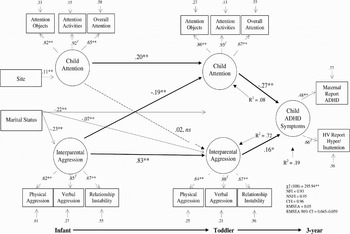
Further, a similar pattern of findings emerged with respect to the model for 3-year ADHD symptoms. As shown in Figure 2, both greater interparental aggression (β = 0.16, p < .05) and reduced child attention at the toddler visit (β = −0.27, p < .01) were associated with increased early childhood ADHD symptoms. It should be noted that the association between toddler attention and early childhood conduct and ADHD symptoms is conservative estimate, controlling for the stability of attention across infancy and toddlerhood, as well as the effects of interparental aggression in toddlerhood.
Cross-lagged model of interparental aggression, child attention, and early childhood adhd symptoms (n = 636). All factor loadings, path coefficients, and residual values are completely standardized; ƒfixed estimate. *p < .05. **p < .01. Site: 0 = North Carolina, 1 = Pennsylvania; marital status: 0 = nonmarried, 1 = married; race: 0 = White, 1 = Black.

Two-group analyses: Differences by child gender and income status
The sample was split based on child gender to test whether associations between interparental aggression, child attention, and early childhood conduct or ADHD symptoms differed for boys versus girls. Two-group models in which all beta weights were constrained to be equal across the groups fit the data adequately for conduct problems, χ2 (199) = 399.74, p < .01; NFI = 0.91; NNFI = 0.94; CFI = 0.95; RMSEA = 0.06; RMSEA CI90 = 0.048–0.064, as well as ADHD symptoms, χ2 (227) = 458.81, p < .01; NFI = 0.90; NNFI = 0.94; CFI = 0.95; RMSEA = 0.06; RMSEA CI90 = 0.049–0.064. When individual pathways in the models were allowed to be freely estimated, one significant difference between the two groups emerged. Specifically, the association between toddler attention and conduct problems differed based on child gender, Δχ2 (1) = 8.38, p < .01. For boys, there was a significant negative association between toddler attention skills and 3-year conduct problems (β = −0.20, p < .01). However, toddler attention skills and 3-year conduct problems were unrelated for girls (β = 0.04, ns). No significant differences emerged for the autoregressive or cross-lagged paths for interparental aggression or child attention, or the association between interparental aggression in toddlerhood and 3-year conduct problems. Further, no significant differences emerged between the boys and girls with respect to ADHD symptoms.
In order to test whether the associations between interparental aggression, child attention, and early childhood conduct or ADHD symptoms varied according to income status, the full sample was split based on whether the family was low-income (<200% poverty line) or middle to upper income. Two-group models in which all beta weights were constrained to be equal across the groups fit the data adequately for conduct problems, χ2 (199) = 397.37, p < .01; NFI = 0.91; NNFI = 0.94; CFI = 0.95; RMSEA = 0.05; RMSEA CI90 = 0.049–0.065, as well as ADHD symptoms, χ2 (227) = 434.69, p < .01; NFI = 0.90; NNFI = 0.94; CFI = 0.95; RMSEA = 0.06; RMSEA CI90 = 0.047–0.063. When individual pathways in the models were allowed to be freely estimated, one significant difference across the two models was revealed. Specifically, the association between interparental aggression in toddlerhood and 3-year ADHD symptoms differed based on family income status, Δχ2 (1) = 4.19, p < .05. For middle- to upper-income families, there was a significant association between greater interparental aggression in toddlerhood and increased 3-year ADHD symptoms (β = 0.34, p < .05). However, for low-income families, interparental aggression in toddlerhood and 3-year ADHD symptoms were unrelated (β = 0.07, ns). No significant differences emerged for the autoregressive or cross-lagged paths for interparental aggression or child attention, or the association between toddler attention and 3-year ADHD symptoms. No differences emerged between the two groups with respect to 3-year conduct problems.
Follow-up analyses were conducted with the low-income sample to examine whether the differential effects of interparental aggression in toddlerhood on 3-year ADHD symptoms were dependent on levels of household chaos. The low-income sample was split based on whether the household was “low chaos” or “high chaos” using a median split, and two-group models in which all beta weights were constrained to be equal across the groups fit the data adequately, χ2 (227) = 340.93, p < .01; NFI = 0.85; NNFI = 0.93; CFI = 0.95; RMSEA = 0.06; RMSEA CI90 = 0.044–0.069. When the pathway between interparental aggression in toddlerhood and 3-year ADHD symptoms was allowed to be freely estimated, a significant difference across the two models was revealed, Δχ2 (1) = 9.21, p < .01. Specifically, for low-income families in low-chaos households, there was a significant association between greater interparental aggression in toddlerhood and increased 3-year ADHD symptoms (β = 0.54, p < .01). However, for low-income families in high-chaos households, interparental aggression in toddlerhood and 3-year ADHD symptoms were unrelated (β = −0.10, ns).
Discussion
The primary goal of the current study was to explore the direction of effects between interparental aggression and the development of child attention, and to examine if interparental aggression and changes in attention skills contribute to early childhood behavior problems. Consistent with Cummings and Davies’ (1996) emotional security theory, the findings from this investigation suggest that interparental aggression undermines early attention development, putting children's behavioral adjustment at risk. Notably, these findings emerged after accounting for the stability of attention skills across infancy, and taking into account the potential role of early attention skills on the interparental relationship. Overall, these processes appeared to operate in similar ways regardless of low-income status or child gender, although a few differences did emerge.
As hypothesized, the direction of influence across infancy through toddlerhood appears to be from the interparental relationship to the child, with a negative association between interparental aggression and development of attention skills. In contrast with older children, signs of attentional control are only emerging at this time (Rothbart et al., Reference Rothbart, Derryberry, Posner, Bates and Wachs1994), reducing the likelihood that attention deficits would have a significant impact on the interparental relationship. Interparental aggression and child attention were unrelated concurrently at the infant assessment, suggesting that linkages between the interparental relationship and attention have yet to unfold. Conversely, security concerns within the family appear to be very salient for young children, and attention skills may be particularly susceptible to interparental aggression exposure at this age. As noted previously, persistent activation of the stress–response system may promote atrophy in the hippocampus and prefrontal cortex (Bremner & Vermetten, Reference Brenmer and Vermetten2001; McEwen, Reference McEwen2006), suggesting that the chronic stress of interparental aggression could impair normative development of volitional, endogenous direction of attention across infancy. Further, the attention resources infants have may be primarily devoted to maintaining vigilance against threats to their emotional security in high conflict homes. Although focusing on potential interpersonal threats is thought to serve an adaptive function in unstable and violent environments, such vigilance may tax important resources necessary for young children to focus and sustain attention in other areas (Davies & Cummings, Reference Davies and Cummings1994). Perhaps more than any other developmental period, focusing and shifting attention require large amounts of psychobiological resources in infancy (Ruff & Rothbart, Reference Ruff and Rothbart1996), resources that may be depleted by interparental aggression.
Although attention impairments are notable in their own right, the current findings also suggest that these deficits may heighten the risk for developing behavior problems in early childhood, particularly in the face of ongoing interparental aggression. Specifically, reduced attention skills and greater interparental aggression in toddlerhood increased the risk for developing conduct problems and ADHD symptoms at 3 years of age. Similar to Davies and colleagues’ (2006) premise that interparental aggression may set the stage for mental health problems by interfering with stage-salient tasks, failure to adequately develop attentional control may result in children being more inattentive, impulsive, noncompliant, and less able to regulate their behavior. In turn, early emerging behavior problems may place children at risk for adjustment issues with peers and academic difficulties in the transition to school (Keane & Calkins, Reference Keane and Calkins2004, McClelland, Morrison & Holmes, Reference McClelland, Morrison and Holmes2000), suggesting that these findings may have important implications for children's future adaptation in other social settings. A direct relation between toddler attention and 3-year conduct problems and ADHD symptoms was also found, although these effects were small. It should be noted, however, that these findings represent relations separated over a 21-month time period, during which time substantial development in attention continues to occur. Further, these effects exist after accounting for the associations between interparental aggression in toddlerhood and early childhood behavior problems, and controlling for the stability of attention across infancy. As these findings reflect what is likely to be an ongoing process with important implications for the health and well-being of children, the relations between early interparental aggression, child attention, and behavior problems may have substantial and practically significant influence over the course of development.
Of interest, only one gender difference emerged in the longitudinal associations between interparental aggression, child attention, and early childhood behavior problems: there was a significant negative association between toddler attention skills and 3-year conduct problems for boys, but not for girls. As boys with impaired attention skills may show higher rates of conduct disorders than girls (Gaub & Carlson, Reference Gaub and Carlson1997), the potential influence of interparental aggression on early attention skills may indirectly put boys at particular risk for conduct problems later in development. However, the effects of interparental aggression in toddlerhood on early childhood conduct problems did not differ by child gender, nor did any pathways differ in predicting ADHD symptoms (see Figures 1 and 2 for pathways that did not differ). Despite some research suggesting stronger associations between interparental aggression and behavior problems for boys, the results of the present study are largely consistent with the results of meta-analyses revealing few differences in marital conflict and mental health risk across gender (e.g., Buehler et al., Reference Buehler, Anthony, Krishnakumar, Stone, Gerard and Pemberton1997), as well as previous research suggesting no gender differences in the pathways between emotional insecurity, attention difficulties, and child adjustment (Davies et al., Reference Davies, Woitach, Winter and Cummings2008).
Further, the linkages between interparental aggression, the development of attention skills, and early childhood behavior problems were largely consistent across low-income and middle- to upper-income families. Only one difference emerged across the two groups: the relationship between interparental aggression in toddlerhood and ADHD symptoms in early childhood was found for middle- to upper-income children, but not for children in low-income households. It appears that this difference, however, may be due the amount of exposure to chaotic living conditions in low-income households; interparental aggression in toddlerhood and ADHD symptoms were significantly associated for low-income families, but only when these families reported low levels of household chaos. These findings are consistent with the notion that the unique effects of interparental aggression may be overshadowed by other stressors often present in low-income environments (Ingoldsby et al., Reference Ingoldsby, Shaw, Owens and Winslow1999), specifically, the pervasive stressors associated with living in crowded, unpredictable, and disorganized home environments. However, it is important to note that the indirect effects of early interparental aggression on the development of ADHD symptoms through impaired attention skills remained constant regardless of income status (see Figure 2), as did the longitudinal associations between interparental aggression, child attention, and early childhood conduct problems (see Figure 1). Taken as a whole, these findings suggest that interparental aggression is linked with impaired attention skills regardless of income status, with important implications for children's later adjustment.
A number of limitations should be noted. First, although the use of cross-lagged longitudinal models provided an opportunity to test the direction of associations between interparental aggression and child attention skills, there may be other unmeasured factors that account for these associations. For example, interparental aggression may strain parents’ abilities to sensitively scaffold activities that aid in the development of attention skills, and may increase the likelihood of engaging in more negative, intrusive interactions. Alternatively, genetic linkages may partially account for some of the associations, as parents with limited executive attention skills may be more likely to engage in intense interparental conflict (Eakin et al., Reference Eaken, Minde, Hechtman, Ochs, Krane and Bouffard2004). Future research is needed to clarify the specific processes responsible for impaired attention skills in the face of interparental aggression. Second, the relatively short window between the infancy and toddler assessment may have partially contributed to the strong stability of interparental aggression across this time frame, limiting our capacity to detect potential influences of infant attention on the interparental relationship. Although investigations incorporating longer windows between interparental aggression and child attention assessments are warranted, stability in interparental aggression over longer periods has previously been noted for couples who remain together (e.g., Capaldi, Shortt, & Crosby, Reference Capaldi, Shortt and Crosby2003; Kolko, Kazdin, & Day, 1996), and this may be particularly true for parents adjusting to the birth of a new child. Third, although the measures used to assess behavior problems indicate adjustment issues relative to the sample, they do not indicate clinically significant levels of ADHD symptoms or conduct problems. These findings instead suggest that by age 3 the linkages between interparental aggression and impaired attention skills are associated with heightened risk for developing behavior problems—understanding how this risk translates into mental health issues warrants further investigation. Fourth, these analyses relied on mothers report for assessments of interparental aggression, and only maternal report was available as an indicator of child conduct problems; the incorporation of multiple informants on all assessments in future research would be beneficial. Fifth and finally, whether a child directly witnesses interparental violence or aggression is thought to be an important predictor of behavior problems (Kitzmann, Gaylord, Holt, & Kenny, Reference Kitzmann, Gaylord, Holt and Kenny2003), and the current investigation relied on measures of interparental aggression frequency, rather than assessments of children's exposure. However, evidence suggests that the majority of children from aggressive and domestically violent homes are witnesses to this conflict (e.g., Sternberg, Lamb, & Dawud-Noursi, Reference Sternberg, Lamb, Dawud-Noursi, Holden, Geffner and Jouriles1998), and younger children are more likely to be exposed than others (Fantuzzo, Boruch, Beriama, Atkins, & Marcus, Reference Fantuzzo, Boruch, Beriama, Atkins and Marcus1997).
Despite these limitations, the current study advances research on interparental aggression and child outcomes in a number of important ways. To our knowledge, this is the first study to examine the longitudinal relations between interparental aggression, attention skill development and early childhood behavior problems, accounting for the potential role of early attention skills on the interparental relationship. By using objective observer ratings of attention skills, the possible role of common method or informant variance in accounting for associations was also reduced. In addition, the current investigation included a large, diverse sample of young children and couples in romantic relationships, including a large proportion of low-income families, expanding our understanding of these processes in more at-risk environments.
These findings also offer insight into a potential intervention target for young children exposed to violent, verbally aggressive, unstable interparental relationships. Although supporting attention in social or academic settings has been suggested for school-aged children exposed to conflict (Davies et al., Reference Davies, Woitach, Winter and Cummings2008), our findings suggest that building these attention skills in infancy and early childhood may prevent future pathogenic processes later in development. Research in other contexts suggests attention training is effective for both preschool and school-aged children, with improvements shown in neural activation of the executive attention network and in children's performance on attention tasks (Kerns, Esso, & Thompson, Reference Kerns, Esso and Thompson1999; Reuda, Rothbart, McCandliss, Saccomanno, & Posner, Reference Rueda, Rothbart, McCandliss, Saccomanno and Posner2005). Whether such training can be successfully extended to younger ages is an important area for investigation. As evidence from the current study implies that building attention skills may serve to buffer some of the negative effects of interparental aggression, this is an important area for future research.
The family context should be a primary source of safety and security for young children, but for many, this is not the case. Unstable, verbally aggressive, and violent relationships undermine foundational skills necessary for adaptation. Findings from the current study suggest that attention skills are an important domain of development influenced by interparental aggression. Further consideration of attention as a mechanism linking interparental aggression and children's adjustment could provide a vital perspective on ways to offset the early deficits incurred by distressed interparental relationships.