Introduction
Increasing rates of early, involuntary and permanent exits from the labour force prior to State Pension Age (Organisation for Economic Co-operation and Development, 2011; Department for Work and Pensions, 2014), which have been intensified by the impact of the COVID-19 pandemic on the labour force (Office for National Statistics (ONS), 2022a), make the impact of labour force transitions prior to State Pension Age on quality of life a particularly current concern. Adults below the State Pension Age who are classified as unemployed or unable to work due to illness or disability experience worse health and wellbeing outcomes and report a poorer quality of life (McKee-Ryan et al., Reference McKee-Ryan, Song, Wanberg and Kinicki2005; Roelfs et al., Reference Roelfs, Shor, Davidson and Schwartz2011; Wanberg, Reference Wanberg2012; Norström et al., Reference Norström, Virtanen, Hammarström, Gustafsson and Janlert2014). Illness or disability itself may be a reason for non-participation in the labour force (Wanberg, Reference Wanberg2012), but evidence from numerous studies points towards a likely influence of labour force participation on health, wellbeing and quality of life (van der Noordt et al., Reference van der Noordt, IJzelenberg, Droomers and Proper2014). There is also evidence from international labour force surveys demonstrating that adults below the State Pension Age with a long-term limiting illness or a disability can successfully participate in the labour force (Powell, Reference Powell2021), and that continued employment or a return to employment may be beneficial to health and wellbeing (Etuknwa et al., Reference Etuknwa, Daniels and Eib2019; Kamdar et al., Reference Kamdar, Suri, Suchyta, Digrande, Sherwood, Colantuoni, Dinglas, Needham and Hopkins2020). However, relatively little is known about the impact on quality of life of various forms of early labour force exits and transitions, compared to those who remain employed.
The impact of early labour force exit on quality of life is particularly important in the context of the increases in life expectancy during recent decades and current increases in the State Pension Age. Moreover, figures from the Over 50s Lifestyle Study in the United Kingdom (UK) show that for most adults aged 50–59 (77%), departure from their previous employment was sooner than expected (ONS, 2022a), and the proportion of those aged 50–59 who have not returned to employment has increased since pre-COVID-19 pandemic levels (ONS, 2022a). Analyses by Shelton et al. (Reference Shelton, Head, Carr, Zaninotto, Hagger-Johnson and Murray2019) have revealed that approximately 10 per cent of workers leave the labour force between the ages of 50 and 55. This represents a significant proportion of the population and a figure that may currently be higher due to increased rates of permanent labour force exit during the COVID-19 pandemic (ONS, 2022a). The age period 50–55 years represents the earliest point at which both a significant proportion of the population leaves the labour force and the prevalence of limiting longstanding illness rises, although relatively little is known about the impact on quality of life on labour force transitions at this lifestage.
There are several ‘push and pull’ factors that influence different types of voluntary and involuntary labour force transitions at this age. For example, personal and family financial circumstances including levels of savings and pension provision may influence decisions to exit the labour force voluntarily by taking early retirement (Topa et al., Reference Topa, Depolo and Alcover2018). Cultural factors such as normative gender roles may provide barriers or facilitators to remaining in employment at this lifestage due to expectations about family and care responsibilities (Patrick et al., Reference Patrick, Stephens and Weinstein2016). In addition, workplace and economic contexts may influence involuntary transitions that are imposed upon workers due to the financial situation of the employer, or external factors such as a global financial crisis or a pandemic (ONS, 2022a). By their nature, these factors suggest either a negative (push) or positive (pull) influence on an individual experiencing the labour force transition. There is, therefore, likely to be a corresponding negative or positive impact on the quality of life experienced by this individual.
ONS data in the UK suggest that women and men aged 50–55 leave the labour force at similar rates (Shelton et al., Reference Shelton, Head, Carr, Zaninotto, Hagger-Johnson and Murray2019), although there are likely to be substantial gender differences in the ‘push and pull’ factors impacting labour force transitions at this lifestage. Moreover, there may be gender differences in the impacts of these transitions on quality of life. The aim of the present paper is therefore to utilise detailed data from the National Child Development Study (NCDS) to analyse impact on quality of life of labour force transitions at this lifestage, lifecourse labour force participation and other pertinent lifecourse factors such as early childhood disadvantage.
Literature review
There is a limited amount of evidence to suggest that voluntary exit from the labour force prior to State Pension Age via early or partial retirement can result in positive changes in quality of life due to increased autonomy and pleasure (Topa et al., Reference Topa, Depolo and Alcover2018). However, most adults who exit the labour force before State Pension Age do not do so voluntarily (Department for Work and Pensions, 2014; ONS, 2022a). Involuntary early labour force exit due to unemployment or onset of an illness may negatively impact quality of life by limiting autonomy, pleasure and self-realisation (van Rijn et al., Reference van Rijn, Robroek, Brouwer and Burdorf2014).
There are substantial differences between women and men in the reasons for early labour force exit. Recent data from the UK show that men are more likely to leave employment voluntarily because they no longer need the money, while women are substantially more likely to exit the labour force early to care for family members or look after their home (ONS, 2022a). It is also likely that the impacts of leaving or joining the labour force on quality of life before State Pension Age are not independent of labour force experiences throughout the lifecourse (Nicholls et al., Reference Nicholls, Glaser, Price and Stuchbury2009). In the present paper, we focus on the impact of these lifecourse factors and labour force transitions on changes in quality of life for women and men before State Pension Age, specifically between 50 and 55 years old, using data from the NCDS (Power and Elliott, Reference Power and Elliott2006).
A measure of quality of life in later life has been developed (Hyde et al., Reference Hyde, Wiggins, Higgs and Blane2003) and tested (Wiggins et al., Reference Wiggins, Netuveli, Hyde, Higgs and Blane2008). The original version of this CASP measure, the acronym of Control, Autonomy, Self-realisation and Pleasure, consisted of 19 Likert scale items, hence CASP-19 (Higgs et al., Reference Higgs, Hyde, Wiggins and Blane2003), with subsequently a variety of short-form versions custom-made for use in large-scale social surveys CASP-12, CASP-6v.1 and CASP-6v.2 (Hyde et al., Reference Hyde, Higgs, Wiggins and Blane2015b). The CASP measure uses a needs-satisfaction approach, with a focus on needs towards the top of Maslow's hierarchy of needs (Maslow and Lewis, Reference Maslow and Lewis1987). The assumptions of the needs-satisfaction approach are that quality of life is determined by the extent to which these higher-level needs are satisfied. A strength of the CASP measure is its grounding in the theory of subjective wellbeing. The measure follows the three criteria of subjective wellbeing described by Diener (Reference Diener1994): (a) subjectivity – based on the experience of the individual; (b) includes positive factors that go beyond the absence of negative factors; and (c) a global assessment – including multiple domains.
The psychometric properties of the CASP measure have been tested extensively in different contexts. Various versions of the CASP measure have been used in studies across more than 20 countries and it has been translated into several other languages (Hyde et al., Reference Hyde, Higgs, Wiggins and Blane2015b). The 19-item version of the CASP measure has been shown to have the power to discriminate between population subgroups and to detect longitudinal change in quality of life (Howel, Reference Howel2012). Analyses of the six-item CASP measure using a sample of 55-year-old NCDS cohort members found that its measurement properties were robust even when using different modes of data collection such as telephone and Web-based surveys (Wiggins et al., Reference Wiggins, Brown and Ploubidis2017).
Studies using CASP as an outcome measure have revealed that quality of life at age 50 had lifecourse precursors such as deprivation and family discord in childhood (Blane et al., Reference Blane, Wahrendorf, Webb and Netuveli2012) and that such relationships could be mediated by labour market factors. Advantaged circumstances during childhood were associated with both lower levels of labour market disadvantage in adulthood and higher quality of life at older ages; and part of the association between childhood circumstances and later quality of life was explained by labour market disadvantage (Wahrendorf and Blane, Reference Wahrendorf and Blane2015).
There are multiple reasons why an adult may exit the labour force either voluntarily or involuntarily before reaching State Pension Age. However, the focus of many studies has been on how poor health status can lead to labour force exit (Riekhoff and Vaalavuo, Reference Riekhoff and Vaalavuo2021). Much less is known about how leaving the labour force due to early or partial retirement, involuntary unemployment or long-term illness can impact the quality of life of adults before they reach State Pension Age. Furthermore, few studies have examined the impact of changing jobs or joining the labour force later in life on subsequent quality of life.
Full or partial retirement is common in mid- to late career and is often motivated by the potential health and wellbeing benefits of disengaging from working life (Schalk and Desmette, Reference Schalk, Desmette, Bal, Kooij and Rousseau2015), although a review of longitudinal studies found inconclusive evidence of the positive or negative impacts of early retirement on health or quality of life (Topa et al., Reference Topa, Depolo and Alcover2018). There is a lack of consensus in the theoretical literature on whether early full or partial retirement may be beneficial to health and quality of life through reductions in stress and health risk behaviours or whether the retirement process may be a risk factor for illness and frailty (Brockmann et al., Reference Brockmann, Müller and Helmert2009).
In addition to seeking a reduction in working hours, many adults aged 50+ experience voluntary or involuntary job transitions (McNair et al., Reference McNair, Flynn, Owen, Humphreys and Woodfield2004). A job transition or a return to employment in the period before State Pension Age is commonly motivated by a desire to change social environment, lifestyle, financial circumstances, or improve physical and mental health (ONS, 2022b). However, the impact on quality of life of job transition or re-entry into the labour force in early old age has been studied less frequently than the impact of labour force exit. The focus of many previous studies has been return to work as an outcome following a period of unemployment or absence due to ill health (Kamdar et al., Reference Kamdar, Suri, Suchyta, Digrande, Sherwood, Colantuoni, Dinglas, Needham and Hopkins2020). For example, a longitudinal study by Carlier et al. (Reference Carlier, Schuring, Lötters, Bakker, Borgers and Burdorf2013) found that return to work following unemployment was associated with improvements in quality of life and self-rated health in a sample of adults aged 18+ years. There remains a scarcity of studies examining the impact of labour force entry on quality of life in the period preceding State Pension Age.
Much is known about the negative impact of being unable to work due to job loss or long-term illness or disability, but relatively little is known about the impact of leaving the labour force for these reasons during the later stages of an adult's career. A longitudinal study by Halleröd et al. (Reference Halleröd, Örestig and Stattin2012) examined the impact of early labour force exit due to long-term illness or disability force on a multi-dimensional health and wellbeing measure in adults aged 55–75 years. Their main finding was that moving into health- and unemployment-related social benefit programmes prior to retirement did not have a negative impact on health and wellbeing after controlling for health and wellbeing prior to labour force exit. Another longitudinal study by Hyde et al. (Reference Hyde, Hanson, Chungkham, Leineweber and Westerlund2015a) reported increased odds of depression for adults aged 50+ whose labour force exit was involuntary after controlling for factors including baseline depression.
Labour force trajectories and transitions across the lifecourse have been shown to vary substantially between men and women (Madero-Cabib et al., Reference Madero-Cabib, Le Feuvre and Königin press). Indeed, lifecourse employment and family experiences are strongly interconnected (Tosi and Grundy, Reference Tosi and Grundy2021; Madero-Cabib et al., Reference Madero-Cabib, Azar and Guerra2022). At the stage of life that precedes State Pension Age, many adults take on additional care-giving roles for older relatives, partners or grandchildren (Bauer and Sousa-Poza, Reference Bauer and Sousa-Poza2015). Informal care-giving for these adults is associated with reduced working hours and a greater chance of leaving the labour force permanently (Carmichael et al., Reference Carmichael, Hulme, Sheppard and Connell2008). There is a substantial evidence base pointing to the negative mental health and wellbeing outcomes experienced by informal care-givers (Bom et al., Reference Bom, Bakx, Schut and van Doorslaer2019), although there is little evidence on the influence of this type of labour force exit on quality of life prior to the State Pension Age.
To understand the impact of labour force participation, entry and exit on quality of life, it is important to consider how careers unfold over the whole lifecourse, including the timing of entry to and exit from the labour force. Research on the health and wellbeing impacts of lifecourse employment trajectories is an emerging field of research (Devillanova et al., Reference Devillanova, Raitano and Struffolino2019; Ek et al., Reference Ek, Ala-Mursula, Velázquez, Tolvanen and Salmela-Aro2021; Madero-Cabib et al., Reference Madero-Cabib, Azar and Guerra2022; Tambellini, Reference Tambelliniin press). Examining employment histories between the ages of 15 and 45, Devillanova et al. (Reference Devillanova, Raitano and Struffolino2019) found that employment histories featuring periods of intermittent work were associated with poorer self-reported health at age 45. Ek et al. (Reference Ek, Ala-Mursula, Velázquez, Tolvanen and Salmela-Aro2021) studied the impact of employment trajectories on work-related wellbeing at age 46, finding higher levels of wellbeing among those who had the longest spells in employment and self-employment, compared with those who had shorter periods in long-term employment.
In addition to the impact of labour force participation on health and quality of life, evidence from longitudinal studies points to the enduring influence of early life circumstances on healthy ageing (Brandt et al., Reference Brandt, Deindl and Hank2012). Lifecourse theories in epidemiology are used to explain how early life exposures can influence health and wellbeing across an individual's lifecourse (Blane et al., Reference Blane, Netuveli and Stone2007). Two prominent lifecourse theories are used to explain how exposures from early childhood onwards can impact health and quality of life: (a) the ‘accumulation model’ suggests that as the duration, frequency and severity of adverse exposures increase, damage accumulates in systems relevant to health and wellbeing; and (b) the ‘critical period’ model identifies specific ‘time windows’ such as early childhood in which exposures present the greatest risk of damaging systems relevant to health and wellbeing (Kuh et al., Reference Kuh, Ben-Shlomo, Lynch, Hallqvist and Power2003).
Much research has been focused on the association between early life exposure to low socio-economic status and later-life and health outcomes including obesity (Monasta et al., Reference Monasta, Batty, Cattaneo, Lutje, Ronfani, Van Lenthe and Brug2010; Cameron et al., Reference Cameron, Spence, Laws, Hesketh, Lioret and Campbell2015), cardiovascular disease (Galobardes et al., Reference Galobardes, Smith and Lynch2006) and mortality (Galobardes, Reference Galobardes2004). Labour force disadvantage over the lifecourse and childhood circumstances were analysed in relation to quality of life at older ages in a study by Wahrendorf and Blane (Reference Wahrendorf and Blane2015) using data from the Study of Health, Ageing and Retirement in Europe (SHARE). The main findings of this study were that disadvantaged circumstances during childhood and higher levels of lifecourse labour force disadvantage were associated with lower quality of life (measured by a 12-item version of CASP) in a sample with a mean age of 67 years for women and 69 years for men.
The present study builds on these findings using the NCDS labour force activity histories dataset and detailed measures of childhood circumstances to examine the association between early life and working-age exposures and change in quality of life between 50 and 55 years. The most significant differences between the present study and previous longitudinal studies is the focus on change in quality of life at this lifestage prior to pension age, whereas previous studies have focused on quality of life measured at one point in time (Blane et al., Reference Blane, Wahrendorf, Webb and Netuveli2012) or have measured quality of life at a later stage of old age (Eva et al., Reference Eva, Elisa, Piera, Lyrakos and Luca2015; Wildman et al., Reference Wildman, Moffatt and Pearce2018).
As well as their substantive scientific interest, the present analyses have policy relevance. The UK Parliament has legislated increases in the age of entitlement to the State Pension, to date by six years for women (from 60 to 66 years) and one year for men (from 65 to 66 years), with further increases planned for both women and men to 67 years between 2026 and 2028 and 68 years between 2044 and 2046. Many other countries have done something similar. Whether this prolonged exposure to an extended working life will impact quality of life remains to be seen, as does whether objective physical health is equally unaffected and whether those already in poor health are at increased risk of deterioration. The present NCDS analyses will examine pre-existing factors in the run-up to the NCDS cohort's extended working life.
Research questions
Building on this literature and with the intention to fill the identified gaps in knowledge, the presently reported analyses ask which labour force trajectories during ages 16–49 years and which types of labour force transitions between 50 and 55 years are associated with change in quality of life between 50 and 55 years; and as a corollary, what other lifecourse factors are influential.
Methods
Data
The NCDS is a birth cohort study of children born in Scotland, Wales and England in one week of 1958 (Power and Elliott, Reference Power and Elliott2006). This initial survey was followed up by survey sweeps at ages 7, 11, 16, 23, 33, 42, 44, 46, 50 and 55 years (Din, Reference Din2014). The survey sweeps include information on educational and social development in early life, health outcomes and labour force participation throughout the lifecourse, and measures of quality of life at ages 50 and 55. Data from these survey sweeps are supplemented by a retrospective activity history dataset containing detailed information on employment histories, labour force participation and non-work activities covering each month of the lives of participants from ages 16 to 55 (University of London, Institute of Education, Centre for Longitudinal Studies, 2020).
The presently reported analyses utilise NCDS lifecourse data on early life circumstances (ages 0–16), employment histories (ages 16–55) and quality of life measured at ages 50 and 55. Of the 17,415 NCDS participants at birth in 1958, 9,789 completed the survey at age 50 and 9,137 at age 55. The analytic sample for the present study consisted of the 7,422 participants who had full data on quality of life at ages 50 and 55.
Measures
Quality of life
The outcome for this study was measured using a six-item quality-of-life measure derived from CASP-19 at ages 50 and 55 (Wiggins et al., Reference Wiggins, Brown and Ploubidis2017). CASP is a widely used survey measure of quality of life designed to capture more positive experiences in the early stages of later life than previous quality-of-life measures that have focused on poor health (Hyde et al., Reference Hyde, Wiggins, Higgs and Blane2003). CASP is the acronym of its four domains: Control, Autonomy, Self-realisation and Pleasure. The reduced six-item version contains three items from the Control domain (‘My age prevents me from doing the things I would like to do’; ‘I feel what happens to me is out of my control’; ‘I feel left out of things’) and three from the Self-realisation domain (‘I feel full of energy these days’; ‘I feel that life is full of opportunities’; ‘I feel that the future looks good for me’). All six items are ordinal with four options (0 = never; 1 = not often; 2 = sometimes; 3 = often) with negatively worded items reverse coded so that higher values on all items represent better quality of life – we summed these items to create an overall quality of life scale with a maximum possible score of 18 and a minimum of zero. We then created a scale to represent change in the quality of life by subtracting the scores at age 50 from the score at age 55.
Early life influences
We used data from the NCDS survey sweeps at birth and ages 7, 11 and 16 years to generate the following early life variables: (a) socio-economic circumstances at birth using a binary measure of the social class of the father's occupation, as allocated (manual or non-manual) by the Registrar General's classification; (b) a binary measure of childhood disadvantage was defined as exposure to one or more of the following disadvantages: (i) at NCDS participant's birth whether the father was employed in an occupation allocated to the Registrar General's social class IV or V; (ii) at age 7 the NCDS participants' parents report having financial difficulties; (iii) at age 11 the NCDS participants received free school meals; (iv) at age 16 the NCDS participants' parents self-reported financial difficulties; (c) at NCDS participants' age 7, parental discord was reported by a health visitor (yes = 1; no = 0); and (d) at NCDS participants' age 7, a parent had died or the parents had separated (yes = 1; no = 0).
Labour force participation
The NCDS retrospective activity history dataset was used to generate variables representing employment status at every year from ages 16 to 49. A binary variable for each year was created to represent whether the participant was in employment or not in employment for the majority of each year. These variables were created by using the reported activity during each year with the longest duration (e.g. if a participant reported being in full-time employment for seven months and in education for five months of a year, they would be classified as ‘in employment’). If participants reported two or more activities of the same duration, the later activity was recorded.
Change in labour force participation
A nominal variable was created to represent change or continuation in labour force participation between the ages of 50 and 55: (a) continuously employed; (b) moved from full-time to part-time employment; (c) changed employer; (d) exited labour force before age 50 or never joined; (e) became unemployed (seeking work) between 50 and 55; (f) became temporarily or permanently sick or disabled between 50 and 55; (g) began looking after home or family full-time or on maternity leave between 50 and 55; (h) wholly retired, joined education or training, or began travelling or an extended holiday between 50 and 55; and (i) joined the labour force between 50 and 55.
Covariates
Covariates measured at age 55: female or male; marital status; presence of a limiting longstanding illness (yes/no); and socio-economic circumstances at age 55 measured by the three category National Statistics Socio-Economic Classification (NS-SEC) of occupations.
Statistical analyses
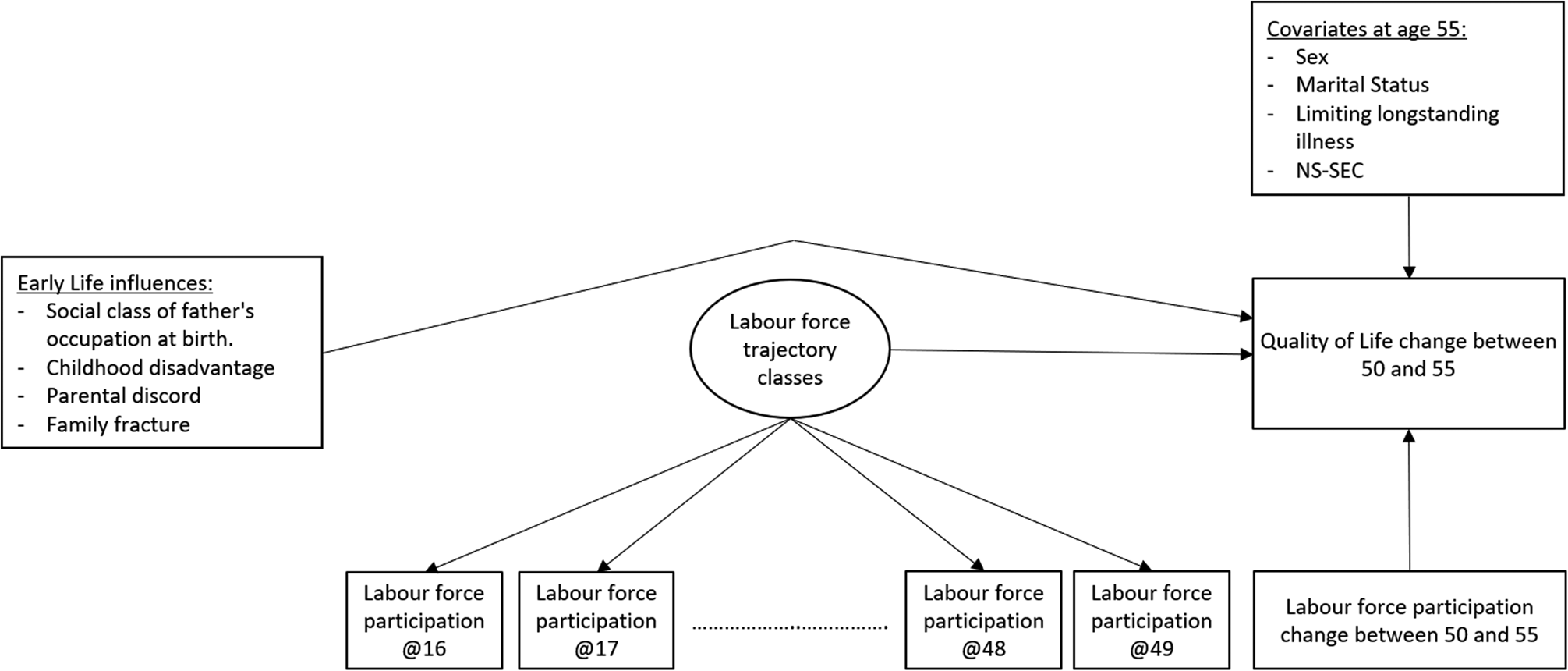
Figure 1 shows the approach used to simultaneously examine relationships between three sets of exposures: (a) early life influences (birth to age 16), (b) labour force trajectory classes (age 16–49) and (c) change in labour force participation (age 50–55), and change in the quality of life outcome between 50 and 55. All analyses were conducted separately for women and men, reflecting the anticipated substantial gender differences in lifecourse labour force participation (Engels et al., Reference Engels, Weyers, Moebus, Jöckel, Erbel, Pesch, Behrens, Dragano and Wahrendorf2019; Madero-Cabib et al., Reference Madero-Cabib, Le Feuvre and Königin press). First, a Latent Class Growth Analysis (LCGA) (Berlin et al., Reference Berlin, Parra and Williams2014) was used to classify participants into sub-populations (latent classes) based on similarities in their patterns of employment history between the ages of 16 and 49 using a binary indicator variable representing employment status at each year (the indicator variables for ages 18–47 are omitted from Figure 1 for simplicity). The LGCA part of the model was estimated first to identify the number of latent trajectory classes for men and women. The most likely class memberships were saved for use in the final analytic models where linear regression models were used to estimate associations between all exposure variables and the change in the quality of life outcome scores (QoL scores) between 50 and 55 years. Missing data were accounted for using a Full Information Maximum Likelihood (FIML) approach in Mplus (Muthén and Muthén, Reference Muthén and Muthén2017). All data preparation and analyses were conducted in Stata version 15.1 and Mplus version 8.1.
Overall approach to analysis.
Note: NS-SEC: National Statistics Socio-Economic Classification.

Results
A total of 3,894 women and 3,528 men born in 1958 were included in our analytic sample, which was more likely than the general population to be employed at ages 50 and 55 years and less likely to be either unemployed or economically inactive (see Table S1 in the online supplementary material).
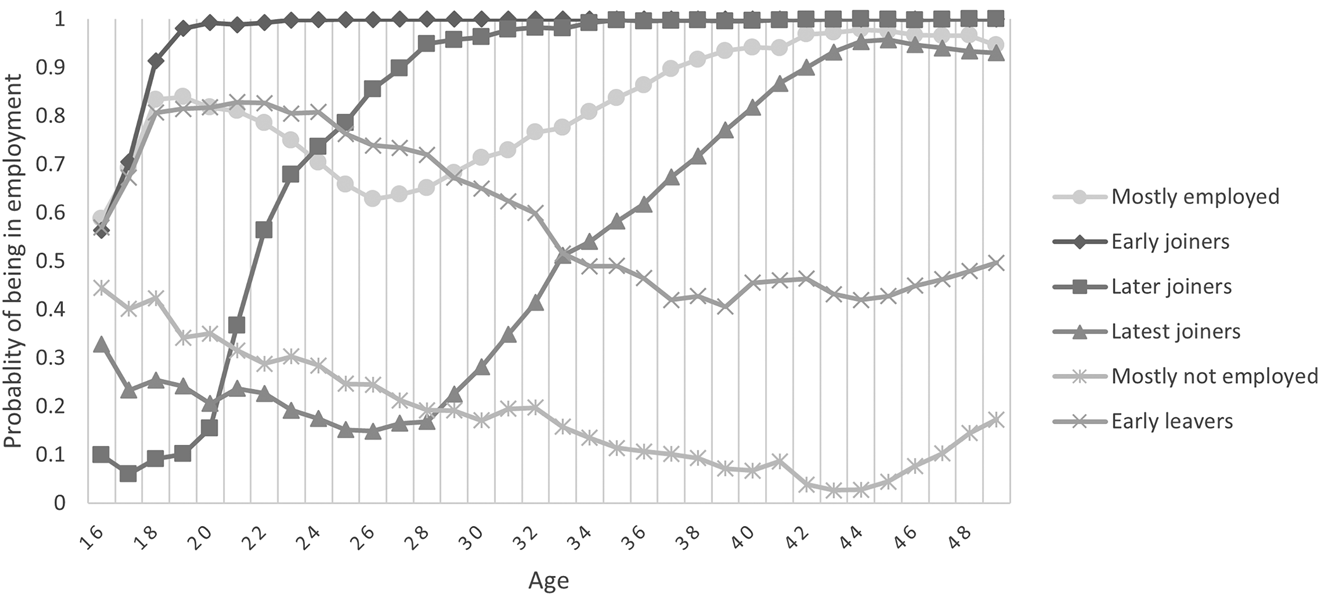
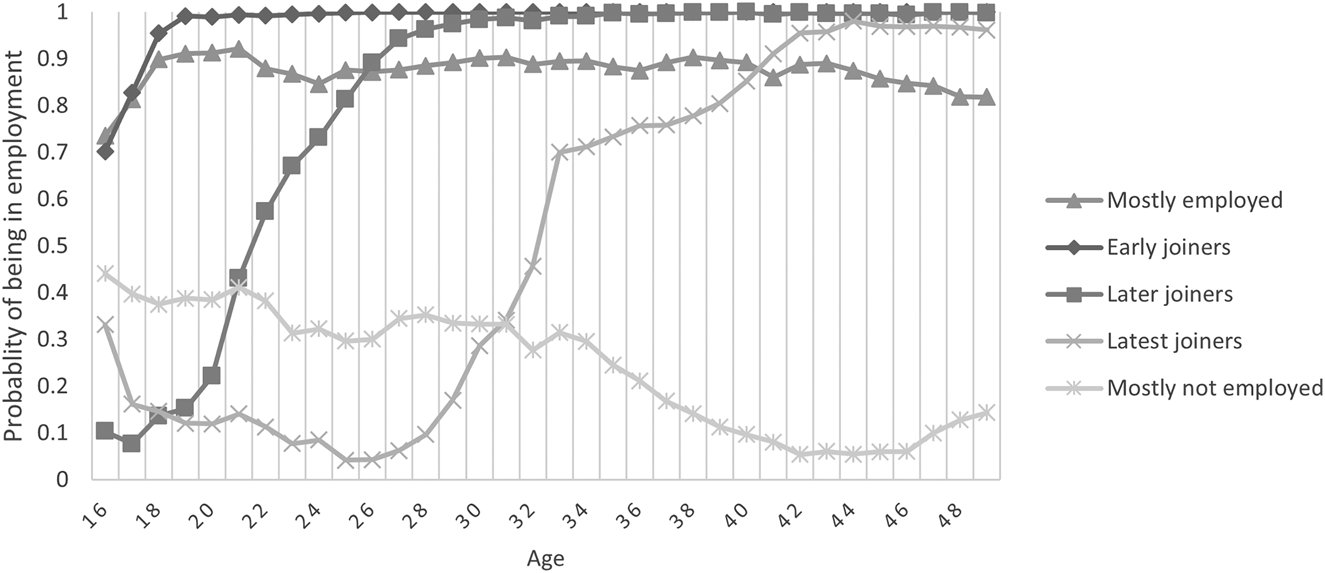
We tested, separately for women and men, LCGA models using one up to eight latent classes of employment trajectory between the ages of 16 and 49. A range of model fit criteria were considered alongside the interpretability of the number of classes. Both the Vuong-Lo-Mendell-Rubin likelihood ratio test (VLMR-LRT) and the Lo-Mendell-Rubin adjusted likelihood ratio test (LMR-ALRT) indicated that a six-class model for women and a five-class model for men was optimal (see Table S2 in the online supplementary material). We selected models on the basis of these criteria and the model's interpretability relative to models with an alternative number of classes (Weller et al., Reference Weller, Bowen and Faubert2020). The employment status trajectories classes are shown in Figure 2 (women) and Figure 3 (men), labelled descriptively according to their employment patterns as follows: (a) ‘mostly employed’; (b) ‘early joiners’; (c) ‘later joiners’; (d) ‘latest joiners’; (e) ‘mostly not employed’, and (f) ‘early leavers’ – this sixth class exists for women only.
Latent classes of employment trajectories (women aged 16–49).

Latent classes of employment trajectories (men aged 16–49).

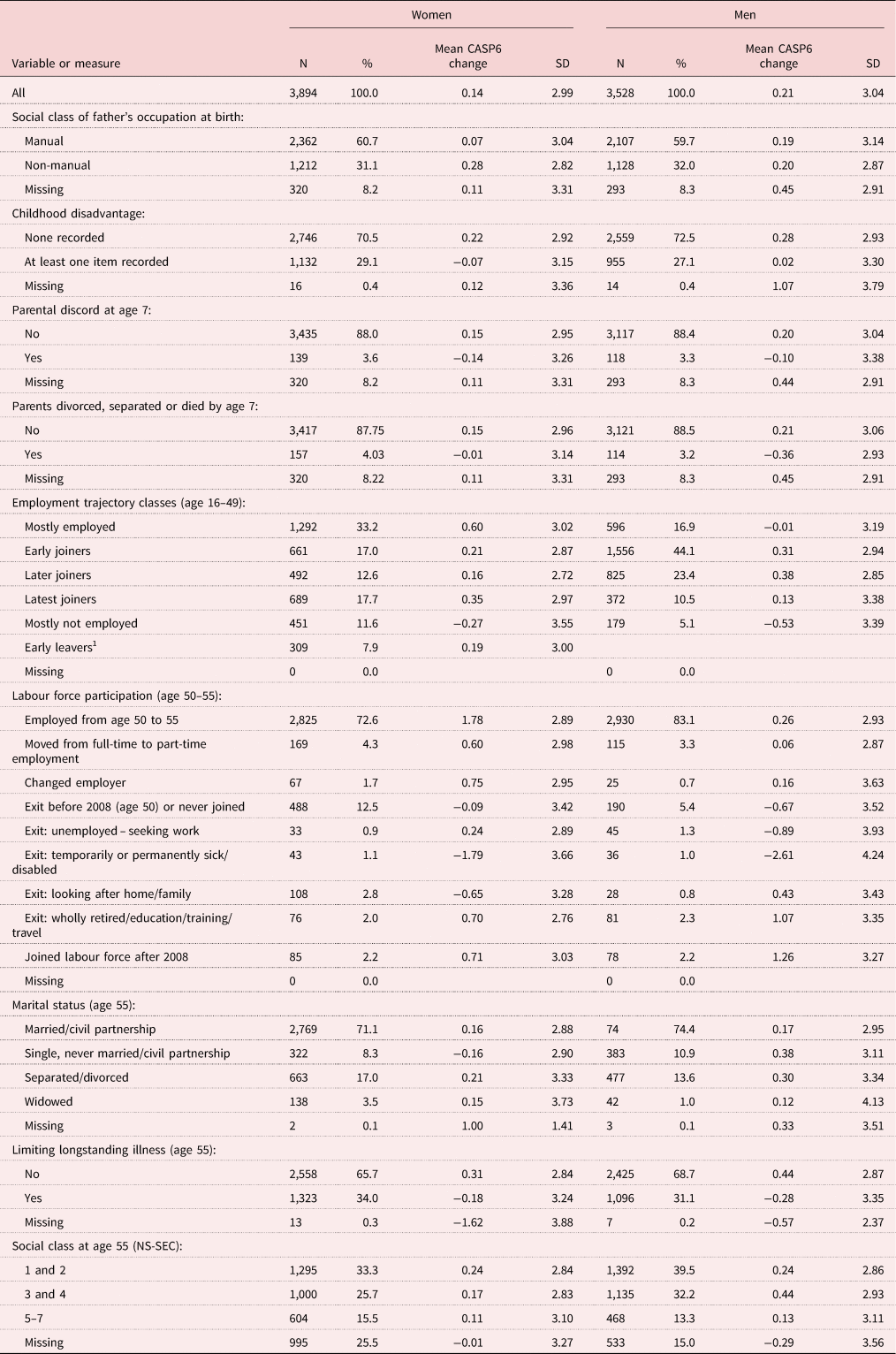
Table 1 shows descriptive statistics for this sample, proportions of missing data and the mean values for the change in QoL score between the ages of 50 and 55. To give some context for the interpretation of these mean changes in QoL score, the mean difference in QoL score between top and bottom deciles of the income distribution at age 55 is 1.96. The proportions of women and men exposed to disadvantaged circumstances in early life were broadly similar on all measures (Table 1). The employment trajectory classes were substantively different for men and women, not only in the number of classes but in the distribution of class membership (Figures 2 and 3). Class membership for men was predominantly characterised by the timing of entry into the labour force whereas the trajectory class membership for women suggested more complex patterns of entry and exit from the labour force between 16 and 49 years old. A higher proportion of women had left the labour force prior to age 50 and left the labour force between 50 and 55 to look after home or family (Table 1).
Descriptive statistics for exposures and mean change in quality of life between the ages of 50 and 55

Notes: 1. The ‘early leavers’ employment trajectory class exists only for women. CASP6: six-item quality-of-life measure derived from CASP-19. SD: standard deviation. NS-SEC: National Statistics Socio-Economic Classification.
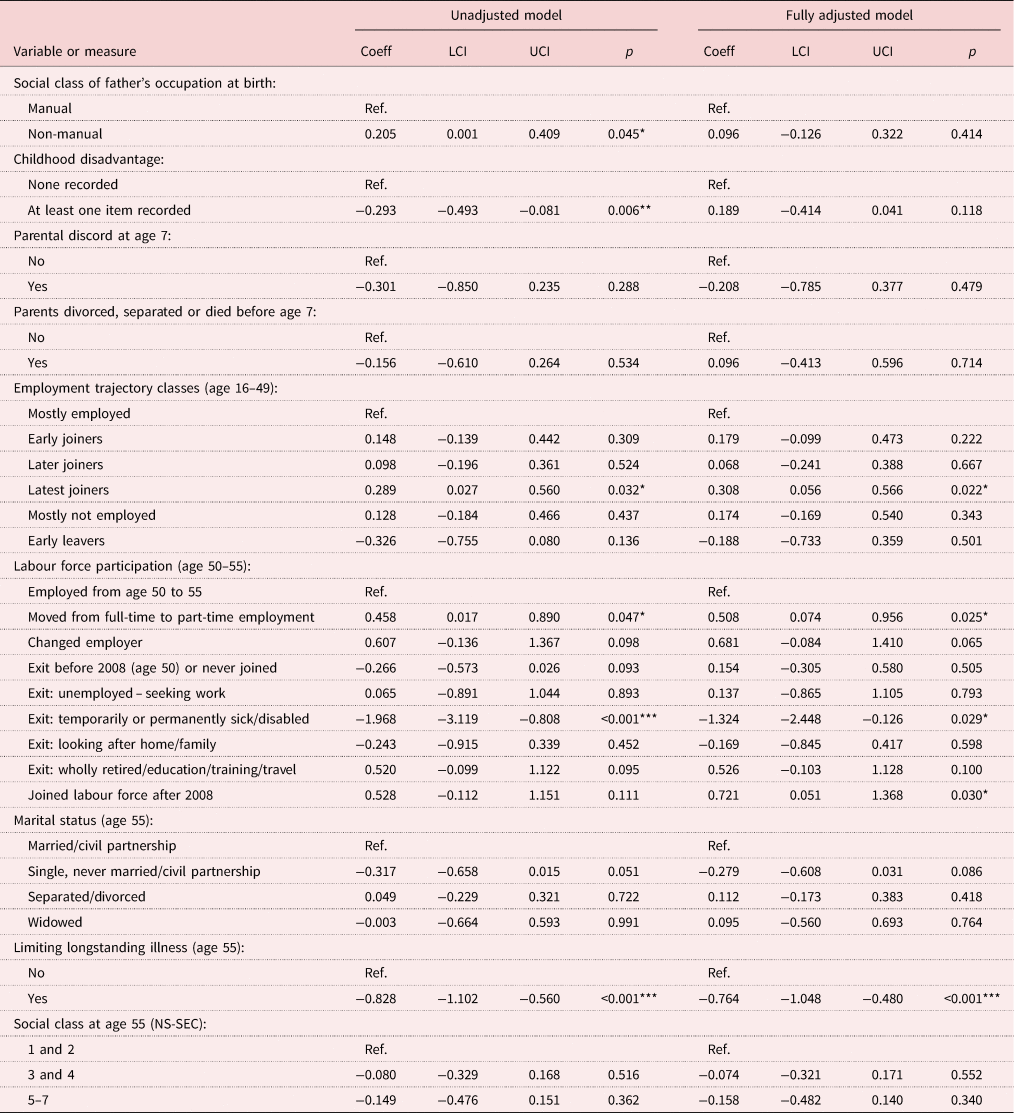
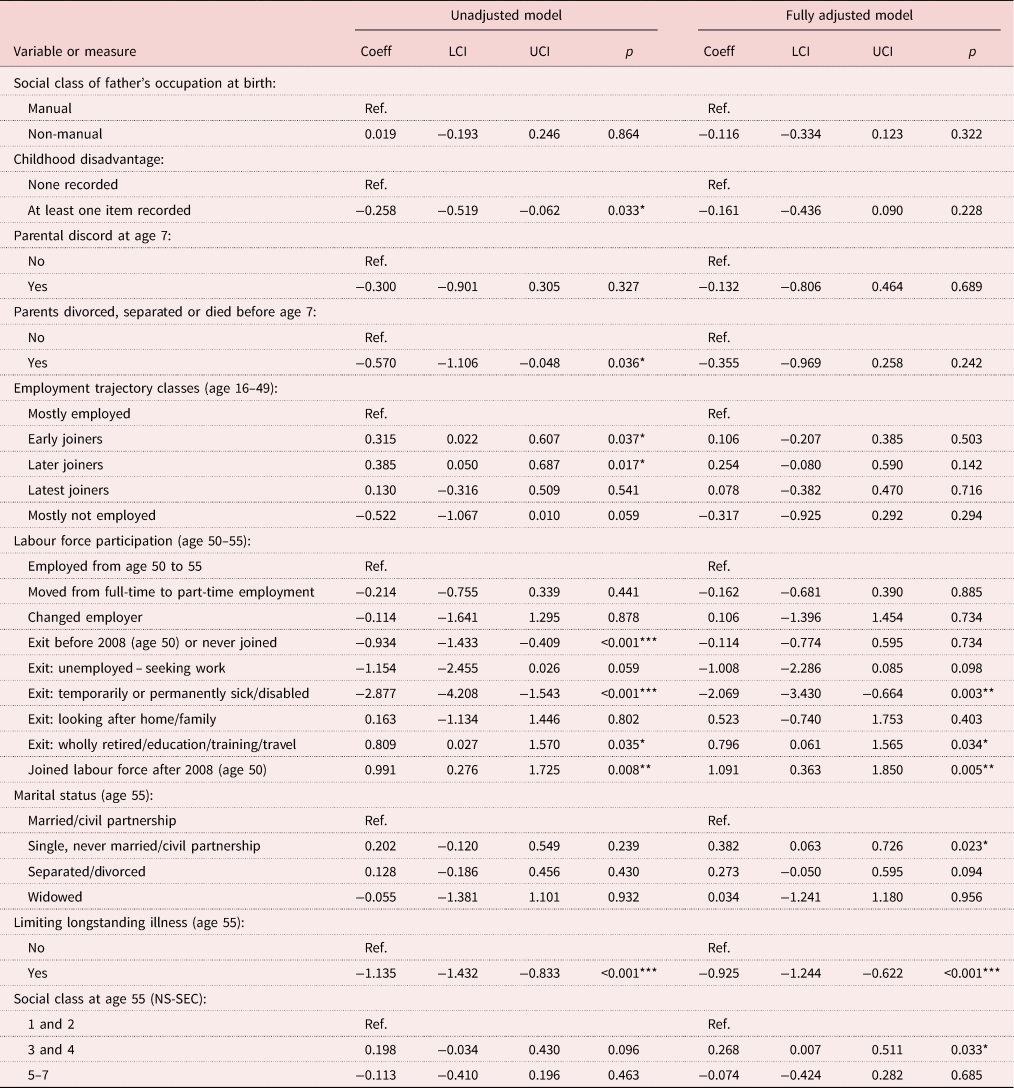
Table 2 (women) and Table 3 (men) show the unadjusted and fully adjusted associations between change in quality of life between 50 and 55 and lifecourse characteristics: changes in labour force participation between 50 and 55, employment history trajectories (16–49 years) and early life exposures (birth to 16 years). Two types of labour force transition between 50 and 55 were associated with changes in quality of life for both women and men. Firstly, labour force exit due to being sick or disabled between 50 and 55 was associated with a negative change in QoL score for both women (coefficient (coeff) = −1.365, 95% confidence interval (CI) = −2.490 to −0.152) and men (coeff = −2.065, 95% CI = −3.449 to −0.652). Secondly, for both women and men, joining the labour force between 50 and 55 was associated with a positive change in QoL score (women: coeff = 0.721, 95% CI = 0.051 to 1.368; men: coeff = 1.091, 95% CI = 0.363 to 1.850).
Associations between lifecourse exposures and the change in quality of life for women between the ages of 50 and 55

Notes: Coeff: coefficient. LCI: lower confidence interval. UCI: upper confidence interval. Ref.: reference category. NS-SEC: National Statistics Socio-Economic Classification.
Significance levels: * p < 0.05, ** p < 0.01, *** p < 0.001.
Associations between lifecourse exposures and the change in quality of life for men between the ages of 50 and 55

Notes: Coeff: coefficient. LCI: lower confidence interval. UCI: upper confidence interval. Ref.: reference category. NS-SEC: National Statistics Socio-Economic Classification.
Significance levels: * p < 0.05, ** p < 0.01, *** p < 0.001.
We found gender differences in the impact on quality of life of two forms of labour force transition. Firstly, for men, but not for women, labour force exit between the ages of 50 and 55 was associated with a positive change in QoL score if it was due to moving into retirement, education, training, travel or extended holiday (men: coeff = 0.808, 95% CI = 0.073 to 1.585; women: coeff = 0.526, 95% CI = −0.103 to 1.128). Secondly, moving from full-time to part-time employment was associated with a positive change in women's quality of life, but not men's (women: coeff = 0.508, 95% CI = 0.074 to 0.956; men: coeff = −0.162, 95% CI = −0.681 to 0.390). Other types of labour force transitions between 50 and 55 were not associated with changes in quality of life (see Tables 2 and 3).
Labour force trajectory classes had limited impact on change in quality of life. Specifically, we found that being a member of the latest joiners employment trajectory class was associated with a positive change in QoL score for women (coeff = 0.307, 95% CI = 0.053 to 0.569), but not for men (coeff = 0.078, 95% CI = −0.382 to 0.470). Other employment trajectory classes were not associated with changes in quality of life for women or men between the ages of 50 and 55, although further analyses found they were associated with quality of life at age 50 (see Table S3 in the online supplementary material). Early life exposures were not associated with a change in quality of life for men or for women.
Discussion
Based on the work described above, the answers to our research questions are: (a) employment trajectories are not an important influence on change in quality of life during the later years of working life; (b) exit from the labour force due to developing a limiting longstanding illness is a major negative influence on quality of life for both women and men; (c) exit from the labour force due to moving into retirement, education, training or travel is associated with a positive change in quality of life for men, but not associated with a change in quality of life for women; (d) for both women and men, re-joining the labour force after age 50 is associated with a positive change in quality of life; and (e) moving from full-time to part-time employment after age 50 is associated with a positive change on quality of life for women, but is not associated with a change in quality of life for men. These findings are based on data collected prospectively across the lifecourse, so far to age 55 years, from an initially population-representative sample which any selective attrition will have biased in a conservative direction. In other words, our results probably underestimate the situation in the wider British population. It is also worth remembering that the CASP quality-of-life measure predicts mortality risk, at least in the short term (Netuveli et al., Reference Netuveli, Pikhart, Bobak and Blane2012).
The findings that suggest gender differences in the impact of two types of labour force transition warrant some further discussion. The first finding was that moving into retirement at this lifestage is associated with positive changes in quality of life for men, but not for women. Gender differences in the antecedents of early retirement, summarised by Topa et al. (Reference Topa, Depolo and Alcover2018), provide potential explanations for gender differences in their impact on quality of life: (a) women have, on average, lower levels of savings for retirement; (b) women are more likely than men to experience work-related depression and anxiety; and (c) women are more likely than men to adopt multiple social roles, activities and responsibilities before, during and after the transition to retirement. The second finding that differed by gender was that moving from full-time to part-time employment after age 50 is associated with positive changes to quality of life for women, but not for men. A potential explanation for this difference is that a transition to part-time work for women may more often be associated with improvement in work–life balance (when adopting multiple social roles), while for men this transition may more often be for negative reasons such as poor health or difficulty retaining full-time employment (Lyonette, Reference Lyonette2015).
The NCDS activity history data provide detailed information on employment activities, and we were able to derive from these data detailed information on labour force transitions between the ages of 50 and 55. However, we do not have detailed information about the ‘push and pull’ factors that may prompt labour force transitions at this stage. For example, levels of available pension provision, workplace incentives for staying in employment and barriers to labour force participation (Shelton et al., Reference Shelton, Head, Carr, Zaninotto, Hagger-Johnson and Murray2019). Further research is needed to understand how these push and pull factors influence voluntary and involuntary labour force transitions, subsequent impacts on quality of life and whether these impacts differ by gender (Patrick et al., Reference Patrick, Stephens and Weinstein2016).
Employment trajectories, it would seem, are not the most relevant aspect of labour market disadvantage. Perhaps future studies should consider more structural factors like the social class of the occupation in which a person is employed or more biologically targeted measures like Johannes Siegrist's Effort–Reward Imbalance Model (Siegrist, Reference Siegrist and Fink2017), which focuses on the health impacts of recurrent stressful employment conditions under which relatively few rewards are returned. These results may also help narrow down possible explanations for Wahrendorf and Blane's (Reference Wahrendorf and Blane2015) finding that labour market disadvantage partly explains the association between early life socio-economic circumstances and quality of life in early old age. However, it is important to note that while we found these labour force trajectories to play a less important role in change in quality of life between 50 and 55 years, further analyses revealed that these trajectories were associated with quality of life at age 50 (see Table S3 in the online supplementary material).
The most significant differences between the present study and previous longitudinal studies is the focus on change in quality of life at this lifestage prior to pension age. Previous studies have used measures of quality of life at one point in time, at a later stage of old age and used different measures of socio-economic status and labour force participation. For example, Wildman et al. (Reference Wildman, Moffatt and Pearce2018) examined lifecourse socio-economic factors associated with quality of life in adults aged 62–64, finding that higher occupational socio-economic status in mid-life, consistent employment and freedom from a mortgage in adulthood were associated with better quality of life. Bielderman et al. (Reference Bielderman, de Greef, Krijnen and van der Schans2015) found that socio-economic status measured by monthly net income and highest education level was not directly associated with the quality of life of adults aged 65 and older in the Netherlands. These studies by Wildman et al. (Reference Wildman, Moffatt and Pearce2018) and Bielderman et al. (Reference Bielderman, de Greef, Krijnen and van der Schans2015) both used CASP-19 as a quality-of-life measure, but differences in participant ages and the measurement of exposure variables are likely to explain differences in findings.
The detailed lifecourse data that the NCDS collects on social and economic circumstances across the lifecourse are a strength of this study. In particular, the opportunity to utilise the NCDS activity history dataset is a strength, allowing us to examine labour force participation for each year from age 16 to 55 (University of London, Institute of Education, Centre for Longitudinal Studies, 2020). In addition, our findings show that the outcome measure in the present study, a six-item quality-of-life measure derived from CASP-19, is an important measure for capturing the impact of labour force participation on quality of life at this lifestage. This six-item measure captures the Control and Self-realisation domains of the original CASP-19 tool, but does not include items measuring the Autonomy and Pleasure quality-of-life domains. There is potential for future research to understand the impact of labour force participation on specific domains of quality of life, possibly revealing how lifecourse labour force participation influences these quality of life domains differentially.
There are also some limitations that should be considered when interpreting the results of our study. Despite an overall large sample size, conducting analyses separately for women and men resulted in some relatively low numbers of participants in the categories representing types of labour force exit between 50 and 55 years. We combined the categories ‘Exited labour force before age 50’ and ‘Never joined’ because the ‘Never joined’ group contained a small number of participants (N = 38). Moreover, as the categorisation is based on participant reported histories of all employment activities, it may be difficult to make a clear distinction between participants who have never joined the labour force and those who were active in the labour force only very briefly. Low sample sizes in some categories may have implications for statistical power to detect an association between categories of labour force transition between 50 and 55 years and the quality-of-life outcome measure. We have therefore conducted further pooled analyses combining data for women and men together. We conducted the pooled analyses both with and without the sixth trajectory class that was exclusive to women. In both cases, the increased statistical power in the pooled analyses for categories with a low sample size did not produce any substantive differences in results. We have presented the results of the pooled analyses in Table S4 in the online supplementary material. Future studies following these participants beyond age 55 are less likely to have this sample size limitation as voluntary and involuntary exit from the labour force will be more common with increasing age.
The present study has focused on labour force participation as the primary exposure during adult life. While labour force participation clearly plays an important role, there may be other important exposures during adult life that interact with labour force participation such as material deprivation (Terraneo, Reference Terraneo2021), quality of employment (Fujishiro et al., Reference Fujishiro, Ahonen and Winkler2021) and work-related stress (Nilsen et al., Reference Nilsen, Darin-Mattsson, Hyde and Wastesson2022). As is common to all cohort studies, we cannot make strong inferences about causal associations between exposures and outcomes due to the possible influence of unmeasured confounders (Ananth and Schisterman, Reference Ananth and Schisterman2018).
The levels of attrition we have reported in our study sample are common in longitudinal studies (Gustavson et al., Reference Gustavson, von Soest, Karevold and Røysamb2012) and in previous studies using NCDS cohort data (Mostafa et al., Reference Mostafa, Narayanan, Pongiglione, Dodgeon, Goodman, Silverwood and Ploubidis2021). By age 55, of the 17,415 original cohort members, 1,659 (9.5%) were known to have died and 1,286 (7.4%) were known to have emigrated. Between the ages of 50 and 55, 200 cohort members were known to have died. Further detail on levels of attrition due to non-response is detailed in the NCDS user guides (Johnson and Brown, Reference Johnson and Brown2015). We cannot rule out the risk of bias due to selective attrition, however, simulation studies have shown that with similar levels of attrition, estimated associations between variables have good reliability (Gustavson et al., Reference Gustavson, von Soest, Karevold and Røysamb2012). It is also important to consider levels of missing data and attrition that are specific to our quality-of-life outcome variable (CASP). We compared participants with CASP data at both ages 50 and 55 with those who had CASP data at age 50 but not 55. We found that there were only small differences (<1%) in the distribution of these participants by sex, limiting longstanding illness and NS-SEC social class (see Table S5 in the online supplementary material). There were some more substantial differences by sex and NS-SEC social class when comparing participants with some CASP data to those without any CASP data at age 50 or 55. Specifically, a higher proportion of male participants and participants in NS-SEC social classes 3–7 had CASP data at neither age 50 nor 55. We cannot rule out the possibility that these differences may be a source of bias in the present study. The FIML approach used to account for missing data in the study sample is recommended for longitudinal data where growth models are used and has been shown to be less biased than other approaches such as pairwise or listwise deletion (Silverwood et al., Reference Silverwood, Narayanan, Dodgeon and Ploubidis2021), however, we cannot rule out the risk of bias due to missing data.
The demonstrated importance of limiting longstanding illness is a useful reminder that the lifecourse is both a social and biological phenomenon (Blane et al., Reference Blane, Akinwale, Landy, Matthews, Wahrendorf, Wahl, Hayward, Liefbroer, Mishra, Ferreira and Koupil2016). Furthermore, the importance of limiting longstanding illness also has policy relevance. The increase in the State Pension Age will each year add an estimated three-quarters of a million employees to the work force, of whom at least 10 per cent will be in poor health (Bartley et al., Reference Bartley, Beach, Blane, Lisle, Mawditt and Sheringham2020). This considerable challenge to scarce occupational health services and over-stretched general practice services requires mitigation through the identification of triage criteria, pending which limiting longstanding illness is probably the best interim measure. Future research could focus on how changes to the State Pension Age impact quality of life for older adults transitioning into and out of the labour force prior to reaching State Pension Age. Our findings suggest that the impact of this policy on those who have developed limiting longstanding illness is a priority. Future analyses may be able to answer whether lifecourse labour force participation influences the relationship between limiting longstanding illness and quality of life at this lifestage.
Supplementary material
The supplementary material for this article can be found at https://doi.org/10.1017/S0144686X2300048X.
Acknowledgements
We acknowledge, with gratitude, the NCDS participants, the NCDS research group at the Centre for Longitudinal Studies and the staff of the UK Data Service whose combined efforts make possible this wonderful scientific resource.
Financial support
This research received no specific grant from any funding agency in the public, commercial or not-for-profit sectors.
Competing interests
The authors declare no competing interests.
Ethical standards
Ethical approval for the NCDS was obtained from the multicentre research ethics committee. Full informed written consent to participate in the study was provided by all participants. This paper presents secondary analysis of NCDS data, therefore does not require ethical approval.