Introduction
The paranoia spectrum is of special interest. Its severe end, persecutory delusion, is taken as a key sign of schizophrenia. Studying the milder variants, mistrust and suspicion, sheds light on societal issues, such as individual well-being and social cohesion. The few reported studies have identified correlates in common for mistrust, suspicion, persecutory ideation and delusions, suggesting that they are related experiences (e.g. Combs et al. Reference Combs, Michael and Penn2006; Vermissen et al. Reference Vermissen, Janssen, Myin-Germeys, Mengelers, a Campo, van Os and Krabbendam2008; Freeman et al. Reference Freeman, Pugh, Vorontsova, Antley and Slater2010b).
The pervasiveness of paranoia has been firmly established over recent years. Many people have a few paranoid thoughts, and a few people have many. Epidemiological and experimental studies indicate that paranoid thinking may be a regular experience in one out of three people from the general population, and at least one in twenty have a persecutory delusion during their lifetime (e.g. Johns et al. Reference Johns, Cannon, Singleton, Murray, Farrell, Brugha, Bebbington, Jenkins and Meltzer2004; Freeman et al. Reference Freeman, Pugh, Antley, Slater, Bebbington, Gittins, Dunn, Kuipers, Fowler and Garety2008b; Rutten et al. Reference Rutten, van Os, Dominguez, Krabbendam, Freeman, Bentall and Garety2008). Even low-level, fleeting suspicious thoughts are distressing (Freeman et al. Reference Freeman, Garety, Bebbington, Smith, Rollinson, Fowler, Kuipers, Ray and Dunn2005). This high prevalence is unsurprising if paranoia arises from the normal everyday decision making about whether to trust or mistrust.
Few large epidemiological studies have examined the correlates of paranoia, but two are noteworthy. The assessment of trust in other people is considered as a central component of social cohesion or ‘social capital’ (Coleman, Reference Coleman1988; Putnam, Reference Putnam1995). Kawachi et al. (Reference Kawachi, Kennedy, Lochner and Prothrow-Stith1997) in the USA used survey data from the late 1980s obtained from 7654 individuals across 39 states. The key items for assessing levels of trust were: ‘Do you think most people would try to take advantage of you if they got a chance?’, ‘Generally speaking, [would you say that most people can be trusted] or that you can't be too careful in dealing with people?’ Endorsement of each of these items was associated with greater wealth inequalities (the size of the gap between the rich and the poor) across the states and with higher mortality rates. Strikingly, a 10% increase in the level of trust across the states was associated with an 8% reduction in overall mortality. A path analysis indicated that the large effect of income inequality on death rates was mediated by social mistrust. Levels of trust in a society are thus clearly important.
The second key study is a report from the British National Psychiatric Morbidity Survey Programme (Jenkins et al. Reference Jenkins, Meltzer, Bebbington, Brugha, Farrell, McManus and Singleton2009). The population-based survey carried out in 2000 interviewed 8580 adults living in private households. After excluding individuals with probable diagnoses of psychosis, Johns et al. (Reference Johns, Cannon, Singleton, Murray, Farrell, Brugha, Bebbington, Jenkins and Meltzer2004) examined the paranoia item ‘Have there been times when you felt that people were deliberately acting to harm you or your interests?’. This was endorsed by 9.1%, and endorsement was associated with youth, male gender, ethnicity, urban residence, average intelligence quotient (IQ), alcohol dependence, drug dependence, neurotic symptoms, life events in the past 6 months and victimization experiences. A further analysis of data from this survey tested a cognitive model that emphasizes the large affective contribution to paranoid experience. This showed strong associations of paranoid thinking with insomnia, anxiety, worry, depression and irritability (Freeman et al. Reference Freeman, Brugha, Meltzer, Jenkins, Stahl and Bebbington2010a).
Epidemiological surveys in the general population concerning psychosis have typically not distinguished individual positive symptoms, even though experiences such as delusions and hallucinations cluster into several separate factors (e.g. Vázquez-Barquero et al. Reference Vázquez-Barquero, Lastra, Nuñez, Castanedo and Dunn1996; Peralta & Cuesta, Reference Peralta and Cuesta1999). Nevertheless, from such reports of positive psychotic symptoms, it would seem likely that paranoia is associated with youth, single marital status, urban dwelling, migrant status, low socio-economic status and emotional disorders (e.g. Kendler et al. Reference Kendler, Gallagher, Abelson and Kessler1996; van Os et al. Reference Van Os, Hanssen, Bijl and Ravelli2000, Reference Van Os, Linscott, Myin-Germeys, Delespaul and Krabbendam2009; Scott et al. Reference Scott, Chant, Andrews and McGrath2006). Association with illicit drugs such as cannabis is also highly probable (e.g. Moore et al. Reference Moore, Zammit, Lingford-Hughes, Barnes, Jones, Burke and Lewis2007; Henquet et al. Reference Henquet, Di Forti, Murray, van Os, Freeman, Bentall and Garety2008; Morrison et al. Reference Morrison, Zois, McKeown, Lee, Holt, Powell, Kapur and Murray2009). Reports linking gender and paranoia are more mixed; some find associations with male gender (e.g. Johns et al. Reference Johns, Cannon, Singleton, Murray, Farrell, Brugha, Bebbington, Jenkins and Meltzer2004), some female gender (e.g. Forsell & Henderson, Reference Forsell and Henderson1998), and some report no differences (e.g. Freeman et al. Reference Freeman, Garety, Bebbington, Smith, Rollinson, Fowler, Kuipers, Ray and Dunn2005).
In the current study, we use data from the latest British psychiatric morbidity survey, the Adult Psychiatric Morbidity Survey 2007 (APMS 2007; McManus et al. Reference McManus, Meltzer, Brugha, Bebbington and Jenkins2009), in the most thorough investigation so far of the concomitants of paranoid ideation. We wished to cover the full continuum from mild to severe instances and therefore did not exclude participants with putative diagnoses of psychosis. Our key questions were: What is the potential impact of paranoid thoughts on individual physical and psychological health and service use? Who is most affected by paranoid thoughts? What are the social and economic factors associated with paranoia? What other clinical symptoms are associated with paranoia? We predicted that paranoia would be particularly associated with youth, urban residence, isolation, lower social cohesion, lower socio-economic status, poorer physical health, illicit drug use, poor sleep, and affective disturbance, especially anxiety and depression. Cutting across this analysis we wanted to examine the correlates of the different levels of paranoid thinking. Although these are related, the spectrum needs further investigation.
Method
Participants
The data used in these analyses were acquired from a third survey of psychiatric morbidity in the English national population, the APMS (http://www.ic.nhs.uk/pubs/psychiatricmorbidity07; McManus et al. Reference McManus, Meltzer, Brugha, Bebbington and Jenkins2009). This was based on a random sample of household residents aged 16 years and over. People who were homeless, in insecure housing, or in institutional settings (e.g. hospital) were not part of the sample. Fieldwork was carried out between October 2006 and December 2007. The survey adopted a multi-stage stratified probability sampling design. The sampling frame was the small user Postcode Address File. One adult aged ⩾16 years was selected for interview in each household, using the Kish grid method (Kish, Reference Kish1965). Of the sampled addresses, 9% were reckoned to be ineligible because they contained no private households, leaving an eligible sample of 13 171 addresses. Of those eligible, 57% agreed to take part in an interview. Interviews were successfully carried out with 7403 people. Complete paranoia data were available for 7281 of the participants.
Assessments
The APMS questionnaire items and full details of derived variables are available in the study report (McManus et al. Reference McManus, Meltzer, Brugha, Bebbington and Jenkins2009). The extensive interview included information on marital status, general health, service use and medication, common mental disorders, suicidal behaviour and self-harm, psychosis, work-related stress, drinking, drug use, social support, social capital and participation, and sociodemographic characteristics.
Paranoid thinking was assessed from endorsement of three items from the Psychosis Screening Questionnaire (PSQ; Bebbington & Nayani, Reference Bebbington and Nayani1995):
Paranoia level 1. ‘Over the past year, have there been times when you felt that people were against you?’
Paranoia level 2. ‘In the past year, have there been times when you felt that people were deliberately acting to harm you or your interests?’
Paranoia level 3. ‘In the past year, have there been times you felt that a group of people was plotting to cause you serious harm or injury?’
Level 2 and level 3 questions were only asked if the preceding item had been endorsed.
Intellectual functioning was assessed with the National Adult Reading Test (Nelson, Reference Nelson1982), emotional well-being items were taken from the Short-Form 12-Item Health Survey (Ware et al. Reference Ware, Kosinski and Keller1995), social functioning used a total score from the Social Functioning Questionnaire (Tyrer et al. Reference Tyrer, Nur, Crawford, Karlsen, MacLean, Rao and Johnson2005), social support was assessed using the Interview Method of Social Relationships (Brugha et al. Reference Brugha, Sturt, MacCarthy, Potter, Wykes and Bebbington1987), and the work stress items were derived from the effort–reward imbalance model (Siegrist, Reference Siegrist1996). Non-psychotic psychiatric disorder was assessed using the Clinical Interview Schedule (revised) (CIS-R; Lewis et al. Reference Lewis, Pelosi, Araya and Dunn1992), which can be administered by non-clinically trained interviewers. While this provides operationalized diagnoses for common mental disorders, we chose to use subscale scores as a measure of affective disturbances, as this avoids the hierarchical assumptions built into the diagnostic facility. The subscales for anxiety, worry, phobias, panic, depression, and irritability ranged between 0 and 4. The subscale score for depressive ideas ranged between 0 and 5. These affective disturbances were considered present if the CIS-R score for each section was ⩾2. This therefore included more positive scorers in the analyses than only taking those who reached the criteria for a diagnosis of an emotional disorder, enabling more precise statistical estimates. Insomnia was defined as having problems getting or trying to stay asleep in the past week, that it took at least a quarter of an hour to get to sleep, and that the problems had been occurring for at least 6 months. Possible cases of current post-traumatic stress disorder (PTSD) were identified with the Trauma Screening Questionnaire, a short screening tool (Brewin et al. Reference Brewin, Rose, Andrews, Green, Tata, McEvedy, Turner and Foa2002). Respondents were first asked whether they had experienced a traumatic event at some time in their life after the age of 16 years. If so, they rated 10 PTSD items in relation to the past week. Endorsement of six or more of these was taken to indicate a positive screen for PTSD. The questions in the survey on drug use are taken from the US Epidemiologic Catchment Area study (Eaton & Kessler, Reference Eaton and Kessler1985) and self-completed on a computer. In the current study the only drug variable examined was cannabis use in the past year (no/yes). Problem drinking was considered probable with a score of ⩾8 on the Alcohol Use Disorders Identification Test (Saunders et al. Reference Saunders, Aasland, Babor, Dela Fuente and Grant1993).
A subsample of phase-one respondents was selected for a second-phase interview that included a full assessment of psychosis. A total of 630 respondents were interviewed by clinically trained research interviewers using the Schedule for Clinical Assessment in Neuropsychiatry (SCAN; WHO, 1992). In the current paper, we use an overall category of ‘probable psychosis’, comprising those identified by the SCAN, together with those who did not have a phase-two interview, but had endorsed two or more psychosis screening criteria in the phase-one interview. The four criteria were the use of antipsychotic medication, psychiatric hospital admission, a self-reported diagnosis of psychotic disorder or symptoms suggestive of it, and a positive response to the question in the PSQ covering auditory hallucinations (Bebbington & Nayani, Reference Bebbington and Nayani1995).
Analysis
All analyses were carried out using the ‘complex survey’ commands in SPSS 15.0 (SPSS, 2006; SPSS, Inc., USA). The survey data were weighted to take account of survey design and non-response, in order to render the results representative of the household population aged ⩾16 years. Weighting was necessarily complex, and is described in detail by McManus et al. (Reference McManus, Meltzer, Brugha, Bebbington and Jenkins2009) . There were three steps. First, sample weights were applied to take account of the different probabilities of selecting respondents in different-sized households. Second, to reduce household non-response bias, a household level weight was calculated from a logistic regression model using interviewer observation and area-level variables (collected from Census 2001 data) available for responding and non-responding households. Finally, weights were applied using the techniques of calibration weighting based on age, gender and region to weight the data to represent the structure of the national population, and to take account of differential non-response between regions and age×gender groups. The population control totals used were the Office for National Statistics (2006) mid-year household population estimates. As a result of the calibration, the APMS 2007 weighted data matches exactly the estimated population across these three dimensions.
For the main analyses, logistic regressions were carried out with paranoia as the dependent variable. The three paranoia items were used to create four groups (0=no paranoia; 1=endorses item 1 only; 2=endorses items 1 and 2 only; 3=endorses all three items). This was intentionally treated as a multinomial (and not an ordinal) variable in order to treat the items as potentially qualitatively different. The reference category for each level of paranoia was always the group who endorsed no paranoid items. Odds ratios (ORs) and 95% confidence intervals (CIs) therefore refer to the likelihood of being in each group compared with those participants who reported no paranoid ideation. For the interpretation of the results it should be remembered that for continuous scales the ORs refer to 1-point changes in the independent variables; if the OR for a unit change in the independent variable is, for example, 1.34 then the OR for a 10-point increase is 1.34 raised to the power of 10 (i.e. 18.7). We deliberately did not use covariates, except in the case of physical health variables, where there were strong grounds for their use. The aim was to establish the strength of association of single variables with paranoia, not to try to determine the unique contribution of each variable or establish which variable is ‘primary’. (There are numerous cautions in the literature against inappropriate uses or interpretations of covariates, especially in non-randomized studies. Miller & Chapman (Reference Miller and Chapman2001) provide a clear discussion. The basic issue is that variables may truly share variance or overlap and therefore it is artificial to correct statistically for one or the other and indeed it may remove so much variance as to make the results meaningless. It is of particular note that in this epidemiological study a wide range of factors at different levels of explanation are considered, many of which could be viewed as mediating variables, and therefore overlap between the independent variables is to be expected.)
Results
The frequency of paranoid thinking
The first paranoia item, ‘Over the past year, have there been times when you felt that people were against you?’, was endorsed by 1299 participants (weighted=18.6%). Of these participants, 24 had a probable diagnosis of psychosis. The second paranoia item, ‘Have there been times that you felt that people were deliberately acting to harm you or your interests?’, was endorsed by 569 participants (weighted=8.2%). Of these, 18 had a probable diagnosis of psychosis. The third paranoia item, ‘Have there been times you felt that a group of people was plotting to cause you serious harm or injury?’, was endorsed by 125 participants (weighted=1.8%). Of these, 12 had a probable diagnosis of psychosis.
Social functioning, psychological well-being and paranoid thoughts
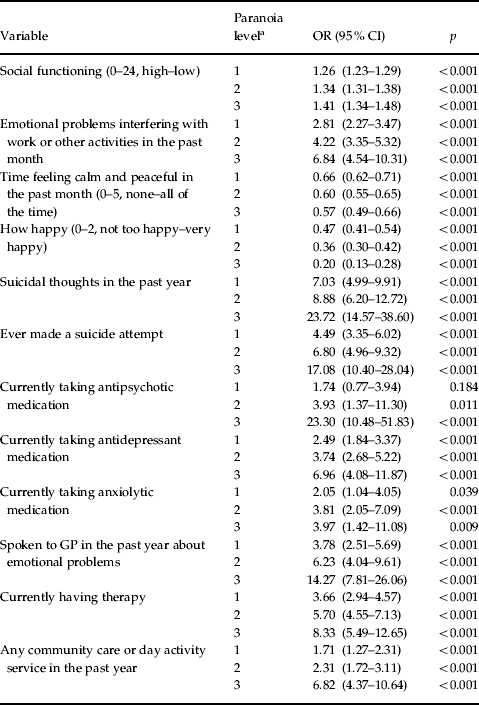
Paranoia was strongly associated with poorer social functioning, less calmness, less happiness, more suicidal ideation, psychiatric medication consumption, and greater current use of mental health services (see Table 1). The more severe the paranoia, the lower the indicators of well-being. Although the consumption of medication and services was highly associated with the presence of paranoid thoughts, only a minority of the people at the first paranoia level (endorsed item 1) were prescribed antipsychotic (weighted=1.7%) or antidepressant medication (weighted=10.2%), few had spoken to their general practitioner (GP) about emotional problems in the past year (weighted=27.1%), few were having therapy (weighted=7.5%) and few were attending daycare services (weighted=13.4%). Even among people who endorsed all three paranoia items, relatively few had been prescribed antipsychotic mediation (weighted=8.4%) or antidepressant medication (weighted=19.4%), few had spoken to their GP about emotional problems (weighted=39.6%), few were having therapy (weighted=17.0%), and few were attending daycare services (weighted=31.2%).
Levels of functioning and well-being by paranoia level (n=7281)

OR, Odds ratio; CI, confidence interval; GP, general practitioner.
a The reference category is always that on level 0 (i.e. endorse no paranoid thoughts).
Demographic and socio-economic information and paranoia
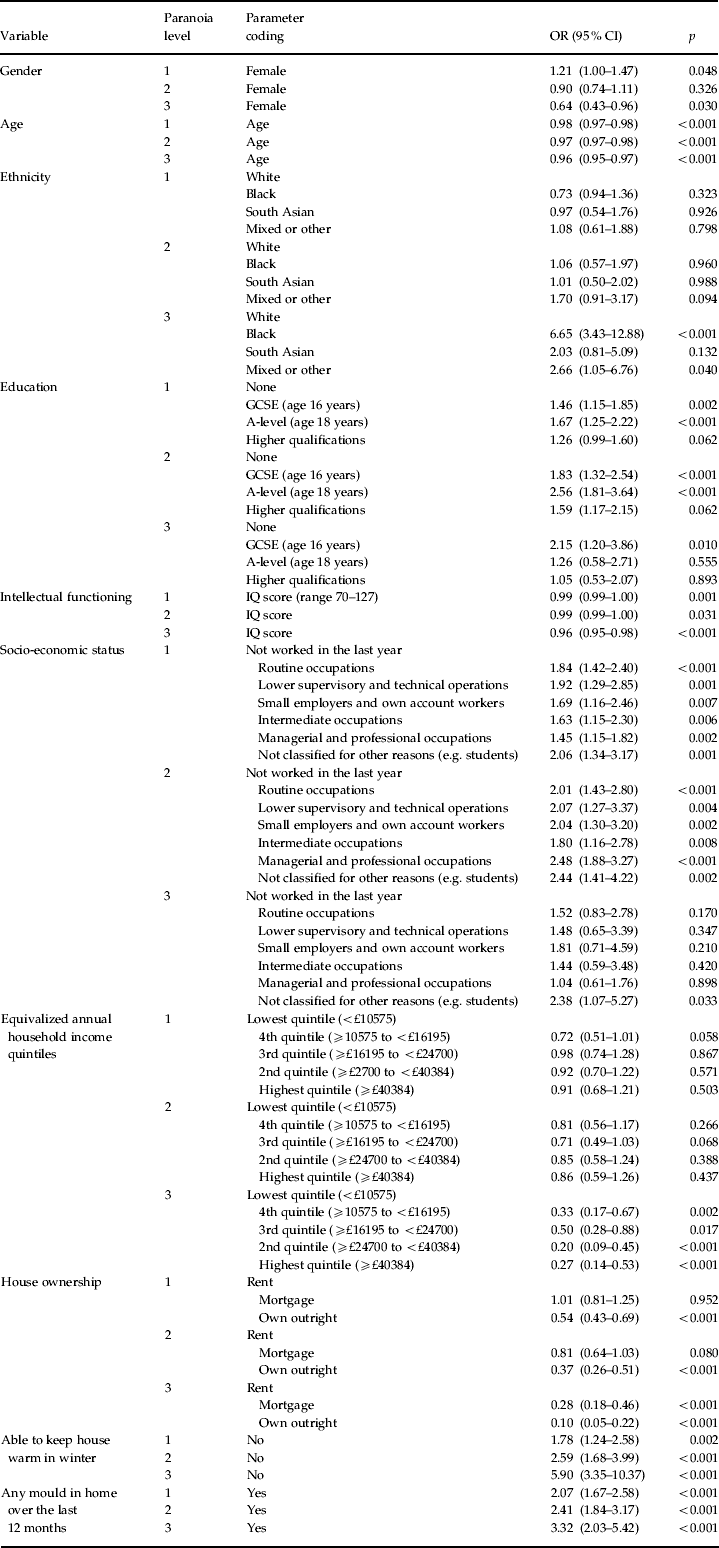
The associations of paranoia with demographic factors varied to some extent with the level of paranoia assessed (see Table 2). The lowest level of paranoia was more common in women, the highest in men. An increased prevalence of paranoia in ethnic minority groups was restricted to the more severe item. Paranoia at all levels did, however, clearly decrease with age. Higher intellectual functioning was associated with less paranoia. Unexpectedly, those with no qualifications, together with those not working, acknowledged paranoia least frequently; somewhat at variance, financial indicators generally showed that paranoia was associated with poverty.
Demographic and socio-economic information and paranoia
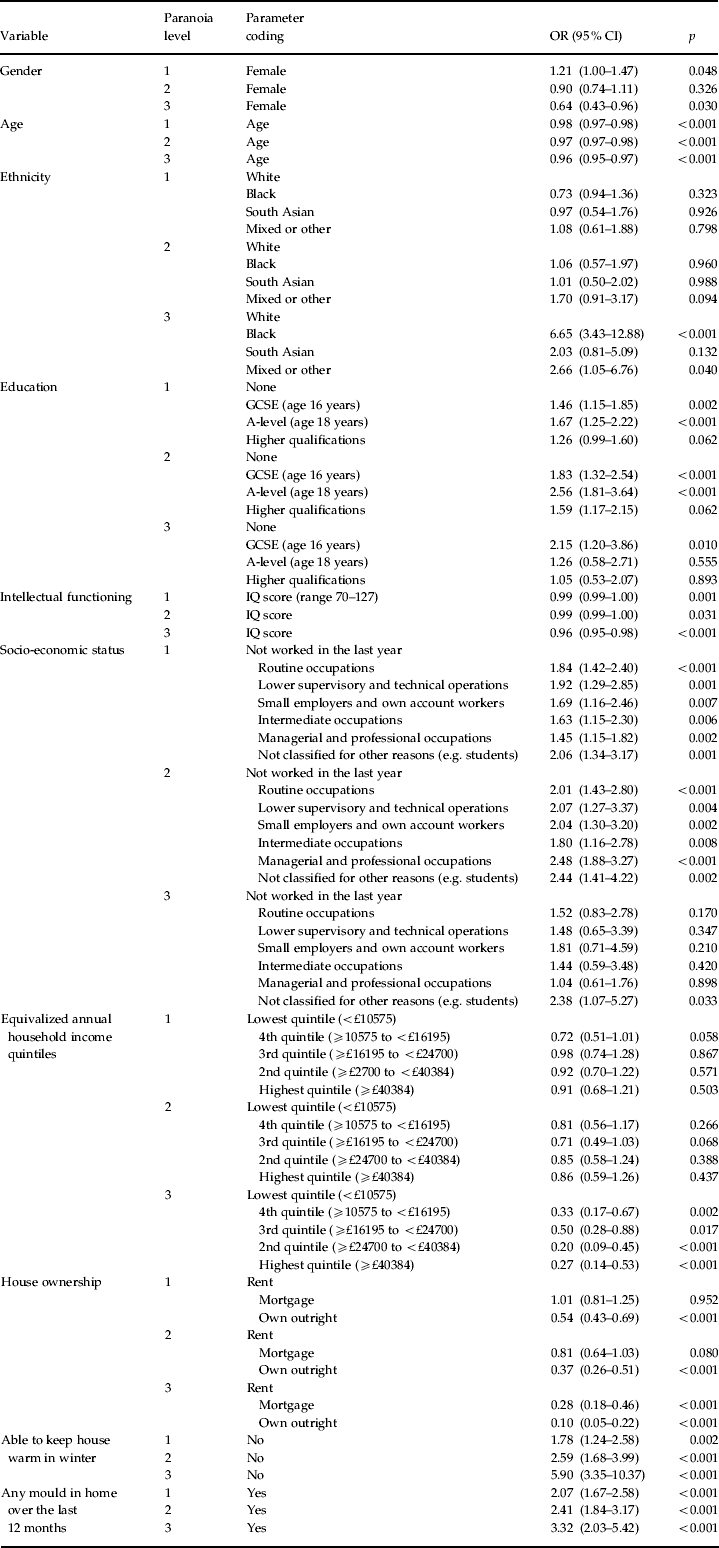
OR, Odds ratio; CI, confidence interval; GCSE, General Certificate of Secondary Education; A-level, Advanced level; IQ, intelligence quotient.
Physical health and paranoia
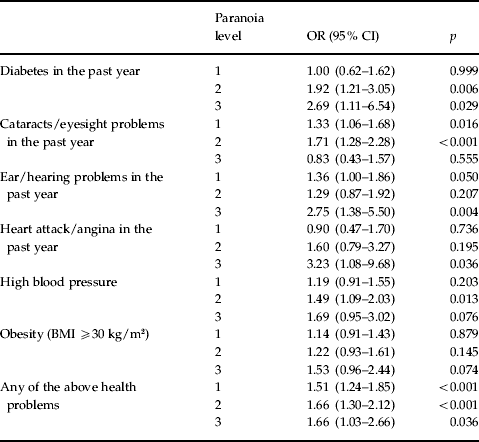
In analysing the associations of paranoia with physical health, we controlled for age and gender (Table 3). Physical ill health over the past year was associated with endorsement of paranoia items, although the ORs were not large.
Physical health and paranoia (controlling for age and gender)
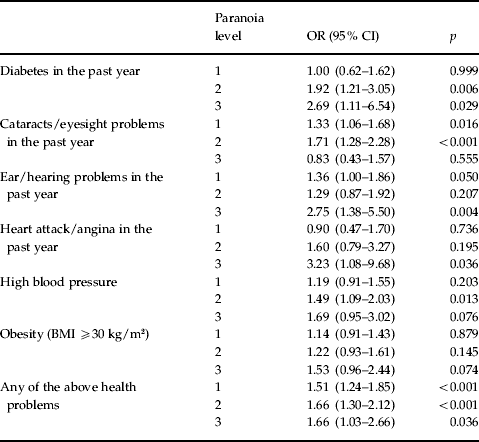
OR, Odds ratio; CI, confidence interval; BMI, body mass index.
Prevalence by area
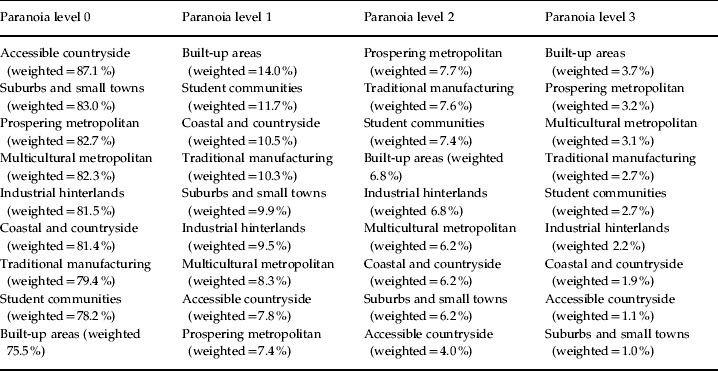
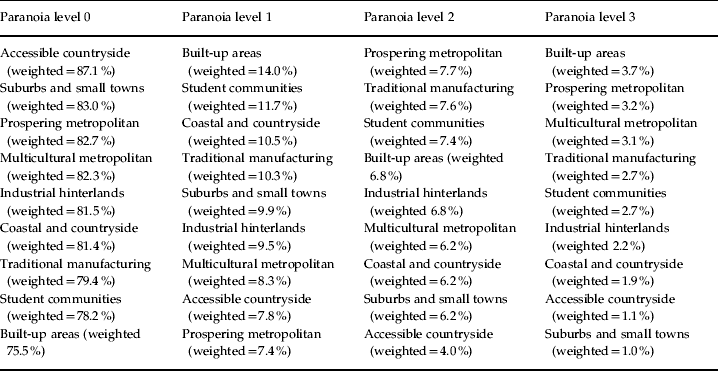
Table 4 shows that paranoia was generally more frequent in the more urban areas. However, this association was often non-significant except for the highest level of paranoia. For instance, people endorsing the most severe paranoia item were more likely to be living in an area of high population density (OR 1.01, 95% CI 1.00–1.01, p=0.012), but this was not true for people who only endorsed the first paranoia item (OR 1.00, 95% CI 1.00–1.01, p=0.832), or items 1 and 2 (OR 1.00, 95% CI 1.00–1.01, p=0.317).
Prevalence of paranoia level within each type of area (descending frequency)
Social support and paranoia
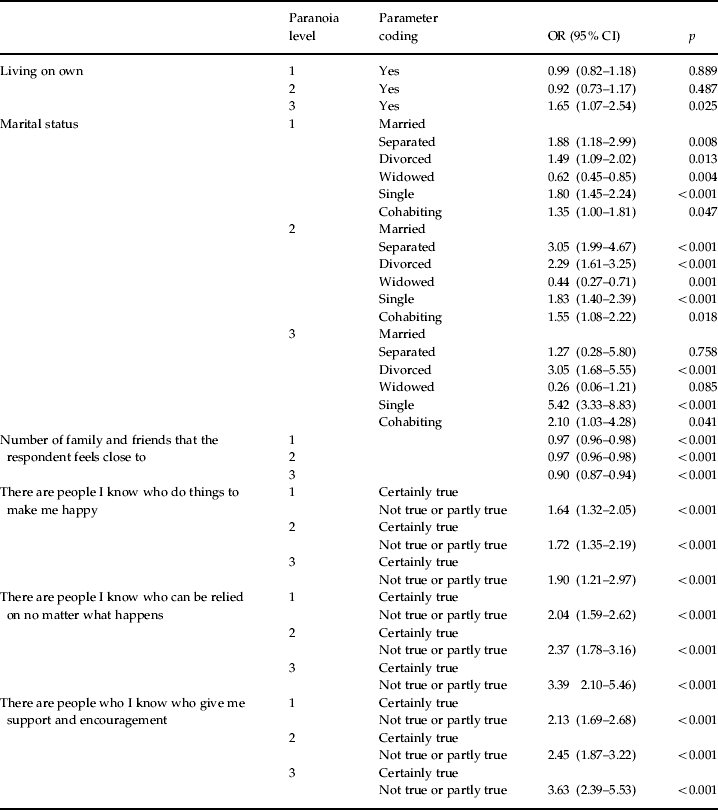
There was a clear association between paranoia and measures of social support (Table 5). Married (or widowed) participants showed least paranoia, while people who reported less access to social support were clearly more paranoid.
Social support and paranoia
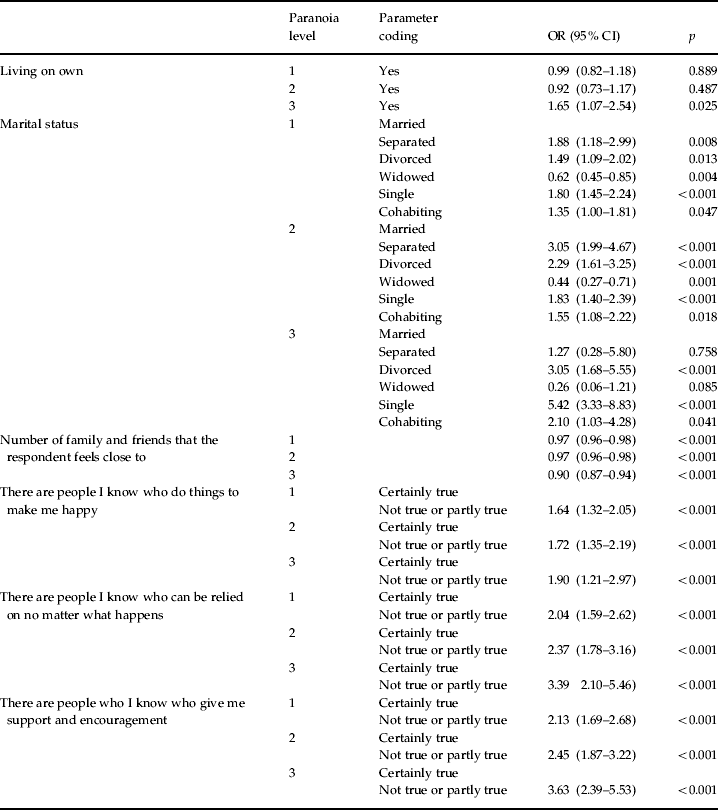
OR, Odds ratio; CI, confidence interval.
Social capital
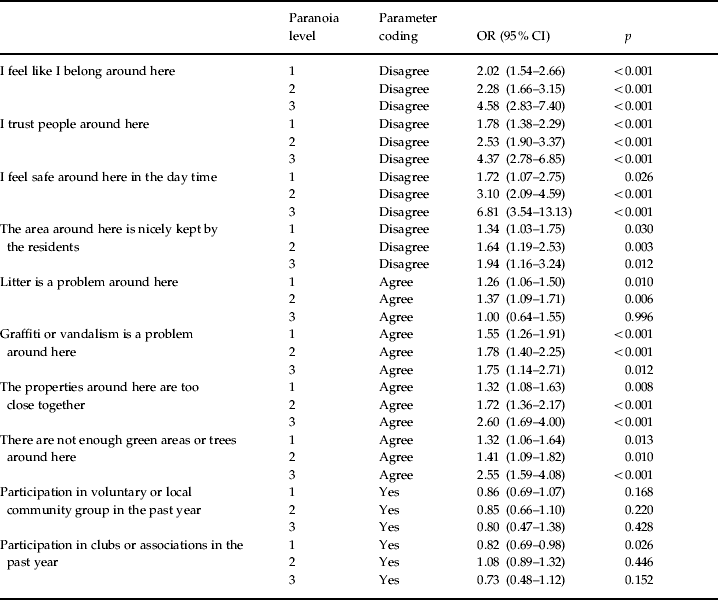
Paranoia was clearly associated with the social capital indicator of trusting other people (Table 6). It was also strongly linked to negative perceptions of the local environment, but there was much less evidence of an association with civic engagement.
Social cohesion and paranoia
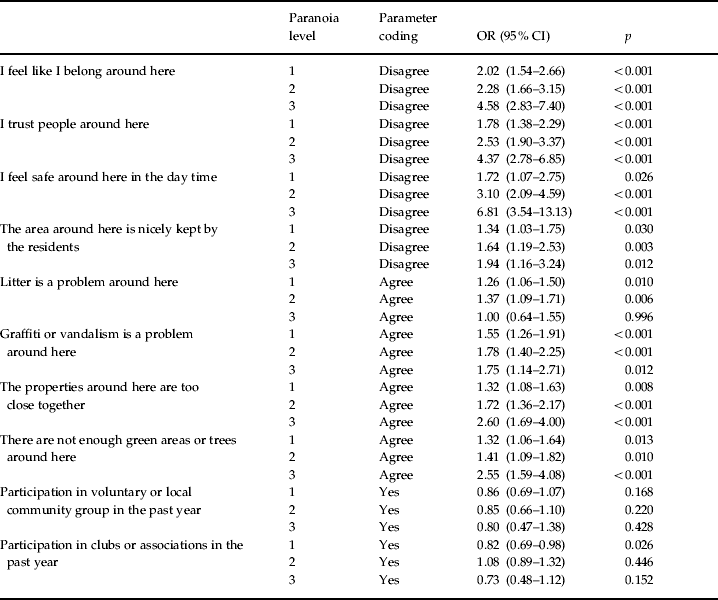
OR, Odds ratio; CI, confidence interval.
Mental health symptoms
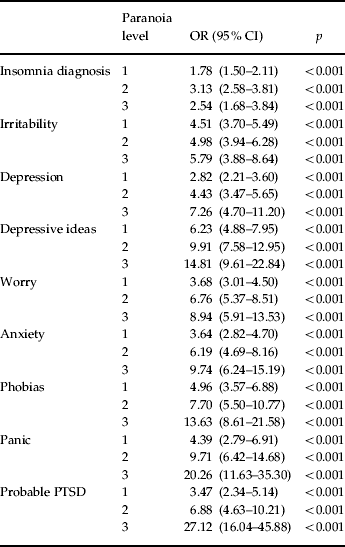
Paranoia was strongly associated with other common mental health problems (Table 7). The ORs for the associations of paranoia with anxiety, phobias, worry, panic, post-traumatic stress, depression and insomnia were all substantial. For example, the presence of anxiety symptoms was associated with an almost 10 times greater likelihood of the severest paranoid thinking.
Insomnia, affective symptoms and paranoia
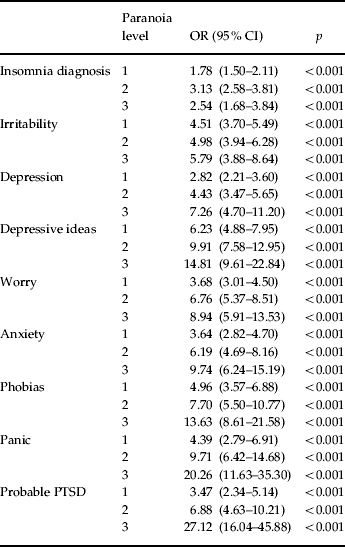
OR, Odds ratio; CI, confidence interval; PTSD, post-traumatic stress disorder.
Drugs and alcohol
A total of 414 participants (weighted=7.4%) reported using cannabis in the past year. Paranoia was strongly and progressively associated with cannabis use: paranoia level 1 (OR 1.91, 95% CI 1.38–2.65, p<0.001); paranoia level 2 (OR 2.86, 95% CI 1.94–4.21, p<0.001); paranoia level 3 (OR 4.90, 95% CI 2.91–8.25, p<0.001). There were significant but weaker associations with problem drinking: paranoia level 1 (OR 1.53, 95% CI 1.27–1.85, p<0.001); paranoia level 2 (OR 1.82, 95% CI 1.41–2.35, p<0.001); paranoia level 3 (OR 2.84, 95% CI 1.88–4.28, p<0.001).
The working environment
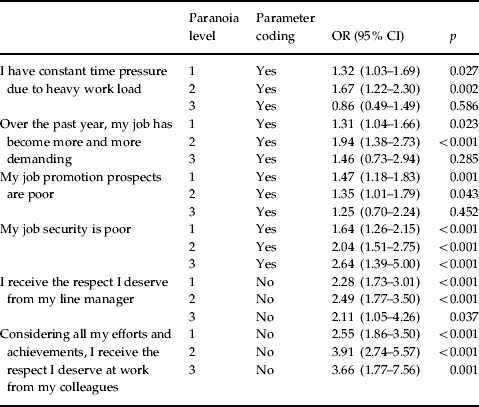
Approximately one half of the sample (weighted count 56.3%) were in paid employment in the previous week. Perceptions of work stresses and poor rewards were associated with the endorsement of paranoid items (Table 8).
Work stress and paranoia
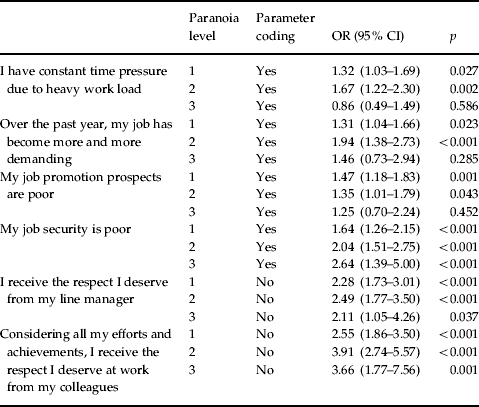
OR, Odds ratio; CI, confidence interval.
Discussion
It is important to begin this discussion with some caveats. The survey was cross-sectional. Thus, while the strong associations in many of our analyses indicate the presence of some kind of mechanism, the direction of effect cannot be substantiated, even though in some instances one particular direction may be more plausible. The associations could also be the consequence of other unmeasured variables. Moreover, although paranoia was the focus of the analysis, similar patterns might have been found if, for example, we had chosen to analyse anxiety or depression instead. Other methods are needed to understand the nature of these associations, for example, longitudinal, experimental and interventionist (e.g. Kendler & Campbell, Reference Kendler and Campbell2009). These are now being employed in the study of paranoia (e.g. Startup et al. Reference Startup, Freeman and Garety2007; Freeman et al. Reference Freeman, Pugh, Antley, Slater, Bebbington, Gittins, Dunn, Kuipers, Fowler and Garety2008b; Harrow et al. Reference Harrow, Jobe, Astrachan-Fletcher, Freeman, Bentall and Garety2008; Lincoln et al. Reference Lincoln, Peter, Schäfer and Moritz2008; Foster et al. Reference Foster, Startup, Potts and Freeman2010), and form part of a process of triangulation that will permit more substantial inferences of causality.
It is also quite possible that some of the ideation reported was an accurate and not unfounded assessment of the participant's situation. All mental experiences like paranoia are elicited from self-report. However, the validity of the self-report is likely to increase where initial endorsements of self-statements like the PSQ paranoia questions are augmented through a process of clarificatory cross-questioning, the essence of clinical interview. Although interviewer and self-report methods of assessment show correlations (e.g. Iancu et al. Reference Iancu, Poreh, Lehman, Shamir and Kotler2005; Lindström et al. Reference Lindström, Jedenius and Levander2009), our assessment of paranoia is therefore vulnerable to appreciable inaccuracy. In the three questions there is also a limited capture of the variety of paranoid ideation and no assessment of the strength with which the statements are endorsed. Participants were also only asked the second and third paranoia questions contingent upon endorsing the previous question, assuming a simple progression in the three paranoia items. Nonetheless, the current study has the distinct advantage of a large dataset and a uniquely comprehensive report of the correlates of paranoid ideation capable of stimulating further work on the topic.
The data from this study do give a very clear indication of the potential impact of paranoid thinking. It is associated with marked reductions in happiness and social functioning. The risk of suicidal thoughts is greatly increased, as is the tendency to seek the aid of medication. However, only a minority of those reporting paranoid thoughts are in contact with primary care and mental health services and receive interventions. This may come about because people are reticent about divulging paranoid thoughts, and clinicians do not routinely assess them. Added to this, people with paranoid thinking have more physical health concerns, such as diabetes and high blood pressure. This is consistent with the earlier report of Kawachi et al. (Reference Kawachi, Kennedy, Lochner and Prothrow-Stith1997) .
From a theoretical perspective, the links between paranoia, emotional disorders and sleep problems are of particular interest. One cognitive model emphasizes the direct emotional contribution to paranoid experiences (see Freeman, Reference Freeman2007): anxiety, via the anticipation of threat, provides the content of paranoid fears; worry makes the cause more implausible and distressing; and depressive and social phobic concerns make a person feel vulnerable to harm. The associations of anxiety, worry, panic, phobias and depression with paranoia in this survey are very substantial. These results are broadly consistent with a number of recent studies by other research groups (e.g. Myin-Germeys & van Os, Reference Myin-Germeys and van Os2007; Bentall et al. Reference Bentall, Rowse, Shryane, Kinderman, Howard, Blackwood, Moore and Corcoran2009; Varghese et al. Reference Varghese, Scott, Welham, Bor, Najman, O'Callaghan, Williams and McGrath2009; Ben-Zeev et al. Reference Ben-Zeev, Ellington, Swendsen and Granholm2010). The postulated affective component in paranoid experience is reflected in new developments in psychological interventions (Freeman et al. Reference Freeman, Freeman and Garety2008a; Foster et al. Reference Foster, Startup, Potts and Freeman2010). It has also been argued that it is plausible that insomnia exacerbates paranoid fears (Freeman et al. Reference Freeman, Pugh, Vorontsova and Southgate2009); the insomnia results from this survey closely replicate two other recent reports (Freeman et al. Reference Freeman, Pugh, Vorontsova and Southgate2009, Reference Freeman, Brugha, Meltzer, Jenkins, Stahl and Bebbington2010a). Further substantiation is also provided for the idea that perceptual difficulties such as hearing impairments, in the context of negative affect, will make perceptions of hostility more likely (e.g. Zimbardo et al. Reference Zimbardo, Andersen and Kabat1981; Thewissen et al. Reference Thewissen, Myin-Germeys, Bentall, de Graaf, Vollebergh and van Os2005).
The analysis also highlights a neglected issue: the importance of considering the level of paranoid thought. Many variables showed a simple dose–response relationship with severity of paranoia, but, intriguingly, a number of the demographic and social-economic variables showed different relationships with different levels of paranoid thought. For instance, there was a reverse in gender ratios: females endorsed the mildest paranoid item more frequently, males the most severe item. This may account for the conflicting results previously reported in the literature. Differences by ethnicity were only apparent for the most severe paranoid thinking. Likewise, densely populated (i.e. urban) environments, paralleling findings for psychosis (Pedersen & Mortensen, Reference Pedersen and Mortensen2001; Krabbendam & van Os, Reference Krabbendam and van Os2005), were associated only with the most severe paranoia. Previous research indicates that the severer paranoid thinking typically builds upon the commoner variants (Freeman et al. Reference Freeman, Garety, Bebbington, Smith, Rollinson, Fowler, Kuipers, Ray and Dunn2005), but this does not mean that the continuum of paranoid thoughts is smooth. There may be qualitative shifts in paranoid thinking at the top end of the spectrum.
Our results also extend the significance of paranoid thinking beyond the psychiatric domain. Perceived isolation, lack of social cohesion and work stresses were all strongly associated with the occurrence of paranoia. Levels of trust are a likely indicator of the health of a society. An often implicit judgement whether to trust other people underpins many of our daily interactions, and when this judgement becomes distorted there may be far-reaching consequences. We contend that greater consideration should be given to understanding the causes of trust and mistrust and the consequences that levels of trust have for a society. For instance, research is needed into the way crime rates, the built environment, community services, security countermeasures, media reporting, technological and societal changes, and income inequality affect levels of trust (Freeman & Freeman, Reference Freeman and Freeman2008). Once persecutory ideation is conceived as a spectrum, its importance at both an individual and a societal level becomes increasingly apparent.
Acknowledgements
D.F. is supported by a Medical Research Council (MRC) Senior Clinical Fellowship. The survey was commissioned by The National Health Service (NHS) Information Centre for health and social care with funds from the Department of Health.
Declaration of Interest
None.