


INTRODUCTION
Soil acidity and fertility depletion, particularly of nitrogen (N), phosphorus (P) and low soil organic matter are some of the constraints limiting agricultural production in the high rainfall areas, otherwise suitable for rain-fed crop production in tropical sub-Saharan Africa (SSA; Buresh et al., Reference Buresh, Smithson, Hellums, Buresh, Sanchez and Calhoun1997; Gudu et al., Reference Gudu, Kisinyo, Makatiani, Odee, Esegu, Chamshama, Othieno, Okalebo, Osiyo and Owuoche2009; Kanyanjua et al., Reference Kanyanjua, Ireri, Wambua and Nandwa2002; Kisinyo, Reference Kisinyo2011; Opala et al., Reference Opala, Okalebo, Othieno and Kisinyo2010). High soil acidity found in these areas is associated with aluminium (Al), hydrogen (H), iron (Fe) and manganese (Mn) toxicities and corresponding deficiencies of phosphorus (P), molybdenum (Mo), calcium (Ca), magnesium (Mg) and potassium (K) (Sanchez et al., Reference Sanchez, Shepherd, Soule, Place, Buresh, Izac, Mokwunye, Kwesiga, Nderitu, Woomer, Buresh, Sanchez and Calhoun1997). Phosphorus deficiency is due to inherent low soil P, high P fixation by Al and Fe oxides and insufficient fertilizer use to replace soil P removed through crop harvests (Buresh et al., Reference Buresh, Smithson, Hellums, Buresh, Sanchez and Calhoun1997; Obura et al., Reference Obura, Okalebo, Othieno and Woomer2001). Acid soils occupy about 29 and 13% of the total land areas in SSA and Kenya, respectively (Eswaran et al., Reference Eswaran, Reich, Beigroth and Monitz1997; Kanyanjua et al., Reference Kanyanjua, Ireri, Wambua and Nandwa2002). Soil acidity reduces maize and other grain yields by about 10% in tropical areas (Sierra et al., Reference Sierra, Noel, Dufour, Ozier-Lafontaine, Welcker and Dsfontaines2003). In Kenya, maize is mainly grown on high rainfall areas (1000–1600 mm year−1), which have acid soils (Kanyanjua et al., Reference Kanyanjua, Ireri, Wambua and Nandwa2002; Muhammad and Underwood, Reference Muhammad, Underwood, Andow and Hilbeck2004; Sombroek et al., Reference Sombroek, Braun and van de1982). However, most improved maize varieties and landraces used by farmers have been found to be sensitive to high Al saturation (>20%) and low P (<5 mg P kg−1), commonly found in most maize-growing areas of Kenya (Ligeyo, Reference Ligeyo2007; Obura, Reference Obura2008; Schulze and Santana, Reference Schulze and Santana2003). It was reported by Ligeyo (Reference Ligeyo2007) that Al toxicity and P deficiency reduce maize grain yield by about 16 and 28%, respectively, in the Kenyan acid soils. As a result, these maize cultivars are considered to be inefficient in soil P utilization (Ligeyo, Reference Ligeyo2007). This is because of high P fixation in these soils by Al and Fe oxides (Kisinyo, Reference Kisinyo2011; Obura, Reference Obura2008). Soil acidity has also been shown to reduce the agronomic and recovery efficiencies of nutrients such as P by plants (Giller et al., Reference Giller, Cadisch and Palm2002; Mengel and Kirkby, Reference Mengel and Kirkby1982). As a result, crops growing in tropical acid soils can only recover and utilize 10–25% of the P fertilizer applied due to their high P fixations by Al and Fe oxides (Keerthisinghe et al., Reference Keerthisinghe, Zapata, Chalk, Hocking, Horst, Schenk, Bürkert, Claaseen, Flessa, Frommer, Goldbach, Olfs, Römheld, Sattelmacher, Schmidhalter, Schubert, Wirén and Wittenmayer2001).
To improve P utilization efficiencies (e.g. agronomic P use and recovery efficiencies) of existing maize cultivars grown in the Kenyan acid soils, the correction of soil acidity through the use of lime is imperative. Lime reduces the levels of exchangeable Al3+, Fe3+ and Mn4+ in acid soils and thus reduces P sorption. This makes both the native soil P and applied P fertilizers available for plant uptake (The et al., Reference The, Calba, Zonkeng, Ngonkeu and Adetimirin2006). In addition, lime is also known to have longer residual effects on acid soils compared to other soil amendments such as organic and inorganic materials. Higher rates of lime have also been found to have longer residual effects than lower ones (Sanchez, Reference Sanchez1976). Given the extent of soil acidification and P deficiency in western Kenya, there is an urgent need to correct these constraints to reverse the declining maize yields. Therefore, this study investigated long-term effects of different rates of lime and P fertilizer on soil acidity and maize performance on a western Kenyan acid soil. The study determined the immediate and residual effects of P fertilizer and lime rates on (i) soil pH, exchangeable Al and available P and (ii) maize grain yield, agronomic P fertilizer use and P fertilizer recovery efficiencies on a western Kenya acid soil.
MATERIALS AND METHODS
Site characteristics
A field experiment was conducted on a smallholder farmer's (SHF) field at Sega (0o 14′ 46.64″N and 34o 13′41.48″E) in western Kenya having acid soil classified as orthic Acrisol. The site is situated at an elevation of 1340 m above sea level. The average 10 years rainfall for the study site is 1545 mm year−1, with bimodal distribution pattern, with long rains (LR) from March to June and short rains (SR) from September to December (Jaetzold and Schmidt, Reference Jaetzold and Schmidt1983). Farmers plant maize and other crops in both seasons. However, the SR are normally very unreliable, making crops to suffer water deficits (Jama et al., Reference Jama, Swinkels and Buresh1997). Figure 1 shows rainfall distribution during the 4 years of experimentation. The mean annual temperature ranges from 16– 28.5 °C (Jaetzold and Schmidt, Reference Jaetzold and Schmidt1983).
Monthly rainfall distribution during the years 2005 to 2008 at Sega. Source: Agricultural Research Institutes, Alupe Meteorological Station, Kenya.

Soil sampling
Before lime and P fertilizer applications, nine subsoil samples were taken with a soil auger from the top (0–20 cm) soil depth in a zigzag manner based on procedures described by Okalebo et al. (Reference Okalebo, Gathua and Woomer2002). Soils were thoroughly mixed and about 1.0 kg composite sample packed in a polythene bag, properly labelled and was taken to the laboratory for both physical and chemical analyses. After lime and P fertilizer applications, composite soil samples were also taken from each plot at different intervals as described above during the cropping period (years 2005–2008) to monitor the changes in soil chemical properties.
Experimental design, layout and agronomic procedures
This was a 3 × 4 factorial experiment laid out in a randomized complete block design, replicated three times to determine the effect of P fertilizer (0, 26 and 52 kg P ha−1 applied as triple super phosphate (TSP)) and lime (0, 2, 4 and 6 tons ha−1) on soil chemistry and maize productivity. A general rate of 26 kg P ha−1 fertilizer is recommended for maize production in Kenya (Kenya Agricultural Research Institute, 1994). A burnt lime material with 92.5% calcium carbonate (CaCO3) equivalent was obtained from Homa Lime Company Ltd in Kenya and was used in this study. Lime requirements of the soils were calculated using the equation of Cochrane et al. (Reference Cochrane, Salinas and Sanchez1980). The equation aims at reducing percentage Al saturation to a level that is commensurate with crop Al tolerance given below:
 \begin{linenomath}\begin{equation*}
{\rm Ca}({\rm cmol}\,{\rm kg}^{ - 1} \,{\rm soil}) = 1.5[{\rm Al} - {\rm RAS}\,({\rm Al} + {\rm Ca} + {\rm Mg})/100],\end{equation*}\end{linenomath}
Chemical and physical characteristics of Sega soil before lime and P fertilizer applications.
Means based on three replicates.
After ploughing, plots of 4.5 m by 5.0 m were demarcated and guard rows between them maintained at 1.0 m apart. Lime was evenly broadcast by hand and thoroughly mixed with the soil using a hoe, 30 days before planting in March 2005, to allow for adequate time for it to react with the soil. Phosphate fertilizer was also broadcast and thoroughly mixed with the soil prior to planting. Maize hybrid H 513, which is recommended for this altitude was planted at a spacing of 25 cm by 75 cm, within and between rows, respectively. Two seeds were sowed per hole and were thinned to one per hill, 2 weeks post-emergence. All the plots received a blanket application of 75 kg N ha−1 as calcium ammonium nitrate (CAN), in split applications of 30 and 45 kg N ha−1 at planting and top dressing when plants were at knee height, respectively, except in the control plot. Hand weeding, management of pests and diseases were carried out when necessary. To avoid contamination of inputs from the neighbouring plots, each plot was individually tilled using a hoe.
To evaluate lime and P fertilizer residual effects on soil chemical properties of interest, grain yield, agronomic P use and P recovery efficiencies, only CAN fertilizer was applied as described above in the subsequent seasons. Maize was harvested at physiological maturity, leaving out guard rows and plants at the end of each plot to avoid edge effects. Cobs were separated from the stover and their fresh weight recorded. Representative samples of eight cobs were randomly taken per plot and their fresh weights recorded. They were air-dried to a constant weight, shelled and grain weights recorded, which were used to compute dry weight per plot and grain yield per hectare. Maize grain agronomic P use and grain P fertilizer recovery efficiencies were determined according to procedures described by Dobermman (Reference Dobermman2005). The agronomic efficiency (AE) is the amount of harvestable product, e.g. kilogram of cereal per kilogram of applied nutrient. This is a classical method of evaluating fertilizer use and is defined by the following equation:
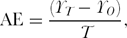 \begin{linenomath}\begin{equation*}
{\rm AE} = \frac{{(Y_T - Y_O )}}{T},\end{equation*}\end{linenomath}
The fertilizer recovery efficiency reflects the ability of plants to acquire applied nutrient from the soil. It measures the total amount of fertilizer recovered or absorbed by the plant per total kilograms applied. It is determined by the following formulae:
 \begin{linenomath}\begin{eqnarray*}
{\rm Nutrient}\,{\rm recovery} &=& N_T - N_o ,\\
{\rm Nutrient}\,{\rm recovery}\,{\rm efficiency}\,(\% ) &=& \frac{{(NT - No)}}{T} \times 100,
\end{eqnarray*}\end{linenomath}
Laboratory analyses
Soil samples were air-dried and the ones taken before treatment applications were analysed for pH (1: 2.5; soil:water), available P, exchangeable bases, acidity, organic carbon (%C) and total N (%N). Soil specific gravity was calculated by determining the weight of solid particles per weight of equal volume of water. Detailed laboratory procedures for specific gravity determination are outlined in Smith (Reference Smith1981). Soil samples taken after treatment applications were analysed for pH, exchangeable Al3+ and available P. The grain samples were analysed for P contents. Detailed procedures for both soil chemical and plant analyses are outlined in Okalebo et al. (Reference Okalebo, Gathua and Woomer2002).
Statistical analysis of data
Statistical analysis was carried out using General Statistics (GenStat, 2010). The generated data on maize grain yield and P fertilizer recovery efficiency were subjected to a general linear model two-way analysis of variance (ANOVA). The standard error of difference (SED) between means at p ≤ 0.05 was used to compare treatment means.
RESULTS
Initial soil characteristics of the study site
Table 1 presents data of the initial soil physical and chemical properties measured before lime and P fertilizer applications. The soil was strongly acid, had high exchangeable Al3+ and percentage Al saturation. The exchangeable Ca2+ and K+ were low while Mg2+ was adequate. The soil effective cation exchange capacity (ECEC), available P, total N and organic carbon were also low.
Effects of lime on soil pH and exchangeable Al during the experimental period (years 2005–2008)
Figure 2 shows the effect of lime on soil pH during the experimental period. Lime effectiveness on controlling soil acidity followed a general increasing order of control → 2 → 4 → 6 tons lime ha−1. About 3 months after lime application, the differences in soil pH between its various rates were very large, however, these narrowed down gradually as its effectiveness decreased with time. Where 2, 4 and 6 tons lime ha−1 was applied, the highest soil pH values of 6.2, 6.7 and 7.1 were observed in 92, 125 and 184 days, respectively. Soil pH dropped below pH 5.5 (a critical level below which Al toxicity becomes a problem to crop growth) in 701, 866 and 1283 days, where 2, 4 and 6 tons lime ha−1 was applied, respectively. The results therefore suggested that it would be necessary to reapply 2, 4 and 6 tons lime ha−1 after about 2, 3 and 4 years, respectively. In 1322 days, the pH had dropped to 4.6, 4.8, 5.1 and 5.3 where 0, 2, 4 and 6 tons lime ha−1 was applied, respectively, compared to the original pH 4.8 before lime application.
Effect of lime on soil pH during the cropping period; d = days from the time of lime application and error bars indicate standard errors of means (SEM).
The effects of lime on exchangeable Al3+ during the 4 years of cropping are shown in Figure 3. Lime at the rates of 2, 4 and 6 tons ha−1 reduced exchangeable Al3+ to the lowest values of 1.2, 0.8 and 0.4 cmol kg−1 in about 125, 184 and 215 days, respectively. These lowest troughs were followed thereafter by general increases in soil exchangeable Al3+. In 1322 days, exchangeable Al3+ levels were 2.1, 1.9, 1.7 and 1.4 cmol kg−1 where 0, 2, 4 and 6 tons lime ha−1 was applied, respectively, compared to the original value of 2.0 cmol kg−1 before lime application.
Effect of lime on exchangeable Al3+ during the cropping period; d = days from the time of lime application and error bars indicate SEM.
Effects of P fertilizer and lime on soil available P during the cropping period (years 2005–2008)
Figure 4 shows the effects of P fertilizer and lime on soil available P during the 4 years of cropping. For clarity of this figure, only 0 and 4 tons lime ha−1 are presented with the various P fertilizer rates. The highest soil available P levels were obtained in 27 days, and were 5.4, 6.9, 9.6, 13.3 and 16.3 mg kg−1 where 4 tons lime alone, 26 kg P, 26 kg P + 4 tons lime, 52 kg P and 52 kg P + 4 tons lime ha−1 were applied, respectively. Immediately after these highest peaks, there were rapid declines within about 35 days and thereafter gradual declines for the rest of the cropping seasons. Plots that received a combination of both lime and P fertilizer had higher soil available P than where either of them was applied alone. The recommended P fertilizer rate (26 kg p ha−1) for maize production in Kenya was observed to be inadequate to raise soil available P to the critical level (≥10 mg P kg−1 soil bicarbonate extractable P) required for healthy maize growth. To increase and maintain soil available P above the critical level where 52 kg P ha−1 was applied, it would be necessary to reapply the same rate every cropping season. However, with a combined application of 52 kg P ha−1 + 4 tons lime ha−1, it would be necessary to reapply 52 kg P ha−1 after every two cropping seasons. Therefore, to increase and maintain relatively higher residual soil available P necessary for high maize production, a combined application of both P fertilizer and lime would be important.
Effects of P fertilizer and lime on soil available P during the cropping period; d = days from the time of lime application and error bars indicate SEM. P fertilizer was applied on the 30th day.
Effects of lime and P fertilizer on grain yield
The effect of treatments on a 4-year average grain yield data is shown in Table 2. Both lime and P fertilizer had significant effects (p ≤ 0.05) on grain yield. The mean grain yield increments above control due to 2, 4, 6 tons lime ha−1, 26 kg P and 52 kg P ha−1 were 0.169, 0.340, 0.496, 0.581 and 1.167 tons ha−1, respectively. Combined applications of both lime and P fertilizer produced higher grain yield than either of them alone. Thus, the treatment effectiveness on grain yield increase followed the general increasing order of control → lime → P fertilizer → P fertilizer + lime.
The effects of lime and P fertilizer application on a 4-year average maize grain yield (tons ha−1).
Means based on three replicates. Means with different subscript letters are significantly different.
Figure 5 shows the effects of lime and P fertilizer on seasonal maize grain yield during the cropping period. Crop response to lime and P fertilizer was highest during the year of their applications, but thereafter gradually declined over the years. For example, during the LR in 2005, the application of 52 kg P + 6 tons lime ha−1 produced 3.41 tons ha−1, but declined to 1.67 tons ha−1 during the LR in 2008 and at the end of the study in SR 2008, it had dropped to1.49 tons ha−1. The grain yield during the LR was always higher than in the SR due to low and unreliable rainfalls experienced during the SR in western Kenya region. In 2006, grain yield was particularly low due to poor distribution and low rainfall that was experienced in June (Figure 1). This made plants to suffer from water stress during the vegetative growth, adversely affecting grain yield.
Immediate and residual effects of P fertilizer and lime on seasonal maize grain yield during the cropping period; P=kg P ha−1.
Agronomic P use and P fertilizer recovery efficiencies
The grain agronomic phosphorus use efficiency (APUE) is shown in Figure 6. The APUE decreased with increase in rates of P fertilizer and increased with increase in rates of lime. There was general decrease in the APUE over the cropping period. The 4-year mean APUE were 27, 32, 36, 41, 24, 26, 30 and 34 grain yield increase (kg ha−1) per kg P fertilizer due to the application of 26 kg P, 26 kg P + 2 tons lime, 26 kg P + 4 tons lime, 26 kg P + 6 tons lime, 52 kg P, 52 kg P + 2 tons lime, 52 kg P + 4 tons lime and 52 kg P ha−1 + 6 tons lime ha−1, respectively.
Effects of lime and P fertilizer rates on agronomic P use efficiency during the cropping period; P=kg P ha−1.
Table 3 shows the effects of P fertilizer and lime rates on P fertilizer recovery efficiency by maize grain. Immediately after the treatment applications, the rate of P fertilizer recovery was highest but progressively declined during the cropping period. The rate of P fertilizer recovery efficiencies generally decreased with increase in P fertilizer rates, while it increased with increase in rates of lime. After P fertilizer application, during the LR in 2005, P fertilizer recovery efficiencies were 13.5, 14.0, 14.8, 15.1, 9.6, 10.0, 10.3 and 10.5% due to 26 kg P, 26 kg P + 2 tons lime, 26 kg + 4 tons lime, 26 kg P + 6 tons lime, 52 kg P, 52 kg P + 2 tons lime, 52 kg + 4 tons lime, 52 kg P + 6 tons lime ha−1, respectively.
Effects of P fertilizer and lime rates on P recovery efficiency (percentage of the P fertilizer in the grain).
LR = Long rain; SR = Short rain. Means with different subscript letters are significantly different and means based on three replicates.
DISCUSSION
Effects of lime and P fertilizer on soil chemical properties before and after treatments application
The initial soil characterization revealed that the study site had acid soil with high exchangeable Al3+, low base cations, available P and N, considered unsuitable for healthy maize growth (Jaetzold and Schmidt, Reference Jaetzold and Schmidt1983; Landon, Reference Landon1984; Ligeyo, Reference Ligeyo2007). Acid soils with such high exchangeable Al3+ and low base cations reported in this study are characteristics of highly weathered soils, which have lost most of the base cations due to leaching by high rainfall. As a result, they have low available P due to its high fixation by Fe and Al oxides (Kanyanjua et al., Reference Kanyanjua, Ireri, Wambua and Nandwa2002; Landon, Reference Landon1991; Sanchez et al., Reference Sanchez, Shepherd, Soule, Place, Buresh, Izac, Mokwunye, Kwesiga, Nderitu, Woomer, Buresh, Sanchez and Calhoun1997; van Straaten, Reference van Straaten2007). The low soil N and available P reported in this study were partly because small-scale farmers rarely apply the recommended N and P fertilizer rates to replenish the nutrients removed through crop harvests (Okalebo et al., Reference Okalebo, Othieno, Woomer, Karanja, Sesmoka, Bekunda, Mugendi, Muasya, Bationo and Mukhwana2006). Therefore, low base cations, available P, N and high Al are some of the major causes of low maize grain yield on western Kenya acid soils.
The effects of lime on soil pH and exchangeable Al3+ were gradual because lime is known to react slowly with the soil to release Ca2+ and/or Mg2+ ions. The increase in soil pH and the reduction in exchangeable Al3+ were likely due to precipitation of H+, Al3+, Fe3+ and Mn4+ ions by Ca2+ and Mg2+ ions released from lime into the soil solutions. This resulted in increased soil available P due to reduction on its sorption by Al3+ and Fe3+ ions (Kanyanjua et al., Reference Kanyanjua, Ireri, Wambua and Nandwa2002; Moody et al., Reference Moody, Aitken and Dickson1998; The et al., Reference The, Calba, Zonkeng, Ngonkeu and Adetimirin2006). Due to its slow reactivity, the effects of lime on controlling soil acidity lasted longer than that of P fertilizer on maintain high soil available P in this study. On acid soils reported in the study, the residual effects of lime have been reported to last longer than other soil amendments (Sanchez, Reference Sanchez1976). The residual effects of higher rates of lime last longer than lower ones in acid tropical soils, as reported in this study (Abruna et al., Reference Abruna, Vicente-Chandler and Pearson1964). In a similar study, Mahilum et al. (Reference Mahilum, Fox and Silva1970) reported that 2 tons CaCO3 ha−1 kept exchangeable Al3+ below 1.0 cmol kg−1 from the original 3.0 cmol kg−1 for 5 years in an acid soil of Hawaii. The effect of P fertilizer on soil available P was very rapid, reaching the highest peaks in just about 30 days after TSP fertilizer applications because of its high solubility in water. Similar results have been reported in other tropical P-deficient acid soils (Kisinyo, Reference Kisinyo2011; Tisdale et al., Reference Tisdale, Nelson and Beaton1990). A higher P fertilizer rate increased and maintained higher residual soil available P longer than the lower one, similar to finding by Weisz et al. (Reference Weisz, White, Knox and Reed2003). In tropical acid soils, the residual effects of P fertilizer can persist for as long as 5–10 years (or more), depending on the initial P fertilizer rate applied, crop removal and soil buffering capacity (Tisdale et al., Reference Tisdale, Nelson and Beaton1990). Combined applications of P fertilizer and lime increased and maintained higher soil available P than where either of them was applied alone. This was because of the likely reduction in P sorption by lime, thus making the P fertilizer more available for plants (Buresh et al., Reference Buresh, Smithson, Hellums, Buresh, Sanchez and Calhoun1997; The et al., Reference The, Calba, Zonkeng, Ngonkeu and Adetimirin2006). Therefore, combined applications of lime and P fertilizer are important in increasing and maintaining higher residual soil available P in P-deficient acid soils, reported in this study.
Effects of P fertilizer and lime on maize performance
Both agronomic P use and P fertilizer recovery efficiencies decreased with increase in rates of P fertilizer, in accordance with von Leibig's Law of the Minimum which states that the most limiting factor determines the yield potentials (Giller et al., Reference Giller, Cadisch and Palm2002). Normally, once the most limiting factor is minimized, the second most limiting factor and so forth dictate production. Therefore, in this study, the application of the lower rate of P fertilizer made P deficiency not to be the most limiting factor. Similar decreases in the APUE with increase in rates of P fertilizer have been reported in Saudi Arabia (Hussein, Reference Hussein2009) and western Kenya (Nekesa, Reference Nekesa2007). P fertilizer recovery efficiencies were generally low and declined during the cropping period. In tropical acid soils, P fertilizer recovery rates/efficiencies are generally low, ranging from 10 to 20% due to high P sorption by Al and Fe oxides (Keerthisinghe et al., Reference Keerthisinghe, Zapata, Chalk, Hocking, Horst, Schenk, Bürkert, Claaseen, Flessa, Frommer, Goldbach, Olfs, Römheld, Sattelmacher, Schmidhalter, Schubert, Wirén and Wittenmayer2001). The declining trends of P fertilizer recovery efficiencies were due to continuous absorption of the residual solution P by plants without any fertilizer replenishment. Lime increased both the APUE and P fertilizer recovery efficiency because it relieved the plants of soil Al toxicity. This created a conducive environment for good root development, thus enhancing P uptake necessary for high grain production. Baligar et al. (Reference Baligar, Fageria and He2001) reported that the amelioration of adverse chemical conditions such as Al toxicity through the use of lime could enhance the capture and utilization of nutrients by plants. Therefore, lime application is important for efficient recovery and utilization of P fertilizer in P-deficient acid soils as found in western Kenya.
The application of P fertilizer increased grain yield because of the increased soil available P, which is necessary for healthy plant growth and high grain production. It was also observed that plots, which received P fertilizer, tasselled and formed grains earlier and had larger cobs compared to those without the fertilizer. Similarly, maize grain yield increment of 1.01 tons ha−1 due to the application of 26 kg P ha−1 has been reported in the Kenyan acid soils (Gudu et al., Reference Gudu, Okalebo, Othieno, Obura, Ligeyo, Schulze and Johnson2005). The above grain yield increments were due to the fact that in cereal crops P is essential for root development, vegetative growth, seed formation and faster grain maturity (Tisdale et al., Reference Tisdale, Nelson and Beaton1990). The higher P fertilizer rate (52 kg P ha−1) increased and maintained higher residual grain yield than the lower (26 kg P ha−1) because the former rate maintained relatively higher residual soil available P. Similar results have been reported in North Carolina acid soils (Weisz et al., Reference Weisz, White, Knox and Reed2003). Lime increased grain yield because it relieved maize plants from the toxic effects of H+, Fe3+, Al3+ and Mn4+ ions and increased soil available P due to the reduction in P sorption. Lime application also increased and maintained higher residual grain yields than the control. This was because not all the benefits of lime may be realized during the year of its application due to its long-term residual effects (Halvin et al., Reference Halvin, Tisdale, Beaton and Nelson2006). In the Brazilian Oxisols, lime had up to 6 years of positive maize grain yield after its application (De Freistas and van Raij, Reference De Freistas, van Raij, Barnemizsa and Alvarado1975). The observed general declining trend in grain yield during the cropping period was due to the increase in soil acidity, Al toxicity and decrease in soil available P. Such declining trends in maize grain yield, reported in this study, have been observed in Kenya and other tropical areas due to increased soil acidity and soil fertility depletions (Ayaga, Reference Ayaga2003; Kisinyo, Reference Kisinyo2011; Qureshi, Reference Qureshi1991; Sanchez et al., Reference Sanchez, Shepherd, Soule, Place, Buresh, Izac, Mokwunye, Kwesiga, Nderitu, Woomer, Buresh, Sanchez and Calhoun1997).
CONCLUSIONS
Lime reduced soil acidity, exchangeable Al3+ and increased available P resulting in high APUE, P fertilizer recovery efficiencies necessary for high maize grain yield. Higher rates of lime and P fertilizer increased and maintained longer residual effects on soil pH, exchangeable Al3+, available P and grain yield than lower ones. Where 2, 4 and 6 tons lime ha−1 was used, it would be necessary to reapply the same rates after every 2, 3 and 4 years, respectively, to control soil acidity. The 26 kg P ha−1 fertilizer rate generally recommended for maize production in Kenya was not adequate to increase soil available P to the critical level (10 mg P kg−1 soil bicarbonate extractable P) necessary for high maize production. Where 52 kg P ha−1 and combined 52 kg P + 4 tons lime ha−1 were used, it would be necessary to reapply 52 kg P ha−1 after every one and two cropping seasons, respectively, to maintain soil available P above the critical level. The 4-year mean grain yield increments above the control were 0.17, 0.34, 0.50, 0.58 and 1.17 tons ha−1 due to 2, 4, 6 tons lime ha−1, 26 kg P and 52 kg P ha−1, respectively. Combined applications of lime and P fertilizer had higher soil available P, grain yield, agronomic P use and P fertilizer recovery efficiencies than P fertilizer alone. Therefore, the management of P-deficient acid soils of western Kenya requires combined applications of lime and P fertilizer.
Acknowledgments
We are grateful to The McKnight Foundation and Alliance for Green Revolution in Africa (AGRA) for funding the research work. We also appreciate Mr Silvanus Ondere for allowing us to use his farm and Mrs Mary Emong'ole for her support during the field and laboratory studies.



