Introduction
Social anxiety disorder (SAD) is one of the most common psychiatric disorders (Kessler et al., Reference Kessler, Berglund, Demler, Jin, Merikangas and Walters2005) and many patients with SAD are refractory to pharmacotherapy (Keller, Reference Keller2006; Yonkers, Dyck, & Keller, Reference Yonkers, Dyck and Keller2001). Among other treatment methods, exposure therapy has been identified as effective (Heimberg, Becker, Goldfinger, & Vermilyea, Reference Heimberg, Becker, Goldfinger and Vermilyea1985; Ponniah & Hollon, Reference Ponniah and Hollon2008). However, when performing exposure therapy for SAD patients, it takes a great deal of effort and time to accurately recreate interpersonal situations that will provoke the appropriate level of fear response in patients (e.g. in order to conduct exposure therapy for a patient with a fear of public speaking, one would need to gather an audience and regulate their reactions). Virtual reality (VR) has made large advances and has allowed for experimenting with the use of VR in exposure therapy (Virtual reality exposure therapy: VRET) to treat phobias and anxiety disorders (Mishkind, Norr, Katz, & Reger, Reference Mishkind, Norr, Katz and Reger2017). There is currently research being done on the efficacy of VRET for treating SAD, public speaking anxiety (PSA), fear of public speaking (FPS), and similar conditions, and several meta-analyses of such studies already exist. In all these meta-analyses, the effectiveness shown in pre-post and waiting list comparisons was the same. When comparing in vivo exposure, Wechsler, Mühlberger, and Kümpers (Reference Wechsler, Mühlberger and Kümpers2019) reported that in vivo exposure had greater efficacy than VRET, but meta-analyses that included larger numbers of studies, such as those by Chesham, Malouff, and Schutte (Reference Chesham, Malouff and Schutte2018) and Carl et al. (Reference Carl, Stein, Levihn-Coon, Pogue, Rothbaum, Emmelkamp and Powers2019) reported that evidence suggests VRET may have the similar efficacy as in vivo exposure. However, because other types of studies, such as single-arm studies and randomized controlled trials (RCTs) that had control groups other than in vivo exposure, were not included in these previous meta-analyses, there are many more studies on the efficacy of VRET for SAD that should be considered. Therefore, these should also be examined to confirm whether results so far may change with more information. Also, only Kampmann, Emmelkamp, and Morina (Reference Kampmann, Emmelkamp and Morina2016b) conducted meta-analyses of follow-up studies and the number of studies included was small. It is important to look at the long-term effects of a large number of studies. This is because evaluations done directly following the intervention period will reflect a decrease in the fear targeted by the VRET experience, and there is a possibility that anxiety felt in real-life social situations is not reflected; or that after VR intervention has finished, once the subject is placed in real-life social situations, it may be easier for symptoms to reoccur as compared to conventional therapy. Furthermore, as far as we know, there have been no meta-analyses done for dropout rates for SAD patients. Also, methods for treating SAD are becoming more diverse, which means that VRET need not consist purely of VR exposure; in fact, there are multiple studies that combine VRET with additional treatment methods such as cognitive behavioral therapy (CBT) and other psychotherapy practices. This diversification of methodology makes it more difficult to fully understand which methods are effective.
In this study, our aim was to conduct a meta-analysis of research that has used VRET as an intervention for SAD, and to comprehensively evaluate the efficacy of VRET. To accomplish this, we investigated the following three points of inquiry in our analysis: (1) How do symptoms change with the use of VRET, and especially, how do they change over a long-term period? (2) When VRET is compared with waiting lists or treatment-as-usual (TAU), what are the effect size and dropout rates? (3) When VRET is compared with in vivo exposure, are there differences in efficacy (over both short and long terms) or in dropout rates?
Methods
Search strategy
This systematic review and meta-analysis followed the standards set forth in the Preferred Reporting Items for Systematic Reviews and Meta-Analyses (PRISMA) guidelines (Moher, Liberati, Tetzlaff, & Altman, Reference Moher, Liberati, Tetzlaff and Altman2009). The search strategy and analysis method are registered at PROSPERO (#CRD42019121097). The systematic literature search was done by five investigators using PubMed, PsycINFO, and Scopus databases. The search terms used were [SAD OR ‘social anxiety’ OR ‘social fear’ OR ‘social phobia’ OR ((speak* OR speech) AND (anxiety OR fear))] AND [(virtual OR augmented OR artificial OR mixed) AND (environment OR reality OR audience)]. The last search was conducted in May 2020. There was no lower publication date limit to the searches.
Study selection
A primary screening of the studies identified in the literature search was done by reviewing the titles and abstracts for those items that appeared to focus on intervention methods using VR. For studies that were selected via this screening method, as well as studies that had been used in the previous meta-analyses on this topic, we obtained full versions of the articles, and, in a secondary screening process, determined if the articles met the following eligibility criteria: (1) study participants were diagnosed with one of the following: SAD, FPS, or PSA; (2) VRET was conducted for three or more sessions; (3) study participants numbered 10 or more people. This meta-analysis included not only RCTs, but also single-arm studies where all subjects were given VR intervention. Research using VR has so far been experimental and focused mainly on smaller numbers of cases, so even the majority of RCTs for VR intervention have small case sizes. This means that, in order to conduct a meta-analysis of all the research and participants, we considered it is best to also include single-arm studies. However, case reports with small numbers of cases are more likely to be influenced by reporting bias, and in order to avoid this, we established the inclusion criteria of 10 or more participants. For both the primary and secondary screenings of the articles, two of the five investigators looked at each article, and in cases where investigators disagreed on the status of an article, a third investigator was asked to assist in the decision-making process.
Data extraction
Studies that met all the eligibility criteria outlined above were each reviewed by two investigators who extracted the data from each study. The primary outcome was the change in social anxiety score from the baseline point. In cases where social anxiety was measured with more than one method, we used the Liebowitz Social Anxiety Scale (LSAS) score (Liebowitz, Reference Liebowitz1987). For missing data (e.g. missing standard deviations), we asked for data and clarification by sending an email directly to the relevant study authors. If the standard deviation value of the outcome was not available, we estimated the value based on other research that used the same outcome (Furukawa, Barbui, Cipriani, Brambilla, & Watanabe, Reference Furukawa, Barbui, Cipriani, Brambilla and Watanabe2006). The secondary outcome was the dropout rate.
Comparisons
Improvement of symptoms and duration thereof following VRET
In order to investigate how effective VRET is, and how long the effects will continue, we first compared symptom severity at baseline v. the following five-time points, respectively: post-intervention, 3 months post-intervention, 6 months post-intervention, 12 months post-intervention, and 6 years post-intervention.
Comparison with waiting list or treatment-as-usual groups
In order to examine the effect size of VRET as compared to untreated controls and standard treatments, the change in symptoms from baseline to post-intervention was compared between the VRET group and waiting list/TAU group. The dropout rate for the VRET and waiting list/TAU groups was also compared.
Comparison with in vivo exposure
To investigate the differences in efficacy between VRET and in vivo exposure therapy, the change in symptoms from baseline to post-intervention was compared between the VRET group and in vivo exposure group. The long-term effect was also compared based on symptom differences between the baseline and follow-up time points. Additionally, the dropout rate for VRET and in vivo exposure was compared.
Sensitivity analysis and moderator analysis
We conducted a sensitivity analysis and moderator analysis on the results from baseline and post-intervention comparisons. To investigate whether or not the treatment efficacy changed depending on differences in intervention methods, study protocol, and subjects' diagnoses, we conducted sensitivity analyses for the following: (1) whether VRET was used with or without structured psychotherapy; (2) whether the study protocol was an RCT or not; (3) whether participants were diagnosed with SAD or other disorders (i.e. PSA and FPS).
Next, with the goal of determining which factors are important for VRET to be effective, we conducted a meta-regression analysis of the following continuous moderator variables: (1) number of VR sessions; (2) number of total sessions; (3) ratio of VR sessions to total sessions; (4) time of total VR sessions; (5) time of total sessions; (6) ratio of VR sessions' time to total sessions' time; (7) baseline LSAS-total score; (8) publication year. However, we did not conduct multiple meta-regression analyses because we considered there were too few studies to do so.
Meta-analytic procedures
Hedges' g ± 95% confidence intervals (CIs) were calculated for continuous outcomes (i.e. social anxiety score) using random-effect models. For dichotomous outcome, the risk ratio was calculated using random-effect models. To evaluate heterogeneity, I 2, Q, and p values were reported. When there were three or more studies, we also calculated the prediction interval. Comprehensive Meta-analysis Version 3 was used for the analysis.
Risk of bias assessment
For all studies that met the eligibility criteria, two investigators evaluated each study for risk of bias. These assessments were done in accordance with the Cochrane Collaboration's tool for assessing the risk of bias in RCTs (Higgins et al., Reference Higgins, Altman, Gøtzsche, Jüni, Moher, Oxman and Sterne2011). Publication bias was assessed via visual inspection of funnel plots using Egger's intercept test (Egger, Smith, Schneider, & Minder, Reference Egger, Smith, Schneider and Minder1997) and trim and fill procedure (Duval & Tweedie, Reference Duval and Tweedie2000).
Results
Search results
Out of 478 articles that were screened in the primary and secondary processes, 22 articles met the eligibility criteria for this meta-analysis (online Supplementary Fig. S1). The 78 articles that were excluded during the secondary screening were rejected for the following reasons: 14 studies had less than three intervention sessions; four studies had too few participants; 32 studies did not measure efficacy; six studies did not actually utilize VR in their intervention methods; two studies did not investigate SAD, PSA, and/or FPS; six were review articles; 13 studies examined the exact same cohort; and lastly, one study looked at the efficacy of virtual space in a social game as an intervention method (Yuen et al., Reference Yuen, Herbert, Forman, Goetter, Comer and Bradley2013), and it was felt that the heterogeneity of this study was too high compared to the others, so it was excluded.
Study characteristics
Of the 22 studies selected for our meta-analysis, 14 of those studies investigated patients with SAD, and eight studies investigated FPS or PSA. Eleven studies were RCTs. Seven studies reported data for waiting list/TAU groups as control groups. Ten studies had in vivo exposure (including group exposure, imaginary exposure, etc.) comparison groups. Twelve studies used a combination of VRET and psychotherapy, nine studies used only VRET, and one study used both VRET and psychotherapy separately. Within the studies that used a combination of VRET and psychotherapy, CBT was the most-used psychotherapy method, appearing in eight studies (Table 1).
Characteristics of studies and patients
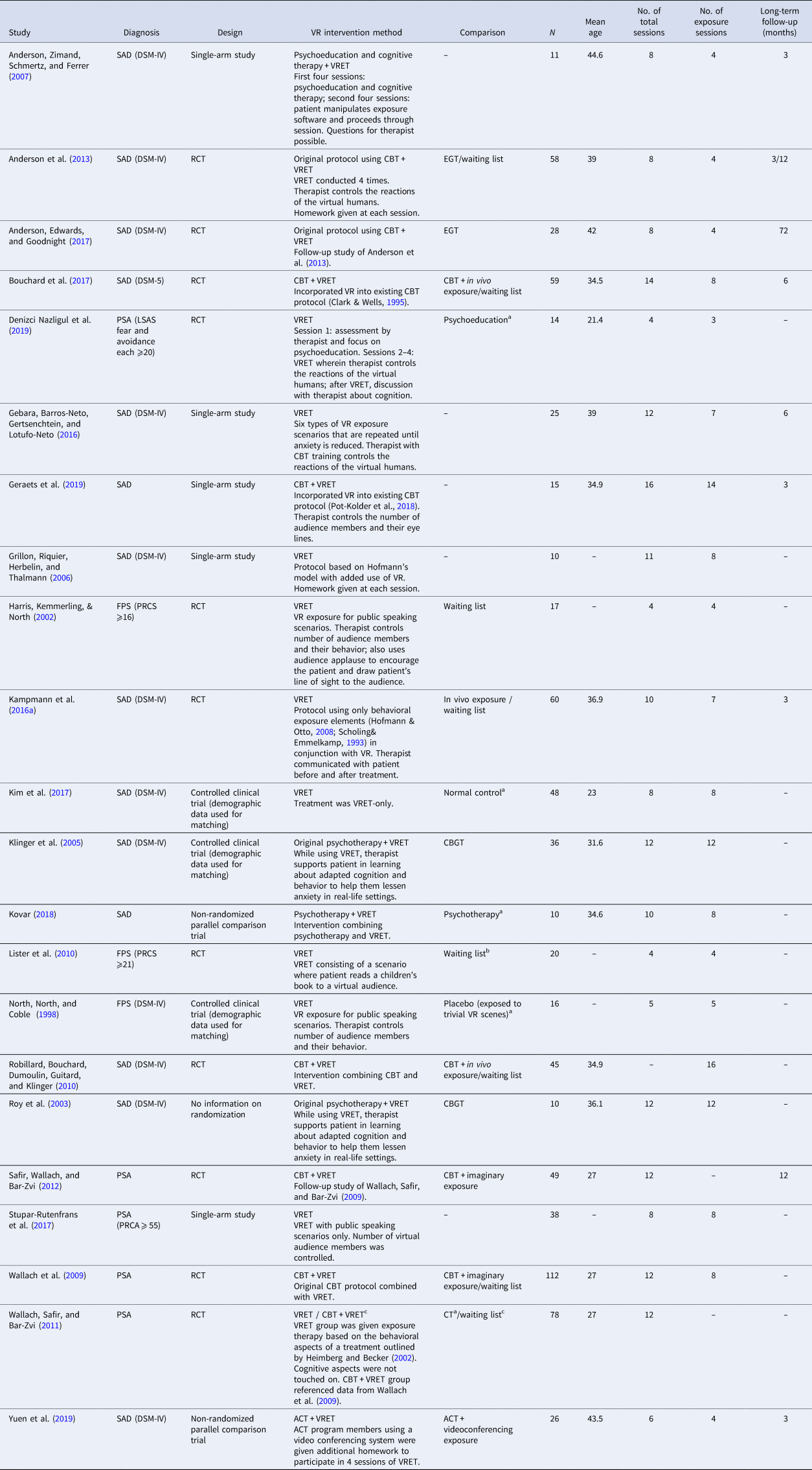
ACT, acceptance and commitment therapy; CBT, cognitive behavioral therapy; CBGT, cognitive behavioral group therapy; CT, cognitive therapy; DSM, Diagnostic and Statistical Manual of Mental Disorders; EGT, exposure group therapy; FPS, fear of public speaking; LSAS, Liebowitz Social Anxiety Scale; PRCA, Personal Report of Communication Apprehension; PRCS, Personal Report of Confidence as a Speaker; PSA, public speaking anxiety; SAD, social anxiety disorder; VRET, virtual reality exposure therapy.
a This comparison is different from that of in vivo exposure and waiting list groups, and was not included in our analysis.
b Due to inadequacies in the data, we did not include them in our analysis.
c These data are duplicated from other studies, and so were not used in our analysis.
The number of participants included in the meta-analysis was 586 [VRET 325 (VRET + psychotherapy 163, VRET-only 162), in vivo exposure therapy 138, waiting list/TAU 123], and the average age was 33.5 years.
Improvement of symptoms and duration thereof following VRET
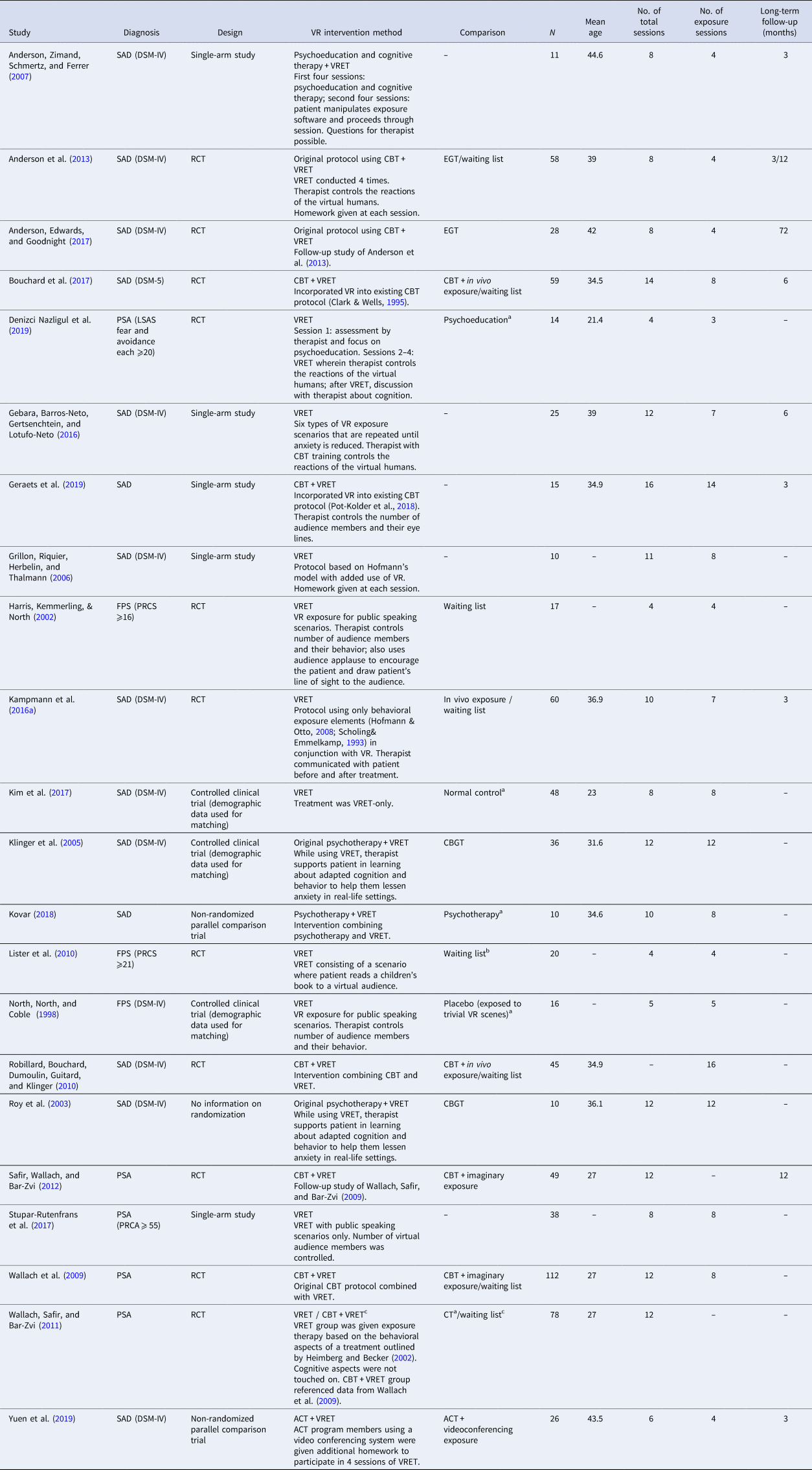
There was a significant decrease in symptom evaluation scores from baseline to post-intervention [studies = 20, n = 299, Hedges' g = −0.86 (−1.04 to −0.68), p < 0.001; heterogeneity I 2 = 77.6%, Q = 84.9, p < 0.001; prediction interval = −0.80 (−1.54 to −0.06)] (Fig. 1). Each follow-up time points also displayed a significant decrease in symptom scores from baseline (Fig. 1). Effect sizes at each follow-up time points are as follows: 3 months post-intervention [studies = 5, n = 80, Hedges' g = −1.03 (−1.35 to −0.72), p < 0.001; heterogeneity I 2 = 70.0%, Q = 13.3, p = 0.01; prediction interval = −0.96 (−1.94 to 0.03)], 6 months post-intervention [studies = 2, n = 38, Hedges' g = −1.14 (−1.39 to −0.89), p < 0.001; heterogeneity I 2 = 0%, Q < 0.01, p = 0.94)], 12 months post-intervention [studies = 2, n = 55, Hedges' g = −0.74 (−1.05 to −0.43), p < 0.001; heterogeneity I 2 = 64.5%, Q = 2.8, p = 0.09], and 6 years post-intervention [studies = 1, n = 13, Hedges' g = −0.43 (−0.77 to −0.09), p = 0.01; heterogeneity I 2 = 0%, Q < 0.01, p < 0.001].
Symptom reduction compared to baseline score at each time point. Negative scores indicate treatment efficacy.

VRET v. waiting list or treatment-as-usual
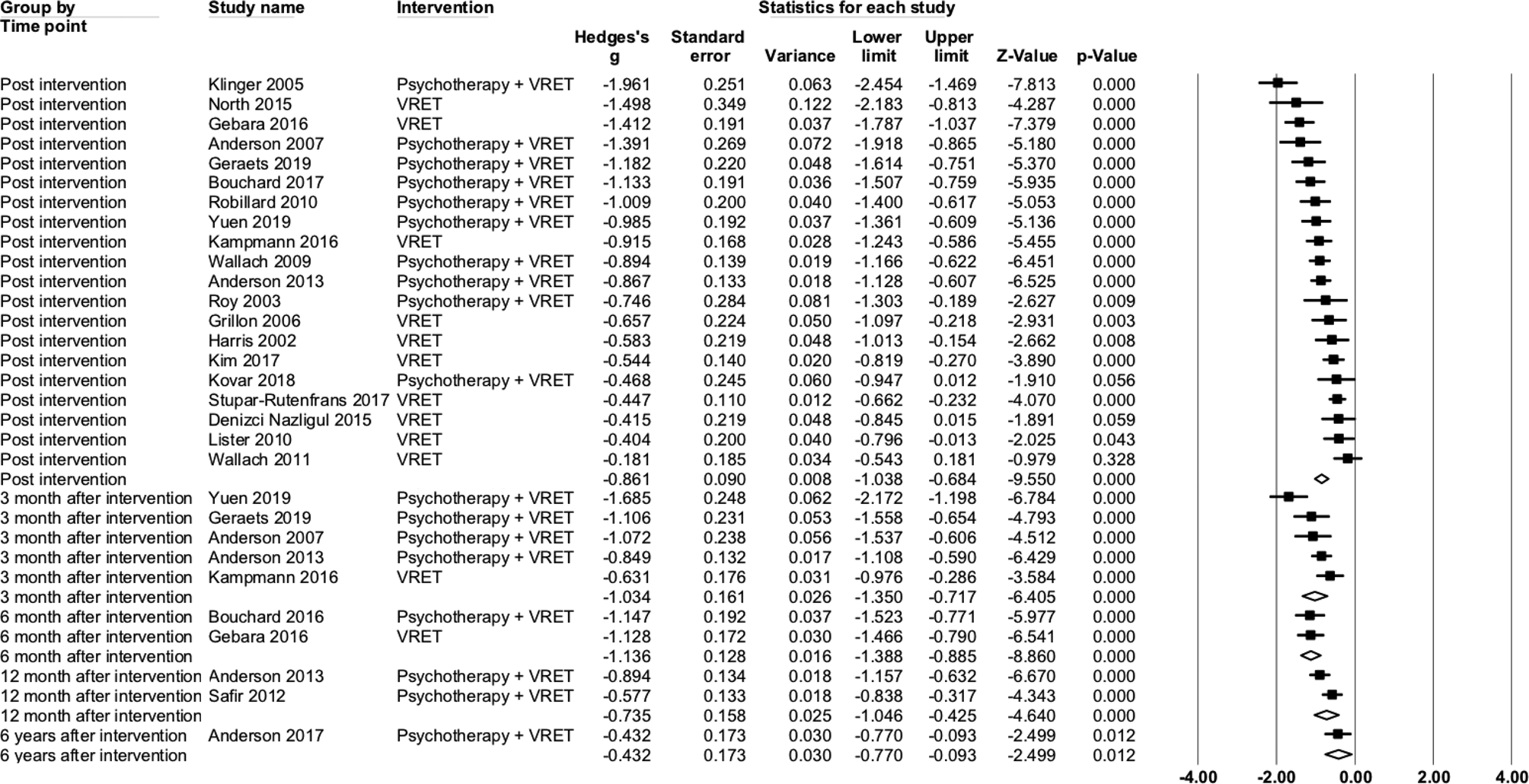
VRET was significantly more effective compared with waiting list/TAU [studies = 7, n = 273, Hedges' g = −1.23 (−1.70 to −0.76), p < 0.001; heterogeneity I 2 = 67.6%, Q = 18.5, p = 0.005; prediction interval = −1.23 (−2.71 to 0.25)] (Fig. 2).
Comparison of treatment efficacy for VRET and waiting list/treatment-as-usual groups at treatment end-point.

There was no difference in dropout rates between VRET groups and waiting list/TAU groups [studies = 6, n = 118, Risk ratio = 1.25 (0.66 to 2.37), p = 0.49; heterogeneity I 2 = 0%, Q = 4.70, p = 0.45; prediction interval = 1.25 (−0.33 to 2.84)] (online Supplementary Fig. S2).
VRET v. in vivo exposure
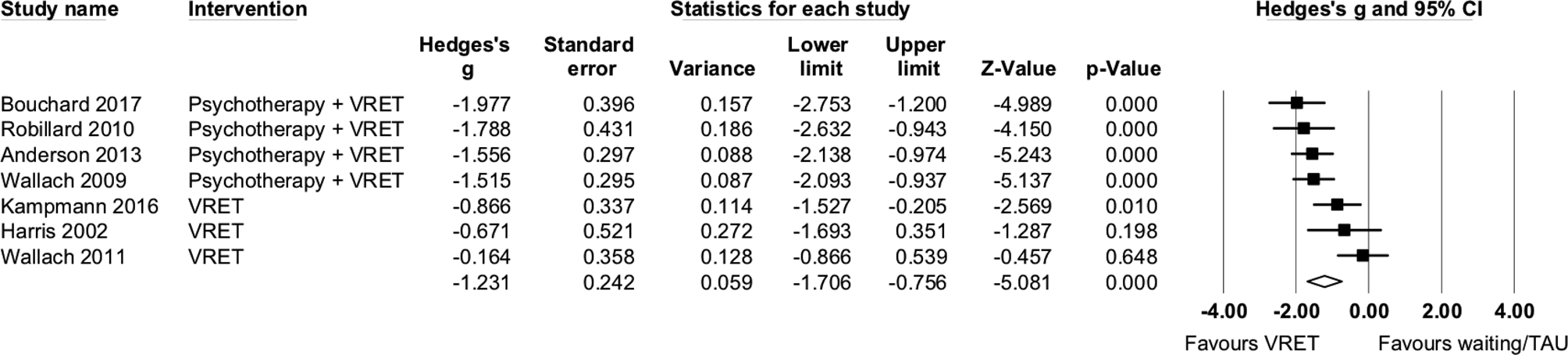
There was no significant difference between the effect size of VRET and in vivo exposure at post-intervention [studies = 10, n = 355, Hedges' g = 0.07 (−0.41 to 0.55), p = 0.78; heterogeneity I 2 = 78.6%, Q = 42.0, p < 0.001; prediction interval = 0.07 (−1.57 to 1.71)] (Fig. 3).
Comparison of treatment efficacy for VRET and in vivo exposure groups at each post-treatment time point.

However, at 3 months post-intervention, in vivo exposure showed greater efficacy [studies = 3, n = 129, Hedges' g = 0.81 (0.01 to 1.61), p = 0.047; heterogeneity I 2 = 76.8%, Q = 8.6, p = 0.01; prediction interval = 0.81 (−8.57 to 10.19)], whereas at 6 months post-intervention, VRET showed greater efficacy [studies = 1, n = 39, Hedges' g = −0.86 (−1.51 to −0.21), p = 0.10]. Then at 12 months post-intervention [studies = 2, n = 118, Hedges' g = 0.46 (0.09–0.82), p = 0.01; heterogeneity I 2 = 0%, Q = 0.32, p = 0.57] and 6 years post-intervention [studies = 1, n = 28, Hedges' g = 1.12 (0.34–1.90), p = 0.005], in vivo exposure, again, showed greater efficacy compared to VRET (Fig. 3).
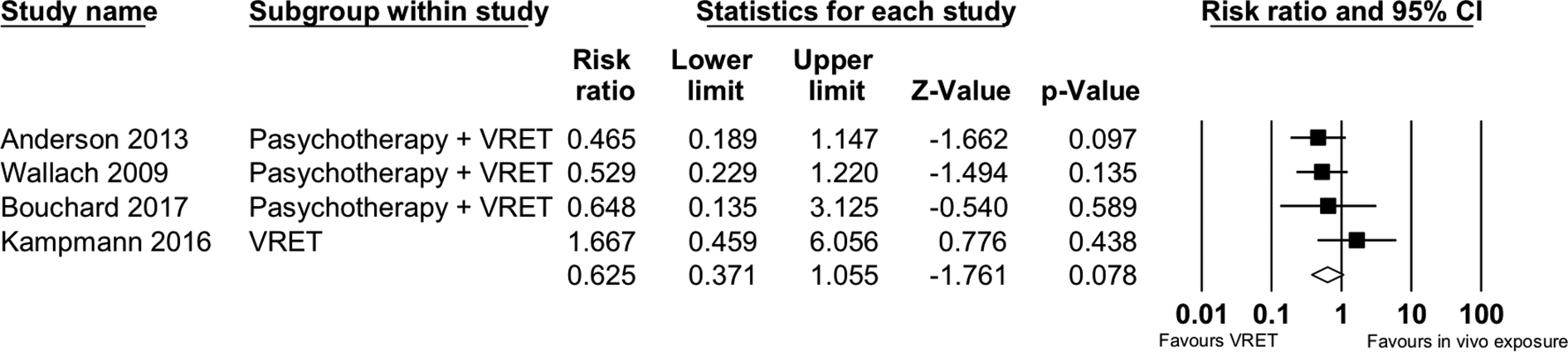
There was no significant difference in dropout rates between VRET and in vivo exposure [studies = 4, n = 126, risk ratio = 0.63 (0.37–1.06), p = 0.08; heterogeneity I 2 = 0%, Q = 2.79, p = 0.43; prediction interval = −0.33 (−1.17 to 0.51)] (Fig. 4).
Dropout comparison between VRET and in vivo exposure groups.

Sensitivity analysis and moderator analysis
Regardless of whether VRET was combined with psychotherapy or not, there was significant improvement after intervention for combination VRET and psychotherapy [studies = 10, n = 163, Hedges' g = −1.05 (−1.25 to −0.84), p < 0.001; heterogeneity I 2 = 64.1%, Q = 25.0, p = 0.003; prediction interval = −1.01 (−1.63 to −0.39)), and for VRET only (studies = 10, n = 162, Hedges' g = −0.67 (−0.90 to −0.44), p < 0.001; heterogeneity I 2 = 75.7%, Q = 37.0, p < 0.001; prediction interval = −0.62 (−1.36 to 0.13)] (online Supplementary Fig. S3).
Similarly, both RCT and non-RCT studies showed significant treatment effect: RCTs [studies = 9, n = 142, Hedges' g = −0.73 (−0.93 to −0.52), p < 0.001; heterogeneity I 2 = 66.6%, Q = 23.9, p = 0.002; prediction interval = −0.75 (−1.36 to −0.15)]; non-RCTs [studies = 11, n = 157, Hedges' g = −1.00 (−1.30 to −0.71), p < 0.001; heterogeneity I 2 = 83.3%, Q = 60.0, p < 0.001; prediction interval = −0.84 (−1.85 to 0.18)] (online Supplementary Fig. S4).
Likewise, patients with SAD as well as those with FPS or PSA responded to VRET treatment: SAD [studies = 13, n = 196, Hedges' g = −1.01 (−1.21 to −0.81), p < 0.001; heterogeneity I 2 = 71.3%, Q = 41.8, p < 0.001; prediction interval = −0.96 (−1.65 to −0.28)]; FPS or PSA [studies = 7, n = 103, Hedges' g = −0.58 (−0.82 to −0.33), p < 0.001; heterogeneity I 2 = 69.0%, Q = 19.3, p = 0.004; prediction interval = −0.55 (−1.26 to 0.15)] (online Supplementary Fig. S5).
A meta-regression analysis showed that none of the individual moderators had a statistically significant effect on the effect size of VR (online Supplementary Table S1). Although there were no significant effects, we found that there was a trend for effect size to increase as the number of total sessions increased (β = −0.05, p = 0.06).
Study quality and publication bias
For many studies, there was an inadequate amount of detail necessary to determine whether they contained information that should be considered for bias risk (online Supplementary Fig. S6). Only three studies mentioned random sequence generation, and two studies mentioned allocation concealment (Anderson et al., Reference Anderson, Price, Edwards, Obasaju, Schmertz, Zimand and Calamaras2013; Kampmann et al., Reference Kampmann, Emmelkamp, Hartanto, Brinkman, Zijlstra and Morina2016a), but one study did not have enough information about concealment (Bouchard et al., Reference Bouchard, Dumoulin, Robillard, Guitard, Klinger, Forget and Roucaut2017). There were no studies that mentioned blinding for data analysts. The analyses in three studies were considered to have attrition bias (Anderson et al., Reference Anderson, Price, Edwards, Obasaju, Schmertz, Zimand and Calamaras2013; Bouchard et al., Reference Bouchard, Dumoulin, Robillard, Guitard, Klinger, Forget and Roucaut2017; Kampmann et al., Reference Kampmann, Emmelkamp, Hartanto, Brinkman, Zijlstra and Morina2016a). For reporting bias, study protocols were available for only two studies (Bouchard et al., Reference Bouchard, Dumoulin, Robillard, Guitard, Klinger, Forget and Roucaut2017; Kampmann et al., Reference Kampmann, Emmelkamp, Hartanto, Brinkman, Zijlstra and Morina2016a) and all studies reported their predicted outcomes. For other bias, one study used multiple recruiting methods, which consequently made the randomization of those methods unequal (Harris, Kemmerling, & North, Reference Harris, Kemmerling and North2002).
A funnel plot appeared to show asymmetry in the effect size of the standard error and Egger's test showed significance (p = 0.03) (online Supplementary Fig. S7). Applying Duval and Tweedie's trim and fill procedure did not alter results.
Discussion
Summary of results
We conducted a systematic review and meta-analysis targeting 22 studies that examined the efficacy of VRET for SAD, PSA, and FPS. Compared to previous meta-analyses on this topic, this meta-analysis comprises the largest number of articles to date. The results of our analysis showed that the efficacy of VRET intervention for SAD had a large effect size and that throughout the follow-up time points of 3 months to 6 years, there was a long-lasting effect. Even when compared with waiting list/TAU groups, there was a large effect size and dropout rates were similar. Compared to in vivo exposure intervention, the efficacy of VRET at the post-intervention time points was similar. However, although VRET was shown to be significantly more effective at 6 months post-intervention, in vivo exposure was shown to be more effective at 3 months, 12 months, and 6 years post-intervention. There was no difference in dropout rates between VRET and in vivo exposure.
Efficacy of VRET at post-intervention
VRET intervention for SAD showed a large effect size for symptom evaluation scores at post-intervention and also showed a large effect size when compared with waiting list/TAU groups. In prior meta-analyses, conclusions regarding the efficacy of VRET when compared with in vivo exposure differed across studies (Carl et al., Reference Carl, Stein, Levihn-Coon, Pogue, Rothbaum, Emmelkamp and Powers2019; Chesham et al., Reference Chesham, Malouff and Schutte2018; Kampmann et al., Reference Kampmann, Emmelkamp and Morina2016b; Wechsler et al., Reference Wechsler, Mühlberger and Kümpers2019), but we found that VRET had the similar efficacy as in vivo exposure. Even when we examined the efficacy of VRET for FPS/PSA and SAD separately in our analysis, we did not find a significant difference in efficacy. Additionally, there was no significant difference in efficacy between intervention methods that combined VRET with psychotherapy and VRET-only methods.
Long-term efficacy of VRET
When compared to baseline data, the efficacy of VRET intervention continued for a long-term period following treatment and had a large effect size at time points of 3 months and 6 months post-intervention. Based on these findings, we believe that the changes caused by VRET intervention allowed for a decrease in fear felt in real-life situations and prevented relapses following the intervention. However, the effect size was smaller at 12 months and 6 years post-intervention. VRET was more effective than in vivo exposure at 6 months post-intervention, but for all other follow-up time points, in vivo exposure showed more efficacy. It was reported that methods such as traditional CBT and exposure therapy using in vivo exposure had continued efficacy for more than 12 months (Ponniah & Hollon, Reference Ponniah and Hollon2008; van Dis et al., Reference van Dis, van Veen, Hagenaars, Batelaan, Bockting, van den Heuvel and Engelhard2020). Compared to that, although it is difficult to make a definitive statement since only a few studies have compared the long-term efficacy of in vivo exposure, the long-term effects of VRET intervention may be inferior.
Influence of VRET on dropout rates
There were no significant differences in dropout rates between VRET and in vivo exposure or waiting list/TAU groups. While there may be a perception that dropout rates for VRET are high, the truth may actually be counterintuitive, as it has been pointed out that dropout rates for in vivo exposure are high due to patients' strong reluctance to undergo the treatment (Choy, Fyer, & Lipsitz, Reference Choy, Fyer and Lipsitz2007) and one of the merits of VRET is that patients have a less psychological aversion to participating in it (Garcia-Palacios, Botella, Hoffman, & Fabregat, Reference Garcia-Palacios, Botella, Hoffman and Fabregat2007). While there is still room for research on why dropout rate for VRET is low, if VRET treatment technology was to advance even further than it has now, VRET could provide a more gentle introduction to exposure therapy than in vivo methods, possibly leading to a lower dropout rate.
It is also important to note that the working alliance of a patient and their healthcare provider is a major variable in psychotherapy (Flückiger, Del Re, Wampold, & Horvath, Reference Flückiger, Del Re, Wampold and Horvath2018; Sharf, Primavera, & Diener, Reference Sharf, Primavera and Diener2010) and the working alliance has been shown to have an effect on the treatment efficacy and dropout rates for SAD patients when treated with CBT (Haug et al., Reference Haug, Nordgreen, Öst, Tangen, Kvale, Hovland and Havik2016). While we do not yet know how the working alliance may influence the outcome of VRET (Meyerbröker & Emmelkamp, Reference Meyerbröker and Emmelkamp2010), two of the studies included in this meta-analysis evaluated the working alliance as part of their research. Anderson et al. (Reference Anderson, Price, Edwards, Obasaju, Schmertz, Zimand and Calamaras2013) stated that there was no difference in the working alliance between VRET and group exposure therapy. Bouchard et al. (Reference Bouchard, Dumoulin, Robillard, Guitard, Klinger, Forget and Roucaut2017) reported that there was no statistical difference in the working alliance between a CBT + VRET group and CBT + in vivo exposure group and that the working alliance data were a predictor of symptom improvement for both groups. In light of this, it would appear that the working alliance would be a major factor when utilizing VRET to treat SAD and it is possible that the use of VR technology would not cause dropout rates to increase by way of negatively impacting the working alliance.
Quality of VR technology
In the case of VRET, the quality of the VR technology used can influence the efficacy of the treatment. When using VRET to treat anxiety disorder, the feeling of presence created by VR technology is thought to influence subjects' anxiety levels and this is an important factor in making the treatment effective (Price & Anderson, Reference Price and Anderson2007; Robillard, Bouchard, Fournier, & Renaud, Reference Robillard, Bouchard, Fournier and Renaud2003). Additionally, it was reported that when the levels of feeling of presence and anxiety produced via the VR technology are too low, there is an increase in the dropout rate (Krijn et al., Reference Krijn, Emmelkamp, Biemond, de Ligny, Schuemie and van der Mast2004). The results of this meta-analysis show that: dropout rates are similar for VRET and in vivo exposure interventions; efficacy is also similar for at least the post-intervention time point; and that the VR technology used in research is at a level that allows for practical clinical application.
It should be noted that it is still unclear what role feeling of presence plays in using VRET to treat SAD and there are even reports that feeling of presence in a VR environment does not actually affect the anxiety levels of SAD patients (Ling, Nefs, Morina, Heynderickx, & Brinkman, Reference Ling, Nefs, Morina, Heynderickx and Brinkman2014; Morina, Brinkman, Hartanto, & Emmelkamp, Reference Morina, Brinkman, Hartanto and Emmelkamp2014). However, Price, Mehta, Tone, and Anderson (Reference Price, Mehta, Tone and Anderson2011) analyzed the relationship between the treatment effect of VRET for SAD and feeling of presence at each subscale. As a result, they found that the realness subscale (the degree to which the virtual stimulus matches the expected value of the real stimulus) was connected to anxiety levels and that the involvement subscale (the degree to which a subject stays focused on the virtual stimulus) was associated with symptom improvement. Further investigation is needed to determine what virtual environment/stimulus is most appropriate for treating SAD.
Recommendations for future research
There were significant differences regarding VRET content, number of VRET sessions, the proportion of VRET sessions to the total number of sessions, and use or non-use of psychotherapy among the studies that were included in this meta-analysis. Further research may uncover the ideal way to utilize VRET. However, we also anticipate that there will be individual differences between subjects as to what situations cause the greatest anxiety, their degree of symptom severity, etc. Therefore, the ideal treatment would be one that can be optimized for each patient by providing the ability to access a diversity of content and adjust the anxiety-inducing stimuli. VRET is suitable for this purpose and thus could be an important tool in exposure therapy.
There are already some approaches that can be used to adjust VRET to create a tailor-made treatment for each SAD patient. To find the best exposure environment for each SAD patient, various scenarios are used in VRET, such as speeches, meetings, meals, and ordering in shops. There are also a few methods to regulate anxiety. For example, patients with SAD are more likely to be anxious about the negative expressions of others (Phan, Fitzgerald, Nathan, & Tancer, Reference Phan, Fitzgerald, Nathan and Tancer2006; Stein, Goldin, Sareen, Zorrilla, & Brown, Reference Stein, Goldin, Sareen, Zorrilla and Brown2002; Straube, Mentzel, & Miltner, Reference Straube, Mentzel and Miltner2005), so patients' anxiety levels can be controlled by varying the facial expressions on VR avatars used in VRET (Qu, Brinkman, Ling, Wiggers, & Heynderickx, Reference Qu, Brinkman, Ling, Wiggers and Heynderickx2014). Additionally, in public speaking settings, there have been attempts to control patients' anxiety levels by adjusting the number of audience members they see (Kampmann et al., Reference Kampmann, Emmelkamp, Hartanto, Brinkman, Zijlstra and Morina2016a; North, North, & Coble, Reference North, North and Coble1998; Stupar-Rutenfrans, Ketelaars, & van Gisbergen, Reference Stupar-Rutenfrans, Ketelaars and van Gisbergen2017). In the future, creating these controlled stimuli using VR will become increasingly easier than preparing real-life situations. It is also possible to use VR technology to create even stronger trigger situations that would be hard to produce in real-life situations, such as creating an audience of 100 000 people in a stadium for a public speaking situation. Furthermore, among SAD patients, there are those who have a strong fear of speaking to authority figures, and with VR technology it is possible to put patients face-to-face with great historical figures, like past presidents, and have them converse or have a meal together.
The other method for diversifying treatment is to conduct exposure therapy while monitoring patients' autonomic nervous systems and adjusting exposure until the ideal anxiety level is achieved. It is thought that skin conductance response and heart rate fluctuate based on changes in anxiety levels are triggered by VRET. Several studies included in our meta-analysis monitored such biological signals during treatments but were unable to clarify exactly how those signals are related to the treatments (Harris et al., Reference Harris, Kemmerling and North2002; Kim et al., Reference Kim, Hong, Kim, Jung, Kyeong and Kim2017; Lister, Piercey, & Joordens, Reference Lister, Piercey and Joordens2010; North et al., Reference North, North and Coble1998). It would be advantageous to develop an algorithm for selecting the most appropriate virtual stimulus based on such biological information.
Limitations
There were several limitations for this meta-analysis study. First, there were large differences in how VR technology was used in each study and there was also a broad range among the studies of how much time was provided for VR exposure at each session and how many sessions were done in total. Second, it is likely that there were differences in the ‘reality’ created by the different VR software used among the studies. Third, few studies had sufficient study quality, which highlights the need for more high-quality, large-scale RCTs. In particular, there were very few studies that did long-term evaluations of efficacy and it is possible that conclusions put forth thus far may change based on the results of future long-term research.
Conclusion
VRET is an acceptable treatment for SAD patients that has significant, long-lasting efficacy, although it is possible that during long term follow-up, VRET efficacy lessens as compared to in vivo exposure. While VRET offers flexibility in how it can be tailored to the individual situation of each patient with SAD, there is still much that is unclear about which intervention method is most appropriate. More high-quality RCTs that examine the long-term effects of VRET are needed.
Supplementary material
The supplementary material for this article can be found at https://doi.org/10.1017/S0033291720003785.
Acknowledgements
We would like to thank Dr Hélène Wallach for providing additional data and Dr Max North for his advice on our analysis. This research received no specific grant from any funding agency, commercial or not-for-profit sectors.
Authors contributions
TH, TK, and MM contributed to designing the study, analyzing the data, and writing the manuscript. The systematic literature search and data extraction were done by TH, S Kurokawa, K Sawada, S Kudo, K Shiga, and TK.
Conflict of interest
None.