




No CrossRef data available.
Article contents
Amiodarone for post-operative junctional ectopic tachycardia
Published online by Cambridge University Press: 14 April 2005
Abstract
Background: Post-operative junctional ectopic tachycardia is a transient, but potentially life threatening, rapid automatic tachyarrhythmia that requires urgent and adequate treatment. In our study, we review retrospectively the use and efficacy of amiodarone for this arrhythmia over an 8-year period in our institution. Methods and patients: Retrospective review revealed 15 patients who were administered amiodarone for post-operative junctional ectopic tachycardia during the period. The median age was 2.6 months, with a range from 8 days to 8.1 months. The median weight was 4.6 kilograms, with a range from 2.6 to 8.2 kilograms. Results: The median heart rate at diagnosis of the tachycardia was 192 beats per minute, and the range was 182 to 229 beats per minute. The biochemistry was essentially normal. The median length of time until the tachycardia was controlled was 4.5 hours, and the range was from 1 to 19.5 hours, with 13 of the 15 patients controlled within 12 hours. The median dose of amiodarone received by this time was 5.9 milligrams per kilogram, with a range from 1.0 to 25.0 milligrams per kilogram. Hypotension or bradycardia within 4 hours of commencing amiodarone were noted in 2 patients. Conclusion: Experience in our institution, and a review of the literature, suggests that the most rapid control of post-operative junctional ectopic tachycardia will be obtained by a bolus of amiodarone followed by an intravenous infusion. Intravenous amiodarone is generally safe, with few side effects. Reported life threatening arrhythmias, however, suggest that intravenous amiodarone should be restricted to a setting where invasive monitoring and external cardiac pacing are available.
Information
- Type
- Original Article
- Information
- Copyright
- 2005 Cambridge University Press
Post-operative junctional ectopic tachycardia is a transient, but potentially life-threatening, rapid automatic arrhythmia that occurs in up to one-quarter of patients following congenital cardiac surgery.1 The abnormal rhythm causes significant morbidity and mortality, secondary to decreased cardiac output. The rapid heart rates, and lack of atrioventricular synchrony, result in insufficient ventricular filling during diastole, and increased consumption of energy by the heart. The tachycardia has been difficult to control, and various strategies have been employed in management, with the aim of decreasing the junctional rate, and permitting the commencement of synchronous atrioventricular pacing.1–3 The natural history of the post-operative tachycardia, if the patient survives, is spontaneous reversion to sinus rhythm, commonly after a period of between 2 and 8 days.1
Amiodarone has been reported to be effective in managing post-operative junctional ectopic tachycardia.1, 3–5 Different regimens have been employed, either a loading dose followed by an infusion,1, 3 or repeated boluses.4, 5 Both protocols have been effective, with few reported adverse events.6–8 As part of a wider review of the post-operative management of junctional ectopic tachycardia,9 in this report we describe our retrospective review of the use of amiodarone over a period of 8 years. We aimed to assess whether a conclusion could be drawn from our data and the available literature regarding the most appropriate regime for the administration of intravenous amiodarone for postoperative junctional ectopic tachycardia.
Methods
We searched electronically the computerised database showing admissions to our Paediatric Intensive Care Unit from 1 August 1995 until 31 July 2003 for patients diagnosed with junctional ectopic tachycardia who were administered amiodarone during their admission. We then retrospectively reviewed the charts of these patients. Diagnosis was confirmed on the basis of the clinical notes, nursing observation charts, and assessment of the electrocardiograms, including atrial electrocardiograms and electrocardiograms taken following the administration of adenosine. The criterions for diagnosis were a heart rate greater than 180 beats per minute, QRS morphology the same as during postoperative sinus rhythm, atrioventricular rate discordance, and the presence of “warm up phenomenons”.1, 3
Time of control of the tachycardia was defined as “the time the spontaneous pulse rate was first recorded at less than 180 beats per minute”. If external pacing was in use, then the first recorded paced rate less than or equal to 180 beats per minute was taken as the time of control.
The plan for treatment of the tachycardia in our institution was at the discretion of the attending intensivist. For the majority of the period of study, this included sedation, paralysis, surface cooling to achieve a core temperature of 35 degrees Celsius, correction of biochemical abnormalities, decreasing inotropic support where possible, and intravenous infusion of amiodarone. During the last year of the study, treatment was changed to correction of biochemistry and administration of amiodarone as a bolus, followed by further boluses or intravenous infusion. Once the junctional rate was reduced, external cardiac pacing was instituted in order to re-establish atrioventricular synchrony.
Results are presented as the median and range.
Results
Diagnostic criterions and operative procedures. We treated 15 patients having postoperative junctional ectopic tachycardia, confirmed according to the criterions outlined above, with intravenous amiodarone. Table 1 shows the total number of the various procedures that were performed during the study, and the percentage of those with junctional ectopic tachycardia that was treated with amiodarone. For comparison, the available published frequencies are also included.
Table 1. Procedures undertaken during the period from 1/8/1995 to 31/7/2003.

The surgical procedures performed in the 15 patients suffering postoperative junctional ectopic tachycardia are shown in Tables 1 and 2. The median age was 2.6 months, with a range from 8 days to 8.1 months, and the median weight was 4.6 kilograms, with a range from 2.6 to 8.2 kilograms. Junctional ectopic tachycardia was diagnosed a median of 9 hours after admission to the intensive care unit, with a range from 0 to 46 hours. The median heart rate at diagnosis was 192 beats per minute, ranging from 182 to 229 beats per minute. Median mean arterial blood pressure was 55 millimetres of mercury, ranging from 39 to 63 millimetres of mercury, and systolic blood pressure was 72 millimetres of mercury with a range from 54 to 90 millimetres of mercury. The temperature at diagnosis ranged from 35.3 to 39.2 degrees Celsius, with a median core temperature of 37.0 degrees Celsius. Only one patient was febrile. Review of the biochemical investigations revealed levels of sodium in the serum to be at, or above, the upper limit of normal, and levels of potassium within the normal range. The level of ionised calcium was normal in all but three patients, who were just below the normal range. The level of magnesium was either normal or elevated compared to the normal range. Inotropic support at the time of diagnosis included dopamine at a median of 5 micrograms per kilogram per minute, with a range from 0 to 10 micrograms per kilogram. The median rate of infusion of dobutamine was 4.8 micrograms per kilogram per minute, with a range from 0 to 9.8 micrograms per minute. In one patient, we administered adrenaline at 0.05 micrograms per kilogram per minute, and in another we gave milrinone at 0.05 micrograms per kilogram per minute. All patients were sedated with intravenous infusions or boluses of morphine. Of the infants, 6 were paralysed at the time of diagnosis.
Table 2. Patient age and weight; procedures undertaken; a summary of junctional ectopic tachycardia management and outcome measures in these patients.

Treatment given for junctional ectopic tachycardia. Besides amiodarone, sedation was continued or increased in all patients, and six further patients were administered paralysing agents. Measures to provide surface cooling were applied to 11 patients. Core temperature was decreased by a median of 1.0 degrees Celsius, with a range from 0 to 2.6 degrees Celsius. Peripheral temperature was decreased by 3.4 degrees Celsius, with a range from −1.4 to 11.4 degrees Celsius. In 4 patients, we administered a total of 15 boluses of magnesium sulphate. Of these, six boluses were temporally associated with a decrease in the rate of the junctional rhythm. All four patients had a total level of magnesium in the serum in the normal range or above at the time of administration.
We treated 13 patients with an intravenous infusion of amiodarone. The median loading dose was 6.0 milligrams per kilogram, with a range of 5.3 to 9.4 milligrams per kilogram. This was administered over a median of 4 hours, but varied from 3.5 to 6.5 hours. The loading dose was followed by an intravenous infusion of 20 milligrams per kilogram per day, with a range from 7.2 to 28.8 milligrams per kilogram per day. The rate of infusion was continued for a median duration of 72 hours, with a range between 40 and 160 hours.
In 2 patients, we initially gave intravenous boluses of amiodarone at 5 milligrams per kilogram. The tachycardia was not controlled after this bolus. An intravenous infusion was therefore commenced 1 and 2.5 hours after the loading dose at 20 milligrams per kilogram per day. The tachycardia was then controlled one hour after commencement of the intravenous infusion. The infusions were administered for 68 and 50 hours.
Initial control of the tachycardia. The median length of time until the tachycardia was controlled was 4.5 hours, with a range from 1 to 19.5 hours. In 13 of the 15 patients, 87%, control was achieved by 12 hours. The median decrease in pulse rate was 40 beats per minute, with a range from 6 to 86 beats per minute, from the rate at the diagnosis of the tachycardia. The median arterial pressure was 52 millimetres of mercury, ranging from 38 to 88 millimetres of mercury, and the median systolic blood pressure was 68 millimetres of mercury, the range being from 50 to 100 millimetres of mercury. These were not different to the measurements at diagnosis or 1 hour after diagnosis. The median dose of amiodarone received at the time of achieving control was 5.9 milligrams per kilogram, with a range between 1.0 and 25.0 milligrams per kilogram. Both infants initially treated with boluses of amiodarone were controlled earlier than the median of 4.5 hours. Three patients were in sinus rhythm when the heart rate decreased below 180 beats per minute. Pacing was commenced after the rate of tachycardia was controlled in ten of the patients.
Recurrence of junctional ectopic tachycardia. Tachycardia recurred after initial control of the rate in five patients. In two cases, these recurrences were less than 4 hours from the time of diagnosis, suggesting that the focus of the tachycardia may still have been “warming up”. Tachycardia recurred more than 8 hours after initial control in the other patients. All of the patients were receiving intravenous infusions of amiodarone at the time of recurrence, four were paced, and one was in sinus rhythm.
Adverse effects of amiodarone. Adverse effects potentially secondary to the amiodarone were discovered in 3 patients. In one patient, the blood pressure decreased from 68/40 to 56/38 4 hours into the infusion while pacing continued at 170 beats per minute. Another patient developed a slow junctional rhythm at 100 beats per minute, with a blood pressure of 44/32, 2 hours after the commencement of the infusion. A third patient, while still in junctional ectopic tachycardia four hours after commencement of the infusion, suffered from a significant hypotensive episode. These adverse effects were managed with boluses of colloid and external cardiac pacing.
Discussion
Junctional ectopic tachycardia occurs in between one-sixth and one-quarter of infants following repair of tetralogy of Fallot, in up to one-eighth of infants following repair of ventricular septal defect, in one-tenth of infants following repair of atrioventricular septal defect, and in one-third of infants following repair of anomalous pulmonary venous return. The tachycardia may also occur in about one-twentieth of infants after Fontan procedures, and can be encountered in infants after construction of a Blalock– Taussig shunt.1, 2 As seen in Table 1, however, the incidence of the tachycardia in our series of patients is lower than published elsewhere. This was most likely due to our study being restricted to those with junctional ectopic tachycardia who were treated with amiodarone.
The median age of our patients, at 2.2 months, is younger than in other studies, one of which reported a median of 5.9 months.1 In older children, junctional ectopic tachycardia may be diagnosed at a rate lower than 180 beats per minute, taking into consideration the increased age and weight.1 As the patients in our study were a homogenous cohort, we considered it appropriate to use a single cut-off of 180 beats per minute in our diagnostic criterions.
About three-quarters of our patients experienced the tachycardia within 24 hours of admission to the intensive care unit. Others have reported half of their afflicted patients developing the tachycardia in the first 24 post-operative hours.2 If the patient survives, it is usual to find spontaneous resolution to sinus rhythm, usually between two and eight days after the operation, with a median of 36 hours.1, 10, 11
Prior to the use of amiodarone, Walsh et al.11 reported the best efficacy in treatment with their protocol involving sedation, decrease of catecholamines, and avoidance of hyperthermia, followed by active cooling and intravenous procainamide. In the 30 patients treated in this fashion, the median time to achieve control was 2 hours, with a mean of 2.9 hours, and standard error of 2 hours. In another series, Hoffman et al.2 found that three-quarters resolved within one day of treatment, with 17 of these were treated with avoidance of hyperthermia, sedation, and minimising catecholamines. The other 8 patients were treated with amiodarone, pacing, active cooling, or a combination of these. In the experience of Raja et al.,3 two-thirds of the patients had a heart rate less than 180 beats per minute at 2 hours. They used a bolus of 5 milligrams per kilogram given over 1 hour, followed by a further infusion of 5 milligrams per kilogram given over 12 hours. Their patients returned to sinus rhythm at a median of 72 hours, with a range from 3 to 120 hours, which suggests that control by amiodarone does not influence spontaneous resolution to sinus rhythm. Subsequently, Perry et al.4 reported that a beneficial effect was achieved in more then nine-tenths of patients by administering an initial bolus of amiodarone at 5 milligrams per kilogram given over 10 minutes. Laird et al.5 also administered boluses of 5 milligrams per kilogram over a period of 5 to 10 minutes, giving additional boluses if required. In their patients, both heart rate and blood pressure had improved by one hour. The mean loading dose was 8.2 milligrams per kilogram. An infusion of amiodarone at 20 milligrams per kilogram per day was then given to 7 of their patients. In 2 patients, who were not commenced on an infusion, the tachycardia recurred after a single bolus.
Our median time of four and a half hours to achieve control of the tachycardia compares favourably with these other studies. By 12 hours, almost nine-tenths of our patients had a pulse rate less than 180 beats per minute. The response in our cohort was not as rapid as in those that used boluses in their initial management, albeit that the median dose of amiodarone needed to attain control was similar. In healthy individuals, amiodarone injected intravenously rapidly distributes into a large apparent volume of distribution. There is a 10% decline in peak values within 30 to 45 minutes of the completion of injection. Total plasma clearance of amiodarone averages about 1.9 millilitres per minute per kilogram, with a range from 1.4 to 2.5 millilitres per minute per kilogram.12 This pharmacodynamic profile would suggest the most appropriate dosing regime would be a loading dose, followed by an infusion to maintain adequate concentrations of the drug in the serum.
The recognised adverse effects that result from short-term intravenous administration of amiodarone are bradycardia, hypotension, and arrhythmia. We had two patients who suffered hypotension and bradycardia, likely a result of the administration of the amiodarone. The third patient was still in junctional ectopic tachycardia, which could contribute to hypotension. Other studies of amiodarone use in post-operative junctional ectopic tachycardia have reported both hypotension and bradycardia,3–5, 7 which was mild and easily managed by administration of fluids and external cardiac pacing. There are also case reports of significant, life-threatening arrhythmias such as polymorphic ventricular tachycardia and electromechanical dissociation.6, 8 Fatalities from these arrhythmias suggest that intravenous administration of amiodarone should be undertaken in an environment with invasive monitoring and immediate access to external pacing and resuscitation.
In 4 patients in our study, intravenous boluses of magnesium were given which were likely to have confounded the effect of the treatment with amiodarone, as six of the nine boluses were temporally related to a decrease in the junctional rate. There are a number of other studies that demonstrate the anti-arrhythmic effect of intravenous magnesium, both in adults13–17 and in children.18, 19
The retrospective nature of our study, and the low rate of tachycardia per diagnosis, may suggest a selection bias. This bias is likely to be towards selecting the more significant and severe of those with the diagnosis of junctional ectopic tachycardia. Other cases may have occurred during our study that were not treated with amiodarone, and so were not reviewed. The small number of patients does not allow for analysis of subgroups, in particular it is not possible to control for the use of magnesium, or the other modalities, that were used in treatment.
References
Dodge-Khatami A, Miller OI, Anderson RH, Gil-Jaurena JM, Goldman AP, de Leval MR. Impact of junctional ectopic tachycardia on postoperative morbidity following repair of congenital heart defects. Eur J Cardiothorac Surg 2002; 21: 255–259.Google Scholar
Hoffman TM, Bush DM, Wernovsky G, et al. Postoperative junctional ectopic tachycardia in children: incidence, risk factors, and treatment. Ann Thorac Surg 2002; 74: 1607–1611.Google Scholar
Raja P, Hawker RE, Chaikitpinyo A, et al. Amiodarone management of junctional ectopic tachycardia after cardiac surgery in children. Br Heart J 1994; 72: 261–265.Google Scholar
Perry JC, Fenrich AL, Hulse JE, Triedman JK, Friedman RA, Lamberti JJ. Pediatric use of intravenous amiodarone: efficacy and safety in critically ill patients from a multicenter protocol. J Am Coll Cardiol 1996; 27: 1246–1250.Google Scholar
Laird WP, Snyder CS, Kertesz NJ, Friedman RA, Miller D, Fenrich AL. Use of intravenous amiodarone for postoperative junctional ectopic tachycardia in children. Pediatr Cardiol 2003; 24: 133–137.Google Scholar
Gandy J, Wonko N, Kantoch MJ. Risks of intravenous amiodarone in neonates. Can J Cardiol 1998; 14: 855–858.Google Scholar
Celiker A, Ceviz N, Ozme S. Effectiveness and safety of intravenous amiodarone in drug-resistant tachyarrhythmias of children. Acta Paediatr Jpn 1998; 40: 567–572.Google Scholar
Yap SC, Hoomtje T, Sreeram N. Polymorphic ventricular tachycardia after use of intravenous amiodarone for postoperative junctional ectopic tachycardia. Int J Cardiol 2000; 76: 245–247.Google Scholar
Haas NA, Plumpton K, Justo R, Jalali H, Pohlner P. Postoperative junctional ectopic tachycardia (JET). Z Kardiol 2004; 93: 371–380.Google Scholar
Lan YT, Lee JC, Wetzel G. Postoperative arrhythmia. Curr Opin Cardiol 2003; 18: 73–78.Google Scholar
Walsh EP, Saul JP, Sholler GF, et al. Evaluation of a staged treatment protocol for rapid automatic junctional tachycardia after operation for congenital heart disease. J Am Coll Cardiol 1997; 29: 1046–1053.Google Scholar
MIMS online. Sydney, NSW: Hcn.; 2004.
England MR, Gordon G, Salem M, Chernow B. Magnesium administration and dysrhythmias after cardiac surgery. A placebo-controlled, double-blind, randomized trial. JAMA 1992; 268: 2395–2402.Google Scholar
Fox ML, Burrows FA, Reid RW, Hickey PR, Laussen PC, Hansen DD. The influence of cardiopulmonary bypass on ionized magnesium in neonates, infants, and children undergoing repair of congenital heart lesions. Anesth Analg 1997; 84: 497–500.Google Scholar
Wilkes NJ, Mallett SV, Peachey T, Di Salvo C, Walesby R. Correction of ionized plasma magnesium during cardiopulmonary bypass reduces the risk of postoperative cardiac arrhythmia. Anesth Analg 2002; 95: 828–834 (Table of Contents).Google Scholar
Yurvati AH, Sanders SP, Dullye LJ, Carney MP, Archer RL, Koro PP. Antiarrhythmic response to intravenously administered magnesium after cardiac surgery. South Med J 1992; 85: 714–717.Google Scholar
Casthely PA, Yoganathan T, Komer C, Kelly M. Magnesium and arrhythmias after coronary artery bypass surgery. J Cardiothorac Vasc Anesth 1994; 8: 188–191.Google Scholar
Dorman BH, Sade RM, Burnette JS, et al. Magnesium supplementation in the prevention of arrhythmias in pediatric patients undergoing surgery for congenital heart defects. Am Heart J 2000; 139: 522–528.Google Scholar
Dittrich S, Germanakis J, Dahnert I, et al. Randomised trial on the influence of continuous magnesium infusion on arrhythmias following cardiopulmonary bypass surgery for congenital heart disease. Intensive Care Med 2003; 29: 1141–1144.Google Scholar
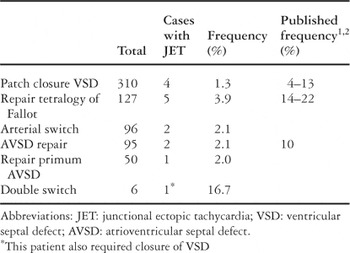
Table 1.
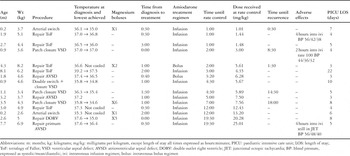
Table 2.
 You have
Access
- 33
- Cited by