INTRODUCTION
Plant-herbivore food webs in tropical rain forests are exceptionally complex due to the high diversity of both plant species and insect herbivores feeding on them. Highly specialized plant-herbivore interactions are of particular interest since they may be crucial for maintaining high diversity of both plants and herbivores (Novotny et al. Reference NOVOTNY, MILLER, BAJE, BALAGAWI, BASSET, CIZEK, CRAFT, DEM, DREW, HULCR, LEPS, LEWIS, POKON, STEWART and WEIBLEN2010). In niche theory, host specificity promotes herbivore species coexistence by narrowly partitioning plant resources among community members (Lewinsohn & Roslin Reference LEWINSOHN and ROSLIN2008). Further, host-specific herbivores can act as density-dependent agents limiting the abundance of their host plant species, thus promoting the high species diversity characteristic of tropical rain forests as stipulated by the Janzen–Connell hypothesis (Connell Reference CONNELL, Boer and Gradwell1971, Freckleton & Lewis Reference FRECKLETON and LEWIS2006, Janzen Reference JANZEN1970, Wright Reference WRIGHT2002).
Seed predators may play a particularly important role in tropical rain forests as a highly specialized guild of herbivores that can destroy a large proportion of seed crops, thus influencing the population dynamics of individual plant species as well as overall plant diversity (Janzen Reference JANZEN1971, Lewis & Gripenberg Reference LEWIS and GRIPENBERG2008, Wright Reference WRIGHT1983). Rearing from diverse plant lineages revealed narrow host specificity of seed-eaters (Janzen Reference JANZEN1980, Pinzon-Navarro et al. Reference PINZON-NAVARRO, BARRIOS, MURRIA, LYAL and VOGLER2010), whilst other studies focusing on closely related plant species revealed wider diets including more than one congeneric host (Lyal & Curran Reference LYAL and CURRAN2000, Reference LYAL and CURRAN2003; Nakagawa et al. Reference NAKAGAWA, ITIOKA, MOMOSE, YUMOTO, KOMAI, MORIMOTO, JORDAL, KATO, KALIANG, HAMID, INOUE and NAKASHIZUKA2003).
There is an important ecological distinction between herbivores feeding on fleshy mesocarp, e.g. most fruit flies (Copeland et al. Reference COPELAND, LUKE and WHARTON2009, Novotny et al. Reference NOVOTNY, CLARKE, DREW, BALAGAWI and CLIFFORD2005), and those attacking the seed itself, e.g. seed-feeding beetles. Some plant lineages, such as Fabaceae (Delobel & Delobel Reference DELOBEL and DELOBEL2006, Janzen Reference JANZEN1980, Kergoat et al. Reference KERGOAT, DELOBEL, FEDIERE, RU and SILVAIN2005), Dipterocarpaceae (Lyal & Curran Reference LYAL and CURRAN2000, Reference LYAL and CURRAN2003; Nakagawa et al. Reference NAKAGAWA, ITIOKA, MOMOSE, YUMOTO, KOMAI, MORIMOTO, JORDAL, KATO, KALIANG, HAMID, INOUE and NAKASHIZUKA2003), and Arecaceae (Wright Reference WRIGHT1983), are particularly prone to attack by seed predators. This vulnerability could be related to seed morphology and chemistry, although studies of seed palatability for insect herbivores are few.
Seed-feeding guilds tend to be relatively species-poor, even in the diverse tropics. Only 40 seed-feeding beetle species were found from 24 species of Dipterocarpaceae in Borneo (Nakagawa et al. Reference NAKAGAWA, ITIOKA, MOMOSE, YUMOTO, KOMAI, MORIMOTO, JORDAL, KATO, KALIANG, HAMID, INOUE and NAKASHIZUKA2003) and 110 species from 975 dicotyledonous species in Costa Rica (Janzen Reference JANZEN1980). Frugivores exhibit the same counterintuitive combination of high host specificity (i.e. narrow trophic niches) and low diversity as leaf-miners or gallers (Novotny et al. Reference NOVOTNY, MILLER, HRCEK, BAJE, BASSET, LEWIS, STEWART and WEIBLEN2012, Shorthouse et al. Reference SHORTHOUSE, WOOL and RAMAN2005), requiring an ecological or phylogenetic explanation.
This study examines the abundance, species richness and host specificity of frugivorous weevils on a phylogenetically diverse sample of plants in the lowland rain forest of Papua New Guinea, testing two key prerequisites, that they are host specific and cause significant seed mortality, for them to be a potentially important mortality factor in maintaining plant diversity in tropical forests (Janzen Reference JANZEN1970). Further, we test the hypothesis that seed-eating species exhibit higher host specificity than flesh-eating species, responding thus to the more specialized plant defences of seeds. Finally, we explore the effect of fruit and seed morphology on the diversity of frugivorous beetles, in order to explain why there are so few species of them in tropical forests.
METHODS
Study areas
The study was conducted from March 2008 to April 2009 in two areas approximately 100 km apart: (1) near the villages of Baitabag, Mis and Ohu within a 20 × 10-km area comprising a successional mosaic of disturbed and mature lowland rain forest (5°08ʹ–14ʹS, 145°7ʹ–41ʹE, 50–200 m asl, Madang Province, Papua New Guinea), and (2) in relatively less disturbed forest near Wanang village (5°14ʹS, 145°11ʹE, 100 m asl). Vegetation in these areas is similar in species composition and has been classified as mixed evergreen rain forest on Latosol (Laidlaw et al. Reference LAIDLAW, KITCHING, GOODALL, SMALL and STORK2007, Paijmans Reference PAIJMANS1976, Whitfeld et al. Reference WHITFELD, KRESS, ERICKSON and WEIBLEN2012) with a humid climate (mean annual rainfall 3600 mm), a mild dry season from July to September, and mean annual temperature of 26°C (McAlpine et al. Reference McALPINE, KEIG and FALLS1983).
Study design
Fruits were sampled by searching a 200–400-ha matrix of mature and early-successional forest at each site and by collecting all plant species encountered in the fruiting condition. Sampling effort amounted to 1284 person-days of field work (312 person-days per site in Baitabag, Mis and Ohu and 348 person-days in Wanang). Mature or nearly mature fruits were collected from branches and the forest floor whereas decomposing fruits on the ground were avoided. A collection of fruits from an individual tree or liana on a particular day represented a single sample unit for analysis. Individual samples comprised from 1 to 1500 individual fruits and weighed between 22 and 8311 g. We employed a functional definition of individual fruit for the purpose of measurement to encompass aggregate fruits arising from the fusion of adjacent carpels (e.g. Artocarpus and Ficus). For a subset of plant species, basal area in a 50-ha forest dynamics plot at Wanang was used as a proxy for ecological dominance, where all individual trees with dbh >1 cm were measured and identified (G. Weiblen unpubl. data). We calculated basal area for 218 species which were present in the plot out of a total of 531 plant species from which fruits were sampled.
One or several ripe fruits from each sample were cut along both axes and photographed. Cross-sectional area of the fruit and the seed were estimated for 268 species from diameter measurements of the photographs using Adobe Photoshop and the volume of each was calculated as a volume of ellipsoid (4/3 × 3.14 × length of half-axis A × length of half-axis B × length of half-axis C). The volume of the fruit, the combined volume of seeds per fruit (in the case of many-seeded fruits) and fleshiness (% of fruit volume represented by mesocarp) were used as plant traits in an analysis of suitability for weevil development.
Frugivorous weevil species were classified into two guilds: flesh-eating (those limited to the fruit mesocarp) and seed-eating. Although fruit dissections were not routine, feeding modes for all analysed species were either observed directly or inferred from fruit morphology. We used these observations to classify species into guilds (i.e. fruits with very thin mesocarp (<2 mm) or very small seeds (<5 mm in diameter) that could respectively support either seed- and flesh-eating species but not both). Whereas beetles were easily assigned to the seed-eating guild when found in non-fleshy fruit, the diet of some flesh- or seed-eating species was inferred from (1) insect body size relative to mesocarp and seed size (Bonal & Munoz Reference BONAL and MUNOZ2009), (2) the presence or absence of a woody endocarp or (3) by separating the mesocarp from the seeds and rearing larvae from either in separate containers.
Fruit-feeding insects were reared from fruit samples placed in ventilated plastic boxes. Emerging adults were drawn to light through a drilled hole on the side of boxes and collected in alcohol-filled vials that were monitored every 24 h. Rearing boxes were also opened and checked every 2 d to remove excessive moisture and any reared adults. Each fruit sample was reared for 10 wk, which was deemed sufficient to rear most seed predators since the number of reared individuals decreased sharply afterwards. All specimens were assigned to morphospecies, and later identified using collections at the Natural History Museum in London and at the State Museum for Natural Science in Karlsruhe. Cytochrome c oxidase subunit I (COI) sequences of all morphospecies were analysed at the University of Guelph (www.boldsystems.org; project FRUT) to verify our species concepts.
Insect vouchers were deposited at the Smithsonian Institution in Washington, DC and at the Papua New Guinea Agriculture Research Institute in Port Moresby. Fruit and plant vouchers were deposited at the Papua New Guinea Forest Research Institute in Lae and at the University of Minnesota in St. Paul. Digital photographs and voucher information associated with fruit specimens were submitted to the New Guinea Atrium digital herbarium (http://ng.atrium-biodiversity.org/atrium).
Data analysis
Only plant species with a total sample weight of ≥1 kg and >50 individual fruits were included in the analyses. These thresholds represent a compromise between maximizing the number of plant species analysed and the thorough sampling of weevil assemblages from every host plant species.
Species accumulation analyses were based on complete weevil records including rare species and singleton records. However, host specificity was analysed for only those weevil species represented by at least 10 individuals in our sample and host associations were defined by at least two observations of feeding. In other words, host associations represented by only a single reared individual were excluded to avoid the possibility of erroneously characterizing singleton non-specialists as specialists (Novotny & Basset Reference NOVOTNY and BASSET2005). Host specificity was categorized as monophagous (M) for species feeding on a single plant species, congeneric (CG), confamilial (CF) and allofamilial (AF) for species feeding on either >1 congeneric species, >1 confamilial genus or feeding on >1 family, respectively. Monophagous and congeneric host ranges are hereafter referred to as specialists and the remaining two as generalists. We did not assess seed mortality but rather we calculated the density of weevils per fruit, per unit mass of fruit, and the proportion of infested plant species.
Standard statistical tests were implemented in R. A conditional inference tree was computed using function ctree in package Party (Hothorn et al. Reference HOTHORN, HORNIK and ZEILEIS2006). Accumulation curves for herbivore species with increasing numbers of plant species and samples were implemented in EstimateS. The species richness of frugivorous beetles on local plant diversity was extrapolated using a power function fitted to the empirical data for N = 50–167 plant species (Novotny et al. Reference NOVOTNY, MILLER, BAJE, BALAGAWI, BASSET, CIZEK, CRAFT, DEM, DREW, HULCR, LEPS, LEWIS, POKON, STEWART and WEIBLEN2010).
RESULTS
In total, we collected 4268 samples weighing 3556.8 kg from 531 woody plant species representing 84 families. This included 326 plant species from 58 families sampled by at least 50 fruits and weighing at least 1 kg in aggregate per plant species for a total mass of 2758.8 kg, which was further analysed. The total sample size per plant species thus varied from 1–65 kg and 50–7166 fruits. The total weight and number of fruits collected per tree species was significantly correlated with basal area, a proxy for ecological dominance (sample weight = 6670 + 0.0565 × basal area, R2 = 0.22, P < 0.001; number of fruits = 687 + 0.0072 × basal area, R2 = 0.37, P < 0.001).
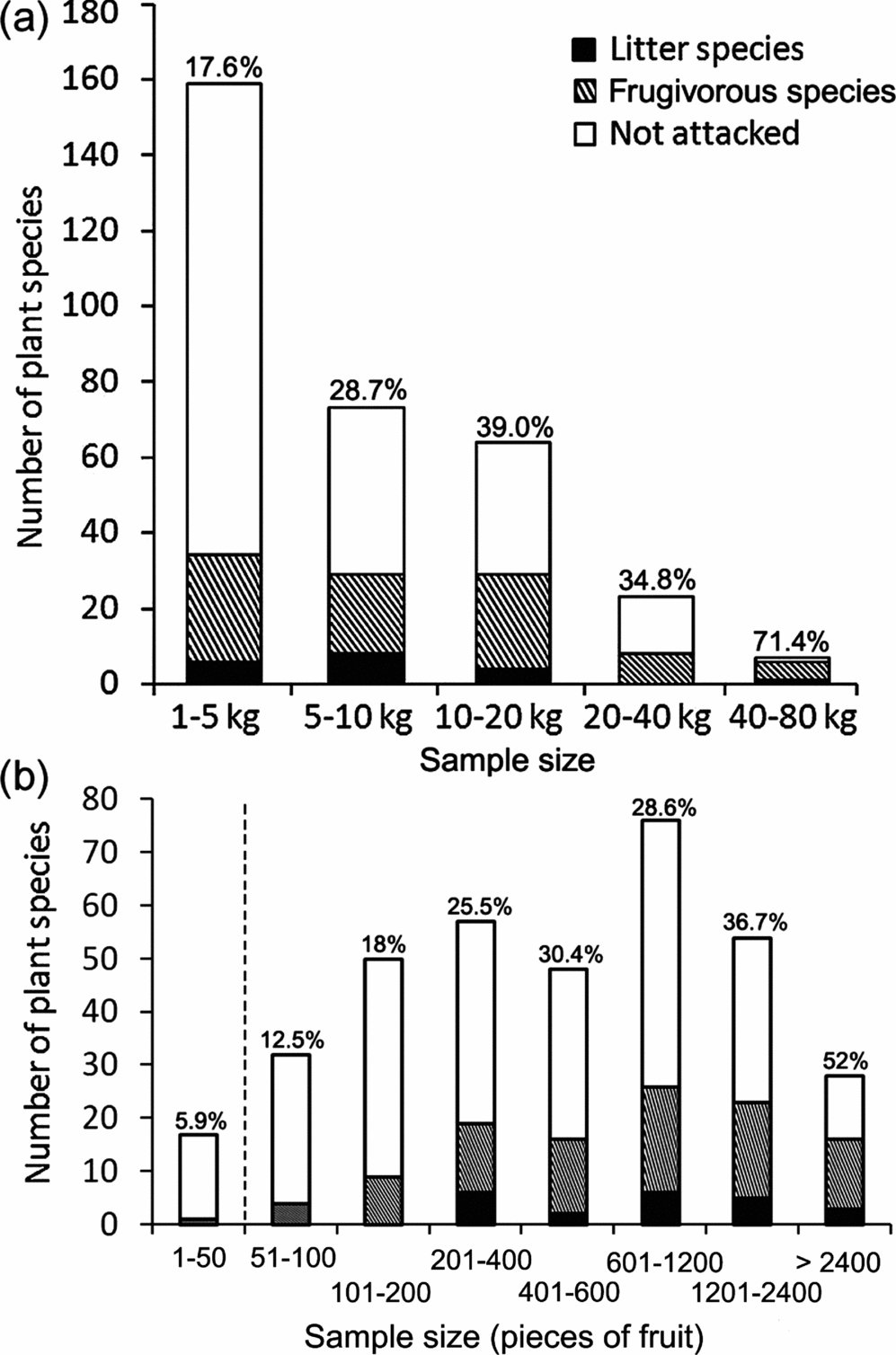
We reared 10574 individual weevils representing 57 species from families Apionidae, Dryopthoridae, Erirhinidae and Curculionidae from the superfamily Curculionoidea (taxonomy following Alonso-Zarazaga & Lyal Reference ALONSO-ZARAZAGA and LYAL1999; Appendix 1) from 106 plant species, i.e. 32.5% of all species sampled (Appendix 2). Two weevil morphospecies (Cryptorhynchinae: Tylodina: Anilaus sp. and Meroleptus sp.) were recognized as litter-dwellers attacking only decomposing fruits on the ground (from 38 plant species) and as such were excluded from further analyses. Moreover we obtained 1200 specimens of Anthribidae as a part of Curculionoidea, but they could not be reliably identified to species, just by analysis of COI sequences. Otherwise we found seven species, but this whole group had to be excluded too because most of the specimens remain unsorted. The proportion of plant species infested by weevils increased with the total weight of the fruit sample (χ28 = 29.2; P < 0.001; Figure 1a) and the number of fruits collected per species (Figure 1b).
The number of plant species attacked by frugivorous weevils, litter-feeding weevils, and not attacked in categories of fruit sample weight (χ28 = 29.2; P < 0.001) (a) and the number of fruits per sample (b) in Papua New Guinea. The dashed line separates 14 plant species from the total sample of 340 plant species which were represented in the sample by < 50 fruits and were excluded from analysis. Percentages indicate the proportion of plant species in each category that were attacked by frugivorous weevils.

Host specificity was quantified for the 31 weevil species (represented by ≥10 individuals) reared from 62 plant species and 20 plant families. Five weevil species attacked plants from >1 family (allofamilial host range), six species attacked plants from >1 genus within a single family (confamilial host range), 13 species attacked >1 congeneric plant species and seven were monophagous. Three of the seven monophagous species attacked hosts belonging to a locally monotypic plant genus, i.e. without a potential congeneric host in the local flora (Figure 2). Generalists were more abundant (mean ± SE = 1.84 ± 0.84 individuals kg−1 fruits) than specialists (mean ± SE = 0.52 ± 0.14 individuals kg−1 fruits).
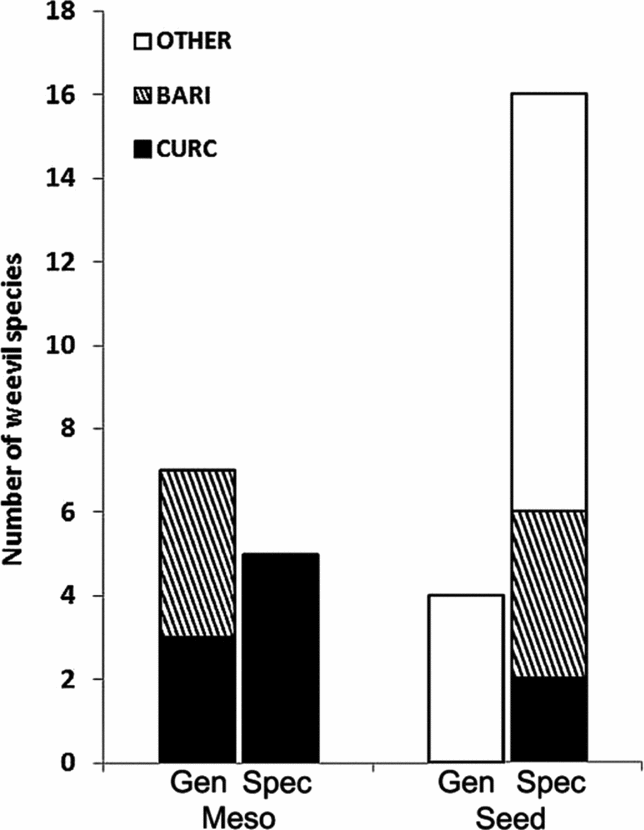
Numbers of generalized and specialized weevil species feeding on either mesocarp or seeds of fruits in Papua New Guinea. Specialists (Spec) include monophagous species and species feeding on congeneric host species whereas Generalists (Gen) include species feeding on >1 genus. Weevil species are coded according to subfamily Curculioninae (CURC), Barininae (BARI), and other subfamilies (OTHER). For all taxa combined, feeding guild and host specificity were not independent (Fisher exact test, P = 0.053).
Specialists attacking seeds outnumbered those attacking fleshy mesocarp (Figure 2). Curculioninae appeared to prefer mesocarp over seeds whereas Baridinae were evenly split, and the remaining curculionids (Apionidae: 1 sp., Curculionidae: Conoderinae: 1 sp., Cryptorhynchinae: 7 spp., Molytinae: 3 spp., Rhynchophorinae: 2 spp.) attacked seeds predominantly (Figure 2). A single Curculioninae (Haplonyx sp.) was reared from both seeds and mesocarp.
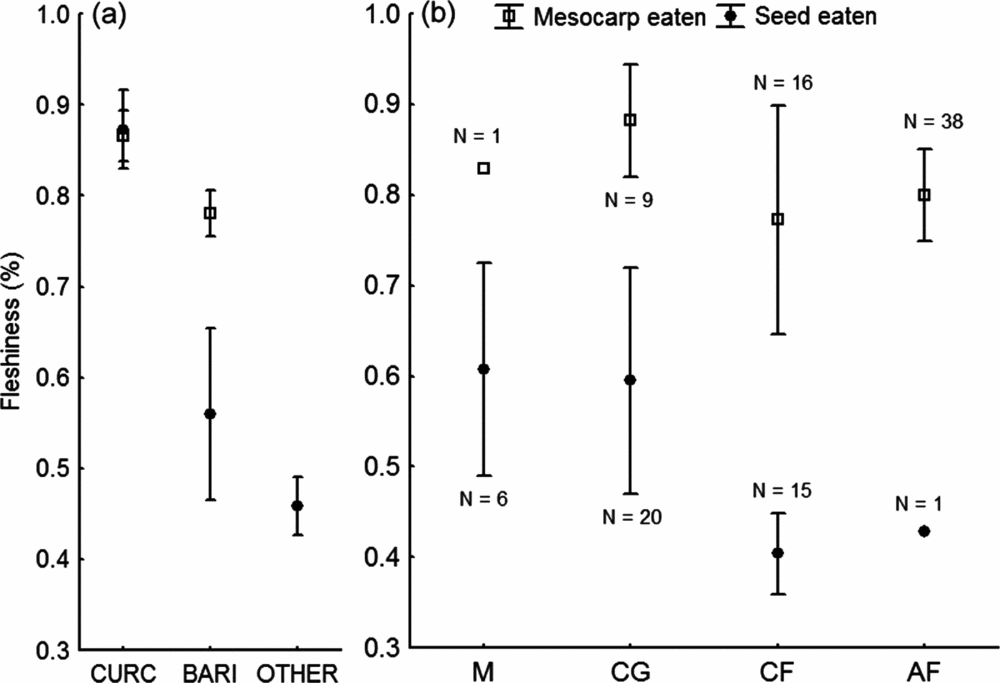
Fruits with infested mesocarp were significantly fleshier (80.6% ± 2.0% of total volume) than fruits with infested seed (51.2% ± 3.3% of total volume, ANOVA, F1, 96 = 62.1, P < 0.001). Further, specialists tended to attack less-fleshy fruit than polyphagous species (Figure 3).
Mean fleshiness (percentage of total volume comprised by mesocarp) in fruits in Papua New Guinea attacked by weevils feeding either on mesocarp (circles) or on seeds (squares). Mean (± SE) are shown for N plant species attacked by different weevil subfamilies (a) and different categories of weevil diet breadth (b). CURC = Curculioninae, BARI = Baridinae, OTHER = other subfamilies; M = monophagous, CG = congeneric, CF = confamilial, AF = allofamilial host range.
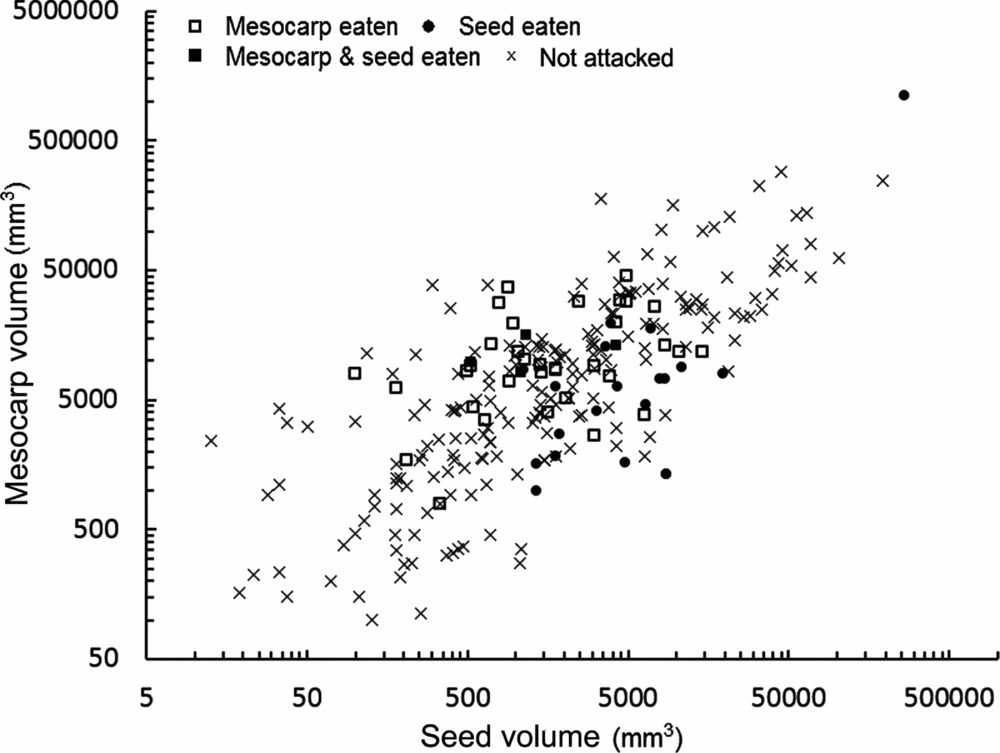
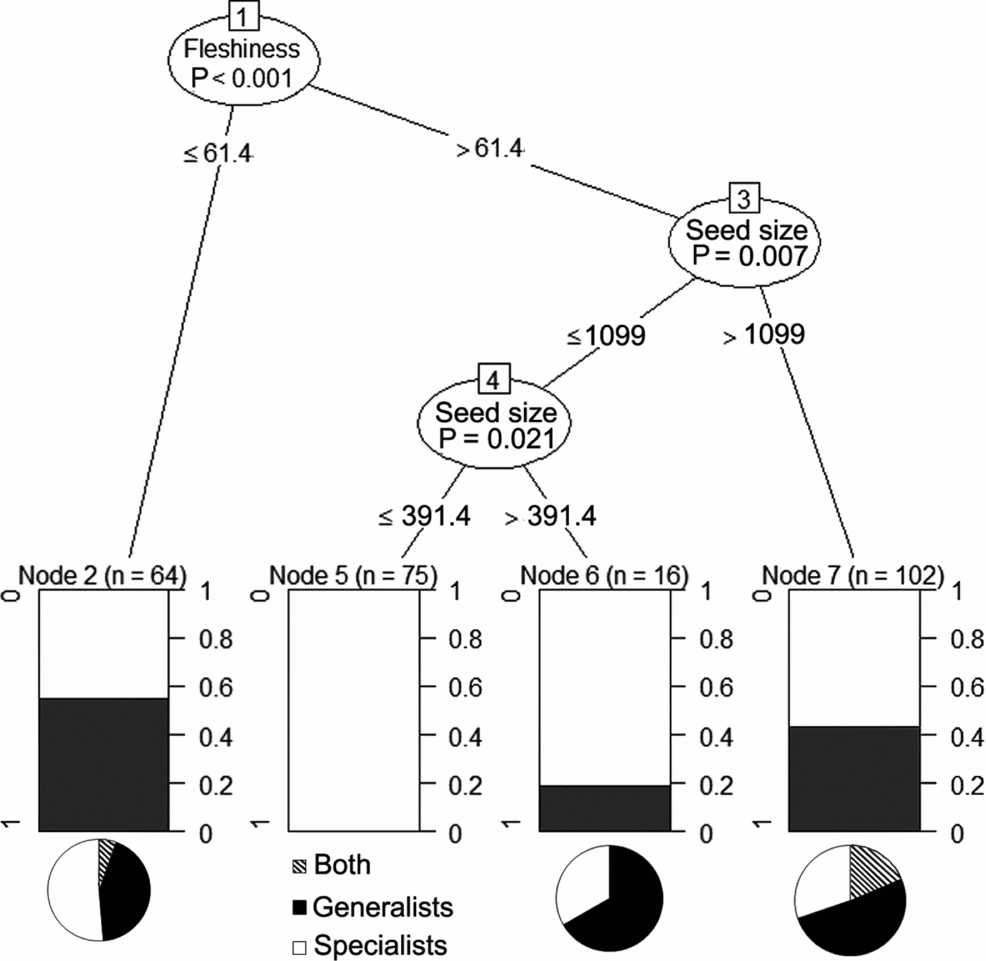
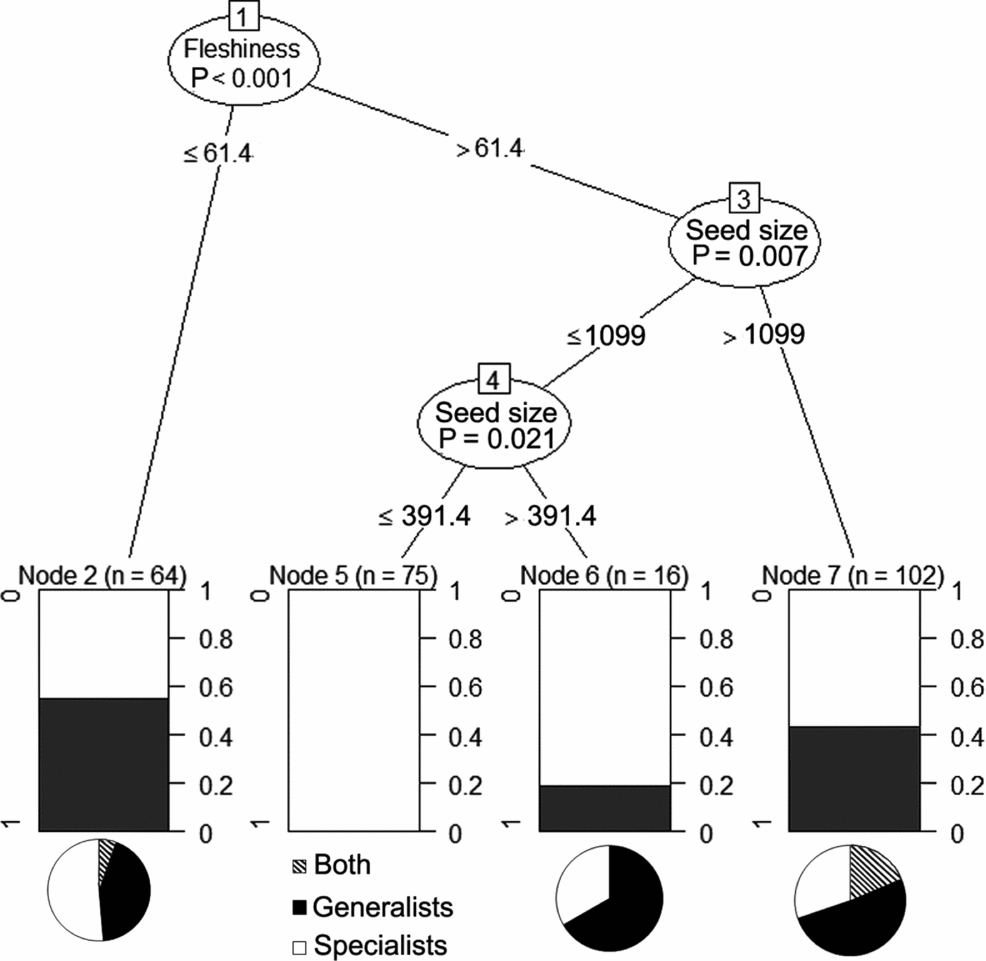
Mesocarp and seed volume were significantly correlated across plant species. Plant species at both ends of the fruit size spectrum were less often infested by frugivorous weevils than the species with fruits of average size (Figure 4). A conditional inference tree showed that fleshiness had a major influence on whether the fruit of a given plant species was attacked by frugivorous weevils or not. Plant species with fruits characterized by low fleshiness (comprised of ≤61.4% mesocarp) were attacked in 58% of cases whereas only 23% of plant species with seeds characterized by greater fleshiness were infested. Of this latter group, the largest-seeded fruits (seed volume >1.01 cm3) were attacked in greater proportion (42%) than those with seeds of average size (0.39–1.01 cm3), attacked in 19%, whilst those with smaller seeds (<0.39 cm3) were not attacked at all (Figure 5). Fleshy fruits were attacked in lower proportion by specialist weevils than fruits with low proportion of mesocarp (Figure 5).
Relationship between seed and mesocarp volume for 268 plant species where mesocarp, seeds, both or neither seed nor mesocarp were attacked by weevils (R2 = 0.68, F1,289 = 590, P < 0.001) in Papua New Guinea.
A conditional inference tree where plant fruit traits including fleshiness (%), seed size (mm3), mesocarp size (mm3) and fruit mass (g) were used to predict a binomial response (i.e. whether fruits of a particular species were infested by weevils or not) in Papua New Guinea. The black bar graphs show the proportion of plant species in a branch of the tree that was infested. Pie graphs show proportions of plant species attacked by either generalized, specialized, or both categories of weevil species.
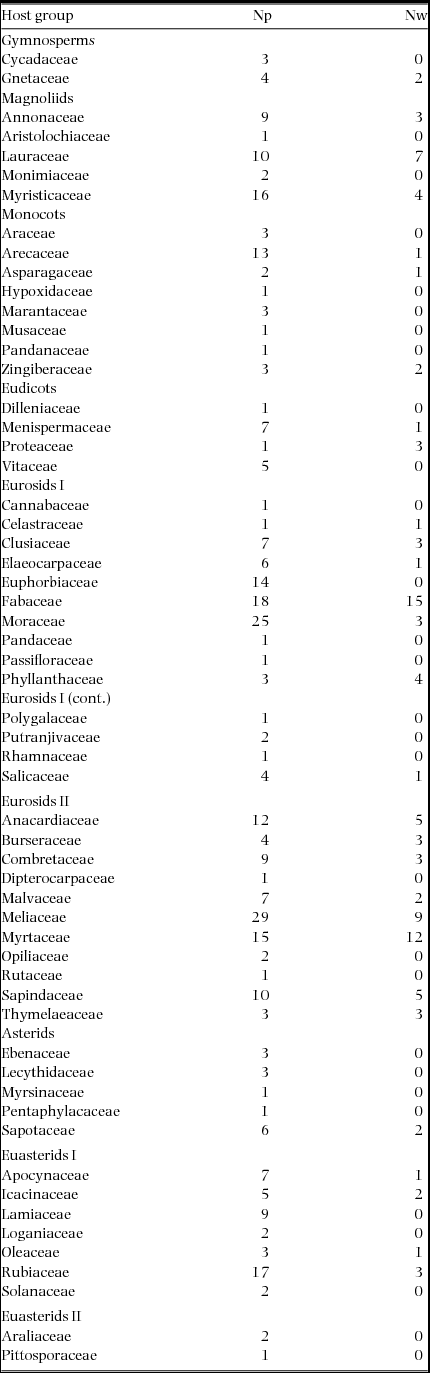
Magnoliids were attacked more frequently (42% of the 38 species sampled, χ21 = 4.5, P = 0.034) than eudicots (25% of 254 species) and monocots (15% of 27 species). Within eudicots, weevils more frequently attacked rosids (47% of 139 species) than asterids (13% of 52 species, χ21 = 13.8, P = 0.002).
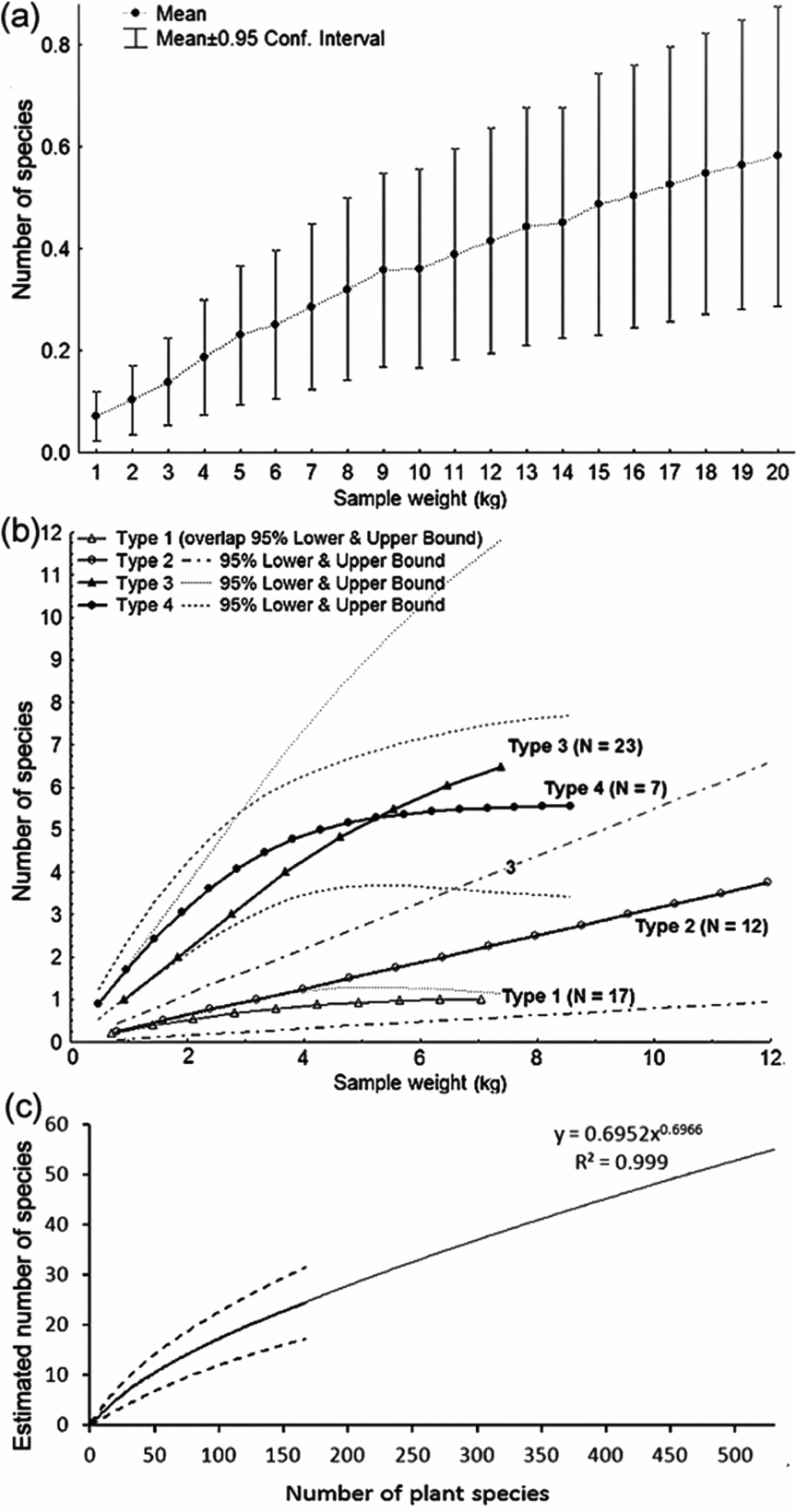
The number of weevil species increased almost linearly with sample size, from 0.16 ± 0.47 (mean ± 95% CI) in 1-kg samples to 0.58 ± 0.75 in 20-kg samples (Figure 6a). This general trend conceals a diversity of species accumulation curves among individual plant species. We recognized four different patterns of species accumulation including: (1) an asymptote at a single weevil species per host species, (2) a linear increase in weevil species per plant species as a function of sample size, (3) an incomplete approach to an asymptote, and (4) an asymptote averaging five weevil species per host species (Figure 6b).
Species accumulation curves for weevils as functions of sample size. Mean numbers of weevil species as a function of fruit sample weight for a subset of 33 plant species with sufficiently large samples (1–20 kg; a) collected in lowlands in Papua New Guinea. Mean numbers of weevil species per host plant species as a function of fruit sample weight (b). The accumulation curves for the 59 weevil-infested plant species with fruit sample size >1 kg were classified into four types, shown with 95% confidence intervals (N – the number of plant species for each curve). Weevil richness as a function of plant species richness for a subset of 167 plant species with fruit samples ≥5 kg (c). A power function (0.695N0.697, R2 = 0.9995) was fitted to the points between 50 and 167 plant species. Confidence intervals were obtained by drawing and amalgamating samples in random order (1000 replications).
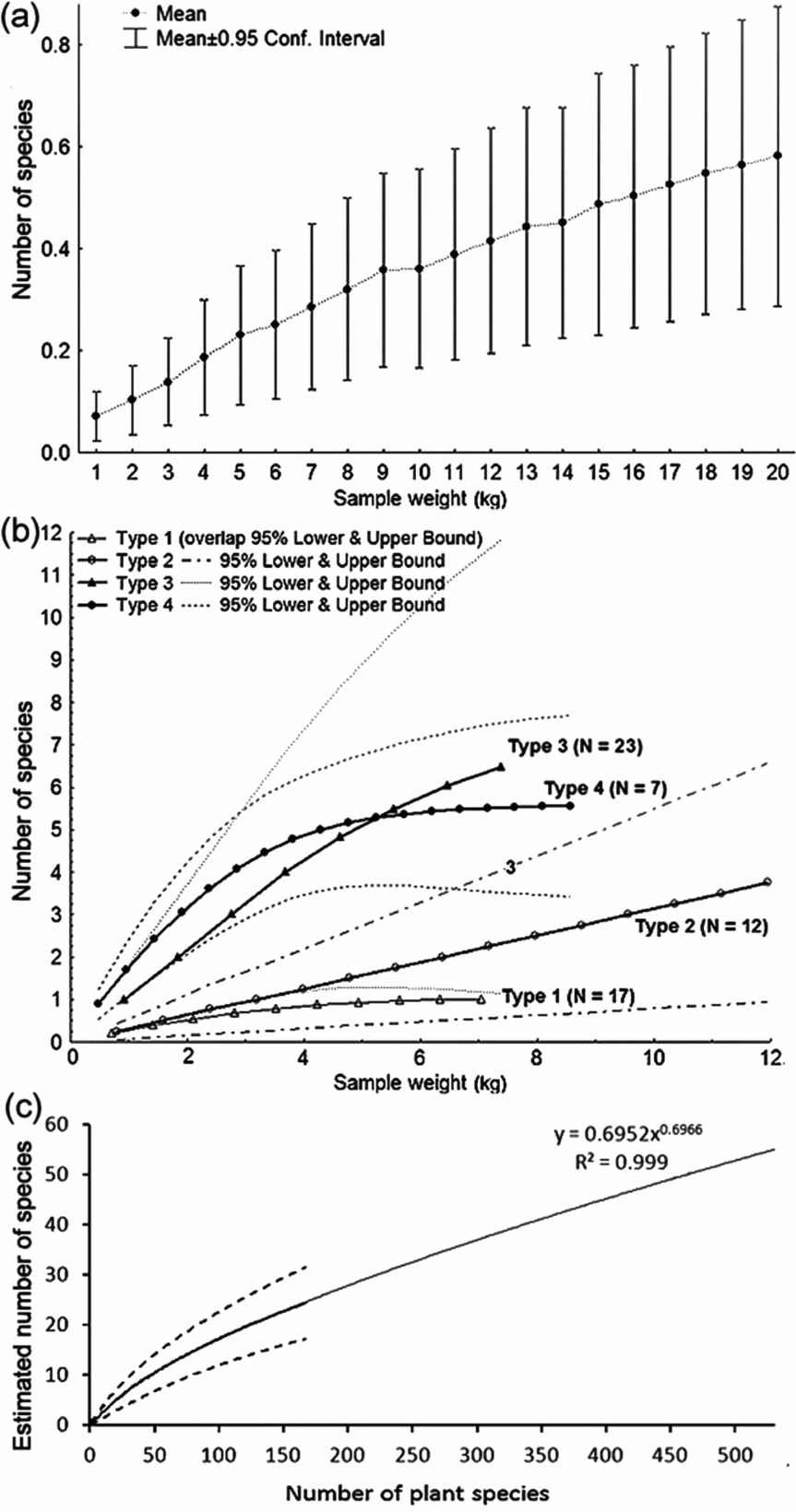
The number of weevil species increased with floristic diversity from 0.29 ± 0.14 (mean ± 95% CI) for a single plant species to 24.3 ± 7.15 (mean ± 95% CI) for the entire set of 167 plant species analysed (Figure 6c). A power function extrapolation estimated there should be 55 ± 14 (mean ± 95% CI) weevil species feeding on the total number of 531 woody plant species sampled in the study (Figure 6c).
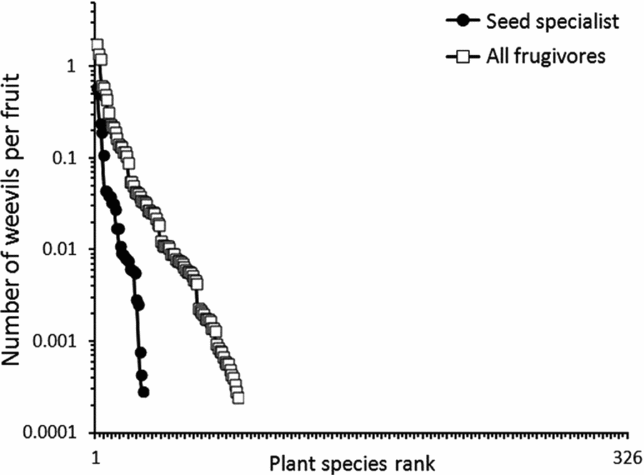
Most of the 326 plant species exhibited low densities of weevils, including specialist seed eaters (Figure 7). One kilogramme of fruits was attacked by 2.39 ± 0.72 (mean ± SE) weevils, and we reared one weevil per 33 individual fruits on average, including one generalist per 46 fruits, one seed-eating specialist per 159 fruits, one flesh-eating specialist or a weevil where specialization could not be determined per 500 fruits.
Density of all frugivorous weevils, and specialist seed-eaters, per fruit in Papua New Guinea. Host species are ranked from highest to lowest weevil density for 326 plant species with samples of >1 kg and >50 fruits.
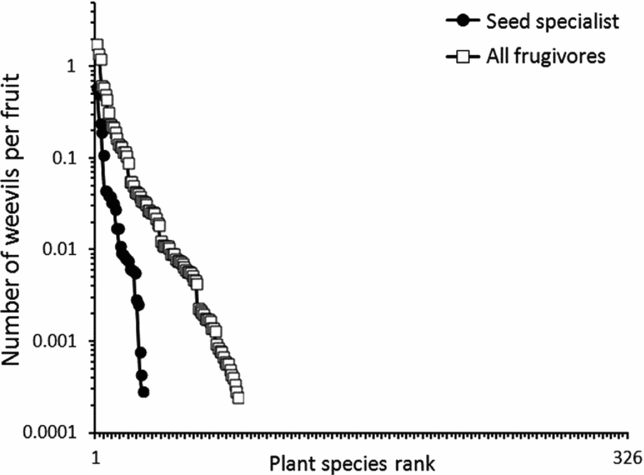
Only 19 out of 326 plant species hosted more than one weevil per 10 individual fruits and only three legume species supported a density of >1 weevil per fruit (Maniltoa schefferi, Kingiodendron alternifolium and K. novoguineense; Figure 7). In contrast, 95% of plant species supported weevil densities of less than one weevil per 100 fruits, suggesting that <1% of fruits are typically attacked.
There was no correlation between weevil density (log (n + 1) transformed per 1 kg of fruit or one fruit) and basal area among 218 tree species (Pearson r = 0.06, P > 0.05). Restricting this analysis to only tree species attacked by weevils (N = 81) returned the same result.
DISCUSSION
Methodological considerations
We sampled fruits opportunistically in order to maximize the number of plant species sampled from the local woody plant community. It is therefore necessary to consider the influence of sampling effort per plant species on the probability of detecting weevil infestation. Weevils were least commonly observed in samples weighing <5 kg whereas the proportion of infested plant species was relatively constant in samples ranging from 5 to 40 kg. These results suggest that 5 kg could be a reasonable minimum sample size per plant species for detecting the presence of weevils in lowland rain-forest fruits. The high proportion of infested species among those sampled in excess of >40 kg is difficult to interpret. These plant species tend to be locally abundant and large-fruited, and as such conspicuous targets for attack (Southwood et al. Reference SOUTHWOOD, MORAN and KENNEDY1982). Although a fruit sample of 5 kg might be sufficient to determine whether a plant species supports weevils, a much larger sample size is required to estimate the number of weevil species feeding on a particular host species, as indicated by the lack of asymptote in weevil species accumulation curve for samples from 1 to 20 kg per plant species.
A broad range of fruit size, from 1.3 g to 626 g per fruit in our sample, poses an additional complication for the comparison of prevalence (proportion of infested individuals) and sampling effort among species. Given the relatively low infestation observed in individual samples, we believe that insect assemblages were under-sampled from host species that were rarely encountered in the fruiting condition. Our observation that detection probability of infestation increased steadily with the number of fruits sampled (Figure 1b) suggests that a large number of small seeds could be more likely to reveal weevil infestation than the same seed biomass concentrated in a small number of large fruits. We therefore recommend also setting a minimum sampling threshold based on the number of individual fruits (or seeds).
The principal problem with sampling insects from fruit is that, unlike in the study of folivorous herbivores, for example, sampling is blind with respect to infestation as attacked fruits cannot be distinguished from uninfested fruits at the time of collection. The inefficiency of blind sampling for subsequent rearing implies that the sample size needed for adequate description of frugivorous communities is rarely achieved.
Our study is limited to fruit-feeding Coleoptera while there are also numerous Diptera, including at least 69 species of Tephritidae (Novotny et al. Reference NOVOTNY, CLARKE, DREW, BALAGAWI and CLIFFORD2005), and at least 119 species of Lepidoptera (R. Ctvrtecka, unpubl. data) feeding on fruits at our study sites. The overall impact of herbivorous insects on fruits is thus likely to be bigger than reported here for beetles only.
Host specificity
Our observation of a low proportion of monophagous species in a community-wide sample of frugivorous beetles is in general agreement with two studies (Table 1) of fruit-feeding beetles that found most species feeding on multiple congeneric (Lyal & Curran Reference LYAL and CURRAN2000) or confamilial (Nakagawa et al. Reference NAKAGAWA, ITIOKA, MOMOSE, YUMOTO, KOMAI, MORIMOTO, JORDAL, KATO, KALIANG, HAMID, INOUE and NAKASHIZUKA2003) hosts. However, our findings differ substantially from the results of perhaps the largest study of beetle fruit predators from the Neotropics (Costa Rica), where 75% species were strictly monophagous (Janzen Reference JANZEN1980). Since Janzen's study is the only one comparable to ours in the range of sampled plant species and sample size, the widely divergent host specificity estimates call for explanation. These differences could be due to variation among sites in the taxonomic composition of seed predator communities and the vegetation.
Host specifity of seed predators in previous studies. Ni = no. of reared species, M = no. of monophagous species (no. of species feeding on a locally monotypic genus in parentheses), CG = no. of congeneric species, CF = no. of confamilial species, AF = no. of allofamilial species. Lyal & Curran (Reference LYAL and CURRAN2000) – Alcidodes spp. reared from the fruit of family Dipterocarpaceae in Borneo, no data about weevil abundance are available; Nakagawa et al. (Reference NAKAGAWA, ITIOKA, MOMOSE, YUMOTO, KOMAI, MORIMOTO, JORDAL, KATO, KALIANG, HAMID, INOUE and NAKASHIZUKA2003) – seed predators reared from fruit of the family Dipterocarpaceae (N≥5) in Lambir Hills National Park in Borneo; Pinzon-Navarro et al. (Reference PINZON-NAVARRO, BARRIOS, MURRIA, LYAL and VOGLER2010) – Conotrachelus spp. reared from fruit (N≥5) in Barro Colorado Island in Panama; Janzen (Reference JANZEN1980) – seed predators reared from fruit in Guanacaste province in Costa Rica, no data on weevil abundance are available; Kergoat et al. (Reference KERGOAT, DELOBEL, FEDIERE, RU and SILVAIN2005) – seed predators reared from Fabaceae in 95 localities Senegal, no data on weevil abundance are available.

Bruchinae (Chrysomelidae) accounted for 86% of the110 species in the Neotropical sample (Janzen Reference JANZEN1980) whereas our sample consisted of 88% weevil species and only one bruchid out of 65 species in total. This was expected since bruchids are rare in the Australian region (Basset Reference BASSET1991, Borowiec Reference BOROWIEC1987). Bruchids tend to be highly specialized everywhere and typically attack legumes, including, for example, 54% of bruchid species being monophagous in Africa (Kergoat et al. Reference KERGOAT, DELOBEL, FEDIERE, RU and SILVAIN2005), and 83% of species limited to a single plant genus in Europe (Delobel & Delobel Reference DELOBEL and DELOBEL2006).
Our sampling of lowland rain-forest vegetation did not include herbs and, as such, is not directly comparable to the dry deciduous forest sample of Janzen (Reference JANZEN1980) where both trees and herbs were sampled and herbs comprised c. 20% of all plants preyed upon by bruchids. Similarly, Bruchids were found to be the largest insect family in Venezulean savanna and dry-forest vegetation (Ramirez & Traveset Reference RAMIREZ and TRAVESET2010) where herbs represented 21% of plants sampled. Weevil species were more numerous than Bruchinae in closed-canopy forests where trees are ecologically dominant than in savanna (Ramirez & Traveset Reference RAMIREZ and TRAVESET2010). Furthermore, Fabaceae with highly specialized weevils represented 17% (Janzen Reference JANZEN1980) and 15% (Ramirez & Traveset Reference RAMIREZ and TRAVESET2010) of species sampled, compared with only 5.5% in our study.
The phylogenetic distribution of local vegetation may be also important when comparing community samples (Novotny et al. Reference NOVOTNY, DROZD, MILLER, KULFAN, JANDA, BASSET and WEIBLEN2006). There were 11 monophagous species among 12 weevil species in the sample of Janzen (Reference JANZEN1980) but nine of the apparently monophages had no congeneric, alternative host plant species in the flora. Moreover, congeners of the other two monophages were very rare locally. In our study, only three of 31 weevil species attacked host species lacking congeneric, alternative hosts in the sample, which could explain the low number of monophagous species observed. We conclude that monophagy is rarer in frugivorous beetles when congeneric plant species are available as alternate hosts. Other studies support this conclusion. In particular, only two of 10 relatively abundant Conotrachelus species in Panama (sampled as >10 individuals), which preyed on seeds of Inga (Fabaceae), were monophagous whereas the rest preyed on multiple congeneric hosts (Pinzon-Navarro et al. Reference PINZON-NAVARRO, BARRIOS, MURRIA, LYAL and VOGLER2010). Further, only one of 19 seed-eating species of Alcidoides weevils in a dipterocarp forest in South-East Asia was monophagous (Lyal & Curran Reference LYAL and CURRAN2000).
The host specificity of weevil fruit predators also appears to differ between seed- and flesh-eating guilds. This is not surprising, given the different investment of plants into the chemical and mechanical defences of seeds versus mesocarp. Seeds are often protected by high concentrations of secondary compounds (Kestring et al. Reference KESTRING, MENEZES, TOMAZ, LIMA and ROSSI2009, Rehr et al. Reference REHR, BELL, JANZEN and FEENY1973, Rosenthal et al. Reference ROSENTHAL, JANZEN and DAHLMAN1977) and may be attacked by a rather narrow group of specialized predators with detoxifying counter-adaptations whereas such protection is often effective against generalists (Sallabanks & Courtney Reference SALLABANKS and COURTNEY1992). Mesocarp is less chemically defended than seeds, in woody plants especially (Ehrlen & Eriksson Reference EHRLEN and ERIKSSON1993), where the protective function is compromised to increase palatability to animal seed dispersers at least when fruit is ripe (Westcott & Graham Reference WESTCOTT and GRAHAM2000, Willson et al. Reference WILLSON, IRVINE and WALSH1989). This notion is consistent with our observation that generalists were most numerous and abundant on mesocarp whereas specialist species were relatively more numerous on seeds (Figure 2).
Fruit size and morphology appear to influence the probability of weevil infestation to some extent. Only fruits combining a substantial mesocarp (fleshiness) with large seeds simultaneously hosted both seed- and flesh-eaters. Weevils presumably avoided small fruits due to the absence of sufficient resources for larval development (Figure 4). However, we found that weevils also avoided fruits of larger than average size, with the sole exception of the edible breadfruit, Artocarpus camansii, an extreme outlier in Figure 4. Fruits of many large-fruited species (e.g. Terminalia kaernbachii, Cerbera floribunda – which has also toxic seeds) have a very thick and hard endocarp, which is recognized as an important barrier to seed predation (Siemens et al. Reference SIEMENS, JOHNSON and RIBARDO1992). Further, some of the large-fruited uninfested species contained numerous small seeds (e.g. Atractocarpus decorus) that individually may be too small to support seed predators (Herrera Reference HERRERA1984, Mitchell Reference MITCHELL1977, Ramirez & Traveset Reference RAMIREZ and TRAVESET2010). This phenomenon requires further study as we are unable to explain completely why large fruits seem to be protected from weevils.
Morphologically distinctive kinds of fruits (e.g. legumes, drupes, berries, arillate-seeded capsules), could explain patterns of association and specificity in some taxonomic groups of weevils. Specialized weevils tend to attack fruits with larger seeds and little or no mesocarp such as the samaras of Dipterocarpaceae (Lyal & Curran Reference LYAL and CURRAN2000, Reference LYAL and CURRAN2003) or the legumes of Fabaceae (Janzen Reference JANZEN1980), whereas polyphagous species were found mostly on fruits with more substantial mesocarp (Pinzon-Navarro et al. Reference PINZON-NAVARRO, BARRIOS, MURRIA, LYAL and VOGLER2010). Fruits with substantial mesocarp and very small seeds had the lowest probability of being attacked. Our results are thus consistent with speculation that host specificity is likely to vary according to the distribution of resources that particular species require for development and reproduction (Grimbacher et al. Reference GRIMBACHER, NICHOLS, WARDHAUGH and STORK2014, Miller Reference MILLER1996). In particular, it has been suggested that species occupying and reproducing in seeds, which are often well-protected structurally and chemically, may be more highly host specific than species that feed on the rewards that plants offer to their dispersers (i.e. fleshy mesocarp, arils, etc.).
The low diversity of frugivorous assemblages documented here could possibly be explained by the fact that interspecific competition in weevils is known to be high (Alves-Costa & Knogge Reference ALVES-COSTA and KNOGGE2005). Coexistence of different species on the same host-plant species might be facilitated by spatial partitioning of fruits among species to avoid such competition (Atkinson Reference ATKINSON1985, Inouye Reference INOUYE1999). This hypothesis requires further investigation through more detailed examination of associations in those plant species now known to support numerous weevil species.
The distribution of weevil infestation among plant lineages is also noteworthy with respect to hypotheses of chemical and mechanical defence. Some families appeared to be genuinely protected from attack. For example, nine species of Lamiaceae and 114 kg of fruit sampled yielded not a single weevil. In particular, weevils were absent in 57 kg of Faradaya splendida fruit despite suitable seed size and fruit morphology. By contrast, the absence of weevils in another widely sampled plant family, Euphorbiaceae (14 species and 83 kg of fruits) can be attributed to small seed sizes.
We observed seed-eating weevils to be rather rare in New Guinea tropical lowland forest. We did not measure intensity of infestation in individual seeds but the overall density of approximately one weevil per 100 fruits, for 95% of the woody plant species sampled suggests that seed infestation is low (<1%), even in cases where individual weevils attack multiple seeds per fruit. Some weevils are flesh-eaters that could have either positive or negative effect on seed germination (Rader & Krockenberger Reference RADER and KROCKENBERGER2007). Others are specialist seed-eaters and could be candidates for density-dependent regulation of host plant populations. However, infestation by specialist seed-eaters was mostly very low. This observation suggests that frugivorous weevils are unlikely to be agents for Janzen–Connell effects of density-dependent population dynamics in the majority of the host species we studied. Undoubtedly, some species suffer extremely high mortality by seed-eaters (e.g. palms, Wright Reference WRIGHT1990), but these could be exceptional cases.
ACKNOWLEDGEMENTS
We thank New Guinea Research Binatang Center staff and field assistants from Wanang, Ohu, and Baitabag villages for technical assistance. Weevil taxonomy was assisted by Alexander Riedel, Richard Thompson (Baridinae), and Marek Wanat (Apionidae), plant taxonomy by Kipiro Damas and Kenneth Molem. This study was supported by the Czech Science Foundation (13–10486S), Czech Ministry of Education (LH11008), Darwin Initiative for the Survival of Species (UK) and the Christensen Fund. This material is also based upon work supported by the US National Science Foundation under grants DEB-0515678 and DEB-0816749. We thank Paul Hebert and colleagues at the Biodiversity Institute of Ontario for their assistance with the barcode library of the local fauna, which was funded by the Government of Canada through Genome Canada and the Ontario Genomics Institute (2008–0GI-ICI-03).
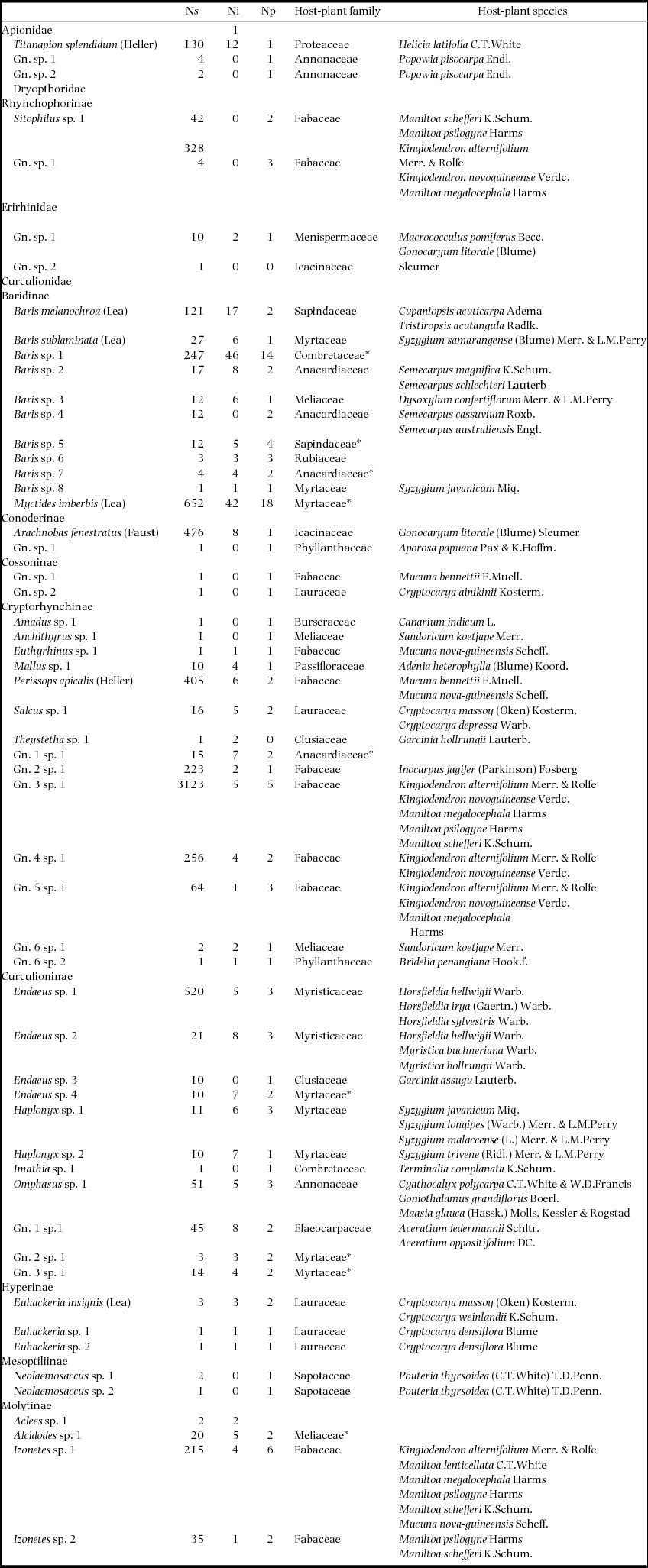
Frugivorous weevils (Curculionoidea) and their host plant species in Papua New Guinea (Ns = no. of reared weevil specimens, Ni = no. of COI sequences obtained, Np = no. of host plant species. Host-plant family names marked with an asterisk (*) represent the most frequently attacked family in the case of generalists. Gn. = unknown generic name, sp. = unknown species name.
List of analysed host plant families from Papua New Guinea. Np = no. of plant species, Nw = no. of reared weevil species.