On March 11, 2020, growing cases of severe acute respiratory syndrome coronavirus 2 (SARS-CoV-2) infection, a novel coronavirus first identified in China, reached a threshold in terms of case numbers and threat such that the World Health Organization declared the unfolding crisis a pandemic. 1 The management of novel infectious disease pandemics is multifactorial and highly complex as they possess several established factors that increase public fear and alter risk perception. Reference Constantino and Fiacchini2 The SARS-CoV-2 pandemic (known globally as COVID-19 [coronavirus disease 2019]) features many of these characteristics, including high infection rates, significant mortality and morbidity, rapid case emergence, and escalating case-fatality rate, and a lack of established clinical prophylaxis or management protocols. Reference Constantino and Fiacchini2,Reference Hsu, Chen and Wei3 Each of these factors increase the importance of clear and accurate information sharing, but also increase the challenges in undertaking effective emergency risk communication (ERC).
Effective ERC, as opposed to simple information dissemination, requires the interactive and dynamic exchange of accurate contemporaneous information from experts and successful uptake by those at risk of harm. Reference Constantino and Fiacchini2,Reference Abrams and Greenhawt4–Reference Garfin, Silver and Holman6 The uptake of ERC information is heavily influenced by information-seeking behaviors (ISBs), or the way in which recipients seek information relating to the public health (PH) event. As ineffective ERC contributes to fear and psychosocial distress, as well as maladaptive behaviors among the public, it is critical that PH information is factual and consistent as inconsistencies or retrospectively incorrect information fuels distrust, negatively impacts upon community ISB, and impedes future attempts at effective ERC. Reference Constantino and Fiacchini2,Reference Garfin, Silver and Holman6
The impacts of COVID-19 on ISB have been studied in a small number of international studies. Some studies in the United States have suggested that notifying the public of index cases precipitated local surges in information hotline contacts and Internet searches regarding COVID-19, persisting for up to 2 wk before returning to baseline. Reference Bento, Nguyen and Wing7,Reference Liebermann-Cribbin, Alpert and Gonzalez8 Key information sought by participants in these studies included symptoms, treatments, diagnostics, the use of hand sanitizer, official PH responses, and information that was deemed to undermine PH responses. Reference Bento, Nguyen and Wing7,Reference Liebermann-Cribbin, Alpert and Gonzalez8 A study in Italy suggested that COVID-19 has correlated with a shift in ISB that resulted in increased uptake of, and trust in, official sources of information versus nonofficial sources compared to before the pandemic. Reference Falcone and Sapienza9 A broader review of ISB in Italy, by means of analysis of Google search trends, identified that health-related searches predominantly pertained to masks, disinfectants, symptoms, and vaccinations. Reference Rovetta and Bhagavathula10 Studies conducted in China suggest that ISB including digital media uptake and frequent engagement with government sources, and that possessing accurate risk perception was associated with increased uptake of preventative behavior practices. Reference Liu11,Reference Ning, Niu and Bi12 Finally, a study in Bangladesh and findings published by Oxford University concluded that COVID-19 pandemic responses have needed to combat significant circulating misinformation, thereby demanding that PH responses seek to inform and communicate risk, but also combat false information and beliefs. Reference Brennen, Simon and Howard13,Reference Barua, Barua and Aktar14
Such early international studies have highlighted the importance of effective ERC and have reported either persisting or increased reliance on and demand for information from official PH sources. It is also known that there are consequences when ERC is rendered ineffective due to barriers to information delivery or public uptake of the information. What is not formally established is how changing trends in public and stakeholder ISB, and demand upon official sources for PH information, impacted the operation and efficacy of Public Health Unit (PHU) responses to the COVID-19 pandemic.
This study specifically assessed the Metro North Public Health Unit (MNPHU) phone information service over the course of the pandemic during the 2020 calendar year by analyzing data routinely collected in the call management system regarding COVID-19 communication with the public and other stakeholders. In so doing, this study aimed to inform procedure optimization and planning for future PH events, including pandemic event responses.
Methods
Routinely collected data regarding incoming calls to the MNPHU information phone service, between January 2020 and December 2020 inclusive, were extracted from the call management system with permission from the relevant data custodian. All relevant calls were retrieved based on recorded call subject (ie, COVID) or by references to COVID entered in call dialogue summaries. The date of the call, caller and/or organization calling, and call summary were directly extracted into a Microsoft Excel™ study database. Any calls that were not related to COVID-19 were excluded from analysis. In using a mixed-methods approach, 1 study author (Z.H.) assessed the extracted call parameters and categorized the caller, call purpose, and call outcome, with categories arising de novo from the data, thus using a qualitative approach to support quantitative analysis. Call episodes that duplicated a primary entry were summarized under the primary episode only.
Once all relevant calls were reviewed and assigned categories, frequency tables were generated according to the date of call and the relevant category of analysis. A histogram was used to display call volumes over the review period including specific display of calls that exceeded service capacity. This was visually compared with the number of MNPHU positive case notifications to define the period over which the “first wave” of the pandemic occurred locally. Category frequencies were reported for the full review period and for the defined first wave period.
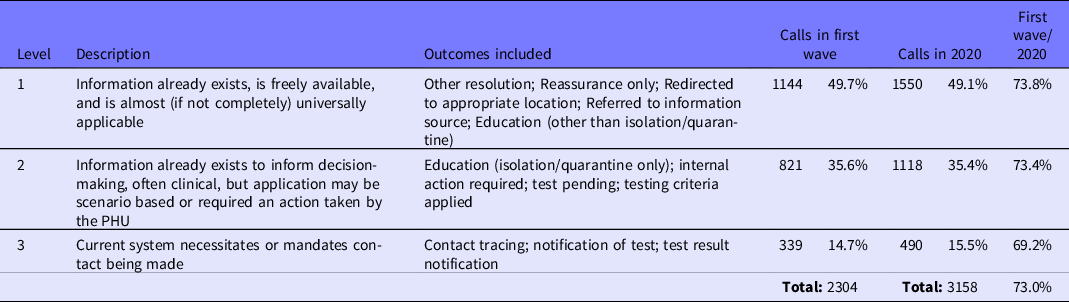
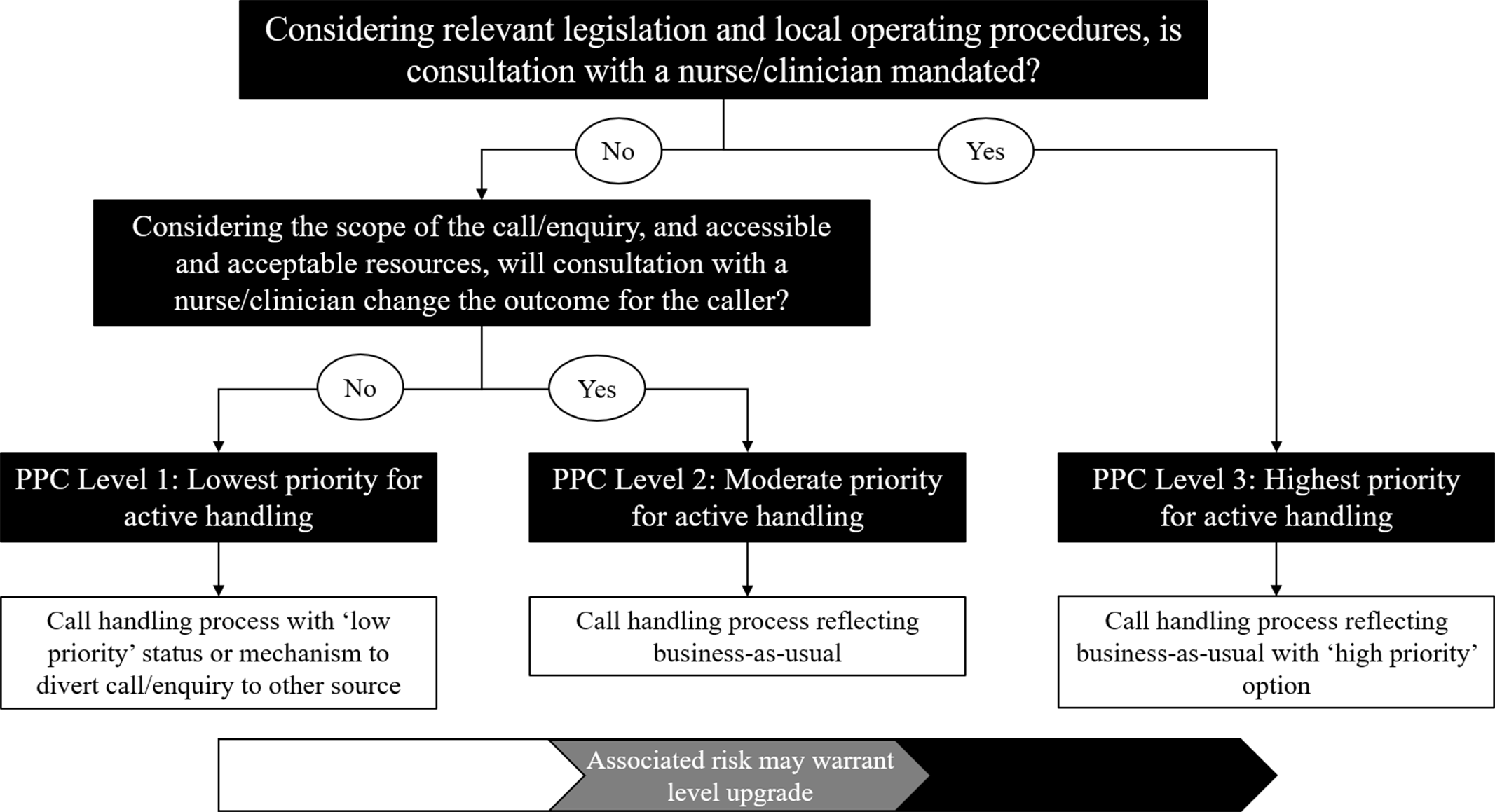
Definitions were developed and refined in direct response to call outcomes, the impact of consultation with MNPHU, and relevant legislation to analyze potentially preventable calls (PPC) as follows: Level 1 – calls seeking information that was readily available or could be readily resolved without contacting the PHU; Level 2 – calls where relevant information was available but some PHU input was needed in applying the information to specific circumstances; and Level 3 – calls that were required or mandated according to relevant protocols or legislation.
Relevant call outcomes were assigned to 1 of these 3 levels to produce a histogram and proportion graph of these calls during the first wave.
This study, a quality improvement project, was assessed to be exempt from full ethical review by the Royal Brisbane and Women’s Hospital Human Research Ethics Committee (LNR/2021/QRBW/73346).
Results
A total of 3468 calls were retrieved of which 160 duplicated a primary call episode and were subsequently recorded under the primary episode only. Of 3308 independent calls, 26 were excluded after full review as they did not relate to COVID-19. Therefore, 3282 COVID-19-related call episodes were analyzed, of which 3281 (99.9%) contained adequate caller information, 3193 (97.3%) contained adequate call purpose information, and 3273 (99.8%) contained adequate call outcome information for further analysis.
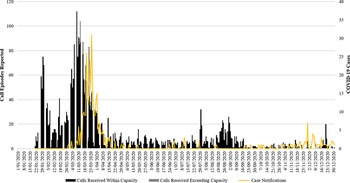
When call volume was plotted by time, an initial spike in calls preceded the main surge in calls which peaked on March 9, 2020 (Figure 1). Overlaying MNPHU case notification numbers resulted in defining the MNPHU “first wave” as occurring between January 21 and May 24, 2020, inclusive, with this period accounting for 2362 (74.0%) call episodes (Figure 1). There was a discrepancy between the peak volume of calls and the peak case notifications, occurring on March 9, 2020, and March 26, 2020, respectively.
Calls related to COVID19 and Metro North Public Health Unit Cases (1 January 1 to December 31, 2020).

Over the study period, the greatest call volumes came from general practitioners or community practitioners (38.6%), members of the public (26.8%), and aged or disability care services (9.8%) (Table 1). While general practitioners (44.8%) and members of the public (26.6%) also produced the largest call volumes during the first wave, hospital clinicians accounted for a larger proportion of calls than aged or disability care providers during this defined period (8.6% vs 4.8%, respectively). Health-care–related callers (general practitioners, aged care and disability support, hospitals, and pathology providers) contributed 57.4% of all calls over the calendar year and 59.2% of calls within the first wave. Combined, members of the public and health-care–related callers were the source of 84.2% of calls for the calendar year and 85.8% of the first wave.
Caller category definitions and frequency

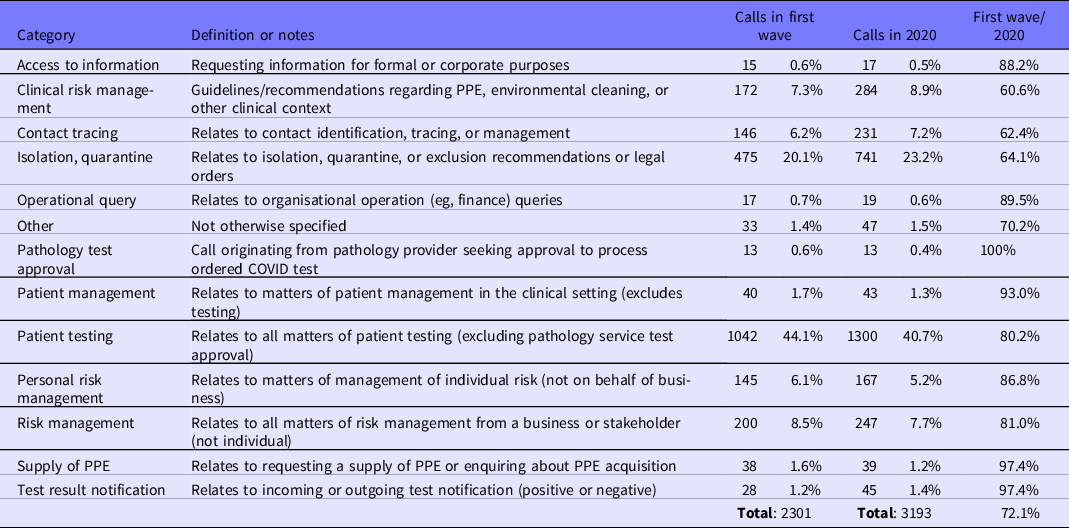
Overall, the greatest volume of calls related to patient testing (40.7%), isolation, quarantine and exclusion (23.2%), and clinical risk management (8.9%) (Table 2). During the first wave, calls regarding patient testing (44.1%) and isolation, quarantine, and exclusion (20.1%) were also the main contributors, although risk management calls came to exceed clinical risk management calls during this period (8.5% vs 7.3%, respectively).
Call purpose category definitions and frequency

Abbreviation: PPE, personal protective equipment.
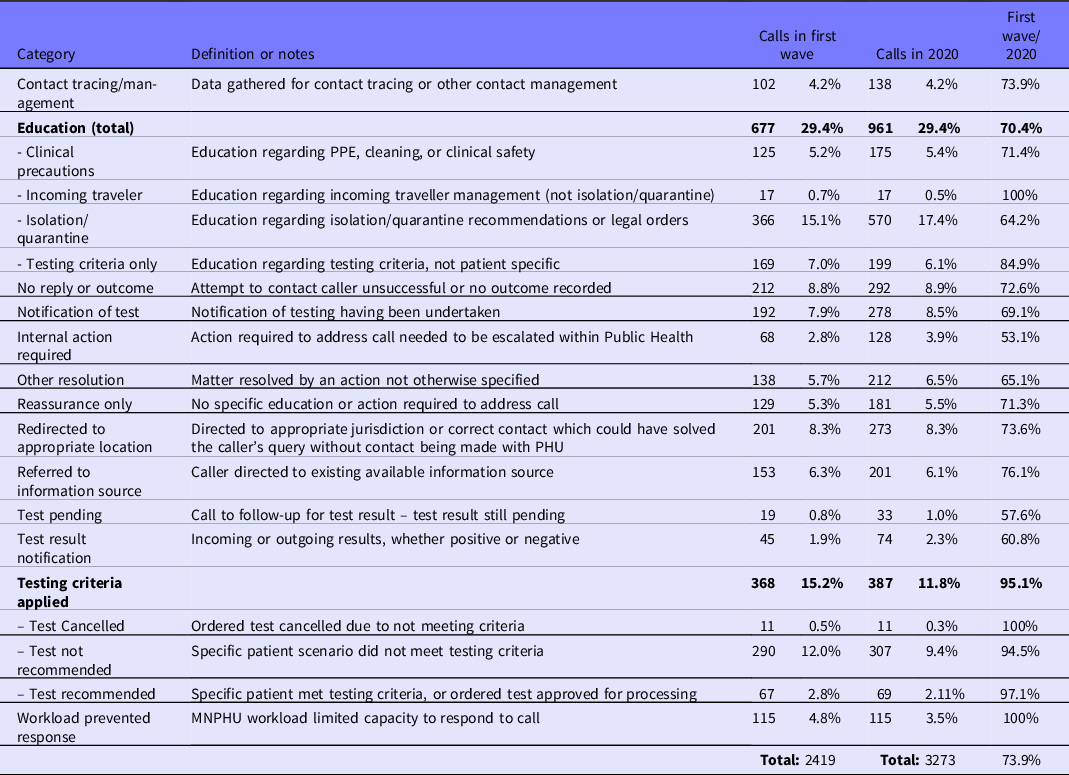
The provision of education was the most frequent call outcome, accounting for 29.4% of all outcomes and 29.4% of first wave outcomes (Table 3). Education regarding isolation, quarantine, and exclusion accounted for 59.3% of all education outcomes over the entire study period and 54.1% of all education delivered during the first wave. Application of testing criteria was the other prominent call outcome, accounting for 11.8% of call outcomes and 15.2% of first wave call outcomes. A total of 95.1% of all calls resolved by applying testing criteria occurred during the first wave and, of these first wave applications, 78.8% recommended that testing was not required, 18.2% of calls recommended testing, and the remaining 3.0% related to the cancellation of inappropriately ordered tests. Of interest, 97.4% of calls reported to have exceeded capacity occurred between the peak in call volume and the peak in notifications on March 26, 2020 and 100% of calls exceeding capacity were reported within the first wave.
Call outcome category definitions and frequency

Abbreviations: PPE, personal protective equipment; MNPHU, Metro North Public Health Unit.
As the largest individual source of incoming call episodes overall, calls from general practitioners were most frequently related to patient testing (63.2%), isolation, quarantine, and exclusion (14.1%), and clinical risk management (11.6%). Of the 783 calls from general practitioners related to patient testing, 36.8% were resolved by applying testing criteria, 20.6% were resolved by providing education regarding testing criteria without application, and 19.2% were notifications that patients had been tested or sent for testing.
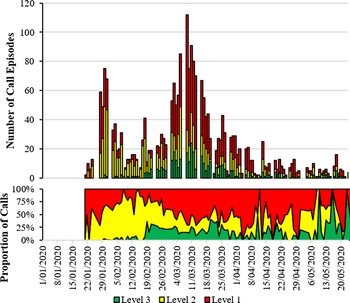
A total of 3158 (96.2%) call episodes were suitable for inclusion in analysis of PPCs (Table 4). Only 490 (15.5%) call episodes were deemed necessary or mandated according to current operational and legislative protocols with the remaining 85.5% (level 1 and level 2, 49.1% and 35.4%, respectively) representing a significant contribution to call volume. Of the 3158 call episodes allocated to PPC categories, 2304 (73.0%) occurred within the first wave (Table 4). The proportion of calls within each PPC level during the first wave was comparable to the proportion of calls within each PPC level for the calendar year.
Potentially preventable calls: Definitions and frequencies

Abbreviation: PHU, public health unit.
At the beginning of the first wave, PPC level 3 calls accounted for a very small proportion of calls until an increase around February 19, 2020 (Figure 2). Between February 19, 2020, and April 8, 2020, after which the small number of calls analyzed complicated the identification of any potential trends, PPC level 3 calls fluctuated around approximately 15-25% of calls. Level 2 PPCs were the most prominent level before the peak in call volume on March 9, 2020, reflecting both the nature of the callers and a delay in information development and dissemination, while level 1 PPCs increased in proportion following the peak.
Potentially preventable calls related to COVID-19 (January 1 to May 24, 2020).

Discussion
Within the first wave, the initial surge in call volume correlated with the first confirmed COVID-19 case in Queensland (January 28, 2020) and the steep incline in call volume peaking on March 9, 2020, corresponded with initial MNPHU case notifications. The first wave contained 74% of the included call episodes, indicating a significant call volume during this period. These general trends in call data reflect findings of international studies that have reported surges in information-seeking and contact with PHUs after notification of the first community cases. Reference Bento, Nguyen and Wing7,Reference Liebermann-Cribbin, Alpert and Gonzalez8
An interesting finding was that the peak in call volume occurred 17 d before the peak of case notifications, with first wave call volume demonstrating a steep downward slope commencing before the peak in notifications.
The MNPHU phone service continued to operate under a business-as-usual model, despite the changing nature and volume of calls related to COVID-19. All incoming calls were directed to reception unless a caller had been given a direct line to PHU staff. Calls answered by reception were summarized in the call management system that PHU staff use to return incoming calls. The steep downward slope following the peak in call volume likely reflects, first, internal limitations in the capacity of reception to receive and record incoming calls, and second, a necessary prioritization of, and diversion of staff efforts to, contact tracing and critical PHU operations. The resulting erroneous impression that call volume remained within capacity for much of the study period makes it difficult to conclude for how long the upper limit of capacity was exceeded. The morphology of the first wave call volume data in this study, therefore, also deviates from the findings of studies into public ISB Reference Bento, Nguyen and Wing7,Reference Liebermann-Cribbin, Alpert and Gonzalez8 as service capacity became a limiting factor while studies into Internet searches, for example, do not share similar inherent limitations.
Most of the call episodes recorded originated from the collective group of health-care–related callers and members of the public. Overall, general practitioners (and community clinicians) made the greatest number of logged calls to the MNPHU. Based on results from early international studies, Reference Bento, Nguyen and Wing7–Reference Falcone and Sapienza9 it was anticipated that members of the public would constitute the largest contributors to PHU phone service use; however, this was not observed in the data.
The large volume of calls from health-care–related callers mainly related to COVID-19 case definitions and testing criteria. It appears that there was significant uncertainty surrounding case definitions and how this should inform early testing in the pandemic response throughout the first wave before becoming less prominent throughout the remainder of the calendar year. Initially, testing was only to be conducted if the patient met both clinical and epidemiological criteria as there was no circulating COVID-19 within the community. Requiring a confirmed epidemiological link to a confirmed case was an appropriate and necessary risk-based decision to address early concerns regarding capacity for large volumes of testing.
During qualitative data categorization, the impression was formed that, particularly early in the first wave, the necessity to confirm an epidemiological link to progress with testing conflicted with growing concern and the perception of risk among community clinicians and general practitioners. This is further reflected by the observation that, despite a lack of epidemiological links, many general practitioners expressed an immediate desire to test for COVID-19 without having ordered the routinely available respiratory panel to exclude other common and circulating viral pathogens. Existing literature around risk perception demonstrates a clear relationship between effective ERC and accurate perception of risk, particularly in a pandemic or outbreak context. Reference Constantino and Fiacchini2,Reference Abrams and Greenhawt4–Reference Garfin, Silver and Holman6 The role of heightened risk perception as a possible barrier to relying on established epidemiological criteria suggests that ERC with this community of general practitioners, whether due to sender and/or receiver factors, was not effective during the early portion of the first wave.
Another highly pertinent factor that likely contributed to the volume of calls from community clinicians was the extremely rapid evolution of the case definition across both clinical and epidemiological domains. Limitations placed upon timely communication to this group by the rapidly evolving case definition likely created uncertainty in the accuracy, accessibility, and acceptability of case definition information at the time of decision-making. These potential explanations reinforce the importance of optimizing information dissemination, but also considering the factors that may impact upon information uptake.
Enquiries around isolation, quarantine or exclusion, from place of work or education, was the next largest call purpose. Overall, there were 741 calls explicitly related to isolation, quarantine, or exclusion, and 570 calls were addressed with generic education regarding isolation and quarantine. During qualitative data categorization, the impression was formed that calls mostly related to hypothetical requirements for attaining “clearance” as requested by workplaces or education providers, and clarification of specific isolation or quarantine orders. Although not quantified for the purpose of analysis, most calls related to hypothetical requirements for clearance were addressed by information that was readily available from Queensland Health or Queensland Government websites. This highlights that ERC was not promoting optimal risk perception among the community on the topics of isolation and quarantine.
PPC analysis provides an opportunity to understand the changing nature of information-seeking outcomes throughout a public health emergency. As noted, PPC level 3 calls demonstrated an initial surge around February 19, 2020 after which time they attributed a relatively stable proportion of analyzed calls (Figure 2). This pattern likely reflects the increasing risk perception of COVID-19 and the increasing risk of diagnosing COVID-19 around this time, noting the first case was hospitalized in Queensland in the weeks before this and a health alert was issued to the public on February 20, 2020. 15
The prominence of PPC level 2 calls during the early portion of the first wave is likely due to the heightened perception of risk among clinicians, as already discussed, but also due to the initial delay in resource development and dissemination. Until resources were made available, calls subsequently considered a level 1 call required greater resources and time investment to address the information-seeking episode; however, once resources became available, calls became increasingly manageable as PPC level 1 calls as demonstrated by the changing nature of call outcomes. This offers some explanation for the decline in proportion of PPC level 2 calls with an associated increase in PPC level 1 calls as PPC analysis was applied to the recorded call outcome rather than the caller or call purpose. This trend is also likely impacted by the changing patterns of information-seeking, particularly among the dominant groups (collective health-care–related callers and members of the public).
Recommendations
The findings of this study support several recommendations, including recommendations for future research and future planning. This study identified that inaccurate risk perception among community clinicians may have contributed to a large volume of calls, and that this may have manifested due to barriers to effective ERC. Although some pertinent factors can be hypothesized, further research should be undertaken to identify and explore relevant barriers to effective ERC from the perspective of community clinicians including general practitioners. Such a study should investigate the parameters of accuracy, accessibility, and acceptability in relation to ERC during early pandemic response management. Other key stakeholders that should be approached as information sources for research projects into ERC accuracy, accessibility, and acceptability include those who were subject to isolation requirements or quarantine directions, and corporations (including education providers) who had staff or students that were subject to these orders and faced challenges in navigating return to work or ongoing risk management.
In the interim, this study supports recommendations that PH responses to pandemics include greater consideration of community clinicians and other health-care workers as key targets of ERC. PHUs which operate a telephone service under similar operational models need to anticipate that information-seeking surges occur upon notification of cases in both neighboring and local jurisdictions, and that increasing case notifications appears to correlate with both increasing internal workload, thus reducing capacity to respond, and increasing volumes of information-seeking.
This study also highlights that where the same team responds to incoming queries and undertake case management and pandemic response operation, the capacity to address queries is multifactorial and dynamic over time. Therefore, preparation needs to consider which calls and callers should be prioritized and how calls can be redirected or referred to appropriate sources. In response to the PPC analysis undertaken in this study, a local system for prioritizing incoming calls during future surges in ISB was subsequently developed with the central concept of the system outlined in Figure 3. Similar systems and other applications of PPC analysis may further assist with effective ERC during surges. Additionally, other studies into ISB, particularly those centered on service use, should consider potentially preventable episodes in their analyses to enhance discussions around interventions and methods of addressing queries without contributing to surges in service demand.
Schematic of a potentially preventable call-driven surge management system.

Limitations
First, analysis and categorization of all calls were undertaken by only 1 researcher. Other pertinent limitations include that calls that were redirected by reception staff without being logged in the call management system were not available for analysis. Many call episodes required several phone calls and consultation to reach a resolution, although due to the mechanisms for recording call data, only the primary call episode was consistently reported. Finally, call data summaries are manually recorded by PHU staff and must be entered in free-text fields; thus, the quality of summaries varied between operators and in response to workload.
There are also limitations on the external generalizability of these findings. The most significant limitations relate to the defined and specific geographic jurisdiction serviced by the MNPHU, the operational model, and internal limitations of the phone service, and the specific legislative requirements and protocols regulating testing requirements and notifications. There can be significant variation between PHUs and operational models, even those with adjacent jurisdictions, which will likely impact upon the external generalizability of specific findings. However, the general trends and recommendations remain applicable to general pandemic response planning.
Conclusions
The global COVID-19 pandemic has revealed vulnerabilities in pandemic response planning and execution across local, national, and global jurisdictions. While the MNPHU phone service provided ERC surge capacity, calls exceeded the capacity of staff to address all incoming calls, potentially threatening other active PH responses to COVID-19 and other concurrent PHU functions. Recommendations for future preparedness include further research into barriers to effective ERC with key stakeholders, enhancing the effectiveness of ERC in public health crises, and the implementation of surge capacity call-handling models, potentially based on the operationalization of PPC analysis. This study identified that health workers, particularly community clinicians, were a critical group for whom it appears ERC was ineffective. From the reviewed calls, it appears that case definitions and the legitimacy and critical function of epidemiological criteria are key ERC components that needed to be better addressed to increase the accuracy of risk perception among health-care workers and reduce information-seeking episodes. Other pertinent targets for ERC identified include members of the public, workplaces, and education providers. Among these stakeholders, enhanced ERC related to isolation, quarantine, and exclusion could have potentially reduced phone service demand. Without an understanding of effective ERC, risk perception, key stakeholders, and key issues relevant to these parties, PH pandemic preparedness will likely deliver a PH response that misses key opportunities to enhance ERC, optimize responses to information-seeking episodes, and minimize additional threats to quality PH responses.
Acknowledgments
We thank Metro North Public Health Unit staff for facilitating and supporting this quality improvement project.
Conflict of Interest
None to report.