Continuous flow ventricular assist device (cf-VAD) therapy is a rapidly advancing and expensive surgical treatment for end-stage heart failure, which can increase longevity, and improve quality of life (Reference Kirklin, Naftel and Pagani1–Reference Kirklin, Pagani and Kormos3). The pumps themselves are the most expensive single item on the Australian Department of Health Prosthesis list (4), and the implanting admission under the Australian Refined Diagnosis Related Group code (ArDRG A10Z) provides the highest level of public hospital admission reimbursement at upward of AUD $350,000. But in many countries, including Australia, access and public funding for VAD therapy is effectively capped by the requirement that recipients be transplant eligible (Reference Birks5). Heart failure has a prevalence of 1–2 percent (Reference Sahle, Owen and Mutowo6), with around 4,000 deaths per year in Australia attributed to it, and many more noting it as a contributory factor (7).
If conservatively 5 percent of these patients could appropriately access cf-VAD therapy as a destination therapy (DT) when transplant was not an option, then the number of implants in Australia each year would rise, to around 200 per year. This would be in line with experience in the United States, where access to cf-VAD therapy for DT patients has been available since 2010 and annual VAD implant numbers sit at around 2,500 implants per annum (Reference Kirklin, Pagani and Kormos3), giving a per capita rate of ~1/130,000. This growing need and nascent consumer demand for DT therapy, means that healthcare policy makers and clinicians need relevant and reliable cost data to facilitate health services planning and the development of a value based proposition for extending access to the therapy.
Identifying relevant and accurate cost data is fundamental to economic evaluation, and the effect that the costing method can have on the outcomes of cost-effectiveness analyses (CEAs) has been described (Reference Xu, Grossetta Nardini and Ruger8–Reference Mercier and Naro12). Calls to establish costing guidelines to reduce the potential for introduced bias, have been made (Reference Tan, Bakker and Hoogendoorn10;Reference Frick13), but specific guidance is scarce and in practice researchers must make decisions that relate to the types of data they can access, the resource they have available to complete the analysis, and the perspective of the research funder.
Gross costing methods take costs at an institutional or program level and distribute across the patient population. They most commonly use aggregated administrative data to source resource use and cost but this can reflect reimbursement rather than costs generated (Reference Frick13), distorting the data and leading to a fundamental misunderstanding of the actual costs of delivering patient care versus the negotiated reimbursement for that care (Reference Kaplan and Porter14). In the case of known cost drivers such as medical and nursing activity, historically developed service weights known as relative value units are often used. This approach provides comparability across services, but rapid technological and other changes in the healthcare environment mean that they are at best, a coarse approximation of costs generated in any specific environment.
In contrast micro-costing identifies resources used, and the unit costs of those resources, at the patient level to help improve the validity and reliability of cost data. It provides the most accurate estimate of cost, but data collection, often including time and motion observation studies, can require considerable research resource (Reference Xu, Grossetta Nardini and Ruger8;Reference Neumann15). Both gross and micro-costing can take a “bottom up” or “top down” approach depending on whether the unit costs are locally derived through the institution, or use state or federal aggregated cost data. So a “bottom up micro-costing” approach would identify patient specific activity and pair that with institutional costs for each activity (Reference Tan, Rutton, Van Ineveld, Redekop and Roijen16).
Australian refined diagnosis related group (ArDRG) codes in administrative data, are an accounting tool that allows patient level activity to be compared at a state or national level. Complexity, co-morbidity, and other cost drivers such as length of stay, are controlled for at the patient level using a “cost weight” which is attached to each admission. The price for each ArDRG is derived using cost data averaged from all similar hospital admissions in the National Hospital Cost Data collection (17). The National Efficient Price (NEP), is the cost of a single National weighted activity unit (NWAU). So the reimbursement for a specific VAD implant admission generating an NWAU of seventy-four for example, is established by multiplying the NEP for that year by seventy-four.
There have been no CEA of cf-VAD therapy using Australian data and, recent stand-alone patient level cost analyses of cf-VAD therapy have focused on comparisons with the costs of heart transplantation, included data from the implanting institutions only, and assess the postoperative year (Reference Mishra, Fiane and Winsnes18–Reference Patel, Sileo and Bello20). This study focuses on the development of a method to capture costs in the year leading up to and following implant. Adopting a micro-costing approach where possible, it establishes a database of patient level activity and cost in the preoperative year and post cf-VAD implant. Uniquely, it includes costs and activity beyond the implanting institution, missing in current analyses, using linked administrative datasets.
The objectives of this study were to (i) describe a patient level costing method, for patients with advanced heart failure (AHF) receiving VAD therapy using both institutional and linked administrative data that allows inclusion of hospitalization costs from outside the implanting institution, and (ii) develop a dataset of patient level activity and cost associated with the care of AHF patients in the year before heart transplant, before cf-VAD implant and in the year following implant.
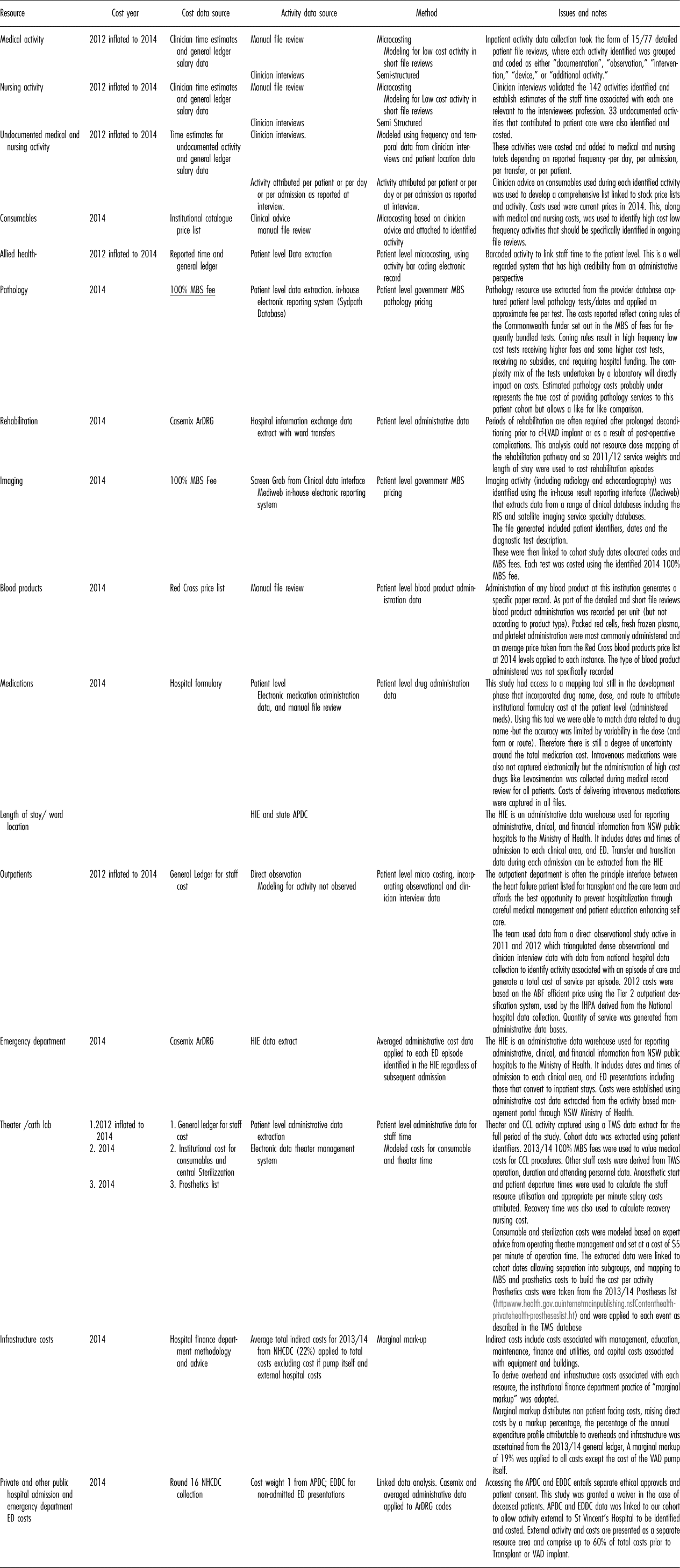
Resource groups with cost and activity data sources and methods

ABF, activity based funding; APDC, Admitted Patient Data Collection; ArDRG, Australian refined diagnosis related groups; CCL, cardiac catheter laboratory; Cf-LVAD, continuous flow left ventricular assist device; ED, emergency department; EDDC, Emergency Department Data Collection; HIE, Hospital Information Exchange; IHPA, Independent Hospitals Pricing Authority; MBS, Medicare Benefits Schedule; NHCDC, National Hospital Cost Data Collection; NSW, New South Wales; RIS, Radiology Information System; TMS, theater management system; VAD, ventricular assist device.
METHODS
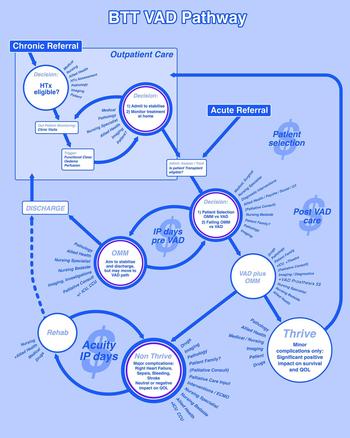
We chose a patient level micro-costing approach where possible and outline the resources identified and approach taken to attribute activity and cost to each resource in Table 1. As part of the conceptual framework underpinning the cost analysis, a bridge to transplant (BTT) VAD patient journey model was developed to determine focal points of patient activity and cost (Figure 1). This mapped the patient pathway for chronic and acute referrals, with exit points at heart transplantation or death, while outcomes following cf-VAD implantation were captured as “thrive” or “nonthrive” states impacting outcome and cost. The scoping phase involved a review of the literature related to cf-VAD cost and cost-effectiveness, ethical and governance approvals, the identification of accessible sources of paper-based and electronic data, and stakeholder engagement. We chose a governmental perspective as healthcare resource use is funded by both federal and state government health departments, and we sought to capture costs regardless of the expected source of reimbursement.
Bridge to transplant (BTT) ventricular assist device (VAD) patient pathway with decision points, chronic and acute referral pathways. CCU, critical care unit; ECMO, extracorporeal membrane oxygenation; HTx, heart transplant; ICU, intensive care unit; IP, inpatient; OMM, optimal medical management; QOL, quality of life.

Setting and Sample
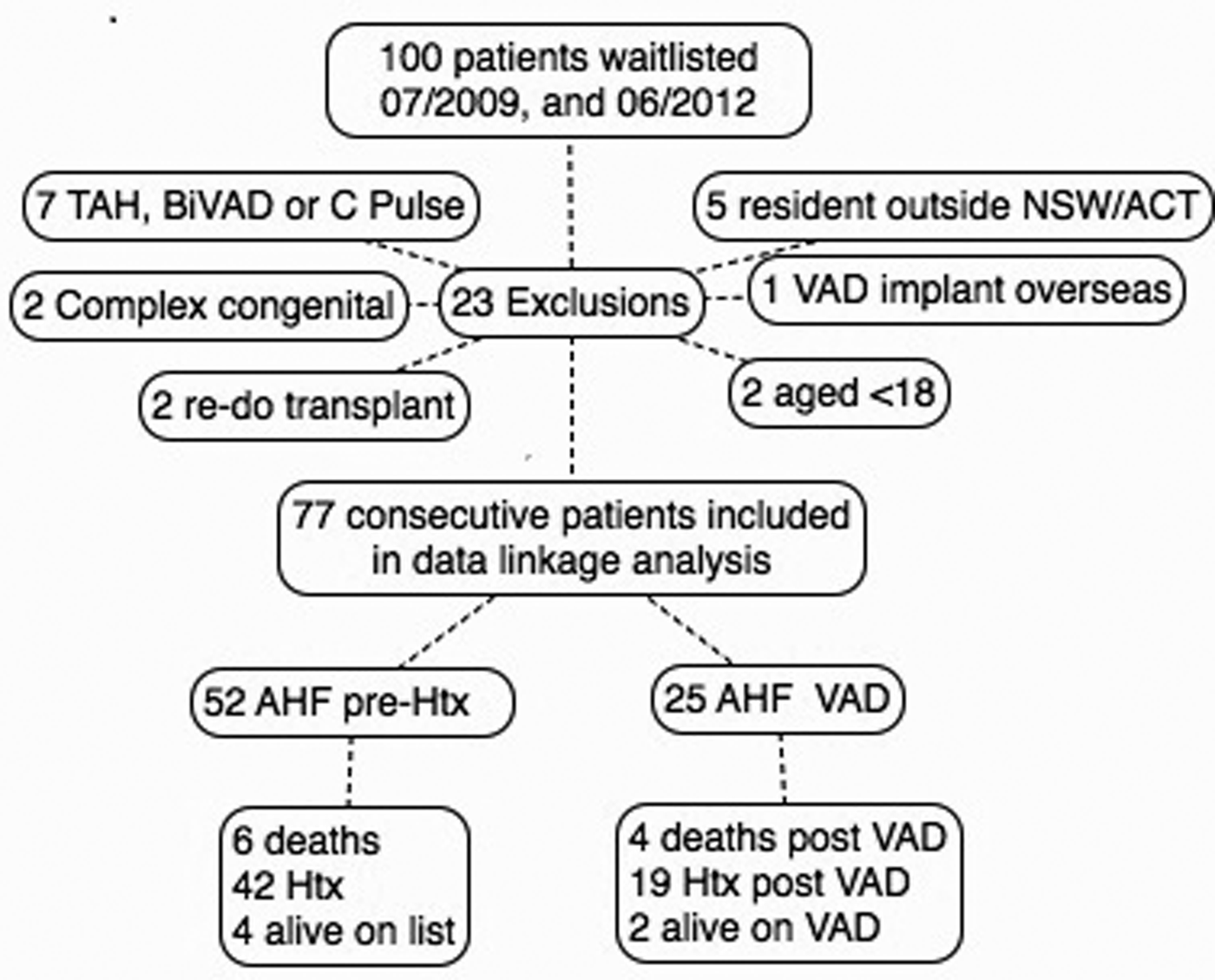
The point of entry for the seventy-seven patient strong cohort was listing for cardiac transplantation between 2009 and 2012, at one of four Australian hospitals offering heart transplant and cf-VAD therapy. Figure 2 describes the inclusion and exclusion criteria which produced the final cohort.
Inclusion criteria and outcomes. AHF, advanced heart failure; BiVAD, biventricular assist; C Pulse, extra-aortic counter-pulsation device; HTx, heart transplant; NSW, New South Wales; ACT, Australian Capital Territory; TAH, total artificial heart; VAD, ventricular assist device.

Data Collection, Linkage, and Costing
Detailed file reviews generated demographic and clinical data, as well as dated activities for a sample of seventeen patient journeys with each review adding organically to the one preceding it until no new activities emerged. One hundred forty-two activities identified in file reviews were then confirmed with clinicians, along with timing estimates and any undocumented activities, during a series of semi-structured interviews. Consumable resources required for each activity were also documented.
These dated activity data were then linked to salary (2014 ledger data) and institutional consumable price lists (2014 prices) allowing identification of “high cost,” less frequent, or less predictable activities, and “low cost” or routine activity in ward and intensive care settings. The remaining sixty reviews undertaken extracted “high cost” infrequent activities only. Average “low cost” routine activity identified in the seventeen long reviews was used to model per diem low cost activity for these sixty patients depending on their location in the hospital.
Clinician Interviews
Fifteen semi-structured clinician interviews were used to validate the medical and nursing activities identified in the long file reviews, and establish estimates of the staff time associated with each one. Two senior consultants, two registrars, three intensive care nurses, five clinical nurse consultants, two ward nurses, and a member of the perfusion staff were asked to provide time estimates for each activity relevant to their professional practice. They were also asked to add any additional activity they believed had not been identified in the medical record reviews. Thirty-three undocumented patient level activities were added as a result and included in the analyses as “additional activity.” Interview data were collected using preprepared forms and data from the interviews were fed back to clinicians for confirmation and checking. Phone referrals and consultations, checking blood results, team liaison, family care, and patient education, as well as multidisciplinary team meetings where patient treatment plans were developed, were all identified as resource consuming activities poorly represented in the record. Supplementary Table 1 lists medical and nursing activities identified.
Blood product use was manually extracted from the paper file and reported as a stand-alone cost. (Australia wide in 2010–11 blood products consumed approximately 2 percent of total hospital expenditure or around 7 percent of non–salary-related hospital costs. Procurement and distribution costs are increasing significantly faster than inflation, at around 12 percent per annum (Reference Duckett21), making the accurate assessment of blood product consumption essential).
Linked Administrative Data
Linked administrative emergency and admitted patient data (Emergency Department Data Collection [EDDC] and Admitted Patient Data Collection), capturing statewide admissions and emergency presentations, were obtained through the Centre for Health Record Linkage (CHeReL http://www.cherel.org.au/). These files yielded over 2,000 admission records, and 700 emergency presentations related to the seventy-seven patients. Each unit record contained admission specific Australian refined diagnosis related group codes (ArDRGs) with cost weights reflecting drivers such as length of stay, and case complexity. Cost weight 1, which included emergency department presentations that led to admission, was multiplied by $4868, the averaged cost of an admission (NEP) from round 16 National Hospital Cost Data Collection Hospital data collections, to generate cost data for each record. Emergency department (ED) presentations that did not result in admissions were identified in the EDDC records and costed using the average cost of an ED presentation multiplied by the cost weight specific for the urgency and disposition coded for each unit record (Supplementary Table 2) (17;Reference Reeve and Haas22).
Total costs for each patient included costs collected from the micro-costed institutional patient level data, including outpatient activity in the implanting center, and all NWAU derived cost from other public and private hospitals throughout New South Wales, including emergency presentations attended by any of the cohort. Each resource group identified, is presented in Table 1, with a description of the method used to establish activity and cost in each case and a note on issues encountered. Australian Bureau of Statistics cost price index data were used to establish the yearly health cost inflation rate to convert to 2014 prices.
Statistical Considerations
Routine or low cost activities were modeled from the observed results in the seventeen detailed file reviews to the sixty abbreviated reviews. Both mean and median data imputation were explored in Bland Altman analyses to determine which more closely fitted the observed data. In this way, the observed data relating to lower cost or routine activities could be compared with modeled data for the same seventeen patients. Bland Altman analyses of the two methods revealed less bias in the mean modeled data at ($322 versus $511) (Supplementary Figures 1 and 2). However, both models showed wide limits of agreements and increasing variability as per diem costs increased. We sought to address this by assessing low cost per diem activities observed in the detailed file reviews over each time period. Average data observed during each time period and hospital location (ICU, CCU) were chosen to model routine and low cost activity for the sixty short file reviews.
A considerable issue facing healthcare cost analyses relying on modeling, is the ubiquity of non-normally distributed data (Reference Briggs and Grey23). This study collects patient level data directly for all but routine lower cost activities and most categories demonstrate typical right skewed distributions. Despite the small size of this sample, it represents approximately 20 percent of the Australian cohort of patients awaiting transplant and receiving VADs over this period.
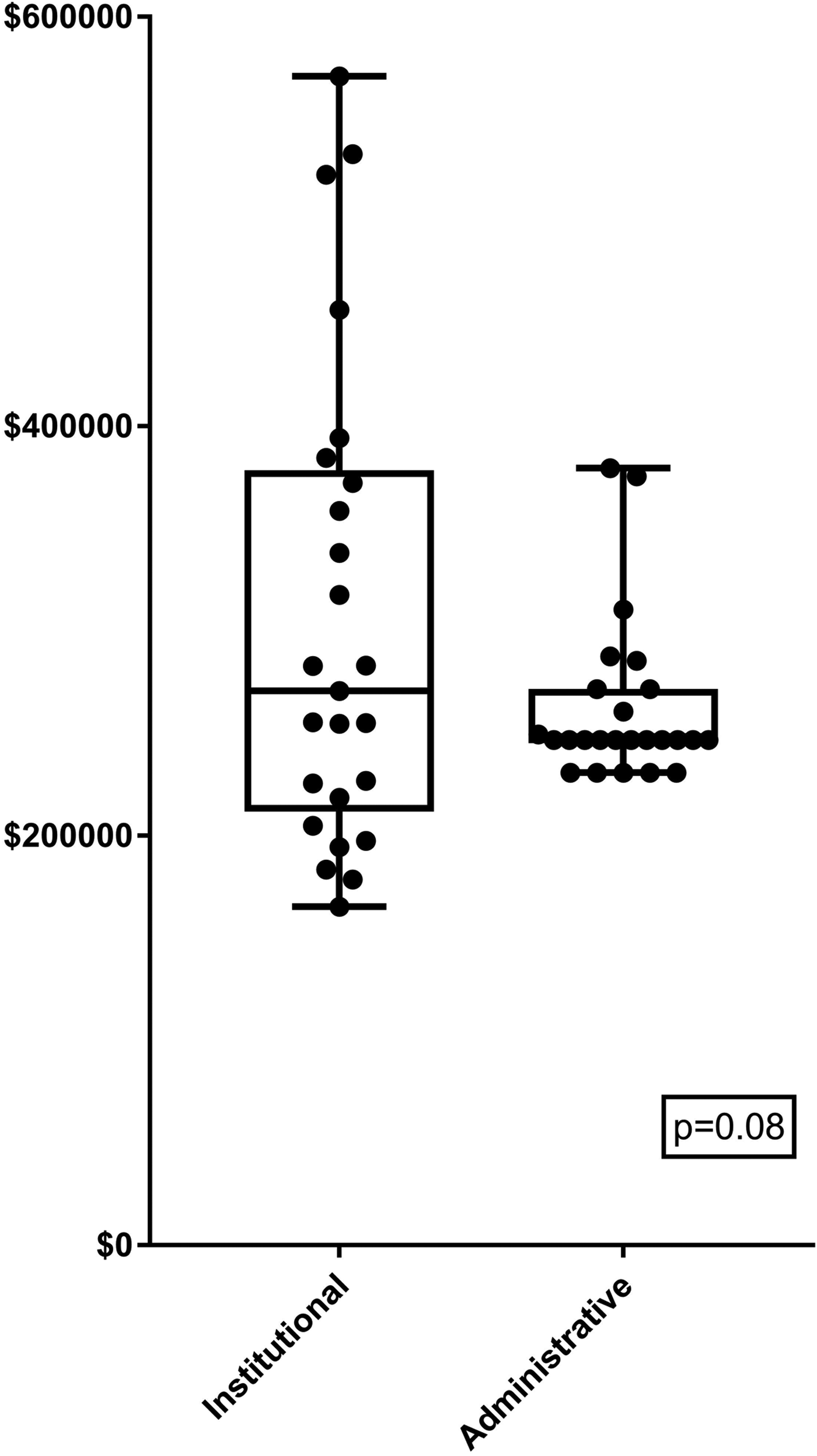
Because our dataset included cost weighted administrative data for the implanting center, as well as institutional data obtained for the same patients in the manual file reviews, we were also able to explore the comparability of the two costing methods. The date file allowed institutional data from the implanting admission to be compared with the costs obtained for the same admission using the weighted administrative data. A comparison between institutional costing for the implant admission and the costing using linked administrative data is presented in Figure 3, where the effect of the use of the NWAU can be seen in the reduced variability in the data and the loss of information about the extent of overall cost located in outlier patients. A Wilcoxon matched-pairs signed rank test was used to compare these non-normally distributed data. The nonsignificant difference (p = .08) supported the viability of using the administrative data to capture costs external to the implanting center.
Implanting admission costs derived from Institutional micro-costing compared with Administrative (Admitted Patient Data Collection) data for the same twenty-five ventricular assist device patients.

Data Extraction and Quality Control
R.P. completed the bulk of the manual data collection which consisted of seventeen full and sixty abbreviated paper file reviews as well as electronic data extraction including screen grabs from diagnostic reporting, imaging, and medications administered. Pathology, allied health, theater, and procedural suites activities were identified with data extracts from the relevant departments. L.K. performed initial data cleaning and quality control and used standard techniques to identify any issues with accuracy and quality of the data
Missing Data
Each activity produced raw data that was linked to inclusion dates for each patient and to cost sources in a three-step process. The success of this linkage in terms of error rates and missing data was assessed at each step. Inpatient data that could be reasonably ascertained on review as missing rather than absent, was ascribed to the patient at a rate reflective of resource use in other categories relevant to the same admission or episode. For example, if pathology or medication data were missing for an inpatient episode, it was ascribed according to the percentile reflected in other similar data available for that patient, during that episode. This allowed us to retain the cases in the analysis with minimal impact on the robustness of the overall summarized costs for the affected patients.
RESULTS
The comprehensive, dated, and costed database resource generated, includes 9,220 specific incidences of medical and nursing activity from the detailed file reviews, a further 1,006 incidences of higher cost or nonroutine activities from the short file reviews as well as consumables cost data related to each identified activity.
In-house electronic database interrogation yielded 3,954 incidences of allied health activity, 103,304 pathology tests, 58,025 medication administrations, 2426 diagnostic imaging episodes, 38 catheter lab procedures, 74 theater procedures, blood products administered, and 871 outpatient service events. The data are filtered to allow identification of activity in the pre- and postsurgical year as well as activity before, after, and during the implant admission. Table 1 describes the sources of activity and cost data related to each resource and outlines the method used in each case.
Comparing cost data from for the implanting admission (A10Z) revealed median costs were $270,716 (IQR $211,740–$378,482) for the institutional micro-costing and $246,839 (IQR $246,839–$271,743) using linked administrative data (Figure 3). A nonsignificant p value of .08 was obtained, and the coefficient of variation was greater in the micro-costed data (38.3 percent versus 15.17 percent). Average costs were higher for both at $262,484 (SD$39,830) versus $305,905 (SD$117,216).
DISCUSSION
Most of the recent cost analyses of cf-VAD BTT therapy have focused on comparison with heart transplant over the first year (Reference Marasco, Summerhayes, Quayle, McGiffin and Luthe19;Reference Patel, Sileo and Bello20), while Mishra et al. (Reference Mishra, Fiane and Winsnes18) included 3 months of preimplant/transplant costs, and Williams et al. (Reference Williams, Trivedi and McCants24) considered presurgical days within the implant admission. With increasing evidence to support adverse events as a driver of cost and poor outcomes in VAD patients (Reference Kirklin, Pagani and Kormos3;Reference Marasco, Summerhayes, Quayle, McGiffin and Luthe19), patient selection along with pre- and postoperative management strategies are likely to influence the cost effectiveness of cf-VAD therapy. Examining activity and cost in the preoperative year where high cost decision making occurs, could enhance targeting resources to optimize patient selection and preparation. In addition, comparisons with cost and activity in the pretransplant year will provide greater insight into the costs of managing AHF using optimal medical management in specialist centers.
With the shift to activity based funding models, institutions need to establish reliable and consistent records of clinical, diagnostic, and administrative activity and cost at the patient level. Ideally such activity should be recorded at the point of care in such a way that it enhances patient care and team communication and does not burden clinicians and allied staff with an extra layer of documentation. When improved patient care, communication, and transparency is demonstrably the focus, then clinician engagement, and the quality and consistency of the data generated will improve (Reference Damato25).
For the institutional micro-costing, we focused attention on medical and nursing activity on the ward, in ICU, and outpatients, but other areas are likely to benefit from a bottom up micro-costing approach to establish more accurate patient level activity and cost. For example, as the fourth driver of cost in our analyses, pathology costs would benefit from more detailed activity based cost analyses and these have been flagged as lacking in the literature (Reference Duckett26;Reference Neil, Pfeffer and Burnett27).
Pathology resource use extracted from the provider database captured dated patient level pathology tests, and applied an approximate fee per test, but the costs reported incorporate the coning rules of the Commonwealth funder set out in the Medicare Benefits Schedule of fees for frequently bundled tests (28). Coning rules, which place upper limits on the number of reimbursable services in a single request episode (Reference Duckett26), can result in high frequency low cost tests receiving higher fees and some higher cost tests, receiving no subsidies and requiring hospital funding. Neil et al. (Reference Neil, Pfeffer and Burnett27) present the issues faced when costing pathology services, including the commercial sensitivity of such data and the complexity and mix of the tests undertaken by a laboratory which will directly impact on costs. Our estimated pathology costs probably under represent the true cost of providing pathology services to this patient cohort but allows a like for like comparison.
The use of administrative data for costs accrued outside the implanting hospital, mask the effect of outlier patients because of the use of weighted arithmetic means to derive the NWAU and NEP. Where we can compare these data with the institutional micro-costing (implanting admission only), outlier patients can be identified (Figure 3), and it is likely among these high cost admissions that efforts to optimize patient selection and presurgical preparation will have their greatest impact.
Although there is a loss of information related to outlier patients in the cost weighted data, it allows the analysis to include a credible assessment of resource use external to the implanting institution. It is possible that using this type of data to demonstrate cost effects for interventions or changing practice may not be sufficiently granular to capture changes. However, it provides a more complete dataset of hospital activity and cost, identifying referral patterns, and demonstrating higher costs for optimal medical management in the presurgical year than is reflected in the single center data.
Micro-costed institutional data, on the other hand, provides a snapshot of the heterogeneity that exists in the cost data and could inform future cost effectiveness models using microsimulation methods. Demographic and clinical variables will allow further analyses of risk factors for poorer outcomes, and specific complications, although the sample size will restrict statistical significance. This level of detailed information at the patient level also provides an opportunity to identify nonpatient driven clinical variation that may undermine the safety and quality of care and trigger change in practice to improve both effectiveness and efficiency.
Limitations
Our mixed methods micro-costing study examined multiple electronic and hand-written documents to establish models of care in each patient setting, but was broad in scope and could not capture the finer processes occurring routinely across all departments and programs. In addition, despite the use of abbreviated file reviews focusing on high cost activity for the bulk of the reviews, the method remained highly resource and time intensive. Imputing average per diem costs for more frequent lower cost activities in the sixty short file reviews reduced the resource required to complete the micro-costing but introduced uncertainty over these costs. The small sample size of the study (twenty-five VAD, fifty-two HF) makes modeling from the data difficult; however, it still represents approximately 20 percent of the patients listed for transplant in Australia at the time. It is acknowledged that our data demonstrate significant skewness typical for health costs (Reference Briggs and Grey23). This remains limited by the small data size, and there was little benefit in imputing median over mean values for our lower cost data .
Prosthetics costs are ascribed according to the Prostheses List price (4), which may not describe actual costs to the hospital but instead a price agreed to with the developers at the governmental level. The full cost is applied here and may inflate actual costs for interventional cardiology procedures, such as pacemaker and defibrillator implantation.
As part of developing this costing method, we have captured costs regardless of the expected source of reimbursement, but costs borne by the patients themselves are not addressed in this retrospective study. Another omission in the cost profile developed is the exclusion of primary healthcare data, including general practitioner and community diagnostics and pathology as prospective patient consent is required to access these individual patient records held by the federal ministry of health in Australia.
In conclusion, this study provides a robust dataset of patient level activity transparently linked to cost in a cohort of patients with high healthcare usage. This methodological approach working from within a patient journey framework and using a range of costing strategies, will identify cost drivers that could inform planning, benchmark models of care, identify potential cost savings, assist in program planning, and support the development of an Australian cf-VAD microsimulation cost effectiveness analyses. There are gaps in discoverable cost data for drivers such as pathology and imaging which inhibit transparent decision making. However, the dataset generated here is sufficiently comprehensive to allow analyses of temporal changes in activity across the duration of an acute admission as well as typical frequencies of various activities. By including linked data, this study illuminates the pathways to transplant referral and the high cost of hospital activity generated in this cohort of patients experiencing the terminal phases of heart failure in the year before transplant, cf-VAD implant or death.
SUPPLEMENTARY MATERIAL
The supplementary material for this article can be found at https://doi.org/10.1017/S0266462318003586
Supplementary Table 1: https://doi.org/10.1017/S0266462318003586
Supplementary Table 2: https://doi.org/10.1017/S0266462318003586
Supplementary Figure 1: https://doi.org/10.1017/S0266462318003586
Supplementary Figure 2: https://doi.org/10.1017/S0266462318003586
CONFLICTS OF INTEREST
C.H received partial salary support for research staff involved in setting up this project. None of the other authors have a financial relationship with a commercial entity that has an interest in the subject of the presented manuscript or other conflicts of interest to disclose.