Introduction
Indonesia has been struggling to reduce its neonatal, infant and under-five deaths in order to meet the fourth Millennium Development Goal. In 2012, the levels were still above the average of the South-East Asia region (Bhutta et al., Reference Bhutta, Chopra, Axelson, Berman, Boerma and Bryce2010; Lawn et al., Reference Lawn, Kerber, Enweronu-Laryea and Cousens2010; UNICEF, 2013). Despite the implementation of a series of universal health-related programmes and the prioritization of child health and survival as national policies, child mortality rates still vary considerably between districts and sub-districts in Indonesia (Victora et al., Reference Victora, Wagstaff, Schellenberg, Gwatkin, Claeson and Habicht2003; Yinger & Ransom, Reference Yinger and Ransom2003; Acuin et al., Reference Acuin, Khor, Liabsuetrakul, Achadi, Htay, Firestone and Bhutta2011; UNDP, 2011).
Both inadequacies in health care access and delivery and the persistence of traditional beliefs continue to adversely affect child health and survival in Indonesia. Shortages of health care workers and child health services in rural and remote areas, such as antenatal, perinatal and postnatal care, have been found to have adverse consequences for birth outcomes and infant survival (Frankenberg et al., Reference Frankenberg, Suriastini and Thomas2005; Adair et al., Reference Adair, Pardosi, Rao, Kosen and Tarigan2012). Partly as a result of their difficulties in accessing health facilities and midwives and partly due to traditional beliefs, many rural women in Indonesia continue to use traditional birth attendants (TBAs) rather than local midwives (Titaley et al., Reference Titaley, Hunter, Dibley and Heywood2010; Agus & Horiuchi, Reference Agus and Horiuchi2012; Agus et al., Reference Agus, Horiuchi and Porter2012; Pardosi et al., Reference Pardosi, Parr and Muhidin2015).
There is also geographical inequity in accessing obstetric care and in the distribution of health care insurance within Indonesia (Hidayat et al., Reference Hidayat, Thabrany, Dong and Sauerborn2004; Acuin et al. Reference Acuin, Khor, Liabsuetrakul, Achadi, Htay, Firestone and Bhutta2011). Inadequate skills and knowledge among health staff relating to the delivery and care of newborns, such as support during labour, hygiene during delivery, and the provision of late treatment care for newborns, is another important health care delivery issue, and this has been found to adversely affect child health and survival (Hennessy et al., Reference Hennessy, Hicks and Koesno2006; Hatt et al., Reference Hatt, Stanton, Makowiecka, Adisasmita, Achadi and Ronsmans2007; Ensor et al., Reference Ensor, Quayyum, Nadjib and Sucahya2009). Local customs and community traditions, which are not scientifically proven, have continued to affect perceptions and practices related to child health and survival. For example, there are local norms that forbid pregnant women from going out at night, going to the river, bathing at night and slaughtering animals (Wulandari & Whelan, Reference Wulandari and Whelan2011; NIHRD, 2012).
Gender disparities in roles and responsibilities within the household have been found to affect child survival in less developed countries. Women, especially those of low socioeconomic status, tend to shoulder a greater burden of housework than their husbands, and this issue limits their involvement in health-seeking decision-making and knowledge of children’s health and survival influences (Victora et al., Reference Victora, Wagstaff, Schellenberg, Gwatkin, Claeson and Habicht2003; Bhutta et al., Reference Bhutta, Gupta, de’Silva, Manandhar, Awasthi, Hossain and Salam2004; Duflo, Reference Duflo2011). In contrast, higher socioeconomic status women with greater opportunities to make health-seeking decisions for their children and a greater control of household economic resources have been found to have higher rates of utilization of child health care services and child survival (Maitra, Reference Maitra2004).
Women in rural Indonesia tend to have less power than men in pregnancy and child health decision-making, and this is detrimental to infant health and survival (Beegle et al., Reference Beegle, Frankenberg and Thomas2001; Speizer et al., Reference Speizer, Whittle and Carter2005; Pardosi et al., Reference Pardosi, Parr and Muhidin2015). Unplanned pregnancy has been found to be associated with neonatal and maternal death and low birth weight (Lawn et al., Reference Lawn, Kerber, Enweronu‐Laryea and Massee Bateman2009; Singh et al., Reference Singh, Sedgh and Hussain2010; Yanikkerem et al., Reference Yanikkerem, Ay and Piro2013). In Indonesia, a lack of commitment from local government agencies, a lack of programme dissemination and an unequal distribution of free family planning services are major challenges to reducing the number of unplanned pregnancies in the population faced by the National Family Planning Coordinating Board (BAPPENAS, 2009, 2010).
Historically, the Indonesian Ministry of Health was the main child health policymaker, with local governments acting as recipients of the central government policy (Lieberman et al., Reference Lieberman, Capuno and Van Minh2005). However, since 2001 local governments have been given an increased responsibility for managing their own local health policies (Kristiansen & Santoso, Reference Kristiansen and Santoso2006). Despite this decentralization, significant disparities between areas in health status and inequities in health coverage have persisted (Poerwanto et al., Reference Poerwanto, Stevenson and de Klerk2003; Trisnantoro et al., Reference Trisnantoro, Soemantri, Singgih, Pritasari, Mulati, Agung and Weber2010; Baird et al., Reference Baird, Ma and Ruger2011; Utomo et al., Reference Utomo, Sucahya and Utami2011). Moreover, despite their increased autonomy, district health systems in Indonesia have continued to face problems relating to their accountability in managing local health budgets and changing from a curative paradigm to a preventive paradigm (Kristiansen & Santoso, Reference Kristiansen and Santoso2006; Heywood & Choi, Reference Heywood and Choi2010). Since leadership and governance are critical building blocks to ensuring effective health services, and particularly in view of the increasingly important role of district government leadership in providing child health services, understanding local governments’ roles and responsibilities and their partnerships with local communities has become important for international organizations that are concerned about the improvement of standards and equity in child health in developing countries such as Indonesia (Daly et al., Reference Daly, Taylor and Tinker2003; WHO, 2007, 2008; Asante et al., Reference Asante, Iljanto and Rule2012; Farnsworth et al., Reference Farnsworth, Böse, Fajobi, Souza, Peniston and Davidson2014).
Increasing local community involvement has also become an important part of the district health system’s approach to reducing child mortality in less-developed countries. Community leaders mobilizing local people to use health facilities and the building of partnerships between local community leaders and local governments have been found to increase public participation in local child health programmes, to improve maternal and child health, and to prevent early-age deaths, especially among poorer populations (Gwatkin et al., Reference Gwatkin, Bhuiya and Victora2004; Haines et al., Reference Haines, Sanders, Lehmann, Rowe, Lawn and Jan2007; Kerber et al., Reference Kerber, de Graft-Johnson, Bhutta, Okong, Starrs and Lawn2007; Rosato et al., Reference Rosato, Laverack, Grabman, Tripathy, Nair and Mwansambo2008). However, a study in West Java Province found a lack of understanding of, and support for, primary health service issues among local community leaders. Thus, there is a need for an improved understanding of local community leaders’ perceptions of, and their involvements in, child health and survival programmes (Titaley et al., Reference Titaley, Hunter, Dibley and Heywood2010).
Despite their increased importance in child health policy implementation, to date there has been a shortage of studies in Indonesia that explore local government and community leaders’ views of child survival issues and their roles and responsibilities in child health programmes, and a shortage of studies on their perceptions of how health and gender inequity issues affect child survival in their communities. This study aims to address this gap by (1) identifying local government and community leaders’ perspectives on child health, mortality and inequity issues, and (2) examining their understanding of their roles and responsibilities relating to reducing child deaths and improving gender and health care equity.
National and local child health programmes and policy
The local government and community leader participants in this study were actively involved in implementing a range of national, provincial and local child health programmes and policies. At the national level, the government has implemented a range of programmes either aimed at improving health in general or with a specific focus on reducing maternal and child deaths. For health development in general, the Government of Indonesia has been committed to the international Health for All (HFA) programme, to which it was a co-signatory at the UN conference in Alma Ata in 1979. In the mid-1990s the government implemented its ‘Healthy Indonesia 2010’ policy (later revised to ‘Healthy Indonesia 2020’), which focuses on health promotion and prevention rather than on curative and rehabilitative health care provision (WHO, 2008). This national policy has been associated with the increasing importance placed on meeting the UN Millennium Development Goals and their health-related targets. These programmes have included the provision of maternal and child health care services at village level supported by community health centres (Puskesmas). The health services provided include antenatal and postnatal care programmes for pregnant mothers, provision of trained health professionals for delivery, regular health examination for neonates and infants, supplementary food programmes and immunization for children under five (Bergera et al., Reference Bergera, de Peeb, Bloema, Halatid and Sembaa2008). The provision of primary care and immunization services at the village level often uses a posyandu (from pos pelayanan terpadu, meaning integrated health services post) approach, which encompasses family planning, sanitation, general health care, baby weighing and immunization. The visits from nurses or midwives to posyandu are generally held bimonthly in the house of a village leader or at a community health sub-centre (Puskesmas pembantu), with help from volunteers who are usually responsible for recording weights, preparing food supplements for the children and looking after for the weighing equipment.
Another major initiative, introduced in 1988, was a village midwife programme, known as bidan desa, involving distributing 50,000 midwives to rural areas (Hatt et al., Reference Hatt, Stanton, Makowiecka, Adisasmita, Achadi and Ronsmans2007; Shefner-Rogers & Sood, Reference Shefner-Rogers and Sood2004; Shrestha, Reference Shrestha2010; Trisnantoro et al., Reference Trisnantoro, Soemantri, Singgih, Pritasari, Mulati, Agung and Weber2010). In 1997, the Integrated Management of Childhood Illness (IMCI) policy, involving 8000 community health workers, which aimed at providing primary care for improving child health, was introduced (Trisnantoro et al., Reference Trisnantoro, Soemantri, Singgih, Pritasari, Mulati, Agung and Weber2010). In 2004, Indonesia launched a health insurance scheme for the poorer populations, known as Jaminan Kesehatan Masyarakat (Jamkesmas).
However, a lack of coverage of the rural population has become a major challenge for the implementation of this programme (Harimurti et al., Reference Harimurti, Pambudi, Pigazinni and Tandon2013; Simmonds & Hort, Reference Simmonds and Hort2013). In 2011, the government launched a universal benefit scheme, known as Jaminan Persalinan (Jampersal), which allowed every pregnant woman to deliver free of charge at health facilities and aimed to reduce neonatal deaths. However, since 2014 the programme has been integrated into the Social Security Organizing Body (BPJS) scheme, in which Jampersal is part of the social security for pregnant woman.
At the provincial level, in 2009 the East Nusa Tenggara government launched a strategy for saving lives and improving maternal health through its Maternal and Child Health (MCH) Revolution programme (Revolusi Kesehatan Ibu dan Anak). This programme aimed to improve the quality of health care services and, more importantly, ensure women could deliver at appropriate health facilities. It also aimed to increase the number of adequate health facilities, raise the number of women who deliver at a health facility and improve the quality of postnatal family planning services (NTT Provincial Health Office, 2012).
Since 2010, Ende district government legislated a provincial MCH Revolution programme and implemented a community mobilization system which monitored pregnant women 2 days before and 2 days after delivery (2H2). Community awareness of the MCH programme and involvement in this mobilization programme were seen as being critical to the success of this programme (EDHO, 2013).
Methods
Research site
Ende is an underdeveloped district and has higher than average early age mortality rates than both Nusa Tenggara Timur (NTT) province and Indonesia. At the time of the study in 2013, Ende’s neonatal, infant and under-five mortality rates were significantly higher than those for Indonesia (Pardosi et al., Reference Pardosi, Adair, Rao, Kosen and Tarigan2011; Statistics Indonesia, 2013). Life expectancy at birth in Ende (67.6 years) was below than that of NTT province and Indonesia (Statistics Nusa Tenggara Timur, 2011). With a total fertility rate (TFR) of 2.8 births per woman, Ende district had a higher average fertility rate than the provincial fertility rate of other districts in Indonesia (NFPCB, 2013).
In 2012, Ende had a total population of 261,093 and was predominantly rural (EDHO, 2012). Catholics formed the majority of Ende’s population (73%), with 25% Muslims and 2% Protestants (Statistics Ende District, 2013). Most families in Ende had a patriarchal structure in which men were the main breadwinners and held the power in decision-making within the family (Williams & Widodo, Reference Williams and Widodo2009).
Within Ende district, northern Ende had the highest infant and under-five death rates, followed by the eastern regions (EDHO, 2012). Acute respiratory infections, allergic skin diseases, diarrhoea, skin disease infection and worm diseases were the five most prevalent diseases among children under the age of five. The five leading causes of death among under-fives between 2009 and 2013 were pneumonia, diarrhoea, malaria, malnutrition and dengue haemorrhagic fever (DHF). The leading causes of infant deaths were asphyxia, infection, low birth weight, congenital abnormalities and pneumonia (EDHO, 2012, 2013).
Research participants
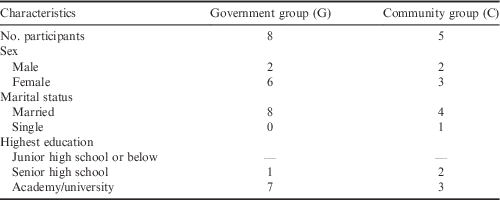
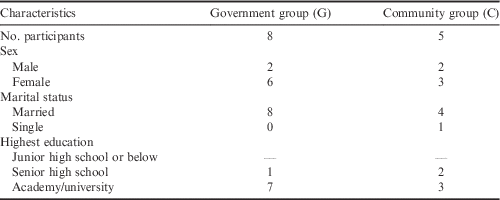
Focus group discussions (FGDs) were conducted in May 2013 to identify local government and community leaders’ knowledge and perspectives on child health and survival and related inequity issues, including their roles and responsibilities. Thirteen participants were involved in two separate focus group discussions. The first group consisted of eight participants from Ende local government departments, and the second group of five community leaders. Purposive sampling was conducted to select participants for this study based on the following criteria: a) being between 18 and 65 years old, b) currently holding a position as a supervisor or higher either in the Ende District Health Office (EDHO), a Social and Women’s Empowerment local government agency or a local community organization, and c) having experiences related to Ende children’s health and survival programmes and policies. The participants were chosen to have similar levels of seniority in their respective local government and community hierarchies in order that they could share their views free from the influence of superiors. A field supervisor from EDHO was selected to organize the focus group discussions (FGDs).
Data collection
The focus group discussions were conducted separately in the local language of Bahasa Indonesia in May 2013. Prior to the discussion, each participant received an explanation of the study objectives and was asked to complete a consent form. Participants discussed the current child mortality situation in Ende district, their roles and responsibilities for reducing child mortality, their perspectives on, and understanding and knowledge of, child survival programmes as well as the policies for Ende district. All group participants were audio-recorded.
Data analysis
All recorded files were transcribed into Bahasa Indonesia and all the transcriptions were translated into English. Before coding, anonymous codes were applied for all informants to protect their identities. Semantic content analysis was applied to provide the frequencies with which words or sentences that were mentioned by the participants in the form of matrix (Stewart et al., Reference Stewart, Shamdasani and Rook2006).
A content analysis identified similar patterns and themes supported by relevant quotes from selected participants, and interpretations were developed based on the patterns and major themes. For triangulation, the EDHO Annual Health Profile between 2008 and 2013 was used for internal validity purposes. Ethical clearance for this study was obtained from the Human Research Ethics Committee, Macquarie University, and from the National Institute of Health Research and Development (NIHRD), Indonesian Ministry of Health Research Ethics Committees.
Results
Table 1 presents the characteristics of participants from the government and community groups. The participants from the government group included six EDHO supervisors from different health units, one participant from the local women’s empowerment district agency and one from the local child protection district agency. The community group consisted of one Ende Alert Village (so-called desa siaga) representative, one Puskesmas (community health centre or CHC) partnership supervisor, a local maternity clinic supervisor (a Catholic sister), a community engagement supervisor and a member of the local women’s group. Almost all participants were married, and a majority had graduated from college or university. The following are ten key themes identified from the FGDs.
Focus group discussion participant characteristics, Ende district, Indonesia, May 2013
Health care inequity issues relating to child mortality
Most of the participants indicated that there have been inequities in the provision of health care services, with the rural and remote areas being disadvantaged. The lack of health staff in these areas was seen as a major issue. A majority of the participants reported that many remote villages had a shortage or even a complete absence of midwives or other childbirth-related health staff. It was reported that some health staff did not always stay in their village. A few participants expressed concern that midwives and nurses were unwilling to be placed in rural and remote areas. Hence, some CHCs had a surplus of midwives or nurses while others did not:
… medical staff are still very limited in villages. Most of the staff uncontrollably prefer staying in Ende town to the villages. They just come for three of six working days. This fact consequently has a bad impact on the management of health care services to the villagers. Many health care problems there are left unsolved, including those experienced by pregnant women, who are supposed to be handled as soon as possible. (G5, G=Government)
Actually the provision of health staff in Ende district has been sufficient because in this region the ratio of the supply and demand of the staff is equal. However, the distribution to all areas is not fair because most of the staff avoid working at remote places. As long as they have good relationships with their leaders, they can easily choose to work in the places they want to. It is not surprising that we find too many nurses and midwives in certain Puskesmas, while other Puskesmas do not have midwives and nurses. (C1, C=Community)
Drug unavailability at some CHCs and village health posts was seen as another factor affecting the geographic inequality of child survival, as illustrated by the following quote from a participant of the government group:
Medicine is another problem … but it is still difficult to solve the problem concerned if there is not enough medicine there. Many Puskesmas, pustu [community health sub-centre], and polindes [village maternity post] are still in lack of medicines … it is difficult for us to help them if the medicine is not appropriate. This happens in Ende district ... the problem of late distribution of medicines in this district lasts for four to five months almost every year. (G2)
Budget allocation for maternal and child health programmes
Most of the participants from the community group saw a lack of political and budgetary support from the local government as a major challenge to reducing child deaths under the decentralized model of health care delivery, as exemplified by the following quotes:
Budget should be available. However, as stated by another participant, if the programme is just a ‘project’, and indeed so far this is just a project in the development of this region and NTT province in general, this is just a programme, which means that by the end of the project, community’s behaviours will return to the previous habits. (C5)
It certainly includes budgeting because we plan the budget here on the table without knowing [silent] the real situation of the society. We only know the situation here but not in the real society. I am saying this based on my two-year experience, and I have seen no transparency. Without transparency we cannot obtain the proposed outcomes. I may say this issue is just a ‘project’, yes just a ‘project’. Oops, I am sorry for saying this, but this is from my viewpoint as purely an advocate, purely from an independent organization. Yes, this is just a ‘project’, and the more the budget, the more people are drawn to the project and once the project is finished, they will go back as usual, so they only pursued the project. (C1)
One participant pointed to a need for DPRD Ende (the Ende District House of Representatives) to give greater scrutiny to the proposed district health budget and greater priority to maternal and child health programmes:
We all know that the problem of infant mortality is so communal and complex that we should find the best solution together. That’s why I think we should oversee the budget and ask for the District House of Representatives to take control and watch the decision makers to accommodate the programmes which support the health of mothers and children. So, it requires the participation of all parties in the budget. (C5)
This participant expressed disappointment with members of parliament giving a low priority to the health needs of women and children in the local budget:
Members of parliament should ask themselves to what extent they had evaluated the community [needs being met] and motivated the local stakeholders on what to do, so the budget can be allocated appropriately. However, if the parliament members just behave as bosses at the top and they do not want to experience people’s pain, it’s useless. I have often protested in the parliament that there should be enough budgets for women empowerment, for the health of mothers and children. There should be vivid figures … how many per cent are allocated. Well, it all goes back to their mentality. (C5)
Health staff skills and performance
Most of the participants indicated that there were problems with child health care personnel’s skills and performance. A majority reported examples of midwives or nurses who refused to serve patients despite their arrival in the middle of the night or after operational hours. There were reports of favouritism and of unwillingness to help by village midwives and nurses:
Mostly, those patients who have a close relationship with midwife will get priority in the service. The midwife will come to serve them soon, even at midnight. On the other hand, those who do not have close relationships with midwives will not be handled easily. Some midwives even tell a lie that they are not available at the moment of need, just because they do not want to help the patients. This is a real and factual condition here, and many patients have experienced this. (G5)
It is about how to handle a patient with heart. In addition, her [midwife] humanity sense is also questionable. It is so very insensitive to refuse handling a sick patient just because it is not during the office hours. Moreover, she is also a woman, who should prioritize humanity in service. (G4)
Several participants expressed disappointment with the attitudes of young graduates, who they saw as being financially motivated and lacking the motivation to work in remote areas:
Our children nowadays do not take medical or nursing schools based on their talent. The reason why they choose those fields is that they think graduates of health schools have a greater chance to get jobs upon graduation. There are a lot of jobs available; civil servants, in clinics, or wherever, the jobs are available. (G8)
When we see from the human resources point of view, we find that the staff, both trained and untrained, have not paid serious attention to this particular condition … civil servants tend to focus more on financial benefits; they will be hesitant to serve people if there is no money given to them. (C2)
One participant suggested that this was because many midwifery or nursing schools were run primarily as businesses rather than as preparation programmes for their graduates with the essential skills required to serve in the CHCs or other health facilities:
Nowadays, many new midwifery and nursing schools have been built, I think mostly with the aim of profit making, so most of the graduates are not qualified ... they may be good at competence, but many are because of money. It is very different when they help patients directly. In short, they need more practice and skills … we issue a policy, which requires all health care staff to have training prior to working in the society. (G1)
The need for health information
Most of the participants from both groups suggested that there is a need for more health information to be provided by midwives and other related health personnel. A few suggested that this could be seen as an indirect cause of child deaths:
What I have followed and witnessed so far, the main cause of the deaths of babies or toddlers in this district lies in the hands of health care staff … that the midwives and nurses and other health staff should have provided families, especially pregnant women, with adequate information about baby care starting from the beginning of the pregnancy. (C2)
There is minimal information about infectious diseases, which may lead to death given to the family. The health care workers do not provide adequate information to the families. That’s all what I can say about this problem. (G3)
We [Ende District Health Office] need to support them at least by giving adequate information, so that they know how to live a healthy life. More than that, they can also plan for health programmes to keep their family, especially their children healthy. (G1)
The importance of parents having adequate child health and survival knowledge and mothers regularly checking their pregnancy or child’s health was emphasized by a few participants, while another pointed to mothers’ lack of attention to, and ignorance of, the symptoms of illness as a causes of child death:
I think the death of the baby should be detected earlier … parents should have known about this. When the pregnancy is in its early periods, mothers should actively check the condition of the fetus and detect the possible problems that may exist and have got the proper ways to anticipate it. (G7)
In many cases mothers tend to ignore children’s sickness. They only take their children to the hospital or clinic when the condition of the babies or toddlers is critical … mothers here do not give full attention to their children’s health. (G2)
Unplanned pregnancy among young women
A few participants linked unplanned pregnancy among women, especially young women, to the number of infant deaths. If the spacing between children was ‘too close’, or pregnancy occurred ‘too old’ or ‘too often’, it would not only harm the mothers’ health but also their birth outcomes. Furthermore, women with unplanned pregnancies were seen as less prepared in terms of knowledge and the capacity to care for a child:
The majority of pregnancies in our society are not planned … we even witnessed how a mother was not ready or planned to control the pregnancy, or she did not have baby’s clothes when delivering the baby. Everything seems to happen suddenly, no prior preparation at all, so the baby died because the mother had no preparation at all, just brought their body to the clinic. (G5)
Pregnant women with poor nutrition and also with chronic energy deficiency are increasing from year to year. Mostly this condition is caused by lack of attention and care due to the misconception of the society, which assumes that pregnancy is natural for every woman; hence, there is no need to make special preparation for it. (G8)
One participant emphasized the need for young women to understand the impact of unplanned pregnancy on infant deaths:
It is urgent to promote health care to female children ever since they are ten years old. We cannot wait until the time when they are pregnant some day and give them information about the importance of healthy life. So far we only focus on the pregnancy, breast-feeding, and baby or toddler care until five years of age. Admittedly [urban] teenagers in this era know more information about sex than we did. (G6)
Local traditions and beliefs during pregnancy and after delivery
The participants described a range of local ceremonies and traditions that continue to exist, mostly in rural and remote areas, for women during and after delivery. A pregnant woman is required by tradition to confess her mistakes during pregnancy to her husband, neighbours, parents and parents-in-law, usually during the last trimester of pregnancy. It is believed that if women follow this tradition, the delivery process will be free from problems. The main problem participants saw being associated with this tradition was that if pregnant women had to travel long distances to their relatives’ home, there may be adverse consequences for their health and their child’s survival. Mothers often had to travel to mountainous areas or to other islands using public transportation on damaged roads, as described in the following quote:
At that time ... she was required to follow a traditional ceremony, in which she had to apologize to her in-laws [parents and brother or sister] and everybody lives together with her. According to their belief, the birth problem faced by this woman was caused by a curse because of her faults to those people before. She had to follow the procedure in order to be able to deliver the baby. I just could not imagine … she should apologize live in distant regions. It takes time to make them come to forgive this poor woman. (G1)
For so many times … everybody surrounding her will require her to apologize to people to whom she once made mistakes. In particular critical situations, she is even forced to talk honestly about her pregnancy and tell everybody who the baby’s father is, for example. This habit is still practised and has become a culture here after the woman apologizes and confesses her mistakes or secret of her pregnancy, probably because of psychological stress and fear, all of her muscles become stiff. After she has shared her problems or secrets that she has hidden so far, and told everything honestly, the birth process becomes easy. So … the habits and culture create psychological stress and tension to the woman, and once she is relieved. (C2)
After the delivery, women and their babies are by tradition not allowed to go out from their house unless they have held the ceremony known as Wa’u Nata or Ra Ndawa, involving sacrificing animals, usually pigs. The participants expressed concerns with this prohibition on movement because it might prevent the mother from seeking postnatal care or using child health services:
After delivering a baby, woman/mother is not allowed to go out of the house before this ceremony is held. She is only allowed to do so if Wa’u Nata has been conducted. There is no excuse for the woman to step out from the house for whatever the reason is, even when she is sick unless the Wa’u Nata ceremony is held … the baby is not allowed to be taken to the posyandu [integrated village health post] for body weighing or other health care services. If the family or parents have slaughtered animals like pigs for the ceremony, then, both the mother and the baby are released from the prohibitions … also are allowed to visit health care centres or meet the health care staff … and this culture is still practised there. (G8)
After the baby is born, there is a tradition called Ra Ndawa, which requires the family to slaughter a big pig for the rite. You see, it is very contradictory. Before the birth, the family doesn’t have any money to pay for the birth, but slaughtering a big (of course expensive) is quite affordable for the family, even though economically the mother is poor. (C4)
Some regions of Ende were reported to have food prohibitions for women during pregnancy and after delivery:
According to local people’s belief, consuming fish or meat will make the breast milk smell fishy. Hence, pregnant women are only allowed to consume corn. It lasts for up to three months, and then the women are allowed to consume normal food. (C2)
I got this experience when I worked at a CHC near the Ende coast. There was a prohibition on breast-feeding woman to consume rice. She was not allowed to eat rice and eggs. They said that if she ate eggs, her baby would get an ulcer, and also when the baby sucked mum’s nipple, it smelt fishy. In addition, we were not allowed to eat barley in our family. (G2)
The last statement indicates that local people may be more concerned about this local belief than with ensuring mothers’ and children’s health well-being. These local beliefs and traditions are stronger in rural and remote areas and may adversely influence children’s health and survival.
The use of traditional birth attendants
The continued use of traditional birth attendants (TBAs), especially in rural and remote areas, was seen as an indirect determinant of child deaths by some members of the community group. A lack of economic resources and the persistence of traditional beliefs were the main reasons identified for the continued use of TBAs. The following quotes illustrate the importance they attached to economic considerations:
The majority of people in the village prefer to deliver babies at home, in the village because it is more practical and economical. It is practical because … if they deliver the babies at clinics, they should pay certain amount of money for staying there and health care, while there is no specific financial preparation for the birth. (C4)
Economic status has its influence from its society. The example of economic status is about traditional birth attendants. In the NTT Maternal and Child Health Revolution programme we have forbidden [that] the pregnant women to consult their pregnancy with traditional birth attendants. (C1)
The TBAs were considered by the participants to be health volunteers who should not therefore assist deliveries at home. One expressed disappointment with the local District Health Office’s actions to reduce the use of TBA in rural villages:
… traditional birth attendants are partners for village midwives. Their duty is to take the women at term to deliver babies at the nearest Puskesmas. Also, it is common in practice here that TBAs are forbidden to help the birth process at small and limited health centres in the villages. Instead, they should recommend taking the women to the Puskesmas. (C2)
In the programme of Revolution for Health of Mother and Child … forbidden for pregnant women to consult their pregnancy with a traditional birth attendant … what the health office has done to minimize the existence of the traditional birth attendant. (C1)
Gender inequity issues relating to child health and mortality
Women’s lack of involvement in decision-making, especially health-seeking decisions, was seen by most participants as a gender inequity issue. The participants thought women should have been given more responsibility for decision-making by their husbands during pregnancy and after delivery. Women were perceived by most participants as facing difficulties in making decisions, especially pregnancy-related and health-seeking decisions:
Decisions on when to get pregnant … when to visit clinics or other health care facilities, and what kinds of food to consume are still very weak. A good example is about food, the good ones are given to the husband or elderly people, while the pregnant woman only gets the left over. (G8)
For example, she will ask for agreement from her husband and family to take the sick toddler to the clinic. She cannot decide herself because she has no power to do so. Besides, the fact that some families still do not have any knowledge about health care sometimes brings fatal situations. Their innocence may cause child deaths. (G1)
Why should we [women] take part in the programme if our aspiration is not heard, let alone accommodated? This is women’s aspiration. On the one hand, we are required to participate in health care programme; on the other hand our opinions or suggestions are not accommodated. (C5)
Husbands were portrayed as providing little support to their wives, and rarely accompanying them to health facilities. This was seen as contributing to women lacking awareness of their children’s illnesses and their own health needs, as illustrated by the following participants’ explanations:
The reason for the death of the child is because the heavy burden given to the women or mothers … women or mothers still have to do a lot of work at home, ranging from doing the household work, taking care of husband, cooking, and when they are with baby they must also feed their toddlers, or when are pregnant, they must also check their condition at clinics or hospital. This heavy amount of work deprives the women/mothers from taking care of their babies or toddlers … according to the standards from the health office. (G4)
In fact, those poor women are required to watch their cows at pastures, even though they are pregnant. Of course, they suffer a lot and some even die because of these heavy burdens. For example, they had accidents such as tripping over stones while pulling cow’s rope. Their physical health conditions are ignored because their husband and big families force them to work hard even though they are pregnant. (C5)
Many husbands did not accompany their wives to have the pregnancies checked in the Puskesmas. Women … do not pay attention to the development of their fetus in each stage of the pregnancy. They do not take care about the health of their fetus and themselves. (C4)
Some participants pointed to husbands lacking understanding of the need to provide healthy and nutritious food to their wives during pregnancy, to the detriment of the baby’s health. One described it in this way:
We know that actually the nutrition of a pregnant woman should be fulfilled right from its early time. However, if the husband does not have a good perception and comprehension of the health of his pregnant wife, no good things can be done. He is supposed to arrange the correct consumption habits of his wife and child… this is closely related to behaviour and habits, not at the level of the style yet. I thought… which gives women smaller portions than their husbands. (C5)
Another participant reported a disturbing case in which the husband did not want his wife to deliver at the CHC and this decision led to the death of his baby. After the child’s death, the head of the village and sub-district suggested that the father should take his wife to the hospital, but he rejected the idea because he was afraid that no one would care of his dog:
There was a woman of 43 years old who got pregnant. Her baby was alive before delivery. Since her haemoglobin was very low, the woman was advised to deliver at the nearest Puskesmas. However, her husband strongly rejected the advice. He didn’t allow his wife to deliver the baby at the Puskesmas and his wife finally delivered the baby at home … the baby was dead when it was born … in the Puskesmas we suggested taking her to the hospital to get blood transfusion. Everybody in the village strongly persuaded the husband to take his wife to the hospital … the reason was so illogical and ridiculous. He was worried about his dog; no one would take care of his dog if he had to accompany his wife in the hospital. (G1)
Other participants reported husbands having misconceptions about the supplementary feeding programme for infants, which provides children under five with eggs through the posyandu (integrated health post). They saw a strong need to promote this infant feeding programme to fathers:
When babies or toddlers are taken to the posyandu by their mothers, they will get supplementary food like eggs and take the food home. Unfortunately, at home the eggs are not consumed by the kids but … it is their fathers who finish the eggs taken from the posyandu. (C5)
We give supplementary food for toddlers, but their fathers or older siblings also consume the food, and in the long run the toddlers remain in the condition of malnutrition. (G7)
In addition, a preference for sons was identified as a gender-related issue by a few participants:
When the babies are born, the culture in most of the regions here [Ende] tends to distinguish male children from female. For example, upon the birth of a baby there is a saying: ko ata, toko ata, toko kita (this baby is not ours, if it is a baby girl, because when she becomes an adult, she will get married and follow her husband’s family) or (this is ours, if it is a baby boy, because when he becomes an adult, he will get married and remain in his big family or clan). (C5)
Challenges for reducing child mortality and improving child health
Challenges to achieving reductions in child deaths in Ende district facing the government and community organizations and their roles and responsibilities in addressing these challenges emerged as a theme in the discussions. In the government group, most participants stated that reducing child deaths is not only the responsibility of the local District Health Office. The main challenge seen by this group was changing family and community knowledge, attitudes and practices through continuous maternal and child health (MCH) intervention programmes. They saw collaboration between local agencies and a strong political agenda to support health care promotion as integral to this process. The need to change from a curative paradigm to a health promotion and prevention paradigm was seen as important for Ende district and as having family financial benefits:
I think health care promotion should be increased. Yes, it is about promotion and counselling to people and to society. Honestly, so far health care promotion has been put as the very last priority. It just began to be prioritized recently. (G6)
Health care promotion … because when they have good understanding about health care, families will have proper concept and can make good plans. For example, if one of their family members gets a particular disease, they know what step to do. If they cannot overcome the problem themselves, at least they know where to contact for further help … when they do not have adequate information and knowledge; they will just stay at home with nothing to do to take proper steps for handling their own family members who are sick. (G1)
I think that health care promotion is urgent. Promotion is important in order to make people know about health care information. It is common that we prefer people hospitalized and use the provided medicine rather than preventing the sickness by promotion. More money is spent on curing diseases rather than preventing them … People can use the cost for health care for their children’s school tuition or building their house. (G5)
One participant emphasized the importance of targeted health care services and the need for continuous health promotion programmes. Another expressed concerns about the lack of commitment from health staff to providing quality health care services to the poor population:
I think we should prepare and plan the target of our services with proper timetables. In addition, we should also prepare for the continuous promotion and socialization programmes. (G2)
In my opinion, it’s all about commitment. Are we as health care staff willing to serve poor people? … there won’t be any problems if we willingly and honestly serve, care, and help those people with their limited financial and educational backgrounds. If they are still under-qualified in terms of human resources, what should we do to make them more qualified? … that everything depends on our own commitment with our job. (G5)
The involvement and collaboration of other agencies was considered essential to reducing child deaths and improving mothers’ status, especially for underdeveloped villages. For example, as described by the following participants:
However, participation from other sectors of life is also important in this case. Sectors like agriculture, women empowerment and transportation also play important roles to enhance healthy villages. Women empowerment sector, for example, is expected to give great contributions to increase women’s status. Transportation sector does play an important role because poor transportation [roads in this case] will also influence the process for transporting patients from a village to health care centres. (G1)
If we are really willing to solve this problem [child deaths in Ende], the first thing to consider is collaboration. Yes, collaboration. Health office cannot claim that it is the single fighter, so it will struggle itself because it definitely can’t. (C1)
This participant stated that participation by all community members is required in order to minimize health inequity issues. Even though the local government provided the community with health insurance, the insurance scheme has not been distributed equally to the whole population. Another participant pointed to the low quality of service provided to those with community health insurance:
Health insurance and birth insurance cannot guarantee that all the people in the society are willing to take part and the insurance itself is not aimed to serve all of them. For example, posyandu has its own budget and it is for health affairs [silent], so people will assume that this is health office’s business and they have nothing to do with the programme. Actually, the programme of posyandu needs participation from all elements in the society, and it is actually the main factor in the programme. Otherwise, the idea of equity is only rhetoric. (C1)
Delivery insurance seems to be not working at all in this case because they prefer serving patients with cash payment to those with the insurance cards. This is quite different from our services in the private sector. For us serving patients seriously is a must, so we don’t focus on financial benefits. (C2)
Community participation for child survival
A majority of the community group participants saw active community participation in health programmes as important to increasing child survival. One shared their successful experience of reducing the number of child deaths in their village by involving community members in helping pregnant women to deliver at the closest health facility and setting up a database:
Since the establishment of Desa Siaga [Ende Alert Village] on 25th June until now, we haven’t found any single case of baby/toddler death there. This is because we pay full attention to the vision and mission of the Ministry of Health, which promotes self-enhanced society for healthy life, serving for healthy people. We have initiated a database collection for pregnant women; encourage pregnant women to have regular check-ups for pregnancy at posyandu [integrated village health post]. We also suggest taking their baby/toddler to the posyandu in order to be examined for any problems of malnutrition in babies/toddlers. (C3)
Another participant reported that, despite a lack of financial support from the local government, the community had managed to fund and build a waiting house near to a CHC (rumah tunggu). This waiting house was built to enable pregnant women to stay a few days before full-term rather than face the choice between arduous travel to deliver at the CHC or home delivery:
Initially we have proposed the budget to EDHO, but they did not accept our proposed budget for building waiting house …we have built a waiting house for women at term with a very good management and the budget is by the people themselves, not from the fund of non-governmental organizations or government. The budget is from the Village Income and Village Expense Budget. For your information, the programme is now a pilot project. (C1)
Discussion
This study’s government and community group discussions identify a range of health service delivery issues that may increase the risk of child mortality, especially in rural and remote areas of Indonesia. The issues identified relate to health personnel skills and motivation, service availability, health care inequity and gender inequity, and the persistent influence of traditional beliefs in this underdeveloped district of the country.
The participants suggested that there is a need for increased promotion of child health to rural families and to distribute more midwives with adequate child health skills to rural and remote areas. However, the potential solutions they suggested appear to be only partial, and tend to be specific to their own roles and sectors, rather than involving collaboration between government agencies and community leaders and organizations.
A need to provide regular training on integrated maternal and child health to midwives is apparent. In view of the concerns expressed about new midwife graduates possessing inadequate skills and knowledge in child health and survival, local governments should monitor and evaluate midwifery and nursing schools’ curricula to ensure that maternal and child health care issues, especially those facing rural and remote areas, are covered adequately. Local governments should also work with the Indonesian Ministry of Health and Ministry of Education to conduct accreditation of these schools (Ministry of Education and Culture, 2011).
The reported lack of motivation of young graduates and village midwives to work in rural and remote areas, due to the added financial rewards from working in urban areas, also needs to be addressed by local governments providing incentives for those who are willing to work in remote villages or areas with geographical challenges (Henderson & Tulloch, Reference Henderson and Tulloch2008; Makowiecka et al., Reference Makowiecka, Achadi, Izati and Ronsmans2008; Ensor et al., Reference Ensor, Quayyum, Nadjib and Sucahya2009; Prytherch et al., Reference Prytherch, Kagoné, Aninanya, Williams, Kakoko and Leshabari2013; Dickson et al., Reference Dickson, Simen-Kapeu, Kinney, Huicho, Vesel and Lackritz2014). Another potential solution would be the provision of career support to village midwives from both local and central governments, especially for those who have been working many years and possibly also for volunteers (BAPPENAS, 2005). Many village midwives work on a temporary contract or a voluntary basis, and in many cases they have done so over many years. Enhancing their opportunities to transfer to permanent status may improve their morale and motivation to deliver better child health services (BAPPENAS, 2005).
The Indonesian Ministry of Health (Ministry of Health, 2012) has recommended that TBAs should not primarily be responsible for pregnant women during delivery and involving TBAs in health volunteer training. The reported continuing use of TBA services in rural and remote areas needs to be addressed by local governments by improving the quality of health services provided by midwives (Makowiecka et al., Reference Makowiecka, Achadi, Izati and Ronsmans2008; Pardosi et al., Reference Pardosi, Parr and Muhidin2015). The responses from the community participants show their concerns about a lack of effort by local government to improve their partnerships with local TBAs.
The responses from the community group show their concerns for rural women experiencing the absence of midwives in assisting with their child health problems after travelling long distances to the closest health facility (O’Donnell, Reference O’Donnell2007; Gabrysch & Campbell, Reference Gabrysch and Campbell2009). A few community informants suggested there is a need to provide new health facilities in rural and remote areas, despite the challenging geographical conditions. Pardosi et al. (Reference Pardosi, Parr and Muhidin2015) found rural mothers also see a need for closer health facilities, such as Puskesmas pembantu (community health sub-centre) or village health posts (pos kesehatan desa). This would require increased collaboration between local governments and provincial and national governments, and prioritization of the expansion of rural primary care services (Kruk et al., Reference Kruk, Porignon, Rockers and Van Lerberghe2010).
The focus group discussions highlight gender inequity issues, particularly women’s lack of participation in decision-making in child health-seeking and pregnancy decision-making and in general, in this district of Indonesia (Gipson et al., Reference Gipson, Koenig and Hindin2008; Shefner-Rogers & Sood, Reference Shefner-Rogers and Sood2004; Tsui et al., Reference Tsui, McDonald-Mosley and Burke2010; Hodnett et al., Reference Hodnett, Gates, Hofmeyr and Sakala2013). While gender inequity was identified as a problem by the participants, it was notable that none put forward solutions as to how best to promote attitudinal and related health behavioural change.
Enhancing the education of both fathers and their wives about child health and survival influences and increasing their involvement in health education and seeking decision-making would enable them to prevent early-age illnesses or deaths, as suggested by a majority of the community informants and some government participants (Mwambete & Joseph, Reference Mwambete and Joseph2010; Tweheyo et al., Reference Tweheyo, Konde-Lule, Tumwesigye and Sekandi2010). There is a need for continuous dissemination of information about local child-feeding programmes to fathers in order to address misconceptions about these programmes, which lead to their children and pregnant wives having inadequate nutrition, as suggested by both government and community participants (Piwoz et al., Reference Piwoz, Huffman and Quinn2003; Holmes et al., Reference Holmes, Febriany, Yumna and Syukri2010). A greater involvement of local community leaders in the child health programmes might stimulate the spread of information about child health to rural communities in general and rural husbands in particular, considering the high levels of esteem they command (Ki-Moon, Reference Ki-Moon2010; Nair et al., Reference Nair, Tripathy, Prost, Costello and Osrin2010). Helping to prevent unplanned pregnancy, especially among older and younger women, by the provision of information on family planning and reproductive health by village midwives through the national Empat Terlalu (too young, too old, too often and too close) programme, also could reduce the risk of neonatal and maternal deaths, as suggested by the informants (Speizer et al., Reference Speizer, Whittle and Carter2005; Mullany, Reference Mullany2006; Lawn et al., Reference Lawn, Kerber, Enweronu‐Laryea and Massee Bateman2009; Ministry of Health, 2010; Singh et al., Reference Singh, Sedgh and Hussain2010; Yanikkerem et al., Reference Yanikkerem, Ay and Piro2013; Utomo et al., Reference Utomo, McDonald, Reimondos, Utomo and Hull2014).
As elsewhere in Indonesia, local traditions and food prohibitions related to childbirth continue to exist especially in rural and remote areas of Ende district (Suryawati, Reference Suryawati2007). This indicates the need for continuous health promotion and local interventions, especially in rural communities which have strong traditional values, in order to improve the understanding of child health (Victora et al., Reference Victora, Wagstaff, Schellenberg, Gwatkin, Claeson and Habicht2003; Hill et al., Reference Hill, Kirkwood and Edmond2004). Indonesia’s decentralized model of child health service delivery in theory could facilitate the development of the tailoring of health promotion to address the issues associated with locally-specific traditions.
Certain problems are evident with the decentralized model of child health service delivery. This study’s findings indicate inadequate district budgets for child health and an unequal distribution of health insurance as major concerns. These patterns reflect the low priority given by the local District Health Office and elected representatives to improving coverage of the disadvantaged population, and points to a need for local government to increase their political commitment to, and budgets for, child health (Ensor & Cooper, Reference Ensor and Cooper2004; Haws et al., Reference Haws, Thomas, Bhutta and Darmstadt2007; Acuin et al., Reference Acuin, Khor, Liabsuetrakul, Achadi, Htay, Firestone and Bhutta2011;Utomo et al., Reference Utomo, Sucahya and Utami2011; La Vincente et al., Reference La Vincente, Aldaba, Firth, Kraft, Jimenez-Soto and Clark2013). The responses from some community participants point to a need to involve local community leaders in planning local government health budgets and increasing local budget transparency and government accountability (Ki-Moon, Reference Ki-Moon2010). Local governments also need to tackle gender inequity issues by implementing gender-responsive planning and budgeting, by allocating more resources for maternal and child health in rural communities, as recommended by community participants (Ki-Moon, Reference Ki-Moon2010; Noerdin, Reference Noerdin2014).
Whilst both the community leaders and the local government officials identified inadequate collaboration as an issue, their perceptions of the needs for collaboration differed notably. The community leader participants demonstrated their awareness of the need for, and their willingness to be involved in, village child health programmes by starting a local ‘waiting house’ (rumah tunggu) initiative, which supports pregnant women who live in distant villages to deliver at a health facility by residing a few days before and after delivery in a house that is close to the Puskesmas (Eckermann & Deodato, Reference Eckermann and Deodato2008; Lassi et al., Reference Lassi, Haider and Bhutta2010). Their comments indicate a need for local governments to develop collaboration with local community leaders and show a greater appreciation of community efforts. These strategies have been proven to be effective ways of promoting behavioural change and reducing child mortality even with limited resources (Martines et al., Reference Martines, Paul, Bhutta, Koblinsky, Soucat and Walker2005; Farnsworth et al., Reference Farnsworth, Böse, Fajobi, Souza, Peniston and Davidson2014). In contrast, the local government participants pointed to a lack of co-ordination between the local District Health Office and other local government agencies and to inefficiencies in the local maternal and child health programmes.
This study illustrates local government officials’ implementation of their roles and responsibilities and their understanding of the challenges relating to reducing infant and child deaths in a rural area of eastern Indonesia, and has generated new insights into gender and health care inequity issues and the problems of health care service performance by village midwives in this district of eastern Indonesia. In view of the small sample size, caution should be exercised when generalizing the results to a wider population of government officials and community leaders. In addition, some of the findings may not apply to districts with different characteristics to Ende.
Local governments have become increasingly important to the delivery of child health care in Indonesia. This study identifies a pressing need for further action by local governments to improve the quality of rural primary health care, increase the distribution of midwives in rural and remote areas and increase the involvement of local community leaders in district health programmes. Continuous collaboration and shared leadership between local government and local community leaders is needed to address health care and gender inequity issues in order to improve child health and survival in this predominantly rural area of eastern Indonesia.
Acknowledgments
The authors would like to thank all the respondents for their participation in the focus group discussions and EDHO staff for organizing the discussions. This study received funding support from Macquarie University through an International Macquarie Research Excellence Scholarship (iMQRES). The authors would like also to thank the anonymous reviewers for their constructive feedback.