


It is natural to think that an agent’s credences about various events are rationally constrained by her credences in the chances of those events. For example, if one thinks that a coin has a 50% chance of coming up heads, then it seems that one ought to have credence 0.5 in the claim that the coin will come up heads. What, though, is the general story about how facts about chance rationally bear on our credences in other propositions?
Lewis (Reference Lewis, Carnap and Jeffrey1980) argues that a principle such as the following captures the way in which credence about chance imposes rational constraints on our credences in other propositions:Footnote 1
Principal Principle: Let ch(·) be a possible ur-chance function.Footnote 2 And let Cch be the proposition that claims that the ur-chances are given by ch(·). Then a rational agent’s initial credences, that is, her credences before receiving any evidence, defined over an algebra containing Cch, ought to be such that  , given that Cr(Cch ∧ E) ≠ 0 and ch(A | E) = ch(A).
In what follows, however, I argue that there is reason to prefer the following alternative principle:
Temporal Principle: Let ch(·) be some possible chance function, that is, a function describing a possible chance distribution for some world w and time t. And let Tch be the temporal proposition that claims that the chances are given by ch(·). We can think of this as the set of world-time pairs such that ch(·) is the chance function at the world and time in question.Footnote 3 Then a rational agent’s credences defined over an algebra containing Tch ought to be such that  , given that Cr(Tch ∧ E) ≠ 0 and ch(A | E) = ch(A).
According to the Principal Principle, our credences are rationally constrained by certain eternal chance propositions, that is, propositions that determine functions from worlds to truth-values, while according to the Temporal Principle our credences are rationally constrained by certain temporal chance propositions, that is, propositions that only determine functions from world-time pairs to truth-values. In what follows, I argue that the Temporal Principle can be given a plausible foundational justification that is not available for the Principal Principle.
The article proceeds as follows. In section 1, I begin by outlining an argument for the Principal Principle presented in Pettigrew (Reference Pettigrew2012). In section 2, I argue that Pettigrew’s putative justification of the Principal Principle is ultimately unsuccessful. Finally, in section 3, I show how Pettigrew’s argument for the Principal Principle may be repurposed to provide a more adequate justification of the Temporal Principle.
1. The Principal Principle and Initial Vindication
In this section, I present a variant of the argument provided in Pettigrew (Reference Pettigrew2012) for the Principal Principle. Before doing so, however, let me highlight a few assumptions that I will be making.
First, unless otherwise noted, talk of ‘possible worlds’ throughout should be understood as referring to maximally specific ways that a world might be that cannot be ruled out a priori. Second, I assume here and in the following section that credal states and chance functions are defined over algebras of eternal propositions. Later, we will relax this assumption and allow that credal states and chance functions may be defined over algebras of temporal propositions. To avoid unnecessary prolixity, however, in this and the following two sections the term ‘proposition’ will be reserved for eternal propositions.
Finally, I assume that each possible ur-chance function ch(·) is a probability function such that ch(Cch) = 1.Footnote 4 That is, I take it that ur-chance functions are non-self-undermining probability functions.Footnote 5
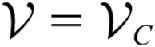
Now on to Pettigrew’s argument. Let  be a finite algebra of propositions, and let
 , that is, the set of functions mapping the members of
 to real numbers. This set will serve as a representation of possible credal states. Let us say, to a first approximation, that an agent’s credal state is vindicated just in case it is objectively as it ought to be. We will say that a credal state Cr(·) is potentially vindicated just in case it is vindicated relative to some epistemically possible world. We let
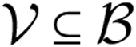 serve as a representation of the potentially vindicated credal states. We let
 be the convex hull of
 .Footnote 6 And, finally, we let
 be a function measuring the distance of a credal state b(·) from a potentially vindicated credal state v(·). We call this the inaccuracy measure.
Jim Joyce has shown that, given certain plausible constraints on the inaccuracy measure, the following theorem holds:Footnote 7
Dominance Theorem. If  is a closed and bounded set, then for any
 , there is some
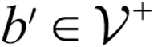 such that, for every
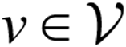 , I(b′, v) < I(b, v).
This theorem may be used to argue for the following normative constraint on credences:
Convexity: If the convex hull of the set of potentially vindicated credal states is closed and bounded, then an agent ought to have a credal state that is in this set.
How might we use the Dominance Theorem to argue for Convexity? The argument, I think, should go as follows. We begin with the following plausible thought:
Vindication Dominance: An agent is rationally prohibited from having a credal state Cr(·), if the agent is in a position to tell a priori that there is some other credal state Cr′(·) that is closer to being vindicated than Cr(·) no matter what the world is like.Footnote 8
Next we assume that it is a priori knowable what vindication consists in. Given this assumption, it follows that it is a priori knowable which credal states are potentially vindicated. And so the Dominance Theorem assures us that if the convex hull of the set of potentially vindicated credal states is closed and bounded, then if one has a credal state Cr(·) that is not in this set, then one is in a position to tell a priori that there is some other credal state Cr′(·) that is closer to being vindicated than Cr(·) no matter what the world is like.Footnote 9 And so it follows from Vindication Dominance that an agent will always be rationally prohibited from having a credal state that is not in the convex hull of the set of potentially vindicated credal states, and so will be rationally required to have a credal state that is in the convex hull of the set of potentially vindicated credal states, on the assumption that this set is closed and bounded.
Convexity, then, provides us with the following two-stage strategy for justifying some putative norm of rationality N:
Stage 1: Argue that the set of potentially vindicated credal states  is identical to some set S whose convex hull is closed and bounded.
Stage 2: Show that if 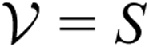 , then every member of
 satisfies the conditions imposed by N.
Joyce (Reference Joyce1998, Reference Joyce, Huber and Schmidt-Petri2009) offers just such a justification for the following putative norm:
Probabilism: If an agent S has credences defined over some countable algebra of propositions  , then S’s credences over
 ought to be probabilistically coherent.Footnote 10
Joyce’s argument depends on the following two claims:
Alethic Vindication: Let 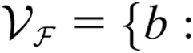 For some logically possible distribution of truth-values w(·) over
 , w(ϕ) = b(ϕ), for every
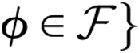 . Then we have
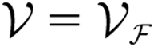 .
De Finetti’s Theorem. Every 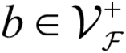 is a probability function (see de Finetti Reference de Finetti1974).
Since  is countable, it follows that
 is closed and bounded. Given Convexity, then, it follows from these two claims that an agent should always have probabilistically coherent credences.
Pettigrew (Reference Pettigrew2012) employs the same general strategy in service of justifying both the Principal Principle and the claim that a rational agent’s initial credences should always be probabilistically coherent. Our presentation of Pettigrew’s argument will work under the assumption that the possible ur-chance distributions over  is a closed and bounded set.Footnote 11 This seems, indeed, quite plausible. This set will clearly be bounded, since the set of probability functions over any algebra is bounded and each chance function is a probability function. And it seems quite plausible that this set should also be closed. For if some probability function p over finite
 can be arbitrarily approximated by probability functions that are a priori possible ur-chance functions over
 , it is hard to see how we could a priori rule out p itself as a possible ur-chance function over
 . But given that we cannot rule out such functions, it follows that the set of possible ur-chance distributions over
 will be closed. And given this, the convex hull of this set will also be bounded and closed. Given this assumption, Pettigrew’s argument depends on the following two claims:
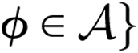
Initial Vindication: An agent’s initial credal state Cr(·) is vindicated at a world w just in case, for every proposition ϕ over which Cr(·) is defined, Cr(ϕ) = chw(ϕ), where chw(·) is the ur-chance function for w. Let 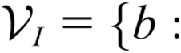 For some possible ur-chance distribution over for every
 . Then we have that the set of potentially vindicated initial credence functions
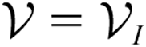 .
Pettigrew’s Theorem. If each possible chance function ch(·) is a probability function such that ch(Cch) = 1, then every 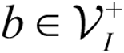 is such that
i) b is a probability function,
ii) b(A | Cch) = ch(A), given that b(Cch) is well defined and b(Cch) ≠ 0.Footnote 12
Since we want to repurpose a modified version of this theorem later on, it is worthwhile presenting the proof of this result here.Footnote 13
Proof of Pettigrew's Theorem. This result follows from the following two claims:
1. If each chance function ch(·) is a probability function such that ch(Cch) = 1, then each member of
 satisfies conditions i and ii.
2. If b and b′ satisfy conditions i and ii, then so does λb + (1 − λ)b′.
Now it might not seem obvious that 1 and 2 suffice to show that every element of  satisfies conditions i and ii. For all that 2 explicitly shows is that convex combinations of finite elements satisfying i and ii will also satisfy i and ii. But
 has uncountably many members. The following theorem, however, assures us that 1 and 2 are, indeed, sufficient for this result.Footnote 14
Carathéodory’s Theorem. If X is a nonempty subset of ℝn, then every x ∈ X + can be expressed as a convex combination of at most n + 1 elements of X.
Since by 1 every element of  satisfies i and ii, and since by 2 finite convex combinations of points satisfying i and ii also satisfy i and ii, it follows—given Carathéodory’s Theorem and the fact that
 is finite and so the space
 for some finite n—that every element of
 satisfies i and ii.
Proof of 1. Clearly, if each chance function ch(·) is a probability function, then each member of  satisfies i. To see that ii is also satisfied, note that if each chance function ch(·) is such that ch(Cch) = 1, then it follows that for each
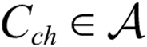 and each
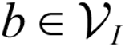 , if b(Cch) ≠ 0, then b(Cch) = 1, and, for every
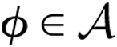 , b(ϕ) = ch(ϕ). Thus, if b(Cch) is well defined and b(Cch) ≠ 0, then b(A | Cch) = ch(A). This suffices to establish that each member of
 satisfies condition ii.
Proof of 2. Let b and b′ satisfy i and ii. Given this, we have
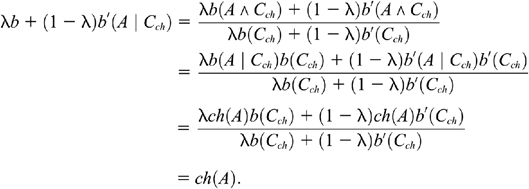
Given Convexity, then, it follows from Initial Vindication and Pettigrew’s Theorem, together with the assumptions that each chance function is a non-self-undermining probability function and that the set of possible ur-chance functions is closed and bounded, that an agent should always have an initial credal state that is probabilistically coherent and that, in addition, satisfies the constraints imposed by the Principal Principle.
2. Against Initial Vindication
We have seen that if we accept Initial Vindication, then we have good reason to also accept the Principal Principle. In this section, however, I argue that we should not accept Initial Vindication. Thus, Pettigrew’s argument does not provide us with good reason to accept the Principal Principle.
I offer two arguments for this claim. First, I argue that there is another more prima facie plausible account of how credences may be vindicated in light of certain facts about chance. Second, I argue that Initial Vindication has certain odd features that should make us skeptical of the claim that it provides the correct account of credal vindication.
To begin with, consider the following alternative account of credal vindication.
Chance Vindication: An agent’s credal state Cr(·) is vindicated at a world w and time t just in case, for every proposition ϕ over which Cr(·) is defined,  , where
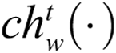 is the chance function for world w at time t. Let
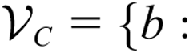 For some possible chance distribution at world w and time t,
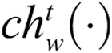 ,
 , for every
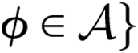 . Then we have
 .
The first point to note is that in certain cases Initial Vindication and Chance Vindication will offer incompatible verdicts about which credal states are vindicated. To see this, consider some agent Q who is at the beginning of her epistemic life. Let wq be the world in which Q is located and tq the time at which her epistemic life begins. Initial Vindication says that Q’s credal state Crq(·) is vindicated just in case, for every proposition ϕ over which it is defined,  , where
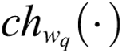 is the ur-chance function at wq. Chance Vindication, however, says that Crq(·) is vindicated just in case, for every proposition ϕ over which it is defined,
 . There is, however, no guarantee, in general, that
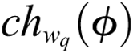 will be identical to
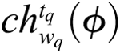 . For the chances may change over time. Thus, Initial Vindication and Chance Vindication will, in certain cases, indeed in most cases, issue incompatible verdicts about which credal states count as vindicated.
Initial Vindication and Chance Vindication, then, provide incompatible accounts of how a credal state may be vindicated in light of certain facts about chance. But, prima facie, I think, Chance Vindication is more plausible than Initial Vindication. According to Chance Vindication, what is relevant to whether one’s credal state is vindicated is whether one’s credences match up with the chances where and when one is located. According to Initial Vindication, however, it is some other chance function than the one that correctly describes the chances as they are that is relevant to vindication. But why should some other chance function be relevant to whether one’s credences held in world w and time t are vindicated?
To help bring out the oddity of this, consider the case of belief. In the case of belief, the following seems quite plausible:
Belief Vindication: An agent’s belief state is vindicated at a world w just in case, for every proposition ϕ over which the agent’s belief state is defined, the agent believes ϕ just in case ϕ is true at w.
Consider, however, the following alternative:
Belief Vindication*: An agent’s belief state is vindicated at a world w just in case, for every proposition ϕ over which the agent’s belief state is defined, the agent believes ϕ just in case ϕ is true at w*.
I think that we should find Belief Vindication* quite incredible. Why should the truth-values of propositions at some other world w* matter for whether one’s beliefs in w count as vindicated? At the very least, one would need strong reasons to prefer Belief Vindication* over Belief Vindication. Similarly, I suggest that there is, at the very least, a challenge for the proponent of Initial Vindication to say why it is the ur-chances that are relevant to the vindication of initial credences, even if those credences are held at times when the chances differ from the ur-chances.
One attempt to meet this challenge might appeal to the distinction drawn in Hall (Reference Hall2004) between database and analyst experts.Footnote 15 A database expert is one that you defer to because he or she has more information than you about a given domain. An analyst expert, however, is one that you defer to because he or she is better at assessing evidence than you are. If one thought that chance functions were valuable solely in virtue of their being analyst experts, then one might provide the following rationale for Initial Vindication. Insofar as an initial credal state ought to match up with some chance function it ought to do so in virtue of the chance function being ideally epistemically responsive. But ur-chance functions are those chance functions that capture the ideally epistemically responsive features of chance functions without packing in any additional information. Thus, insofar as an initial credal state ought to match up with some chance function, it ought to match up with the ur-chance function.
The worry I have for the account is that while it is plausible that chance is valuable as an analyst expert, it seems to me that it is also valuable, in many cases, as a database expert. That is, one reason to defer to chance is that chance often incorporates information about the world. But, if at least part of what is valuable about chance is that it contains information about the world, then what we should, at least from a certain idealized point of view, care about are the chances of where and when one is located, since these not only will be appropriately responsive to evidence but will also include more information than the ur-chances.
There is, however, another reason, apart from its conflict with Chance Vindication, to be skeptical of Initial Vindication. To see this, first note that there is a striking disanalogy between, on the one hand, the picture of vindication for credal states that emerges from Alethic Vindication and Chance Vindication and, on the other hand, the picture of vindication for credal states that emerges from Initial Vindication. Given Alethic Vindication and Chance Vindication, whether an agent’s credal state is vindicated is an objective matter in the following sense. Any two agents with the same credal state who are located in the same world and same time will be such that either both of their credal states are vindicated or neither is.Footnote 16 Given Initial Vindication, however, whether an agent’s credal state is vindicated depends not only on objective facts about where in logical and temporal space the agent is located but also on facts about what the agent’s evidence is.
Here’s why. According to Initial Vindication, an agent’s initial credal state, that is, her credal state before receiving any evidence, is vindicated just in case it matches the ur-chances. But the proponent of Initial Vindication cannot reasonably hold that, in general, an agent’s credal state is vindicated just in case it matches the ur-chances. That is, the proponent of Initial Vindication should not endorse the following general principle:
Ur-Chance Vindication: An agent’s credal state Cr(·) is vindicated at a world w just in case, for every proposition ϕ over which Cr(·) is defined, Cr(ϕ) = chw(ϕ), where chw(·) is the ur-chance function for world w.
For, given certain plausible assumptions, Ur-Chance Vindication can be shown to be incompatible with the following principle:
Certainty Preservation: If one’s credences at time t 0, 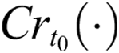 , are rational, and at t 1 > t 0 one’s total evidence is E, and E is consistent with one’s certainties at t 0, then it is rationally permissible for one’s credences at t 1 to be such that
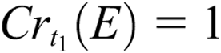 and
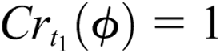 , for every ϕ such that
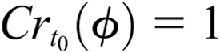 .Footnote 17
For, given Ur-Chance Vindication, it turns out that there will be cases in which an agent starts out as rational and updates in a manner that makes her certain of her new evidence and preserves her prior certainties, and yet the agent comes to have a credal state that is irrational. But the possibility of such a case is ruled out by Certainty Preservation. Since Certainty Preservation is extremely plausible, this incompatibility between Ur-Chance Vindication and Certainty Preservation should, I think, lead one to reject the former principle.
Claim. Ur-Chance Vindication and Certainty Preservation are incompatible.
Justification: Assume, as Ur-Chance Vindication does, that credal vindication is only relativized to worlds. We will let VCr be the eternal proposition that is true at a world w just in case the vindicated credal state at w is Cr(·). We require only one very plausible assumption about our inaccuracy measure I(·, ·). In particular, we will assume that for every Cr(·),  , for every Cr′(·) ≠ Cr(·).Footnote 18
Definition Let Cr(·) be a credal state such that there is a finite set of propositions  such that
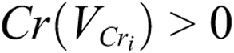 . Let
 be the set of indices for such propositions. We say that the expected inaccuracy of a credal state Cr′(·), given Cr(·), is

To show that Ur-Chance Vindication is incompatible with Rational Conditionalization, we appeal to the following principle:
Inaccuracy Expectation: A credal state Cr(·) is irrational if there is some other credal state Cr′(·) such that
i)
.ii) For every
, .
 .
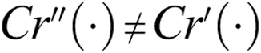 ,
 .
This principle is, I think, extremely plausible. For a credal state that expects some other credal state to be epistemically better off than itself is self-undermining in a way that would, at least prima facie, seem to preclude it from being rationality adopted. Now we might excuse this sort of self-undermining character if it were the case that the credal states that were expected to be epistemically better off by the lights of Cr(·) also had this sort of self-undermining character. But condition ii rules out this form of exculpation.
To show that Ur-Chance Vindication is incompatible with Certainty Preservation, it suffices, then, to show that, given Ur-Chance Vindication, there are cases in which an agent starts out with a rational credal state and then, given new total evidence E compatible with her prior certainties, comes to assign credence 1 to E while maintaining her prior certainties and winds up with a credal state satisfying conditions i and ii.
Here is such a case. The key idea in what follows is that for an agent who starts out with credences that are defined over a suitable algebra and that match the ur-chances, any change in those credences that preserves the agent’s certainties will, given Ur-Chance Vindication, result in a credal state that is, by the agent’s own lights, worse off than her initial credal state.
A little more precisely: suppose we have some agent Q at the beginning of her epistemic life at time t 0 in world wq. And suppose that her credal state at this time, 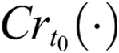 , is such that
 , for every proposition ϕ over which it is defined. Given Ur-Chance Vindication, Q’s credences are vindicated. Now, I assume that rationality does not rule out an agent’s having vindicated credences.Footnote 19 Thus, given that Q’s credences are vindicated, and that rationality does not rule out an agent having vindicated credences, we can assume, without loss of generality, that the agent’s credences, in this case, are rational.
We assume that  is in the algebra over which
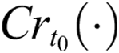 is defined. We can show, given Ur-Chance Vindication and our previous assumptions about
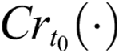 , that it follows that
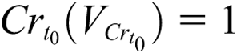 . First, note that
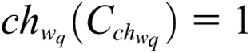 . Granting Ur-Chance Vindication, then, it follows from this that
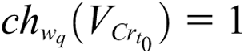 . For, given that
 , for every proposition over which
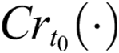 is defined, it follows from Ur-Chance Vindication that
 entails
 . And since
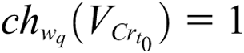 , it follows that
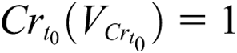 , given that
 , for every proposition ϕ over which
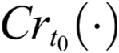 is defined.
Now to see that  , note that since we have
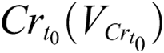 = 1, and since the agent’s later credal state preserves her earlier certainties, we also have that
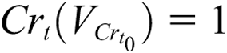 . But, then, since
 , it follows that
 . And to see that
 , for every
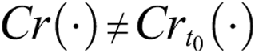 , note that this follows from the fact that
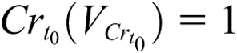 , together with the fact that
 , for every
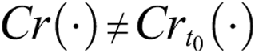 .
The proponent of Initial Vindication, then, cannot say that, in general, vindication consists in matching the ur-chances. Thus, if one endorses Initial Vindication, one must hold that whether a credal state is vindicated depends both on facts about what the world is like and on additional facts about the agent’s epistemic situation, that is, whether she has received any evidence.
Why might this be a problem? Well, I take it that we have a grip on an objective sense of what an agent ought to believe or what credences an agent ought to have. That is, we have a grip on a sense of ought that abstracts away from facts about an agent’s evidence and simply considers what would be the ideal belief or credal state given what the world is like where and when the agent is located. Given this sense of ought, agents located at the same world, or perhaps the same world and time, ought to have the same doxastic states. We also, I take it, have a grip on a subjective sense of what an agent ought to believe or what credences an agent ought to have. That is, we have a grip on a sense of ought that abstracts away from what the world is in fact like where and when the agent is located and simply considers what doxastic or credal states are best given the agent’s evidence. Given this sense of ought, agents cannot differ with respect to what credences or beliefs they ought to have without also differing with respect to their evidential situation. But neither of these corresponds to the sense in which, according to Initial Vindication, an agent who has received no evidence ought to set her credences in line with the ur-chances.
We cannot understand this as a subjective ought. For, according to Initial Vindication, what credences an agent with no evidence ought to have will vary from world to world. But we also cannot understand this as an objective ought.Footnote 20 For, as we have seen, the demands imposed by Initial Vindication cannot be generalized in a way that ignores facts about an agent’s evidence.
The proponent of Initial Vindication, then, would seem to require that there be some nonobjective and nonsubjective sense in which certain agents ought to set their credences in line with the ur-chances. Such a sense of ought must be partly subjective, depending in part on the agent’s evidential situation. But it cannot be understood, for example, in terms of it being the case that certain credences seem best in light of the agent’s evidence. And such a sense of ought must be partly objective, depending in part on where in logical space the agent is. But it cannot be understood, for example, in terms of the ur-chances being the feature of reality that it is objectively best for a credal state to match.
It is, however, quite opaque to me whether there really is a coherent hybrid normative notion meeting this description. At the very least, the proponent of Initial Vindication owes us a story about why we should suppose that there are normative facts that are not, as we standardly think of such facts, objective or subjective. Without such a story, I think there is good reason to be skeptical of Initial Vindication.
Note, however, that the same worry clearly does not apply to Chance Vindication. For we can understand this principle as employing an objective sense of ought. Chance Vindication tells us that objectively an agent ought to have credences that match the chances as they are at the time those credences are held. Such a principle imposes the same demands on all agents located in the same world at the same time, regardless of what evidence they possess.
The fact that we can understand Chance Vindication, but not Initial Vindication, by appeal to an antecedently intelligible notion of how an agent’s credences ought to be from an objective point of view gives us, I think, good reason to prefer the former principle to the latter. We have, then, good motivation to explore what normative constraints on credal states follow on the assumption that Chance Vindication, instead of Initial Vindication, is correct. It is to this question that we now turn.
3. Chance Vindication and the Temporal Principle
In this section, I show that both Probabilism and an interesting chance-credence norm follow from Chance Vindication. To show this, we follow Pettigrew’s strategy and establish that the demands imposed by these norms are satisfied by every credal state in  , that is, the convex hull of the set of potentially vindicated credal states given Chance Vindication. As we will see, however, certain modifications to our current framework will be required in order to establish, in this manner, that there is an interesting chance-credence norm that follows from Chance Vindication.
It will be illuminating, however, to begin by considering some plausible chance-credence norms that do not, in fact, follow from Chance Vindication. Seeing why these fail to be entailed by Chance Vindication will lead us naturally to the amendments that are required to our current framework in order to derive an appropriate chance-credence norm.
Let us begin with the Principal Principle. Pettigrew (Reference Pettigrew2012) demonstrated that this norm follows from Initial Vindication by showing that the constraints that it imposes are satisfied by every credal state in  . We will now show that there are credal states in
 , and so in
 , that do not satisfy the constraints imposed by the Principal Principle on credal states. The Principal Principle, then, cannot be shown to follow from Chance Vindication in the same manner in which it was shown to follow from Initial Vindication.
Claim. There are credal states in  that do not satisfy the constraints imposed by the Principal Principle.
Proof. To see this, consider the ur-chance function for a world w, chw(·), and the chance function for that world at time t, 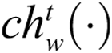 , such that
 . As we noted earlier,
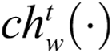 is identical to
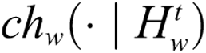 . And, since
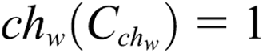 and conditional probabilities preserve certainties, it follows that
 . But this entails that
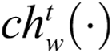 does not satisfy the constraints imposed by Principal Principle on credal states. For since
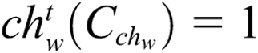 , we have
 . But since
 , it follows that
 , and so
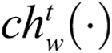 does not satisfy the constraints imposed by the Principal Principle. Now, for any algebra
 , there will be some member of
 that matches
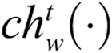 over
 . Thus, we have that, given an algebra containing
 , there will be some member of
 that does not satisfy the constraints imposed by the Principal Principle.
We can generalize this proof in the following way. Let ϕch be an eternal proposition concerning a chance function ch(·). Perhaps ϕch says that the ur-chances are given by ch(·), or perhaps it says that the chances at t are given by ch(·), or perhaps it says that God’s favorite chance function is ch(·). Given minimal assumptions, we can show that there is some  such that Cr(· | ϕch) ≠ ch(·).
Claim. If ϕch is an eternal chance proposition such that (i) there is some world w and some time t 1 such that 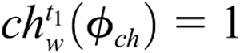 and (ii) there is some time t 2 > t 1 such that
 , then there is some
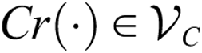 such that Cr(· | ϕch) ≠ ch(·).
Proof. Consider the chance functions for a world w at times t 1 < t 2. Assume that 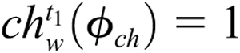 and that
 . Further assume that
 . Then, since
 , and since conditional probabilities preserve certainties in eternal propositions, it follows that
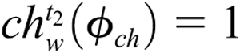 . But since
 , it follows that
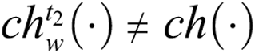 . Thus, since, for any algebra
 , there will be some member of
 that matches
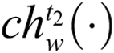 over
 , it follows that, given an algebra containing ϕch, there is some member of
 such that
 .
Now many eternal chance propositions that might be thought, at least prima facie, to rationally constrain our credences in the manner in which the Principal Principle claims ur-chance propositions rationally constrain our initial credences will satisfy conditions i and ii. Not only can the Principal Principle, then, not be shown to follow from Chance Vindication in the manner in which it was shown to follow from Initial Vindication but neither can other formally analogous principles that appeal to alternative chance propositions.
Given this, a natural response is to look for some other way of deriving normative principles from Chance Vindication. And there is a tempting thought here. For, according to Chance Vindication, vindication must be relativized to a time. It is natural, then, to think that we might be able to justify certain temporally relativized norms by relativizing the set of potentially vindicated credal states to a time and showing that, for each time t, each member of the set of potentially vindicated credal states at t satisfies the constraints imposed by the appropriate temporally relativized normative principle. Indeed, there is an analogue of Pettigrew’s Theorem that would seem to support this thought.
Let 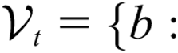 For some possible chance distribution at t,
 ,
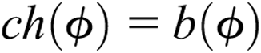 , for every
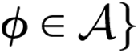 . This is, according to Chance Vindication, the set of potentially vindicated credal states, defined over
 , given a time t. If ch(·) is a possible chance function given a time t, we will let
 be the proposition that says that the chances at t are given by ch(·).
Consider, then, the following putative norm:
T-Principle: A rational agent’s credences at time t defined over an algebra containing  ought to be such that
 , given that
 and ch(A | E) = ch(A).
Claim. Every member of  satisfies the constraints imposed by Probabilism and the T-Principle.
Proof. To demonstrate this, it suffices to show that each member of  satisfies both Probabilism and the T-Principle. For, the proof of the claim—appealed to the justification of Pettigrew’s Theorem—that if two credal states b and b′ satisfy Probabilism and the Principal Principle, then so will any convex combination of b and b′, also suffices to show that the same holds for any two credal states satisfying Probabilism and the T-Principle. That each member of
 satisfies Probabilism follows from the fact that each chance function is a probability function.
To see that each member of  satisfies the T-Principle, note that every possible chance function for time t, ch(·), will be such that
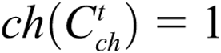 .Footnote 21 It follows that for each
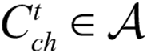 and each
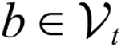 , if
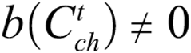 , then
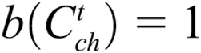 , and, for every
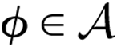 , b(ϕ) = ch(ϕ). Thus, if
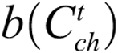 is well defined and
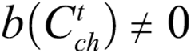 , then
 . This suffices to establish that each member of
 satisfies the T-Principle.
Now it is tempting, I think, to suppose that this fact can be marshaled to show that, given Chance Vindication, an agent at time t ought to have a credal state that is probabilistically coherent and, in addition, satisfies the T-Principle. To conclude this, however, would be a mistake. For, in order for the preceding to show that Probabilism and the T-Principle follow from Chance Vindication, the following auxiliary principle would have to hold:
T-Convexity: If the convex hull of the set of potentially vindicated credal states at time t is closed and bounded, then an agent ought to have a credal state that is in this set.
But, unlike Convexity, T-Convexity is not at all plausible, at least given Chance Vindication.
To see this, recall the argument for Convexity. That argument rested on the claim that, given Joyce’s Dominance Theorem, if the convex hull of the set of potentially vindicated credal states is closed and bounded, then if an agent has a credal state, Cr(·), that is not in this set it is a priori knowable for the agent that there is some other credal state, Cr′(·), that is closer to being vindicated no matter what the world is like. Given Chance Vindication, however, we do not have parallel reason to endorse T-Convexity. For, given Chance Vindication, it does not follow from the Dominance Theorem that if the convex hull of the set of potentially vindicated credal states at t is closed and bounded, then if an agent located at t does not have a credal state in this set it is a priori knowable for the agent that there is some other credal state, Cr′(·), that is closer to being vindicated no matter what the world is like.
Now it is true that if  is closed and bounded, then Joyce’s Dominance Theorem establishes that for any
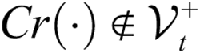 , there is some
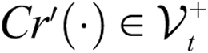 such that, for every
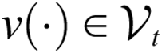 ,
 . But this fact does not ensure that, for an agent located at t whose credal state, Cr(·), is not in
 , it is a priori knowable that there is some other credal state, Cr′(·), that is closer to being vindicated no matter what the world is like. For, if t ≠ t′, then the set of possible chance functions at t will not be the same as the set of possible chance functions at t′.Footnote 22 And so a credal state may be such that there is some other credal state that is closer to each element of
 but not closer to each element of
 . Given Chance Vindication, then, if an agent is located at time t and her credal state is not in
 but she does not know that she is located at time t, she need not be in a position to tell that there is some other credal state that is guaranteed to be closer to vindication. And so, since one cannot know a priori at which time one is located, it follows that if Chance Vindication is correct, then despite Joyce’s Dominance Theorem an agent whose credal state at t is outside the convex hull of the set of potentially vindicated credal states at t need not be in a position to tell a priori that there is some other credal state that is guaranteed to be closer to vindication.
The lesson to be drawn from this is that if we are going to try to derive some normative principle using Joyce’s Dominance Theorem, then we must show that the constraints imposed by the principle in question hold for every member of the convex hull of some set S such that it is a priori that the vindicated credal state is among S. Given Chance Vindication, however,  is the smallest set S such that it is a priori that the vindicated credal state is among S. The problem, though, is that there are, as we have seen, very strict limitations on the sorts of chance propositions that may serve to constrain each member of
 in the manner in which ur-chance propositions constrain each member of
 .
There is, though, a way around this problem. We have been assuming, in the preceding discussion, that the objects of credence and chance are eternal propositions, that is, propositions that determine truth-values relative to a world of evaluation. If, however, we allow that the objects of credence and chance are temporal propositions, that is, propositions that determine truth-values relative to a world and time of evaluation, then we can show that there is in fact an interesting class of chance propositions that serves to constrain each member of  in the manner in which ur-chance propositions constrain each member of
 .
Now there is some good motivation for thinking that the objects of credence may vary in truth-value across times. In particular, considerations of cognitive significance may be used to motivate this claim. Thus, for any value t, believing say, that it is raining in San Francisco would seem to be different from believing that it is raining in San Francisco at t. For, even if one is located at time t, if one is unaware of what time it is, the latter proposition would seem to be informative, even given belief in the former. And one very simple way to account for this is to allow that the proposition that it is raining in San Francisco varies in truth-value across times and so is distinct from the proposition that it is raining in San Francisco at t, for every value of t.Footnote 23
It may be less clear, though, that chance functions will be well defined for essentially temporal propositions. There is, however, a perfectly natural way of extending a chance function defined over eternal propositions to a chance function defined over temporal propositions. For simplicity let us think about propositions as being sets of world-time pairs. An eternal proposition can be represented by a set of world-time pairs ϕ such that, for all w, t, t′, 〈w, t〉 ∈ ϕ if and only if 〈w, t′〉 ∈ ϕ. A temporal proposition, however, will be represented a set of world-time pairs such that, for some w, t, t′, 〈w, t〉 ∈ ϕ and 〈w, t′〉 ∉ ϕ.
Definition Let ϕ be a proposition. We will call the t-rigidification of ϕ  . Note that ϕt is an eternal proposition and that if ϕ is also an eternal proposition, then ϕ = ϕt.
Let cht(·) be a possible chance function for some time t that is defined for eternal propositions. We now show how cht(·) may be extended so that it is defined also for temporal propositions. We assume this:
Chance Rigidity: For every temporal proposition ϕ, cht(ϕ) = cht(ϕt).
This principle tells us that, at t, the chance of any temporal proposition is just the chance of its t-rigidification. For example, consider the temporal proposition that it will rain. We can think of this as the set of world-time pairs where at the world parameter it rains at some time later than the time parameter. The t-rigidification of this proposition is the eternal proposition consisting of all worlds where at t it rains later than that time. Chance Rigidity, then, claims that the chance at t of the temporal proposition that it will rain is just the chance at t that it rains at some time later than t. This seems to me to be exactly the right thing to say.
Now consider the following principle:
Temporal Principle: Let ch(·) be some possible chance function, that is, a function describing a possible chance distribution for some world w and time t. And let Tch be the temporal proposition that claims that the chances are given by ch(·). We can think of this as the set of world-time pairs such that ch(·) is the chance function at the world and time in question. Then a rational agent’s credences defined over an algebra containing Tch ought to be such that  , given that Cr(Tch ∧ E) ≠ 0 and ch(A | E) = ch(A).
Claim. Given Chance Rigidity, it follows that each member of  satisfies the constraints imposed by Probabilism and the Temporal Principle.
Proof. To demonstrate this, it suffices to show that each member of  satisfies both Probabilism and the Temporal Principle. For, again, the proof of the claim appealed to the justification of Pettigrew’s Theorem—that if two credal states b and b′ satisfy Probabilism and the Principal Principle, then so will any convex combination of b and b′—also suffices to show that the same holds for any two credal states satisfying Probabilism and the Temporal Principle.
First, we show that each member of  satisfies Probabilism. We are assuming that every chance function defined over an algebra of eternal propositions is probabilistically coherent. Given this, we show that it follows from Chance Rigidity that every chance function defined over an algebra also containing temporal propositions is probabilistically coherent.
To demonstrate this we show that each such function cht(·) is such that (i) cht(⊤) = 1, (ii) cht(ϕ) ≥ 0 for every proposition ϕ, and (iii) if ϕ and ψ are mutually exclusive propositions, then  .
i) ⊤ is just the set of all world-time pairs, and so it is an eternal proposition. And so, given that cht(·) is probabilistically coherent over eternal propositions we have that cht(⊤) = 1.
ii) Given Chance Rigidity, we have that cht(ϕ) = cht(ϕt). And since cht(·) is probabilistically coherent over eternal propositions, we have that cht(ϕt) ≥ 0. And so we have that cht(ϕ) ≥ 0.
iii) Assume that ϕ and ψ are two mutually exclusive propositions. Given Chance Rigidity, we have that
. But . Thus we have that . Next note that, given that ϕ and ψ are mutually exclusive, it follows that so too are ϕt and ψt. To see this, assume that ϕt and ψt are not mutually exclusive. Thus, there is some w such that, for every t′ 〈w, t′〉 ∈ ϕt and 〈w, t′〉 ∈ ψt. But this means that there must be some pair 〈w, t〉 such that 〈w, t〉 ∈ ϕ and 〈w, t〉 ∈ ψ. And so if ϕt and ψt are not mutually exclusive, neither are ϕ and ψ. Given that ϕt and ψt are mutually exclusive and cht(·) is probabilistically coherent for eternal propositions, we have then that . And so we have . Finally, given Chance Rigidity we have that cht(ϕ) = cht(ϕt) and cht(ψ) = cht(ψt). Thus, we have that .
 . But
 . Thus we have that
 . Next note that, given that ϕ and ψ are mutually exclusive, it follows that so too are ϕt and ψt. To see this, assume that ϕt and ψt are not mutually exclusive. Thus, there is some w such that, for every t′ 〈w, t′〉 ∈ ϕt and 〈w, t′〉 ∈ ψt. But this means that there must be some pair 〈w, t〉 such that 〈w, t〉 ∈ ϕ and 〈w, t〉 ∈ ψ. And so if ϕt and ψt are not mutually exclusive, neither are ϕ and ψ. Given that ϕt and ψt are mutually exclusive and cht(·) is probabilistically coherent for eternal propositions, we have then that
 . And so we have
 . Finally, given Chance Rigidity we have that cht(ϕ) = cht(ϕt) and cht(ψ) = cht(ψt). Thus, we have that
 .
To see that each member of  satisfies the Temporal Principle, note that, given Chance Rigidity, it follows that every possible chance function ch(·) is such that if ch(·) = ch′(·), then
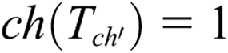 , and otherwise
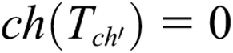 . Why is this? Well, let
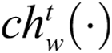 be the chance function for a world w at time t. We saw earlier that, given that ur-chance functions are non-self-undermining, it follows that for any time t, if
 , then
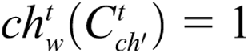 , and otherwise
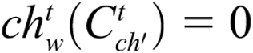 .Footnote 24 Now
 is the t-rigidification of
 . And so, given Chance Rigidity, we have
 . Thus, we have that if
 , then
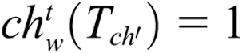 , and otherwise
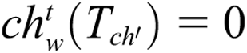 .
Since every possible chance function ch(·) is such that if ch(·) = ch′(·), then 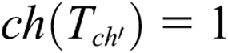 , and otherwise
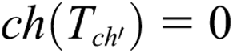 , it follows that for each
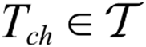 and each
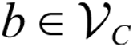 , if b(Tch) ≠ 0, then b(Tch) = 1, and for every
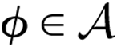 , b(ϕ) = ch(ϕ). Thus, if b(Tch) is well defined and b(Tch) ≠ 0, then b(A | Tch) = ch(A). This suffices to establish that, given Chance Rigidity, each member of
 satisfies the Temporal Principle.
Now just as it seems quite plausible that  , and so
 , is closed and bounded, so too is it plausible that
 , and so
 , is closed and bounded. Given this assumption, then, if we accept Chance Vindication, then it follows from Convexity that an agent should have a credal state that is probabilistically coherent and, in addition, satisfies the constraints imposed by the Temporal Principle.
Earlier we showed that the Principal Principle fails to follow from Chance Vindication by showing that there are distinct possible chance functions that assign the value 1 to the same proposition Cch. Now, as we have seen, the same is not true for propositions of the form Tch. Indeed, we have seen that every possible chance function ch(·) is such that if ch(·) = ch′(·), then 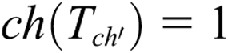 , and otherwise
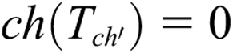 . A natural question, then, is where the parallel attempt to prove that there are distinct possible chance functions that assign the value 1 to some proposition Tch breaks down.
To show that there are distinct possible chance functions that assign the value 1 to the same proposition Cch, we began by considering the ur-chance function for a world w, chw(·), and the chance function for that world at time t, 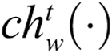 , such that
 . We then noted that
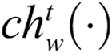 is identical to
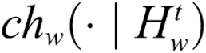 , and so it follows that, while
 , since
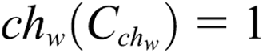 and since conditional probabilities preserve certainties, we also have
 . The corresponding argument for propositions of the form Tch breaks down at the point where we assume that
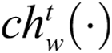 is identical to
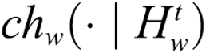 . Now it is true that the values that
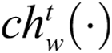 assigns to eternal propositions is the same as the values assigned by
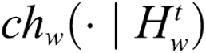 . However, given Chance Rigidity, the same will not be true for all temporal propositions. To see this, note that, given Chance Rigidity, there will be temporal propositions ϕ such that chw(ϕ) = 1 but
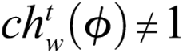 . This, however, is precluded on the assumption that
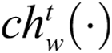 is identical to
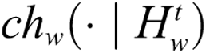 . As an example, consider the temporal proposition
 . Given Chance Rigidity, we have that
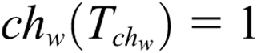 , but, assuming that
 , we will also have that
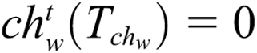 .
Let me close by considering how the Temporal Principle relates to the Principal Principle. We can show, given certain auxiliary constraints, that if an agent’s initial credences satisfy the Principal Principle, then they will also satisfy the Temporal Principle. The reverse, however, is not true. There is a precise sense, then, in which the Principal Principle imposes a stronger normative constraint than the Temporal Principle.
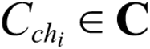
Claim. Let Cr(·) be an agent’s initial credal state. We assume (i) that Cr(·) is probabilistically coherent and (ii) that there is a finite set  of mutually exclusive propositions
 such that Cr(Cchi) > 0, for each
 . We can show that if Cr(·) satisfies the Principal Principle, then it will also satisfy the Temporal Principle, while the converse fails to hold.
Proof. We have already seen that it does not follow from the fact that an initial credal state satisfying i and ii satisfies the Temporal Principle that it satisfies the Principal Principle. For, as we have seen, there are possible chance functions that fail to satisfy the Principal Principle. But each such function will satisfy i and ii and also satisfy the Temporal Principle. Thus, if an agent’s initial credal state matches such a chance function it will satisfy i and ii and the Temporal Principle but will fail to satisfy the Principal Principle.
To see that any agent whose initial credences satisfy i and ii and who also satisfies the Principal Principle will also satisfy the Temporal Principle, we first note that the following is established in Pettigrew (Reference Pettigrew2012):Footnote 25
• If b is a function satisfying conditions i and ii and is such that b(A | Cch) = ch(A), given that b(Cch) is well defined and b(Cch) ≠ 0, then
.
 .
Since 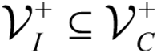 and since every element of
 satisfies the Temporal Principle, it follows that every element of
 also satisfies this principle. And so, since any initial credence function satisfying conditions i and ii and the Principal Principle will match some member of
 , and since every function that matches some member of
 will satisfy the Temporal Principle, it follows that any probabilistically coherent initial credence function that satisfies the Principal Principle will satisfy the Temporal Principle.
The Temporal Principle, then, provides a weaker normative constraint on our credences than the Principal Principle. It is this weaker principle, though, that follows from Chance Vindication, that is, from the assumption that vindication for credences consists in matching the chances.
 , where Tw is the conjunction of history-to-chance counterfactuals true at w, Htw is the history in w up to time t, and chtw(·) is the chance function at world w and time t. As Pettigrew (
 describing the initial conditions of w that, together with Tw, determine an ur-chance function, then Lewis’s principle entails our Principal Principle. (For discussion of what an ur-chance function is, see n. 2.)
 . See Hájek (
 , where a convex set is one that contains each line segment connecting points in the set.
 , which ensures that the resulting convex hull is closed and bounded. However, the set of a priori possible ur-chance distributions over
 is uncountable, and since we cannot a priori rule out any of these as giving the actual ur-chances, if one wants to justify the Principal Principle, one needs to show that every element in the convex hull of this uncountable set satisfies the constraints imposed by this norm. Note, however, that although we are not assuming that the set of possible ur-chance functions is finite, we are still assuming that the algebra of propositions over which our agent’s credences are defined is finite. Thus, our agent will only have credences in finitely many of the uncountably many possible chance propositions Cch and Tch.
 .
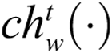 , for some world w at some time t. We want to show that
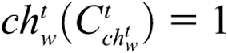 . First note that
 is logically equivalent to the disjunction
 , where each disjunct Cch ∧ Ht is such that
 . Since chance functions are probability functions, it follows that if
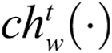 assigns 1 to one of these disjuncts, then it will assign 1 to this disjunction, and so to the logically equivalent proposition
 . Note that
 . Since
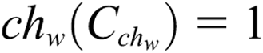 , we have, then, that
 . And so we have
 . Thus, since
 , it follows that
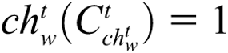 .
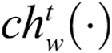 be a possible chance function at t, where
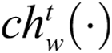 is the unique possible chance function at t such that
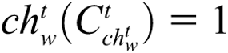 . Now let
 . Then, since conditional probabilities preserve certainties, we have
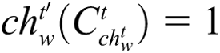 . But since
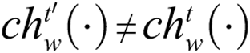 and since
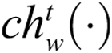 is the unique possible chance function at t such that
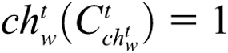 , it follows that the set of possible chance functions at t is distinct from the set of possible chance functions at t′.


