Introduction
The hen's eggshell comprises six layers, formed in the acellular environment of the uterine fluid (Nys et al., Reference NYS, ZAWADZKI, GAUTRON and MILLS1991; Reference NYS, HINCKE, ARIAS and SOLOMON1999) which is supersaturated with calcium and bicarbonate and contains organic precursors of the shell matrix (Parsons, Reference PARSONS1982; Hincke et al., Reference HINCKE, GAUTRON, PANHELEUX, GARCIA-RUIZ, MCKEE and NYS2000; Fernandez et al., Reference FERNANDEZ, ESCOBAR, LAVELIN, PINES and ARIAS2003; Nys et al., Reference NYS, GAUTRON, GARCIA-RUIZ and HINCKE2004). The eggshell layers are deposited sequentially as the egg passes through the different regions of the oviduct (Wyburn et al., Reference WYBURN, JOHNSTON, DRAPER and DAVIDSON1973; Hodges, Reference HODGES1974; Gautron et al., Reference GAUTRON, HINCKE and NYS1997; Johnson, Reference JOHNSON2000; Lavelin et al., Reference LAVELIN, MEIRI and PINES2000; Jonchere et al., Reference JONCHERE, REHAULT-GODBERT, HENNEQUET-ANTIER, CABAU, SIBUT, COGBURN, NYS and GAUTRON2010; Hincke et al., Reference HINCKE, NYS and GAUTRON2010). From inside to outside, the eggshell comprises: the inner and outer shell membranes (70µm thick), mammillary layer or cone layer (~100μm), palisade layer (~300μm), vertical crystal layer (3-8μm) and cuticle (0.5-12.8µm) (Cain and Heyn, Reference CAIN and HEYN1964; Gilbert, Reference GILBERT1971; Simons, Reference SIMONS1971; Board, Reference BOARD1982; Johnson, Reference JOHNSON2000; Rodriguez-Navarro et al., Reference RODRIGUEZ-NAVARRO, KALIN, NYS and GARCIA-RUIZ2002; Lammie et al., Reference LAMMIE, BAIN and WESS2005; Wellman-Labadie et al., Reference WELLMAN-LABADIE, PICMAN and HINCKE2008b; Rose and Hincke, Reference ROSE and HINCKE2009; Kusuda et al., Reference KUSUDA, IWASAWA, DOI, OHYA and YOSHIZAKI2011). The eggshell is composed mainly of calcite (the most stable form of calcium carbonate) but a thin layer of hydroxyapatite is present in the inner cuticle (Dennis et al., Reference DENNIS, XIAO, AGARWAL, FINK, HEUER and CAPLAN1996). The cuticle layer of the eggshell is composed of inner calcified and outer non-calcified water insoluble layers which are deposited directly onto the vertical crystal layer of the eggshell (Parsons, Reference PARSONS1982). Not all avian eggs have a cuticle layer, and the distribution of cuticle is often patchy (Board and Halls, Reference BOARD and HALLS1973; Board, Reference BOARD1974; Becking, Reference BECKING1975). The structure of the cuticle is a moderately heritable (r2=0.27±0.13) trait in brown egg laying hens (Bain et al., Reference BAIN, RODRIGUEZ-NAVARRO, McDADE, SCHMUTZ, PREISINGER, WADDINGTON and DUNN2009). It has been suggested the cuticle may function as a lubricant to facilitate egg rotation in the uterus (Rahman, et al., Reference RAHMAN, MORIYAMA, IWASAWA and YOSHIZAKI2009; Kusuda et al., Reference KUSUDA, IWASAWA, DOI, OHYA and YOSHIZAKI2011) and it plays an important role in the termination of calcite crystal growth during shell formation (Dennis et al., Reference DENNIS, XIAO, AGARWAL, FINK, HEUER and CAPLAN1996; Fraser et al., Reference FRASER, BAIN and SOLOMON1999).
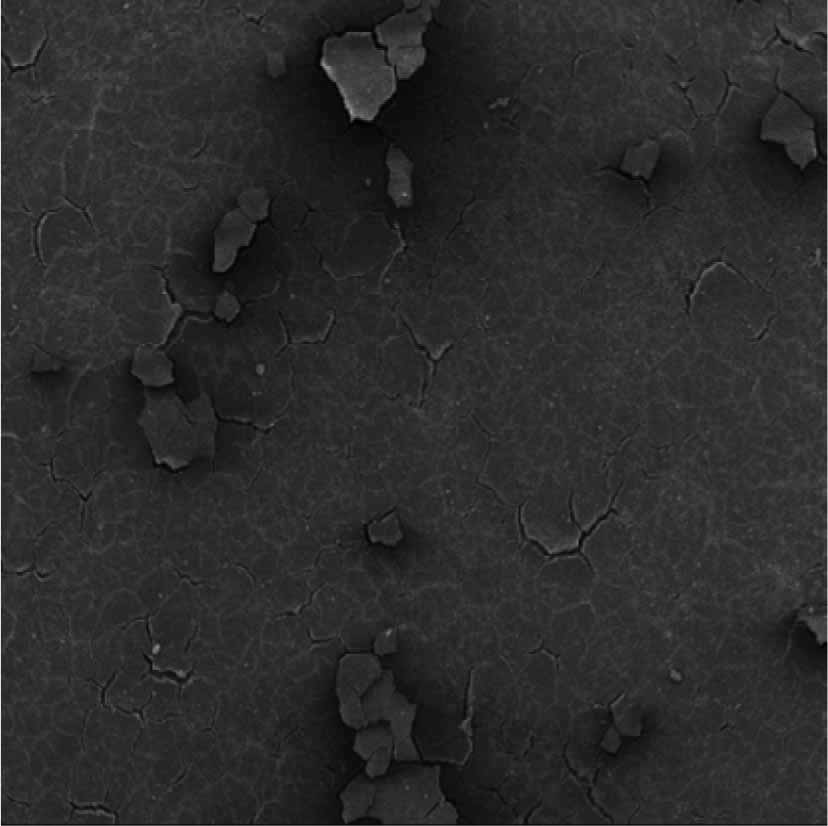
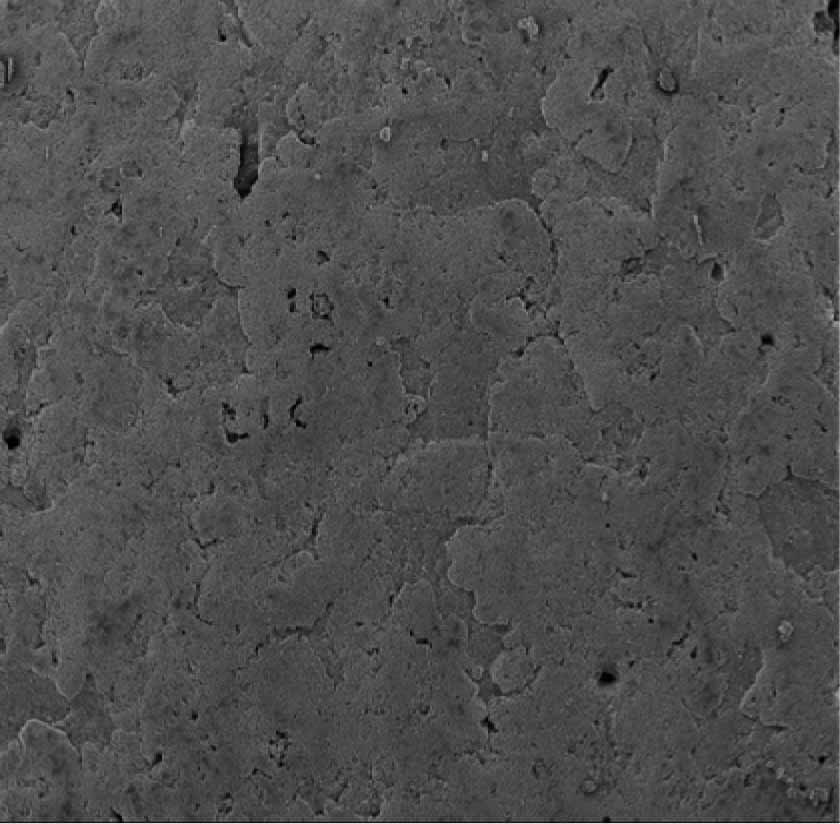
An extensive scanning electron microscopic study of the eggshell surface has shown that few eggshells have 100% cuticle cover and that it is possible to score cuticle cover from ‘intact’ to ‘absent’ (Samiullah, 2012; Figures 1, 2, 3).
A number of factors influence the degree of cuticle deposition on the eggshell surface, including stress (Solomon et al., Reference SOLOMON, BAIN, CRANSTOUN and NASCIMENTO1994). In response to stress, the hormone adrenalin (epinephrine) is released which causes a delay in oviposition and cessation of cuticle formation in the shell gland (Butcher and Miles, Reference BUTCHER and MILES2003). Stressors include high cage density, loud noise, temperature, moulting and handling (Walker and Hughes, 1988). Previous studies have linked the extent of cuticle cover with ease of microbial penetration into the egg contents and highlighted its importance in the food safety chain (Board and Halls, Reference BOARD and HALLS1973). Thus the cuticle appears to play an important role by preventing microbial penetration across the eggshell and makes the product safer for consumers.
SEM image of eggshell with good intact cuticle, magnification= x100.

SEM image of eggshell with patchy cuticle, magnification= x100.
SEM image of eggshell with no cuticle, magnification= x100.
The structure of the cuticle
Recently laid eggs have a cuticle layer which covers the outer surface of the eggshell. The cuticle is a composite layer (Krampitz and Witt, Reference KRAMPITZ and WITT1979) with an uneven structure, having many star shaped cracks, fissures and flake-like layers when viewed from above with the scanning electron microscope (Parsons, Reference PARSONS1982; Sparks, Reference SPARKS1994). Larger cracks have a roughly radial orientation and appear to occur over the outer pore orifice (Sparks, Reference SPARKS1994). In a recently laid egg, the cuticle is more complete and the cracks appear as the cuticle hardens once exposed to the outside environment (Sparks and Board, Reference SPARKS and BOARD1985). The cuticle has been shown to be most effective in preventing induced egg spoilage in the first week following oviposition (Vadehra et al., Reference VADEHRA, BAKER and NAYLOR1970). Transmission Electron Microscopy has revealed inner and outer cuticle layers (Ruiz and Lunam, Reference RUIZ and LUNAM2000). The inner layer (vesicular layer) is composed of vesicles, each consisting of a core and mantle showing electron lucent and electron dense properties, respectively (Fraser et al., Reference FRASER, BAIN and SOLOMON1999). The outer cuticle (non vesicular cuticle) is much more compact and homogenous and does not appear to contain any matrix vesicles (Fraser et al., Reference FRASER, BAIN and SOLOMON1999). About 10,000 pores penetrate the eggshell and they are usually plugged by cuticle (Sparks, Reference SPARKS1994; Nys and Guyot, Reference NYS and GUYOT2011). However, shells vary widely in porosity, even when taken from the same hen on successive days of production (Haines and Moran, Reference HAINES and MORAN1940).
Cuticle synthesis and composition
The cuticle is synthesised in the shell gland during a 1.5-2.0hr period just prior to oviposition (Hincke et al., Reference HINCKE, GAUTRON, NYS, RODRIGUEZ-NAVARRO and McKEE2011). The cuticle is manufactured in non-ciliated secretory cells lining the uterus (Solomon, Reference SOLOMON1991) and is secreted as a granular substance (Cooke and Balch, Reference COOKE and BALCH1970) that contains a thin layer of hydroxyapatite in its inner zone (Nys et al., Reference NYS, GAUTRON, GARCIA-RUIZ and HINCKE2004; Miksik et al., Reference MIKSIK, ECKHARDT, SEDLAKOVA and MIKULIKOVA2007). The cuticle is composed of spheres which, in the chicken egg, are <1 µm in diameter, forming an uneven layer 0.5–12.8 µm thick (Simons and Wiertz, Reference SIMONS and WIERTZ1963; Wellman-Labadie et al., Reference WELLMAN-LABADIE, PICMAN and HINCKE2008b; Kusuda et al., Reference KUSUDA, IWASAWA, DOI, OHYA and YOSHIZAKI2011). The vertical crystal layer of the eggshell, about 8 µm thick, is a relatively thin layer and the upper-most part consists of calcite crystals which provide a surface for the formation of the cuticle (Lammie et al., Reference LAMMIE, BAIN and WESS2005; Nys and Gautron, Reference NYS and GAUTRON2007). The cuticle may either bridge the outer pore openings or extend down into the pore canals, plugging the pores (Cooke and Balch, Reference COOKE and BALCH1970; Board, Reference BOARD1982). The cuticle may link the lumina of pore canals to the egg exterior and, thereby, serve as a pathway for gas diffusion (Wangensteen et al., Reference WANGENSTEEN, WILSON and RAHN1970; Board and Scott, Reference BOARD and SCOTT1980). The pores extend radially across the shell of all avian eggs (Tullett, Reference TULLETT1975), are usually funnel-shaped and may or may not be capped at their outer orifice by cuticular material (Tullett, Reference TULLETT1975). The lumen of the pore canal has no characteristic ultra structure and the outer orifice of the pore is plugged with cuticle in which radial cracks produce channels through which the respiratory gases diffuse (Tullett et al., Reference TULLETT, LUTZ and BOARD1975; Board et al., Reference BOARD, TULLETT and PERROTT1977). The geometry of the pore canals determines the conductance of gases which exchange across the eggshell (Tullett and Board, Reference TULLETT and BOARD1977). The pores widen out considerably at the outer surface of the shell, thereby increasing the diffusion area between the atmosphere and the gases in the mouth of the pore itself (Tullett and Board, Reference TULLETT and BOARD1977).
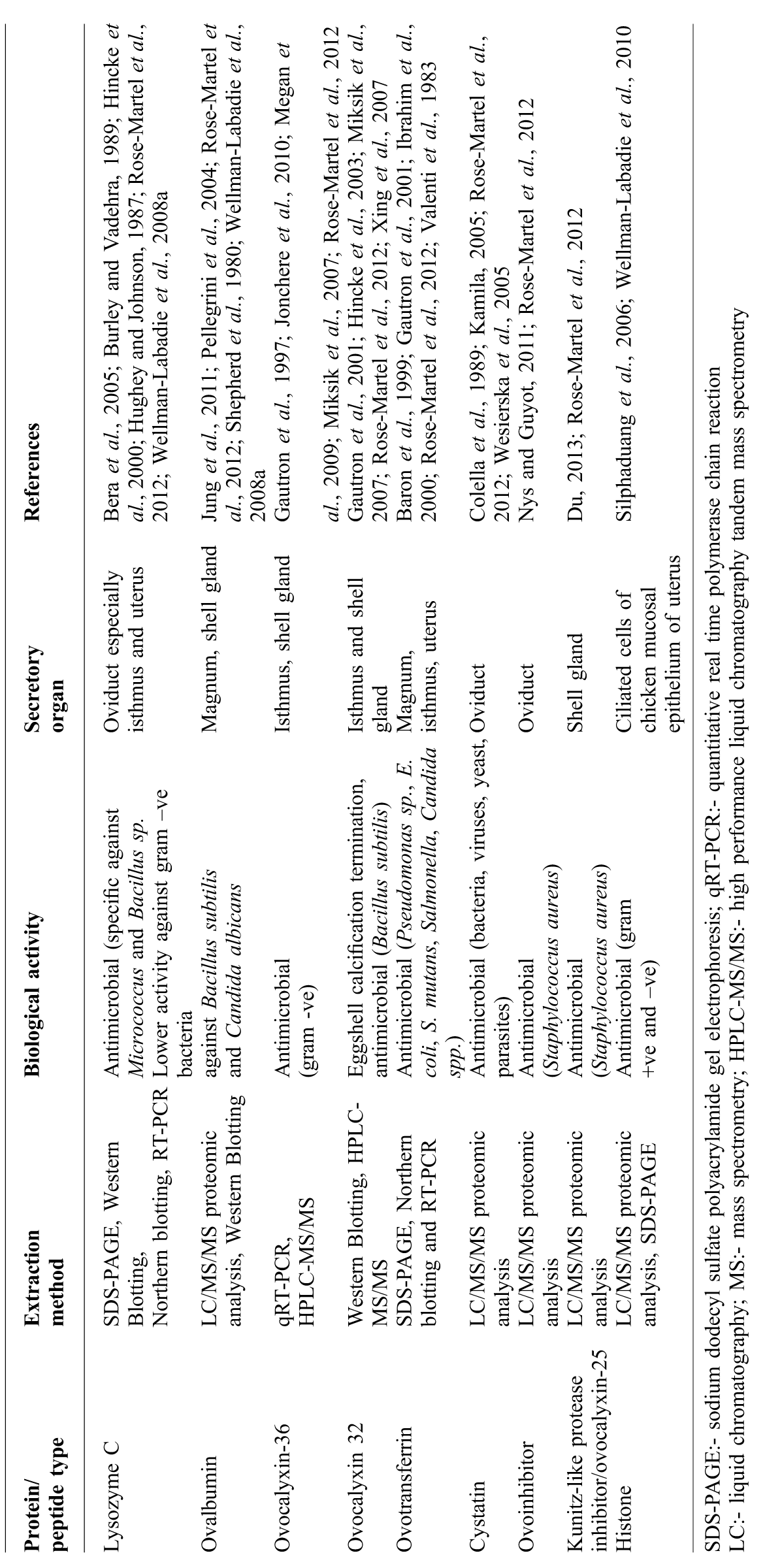
The non-calcified cuticle layer contains macromolecules including glycoproteins, polysaccharides and lipids, and inorganic phosphorus including hydroxyapatite crystals (Dennis et al., Reference DENNIS, XIAO, AGARWAL, FINK, HEUER and CAPLAN1996; Johnson, Reference JOHNSON2000; Fernandez et al., Reference FERNANDEZ, MOYA, LOPEZ and ARIAS2001). The hen eggshell cuticle is composed of glycoprotein (90%), polysaccharides (4%), lipids (3%) and inorganic phosphorus including hydroxyapatite crystals (3%) (Wedral et al., Reference WEDRAL, VADEHRA and BAKER1974; Becking, Reference BECKING1975; Dennis et al., Reference DENNIS, XIAO, AGARWAL, FINK, HEUER and CAPLAN1996; Wang and Slavik, Reference WANG and SLAVIK1998; Fernandez et al., Reference FERNANDEZ, ESCOBAR, LAVELIN, PINES and ARIAS2003; Miksik et al., Reference MIKSIK, CHARVATOVA, ECKHARDT and DEYL2003). The cuticle is largely organic with protein content as high as 90% and a high content of cysteine, glycine, glutamic acid, lysine and tyrosine (Du, Reference DU2013). Fucose, galactose, glucose, hexosamines, mannose and sialic acid are present as constituents of the polysaccharides (Baker and Balch, Reference BAKER and BALCH1962). The amino acid sequence of the cuticle is different from that of the shell membranes and shell matrix (Baker and Balch, Reference BAKER and BALCH1962). Earlier studies have shown that there are about 850-870 different types of proteins in the hen eggshell cuticle (Table 1), of which the majority are water insoluble (Wedral et al., Reference WEDRAL, VADEHRA and BAKER1974).
Among the amino acids, glutamic acid and glycine are the most abundant in hen eggshell cuticle (Wedral et al., Reference WEDRAL, VADEHRA and BAKER1974; Miksik et al., Reference MIKSIK, CHARVATOVA, ECKHARDT and DEYL2003). The fraction of total saturated fatty acids (31.9 ng/µg cuticle) is greater than for unsaturated fatty acids (7.8 ng/µg cuticle) (Miksik et al., Reference MIKSIK, CHARVATOVA, ECKHARDT and DEYL2003). Traces of magnesium, potassium, copper and zinc (Wedral et al., Reference WEDRAL, VADEHRA and BAKER1974; Board and Love, Reference BOARD and LOVE1980), and, through x-ray microanalysis, major elements like calcium, phosphorus, carbon and oxygen have been detected in the cuticle (Kusuda et al., Reference KUSUDA, IWASAWA, DOI, OHYA and YOSHIZAKI2011). The cuticular vesicles contain hydroxyapatite, which is believed to play a role in the shell formation termination process (Fraser et al., Reference FRASER, BAIN and SOLOMON1999). The crystal form of calcium carbonate is mainly calcite (Kusuda et al., Reference KUSUDA, IWASAWA, DOI, OHYA and YOSHIZAKI2011). In the newly laid egg, the cuticle is immature and moist and is less effective as a microbial preventive barrier (Sparks and Board, Reference SPARKS and BOARD1985; Miyamoto et al., Reference MIYAMOTO, HORIE, BABA, SASAI, FUKATA and ARAKAWA1998). During this time, a positive temperature differential arises and bacteria may migrate more easily through the eggshell (Bruce and Drysdale, Reference BRUCE and DRYSDALE1994). When mature, the cuticle is a good barrier to water diffusion across the shell and interferes with bacterial invasion by closing the pores, thus prevent entry into the egg (Board and Fuller, Reference BOARD and FULLER1974; Board, Reference BOARD1982; Berrang et al., Reference BERRANG, COX, FRANK and BUHR1999).
Cuticle estimation
The amount of cuticle on an eggshell is usually estimated by a method developed by Board and Halls (Reference BOARD and HALLS1973) and used with some modifications by other researchers including Ball et al. (Reference BALL, LOGAN and HILL1975), Messens et al. (Reference MESSENS, GRIJSPEERDT and HERMAN2005), De Reu et al. (Reference DE REU, GRIJSPEERDT, MESSENS, HEYNDRICKX, UYTTENDAELE, DEBEVERE and HERMAN2006a; Reference DE REU, GRIJSPEERDT, HEYNDRICKX, MESSENS, UYTTENDAELE, DEBEVERE and HERMAN2006b) and Roberts et al. (Reference ROBERTS and CHOUSALKAR2013). An individual intact egg is stained with a suitable stain such as MST cuticle blue stain (MST Technologies, Europe Ltd) or Edicol Pea Green for 1 minute and then rinsed two to three times in tap water. MST cuticle blue stain is a reliable indicator of the amount of cuticle present on an eggshell (Samiullah and Roberts, Reference ROBERTS2013). In earlier studies, the green colour of stained eggs was scored visually on a measuring scale between 1 and 12 with 1 the least stained and 12 the best stained egg (Board and Halls, Reference BOARD and HALLS1973; Ball et al., Reference BALL, LOGAN and HILL1975). However, the green colour of the shell surface can now be measured using a Konica Minolta hand-held spectrophotometer (CM-2600d) which works on the L*a*b* colour space system. L* has a maximum of 100 (white) and a minimum of 0 (black). For a*, green is towards the negative end of the scale and red towards the positive end. For b*, blue is towards the negative end and yellow towards the positive end of the scale (Bialka et al., Reference BIALKA, DEMIRCI, KNABEL, PATTERSON and PURI2004; Roberts et al., 2013).
For estimation of the degree of staining, the values are either interpreted individually or a single score is calculated as described by Leleu et al. (Reference LELEU, MESSENS, DE REU, DE PRETER, HERMAN, HEYNDRICKX, DE BAERDEMAEKER, MICHIELS and BAIN2011a). The most relevant component in the L*a*b* colour system is a*, which shows the intensity of green staining of the eggshell cuticle. The lower (more negative) the a* value the higher the amount of cuticle and vice versa (Roberts et al., 2013). The single score, as described by Leleu et al. (Reference LELEU, MESSENS, DE REU, DE PRETER, HERMAN, HEYNDRICKX, DE BAERDEMAEKER, MICHIELS and BAIN2011a), measures the L*, a*, and b* values, before and after staining, and calculates a single value, ΔEab*:
A higher ΔEab* denotes a higher staining affinity and hence more cuticle coverage (Leleu et al., Reference LELEU, MESSENS, DE REU, DE PRETER, HERMAN, HEYNDRICKX, DE BAERDEMAEKER, MICHIELS and BAIN2011a; Roberts et al., 2013). Other types of reflectometer (i.e. Konica Minolta Reflectometer CR 300), working on the same L*a*b* colour space system may also be used (Cavero et al., Reference CAVERO, SCHMUTZ, ICKEN and PREISINGER2012).
Scanning electron microscopy is used to estimate the amount of cuticle at an ultra structural level. In this method, a small piece from the stained eggshell (1 cm2) is carefully cut out, mounted on an aluminium stub, sputter coated and viewed under a scanning electron microscope. Samiullah and Roberts (Reference ROBERTS2013) scored the amount of cuticle present as:
1 - good intact cuticle (91-100% cover)
2 - less patchy cuticle (61-90% cover)
3 - more patchy cuticle (11-60% cover) and
4 - negligible or no cuticle (<10% cover).
Effect of flock age on cuticle deposition
Relatively little information is available on the effect of hen age on the amount of cuticle deposition and most of the studies concerning the cuticle have focused on the physiological functions that control passage of water and gases and microbial penetration (Board and Halls, Reference BOARD and HALLS1973; Board, Reference BOARD1975; Board et al., Reference BOARD, LOSEBY and MILES1979; Thomson and Goldie, 1990). The amount of the cuticle present on the eggshell significantly affects shell thickness which is directly linked to shell strength, although how the amount of cuticle present on the eggshell influences shell strength has not been established with certainty (Belyavin and Boorman, Reference BELYAVIN and BOORMAN1980). The cuticle thickness has been reported to decrease significantly with increasing age of the hen (Sparks and Board, Reference SPARKS and BOARD1984). The thickness of the cuticle depends on its location with the thinnest part at the top of the columns and thickest part between the columns of the eggshell (Kusuda et al., Reference KUSUDA, IWASAWA, DOI, OHYA and YOSHIZAKI2011). The amount of cuticle present may vary with the breed of the chicken (Solomon et al., Reference SOLOMON, BAIN, CRANSTOUN and NASCIMENTO1994) and it has been suggested that the amount of cuticle on brown eggs is greater than for white eggs (Simons and Wiertz, Reference SIMONS and WIERTZ1963). The viability of hatching eggs is reported to be independent of cuticle thickness and cuticle thickness varies with the production cycle of the hen being lowest at the start and end of the cycle (Ruiz and Lunam, Reference RUIZ and LUNAM2000). Similarly, EFSA (2005), Messens et al. (Reference MESSENS, GRIJSPEERDT and HERMAN2005) and Leleu et al. (Reference LELEU, MESSENS, DE REU, DE PRETER, HERMAN, HEYNDRICKX, DE BAERDEMAEKER, MICHIELS and BAIN2011a) have recorded poor cuticle cover in eggs from older hens. However, Ball et al. (Reference BALL, LOGAN and HILL1975) have pointed out that there is no measurable effect of hen age on cuticle cover of the hen's eggshell and that there is a greater diversity in cuticle deposition among hens. There was no significant effect of flock age in a conventional cage production system on the extent of the cuticle cover in a horizontal study (Roberts et al., 2013). However, when a cage flock and a free range flock were studied at different ages (longitudinal study), cuticle cover was better in the cage flock and fluctuated with flock age, being generally better at the older flock ages (Samiullah et al., Reference CHOUSALKAR, ROBERTS, SEXTON, MAY and KIERMEIER2013). Nascimento and Solomon (Reference NASCIMENTO and SOLOMON1991) reported that the cuticle layer was rarely present as an even covering on the eggshell surface and Nascimento et al. (Reference NASCIMENTO, CRANSTOUN and SOLOMON1992) demonstrated that the cuticle of most eggs throughout the laying cycle was either absent or patchy. In freshly laid eggs, the cuticle is apparent as a rather slippery, mucous layer covering the eggshell surface (Becking, Reference BECKING1975). In the absence of cuticle, the eggshell permeability increases greatly as the pores are exposed to the outside environment (Alls et al., Reference ALLS, COVER, BENTON and KRAUSS1964; Ekperigin and McCapes, Reference EKPERIGIN and McCAPES1977).
Eggshell pigment and cuticle
Brown shelled eggs dominate commercial markets in many countries, as shell colour of brown eggs is a quality aspect for consumers (Mertens et al., Reference MERTENS, VAESEN, LOFFEL, KEMPS, KAMERS, PERIANU, ZOONS, DARIUS, DECUYPERE, DE BAERDEMAEKER and DE KETELAERE2010; Cavero et al., Reference CAVERO, SCHMUTZ, ICKEN and PREISINGER2012). Eggshell pigment is used as an assessment tool for stress and disease conditions in commercial brown-shelled laying hens (Walker and Hughes, Reference WALKER and HUGHES1998; Moreno and Osorno, Reference MORENO and OSORNO2003; Martinez-de la Puente, et al., Reference MARTINEZ-DE LA PUENTE, MERINO, MORENO, TOMAS, MORALES, LOBATO, GARCIA-FRAILE and MARTINEZ2007; Mertens et al., Reference MERTENS, VAESEN, LOFFEL, KEMPS, KAMERS, PERIANU, ZOONS, DARIUS, DECUYPERE, DE BAERDEMAEKER and DE KETELAERE2010). Eggshell colour has been linked to egg quality parameters (Curtis et al., Reference CURTIS, GARDNER and MELLOR1985; Jones et al., Reference JONES, MUSGROVE, ANDERSON and THESMAR2010) and may be related to shell ultra structure (Richards and Deeming, Reference RICHARDS and DEEMING2001). The pigments of avian eggshells are protoporphyrin, zinc porphyrin, biliverdin and zinc biliverdin (Kennedy and Vevers, Reference KENNEDY and VEVERS1973; Reference KENNEDY and VEVERS1976; Lang and Wells, Reference LANG and WELLS1987; Mertens et al., Reference MERTENS, VAESEN, LOFFEL, KEMPS, KAMERS, PERIANU, ZOONS, DARIUS, DECUYPERE, DE BAERDEMAEKER and DE KETELAERE2010). Protoporphyrin IX, which gives most of the colour to brown hen eggshells, has been shown to have antimicrobial activity against gram positive bacteria (Ishikawa et al., Reference ISHIKAWA, SUZUKI, FUKUDA, ARIHARA, YAMAMOTO, MUKAI and ITOH2010). Most previous research suggests that the protoporphyrin IX is in the cuticle layer of the eggshell (Nys et al., Reference NYS, ZAWADZKI, GAUTRON and MILLS1991; Sparks, Reference SPARKS1994; Miksik et al., Reference MIKSIK, ECKHARDT, SEDLAKOVA and MIKULIKOVA2007). However, a recent study found that more of the protoporphyrin IX is deposited into the true shell layer of the eggshell than in the cuticle during eggshell formation in the uterus (Samiullah and Roberts, Reference ROBERTS2013).
Cuticle and bacterial penetration of eggshell
In addition to its physical barrier properties, recent research has identified many proteins in the cuticle, some of which are known to be antimicrobial agents (Du, Reference DU2013), and thus supports the evidence that the cuticle provides a chemical barrier against microbial penetration. Under normal conditions and good handling practices, the cuticle offers a natural barrier to the common microbes that colonise the surface of the egg (European Commission Regulation, 2008). The cuticle is widely acknowledged as having a protective function against microbial penetration, although bacteria may damage the cuticle. The glycolytic activity of some bacteria and fungi can digest eggshell cuticle and thus facilitate microbial entrance (Beckett et al., Reference BECKETT, BEGOTT and GRAEME-COOK2003; Cook et al., Reference COOK, BEISSINGER, TORANZOS, RODRIGUEZ and ARENDT2003). Pseudomonas is able to produce protease which digests the eggshell cuticle if the relative humidity increases to 100% on the eggshell surface (Board et al., Reference BOARD, LOSEBY and MILES1979; Board, Reference BOARD1980). The cuticle of the eggshell hinders bacterial penetration and is considered a first line of defence (Williams and Whittemore, Reference WILLIAMS and WHITTEMORE1967; Williams et al., Reference WILLIAMS, DILLARD and HALL1968; Board and Halls, Reference BOARD and HALLS1973; Haigh and Betts, Reference HAIGH and BETTS1991; Solomon, Reference SOLOMON1992; Humphrey, Reference HUMPHREY1994; Keller et al., Reference KELLER, BENSON, KROTEC and ECKROADE1995; Miksik et al., Reference MIKSIK, ECKHARDT, SEDLAKOVA and MIKULIKOVA2007). However, the function of the cuticle as a microbial defence tool has been questioned (Nascimento et al., Reference NASCIMENTO, CRANSTOUN and SOLOMON1992). In the egg penetration studies of Messens et al. (Reference MESSENS, GRIJSPEERDT, DE REU, DE KETELAERE, MERTENS, BAMELIS, KEMPS, DE BAERDEMAEKER, DECUYPERE and HERMAN2007) and De Reu et al. (Reference DE REU, MESSENS, GRIJSPEERDT, HEYNDRICKX, UYTTENDAELE and HERMAN2010), a high correlation was found between the absence of cuticle and Salmonella penetration across the eggshell. Cuticle removal increased bacterial penetration from 20 to 60% in the studies of Alls et al. (Reference ALLS, COVER, BENTON and KRAUSS1964). A lower mean cuticle deposition has been recorded in Salmonella penetrated eggs versus non-penetrated eggs (De Reu et al., Reference DE REU, GRIJSPEERDT, MESSENS, HEYNDRICKX, UYTTENDAELE, DEBEVERE and HERMAN2006a).
Effect of commercial washing on cuticle cover
In the absence of cuticle, the surface of the eggshell appears irregularly contoured with deep fissures (Board, Reference BOARD1975). Disinfection of eggs is a common practice to eliminate or reduce populations of pathogens on the surface of eggshells (Park et al., Reference PARK, HUNG, LIN and BRACKETT2005). Some countries like Australia, the United States, Canada and Japan allow eggs to be washed and graded before being packaged for retail, whereas European Union countries are reluctant to allow the washing of grade A eggs (Sparks, Reference SPARKS1994; Hutchison et al., Reference HUTCHISON, GITTINS, WALKER, SPARK, HUMPHREY, BURTON and MOORE2004; Leleu et al., Reference LELEU, BAIN, HERMAN, HEYNDRICKX, DE BAERDEMAEKER, MICHIELS, PERIANU and MESSENS2011b). In Australia, most commercially produced eggs are washed before marketing (Hutchison et al., Reference HUTCHISON, GITTINS, WALKER, SPARK, HUMPHREY, BURTON and MOORE2004). Effectiveness of the sanitizer against debris and microbes, safety to workers and the environment and economic feasibility are all factors that help in selecting an appropriate disinfectant (Park et al., Reference PARK, HUNG, LIN and BRACKETT2005). Disinfectants commonly used for egg washing work via chlorine, ultra violet irradiation, quaternary ammonium, disodium carbonate, peroxidase catalyzed compounds, zinc sulphate solution, formaldehyde and electrolyzed water (Park et al., Reference PARK, HUNG, LIN and BRACKETT2005). Some egg washing chemicals, such as 0.5% trisodium phosphate and 50ppm cetylpyridinium chloride can damage the cuticle layer and thereby facilitate microbial penetration (Kim and Slavik, Reference KIM and SLAVIK1996a). Factors related to cuticle damage caused by egg washing include presence of water on the eggshell, physical brushing, high pressure of washing water and presence of iron in the wash water (European Commission Regulation, 2008).
Washing may damage the cuticle (Bialka et al., Reference BIALKA, DEMIRCI, KNABEL, PATTERSON and PURI2004; Samiullah et al., 2013) which may favour trans-shell contamination (Sparks and Board, Reference SPARKS and BOARD1984; Macleod et al., Reference MACLEOD, BAIN and HANCOCK2006). However, modern methods of egg washing appear not to remove the cuticle from the eggshell (Kuhl, Reference KUHL2005; Leleu et al., Reference LELEU, MESSENS, DE REU, DE PRETER, HERMAN, HEYNDRICKX, DE BAERDEMAEKER, MICHIELS and BAIN2011a). Fewer cuticle proteins have been extracted from washed grocery eggs compared to farm eggs (Rose-Martel et al., Reference ROSE-MARTEL, DU and HINCKE2012). However, in one study, eggs washed with electrolysed oxidising water did not show any damage to the cuticle (Fasenko et al., Reference FASENKO, O'DEA CHRISTOPHER and MCMULLEN2009). A higher incidence of bacterial penetration was recorded in eggs with poor quality or artificially removed cuticle (Alls et al., Reference ALLS, COVER, BENTON and KRAUSS1964; De Reu et al., Reference DE REU, GRIJSPEERDT, MESSENS, HEYNDRICKX, UYTTENDAELE, DEBEVERE and HERMAN2006a; Messens et al., Reference MESSENS, GRIJSPEERDT, DE REU, DE KETELAERE, MERTENS, BAMELIS, KEMPS, DE BAERDEMAEKER, DECUYPERE and HERMAN2007; Leleu et al., Reference LELEU, BAIN, HERMAN, HEYNDRICKX, DE BAERDEMAEKER, MICHIELS, PERIANU and MESSENS2011b). A rough eggshell surface with damaged cuticle was observed in commercial eggs from grocery stores compared to freshly laid eggs collected directly from farms (Kim and Slavik, Reference KIM and SLAVIK1996b). Also a higher rate of bacterial penetration was recorded in commercial eggs compared to freshly collected eggs (Kim and Slavik, Reference KIM and SLAVIK1996b).
Some protein constituents of cuticle and their functions
Very little literature is available on the protein constituents of hen eggshell cuticle and their possible contributions to the chemical aspect of biological functions (Wellman-Labadie et al., Reference WELLMAN-LABADIE, PICMAN and HINCKE2008a). However, the recent proteomic work of Rose-Martel et al. (Reference ROSE-MARTEL, DU and HINCKE2012) and Du (Reference DU2013) has quantified approximately 47 cuticle proteins, with the majority comprising or similar to Kunitz-like protease inhibitor and ovocalyxin-32. Similarly, Miksik et al. (Reference MIKSIK, ECKHARDT, SEDLAKOVA and MIKULIKOVA2007) extracted proteins of the insoluble eggshell matrix (ovocalyxin 32, ovocleidin 116, ovocalixin 36 and Ovocleidin 17) from cuticle using the high performance liquid chromatography tandem mass spectrometry (HPLC-MS/MS) method. In addition to keeping the water and electrolyte levels of the egg contents in balance by preventing evaporation (Peebles and Brake, Reference PEEBLES and BRAKE1986), the cuticle enhances many-fold the antimicrobial defences of the egg by physically preventing microbial contamination (Board and Halls, Reference BOARD and HALLS1973; Thompson and Goldie, Reference THOMPSON and GOLDIE1990; Fraser et al., Reference FRASER, BAIN and SOLOMON1999; De Reu et al., Reference DE REU, GRIJSPEERDT, MESSENS, HEYNDRICKX, UYTTENDAELE, DEBEVERE and HERMAN2006a), with some of its chemical components also involved in the antimicrobial defence of the egg (Wellman-Labadie et al., Reference WELLMAN-LABADIE, PICMAN and HINCKE2008a; Reference WELLMAN-LABADIE, PICMAN and HINCKE2008b). Protein extracts from the cuticle have shown antimicrobial activity against gram positive and gram negative bacteria (Wellman-Labadie et al., Reference WELLMAN-LABADIE, PICMAN and HINCKE2008a; Reference WELLMAN-LABADIE, PICMAN and HINCKE2008b). Upon microbial contamination, lipophilic eggshell surface proteins may encounter the bacterial lipid bi-layer and dissociate from the cuticle, contributing to the microbial resistance of eggs (Wellman-Labadie et al., Reference WELLMAN-LABADIE, LEMAIRE, MANN, PICMAN and HINCKE2010). A wide range of studies have shown that the cuticle acts as a first line of defence against microbial attack (Tung et al., Reference TUNG, GARLAND and GILL1979). The internal parts of eggshells are contaminated when the cuticle, shell, and shell membranes fail to prevent microbial invasion (Mayes and Takaballi, Reference MAYES and TAKEBALLI1983; Berrang, et al., 1999).
Conclusions
As the outermost layer of the hen's eggshell, the cuticle is the first line of defence against bacterial ingress into the egg's contents. Not all eggshells show complete cuticle coverage and the significance of such completeness in protection of the egg is still not completely understood. It may be the case that, provided that there is sufficient cuticle to plug the pores of the eggshell, having a complete cuticle is of lesser importance. Further research needs to be conducted to determine the effect of flock age on functional cuticle cover and such studies should involve vertical surveys of the same flocks at different ages. Similarly, the relationship between bird stress and functional cuticle cover remains to be clearly elucidated. Because only some of the shell pigment is contained in the cuticle, the lighter shell colour that has been reported to result from stress may or may not reflect the extent of cuticular deposition. Washing has the potential to damage the cuticle although manufacturers of modern egg washing equipment aim to reduce the impact on the cuticle. Recent proteomic studies on the protective capabilities of the cuticle, along with studies of the ability of genetic selection to influence cuticle cover will lead to a better understanding of the link between cuticle cover and protection against bacterial ingress. This, in turn will provide the basis for optimisation of cuticle cover in the eggs produced by commercial layer flocks.
Some cuticle proteins/peptides with known biological functions.
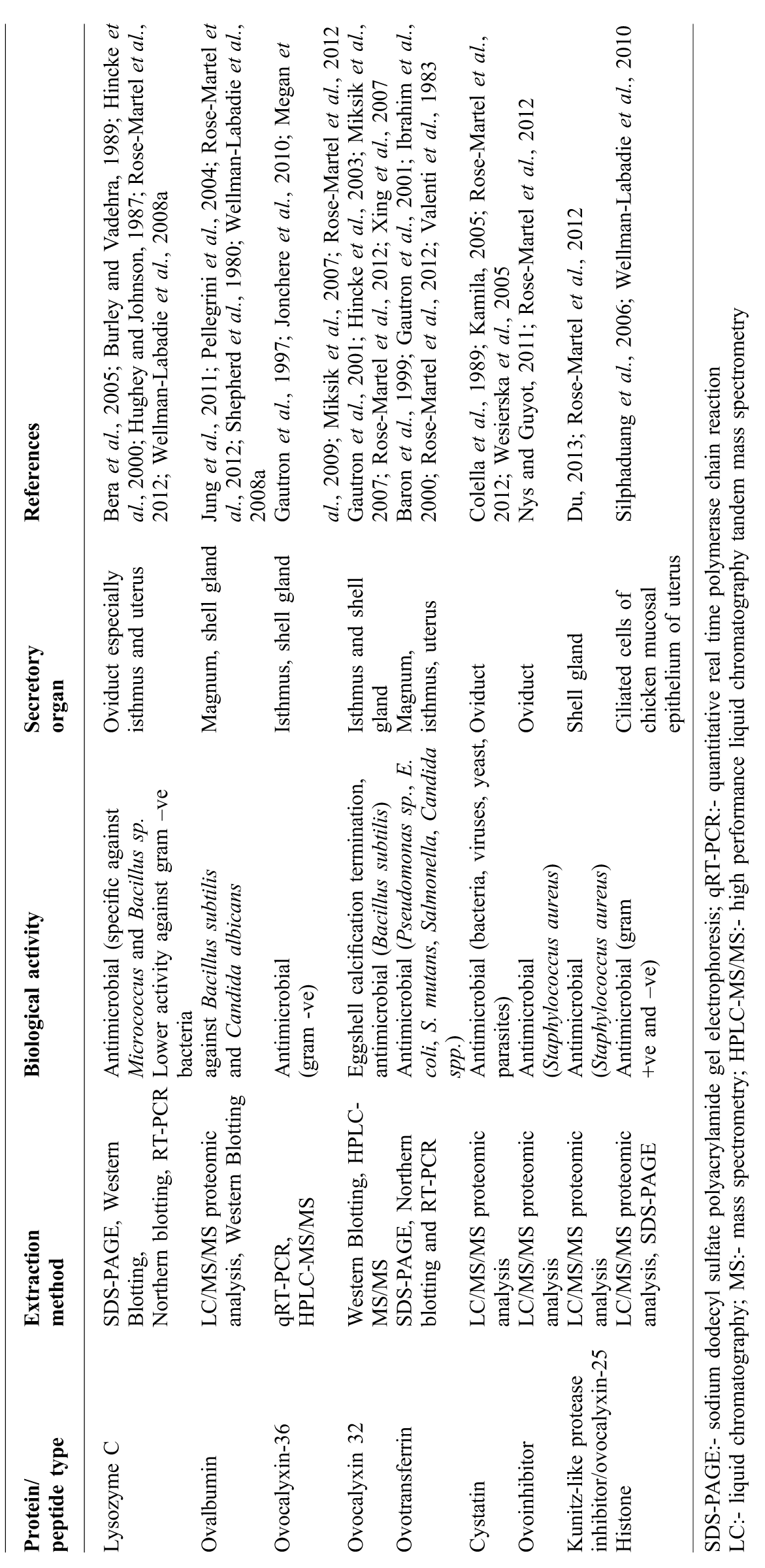
SDS-PAGE:- sodium dodecyl sulfate polyacrylamide gel electrophoresis; qRT-PCR:- quantitative real time polymerase chain reaction
LC:- liquid chromatography; MS:- mass spectrometry; HPLC-MS/MS:- high performance liquid chromatography tandem mass spectrometry