INTRODUCTION
The ability to more precisely define the target volume and critical normal structures using conformal radiotherapy techniques (3-Dimensional Conformal Radiotherapy, 3-DCRT and Intensity Modulated Radiotherapy, IMRT) have major potential and proven clinical benefits in irradiating thoracic malignancies. An improved therapeutic ratio theoretically permits dose escalation and reduction of acute and/or long-term radiation-induced side effects.Reference Essapen, Knowles, Norman and Tait1–Reference Rosenthal, Roach, Goldsmith, Doggett, Pickett, Yuo, Soffen, Stern and Ryu9 Further improvements in the therapeutic ratio may be obtained by strategies aimed at reducing the safety margin added to produce the planning target volume (PTV). These account for geometrical uncertainties that are an inherent component of the treatment process of external beam radiotherapy.Reference de Boer, van Sörnsen de Koste, Senan, Visser and Heijmen4,Reference Engelsman, Remeijer, van Herk, Lebesque, Mijnheer and Damen5,Reference Schwarz, Van der Geer, Van Herk, Lebesque, Mijnheer and Damen10–Reference Stroom, de Boer, Huizenga and Visser15
The increasing ability to measure set-up errors, the need to reduce PTV margins and the safe clinical application of conformal radiotherapy has lead to a growing number of studies.Reference Schwarz, Van der Geer, Van Herk, Lebesque, Mijnheer and Damen10–Reference Hurkmans, Remeijer, Lebesque and Mijnheer12,Reference Erridge, Seppenwoolde, Muller, van Herk, De Jaeger, Belderbos, Boersma and Lebesque16 Detailed quantitative studies about set-up accuracy, in which a separation between random and systematic set-up errors and the specification of the standard deviation (SD) of these errors in three directions (x, y and z) were made, are scarce in thoracic radiotherapy.Reference Essapen, Knowles, Norman and Tait1,Reference Bentel, Marks and Krishnamurthy17–Reference Negoro, Nagata, Aoki, Mizowaki, Araki, Takayama, Kokubo, Yano, Koga, Sasai, Shibamoto and Hiraoka22 Published data suggest that the SD of the systematic (range 1.8–5.1 mm) and random errors (range 2.2–5.4 mm) is about equal and the SD of the systematic and random errors of ≤3.5 mm can be considered as “state of the art” for such treatment.Reference Hurkmans, Remeijer, Lebesque and Mijnheer12 The use of a correction protocol results in a considerable reduction of systematic set-up errors.Reference de Boer, van Sörnsen de Koste, Senan, Visser and Heijmen4,Reference Erridge, Seppenwoolde, Muller, van Herk, De Jaeger, Belderbos, Boersma and Lebesque16
Optimal immobilisation is critical for patient set-up reproducibility in high-dose lung radiotherapy and various immobilisation devices aiming to reduce the daily set-up errors have been developed and reported. These include the T-bar,Reference Halperin, Roa, Field, Hanson and Murray21 expanded foam devices with and without a T-bar,Reference Halperin, Roa, Field, Hanson and Murray21 stereotactic body frame and abdominal pressing plate with T-bar,Reference Negoro, Nagata, Aoki, Mizowaki, Araki, Takayama, Kokubo, Yano, Koga, Sasai, Shibamoto and Hiraoka22 headsponge with arms by side—(antero-posterior techniques),Reference Essapen, Knowles, Norman and Tait1,Reference Samson, van Sörnsen de Koste, de Boer, Tankink, Verstraate, Essers, Visser and Senan20 headsponge with arms above head with armband or crossbar,Reference Essapen, Knowles, Norman and Tait1,Reference Samson, van Sörnsen de Koste, de Boer, Tankink, Verstraate, Essers, Visser and Senan20 arms above head with and without alphacradle,Reference Bentel, Marks and Krishnamurthy17 polyurethane foam cast,Reference Ekberg, Holmberg, Wittgren, Bjelkengren and Landberg19 and forearm support and knee-roll and instructions to breathe gently.Reference Erridge, Seppenwoolde, Muller, van Herk, De Jaeger, Belderbos, Boersma and Lebesque16 Devices providing stable arm-support are preferred, especially when prolonged immobilisation is required.Reference Halperin, Roa, Field, Hanson and Murray21 However, the optimal immobilisation technique and patient positioning have yet to be determined.
Analysis of set-up errors in the current trial
It is well accepted that each centre must evaluate its own immobilisation and techniques in terms of patient set-up errors. Published quantitative analyses are useful as a benchmark for comparisons but cannot be explicitly relied upon for the application of safety margins for set-up uncertainties. Before this trial, lung cancer patients were immobilised in the supine position on an ad hoc basis with a variety of devices and supports: headsponge, vacuum bag, BreastBoard, Kneefix or pillow. The majority were immobilised using the headsponge. In addition, patient set-up errors were not previously investigated in our institution. This is the first prospective randomised controlled clinical trial on lung immobilisation devices, based on 3-DCRT, that takes into account treatment accuracy, users satisfaction—patients and radiation therapists (RTs)—and resource implications.
MATERIALS AND METHODS
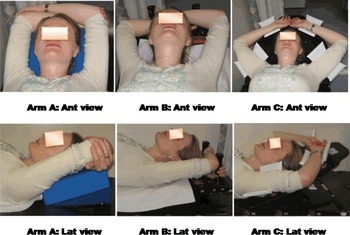
Patients were randomised to one of three immobilisation techniques available in our institution (Figure 1); Arm A: headsponge plus triangular sponge under head with arms unsupported above the head holding on to the opposite elbow and Kneefix (Kneefix cushion from Sinmed), Arm B: BreastBoard dedicated immobilisation device, positioned at the smallest possible angle (5°) with hands clasping the opposite poles (Carbon Fibre BreastBoard from MedTec). Each pole can be positioned in one of the four locations to suit the patient. The forearm and upper-arm supports are removed. It is not possible to use the Kneefix with the BreastBoard due to the length of the device; and Arm C: LungBoard-dedicated immobilisation device (Mamma CT-Step LungBoard from Innovative Technology Volp) with C-shaped supports for the forearm and upperarm and Kneefix.
Anterior and lateral views of the immobilisation devices investigated—Arm A, headsponge; Arm B, BreastBoard; Arm C, LungBoard.

The manufacturers and distributors of these products had no influence in the design, conduct, analysis or reporting of the results of this research.
Overall study endpoint
To recommend a specific immobilisation technique for conformal lung radiotherapy patients in our institution based primarily on an evaluation of set-up accuracy.
Primary objectives
• To evaluate and compare the treatment set-up accuracy of three immobilisation techniques using one-dimensional set-up error analysis.
• To determine and compare patients’ comfort with the immobilisation techniques.
Secondary objectives
• To evaluate RTs’ satisfaction with the immobilisation techniques.
• To examine and compare the cost effectiveness of the immobilisation techniques.
Inclusion criteria
• Histologically proven intra-thoracic malignancy: Non-small cell (NSCLC) and small cell (SCLC) lung carcinoma, oesophageal carcinoma, thymoma
• Treatment by 3-DCRT
• Age >18 years
• Provision of written informed consent in accordance with International Conference on Harmonisation guidelines for Good Clinical Practice (ICH-GCP).
Exclusion criteria
• Evidence of any significant clinical disorder that made it undesirable for the patient to participate or if it was felt by the research or medical team that the patient might not be able to comply with the protocol.
The trial was approved by the institution’s Ethics and Medical Research Committee.
The methodology used for each study objective is described separately: treatment accuracy, patient comfort, RTs satisfaction, and cost effectiveness.
Treatment accuracy
All patients were CT scanned and treated by RTs in the supine position and breathed freely. The skin was tattooed at simulation. Scanned orthogonal simulator images (gantry at 0° and 90°/270°) were used as reference images,Reference Negoro, Nagata, Aoki, Mizowaki, Araki, Takayama, Kokubo, Yano, Koga, Sasai, Shibamoto and Hiraoka22,Reference Remeijer, Geerlof, Ploeger, Gilhuijs, van Herk and Lebesque23 because the direct transfer of digitally reconstructed radiographs (DRRs) to the electronic portal imaging (EPI) software—iViewGT—was not possible at the time of the study. All set-up parameters on the simulator exactly matched the CT, and the simulator images corresponded exactly to the DRRs from the treatment plan.Reference de Boer, van Sörnsen de Koste, Senan, Visser and Heijmen4 EPIs were obtained with an amorphous silicon flat panel EPID (Elekta).Reference O'Shea, Thirion and Downes24 Two orthogonal EPIs were obtained per imaged fraction during treatment. This method has been used by many investigators.Reference de Boer, van Sörnsen de Koste, Senan, Visser and Heijmen4,Reference Erridge, Seppenwoolde, Muller, van Herk, De Jaeger, Belderbos, Boersma and Lebesque16,Reference Halperin, Roa, Field, Hanson and Murray21,Reference Negoro, Nagata, Aoki, Mizowaki, Araki, Takayama, Kokubo, Yano, Koga, Sasai, Shibamoto and Hiraoka22 Three sets of orthogonal EPIs were obtained on week 1 of treatment and one set of images was obtained weekly thereafter, in line with published recommendations.Reference Hurkmans, Remeijer, Lebesque and Mijnheer12,Reference Erridge, Seppenwoolde, Muller, van Herk, De Jaeger, Belderbos, Boersma and Lebesque16 Set-up corrections were not applied to patient’s treatment. A repeat image was requested if a discrepancy of >5 mm was detected on the EPI. If there was a discrepancy >5 mm in the repeated EPI, the patient underwent a check film procedure in the simulator.
When patients completed treatment, the field edge and bony anatomy were retrospectively outlined, by one RT, on reference images and EPIs.Reference Halperin, Roa, Field, Hanson and Murray21 Vertebrae were used as the rigid bony matching structures. The sternum was also used if it was visible on the images. Each EPI was electronically matched to the corresponding reference image,Reference Halperin, Roa, Field, Hanson and Murray21,Reference Negoro, Nagata, Aoki, Mizowaki, Araki, Takayama, Kokubo, Yano, Koga, Sasai, Shibamoto and Hiraoka22 by the RT using iViewGT match software. This RT was blinded regarding the patient’s immobilisation device. A two-dimensional translational displacement of set-up error was automatically displayed on screen by the software. Set-up errors were reported in the x and y directions on the anterior images, and in the y and z directions on the lateral images. The y displacements were averaged for orthogonal image sets that were acquired on the same fraction. Therefore, set-up errors were evaluated in three orthogonal directions x, y and z for each immobilisation device. The measured set-up error also includes errors introduced by the generation of the reference image.Reference Hurkmans, Remeijer, Lebesque and Mijnheer12 The accuracy of matching EPID images to reference images is of the order of 1 mm or 1°.Reference Hurkmans, Remeijer, Lebesque and Mijnheer12 In addition, one patient’s data was re-outlined and re-evaluated at a later date, to check the RTs repeatability. The systematic and random set-up errors (1 SD) were quantified using analysis of variance (ANOVA) for each orthogonal direction for each immobilisation device.Reference Halperin, Roa, Field, Hanson and Murray21,Reference Remeijer, Geerlof, Ploeger, Gilhuijs, van Herk and Lebesque23 Significance of the differences between the treatment arms was determined using the F-test for equality of variances.Reference Halperin, Roa, Field, Hanson and Murray21
Patient comfort
Patients scored their comfort using a Visual Analogue Scale (VAS) at the beginning and end of their radiotherapy course. Patients marked X on a 10 cm line ranging from “very uncomfortable” to “completely comfortable”, immediately after their treatment session. This method is described by Cox 2005.Reference Cox and Davison25 Comfort was also assessed objectively by the RT in the questionnaire.
RTs satisfaction
RTs satisfaction with the immobilisation techniques was investigated using a questionnaire. Because no relevant validated questionnaire exists, one was designed and piloted by RTs from the institution. The key features investigated were ease of patient set-up, overall patient stability, patient comfort, ease of cleaning and handling and storage.
Cost-effectiveness
The duration of daily treatment, number of repositions needed during daily treatment, number of check films required during the course of treatment and the cost of the individual devices were investigated.
RESULTS
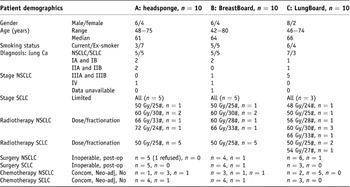
Patient demographics are summarised in Table 1. A total of 62 patients were screened for eligibility before simulation during an 8-month period in 2005. In total, 16 patients were not eligible due to severe distress/anxiety (n = 3), negative experience with a clinical trial in another institution (n = 1), or treatment intention changed to palliative at simulation clinic (n = 12). The remaining 46 patients were recruited and randomised before their planning CT scan. However, 16 patients were subsequently withdrawn because their treatment changed to palliative before commencement of their radiotherapy. Thus, 30 patients who underwent a complete course of radical 3-DCRT were included in this trial. This sample size of 30 evaluable patients was chosen in advance based on published studies investigating patient set-up that had sample sizes ranging from 5 to 30 patients.Reference Essapen, Knowles, Norman and Tait1,Reference Engelsman, Remeijer, van Herk, Lebesque, Mijnheer and Damen5,Reference Hurkmans, Remeijer, Lebesque and Mijnheer12,Reference Bentel, Marks and Krishnamurthy17–Reference Remeijer, Geerlof, Ploeger, Gilhuijs, van Herk and Lebesque23 Ten patients were randomised to each arm. Apart from being randomised to a specific immobilisation device, all other aspects of a patient’s treatment were in accordance with institutional standard practice. The results are presented in the following four sections according to the study objectives.
Patient demographics

Evaluation of set-up errors
A total of 462 EPIs were acquired on 30 patients. Of them, 29 EPIs were not evaluable due to poor image quality and metal couch bar visible in the EPI. Set-up errors were measured and reported on 433 EPIs, by one RT. The minimum usable EPI measurement in a patient was 20. The average was 28, 30 and 28 for Arms A, B and C, respectively.
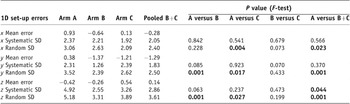
Table 2 demonstrates the one-dimensional SDs of the random and systematic set-up errors for each of the three orthogonal directions—x, y and z, for each immobilisation device, calculated using ANOVA. The SDs of the one-dimensional set-up errors ranged from 1.26 to 4.92 mm for the systematic errors and 2.09–5.18 mm for the random errors (Table 2). The results in Table 2 indicate that there is some evidence that the SD of the set-up errors are higher in Arm A but the difference is not large enough to be statistically significant in all cases. The random errors are significantly larger for Arm A compared to Arm C for all (x, y and z) directions, p = 0.004, 0.017 and 0.027, respectively. The random errors are significantly larger for Arm A compared to Arm B for y and z directions, p = 0.001 for both. The statistical analyses indicated that Arms B and C were very similar. Therefore, Arm A (no immobilisation device) was compared with pooled Arms B+C (dedicated immobilisation devices). When data from Arms B and C are pooled, the random errors are statistically significantly larger for all directions—x, y and z for Arm A, p = 0.023, 0.001 and 0.001, respectively, and the systematic error is statistically significantly larger for the z direction p = 0.044.
Overall mean, random and systematic errors (1 SD) for x, y and z directions (mm), for each immobilisation device calculated using ANOVA, and the F-test P-values for pair-wise comparisons

Significant results are in bold face.
The RT’s repeatability in outlining match structures and determining the set-up errors was found, on average, to be <0.2 mm (p = 0.29). Published inter-observer variation in contouring the structures for matching was found to be 0.9 and 1.3 mm (1 SD), respectively, in the lateral and longitudinal direction (AP images only).Reference Samson, van Sörnsen de Koste, de Boer, Tankink, Verstraate, Essers, Visser and Senan20
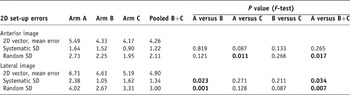
Because of the inconsistencies in the methods of analysing and presenting results of set-up inaccuracies in the published literature, analysis was also performed on 2D and 3D set-up error vectors for completeness in this study. The results in Table 3 indicate that there is some evidence that the displacements are higher in Arm A for both anterior and lateral images, but the difference is not large enough to be statistically significant in all cases. The random and systematic errors are significantly larger for Arm A compared to Arm B for the lateral images (p = 0.001 and 0.023, respectively). The random errors are significantly larger for Arm A compared to Arm C for the anterior images (p = 0.011). The difference between Arm A and pooled Arms B+C is statistically significant for the random errors on the anterior image, p = 0.017, and for both the random and systematic errors for the lateral images p = 0.034 and 0.007, respectively.
Overall mean, random and systematic errors (1 SD) for 2D set-up error vectors (mm), for each immobilisation device, and the F-test P values for pair-wise comparisons

Significant results are in bold face.
A 3D vector length was calculated to incorporate all three directions of set-up errors for each patient, i.e. x, y and z. The SD of the systematic and random set-up errors was calculated for each immobilisation device and is presented in Table 4. SDs of the 3D vector length set-up errors appear to be greater with Arm A. However, when statistical analysis of the SD was carried out, using the F-test for pair-wise comparisons, statistically significant differences between the three immobilisation techniques was identified for the random errors only.
Overall mean, random and systematic errors (1 SD) for 3D set-up error vectors (mm), for each immobilisation device, and the F-test P values for pair-wise comparisons

Significant results are in bold face.
Set-up error margins
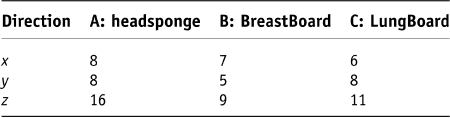
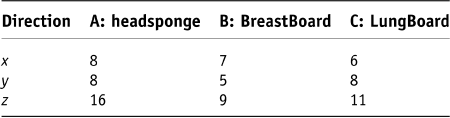
Set-up error margins were calculated using the Van Herk Margin Recipe formulaReference van Herk11: margin = 2.5Σ+0.7σ where the SD of the systematic error (Σ) and the SD of the random error (σ) were calculated for each direction based on 1D errors (x, y and z), for each immobilisation device (Table 5). It is clear that the headsponge Arm requires the largest margin for set-up errors when compared to the use of a specific immobilisation device.
Set-up error margins (mm) for x, y and z directions for each immobilisation device, based on Van Herk’s margin recipe
Patient comfort using VAS
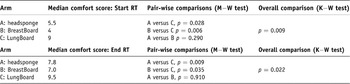
The variability of comfort scores was smaller in Arm C than that in A and B. Therefore, the Kruskal–Wallis (K–W) non-parametric analysis was performed on the patients’ comfort VAS. The Mann–Whitney (M–W) non-parametric test was used to perform pair-wise comparisons: A versus B, A versus C and B versus C. The median comfort scores and pair-wise comparisons at the beginning and end of radiotherapy are shown in Table 6. The analysis demonstrates statistically significantly higher comfort scores (more comfortable) for patients randomised to Arm C, at the beginning and end of treatment.
Analysis of patients’ comfort scores at the beginning and end of radiotherapy (10-cm scale)

RT satisfaction survey
A total of 153 questionnaires were completed by RTs, on all patients, at each stage of their radiotherapy process; simulation (n = 45), planning CT-scan (n = 45), verification (n = 33) and treatment (n = 30). Questionnaires were completed on the patients who were withdrawn from the trial before starting treatment. Thus, the numbers of completed questionnaires exceeded 30 for the pre-treatment procedures. The LungBoard was the preferred device amongst RTs for ease of patient set-up, overall immobilisation stability, patient comfort, and ease of cleaning, handling and storage. Overall, the LungBoard was the recommended device for continued use in the department.
Cost-effectiveness
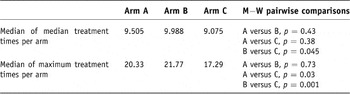
An economic analysis was not conducted on the three arms. However, some surrogate parameters are presented. Only one patient (Arm A) required a repeat simulation procedure (check film) because of discrepancies detected on the EPIs. Scanning simulation films, registering images, delineating match structures, matching EPIs and reference images, and recording results took on average 100 minutes/patient. In total, 755 daily treatment times were recorded on 30 patients. The treatment times were statistically significantly lower for Arm C compared to Arm B (p = 0.045) using the M–W non-parametric test (Table 7). The maximum treatment times were statistically significantly lower for Arm C when compared to either Arm A or Arm B (p = 0.03 and 0.001, respectively).
Mann–Whitney non-parametric analysis of the median and maximum treatment times for the three immobilisation devices

The number of repositions during 762 treatment sessions was recorded on 30 patients. The results of comparisons of either the median or maximum number of repositions were not significantly different for any immobilisation device (p > 0.05). The actual costs to purchase the devices in the Republic of Ireland (including Value Added Tax) in 2006 are BreastBoard = €12,500, LungBoard = €2,250 and headsponge + triangular sponge €89.
DISCUSSION
Set-up errors must be evaluated in individual institutions because differences in working procedures, staff experience, treatment techniques, technology and immobilisation devices will cause different magnitude of errors.Reference Hurkmans, Remeijer, Lebesque and Mijnheer12,Reference Remeijer, Geerlof, Ploeger, Gilhuijs, van Herk and Lebesque23 Published set-up errors can be used as a benchmark but cannot be assumed to occur in an institution. Reporting set-up errors as SD of the random and systematic set-up errors for three orthogonal directions, as in this study, permits comparison of results with other institutions because this method of reporting errors is a commonly accepted method.Reference de Boer, van Sörnsen de Koste, Senan, Visser and Heijmen4,Reference Hurkmans, Remeijer, Lebesque and Mijnheer12,Reference Erridge, Seppenwoolde, Muller, van Herk, De Jaeger, Belderbos, Boersma and Lebesque16 These results can also be used directly to calculate the set-up marginReference van Herk11 and in the design of action level correction protocols.
By reference to the available literature the uncorrected set-up errors of lung 3-DCRT patients in this trial appear acceptable. Similarly the SDs (and range) of the random set-up errors are very similar to the SDs (and range) of the systematic set-up errors as reported by Hurkman et al.Reference Hurkmans, Remeijer, Lebesque and Mijnheer12 Examples of SD of uncorrected systematic errors in the x, y and z directions in the literature are 3.3, 4.4 and 2.2 mm, respectively,Reference Erridge, Seppenwoolde, Muller, van Herk, De Jaeger, Belderbos, Boersma and Lebesque16 and 3.2, 3.6 and 1.7 mm, respectively.Reference de Boer, van Sörnsen de Koste, Senan, Visser and Heijmen4 The corresponding errors in this study for the LungBoard are 1.92, 2.39 and 3.26 mm, BreastBoard are 2.21, 1.26 and 2.55 mm, and headsponge are 2.37, 2.31 and 4.92 mm, respectively. The random and systematic errors in the z-direction seem larger for this study when compared with the published literature. One possible explanation for this is that Table-Top-Height is not used as a treatment set-up parameter in our institution. However, for the BreastBoard and the LungBoard, the magnitude of this z-direction set-up error is still within the 3.5 mm “state of the art” recommendation.Reference Hurkmans, Remeijer, Lebesque and Mijnheer12 When the 1D set-up errors are analysed for each immobilisation device separately, it is clear that the errors are equivalent or less for patients randomised to an immobilisation device in comparison to no immobilisation device (headsponge). For the headsponge, the 1D systematic and random set-up errors (1 SD) are significantly larger in the z-direction (p = 0.044 and 0.001, respectively), and the random set-up errors (1 SD) are significantly larger in the x and y directions (p = 0.023 and 0.001, respectively).
The purpose of investigating possible displacements during treatment relative to the planned position is to define appropriate planning margins to account for set-up uncertainties, as well as to identify efficient methods to ensure or reduce these margins.Reference de Boer, van Sörnsen de Koste, Senan, Visser and Heijmen4,Reference Schwarz, Van der Geer, Van Herk, Lebesque, Mijnheer and Damen10–Reference van Herk, Remeijer, Rasch and Lebesque13,Reference Erridge, Seppenwoolde, Muller, van Herk, De Jaeger, Belderbos, Boersma and Lebesque16,Reference Remeijer, Geerlof, Ploeger, Gilhuijs, van Herk and Lebesque23 Numerous investigators have developed margin recipes. The published margin recipes that differentiate between random and systematic errors are well described by Van Herk and were used in this trial.Reference van Herk11 The margins derived reflect the impact of the specific immobilisation device on set-up accuracy (Table 5). It is clear that larger margins for set-up uncertainty are needed for the headsponge in comparison with either of the immobilisation devices investigated and the margins required for the BreastBoard and LungBoard are similar. The magnitude of systematic set-up errors and therefore margins can be reduced by the application of an off-line set-up correction protocol without changing the treatment technique itself.Reference de Boer, van Sörnsen de Koste, Senan, Visser and Heijmen4,Reference van Herk11–Reference van Herk, Remeijer, Rasch and Lebesque13,Reference Erridge, Seppenwoolde, Muller, van Herk, De Jaeger, Belderbos, Boersma and Lebesque16,Reference Samson, van Sörnsen de Koste, de Boer, Tankink, Verstraate, Essers, Visser and Senan20,Reference Negoro, Nagata, Aoki, Mizowaki, Araki, Takayama, Kokubo, Yano, Koga, Sasai, Shibamoto and Hiraoka22,Reference Remeijer, Geerlof, Ploeger, Gilhuijs, van Herk and Lebesque23
One shortcoming of the inherently 2D technique used in this trial is the failure to incorporate out-of-plane rotations that could deform the 2D projections.Reference Remeijer, Geerlof, Ploeger, Gilhuijs, van Herk and Lebesque23 However, out-of-plane rotations <3° in general do not cause an important deformation of the projected anatomy in portal images and lead to acceptable accuracy of the 2D registration of set-up errors.Reference Hurkmans, Remeijer, Lebesque and Mijnheer12,Reference Remeijer, Geerlof, Ploeger, Gilhuijs, van Herk and Lebesque23 For lung cancer patients, the published rotational errors are 0.9 and 1.0° in the coronal and sagittal planes, respectivelyReference Halperin, Roa, Field, Hanson and Murray21 and 1.6 and 1.3°, respectively.Reference de Boer, van Sörnsen de Koste, Senan, Visser and Heijmen4 Therefore, rotations were not taken into account in this and other similar studies and were assumed to be invariant under translation.Reference Engelsman, Remeijer, van Herk, Lebesque, Mijnheer and Damen5,Reference Schwarz, Van der Geer, Van Herk, Lebesque, Mijnheer and Damen10 Analysis of intra-fraction variation in set-up would have required additional resources including radiation exposure to the patient and was beyond the scope of this trial. Another limitation was that patients were randomised to only one immobilisation device for treatment.
A comfortable treatment position in radiotherapy promotes patient stability and contributes to the best possible patient experience.Reference Cox and Davison25 Patients may move if they do not feel comfortable, thereby reducing the accuracy of treatment. It is therefore essential when selecting a treatment position to know which is the most comfortable for the patient.Reference Cox and Davison25 The analysis of patient comfort scores demonstrated that patients significantly preferred the LungBoard. Considering the fact that the treatment set-up accuracy qualities of the BreastBoard and the LungBoard devices are not different, it is imperative that patients’ comfort should be the deciding factor when choosing the optimal immobilisation device. The data in Table 6 shows that patients seem to adjust to their treatment position during the course of treatment and they found the LungBoard more comfortable from the outset. The LungBoard was the immobilisation device of choice by both patients and staff in this trial.
Regarding resource implications, the daily treatment times were less for patients immobilised with the LungBoard and the cost of the LungBoard is very favourable in comparison with that of the BreastBoard. There was no difference between treatment Arms in terms of the numbers of check film procedures in the simulator.
CONCLUSION
This is the first prospective randomised controlled clinical trial on lung immobilisation devices, which is based on 3-DCRT and takes into account treatment accuracy, users satisfaction and resource implications. The LungBoard provides similar treatment accuracy in terms of set-up errors, compared to the BreastBoard and better accuracy compared to the headsponge. When compared to the BreastBoard and headsponge, the LungBoard is more comfortable for patients, easier for patients and RTs to use, and is considerably less expensive. Based on the evidence from this trial, the LungBoard is the immobilisation device of choice for lung 3-DCRT patients in our institution. The set-up error data analysed in this study permits a protocol for off-line correction of patient set-up to be devised for lung 3-DCRT in our institution, and allows for the appropriate PTV margins for set-up deviations to be applied. The proper implementation of an off-line correction protocol with decision rules based on set-up errors will ultimately permit reduction of the set-up errors and therefore reduction of the appropriate margins.