Congruence between the policy preferences of citizens and elites is considered a key characteristic of democracy (Pitkin Reference Pitkin1967; Powell Reference Powell2000). Scholars have thus devoted a great deal of attention to this aspect of representation and to the factors that may favor good correspondence between citizen preferences and those of elites. Importantly, whether citizens are adequately represented can be examined at different stages of the democratic process, for example, in the party system, the legislature, the government, as well as enacted policies (Golder and Ferland Reference Golder and Ferland2017). Moreover, the concept of congruence can be examined from different perspectives, such as the correspondence between the preferences of citizens as a whole or a group of citizens (e.g., party supporters) and those of individual representatives, parties, or governments (Golder and Stramski Reference Golder and Stramski2010).
Among the different approaches to congruence, here I have considered the relationship between voters (i.e., supporters) and the party they support given a party's crucial role of integrating and representing citizen preferences throughout the policy-making process. Many scholars have examined the correspondence between voter preferences and their party positions and have found generally reasonable levels of congruence (Costello, Thomassen, and Rosema, Reference Costello, Thomassen and Rosema2012; Dalton Reference Dalton1985, Reference Dalton2015). Although congruence between citizens and elites is considered an important criterion for assessing the quality of democracy, it represents mostly a static picture of the connection between citizens and elites. Indeed, citizens and parties may change positions. For this reason, scholars have also considered the dynamic relationship between the preferences of citizens and parties and have found parties (mostly mainstream parties) to be responsive to changes in public opinion (Adams et al. Reference Adams, Clark, Ezrow and Glascow2006; Ezrow et al. Reference Ezrow, De Vries, Steenbergen and Edwards2011; Ferland Reference Ferland2018; Lehrer Reference Lehrer2012). Studies of congruence and responsiveness thus depict mostly positive functioning of representative democracies, wherein party positions are generally close to those of their supporters and parties respond to changes in the preferences of the latter.
Little attention has been devoted to the study of gender inequality in terms of the congruence and responsiveness between citizens and elites (Bernauer, Giger, and Rosset Reference Bernauer, Giger and Rosset2015; Dingler, Kroeber, and Fortin-Rittberger Reference Dingler, Kroeber and Fortin-Rittberger2018; Homola, Reference Homola2017). Several studies on gender representation have examined the descriptive (Kittilson Reference Kittilson2006; Krook and O'Brien Reference Krook and O'Brien2015; Tremblay Reference Tremblay2008) and substantive (Bratton and Haynie Reference Bratton and Haynie1999; Swers Reference Swers1998; Thomas Reference Thomas1991) representation of women. These gender studies, however, do not directly compare women's and men's positions on policy issues and the corresponding positions of elites. Rather, they generally consider whether the presence of elected women influences the policy agendas or the implementation of female-oriented policies. Although these are important issues with respect to women's representation, they do not directly indicate whether a gender gap exists in terms of party congruence and responsiveness.
This article addresses this gap in the literature with an evaluation of the presence of a gender gap both in terms of party congruence and party responsiveness, that is, the relationship between female and male supporters and the party they voted for. This approach is different than considering the relationship between parties and the median voter. I sought to determine whether there is a relationship between the descriptive and substantive representation of women. Building on gender research and the politics of presence (Phillips Reference Phillips1998), which claims that the presence of women is necessary to represent women, I expect women to be generally less represented by political parties both in terms of congruence and responsiveness given women's lack of descriptive representation in political institutions (Kittilson Reference Kittilson2006; Krook and O'Brien Reference Krook and O'Brien2015; Tremblay Reference Tremblay2008). However, I expect this gender gap to decrease as the proportion of elected women in a party increases. To test these claims, I used data from the Comparative Study of Electoral Systems and several national elections studies to locate the positions of citizens and parties on a common left–right ideological scale in 16 advanced democracies over the 1973–2013 period. Ultimately, the presence of women in a party favors women's representation. In cases with a small proportion of elected women, parties seem closer and more responsive to male than to female supporters. As the proportion of elected women increases, however, this gender gap disappears and even turns toward the women's advantage. On average, parties are generally as close and as responsive to the preferences of male supporters as to those of female supporters. No inequality in the party representation of men and women across parties is apparent, even if a gender gap exists in some parties.Footnote 1
PARTY CONGRUENCE AND RESPONSIVENESS
This analysis begins with the conceptualization of party congruence and responsiveness discussed in the associated literature. As underlined by Golder and Stramski (Reference Golder and Stramski2010), congruence between the preferences of citizens and elites can be examined from different perspectives. Here, I focused on the relationship between citizens (i.e., supporters) and parties. An alternative, for example, would be to examine the relationship between citizens and governments (Blais and Bodet Reference Blais and Bodet2006; Ferland Reference Ferland2016; McDonald, Mendes, and Budge Reference McDonald, Mendes and Budge2004; Powell Reference Powell2009) or even individual representatives (Gerber and Lewis Reference Gerber and Lewis2004; Stadelmann, Portmann, and Eichenberger Reference Stadelmann, Portmann and Eichenberger2012). Party representation is important to consider given the important role of parties in parliamentary democracies in structuring and integrating citizen preferences into the democratic process (Dalton, Farrell, and McAllister Reference Dalton, Farrell and McAllister2011). Parties provide the choice set from which citizens choose their representatives. Parties have the task of representing these preferences whether in the opposition or in government, and they are often conceived as delegates of their supporters in models of representation (Powell Reference Powell2000).
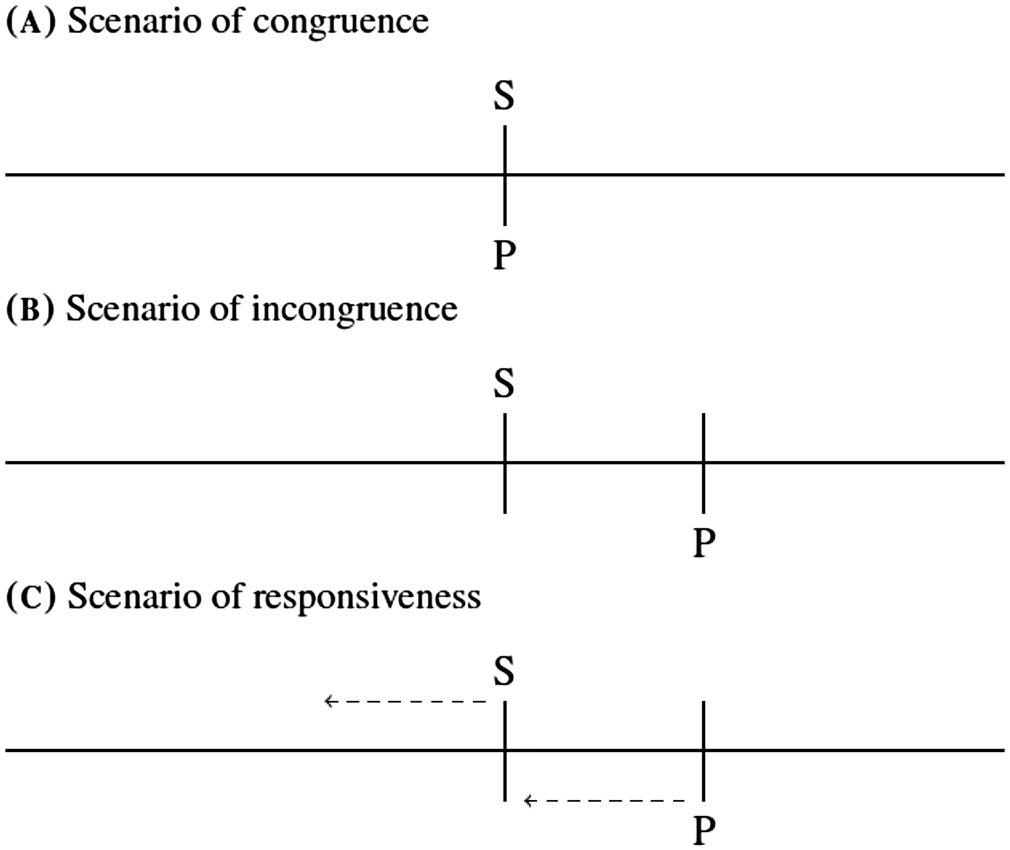
Figure 1 depicts a scenario of perfect congruence (1a) and incongruence (1b) between the positions of a party (P) and its supporters (S) on a policy dimension (S represents the average or median position of all party supporters).Footnote 2Figure 1a illustrates a scenario of perfect congruence in which the preferences of supporters is perfectly represented by the party (i.e., the party cannot better represent its supporters in terms of its policy position). Figure 1b illustrates a scenario of incongruence in which there is a distance between the positions of each actor (i.e., the supporters and the party have different preferences). Scholars generally assume that the greater the distance between the supporters and the party, the smaller congruence and representation. Studies of congruence between party and supporters generally find adequate levels of congruence between parties and their voters. However, there are some variations across policy issues. For example, levels of congruence on the left–right ideological scale appear to be higher (Dalton Reference Dalton1985, Reference Dalton2015) than those on cultural and European dimensions (Costello, Thomassen, and Rosema Reference Costello, Thomassen and Rosema2012; Mattila and Raunio Reference Mattila and Raunio2006).
Party congruence and responsiveness.

I have followed this approach to party congruence in this analysis. However, instead of measuring the average preference of all supporters of a party, I distinguished between the average preference of female and male supporters and assessed their distance from their party (i.e., the party they voted for), respectively. To my knowledge, no study has examined gender representation in those terms. Bernauer, Giger, and Rosset (Reference Bernauer, Giger and Rosset2015) similarly examined the congruence between an individual and her closest party on the left–right ideological scale. In particular, they expected that women would be less represented than men on average but that the gender gap would be less important in proportional representation (PR) electoral systems given that this electoral system favors the representation of the diversity of citizens’ preferences. Overall, they found few differences between the representation of men and women, and their results did not indicate that the gender gap is smaller under a PR electoral systems (i.e., that women are generally as close to their closest party as men). This article extends the work of Bernauer et al. in examining the correspondence between the positions of female and male supporters and their party, respectively. This analysis includes the possible relationship between the descriptive and substantive representation of women, which was not examined by Bernauer et al.Footnote 3
Figure 1c displays an example of responsiveness in which party (P) adjusts its position in response to the shift in the position of its supporters (S). In the opposite shift, supporters move toward the party position, and the latter parallels this shift. Moreover, responsiveness could be initiated whether the party and supporters are congruent (Figure 1a) or not (Figure 1b) following a shift in the position of the supporters. This is the standard conceptualization of responsiveness in this discipline (Adams et al., Reference Adams, Clark, Ezrow and Glascow2006; Ezrow et al., Reference Ezrow, De Vries, Steenbergen and Edwards2011; Schumacher, De Vries and Vis, Reference Schumacher, De Vries and Vis2013). Importantly, however, even if party responsiveness favors congruence with the supporters (as in Figure 1c), this may not always be the case. Whether responsiveness fosters congruence depends on the direction of the change in the position of the supporters (away from or toward the party) and the adjustment the party brings (or not) to its position (for a detailed discussion of the different mechanisms of party responsiveness and their effect on congruence, see Ferland Reference Ferland2018).
Studies of party responsiveness have considered this dynamic relationship between citizens and parties. In particular, scholars have examined whether parties change their policy positions when public opinion (i.e., whether the median voter or party supporters) changes position. These studies generally offer an optimistic picture of the functioning of representative democracies given observed patterns of party responsiveness (for a review, see Adams Reference Adams2012). For example, Adams et al. (Reference Adams, Clark, Ezrow and Glascow2006) showed that mainstream parties adjust their position accordingly with changes in the position of the median voter, whereas Ezrow et al. (Reference Ezrow, De Vries, Steenbergen and Edwards2011) showed that niche parties respond more to shifts in the positions of their supporters. Ferland (Reference Ferland2018) also recently showed that mainstream parties actually respond to both the median voter and their supporters when the latter move away from the party position. Homola (Reference Homola2017) extended these studies and examined whether parties are as responsive to changes in men's and women's preferences and whether the proportion of elected women in a legislature conditions this relationship. Overall, Homola (Reference Homola2017) found that parties respond to men's and women's preferences but that parties are slightly more responsive to men's changes in preference than to women's changes. His result also indicates that the presence of women in parliament does not affect party responsiveness. In the following sections, I build on these works on party responsiveness. In particular, I examined whether parties respond similarly to changes in the preferences of female and male supporters. Importantly, I tested the relationship directly between the presence of elected women in a party on party responses to changes in women's and men's preferences. This is a more valid test of the relationship between the descriptive and substantive representation of women (i.e., Phillips's theory of the politics of presence, see below) than Homola's strategy of examining the effect of elected women in parliament. Indeed, if the presence of women influences parties’ responses to women's preferences, it is mainly because women within a party may influence the policy positions of their corresponding party, that is, their possible influence on the policy positions of the other parties is unlikely.Footnote 4
A GENDER GAP IN REPRESENTATION?
Although few studies of party congruence and responsiveness have examined gender representation, inequality in the representation of men and women has been an important topic in gender studies. Most studies on gender representation have examined the descriptive and substantive representation of women (for a review, see Wängnerud Reference Wängnerud2009). Many studies have highlighted the existence of a gender gap in terms of descriptive representation; that is, the proportion of women in political parties, in legislatures, or as cabinet ministers is smaller than the proportion of men (Kittilson Reference Kittilson2006; Krook and O'Brien Reference Krook and O'Brien2015; O'Brien Reference O'Brien2015; Tremblay Reference Tremblay2008). This lack of descriptive representation may also have substantive implications given that female legislators seem to behave differently than male while in office in emphasizing different issues (Bratton and Haynie Reference Bratton and Haynie1999; Swers Reference Swers1998; Thomas Reference Thomas1991) and holding different policy positions (Gidengil et al. Reference Gidengil, Blais, Nadeau and Nevitte2003; Wängnerud Reference Wängnerud2000). Clayton and Zetterberg (Reference Clayton and Zetterberg2018) even recently showed that in countries where the proportion of women increased significantly due to quota adoption, spending increased in public health while military spending decreased. Overall, these studies support Phillips's theory of the politics of presence (Phillips Reference Phillips1998), which argues that the presence of women is necessary to represent women's interests given their shared experiences and common interests.
A problem with this approach to gender representation, however, is that it does not directly capture men's and women's preferences and their respective correspondence with elite positions. Actually, these studies have developed independently from the concepts and approaches proposed in the congruence and responsiveness literature. The implicit assumption is that some policies or issues are female-oriented, and thus, the implementation of the latter favors women's representation. However, this does not permit the testing of claims about inequality in substantive representation per se,Footnote 5 that is, the comparison of men's and women's preferences on policy issues with elite positions. In this research, I have used the concepts and research designs of the congruence and responsiveness literature to test expectations developed mostly in gender studies.
Expectations
This section presents my expectations with respect to the representation of female and male supporters in terms of party congruence and party responsiveness. Building on results from gender research on representation and the politics of presence (Phillips Reference Phillips1998), I have assumed that female supporters will generally be less represented than male supporters by their party, that is, the party they voted for.Footnote 6 In particular, I expected female supporters of a party to be ideologically more distant from the position of their party than male supporters. The combination of two empirical findings supports this claim. First, elected women are generally underrepresented in political parties (Kittilson Reference Kittilson2006; Tremblay Reference Tremblay2008). Second, women in elected office and in the general public hold different policy positions than men on average (Gidengil et al. Reference Gidengil, Blais, Nadeau and Nevitte2003; Thomas Reference Thomas1994; Wängnerud Reference Wängnerud2000). Consequently, the underrepresentation of women in elected office should make party positions better reflect male policy positions than female policy positions. However, as the number of elected women increases in a party, presumably, party stances will be influenced, and accordingly so with female supporters. Moreover, women are more likely to vote for female candidates than male candidates (Cook Reference Cook1994; Dolan Reference Dolan1998; Sanbonmatsu Reference Sanbonmatsu2002; Zipp and Plutzer Reference Zipp and Plutzer1985). Therefore, women may be more likely to support parties that better reflect their preferences when more women represent these parties.Footnote 7 Overall, I expect the two following hypotheses in terms of the gender gap in party congruence:
H 1:
Levels of congruence between party and supporters are greater among men than female supporters.
H 2:
The gender gap in levels of congruence between party and supporters decreases as the proportion of women elected in a party increases.
I also expected parties to be more responsive to shifts in the positions of male supporters than female supporters. Homola (Reference Homola2017) emphasized that parties should generally be more responsive to men than women “because men are, on average, more politically active than women, earn more, are more highly educated and more likely to act as opinion leaders within their respective social contexts all characteristics that have been shown to lead to higher party responsiveness” (e.g., Adams and Ezrow Reference Adams and Ezrow2009; Bartels Reference Bartels2008; Enns and Wlezien Reference Enns and Wlezien2011; Erikson, MacKuen, and Stimson Reference Erikson, MacKuen and Stimson2002; Gilens and Page Reference Gilens and Page2014; Gilens Reference Gilens2012; Nir and McClurg Reference Nir and McClurg2015). Although we expect parties to be more responsive to male supporters than female supporters, this gender gap should decrease as more women are elected in parties given that they hold policy positions that differ from their male counterparts and act differently in office (Bratton and Haynie Reference Bratton and Haynie1999; Swers Reference Swers1998; Thomas Reference Thomas1991). Thus, I propose these two hypotheses with respect to the gender gap in party responsiveness:
H 3:
Parties are more responsive to shifts in the positions of male supporters than to those of female supporters.
H 4:
The gender gap in party responsiveness decreases as the proportion of women elected in a party increases.
DATA AND MEASUREMENTS
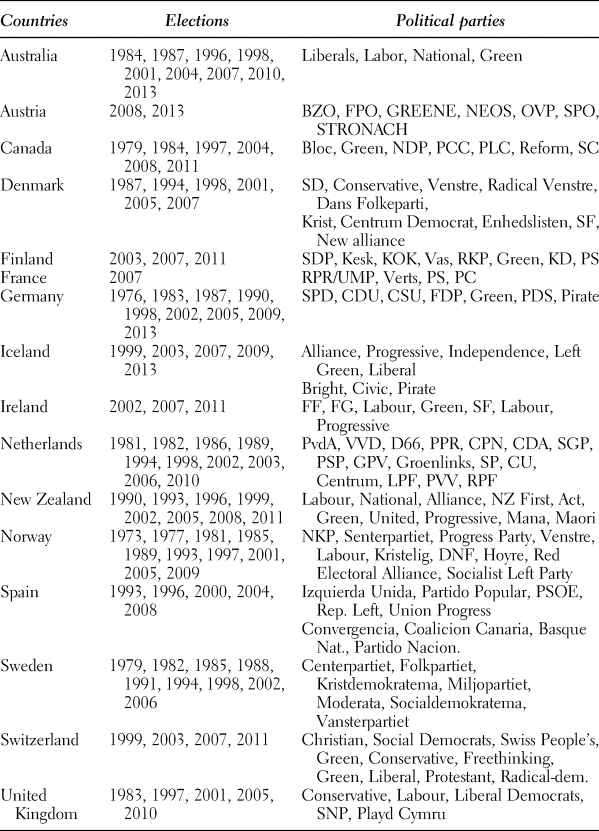
To test these hypotheses, I first located the positions of citizens and parties on a common policy dimension using survey data from the Comparative Study of Electoral Systems (CSES) to measure citizens’ and parties’ positions on a left–right ideological scale. To increase the number of observations, I added all national election studies in which respondents were asked to locate themselves and parties on the same left–right scale (see Table A1 in Appendix for the list of countries, elections, and parties). In these postelection surveys, respondents are generally asked the following question: “In politics people sometimes talk of left and right. Where would you place yourself on a scale from 0 to 10 where 0 means the left and 10 means the right?” Respondents are also asked to indicate which party they voted for in the election. Based on this information, I calculated the median position of the female and male supporters for each party, respectively.
Importantly, respondents are also asked to locate each of the main political parties on the same left–right ideological scale. A party position is measured by taking the median position as perceived by all respondents.Footnote 8 Notably, survey-based measures of party positions correlate highly with expert-based measures (Dalton and McAllister Reference Dalton and McAllister2015). This association indicates that citizen perceptions of party positions are not biased when aggregated and may represent valid measures of party positions. How party congruence and party responsiveness were measured for testing our hypotheses is discussed below. Overall, the analyses covered 129 parties and 95 elections in 16 countries between 1973 and 2013 (see Table A1 the Appendix for the list of countries and elections).
Any examination of gender representation on the left–right ideological scale has some limitations. First, levels of congruence are greater on this ideological dimension than on other policy dimensions (Costello, Thomassen, and Rosema Reference Costello, Thomassen and Rosema2012; Mattila and Raunio Reference Mattila and Raunio2006), which could mask greater inequality in men's and women's representation across other policy issues. Second, although the left–right ideological scale has been the main dimension of political competition for many years, new dimensions have appeared (Bakker, Jolly, and Polk Reference Bakker, Jolly and Polk2012; Kriesi et al. Reference Kriesi, Grande, Lachat, Dolezal, Bornschier and Frey2008). Therefore, examining representation from a left–right ideological perspective may no longer be entirely sufficient to capture and summarize citizen's preferences and whether they match party positions.
Scholars have attempted to address these issues in examining the congruence between party and supporters from a multidimensional perspective. The empirical strategy consists of combining citizens’ self-placements on different policy dimensions (e.g., from the European Social Survey) and expert placements of political parties (e.g., from the Chapel Hill Expert Survey dataset). The main problem with this approach, however, is that the question wording, the scale, and even the level of measurement of the questions generally differ across citizen and expert surveys. This heterogeneity raises a problem of differential item functioning, given that we cannot know whether a given score in citizen surveys corresponds to the exact same score in the expert surveys. Notably, the CMP-survey approach, which consists in locating party positions based on measures from the Comparative Manifesto Project and citizens’ positions based on surveys, suffers from the same dilemma (e.g., Adams et al. Reference Adams, Clark, Ezrow and Glascow2006; Ezrow et al. Reference Ezrow, De Vries, Steenbergen and Edwards2011; Homola Reference Homola2017). This is highly problematic for measuring the distance between the positions of party supporters and a given party (see below). Overall, some of the limitations of using the left–right ideological scale are easy to recognize, but for the moment, data are limited. Considering this limitation, the left–right ideological scale remains one of the main dimensions of political competition in advanced democracies and an important determinant of vote choice (Dalton, Farrell, and McAllister Reference Dalton, Farrell and McAllister2011; Jessee Reference Jessee2012; Joesten and Stone Reference Joesten and Stone2014). It is also the main political dimension used in previous works on congruence and responsiveness (Adams et al. Reference Adams, Clark, Ezrow and Glascow2006; Blais and Bodet Reference Blais and Bodet2006; Ezrow et al. Reference Ezrow, De Vries, Steenbergen and Edwards2011; Ferland Reference Ferland2016; Golder and Stramski Reference Golder and Stramski2010; Powell Reference Powell2000). Although it will be important to replicate studies of congruence and responsiveness based on several policy issues in the future, the necessary data do not currently exist, and the left–right ideological scale still represents a crucial dimension structuring the political competition in the countries under examination.
EXAMINING THE GENDER GAP IN PARTY CONGRUENCE
This section presents my analysis with respect to the gender gap in party–supporter congruence. I expected female supporters to be generally further away from their party than male supporters. To examine this claim, I first computed the absolute distance between a party position and the median position of its female and male supporters, respectively. Then, I calculated gender difference in congruence, which is the difference between these two measures of female and male supporters’ congruence. Negative values of gender difference in congruence indicate that women are closer than men to their party, whereas positive values indicate the opposite. For example, a score of −0.3 (0.3) indicates that the median position of female supporters is closer (further) to the party position by 0.3 points than the median position of male supporters. To support our hypotheses, we expected the average of gender difference in congruence to be positive (H1) and the proportion of elected women in a party to have a negative impact on gender difference in congruence (H2). The proportion of elected women in a party was gathered from different national sources (e.g., National Parliament websites, websites of political parties, etc.).
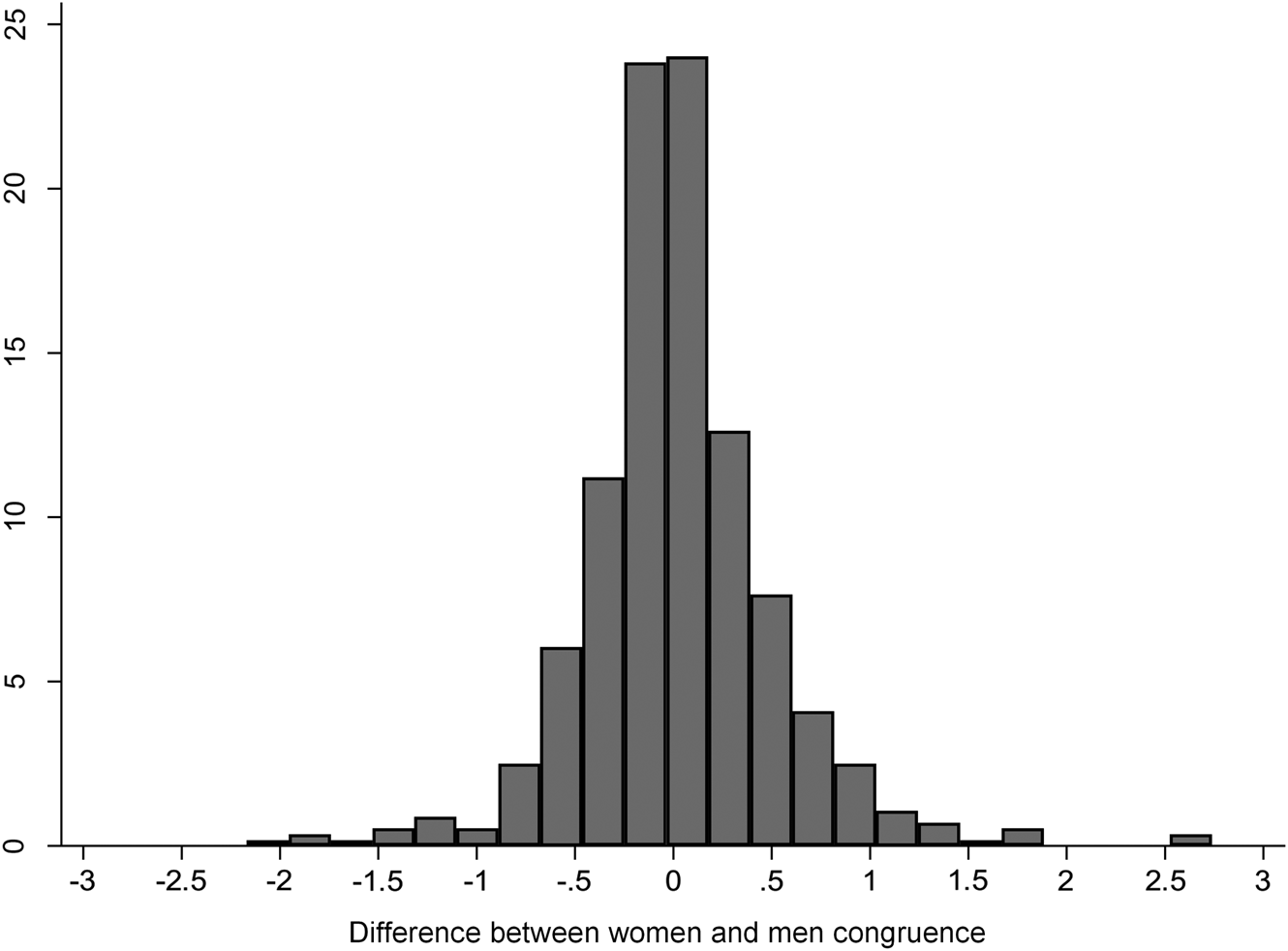
Figure 2 shows the distribution of gender difference in congruence. The distribution of gender difference in congruence appears to be symmetric, and most of the scores center around 0, indicating no gender inequality in representation on average. Overall, the average score of gender difference in congruence is approximately 0.02 and is not statistically different than 0. These results do not support H1.
Distribution of gender difference in congruence.

I tested H2 with respect to the impact of the proportion of elected women in a party on the gender gap in party congruence (Table 2). Notably, even if the previous results do not indicate the presence of a gender gap on average, it is still possible that the proportion of elected women in a party favorably influences the representation of female supporters. For example, parties with a small proportion of women may better represent male supporters, and parties with a greater proportion of women may better represent female supporters. When aggregated, these inequalities in representation would cancel out, as indicated by the average score of gender difference in congruence (0.02).
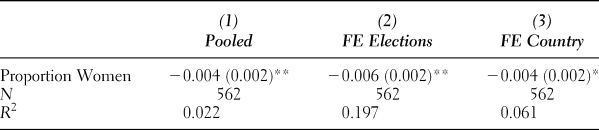
Table 1 displays the results of OLS regressions in which the dependent variable is gender difference in congruence and the independent variable is the proportion of elected women in a party. Three sets of results are presented. Column one lists the results of the pooled data; columns two and three present the results of fixed-effects modeling at the election and country levels, respectively. All the models adjust the standard errors for clustering at the party level; not doing so might increase the likelihood of committing a type I error. The advantage of the fixed-effects model is that it can be used assess the within effect (at the election or country level) of proportion of elected women and to control for unobserved heterogeneity at each level (e.g., the electoral systems, number of parties in competition, turnout of women, proportion of elected women in legislature, etc.).Footnote 9 Overall, the results in Table 1 confirm H2 and indicate that as the proportion of elected women in a party increases, the gender gap in party congruence decreases. The magnitude of the effect is also consistent across the three models. On average, an increase of 1 point of percentage in the proportion of elected women decreases gender difference in congruence by approximately 0.004–0.006 points.
Gender Gap in Party-Supporters Congruence

Cluster-robust standard errors in parentheses. *p < 0.10, **p < 0.05, ***p < 0.01.
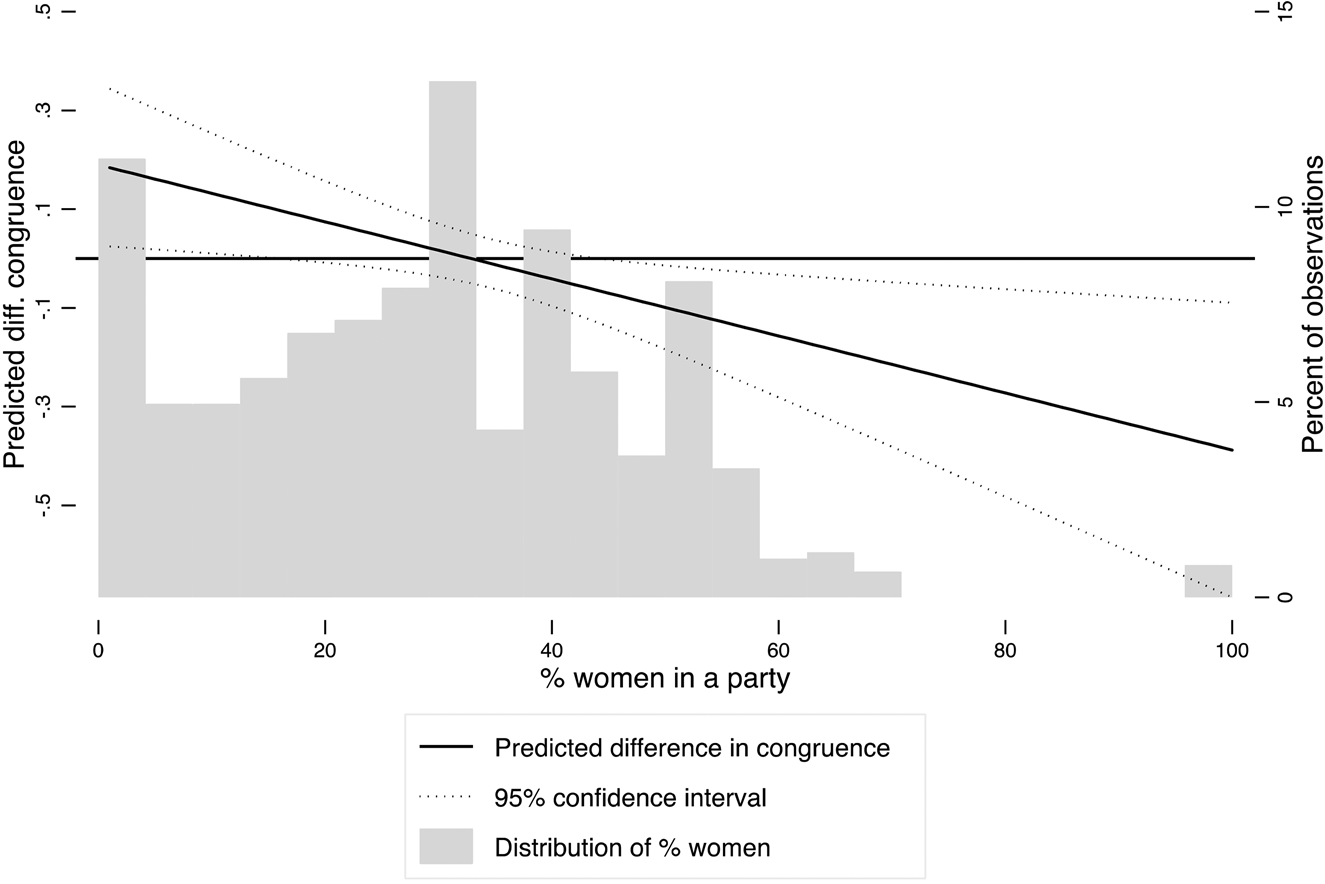
To appreciate the substantive impact of proportion of elected women on the gender gap in party–supporter congruence, Figure 3 displays the predicted values of gender difference in congruence as proportion of elected women increases based on the results of column two in Table 1. The results show that an increase in the proportion of elected women decreases the predicted values of gender difference in congruence. The results show that for parties with less than approximately 16% of elected women (25% of the observations), male supporters are closer to the party than female supporters (i.e., gender difference in congruence is positive). On the other hand, for parties with more than 45% of elected women (20% of parties), female supporters are more represented than male supporters, and the difference is statistically significant at the 0.05 level. Finally, for parties with more than 16% and less than 45% of elected women (approximately 55% of the parties), the difference in female and male party–supporter congruence does not appear to be statistically different than 0.
Predicted values of gender difference in party congruence.

Overall, these results indicate that even if the data do not support the claim that women are generally less represented by their party than men, the proportion of elected women in a party influences female (and male) representation. When very few women are elected, male supporters are closer to parties than female supporters. As the number of elected women increases, however, this gender gap disappears and even turns toward women's advantage when more than approximately 50% of elected representatives of a party are women. The next section presents my analysis of whether parties respond similarly to change in women's and men's preferences and whether the presence of women in parties conditions this relationship.
EXAMINING THE GENDER GAP IN PARTY RESPONSIVENESS
To test H3 and H4, I examined the effect of a change in the position of female supporters and male supporters, respectively, on a change in a party position between two elections.
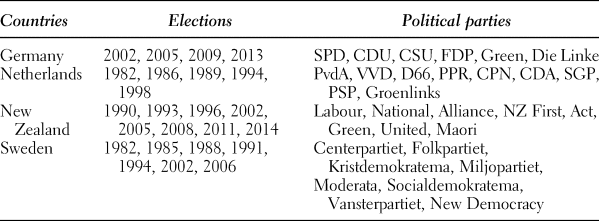
To examine these relationships, I used panel data to locate the same respondents in consecutive elections and, therefore, to track the positions of female and male party supporters at election t and those same female and male party supporters at election t + 1. The use of panel data prevents the positions of party supporters at an election to be influenced by new voters who may have switched their vote toward the party as a result, presumably, of the party moving toward their position.Footnote 10 The data from the CSES and most national election studies used in the previous section consist of cross-national data and do not include a panel design. Among the 16 countries studied, only four conducted a sufficient number of panel studies for this section of the analysis: Germany, the Netherlands, New Zealand, and Sweden (see Table A2 in the Appendix for the list of elections and parties).
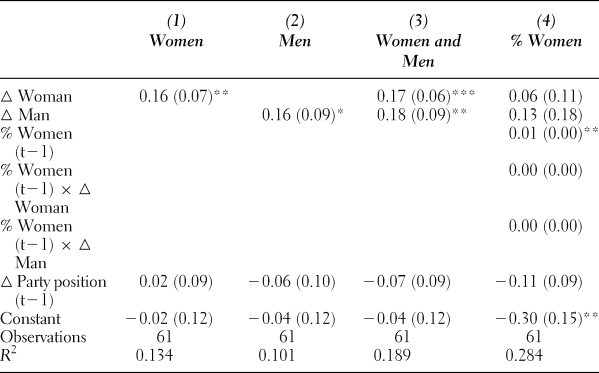
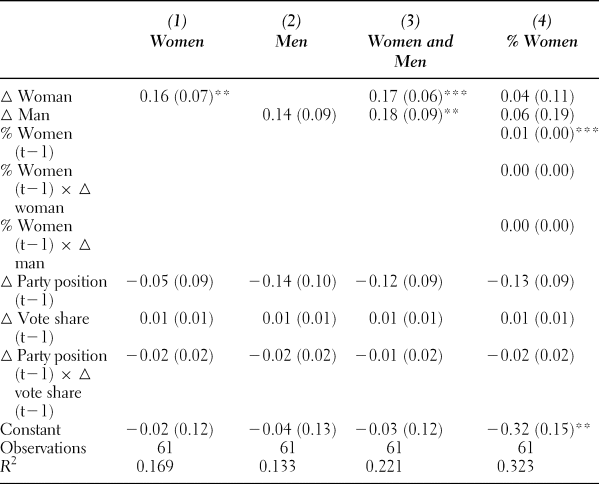
The main variables of interest were measured as described previously, but in this section of the analysis, I investigated the change between two consecutive elections. The dependent variable in Table 2 is the change in a party position between two elections (▵ party position). Thus, ▵ women represents the change in the position of female supporters between two consecutive elections. Positive values indicate that female supporters move to the right between elections, and negative values indicate a shift to the left. The corresponding variable for male supporters (▵ men) was also included. To support H3, I expected the effect of ▵ men on ▵ party position to be greater than the effect of ▵ women. To test H4, I interacted ▵ women and ▵ men, respectively, with proportion of elected women measured at election t. I expected the difference between the effect of ▵ women and ▵ men on ▵ party position to decrease as the proportion of elected women increased.
Gender Gap in Party Responsiveness

Clustered Standard errors in parentheses. *p < 0.10, **p < 0.05, ***p < 0.01. Country dummies are not displayed.
Importantly, this empirical strategy did not allow the distinction among changes in party positions motivated by a vote-seeking or policy-seeking strategy. As argued by Ferland (Reference Ferland2018), when parties adjust their positions in response to shifts in public opinion away from their position, they are generally motivated by a vote-seeking strategy. These adjustments ultimately foster congruence (and representation) with public opinion (as shown similarly in Fig. 1c). On the other hand, if parties adjust their position when the public moves toward their position, they are moving closer to their preferred policy position (i.e., ideal point). These latter adjustments, however, do not foster congruence with citizens nor enhance representation, given that parties will generally move away from the public when moving closer to their preferred position. The multiple interactions required to test such claims (see Ferland Reference Ferland2018), combined with the small number of observations (N = 61), made the data inadequate to distinguish these different mechanisms of responsiveness. Consequently, while the next analysis may indicate whether parties adjust their position accordingly with changes in male or female supporters, it cannot indicate whether a vote-seeking or policy-seeking strategy motivated these party adjustments.Footnote 11
Given the time-series cross-sectional (TSCS) structure of the data, I used country fixed-effects model to account for unobserved heterogeneity at the country level. This adjustment controlled for omitted variables such as the electoral systems or the party systems. The models were estimated using Prais-Winsten regressions and panel-corrected standard error (PCSE) at the party level, given that observations are not independent within parties. The models also adjusted for first-order autocorrelation, given that Wooldridge (Reference Wooldridge2002) test of autocorrelation for panel data rejects the null hypothesis of no first-order autocorrelation.Footnote 12 In addition, I followed previous studies that included as a control variable the previous change in party position (t − 1), given that parties may have electoral incentives to shift their position in the opposite direction than their previous shifts (Budge Reference Budge1994).Footnote 13 Finally, these results were substantively the same when I controlled for the congruence between female (and male) supporters and their party at election t.
In columns one and two of Table 2, the effects of a change in the position of female and male supporters on a change in party positions are presented separately. The results in column one show that parties adjust their position accordingly with changes in the positions of female supporters. When female supporters move left (right) by one unit on the left–right ideological scale, parties adjust their position on average to the left (right) by approximately 0.16 units. The magnitude of the effect is rather small, but it is statistically significant at the 0.05 level. The results in column two indicate that parties are also responsive to changes in the positions of male supporters given the coefficient of 0.16, which is statistically significant at the 0.1 level. Column three presents the results of the model regarding the simultaneous effect of a change in the position of female and male supporters. There appears to be no correlation between ▵ women and ▵ men (0.03). The results do not support the claim that there is a gender gap in party responsiveness (i.e., H3). The effect of ▵ women (0.17) is positive and statistically significant, whereas the effect of ▵ men equals 0.18 and is statistically significant at the 0.05 level. The Wald test indicates that the difference between these coefficients (0.18 − 0.17 = 0.01) is not statistically significant. Overall, parties are, on average, as responsive to women's preferences as to men's preferences, but the magnitude of party responsiveness is also small.
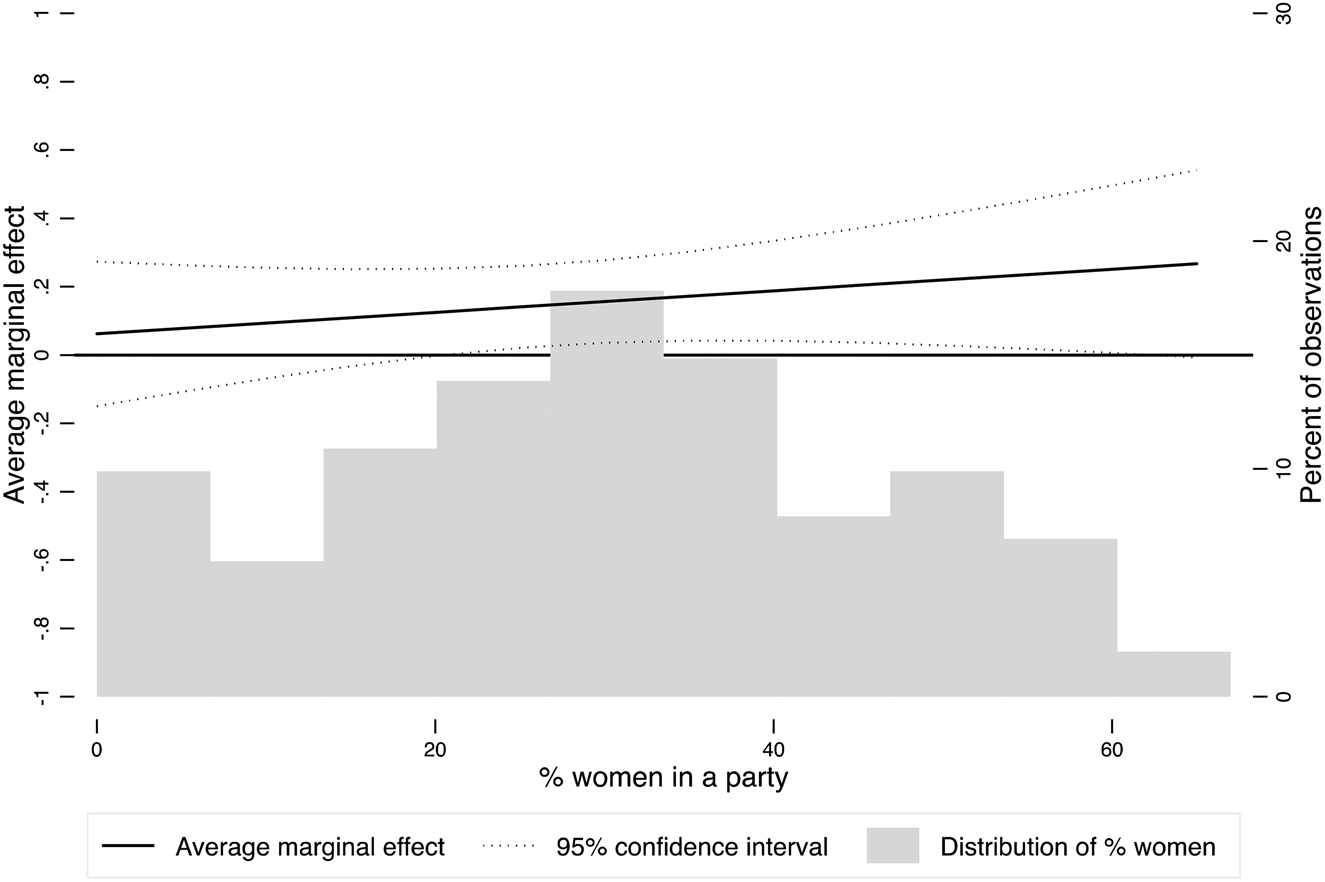
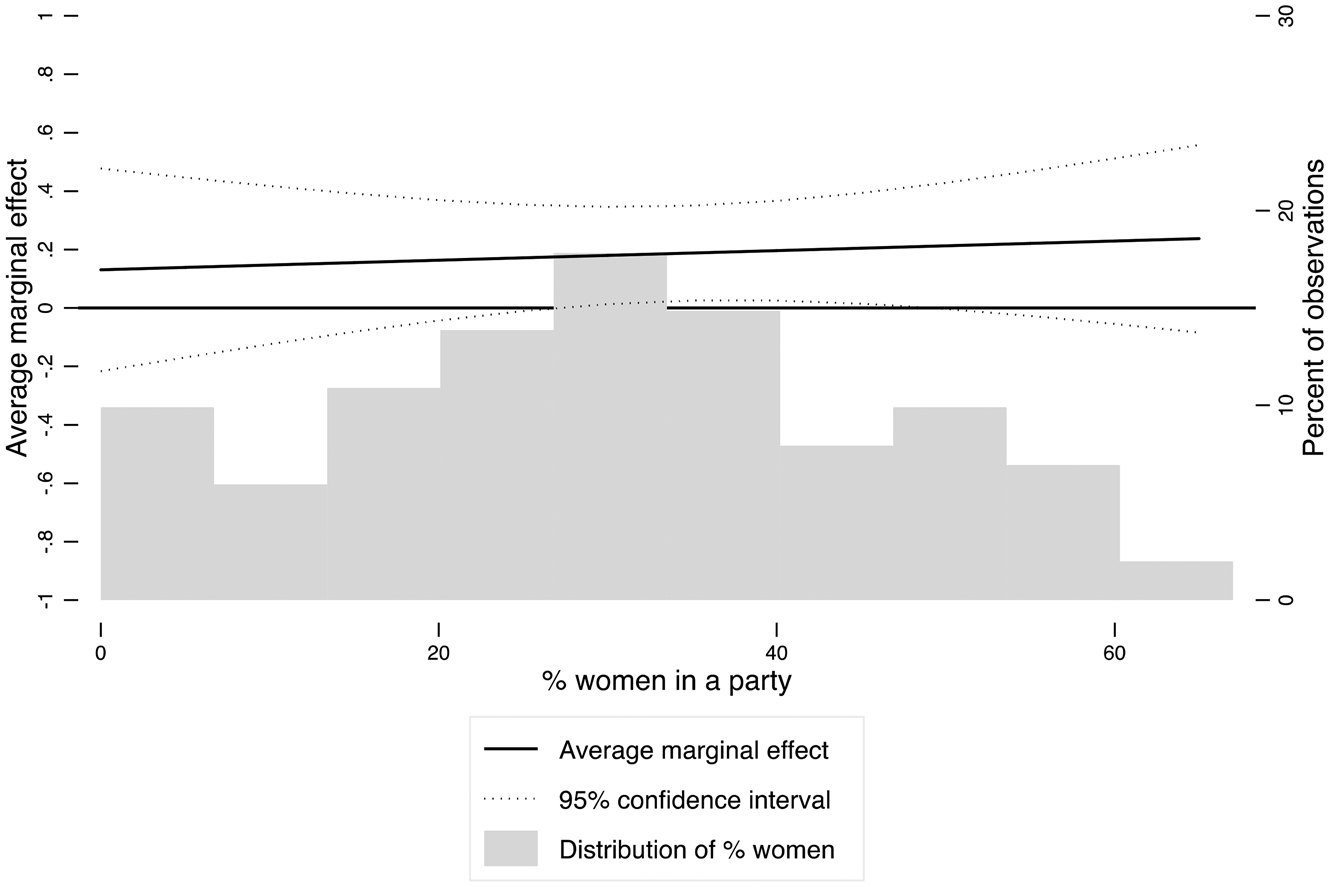
Column four of Table 2 displays the results of the interaction of ▵ women and ▵ men with proportion of elected women, respectively. To better demonstrate the substantive effects of this interaction model, I followed the recommendation of Brambor, Clark, and Golder (Reference Brambor, Clark and Golder2006); the average marginal effects of ▵ women are presented in Figure 4. Party responsiveness to female supporters was expected to increase as the proportion of women increases in a party. Figure 5 displays the average marginal effects of ▵ men over values of proportion of elected women given that the latter may also affect, presumably, party responsiveness to male supporters.
Party responsiveness to female supporters.

Party responsiveness to male supporters.

The results in Figure 4 show the effect of ▵ women on ▵ party positions as proportion of elected women increases in a party. These results support partly our prediction even if the interaction effect is of modest magnitude. The effect of ▵ women is not statistically different than 0 for parties with fewer than about 20% of elected women. On average, these parties do not change their position when female supporters are changing their position, which is approximately 25% of the parties. On the other hand, the results indicate that parties are responsive to female preferences when parties have more than 20% of elected women and that the effect of ▵ women increases slightly as the proportion of elected women increases.
Figure 5 displays the corresponding results for party responsiveness to male supporters as the proportion of elected women increases in a party. The results do not indicate that the presence of women in a party conditions the effect of ▵ men on ▵ party positions (i.e., the line is mostly horizontal for all values of % women). Importantly, the average marginal effects of ▵ men are not statistically different than zero for most values of % women, except values between 30% and 45%. Overall, the results in Figure 4 slightly support the expectation that the presence of elected women in parties may affect how parties respond to changes in the preferences of their female supporters and may ultimately reduce the gender gap in representation.
Discussion
In this research, I examined whether a gender gap exists in party congruence and responsiveness, and I sought to verify whether the presence of women in parties attenuated this gap. To do so, I built on previous works of congruence and responsiveness that locate citizens and elites on a common left–right ideological scale. Although several studies have examined the relationship between supporters and parties from a congruence and responsiveness perspectives, few studies have considered whether inequality in gender representation exists in those terms.
Building on works in gender research and on Phillips's theory of the politics of presence, I expected to find a gender gap in party congruence and responsiveness. Moreover, I expected this gap to decrease as the proportion of elected women in a party increases. Overall, the results partly support these expectations. On the one hand, the results do not indicate the presence of a gender gap in party congruence nor in party responsiveness (i.e., parties are on average as close to the preferences of their female than male supporters). Moreover, parties seem to adjust their positions accordingly with male and female supporters likewise. These results do not support H1 and H3. On the other hand, the results support the claim that there is a link between the descriptive and substantive representation of women (H2 and H4). Female supporters are closer to their party than male supporters as the proportion of women increases in the party. In addition, I identified a similar effect with respect to party responsiveness to female and male supporters. These results are important because the few studies of congruence and responsiveness that have considered this relationship between the descriptive and substantive representation of women did not find any effect (Dingler, Kroeber, and Fortin-Rittberger Reference Dingler, Kroeber and Fortin-Rittberger2018; Homola Reference Homola2017). One reason for this difference is that I directly examined the presence of elected women in parties, whereas previous studies examined instead the effect of the proportion of women elected in legislature, therefore masking some heterogeneity in the distribution of elected women across parties.
Overall, this study represents a first step toward examining inequality in gender representation from a congruence and a responsiveness perspective. Many avenues are possible to extend this work. First, it will be important to compare the results of this study to future studies examining women's and men's preferences on different policy issues. Second, the preferences of men and women may differ, but how much they value each policy issue may also be important to consider and may actually widen the gender gap if incorporated to congruence and responsiveness measures of representation. Finally, the congruence between citizens and elites may be examined at different stages of the representation process (Golder and Ferland, Reference Golder and Ferland2017) and from different perspectives (Golder and Stramski, Reference Golder and Stramski2010). All these different approaches to citizens–elites congruence merit further investigation to determine whether inequality in gender representation exists and to better understand the factors that might attenuate it.
APPENDIX
Data from the Comparative Study of Electoral Systems and National Election Studies

Panel Data from National Election Studies

Gender Gap in Party Responsiveness