Significant outcomes
• The current study represents the first comparative examination of cognitive and coping style relationships with bipolar I and II symptoms.
• Cognitive and coping styles showed differential relationships with symptom expression in bipolar I and II disorder, suggesting potential specific targets for psychological interventions for the two conditions.
Limitations
• Sample may not be representative of all those with a bipolar condition.
• Inability to establish independence of cognitive and coping style vulnerabilities from residual symptoms.
• Inability to determine the influence of treatment effects, number of previous episodes [and whether depressive or hypo(manic)], age of onset or life events.
• Inability to establish whether the cognitive and coping styles examined were predisposing factors to the illness or scarring from the experience of living through prior episodes of the illness, and the damage they may have done to life plans, work or relationships.
Introduction
The contribution of psychological factors in bipolar disorder is increasingly recognised, both as ‘risk’ factors and ongoing contributors to illness course. Two such psychological factors include cognitive style (e.g. self-esteem, dysfunctional attitudes, appraisal or attributional styles) and coping behaviours. Psychological models that attempt to explain the role of these factors in bipolar disorder are still in their infancy, using cognitive models of unipolar depression as an explanatory template.
As overviewed by Alloy et al. (Reference Alloy, Abramson, Urosevic, Walshaw, Nusslock and Neeren1), cognitive models of unipolar depression hypothesise that maladaptive cognitive styles represent cognitive vulnerabilities for depression in conjunction with negative life events. These are defined as negative styles for inferring cases, consequences and self-worth implications in Hopelessness Theory (Reference Abramson, Metalsky and Alloy2), with similar constructs of negative self-schemata and dysfunctional attitudes in Beck's Theory (Reference Beck3,Reference Beck4). Maladaptive cognitive styles are also thought to confer risk for bipolar depression. Furthermore, negative events can also trigger hypo(manic) episodes, prompting suggestions that cognitive styles for appraising negative events may confer vulnerability to hypo(manic) episodes (Reference Alloy, Abramson, Neeren, Walshaw, Urosevic and Nusslock5).
Maladaptive cognitive styles can lead to maladaptive coping behaviours (Reference Lam and Wong6). According to Response Styles Theory (Reference Nolen-Hoeksema7–Reference Thomas, Knowles, Tai and Bentall9), the way in which an individual responds to or copes with negative affect influences the duration and severity of depressive symptoms. Rumination represents one such maladaptive coping style. Ruminative coping styles have been reported in bipolar spectrum disorders (Reference Thomas, Knowles, Tai and Bentall9–Reference Green, Lino, Hwang, Sparks, James and Mitchell15). In relation to coping with hypo(mania), bipolar disorder may be characterised by excessive up-regulation and down-regulation of positive affect (Reference Carl, Soskin, Kerns and Barlow16), leading to further mood dysregulation.
Maladaptive cognitive and coping styles mediate the extent to which underlying biological vulnerabilities are expressed in terms of mood dysregulation (Reference Kuyken, Watkins and Beck17), therefore representing promising targets for psychological intervention. Psychological treatments may have differential impacts on bipolar sub-types (Reference Zaretsky, Rizvi and Parikh18), thus an understanding of psychological factors operating in both conditions is central for successful intervention. Identification of any differences between bipolar I and II disorder would have important implications for conceptualising and treating the two conditions.
Psychological factors are under-researched in bipolar II disorder, with research to date focusing on bipolar I disorder, or combining both bipolar sub-types in study analyses. Of the few studies specifically comparing cognitive or coping styles in separate bipolar I and II disorder groups, subtle differences were reported. For example, those with bipolar I disorder were more likely to appraise stress as threatening and central to their well-being (i.e. over-emphasise the potential negative impact of stressful events) than those with bipolar II disorder (Reference Fletcher, Parker and Manicavasagar19). In terms of coping, bipolar I disorder participants were more likely to use adaptive strategies (e.g. seek professional help, stimulation reduction, problem-direct coping) to deal with hypo(manic) prodromes (Reference Parikh, Velyvis, Yatham, Beaulieu, Cervantes, Macqueen, Siotis, Streiner and Zaretsky20,Reference Fletcher, Parker and Manicavasagar21), and to seek emotional and instrumental support (Reference Fletcher, Parker and Manicavasagar21). While these cross-sectional studies provide a ‘snapshot’ of cognitive and coping styles differences in bipolar sub-types, they do not allow for examination of how these factors might relate to bipolar symptom expression over time.
Relatively few prospective studies have examined the role of cognitive and coping styles in the course and expression of bipolar disorder – and again have focused on bipolar I disorder. In general, study findings suggest that certain cognitive and coping styles are prospectively associated with symptoms, and can show predictive capacity for episode status at follow-up. For example, low self-esteem and negative automatic thoughts predicted increases in depressive – but not manic – symptoms over time (Reference Johnson, Meyer, Winett and Small22,Reference Johnson and Fingerhut23). Low self-esteem was found to be the most robust predictor of relapse at 12 months in a small sample of hypomanic individuals (Reference Scott and Pope24). Depressive rumination prospectively predicted the number of depressive episodes at a 3.5-year follow-up in a bipolar spectrum sample (Reference Alloy, Abramson, Flynn, Liu, Grant, Jager-Hyman and Whitehouse25). More recently – and using a bipolar-specific measure of dysfunctional beliefs associated with hypo(mania) [the Hypomania Attitudes and Positive Predictions Inventory (HAPPI); (Reference Mansell26)] – Dodd et al. (Reference Dodd, Mansell, Morrison and Tai27) found that total HAPPI scores predicted hypo(manic) symptoms at 4-week follow-up in a bipolar I sample after controlling for time since last mood episode. In relation to coping, Gruber et al. (Reference Gruber, Eidelman, Johnson, Smith and Harvey12) reported a positive association between rumination about positive affect and lifetime depressive and manic frequency. Another study found the extent to which patients coped maladaptively with mania predicted relapse over an 18-month period, as well as manic symptoms, at follow-up (Reference Lam, Wong and Sham28).
The current study extends this research by prospectively examining the relationship between cognitive and coping styles with symptoms in bipolar I and II disorder. Two key illness course characteristics differentiate bipolar I and II disorder. First, bipolar II disorder is characterised by a more pronounced and chronic depressive predominance than bipolar I disorder (Reference Vieta, Gasto, Otero, Nieto and Vallejo29–Reference Baek, Park, Choi, Kim, Choi, Ha, Kwon, Lee and Hong32). Second, those with bipolar II disorder experience hypomania (often appraised as pleasurable; 20) rather than mania (appraised as threatening and more severe; 20). Prior research indicates a tendency for those with bipolar II disorder to appraise hypomania positively and exhibit hesitancy to ‘manage’ this mood state (Reference Parikh, Velyvis, Yatham, Beaulieu, Cervantes, Macqueen, Siotis, Streiner and Zaretsky20,Reference Fletcher, Parker and Manicavasagar33). The aforementioned differences remain under-researched and their psychological mechanisms are not yet well understood.
Aims of the study
We sought to determine whether differential relationships between cognitive style, coping styles and symptom expression would emerge between bipolar sub-types. While our study was largely exploratory in nature, we broadly hypothesised that negative cognitive styles would be associated with both bipolar I and II depressive symptoms, but that a broader set of negative cognitive style relationships would emerge for bipolar II depression, in part explaining the more chronic depressive course characterising this sub-type. Second, we hypothesised that maladaptive cognitive and coping styles for hypomania would be more centrally relevant for bipolar II rather than bipolar I hypo(mania). Clinical implications arising from any such differences are then discussed.
Materials and methods
Participants and procedure
Participants were recruited via advertisements on the Black Dog Institute (BDI) website (www.blackdog.org.au) and flyers located within the BDI Depression Clinic. Participants had to be between 18 and 65 years of age, and to have received a prior clinical diagnosis of bipolar (I or II) disorder. Exclusion criteria were inability to provide informed consent, poor English comprehension, current psychosis or a prior clinical diagnosis of schizophrenia or schizoaffective disorder. Written informed consent was obtained as per University of New South Wales Human Research Ethics Committee requirements. Phone screening involved administration of the mood and psychotic modules of the MINI International Neuropsychiatric Interview (MINI; (Reference Sheehan, Lecrubier, Sheehan, Amorim, Janavs, Weiller, Hergueta, Baker and Dunbar34)) – a structured diagnostic interview assessing DSM-IV criteria. Participants were eligible to participate in the study on the basis of agreement between prior clinical diagnosis and MINI diagnosis (or were otherwise excluded from study participation).
Eligible participants completed an online battery of baseline questionnaires detailing demographic information, mood disorder and treatment history, and measures of cognitive and coping style (described below). Current mood state severity was assessed via the Internal State Scale (ISS; (Reference Bauer, Crits-Christoph, Ball, Dewees, McAllister, Alahi, Cacciola and Whybrow35)); the Spielberger Anxiety Inventory – State version (STAI-S; (Reference Spielberger, Gorsuch, Lushene, Vagg and Jacobs36)) was used to assess state anxiety.
Participants completed the ISS on a 2-weekly basis, with e-mail reminders sent every 2 weeks during the 6-month study period. Participants were contacted via phone for 6-month follow-up, and administered the MINI to determine current mood state, and DSM-IV caseness.
Cognitive style measures
Rosenberg Self-Esteem Scale (RSE)
The RSE (Reference Rosenberg37) measures global self-esteem, with demonstrated high internal consistency, validity and test re-test reliability (Reference Torrey, Mueser, McHugo and Drake38,Reference Sinclair, Blais, Gansler, Sandberg, Bistis and LoCicero39).
Dysfunctional Attitudes Scale (DAS-24)
The DAS-24 (Reference Power, Katz, McGuffin, Duggan, Lam and Beck40,Reference Weissman41) assesses dysfunctional beliefs, comprising three sub-scales – Goal Attainment (e.g. ‘If I try hard enough I should be able to excel’), Dependency (e.g. ‘If others dislike you, you cannot be happy’) and Achievement (e.g. ‘People who have good ideas are more worthy’) – each with strong internal consistency (Reference Lam, Wright and Smith42).
Inferential Styles Questionnaire (ISQ)
The ISQ (Reference Rose, Abramson, Hodulik, Halberstadt and Leff43) – a modified version of the Attributional Style Questionnaire (ASQ) (Reference Peterson, Semmel, von Bayer, Abramson, Metalsky and Seligman44) – measures negative attributional style (inferences about cause, consequences and self) based on hypothetical events from interpersonal and achievement-related domains as outlined in Hopelessness Theory (Reference Abramson, Metalsky and Alloy2). The ISQ comprises three sub-scales – Negative Generality (NEG-Stable-Global; 45) (i.e. this will impact on the future as well as multiple areas of life), inferred Negative Consequences (NEG-Consequences) (i.e. this will lead to other negative things occurring), and inferred Negative Self-characteristics/Self-worth implications (NEG-Self) (i.e. this means I am flawed in some way). The measure has high internal consistency (Reference Rose, Abramson, Hodulik, Halberstadt and Leff43).
Stress Appraisal Measure (SAM-19)
The SAM-19 (Reference Roesch and Rowley46) is a dispositional measure of appraisal, based on the premise that some individuals possess a trait-like tendency to habitually appraise stressors as challenging or threatening (Reference Roesch and Rowley46). The multidimensional structure of the appraisal construct corresponds to the transactional model of stress and coping (Reference Lazarus and Folman47). Participants respond based on how they generally think and feel when faced with stressful events. The SAM-19 comprises four sub-scales, each with strong internal consistency: Challenge (e.g. ‘I am eager to tackle problems’), Threat (e.g. ‘I perceive stress as threatening’), Centrality (e.g. ‘The event has serious implications for my life’) and Resources (e.g. ‘There is help available to me’) (Reference Roesch and Rowley46). High convergent and discriminant validity has been demonstrated (Reference Roesch and Rowley46,Reference Peacock and Wong48).
HAPPI
The HAPPI (Reference Mansell26) measures extreme, personalised, positive and negative appraisals of internal states, in order to distinguish between individuals with bipolar disorder and non-clinical controls (Reference Mansell, Morrison, Reid, Lowens and Tai49). The brief version (Reference Mansell and Jones50) used in the current study assesses dysfunctional beliefs associated with hypo(mania) (e.g. ‘If I notice something new when I am feeling good, I must make every effort to think about how it connects with everything else’). The HAPPI-total score demonstrates high internal consistency (Reference Mansell and Jones50).
Automatic Thoughts Questionnaire (ATQ)
The ATQ (Reference Hollon51) measures the frequency of automatic negative statements about the self, comprising four sub-scales: Personal Maladjustment and Desire for Change (ATQ-PMDC) (e.g. ‘I wish I were a better person’), Negative Self-concepts and Negative Expectations (ATQ-NSNE) (e.g. ‘Why can't I ever succeed?’); Low Self-esteem (ATQ-LSE) (e.g. ‘I'm worthless’) and Helplessness (ATQ-H) (e.g. ‘It's just not worth it’). The measure has high internal consistency (Reference Hollon51).
Coping style measures
Brief COPE (BC)
The BC (Reference Carver52) assesses 14 theoretically derived coping strategies in response to general stress. Adaptive scales are linked with desirable outcomes; maladaptive scales are associated with undesirable outcomes (Reference Carver, Pozo, Harris, Noriega, Scheier, Robinson, Ketcham, Moffat and Clark53). Concurrent and predictive validity have been demonstrated in a psychiatric sample (Reference Meyer54). A recent study of a bipolar I sample reported high internal consistency for two sub-scales examined, with high Acceptance (e.g. ‘I've been accepting the reality of the fact that it has happened’) and low Denial (e.g. ‘I've been saying to myself this isn't real’) in response to general stress predicting adherence to mood-stabilising medication (Reference Greenhouse, Meyer and Johnson55). Internal consistency for all sub-scales varied in our previous study, ranging from α = 0.3 to α = 0.9 (Reference Fletcher, Parker and Manicavasagar21). In light of this variability and the large number of sub-scales, we conducted a principal components analysis to determine an optimal factor structure in our bipolar sample (unpublished data). Internal consistencies for the newly derived sub-scales were acceptable: Active Coping (0.81) (e.g. ‘I've been taking action to try to make the situation better’), Seeking Support (0.83) (e.g. ‘I've been getting emotional support from others’), Substance Use (0.97) (e.g. ‘I've been using alcohol or drugs to make myself feel better’) and Denial/Distraction (0.57) (e.g. ‘I've been refusing to believe that it has happened’; ‘I've been doing something to think about it less such as going to movies, watching TV, daydreaming, sleeping or shopping’).
Responses to Positive Affect (RPA)
The RPA (Reference Feldman, Joormann and Johnson56) measures typical responses to feeling happy, including those that amplify, sustain or decrease positive affect – Emotion-focused rumination (e.g. ‘Think about how happy you feel’), Self-focused rumination (e.g. ‘Think about how proud you are of yourself’) and Dampening (e.g. ‘I don't deserve this’). Tests of convergent validity support links between sub-scale and mood measures, and acceptable internal consistency for the three sub-scales has been established in a bipolar sample (Reference Gruber, Eidelman, Johnson, Smith and Harvey12).
Response Styles Questionnaire (RSQ)
The RSQ (Reference Knowles, Tai, Christensen and Bentall10,Reference Thomas and Bentall11,Reference Nolen-Hoeksema and Morrow57) assesses coping styles in response to negative affect, as outlined in Response Styles Theory (Reference Nolen-Hoeksema7–Reference Thomas, Knowles, Tai and Bentall9). The measure comprises three sub-scales: Rumination (e.g. ‘Think about how sad you feel’), Adaptive Coping (e.g. ‘Make a plan to overcome a problem’) and Risk-taking (e.g. ‘Drink alcohol excessively’). The adapted RSQ (Reference Thomas and Bentall11) using sub-scale scoring derived from an earlier factor analysis (Reference Knowles, Tai, Christensen and Bentall10) was used in this study. High internal consistencies for the three sub-scales were established (Reference Knowles, Tai, Christensen and Bentall10).
Coping Inventory for Prodromes of Mania (CIPM)
The CIPM (Wong and Lam 58) assesses four types of coping responses to manic prodromes – Stimulation Reduction (e.g. ‘Maintained a balance of rest and activity’), Problem-directed Coping (e.g. ‘Tried to recognise and monitor my mood’), Seeking Professional Help (e.g. ‘Started my medication again’) and Denial or Blame (e.g. ‘Denied or ignored the symptoms’). Sub-scale internal consistency is high with the exception of Seeking Professional Help (α = 0.50) (Reference Wong and Lam58), and with comparable alpha levels reported by Ryu et al. (Reference Ryu, Song, Ha, Ha and Cho59).
Cognitive Emotion Regulation Questionnaire (CERQ)
The CERQ (Reference Garnefski, Kraaij and Spinhoven60) assesses nine cognitive strategies used to regulate emotion in response to threatening/stressful life events. Sub-scales have acceptable internal consistency (Reference Garnefski and Kraaij61). Given the large number of sub-scales, and low internal consistencies found for some sub-scales in our previous study (Reference Fletcher, Parker and Manicavasagar21), we conducted a principal components analysis to determine an optimal factor structure in the current bipolar sample (unpublished data). Internal consistencies for the newly derived sub-scales were high: Positive Reappraisal (0.91) (e.g. ‘I think that the situation also has its positive sides’), Self-Blame (0.83) (e.g. ‘I feel that I am the one to blame for it’), Blame Others (0.78) (e.g. ‘I feel that basically the cause lies with others’), Positive Refocusing (0.84) (e.g. ‘I think of something nice instead of what has happened’).
Statistical analyses
Groups were compared on socio-demographic variables using one-way between-groups analyses of variance (ANOVAs) for continuous dependent variables, with Bonferroni post-hoc comparisons, and using the χ2 statistic for categorical dependent variables. Partial correlations were used to examine relationships between cognitive styles, coping styles, and illness variables, controlling for baseline symptoms and age.
Two illness correlates (self-reported) were examined: (i) symptom severity, calculated by averaging depressive symptom scores (ISS-Depression) and hypo(manic) symptom scores (ISS-Activation) over the 6-month study period; (ii) mood variability, calculated intra-individually via the standard deviations (SDs) of average depression and hypomania scores during the 6-month study period – a method that has been used previously (Reference Meyer and Hofmann62–Reference Lovejoy and Steuerwald64). Mood variability was included in addition to mood severity as it provides an index of mood stability (or lack thereof) – an aspect of interest in light of the ongoing mood dysregulation characterising bipolar conditions (Reference Gruber, Kogan, Mennin and Murray65). Larger SD values are indicative of greater mood variability intra-individually, and equate to less stability. Meyer and Hoffman (Reference Meyer and Hofmann62) noted the advantage of this method compared with other approaches (e.g. using standardised and inter-individually established cutoffs), whereby intra-individual fluctuations can be estimated regardless of individual baseline level of symptoms or mood.
A series of parallel binary logistic regressions were carried out to determine which cognitive or coping styles were predictive of clinician-rated DSM Mood status [depressed vs. non-depressed; hypo(manic) vs. non-hypo(manic)] at 6-month follow-up, controlling for baseline symptoms.
Results
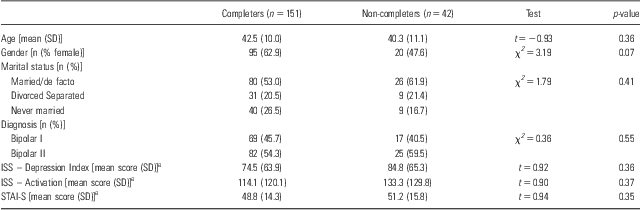
The sample comprised 193 participants (86 bipolar I, 107 bipolar II), of whom 151 (78.2%) provided 6-month follow-up data. Follow-up sample (Completers) characteristics were comparable to those who did not provide follow-up data (Non-completers) (see Table 1).
Sociodemographic profile – completers vs. non-completers
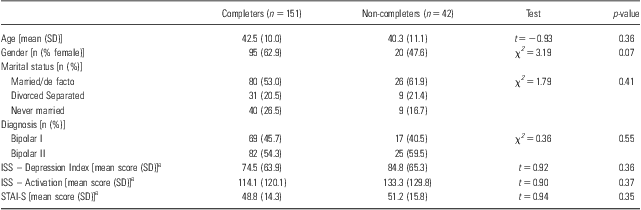
aBaseline scores.
The follow-up sample comprised 69 bipolar I and 82 bipolar II participants. Females were over-represented, but with comparable proportions in bipolar I and II groups (62.3% vs. 63.4%, χ2 = 0.02, p = 0.89). Bipolar II participants were significantly older (43.8 years vs. 39.8 years, t = −2.3, p = 0.02), with higher baseline depression severity scores [85.7 (SD = 64.9) vs. 61.2 (SD = 60.5), t = −2.4, p = 0.02] and higher baseline state anxiety scores [51.5 (SD =12.6) vs. 45.7 (SD = 15.6), t = −2.5, p = 0.01], but with comparable baseline hypomania severity scores to the bipolar I group [105.8 (SD = 104.7) vs. 123.9 (SD = 136.3), t = 0.92, p = 0.36].
The average number of ISS questionnaires completed during the 6-month study period was 13.9 (SD = 11.9), comparable between groups [bipolar I mean=13.0 (SD = 5.9) vs. bipolar II mean = 14.6 (SD = 15.2), t = −0.84, p = 0.40]. Across the 6-month study period, mean severity scores for depression and hypo(mania) for the sample were 61.9 (SD = 43.2) and 127.1 (SD =91.1), respectively, comparable between sub-types [depression: t = −0.98, p = 0.33; hypo(mania): t = −0.28, p = 0.78]. Similarly, mean scores for depression variability and hypo(manic) variability for the sample were 46.8 (SD = 18.6) and 86.9 (SD = 44.1) respectively. The bipolar II group reported significantly more depressive variability (bipolar II mean = 50.7, SD = 16.4 vs. bipolar I mean = 42.2, SD = 22.1; t = −2.8, p = 0.005). Hypo(manic) variability was comparable between groups (t = 0.10, p = 0.92).
For clinician-rated DSM mood status at 6-month follow-up, 30.7% of the overall sample met criteria for a depressive episode; 14.9% for a hypo(manic) episode; 1.6% for a mixed state; and 53.5% euthymic (i.e. did not meet criteria for a current mood episode). Bipolar I and II groups did not differ in terms of mood status at follow-up (χ2 = 1.35, p = 0.72).
Cognitive styles and illness correlates
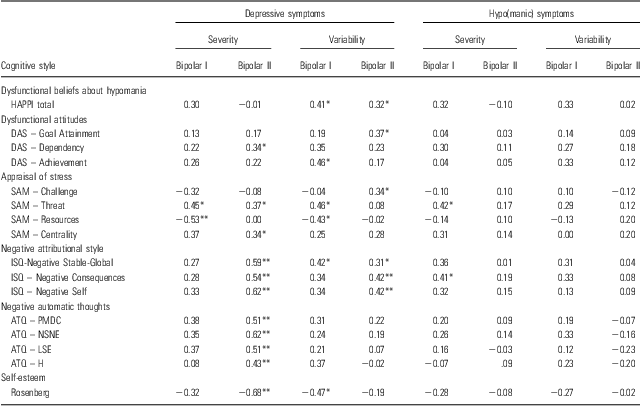
Relationships between cognitive styles, symptom severity and variability were examined in bipolar I and II groups. Partial correlations (see Table 2) were undertaken to control for the impact of baseline symptoms (depression, hypomania, anxiety) and age.
Cognitive style relationships (partial correlations) with depression and hypomania

Complete data were available for 69 bipolar I and 82 bipolar II participants, but with smaller sample sizes for two measures – HAPPI and SAM (29 bipolar I; 44 bipolar II).
*p < 0.05; **p < 0.01.
Bipolar depression
The majority of cognitive styles showed relationships with depressive symptom severity and/or variability during the 6-month study period. After controlling for baseline symptoms and age, bipolar I and II depressive severity and/or variability were associated with high HAPPI-total scores, low self-esteem, appraisal of stress as Threatening, and a negative attributional style in terms of Stability and Globality.
Differential relationships emerged between the bipolar sub-types and depressive symptoms. Bipolar I depressive variability was uniquely positively associated with dysfunctional attitudes related to Achievement, while both depressive severity and variability showed negative associations with appraisal of Resources as being available when faced with stress. By contrast, unique positive relationships were observed between bipolar II depressive severity and/or variability and (i) dysfunctional attitudes related to Goal Attainment and Dependency; (ii) appraisal of stress as Central to one's well-being or as a Challenge; (iii) negative attributions regarding Consequences and Negative Self-worth Implications; and (iv) negative automatic thoughts related to Personal Maladjustment and Desire for Change, Self-concept and Expectations, Low Self-esteem and Helplessness.
Bipolar hypo(mania)
Bipolar I hypo(manic) symptom severity was uniquely positively associated with appraisal of stress as Threatening, and negative attributions regarding Consequences. No relationships were observed between cognitive styles and hypomania in those with bipolar II disorder.
Coping style and self-reported illness correlates
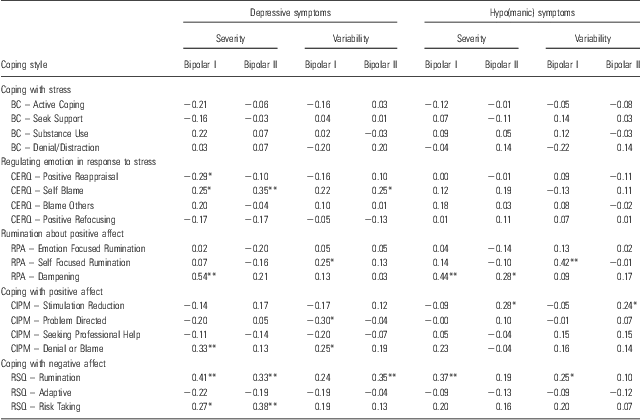
Partial correlations between coping styles, symptom severity and mood variability were examined (see Table 3).
Coping style relationships (partial correlations) with depression and hypomania
Complete data were available for 69 bipolar I and 82 bipolar II participants.
*p < 0.05; **p < 0.01.
Bipolar depression
In contrast to cognitive style, relatively few coping styles were related to depressive symptom severity and/or variability. In both bipolar sub-types, positive relationships were observed between depressive severity and/or variability, and maladaptive coping styles (i.e. cognitive emotion regulation using Self-blame, Rumination about negative affect and engaging in Risk-taking to cope with negative affect).
Bipolar I depressive severity and/or variability was uniquely characterised by positive associations with two aspects of rumination about positive affect (Self-focused rumination and Dampening of positive affect), as well as Denial or Blame in response to hypo(manic) prodromes. The cognitive emotion regulation strategy of Positive Re-appraisal in response to stress was uniquely negatively associated with bipolar I depressive severity, while the behavioural strategy of Problem Directed coping in response to hypom(manic) prodromes was uniquely negatively associated with bipolar I depressive variability.
Bipolar hypo(mania)
Few coping styles were related to hypo(manic) symptoms. Dampening of positive affect was positively associated with hypo(manic) symptom severity for both bipolar sub-types. In bipolar I disorder, rumination about positive affect (Self-focused rumination) and negative affect were positively associated with hypo(manic) severity and/or variability. The behavioural coping strategy of Stimulation Reduction in response to hypomanic prodromes was positively associated with hypomanic severity and variability in bipolar II disorder.
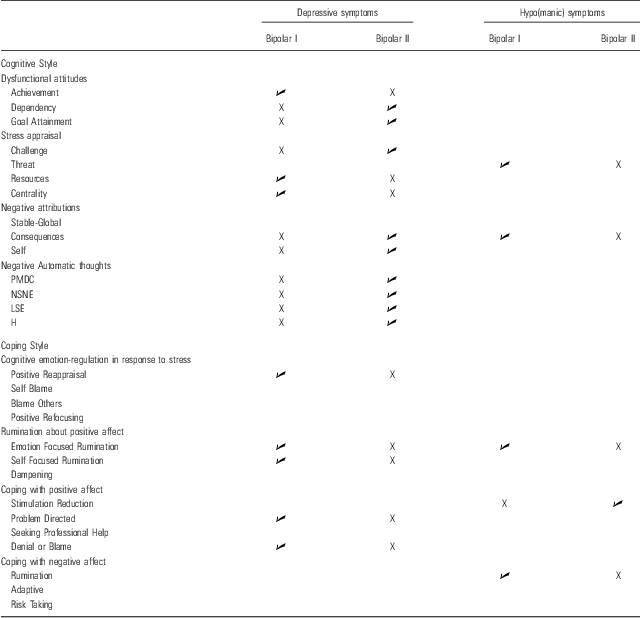
Table 4 provides an overall summary of the differential relationships observed between cognitive style, coping style and mood symptoms across the bipolar sub-types.
Summary of differential relationships between cognitive style, coping style and mood severity and/or variability (self-reported) across bipolar I and II disorder
PMDC = Personal Maladjustment and Desire for Change; NSNE = Negative Self-concepts and Negative Expectations; LSE = Low Self-esteem; H = Helplessness.
X indicates relationship not observed; ✓ indicates relationship observed; blank spaces indicate either (i) non-significant relationships for both sub-types, or (ii) significant relationships that are shared across both sub-types.
Can cognitive or coping styles predict mood?
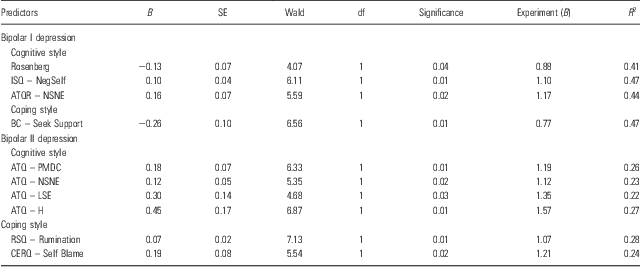
Binary logistic regression results are displayed in Table 5. There were no significant concerns regarding multicollinearity – all variables correlated <0.7 with one another; Tolerance >0.3; Variance Inflation Factors (VIFs) < 2.
Predicting mood status: summary of binary logistic regression results
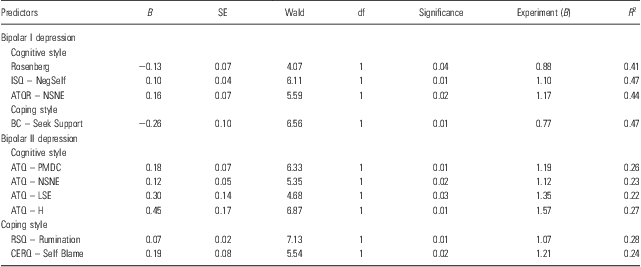
Effect size of overall model based on Nagelkerke R 2.
After controlling for baseline symptoms (depression, hypomania, state anxiety) and age, a number of cognitive styles predicted bipolar I depression: low self-esteem, negative attributional styles regarding Consequences and Self-worth Implications and negative automatic thoughts related to Self-concept. Only one coping style predicted bipolar I depression: low levels of Seeking Support to cope with stress were associated with increased likelihood of a depressive episode at follow-up.
As for bipolar I depression, bipolar II depression was predicted by negative automatic thoughts related to Self-concept – but with unique relationships observed for negative automatic thoughts related to Personal Maladjustment and Desire for Change, Low self-esteem and Helplessness. Coping styles predicting bipolar II depression included Rumination about negative affect, and Self-blame in response to negative affect.
No cognitive or coping styles predicted hypo(manic) mood status at 6-month follow-up in either bipolar sub-type.
Discussion
This is the first study to prospectively investigate differential relationships between cognitive and coping styles, symptom severity and variability in the bipolar sub-types. The study had a number of key strengths, including clearly defined diagnostic groups, use of a wide range of cognitive and coping style measures, and a prospective design – allowing for relationships to be observed between psychological processes, self-reported symptoms and clinician-rated mood status over a 6-month period. While we did not use a remitted or euthymic sample, baseline symptoms were controlled for to reduce the impact of residual symptoms on cognitive and coping style assessment.
Results demonstrated differential relationships between cognitive style, coping styles and symptom severity and variability for bipolar I and II disorder. Key findings are now considered.
Cognitive styles
Negative cognitive styles were prospectively associated with bipolar I and II depressive symptom severity and variability. However, two key differences between bipolar sub-types were observed.
First, differing dysfunctional attitudes and stress appraisal processes were linked to depressive symptom severity and/or variability in bipolar I and II groups. For example, depressive symptoms in bipolar I disorder were linked to dysfunctional attitudes regarding Achievement, while dysfunctional attitudes regarding Goal Attainment and Dependency were uniquely relevant for bipolar II depressive symptoms. An exaggerated fear of failure may underpin the strong achievement focus observed in those with bipolar I disorder (Reference Alatiq, Crane, Williams and Goodwin66), and this aspect – in combination with the increased reactivity to failure and stressful life events – may then predict relapse (Reference Alloy, Abramson, Urosevic, Walshaw, Nusslock and Neeren1). Preoccupations with achievement, goal attainment, and failure may also be prominent because as a group, those with bipolar disorder tend to have a high level of capability for achievement (Reference Nusslock, Abramson, Harm-Jones, Alloy and Coan67), which is thwarted by episodes of the illness, subsequent stigma and need for management. Further research is required to determine whether these attitudes represent pre-morbid risk factors for bipolar disorder and/or arise from ‘scarring’ effects (e.g. the experience of repeated episodes and associated collateral damage interpersonally and occupationally) of the illness.
Second, in line with our hypotheses, a broader set of negative cognitive styles was uniquely associated with bipolar II depression – including dysfunctional attitudes (Goal Attainment and Dependency) and maladaptive stress appraisal processes, but also encompassing negative attributional styles regarding Consequences and Self-worth implications, and a wide range of negative automatic thoughts. These features may partly explain the more chronic depressive course characteristic of bipolar II disorder. Alternatively, these observed relationships may reflect the higher levels of depression severity in the bipolar II group, despite our controlling for baseline depression in our analyses – or the greater depressive mood variability reported by this group during the study period.
Unexpectedly, appraisal of stress as a Challenge (viewed as an adaptive primary appraisal process representing optimistic and self-efficacious thoughts) was positively (and uniquely) associated with bipolar II depressive variability. More optimistic appraisal of stress (e.g. as challenge rather than as threatening or potentially harmful) may be linked to increased depressive instability, contrary to previous reports of significant negative associations between this appraisal style and depression (Reference Roesch and Rowley46). Those with bipolar II disorder may have a tendency to inaccurately appraise stress, encouraging over-estimation of coping capabilities and resulting in unexpected failures that lead to increased mood instability. Alternative explanations include the potential role of mediating variables (e.g. life events, increased insight regarding symptoms over time) or residual symptoms during the 6-month study period.
Few cognitive styles were associated with hypo(manic) symptom severity and/or variability – and only in the bipolar I group. Appraisal of stress as Threatening, and negative attributions regarding Consequences, were both positively related to hypo(manic) symptoms, representing a tendency towards focusing on the future and predicting negative outcomes. Our results are consistent with the suggestion that hypo(mania) – in addition to being associated with a positive cognitive bias – may also show associations with a negative cognitive bias (Reference Mansell, Morrison, Reid, Lowens and Tai49). The lack of association between cognitive styles and hypomanic symptoms in the bipolar II group was intriguing. A number of interpretations are possible. Negative cognitive styles may play no part in hypomanic symptom expression in bipolar II disorder, or alternatively, results may merely reflect the increased levels of depression in the bipolar II group (despite our controlling for baseline depression) and/or scarring effects of the illness. Our focus was on negative cognitive styles – investigations of relationships between positive cognitive styles and hypomania may provide greater clarity as to how cognitive treatments may be most efficacious in helping those with bipolar II disorder. Finally, the lack of association may be a result of not evaluating positive and negative life events, which may moderate the relationship between cognitive styles and mood symptoms (Reference Reilly-Harrington, Alloy, Fresco and Whitehouse68,Reference Alloy, Reilly-Harrington, Fresco, Whitehouse and Zechmeister69).
We included a bipolar-specific measure assessing dysfunctional beliefs about hypomania – the HAPPI. HAPPI scores were positively associated with depressive symptom variability in both bipolar sub-types, and showed no relationship with hypo(manic) symptoms. These results run contrary to previous reports whereby total HAPPI scores predicted hypo(manic) – but not depressive – symptoms at 4-week follow-up (Reference Dodd, Mansell, Morrison and Tai27). However, the authors reported a sub-scale of the HAPPI (‘loss of control’, representing beliefs about being unable to manage mood, thoughts and behaviour when feeling high/agitated) showing positive correlations with depressive symptoms at follow-up. Additionally, Dodd et al. (Reference Dodd, Mansell, Morrison and Tai27) used the 61-item version of the HAPPI rather than the briefer version used in this study (measuring fewer appraisals of internal states). The differing measures, in addition to the shorter follow-up period adopted by Dodd et al. (Reference Dodd, Mansell, Morrison and Tai27), may partly explain discrepant findings. Further exploration of HAPPI sub-scale relationships with manic and depressive symptoms in the bipolar sub-types is therefore warranted in order to determine the predictive utility of this measure.
Coping styles
In contrast to cognitive styles, fewer relationships were observed between coping styles and depressive symptoms. Common relationships were observed for both bipolar sub-types (e.g. increased depressive symptom severity and/or variability associated with maladaptive coping strategies to deal with negative affect such as Rumination, Risk-taking, Self-blame) – but two key findings emerged that were specific to the bipolar I group. First, maladaptive coping strategies for positive mood states (i.e. Self-focused rumination, Denial or Blame in response to hypo(manic) prodromes, and Dampening) were uniquely positively associated with bipolar I depressive severity and/or variability. These results are consistent with previous research (Reference Gruber, Eidelman, Johnson, Smith and Harvey12,Reference Lam, Wong and Sham28), highlighting the positive down-stream effect that adaptive coping strategies for hypomania may have in circumventing later episodes of depression. Second – and in relation to hypo(manic) symptoms – the tendency to ruminate about affect (both positive and negative affect) played a more central role in the bipolar I group. One such strategy – Dampening of positive affect – was previously associated with increased risk for mania (Reference Feldman, Joormann and Johnson56) and a higher frequency of manic episodes (Reference Gruber, Eidelman, Johnson, Smith and Harvey12). As noted in the introduction, individuals with bipolar disorder have a tendency to engage in excessive up-regulation and down-regulation of positive emotional responses (Reference Carl, Soskin, Kerns and Barlow16). In line with this explanation, excessive attempts to dampen positive affect may have the unintentional effect of increasing both hypo(manic) and depressive symptoms – and with the latter proposition supported by our results (for both bipolar sub-types). Alternatively, individuals who experience a more severe course of symptoms of positive affect (i.e. those with bipolar I disorder) may be more likely to engage in dampening of this state as they need to ‘cope’ with extreme positive affect more frequently.
Coping strategies played less of a role in the bipolar II group – particularly in relation to hypomanic symptoms – and may reflect the smaller repertoire of coping strategies in this group (Reference Parikh, Velyvis, Yatham, Beaulieu, Cervantes, Macqueen, Siotis, Streiner and Zaretsky20). Unexpectedly, the use of Stimulation Reduction to cope with hypomanic prodromes was positively (and uniquely) associated with bipolar II depressive severity and variability. This runs contrary to previous reports indicating lower risk of manic relapse in bipolar I patients who use coping strategies to modify excessive behaviours, and higher risk of manic relapse in those who use stimulating coping strategies (Reference Lam, Wong and Sham28). While difficult to reconcile, the result may reflect residual symptoms, lack of insight or a social desirability bias towards reporting ‘adaptive’ coping strategies. Closer examination of the Stimulation Reduction sub-scale items reveals that differing interpretations are possible, with this ambiguity potentially influencing results. For example, some items (e.g. ‘maintained a balance of rest and activity’) could be interpreted as being practicable or sensible, leading to self-protective actions. Other items (e.g. ‘Generally avoided being with people’, ‘Avoided situations which I might talk too much or inappropriately’) may be interpreted as arising from a pessimistic, over-punitive and self-denying mindset (consistent with the chronic depressive course observed in bipolar II disorder), leading to dysfunctional attitudes and behaviours and contributing to depressive symptoms. Further investigation of coping in bipolar II disorder is needed.
The predictive utility of cognitive and coping styles
Binary logistic regression analyses indicated that a negative cognitive style characterised by low self-esteem, negative attributional styles regarding Consequences and Self-worth implications, and negative automatic thoughts related to Self-concept, predicted clinician-rated bipolar I depressive episode status at 6-month follow-up. These results suggest that bipolar I depression is weighted to an inherent global negative view of the self – an explanation consistent with earlier observations. For example, Winters and Neale (Reference Winters and Neale70) observed that, while remitted bipolar patients do not usually report impaired self-esteem, they possess a cognitive schema of low self-esteem. Extending on this idea, Bentall et al. (Reference Bentall, Tai and Knowles71) hypothesised that extreme fluctuations in self-esteem exhibited in bipolar patients arise from latent negative self-representations or schemas that are easily activated by minor events, rendering the individual to be excessively sensitive to life's vicissitudes.
Different types of negative thoughts were predictive of bipolar II depressive episodes at follow-up – including those related to Personal Maladjustment and Desire for change, Low Self-esteem and Helplessness. Negative automatic thoughts represent more immediate ‘online’ appraisal processes, and have previously been found to predict changes in bipolar I depression over time (Reference Johnson and Fingerhut23). Our results are consistent with this – but further suggest that the online appraisals operating in bipolar II disorder reflect a different set of underlying core beliefs or schemas.
Different coping styles differentially predicted depressive episodes in bipolar I and II disorder. Low levels of Seeking Support to cope with stress predicted bipolar I depression, while two strategies to deal with negative affect (Rumination, Self-Blame) predicted bipolar II depression. Maladaptive coping strategies have previously been linked to depressive symptoms in bipolar I disorder (Reference Green, Lino, Hwang, Sparks, James and Mitchell15).
Surprisingly, no cognitive or coping styles predicted hypo(manic) episode status in bipolar I or II disorder. This may reflect the low proportion of participants meeting criteria for hypo(manic) episodes relative to depressive episodes at 6-month follow-up. Longer follow-up periods should be considered in future studies (allowing for more participants to experience the full range of mood episodes) to examine this issue more closely. Examination of cognitive and coping styles in isolation – without considering the role of life events (both positive and negative) – may also provide some explanation for their lack of predictive utility. Goal attainment life events have been found to predict increases in manic symptoms (Reference Johnson72), suggesting that interactions between specific types of life events and underlying maladaptive cognitive styles contribute to symptom expression. There may be multiple pathways to mania that also involve interactions with biological processes [e.g. disrupted circadian rhythms, dysregulation of the Behavioural Activation System (BAS)]. Longitudinal studies are required to tease out these processes as the manic episode evolves over time (Reference Bentall, Tai and Knowles71).
Clinical implications
Current psychological interventions for bipolar disorder are based on research derived from bipolar I participants. Such treatments – adopting a ‘one-size-fits-all’ approach – may be overlooking important differences between bipolar I and II conditions that may benefit from more tailored interventions. Our results highlighted differences between bipolar sub-types in terms of the relationship between cognitive styles, coping styles and symptoms – and with such differences suggesting potential specific targets for tailored psychological interventions for the two conditions. While results require replication, tentative suggestions for clinical interventions are now offered based on our findings.
For bipolar I disorder, cognitive interventions for depressive symptoms should target achievement-related dysfunctional attitudes, and the tendency to appraise stress as central to one's well-being. On the latter point, for those who have experienced a psychotic episode and know that stress is potential trigger, it is both reasonable and adaptive to appraise stress as central to well-being. However, the tendency to exhibit heightened sensitivity to the negative possibilities of stress would be considered maladaptive and therefore a helpful target for intervention. Specific strategies targeting the tendency to ruminate about affect – encouraging a more balanced emotion-regulation approach – may show specific efficacy for this group in light of the relationships observed between rumination, depressive symptoms and hypo(manic) symptoms. Our results were suggestive of a global negative view of self in bipolar I disorder. Interventions specifically focusing on sense of self and low self-esteem may be particularly efficacious in buffering against future depressive episodes. Stress-reduction strategies encouraging the individual to view resources as being available to them, and positively re-appraise difficult situations, may serve as protective factors against development of bipolar I depressive symptoms. Furthermore, challenging appraisals of stress as threatening, as well as the tendency to infer negative consequences, may buffer against the development of hypo(manic) symptoms. In terms of coping, behavioural approaches encouraging the use of problem-directed coping, as well as cognitive work around taking responsibility – when attitudes of denial or blame are observed – may be particularly useful in managing bipolar I hypo(manic) prodromes. Finally, encouraging those with bipolar I disorder to actively seek support – not just for mood episode management, but as a broader well-being strategy – is likely to be useful in circumventing future depressive episodes.
For bipolar II disorder, cognitive interventions targeting dysfunctional attitudes related to dependency and goal-attainment, encouragement of balanced and realistic appraisals of stress as a challenge, and cognitive re-structuring around the tendency to make negative attributions (regarding consequences and the impact on one's well-being) may uniquely assist depressive symptom reduction in the bipolar II group. A strong cognitive focus targeting negative automatic thoughts related to personal maladjustment and desire for change, negative self-concept and expectations, low self-esteem and helplessness may assist with shifting underlying core beliefs or schemas that may contribute to and maintain depressive symptoms. Two maladaptive coping styles for dealing with negative affect were predictive of bipolar II depressive episode status – rumination, and the tendency to self-blame. Challenging these tendencies – in addition to encouraging a wider repertoire of coping strategies for hypo(manic) prodromes – is likely to be beneficial, encouraging more balanced approaches to deal with affect in general.
These suggestions are tentative, and require replication before they can guide therapeutic enquiry with confidence. However, the maladaptive styles made apparent from this study can be kept in mind by therapists as a possibility to check for and work with, if present, when counselling those with bipolar disorder. It needs to be kept in mind that group findings regarding maladaptive cognitive and coping styles are not represented within each individual in the same proportions as are found in a group. Thus, effective therapy must recognise such nuances and tailor treatments appropriately.
Limitations
Study limitations must be considered. First, study inclusion criteria of a prior clinical diagnosis of bipolar disorder may have biased the sample in favour of those who have sought treatment in the past. Second, we were unable to determine whether the cognitive and coping styles examined were predisposing factors to the illness, or scarring effects. While we adopted a prospective design and were thus able to generate hypotheses about potential risk factors, it is unclear whether maladaptive coping or cognitive style profiles are risk factors for – or consequences of – a bipolar condition. An inherent problem of prospective designs with bipolar patients lies in the recurrent nature of the illness, often characterised by significant inter-episode symptomatology and impairment (Reference Alloy, Abramson, Walshaw and Neeren73). Our study was therefore unable to establish the independence of cognitive and coping style vulnerabilities from residual symptoms of depression and hypo(mania). Third, the impact of medication on cognitive and coping styles was not assessed – however earlier reports have suggested that those with bipolar disorder had significantly more negative cognitive styles than healthy controls, despite being currently adherent with prophylactic medication (Reference Scott, Stanton, Garland and Ferrier74). Indeed, long-term medication alone may not extinguish cognitive and affective symptoms nor provide full protection against relapse in those with a bipolar condition (Reference Mansell and Scott75). Fourth, participants were not excluded on the basis of previous treatment with cognitive therapy. As cognitive therapy can influence levels of dysfunctional attitudes (Reference Ball, Mitchell, Corry, Skillecorn, Smith and Malhi76), this aspect should be considered in future investigations. Fifth, we did not examine for the influence of number of previous episodes and age of onset – factors conferring higher risk of relapse and residual symptoms. It is therefore unknown to what extent these clinical features impacted on the differentiating findings on cognitive and coping styles in the bipolar sub-types. Sixth, as life events were not recorded during the 6-month period, it is unclear how cognitive and coping styles may have interacted with environmental stressors to impact on symptom expression. Future studies employing experience-sampling methods to monitor cognition and coping behaviours following life events would be of interest (Reference Green, Lino, Hwang, Sparks, James and Mitchell15).
Conclusions
Symptoms of bipolar disorder are likely to result from and be variably expressed via a complex interplay of biological, environmental and psychological factors. We examined the role of two such psychological factors – cognitive and coping styles – however, future studies should seek to elucidate relationships between these factors, and in combination with life events and biological processes (e.g. circadian rhythm, BAS). Studies should seek to determine whether identified differences between bipolar sub-types on cognitive and coping styles are stable over time and across mood states. Further, identification of specific psychological vulnerabilities in bipolar I and II disorder will elucidate mechanisms to target in treatment. Our results suggest that while there are some common cognitive and coping style relationships with symptom expression in the bipolar sub-types – differential relationships also exist – and which therefore argue for differential focus across the bipolar sub-types in treatment approaches.
Acknowledgements
The authors would like to thank Matthew Kuti for his technical expertise and contribution to this study. The authors are grateful to the research participants for giving their time.
Contributors
All authors conceived of and designed the study. Fletcher wrote the protocol, managed the literature searches, undertook the statistical analyses and wrote the first draft of the manuscript. All authors contributed to and have approved the final manuscript.
Role of funding source
Funding for this study was provided by NHMRC Program Grant (510135). The NHMRC had no further role in the study design; in the collection, analysis and interpretation of data; in the writing of the report; and in the decision to submit the manuscript for publication.