Introduction
Over the years, stapedotomy has proven to be a safe and effective procedure with favorable hearing outcomes, prompting the exploration of various surgical techniques and materials to minimise complications and inner ear damage.Reference Vincent, Sperling, Oates and Jindal1–Reference Saerens, Van Damme, Bihin and Garin4 The introduction of the laser in otology is attributed to Sataloff in 1967, and its application in stapedotomy surgery to Perkins in 1980. Perkins used argon laser to vaporise the stapes tendon and the stapes superstructure and to create a rosette of holes in the stapes footplate. Since then, different tools and lasers have been utilised for performing stapedotomy procedures.Reference Srivastava, Cho and Fergie5–Reference Poletti, Miceli, Rossi, Di Pietro, Tosi and Colombo10
Although several studies have examined the functional outcomes of stapedotomy, many are limited by being single-centre studies or focusing on a single technique. As a result, there is still no clear agreement on which fenestration technique and choice of prosthesis produce the best results with fewer complications and, above all, which techniques can be considered equally safe and effective in terms of outcomes.
In addition, to reduce the number of patients lost to follow-up, most studies evaluate patients only one month post-operatively,Reference Kisilevsky, Dutt, Bailie and Halik7, Reference Poutoglidis, Tsetsos, Vardaxi, Fyrmpas, Poutoglidou and Kilmpasanis11 which may be sufficient to assess functional outcomes but inadequate for evaluating late complications and the long-term stability of results. The primary endpoint of this study is, therefore, to compare the long-term functional results of three of the most performed stapedotomy techniques: diode laser stapedotomy, conventional stapedotomy using a microdrill only, and a combined technique stapedotomy with potassium titanyl phosphate (KTP) and microdrill. The secondary outcome is to identify predictive factors of surgical success.
Methods
Study design
This study was designed as a multicentre retrospective cohort study, approved by the Local Ethical Committee (Protocol n.3301-19/10/2022, Humanitas Research Hospital), and conducted in accordance with the ethical standards of the Declaration of Helsinki. The preparation of the manuscript adhered to the reporting guidelines hosted by the Enhancing the Quality and Transparency of Health Research (EQUATOR) network, following the Strengthening the Reporting of Observational studies in Epidemiology (STROBE) guidelines for reporting observational studies.Reference von Elm, Altman, Egger, Pocock, Gøtzsche and Vandenbroucke12 Each participating centre enrolled consecutive patients that underwent stapedotomy surgery and met the study inclusion criteria. A Research Electronic Data Capture (REDCap) data collection platform was used to create a univocal anonymous data collection format shared by all the participating centres.
Inclusion and exclusion criteria
Patients included in our study were adults (age 18 or older) who underwent stapedotomy surgery in the past 15 years and whose audiometric data were available. Only surgeries done by expert otologic surgeons were included. Otosclerosis diagnosis was confirmed intra-operatively for all included patients.
Exclusion criteria included a history of previous middle ear surgeries, planned stapedectomy surgery, revision surgery or missing surgical data.
Data collection
Data collection included general information, surgical data, last follow-up date, symptoms, audiometric data and complications. Surgical data encompassed type and dimension of the prosthesis as well as the surgical technique and the surgical timeline, meaning classical or reversal technique. The latter consists in making the stapedotomy hole as well as the introducing and fixing the prosthesis before removing the stapes superstructure.
Audiometric data comprised pure-tone air conduction (AC) and bone conduction (BC) audiograms obtained in a sound-treated acoustic chamber at the participating centre’s hospitals. Tested frequencies included 0.25, 0.5, 1, 2, 3, 4 and 8 kHz. Audiometric results were reported following the American Academy of Otolaryngology–Head and Neck Surgery Foundation guidelines.Reference Gurgel, Jackler, Dobie and Popelka13 Analysed audiometric variables were the following: mean pre-operative and post-operative AC and BC thresholds, pre-operative and post-operative pure-tone average (PTA) AC and BC thresholds, pre-operative and post-operative air–bone gap (ABG), post-operative AC gain, and speech recognition threshold (SRT) gain.
Surgical success was defined as closure of the post-operative ABG within 15 dB at 0.25, 0.5, 1, 2 and 4 kHz, with an AC exceeding 10 dB at 8 kHz.
Patient groups
Patients were categorised in three groups based on the technique used: group A, diode laser stapedotomy; group B, conventional stapedotomy with microdrill; group C, combined stapedotomy technique with KTP laser and microdrill.
In group A, diode laser stapedotomies were performed with a power setting of 40 W and an exposure time of 60 ms, resulting in a mean applied energy of 4 J. The resulting stapedotomy diameter was sufficient to suit a 0.6 mm diameter fluoroplastic prosthesis (Teflon Causse Loop Piston; Medtronic Xomed Surgical Products Inc., Jacksonville, FL, USA).
In group B, conventional stapedotomy using a microdrill was performed using a skeeter. The implanted prosthesis was a 0.6 mm pure titanium prosthesis (MatriX Piston; Heinz Kurz GmbH Medzintechnik, Dusslingen, Germany) or a 0.5 mm platinum–fluoroplastic prosthesis (Platinum+PTFE piston; Audio Technologies, Piacenza, Italy).
In group C, patients underwent vaporisation of the stapedial tendon, posterior crus and, whenever feasible, anterior crus of the stapes using a KTP laser (Oculight TX; Iridex, Mountain View, CA) set at 1500 mW in pulsed mode, with a pulse duration of 200 ms, utilising the Otoprobe Short-Angled handpiece (Iridex, Mountain View, CA). Then, fenestration of the footplate was first performed with four single shots of a KTP laser (1000 mW) and then completed using a microdrill (Skeeter Oto-tool; Medtronic-Xomed, Jacksonville, FL). Three types of prosthesis were used: a 0.4 or 0.6 mm nitinol and titanium stapes prosthesis (NiTiBOND Piston; Heinz Kurz GmbH Medzintechnik, Dusslingen, Germany), a 0.4 or 0.6 mm pure titanium prosthesis (MatriX Piston; Heinz Kurz GmbH Medzintechnik, Dusslingen, Germany) or a 0.5 mm McGee platinum and titanium piston (Big Easy Piston; Medtronic Xomed Surgical Products Inc., Jacksonville, FL, USA).
Patients were divided in three groups based on the length of used prostheses: less than or equal to 4.25 mm; 4.5–4.75 mm; greater than 5 mm to conduct a subgroup analysis regarding the audiological results of different prostheses length.
Statistical analysis
Statistical analysis was conducted in a single centre. Data, extracted from REDCap, were collected and stored in an anonymous Microsoft Excel (Microsoft Corporation) spreadsheet. Statistical analyses were carried out using the Stata statistical package, version 17 (StataCorp, College Station, Texas, USA). Categorical variables were summarised by counts and percentage, while continuous variables were reported as mean plus of minus standard deviation (SD), or median plus or minus interquartile range (IQR: 25th and 75th percentiles) if the values were not normally distributed. The Shapiro–Wilk normality test was used to verify whether data were normally distributed.
General comparison between pre- and post-operative data was conducted using Wilcoxon test, using post-operative ABG and AC gain as outcomes.
Comparison between pre- and post-operative parameters among the three study groups (group A, diode; group B, microdrill; group C, KTP and microdrill) were performed with chi-squared test, and Kruskal–Wallis equality-of-populations rank test, interpreted with Dunn test, using post-operative ABG and AC gain as outcomes.
Comparison between pre- and post-operative parameters among the three length groups was conducted using Wilcoxon test, using post-operative ABG and AC gain as outcomes.
Other variables believed to influence the outcome were dichotomised and Wilcoxon tests were performed for each studied parameter to identify potential indicators of success.
Linear and logistic regressions were performed for these dichotomous variables. Logistic regressions were performed using surgical success (a binary variable) as the outcome and linear regressions were used using post-operative ABG (a continuous variable) as the outcome. Univariate analyses were subsequently adjusted for potential confounders through multivariate analysis, in a stepwise method.
A value of p less than 0.05 was deemed significant for all statistical tests.
Results
Included procedures overall data
According to the inclusion criteria, a total of 615 stapedotomies were included in the study, spanning from January 2004 to January 2022. Data were collected from four centres: 276 (44.8%) from Istituto Clinico Humanitas (Milan), 202 (32.8%) from Pitié-Salpêtrière Hospital (Paris), 76 (12.3%) from Bambino Gesù Hospital (Rome) and 61 (9.9%) from Legnano Hospital (Milan). Of the overall population 370 (60.2%) were females. The mean age at surgery was 44 years (range: 18–76).
Among the surgical procedures, 536 (87.2%) were performed under general anesthesia and 79 (12.8%) under local anesthesia. The classical technique was employed in 528 (85.8%) procedures, while the reversal technique was used in 87 (14.1%).
Laser-assisted stapedotomy was performed in 478 (77.7%) procedures, with the breakdown as follows: diode laser was used in 276 procedures (44.8%) and, among them, a manual perforator was also employed in 56 (20.2% of the latter); KTP laser, in combination with microdrill, was used in 202 procedures (32.8%).
A total of 137 stapedotomies (22.3%) were completed with the exclusive use of a microdrill.
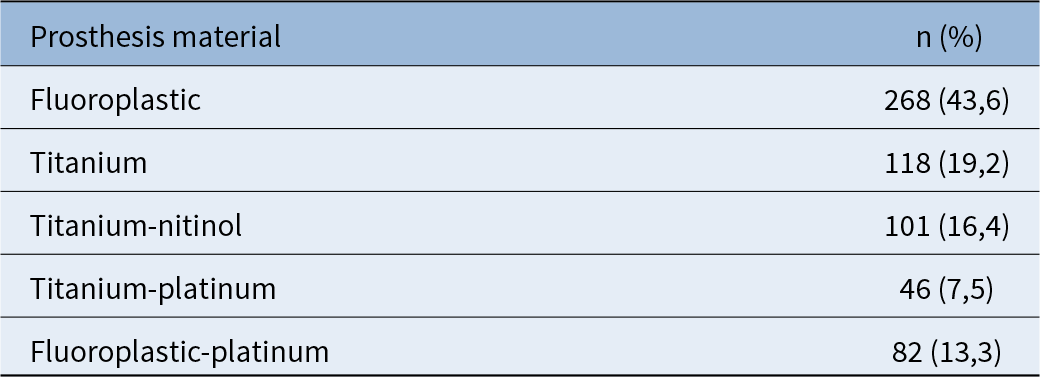
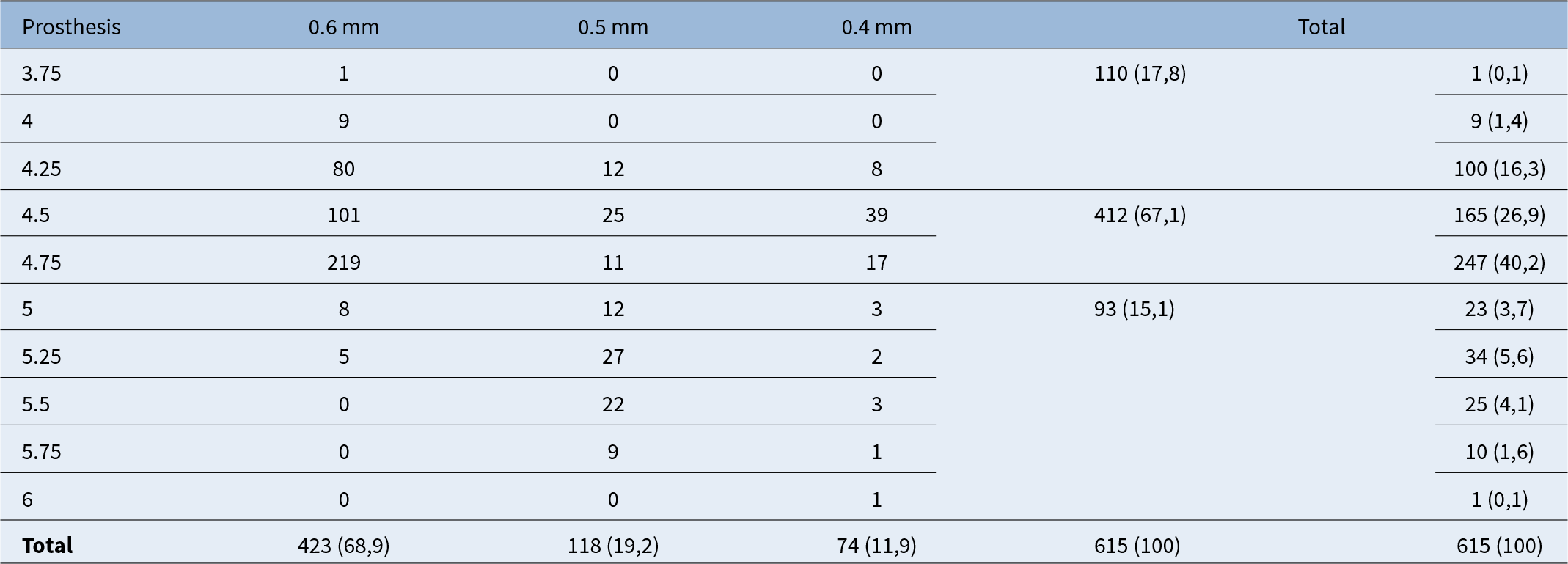
Prosthesis materials and size distributions are summarised in Tables 1 and 2.
Prosthesis material distribution

Prosthesis diameter and length distribution

Among the 615 scheduled stapedotomies, 20 (3.2%) were converted in stapedectomies due to intra-operative complications. Relevant intra-operative findings/complications were reported in 74 (12.0%) procedures: 31 cases of procident facial nerve, 20 cases of footplate fractures, 10 cases of osteosclerotic foci obliterating the oval window, 6 cases of iatrogenic tympanic membrane perforation, and 7 cases necessitating a canaloplasty.
Stapedotomy sealing materials included blood in 535 (86.9 per cent) cases, fat in 29 (4.7 per cent) cases, connective tissue in 31 cases (5.0 per cent) and tragal perichondrium in 20 (3.2 per cent) cases.
Median follow-up was 16 months (range: 1–1319).
Global audiometric results
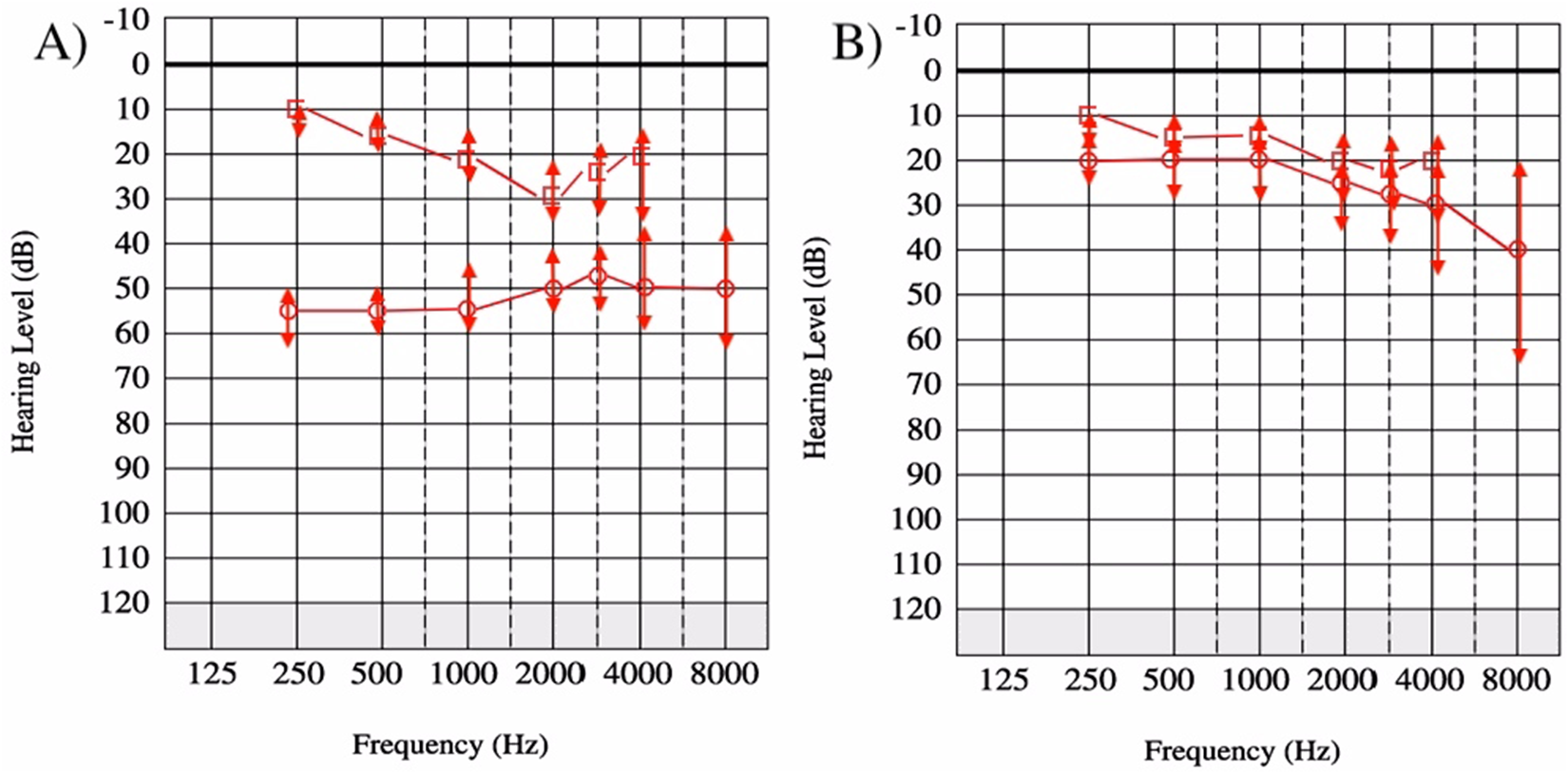
Pre-operative and post-operative audiometric data are summarised in Figure 1.
The difference between pre- and post-operative PTA for AC, BC and ABG were found to be statistically significant (p < 0.0001) at Wilcoxon test performed on the totality of the population. Median post-operative ABG was 5 dB (IQR: 2.50–8.12), and median AC gain was 27.5 dB (IQR: 19.37–36.25).
Only 129 patients (20.9%) underwent both pre-operative and post-operative vocal audiometric testing. The median pre-operative SRT was 50 dB (IQR: 40–60), while the median post-operative SRT was 30 dB (IQR: 20–35). The difference between pre- and post-operative SRT was statistically significant (p < 0.0001). Overall, 94.3 per cent of patients achieved surgical success.
Hearing levels.

Subgroup comparison results
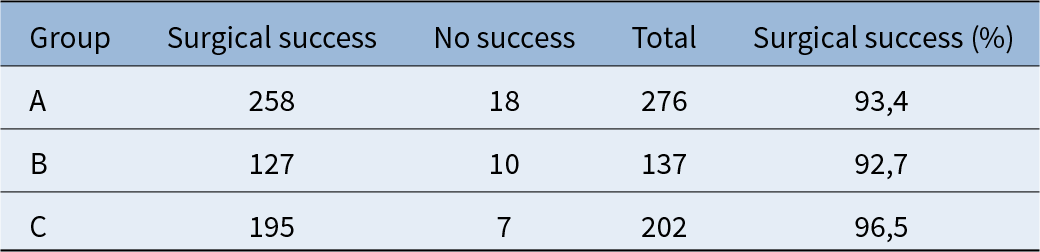
Comparing patients from group A (diode laser), B (microdrill) and C (KTP laser and microdrill) with chi-squared test (Table 3), with surgical success as the outcome, no statistical significance was found (Pearson χ2 = 5.7796; p = 0.065). Specifically, surgical success rates were 93.4 per cent for group A, 92.7 per cent for group B and 96.5 per cent for group C.
Chi-squared test of A, B and C groups comparing surgical success

However, when comparing these three populations using post-operative ABG with the Kruskal–Wallis equality-of-populations rank test, interpreted with Dunn test, statistical significance was observed in favor of both lasers compared with standard technique (χ2 = 5.8335; p = 0.016).
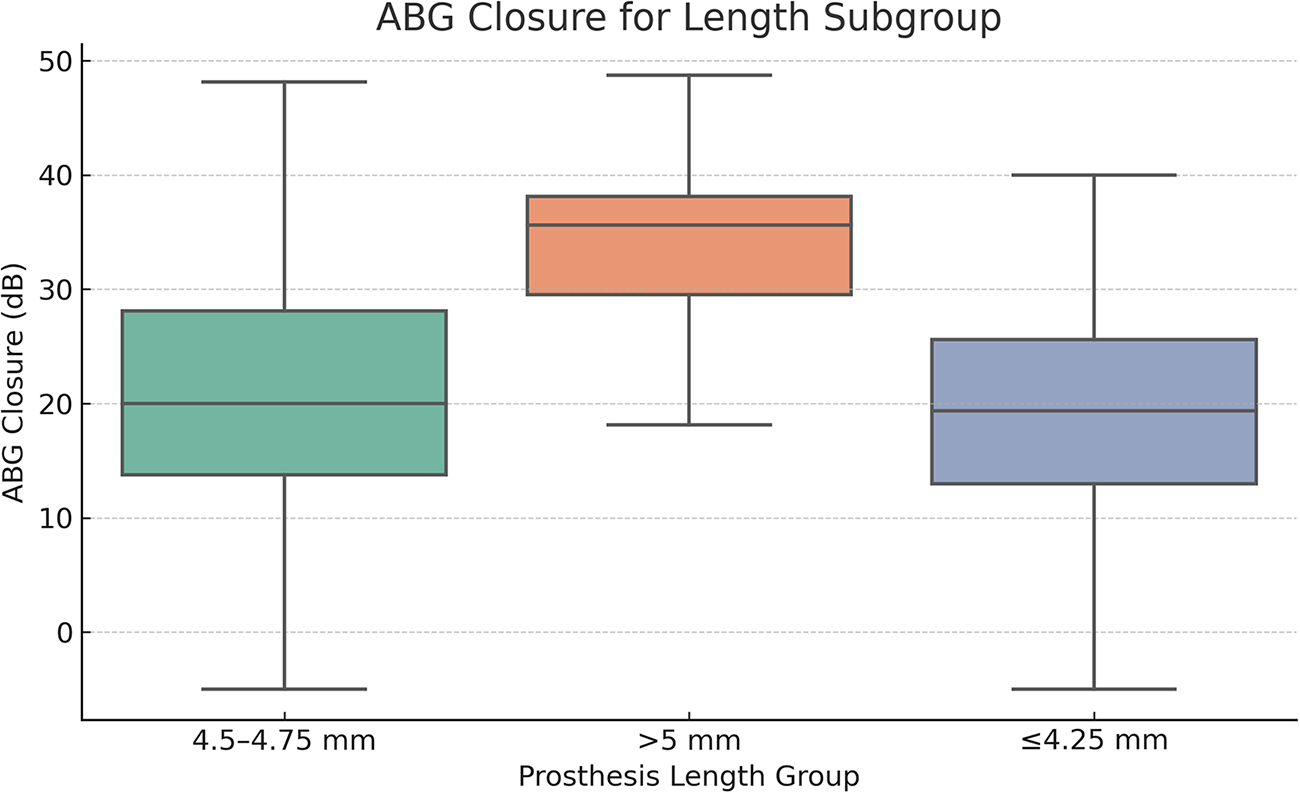
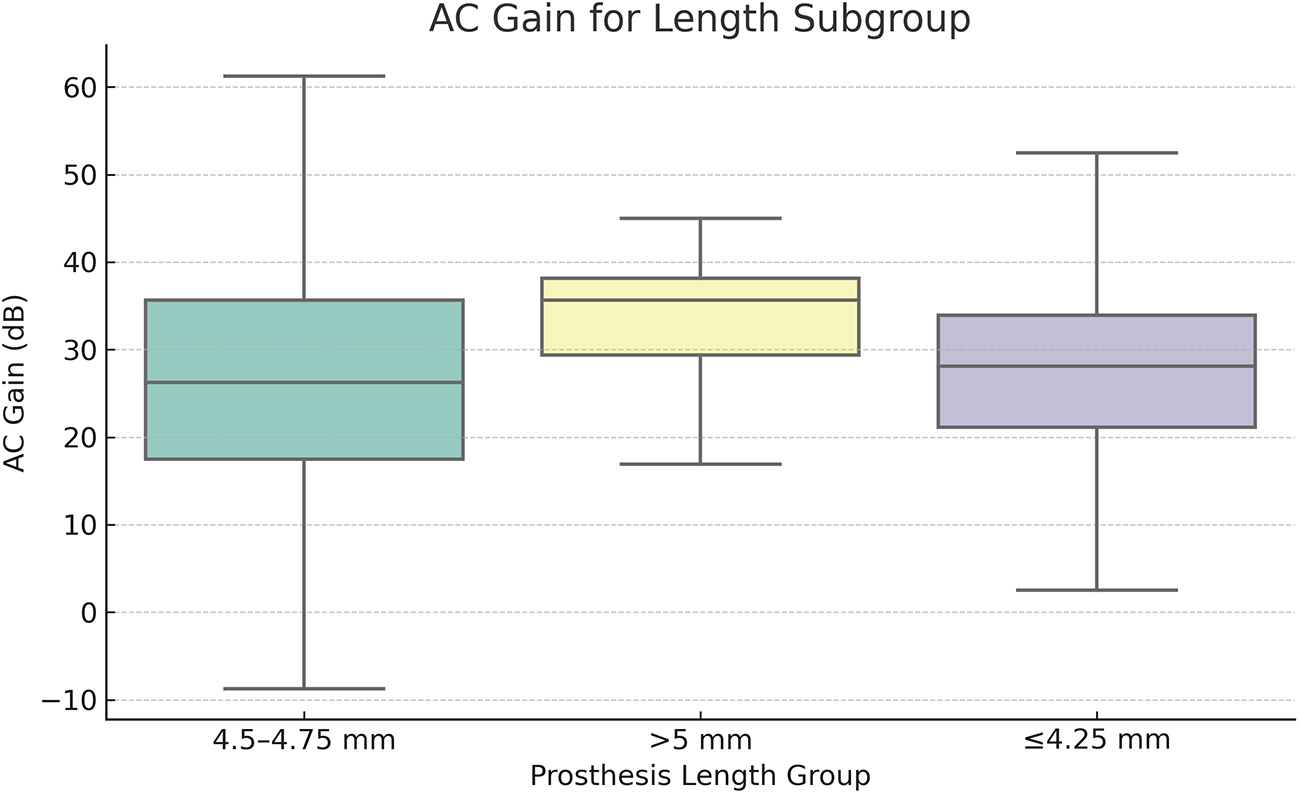
No statistically significant difference was encountered in terms of both ABG closure (p = 0.261) and AC gain (p = 0.426), comparing protheses shorter or equal to 4.25 mm with respect to usual length ones (4.5 or 4.75 mm). Still, a statistically significative difference was present in favor of longer prostheses (> 5 mm vs ≤ 4.25 mm and > 5 mm vs 4.5–4.75 mm) both in terms of ABG closure (p = 0.011) and AC gain (p = 0.031). These results are shown in Figures 2 and 3.
ABG closure and length subgroup.

AC gain and length subgroup.

Post-operative complications
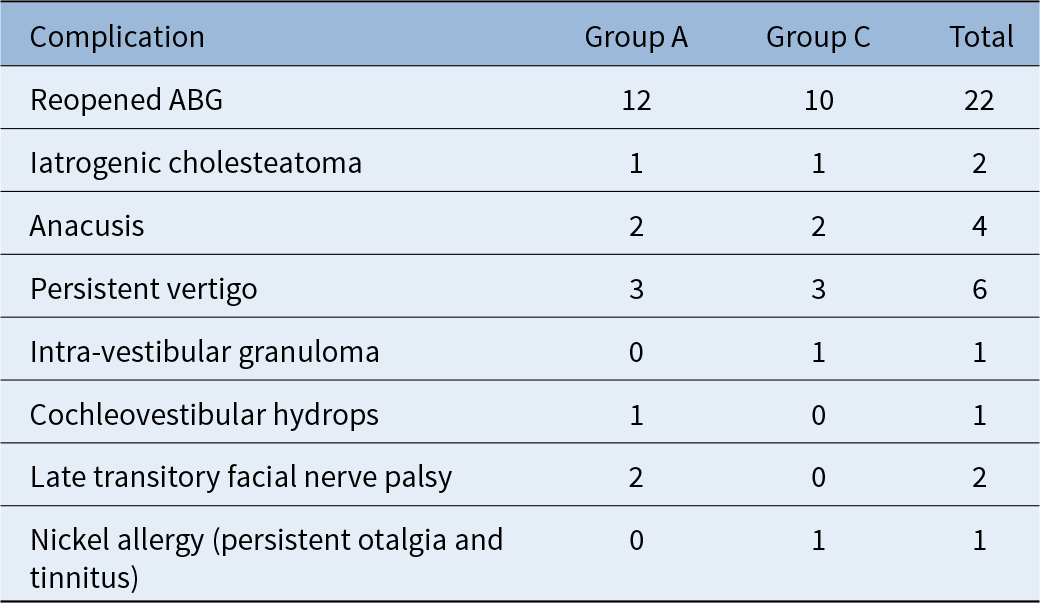
Data concerning complications were available for patients belonging to groups A (diode laser) and C (KTP with microdrill), totaling 478 (77.7 per cent) patients. Complications were reported in 39 patients (8.1 per cent) and are summarised in Table 4.
Post-operative complications

ABG = air–bone gap.
The rate of complications was comparable between the two groups.
Predictors of surgical success
Post-operative ABG
The use of laser in stapedotomy showed a statistically significant improvement in post-operative ABG compared to using a microdrill alone (Z = 3.581; p = 0.0003).
No statistical difference was observed in terms of post-operative ABG neither between pure titanium prosthesis and other prosthesis (Z = 0.743; p = 0.4574), neither between fluoroplastic only prosthesis and the other types (Z = 1.106; p = 0.2686).
The classical technique appeared to be associated with more successful post-operative ABG compared to the reversal technique (Z = 2.741; p = 0.0061).
Prostheses with a 0.6 mm diameter were associated with a greater improvement in post-operative ABG compared to 0.4 mm (Z = 2.054; p = 0.040).
Simple linear regression revealed a correlation coefficient of 10.08 between post-operative ABG and prosthesis length (F = 76.97; p < 0.0001). Moreover, multilinear regression, adjusting for potential confounders such as the use of a microdrill, KTP laser, fluoroplastic or titanium prosthesis, confirmed a similar correlation coefficient (9.33) with statistical significance (F = 30.22; p < 0.0001). The classical technique appeared to be associated with more successful post-operative ABG compared to the reversal technique (Z = 2.741; p = 0.0061)
AC gain
Laser use appeared to result in a slightly higher AC gain (28.5 dB) compared to microdrill only (26.9 dB), although this difference was not statistically significant (Z = 1.663; p = 0.0963).
The classical technique was found to be equivalent to reversal technique surgery in terms of AC gain (Z = -1.143; p = 0.1577).
There was no statistical difference in terms of AC gain between pistons of different materials (Z = 1.391; p = 0.1643 and Z = 1.207; p = 0.2273, respectively), as well as pistons of different diameter (Z = -1.421; p = 0.1544).
Discussion
Key findings
Stapedotomy achieved long-term satisfactory functional results in terms of post-operative ABG and AC gain, regardless of the surgical technique employed.
In our series, laser use is associated with greater improvement in post-operative ABG than the use of microdrill alone, possibly because laser is more accurate than manual systems and results in less inner ear trauma. However, it is essential to consider that, in our study, the KTP laser was always used in combination with subsequent drilling, while the diode laser was used as the sole instrument for stapedotomy. Two systematic reviews and meta-analysis concluded that there was no significant difference between the use of microdrill and the use of laser for the fenestration of the stapes footplate.Reference Bartel, Huguet, Cruellas, Hamdan, Gonzalez-Compta and Cisa14, Reference Wegner, Kamalski, Tange, Vincent, Stegeman and van der Heijden15 However, these studies primarily included cases operated with CO2 laser, and only a minority with argon and thulium lasers. Fang et al., in a systematic review of 1614 stapedotomies found a greater improvement in post-operative ABG with laser stapedotomy, even if no diode laser cases were included.Reference Fang, Lin, Zhang and Tan16 Literature concerning diode laser stapedotomy is scarce and contradictory; some studies concluded that diode laser is superior in terms of post-operative ABG with respect to microdrill, while others reported no difference in hearing gain but a decreased rate of footplate fracture.Reference Feng, Xie, Lin, Wan, Yan and Guo17, Reference Nguyen, Grayeli, Belazzougui, Rodriguez, Bouccara and Smail18 Recently, Wang compared conventional microdrill technique with the use of diode laser in endoscopic surgery, concluding that the post-operative improvement in hearing level in the two groups was equivalent.Reference Wang, Peng, Lin and Wang19 Similar conclusions were drawn from the analysis of 153 cases, 97 of which operated with conventional microdrill technique and 56 with diode laser.Reference Ordóñez Ordóñez, Cerón Perdomo, González Saboya, Osorio Mejía, Medina-Parra and Angulo Martínez20 However, in both these studies, the sample size was limited as well as the follow-up period.
The most common complication in our series was a reopened ABG. This complication can already be present in the early post-operative period in the case of surgical failure, or manifest over time, in case of prosthesis’s piston displacement or necrosis of the long process of the incus. Prosthesis displacement with or without incus necrosis was the most common intra-operative findings in revision surgery studies.Reference Lesinski21–Reference Bernardeschi, Canu, De, Russo, Ferrary and Mosnier23
Sensorineural hearing loss was the second most common complication that presented in 0.83% of our patients. In a 10-year follow-up of 1229 stapes surgery patients, sensorineural hearing loss occurred in 20 patients in the immediate post-operative period, corresponding to a rate of 1.6 per cent.Reference Mann, Amedee, Fuerst and Tabb24
Regarding the comparison between the conventional microdrill technique and diode laser in terms of complication rates, Ordóñez Ordóñez highlighted a differential presentation of complications between the two groups, being sensorineural hearing loss more frequent in the conventional microdrill technique group and facial paresis in the laser group.Reference Aarnisalo, Vasama, Hopsu and Ramsay25 Unfortunately, this direct comparison cannot be carried out in our series since complications from microdrill only group were not available. Still, our rate of sensorineural heating loss is in line with the one reported literature for stapedotomy,Reference Mann, Amedee, Fuerst and Tabb24 and only two cases transient facial nerve palsy occurred in diode laser group.
The lack of long-term complications for the microdrill stapedotomy group limits our ability to compare complication rates across all procedures. However, for patients in the diode laser and KTP with microdrill groups, the rates of reopened ABG, sensorineural hearing loss and persistent vertigo were comparable.
Secondary results
In terms of prosthesis material, there was no statistical difference in post-operative ABG or AC gain between titanium and fluoroplastic prostheses. These findings are in accordance with recent evidence.Reference Salvinelli, Casale, Vincenzi and D’Ascanio26–Reference Bansal29
Predictors of post-operative success include larger prosthesis diameter and adequate prosthesis length. In more detail, a prosthesis diameter of 0.6 mm was associated with greater improvement in post-operative ABG compared to 0.4 mm (p = 0.040), probably because it maximises the contact surface through which sound is transmitted.Reference Bernardeschi, De, Canu, Russo, Ferrary and Lahlou9, Reference Laske, Röösli, Chatzimichalis, Sim and Huber30, Reference Odat, Kanaan, Alali and Al-Qudah31
Measuring the distance between the long process of the incus and the oval window is crucial to select the prosthesis with optimal functional length. Husain et al., in a study on 227 stapedotomies, observed the greatest improvement in ABG in patients implanted with a 4.25 mm length prosthesis, while the smallest improvement occurred in the 3.75 mm group.Reference Husain, Lin and Selesnick32 In the same study, the 4.75 mm group was associated with the highest improvement in speech recognition threshold. On the other hand, another study comparing the functional outcomes of patients with a 4.75 mm prosthesis to those with a measured prosthesis found no significant difference in hearing outcomes between fixed length and measured length prostheses.Reference Motasaddi Zarandy, Amirzargar, Golpayegani, Motasaddizarandy and Emami33 This could be explained by the fact that 4.75 mm is a good approximation of the average length of implanted prosthesis. Thus, no statistical difference would be noticed in small samples. However, our series highlights the importance of prosthesis length measuring for achieving the best results. Our length subgroup analysis and regression analysis revealed that longer prostheses are associated with better audiological results with respect to shorted ones. Measuring the distance between the long process of the incus and the footplate may help optimise outcomes in selected cases where an unusually long anatomical distance is present between these two structures. When in doubt between two measures, the longest should be preferred, keeping in mind that a longer prosthesis can be associated with a higher risk of post-operative vertigo.Reference Scierski, Namysłowski, Czerwińska, Lisowska, Kluczewska and Bożek34
Strengths and limitations
Only two recent multicentric studies on stapes surgery outcomes were published, and neither investigated diode or KTP lasers.Reference Albera, Parandero, Andriani, Albera, Riva and Canale35, Reference De, Mandalà, Soprani, Iannella, Roustan and Viberti36 Few studies evaluated more than one stapedotomy technique or evaluated patients in the long-term and, when they did, follow-up time was three to six months post-operatively.Reference Hamerschmidt, Saab, Carvalho and Carmo37, Reference Parida, Kalaiarasi and Gopalakrishnan38 The enrolment of patients from three different centres, all operated by experienced surgeons with standardised surgical protocols, enhances the reliability of our comparisons. Furthermore, the inclusion of large diode laser stapedotomy and KTP stapedotomy groups allowed for a comprehensive assessment of these techniques, which are less studied compared to CO2 laser. The shared preference for larger prostheses and the practice of measuring before prosthesis selection across all centres further strengthens the study’s reliability.
The retrospective nature of our study posed significant limitations, resulting in sample heterogeneity. Retrospective data collection increased the risk of missing information, particularly regarding intra-operative data. Inhomogeneity was also evident in the unequal distribution of patients among participating centres. Moreover, variations in follow-up duration within and across centres could have impacted outcomes. This is relevant because some studies demonstrated that, with time, hearing deterioration occurs from physiological age-related hearing loss.Reference Aarnisalo, Vasama, Hopsu and Ramsay25
Another limitation is the lack of standardised guidelines for patient referral for stapedotomy, leading to variability in pre-operative hearing loss criteria and so in post-operative hearing gain. Unfortunately, due to the retrospective nature of our study, vocal audiometric parameters, such as SRT gain, were not available for all patients.
• Stapedotomy provides satistactory long-term functional results independently from the employed surgical techniques
• In this large multicentric cohort, laser-assisted procedures showed greater post-operative air–bone gap improvement compared to microdrill techniques. No difference was observed in terms of complication rates
• Accurate measurement of the incus-to-oval window distance is essential for selecting the optimal prosthesis length and maximising functional outcomes
Conclusion
All the examined techniques showed excellent results in terms of post-operative ABG and AC gain, meaning that they proved to be safe and effective surgical options for performing a stapedotomy. Each surgeon should choose surgical technique based on its confidence and habits. Still, our study supports the use of laser technology in stapedotomy surgery.
The choice of the most suitable prosthesis proved to be pivotal to achieve the best hearing results, preferring the larger fitting diameter and measuring the prosthesis length.
Funding
None declared.
Competing interests
None declared.
Ethical standards
The authors assert that all procedures contributing to this work comply with the Helsinki Declaration of 1975, as revised in 2008
Acknowledgements
None.