Blalock–Taussig shunt is associated with significant mortality in young infants. Reference Williams, Bansal and Kim1 While mortality had decreased in most congenital heart surgeries over the years, shunts show an opposite trend. Reference Brown, Crowe and Franklin2 The current mortality of 9.8% is attributed to smaller patient size and an increasing proportion of single ventricles. Reference Dorobantu, Pandey and Sharabiani3 Poor outcomes after neonatal repair of the tetralogy of Fallot reiterate the need for safe durable palliation. Reference Savla, Faerber and Huang4
Arterial duct stenting is emerging as an alternative to aortopulmonary shunts with comparable risks of death or unplanned interventions. Reference Alwi, Choo, Latiff, Kandavello, Samion and Mulyadi5,Reference Glatz, Petit and Goldstein6 It is favoured due to improved survival despite the need for re-interventions. Reference Bentham, Zava and Harrison7 Variable ductal anatomy and confluence stenosis is known to alter the procedural success. Reference Benson and Arsdell8 Drug-eluting stents reduce neointimal proliferation thereby increasing the duration of palliation and reducing the incidence of unplanned re-interventions, but high serum sirolimus levels raise concerns. Reference Sivakumar, Bhagyavathy, Coelho, Satish and Krishnan9–Reference Aggarwal, Dhillon, Penny, Gowda and Qureshi11 This concern has been recently addressed by the third generation drug-eluting stents, which have undetectable sirolimus levels after 7 days in most neonates. Reference Sivakumar, Pavithran, Sonawane, Rajendran and Ramasamy12 Aspirin, low-molecular-weight heparin, and clopidogrel have improved the patency of surgical shunts and stents. Reference Li, Yow and Berezny13–Reference O’Connor, Ravishankar and Ballweg15
Stenting of the right ventricular outflow tract is another palliation with shorter hospitalisation, lower mortality, and improved pulmonary arterial growth compared to surgical shunts. Reference Quandt, Ramchandani and Stickley16,Reference Quandt, Ramchandani and Penford17 It is a preferred mode of palliation in hypoplastic pulmonary arteries. Reference McGovern, Morgan, Oslizlok, Kenny, Walsh and McMahon18,Reference Bertram, Emmel and Ewert19
Despite significant advances in surgery and interventions, wide global disparities exist in the management of young infants. Reference Nguyen, Leon-Wyss, Iyer and Pezzella20 Outcomes of the different methods of palliation in various anatomical substrates warrant systematic analysis in low-middle-income countries in view of different ground realities when compared to the developed countries. As there is no multi-institutional database that includes both catheter interventions and surgery, this study aims at a meticulous analysis of the follow-up data of all young patients who have been palliated for reduced pulmonary blood flow.
Methods
A retrospective review of all young infants with critically reduced pulmonary blood flow who underwent a palliative procedure was done after approval from the institutional review board and ethical committee. Parental consent for data retrieval from the hospital records was waived.
Inclusion and exclusion
All young infants weighing less than 5 kg needing a palliation to relieve hypoxia between July, 2013 and June, 2020 were included. Patients who needed surgical repair of the confluence during shunt, concurrent catheter interventions during a ductal stent, a bilateral ductal stent for non-confluent pulmonary arteries were also included. Pulmonary atresia with an intact ventricular septum or critical valvar pulmonary stenosis after balloon pulmonary valvotomy that did not require a shunt or ductal stent was excluded. Palliation for isolation of one of the pulmonary arteries was also excluded.
Choice of palliation
After joint departmental discussions, the choice was based on the clinical details, comorbidities, echocardiographic findings, and laboratory investigations. Other factors that influenced decision-making were the risk profile, anticipated advantages, duration of palliation needed, and parental consent. Patients were analysed on “intention to treat” basis. The ductal stent was preferred for providing additional pulmonary blood flow after neonatal balloon pulmonary valvotomy in the hypoplastic right ventricle. Reference Sandoval, Chaturvedi and Benson21 It was also preferred in high-risk surgical anatomy like pulmonary atresia, intact ventricular septum with severely hypoplastic right ventricle, and other univentricular hearts, when a short-term palliation till 6 months was needed before a bidirectional Glenn shunt. Reference Sandoval, Chaturvedi and Benson21 It was also performed in some patients, irrespective of the anatomical subset as ductal stenting involved lesser costs of hospitalisations compared to surgical shunts. Reference Goldstein, O’Byrne and Petit22 Pulmonary outflow stent was preferred in the tetralogy of Fallot and others with hypoplastic pulmonary arteries. Reference Santoro, Gaio and Giugno23 In biventricular lesions, the shunt was preferred except in high-risk patients with prematurity, intra-uterine growth retardation, major additional congenital anomaly, syndromic infants, sepsis, and unstable cardiac haemodynamics. Significant confluence stenosis also favoured surgical shunt while non-confluent pulmonary arteries favoured bilateral ductal stents.
Data collection
Patients were classified under four anatomical groups for analysis, namely pulmonary atresia intact ventricular septum with well-developed right ventricle and severely hypoplastic right ventricle, other univentricular hearts, and patients with biventricular cardiac anatomy. Demographic data included age, birth weight, weight at the time of intervention, antenatal diagnosis with in-utero transfer, prematurity, intra-uterine growth retardation, birth asphyxia, syndromes, other anomalies, and comorbidities. Haemodynamic stability was assessed by oxygen saturations, need for prostaglandin infusion and its duration, need for ventilatory support, if the procedure was an emergency, whether the pulmonary blood flow was solely duct dependent or there was an additional antegrade pulmonary blood flow.
Echocardiographic details included anatomical diagnosis, the confluence of pulmonary arteries, size of pulmonary arteries, z score and Nakata Index, patency of the duct, and its morphological type. Reference Nakata, Imai and Takanashi24,Reference Sivakumar, Butera, Chessa, Eicken and Thomson25 Procedural details included the size of the surgical shunt, number and diameter of the ductal, or outflow stents.
Post-procedural data included the increase in oxygen saturations, duration of intensive care stay and hospitalisation, acute major complications including hypotension, sepsis, hypoxemia, vascular complications and others, mortality and its causes and need for pre-discharge re-interventions. Post-discharge data included inter-stage mortality, late re-interventions, duration to the final palliation, need for pulmonary arterioplasty, final pulmonary artery size, z score, and Nakata Index.
Outcome indicators
Technical success was defined as the successful completion of the intended procedure. Early mortality was defined as deaths within 30 days and before discharge. Late mortality was deaths after discharge and before the next definitive palliation or surgical correction. Early and late re-interventions were defined as the adoption of an alternative palliative strategy before or after discharge, respectively.
Statistical analysis
Continuous variables were expressed as mean with standard deviation or median with range. Categorical variables were expressed as frequencies or proportions. Comparisons were made on an intention to treat basis between surgical shunt, ductal and outflow stent group. The chi-square test was used for categorical variables. One-way ANOVA was used for comparison of continuous variables in normal distribution between the groups and Kruskal–Wallis test was applied for continuous variables with skewed distribution. The composite outcome was mortality or re-interventions before the final planned surgery. The composite outcome was analysed using the Kaplan–Meier method for survival with 95% confidence intervals. For all tests, a p value of <0.05 was considered statistically significant.
Results
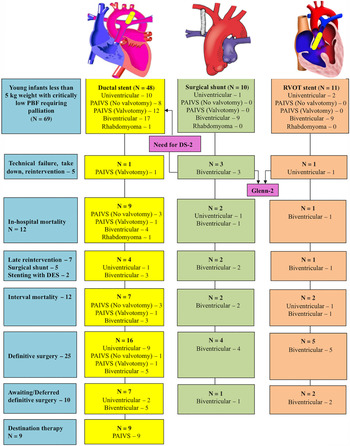
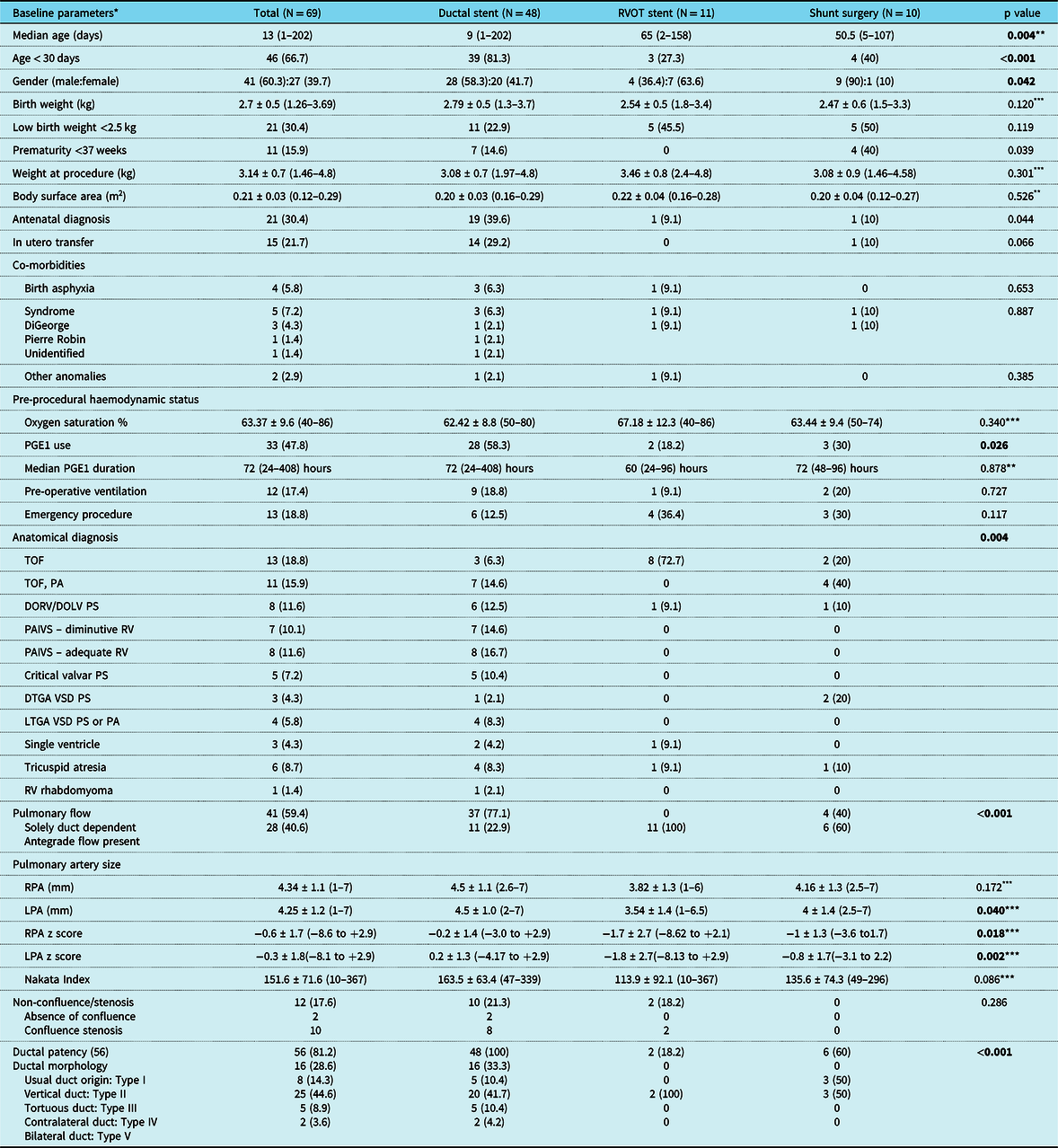
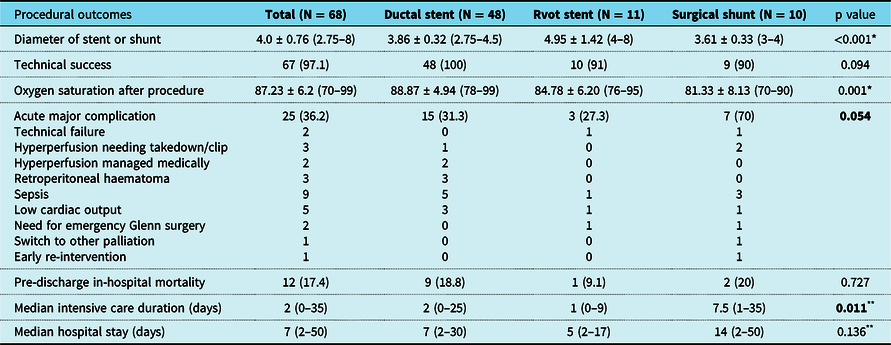
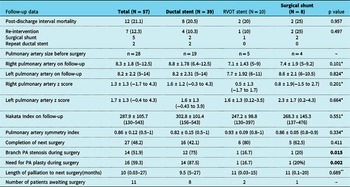
Among 69 young infants weighing less than 5 kg who were palliated for severe hypoxemia, the initial planned procedure was surgical shunt in 10 patients, outflow stent in 11 patients, and ductal stent in the rest (Fig 1). The demographic details, haemodynamic stability, and anatomical diagnosis were compared in Table 1. The acute procedural outcomes were compared in Table 2 and post-discharge follow-up data were compared in Table 3.
Outcomes after different methods of palliation. The flow chart depicts the technical success, in-hospital and inter-stage mortality, early and late re-interventions, and a number of patients who reached final corrective surgery after the different modes of palliation namely surgical shunt, ductal stent, and right ventricular outflow tract stent.

Comparison between three groups

DOLV = double-outlet left ventricle; DORV = double-outlet right ventricle; DTGA = d-transposition of great arteries; IVS = intact ventricular septum; LPA = left pulmonary artery; LTGA = l-transposition of great arteries; PA = pulmonary atresia; PGE1 = prostaglandin E1; PS = pulmonary stenosis; RPA = right pulmonary artery; RV = right ventricle; RVOT = right ventricular outflow tract; TOF = tetralogy of Fallot; VSD = ventricular septal defect
Bold fonts indicate statistical significance with p < 0.05
* Data expressed in frequency (percentage) for nominal data, mean ± SD (range) for a continuous variable in a normal distribution, median (range) for continuous variables in the non-normal distribution
** Kruskal–Wallis test
*** One-way ANOVA; chi-square for nominal
The procedural outcome of the three groups

RVOT = right ventricular outflow tract
Bold fonts indicate statistical significance with p < 0.05
Data expressed in frequency (percentage) for nominal data, mean ± SD (range) for continuous variable in normal distribution, median (range) for continuous variables in non-normal distribution
* One-way ANOVA
** Kruskal–Wallis test; chi-square for nominal
The post-procedural follow-up in the three groups

PA = pulmonary artery; RVOT = right ventricular outflow tract
Bold fonts indicate statistical significance with p < 0.05
Data expressed in frequency (percentage) for nominal data, mean ± SD (range) for a continuous variable in a normal distribution, median (range) for continuous variables in the non-normal distribution
* One-way ANOVA
**Kruskal–Wallis test; chi-square for nominal
Differences between the groups
The ductal stent group more often had an antenatal diagnosis and in utero transfer compared to the other groups. Hence, they were significantly younger and received prostaglandin more often than the surgical shunts. Seventy-nine percent of the ductal stent group had exclusive duct-dependent pulmonary blood flows compared to 19% in the other groups (Table 1). The ductal stent group included significantly more univentricular lesions than others and accounted for all patients with pulmonary atresia with an intact ventricular septum. Biventricular lesions accounted for 90% of surgical shunts and 82% of outflow stents but only 35% of ductal stents (Fig 1). Nine patients with tetralogy of Fallot, one with tricuspid atresia and one with a single ventricle underwent outflow tract stenting. Being a preferred strategy in hypoplastic pulmonary arteries, the pulmonary artery z scores in the outflow stent group were significantly smaller than the others (Table 1). The length of intensive care stay after surgical shunt was significantly longer compared to other modalities of palliation. Although the hospital stay was also longer, the difference did not reach statistical significance (Table 2). The increase in oxygen saturations was higher after ductal stent compared to other groups.
Technical success
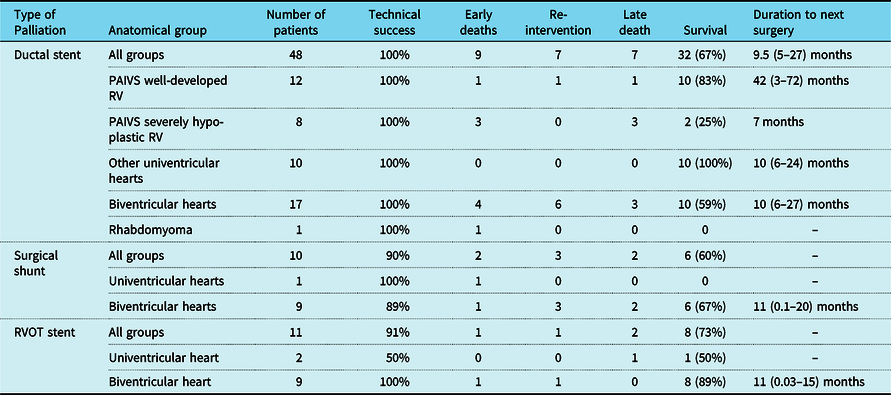
Technical success was 90% among the 10 surgical shunts. Severe hypoxia on trial clamping of the pulmonary artery in one neonate with tetralogy and pulmonary atresia did not allow proceeding with the shunt and warranted a ductal stent. The success of outflow stenting in 11 patients was 91%. One patient with asplenia syndrome, univentricular heart, and hypoplastic pulmonary arteries developed outflow tear and was managed successfully by emergent Glenn shunt. Technical success was 100% after ductal stenting (Table 4).
The outcome after different palliation in each anatomical group

PAIVS = pulmonary atresia intact ventricular septum; RV = right ventricle; RVOT = right ventricular outflow tract
Early in-hospital mortality
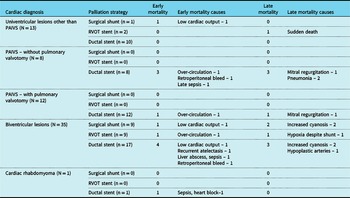
Early mortality within 30 days in 12/69 patients was observed in 20% after shunts, 9% after pulmonary outflow stents, and 19% after ductal stents. Early death after a 3.5-mm shunt due to refractory hypotension and low cardiac output included the lone univentricular patient aged 45 days with tricuspid atresia and hypoxic spells and another 3-month-old infant with tetralogy of Fallot. Early death after a 4-mm outflow stent for severely hypoplastic pulmonary arteries in a 1-month-old infant with tetralogy of Fallot and multiple aortic collaterals was possibly due to pulmonary over-circulation within few hours and documented stent patency (Table 5). Among nine deaths after ductal stenting, five deaths directly related to the procedure were caused by retroperitoneal haematoma in two patients and pulmonary over-circulation in three patients. The haemodynamic compromise from retroperitoneal haematoma was not tolerated due to a low body weight of 1.6 kg in one and perinatal birth asphyxia in the other. Pulmonary over-circulation occurred in two with pulmonary atresia with an intact ventricular septum and one with Fallot’s tetralogy with pulmonary atresia. Closure of the ductal stent with a plug after 2 days in one patient with over-circulation did not result in clinical improvement. Four patients had unrelated death due to persistent sepsis after 21 days in one, necrotising enterocolitis and liver abscess after 6 days in one, recurrent lung collapse and respiratory failure after 10 days in one patient, and the last patient with right ventricular rhabdomyoma who developed heart block and sepsis after 12 days. There was no mortality due to stent occlusions.
Causes of early hospital mortality and late interval mortality

PAIVS = pulmonary atresia with intact ventricular septum; RVOT = right ventricular outflow tract
Re-interventions
There were three early re-interventions (30%) in the shunt group and included the neonate with technical failure, managed with the ductal stent. Another preterm neonate weighing 1.46 kg after a 3-mm shunt had an early shunt thrombosis. The third infant aged 75 days with transposition of great arteries and pulmonary stenosis had pulmonary over-circulation and was managed by shunt takedown and early conversion to Glenn shunt 2 days later. There was one re-intervention (9%) with aortopulmonary shunt at 3 months following neonatal outflow stent for Fallot’s tetralogy for an early recurrence of hypoxia. This child died 12 months later with persistent pulmonary arterial hypoplasia. Six re-interventions (12%) after ductal stents included four shunts through thoracotomy for stenosis of one pulmonary artery due to stent cicatrix and repeat larger ductal stent in two patients. Two of the four surgical shunt re-interventions after ductal stent were performed in the patients who failed initially in their neonatal surgical shunt and immediately rescued with a ductal stent.
Late mortality
Late mortality in 11 patients was seen in 20% after shunts, 18% after outflow stents and 15% after ductal stents. In the shunt group, one sudden-death occurred within 2 months after discharge. The second death occurred 19 months later with progressive cyanosis despite a strong advice to corrective surgery. In the outflow stent group, there were two late deaths. The univentricular patient with tricuspid atresia who underwent outflow stent and documented stent patency at 3-month follow-up died 1 month later at home. An early recurrence of hypoxia in another child at 3 months following neonatal outflow stent for Fallot’s tetralogy necessitated an aortopulmonary shunt. This child died 12 months later with persistent pulmonary arterial hypoplasia.
There were seven late deaths (15%) after ductal stents. Three deaths occurred in pulmonary atresia with an intact ventricular septum and a diminutive right ventricle despite a patent ductal stent (Table 4). Death in another patient after pulmonary valvotomy and ductal stent for pulmonary atresia with an intact ventricular septum was due to coexistent mitral regurgitation and pneumonia. Of the three deaths in patients with biventricular hearts, two occurred at 6 months due to progressive cyanosis and restricted ductal stent flows; both failed to turn up for an additional Blalock–Taussig shunt that was advised at 6-month visit. In the third patient who was 2.1 kg at birth with hypoplastic pulmonary arteries and poor somatic growth, a second drug-eluting stent was deployed within the previous stent after 4 months. The child was followed for another 24 months with slowly progressive cyanosis, but surgical correction could not be completed due to severe pulmonary artery hypoplasia.
Survival till definitive surgery
In the surgical group, there were six survivors (60%) and four of them received the total biventricular correction. Two patients, who had a ductal stent re-intervention, required an additional Blalock–Taussig shunt prior to definitive surgery for left pulmonary artery hypoplasia. One of them was awaiting definitive repair. Following outflow stent, five patients underwent total correction at a median of 9 months (0–15 months) of follow-up. Two patients were awaiting surgical correction after neonatal outflow stent. There were eight survivors (73%) in this group.
Following the ductal stent, there were 31 survivors (65%). Nine patients with univentricular hearts other than pulmonary atresia with intact ventricular septum underwent Glenn shunt at a median of 13 months. Of the two patients with non-confluent pulmonary arteries and bilateral ductal stents, one underwent Glenn shunt at 24 months and the other was alive after 5 years without further surgery due to progressively increasing pulmonary artery pressures, significantly contributed by severe allergic obstructive airway disease despite multiple inhalational agents. Among the patients with biventricular cardiac anatomy, five underwent surgical correction, two underwent an additional Blalock–Taussig shunt, and two underwent re-dilatation of ductal stent due to hypoplasia of pulmonary arteries. Five patients were awaiting surgical correction.
Pulmonary atresia intact ventricular septum
Among 20 patients with this diagnosis, 12 patients had pulmonary valvotomy that provided antegrade flows along with a ductal stent. There was one early death due to pulmonary over-circulation in a neonate with birth asphyxia, despite plugging the ductal stent after 24 hours. One late death after 3 months was due to progressive mitral regurgitation. The 10 survivors had an uneventful course at a median follow-up of 42 months (with a range from 3 to 72 months). In the eight cases with diminutive right ventricle that precluded right ventricular decompression, six died despite documented patency of stent in all patients. Three early deaths were caused by pulmonary over-circulation, retroperitoneal haemorrhage, and late-onset sepsis. The interval deaths in three patients were related to mitral regurgitation in one and pneumonia in two additionally contributed by a large cleft palate in one patient. One patient survived a large intra-cerebral haemorrhage at 13 months with neurological sequelae and was alive at 4 years awaiting a Glenn shunt. Only one case had successful Glenn after 7 months of the ductal stent. There were 12 survivors (60%) in this group.
Duration of palliation
The median time to next surgery in six survivors after shunt was 11 months, shorter in two patients with d-transposition (2 days and 4 months) but longer (11–20 months) in four patients with tetralogy of Fallot. Of the seven survivors after the outflow stent, the median time to next surgery was 11 months (6–15 months) in five children before final correction. Surgery following the ductal stent was performed in 16 patients, (5 biventricular repairs, 2 surgeries in pulmonary atresia intact ventricular septum, and 9 other univentricular hearts) at a median time of 9.5 months (5–27 months) (Table 3). One patient after shunt surgery, two after outflow stent, and seven after ductal stent were awaiting the next surgery.
Comparison of the outcomes between the groups
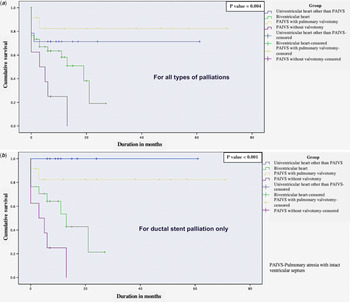
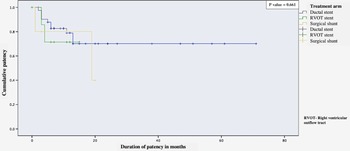
The late mortality was 16% in our cohort and did not significantly differ between the groups (Table 4). Figure 2 depicted re-interventions-free survival after palliation based on the anatomy. Figure 3 compared the longevity of palliation with the three different strategies. Re-interventions for hypoxia in seven patients (10%) also did not differ between the groups. The pre-hilar pulmonary artery size and symmetry were also similar between all the three groups (Table 3). However, there was a significant increase in the need for pulmonary arterioplasty around the confluence near ductal insertion during the next surgery in the ductal stent group (88%) where the stent caused cicatrisation. The symmetric growth of hilar pulmonary arteries was uniformly noted in all the three groups, as was the pre-surgical Nakata Index (Table 3). As all surgical shunts were performed through sternotomy, asymmetric growth commonly observed after thoracotomy shunts were not observed. Reference Santoro, Gaio and Giugno23
Kaplan–Meier survival plot after any type of palliation ( a ) and after ductal stent ( b ). Survival without any reintervention irrespective of the type of palliation ( a ) is significantly better for pulmonary atresia with the intact ventricular septum (PAIVS), who had pulmonary valvotomy and univentricular hearts other than PAIVS. PAIVS without pulmonary valvotomy had a poor outcome. Survival curve for those who underwent ductal stenting ( b ) also shows a similar outcome (log-rank test).

Survival plot for the duration of palliation after successful discharge. There is no significant difference between the types of palliation namely ductal stent, right ventricular outflow tract (RVOT) stent, and surgical shunt (log-rank test).

Discussion
Utility of single-institution studies
National Institute for Cardiovascular Outcomes Research, United Kingdom and Society of Thoracic Surgeons Congenital Heart Surgery Database, United States report procedural mortality after aortopulmonary shunts varying from 9 to 12% and inter-stage mortality of 6–12%. Reference Dorobantu, Pandey and Sharabiani3,Reference Do, Hill and Wallace26 The duration of palliation after shunts or stents vary from 3 to 12 months and institutional protocols decide the timing of corrective surgery. Reference McMullan, Permut, Jones, Johnston and Rubio27 While multi-institutional data take away the institutional bias in the approach, single-centre studies like ours can follow every single patient with an identical protocol and compare between different palliations by reducing the number of management variables typical of a multi-institutional study. Reference McMullan, Permut, Jones, Johnston and Rubio27,Reference Sasikumar, Hermuzi and Fan28
Practice patterns differ between institutions
An early Glenn shunt is sometimes performed before 3 months of age to reduce the inter-stage mortality after the initial palliation. Reference Ghanayem, Allen and Tabbutt29,Reference Viegas, Diaz-Castrillon, Castro-Medina, Da Fonseca Da Silva and Morell30 As this strategy is associated with increased resource utilisation, prolonged ventilation, and intensive care stay, we prefer to do the second stage at 5–6 months of age. Reference Jaquiss, Ghanayem and Hoffman31 Home surveillance monitoring of pulse oximetry, daily weight gain, and recognition of warning signs are suggested to reduce the inter-stage mortality, but they are not always feasible in developing countries. Reference Hansen, Furck and Petko32 Our institutional preference is to perform univentricular stage II palliations at around 6 months of age and biventricular repair involving placement of right ventricular outflow conduits at 12 months of age. Ductal and outflow stents are preferred in our institution in subsets of patients who are known to be at higher surgical risks such as univentricular hearts, pulmonary atresia with an intact ventricular septum, and hypoplastic pulmonary arteries. Reference Bentham, Zava and Harrison7,Reference Goldstein, O’Byrne and Petit22
Challenges in developing countries
Staged surgeries in low-middle-income countries offer peculiar challenges in resource availability and loss of follow-up. Reference Zühlke, Lawrenson and Comitis33 Among the 69 patients in our group, 12 patients had valvotomy and ductal stenting as the destination therapy for pulmonary atresia, intact ventricular septum, and well-developed right ventricle. Barring these patients and one neonate with right ventricular rhabdomyoma, the initial palliation in the rest was expected to maintain clinical stability and survival till the final definitive surgery. Sixty-two percent of these patients survived to the next surgery performed at a median duration of 10 months. In comparison, 77% of 95 patients from Toronto survived after a surgical shunt until the definitive surgery that was performed at a median duration of 5.7 months. Reference Sasikumar, Hermuzi and Fan28 Survival was 86% after ductal stents and surgical shunts in 55 patients from Seattle before their next surgery at a median duration of 4.3 and 6.3 months, respectively. Reference McMullan, Permut, Jones, Johnston and Rubio27 Our study observed a longer waiting period and a higher inter-stage attrition. Early biventricular repairs were avoided as they involved more frequent use of transannular patches, more reoperations, and catheter re-interventions. Reference Tamesberger, Lechner, Mair, Hofer, Sames-Dolzer and Tulzer34 As age and weight were independent predictors for morbidity, total surgical correction was often delayed. Reference Egbe, Uppu and Mittnacht35 Four of the 11 late deaths in our cohort were secondary to progressive mitral regurgitation and pneumonia, while others were due to progressive hypoxia. Despite an advice for surgical shunts to provide additional blood flow for hypoxia, some patients failed to turn up.
Failure to understand the nature of the disease, lack of home monitoring, and economic constraints, which are peculiar challenges in a developing country, could have contributed to some deaths in our cohort. Fewer institutions catering for the treatment of young cyanotic children, non-availability of safe transport for sick patients, longer travel duration to such institutions, lack of universal social security are unaddressed challenges in developing countries. Reference Murala, Karl and Pezzella36 Our institution caters to patients from at least six states from the country. Analysis of poor outcomes in few patients was done by telephonic interviews to ascertain possible causes of mortality in our group. The rarity of clinical autopsies in low-middle-income countries is attributed to ignorance of benefits, religious beliefs, and stigma associated with the procedure. Reference Kanchan, Krishan and Atreya37
Alternatives to surgical shunts
Ductal and outflow stenting are explored as alternatives to surgical shunt. Reference Glatz, Petit and Goldstein6,Reference Bentham, Zava and Harrison7 Despite improved survival, ductal stents in the National multi-centre study required frequent re-interventions before definitive surgery. Reference Bentham, Zava and Harrison7 The in-hospital mortality varied between 9 and 20% and was not different between the three procedures in our group, but this study was not powered to study the difference due to the small number of patients. Many deaths in our study were related to non-cardiac causes, namely prematurity, sepsis, recurrent lung atelectasis, birth asphyxia, multi-organ dysfunction, and others, which were known to be associated with poor outcomes in low-middle-income countries. Reference Nguyen, Leon-Wyss, Iyer and Pezzella20,Reference Zühlke, Lawrenson and Comitis33 The ductal stent was associated with less costs compared to surgical shunt in the Western world. Reference Goldstein, O’Byrne and Petit22 Our group also showed a similar trend as the average hospitalisation costs for surgical shunt, ductal stent, or outflow stent in our centre during the study period were approximately 2500, 1500, and 1600 US dollars, respectively.
Ductal stent as a preferred strategy
After considering the relative experiences with the different palliations, the ductal stent was given Class IIa recommendation by American Heart Association in 2011 in patients with antegrade pulmonary blood flows, but a class IIb recommendation if ducts were the exclusive supply. Reference Feltes, Bacha and BeekmanIII38 United States multi-centre study (2012–15) had more patients with antegrade blood flows in the ductal stent arm (61%) compared to 38% in the surgical arm. Reference Glatz, Petit and Goldstein6 On the contrary, the ductal stent arm in our study had 79% of patients with exclusive ductal supply compared to 40% in the surgical arm. This reflected a progressive improvement in interventional techniques and experience in the last decade. While ductal stenting in United Kingdom multi-centre data (2012–15) quoted a 16% procedural failure needing a cross over to shunt, our technical success of 100% indicated an evolved learning curve. Reference Bentham, Zava and Harrison7 While comparing different anatomical subsets, our case selection in the study period 2014–2020 showed a preference for catheter interventions in all patients (100%) with pulmonary atresia, intact ventricular septum, and a majority (93%) of patients with other univentricular lesions. Despite a higher surgical risk, previous comparative studies had frequently included these anatomical subsets in the surgical arm. Reference Glatz, Petit and Goldstein6,Reference Bentham, Zava and Harrison7
Pulmonary atresia with intact ventricular septum
This disease was associated with high mortality despite palliation with 1 year survival of 70%. Reference Daubeney, Wang and Delany39 When the ductal stent was not concurrently performed, a majority (88%) of infants required shunts following balloon valvotomy. Reference Hirata, Chen, Quaegebeur, Hellenbrand and Mosca40 Outcomes after valvotomy and ductal stent were good in our cohort when patients had an adequate right ventricle. Even though 2 out of 12 patients (17%) died after valvotomy either early (due to birth asphyxia) or later (due to progressive mitral regurgitation), the survivors (83%) had a good late outcome, indicating the appropriateness of ductal stent in this setting. But outcomes in patients with diminutive right ventricle were suboptimal despite successful ductal stent and its patency. Low birth weight and severe right ventricular hypoplasia were known risks in this disease, where more than 41% died; 10% achieved univentricular repair, and 17% were left with a mixed circulation in previous studies. Reference Daubeney, Wang and Delany39 A longitudinal analysis of 164 patients in the United Kingdom registry showed that 30% of the patients were dead before the next univentricular surgical repair. Reference Dorobantu, Pandey and Sharabiani3 Poor outcomes persisted in these patients even during and beyond the second stage of univentricular correction. Reference Walsh, Asoh, Van Arsdell and Humpl41,Reference Alsoufi, Gillespie and Kogon42 Despite patency of ductal stents, reasons for mortality in our cohort included varied contributions from pneumonia to mitral regurgitation.
Univentricular hearts
Even though univentricular hearts were a known surgical risk for shunts, previous comparative studies included them equally in the ductal stent and surgical arm. Reference Williams, Bansal and Kim1–Reference Dorobantu, Pandey and Sharabiani3,Reference Glatz, Petit and Goldstein6,Reference Bentham, Zava and Harrison7 Ductal stent offered a gratifying outcome in our patients with univentricular hearts. Glenn shunt was successfully completed in all patients with univentricular hearts, except one with non-confluent pulmonary arteries. There was no procedural or late mortality in univentricular hearts after the ductal stent, indicating the appropriateness of this strategy. A surgical shunt in one patient with tricuspid atresia resulted in early mortality due to persistent hypotension. Outflow stent in two univentricular hearts resulted in one emergent Glenn shunt and one late mortality in our group.
Patients needing biventricular repair
Patients with cardiac anatomy suited for biventricular repair were either referred for surgical shunts, when pulmonary arteries were adequate or outflow stenting, when pulmonary arteries were smaller. Eighty percent of patients referred for surgical shunts and 82% of patients referred for outflow stents had a biventricular cardiac lesion. On the contrary, they accounted for only 38% of infants in the ductal stent arm. A longer duration of palliation provided by surgical shunt was considered as an advantage over ductal stents; however, the median time to definitive surgery in the three groups was similar in this study. Reference Sivakumar, Bhagyavathy, Coelho, Satish and Krishnan9 A final definitive surgical correction was achieved in 45% of the patients after any palliation and 18% were awaiting surgery. There were no significant differences between the three groups. Intensive home monitoring by pulse oximetry, parental education, strict compliance about close follow-up, aggressive re-interventions for hypoxemia, and organising financial assistances are likely to improve the number of patients who achieve definitive repair. Reference Hansen, Furck and Petko32
Limitations
The study has the limitations inherent in any retrospective analysis. Choice of palliation was dependent on multiple factors that not only included the anatomy of the lesion and the comorbidities, but also occasionally on cost differences between the procedures inherent to developing countries and hence sometimes might not be considered as the “objective best choice”. Telephonic contacts were established to ascertain inter-stage mortality. Even though in-hospital deaths could be investigated with echocardiogram for patency of shunt or stent, no autopsy was performed to ascertain the causes of late deaths. Illiteracy, restricted resources, parental apathy, inter-current illnesses, and non-compliance with drugs might have played a role in the suboptimal follow-up and poor outcomes and these were the inherent problems of low-middle-income economies.
Conclusions
The outcome of very young cyanotic patients in developing countries weighing less than 5 kg with critically reduced pulmonary blood flow was suboptimal. Outcomes and re-interventions were similar regardless of the type of palliation. The technical success of 100% with ductal stents did not translate to better long-term outcomes. Good outcomes in pulmonary atresia with intact ventricular septum after balloon valvotomy and other univentricular lesions indicated the appropriateness of ductal stents in these subsets. Outcomes were extremely poor in pulmonary atresia with an intact ventricular septum and diminutive right ventricle, despite patency of the ductal stents due to various other reasons. Many patients with biventricular lesions did not reach corrective surgery due to a combination of anatomical and extraneous factors. Parent education, home monitoring, financial assistance, and family support may improve outcomes in these patients.
Clinical perspective
Aortopulmonary shunts that palliate cyanotic young infants are associated with measurable mortality, especially in univentricular hearts and pulmonary atresia with an intact ventricular septum.
Ductal stents and right ventricular outflow tract stents are emerging alternative options with comparable outcomes.
Despite advances in surgery and interventions, wide disparities exist in resource-restricted nations that face unique challenges with compliance, follow-up, and inter-stage mortality.
Parent education, home monitoring, and family support might improve outcomes.
Acknowledgements
None.
Financial support
This research received no specific grant from any funding agency, commercial or not-for-profit sectors.
Conflicts of interest
None.
Ethical standards
The authors assert that all procedures contributing to this work comply with the ethical standards of the Indian council of medical research and with the Helsinki Declaration of 1975, as revised in 2008, and has been approved by the institutional committee of Madras Medical Mission, Chennai, India.