

Introduction
Late blight, caused by Phytophthora infestans (Mont.) de Bary, is the most serious fungal disease of potatoes, and occurs throughout China (Chen et al., Reference Chen, Weng, Xie, Lan and Lu2004). The resurgence and rampancy of late blight in recent years has mainly resulted from the genetic diversity of the population structure of P. infestans. In particular, the substitution of old genotype populations by new ones phenotypically characterized by the A2 mating type and metalaxyl-resistant isolates has led to the emergence of physiological races with greater infection potential and higher fitness (Hohl and Iselin, Reference Hohl and Iselin1984; Zhang et al., Reference Zhang, Li, Tian and Zhu1996; Goodwin et al., Reference Goodwin, Smart, Sandrock, Deahl, Punja and Fry1998).
Huang et al. (Reference Huang, Cheng, Xu, Xu and Huo1981) reported the constitution of the physiological race of P. infestans in potatoes in the northern area. Since Zhang et al. (Reference Zhang, Li, Tian and Zhu1996) reported, for the first time, that the A2 mating type was present in such areas as Inner Mongolia and Shanxi Provinces in China, research on the mating type, physiological race and metalaxyl-resistance of P. infestans in parts of China has been carried out. However, there are few reports available on the genotypes of P. infestans in China.
In the past few years, random amplification of polymorphic DNA (RAPD) and simple sequence repeat (SSR) techniques have been used to study the genetic diversity of P. infestans populations. Outside China, Abu-El Samen et al. (Reference Abu-El Samen, Secor and Gudmestad2003) investigated the genetic variation among single-spore isolates of asexual progeny of P. infestans. Knapova and Gisi (Reference Knapova and Gisi2002) analysed the genotypic structure of P. infestans and the isolation of the F1 generation of sexual hybridization, using SSR and AFLP (amplified fragment length polymorphism). Judelson and Roberts (Reference Judelson and Roberts1999) and Mahuku et al. (Reference Mahuku, Peters, Platt and Daayf2000) studied the correlation between DNA polymorphism and metalaxyl-resistance of P. infestans with RAPD markers. In China, Zhu and Wu (Reference Zhu and Wu2001) analysed the correlation between DNA polymorphisms and the A2 mating type of P. infestans in potato using RAPD.
The present work analyses the genetic diversity of 80 isolates of P. infestans in potatoes collected from Fujian, Heilongjiang, Hebei and Inner Mongolia provinces in China using SSR and RAPD markers, in order to clarify the genetic diversity of P. infestans in potatoes in China, so as to learn more about the occurrence and prevalence of the disease and further predict its development, thereby laying a theoretical foundation for the proper distribution of disease-resistant varieties and disease prediction and control of potatoes.
Materials and methods
Collection, isolation and preservation of isolates
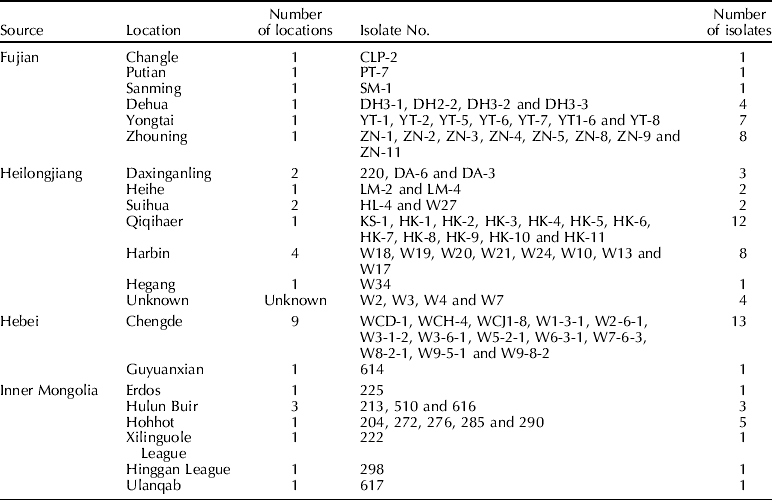
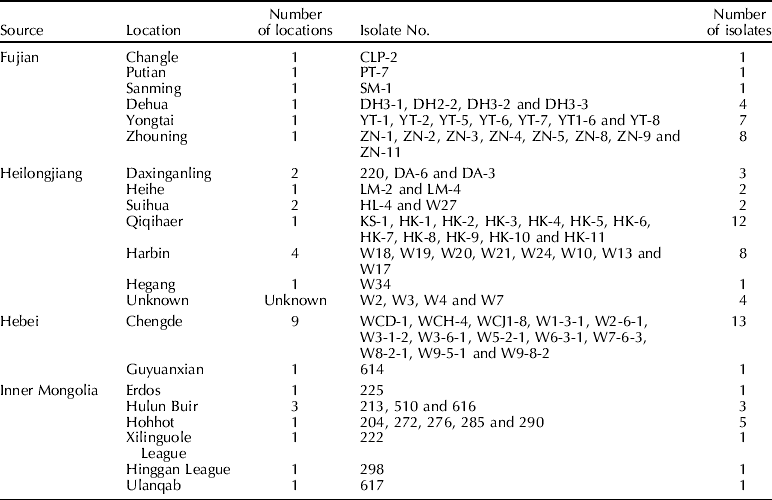
Standard samples or isolates were collected or gathered from Fujian, Heilongjiang, Hebei and Inner Mongolia (Table 1). The P. infestans isolates in collected diseased leaves or tubers were isolated and purified using the method by Zheng (Reference Zheng1997). The purified P. infestans isolates were maintained on rye agar slopes sealed with sterilized liquid paraffin at 13 °C in the dark.
Source of P. infestans isolates
Culture and collection of mycelia
Hyphae of P. infestans were incubated on rye agar medium at 18–20 °C in the dark for 10–15 days. Small pieces of hyphae were cut from the colony margin and transferred into pea broth medium which was kept still at room temperature for 1 week until the formation of mycelia on the surface of the inoculation pieces. After 7 days of shaking the culture on a shaking table at 80 rpm and 18 °C, mycelia were collected and dried on sterilized filter paper, and then freeze dried at −50 °C for 36–48 h. Then the mycelia were ground into powder and preserved at −20 °C for later use.
Extraction of genomic DNA
Genomic DNA was extracted using the cetyltrimethylammonium bromide (CTAB) method (He, Reference He2000) and dissolved in 50 μl 1×TE (Tris-EDTA: 10 mmol/l Tris–HCl, 0.1 mmol/l EDTA, pH 8.0) (with 5 μg/μl RNase in TE). After being kept at 37 °C for 1 h, the concentration and purity of DNA were examined by UV spectrophotometer, and then the solution was diluted to 50 ng/μl for later use.
SSR analysis
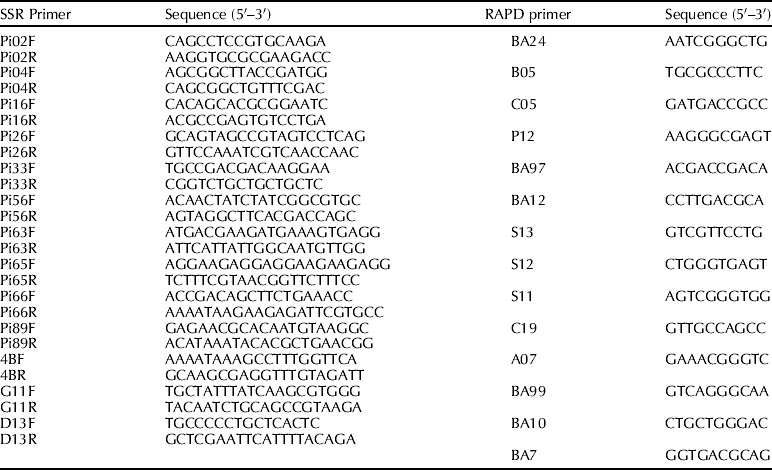
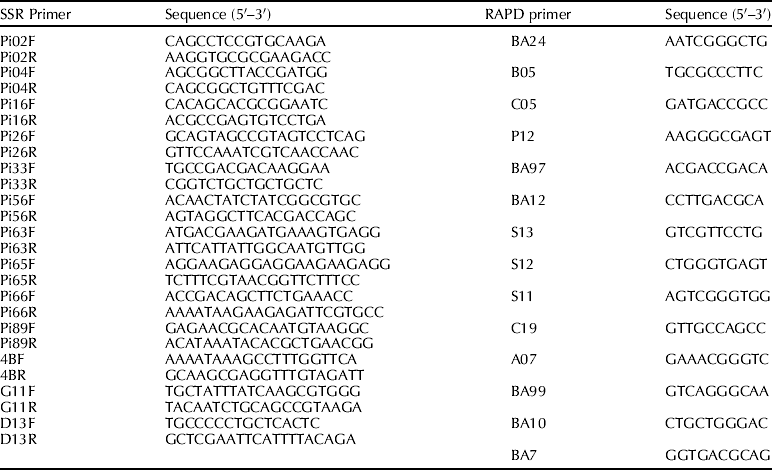
SSR primers were selected according to the report of Lees et al. (Reference Lees, Wattier, Shaw, Sullivan, Williams and Cooke2006), and the primer sequences are given in Table 2. A polymerase chain reaction (PCR) system was adopted, which contained 2.5 μl 10×PCR buffer (Mg2+ free), 2.0 μl MgCl2 (25 mmol/l), 2.0 μl dNTPs (2.5 mmol/l), 0.2 μl Taq DNA polymerase (5 U/μl,TaKaRa Bioengineering Company, Dalian, China), 1.0 μl forward primer (10 μmol/l), 1.0 μl reverse primer (10 μmol/l) and 50 ng template DNA, supplemented with sterile ultrapure water to a total volume of 25 μl and covered with about 25 μl of paraffin oil. The PCR amplification was performed in a PTC-200 Thermocycler (MJ Research, Watertown, MA, USA) using the following steps: 2 min at 95 °C, followed by 33 cycles of 20 s at 95 °C, 25 s at 56 °C and 1 min at 72 °C, and ending with 5 min at 72 °C. The PCR product of 5.0 μl was examined by 3% agarose gel electrophoresis (containing 0.5 μg/ml ethidium bromide), and the remainder was stored at 4 °C for later use. The electrophoretic buffer was 0.5×TBE (89 mmol/l Tris–HCl, pH 7.8; 89 mmol/l boric acid, 2 mmol/l EDTA). After electrophoresis at 98 V for 1.5 h, the image was acquired using the Bio-Rad ChemiDoc XRS imaging system (Bio-Rad, Hercules, CA, USA).
SSR and RAPD primers
RAPD analysis
Fourteen random primers were selected with distinct amplified bands, high polymorphism and stability from 164 random primers synthesized by Invitrogen (Carlsbad, CA, USA) and Shanghai Shenergy Biocolor Bioscience & Technology Company (Qujiang, Shanghai, China). The primer sequences are shown in Table 2. A PCR reaction system was adopted: 2.5 μl 10×PCR buffer (Mg2+ free), 2.0 μl MgCl2 (25 mmol/l), 2.0 μl dNTPs (2.5 mmol/l), 0.2 μl Taq DNA polymerase (5 U/μl, TaKaRa Bioengineering Company), 2.0 μl primer (10 μmol/l) and 50 ng template DNA, supplemented with sterile ultrapure water to a total volume of 25 μl and covered with about 25 μl of paraffin oil. The PCR amplification was performed on a PTC-200 Thermocycler (MJ Research) using the following steps: 3 min at 94 °C, followed by 41 cycles of 1 min at 94 °C, 90 s at 37 °C and 90 s at 72 °C, and then 10 min at 72 °C. A PCR product of 5.0 μl was examined by electrophoresis with 1% agarose gel (containing 0.5 μg/ml EB), and the remainder was kept at 4 °C for later use. The electrophoretic buffer was 0.5×TBE. The image was acquired using the Bio-Rad ChemiDoc XRS imaging system after electrophoresis at 98 V for 1 h.
Data statistics and analysis
The products were scored manually and analysed as binary data, with 1 and 0 representing the presence and absence of bands, respectively. The genetic distance and genetic identity between isolates were calculated using NTSYS-PC 2.10 software (Rohlf, Reference Rohlf1994) and a unweighted pair group method with arithmetic mean (UPGMA) algorithm according to the genetic distance of Nei (Reference Nei1978), and the cluster dendrogram was depicted.
Results and analysis
Analysis of genetic diversity of P. infestans populations with SSR markers
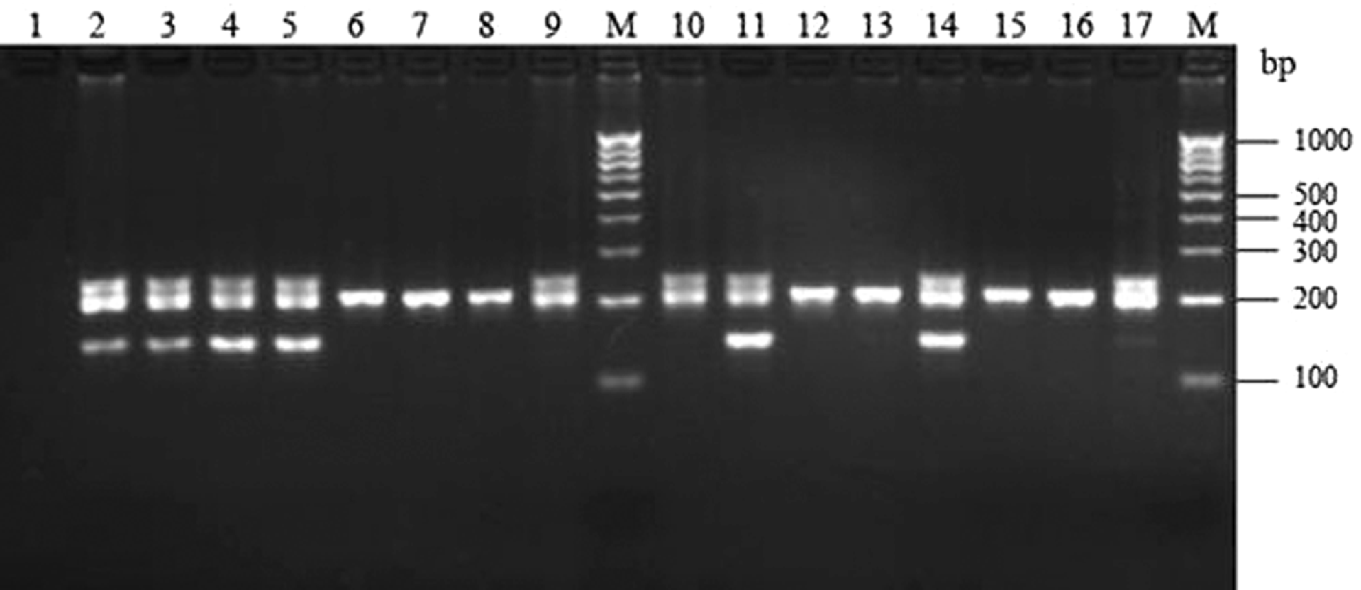
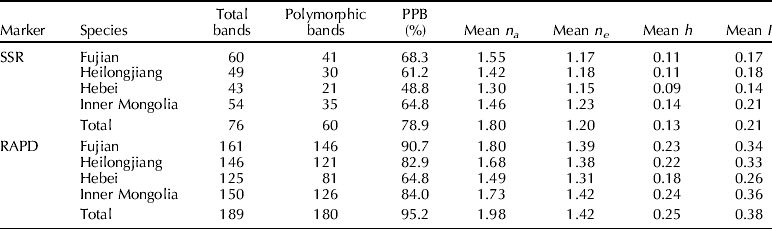
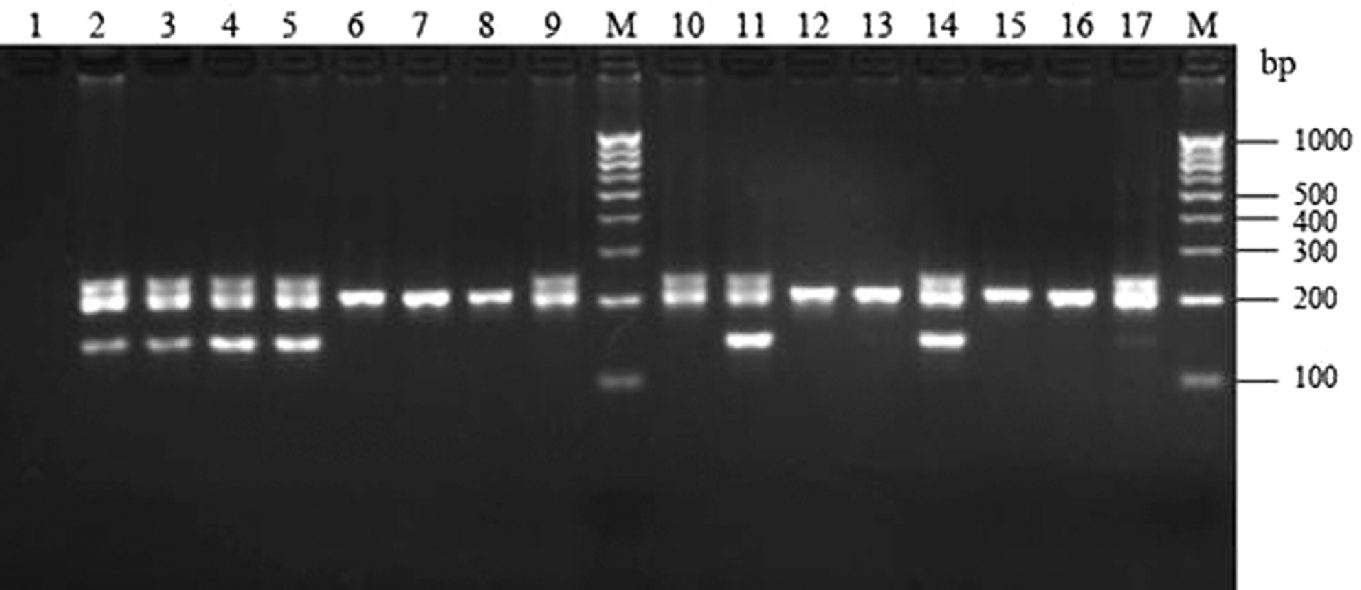
A total of 76 bands were amplified by 13 SSR primer pairs, with 2–9 bands per primer and 5.8 by each on average. There were 51 polymorphic bands with the percentage of polymorphic bands (PPB) of 78.9%, which reflects the abundant genetic diversity of P. infestans in potatoes in China. A big difference existed between the amplified results of the four populations from Fujian, Heilongjiang, Hebei and Inner Mongolia, with the amplified bands ranging from 43 to 60. The polymorphic rate ranged between 48.8 and 68.3%, with the Fujian population having the highest PPB, indicating that the Fujian population has the most abundant genetic diversity. According to the calculation made by POPGENE32 software, the number of observed alleles was 1.80, the number of effective alleles was 1.20, Nei's gene diversity index was 0.13, and Shannon's diversity index was 0.21. Nei's gene diversity index and Shannon's diversity index of the Fujian, Heilongjiang and Inner Mongolia populations were higher than those of the Hebei population (Table 3). The calculation revealed that there were differences between P. infestans populations from geographically different areas. Figure 1 shows the amplification of genomic DNA of P. infestans in potato by the SSR primer 4BF/4BR.
Agarose gel electrophoretic patterns of SSR-PCR products of P. infestans in potato by 4BF/4BR. Lanes: 1, negative control; 2, W2-6-1; 3, HL-4; 4, W34; 5, LM-2; 6, PT-7; 7, ZN-4; 8, YT-6; 9, 220; 10, HK6; 11, 510; 12, CLP-2; 13, DH3-2; 14, W13; 15, SM-1; 16, YT-8; 17, 276; M, DNA marker.
Analysis of genetic variation among 80 isolates of P. infestans in potato
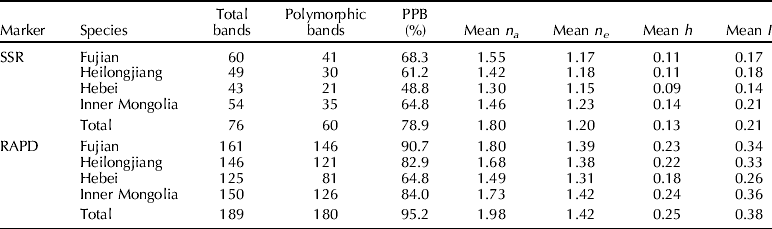
PPB, Percentage of polymorphic bands; n a, observed number of alleles; n e, effective number of alleles; h, Nei's gene diversity index; I, Shannon's diversity index.
Analysis of genetic diversity of P. infestans populations with RAPD markers
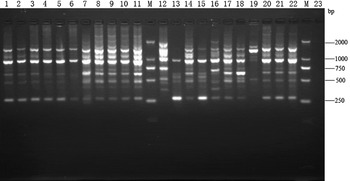
RAPD is a molecular marker technique to examine polymorphic DNA segments by electrophoresis based on the amplification of an unknown genome with an arbitrary single primer of about 10 bp. It is of great importance to select suitable RAPD primers for PCR amplification to construct a repeatable DNA fingerprint with distinct bands. In this experiment, eight mixed genomic DNAs of P. infestans in potato from Fujian, Heilongjiang, Hebei and Inner Mongolia were taken as templates to screen RAPD primers. Primers with fewer than six bands were not used even if the bands were distinct, and those with obscure bands of low stability were not used either, even if they had a great number of bands. Eventually, 14 random primers with distinct bands, high polymorphism and stability were selected from 164 random primers, to amplify 80 isolates of P. infestans in potato (Table 2). A total of 189 bands were amplified by the 14 RAPD primers, with 10–18 bands per primer. C19 produced the greatest number of polymorphic bands, reaching 18, with an average of 13.5 bands by each primer. There were 180 polymorphic bands with a PPB of 95.2%, which indicated the rich genetic diversity of P. infestans in potatoes in China. There existed a big difference between the amplified results of the four populations from Fujian, Heilongjiang, Hebei and Inner Mongolia, with the amplified bands ranging from 125 to 161. The PPB was in the range of 64.8–90.7%, with the Fujian population having the highest PPB, indicating that the Fujian population is the most genetically diversified among the four. Using POPGENE32 software, the number of observed alleles, the number of effective alleles, Nei's gene diversity index and Shannon's diversity index were calculated to be 1.98, 1.42, 0.25 and 0.38, respectively. Similarly, Nei's gene diversity index and Shannon's diversity index of the Fujian, Heilongjiang and Inner Mongolia populations were higher than those of the Hebei population (Table 3). Figure 2 shows the amplification of genomic DNA of P. infestans in potato by P12 primer.
Agarose gel electrophoretic patterns of RAPD-PCR products of P. infestans in potato by P12 primer. Lanes: 1, W34; 2, 220; 3, 298; 4, 617; 5, SM-1; 6, ZN-5; 7, W2-6-1; 8, W1-3-1; 9, ZN-9; 10, W6-3-1; 11, DH2-2; 12, HK8; 13, LM-2; 14, HL-4; 15, DA-6; 16, HK9; 17, W18; 18, YT-8; 19, HK4; 20, W7; 21, YT-7; 22, W10; 23, negative control; M, DNA marker.

Analysis of genetic similarity of P. infestans populations with SSR and RAPD markers
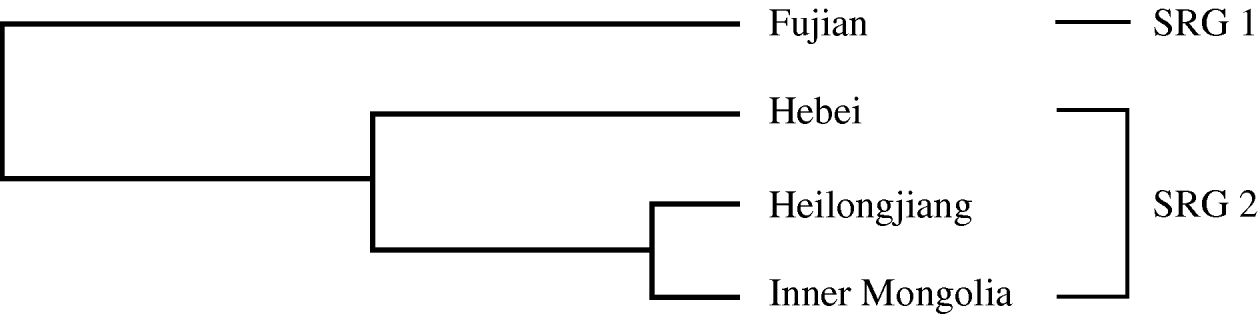
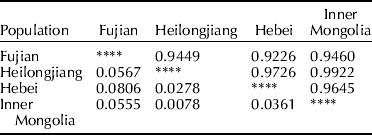
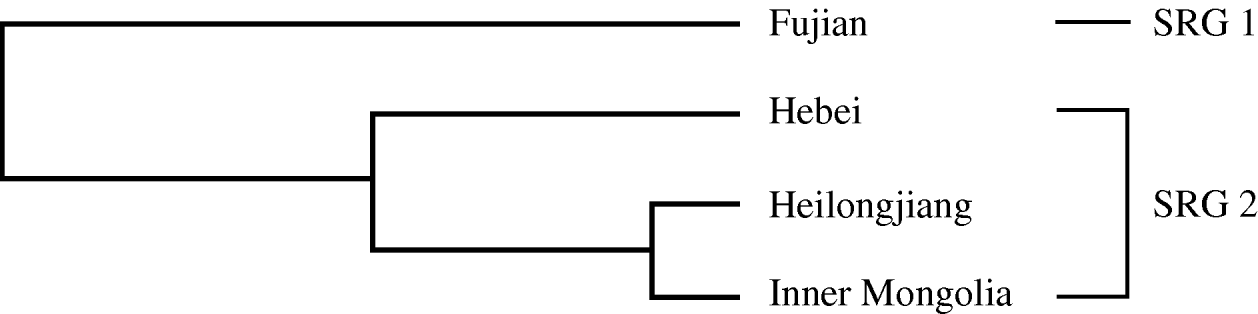
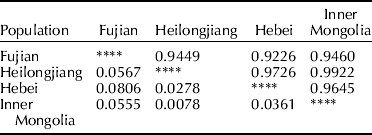
According to SSR and RAPD fingerprinting analysis, the genetic similarity and genetic distance between different populations were calculated (Table 4). Results showed that the genetic similarity between Heilongjiang and Inner Mongolia populations was the highest, with the similarity index of 0.9922, whereas the lowest similarity occurred between Fujian and Hebei, with the similarity index of 0.9226. According to the genetic distance between them, the four populations were differentiated into two groups (SRG1 and SRG2) at a fingerprint similarity level of 1.62 (Fig. 3). Isolates from Fujian in the south of China were in the SRG1 group, and the SRG2 group consisted of isolates from Heilongjiang, Hebei and Inner Mongolia in the north, with isolates from Heilongjiang and Inner Mongolia clustered into a sub-group.
Cluster analysis of four populations of P. infestans in potato based on SSR and RAPD analysis.
Nei's unbiased measures of genetic identity (above diagonal) and genetic distance (below diagonal)
Cluster analysis of P. infestans in potato by SSR and RAPD markers
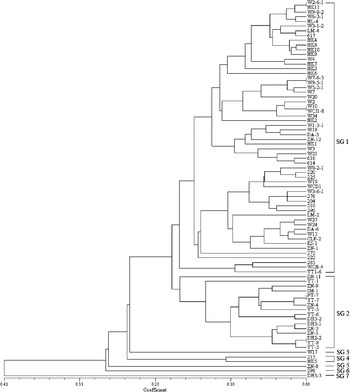
Based on the results of SSR and RAPD analysis, UPGMA clustering analysis was carried out for all the 80 isolates of P. infestans in potato (Figs 4 and 5).
UPGMA dendrogram of genetic relationships based on genetic similarity between 80 isolates of P. infestans in potato in China from 1998 to 2006 using SSR markers (sources of the 80 isolates are shown in Table 1).

It can be seen in Fig. 4 that the genetic distance between the 80 isolates of P. infestans ranged from 0.00 to 0.42. Taking the genetic distance 0.18 as a cut-off point, the tested isolates were classified into seven SSR groups (referred to here as SG). SG1 contained 54 isolates from Heilongjiang, Hebei and Inner Mongolia in the north of China and four isolates from Fujian in the south; the 16 isolates in SG2 were all from Fujian; the four isolates contained in SG3, SG4 and SG6 were all from Heilongjiang and Inner Mongolia; and the two isolates in SG5 and SG7 were both from Fujian. Apart from a few isolates from the south that were clustered into SG1 with those from the north, the isolates in other groups were either from the south or from the north. Cluster analysis indicated that isolates from Fujian were distantly related to those from Heilongjiang, Hebei and Inner Mongolia.
The Fujian population was distributed among four groups (SG1, SG2, SG5 and SG7), with 72.7% of the isolates in SG2. The Heilongjiang population was distributed among two groups (SG1 and SG3), and 93.8% of the isolates were in SG1. The Inner Mongolia population was distributed among three groups (SG1, SG4 and SG6), with 83.3% of the isolates in SG1. The 14 isolates from Hebei were all in SG1. Results showed that the Fujian population was distributed among more groups than the other three and exhibited higher genetic variation.
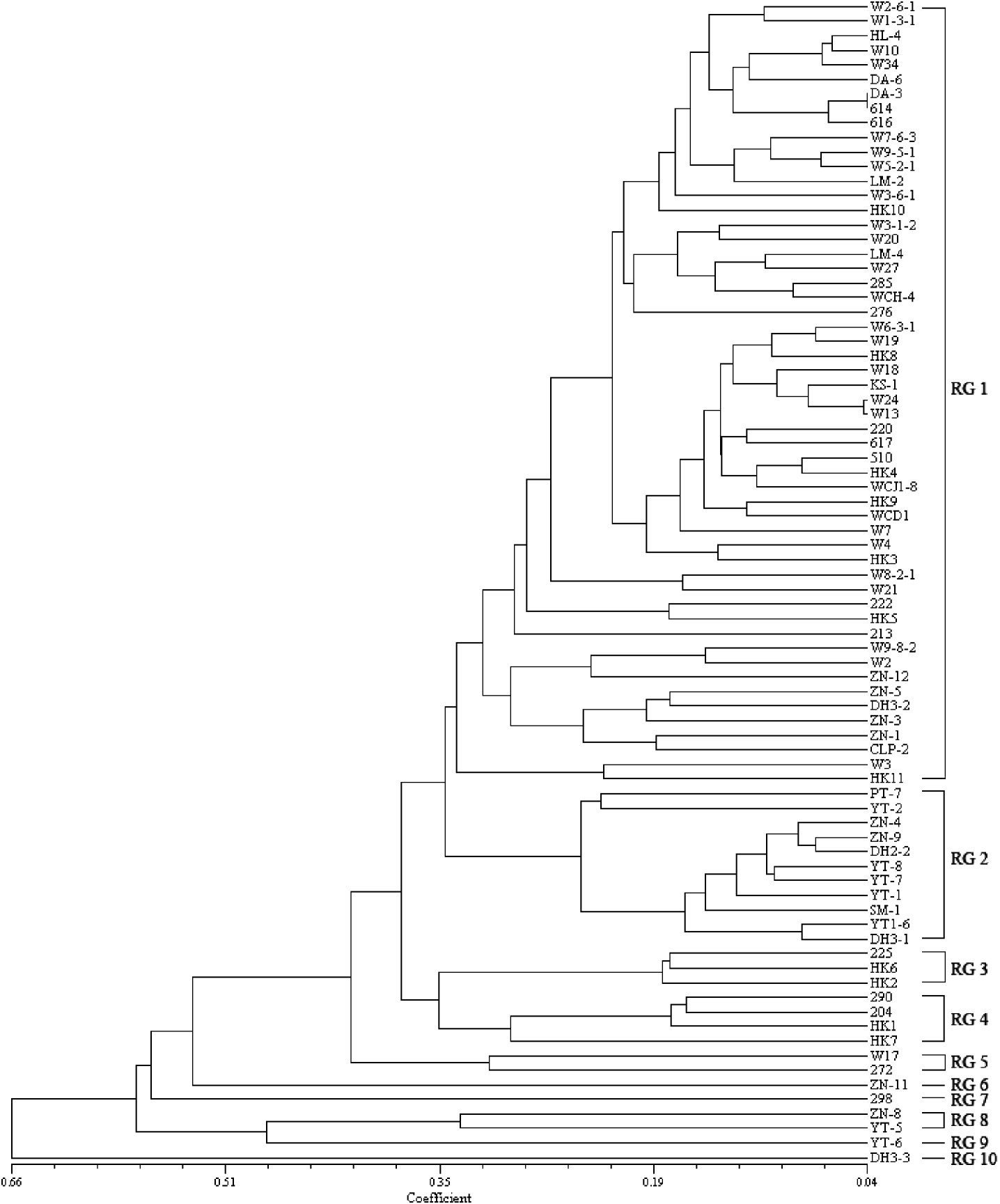
It can be seen in Fig. 5 that the genetic distances between the 80 isolates of P. infestans in potato are in the range of 0.04–0.66. Taking the genetic distance 0.34 as the cut-off point, the tested isolates were classified into ten RAPD groups (referred to here as RG). RG1 consisted of 48 isolates from Heilongjiang, Hebei and Inner Mongolia in northern China and six isolates from Fujian in the south; the 11 isolates in RG2 were all from Fujian; the ten isolates in RG3–RG5 and RG7 were all from Heilongjiang and Inner Mongolia; and the five isolates in RG6 and RG8–RG10 were all from Fujian. Apart from a few isolates from the south that were clustered into RG1 with those from the north, the isolates in other groups were either from the south or from the north. Also, cluster analysis indicated that isolates from Fujian were distantly related to those from Heilongjiang, Hebei and Inner Mongolia.
UPGMA dendrogram of genetic relationships based on genetic similarity between 80 isolates of P. infestans in potato in China from 1998 to 2006 using RAPD markers (sources of the 80 isolates are shown in Table 1).
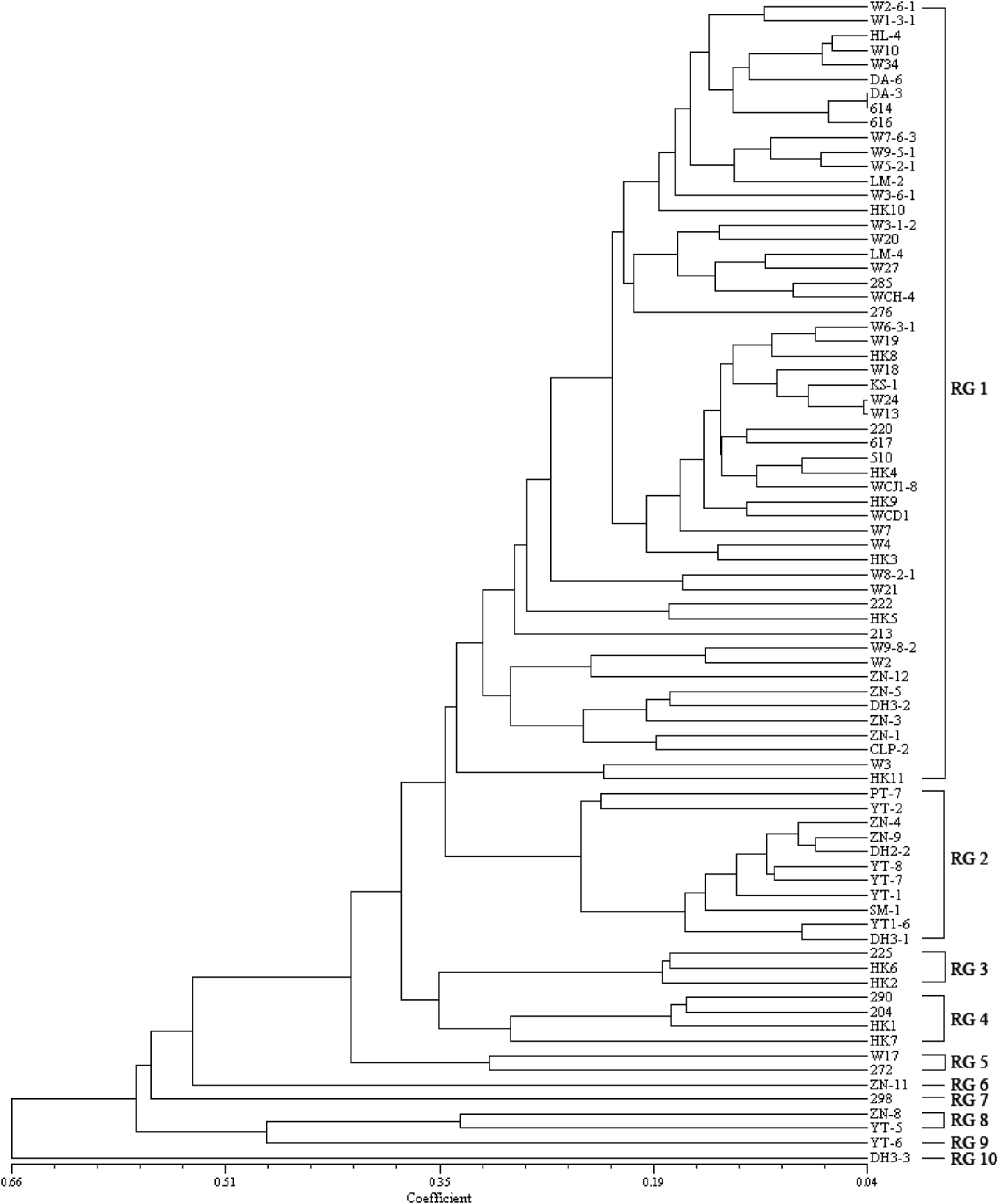
The Fujian population was distributed among six groups (RG1, RG2, RG6, RG8, RG9 and RG10), and the majority were in RG1 (27.3%) and RG2 (50.0%). The Heilongjiang population was distributed among four groups (RG1, RG3, RG4 and RG5), and 84.4% of the isolates were in RG1. The Inner Mongolia population was distributed among five groups (RG1, RG3, RG4, RG5 and RG7), with 58.3% in RG1. The 14 isolates from Hebei were all in RG1. It was indicated that the Fujian population was distributed among more groups than the other three, exhibiting higher genetic variation.
Discussion
At present, restriction fragment length polymorphism (RFLP), RAPD, AFLP and SSR are the four major molecular marker techniques used to analyse the genetic diversity of P. infestans populations (Jin et al., Reference Jin, Lv, Sun, Bai and Li2007). Because the operation for RAPD is simple, cost is low, no prediction of genomic sequence is needed, less DNA is required, high quality is not required, and one set of primers can be used for analysis of genomes of different pathogens and can examine the whole genome, the RAPD technique has experienced rapid development since 1990 and has been used widely in such field of research as genetic diversity in recent years. SSR not only has the same merits as RAPD mentioned above, but also has the advantages that the amplification products have stronger specificity and higher stability, so application of SSR has also grown very rapidly in recent years. This study shows that the genetic variation and clustering result of P. infestans revealed by SSR analysis are extremely similar to those revealed by RAPD analysis, which indicates that these two markers can both be used to analyse the genetic diversity of potato P. infestans.
In cluster analysis of all isolates in this experiment, SSR and RAPD took the genetic distances 0.18 and 0.34 as the cut-off point, respectively, and classified the isolates into seven and ten groups, respectively. Except that a very few isolates from the south were clustered into RG1 with those from the north, the isolates in the other groups were either from the south or from the north. According to cluster analysis of genetic distance between different populations, the four populations were classified into two big groups at SSR and RAPD fingerprinting similarity level of 1.62, with isolates from Fujian in the first group and isolates from Heilongjiang, Hebei and Inner Mongolia in the second group. It is indicated that isolates from Fujian in the south have a distant relationship with those from Heilongjiang, Hebei and Inner Mongolia in the north. This may be because the geographical and climatic conditions in the south are very different from those in the north, and isolates from the south or the north have been confronted with pressure to survive in the respective geographical or climatic conditions, leading to different results of selection of their genetic materials.
Analysis of genetic diversity of P. infestans in potato with SSR and RAPD markers reveals that the Fujian population has the most genetic diversity among the four. Cluster analysis based on the two techniques also shows that the Fujian population is distributed among more groups, exhibiting higher genetic variation. This could be because the special geographical conditions in Fujian, with lots of mountains and few plains, facilitate the formation of diverse geographical microclimates or isolations, and extensive genetic variation in P. infestans is derived by long-term natural selection under various microclimatic environments, resulting in abundant genetic diversity in the population. Analysis of genetic similarity between P. infestans populations based on SSR and RAPD markers indicates that the genetic similarity between populations from Heilongjiang and Inner Mongolia is the highest and that between Fujian and Hebei is the lowest. This may result from the fact that Heilongjiang is adjacent to Inner Mongolia geographically, while Fujian and Hebei are far away from each other.
To sum up, our work reveals that there is an abundant genetic diversity of P. infestans in potatoes in China, and there exists a great difference in the structure and genetic variation of P. infestans populations from different sources. Accordingly, to better understand the occurrence and prevalence of P. infestans and further predict its evolution, it is necessary to establish the genetic structure and variation laws of P. infestans in potato, so as to provide a scientific foundation for the effective prevention and control of potato late blight.
Acknowledgements
This work was supported by the National Natural Science Foundation of China (No. 30600401), Natural Science Foundation of Fujian Province (No. 2006J0322), Science and Technology Innovation Foundation of FAAS [STIF] (No. STIF-Y07) and Special Fund for Public Sector Research (Agriculture) from the Ministry of Agriculture of China (No. 3–20).
Our deepest gratitude goes to the Laboratory of Professor Guo Mei in the Plant Virus-Free Institute at Heilongjiang Academy of Agricultural Sciences, the Laboratory of Professor Zhu Xiaoqiong in the Department of Plant Pathology at China Agricultural University, the Laboratory of Professor Zhu Jiehua in the College of Plant Protection at Hebei Agricultural University and the Laboratory of Professor Liang Delin in the Potato Research Institute at Inner Mongolia Academy of Agricultural Science, from whom we obtained potatoes for the study by exchange.