Introduction
Exposure to child maltreatment and related aspects of the rearing environment (e.g. parental substance use, parental violence) have been shown to increase the risk for substance use disorders (SUD) and comorbid psychopathology (McLaughlin et al. Reference McLaughlin, Green, Gruber, Sampson, Zaslavsky and Kessler2010). However, recent studies have shown that these exposures are not as strongly associated with SUD among African-Americans (AAs; Sartor et al. Reference Sartor, Agrawal, Grant, Duncan, Madden, Lynskey, Heath and Bucholz2015; Werner et al. Reference Werner, Grant, McCutcheon, Madden, Heath, Bucholz and Sartor2016a, Reference Werner, McCutcheon, Agrawal, Sartor, Nelson, Heath and Bucholzb) and that associations may differ by gender (Smith et al. Reference Smith, Elwyn, Ireland and Thornberry2010; Schiff et al. Reference Schiff, Plotnikova, Dingle, Williams, Najman and Clavarino2014). These findings, together with known differences in rates of exposure to childhood trauma (Roberts et al. Reference Roberts, Gilman, Breslau, Breslau and Koenen2011; Sumner et al. Reference Sumner, Mercy, Dahlberg, Hillis, Klevens and Houry2015) and adult SUD (Grant et al. Reference Grant, Goldstein, Saha, Chou, Jung, Zhang, Pickering, Ruan, Smith, Huang and Hasin2015; Chou et al. Reference Chou, Goldstein, Smith, Huang, Ruan, Zhang, Jung, Saha, Pickering and Grant2016; Hasin et al. Reference Hasin, Kerridge, Saha, Huang, Pickering, Smith, Jung, Zhang and Grant2016), warrant further research investigating potential racial/ethnic and gender heterogeneity in the relation of childhood trauma and adult SUD.
Three recent studies utilizing data from the Missouri Adolescent Female Twin Study (MOAFTS) and the Missouri Family Study have shown that the influence of childhood trauma on SUD differs among AA and White women (Sartor et al. Reference Sartor, Agrawal, Grant, Duncan, Madden, Lynskey, Heath and Bucholz2015; Werner et al. Reference Werner, Grant, McCutcheon, Madden, Heath, Bucholz and Sartor2016a, Reference Werner, McCutcheon, Agrawal, Sartor, Nelson, Heath and Bucholzb). Werner and colleagues found that childhood physical and sexual abuse were associated with the transition from alcohol initiation to DSM-V alcohol use disorder (AUD) among Whites, but not among AAs (Werner et al. Reference Werner, Grant, McCutcheon, Madden, Heath, Bucholz and Sartor2016a). Another study (Werner et al. Reference Werner, McCutcheon, Agrawal, Sartor, Nelson, Heath and Bucholz2016b) showed that childhood physical abuse predicted transition from cannabis initiation to DSM-IV cannabis use disorder (CUD) symptoms among Whites, but not among AAs. Further, this study revealed different psychiatric predictors for cannabis initiation and the transition to DSM-IV CUD diagnosis among White and AA participants. Given the relatively small number of AA participants in the MOAFTS (N = 554, ~21% exposed to sexual abuse and ~47% exposed to physical abuse, ~25% with AUD or CUD), the null association observed among AAs may relate to a lack of statistical power. Alternatively, distinct etiologic models of SUDs could be implicated, wherein rates of exposure to childhood trauma, substance use, and the role of other important risk factors (e.g. depression, parental SUD) in the relation of childhood trauma and SUD may differ by race/ethnicity. Further, the samples consisted of all-female populations residing in Missouri, limiting generalization of these findings to males, non-twins, and individuals in the US general population.
Several studies have found that women have a higher risk for SUD following adverse childhood experiences [e.g. parental violence (Smith et al. Reference Smith, Elwyn, Ireland and Thornberry2010; Schiff et al. Reference Schiff, Plotnikova, Dingle, Williams, Najman and Clavarino2014)], while some studies found that men had a greater risk for SUD [e.g. sexual abuse (Kendler et al. Reference Kendler, Edwards and Gardner2015)]. Recently, a large Canadian population-based study (Fuller-Thomson et al. Reference Fuller-Thomson, Roane and Brennenstuhl2016) indicated no significant gender differences in the associations of maltreatment with alcohol or drug dependence. Differences in measurement, sample composition, and developmental timing of outcomes are clearly important sources of these mixed findings (Kristman-Valente & Wells, Reference Kristman-Valente and Wells2013), however, it remains unclear whether associations of childhood trauma and SUD are more pronounced for males or females.
There are several important factors that may impact group differences in associations of childhood trauma and SUDs. In the USA, the most common SUDs, AUD, CUD, and tobacco use disorders (TUD), vary in prevalence by race/ethnicity and by gender (Grant et al. Reference Grant, Goldstein, Saha, Chou, Jung, Zhang, Pickering, Ruan, Smith, Huang and Hasin2015; Chou et al. Reference Chou, Goldstein, Smith, Huang, Ruan, Zhang, Jung, Saha, Pickering and Grant2016; Hasin et al. Reference Hasin, Kerridge, Saha, Huang, Pickering, Smith, Jung, Zhang and Grant2016), as do cultural norms and acceptability of substance use and problems (Caetano & Clark, Reference Caetano and Clark1999; Sartor et al. Reference Sartor, Nelson, Lynskey, Madden, Heath and Bucholz2013; Zapolski et al. Reference Zapolski, Pedersen, McCarthy and Smith2014). Rates of exposure to interpersonal violent trauma also differ across race/ethnicity and gender (Roberts et al. Reference Roberts, Gilman, Breslau, Breslau and Koenen2011; Breiding et al. Reference Breiding, Smith, Basile, Walters, Chen and Merrick2014; Sumner et al. Reference Sumner, Mercy, Dahlberg, Hillis, Klevens and Houry2015). Further, SUDs are often comorbid, both with each other and with other psychopathology (Kessler, Reference Kessler2012). For example, individuals who meet criteria for CUD also have higher odds of meeting criteria for AUD or TUD [Odds Ratios (ORs) 7.8, and 6.6 respectively (Hasin et al. Reference Hasin, Kerridge, Saha, Huang, Pickering, Smith, Jung, Zhang and Grant2016)], and are more likely to experience other mental health problems, especially mood disorders (Grant et al. Reference Grant, Goldstein, Saha, Chou, Jung, Zhang, Pickering, Ruan, Smith, Huang and Hasin2015). Given this high degree of comorbidity, it is important to consider the associations of childhood traumas with a given SUD, and potential racial/ethnic and gender differences, in the context of other commonly co-occurring substance use and psychiatric disorders.
Relatedly, traumatic exposures, particularly when experienced in childhood, rarely occur in isolation. Childhood physical and sexual abuse often occurs in the context of a stressful rearing environment characterized by other types of interpersonal violence (IPV) including parental physical violence (Bottoms et al. Reference Bottoms, Peter-Hagene, Epstein, Wiley, Reynolds and Rudnicki2016), and/or parental mental health and substance use problems (Sartor et al. Reference Sartor, Agrawal, McCutcheon, Duncan and Lynskey2008). Therefore, individuals who meet criteria for AUD, CUD, and TUD are more likely to have experienced childhood maltreatment (Dohrenwend, Reference Dohrenwend2000; Khoury et al. Reference Khoury, Tang, Bradley, Cubells and Ressler2010; Sartor et al. Reference Sartor, McCutcheon, Nelson, Duncan, Bucholz and Heath2012), in addition to other related familial risk factors, such as parental substance use and parental violence (Howell et al. Reference Howell, Barnes, Miller and Graham-Bermann2014). Due to the clustering of both adverse childhood experiences, and adult substance use and psychiatric disorders, disentangling the specific effects of any individual risk factor to any particular SUD are challenging (Sartor et al. Reference Sartor, Agrawal, McCutcheon, Duncan and Lynskey2008). Although such investigations are rare, a recent study conducted with a Canadian general population-based sample reported independent effects of three adverse childhood events (physical and sexual abuse, and witnessing parental domestic violence), when mutually adjusted for, in alcohol and drug dependence (Fuller-Thomson et al. Reference Fuller-Thomson, Roane and Brennenstuhl2016). While this study examined variation by gender, differences by race/ethnicity were not explicitly investigated.
In summary, recent findings indicate the importance of considering potential racial/ethnic and gender heterogeneity when examining the relation of childhood IPV and SUDs. However, it remains unknown if the relation of childhood trauma and SUD differ by race/ethnicity and/or gender. The current study aims to fill this gap by utilizing data from the National Epidemiologic Survey of Alcohol-Related Conditions-III (NESARC-III), a large nationally representative sample of adults in the USA, to examine the associations of the most commonly occurring, and co-occurring, DSM-5 SUD (AUD, CUD, TUD) with three commonly assessed forms of childhood IPV: physical and sexual abuse, and witnessing parental violence. Toward the aim of teasing apart the specific contribution of childhood IPV to AUD, CUD, and TUD, we also examine the role of parental alcohol and drug use problems, as well as commonly co-occurring substance use and psychiatric disorders. We hypothesize that racial/ethnic and gender differences in rates of exposure to childhood IPV, and in rates of SUD, as well as co-occurring factors such as parental history of substance use problems or participant's mental health problems, may contribute to differences in the associations of childhood IPV and adult SUD.
Methods
Sample
The NESARC-III target population was the non-institutionalized civilian population of adults (ages 18–65 years) in households and selected group quarters (Grant et al. Reference Grant, Goldstein, Saha, Chou, Jung, Zhang, Pickering, Ruan, Smith, Huang and Hasin2015). Respondents were selected through multistage probability sampling, including primary sampling units (counties/groups of contiguous counties), secondary sampling units (groups of census-defined blocks), and tertiary sampling units (households within secondary sampling units), with NH Black, Asian, and Hispanic Americans oversampled. Data were collected from April 2012 to June 2013 and were adjusted for nonresponse and weighted to represent the US population based on the 2012 American Community Survey (Grant et al. Reference Grant, Goldstein, Saha, Chou, Jung, Zhang, Pickering, Ruan, Smith, Huang and Hasin2015). The total sample size was 36 309: the household response rate was 72%, the person-level response rate was 84%, and the overall response rate was 60.1%, comparable with the rates in other current US national surveys (Substance Abuse and Mental Health Services Administration, 2014 report). NESARC-III sample characteristics are presented elsewhere (Grant et al. Reference Grant, Goldstein, Saha, Chou, Jung, Zhang, Pickering, Ruan, Smith, Huang and Hasin2015). Informed consent was electronically recorded; respondents received $90.00 for participation. Institutional review boards at the National Institutes of Health and Westat (NESARC-III contractor) approved the study protocol.
All NESARC participants were asked if they are of ‘Hispanic or Latino origin.’ Next, participants were asked to select one or more categories to describe their race. Response options included: ‘American Indian or Alaska Native’, ‘Asian’, ‘Black or African American’, ‘Native Hawaiian or Other Pacific Islander’, and ‘White’. Of 36 309 participants, 19 194 self-identified as ‘non-Hispanic or Latino’ and ‘White’, 7766 self-identified as ‘non-Hispanic or Latino’ and ‘Black or African-American’, 7037 self-identified as ‘Hispanic or Latino,’ 499 self-identified as ‘American Indian or Alaska Native,’ and 1781 self-identified as ‘Asian’ or ‘Native Hawaiian or Other Pacific Islander’ for a total of 36 073 participants. Of this sample, 56.3% were female, with an age range of 20–90 (M = 45.5, s.d. = 17.5). We acknowledge that one's racial, ethnic, and cultural identity are complex entities. Throughout this paper we describe one's self-report of these identities (as described above) as race/ethnicity. Further, we will describe those who self- identified as ‘non-Hispanic or Latino’ and ‘White’ as non-Hispanic White (White) and those who self- identified as ‘non-Hispanic or Latino’ and ‘Black’ as non-Hispanic Black (Black). Those who identified as ‘Hispanic or Latino’ will be described as Hispanic, those who identified as ‘American Indian or Alaska Native’ will be described as American Indian, and those who identified as ‘Asian’ or ‘Native Hawaiian or Other Pacific Islander’ will be described as Asian.
Measures
Substance use and psychiatric disorders
The NIAAA Alcohol Use Disorder and Associated Disabilities Interview Schedule–V (AUDADIS-V; Grant et al. Reference Grant, Goldstein, Saha, Chou, Jung, Zhang, Pickering, Ruan, Smith, Huang and Hasin2015) measures DSM-5 AUD, CUD, TUD, and selected psychiatric disorders in past year and prior to the past year. Each DSM-5 SUD diagnosis requires at least two of 11 criteria within a 12-month period. Within each SUD considered, 12-month and prior diagnoses were aggregated to form lifetime diagnoses. Test-retest reliabilities were moderate to substantial for these disorders (κ = 0.40–0.87) and their criteria scales (ICC = 0.45–0.84) (Grant et al. Reference Grant, Goldstein, Saha, Chou, Jung, Zhang, Pickering, Ruan, Smith, Huang and Hasin2015). Concordance between AUDADIS-5 and PRISM-5 for SUDs was fair to substantial (κ = 0.36–0.66; ICC = 0.68–0.91) (Hasin et al. Reference Hasin, Shmulewitz, Stohl, Greenstein, Aivadyan, Morita, Saha, Aharonovich, Jung, Zhang, Nunes and Grant2015). Additional DSM-5 disorders included in this study were: primary major depression, generalized anxiety, and antisocial personality disorder, as these disorders are most consistently co-morbid with SUD (Cerda et al. Reference Cerda, Sagdeo and Galea2008; Hasin et al. Reference Hasin, Shmulewitz, Stohl, Greenstein, Aivadyan, Morita, Saha, Aharonovich, Jung, Zhang, Nunes and Grant2015). Post-traumatic stress disorder, and adult IPV exposure (binary measure of any violent trauma exposure experienced after age 18) were also included given the documented relation of childhood IPV, adult IPV, and PTSD (Koenen et al., Reference Koenen, Moffitt, Poulton, Martin and Caspi2007). The reliability and validity of these diagnoses in the NESARC-III were fair to moderate (Grant et al. Reference Grant, Goldstein, Saha, Chou, Jung, Zhang, Pickering, Ruan, Smith, Huang and Hasin2015; Hasin et al. Reference Hasin, Shmulewitz, Stohl, Greenstein, Aivadyan, Morita, Saha, Aharonovich, Jung, Zhang, Nunes and Grant2015).
Parental histories of problems with alcohol and drugs were ascertained using the AUDADIS-V. In assessing family history, interviewers read definitions to respondents that included examples of observable manifestations of the diagnostic criteria, since these are the most likely to be known to family members, increasing sensitivity (Andreasen et al. Reference Andreasen, Endicott, Spitzer and Winokur1977; Zimmerman et al. Reference Zimmerman, Coryell, Pfohl and Stangl2004; Heiman et al. Reference Heiman, Ogburn, Gorroochurn, Keyes and Hasin2008). Interviewers then asked whether respondents’ biological mother and father experienced the condition as defined. From this information, separate variables were created representing parental (either biological mother or father) histories of alcohol and drug problems.
Childhood IPV
Ten items adapted from two empirically validated scales (Straus, Reference Straus1979, Reference Straus, Straus and Gelles1990; Wyatt, Reference Wyatt1985) were used to assess physical and sexual abuse, and witnessing parental/domestic violence before age 18. Scales of these items have excellent reliability [intraclass coefficients, 0.79–0.88 (Ruan et al. Reference Ruan, Goldstein, Chou, Smith, Saha and Pickering2008)]. A three-factor model with a latent dimension indexing each IPV type provided an excellent fit to the data [Comparative Fit Index (CFI (Bentler, Reference Bentler1990)]: 0.96, Tucker-Lewis Index [TLI (Tucker & Lewis, Reference Tucker and Lewis1973)]: 0.89, RMSEA (Root Mean Square Error of Approximation): 0.05).
Physical Abuse was assessed with the following questions: (1) How often did a parent or other adult living in your home push, grab, shove, slap or hit you? (2) How often did a parent or other adult living in your home hit you so hard that you had marks or bruises or were injured? Response options ranged from never (0) through very often (5). Sexual Abuse was assessed with the following questions: How often an adult engaged in the following when the respondent either did not want them to or was too young to know what was happening: (1) Touch or fondle you in a sexual way when you didn't want them to or when you were too young to know what was happening? (2) Have you touched their body in a sexual way when you didn't want to or you were too young to know what was happening? (3) Attempt to have sexual intercourse with you when you didn't what them to or you were too young to know what was happening? (4) Actually have sexual intercourse with you when you didn't want them to or you were too young to know what was happening? Response options ranged from never (0) through very often (5). Witnessing parental violence was assessed with the following questions: How often did your father, stepfather, foster or adoptive father or mother's boyfriend do ANY of these things to your mother, stepmother, father's girlfriend, or your foster or adoptive mother: (1) Push, grab, slap or throw something at her? (2) Kick, bite, hit her with a fist, or hit her with something hard? (3) Repeatedly hit her for at least a few minutes? (4) Threaten her with a knife or gun or use a knife or gun to hurt her? Response options ranged from never true (0) through very often true (5). While we acknowledge that this variable assesses violence on behalf of the participant's father figure (or mother's partner) towards mother figure (or father's partner), herein we refer to this variable as ‘parental violence.’
Statistical analyses
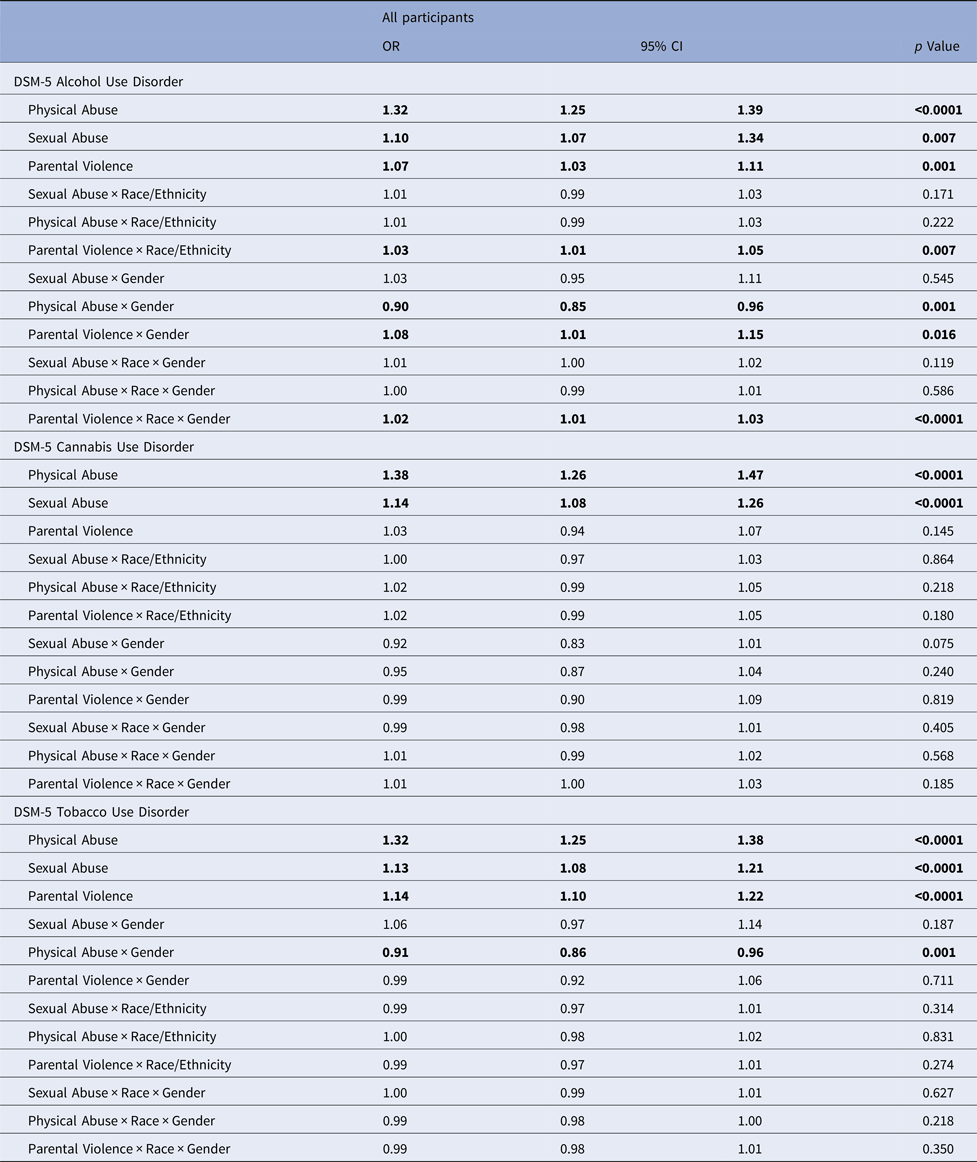
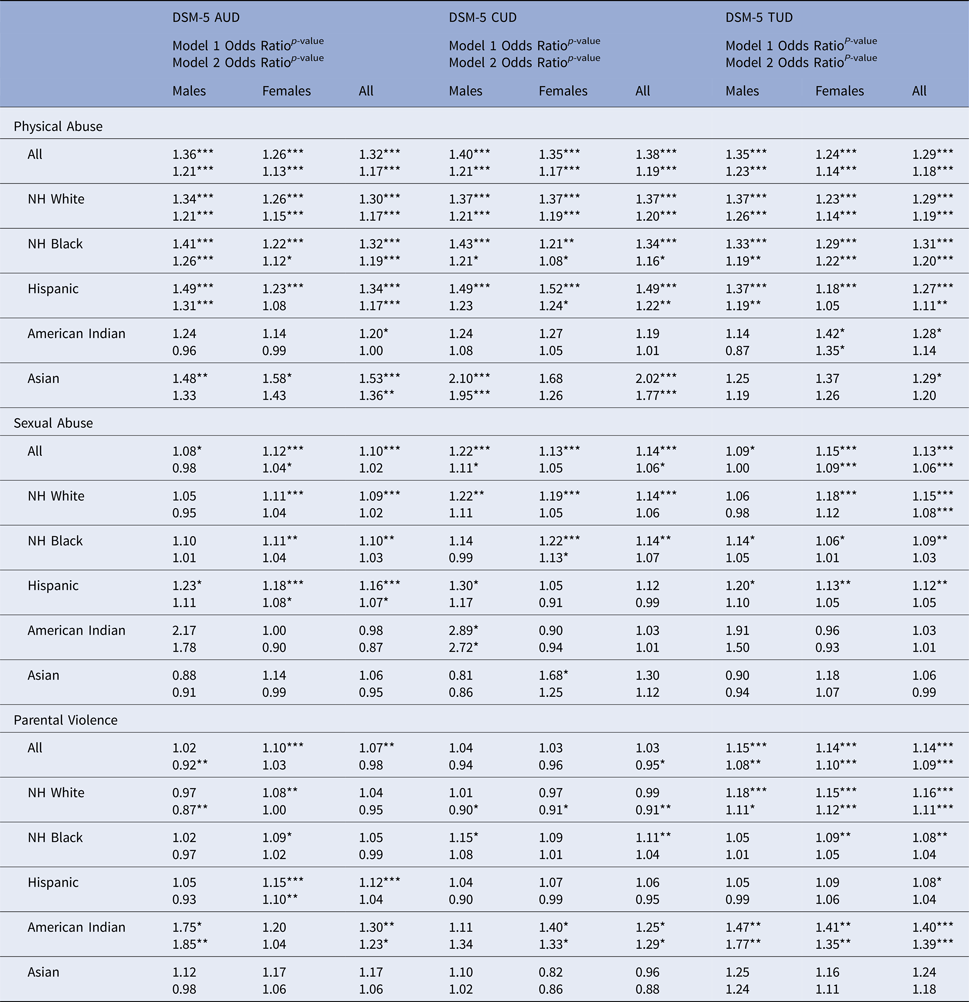
All analyses were conducted in Mplus version 7.4 (©Muthén & Muthén, 1998–2015), with all estimates, weights, and standard errors adjusted for the complex sample design of the NESARC survey. Missing data were addressed via full-information maximum likelihood. A model (Fig. 1) that assessed the main effects of three types of childhood IPV (physical abuse, sexual abuse, witnessing parental violence, and their covariance) on three substance use disorders (AUD, CUD, TUD, and their covariance) was evaluated. All models included the following covariates: age, gender, race/ethnicity, household income, employment status, level of education, and marital status (N: 36 073, Number of Free Parameters (NP): 30, Loglikelihood (LL): −47 820.55, Akaike's Information Criterion [AIC; (Akaike, Reference Akaike1976)]: 95 701.011, Bayesian Information Criterion (BIC): 9596.006). Secondary models also included parental alcohol and drug use problems and participants’ comorbid MDD, GAD, ASPD, adult trauma exposure, and PTSD (N: 36 073, NP: 45, LL: −46 164.835, AIC: 92 421.670, BIC: 92 804.163). Tertiary models included multiplicative interactions among race/ethnicity, gender, and each type of childhood IPV (i.e. race/ethnicity × IPV; gender × IPV; race/ethnicity × gender × IPV) to test for statistical differences in associations among each childhood IPV and each SUD observed across race/ethnic and gender groups (N: 36 073, NP: 54, LL: −46 143.899, AIC: 92 395.798, BIC: 92 854.790). Main and interaction effects are presented in Table 1. To further understand the variation across race/ethnic and gender groups underlying interaction effects observed, associations and adjusted associations stratified by race/ethnicity and gender are presented in Table 2.
Model employed to examine the associations of childhood IPV and adult alcohol, cannabis and tobacco use disorders. Note, that the following covariates are not pictured, but are included in models: age, gender, race/ethnicity (in combined models), interactions between each type of IPV and race/ethnicity (in overall model), household income, employment status, level of education, marital status, parental alcohol and drug use problems, and participants’ comorbid depression, post-traumatic stress disorder, antisocial personality disorder, and adult trauma exposure. Physical Abuse, Physical abuse experienced prior to age 18; Sexual Abuse, Sexual abuse experienced prior to age 18; Domestic Violence, witnessing parental (father figure to mother figure) violence prior to age 18. AUD, DSM-V Alcohol Use Disorder (lifetime); CUD, DSM-V Cannabis Use Disorder (lifetime); TUD, DSM-V Tobacco Use Disorder (lifetime).

Main effects of childhood interpersonal violence on AUD, CUD, and TUD and interactions with race/ethnicity and gender

Bold significance: p < 0.05.
Reference Groups: Male Gender, NH White Race/Ethnicity, NH White Males.
Main effects of childhood interpersonal violence on AUD, CUD, and TUD stratified by race/ethnicity and gender

Note: All models included the following covariates: age, gender, race/ethnicity (in combined models only), household income, employment status, level of education, and marital status. Secondary models also included parental alcohol and drug use problems and participants’ comorbid MDD, GAD, ASPD, adult trauma exposure, and PTSD.
*p < 0.05; **p < 0.001; ***p < 0.0001.
Results
Rates of DSM-5 SUDs by race/ethnicity and gender
Rates of lifetime disorders by race/ethnicity and gender have been reported previously for AUD (Grant et al. Reference Grant, Goldstein, Saha, Chou, Jung, Zhang, Pickering, Ruan, Smith, Huang and Hasin2015), CUD (Hasin et al. Reference Hasin, Kerridge, Saha, Huang, Pickering, Smith, Jung, Zhang and Grant2016), and TUD (Chou et al. Reference Chou, Goldstein, Smith, Huang, Ruan, Zhang, Jung, Saha, Pickering and Grant2016). Overall, rates of lifetime SUDs are highest among White and American-Indian men, and lowest among Asian-American women (online Supplementary Fig. S1).
Childhood physical abuse
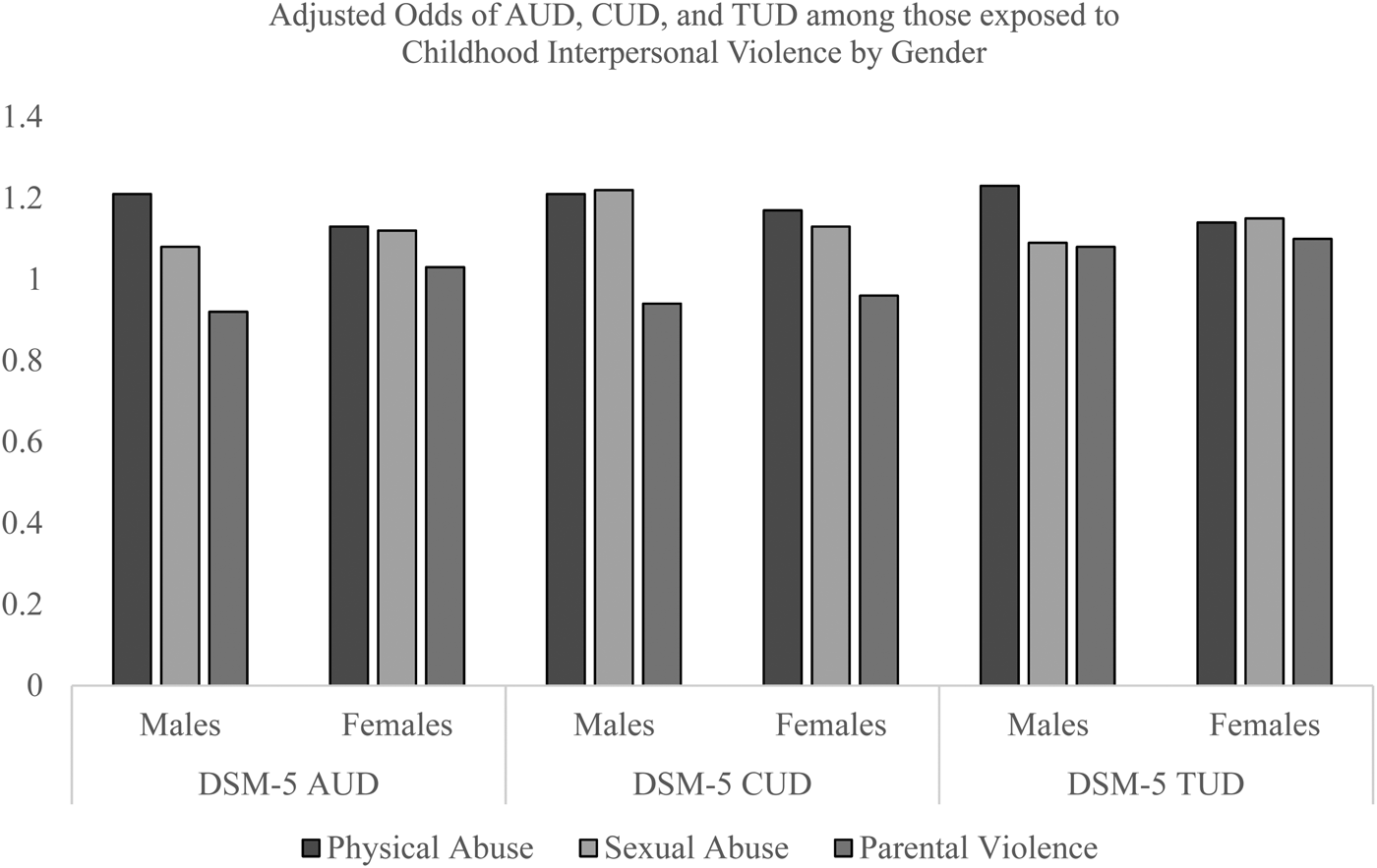
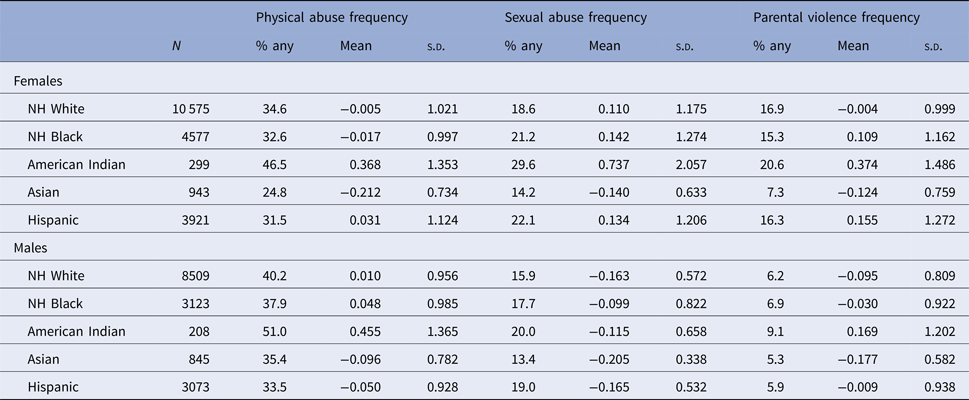
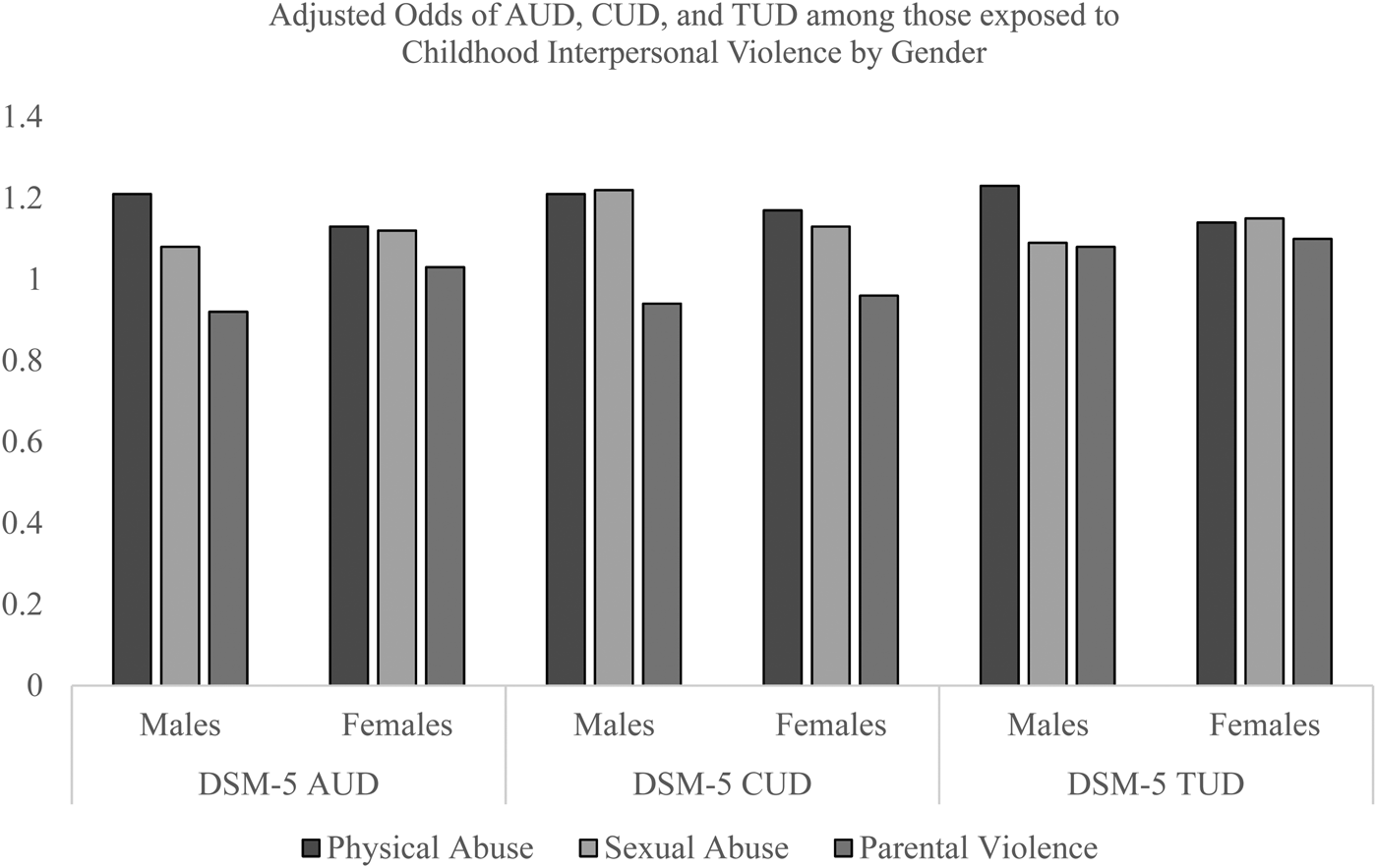
Among all participants, childhood physical abuse was reported by 35.5% of the sample. Rates and frequency varied by race/ethnicity and gender (Table 3); compared with Whites (women: 34.6%; men: 40.2%), rates of physical abuse were significantly higher among American Indian participants (women: 46.5%; men: 51.0%), and lower among Asian-American women (24.8%). In the full sample (race/ethnicity and gender as covariates), more frequent exposure to physical abuse was associated with AUD [OR 1.3, adjusted OR (aOR) 1.2]. Interactions with race/ethnicity (p: 0.222) and race/ethnicity × gender were non-significant (p: 0.586). However, there was a significant interaction with gender (p < 0.001), wherein greater associations were observed among males (males OR 1.4, females OR 1.3) (Fig. 2). In the full sample, more frequent exposure to physical abuse was associated with CUD (OR 1.4, aOR 1.2). Interactions with race/ethnicity (p: 0.218), gender (p: 0.240) and race/ethnicity × gender were non-significant (p: 0.568). In the full sample, physical abuse was associated with TUD (OR 1.3, aOR 1.2). Interactions with race/ethnicity (p: 0.831) and race/ethnicity × gender were non-significant (p: 0.218). However, there was a significant interaction with gender (p < 0.001) wherein greater associations were observed among males (males OR 1.4, females OR 1.2).
Associations of childhood interpersonal violence with DSM-5 Alcohol, Cannabis, and Tobacco Use Disorder, by gender. AUD, DSM-V Alcohol Use Disorder (lifetime); CUD, DSM-V Cannabis Use Disorder (lifetime); TUD, DSM-V Tobacco Use Disorder (lifetime).
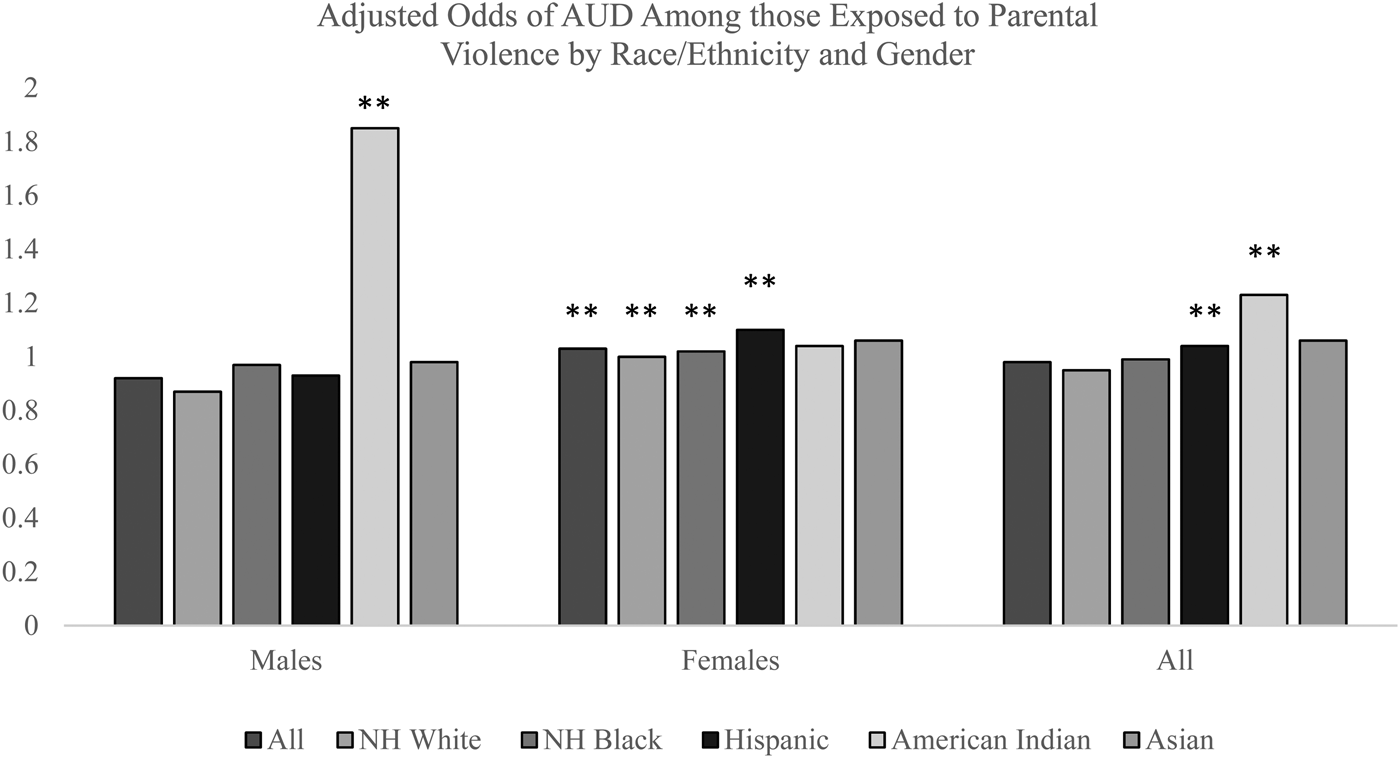
Frequency of exposure to parental violence and DSM-5 Alcohol Use Disorder, by race/ethnicity and gender. ** indicates p < 0.001.

Rates and frequency of childhood interpersonal violence by race/ethnicity and gender

Childhood sexual abuse
Among all participants, sexual abuse was reported by 18.5% of the sample. Rates and frequency varied by race/ethnicity and gender (Table 3); sexual abuse was more frequently endorsed females regardless of race/ethnicity, and by American Indian participants (women: 29.6%; men: 20.0%) and less frequently endorsed by Asian Americans (women: 14.2%; men: 13.4%). Among all participants, more frequent exposure to sexual abuse was associated with AUD (OR 1.1, aOR: null), and associations did not differ significantly by race/ethnicity (p: 0.171), gender (p: 0.545) or race/ethnicity × gender (p: 0.119). Among all participants, more frequent exposure to sexual abuse was associated with CUD (OR 1.1, aOR: 1.1), and associations did not differ significantly by race/ethnicity (p: 0.864), gender (p: 0.075), or race/ethnicity × gender (p: 0.185). Among all participants, more frequent exposure to sexual abuse was associated with TUD (OR 1.1, aOR: 1.1), and associations did not differ significantly by race/ethnicity (p: 0.314), gender (p: 0.187), or race/ethnicity × gender (p: 0.627).
Parental violence
Among all participants, exposure to parental violence was reported by 11.8% of the sample. Rates and frequency varied by race/ethnicity and gender (Table 3); overall rates and frequency of parental violence were greater for females and among American Indian males (22.3%), and lower among Asian Americans (6.4%). The frequency of exposure to parental violence was associated with AUD (OR 1.1, aOR: null). The magnitude of these associations differed significantly by race/ethnicity (p < 0.001; White OR: null, Black OR: null, Hispanic OR 1.1, American Indian OR 1.3, Asian OR: null), gender (p: 0.016; males OR 1.0, females OR 1.1), and race/ethnicity by gender (p < 0.001) (Fig. 3); statistically significant associations of parental violence and AUD were only observed among Hispanic (OR 1.2, aOR 1.1), Black (OR 1.1, aOR: null), and White (OR 1.1, aOR: null) females, and American Indian males (OR 1.8, aOR 1.9). The frequency of exposure to parental violence was not associated with CUD in the full sample (Table 2), and associations did not differ significantly by race/ethnicity (p: 0.180), gender (p: 0.819) or race/ethnicity × gender (p: 0.185). The association of parental violence and CUD was only present among Black males in unadjusted models (OR 1.2, aOR: null) and American Indian females (OR 1.4, aOR 1.3). The frequency of exposure to parental violence was associated with TUD (OR = 1.1, aOR 1.1). Associations did not differ significantly by race/ethnicity (p: 0.274), gender (p: 0.711) or race/ethnicity × gender (p: 0.350).
Discussion
Findings from this study suggest that there are independent contributions of childhood physical and sexual abuse to AUD, CUD, and TUD, and of witnessing parental violence to AUD and TUD. Overall, associations of all childhood IPVs and SUDs were relatively similar across race/ethnicity and gender (ORs ranged from 1.1 to 1.9). However, interaction analyses indicated that there is modest heterogeneity in the associations of witnessing parental violence with AUD, such that this association is only observed among White, Black, and Hispanic females and American Indian males (and only among Hispanic females and American Indian males in adjusted models). In addition, gender moderates associations of physical abuse with AUD and TUD (increased risk among males), and of parental violence and AUD (increased risk among females). We note, however, that differences in all effect sizes are modest.
Childhood physical abuse
Exposure to physical abuse prior to age 18 was associated with increased odds of AUD, CUD, and TUD; the magnitude of these associations did not appear to differ significantly by race/ethnicity. This supports previous studies that show physical abuse experienced early in life is a significant risk factor for alcohol, cannabis, and tobacco use problems (Fuller-Thomson et al. Reference Fuller-Thomson, Roane and Brennenstuhl2016). In addition, variation by gender was observed for AUD and TUD, such that associations of CPA with AUD and TUD were generally greater among males than females. We note that these effects are modest (1.4 for males v. 1.3 for females), and hypothesize that greater ORs may be due to the higher rates of SUDs and greater frequency of physical abuse endorsed by males compared with females in this sample. Previous studies examining gender differences in the relations of childhood IPV and SUD have produced mixed results (Kristman-Valente & Wells, Reference Kristman-Valente and Wells2013), with the largest and most comparable study (Fuller-Thomson et al. Reference Fuller-Thomson, Roane and Brennenstuhl2016) indicating no significant gender differences in the associations of CPA with alcohol or drug dependence. The authors offered several explanations for their findings that may also apply to the current study, including the use of retrospective self-report, which may result in more conservative findings, and the potential influence of cohort effects, whereby the negative stigma surrounding women's substance use has become less salient. Consequently, more women are thought to be using substances, potentially developing AUD, thus leading to a “washing out” of the effect (Kristman-Valente & Wells, Reference Kristman-Valente and Wells2013). Continued investigation of gender moderation is required, with special attention given to potential cohort effects.
Childhood sexual abuse
Across race/ethnicity and genders, CSA was associated with elevated risk for AUD, CUD, and TUD. This is in agreement with several previous studies that link CSA to risk for SUD, even after taking into account other known shared risk factors (Kendler et al. Reference Kendler, Bulik, Silberg, Hettema, Myers and Prescott2000; Sartor et al. Reference Sartor, McCutcheon, Nelson, Duncan, Bucholz and Heath2012). Interestingly, the relation of CSA and AUD was no longer significant after adjusting for other risk factors and psychiatric comorbidities among most groups (e.g. White and Black women), yet remained among Hispanic females, indicating robust CSA associated risk for AUD. Similarly, adjusted associations of CSA and CUD were no longer significant among most groups (e.g. White men and women, Hispanic men, and Asian women), yet remained among Black females and American Indian males, indicating robust CSA associated risk for CUD among these groups. In a review of the literature regarding the sociocultural context for mental health effects of sexual assault for AA, Asian-American, Latina, and Native-American women, Davis et al. Reference Davis, Ressler, Schwartz, Stephens and Bradley2008 discuss numerous barriers to obtaining protection and assistance that ethnic minority women are confronted with, including discriminatory policies, financial constraints, social stigma around mental health issues, and mistrust of agencies based on personal and historical experiences of violations. Future research should consider the mediating role of these factors in SUD risk among those exposed to CSA.
Parental violence
Across race/ethnicity and genders, exposure to parental violence was associated with increased odds of AUD and TUD, and after adjusting for other risk factors and psychiatric comorbidities, only TUD. Associations among parental violence with AUD and TUD also differed by gender, and for AUD also differed by race/ethnicity, and by race/ethnicity and gender. Witnessing parental violence in childhood has been linked to mental health and substance use problems throughout the life-course (Howell et al. Reference Howell, Barnes, Miller and Graham-Bermann2014), and some prior evidence supports similar gender differences. Schiff et al. (Reference Schiff, Plotnikova, Dingle, Williams, Najman and Clavarino2014) found that offspring of women experiencing IPV were more likely to manifest AUD, CUD, and TUD in young adulthood. Similar to the current study's findings, stronger associations of witnessing IPV and AUD were observed among females. Smith et al. (Reference Smith, Elwyn, Ireland and Thornberry2010) reported that adolescent exposure to IPV predicted increased odds of AUD (and depression) in early adulthood among females. Results from the current study extend this previous research in demonstrating associations of the frequency of exposure to parental violence and adult AUD and TUD across various racial/ethnic and gender groups in the US general population.
Associations of parental violence and AUD were relatively similar across race/ethnicity (statistically significant ORs ranged from 1.1 to 1.9). However, statistically significant group differences in the associations of parental violence and AUD were observed; increased risk for AUD was observed for White (OR 1.1), Black (OR 1.1), and Hispanic women (OR 1.2), and American-Indian men (OR 1.8). In adjusted models, however, only associations among Hispanic women (aOR 1.1) and American Indian men (aOR 1.9) remained. Previous studies have found that women and racial/ethnic minorities are more commonly exposed to domestic and/or partner violence (Caetano et al. Reference Caetano, Field, Ramisetty-Mikler and McGrath2005; Cho, Reference Cho2012; Clark et al. Reference Clark, Galano, Grogan-Kaylor, Montalvo-Liendo and Graham-Bermann2016) although, other research suggests these group differences in exposure to IPV are no longer present when socioeconomic factors are taken into account (Klevens et al. Reference Klevens, Shelley, Clavel-Arcas, Barney, Tobar, Duran, Barajas-Mazaheri and Esparza2007; Bonomi et al. Reference Bonomi, Anderson, Cannon, Slesnick and Rodriguez2009; Cho, Reference Cho2012). In the present study, female participants and American-Indian males report increased rates of exposure to parental violence. These findings must be interpreted in the context of the father-figure towards mother-figure direction embedded within these variables since previous studies have shown that the gender of the perpetrator, and attitudes regarding gender and violence, both impact the influence of parental violence on behavior (Temple et al. Reference Temple, Shorey, Tortolero, Wolfe and Stuart2013; Howell et al. Reference Howell, Barnes, Miller and Graham-Bermann2014). Increased rates of exposure to partner violence may contribute to more normative views of domestic and partner violence (Cunradi et al. Reference Cunradi, Caetano and Clark1999; Caetano et al. Reference Caetano, Cunradi, Clark and Schafer2000, Reference Caetano, Nelson and Cunradi2001; Cunradi & Caetano, Reference Cunradi and Caetano2002), which together with limited access to mental health services (Krishnan et al. Reference Krishnan, Hilbert and VanLeeuwen2001; Lipsky et al. Reference Lipsky, Caetano, Field and Larkin2006) may decrease the likelihood of treatment services following traumatic exposure and increase risk for AUD. While exposure to parental violence clearly has adverse mental and physical health consequences for all groups, exposure to father-figure towards mother-figure violence may be a particularly potent negative life event that increases the risk for adult AUD among women, and ethnic/minority groups with extremely high rates of exposure (e.g. American Indians). More research is needed to understand the relation between parental violence and SUD in racial/ethnic minority groups, and to identify factors explaining these differences beginning to emerge in epidemiological research, including norms regarding domestic and partner violence and accessibility of mental health resources following trauma exposure.
Strengths and limitations
The following limitations should be considered. First, NESARC diagnostic interviews were administered by trained lay interviewers rather than clinicians, which has the potential to decrease the validity and reliability of measurement via false-negative diagnoses (Eaton et al. Reference Eaton, Neufeld, Chen and Cai2000). This concern is somewhat mitigated by the AUDADIS's structured design (Hasin & Paykin, Reference Hasin and Paykin1999). Second, this is a cross-sectional study, which limits causal inferences. Third, retrospective self-reports may be unstable over time (Fergusson et al. Reference Fergusson, Horwood and Woodward2000; Polanczyk et al. Reference Polanczyk, Caspi, Williams, Price, Danese, Sugden, Uher, Poulton and Moffitt2009), typically underestimating trauma exposure prevalence, potentially biasing this study's findings towards the null. Additionally, participants’ perceptions of how stressful each childhood IPV exposure was not measured. Fourth, race/ethnicity categories were based on US census options, categorizing heterogeneous populations as five homogeneous groups. Fifth, as noted above, parental violence assesses violence on behalf of the participant's father figure (or mother's partner) towards mother figure (or father's partner), and therefore excludes mother-on-father figure violence, and other non-traditional familial structures (e.g. mother-on-mother or father-on-father violence).
These limitations are counterbalanced by several study strengths. As described above, the clustering of adverse childhood experiences, and adult psychopathology, makes disentangling the specific effects of any individual risk factor to any particular SUD is extremely challenging. In the current study, we used a large US representative sample, and an analytic model that enabled the examining of variables simultaneously, to explore the relations between childhood IPV and SUD in different racial/ethnic and gender groups. The NESARC-III is the largest and most recent psychiatric epidemiological survey of the US general population conducted to date, with data available on childhood trauma and a range of SUDs, and adequate representative qualities to examine associations of childhood IPV exposures, AUD, CUD, and TUD among participants of diverse racial/ethnic backgrounds, incorporating co-occurring risk factors and relevant socio-demographic characteristics.
Both a strength and limitation of the current study was full consideration of Asian-American and American-Indian participants as distinct race/ethnicity groups. Because of smaller population sizes, epidemiological studies typically focus on White, Black, and Hispanic groups, and include smaller numbers of members from other groups (i.e. Asian American, Native American, Native Hawaiian, other Pacific-Islanders). These individuals of are often pooled (i.e. ‘other’ race/ethnicity) or omitted from reports (Johnston et al. Reference Johnston, O'Malley, Miech, Bachman and Schulenberg2016). For these reasons, it is difficult to place specific findings within the context of previous studies. Although the current study included a sizable number of American Indian (N: 499) and Asian American (N: 1781) participants, the available sample was still small in comparison with other groups (N: 7037-19 194), limiting statistical power and our ability to comment conclusively on non-significant associations observed specifically among American-Indian and Asian- American participants, especially when analyses were further stratified by gender (i.e., comparable ORs but larger confidence intervals). Future studies would benefit from larger minority recruitment and examination of subpopulations within race/ethnic groups, including those who identify with more than one race/ethnic group.
Conclusions
In summary, findings from this study suggest that there are independent contributions of childhood physical and sexual abuse to AUD, CUD, and TUD, and of witnessing parental violence to AUD and TUD. Associations of all childhood IPVs and SUDs were relatively similar across race/ethnicity and gender, although associations of physical abuse with AUD and TUD were greater among males, and associations of parental violence and AUD were greater among females. Further, modest group differences in associations of parental violence with AUD indicated an increased risk for AUD among Hispanic women and American Indian men. This may reflect differing norms and rates of domestic violence and adult SUD among racial/ethnic and gender groups. Further research is needed to replicate and understand this finding. However, one clear implication is the importance of considering childhood trauma, culture, and gender in etiological models of SUD. When attempting to develop culturally appropriate intervention and prevention strategies, it is essential that mental health professionals understand the specific risk conferred by each IPV type and the specificity of that risk for SUD development across demographic characteristics. This research can inform efforts to tailor interventions specific to the individual – ensuring the content of such programs highlights population-specific risk factors. Given the paucity of research in this area, and the potential for the identification of modifiable risk factors to lead to reductions in the impact of childhood IPV on SUDs, further research, and consideration of tailoring prevention and intervention efforts to different populations, is warranted.
Supplementary material
The supplementary material for this article can be found at https://doi.org/10.1017/S0033291717003208
Acknowledgements
This research was funded by National Institute of Drug Abuse (K01DA037914, Meyers) and the New York State Psychiatric Institute (Hasin). K Werner is funded by National Institute of Drug Abuse (T32DA015035, Cunningham-Williams), and C Sartor is funded by National Institute on Alcohol Abuse and Alcoholism (AA023549, Sartor).