Introduction
Tympanic membrane perforation is a common finding in otolaryngology. Many factors influence the prognosis of surgical repair of tympanic membrane perforations, including patient age, Eustachian tube function, defect size, perforation location, middle-ear mucosal status, bilateral ear disease and adenoid disease.Reference Bhat and De1,Reference Onal, Uguz, Kazikdas, Gursoy and Gokce2 For children, some surgeons prefer to delay surgery to allow the Eustachian tubes time to completely mature.Reference Chandrasekhar, House and Devgan3–Reference Vrabec, Deskin and Grady5 Conversely, other surgeons prefer early repair of chronic perforation during the time of peak language and cognitive development, which also potentially avoids the need for hearing aids in selected children.Reference Hardman, Muzaffar, Nankivell and Coulson6
There are various graft materials available for tympanic membrane perforation repair, including fat, fascia, perichondrium, cartilage, dura mater and biodesigned grafts.Reference Cayé-Thomasen, Andersen, Uzun, Hansen and Tos7,Reference Yang, Wu, Chen, Huang, Fang and Li8 Cartilage is an advantageous option, as it is rigid, resistant to atrophy, inflammation or infection, and retraction, and associated with good hearing outcomes.Reference Kouhi, Khorsandi Ashthiani and Jalali9,Reference Chhapola and Matta10 While previous literature reviews indicate that there is no difference in hearing outcomes between cartilage and fascia grafts,Reference Mohamad, Khan and Hussain11,Reference Nicholas and O'Reilly12 cartilage has been associated with higher success rates compared with temporalis fascia grafts in younger patients (aged less than 16 years old) and in those with bilateral ear or adenoid disease and Eustachian tube dysfunction.Reference Salviz, Bayram, Bayram, Balikci, Chatzi and Paltura13 However, cartilage has the potential of creating an opaque repair site, which may hide residual cholesteatoma, leading to future complications.Reference Yang, Wu, Chen, Huang, Fang and Li8,Reference Ghanem, Monroy, Alizade, Nicolau and Eavey14 Another graft option is AlloDerm™; the benefits of this commercially designed bio-graft include the avoidance of extra incisions for obtaining autograft materials and decreased surgical time.Reference Yang, Wu, Chen, Huang, Fang and Li8 Each graft type has its own benefits and complications, and the decision of which to use will depend on patient characteristics and surgeon preferences.
The optimal technique for graft positioning is also debated, and is employed based on surgeon preferences and skills. The underlay approach has high success rates for small posteriorly located perforations,Reference Wehrs15 whereas the overlay approach is more commonly used for large and anterior perforations.Reference Angeli, Kulak and Guzmán16 The underlay approach has been associated with reduced surgical manipulation of middle-ear structures and faster healing time, while the overlay approach is associated with prolonged surgery and added risks of tympanic membrane blunting, graft lateralisation, thickening of the drum, and ear canal stenosis.Reference Sergi, Galli, De Corso, Parrilla and Paludetti17,Reference Glasscock18 Ultimately, both approaches have been shown to significantly improve hearing function.Reference Zhan, Rawlins, Mattingly, Malhotra and Adunka19–Reference Babu, Luryi and Schutt21
There are no studies in the literature that discuss the current trends and variations in operative techniques utilised in myringoplasty and tympanoplasty. Practice patterns vary widely, and many techniques will appear feasible for a given patient. Given the variety of pre-operative characteristics, graft types and surgical approaches, our study sought to gain a better understanding of considerations and operative decision-making in the practice of tympanoplasties by otolaryngologists around the USA.
Materials and methods
This study was deemed exempt by the institutional review board. An electronic survey, created and managed utilising the RedCAP (Research Electronic Data Capture) system, was distributed via e-mail to members of the American Academy of Otolaryngology – Head and Neck Surgery (AAO-HNS). Respondents were separated into groups according to: fellowship training (general otolaryngology, paediatric otolaryngology, otology and neurotology), length of practice (less than 5 years, 5–10 years, 11–15 years, 16–20 years and more than 20 years), practice setting (private, academic, combined academic and private), and paediatric volume (less than 25 per cent, 25–50 per cent, 50–75 per cent and more than 75 per cent). Data were compiled into a password-protected, de-identified master Excel spreadsheet (Microsoft, Redmond, Washington, USA).
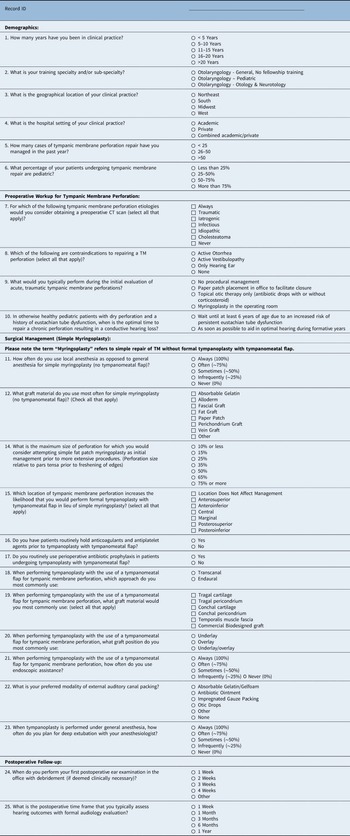
Survey questions were focused on pre-operative, intra-operative and post-operative decision-making regarding myringoplasty (repair of the tympanic membrane perforation without a tympanomeatal flap or middle-ear exploration) and type 1 tympanoplasty repair of the tympanic membrane perforation with a tympanomeatal flap and middle-ear exploration. No questions were included regarding ossicular chain reconstruction in order to focus specifically on practice patterns regarding perforation repair. The complete questionnaire is available in Appendix 1.
Chi-square tests were performed for determination of statistical significance. For questions in which respondents could select more than one response, cluster-adjusted chi-square tests were performed using statistical methods for survey research. If the cluster-adjusted test results were significant, with p < 0.05, then each response was evaluated individually as a binary outcome using traditional chi-square tests. Significance was defined as p < 0.05, and statistical tests were performed using SAS software, version 9.4 (SAS Institute, Cary, North Carolina, USA).
Results
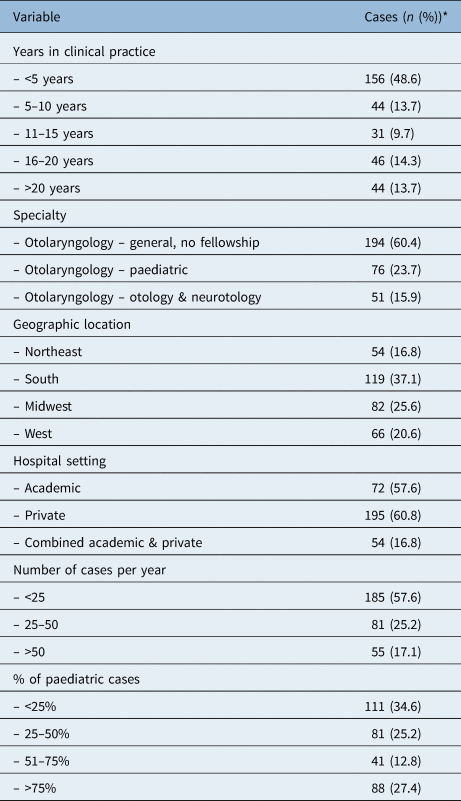
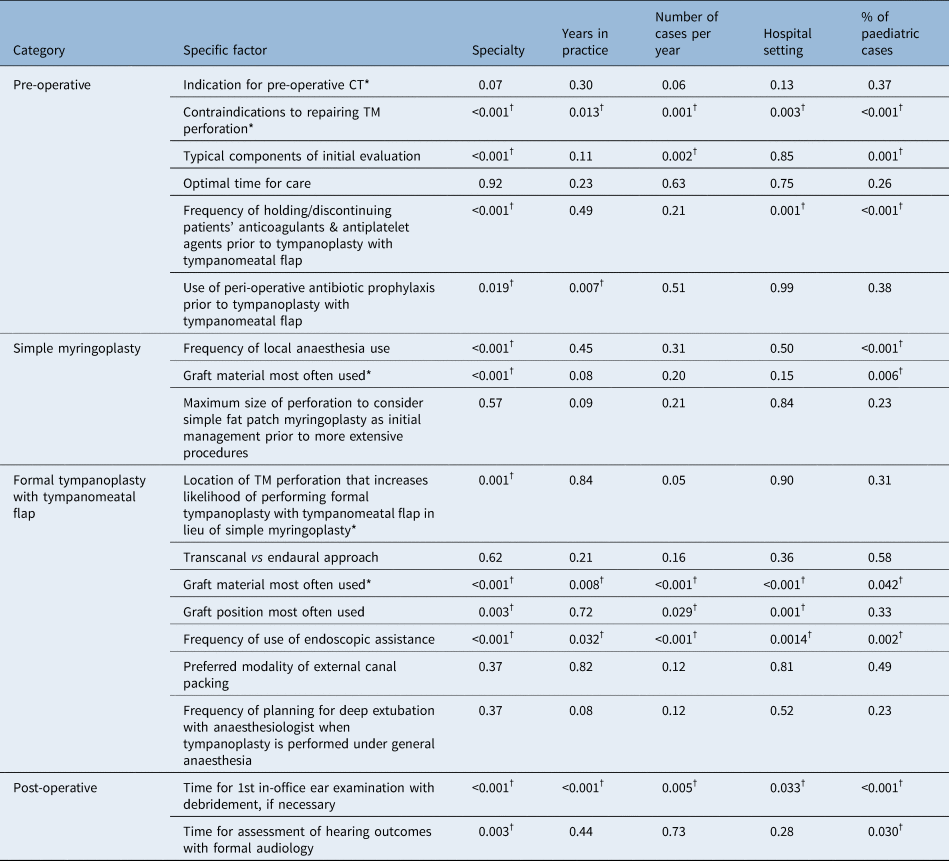
The survey was successfully received by 3148 members of AAO-HNS. The response rate was 10.2 per cent (n = 321). Most respondents were comprehensive otolaryngologists (60.4 per cent), in private practice (60.8 per cent), with a primarily adult practice (59.8 per cent), and had been in clinical practice for less than five years (48.6 per cent). Geographic distribution was even across four regions in the USA (Table 1). A summary of significant findings regarding survey responses, by category, is provided in Table 2.
Demographic data of survey respondents

*Total n = 321
Summary of significant survey response findings by category
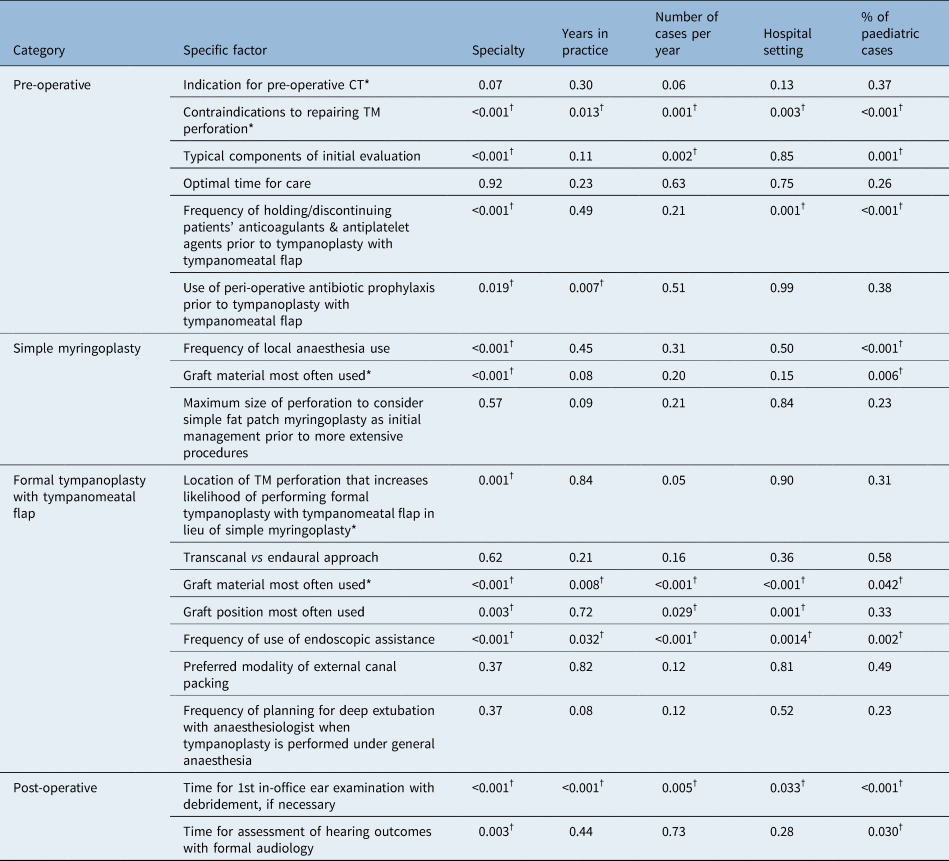
Numerical data represent p-values. *For questions where respondents could choose more than one response, a cluster-adjusted chi-square test of association was performed. If this overall test had a p-value of less than 0.05, then individual dichotomies were created for each response and individual chi-square tests were performed. †Indicates p < 0.05. CT = computed tomography; TM = tympanic membrane
Pre-operative investigation
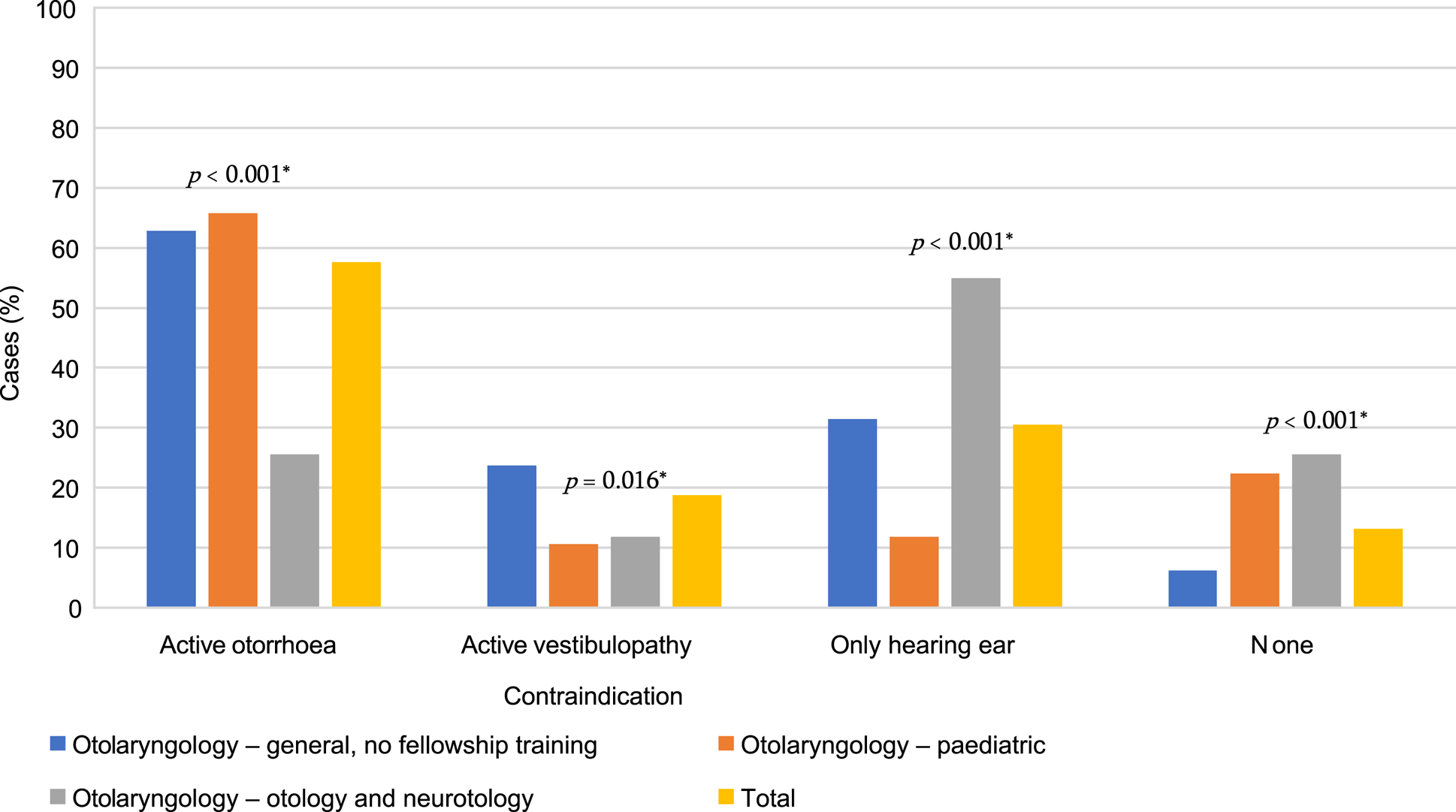
This section concerns pre-operative investigation in tympanic membrane perforation cases. There was a significant difference in contraindications for tympanic membrane perforation repair by specialty (p < 0.001; Figure 1). Those treating more than 50 tympanic membrane perforations per year were less likely to identify otorrhoea as a contraindication than those with lower caseloads (24 per cent vs 47–72 per cent, p < 0.0001). Practitioners with more than 75 per cent paediatric cases: more frequently reported otorrhoea as a contraindication (68.2 per cent) compared with other contraindication categories (44–63 per cent, p = 0.016); less frequently reported only hearing ear as a contraindication (11.4 per cent vs 38–41 per cent, p < 0.001); and more frequently indicated there were no contraindications (20.5 per cent vs 2–14 per cent, p = 0.032). Significant differences were also observed regarding the hospital setting, with academic practice providers reporting no contraindications more often than their private practice counterparts (22 per cent vs 7 per cent, p < 0.001). Notably, there were no significant differences in pre-operative computed tomography (CT) imaging indications between demographic categories. Cholesteatoma was the most reported indication for CT imaging (n = 305, 95 per cent), followed by infectious (n = 142, 44 per cent) and idiopathic causes (n = 61, 19 per cent).
Contraindications to tympanic membrane perforation repair by specialty.*Indicates p < 0.05

Fifty per cent of all respondents reported no procedural management in the initial evaluation of acute, traumatic tympanic membrane perforations, and 34 per cent indicated use of topical otic therapy. There were significant differences in initial evaluation by specialty (p < 0.001), with otology and neurotology specialists generally performing paper patch placement at greater rates than other specialties (43 per cent vs 1–11 per cent). Seventy-five per cent of respondents routinely held anticoagulant and antiplatelet agents prior to operative intervention. As expected, paediatric otolaryngologists held anticoagulants less frequently than other specialists (53 per cent vs 75–84 per cent, p < 0.001). Private practice providers more frequently held anticoagulants compared with academic providers (81 per cent vs 61 per cent, p = 0.001). Regarding pre-operative antibiotics, greater use was reported among otology and neurotology specialists (65 per cent vs 42–43 per cent, p = 0.019). In the setting of healthy patients with a history of Eustachian tube dysfunction and chronic tympanic membrane perforation, 75 per cent of respondents reported that waiting until the patient is at least six years of age is optimal timing for repair.
Simple myringoplasty
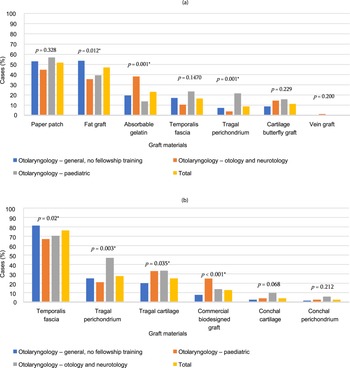
Overall, 41 per cent of respondents never used local anaesthesia and 29 per cent used it infrequently for tympanic membrane perforation repairs. Paediatric otolaryngologists reported never using local anaesthesia more often than other frequency categories (78 per cent vs 25–32 per cent, p < 0.001). Regarding graft material for myringoplasty, differences were observed between specialties (p < 0.001; Figure 2a). Providers with more than 75 per cent paediatric cases were more likely to use absorbable gelatine (36 per cent vs 14–24 per cent, p = 0.002) and less likely to use fat grafts than providers treating less than 75 per cent paediatrics (35.2 per cent vs 45–58 per cent, p = 0.016).
(a) Simple myringoplasty graft material most used by specialty. (b) Graft material most used for tympanoplasty with tympanomeatal flap by specialty. *Indicates p < 0.05

Twenty-four per cent of all respondents indicated that a perforation measuring less than 10 per cent of the tympanic membrane was the maximum size for considering simple fat patch myringoplasty. Thirty-eight per cent and 26 per cent of respondents, respectively, indicated that perforation of 15 per cent and 25 per cent of the total tympanic membrane was the cut-off, with no differences between groups.
Formal tympanoplasty with tympanomeatal flap
Regarding the graft material used for tympanomeatal flaps, there were significant differences demonstrated between specialties (p < 0.001; Figure 2b). Additionally, practitioners in practice for less than five years were more likely to use tragal cartilage (43 per cent vs 22–39 per cent, p = 0.013); these rates declined with increasing years in practice. Those performing over 50 cases per year were more likely to use tragal cartilage (39 per cent vs 21–27 per cent, p = 0.021), tragal perichondrium (42 per cent vs 17–28 per cent, p = 0.006) and conchal cartilage (11 per cent vs 1–7 per cent, p < 0.001) than respondents performing fewer cases per year. Otolaryngologists with more than 75 per cent paediatric cases reported greater use of biodesigned graft (25 per cent vs 6–10 per cent, p < 0.001). More academic providers reported tragal cartilage (39 per cent vs 22.3 per cent, p = 0.009) and biodesigned graft use compared with private practice providers (26 per cent vs 11.7 per cent, p < 0.001), while a higher rate of temporalis fascia use was noted among private practice providers than academic providers (82 per cent vs 68.3 per cent, p = 0.004).
For perforation location, most respondents indicated either ‘location does not affect management’ (32 per cent) or ‘marginal location’ (46 per cent) as an indication for tympanomeatal flap repair in lieu of simple myringoplasty. The decision to perform formal tympanoplasty with a tympanomeatal flap based on perforation location differed significantly by specialty (p = 0.001). Paediatric otolaryngologists were more likely to perform tympanoplasty on marginal perforations compared with other specialties (59 per cent vs 31–45 per cent, p = 0.008). Otology and neurotology specialists were more likely to indicate that perforation location does not affect management (49 per cent vs 28–30 per cent, p = 0.019). Seventy-nine per cent of all respondents reported a transcanal approach for tympanoplasty with use of a tympanomeatal flap.
Overall, underlay was the most common graft position used by all respondents (85 per cent). There were differences in graft position by specialty (p = 0.003), with otology and neurotology specialists preferring overlay (12 per cent vs 3 per cent), and combined underlay and overlay (18 per cent vs 8 per cent), compared with other specialists. Similarly, providers with more than 50 cases per year used overlay (9 per cent vs 3 per cent), and combined underlay or overlay (15 per cent vs 9 per cent), at higher rates than those with lower caseloads (p = 0.029). Fourteen per cent of academic practitioners used combined underlay or overlay, compared with just 5 per cent of private practice respondents (p = 0.001).
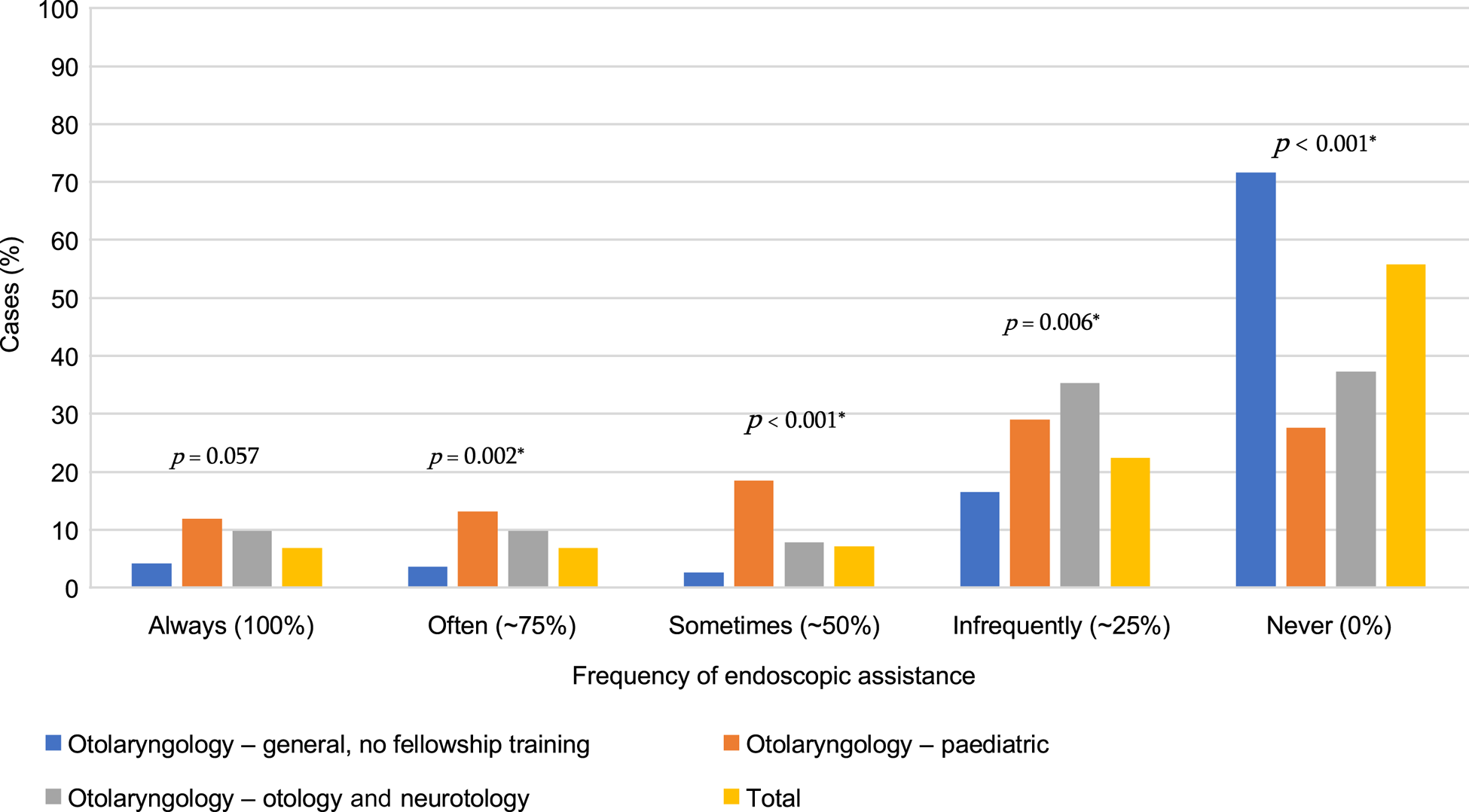
Use of endoscopic assistance for tympanomeatal flap repair differed significantly by specialty (p < 0.001; Figure 3). Endoscopic assistance also varied by number of cases per year (p < 0.001), with 68 per cent of respondents with fewer than 25 cases reporting never using endoscopic assistance, compared with 38 per cent for those with more than 25 cases. As expected, differences were noted by percentage of paediatric cases (p = 0.002). Respondents with more than 75 per cent paediatric cases were more likely to respond ‘always’ (11 per cent vs 0–6 per cent), ‘often’ (13 per cent vs 2–9 per cent) and ‘sometimes’ (15 per cent vs 2–5 per cent) than those with fewer paediatric cases. Nonetheless, most participants reported ‘never’ using endoscopic assistance overall (55.8 per cent).
Frequency of use of endoscopic assistance by specialty (p < 0.001). A Bonferroni correction was applied in evaluating the statistical significance of each individual response. *Indicates p < 0.01

There were no differences reported for preferred modality of external auditory canal packing. Most respondents used absorbable gelatine or Gelfoam® (84 per cent) and antibiotic ointment (10 per cent). Furthermore, there were no differences in planning for deep extubation, with an even distribution among ‘always’, ‘often’, ‘sometimes’, ‘infrequently’ and ‘never’ responses for all categories.
Post-operative follow up
Respondents generally performed an examination either one week (30 per cent) or two weeks (32 per cent) post-operatively. There were observed differences in the timing of the examination according to specialty (p < 0.001). Paediatric otolaryngologists preferred a two-week post-operative examination compared to other timings (38 per cent vs 20–34 per cent), and otology and neurotology specialists preferred a one-week post-operative examination (39 per cent vs 4–37 per cent). More private practice providers conducted in-office examination within one week, when compared with those in academic practice (36 per cent vs 19 per cent, p = 0.033). Additionally, providers with fewer than 50 per cent of paediatric cases had a preference for a one-week post-operative examination relative to those with more than 50 per cent of paediatric cases (40 per cent vs 12 per cent, p < 0.001).
Timing for formal post-operative audiology evaluation differed significantly by specialty, with general otolaryngologists conducting evaluation within one month at a greater frequency than other specialties (20 per cent vs 7–10 per cent, p = 0.011). Nonetheless, all specialties generally preferred waiting until three months post-operatively for audiological evaluation (80 per cent).
Discussion
There are currently no data in the literature discussing the current trends in operative techniques utilised in myringoplasty and tympanoplasty. Given the variety of pre-operative characteristics, graft types and surgical approaches, we present a unique dataset broadly examining the current treatment paradigms for tympanic membrane perforations across several different practice parameters. Our results demonstrate that specialty training was the variable most often associated with significant differences in the management of tympanic membrane perforations.
Surgery on an only hearing ear is controversial, with many surgeons tending to avoid surgery in this scenario because of the risk of worsening hearing loss. Some authors assert that, with careful technique, surgical correction is feasible.Reference Kalcioglu, Cetinkaya, Toplu, Hanege and Kokten22 It is interesting that otology and neurotology specialists were more likely to view the scenario as a contraindication. Perhaps this is because they have more success with offering adjuncts, including bone-anchored hearing aids, or because they have a higher proportion of patients with complicated chronic ear conditions, who may be at higher risk of poorer outcomes or hearing-related complications. Prior evidence indicates that contralateral ear abnormalities are associated with lower tympanoplasty success rates.Reference Salviz, Bayram, Bayram, Balikci, Chatzi and Paltura13 This may suggest that the hearing status of the contralateral ear should influence practitioners’ decision-making regarding whether to perform tympanic membrane repair to a greater extent than is demonstrated in the present study.
The increased use of tragal perichondrium among otology and neurotology specialists and those with higher tympanic membrane perforation caseloads could reflect the slightly more robust nature of this graft material than synthetic material or temporalis fascia. The increased use of cartilage among otology and neurotology specialists and paediatric otolaryngologists may similarly reflect a higher caseload of chronic ear conditions and significant Eustachian tube dysfunction. Furthermore, while the more technically straightforward underlay approach was overwhelmingly most common for all respondents, it is unsurprising that otology and neurotology specialists used overlay and combined overlay or underlay approaches at higher rates than paediatric and general otolaryngologists. Overlay grafting has higher success rates for large and anterior perforations,Reference Babu, Luryi and Schutt21 which are more technically challenging cases. The evidence indicates that anterior marginal perforations of the tympanic membrane are a reconstructive challenge associated with poorer surgical outcomes because of inadequate exposure, lack of residual tympanic membrane, impaired vascular supply and delayed healing when compared with inferior or posterior perforations.Reference Schraff, Dash and Strasnick23,Reference Sadé, Berco, Brown, Weinberg and Avraham24 While we did not assess the approaches used by respondents in the repair of anterior perforations, a multitude of techniques have been described in the literature with variable success rates,Reference Visvanathan, Vallamkondu and Bhimrao25 highlighting the lack of consensus regarding the best approach for anterior perforations. Nonetheless, it is important to note that significantly more otology and neurotology specialists did not alter their management plans based on perforation location alone.
Paediatric otolaryngologists, on the other hand, were more likely to perform tympanoplasty for marginal perforations relative to other specialties. This could be because perforations are often the result of tube placements, common in the paediatric population. It could also represent the impact of paediatric ear anatomy, such as canal stenosis, and poor long-term developmental sequelae related to extended periods of hearing loss, on lowering the threshold for managing perforations with tympanoplasty in lieu of myringoplasty.
Providers with more than 75 per cent paediatric cases were more likely to report active otorrhoea as a contraindication to repair. Those with a larger paediatric patient population may be less inclined to proceed with operative intervention in this setting, as otorrhoea may suggest underlying Eustachian tube dysfunction, and delayed tympanoplasty may provide a better result or potentially even allow spontaneous healing of the tympanic membrane.Reference Chandrasekhar, House and Devgan3,Reference Lin and Messner26 Most respondents preferred waiting until patients are at least six years of age for operative intervention, which supports evidence of better tympanic membrane closure outcomes with increasing age.Reference Tan, Santa Maria, Eikelboom, Anandacoomaraswamy and Atlas27–Reference Singh, Sidhu, Sharma and Singh29 Nevertheless, there is evidence that otorrhoea may not influence closure rates,Reference Tan, Santa Maria, Eikelboom, Anandacoomaraswamy and Atlas27 demonstrating that otorrhoea should not necessarily be an absolute contraindication to repair.
Regarding tympanic membrane perforation repair in the paediatric population, those performing more paediatric cases were less likely to perform paper patch placement, which may reflect low tolerance of this procedure among a paediatric population. Pain intolerance among younger patients could also provide an explanation for infrequent or never-use of local anaesthesia by paediatric otolaryngologists. In addition, paediatric otolaryngologists reported more frequent use of endoscopic assistance than other specialties. Endoscopic assistance may be preferred to improve visualisation in the smaller ear canals of paediatric patients. The transcanal endoscopic approach can involve a smaller incision, causing less extensive injury to the cartilaginous ear, reducing bleeding and post-operative pain, and allowing shorter surgical and anaesthesia times, all of which could be beneficial in the treatment of paediatric patients.Reference Kozin, Gulati, Kaplan, Lehmann, Remenschneider and Landegger30–Reference Choi, Noh, Park, Lee, Yook and Choi33 However, the relative size of the endoscope in the ear canal can limit one-handed surgery, therefore presenting a greater technical challenge.
All specialties followed similar trends regarding the preferred material for simple myringoplasty. Paper patch and fat grafts were the two most common materials used overall, which have demonstrated equivalent outcomes.Reference Lee and Kim34 A meta-analysis of myringoplasty graft materials showed that fat grafts have relatively inferior results when compared with fascia and perichondrium grafts.Reference Lee and Kim34 However, a comparison of paper patch, fat and perichondrium graft groups revealed similar closure rates in all three groups.Reference Dursun, Dogru, Gungor, Cincik, Poyrazoglu and Ozdemir35 Therefore, with variable findings reported in the literature, practice patterns likely depend on surgeon preferences. In addition, paediatric otolaryngologists were more likely than other specialists to use absorbable gelatine, which has been shown to be a viable alternative, with comparable short- and long-term clinical and audiometric outcomes among paediatric patients.Reference Song, Corsten and Johnson36
There was consensus among respondents that 15–25 per cent was the maximum perforation size for consideration of myringoplasty with fat grafting prior to more extensive intervention. This supports the evidence suggesting that perforations measuring less than 30 per cent of the tympanic membrane have repair success rates of more than 93 per cent with fat grafting, and that success rates drop significantly with a perforation comprising more than 30 per cent of the tympanic membrane.Reference Konstantinidis, Malliari, Tsakiropoulou and Constantinidis37
Temporalis fascia was overwhelmingly the most common tympanoplasty material used among respondents, followed by typical cartilage and tragal perichondrium. Previous studies comparing temporalis fascia with cartilage or perichondrium indicate significantly higher success rates with cartilage and perichondrium compared with temporalis fascia.Reference Tan, Santa Maria, Eikelboom, Anandacoomaraswamy and Atlas27,Reference Shakya and Nepal38 However, temporalis fascia grafts are still widely used because they are easier to harvest and shape than cartilage grafts.Reference Chhapola and Matta10 Notably, cartilage was used less than temporalis fascia among paediatric otolaryngologists. Salviz et al. demonstrated that patients aged younger than 16 years are not good candidates for temporalis fascia grafting.Reference Salviz, Bayram, Bayram, Balikci, Chatzi and Paltura13 In addition, cartilage is more resistant to pressure changes, which is especially important among paediatric patients with Eustachian tube dysfunction.Reference Gianoli, Worley and Guarisco39 Future studies could examine the rationale for use of temporalis fascia over cartilage grafts in the treatment of paediatric tympanic membrane perforations. Alternatively, we may see shifts toward the use of cartilage grafting with its recent growing popularity.
• Management of tympanic membrane perforations is varied, and many techniques may be feasible for a given patient
• Pre-, intra- and post-operative decisions regarding tympanic membrane perforations often depend on patient characteristics and surgeon preferences
• Subspecialty training is the main variable associated with significant differences in practice patterns
• This study provides a comprehensive understanding of considerations and operative decision-making in tympanoplasty practice by US otolaryngologists
Our study has limitations associated with a self-report survey, namely, recall bias. Another limitation is that the demographics of participating physicians were skewed. In addition, no specific details regarding the location of post-graduate training were captured. Another limitation is that the physicians surveyed in the present study all practice in the USA. We recognise that there may be differences in otolaryngology training and practice patterns across healthcare systems; however, by highlighting such differences in the USA, we may bring awareness to practitioners globally regarding the variability that may exist in the practice of tympanic membrane repairs. Future studies could seek to explore this topic in different healthcare systems to provide a comparative analysis on an international scale.
Conclusion
Many different clinical and surgical options exist in the management of tympanic membrane perforations. Based on the present study, several physician demographic factors may play a role in choosing a standard of practice. Subspecialty training appears to be the main variable associated with significant differences in pre-operative, intra-operative and post-operative decision-making for the surgical repair of tympanic membrane perforations. Future studies could further assess the rationale for these observed trends.
Competing interests
None declared
Appendix
Myringoplasty Survey